Michael Jackson’s 1984 Pepsi Commercial: How the New Generation Campaign Took Over TV
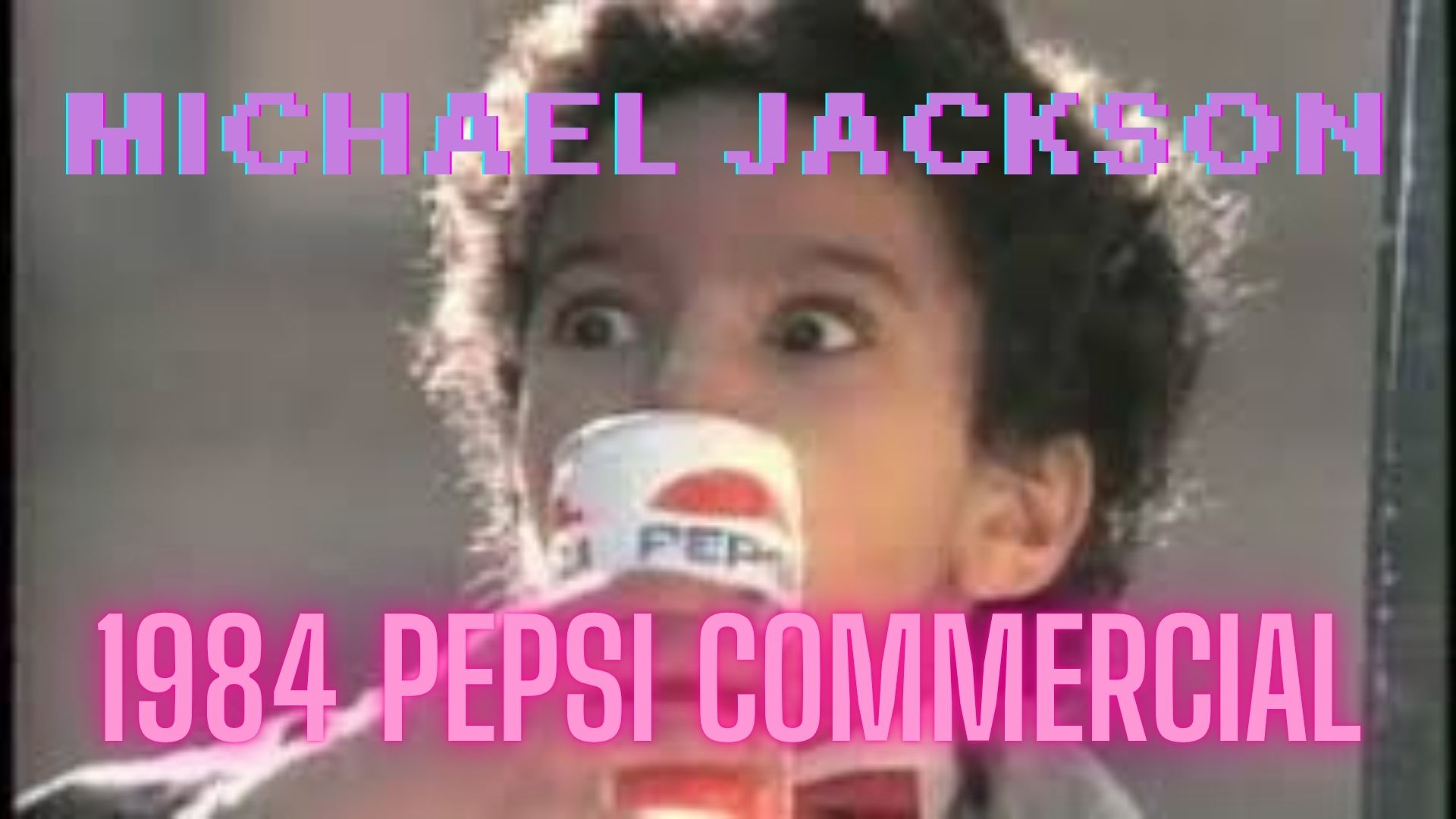
Michael Jackson’s 1984 Pepsi Commercial The night the commercial break became an arena
Michael Jackson did not enter Pepsi’s 1984 campaign like a celebrity hired to hold a can and behave. He arrived at the height of Thriller, rewired “Billie Jean” into a brand anthem, brought his brothers along and made a soda commercial feel like the premiere of a new music video.
Pepsi was not simply borrowing a famous face. It was buying direct access to the hottest current in American youth culture. The Michael Jackson Pepsi commercial of 1984 fused pop music, choreography, street style, MTV editing and corporate scale so completely that the advertisement became part of the entertainment people were waiting to watch.
Black lacquer, red light, chrome, smoke, sharp movement and the unmistakable tension of peak Thriller-era television gave the campaign its charge. Pepsi did not just sponsor the moment. For a few minutes, it looked like the brand owned the stage.
What was Michael Jackson’s 1984 Pepsi commercial?
Michael Jackson and his brothers starred in two major 1984 Pepsi films built around rewritten lyrics to “Billie Jean.” The “Street” commercial featured a young Alfonso Ribeiro imitating Jackson before joining a neighborhood dance procession. The “Concert” commercial placed the Jacksons inside a backstage-and-arena spectacle. Together they launched Pepsi’s “Choice of a New Generation” campaign and helped establish the modern model for music-superstar advertising.
Why Pepsi needed Michael Jackson more than another taste test
Pepsi had spent years presenting itself as the younger, more restless alternative in the Cola Wars. Its long-running “Pepsi Generation” idea was built around attitude and identity rather than a laboratory argument about flavor. By the early 1980s, however, simply saying “young” was no longer enough. Youth culture had moved onto cable television, into music videos and around stars whose image mattered as much as their records.
Michael Jackson was the cleanest possible answer. Thriller had become a cultural event rather than merely a hit album. “Billie Jean,” “Beat It” and the “Thriller” short film turned Jackson into the defining bridge between radio, dance, fashion and visual spectacle. Pepsi could not manufacture that heat. It could attach itself to it.
The company announced its relationship with Jackson and his brothers in 1983. The resulting films reached national audiences in February 1984, first through an MTV premiere and then around Grammy night. That release strategy treated the commercials like entertainment news before most viewers had even seen them.
Pepsi executives later described the Jackson musical commercials as groundbreaking. That is not merely corporate nostalgia. The campaign marked the point where a beverage company stopped placing a star inside its existing advertising and began constructing the advertising around the star’s cultural machinery.
The street commercial and the concert commercial
The campaign was larger than the single clip most people remember. Pepsi created two main Jackson films in both shorter and longer versions. One translated Michael’s style into a neighborhood fantasy. The other translated it into an arena-scale event. Together they showed how flexible the partnership could be.
The street film
Young Alfonso Ribeiro imitates Michael Jackson’s clothes and movement before the real Jackson appears. Children, neighbors and the Jackson brothers join a street procession that turns fandom into participation.
The concert film
Backstage preparation, arena crowds and the full Jackson family frame Pepsi as part of the machinery surrounding a major live event rather than a product waiting on a table.
The star stays central
The product does not interrupt the performance with a long explanation. Pepsi stays close enough to the excitement that the association does the selling.
The audience joins
Kids and crowds are not passive spectators. The films suggest that Pepsi belongs to the same generation ready to dance, imitate and move toward the star.
The street film is especially smart because it begins with imitation. Ribeiro’s young fan is already dressed, moving and imagining himself inside Michael Jackson’s world before the star arrives. Pepsi positions itself inside that desire without needing to explain it.
The concert film works from the opposite direction. Instead of bringing celebrity into everyday life, it brings the audience backstage and into the scale of celebrity. The lights, staging, anticipation and crowd energy make Pepsi feel like a sponsor of the moment itself.
Why rewriting “Billie Jean” was the campaign’s power move
Pepsi did not commission an unrelated jingle and hope Michael Jackson could make it cool. The campaign used the musical foundation of “Billie Jean,” one of the most recognizable recordings on the planet, and fitted new brand language over it. That gave the ads instant familiarity before the first dance step landed.
Viewers already knew the bass line, pulse and vocal shape. Pepsi did not have to build emotional recognition from zero. It entered a memory the audience had already formed.
That approach carried risk. A weak rewrite could have made the original song feel cheap. The ads survived because the arrangement, movement and production treated the music like a real performance.
The strategy also anticipated the way brands would later use existing hits, premieres and artist partnerships to shorten the distance between advertising and entertainment. Pepsi would return to that playbook with other major musicians, while Jackson himself continued appearing in Pepsi advertising for years.
What Pepsi was really selling with “A New Generation”
The campaign was not primarily an argument about carbonation, sweetness or blind taste tests. Pepsi already had the Pepsi Challenge for direct competition. Michael Jackson served a different job: he made Pepsi look culturally current in a way no product demonstration could.
Youth without explaining youth
Pepsi did not need a narrator describing what the new generation liked. Michael Jackson’s music, fashion and audience supplied the proof.
Participation instead of observation
The street film lets kids imitate, dance and join. The generation is defined by movement rather than by demographic language.
Scale as a brand promise
Arena crowds, tour sponsorship and premiere treatment made Pepsi look capable of operating at the same size as global entertainment.
Contemporary reports put the combined commitment at roughly $7 million, with production and tour sponsorship included. The number mattered because it revealed the size of Pepsi’s bet. This was not another endorsement squeezed into an existing media schedule. It was a corporate entertainment alliance.
The investment paid for more than visibility. It allowed Pepsi to claim belonging. Coca-Cola might remain the older cultural institution, but Pepsi could point toward the hottest star on television and say the future had already chosen sides.
When commercials learned to behave like music videos
By 1984, television audiences had been trained to read pop music visually. A singer was no longer only a voice or a face on an album sleeve. Wardrobe, choreography, editing, camera movement and narrative imagery had become part of the song’s identity.
Pepsi embraced that change rather than shrinking Jackson into an old-fashioned product spot. The commercials move with music-video confidence. Performance drives the cutting. Crowds react like concert audiences. Costumes and movement are allowed to carry meaning without a salesman stepping in to translate.
Director Bob Giraldi was an ideal bridge between those worlds. His commercial work and music-video work fed each other, and he had already directed Jackson’s “Beat It.” The Pepsi films could therefore borrow the grammar of contemporary pop without feeling like executives had studied MTV for twenty minutes and ordered more fog.
This was the same broad year in which Apple’s “1984” commercial treated a Super Bowl spot like cinematic science fiction. Both campaigns proved that a commercial could become the content people discussed afterward. Apple used a dystopian film. Pepsi used the biggest pop star alive.
The Shrine Auditorium accident
On January 27, 1984, Michael Jackson was filming the concert commercial at the Shrine Auditorium in Los Angeles. During a take, pyrotechnic effects fired as he descended a staircase. Sparks ignited his hair, causing second- and third-degree burns to his scalp.
The accident belongs in the history, not in the mythology
Jackson was hospitalized after the incident. The completed advertisements did not include footage of the accident, and the campaign premiere continued after his recovery.
The event remains one of the clearest reminders that the era’s pursuit of bigger, brighter spectacle involved real performers working around effects capable of causing serious injury.
It is tempting to let the accident swallow the entire campaign story because the footage is shocking and the consequences were real. But treating it carefully matters. The injury should not be turned into another piece of lurid 80s trivia.
What can be said clearly is that the campaign’s polished final images were produced alongside a frightening failure behind the camera. The accident complicates the nostalgia because it exposes the risk hidden underneath a commercial designed to look effortless.
How the campaign changed celebrity advertising
Famous performers had endorsed products long before 1984. The Jackson campaign mattered because it placed the brand inside a star’s existing creative language instead of asking the star to step outside that language and read conventional copy.
The films demonstrated several ideas modern campaigns now treat as standard: use a star’s established music, let the advertisement function as entertainment, release it like an event and build the association across concerts, television, publicity and merchandise.
They also raised the price of cultural credibility. After Pepsi connected itself to Michael Jackson at his commercial peak, simply hiring a recognizable face could look small. A major endorsement now needed a world, a soundtrack and enough production value to feel like something the star might have released without the product.
Why the campaign still lives in the shared television memory
Gen X remembers the Michael Jackson Pepsi commercials because they arrived when mass television could still turn one campaign into common knowledge. The same films ran during major programs, music television and national events until the melody, choreography and brand association fused.
The campaign also captures one of the decade’s central contradictions. It was energetic, polished and exciting, but it was also an enormous corporate machine converting youth culture into market position. Gen X did not need that contradiction resolved. We grew up inside it.
Michael Jackson’s 1984 Pepsi campaign worked because Pepsi did not ask the biggest star in the world to fit inside a commercial. It made the commercial expand toward him. “Billie Jean” supplied instant memory, the Jacksons supplied family scale, Alfonso Ribeiro supplied kid identification, MTV supplied the visual grammar and national television made the pairing unavoidable. The result was not merely a famous endorsement. It was the moment the commercial break learned how to headline—and the rest of advertising spent decades trying to recreate that entrance.
The music, movies, television, toys and fads around the campaign
The Pepsi campaign landed during a year that felt like the decade reaching full voltage: Prince, Madonna, Van Halen, Ghostbusters, network television, Transformers, mall fashion and MTV all competing for the same overloaded section of the brain.
Questions about Michael Jackson’s 1984 Pepsi commercials
When did Michael Jackson’s Pepsi commercials air?
The major “Choice of a New Generation” commercials premiered nationally in February 1984.
What song was used in the Michael Jackson Pepsi commercial?
The campaign used the music of “Billie Jean” with new lyrics written for Pepsi.
Was Alfonso Ribeiro in the 1984 Pepsi commercial?
Yes. A young Alfonso Ribeiro appeared in the street commercial imitating Michael Jackson before joining the larger dance sequence.
Were the Jackson brothers in the Pepsi campaign?
Yes. Michael appeared with Jackie, Tito, Jermaine, Marlon and Randy in the campaign films.
Who directed the Michael Jackson Pepsi commercials?
Bob Giraldi directed the campaign films. He had also directed Jackson’s “Beat It” music video.
What happened during the Pepsi commercial accident?
During filming at the Shrine Auditorium on January 27, 1984, pyrotechnic sparks ignited Jackson’s hair and caused second- and third-degree burns to his scalp.
How much did the 1984 Pepsi campaign cost?
Contemporary reports placed the total Pepsi commitment at roughly $7 million, including commercial production and tour sponsorship.
Why was the Michael Jackson Pepsi campaign important?
It fused a superstar’s existing music and visual identity with brand advertising, helping establish the modern event-style celebrity endorsement.
Campaign history sources
Launch timing, campaign structure, production costs, performers, the Shrine accident and Pepsi’s longer music-marketing history were checked against contemporary reporting and Pepsi’s official corporate history.
- PepsiCo — Michael Jackson partnership history
- PepsiCo — Pepsi Generation and Jackson musical-ad history
- UPI, February 27, 1984 — campaign costs and two-commercial structure
- UPI, February 26, 1984 — premiere, performers and Shrine accident
- The Washington Post — Bob Giraldi and the campaign’s music-video treatment