Apple’s “1984” Commercial: How Ridley Scott’s Super Bowl Ad Launched the Macintosh Myth
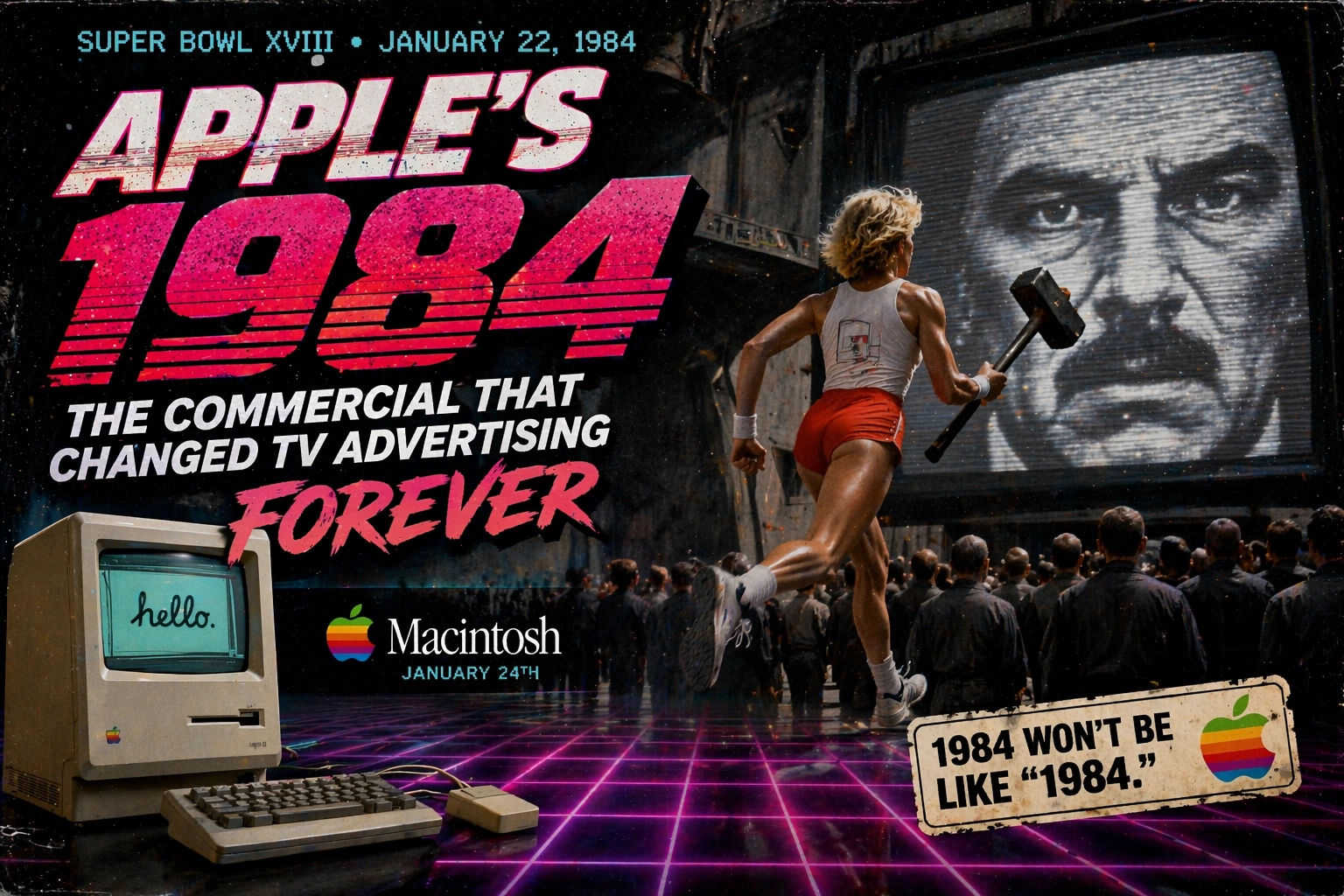
Apple’s “1984” Commercial How Ridley Scott’s Super Bowl ad launched the Macintosh myth
Most commercials ask politely for attention. Apple’s “1984” commercial kicked open the television set, dropped a Super Bowl audience into a blue-gray industrial nightmare and sent a woman sprinting toward a giant screen with a sledgehammer. The Macintosh barely appeared. The message did all the selling.
For Gen X viewers, the spot felt less like a computer ad than a pirate transmission from the future. There was no family gathered around a desk, no technical demonstration and no announcer reading a feature list. There was conformity, surveillance, a Big Brother figure and one violent act of refusal. Two days before the Macintosh arrived, Apple had already turned the machine into a symbol.

What was Apple’s “1984” commercial?
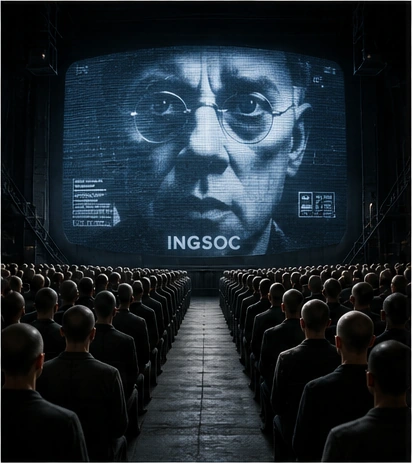
Apple’s “1984” was a one-minute Macintosh launch commercial that reached a national audience during Super Bowl XVIII on January 22, 1984. Directed by Ridley Scott and created by Chiat/Day, it presented a gray, totalitarian world inspired by George Orwell’s novel. A brightly dressed female athlete runs through the controlled crowd and throws a sledgehammer through a giant propaganda screen. The closing message promises that the Macintosh will ensure 1984 will not resemble Orwell’s 1984.
What viewers actually saw during Super Bowl XVIII
The commercial opens inside a cold industrial corridor. Rows of expressionless workers move in formation while helmeted security forces patrol the system. Everything is drained of warmth and individuality. The men look interchangeable because that is the point.
They enter a hall and face a towering screen. A Big Brother-style figure delivers a speech about information, unity and the end of contradiction. His language sounds like a company meeting rewritten by a dictatorship: order presented as progress, sameness presented as peace.
Then the visual system breaks. A woman in a white tank top and vivid red shorts runs toward the hall carrying a sledgehammer. Police chase her. She spins, releases the hammer and sends it through the enormous face on the screen. Light explodes across the seated crowd.
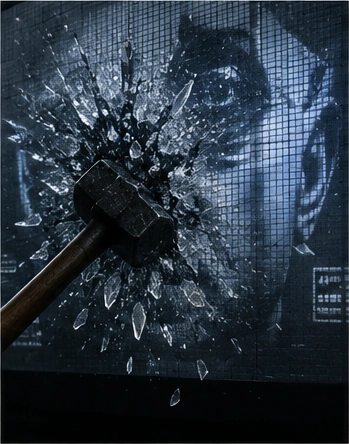
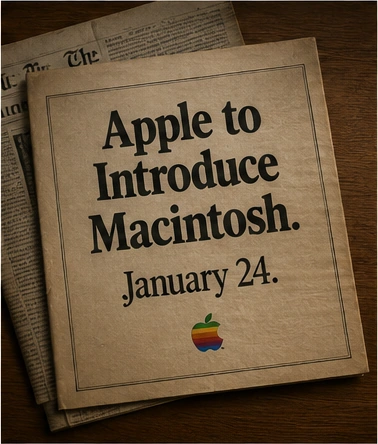
The closing copy announces the Macintosh introduction on January 24 and promises that 1984 will not be like Orwell’s Nineteen Eighty-Four. The product is absent, but the positioning is unmistakable. Macintosh is the hammer. The old computer order is the screen.
A more conventional advertisement would have demonstrated windows, icons and the mouse. Apple instead created a feeling strong enough to make those features seem like the practical evidence of a larger rebellion.
Ridley Scott, Chiat/Day and the team that built the myth
Apple hired Chiat/Day to launch the Macintosh. The core creative team included creative director Lee Clow, copywriter Steve Hayden and art director Brent Thomas. Their idea treated IBM’s computer-industry dominance as the Big Brother system and positioned Macintosh as the human alternative.
Ridley Scott was the ideal director because he did not need to fake a future from television-commercial shorthand. Alien and Blade Runner had already shown his ability to make machines, institutions and industrial spaces feel enormous, used and slightly hostile.
Smithsonian historians estimate the sixty-second production cost at roughly half a million dollars. Hundreds of extras created the marching crowd, and the commercial was shot with feature-film scale rather than the clean studio brightness normally associated with computer ads.
Creative direction shaped the anti-conformity position that would become central to Apple’s long-term identity.
The copy turned a product introduction into one of advertising’s most famous promises about the future.
The art direction established the brutal gray system and the runner’s decisive burst of life and color.
That combination is why the film still feels coherent rather than merely expensive. Strategy, copy, art direction and filmmaking are all pushing the same contrast: institutional sameness against individual action.
What the Big Brother symbolism meant
Apple was not adapting Orwell because dystopia looked cool. The reference gave the company a way to turn a computer-industry fight into a moral drama. IBM, often called “Big Blue,” represented the dominant corporate order: standardized, serious, bureaucratic and difficult for ordinary people to challenge.
The commercial never names IBM, but the association was obvious inside Apple and Chiat/Day. The blue-gray crowd represented an industry built around centralized power and technical gatekeeping. The runner represented the idea that personal computing could return control to the individual.
That is advertising mythology, not a neutral history of computing. IBM was not literally a totalitarian state, and Apple was still a corporation selling an expensive machine. But the metaphor was emotionally efficient. It gave viewers a simple choice between a dead system and a living alternative.
The color design makes the argument before the narration does. The system is blue-gray. The runner carries warm skin, red clothing and human motion into it. Apple does not need to say “individuality” because the frame has already separated individuality from everything else.
How Apple’s board nearly killed the commercial
The ad’s reputation makes it easy to assume everybody at Apple immediately recognized a masterpiece. They did not. When the finished film was shown to Apple’s board, the reaction was hostile. The commercial was considered too strange, too expensive and too far removed from a normal product pitch.
Apple had purchased a sixty-second Super Bowl slot and an additional thirty-second slot. The company tried to sell the time back. Chiat/Day managed to unload the shorter placement, but the full minute remained. The commercial survived partly because the expensive airtime could not be completely escaped.
The resistance is important because it shows how unusual the spot really was. Today, cinematic Super Bowl advertising is expected. In 1983, spending that much money on a computer ad that never showed the computer looked dangerously close to executive malpractice.
Then the commercial aired, television coverage replayed it, and the risk became part of the legend. Apple had not only purchased a minute of national television. It had created a story about Apple being bold enough to gamble on the minute.
Why the runner and the hammer became unforgettable
The unnamed runner gives the commercial its human pulse. The workers move because the system moves them. She moves because she has chosen a destination. That distinction turns an athletic action into the entire emotional argument.
The role was performed by athlete Anya Major. Her physical credibility matters. She does not look like a model carefully jogging through a set. She looks capable of reaching the screen, spinning under pressure and releasing a heavy object with enough force to destroy the image.
The hammer is equally important. Apple could have used a futuristic device, a laser or a clever computer effect. The commercial instead chooses the bluntest possible tool. A hammer is physical, ancient and completely understandable. The future arrives by smashing the machine that claims to own it.
Red shorts and warm skin make the runner the only fully alive presence inside the blue-gray institution.
Her sprint cuts across the rigid forward movement of the workers and the security forces pursuing her.
The screen’s explosion turns a product promise into a release the entire crowd physically experiences.
Big Brother is played by British actor and voice performer David Graham, whose amplified delivery gives the screen authority without requiring a detailed political explanation. The runner and the face are not developed characters. They are opposing forces, and sixty seconds is enough.
What Apple was actually launching on January 24
The original Macintosh reached the market two days after the Super Bowl broadcast. Its graphical interface, icons, windows and mouse promised a more visual way to work with a personal computer than the command-line systems many consumers associated with the category.
That practical accessibility is the real product idea hiding under the dystopian spectacle. Apple wanted Macintosh to feel like a computer “for the rest of us”—not only for corporate technology departments and people comfortable memorizing commands.
The computer that followed the commercial
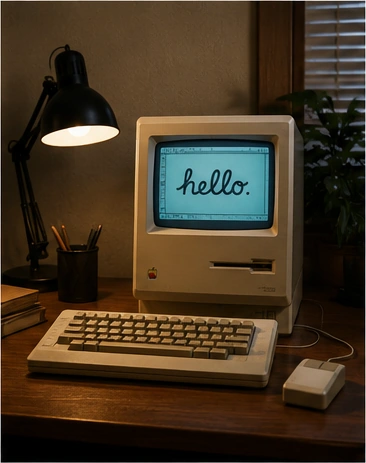
The first Macintosh combined a compact vertical case, a nine-inch monochrome display, a graphical interface and a one-button mouse. Its limitations were real, especially the original 128K of memory, but the interaction model gave personal computing a friendlier public face.
The commercial’s promise was larger than the first machine could fully deliver. The original Mac was expensive and constrained. Still, the interface helped establish patterns that would define mainstream personal computing, and the ad gave those patterns a cultural identity before buyers evaluated the hardware.
How “1984” changed Super Bowl advertising
Super Bowl advertising was valuable before Apple arrived, but “1984” helped change what brands expected from the audience. The goal was no longer only massive reach. A major commercial could create suspense, conversation, press coverage and a reputation for the company behind it.
The spot was replayed by news programs precisely because it did not feel like routine advertising. That additional coverage multiplied the value of the original media buy. The advertisement itself became news, and the Macintosh name traveled with every discussion of the risk.
Modern Super Bowl campaigns now arrive with teasers, celebrity announcements, online extensions and postgame rankings. Apple’s film predates that machinery, but it helped prove the central idea: the commercial can be a premiere people are waiting to discuss.
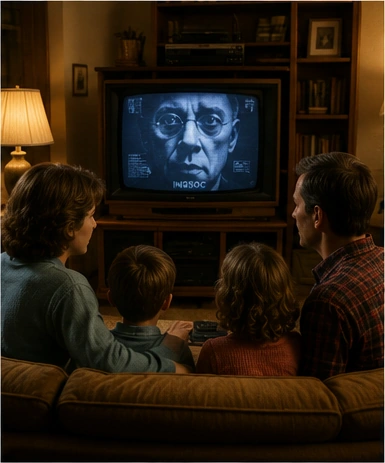
In 1984, a major broadcast could still stop a living room. There was no second-screen distraction, no social feed and no instant rewind. The shock had to land in one pass—and then survive in conversation.
The spot treated the Super Bowl audience as the opening-night crowd for a cultural statement.
News coverage and replay extended the impact far beyond the original sixty-second purchase.
Apple emerged as the company willing to challenge the system, even when its own board disliked the challenge.
This is why the commercial belongs beside Wendy’s “Where’s the Beef?” campaign and Michael Jackson’s Pepsi films. All three arrived in 1984, but each escaped the commercial break differently: Apple became cinema, Wendy’s became language and Pepsi became pop performance.
The real legacy of Apple’s “1984” commercial
The ad survives because it operates on several levels at once. It is a strong piece of short filmmaking, a precise positioning statement, a memorable product launch and a story about corporate risk. Remove any one of those layers and it remains interesting. Together they make it permanent.
Its contradictions also help keep it alive. Apple attacked technological conformity while promoting a closed commercial product. It presented personal computing as liberation through a highly controlled cinematic message. The company that played the outsider would eventually become one of the world’s dominant technology institutions.
Those contradictions do not erase the commercial’s achievement. They make the symbolism available for reinterpretation. Every generation can ask whether Apple still represents the runner, whether it has become the screen, or whether successful companies inevitably end up standing on both sides of their founding mythology.
For Gen X, the first memory is still simpler. Television went gray. A woman ran in from another movie. The hammer left her hands. The screen exploded. Then a computer we had never seen was suddenly supposed to matter. That is an absurd amount of cultural work for one minute, and the ad still completes it.
Keep rewinding the music, movies, TV, toys and fads of 1984
Apple’s commercial landed during one of the most overloaded years of the decade. Prince, Madonna, Van Halen, Ghostbusters, Transformers, cable television, mall culture and three of advertising’s most famous campaigns were all fighting for space inside the same national memory.
Questions about Apple’s “1984” commercial
When did Apple’s “1984” commercial air?
Its famous national broadcast occurred during Super Bowl XVIII on January 22, 1984. A low-profile local airing had taken place in December 1983 before the Super Bowl.
Who directed Apple’s “1984” commercial?
Ridley Scott directed the commercial after making films including Alien and Blade Runner.
Which advertising agency created the commercial?
Chiat/Day created the campaign. The core team included Lee Clow, Steve Hayden and Brent Thomas.
Who is the woman with the hammer?
The unnamed runner was played by British athlete Anya Major.
Who played Big Brother in the commercial?
British actor and voice performer David Graham appeared as the giant authoritarian figure on the screen.
Was the Macintosh shown in the ad?
No. The commercial never shows the computer. It sells Macintosh as a symbol of individuality and disruption.
Why did Apple’s board dislike the commercial?
Board members considered it expensive, unconventional and too far removed from a normal product demonstration. Apple attempted to sell its Super Bowl airtime before the full commercial ultimately aired.
What did Big Brother represent?
The authoritarian screen represented conformity and the dominant corporate computer order, with IBM widely understood as the campaign’s implied target.
Commercial and Macintosh history sources
Broadcast timing, creative credits, production history, board resistance, the IBM symbolism and original Macintosh details were checked against museum archives, computer-history collections and contemporary reporting.
- National Museum of American History — Remembering Apple’s “1984” Super Bowl ad
- Computer History Museum — 1984 timeline and Macintosh commercial
- Computer History Museum — A Computer for the Rest of Us
- Smithsonian Institution — Apple Macintosh microcomputer
- The Washington Post — “1984”: A Revolution in 60 Seconds
- Folklore.org — Macintosh team history of the commercial’s internal reception and broadcast