Manimal in the 80s: The Show Everyone Remembers for the Wrong Reasons
Brooke has a case. Tyrone knows where to look. Jonathan Chase might be out of the room for a minute.
Give Chase a second. You’ll know when the change has started.
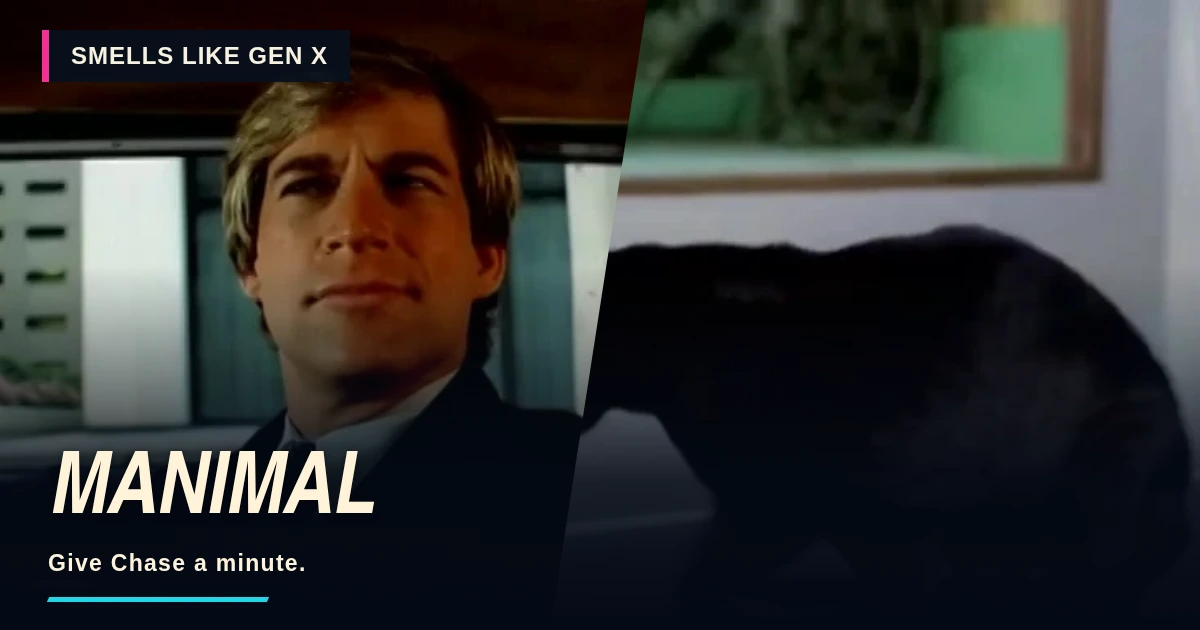
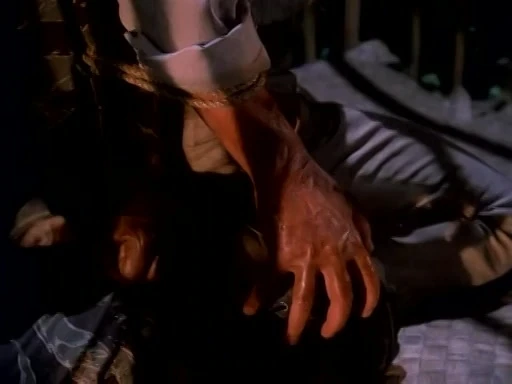
Somebody says Manimal and I can see a hand beginning to change. There’s a person attached to it, and he still has a little time to look human before the rest catches up. I’d want to see what the hand did even if I’d come into the room with no idea which case was going on. A lot of television had to wait until somebody told you what you’d walked in on. Manimal could tell you what kind of evening you were having by showing you a man’s fingers for a few seconds.
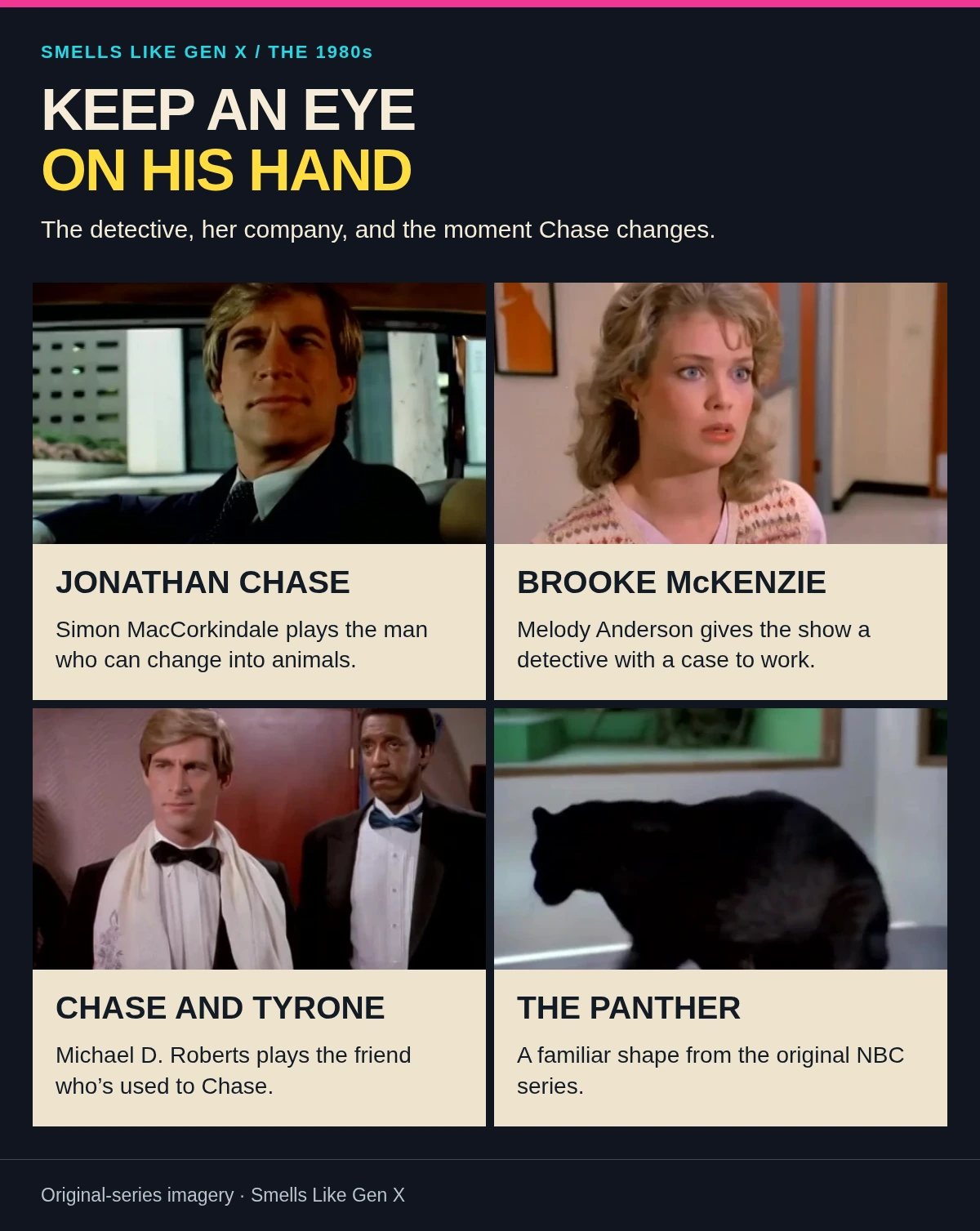
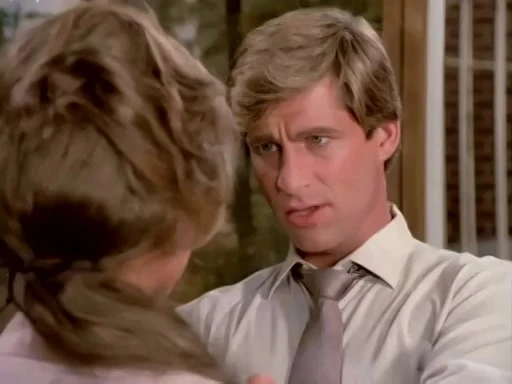
Simon MacCorkindale played Dr. Jonathan Chase, who could change into animals and used that ability to help police detective Brooke McKenzie. Melody Anderson played Brooke, and Michael D. Roberts played Chase’s friend Tyrone in the regular episodes. NBC put it on in the fall of 1983. Eight episodes were enough to send the name Manimal through decades of conversations, including plenty in which nobody could remember what they’d actually watched.
I get why it ended up as shorthand for a show somebody couldn’t believe a network had made. I also get why a kid on the floor in front of the set would have wanted everybody to stop talking long enough to watch it happen. A black panther was about to be where there’d been a person. I still want the room to be quiet for that part.
Jonathan Chase had a very good reason to leave the room
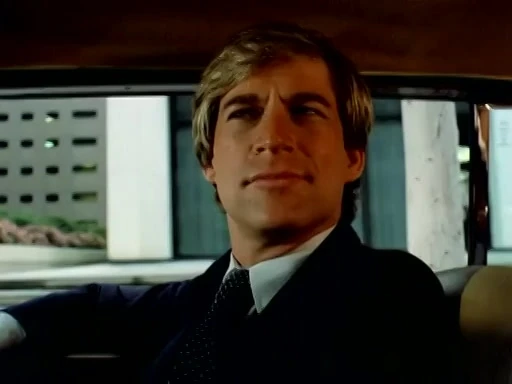
Chase comes into the pilot looking like somebody who could give you a perfectly sensible answer about the natural world. He’s got the good clothes and the calm delivery. It takes a while for people around him to catch up to what he knows about himself. MacCorkindale’s willingness to play the whole thing with a straight face gives the show somewhere to go after you find out what the title means.
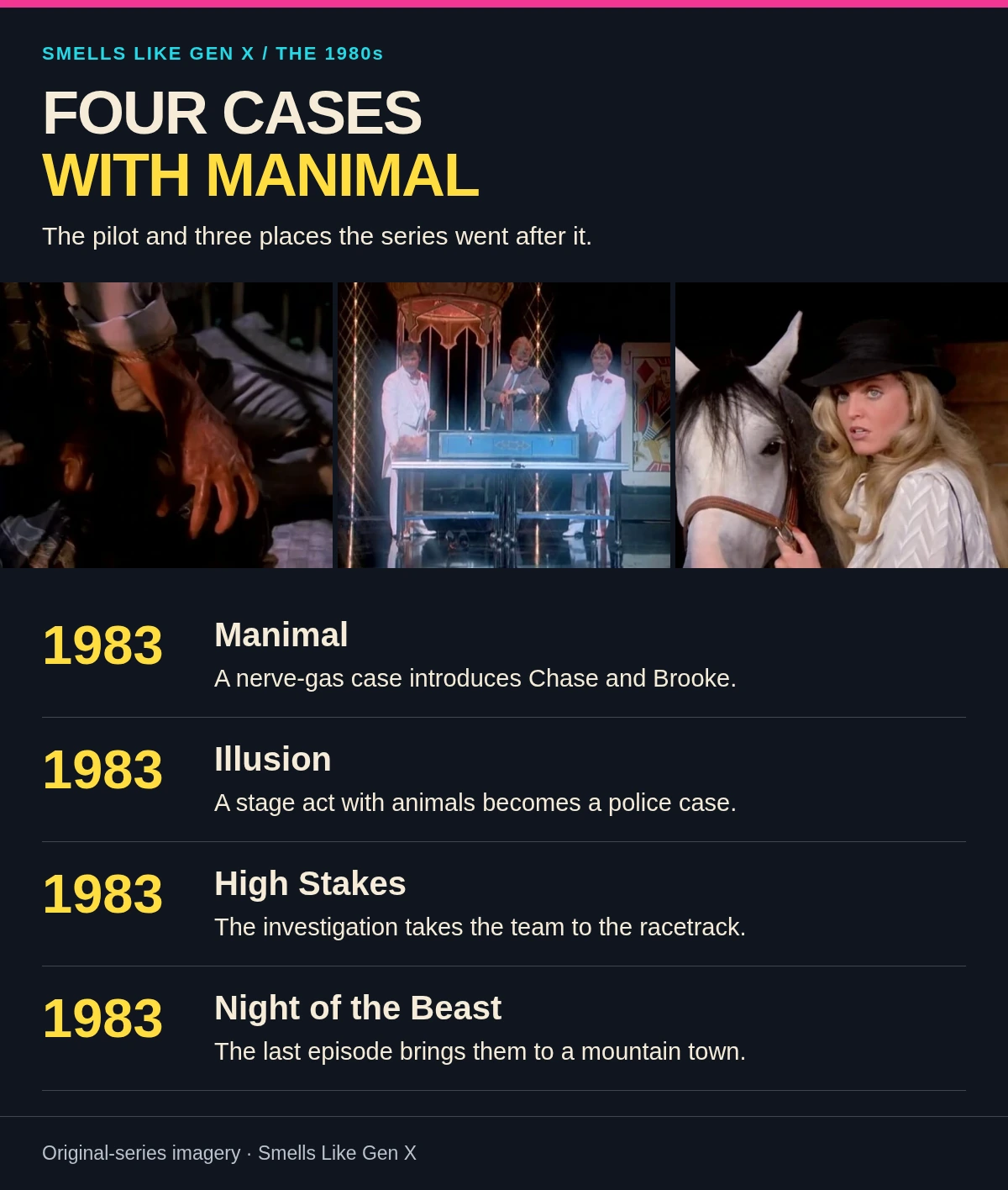
The pilot gives Brooke a case involving stolen nerve gas. Chase’s gift is one way into the trouble. Her work is another. That matters to the way the two of them are able to stay in a scene together. There’s a practical reason for them to ask what the other one knows. It leaves them time to have a conversation before Chase does the thing that makes further conversation difficult.
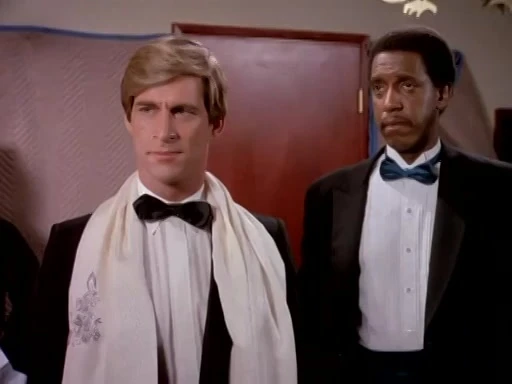
Tyrone is a useful person to have close to the story. Glynn Turman played him in the pilot, and Michael D. Roberts took the part in the regular series. You get a friend who can deal with Chase as somebody he already knows. It’s a relief to have that person around when the rest of the people they meet might spend a good part of the evening wondering what they’ve just seen.
I can imagine trying to be the person who has to tell the police about one of the things Chase does. You get as far as saying where you were and what you saw. Then you’re waiting for the person taking the account to tell you whether they’re really writing the rest of it down. A lot of the fun in the setup comes from knowing there’s an absolutely good explanation for what the witness just said and that it’ll be a long time before anybody believes them.
There’s a little luxury in the way the pilot introduces Chase as somebody who knows things about animals. A person who appears to be qualified to tell you how they behave gives the show a chance to play it as a matter of ordinary interest. Once you know what he can do, you can go back to any room where he’s explaining something and wonder how often the man has had the experience himself. I’d spend a few minutes in that class if I knew the teacher was going to let me ask how he knew what he was telling me.
Stan Winston gave the change a chance to get under your skin
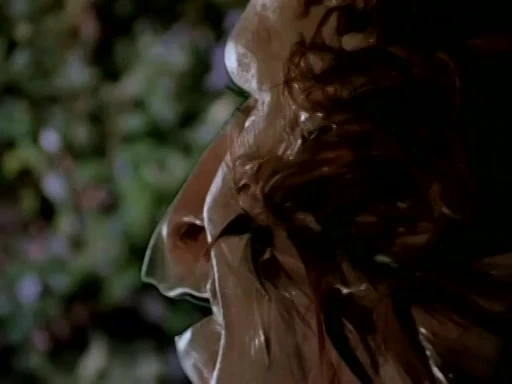
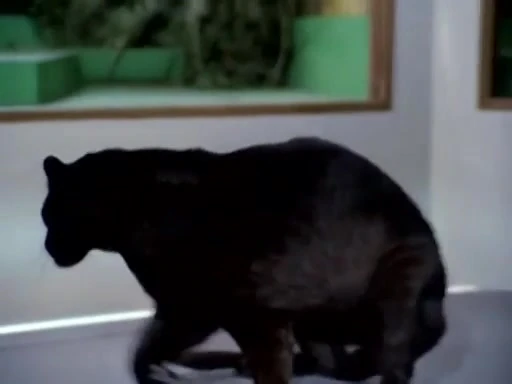
The change to a panther is the image that still comes quickest to mind. There’s an amount of time in that shot you’d usually want to save for something else on a television schedule. The show spends it on the change. Something swells or bends. The camera stays there long enough for you to begin thinking about how it would feel before you have time to think about how they made it.
Stan Winston’s effects work is part of why that sequence stayed with people. The show used physical effects to give the change some weight, and the cuts let you watch it happen in parts. A shot of a hand can give you time to guess where the rest of the body is going. You might have seen the end of the sequence before. There’s still a little suspense in how long it will take the show to get from one part to the other.
The panther and the hawk were Chase’s most familiar forms. They give you two very different ways for him to get into a scene. One feels close to the ground and gives a person in the room something to think about before they make a move. The other gives the camera a reason to look at a place from above. You can remember the feeling of each before you remember why the story needed Chase there.
I’d put the panther sequence next to the kinds of tricks that made people wait for an effect on television in the seventies. It had some of the same anticipation as watching Steve Austin get up to speed, or waiting to see what happened when David Banner couldn’t hold his temper. The Six Million Dollar Man opening could get you ready for the things Steve Austin would do before Lee Majors had said a word. Manimal made its own version out of a man trying to hold on to the shape he’d had when he came into the room.
A cat running into a shot gets a reaction from the people standing there that a man usually has to earn. A hawk can get somebody to stop talking and look up without making much noise of its own. The series could build a scene around either reaction and save the bigger effects for the part that made you wonder how Chase got there. I like watching for the point when the change has happened and the question becomes what the other people in the shot are willing to believe about it.
Brooke still had to work the case
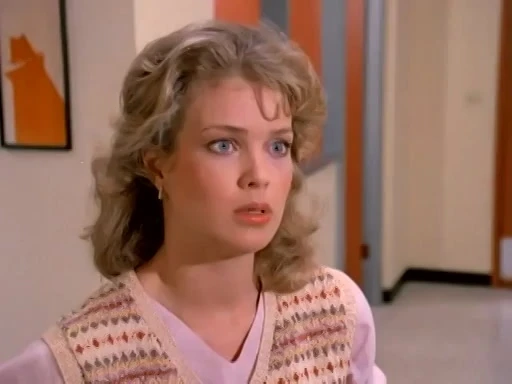
Melody Anderson has things to do besides look astonished. I appreciate that about the show when I go back to it. There’s a person missing, a story somebody is telling badly, or a reason to go ask what happened somewhere. If Brooke knows where she needs to be, Chase has a place to go. The situation gives each of them a different piece of work to do before they can talk about it again.
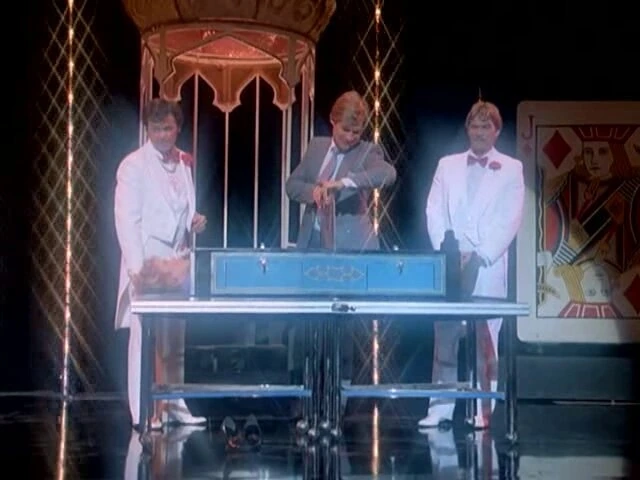
“Illusion” has the death of an animal act’s magician during a performance and a smuggling case to get through. That’s a good one if you want the show to give you a room full of people watching something they already expect to be surprising. Chase can get involved in a way that makes it even harder to work out which part the people who came for the show were supposed to believe.
“High Stakes” goes to the racetrack over a scheme involving swapped horses. You can see how comfortably a detective show might spend an hour there before it has to make room for the extra thing Chase can do. I like the thought of him getting to talk to people who already think they know what animal they’re looking at. Everybody else is trying to get a clear answer about who had the horse and when.
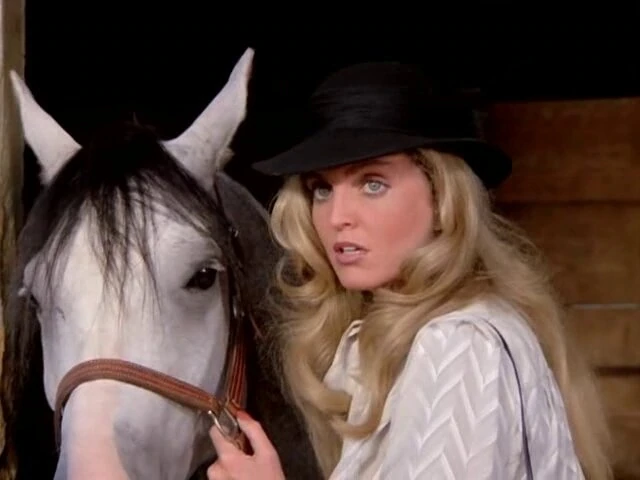
“Female of the Species” gives Brooke and Chase a woman who was raised among wolves and has an assassin after her. The idea gives Chase a person to meet who already has a reason to understand an animal’s place in the world differently. There’s time for that to come through in the work even if the only thing you remember years later is the sound the show made before somebody changed.
Eight episodes could still leave a few nights to remember
Glen A. Larson and Donald R. Boyle created the series. Its NBC run began September 30, 1983, and reached December 17. The pilot and seven regular episodes are the whole original run. The 1983–84 season puts that little stretch next to the network shows that had more time to become part of a household’s week.
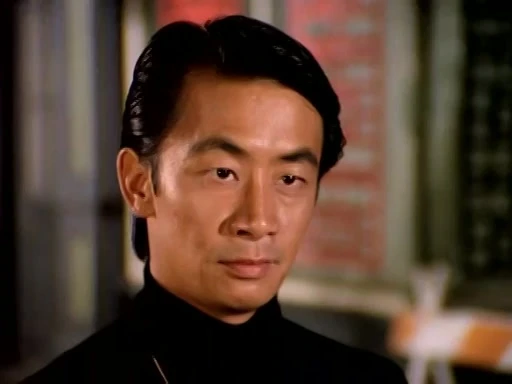
I like “Breath of the Dragon” for a different reason than I like the pilot. There’s a merchant whose grandson has begun listening to a martial-arts master and a group using what it can do to intimidate people in Chinatown. Chase has a community to meet before he has anything particularly out of the ordinary to show them. The job already gives Brooke a reason to be there. She’s got people to hear from and a good idea of what might happen if nobody comes back to ask a second question.
“Night of the Beast” takes the show to a mountain town with gambling interests coming in. A town is a good place to make a television visitor stand out. The minute Chase arrives, there are people around him with a fair idea which faces they’re used to seeing. He can spend a little time hearing why they don’t trust what’s changing before giving them a whole other reason to think about it.
If you go looking for the show again, it’s easy to find people talking about how short the run was. I’d start with the idea that there were eight nights when it had a new hour to fill. That leaves time for a stage act, a racetrack, a cruise ship, and a little room on the waterfront for the very old clue in “Scrimshaw.” It also means the people watching at home had a few different chances to see Chase’s friends figure out where he went.
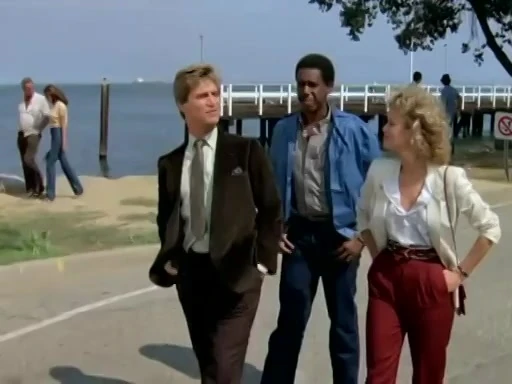
The character even got another outing years later. MacCorkindale came back as Chase on Night Man, another series associated with Larson. If the thing you remember is the evening when the title first came up on NBC, the later appearance can be a nice surprise. I’m glad somebody still had a place for the man after his own show had run out of weeks. It’s the kind of guest turn that might make a viewer in the room who’s old enough to remember the pilot interrupt a perfectly good explanation to say they already knew who that was.
The part you wanted to see again
Automan and Manimal both came out of Glen A. Larson’s orbit that season. One had a glowing figure who could step out of a computer. The other had a man whose body could do something the person watching him had to get used to seeing. Put Automan on and I’ll wait for a corner. Put Manimal on and I’ll wait for a shot of the hand. I have a pretty good idea which one somebody would start talking about first if we watched both.
The surprise for me on revisiting Manimal is how much the people around Chase add to the show. Brooke can make you pay attention to what’s happening on the street. Tyrone can make you pay attention to what it’s like to be friends with somebody who has to explain where he’s been. Chase can disappear for a little while without making the hour lose its reason to be where it is.
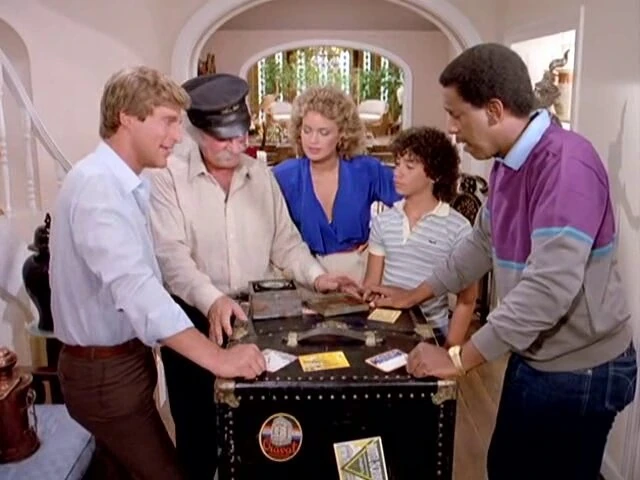
Start with the pilot and let the big effect take the time it was made to take. Then watch “Illusion” if you’re curious about how the series got on with an ordinary case. Watch “High Stakes” if you want to see how quickly it could give you a new place to recognize. I’ll still be ready when the hand comes up. It’s nice to know there are people worth spending some time with before it does.
One detail that takes me right back is how serious the show sounds about all this. William Conrad narrates the introduction. When you’ve heard that voice giving a show some weight, you can almost hear him getting to the word Manimal even with the set turned off. It’s a particularly good setup for the first few seconds after a man starts changing. Everybody has already told you this is a thing he does. There’s still a moment when the person watching has to get used to what the camera is showing them.
There’s a nice bit of patience in calling the first episode “Manimal” and letting it show you what the word means. You’re going to have to look at the people working a case before you know exactly what the animal has to do with it. I’m fond of a first episode that gives you that much to watch without asking you to know anything about it when you sit down.
Questions about Manimal
What was Manimal about?
Dr. Jonathan Chase could change into animals. He used that ability to help police detective Brooke McKenzie, with help from his friend Tyrone.
What animals did Manimal turn into?
A black panther and a hawk were the recurring forms people are most likely to remember. Chase’s ability wasn’t limited to those two animals.
Who made the Manimal transformation effects?
Special-effects artist Stan Winston is credited for the transformation work. The practical imagery and cuts between stages gave the changes a physical look.
How long was Manimal on NBC?
NBC aired eight episodes from September to December 1983, starting with the feature-length pilot. The series ended with “Night of the Beast.”