Home Improvement: How Tim Taylor Became a 90s Ratings Machine
HOME IMPROVEMENT How Tim Taylor Became a 90s Ratings Machine
Home Improvement was the kind of 90s hit that can get underrated precisely because it was so normal to see it near the top. Tim grunted, Al rolled his eyes, Jill called him on his nonsense, Wilson appeared above the fence and somebody gave a power tool more horsepower than any sensible human being would ever need. Then twenty million-plus people watched. What makes the show especially interesting now is that it stayed enormous even after the center of television started moving somewhere else.
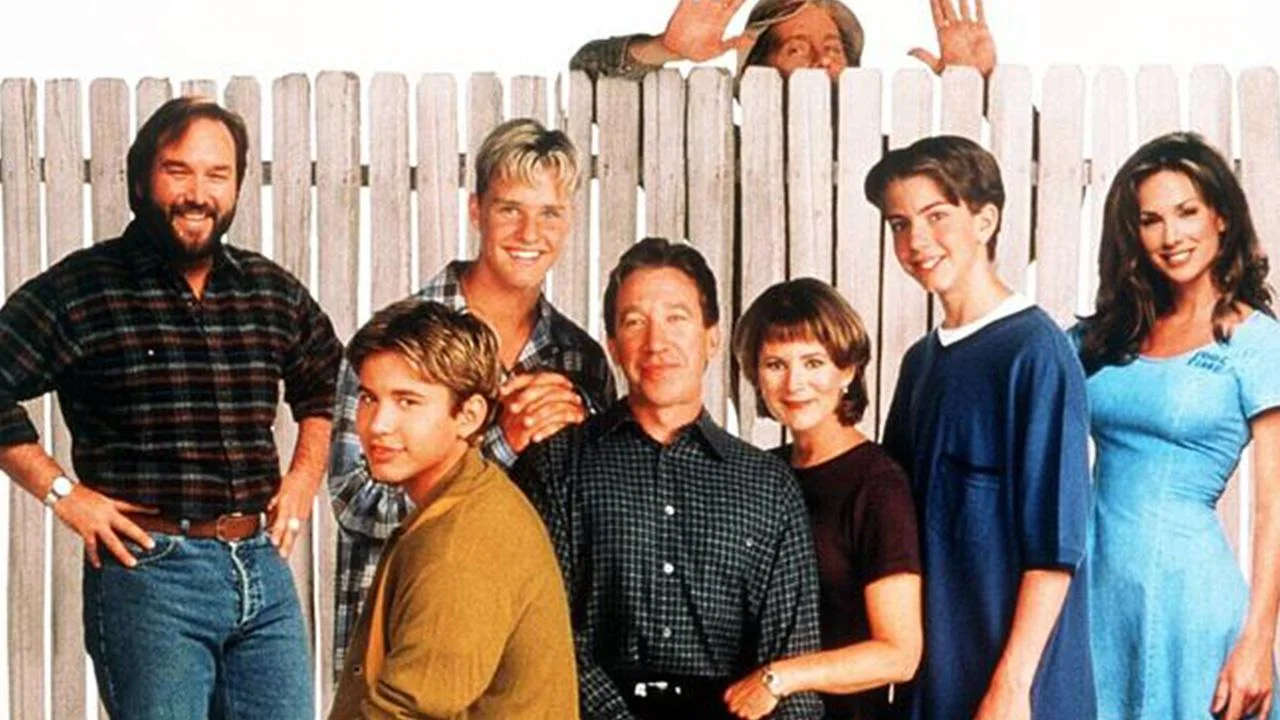
Why was Home Improvement so popular in the 90s?
Home Improvement became one of the biggest 90s TV family sitcoms because it combined broad physical comedy with a family viewers actually believed belonged together. Tim Taylor could destroy a dishwasher, hot rod or television set in the name of “more power,” but the show always came back to Jill, the boys, Al and Wilson. It reached #1 for the 1993–94 season and was still a top-10 powerhouse in 1995–96 and 1996–97, long after newer shows had begun changing the shape of prime time.
Home Improvement in the 90s: Why the Ratings Stayed Huge
The most revealing thing about Home Improvement is not that it became a monster hit. It is how long it stayed one after television started rewarding a different kind of sitcom. That staying power is the core of the Home Improvement ratings story.
By the middle of the decade, NBC had turned urban adults, dating, friendship and workplace life into the center of television comedy.
Friends had six twenty-somethings in apartments and a coffee shop.
Seinfeld was building comedy out of social irritation and emotional avoidance.
ER was moving at a speed that made older television dramas look like they were standing still.
Even ABC was changing around Tim Taylor, with NYPD Blue, Spin City and The Drew Carey Show pushing into different tones and audiences.
And there was Home Improvement.
A suburban house.
A married couple.
Three boys.
A garage.
A neighbor over the fence.
A local cable home-repair show where the host was usually less qualified than the guy standing next to him.
That sounds like television should have been aging out of it.
Instead, the ratings stayed enormous.
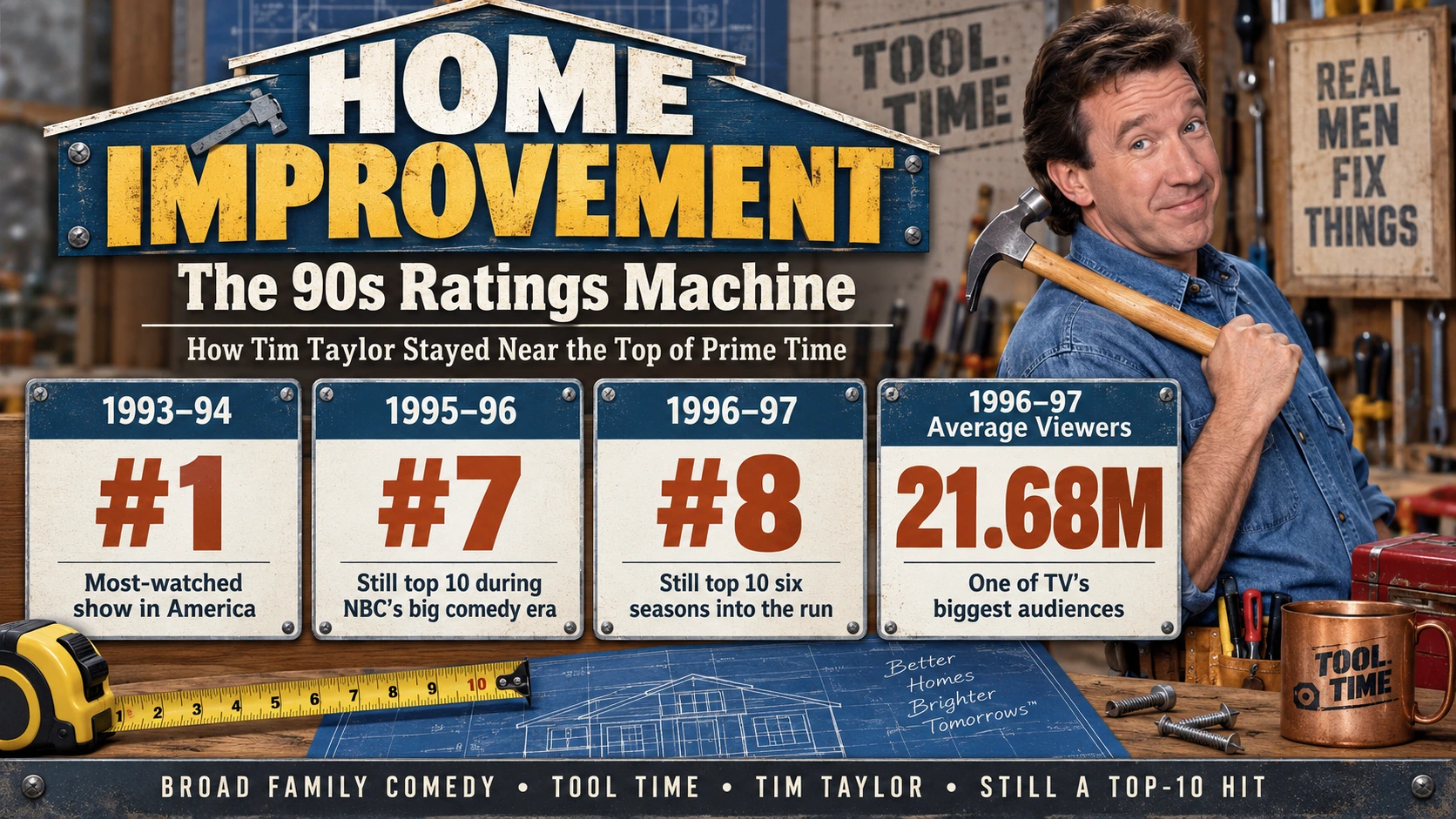
In the 1995–96 season, when NBC’s Thursday lineup dominated the country, Home Improvement still finished #7. The following year, it ranked #8 in the season’s top-program table with an average of 21.68 million viewers.
That is the story this page owns.
Not simply that Home Improvement was popular.
It is that broad suburban family comedy remained one of the safest bets in American television even while the cultural conversation was increasingly moving toward single adults, faster pacing and sharper irony.
Our larger guide to our complete guide to 1990s TV shows, sitcoms, dramas and prime-time classics makes the shift easy to see. Home Improvement sits right in the middle of it—not as a relic from the beginning of the decade, but as one of the shows the newer television still had to beat.
How Tim Allen’s Stand-Up Act Became Home Improvement
The show did not begin with a suburban television father. It began with a comedian talking about men, tools, engines and the mysterious belief that almost anything can be improved by making it louder.
Tim Allen’s stand-up material was already built around the stuff that would become the show’s language.
Power tools.
Cars.
Hardware stores.
The differences men imagine between themselves and women.
The grunt.
And above all, the idea of “more power.”
A 1994 Los Angeles Times profile described the power drills, circular saws and leaf blowers in Allen’s comedy act as the direct inspiration for the series.
TIME later described how Disney executives saw one of Allen’s Showtime specials, brought him in and eventually paired his handyman-show idea with producer Matt Williams, who had worked on Roseanne. The family element grew from there.
That was the smart move.
The obvious version of the series would have been twenty-two minutes of Tim Allen blowing up household equipment.
Funny for a while.
Probably not eight seasons.
Instead, creators Carmen Finestra, David McFadzean and Matt Williams built a world where the tool jokes exposed a personality rather than replacing one.
Tim Taylor was not funny simply because he liked machines.
He was funny because he believed machines responded to the same philosophy he often applied to life: if something is not working, add horsepower before asking what the actual problem is.
That became a marriage joke.
A parenting joke.
A male-ego joke.
A workplace joke.
And sometimes, after Wilson translated everything into language Tim could understand, it became the point of the episode.
Home Improvement premieres on ABC with Tim Allen as Detroit handyman-show host Tim Taylor.
The series receives an Emmy nomination for Outstanding Comedy Series, while Tim Allen is nominated for lead actor.
The show finishes the 1993–94 season at #1 and Tim Allen becomes one of the biggest stars in American entertainment.
Five seasons in, the show remains #7 nationally despite NBC’s ratings domination.
Season six finishes among the top programs again, averaging 21.68 million viewers.
The original run ends after eight seasons and 204 episodes.
Tim Taylor in the 90s: Why the Tool Man Worked
The key to Tim Taylor is that the series never confuses being the main character with being the smartest person in the room. Tim Taylor in the 90s became a familiar type precisely because the show let his confidence be funny without pretending it was always wisdom.
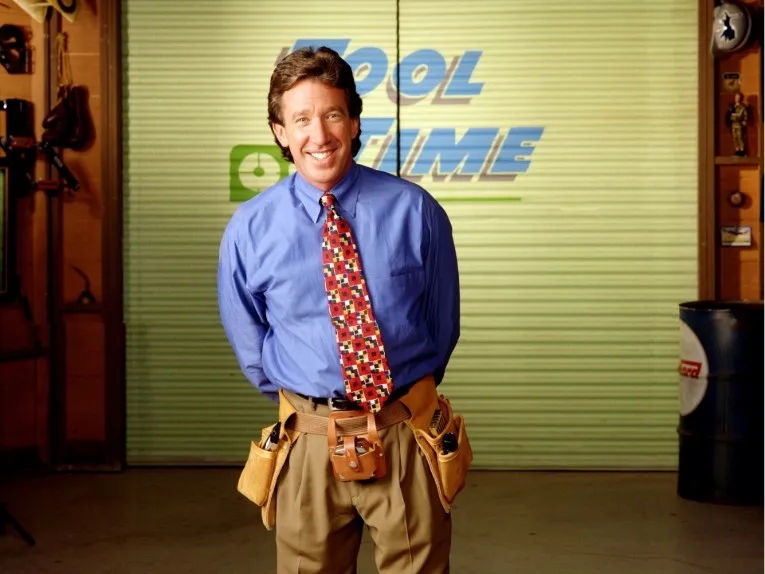
Tim thinks he understands tools.
Sometimes he does.
He thinks he understands cars.
Often he does.
He thinks those abilities prove he understands every other part of life.
That is where the trouble begins.
Tim’s entire comic engine is overconfidence.
Give him a lawn mower and he wants a racing engine.
Give him a dishwasher and he sees untapped mechanical potential.
Give him a television home-repair show and he ignores the competent assistant standing three feet away because Tim is certain the audience came to watch innovation.
Innovation usually means smoke.
What makes Tim more than a collection of catchphrases is that the same flaw shows up in the family story.
He loves Jill, but he often listens only after he has exhausted every other option.
He loves the boys, but his first parenting instinct can be competitive, impatient or shaped by what he thinks a father is supposed to look like.
He values Wilson’s advice, but first he has to misunderstand it badly enough to produce one more joke.
Tim is not a stupid character.
That distinction matters.
He is mechanically curious, professionally successful and capable of real insight.
His problem is that ego gets to the controls before judgment does.
That gives the show somewhere to go every week.
If Tim were simply an incompetent fool, Jill’s marriage to him would become impossible to believe and Wilson’s advice would feel wasted.
If he were always secretly right, the show would become unbearable.
Instead, Tim is often wrong in exactly the way a basically decent person can be wrong: confidently, defensively and with enough charm that you are willing to wait for him to figure it out.
Jill Taylor Was More Than the Sitcom Wife Who Told Tim to Stop
Patricia Richardson had the harder job because Jill had to make Tim funny without making marriage look like punishment.

The lazy reading of Home Improvement is that Tim is the fun parent and Jill is the responsible one.
There is some truth in that.
Jill is more likely to know what is happening with the boys.
She is more likely to recognize that a family disagreement is not really about the object everybody is arguing over.
And she is much more likely to understand why Tim’s latest grand gesture has missed the point.
But Jill is not simply the brake pedal.
She has pride.
She gets jealous.
She can overreact.
She gives advice nobody asked for.
She makes mistakes with the boys.
And as the series goes on, she increasingly has ambitions that are not contained by the Taylor house.
That matters especially in seasons five and six.
Jill’s psychology studies create a new arena where Tim is not automatically the expert or even the person with the most interesting day.
“Workshop ’Til You Drop” in season six flips the usual structure by taking Tim into a marriage workshop, where the guy who can talk endlessly into a television camera discovers that talking honestly about himself is harder than rebuilding an engine.
“The Flirting Game” lets Jill face a professional situation where the easy path conflicts with the person she wants to be.
“Taps” gives Richardson heavier material when Jill’s father dies.
The show needed those stories because a sitcom marriage cannot feel alive if one spouse develops and the other exists only to react.
Richardson received multiple Emmy nominations for playing Jill, including nominations in 1994, 1996, 1997 and 1998.
That recognition makes sense.
She was doing the invisible structural work that made Tim Taylor possible.
Tim and Jill Made the Marriage the Center of Home Improvement
The Taylor marriage lasted because the show understood a useful sitcom truth: conflict is funnier when the audience never doubts the relationship underneath it.

Tim and Jill argue about money.
They argue about parenting.
They argue about Tim’s friends.
They argue about Jill’s school and career.
They argue about cars, household projects, jealousy, sex, relatives and the exact moment Tim should have stopped talking.
But the arguments usually have history inside them.
These are not two characters meeting the week’s problem for the first time.
They know each other’s moves.
Jill can hear Tim building an excuse before he has finished the first sentence.
Tim knows when Jill’s silence is worse than whatever she might have said.
They have running frustrations that do not disappear just because an episode reaches minute twenty-two.
That is what makes the marriage feel older than the series.
There is also a generosity underneath the jokes.
Tim is proud of Jill even when her growth makes him insecure.
Jill knows Tim’s enthusiasm is often ridiculous, but she also knows it is real.
When he is hurt, frightened or genuinely unsure of himself, the performance drops.
That is when Richardson and Allen are often at their best together.
For a show built around male grunting, one of its most durable strengths is that the central man keeps having to learn how to communicate with his wife.
Tool Time Gave Home Improvement a Second Show Every Week
Tool Time is one of the smartest pieces of the premise because it turns Tim’s personality into a public performance.
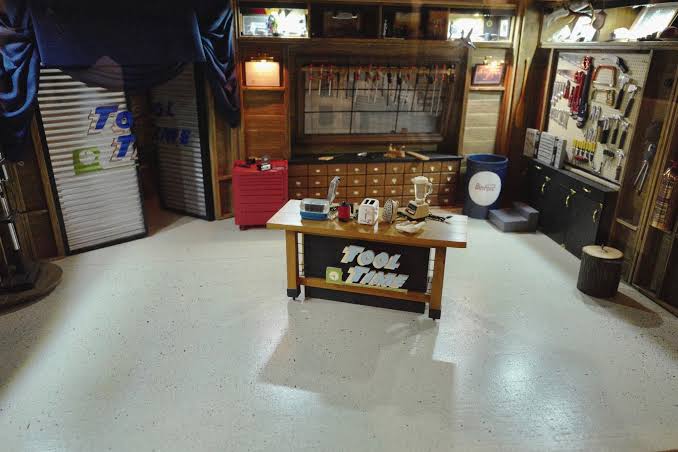
At home, Tim can pretend he meant to do that.
On Tool Time, there is an audience.
There are cameras.
There is Binford Tools.
There is Al Borland standing beside him with the expression of a man who has seen the future and knows it contains an insurance claim.
The show-within-the-show does several jobs at once.
First, it gives Tim a believable career connected to the stand-up material that inspired the series.
Second, it creates a place for physical comedy that would become exhausting if every accident happened in the Taylor kitchen.
Third, it lets Home Improvement make fun of television itself.
Tim wants ratings.
He wants spectacle.
He wants bigger equipment.
He wants a segment to look impressive even when the actual instruction has become secondary.
Al wants the measurement to be correct.
That tension can generate an entire episode before anybody gets home.
By seasons five and six, Tool Time is established enough that the writers can bend the format.
A new Binford owner wants to take the show national.
Al gets an instructional-video opportunity and hires Tim to direct.
The program travels to military settings.
Swedish buyers visit and mistake Tim’s chaos for deliberate slapstick.
Al creates a Tool Time board game.
The fictional program has become successful enough to have its own business problems, which makes it feel like a workplace instead of a recurring sketch.
Al Borland Was the Perfect Man to Stand Next to Tim Taylor
Richard Karn’s Al works because he is not simply Tim’s opposite. He is the version of masculinity Tim keeps overlooking.
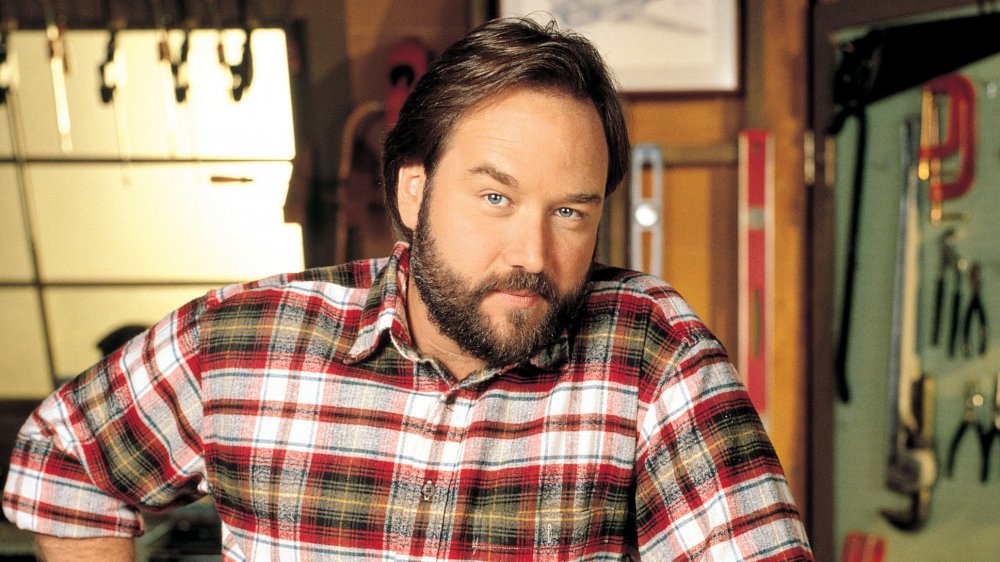
Al knows how to use the tools.
He reads instructions.
He respects safety equipment.
He likes flannel.
He is comfortable knowing things without turning every fact into a competition.
In Tim’s worldview, those traits should make Al less masculine.
The joke is that Al is often more competent at the thing Tim has made central to his identity.
That makes “I don’t think so, Tim” more than a catchphrase.
It is the show’s warning light.
Al also develops far beyond the setup.
He has a personal life.
He has ambitions beyond standing next to Tim.
He can be jealous of Tim’s spotlight while still caring about him.
He can become the center of a story, as with his instructional video or his relationship with Ilene.
And he can beat Tim at the thing Tim most wants to win without becoming smug about it.
The chemistry works because Karn rarely tries to out-volume Allen.
He waits.
Tim builds the ridiculous premise.
Al looks at him.
The audience is already laughing before he says the line.
Wilson Turned the Backyard Into Home Improvement’s Confessional
A sitcom neighbor usually walks through the back door. Wilson barely needed a face.

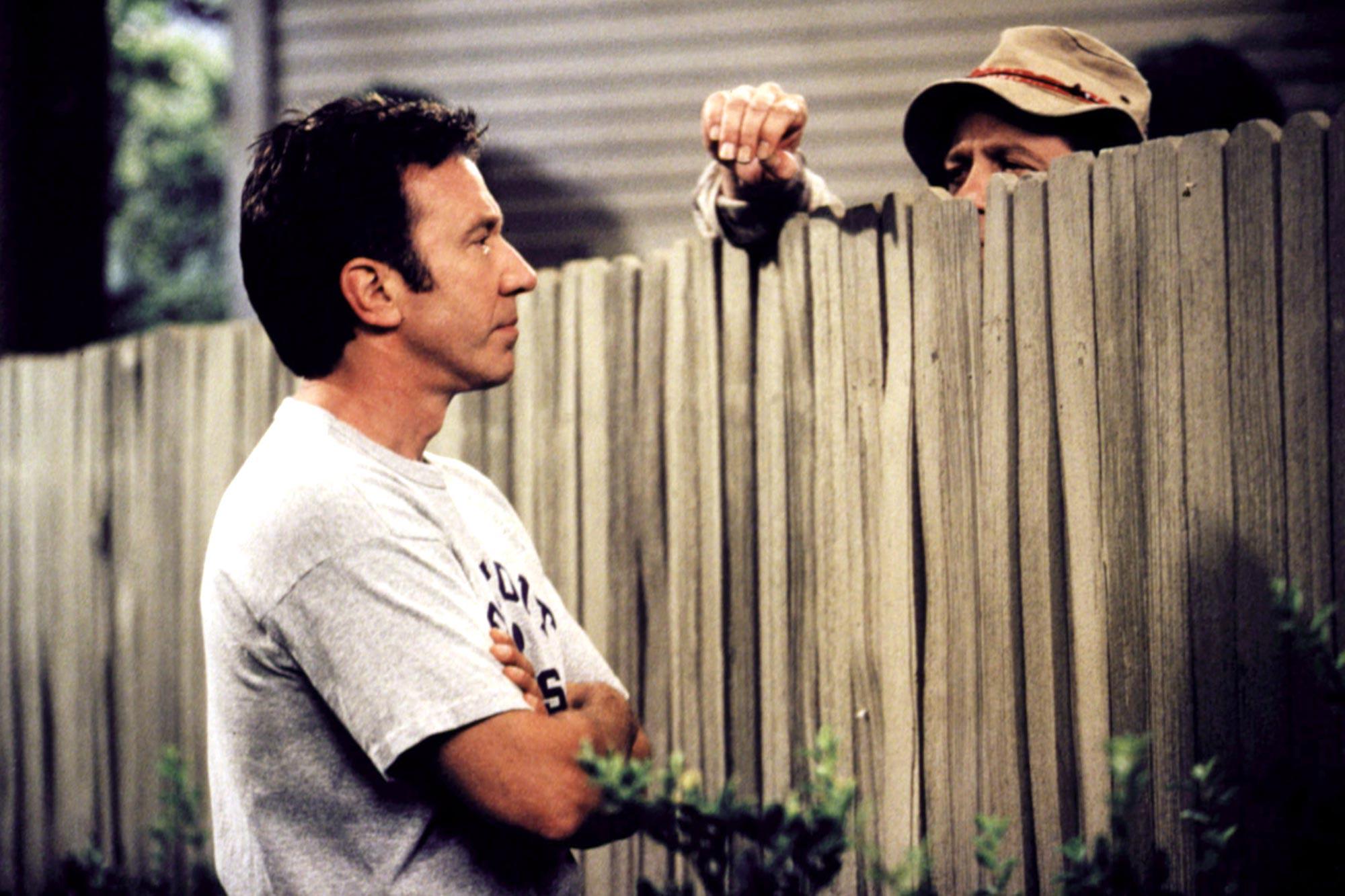
Earl Hindman’s Wilson Wilson Jr. became one of the most recognizable supporting characters on television while spending much of the series partially hidden behind a fence.
The visual gag was simple enough for a kid to understand instantly.
How are they going to hide him this week?
The deeper joke was that the man Tim could not fully see was the person who most clearly saw what Tim was doing.
Wilson had traveled.
He read.
He could pull a story from history, literature, another culture or some personal experience that sounded impossibly far removed from Tim’s suburban problem.
Tim would listen.
Then he would carry a damaged version of the advice back into the house and somehow arrive at the right conclusion anyway.
It is one of the show’s most dependable structures, but it rarely feels mechanical because Hindman plays Wilson with warmth rather than superiority.
Wilson is not there to prove Tim is dumb.
He is there because Tim needs someone who can tell him the truth without being inside the argument.
Season six’s “Wilson’s World” is especially revealing because the episode briefly turns the lens back on Wilson. When his performance at an art festival is criticized as detached from reality, he tries behaving more like Tim.
The joke works because the series has spent years establishing that Tim needs some Wilson—and Wilson, occasionally, may need a little Tim.
Brad, Randy and Mark: How the Taylor Boys Grew Up on 90s TV
One reason long-running family sitcoms get weird is that the children change while the premise wants them to stay the same age forever.

Home Improvement could not avoid the problem.
Zachery Ty Bryan, Jonathan Taylor Thomas and Taran Noah Smith were visibly growing up in front of the audience.
But by the middle seasons, the series uses that change rather than fighting it.
Brad becomes more independent, more interested in sports, dating and the idea that adulthood might arrive faster if he acts like it already has.
Randy becomes the sharper, more academic brother—the kid most capable of beating Tim in an argument with actual information.
Mark begins as the youngest boy his brothers can manipulate and slowly develops a more separate personality.
Season five’s “High School Confidential” sends Randy into advanced classes at Brad’s high school, creating exactly the kind of sibling tension that happens when one child suddenly becomes “the smart one” in a new and public way.
“The Longest Day” uses a possible cancer diagnosis for Randy to strip the family of its normal rhythms.
Season six gives Brad a job, a driver’s license and the kind of mistakes that come with being old enough to create consequences outside the house.
Randy is dating.
Mark can surprise his older brothers rather than simply following them.
By “Family Un-Ties,” Jill tries to arrange family togetherness during a hardware expo and discovers the boys would rather pursue their own interests with people their age.
That is not a dramatic television twist.
It is just what happens.
And that ordinary movement toward independence gave the show something newer family sitcoms could not fake: time.
Detroit, the Garage and Why Home Improvement Felt Different From Other 90s Sitcoms
The show did not need Manhattan apartments or a fashionable coffee shop. Its fantasy space was a garage.
Setting Home Improvement in suburban Detroit made sense on several levels.
Cars mattered.
Manufacturing mattered.
Tools mattered.
The hardware-store culture and Tim’s hot-rod obsession felt connected to a place where engines were part of the larger mythology.
The Taylor house also had physical space.
A backyard.
A fence.
A basement.
A garage.
Bedrooms the kids could disappear into.
A kitchen large enough for family traffic.
That geography shaped the comedy.
Tim could build something in the garage and bring the consequences into the house.
He could step into the backyard and get Wilson’s advice without the episode having to invent a reason for a friend to arrive.
The boys could move through the house like people who had lived there all their lives.
The setting reinforced the show’s larger appeal: this was a big, familiar, middle-American domestic world at a moment when some of the decade’s coolest sitcoms were becoming increasingly urban.
Home Improvement Made Fun of 90s Masculinity From the Inside
There is an easy temptation to watch Tim Taylor now and reduce the show to “men like tools, women understand feelings.” The series is better than that shorthand.
The male-female comedy is unmistakably of its era.
Tim talks about men as though somebody issued them a separate operating manual at birth.
He grunts.
He mocks anything that sounds too emotionally vulnerable.
He treats horsepower as a moral good.
But the joke lands because those instincts repeatedly fail him.
More power breaks the machine.
Refusing to talk makes the argument worse.
Trying to prove he is tougher than Jill makes him look insecure.
Assuming Al is less masculine because he is cautious usually ends with Al knowing more than Tim.
Wilson’s entire function is to guide Tim toward emotional language without humiliating him for needing it.
That gives the show an interesting position.
It celebrates the pleasure Tim takes in tools, cars and traditionally male spaces.
It does not tell him those interests are fake or embarrassing.
But it repeatedly asks whether the performance surrounding them is helping him be a better husband, father or friend.
Sometimes the answer is no.
That is more generous than simply mocking Tim and more useful than pretending he is always right.
Home Improvement and the 90s Family Sitcom: Why the Format Still Worked
By 1996, the coolest sitcom format was increasingly the friend group. The biggest family sitcom on ABC did not get the memo. Among 90s family sitcoms, few stayed this competitive this deep into their run.
That contrast is exactly why the ratings matter.
The decade’s comedy center was shifting toward adults who built their primary emotional lives around friends rather than spouses and children.
Our companion on why 90s sitcoms shifted from family stories toward friend groups owns that broader transformation.
Home Improvement is the useful counterexample.
It did not have to argue that family comedy was newer.
It only had to prove people still wanted it.
And they did.
There is something almost stubbornly traditional about the structure.
Dad creates a problem.
Mom sees what he is missing.
Kids create a second problem or complicate the first.
Neighbor offers perspective.
The family comes back together.
What keeps that from feeling like a rerun of the 1980s is the tone.
Tim’s stand-up voice is more self-conscious about male identity.
Jill’s ambitions extend beyond the home.
The boys get older and more autonomous.
The marriage is allowed to talk about sex, resentment, jealousy and career pressure in ways older family sitcoms often softened.
And Tool Time gives the show a workplace-comedy layer that keeps every episode from being trapped in the living room.
So yes, Home Improvement is a 90s family sitcom.
It is also evidence that familiar formats survive cultural change when the characters inside them keep moving.
Home Improvement Was Appointment TV Without Needing Thursday Night
The 90s ratings story is full of NBC Thursday nights, but ABC had its own piece of weekly muscle.
Home Improvement spent its peak years as an anchor, not as a passenger.
In 1994 ABC moved the series to Tuesday at 9 p.m. and built a powerful block around it.
Grace Under Fire followed.
NYPD Blue came later in the night.
A December 1994 Los Angeles Times analysis called ABC’s two-hour Tuesday lineup network television’s favorite viewing period at that point in the season.
That is the power of a genuine anchor.
People did not merely watch Tim Taylor.
They entered ABC through him.
Lead-outs benefited.
Promos mattered.
Tuesday at 9 became part of the week.
Our broader piece on how appointment TV made weekly viewing a shared 90s ritual owns the larger ritual.
Home Improvement demonstrates what that ritual looked like outside NBC’s most famous block.
You did not “get around to” the new episode when the algorithm remembered it.
If you watched the show, you knew when it was on.
And if you missed it, somebody at school or work had already seen the thing you missed.
Home Improvement Ratings Peak: How It Became TV’s #1 Show in 1993–94
To understand why finishing seventh or eighth later matters, you have to remember how high the show had already climbed.
In April 1994, the Los Angeles Times reported that Home Improvement finished the official prime-time season as the country’s most popular series.
It was only in its third season.
A July Nielsen summary still had the show at #1 with a 20.7 average audience percentage, ahead of 60 Minutes, Seinfeld, Roseanne and Frasier.
This was not just a successful family sitcom.
It was the center of popular television.
Then Tim Allen’s celebrity went into overdrive.
By late 1994, Home Improvement remained a top-rated television show, his book Don’t Stand Too Close to a Naked Man had reached the top of the bestseller list, and The Santa Clause became a major box-office hit.
TIME famously framed it as a triple play: a No. 1 television show, a No. 1 book and a No. 1 movie.
That kind of cultural saturation can distort memory.
We remember Tim Allen as somebody who was famous because he was everywhere.
The order matters.
He was everywhere because Home Improvement had become one of the biggest things on television.
Home Improvement Ratings in 1995–96: Still #7 in an NBC-Dominated Season
The 1995–96 rankings look like somebody printed an NBC Thursday-night promo and accidentally left Home Improvement in the middle of it.
ER finished first.
Seinfeld finished second.
Friends finished third.
Caroline in the City was fourth.
Monday Night Football was fifth.
The Single Guy was sixth.
Then came Home Improvement at #7 with a 16.2 average audience percentage.
That ranking tells the mid-decade story almost perfectly.
NBC was reshaping the center of prime time with upscale urban comedies and the country’s biggest drama.
ABC’s suburban family sitcom was still sitting right there with them.
And the weekly numbers could be even more striking.
In April 1996, the Los Angeles Times reported that Home Improvement returned to #1 for the week, breaking what the paper described as NBC’s season-long grip on the top position.
It beat ER, which finished second, and finished ahead of Seinfeld, Friends and Caroline in the City.
Then in the late-May season-ending week, Home Improvement finished #1 again while NBC’s Thursday powerhouses were in reruns.
The point is not to manufacture a rivalry the show somehow “won.”
For the season, NBC clearly owned the ratings narrative.
The important point is resilience.
Five seasons in, Tim Taylor could still knock every show in America out of first place on the right week.
Our full our ranking of the biggest TV shows of 1996 puts that #7 finish in the larger Nielsen picture.
Home Improvement Ratings in 1996–97: #8 With 21.68 Million Viewers
The 1996–97 season makes the argument even cleaner because NBC’s dominance became almost absurd—and Home Improvement was still there.
The Los Angeles Times season-end top-20 table shows ER first with 30.79 million average viewers.
Seinfeld was second.
Friends was third.
Then NBC stacked three more entertainment programs before ABC’s Monday Night Football.
Home Improvement appears at #8 with 21.68 million average viewers.
Look at what comes after it.
The Single Guy.
Touched by an Angel.
60 Minutes.
20/20.
The X-Files.
NYPD Blue.
Spin City.
The Drew Carey Show.
In that table, Home Improvement is ABC’s highest-ranked scripted entertainment series.
That is an extraordinary position for a sixth-season family sitcom whose basic premise had not changed.
Tim still hosted Tool Time.
Jill still saw through him.
Al still knew the correct way to use the equipment.
Wilson still appeared over the fence.
The boys were older, which mattered, but the identity of the show remained unmistakable.
That stability was not evidence that television had stopped changing.
It was evidence that viewers could embrace the new thing and keep the old habit at the same time.
Our our ranking of the biggest TV shows of 1997 shows just how crowded that upper tier had become.
Why Seasons 5 and 6 Could Stretch Without Breaking the Formula
Once a sitcom world is established, the real test is whether it can expand without looking like the writers are desperately searching for somewhere new to go.
Home Improvement had useful pressure valves.
Jill could go back to school.
The boys could age into work, driving, dating and higher academic expectations.
Tool Time could face corporate changes, travel, new guests and opportunities for Al.
Wilson could occasionally move from adviser to story center.
Tim could confront aging parents, memories of his father and the growing realization that his sons were not little boys anymore.
Season five opens with a family wedding trip and quickly moves into a new Binford owner who wants to take Tool Time national.
That is a grown-up workplace problem hiding inside a show famous for nail guns.
Later, Jill wants Tim to consider a vasectomy.
Randy faces a health scare.
Wilson is burglarized.
Al risks his savings on a board game.
Season six continues that expansion.
Tim and Jill imagine themselves growing old.
They attend a marriage workshop.
Brad starts working and driving.
Jill moves further into professional life.
Her father dies.
The boys increasingly have plans that do not involve their parents.
The series can still end a Tool Time segment with something exploding.
But by then the family has enough history that the emotional stories carry more weight than they could have in 1991.
Essential Home Improvement Episodes From 1995–97
This is not a “best episodes ever” ranking. These are stories from seasons five and six that show how the series stayed broad enough for a mass audience while giving its characters room to grow.
“The First Temptation of Tim”
A new Binford owner wants to take Tool Time national and starts looking at casting changes. The episode works because success itself becomes a threat to the familiar workplace.
“High School Confidential”
Randy begins advanced classes at Brad’s high school, turning intelligence and sibling rivalry into a story about what happens when brothers stop occupying fixed family roles.
“Tanks for the Memories”
A special Tool Time visit to a Marine base gives Tim the perfect fantasy—until Jill proves more capable at driving a tank.
“The Vasectomy One”
Jill wants Tim to consider a vasectomy, giving the show room to turn male anxiety into comedy while treating a married couple’s family-planning decision as an actual adult conversation.
“The Longest Day”
A routine checkup leads to fear that Randy may have cancer. The episode strips away Tim’s normal bravado and shows how much emotional history the family had accumulated by season five.

“Games, Flames & Automobiles”
Al risks his savings on a Tool Time board game that develops the kind of product flaw you can probably guess from the title. It is workplace comedy, friendship and physical chaos in one story.
“Future Shock”
Tim and Jill imagine themselves as older adults, using an exaggerated fantasy to get at a real marriage question: what happens if the habits bothering you now never change?
“Workshop ’Til You Drop”
Jill takes Tim to a marriage workshop for a “tune-up.” The mechanical metaphor gets him through the door; the episode then forces him to do something harder than fixing anything—talk honestly.
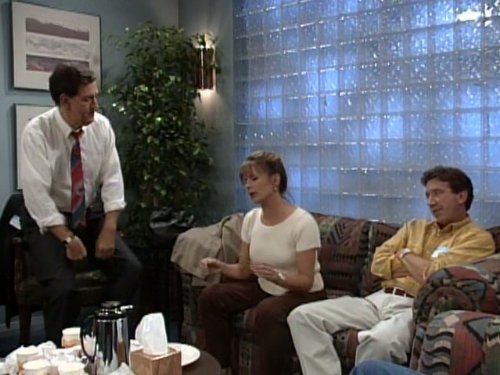
“Wilson’s World”
Wilson’s art-festival performance is criticized as detached from reality, so he experiments with acting more like Tim. The episode briefly reverses one of the show’s most dependable relationships.
“Family Un-Ties”
At a hardware expo, Jill expects family time and discovers the boys increasingly want their own experiences. Nothing explodes; a phase of parenthood simply starts ending.
“Taps”
Jill’s father dies after she avoids a visit while exhausted from school. Patricia Richardson gets a story built around grief, guilt and the limits of assuming there will be another chance.

“The Kiss & the Kiss-Off”
Former Tool Time assistant Lisa returns while Randy faces a nervous first date. The episode puts workplace history and teenage growing pains in the same half hour.
Home Improvement Popularity: Why Kids, Parents and Adults All Watched
Part of the ratings machine was simple math: the show gave different people in the same house different reasons to laugh. That broad reach explains a lot about Home Improvement’s popularity at its peak.
Kids could watch Tim fall off something.
Teenagers could follow Brad, Randy and Mark.
Adults could recognize the marriage jokes.
Anybody who liked cars, tools or hardware-store culture had an entire second vocabulary running through the show.
In 1994 Nielsen demographic data published by the Los Angeles Times showed Home Improvement performing at or near the top across women 18–49, men 18–49, teenagers and children.
That kind of reach is what “mass audience” used to mean.
The series was not built to win one narrow slice of the audience.
It was built to survive the argument over what the family wanted to watch.
That is a very different programming environment from the one streaming eventually created.
A show did not need every viewer to think it was their favorite.
It needed enough people in enough homes to agree not to change the channel.
Home Improvement was exceptionally good at that.
Home Improvement’s Multi-Camera Craft Was Built for a Huge Audience
A broad sitcom lives or dies on rhythm.
Setup.
Reaction.
Escalation.
Pause.
Payoff.
Home Improvement had to manage physical comedy, family dialogue, workplace bits and catchphrases without letting the half hour feel like separate sketches taped together.
The technical side was good enough to earn consistent Emmy recognition.
The Television Academy lists 34 Emmy nominations and seven wins for the series.
The show itself was nominated for Outstanding Comedy Series in 1992, 1993 and 1994.
Tim Allen received a lead-actor nomination in 1993.
Patricia Richardson received repeated lead-actress nominations.
Many of the wins and nominations came in lighting, editing, sound and technical production—the invisible work that keeps a multi-camera sitcom looking effortless.
That matters to the ratings story because a show this broad cannot feel sloppy.
The machinery has to work even when Tim’s machinery does not.
The Grunt, “More Power” and “I Don’t Think So, Tim” Became 90s TV Language
The biggest sitcoms usually leave behind sounds as well as scenes.
Tim’s grunt is almost impossible to type without hearing it.
“More power.”
“I don’t think so, Tim.”
Wilson beginning another story from somewhere Tim has never been.
Those pieces became shorthand because they were attached to reliable character behavior.
Tim does not say “more power” randomly.
It means he is about to ignore the exact reason the equipment was designed with a limit.
Al’s line means he has already calculated how badly this can go.
The grunt means Tim has entered a version of masculinity where language is apparently optional.
That repetition is part of sitcom pleasure.
You know the move.
You wait for the variation.
And when a show is watched by twenty or thirty million people, the catchphrase escapes into ordinary conversation.
That is one of the things younger viewers can miss about pre-fragmentation television.
A joke did not have to go viral online.
The audience was already there at 9 p.m.
Watching Home Improvement in the 90s: The Gen X Memory of Tim the Tool Man
For me, the weird thing about remembering Home Improvement is how little effort the memory takes.
You do not have to reconstruct the premise.
You hear the grunt.
You see the fence.
You remember Al in flannel.
You remember Tim trying to put a ridiculous engine into something that had functioned perfectly well before he touched it.
And if you were watching television in the middle of the 90s, the show did not feel like a cultural phenomenon you needed to study.
It felt like television.
That is often what the biggest shows feel like while they are happening.
They become furniture.
They are just there.
Tuesday night comes around and Tim Taylor is on.
The family watches.
Somebody repeats the grunt the next day.
You do not stop to calculate that the same show is averaging more than twenty million viewers six seasons into its run.
Why would you?
That scale felt normal because network television still trained us to think in giant shared audiences.
What I notice more now is how unapologetically middle-of-the-country the show felt.
Not glamorous.
Not trying to make Detroit look like Manhattan.
Not pretending Tim and Jill were younger or cooler than the parents they were.
The garage was aspirational in the way a garage can be aspirational.
Enough room.
Enough tools.
A project you probably should not start at 8:30 at night.
That ordinary familiarity was part of the appeal.
What Feels Dated About Home Improvement—and What Still Works
Any sitcom built this heavily around gender differences is going to carry some 90s assumptions into the present.
There are jokes where “men are this, women are that” does almost all the work.
There are moments when Tim’s fear of anything coded as feminine feels very tied to the era.
There are story beats where Jill gets stuck doing emotional labor because that was the easiest route into the plot.
And some broad physical gags feel broader now because television comedy changed around them.
But the central structure has aged better than the stereotype.
Tim’s insecurity is usually the joke.
Jill has a point of view strong enough to challenge the premise.
Al’s competence repeatedly undermines Tim’s macho hierarchy.
Wilson gives emotional intelligence dignity instead of treating it as weakness.
The boys learn that being male does not require becoming copies of their father.
That is why many episodes still work even when the setup announces its decade immediately.
The show’s worldview is more flexible than Tim’s worldview.
The Home Improvement Formula: Why the Ratings Machine Worked
Because it was broad without being anonymous, familiar without being completely static and sentimental without making Tim Taylor stop being Tim Taylor.
The premise was easy to understand in ten seconds.
The characters were easy to distinguish.
The jokes could be physical enough for a child and specific enough for an adult.
The marriage supplied emotional credibility.
The boys created constant change.
Tool Time broke the domestic rhythm.
Wilson supplied perspective.
Al supplied timing.
And Tim Allen had a comic persona the audience understood before he had finished making the noise.
That is a ratings machine.
Not a show engineered by a spreadsheet.
A show where every major character and location has a clear job and enough flexibility to keep doing it in new ways.
The ratings show how durable that machine was.
#1 in 1993–94.
#7 in 1995–96.
#8 in 1996–97 with 21.68 million average viewers.
Plenty of shows become hits.
Far fewer remain that large after the rest of television starts moving in another direction.
Home Improvement Legacy: Why the 90s Family Sitcom Stayed in the Top 10
The Home Improvement legacy is not that it invented the family sitcom. It is that it proved the format could remain enormous in a decade increasingly defined by something else.
The show arrived early enough in the 90s to become part of the family-comedy boom.
Then it lasted long enough to share the ratings chart with the television that was replacing that boom as the cultural center.
That is the fascinating position.
In 1993–94, Home Improvement was the #1 show.
By 1996–97, ER, Seinfeld and Friends were the three highest-rated programs in the season-end table.
Tim Taylor was still eighth.
It did not win the argument over what the next era of television would look like.
It did not need to.
It demonstrated that mass television could support more than one idea of the mainstream at the same time.
That is important when we flatten the decade into one story.
The 90s were not simply the moment everybody abandoned the family living room for a coffee shop.
Millions of viewers kept both.
The show also left behind one of the decade’s most durable television personas.
Tim Allen’s later work would return repeatedly to men who are confident in traditional spaces, confused by changing expectations and funnier when the world refuses to validate every assumption they make.
You can draw a straight line from the popularity of Tim Taylor to why that persona remained valuable for years afterward.
From #1 at its peak to top ten six seasons in, the audience did not vanish when television tastes shifted.
The show kept marriage, kids and suburban domestic life competitive with the decade’s newer friend-group formats.
Tim Allen turned tools, cars, ego and “more power” into a persona recognizable from a single grunt.
The final measure is memory.
If I say “Tim the Tool Man,” you probably do not need the rest of the sentence.
If I say Wilson, there is a fence.
If I say Al, there is flannel.
If I say “more power,” somebody is about to void a warranty.
That is not a generic family sitcom.
That is a television world that knew exactly what it was.
Home Improvement FAQ: Ratings, Tim Taylor, Tool Time and 90s TV
How popular was Home Improvement in the 90s?
Home Improvement was one of the decade’s biggest sitcoms. It finished the 1993–94 official season as the #1 series and remained in the national top ten in both 1995–96 and 1996–97.
What did Home Improvement rank in 1996?
For the 1995–96 season, Home Improvement finished #7 in a Nielsen top-ten table published by the Los Angeles Times, with a 16.2 average audience percentage.
What did Home Improvement rank in 1997?
The season-ending 1996–97 Nielsen table published by the Los Angeles Times ranked Home Improvement #8 with an average of 21.68 million viewers.
Was Home Improvement ever the #1 show on television?
Yes. Home Improvement finished the official 1993–94 prime-time season as the most popular series in the country.
How many seasons of Home Improvement were there?
The original ABC run lasted eight seasons, from September 1991 through May 1999.
How many episodes of Home Improvement were made?
The series produced 204 episodes across its eight-season run.
Was Tool Time a real television show?
No. Tool Time was the fictional local home-improvement program hosted by Tim Taylor inside the sitcom, with Al Borland as his much more careful co-host.
Why did viewers never see Wilson’s whole face?
Keeping Wilson partially hidden became one of the series’ signature visual jokes. The production continually found new objects, framing devices and fence angles to maintain the gag.
Who created Home Improvement?
The series was created by Carmen Finestra, David McFadzean and Matt Williams, building the premise around Tim Allen’s stand-up material about tools, men and “more power.”
How many Emmys did Home Improvement win?
The Television Academy lists 34 Emmy nominations and seven wins for the series across its original run.
Why was Home Improvement important to 90s TV?
Its staying power showed that broad suburban family comedy could remain a huge shared-audience attraction even while the decade’s biggest newer comedies increasingly centered on single adults, friends and urban life.
Home Improvement ratings, history and awards sources
- Television Academy — Home Improvement, for Emmy nominations, wins and series recognition.
- Los Angeles Times — April 20, 1994 ratings report, for Home Improvement finishing the official 1993–94 season as the most popular series.
- Los Angeles Times — 1995–96 TV Facts, for the season’s top ten and the show’s #7 ranking.
- Los Angeles Times — 1996–97 season top 20, for the #8 finish and 21.68 million average viewers.
- Los Angeles Times — April 10, 1996 ratings report, for the week Home Improvement returned to #1 ahead of ER and NBC’s Thursday comedies.
- Los Angeles Times — Tim Allen cover story, October 1994, for the stand-up roots of the series and Allen’s mid-90s rise.
- TIME — “Tim at the Top”, for the development of Allen’s television persona and his 1994 TV/book/movie peak.
- TV Guide — Home Improvement Season 5 episode guide, for 1995–96 episode dates and story summaries.
- TV Guide — Home Improvement Season 6 episode guide, for 1996–97 episode dates and story summaries.