Hunter in the 80s: The Cop Show That Went Harder
Fred Dryer brought the hard edge. Stepfanie Kramer made sure the partnership had another intelligence in the room.
The original Rick Hunter and Dee Dee McCall belonged together in the case, even when the methods got messy.
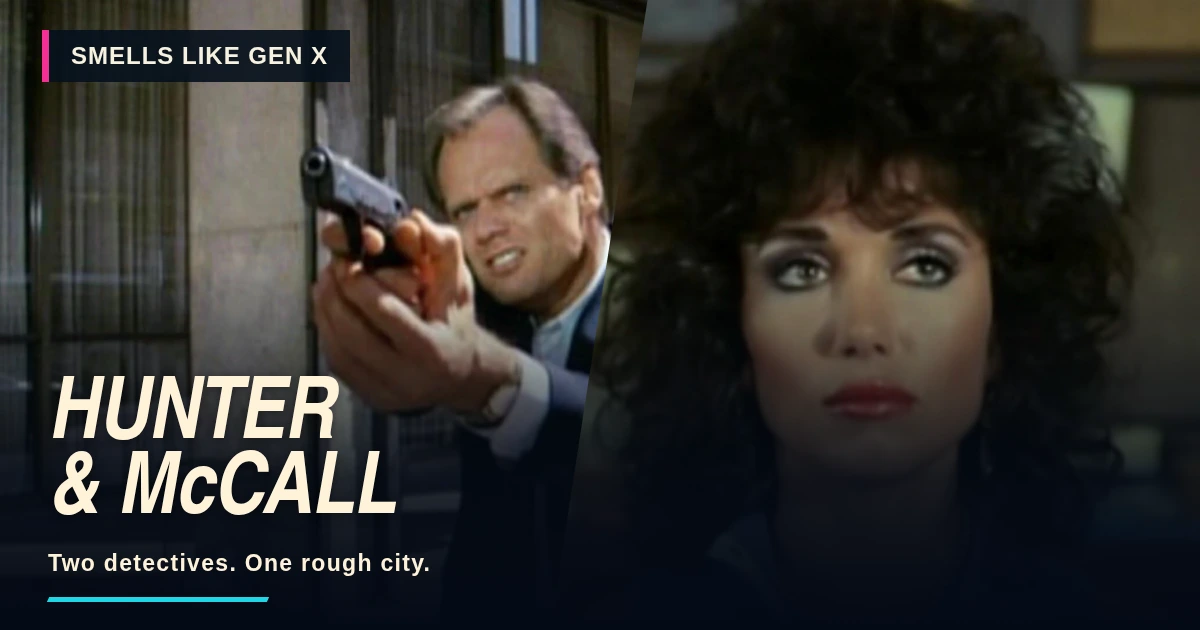
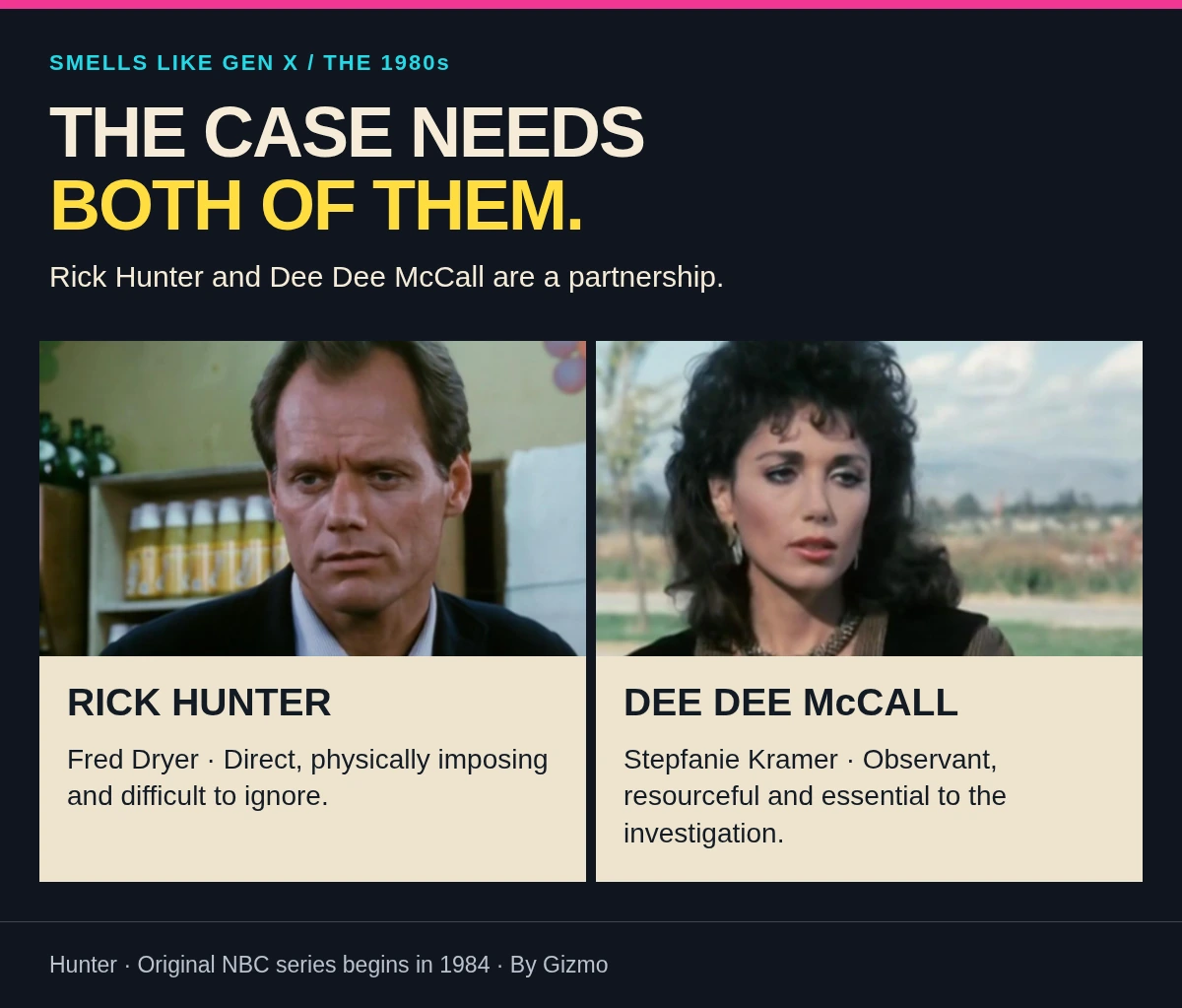
Some eighties detectives looked ready for a dinner reservation. Rick Hunter looked ready to make somebody regret blocking the doorway. Fred Dryer brought a useful lack of delicacy to the role: a large man, a direct approach and an expression suggesting that the next explanation had better improve on the last one.
But the show I remember was never just a man moving aggressively through Los Angeles. Stepfanie Kramer’s Dee Dee McCall was essential. She could match the pressure with a different kind of presence, and the partnership gave Hunter more life than a one-person demonstration of how much trouble a tough cop could cause before the commercial.
The original NBC series began in 1984 and continued into 1991. This visit stays with its eighties identity: Dryer and Kramer, the early cases, the rough city atmosphere and the working relationship that became the reason to keep coming back. The later changes and revivals have their own dates. They should not quietly move into the first-season squad room because memory has put everyone in the same cast photograph.
Frank Lupo’s series came from Stephen J. Cannell’s production world, and it knew how to put a clear personality into a problem quickly. Hunter had a reputation, McCall had initiative and the cases offered people whose stories did not necessarily match what had happened. The approach was blunt, but the best parts depended on observation as well as force.
It is a tougher corner of our eighties TV collection. I liked the momentum. I also think a useful rewatch can enjoy that momentum while noticing where the show made the shortcut look too easy. A nostalgic evening does not require handing the detective a blank check just because his name is in the opening credits.
Inside This Article
- Rick Hunter arrives with a problem already attached
- Fred Dryer makes the direct approach readable
- Stepfanie Kramer makes McCall a detective
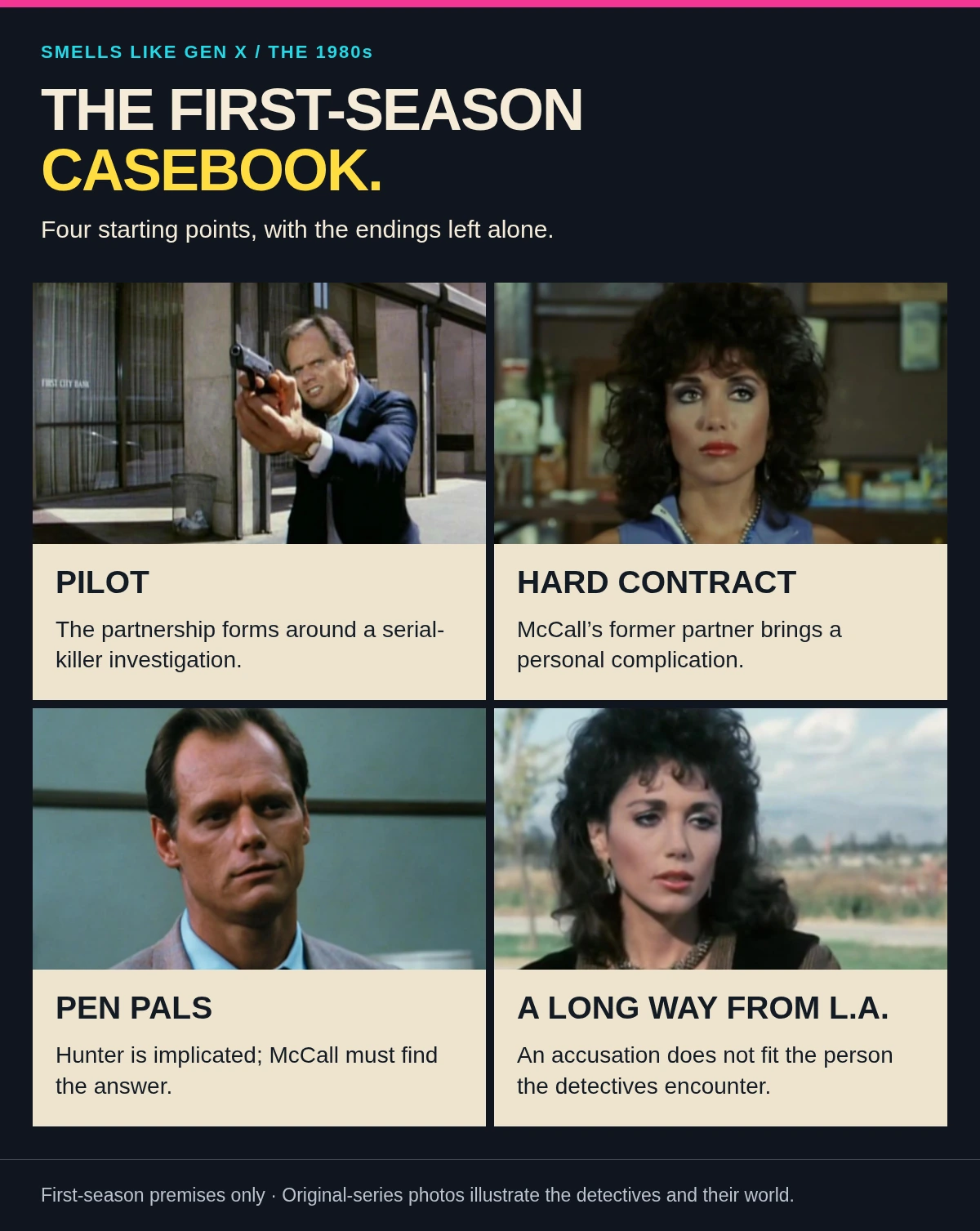
- The pilot puts the partnership in motion
- The title can hide how much of the show is a double act
- Los Angeles has fewer soft edges here
- Hard Contract gives McCall a personal connection
- A Long Way from L.A. starts with an accusation that does not fit
- Pen Pals makes McCall carry the answer
- Protecting an unpleasant person is still the assignment
- The Garbage Man complicates an apparently helpful pattern
- The Avenging Angel turns admiration into a threat
- Snow Queen gives the partners different routes into the danger
- Guilty asks how a past verdict can return as a threat
- Fireman makes the city’s ordinary spaces vulnerable
- Sniper narrows the space between a stranger and a target
- The Hot Grounder puts authority close to the victim
- Flight on a Dead Pigeon begins with a small person’s question
- Dead or Alive puts another kind of pursuer in the picture
- The Last Kill asks what the apparent pattern leaves out
- The captain’s chair changes as the series develops
- A later-eighties case puts Hunter under a public light
- The violence is part of the appeal and part of the limitation
- Humor keeps the partnership from becoming a permanent scowl
- The working relationship matters more than a forced courtship
- Cagney and Lacey offers a useful neighboring comparison
- Miami Vice took the same decade in another direction
- Hill Street Blues shows another way to use the department
- The eighties version is not the entire chronology
- A good way back into Hunter and McCall’s city
- What the opening credits promise
- Questions people still ask about Hunter
Rick Hunter arrives with a problem already attached
The first-season setup gives Hunter a family connection to organized crime. That makes him difficult for some colleagues to trust before the current investigation has supplied its own conflict. He is not simply the abrasive officer whose competence everyone privately recognizes. His background gives the suspicion a more particular shape.
I like that as a starting complication because it makes reputation part of the workplace. A person’s name and history can affect an assignment even when neither settles what that person has actually done. Hunter has to operate inside an organization where the reaction to him is already loaded. The viewer is given a reason to expect friction without needing a superior to manufacture a new objection every week.
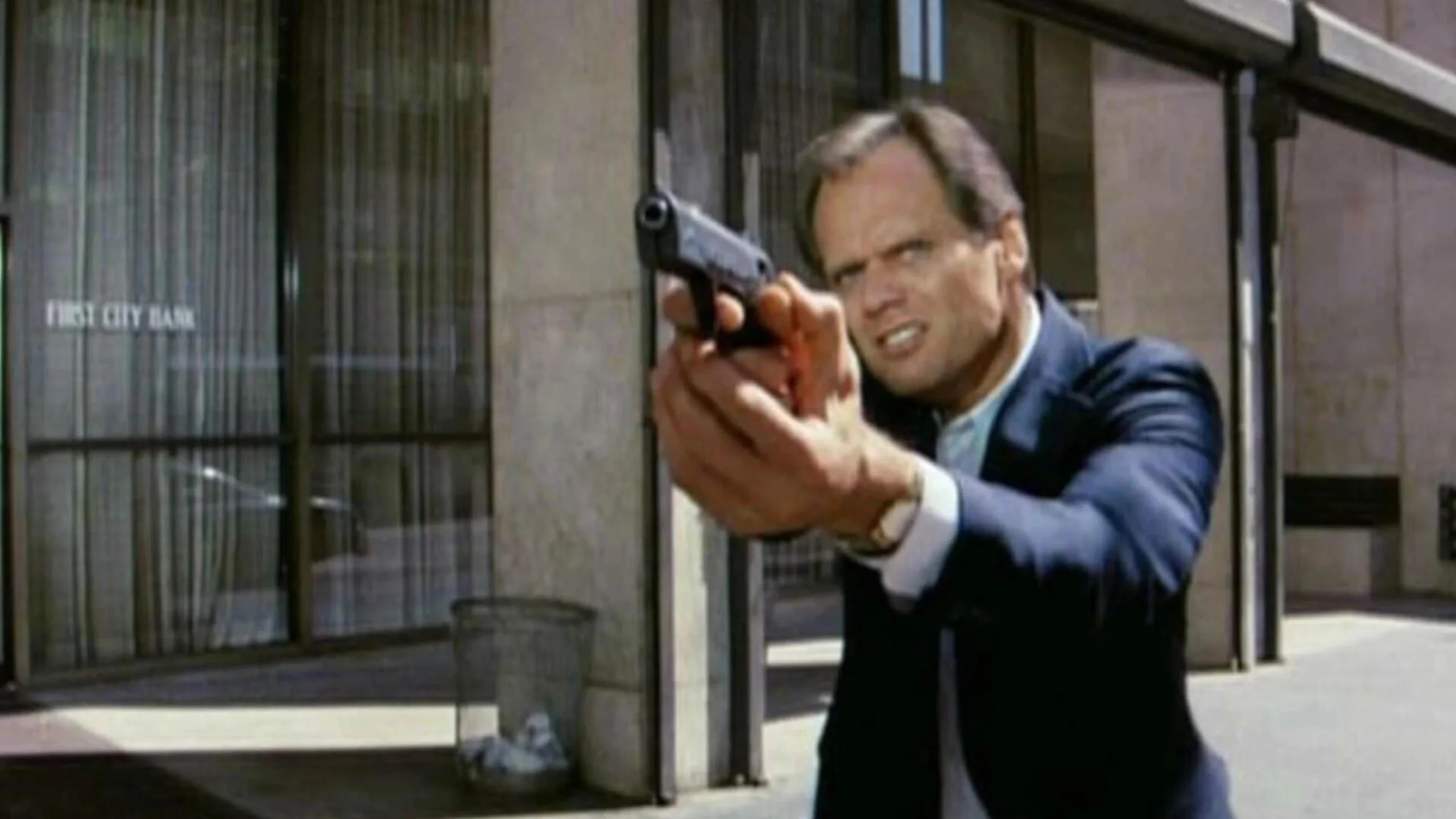
It also creates a useful difference between knowing criminal people and being aligned with them. The series can use Hunter’s familiarity as a resource while allowing the surrounding suspicion to remain uncomfortable. A connection is information, but it is not the same thing as a verdict. The better stories should make that distinction visible rather than relying on whichever assumption is convenient for the hero.
Dryer’s presence helps the premise land. This is not someone likely to respond to distrust by becoming unobtrusive. The character occupies space, and the workplace has to deal with him. That gives the show energy from the beginning. Before he has solved the case, Hunter has already become a problem someone else in the building would like to manage.
Fred Dryer makes the direct approach readable
Dryer does not have to perform a great deal of movement to make Hunter look physically imposing. The camera can put him near another person and let the difference register. That is useful for a series whose central character often prefers pressure to patience. The threat of escalation can be present before the scene becomes an action sequence.
The performance works best when the directness has a little variation. A permanent scowl is a limited instrument. Hunter needs moments of assessment, irritation and dry reaction so that the audience can tell the difference between a man thinking and a man preparing to act. Those changes keep physical presence from becoming the only thing happening in the frame.
I enjoy the impatience as television behavior. It can get a scene moving and make a weak explanation feel appropriately uncomfortable. But impatience is not proof, and the program becomes less satisfying when it treats the two as interchangeable. The case should occasionally require Hunter to discover something he could not have forced out of the first convenient suspect.
That is where a partner matters. A strong lead becomes more interesting when another regular can alter the scene’s rhythm. McCall can notice, question or proceed differently without needing to become a moral lecture standing beside him. Dryer gives the show its blunt outline; the continuing exchanges with Kramer fill that outline with more usable human behavior.
Stepfanie Kramer makes McCall a detective
McCall is not simply the woman assigned to soften the hero. Kramer gives her professional intent. She has a case to work, judgments to make and practical reasons to become involved. That distinction is the difference between a partnership and a lead character with a permanent reaction shot.
The role also benefits from a different physical and conversational rhythm. Hunter can dominate a space through size and directness. McCall can change what is happening through attention, a question or the ability to move through a situation without producing the same immediate response. The show gains options when those approaches remain distinct.
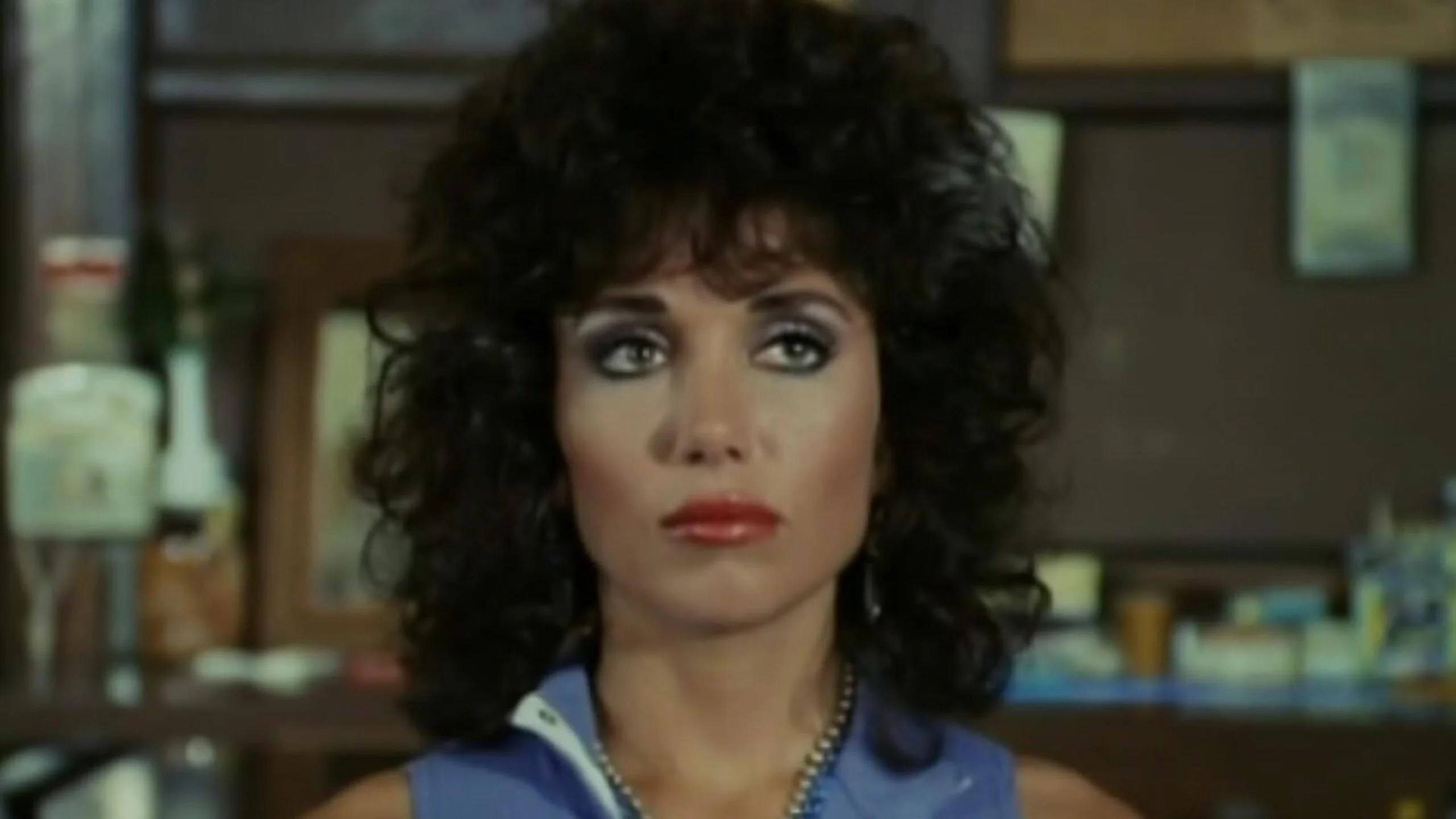
I like the scenes that allow her to be decisive without making the decision a special announcement about her competence. A working detective should not need the program to congratulate her every time she contributes. Kramer makes the contribution feel like part of the job, which is more convincing than a repeated lesson delivered to anyone who has underestimated her this week.
The partnership becomes valuable because McCall can carry responsibility when Hunter cannot. A case that puts him under suspicion or out of circulation should not leave the show waiting for its title character to return. She has enough presence to keep the investigation moving. That is one reason the original pairing matters so much to the series’ memory: the second name could be absent from the title without being absent from the work.
The pilot puts the partnership in motion
The opening story joins Hunter and McCall around a serial-killer investigation. It gives the pair an urgent task while the workplace is still deciding what to do with Hunter. That is an efficient introduction. We do not need to watch several ordinary assignments before the arrangement begins to reveal its strengths and difficulties.
The danger also tests whether the two leads can share the frame productively. A partnership needs more than compatible publicity photographs. The audience has to see why the people would continue working together after the immediate problem ends. Their different reactions should create a usable combination rather than merely doubling the number of detectives who can enter a room.
For a returning viewer, the first episode is a useful reminder of how rough the early show wants to be. The tone is more confrontational than the memory of a familiar long-running partnership may suggest. Later comfort can smooth the edges when we remember a series as a collection of favorite faces.
I would start here if you want to understand Hunter’s particular version of the eighties cop-show fantasy. The initial assumptions are visible: forceful personalities, institutional resistance and a threatening city. The more interesting question for the continuing run is what the show adds to that outline. Kramer and Dryer give it room to become more than the first impression, provided the cases make use of both of them.
The title can hide how much of the show is a double act
A program named Hunter naturally encourages memory to center Hunter. The face, the physical presence and the direct approach become the easiest summary. That is fair as far as it goes, but the summary misses the recurring exchange that makes a weekly return worthwhile.
A lone tough detective can generate action. A partnership can generate an opinion about that action. Another person can see the plan, question it, improve it or recognize what it has overlooked. McCall does not need to disagree constantly to make that contribution. Agreement can be meaningful too, especially when it comes from someone the show has allowed to judge independently.
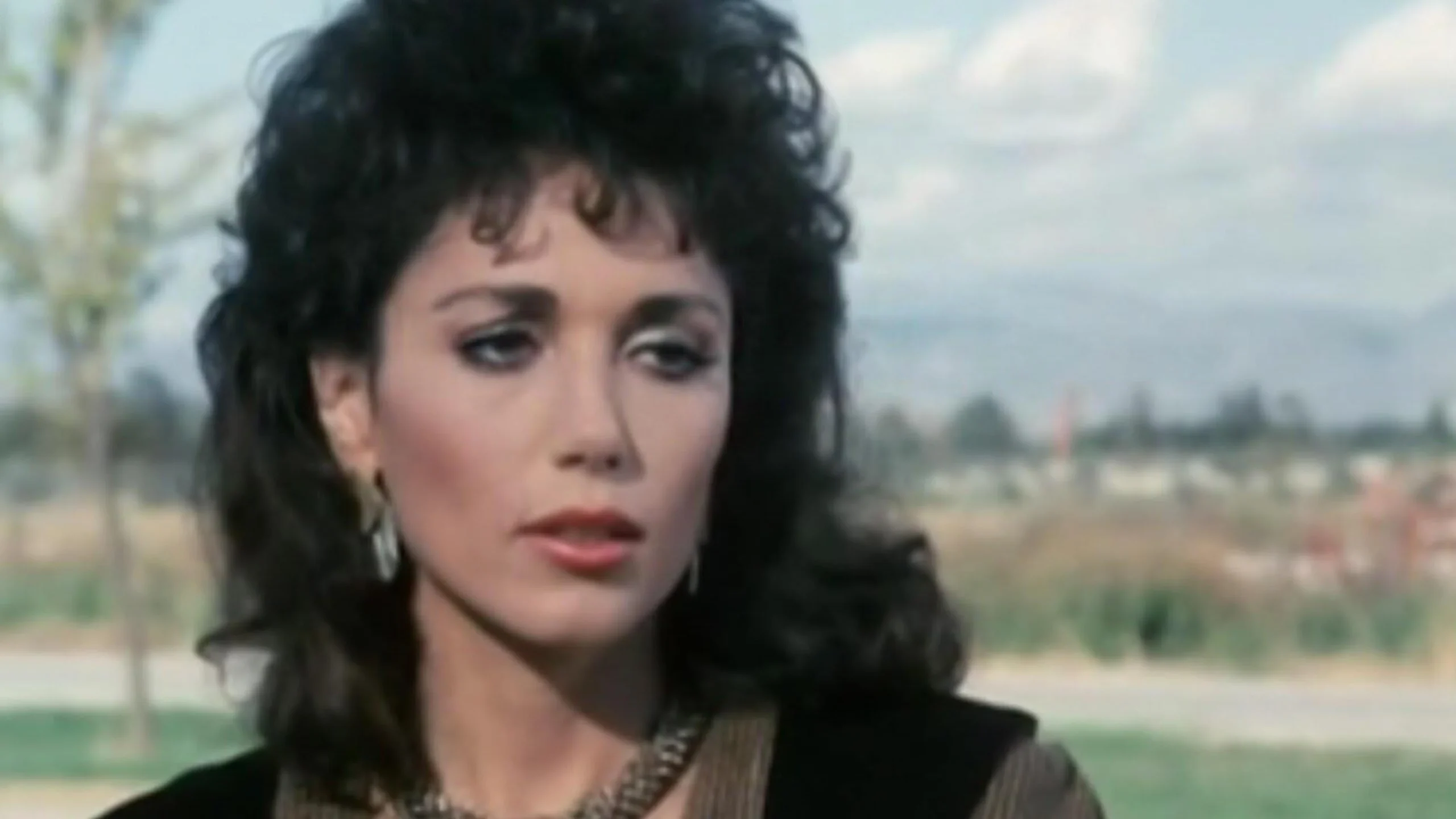
I find the double act most enjoyable when neither person becomes the permanent adult assigned to supervise the other. McCall has her own impulses and vulnerabilities. Hunter can have a useful insight. The pair should be able to exchange functions as the case changes, instead of replaying one argument with a different guest standing nearby.
That flexibility makes the original arrangement durable. You can put one detective under pressure and let the other carry more of the case. You can separate them and bring the observations together. The title gives the audience a clear point of entry, but the continuing partnership gives the writers more than one way to sustain the hour. A rewatch becomes richer when you pay attention to that second source of authority.
Los Angeles has fewer soft edges here
Hunter’s Los Angeles is not primarily an invitation to admire the skyline. Streets, offices, bars and working spaces provide places to pursue someone, ask a question or discover that a reassuring account has a problem. The city feels useful to the action rather than arranged solely as a glamorous background.
That does not make the series a documentary. Television creates a version of a place through selection, repetition and the demands of its stories. The roughness belongs to the program’s chosen world. It tells viewers what kinds of encounters to expect and what kind of detective might be needed to move through them.
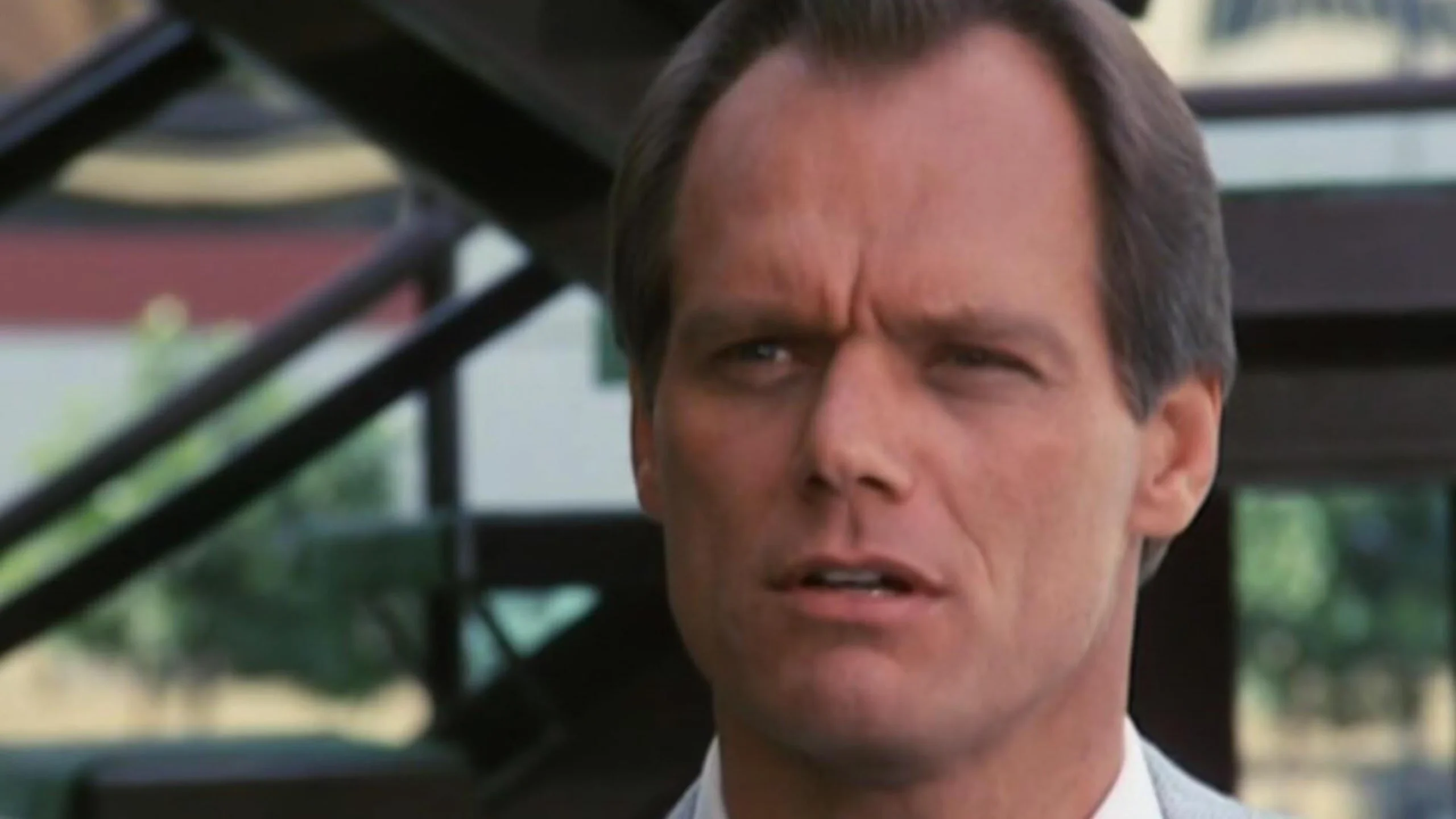
I enjoy that visual directness. The settings can make a scene feel exposed, cramped or inhospitable without explaining the feeling in dialogue. A staircase, a doorway or a parked car gives the actors practical things to negotiate. The city becomes part of how the encounter works, not just a name attached to the department.
The atmosphere also distinguishes the show from a more overtly glamorous adventure. You are unlikely to mistake this for the Harts’ social calendar. The danger is closer to the ordinary working surface of the city. That is a substantial part of the appeal, even when the actual case has been built with the speed and convenience of network television rather than the mess of a real investigation.
Hard Contract gives McCall a personal connection
Hard Contract brings McCall’s former partner into a criminal problem. That changes her position inside the case. A past working relationship carries knowledge, expectations and feelings that a routine assignment may not. The investigation is not occurring at a safe distance from the person she used to know.
I like that kind of story for a partner character because it gives her a history beyond the current pairing. McCall has worked, made judgments and formed attachments before the series begins. She should not seem to have arrived fully assembled on the day Hunter needed someone capable of keeping up.
A personal connection can also make competence more interesting. Knowing a person may help you read a situation, but it can make a preferred explanation harder to abandon. The story has room to ask whether loyalty is clarifying the problem or making it more difficult to see. The answer should emerge from what happens, not from an assumption that the regular character’s instincts must always be right.
For the partnership, the case changes the emotional distribution. McCall is closer to the complication, and Hunter has to respond to her involvement. That gives the actors a different arrangement from the routine of both entering an unfamiliar room together. A shared investigation can still place one person nearer the wound. The hour becomes more specific when the other partner recognizes the difference.
A Long Way from L.A. starts with an accusation that does not fit
An accusation of brutal violence against a seemingly meek pickpocket gives A Long Way from L.A. an immediate question. The detectives have to decide whether the apparent mismatch is meaningful. A person’s usual conduct cannot prove what happened in a particular case, but it can give an investigator a reason to look beyond the easiest explanation.
That is a useful premise for a show with such a forceful lead. Hunter’s certainty should not always be expressed by pressing harder on the first person available. Sometimes the sharper judgment is recognizing that the accusation needs more work. A tough character becomes more interesting when toughness includes refusing a convenient answer.
McCall’s part in that skepticism matters too. The partnership should have a shared responsibility to the facts, even if the two people approach those facts differently. A case can demonstrate that responsibility without pausing for a speech about professional standards. The decision to keep investigating is itself an action with consequences.
I enjoy stories that make the apparent smallness of a person part of the dramatic problem. Someone easy to dismiss can also be easy to blame. The detectives’ job is not to replace one stereotype with another; it is to find out what happened. That distinction gives a familiar cop-show premise a little more bite than simply announcing that the hero has a feeling and waiting for the plot to reward it.
Pen Pals makes McCall carry the answer
Pen Pals implicates Hunter through a gun used in a killing. The title character’s vulnerability becomes the reason his partner’s work matters. That is a reliable television device, but it has particular value in a series whose memory is often reduced to Dryer’s forceful presence.
Once Hunter is constrained, he cannot solve the entire problem by making a more aggressive entrance. The case has to move elsewhere. McCall’s responsibility becomes visible because the investigation cannot wait for the usual arrangement to restore itself. Her judgment is not an accessory to his; it is necessary to getting him out of the situation.
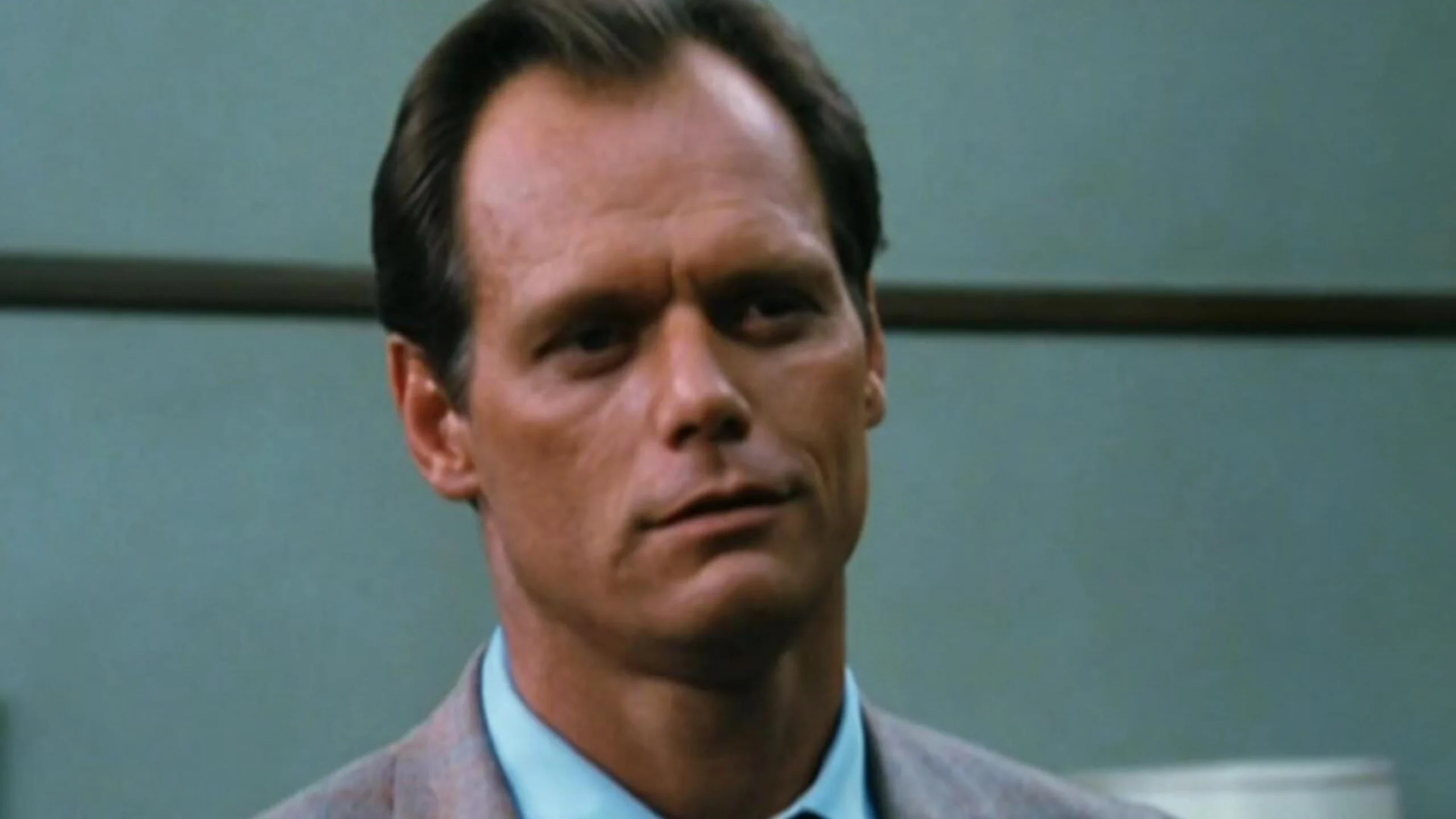
I like the shift because it exposes the partnership beneath the attitude. A character can call someone a partner repeatedly, but a story that places actual reliance on that person demonstrates the claim. Hunter has something to lose, and McCall has the work of finding what the current accusation has concealed.
The episode also turns the familiar police equipment into a source of uncertainty. An object associated with the detective’s authority can become the thing that undermines his account. The symbol does not explain the event by itself. Somebody still has to establish how it moved through the crime. That is a better use of the device than treating possession as an answer the audience should accept because the plot is in a hurry.
Protecting an unpleasant person is still the assignment
High Bleacher Man puts the detectives in the awkward position of protecting a criminal who has useful information. The setup makes room for distaste without allowing distaste to settle the practical obligation. A person can be disagreeable and still be the person the job requires you to keep alive.
That is a good pressure point for Hunter’s impatience. The appealing television impulse is to want the unpleasant character out of the way. The investigation has reasons to resist that impulse. A case can become more interesting when the hero’s preferred emotional response is not immediately the most useful professional one.
I also like what the situation can do to a partnership. The detectives may share their opinion of the protected person while still having to manage different pieces of the risk. Their private reaction does not remove the need to do the work. The audience can enjoy the irritation and understand the responsibility at the same time.
Stories like this are useful reminders that a cop show needs more than a series of deserving targets. If every person the leads dislike is conveniently guilty and disposable, the world becomes very small. An awkward obligation creates resistance. Hunter and McCall have to navigate it, and their conduct under that pressure tells us more than another scene in which a suspect turns out to be exactly as bad as the first impression suggested.
The Garbage Man complicates an apparently helpful pattern
The Garbage Man brings a series of killings into contact with the parole system. The premise is useful because it puts a pattern in front of the detectives that could invite an easy reaction from anyone who has already decided which lives deserve attention. The investigation has to establish what is happening, not simply accept the killer’s implied judgment.
A vigilante-shaped story can flatter a forceful hero if the writer is not careful. The outsider appears to be doing what the detective wishes the system would permit. That resemblance can produce excitement while disguising how much has been assumed about the people being targeted. A stronger episode makes the resemblance uncomfortable enough to investigate.
I find that territory interesting for Hunter because the show itself enjoys forceful solutions. A case involving somebody else taking final action raises a question the series cannot entirely avoid: what separates a recognizable hero’s certainty from an outsider’s? The answer has to involve something more than which actor has appeared in the opening credits.
You can watch the episode as a suspense story without turning the evening into a policy debate. The useful point is in the choices. Who is treated as a person? What evidence is actually available? Who has decided the answer before the investigators arrive? A case becomes more substantial when those questions affect what the regular characters do instead of remaining an atmosphere behind the gunfire.
The Avenging Angel turns admiration into a threat
An outsider attempting to help Hunter through lethal action gives The Avenging Angel a pointed setup. Admiration is not the same as understanding, and the detective is forced to confront somebody whose idea of assistance produces a new danger. McCall’s involvement makes the consequences personal to the working partnership.
What interests me is the gap between an image and a responsibility. A person watching Hunter’s direct approach might imagine that force is the whole job. The actual partnership has to make judgments, find information and live with the effects of a decision. An admirer who copies only the visible aggression can expose what that simplified image leaves out.
That gives the series a chance to look at its own appeal from an uncomfortable angle. The audience enjoys the tough lead. The story can still ask what happens when somebody mistakes the appeal for an unlimited instruction. I do not need the program to announce a thesis. The contrast can be present in the danger itself.
I would be cautious about treating the guest character’s mental state as a complete explanation for the threat. What matters to the plot is the conduct and the way it affects other people. The regulars have to respond to the specific risk. The episode is more useful as a story about a destructive version of helping than as an invitation to reduce every frightening act to a vague label.
Snow Queen gives the partners different routes into the danger
The two-part Snow Queen story places Hunter and McCall on intersecting investigations, including McCall working undercover. That structure gives the partnership room to operate without requiring the detectives to occupy the same scene at every moment. Each can acquire information and face a problem the other cannot immediately solve.
I like separate routes when they make the eventual convergence meaningful. Splitting the leads should do more than alternate locations. The viewer ought to understand why each line matters and what changes when the pieces connect. The investigation can make the partnership visible through the need to combine different work.
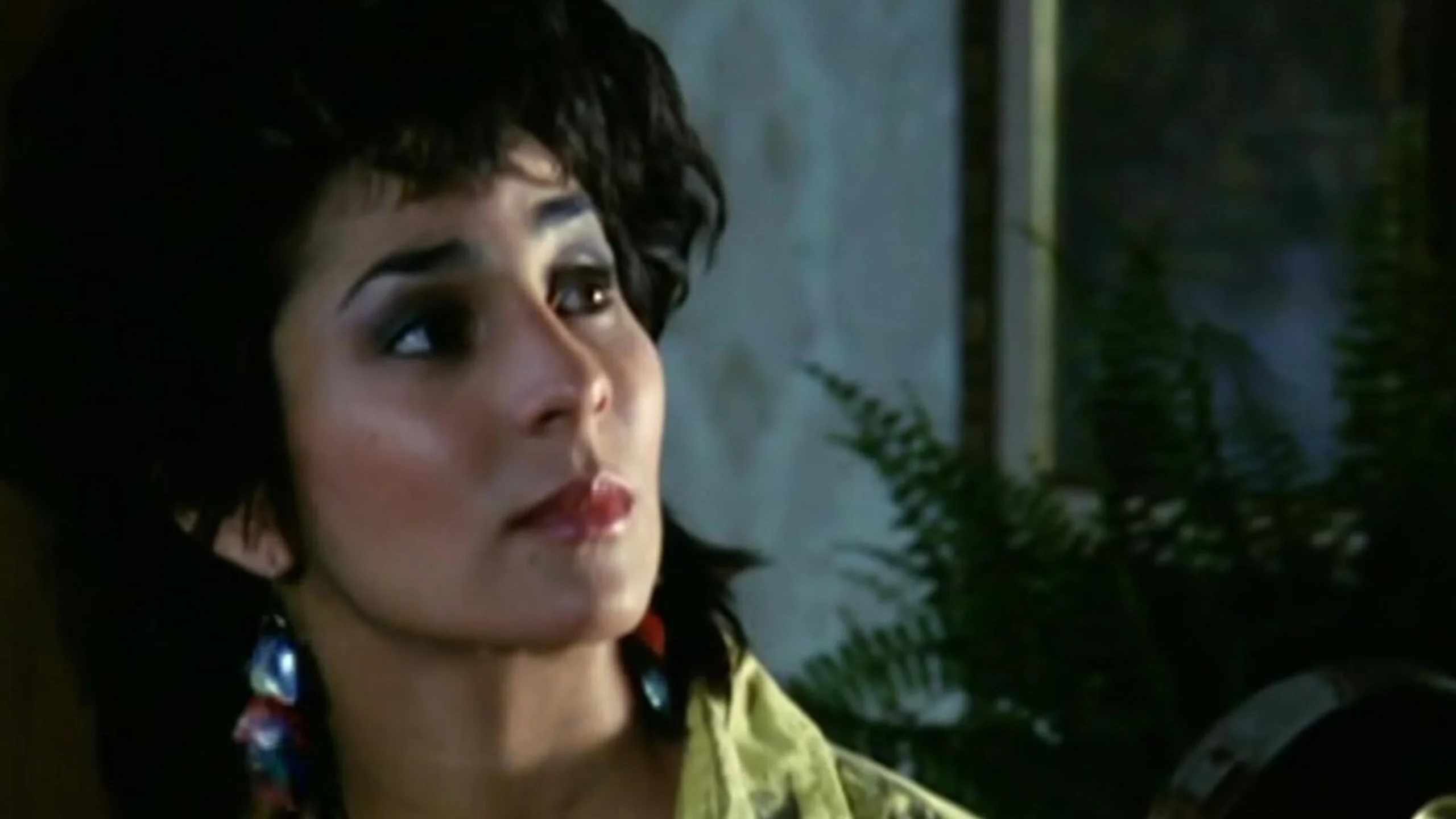
For McCall, undercover material provides a particular kind of pressure. The character has to manage what other people believe while trying to learn something useful. A wrong response can expose more than irritation. Kramer has room to play calculation and risk inside an outward performance, which gives the role more to do than arrive after Hunter has already decided how the encounter will go.
The larger two-part shape also changes the viewing rhythm. A situation can remain unresolved beyond the normal hour, giving the danger more room to develop. That does not automatically make it better than a single episode. It does mean the story has an opportunity to let each detective’s contribution acquire its own weight before bringing the work back into the familiar pairing.
Guilty asks how a past verdict can return as a threat
Guilty brings a convicted murderer back into contact with the people who served on the jury. The setup makes a completed legal process the beginning of the new danger rather than the end of the story. The detectives are dealing with consequences that continue after an official answer has already been reached.
That is useful suspense material because a juror is an ordinary person who has temporarily occupied a public responsibility. The threat follows that person back toward everyday life. The case can therefore move beyond the usual exchange between investigator and criminal, putting people at risk because of a role they were asked to perform.
I find the practical pressure more interesting than an abstract declaration about justice. Hunter and McCall have to determine who is in danger and how the threat can be interrupted. The work has urgency, but urgency should not remove the need to distinguish a warning, a suspicion and an established fact.
The episode also fits a recurring strength of the format: a past event can make strangers connected before the detectives arrive. A jury creates a temporary group with a shared history. A threat can turn that history into the current map of the case. The regular partnership gives the viewer a stable route through that unfamiliar group, provided the show allows the people in it to feel like more than a sequence of possible targets.
Fireman makes the city’s ordinary spaces vulnerable
An arson investigation changes the way a location functions on screen. A warehouse or a working building is no longer merely somewhere to question someone; it can become the instrument of a threat. Fireman uses that territory to give the detectives a problem that reaches into the built environment around them.
I enjoy cases where the setting affects the investigation in a practical way. A city should be more than a collection of backdrops. Who uses a building, who benefits from it and who has access can all matter. The episode has an opportunity to make ordinary property conceal intentions that are not obvious from the street.
The danger also has a different rhythm from a direct confrontation. A threatening act can occur before the investigators know who has initiated it, and the consequences can spread beyond the intended target. That gives observation and timing a role alongside the physical approach associated with Hunter.
For a weekly series, changing the mechanism of danger helps keep the same partnership active. McCall and Hunter should not need an entirely new personality to become interesting in a different kind of case. The facts can require them to use familiar strengths differently. A good assignment makes the regulars recognizable while giving the audience something new to watch them figure out.
Sniper narrows the space between a stranger and a target
Sniper gives the detectives a killer whose selection of victims has a personal pattern behind it. The immediate suspense comes from the possibility that an apparently ordinary person could fit the pattern without knowing any reason to fear it. The city contains people going about their lives while the investigation tries to make the danger legible.
That is a potent premise, and it can also become mechanical if the victims exist only to demonstrate the killer’s obsession. I find such episodes more effective when the show preserves some sense of the people being threatened. A pattern may help the detectives, but it should not become the only identity the story gives a victim.
Hunter’s directness has limits in this kind of case. The danger is not necessarily standing in front of him waiting to be pressured. Information has to be gathered and interpreted before force could even reach the relevant person. The partnership gives the program more room to make that process visible.
I would not pretend the series always handles every troubling premise with equal depth. It is still an action-oriented network drama with an hour to fill. But the case illustrates why a tough-cop show needs investigative work beneath the posture. The audience can enjoy the decisive moment more when the detectives have had to earn the chance to be in the right place.
The Hot Grounder puts authority close to the victim
The Hot Grounder begins with the murder of the commissioner’s wife. That immediately makes the department’s relationship to the case more complicated than a routine assignment. A person connected to authority has been killed, and the investigators are working inside an organization whose senior figures cannot be entirely detached from the outcome.
I like that pressure because it changes what a familiar workplace means. A superior is not merely somebody who can complain about Hunter’s manner. The crime has reached close to the institution itself. The detectives still need facts, but the emotional demand for an answer may be arriving from people accustomed to having their instructions followed.
The danger in a story like this is making high status the only reason the victim matters. A more interesting use of the premise is the tension between the special attention and the ordinary work the case still requires. Connections cannot identify a killer. Anger cannot replace an account of what happened. The investigators have to keep moving from the urgency surrounding the case toward the information inside it.
That is useful material for both leads. Hunter’s refusal to be easily managed can become an asset, provided the show does not make defiance a substitute for judgment. McCall’s observations can help keep the work focused. The partnership has to navigate not just a threat but the responses of people who believe they have a particular claim on the investigation. The hour gains another kind of obstacle without leaving the recognizable world of the series.
Flight on a Dead Pigeon begins with a small person’s question
A girl reporting her uncle’s death and missing pigeons gives Flight on a Dead Pigeon a very different entrance from a case involving senior authority. The details initially sound modest, even odd. The detectives have to decide whether the apparent smallness of the report has hidden something more consequential.
That is a valuable change of scale for an action-oriented program. Not every investigation should announce its importance through the rank of the person demanding attention. A child can bring information that adults have failed to assemble, and an unusual concern can deserve a closer look even when it does not resemble the beginning of a major case.
I enjoy the way such a premise tests the regulars’ attention. A tough character is easy to establish when a dangerous adult is standing in front of him. Listening to someone with less power reveals something different. Does the detective make room for an explanation? Does the odd detail become a joke to dismiss, or a reason to ask another question?
For McCall and Hunter, the situation offers a different kind of teamwork from an immediate pursuit. The case has to be recognized before it can be solved. That recognition is part of the job and part of what can make the characters worth following. A city full of threats also contains people whose problem does not arrive in an impressive form. Giving those people attention can make the surrounding world feel larger than the hero’s next confrontation.
Dead or Alive puts another kind of pursuer in the picture
Dead or Alive brings a bounty hunter across the detectives’ path. That changes the investigation by adding somebody who may be pursuing the same people for different reasons and under a different relationship to the work. A shared target does not automatically produce a shared understanding.
The premise is useful because it makes the familiar leads one part of a more crowded situation. Hunter’s confidence has to contend with another person’s confidence, and the audience has to watch for information that neither has fully established. Cooperation may be possible, but similarity of purpose is not proof that every method or explanation deserves acceptance.
I like episodes that complicate the map this way. The threat is not always divided into a clear investigator on one side and a clear criminal on the other. People can be pursuing an objective while concealing the reason it matters to them. The detective’s task includes deciding what that pursuit reveals and what it has been designed to hide.
That gives McCall room to matter through assessment rather than force. Another person’s account may contain something useful without being complete. The partnership becomes more effective when one detective can examine the story while the other is occupied with the visible action. An encounter that initially looks like an interruption can therefore become part of the evidence, provided the show lets the regulars learn instead of merely collide.
The Last Kill asks what the apparent pattern leaves out
The Last Kill presents a contract killer whose visible activity does not tell the whole story of the objective. That is a useful mystery distinction: a pattern can be real and still be only part of the explanation. The detectives may correctly connect events while misunderstanding what the connection is being used to accomplish.
I find that more interesting than a killer who behaves unpredictably only because the script needs to delay the answer. A hidden purpose can make earlier actions look different once it becomes visible. The investigation has to keep asking not only who is doing something, but why the chosen sequence would be useful to that person.
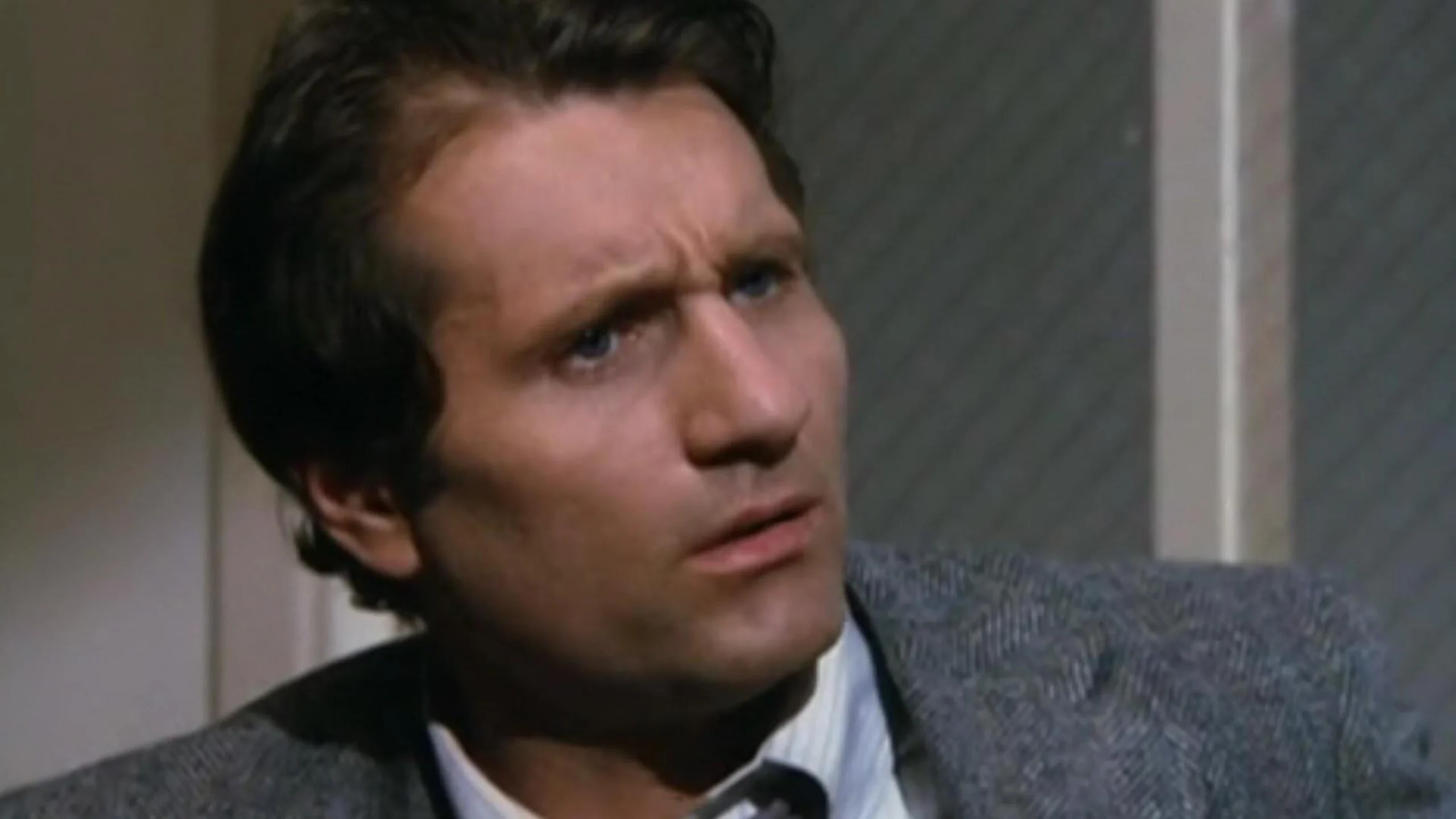
For a series with such an emphatic central presence, the case offers a reminder that pressure should follow understanding. Moving decisively toward the wrong explanation does not become more useful because the entrance looks convincing. Hunter and McCall need enough information to know what their intervention is likely to interrupt.
The audience gets a different kind of satisfaction when the action grows out of that work. A confrontation can resolve a danger, but a revealed purpose can resolve the shape of the hour. Both are part of the pleasure of a detective show. Hunter’s hard edge gives it a recognizable surface; a case that makes the pair think beneath that surface gives the rewatch something to hold after the noise has passed.
The captain’s chair changes as the series develops
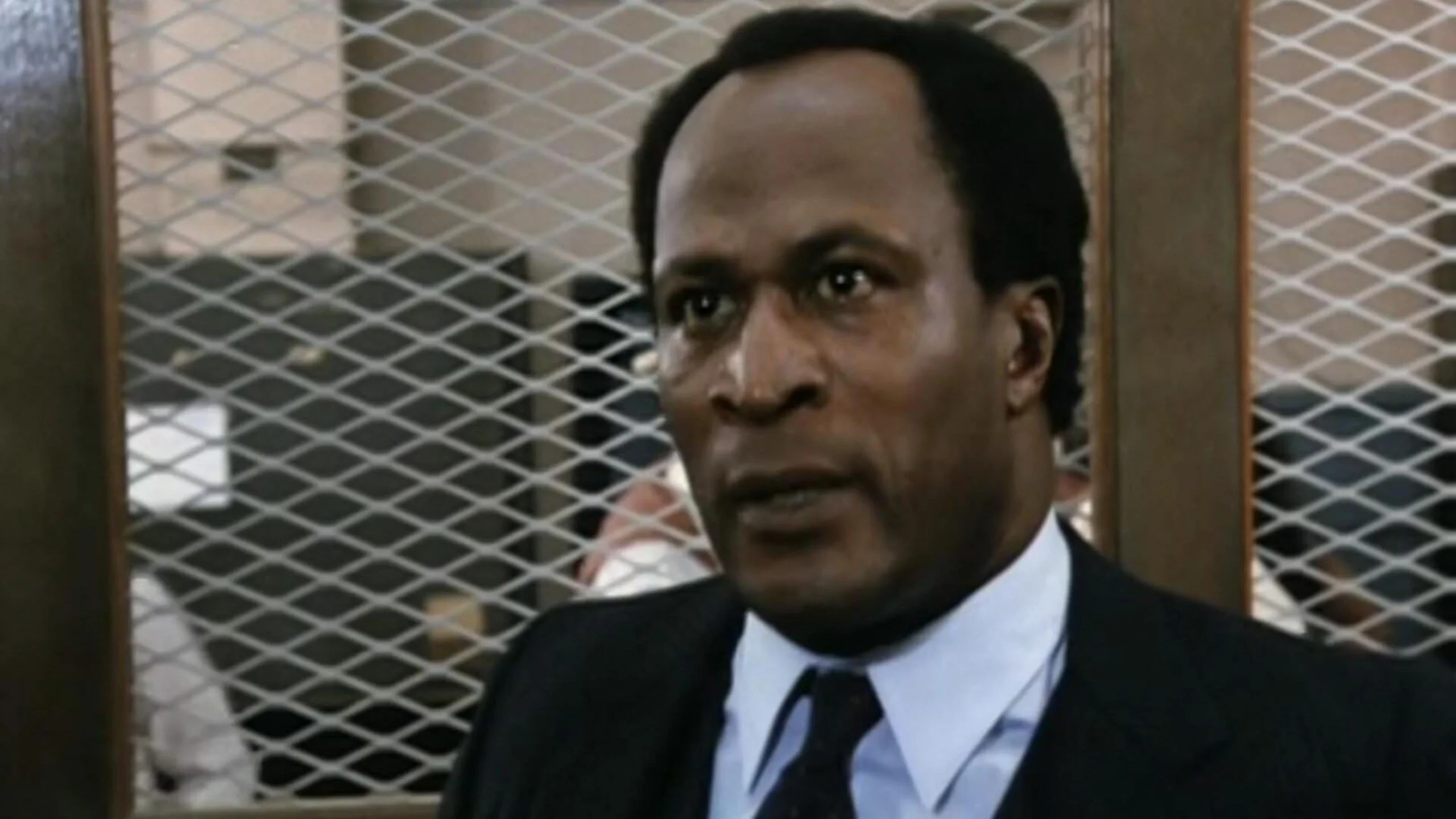
One easy mistake in remembering Hunter is to put Charles Hallahan’s Captain Charlie Devane into the original 1984 arrangement. Hallahan belongs to the later eighties version, joining in season three. The first season has a different command structure, including Arthur Rosenberg’s Captain Lester and John Amos’s Captain Dolan.
That matters because a superior is part of the show’s rhythm. Different performers can change how an objection sounds, how much authority a room contains and whether a disagreement with Hunter feels like a personal feud, ordinary workplace friction or a genuine problem of judgment. The chair is not interchangeable simply because the function remains recognizable.
The Television Academy interview collection for Hunter includes Amos discussing Captain Dolan and Cannell discussing the series. Those firsthand recollections sit beside the on-screen evidence of a program that developed over time. The earliest cast arrangement is not a rough draft we should erase because a later one became more familiar.
I enjoy noticing those shifts on a chronological return. Memory tends to compress a successful series into its settled image. The actual episodes restore the transitions, including the people who helped establish the workplace before another actor became closely associated with it. Hunter’s city can remain rough while the social structure of the department changes around the two central detectives.
A later-eighties case puts Hunter under a public light
The third-season opening, Overnight Sensation, brings a reporter into conflict with Hunter after a shooting. The premise puts the detective’s conduct and public image into the same story. That is useful territory for a series whose lead has been defined partly through forceful action.
An audience familiar with the hero may be inclined to trust him before hearing the questions. The episode can work on that inclination. We know the regular character, but people inside the story may be working from a very different set of facts. Public confidence and a viewer’s attachment are not the same kind of evidence.
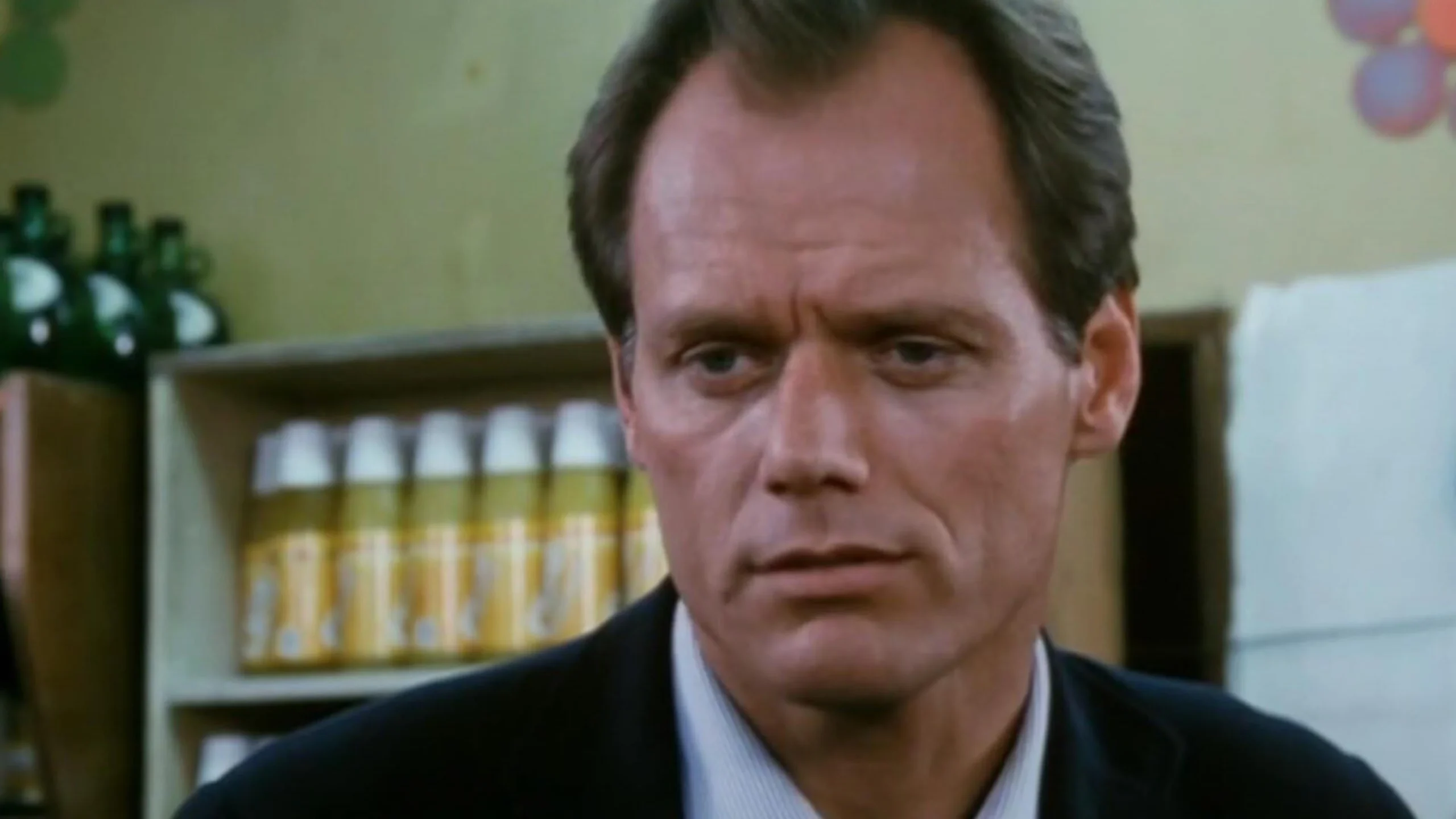
I like the possibility of a story that makes the difference visible. A report can be unfair, a detective can be defensive and an important question can still deserve an answer. The dramatic interest is in the particulars rather than a blanket assumption that scrutiny is always hostile or that a familiar badge settles every dispute.
It also gives a sense of the show moving beyond the bluntest version of its opening premise. The tough-cop identity has acquired a history that can become a subject in its own right. Whether every turn is equally convincing is a separate question. The setup at least recognizes that what the hero does has a life outside the immediate confrontation.
The violence is part of the appeal and part of the limitation
Hunter wants the audience to feel the force of an encounter. The threat, the confrontation and the decisive response are part of its identity. A retrospective that describes it as merely another comfortable detective partnership would miss what made the first impression so direct.
I enjoyed that energy. I also think the shortcut becomes visible when force arrives before the story has made the underlying question interesting. A suspect can become a target too quickly, and the program can rely on the audience’s allegiance to carry a decision that the facts have not fully earned. That is a limitation worth seeing rather than polishing away.
The strongest episodes give action a context. The detectives have learned something, the danger has a particular shape and the response changes the situation. The weakest use aggression as a substitute for development. The difference is not whether a scene is loud. It is whether the people and the investigation still matter inside the noise.
A viewer can recognize that distinction without abandoning the series. Enjoyment does not require imitating the character’s judgment. We can appreciate Dryer’s presence and Kramer’s resourcefulness while noticing how an eighties action drama sometimes arranged the world to make the most forceful option feel conveniently inevitable. That is a more interesting rewatch than either uncritical cheering or pretending there was never any entertainment in the first place.
Humor keeps the partnership from becoming a permanent scowl
A rough police drama needs some variation in pressure. If every exchange has exactly the same level of hostility, the audience stops feeling the difference between a routine irritation and a serious threat. Humor can restore that range without turning the investigation into a comedy sketch.
Hunter and McCall benefit from reactions that suggest familiarity. A partner knows when the other person is being predictable. The response can be dry rather than explosive, and the viewer gets a moment of recognition. It tells us these people have worked together long enough to understand the pattern, even if they do not always approve of it.
I like that kind of humor because it grows out of conduct. A line does not have to be a detachable joke with a pause for applause. A look, a practical objection or a response that is just a little too calm can change the temperature. The case continues while the audience is reminded that the regulars have personalities beyond their immediate level of alarm.
Those moments also make concern more believable. People who share only danger can start to feel connected by the format rather than by a relationship. A little ordinary ease gives the partnership another basis. Hunter and McCall are not merely two people standing near the same crime scene. They have a way of dealing with one another, and that way becomes part of what viewers recognize each week.
The working relationship matters more than a forced courtship
A male and female detective pairing does not automatically need the same romantic machinery as every other partnership on television. Hunter and McCall have a professional bond with enough loyalty, friction and familiarity to sustain attention. Their importance to each other does not need to be measured only by whether the program will turn it into a conventional courtship.
I find that refreshing when revisiting the decade. Attraction can be an effective engine, but it is not the only way two leads can matter together. Shared work creates its own intimacy: knowing a person’s habits under pressure, trusting a judgment and recognizing when the usual confidence is hiding a problem.

The pair’s best material often comes from reliance. If Hunter is compromised, McCall must act. If McCall has a personal connection to a case, Hunter has to respond to more than the bare facts. Those arrangements let affection and respect show through behavior without requiring a repeated debate about the status of a romance.
Remington Steele used romantic uncertainty to make Laura and Steele’s partnership fun. The payoff here comes when Hunter and McCall each know something the other needs to close the case. I like that the decade had room for both kinds of TV detective partnerships.
Cagney and Lacey offers a useful neighboring comparison
Cagney & Lacey gives its partnership a different center of gravity. The two women, their work and their lives outside it are central to the program’s identity. Hunter is more strongly attached to its forceful title character and the action that character can generate.
The comparison helps bring McCall into focus. She should not be praised merely for existing beside the tough male lead. The useful question is what the stories allow her to do. Does she carry information, make decisions, have a history and affect the outcome? Those are more meaningful measures of a partner’s place than how often someone calls her strong.
The two programs also offer different emotional rhythms. A case can open into a discussion of home and work in one series and become a faster route toward confrontation in the other. Neither description settles the quality of a particular episode. It identifies what the show is making room for and what it tends to hurry past.
I like seeing that variety restored to the memory of eighties television. The decade did not produce a single cop-show template with a different cast each season. It offered competing kinds of intensity, different ideas of partnership and different amounts of room for ordinary life. Hunter’s contribution is easiest to assess when it is placed beside those alternatives rather than treated as the whole picture.
Miami Vice took the same decade in another direction
Miami Vice and Hunter both began in 1984, but the visual invitation was different. Vice made style, music and the atmosphere around undercover work central to its identity. Hunter generally put more emphasis on the direct encounter and the blunt pressure of its central detective.
That contrast is part of what makes the television year interesting. Two programs can share broad crime-show territory and still create very different expectations before a case has properly unfolded. One viewer might be drawn toward the image and the mood; another might prefer the straightforward energy of Dryer and Kramer moving through a rough assignment.
I would not turn the comparison into a claim that one had style and the other had none. Hunter has a style too. A recurring physical approach, a choice of locations and the rhythm of a confrontation are stylistic decisions even when they do not announce themselves through a fashionable soundtrack. The question is how effectively those decisions serve the people and the story.
On a rewatch, I enjoy the difference more than a competition over which one was the definitive eighties cop show. A television week could contain both kinds of escape. Remembering them together restores some of the choice viewers had, and it makes Hunter’s hard surfaces look like a particular creative direction rather than the inevitable appearance of crime television in that year.
Hill Street Blues shows another way to use the department
Hill Street Blues makes the department itself a large continuing world. Its ensemble and overlapping concerns can keep several kinds of pressure active at once. Hunter gives the central pair a more dominant route through the hour, even when the squad room supplies recurring authority and friction.
The distinction affects how a case feels. An ensemble can show several people carrying different parts of the city’s trouble. A lead-centered action drama can concentrate attention and move quickly, but it has less space to explore everyone around the current confrontation. The gain is momentum; the cost can be a thinner surrounding world.
I find Hunter more satisfying when the supporting people register as more than obstacles to the hero’s preferred method. A captain, a witness or another investigator should have a reason for a response. The program does not need to become Hill Street Blues to give those people enough reality to make the disagreement worth hearing.
That is a useful standard for any familiar tough lead. Resistance should sometimes be intelligent. Otherwise the character is being applauded for defeating a room the writers have deliberately made foolish. Dryer and Kramer are capable of more interesting exchanges than that, and the partnership benefits when the workplace around them supplies a little genuine difficulty instead of a succession of convenient objections waiting to be brushed aside.
The eighties version is not the entire chronology
The original Hunter continued beyond 1989. Kramer left after the sixth season in 1990, and the seventh-season pairings belong to the years that followed the decade covered here. Later television movies and a revival are further visits, not missing pieces of the original 1984 setup.
That matters particularly with images. A familiar actor at a later reunion or a photograph from a later production can look perfectly plausible beside a nostalgic headline. It is still a different moment. Keeping the original-era cast and dates clear helps the article discuss the show viewers actually encountered during the eighties.
It also prevents a later change from becoming the explanation for an earlier pleasure. The partnership with McCall had a substantial life before the original series moved into another arrangement. We can evaluate that work on its own terms instead of treating the eighties episodes as a prelude to the eventual departure.
I understand why memory blends the years. Television arrives in our lives unevenly, and reruns can move an early episode beside a late one without much ceremony. A retrospective has the advantage of being able to put the dates back. The original pair, the changing captains and the later productions each deserve their own place rather than one imaginary season containing everyone.
A good way back into Hunter and McCall’s city
Start with the pilot to see the initial tone and the partnership forming. Then choose a case that shifts responsibility toward McCall, such as Pen Pals, and one that complicates a first impression, such as A Long Way from L.A. The combination will show more than a run of the most aggressive moments edited together.
Move forward to a later-eighties episode if you want to see how the familiar arrangement has settled. Overnight Sensation is a useful point of comparison because Hunter’s public image becomes part of the case rather than remaining merely the audience’s reason for tuning in. The workplace around the leads also has a different cast balance from the opening year.
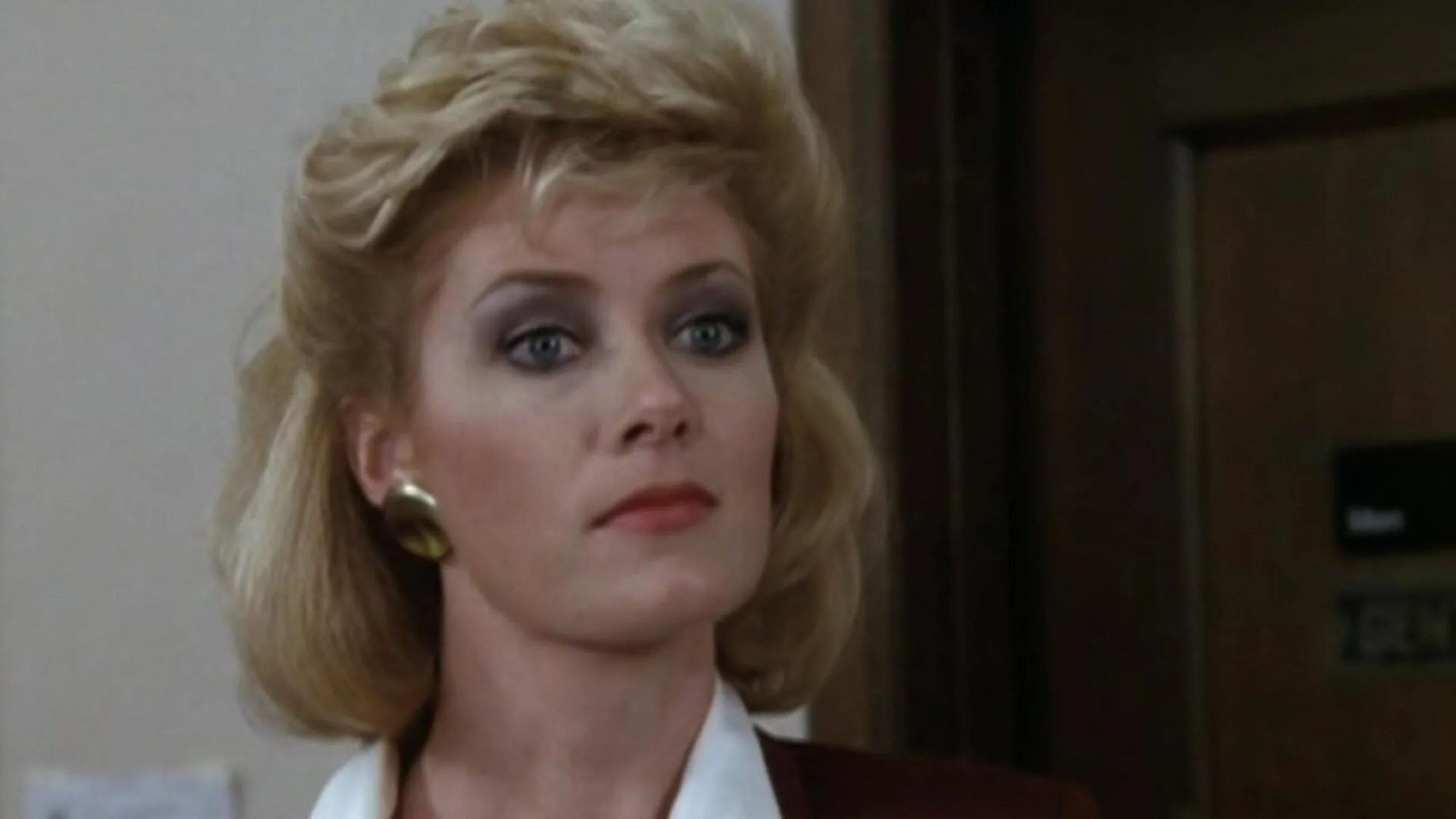
The 1984 television overview gives some broader context for the world into which the show arrived. It is a setting for the year, not a claim that every series mentioned here occupied a particular national ranking. The decade’s television had room for several very different versions of a crime-solving hour.
And watch the partnership, not only the posture. Notice who discovers information, who takes a risk and who changes the direction of the investigation. That is where Hunter becomes more than a familiar tough-guy silhouette. Dryer makes the entrance memorable. Kramer helps make the next forty minutes worth staying for.
What the opening credits promise
If you came to the series by way of a rerun, the opening is a quick reset. Mike Post and Pete Carpenter’s theme gets straight to business. There’s barely time to set down a bowl of cereal before the music has told you what kind of hour you’ve walked into. Put it beside the opening of a glossy private-eye show and you can hear a difference before anyone opens a car door. Hunter wants the evening to move.
That makes the quieter material worth watching for. We already know Dryer can cross a room and make a threat credible. The payoff in an episode like Pen Pals is seeing how much work the format can put on McCall when the man who usually gets the last look is the one in trouble. Try that episode right after the pilot. The titles promise the same show, yet the balance of the hour has shifted.
That stretch between the credits and the ending is why I like going back to a whole episode. A highlight reel would give you the chase, the gun and the part where Hunter walks straight into an argument. The scene after that, with Kramer sorting out what the argument actually told them, is often the part I’m glad I stayed for.
Questions people still ask about Hunter
When did the original Hunter series air?
The original NBC series began in 1984 and continued through 1991. This article concentrates on its eighties identity. The original run extended into the next decade, and later movies and revival material should be kept separate from the earliest partnership and squad-room arrangement.
Who played Rick Hunter and Dee Dee McCall?
Fred Dryer played Rick Hunter, and Stepfanie Kramer played Dee Dee McCall. Their different presences are central to the series: Hunter’s physical directness gives the show its blunt outline, while McCall’s investigation, initiative and ability to carry a case give the partnership much of its continuing value.
Was Captain Devane there from the beginning?
No. Charles Hallahan’s Captain Charlie Devane joined in season three, in 1986. The first season had a different command arrangement, including Captain Lester and John Amos’s Captain Dolan. A chronological rewatch makes those changes clearer than a general memory of the later regular cast.
Did Stepfanie Kramer leave during the eighties?
Kramer’s departure came after the sixth season in 1990. The original series’ later female partners therefore belong to the next decade. They should not be inserted into an account of the original 1984 partnership or used to explain the appeal of the earlier Hunter and McCall episodes.