Miami Vice in the 80s: How Television Learned to Look Like MTV
Miami Vice in the 80s: How Television Learned to Look Like MTV
The music, the partnership, the cars, the clothes—and the cop show hiding under all that pastel.
By Gizmo
THE CITY.
THE COST.
INSIDE THIS ARTICLE18 sections • Jump to what you remember
You know the scene. Nighttime. A black Ferrari rolling through Miami. Two detectives who haven’t said much in the last few minutes. Then Phil Collins comes on, and suddenly a car ride feels like the most important thing happening anywhere on television.
If you watched Miami Vice in the eighties, that drive from the pilot probably never left you. You can practically hear the drum break before it arrives. It was one of those moments when you stopped treating the television as background noise. Whatever was happening in the rest of the house could wait. Crockett and Tubbs were going somewhere, and it didn’t look like someplace anybody should be in a hurry to reach.
Of course, when somebody mentions Miami Vice now, there’s a decent chance the conversation starts with white jackets, pink T-shirts and the national emergency involving men who stopped wearing socks. Fair enough. The clothes were everywhere. So were the knockoffs. For a while, guys who couldn’t find Miami on a map were dressing as if they had an undercover meeting at a beachfront nightclub.
But that wasn’t why the show lasted in our memories. Plenty of eighties television had ridiculous clothes. Miami Vice had a mood. It could make a speedboat look like trouble, a hotel room feel dangerous and a three-minute stretch with hardly any dialogue seem bigger than the shootout that came afterward. It gave us two leads we actually cared about, a boss who could silence the room with one look and a soundtrack that made the rest of television sound as if it needed new batteries.
And when it was bad? Oh, it could be spectacularly bad. We got some plots that probably sounded better at three in the morning than they played at ten on Friday night. That’s part of the fun of looking back. Miami Vice wasn’t a perfect series. It was a series willing to do things other shows weren’t even trying, and its best episodes still make a pretty convincing case that eighties TV could be something special.
A Sunday premiere before the Friday-night uniform
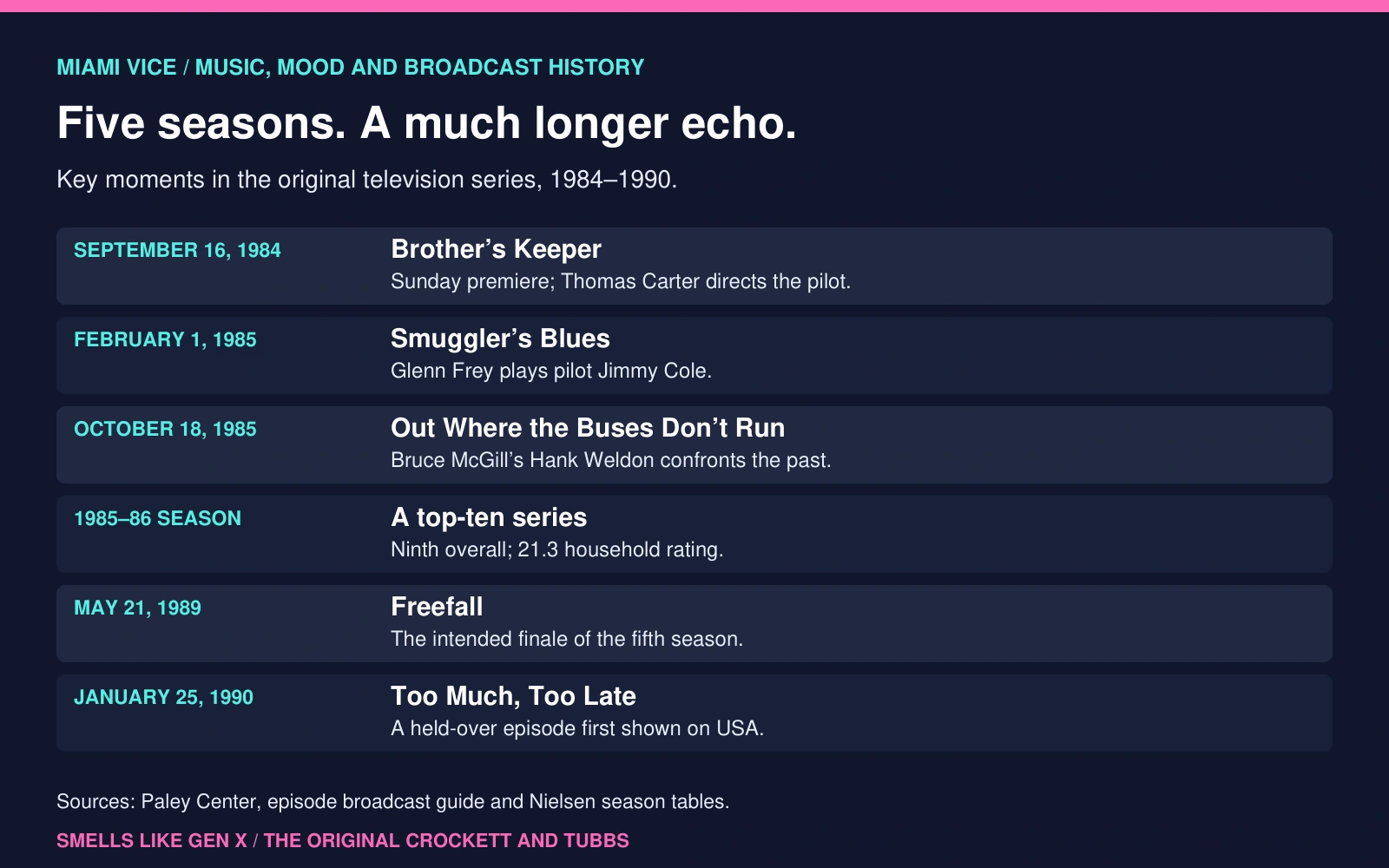
Here’s a bit of trivia that can throw even longtime fans: Miami Vice didn’t premiere on a Friday. NBC introduced it with the feature-length Brother’s Keeper on Sunday, September 16, 1984. The Friday-at-ten appointment came afterward. But once the show took hold, Friday night and Miami Vice became almost impossible to separate, like Saturday morning and cartoons or a rainy afternoon and whatever happened to be on your favorite independent station.
The eighties already had plenty of cops on television. Some cracked jokes, some kicked down doors, and some solved the case in time for a tidy little conversation before the credits. Anthony Yerkovich, who created Miami Vice, had worked on Hill Street Blues. He knew a police show didn’t have to pretend the job was simple. What he came up with for Miami was something different: cops who spent so much time pretending to be criminals that even their personal lives started looking like undercover assignments.
Michael Mann came aboard as executive producer and helped shape the show’s unmistakable look; Thomas Carter directed the pilot. The work of those people, the cast, the music department and the production crew came together into something that looked nothing like the standard precinct set. One minute you were watching a police investigation. The next, you were staring down a deserted stretch of road with a hit record playing and wondering why you felt nervous.
NBC executive Brandon Tartikoff’s famous shorthand was essentially MTV meets cops. It’s catchy, and people have been repeating it ever since. But what arrived on screen wasn’t just a music video with handcuffs. It had the nervous, messy people underneath the terrific lighting. It had drug deals, corrupt officials, bad choices and detectives who couldn’t always tell whether winning a case actually fixed anything.
It also had a city most viewers knew from postcards, travel ads or the occasional news report, photographed as if every corner had a secret. The pastel walls looked great. The people behind them often didn’t. All those clubs, marinas and waterfront mansions weren’t there to reward Crockett and Tubbs for being cool. They were where the trouble lived.
And consider the two men at the center of it. Sonny Crockett wasn’t a wealthy playboy who decided police work might be exciting. A lot of the expensive toys belonged to the cover he had to maintain. Ricardo Tubbs didn’t come to Florida for the weather. He arrived from New York chasing a man linked to his brother’s murder. Right from the start, the writers gave these guys reasons to be there that had nothing to do with linen suits.
That’s the trick that made the pilot work. The clothes and music got your attention, but there was an actual story underneath. If you missed Brother’s Keeper the first time, the summer reruns eventually offered another chance. A lot of people took it. Before long, Miami Vice wasn’t merely an unusual new cop show. It was the show everybody seemed to have an opinion about.
Crockett and Tubbs were more than two matching jackets
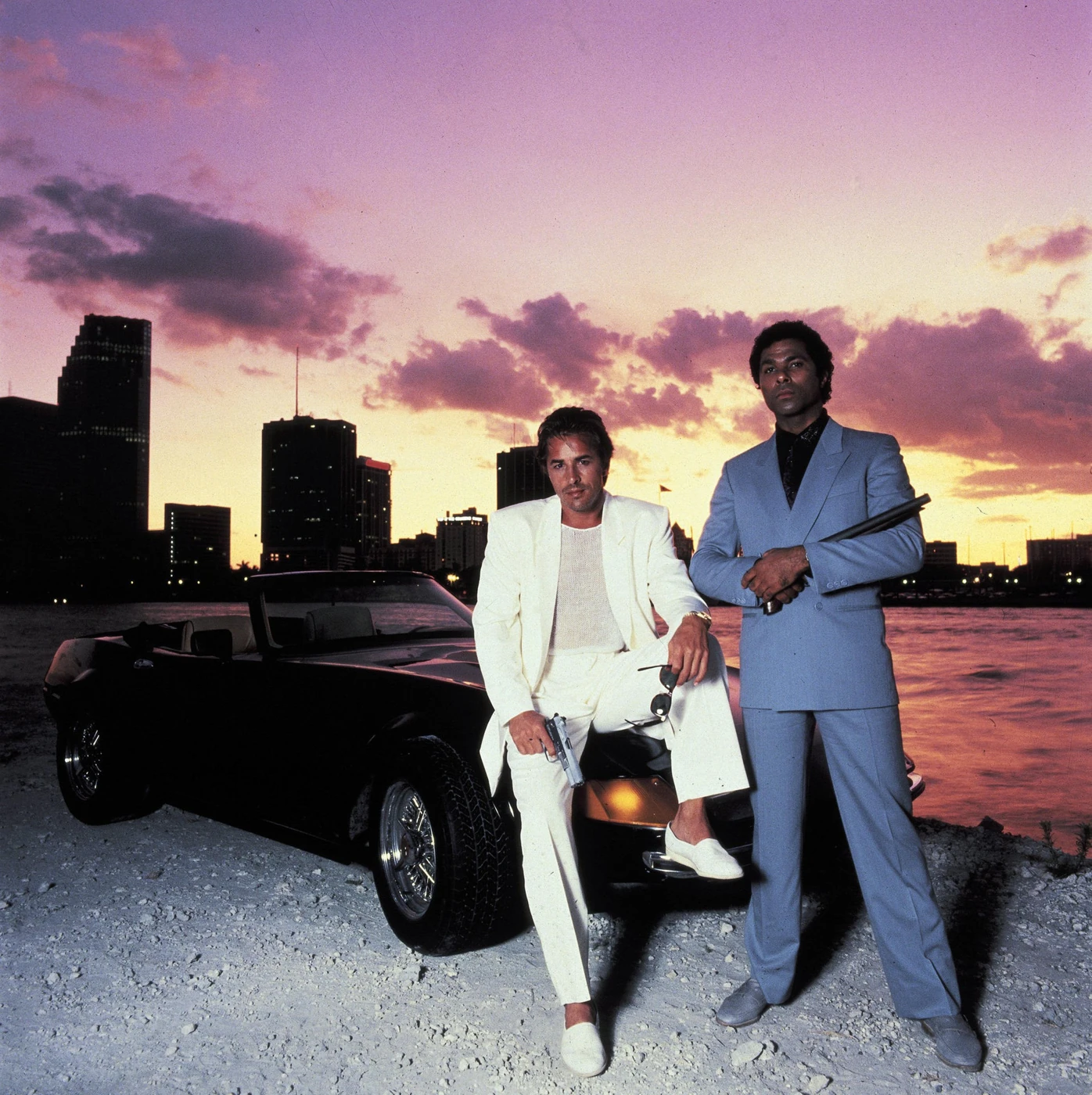
Don Johnson made Sonny Crockett look as if he had slept about four hours, argued with three people before breakfast and was running out of patience with the fourth. There was charm in the smile, sure, but there was also a man who could turn cranky in half a second. Sonny didn’t always make it easy to like him. That was a big part of why he seemed believable.
Philip Michael Thomas played Ricardo Tubbs differently. Tubbs could walk into a fancy room, take a look around and make everyone think he belonged there. He had the clothes, the confidence and a gift for keeping his cool while Crockett looked ready to throw somebody through a table. But don’t confuse composure with being harmless. Tubbs had his own anger, his own reasons for being in Miami and a pretty good instinct for spotting trouble before it announced itself.
The pilot doesn’t throw them together with one of those cheerful television introductions where a captain says, ‘You two are partners now,’ and everybody grins. Tubbs comes to town with revenge on his mind. Crockett has a case to work. Neither is particularly delighted with the other. Watching that distrust turn into a partnership gives the series a foundation no wardrobe department could have supplied.
What I like about the pairing is that they didn’t play the same guy in different suits. Crockett could be sloppy with his feelings and dangerously stubborn. Tubbs was polished but hardly immune to making personal decisions on the job. The two pushed each other, disagreed, made mistakes and occasionally looked as if they’d rather be anywhere else than in the same car. That’s a friendship with some miles on it.
And Tubbs had a life before Miami. The series remembered that when it brought back Valerie Gordon, played by Pam Grier, in Rites of Passage. Grier was exactly the kind of guest star who could walk into an eighties drama and immediately make you pay attention. More importantly, her presence reminded everyone that Tubbs was a complete character, not an accessory included with Crockett’s Ferrari.
The show was smart about small moments between the detectives, too. Sometimes it was a glance. Sometimes Crockett knew Tubbs was taking a case personally before Tubbs admitted it. Sometimes Tubbs had to tell Sonny something he absolutely did not want to hear. Nobody needed to announce, ‘This is my partner, and I care about him,’ every twenty minutes. We got the message.
Then there were the undercover names. Sonny Burnett and Rico Cooper weren’t cute aliases pulled out for one scene and forgotten. These men spent entire stretches of their lives acting like they belonged to the world they were investigating. That kind of pretending has a price, and later seasons would make Crockett pay it in particularly unpleasant ways.
There were other great buddy shows in the eighties, including the more buoyant adventures of The A-Team and the comfortable friendship at the heart of Magnum, P.I. But Crockett and Tubbs didn’t have the luxury of knowing everything would be fine after the commercial break. Some nights they caught the bad guy. Some nights they barely escaped. Some nights the damage followed them home. That’s what kept them interesting long after the novelty of those jackets disappeared.
Castillo could stop a room without raising his voice
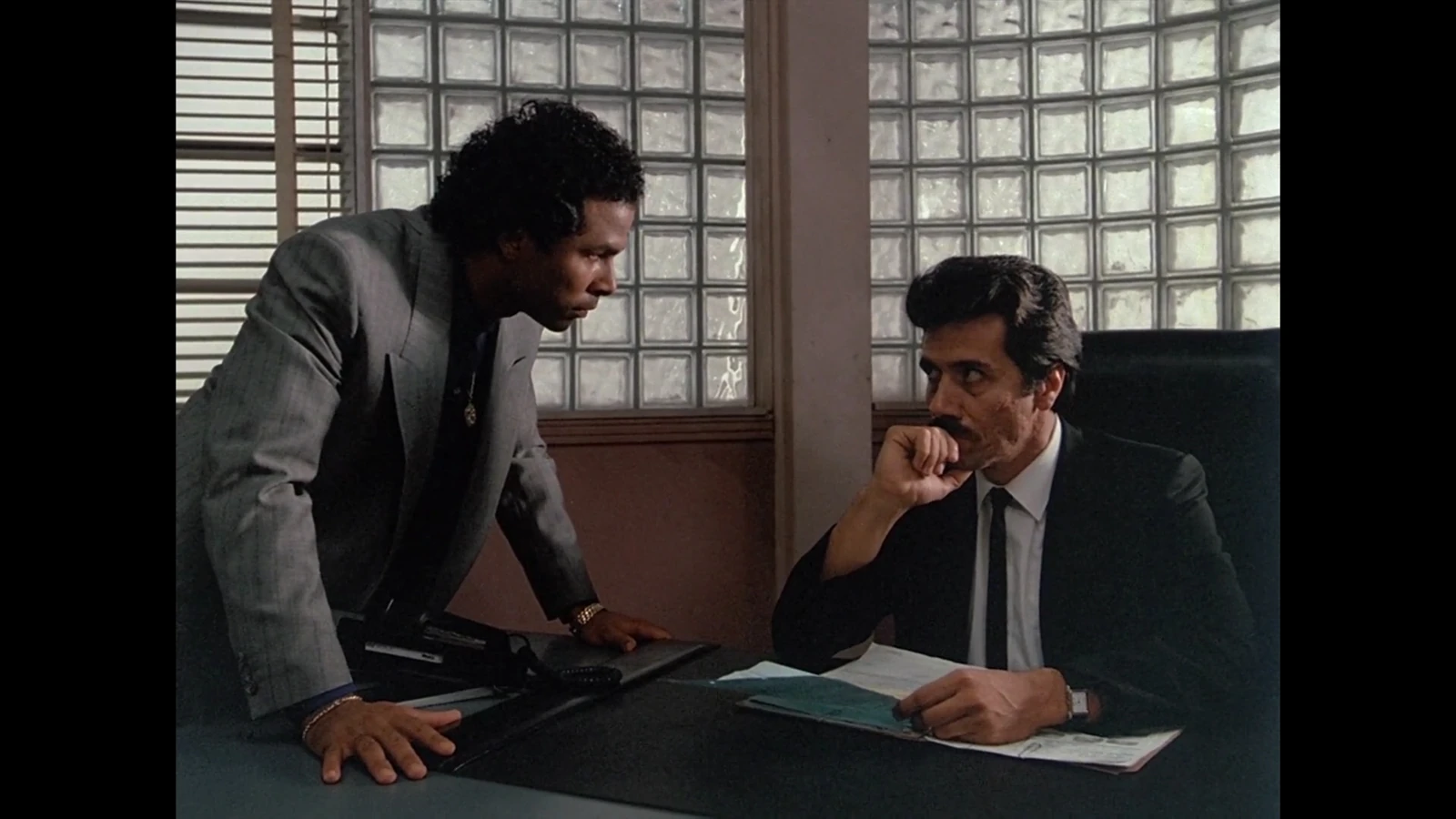
You want a lesson in doing more with less? Watch Edward James Olmos walk into the Miami Vice squad room. That’s it. He walks in, looks at somebody, and suddenly you wonder whether you’ve personally failed to file the paperwork.
Lieutenant Martin Castillo was one of the best things that ever happened to the series. Olmos didn’t shout his authority into the room. He made everybody else lower their volume. When Crockett started getting worked up—and let’s face it, Sonny spent a good portion of the decade getting worked up—Castillo could settle things with a pause and a sentence that sounded more dangerous than a speech.
Here’s another detail our memories like to tidy up: Castillo wasn’t there at the beginning. Gregory Sierra played the original lieutenant, Lou Rodriguez, in the early episodes. Olmos arrived after that. But Castillo fit so perfectly that it’s easy to picture him as part of the show from the moment the pilot began.
That quiet exterior didn’t mean the character was empty. Episodes such as Golden Triangle opened up his history and suggested he’d been through things his younger detectives knew very little about. The secrets gave his calm some weight. He wasn’t trying to be mysterious just to make viewers think he was interesting. He acted like a man who had already learned what happened when you talked too much around the wrong people.
Olmos won the supporting-actor Emmy in 1985, and you can see why without needing the award to tell you. Put Castillo in an argument with Sonny, and watch the contrast. Johnson is all visible irritation; Olmos makes you work to catch the smallest reaction. Then Castillo says something brief, and Sonny has to decide whether to keep digging the hole.
The older you get, the more you appreciate him. When we were younger, the detectives had the cars and the jackets. Castillo had the desk. Rewatch the show now, and the guy trying to stop two talented, impulsive officers from getting killed starts looking like the only person in Miami who read the entire instruction manual.
He was also a reminder that the series didn’t need to keep turning up the music to be compelling. Sometimes the most intimidating person in the room was the one who hadn’t moved at all.
The squad beyond the two men on the poster
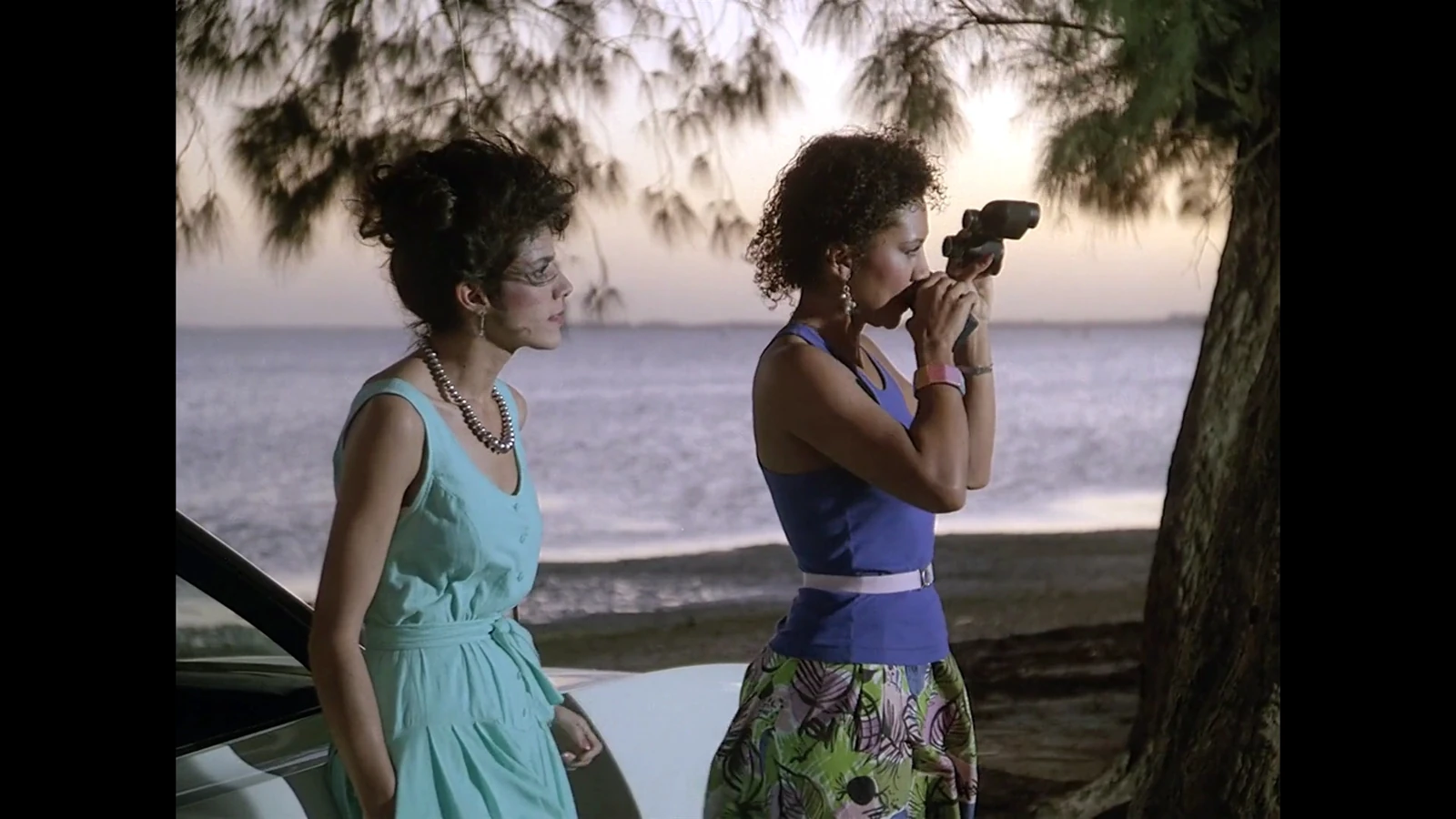
It’s easy to remember Miami Vice as Crockett, Tubbs and that very expensive collection of automobiles. But a police department made up of two detectives and a moody lieutenant would have had some serious scheduling problems. Fortunately, the squad had other people doing the work.
Saundra Santiago played Gina Calabrese, while Olivia Brown was Trudy Joplin. They handled surveillance, undercover assignments and the kind of tedious, risky details television usually condenses into somebody saying, ‘We’ve got a lead.’ They also gave the show something it desperately needed: people who weren’t constantly trying to win the World’s Most Troubled Detective competition.
Gina’s on-and-off romantic connection with Crockett could have swallowed the character whole. At times the writing seemed ready to let that happen. Yet Santiago made her capable and sharp, and the better episodes remembered she had a job to do whether Sonny was in a good mood or not. If you’ve ever worked with someone whose complicated personal life seemed to become everybody else’s problem, you probably sympathized.
Trudy was another quiet strength. Brown could make a simple reaction carry a lot of weight, especially when the situation around her was getting ridiculous. Gina and Trudy sometimes received less attention than they deserved, but when the show gave them meaningful work, the squad felt more like a real team than a publicity photograph.
And don’t forget Switek and Zito. Michael Talbott’s Stan Switek and John Diehl’s Larry Zito were a little scruffier, a little less glamorous and considerably easier to imagine buying their clothes somewhere normal people shopped. Their friendship brought a welcome dose of ordinary workplace humor. A show that spends this much time around international criminals needs someone who can make an annoyed face at the copier, figuratively speaking.
That makes Zito’s death later in the series land harder. He wasn’t a glamorous guest star who showed up to be killed before the final commercial. He had been around. We knew his partner. We knew how those two worked together. Switek’s troubles afterward felt like something had genuinely broken inside the familiar team.
The uneven treatment of the supporting cast remains one of the show’s frustrations. It could create terrific characters and then disappear into another prolonged Crockett crisis. Gina and Trudy deserved more of the spotlight. Switek and Zito were capable of carrying more than comic relief. But the moments they did get made a difference, and they remind us that Miami Vice was at its best when the entire squad seemed to live beyond the edges of a poster.
A night drive that changed the temperature of television
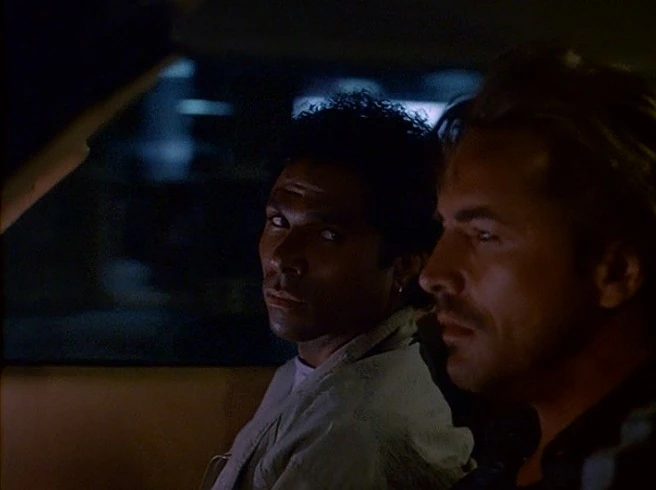
Go back to the pilot’s famous In the Air Tonight drive and try to imagine somebody at NBC saying, ‘Could we have the detectives explain what they’re feeling while they drive?’ Thank goodness that person either wasn’t in the room or didn’t win the argument.
Crockett and Tubbs are heading toward a confrontation. The road slides past them. Phil Collins’ voice fills the space. There are glances, thoughts you can’t hear and a phone call that reminds us Sonny has a personal life he can’t switch off just because he’s working. The song builds. The men keep driving. And television does something it rarely had the patience to do in a police drama: it lets the audience sit with the trouble before it arrives.
If you grew up watching shows where a detective explained the plan twice so nobody missed it on a trip to the kitchen, this felt different. There wasn’t a wisecrack every ten seconds. Nobody leaned over and said, ‘You know, Rico, I have a bad feeling about this.’ The feeling was already right there in the music and the faces.
The drum entrance has become a pop-culture joke in its own right, and fair enough. It’s one of the most recognizable sounds of the decade. But inside the episode, that moment doesn’t exist to congratulate the detectives on how cool they look. It sounds like the point where their chances of having a normal evening drop to roughly zero.
Part of the magic is that the song wasn’t written as a Miami Vice theme. The series borrowed a record that already existed and made a particular use of it. Millions of people knew Collins’ music; after the pilot, they also knew what it felt like to hear that track while a black Ferrari moved toward something ugly.
And there was a practical genius in how little explanation the scene needed. Your brain filled in the dread. You were in the passenger seat, figuratively speaking, whether you wanted to be or not. Today we can pause and replay that sequence in seconds. In 1984, if it caught you live, you carried it around until somebody ran the episode again.
That’s a different kind of memorable television moment from a catchphrase or a stunt. Nobody had to tell you it mattered. You felt it before the next scene arrived. And once you’d seen it, a routine car ride on another cop show didn’t have quite the same appeal.
Jan Hammer supplied the pulse between the records
Phil Collins gets the famous car ride. Glenn Frey gets an episode built around a song. But take Jan Hammer out of Miami Vice, and a remarkable amount of the show’s personality goes with him.
Just hear those opening notes. The drums hit, the synthesizers start racing, and suddenly you’re looking at speedboats, palm trees, beaches and buildings with an urgency no Chamber of Commerce commercial could possibly match. There was nothing laid-back about it. This was a city with somewhere to be, and whatever was happening there probably wasn’t entirely legal.
Hammer’s theme was unmistakable. In 1985, the Miami Vice Theme reached number one on the pop chart, which is a pretty extraordinary accomplishment for an instrumental from a television cop show. You didn’t need to watch the show to recognize it. The melody escaped the TV, moved into the radio and became one of those records you could hear a few notes of and immediately picture the whole opening sequence.
What doesn’t get enough credit is the music between the big needle drops. Hammer’s electronic score could make an empty street feel uneasy, turn a pause into a warning or give a quiet moment a little ache. Other shows had music telling you when the car chase started. Miami Vice could make you nervous while everyone was still standing around deciding whether to get into the car.
Hammer built cues while working from videotaped cuts of episodes. Picture the practical side of that in the mid-eighties: the show being edited, material getting to the composer and fresh music coming back to fit a scene that hadn’t yet aired. There wasn’t a magical button labeled ‘Make This More Like MTV.’ There were musicians and editors figuring out how to make sound and pictures move together on a weekly television schedule.
The soundtrack album became part of the phenomenon, too. You could watch the show, hear something you liked and then encounter the music again without the detective story attached. For Gen X viewers, television and radio already overlapped in all sorts of ways, but Vice made that relationship feel unusually deliberate. A pop song could help sell a scene, and a scene could send viewers looking for a song.
The soundtrack wasn’t frozen in place for five years. Tim Truman took over much of the original score work in the final season, and the change is noticeable. The show itself was changing by then: darker clothes, tired characters, stranger stories. That’s another reason the early Hammer sound carries such a specific charge. It reminds you of when the series still seemed to be inventing its own rules every week.
The real achievement wasn’t simply having good songs. A lot of television shows can afford a good song. Miami Vice knew when to let one play, when to use Hammer’s synthesizers instead and when a little silence could make the next note hit harder. That is how a soundtrack becomes part of the show’s identity instead of a playlist pasted on afterward.
The clothes were a disguise and a very successful distraction
Let’s discuss the jackets, because pretending they weren’t a huge deal would be ridiculous. Sonny Crockett could wear a light suit jacket over a T-shirt, roll up the sleeves and make it look like the obvious thing a man should put on before going to work. Millions of other men attempted the same maneuver. Results varied. Some looked like they belonged on a yacht. Others looked like they’d forgotten half their laundry.
The whole sockless-loafer business didn’t help. It takes a special kind of television influence to convince people that exposed ankles are a crucial part of crime fighting. But there we were. Miami Vice turned a detective’s wardrobe into something people talked about in stores, offices, school hallways and just about anywhere an outfit could make a statement.
The clothing wasn’t random, though. Crockett was an undercover officer who needed drug dealers and other wealthy criminals to believe he belonged in their world. Arriving in a cheap suit and a department-issue sedan wasn’t going to sell the act. The expensive jackets, casual shirts and cars gave his fake identity something to back it up. They weren’t proof he was living the dream. They were part of the job.
Tubbs made the look his own. Philip Michael Thomas generally appeared more put together, as if he’d actually checked the mirror before leaving the house. Put him next to Johnson and you immediately got two different personalities, even before anyone spoke. Sonny seemed as though he wanted to get through the day; Rico seemed as though he already knew which person in the room was going to cause trouble.
Then there was the show’s use of color. Pastel walls, bright shirts, washed-out daylight, nightclubs glowing after dark—everything worked together so well that the whole decade sometimes gets remembered through that one visual filter. It’s easy to forget how often Miami Vice became darker and rougher as the years passed. The souvenir version stays pink and aqua forever. The actual show wasn’t quite that simple.
And here’s the funny part: the clothes could make criminals look attractive, too. The series placed bad people in extraordinary homes, gave them wonderful views and surrounded them with objects most viewers couldn’t afford in three lifetimes. We knew the guy in the waterfront mansion was probably terrible. We also wondered how much the mansion cost. Television is like that.
Of course, good clothes couldn’t rescue every weak script. In some later episodes, the camera was doing far more heavy lifting than the story. You could admire the shirt, the lighting and the Ferrari while wondering when something worth caring about was going to happen. Even so, the style served a purpose when the writing was working: it drew us in, then made the beautiful world feel a little dangerous. Forty years later, we still recognize it in one glance.
The city and the cars were never neutral scenery
Without Miami, there is no Miami Vice. If you grew up with the seventies cop and detective shows, the change was impossible to miss. You could probably move a lot of eighties cop shows to another city, change a few street signs and keep most of the episode. Try doing that with Crockett and Tubbs. Put them in an ordinary downtown parking garage in Cleveland, and something pretty important has been lost.
The show used Miami as more than a background. The marinas, hotels, causeways, beach houses and clubs were places where money changed hands and people told each other stories that were rarely true. An impossibly beautiful view might be followed by someone reaching for a weapon. Sunshine did not mean safety. In fact, it sometimes made the danger feel stranger: how could such bad things be happening in a place that looked this good?
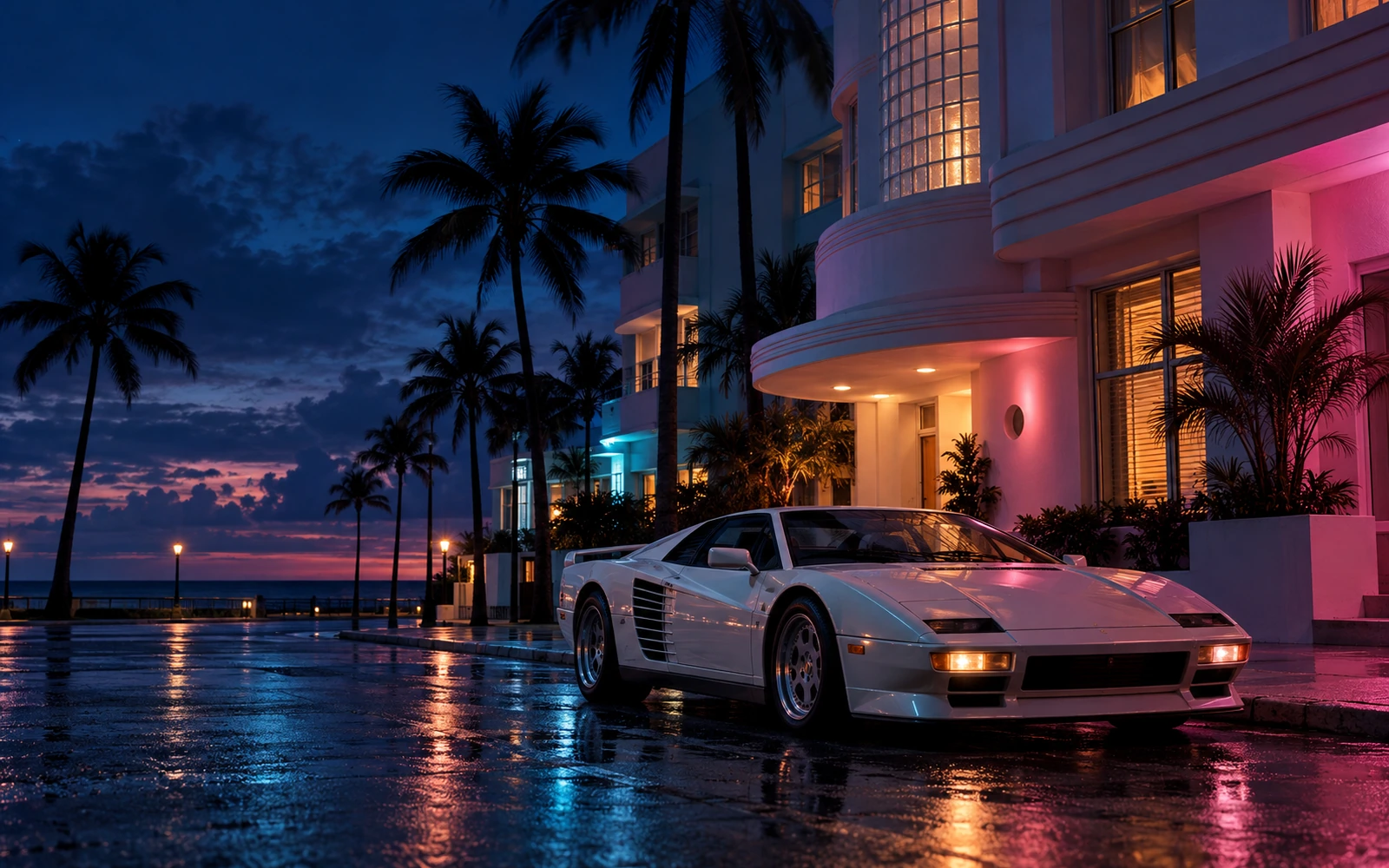
Then there were the cars. Crockett’s early black Ferrari Daytona replica became an immediate part of the image, and the later white Testarossa was every bit as recognizable. If you knew nothing else about Miami Vice, you probably knew the car. And if you were a kid with a poster on your wall, you might reasonably have decided that someday you needed one. Unfortunately, someday eventually arrived with insurance premiums, repair bills and a much clearer understanding of what a Ferrari costs.
The cars were practical within the fiction, too. Sonny’s undercover identity had to look convincing among rich criminals. That was the excuse for the wheels, the expensive clothes and some of the improbable access. The show was perfectly happy to let us enjoy the fantasy while reminding us occasionally that the man driving the car had problems no fancy automobile could solve.
Crockett also lived on a boat with an alligator named Elvis. Let’s give that a minute. An undercover cop, a glamorous Miami marina and an actual alligator. In a lesser show, that detail might have been treated like a nonstop comedy routine. Here it was just another unusual fact about a guy whose life was a lot less smooth than the clothes suggested. Still, imagine explaining the arrangement to a prospective roommate.
The boats mattered in the action, of course. Water was an escape route, a smuggling highway and a place where anyone with the wrong information could be stranded in a hurry. The causeways were perfect for moody drives. The hotels gave criminals somewhere expensive to lie to one another. The clubs put the detectives among the music and fashion that sold the show’s image in the first place.
It wasn’t a complete picture of real Miami. The city’s working families, ordinary neighborhoods and everyday lives rarely got as much attention as the wealthy, the desperate and the corrupt. Latin American connections were often introduced through crime stories, sometimes with characters who deserved more care than the scripts offered. That’s worth acknowledging without pretending a weekly NBC drama was ever going to be a city-planning documentary.
What it gave television was a place that felt specific. You didn’t need a title card telling you where you were. The light, the water, the cars, the music—before anybody opened their mouth, you knew. Not many shows can say that.
Smuggler’s Blues put the music inside the story
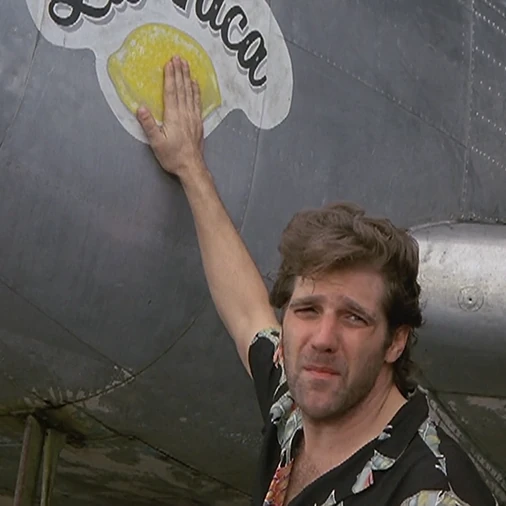
One of the pleasures of watching Miami Vice was wondering who might show up next. The series liked musicians, and it didn’t always use them the way you’d expect. Sometimes a star arrived with a role that actually belonged inside the story rather than a wink at the audience.
Glenn Frey is a terrific example. In Smuggler’s Blues, which aired February 1, 1985, he plays Jimmy Cole, a pilot who knows far too much about the business of carrying things the authorities would rather he didn’t carry. And Frey looks comfortable doing it. He doesn’t enter like a musician waiting for the applause to die down. He looks like somebody who has a job, knows the risks and has decided not to lose sleep over them.
The episode, directed by Paul Michael Glaser and written by Miguel Piñero, turns the smuggling trade into something more complicated than a boat full of villains. There are pilots, middlemen, dangerous arrangements and people whose trustworthiness depends entirely on the amount of money currently in sight. Crockett and Tubbs have to work their way through that world instead of standing safely outside it.
That’s what makes Jimmy Cole useful to the story. He isn’t a cackling criminal, and he isn’t your best friend. He is the kind of man you might enjoy talking to until you remember he can fly away and leave you with a truly miserable afternoon. Frey gives him enough easy confidence that you understand why the detectives might depend on him while still keeping an eye on the exits.
The song connection helps, but the story doesn’t stop so everybody can admire the clever casting. The musical identity and the character belong together naturally. It’s the kind of guest appearance Miami Vice did well when it remembered that celebrity alone isn’t a substitute for a decent script.
The episode also has that early-series energy: travel, uncertainty, a job getting more complicated by the hour and two detectives discovering the people supposedly on their side may have different ideas about how things should go. It feels adventurous without promising everything will end neatly.
If you haven’t seen Smuggler’s Blues in years, it’s worth revisiting for more than Frey’s cameo. This is a show at a moment when music, guest casting and police drama all seemed to be pulling in the same direction. It makes the difficult trick look easy.
Out Where the Buses Don’t Run makes the past a trap
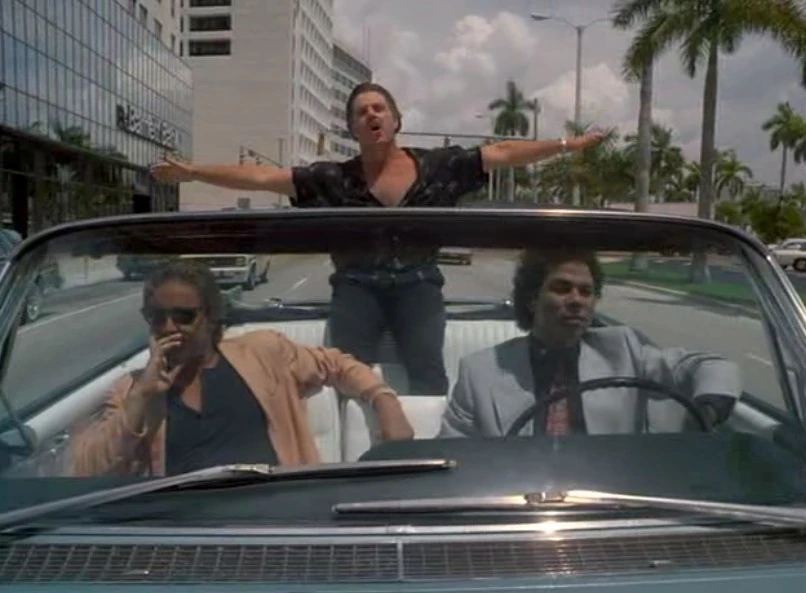
Some episodes stick with you because of an explosion or a car chase. Out Where the Buses Don’t Run sticks with you because of a wall. If you’ve seen it, you know exactly what I mean. If you haven’t, do yourself a favor and watch it before someone ruins the ending for you.
Bruce McGill plays Hank Weldon, a former detective who behaves like he has too much energy and absolutely no intention of keeping it to himself. He talks, pushes, interrupts and generally makes Crockett and Tubbs wonder how long they’ll have to put up with him. At first, there’s something funny about it. Weldon seems like an eccentric old cop who wandered in from another television show and refuses to take the hint.
But McGill is doing more than providing comic relief. Little by little, the behavior starts to seem less entertaining. The more Weldon insists he knows what’s going on, the more obvious it becomes that something from his past has a grip on him. The detectives are trying to work a case in the present, and he keeps dragging the investigation into a history nobody seems eager to revisit.
When the answer finally comes, the episode takes a hard turn. The closing stretch, set against Dire Straits’ Brothers in Arms, is one of the show’s most haunting uses of music. You get an answer to the mystery. You don’t get the comfortable feeling that everybody can go home and be done with it.
The October 18, 1985 episode is often remembered for its twist, but that sells McGill short. Go back and watch how he plays Weldon before the reveal. The jokes and strange behavior are still there, but you start seeing them differently. What looked like a loud personality was covering something far more painful.
It’s also a nasty little warning for Crockett and Tubbs. These are men who work dangerous cases, rely on partners and carry around experiences they can’t exactly discuss over dinner. Weldon shows a version of what happens when a person never manages to put one of those experiences down. There are worse things than losing a case. Sometimes winning the wrong way leaves a mess that never goes away.
Nothing about Out Where the Buses Don’t Run requires a pastel suit to work. That’s why it remains such a good answer to anyone dismissing the series as fashion with a badge. Miami Vice could tell a deeply unsettling story when it had the nerve to trust the writing and performances.
Evan asks what loyalty looked like when it mattered
Evan is another episode that reminds you how far Miami Vice could go beyond drug busts and beautiful cars. William Russ plays Evan Freed, an undercover agent who arrives carrying history with Crockett. And not the pleasant kind where two old friends meet for a drink and laugh about school.
The case involves arms dealing, but it quickly becomes obvious that the real tension is between men who know one another too well. Years earlier, they had worked with a colleague named Mike Orgel. The way Orgel was treated because he was gay—and the choices made by the people around him—left damage Crockett would rather not discuss.
This isn’t Sonny discovering somebody else’s prejudice and delivering the correct speech. His own behavior matters. That’s what gives the story some teeth. It’s easy for a television hero to disapprove of a villain. It’s much harder when the hero has to reckon with a time he failed somebody who needed him.
Tubbs isn’t there simply to nod sympathetically while Crockett works through his feelings. He asks questions. He pushes. He wants his partner to say what happened instead of burying it beneath another layer of attitude. It’s one of those moments when you remember why the partnership is the center of the show. A good friend sometimes has to be the guy who won’t accept your easiest excuse.
Russ makes Evan volatile and unsettling. He has the energy of a man moving too fast because slowing down might mean facing something he has spent years avoiding. Crockett recognizes that. It doesn’t make their conversations any easier. The episode isn’t particularly interested in giving either man a quick way out.
Rewatching Evan today also means noticing the limitations of mid-eighties television. The episode’s language and treatment of its gay character reflect the era, and Orgel’s story is largely filtered through other men’s guilt. That’s a limitation, not a reason to pretend the series never attempted the subject. What matters is that it asked its central detective to consider his own part in the harm.
Not every show in 1985 was willing to make its star look that uncomfortable for an entire episode. Miami Vice occasionally got itself into strange territory, but at its best it could use a crime story to make its regular characters confront something a lot more difficult than the criminal standing in front of them.
How the summer reruns helped turn attention into a hit
It’s easy to look back at Miami Vice and imagine the entire country went nuts for it the minute the pilot aired. The jackets, the music, the magazine covers—surely everybody knew what a phenomenon it was right away. Television history is usually messier than that.
The show caught people’s attention in its first season, but it wasn’t instantly the ratings monster we remember. The summer reruns in 1985 helped it find a much bigger audience. That makes perfect sense to anybody who grew up before streaming. If you missed an episode, you missed it. Maybe somebody at school told you what happened. Maybe you caught a clip somewhere. Otherwise, you waited for a repeat and hoped the network would cooperate.
Summer was a second chance. People who hadn’t tuned in when the series was new could finally see what their friends were talking about. Viewers who had seen only a couple of episodes could settle into the Friday-night habit. And once the music and look became recognizable, NBC had something it could promote without needing to explain much. The opening credits practically sold the show themselves.
By the 1985–86 television season, Miami Vice ranked ninth in the national household ratings with a 21.3 rating. That’s not some tiny cult-show number that only television obsessives remember. This was a major network hit, watched by people who had absolutely no intention of sitting through a lecture about television style. They wanted a good show on Friday night. Vice had become one.
Friday at ten was a good home for it. The kids might have been in bed—or at least were supposed to be—and the adults had a cop show that didn’t look like the one their parents watched. The stories could be darker, the music louder and the endings a lot less reassuring. Dallas could make a family argument a national event; Vice took that same Friday-night appetite for trouble and sent it down a dark causeway. Of course, plenty of us Gen X kids found our way in front of the television anyway. If the adults were watching, we were usually curious.
It also arrived at a moment when TV programmers were watching one another closely. Once Miami Vice became successful, other shows noticed the music, the stylish cops and the fast-moving visuals. Some copied the easy parts. Put good-looking detectives in nice clothes, add a rock song and hope for the best. But the difficult part was the writing: giving viewers a reason to care when the song stopped.
And success created its own headache. After the pilot, a regular case with routine dialogue suddenly looked less exciting. Once you’ve turned a car ride into a major television event, your audience may not be thrilled with an ordinary ride to headquarters. Miami Vice raised expectations for itself, then spent several seasons trying to live up to them. Sometimes it did. Sometimes you could almost feel the writers wondering what on earth they were supposed to do next.
Caitlin and Burnett: when the cost became personal
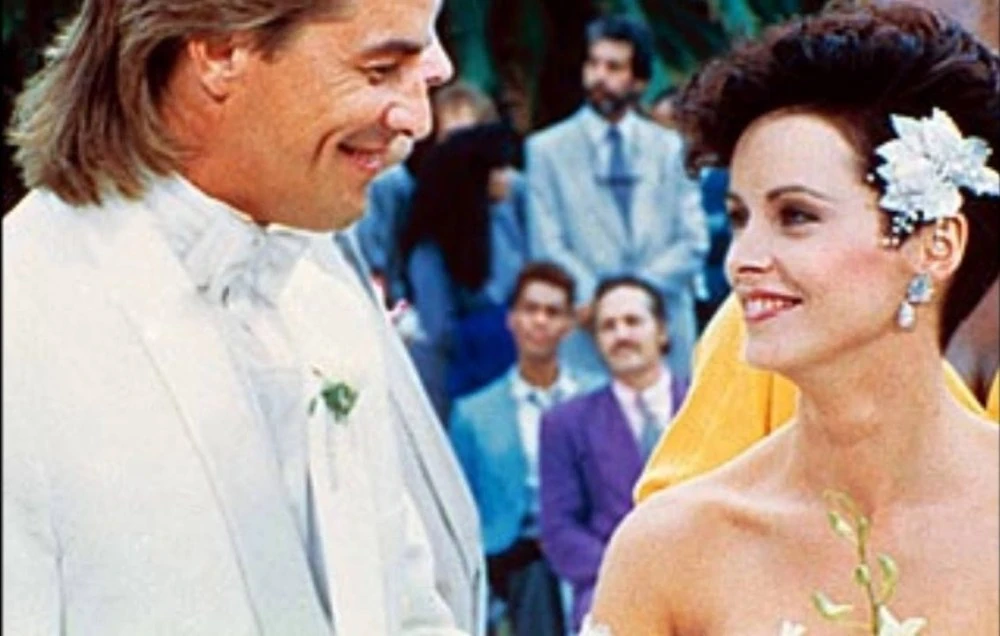
If you spent enough Friday nights with Crockett, you learned one thing: the man had terrible luck with happiness. Give Sonny a little peace and you could almost hear the writers sharpening their pencils.
Sheena Easton arrived as singer Caitlin Davies in Like a Hurricane, and for a while, the relationship offered something different. Caitlin had a career, a recognizable public life and no particular reason to organize everything around Sonny’s police work. Easton wasn’t just there to stand near him while he looked troubled. The two characters were attractive, complicated adults attempting a relationship while their jobs kept getting in the way. That’s a recognizable problem even if one of the jobs involves pretending to be a criminal in a Ferrari.
Then they got married. On a series where practically every happy moment seemed to come with a warning label, that was almost suspiciously encouraging. Unfortunately, Miami Vice was not the place to make long-term plans for domestic bliss.
Frank Hackman returned in Deliver Us from Evil, and Caitlin’s death brought Crockett another devastating loss. It was painful television, although watching it now you may find yourself wishing the show had allowed its women to have futures that weren’t determined by what Sonny needed to suffer next. The writers knew how to wound their leading man. Sometimes they seemed a little too enthusiastic about it.
And the story didn’t stop there. In Mirror Image, after an explosion, Sonny experiences amnesia and believes he actually is Sonny Burnett, the criminal identity he has spent years using undercover. Yes, the show went there: dead spouse, emotional collapse, memory loss and a whole lot of danger. If Dallas had done it, someone might have accused J.R. of arranging the entire thing.
As a plot twist, the Burnett storyline requires you to go along for the ride. It’s not the kind of thing most people expect to happen after a normal day at work. But Johnson makes it interesting because you see that familiar face behaving without the familiar moral compass. Sonny’s charm is still there. The trust we’ve built up over the years isn’t.
Tubbs gets caught in the middle, trying to reach a man who looks like his partner but no longer responds to the relationship the same way. It’s a good use of the friendship the series had spent years building. Without those earlier quieter moments, the storyline would simply be another elaborate television gimmick.
The fourth-season stretch also shows both sides of late Miami Vice. It could still give its actors strong emotional material. It could also pile on melodrama until the show was one unexpected twin away from becoming a daytime soap. Somehow it remained recognizably itself. The music was darker, the mood heavier and the pastel-party version of Miami was beginning to seem very far away.
The uneven years are part of the story
Let’s not pretend every hour of Miami Vice belongs in a museum. Some episodes are terrific. Some are good enough for a Friday night. And some make you look at the clock and wonder whether the television station accidentally switched to another dimension.
Missing Hours is the obvious example. James Brown appears in one of the show’s strangest detours, and the story wanders into territory that bears very little resemblance to the tense drug-war drama of Brother’s Keeper. You can admire a show for taking chances and still ask whether somebody might have been better off saying, ‘Are we sure about this one?’
The weaker episodes weren’t always that wild. Sometimes they were just thin. A guest character would show up with a problem, a fashionable criminal would prove untrustworthy, Crockett would look exhausted, Tubbs would get frustrated and some beautifully photographed trouble would arrive before the credits. After a while, you started seeing the pattern before the story had much chance to surprise you.
That’s the risk of developing such a recognizable style. When the episode works, the lighting and music make it better. When it doesn’t, the lighting and music become something lovely to watch while you wait for a good reason to care. At its worst, Vice could mistake looking miserable for having a particularly deep story.
The series also changed. The later clothes and colors didn’t always resemble the candy-colored image in the old publicity pictures. The tone grew heavier, the stories more interested in damage, and the characters looked understandably tired. Five years of dealing with the sort of people who populated these plots would wear anybody out. Still, fatigue alone couldn’t carry an episode.
One reason I keep coming back is that the actors were often better than the scripts they were given. Castillo could make an ordinary squad-room scene worth watching. Tubbs had a way of turning his frustration into something sharper than a lecture. Crockett’s rough edges grew more believable even when the latest criminal conspiracy didn’t.
If you only revisit a greatest-hits collection, you’ll miss the strange middle ground that makes a series feel like something people really watched week after week. Television in the eighties was not designed for perfect, ten-episode seasons. These shows came back, and back, and back. The networks needed hours filled. The writers had deadlines. Some weeks the magic happened. Other weeks we got Missing Hours.
That’s not an excuse for the weak episodes. It’s part of remembering the actual experience instead of the cleaned-up nostalgia version. We loved our favorites, complained about the bad installments and came back the following week anyway. You didn’t need every episode to be a classic to have a show that mattered.
Freefall and a departure without a victory parade
By the time Miami Vice reached its end, the two detectives had taken more punishment than most television characters get in three separate careers. The early glamour was still part of the show, but it had never been much of a protection. Nobody who’d watched the whole run expected Crockett and Tubbs to wrap things up with a cheerful group picture and a cake in the squad room.
The intended series finale, Freefall, aired on NBC on May 21, 1989. Rather than handing the guys one final neat victory, the story leaned into their growing disappointment with the machinery around them. They had spent years going after criminals, relying on partners, losing people and discovering that a badge didn’t magically make every institution trustworthy.
There’s a particular satisfaction in a finale that remembers what the series was actually about. Crockett and Tubbs might have looked like two men living the ultimate eighties fantasy, but the job had taken a terrible toll. The partnership meant something even after the work had become hard to defend. Walking away could say more than another successful arrest.
But television schedules are complicated, and Miami Vice managed one last bit of weirdness after its goodbye. Freefall was the intended ending, yet it wasn’t the last previously unseen episode Americans got to watch. NBC broadcast additional held-over material afterward, and Too Much, Too Late first appeared on USA in January 1990. So if your memory puts a Miami Vice episode after the series finale, you aren’t necessarily mixing it up with another show.
The odd broadcast order also helps explain why different episode guides can make the end of the series seem confusing. Feature-length episodes may be listed differently, and later rerun packages don’t always preserve the feeling of the original television schedule. The straightforward version is five NBC seasons beginning in 1984, a planned conclusion in May 1989 and a final held-over episode shown later.
The important part, though, isn’t the scheduling puzzle. It’s that Crockett and Tubbs got an ending that belonged to them. They didn’t become rich men celebrating how glamorous their lives had been. They looked like partners who had finally had enough. That’s a more appropriate goodbye for two men whose best adventures so often involved realizing the world was a lot worse than the view from the driver’s seat.
And honestly, can you picture Castillo throwing them a retirement party? He’d probably acknowledge their service with one look, say something brief and go back to his paperwork. Somehow, that would be perfect.
What remains when the fashion joke wears off
So what do we do with Miami Vice all these years later? We could stick it in the eighties time capsule with shoulder pads, expensive sunglasses and cassette tapes full of songs recorded off the radio. That would be easy. It would also miss most of the fun.
Yes, the fashion dates it. That’s part of the pleasure. The cars, the jackets and the nightclub hair are unmistakably of their moment, and I wouldn’t change them. Nobody goes back to an old television favorite hoping the wardrobe department somehow predicted 2026. We want to see the decade as it actually looked—or at least as its television stars persuaded us it looked.
But the scenes that still land aren’t necessarily the ones with the most expensive clothes. It’s Crockett and Tubbs driving toward trouble while Phil Collins plays. It’s Castillo saying almost nothing and somehow winning an argument. It’s Bruce McGill turning an irritating former cop into a character you can’t shake. It’s the way Glenn Frey fits into Smuggler’s Blues, or how Evan lets Sonny be very wrong about something that matters.
Magnum, P.I. had a sun-drenched setting, a great car and a hero whose friendships helped him make sense of his life. Miami Vice had the Florida equivalent but kept asking what happened when the job slowly ate the parts of your life you wanted to protect. Both series were products of their time. They just gave viewers different reasons to come back.
There’s another pleasure that hits differently now. When we were younger, Crockett’s car probably got our attention first. You get a little older, pay bills, raise kids, deal with complicated jobs, and suddenly his inability to keep his work from wrecking everything else doesn’t seem quite so distant. And Castillo, who once looked like the guy spoiling everyone’s fun, starts resembling the only adult who knows what’s going on.
You can also hear the show’s fingerprints in later television without pretending it personally invented every cop drama that came afterward. Plenty of shows used pop songs before it, and plenty experimented with striking photography. Miami Vice put those things together with unusual confidence and gave viewers a reason to associate the sound of a record with the fate of a character. That combination was genuinely special.
It wasn’t flawless, and I’d be suspicious of anyone who claimed otherwise. You had a few astonishing episodes, a lot of good Friday-night television and a handful of installments that probably should have stayed inside somebody’s pitch meeting. But you also had characters worth following, music that still works and moments capable of taking you straight back to the room where you first saw them.
Put on In the Air Tonight. Wait for that familiar build. Picture the road, the black car and those two faces watching the darkness ahead. The pastel jokes can wait. For a few minutes, it’s 1984 again, and Friday-night television will never look quite the same.
Miami Vice questions viewers still ask
Who created Miami Vice?
Anthony Yerkovich created the series. Michael Mann was its executive producer and a major influence on its visual approach, while Thomas Carter directed the original pilot. The show’s distinctive look and feel came from that wider creative team, not a single person deciding everybody needed pale jackets.
Was Miami Vice always on Friday nights?
No. Brother’s Keeper premiered on NBC on Sunday, September 16, 1984. Friday at ten became the show’s best-known regular home. That’s the night most of us associate with Crockett, Tubbs and the opening credits.
Were Crockett and Tubbs actually rich?
No—at least, not in the way their expensive cars and clothes suggested. The luxury was part of the undercover image. Crockett posed as Sonny Burnett, while Tubbs used the name Rico Cooper. The criminal world had to believe their stories, and the wardrobe and wheels helped sell them.
Why is the music so important?
Because it actually changes how you experience the scenes. Jan Hammer’s electronic score gave the show its pulse, while pop records became part of the storytelling. The pilot’s famous In the Air Tonight drive is still the easiest demonstration. Take away the music and you lose a lot more than background sound.
Which episodes show the series at its strongest?
Start with Brother’s Keeper for the partnership and the look. Then try Smuggler’s Blues for Glenn Frey and the adventure, Out Where the Buses Don’t Run for one of the show’s hardest-hitting stories, and Evan for a serious look at Crockett’s past and his friendship with Tubbs. They’re different kinds of episodes, which is exactly the point.
Did the show end in 1989 or 1990?
Freefall was the intended finale and aired in May 1989. Additional previously unseen episodes were broadcast afterward, with Too Much, Too Late first airing on USA in January 1990. The series still had five NBC seasons; the later showing was a holdover, not the start of season six.
Sources and further reading
- Television Academy: Miami Vice — program history and participant interview index; retrospective context, not a contemporary review.
- Richard Zoglin, TIME, September 16, 1985 — contemporary reporting on style, audience growth and industry attention.
- Jan Hammer’s official biography and contemporary Billboard and Rolling Stone coverage preserved in his archive — score production and the soundtrack’s commercial context.
- Paley Center: Smuggler’s Blues, Rites of Passage and Out Where the Buses Don’t Run — original broadcast dates and production credits.
- Kinolab: Miami Vice — educational clip descriptions for Evan and its central conversations.
- Television Academy: Edward James Olmos — Emmy award record.
- Miami Vice episode guide — chronology and the later broadcasts following Freefall.
- 1985–86 network season table — season household rank and rating, considered separately from episode audiences.
- Apple TV: Mirror Image and Like a Hurricane — episode premises and dates; availability varies by edition and territory.