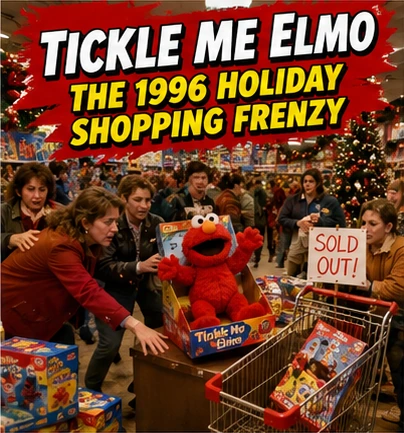
The Red Plush Toy That Turned Christmas Shopping Into Full-Contact Retail
Tickle Me Elmo in 1996: The Holiday Shopping Frenzy That Broke Christmas
Tickle Me Elmo was a laughing red plush toy made for preschoolers. By December 1996, adults were lining up before stores opened, chasing delivery rumors, calling every retailer in the phone book and treating a thirty-dollar doll like the last helicopter out of town.
This is the complete story of the Tickle Me Elmo craze—from Ron Dubren and Greg Hyman’s laughing-plush prototype and Tyco’s Sesame Street development to Rosie O’Donnell, Black Friday sellouts, four-figure resale stories, the original Tyco doll and Elmo’s 2026 anniversary return.
Why Did Tickle Me Elmo Become the Hottest Christmas Toy of 1996?
Tickle Me Elmo became the hottest Christmas toy of 1996 because it combined a hugely popular Sesame Street character with an easy-to-demonstrate electronic feature, then collided with limited supply, massive television exposure and the emotional deadline of Christmas morning. Tyco released the toy in July 1996 and originally planned around 400,000 units. Demand accelerated after the toy appeared on The Rosie O’Donnell Show, stores sold out around Black Friday and Tyco rushed hundreds of thousands more into production.
By the end of the year, all one million produced units had reportedly sold. A toy that retailed for about thirty dollars appeared in classifieds and resale markets for hundreds or even more than a thousand dollars. The shortage generated waiting lists, lotteries, arguments, delivery-truck rumors and nonstop news coverage that made people who had not planned to buy Elmo suddenly feel like Christmas would fail without him.
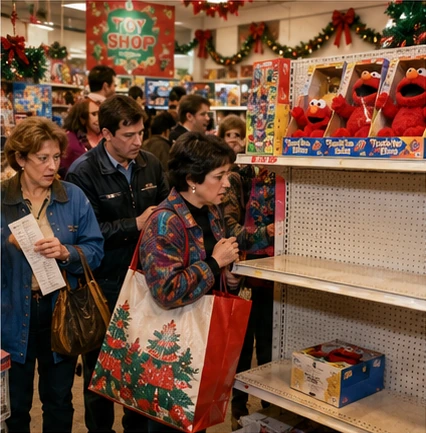
From Laughing Monkey Prototype to National Retail Emergency
The Complete History of the Tickle Me Elmo Craze
This article follows the invention, Tyco development, Sesame Street licensing, 1996 release, Rosie O’Donnell exposure, Christmas shortage, resale hysteria, later versions and the collector details that separate an original Tyco Elmo from the many dolls that followed.
Character, Demonstration, Scarcity and a Deadline
Why the Tickle Me Elmo Formula Worked
The craze looks ridiculous until the four parts are separated. Put them back together, and the entire 1996 shopping disaster becomes almost inevitable.
Elmo Was Already Loved
Parents did not need an explanation of the character, and preschoolers did not need convincing. The red monster already had emotional recognition.
The Feature Was Immediate
Press the belly, hear the laugh, watch the movement. The toy demonstrated itself faster than a commercial voice-over could finish the sentence.
Supply Was Finite
Tyco planned for a successful toy, not a nationwide holiday obsession. Once the existing inventory disappeared, time became the enemy.
Christmas Had a Date
A backordered toy in February was annoying. A missing toy on December 24 felt like a family-level emergency to exhausted adults.
That mix is why Tickle Me Elmo belongs in the upper tier of the 50 most iconic toys of the 90s. The doll was memorable. The shopping behavior around it became history.
Christmas Toy Panic Did Not Begin on Sesame Street
Holiday Toy Crazes Before Tickle Me Elmo
Parents had survived must-have toys before 1996. What changed with Elmo was the speed, the national media loop and the visibility of the resale market.
Cabbage Patch Kids Set the Modern Template
The 1983 Cabbage Patch Kids frenzy created fights, shortages and television images of adults battling over dolls. That craze proved a holiday toy could become national news rather than a simple retail success.
Teddy Ruxpin Made Electronics Feel Personal
A talking plush character already had precedent. The difference was that Tickle Me Elmo required almost no setup, story tape or patience.
Nintendo Created Its Own Scarcity
Video-game systems and cartridges trained families to call multiple stores and watch weekly circulars for inventory.
Holiday Catalogs Built Desire Early
Children circled toys months before December, allowing demand to build long before shelves were tested.
Local Shortages Stayed Local Longer
Before cable news, daytime talk and early online resale, a sold-out item could remain a regional frustration. Elmo’s shortage became a shared national story.
The Mall Was Still the Center of the Search
Most families could not tap an app and receive a delivery estimate. They drove, called, waited and asked clerks who had already answered the same question fifty times.
Elmo Arrived at the Perfect Media Moment
The toy hit when talk shows, local TV, newspaper classifieds and early internet chatter could amplify one another without modern real-time inventory calming anybody down.
The Gen X setup: our parents had already learned that Christmas could involve a toy shortage. Tickle Me Elmo taught them it could also involve a waiting list, a pager message and a suspicious guy in a parking lot asking four hundred dollars.
The Character Was Already Doing Most of the Marketing
Why Elmo Was the Perfect Character for the Toy
A laughing electronic plush would have been a novelty. A laughing electronic Elmo arrived with years of trust, recognition and toddler-level emotional loyalty already built in.
Elmo Spoke Like a Young Child
His simple language, enthusiasm and third-person speech made him easy for preschool viewers to understand and imitate.
The Giggle Was Part of the Character
Elmo’s high, contagious laugh did not feel pasted onto a generic plush. The toy’s main feature matched the television personality.
The Red Fur Was Instantly Visible
On a shelf full of pastel animals, Elmo looked like a stop sign with eyes.
Parents Trusted Sesame Street
The show carried educational credibility and multigenerational familiarity. Adults who might question a random electronic animal understood the Sesame connection.
Preschoolers Had a Direct Relationship With Him
Older children wanted brands, teams and characters. Toddlers often wanted the exact friend they saw talking directly to them from the television.
The Feature Reinforced Affection
Tickling is interactive. The child caused the laugh, making Elmo appear responsive rather than simply programmed.
The Toy Was Easy to Show on Television
A host could press the belly, Elmo could laugh and the audience could understand the entire appeal without a product demo table.
The older-sibling view: we may have preferred Grover, Cookie Monster or Oscar, but the preschooler in the house had already made the decision. Elmo was the tiny red mayor of everything.
The toy worked because the mechanism did not compete with the character. It made Elmo behave more like the Elmo children already believed they knew.
Two Toy Inventors Created the Laugh Before Elmo Entered the Room
Who Invented Tickle Me Elmo? Ron Dubren and Greg Hyman
The core concept came from independent toy inventors Ron Dubren and Greg Hyman, whose original design involved a laughing animal rather than a Sesame Street character.
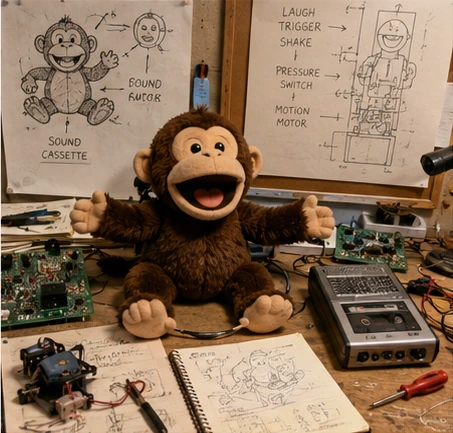
Ron Dubren Saw Children Tickling Each Other
The often-repeated origin story begins with Dubren observing children laughing during a tickling game and recognizing that the reaction itself could become a toy feature.
Greg Hyman Brought Development Experience
Hyman had worked on electronic toy concepts and understood how a simple behavior could become a repeatable play pattern.
The Pair Had Worked Together Before
Their collaboration included earlier educational and electronic toy work, so the laughing plush was not a random first experiment.
The Behavior Came Before the Character
They did not begin by asking what Elmo could do. They began with a toy that would react when touched.
The Concept Needed Emotional Timing
The laugh had to feel playful rather than mechanical. Too short and the feature seemed cheap; too long and every adult in the room reconsidered the battery compartment.
The Movement Made the Laugh Physical
Shaking and vibration transformed sound into a body response, making the plush appear overwhelmed by laughter.
The Inventors Needed a Manufacturer and License
A prototype could prove the idea, but mass production required Tyco’s engineering, sourcing, retail connections and licensed character rights.
The Gen X observation: the greatest toy ideas often sounded almost stupid when explained in one sentence. “It laughs when you tickle it” was one of those ideas—and then somebody made the right red monster do it.
Before the Red Monster, There Was a Laughing Monkey
Tickles the Chimp: The Prototype Before Tickle Me Elmo
The first version was a plush monkey designed to laugh when its stomach was pressed or tickled.
The Monkey Proved the Interaction
A familiar animal gave the inventors a neutral body for testing sound, movement and touch activation.
The Laugh Was the Main Event
The toy did not need a large number of phrases, songs or instructions. The reaction was the play pattern.
The Concept Was Repetitive on Purpose
Young children repeat actions to reproduce a response. Adults call this repetition; toddlers call it the entire afternoon.
The Prototype Demonstrated Escalation
Repeated activation could trigger more laughter and movement, creating anticipation.
The Character Was Not Strong Enough Yet
A generic monkey could be funny, but it did not carry the emotional recognition of a famous licensed character.
Tyco Saw a Platform
The mechanism could work inside different plush identities if the character’s personality matched laughter.
The Monkey Remained Part of the Invention Story
Collectors and toy historians look back at Tickles the Chimp as the proof-of-concept that made Elmo possible.
The alternate timeline: somewhere there is a version of 1996 where adults fought over a giggling monkey and every news anchor had to say “Tickles the Chimp” with a straight face.
The Toy Almost Went From Giggle to Tasmanian Tornado
Tickle Me Taz: The Character Tyco Considered Before Elmo
Tyco initially explored the concept with the Tasmanian Devil while it held Looney Tunes plush rights.
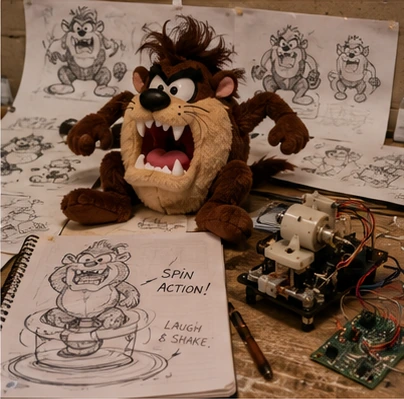
Taz Was Physically Expressive
A character known for spinning, grunting and chaotic movement made sense for a shaking plush toy.
The Laugh Was a Less Natural Match
Taz could be wild and funny, but contagious giggling was not his defining emotional trait.
Licensing Determines Toy History
Great mechanisms often move between characters based on which rights a manufacturer currently controls.
Tyco’s Looney Tunes Rights Changed
When the licensing picture shifted, the Taz direction did not become the main mass-market release.
Sesame Street Rights Opened Another Door
Tyco gained access to characters whose personalities were more closely tied to preschool interaction.
Elmo Made the Mechanism Feel Inevitable
Once the giggling, shaking behavior was paired with Elmo, the match required almost no explanation.
The Abandoned Version Shows How Close Success Can Be
The same internal concept could have become a modest licensed novelty instead of the hottest Christmas toy in America.
The lesson: toy history occasionally turns on who had the paperwork that year.
Tyco Had the Mechanism, the License and One Very Red Opportunity
How Tyco Turned the Laughing-Plush Idea Into Tickle Me Elmo
Tyco Preschool recognized that Elmo’s laugh, body language and popularity made him the strongest home for the interactive mechanism.
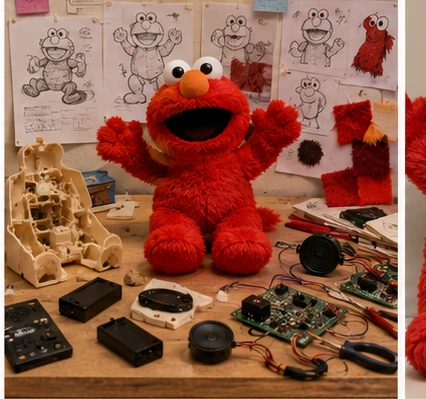
The Sesame Street License Changed the Project
The company could now build around characters parents trusted and children already recognized.
Elmo Beat the Other Character Options
His personality made laughter feel authentic rather than like a sound module buried in a random plush body.
Designers Had to Protect the Character Shape
The internal mechanism could not make Elmo feel like a hard plastic appliance wearing red fur.
The Voice Needed to Sound Right
A familiar character voice creates a higher standard. Children know immediately when the toy does not sound like television.
Movement Needed to Read as Laughter
Random vibration would look broken. The body had to shake in a way that suggested Elmo could not control the giggle.
The Feature Had to Survive Repetition
Preschoolers were going to press the activation point constantly, often with the focused determination normally reserved for elevator buttons.
Tyco Prepared a Successful Toy, Not a Cultural Stampede
The company expected strong sales and produced hundreds of thousands. The holiday demand still outran the supply.
The adult nightmare hidden inside the toy: somewhere an engineer had to test how many times Elmo could laugh before the mechanism, batteries or parent failed.
Press, Giggle, Press Again, Regret the Battery Purchase
How the Original 1996 Tickle Me Elmo Worked
The play pattern was simple enough for a toddler and theatrical enough to stop adults in a store aisle.
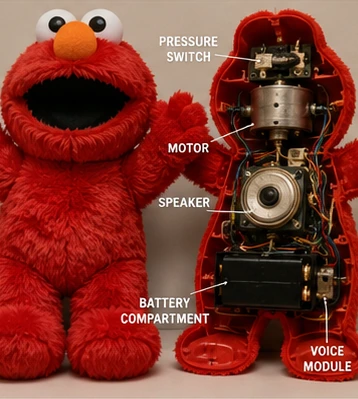
A Pressure Point Activated the Toy
The child pressed or squeezed Elmo’s stomach area, triggering the internal electronics.
The First Response Was a Giggle
Elmo laughed and invited another interaction, giving the child immediate cause and effect.
Repeated Activation Escalated the Reaction
Additional presses produced more laughter and eventually stronger body movement.
The Body Shook With Laughter
An internal motor or movement mechanism made the plush vibrate and squirm.
Sound and Motion Worked Together
The laugh alone would have felt like a talking doll. The movement created the illusion of being physically tickled.
The Sequence Encouraged Repetition
Children learned that another press could produce a larger reaction.
The Demonstration Took Seconds
That made the toy ideal for commercials, talk shows, store displays and relatives who needed to understand why this red thing was suddenly impossible to find.
The household reality: the first laugh was cute. The twentieth proved the batteries had been installed correctly.
A Plush Toy With the Internal Architecture of a Small Appliance
The Design Challenge Behind Tickle Me Elmo
Electronic plush toys must feel soft enough to hug while containing hard parts, wiring, batteries and movement systems.
Soft Exterior
Red plush and stuffing needed to conceal the mechanism without making Elmo feel rigid.
Internal Frame
Sound and movement components required stable mounting so the body reacted consistently.
Protected Battery Compartment
Adults needed access while children needed protection from loose batteries and hardware.
Pressure Activation
The switch had to respond to a child’s squeeze without triggering every time the toy was moved.
Recognizable Voice
The sound had to match Elmo closely enough that the toy felt licensed rather than merely red.
Controlled Movement
The shake needed to look playful and survive repeated use.
Washability Compromise
Electronics made normal plush cleaning difficult, creating a problem every parent discovered after Elmo met juice.
Shipping Durability
The toy had to cross oceans, warehouses and holiday stockrooms without activating or damaging its mechanism.
Retail Price
All of the technology still had to fit a price families could consider for a preschool gift.
Retail Buyers Saw a Clever Toy, Not the Coming National Emergency
Tickle Me Elmo at the 1996 New York Toy Fair
Tyco began presenting the toy to buyers months before the public knew it existed.
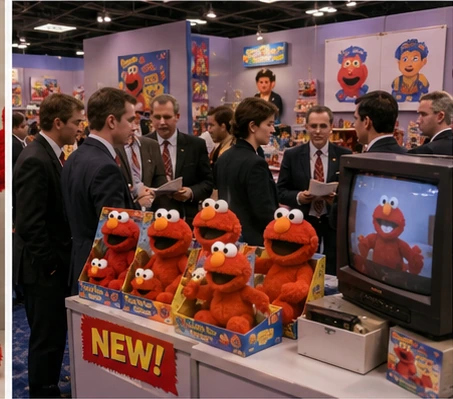
Toy Fair Was the Industry Preview
Manufacturers demonstrated upcoming products to retailers deciding what would appear on shelves later in the year.
Elmo Was Easy to Demonstrate
A buyer could understand the feature immediately without a long sales presentation.
The Toy Generated Positive Reactions
The combination of character and escalating laughter made people smile, which is valuable evidence inside a trade-show booth.
Orders Still Required Forecasts
Retailers had to estimate how many families would buy an electronic preschool plush months later.
No Forecast Captured the Rosie Effect
Daytime television exposure was not a guaranteed variable when initial orders were placed.
Holiday Toys Have Long Production Lead Times
Factories cannot instantly create hundreds of thousands of safe electronic plush toys after Black Friday.
The Industry Saw a Hit, Not Yet a Craze
That distinction explains why the product could launch successfully in summer and still disappear during the holiday rush.
The forecasting problem: somebody had to decide in February how many adults would lose their minds in December.
For Several Months, You Could Simply Walk Into a Store and Buy One
The July 1996 Tickle Me Elmo Release
The original Tickle Me Elmo reached U.S. stores in July 1996 and initially behaved like a normal successful toy.
Tyco Planned About 400,000 Units
The initial production represented confidence, not caution. Hundreds of thousands is a serious toy launch.
The Toy Sold Steadily
Families discovered it through shelves, commercials, Sesame recognition and word of mouth.
Inventory Was Available Through the Fall
The toy was not instantly impossible to find. The famous shortage developed as holiday demand accelerated.
Preschool Gifts Often Build Slowly
Unlike a movie action figure tied to opening weekend, Elmo could gain momentum through birthdays, demonstrations and parent recommendations.
The Price Was Around Thirty Dollars
That placed the toy above ordinary plush but below the cost of many consoles and large playsets.
Early Buyers Avoided the Frenzy
The people who purchased one in September accidentally became retail geniuses.
By December, The Same Toy Felt Like Treasure
Nothing about the doll changed. The calendar, inventory and public attention did.
The cruelest detail: there were months when Elmo sat on shelves waiting politely, and then the entire country decided it had forty-eight hours to find him.
One Daytime Talk Show Turned a Good Toy Into a National Conversation
How Rosie O’Donnell Helped Fuel the Tickle Me Elmo Craze
Rosie O’Donnell’s show gave the toy repeated, enthusiastic exposure to exactly the adults making holiday purchases.
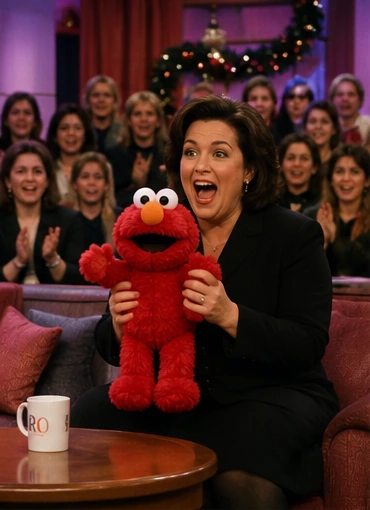
The Show Reached Parents and Gift Buyers
Daytime television had a direct line into households, offices, waiting rooms and adults discussing Christmas lists.
Elmo Worked Perfectly on Camera
Rosie could squeeze him, the audience could laugh and the feature required no explanation.
The Toy Became an Audience Giveaway
Tyco supplied dolls for the show, creating repeated appearances rather than a single conventional commercial.
Rosie’s Enthusiasm Felt Personal
Viewers saw a host genuinely enjoying the reaction instead of a child actor following a toy-ad script.
The Exposure Created Social Proof
Once an entire studio audience reacted, viewers understood the toy was funny before touching one.
Retail Demand Did Not Peak Immediately
The appearances helped build awareness, but the true panic arrived when holiday shoppers discovered shelves were empty.
Television and Scarcity Multiplied Each Other
The show made people want Elmo. The shortage made them believe everybody else wanted him more.
The 90s influencer campaign: one talk-show host, a studio audience and no “paid partnership” label covering half the screen.
Rosie did not invent the appeal, but her show gave the toy a national demonstration at the exact moment holiday lists were becoming serious.
The Day After Thanksgiving Turned Popular Into Impossible
Black Friday 1996: When Tickle Me Elmo Sold Out
Holiday traffic exposed the gap between the number of people who now wanted Elmo and the number sitting in stockrooms.
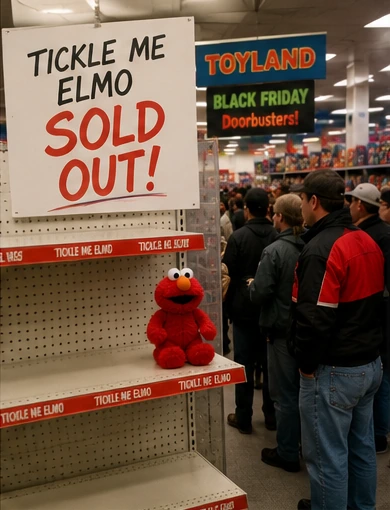
Christmas Lists Became Purchases
Parents who had heard about the toy for weeks finally entered stores ready to buy.
Inventory Disappeared Quickly
Stores that had carried Elmo through fall suddenly sold through their remaining units.
Empty Shelves Created Urgency
A toy feels optional until the shelf label remains and the product is gone.
Shoppers Began Calling Other Locations
One sold-out store became five phone calls, two mall trips and a relative in another state being recruited.
Retail Employees Became Intelligence Officers
Customers wanted delivery dates, quantities, truck schedules and names of employees who might know more.
Tyco Ordered More Production
The company moved to add roughly 600,000 additional units, but manufacturing and shipping could not match instant demand.
The Deadline Was Now Weeks Away
Every day without a toy increased the emotional and resale value.
The phone-call script: “Hi, I know you’re probably getting this question a lot…” followed by the question the clerk had received continuously since opening.
No other story captures the pressure behind the hottest Christmas toys of the 90s quite like Elmo: one fixed holiday deadline, one empty shelf and millions of parents suddenly convinced that Santa had a procurement department.
You Cannot Manufacture a Million Laughing Monsters Overnight
Why Tickle Me Elmo Was So Hard to Find in 1996
The shortage came from demand changing faster than a complex electronic plush supply chain could respond.
Electronic Plush Required More Parts
Fabric, stuffing, voice electronics, motors, switches, wiring, battery hardware and packaging all had to arrive and pass quality checks.
Production Was Overseas
Finished toys needed factory time, freight capacity, customs processing, warehouses and distribution.
Retail Allocation Was Uneven
A chain might receive more units, but individual stores could get only a few.
Demand Was National
Moving inventory from one region to another could not solve a shortage everywhere.
The Toy Was Bulky
Plush does not stack like compact cartridges. Shipping a large number required physical volume.
Christmas Could Not Move
Production arriving in January did not help a parent who had promised Santa would handle it.
Every Shipment Became News
Small deliveries drew crowds larger than the inventory, making the shortage appear even more dramatic.
The supply-chain translation: Tyco could make more Elmos. Parents needed them before the exact morning when children inspected the evidence.
The Red Monster Was for Toddlers. The Search Was Not.
Lines, Lotteries, Waiting Lists and Tickle Me Elmo Store Chaos
Retailers invented control systems because ordinary shelf stocking no longer worked.
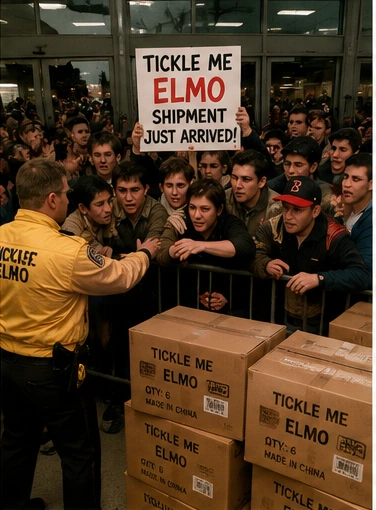
First-Come Lines
Shoppers arrived before opening and waited for a shipment that might contain fewer dolls than people in the first ten feet.
Ticket Systems
Stores handed out numbered slips to prevent an aisle sprint, though the argument merely moved to the ticket line.
Purchase Limits
One per customer slowed resellers and created sudden interest in bringing every relative to the store.
Lotteries
Some retailers drew names because random chance looked more civilized than adults competing near the preschool aisle.
Rain Checks
Parents accepted paper promises that could extend long past Christmas.
Phone Lists
Employees recorded names or told customers to call back on delivery mornings.
Unannounced Stocking
Some stores tried placing dolls out without advance notice to avoid crowds.
Security Presence
Managers and guards monitored deliveries because a fuzzy red doll had somehow become crowd-control material.
Employee Exhaustion
Retail workers answered the same inventory question until the phrase “Tickle Me Elmo” stopped sounding like English.
The frenzy belongs to the larger story of 90s toy-store culture, when inventory information traveled through phone calls, newspaper ads and the cousin who “knew a manager at Toys “R” Us.”
The Craze Stopped Being Funny When a Shipment Hit the Sales Floor
The Fredericton Walmart Tickle Me Elmo Incident
One of the most repeated stories from the 1996 frenzy involved a Canadian retail employee injured when shoppers rushed a small shipment.
The Store Expected a Midnight Crowd
A holiday promotion drew hundreds of shoppers to a Walmart in Fredericton, New Brunswick.
A New Elmo Shipment Became the Focus
Customers watched employees preparing a limited number of dolls.
The Crowd Surged
When a doll appeared, shoppers rushed the area faster than staff could control the movement.
An Employee Was Injured
Contemporary accounts describe stock employee Robert Waller being knocked down and suffering multiple injuries.
The Event Became International News
The story provided a dramatic symbol of how far the craze had gone.
The Incident Was Not Typical of Every Store
Most shoppers encountered empty shelves, frustrating calls and orderly lines—not a stampede.
It Still Defined the Public Memory
One extreme event gave news outlets a visual and narrative shortcut for the entire holiday shortage.
The uncomfortable truth: the toy laughed. The employee did not. The frenzy became cultural comedy only after the real people caught in it were safely in the past.
A Thirty-Dollar Toy Entered the Temporary Luxury Market
How Much Did Tickle Me Elmo Sell for During the 1996 Craze?
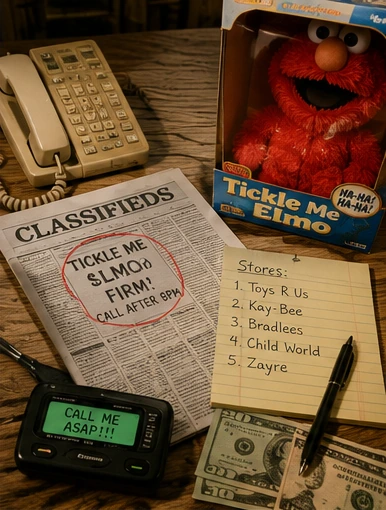
Scarcity created a secondary market before modern resale apps made that behavior routine.
Newspaper Classifieds Carried Listings
Sellers placed short ads offering boxed dolls at several times retail.
Early Online Markets Amplified the Search
The internet was still new for many households, but it allowed buyers and sellers to find one another beyond local stores.
Prices Rose Above $1,000
Historical reports described asking and sale prices reaching four figures during the peak panic.
Charity Auctions Reached Even Higher
Fundraising events produced dramatic numbers that made headlines but did not represent ordinary market value.
The Box Became Important
A sealed retail package made the toy look gift-ready and helped justify higher asking prices.
Parents Faced an Emotional Decision
Paying a reseller felt outrageous. Arriving without the promised gift felt worse to some families.
The Bubble Collapsed After Supply Caught Up
Once more dolls became available and the holiday deadline passed, the emergency premium disappeared.
The 1996 marketplace: a guy with a pager, an Elmo in the trunk and the confidence of someone selling Super Bowl tickets.
Peak shortage prices are part of the history, not a reliable guide to what an ordinary original doll is worth today.
Every Empty Shelf Created Another News Story About Empty Shelves
How Media Coverage Fueled the Tickle Me Elmo Craze
The shortage became self-reinforcing because coverage increased demand and larger crowds produced more coverage.
Daytime Television Created Awareness
Rosie’s demonstrations showed the toy to millions of adults before the shortage peaked.
Local News Covered Store Lines
A camera outside a retailer made the toy look like a public event rather than a private purchase.
National News Collected Extreme Stories
Fights, injuries, auctions and resale prices traveled far beyond the stores where they occurred.
Headlines Reached People Without Preschoolers
Grandparents, relatives and casual gift buyers learned that Elmo was apparently the correct choice.
Scarcity Became Proof of Quality
Shoppers often assume the item nobody can find must be better than the one still sitting on the shelf.
Coverage Increased the Fear of Missing Out
Parents who had not heard a direct request began worrying that a request was coming.
The Story Outlived the Product Season
Decades later, people remember the mall footage and absurd prices even if they cannot recall exactly how the toy moved.
The loop: “People are lining up because this toy is impossible to find,” followed by more people lining up because the news said the toy was impossible to find.
The Toy Became a Test of Holiday Competence
Why Parents Chased Tickle Me Elmo
The craze was not only consumer greed. It involved promises, guilt, social pressure and the emotional weight adults place on Christmas.
A Child Asked Directly
Preschool requests are often repetitive, specific and delivered without concern for supply chains.
Elmo Felt Safe
Sesame Street gave parents confidence that the gift was age-appropriate and familiar.
The Feature Looked Delightful
Adults could imagine the child’s reaction immediately.
Other Parents Were Searching
Shared panic created the feeling that responsible adults were supposed to be calling stores.
Christmas Morning Was Public
Families compare gifts, siblings notice differences and relatives ask whether the child got “the Elmo.”
Scarcity Raised the Stakes
Finding one became an achievement rather than a purchase.
Time Was Running Out
The same doll felt more important on December 20 than it had on October 20.
Retailers Could Not Offer Certainty
Vague shipment dates kept hope alive and parents in motion.
Resellers Exploited Emotion
They were selling deadline relief as much as a toy.
Toddlers Did Not Care About Market Dynamics. Elmo Laughed.
Why Children Loved the Original Tickle Me Elmo
The adult frenzy was complicated. The child appeal was beautifully simple.
Elmo Was Already a Friend
The child recognized the face, voice and personality before opening the box.
The Toy Responded to Touch
Pressing Elmo produced an immediate reaction, giving a toddler direct control over the play.
Laughter Is Contagious
Children often laughed because Elmo laughed, turning the mechanism into a shared emotional loop.
The Reaction Escalated
Repeated activation created anticipation and rewarded persistence.
The Plush Could Still Be Hugged
Unlike many electronic toys, Elmo remained a familiar stuffed character.
No Reading Was Required
The child did not need instructions, menus, cards or an adult explaining the objective.
The Toy Performed for Other People
Children could show grandparents, siblings and visitors what Elmo did, becoming the person controlling the joke.
The preschool review: “Elmo laughs when I push him.” Five stars. No notes. Repeat until bedtime.
Elmo lived mainly at home, but the same peer visibility drove the decade’s schoolyard toys and recess crazes. Once children saw what somebody else had, a private wish became public business.
The Entire Commercial Could Be Explained With One Squeeze
Original Tickle Me Elmo Commercials and the Perfect TV Demonstration
The advertising focused on children activating the toy, laughing with it and pressing again for the larger reaction.
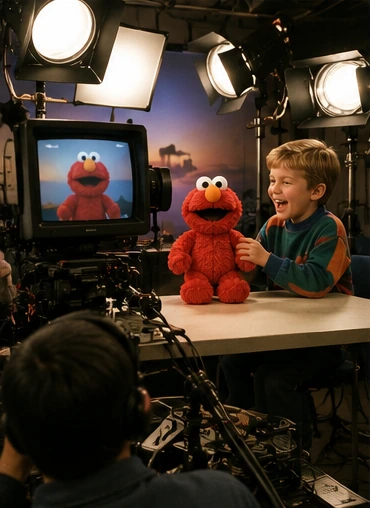
The Red Fur Filled the Screen
Close-ups made the character instantly recognizable.
The Activation Was Visible
A child squeezed the stomach area so viewers understood what caused the response.
The Giggle Sold the Toy
The sound was more persuasive than a list of electronic features.
Children’s Reactions Provided Proof
The ad showed kids laughing rather than simply claiming they would.
Escalation Created a Mini Story
Each additional press made Elmo laugh harder and move more.
The Commercial Stayed Preschool-Friendly
It did not need extreme graphics or competitive language. The feature itself was the spectacle.
News Coverage Eventually Outperformed Advertising
By December, footage of store lines and sold-out signs was selling the toy without Tyco buying the airtime.
The commercial-to-reality gap: on television, a happy child tickled Elmo in a calm living room. In reality, an adult was calling six malls from the kitchen phone.
The broader 90s toy-commercial archive shows how unusual Elmo was: the toy did not promise power, speed or victory. It promised a laugh that adults could understand in seconds.
The Box Had to Show a Moving Toy While Keeping Him From Moving
Original Tickle Me Elmo Packaging and Shelf Appeal
The package needed to make the character visible, explain the feature and survive shoppers repeatedly testing the activation area.
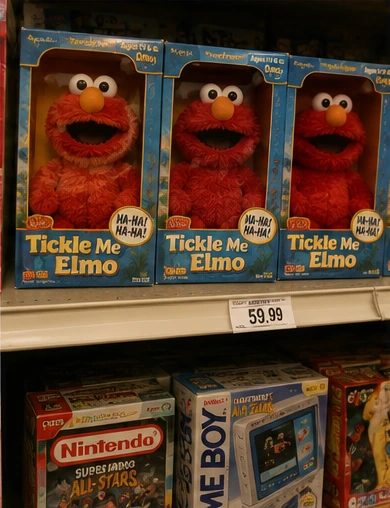
The Character Was the Main Graphic
Elmo’s red fur and wide eyes did more shelf work than a complicated illustration.
The Name Explained the Play
“Tickle Me Elmo” was both product title and instruction.
Open or Windowed Presentation Helped
Shoppers needed to see the actual plush rather than only a picture.
Try-Me Interaction Was Valuable
A demonstration feature could turn a passing adult into a buyer.
The Box Became Part of Resale Condition
During the shortage, unopened packaging signaled gift readiness and authenticity.
Holiday Wear Was Common
Boxes were handled, hidden, shipped, wrapped and sometimes opened by relatives checking whether the batteries still worked.
Collectors Now Inspect Packaging Variations
Tyco marks, copyright information, multilingual text, retailer labels and condition help identify the release.
The box experience: every exposed “try me” toy in the aisle had already been pressed by forty children and one adult pretending to test it for a niece.
Elmo Was Not the Only Thing Fighting for Space Under the Tree
Tickle Me Elmo in the 1996 Toy Aisle
The hottest Christmas toy of 1996 competed with consoles, action figures, dolls, collectibles and licensed characters across a crowded year.
Nintendo 64
A major hardware launch competed for older kids, family budgets and the same limited holiday shelf space.
Beanie Babies
The plush collectible craze was accelerating, teaching adults to treat soft toys as scarce objects.
Polly Pocket
Tiny compacts remained a proven gift, and the full Polly Pocket story shows how a long-running line differed from one explosive holiday shortage.
Power Rangers
The original Megazord rush had already proven that television exposure and limited stock could turn parents into retail detectives. Read the Power Rangers toy craze.
Electronic Games
Bop It and handheld games competed by promising louder, faster family-room interaction.
Movie Toys
Toy Story merchandise and other licensed lines kept character-based gifts central.
Traditional Dolls
Barbie, American Girl and baby dolls still occupied major gift territory.
Outdoor Toys
The Super Soaker backyard arms race proved that seasonal timing did not stop kids from asking for summer hardware at Christmas.
The Full Ranking
See the wider year in the Top 10 Toys of 1996.
Elmo Was the Holiday Panic. The Next Crazes Changed the Rules Again.
Tickle Me Elmo Compared With Furby, Beanie Babies and Tamagotchi
The late 90s produced several giant toy crazes, but each spread through a different emotional engine.
Tickle Me Elmo
Primary engine: Christmas deadline and limited supply.
One specific gift became difficult to find at the exact moment parents needed it.
Beanie Babies
Primary engine: collectibility and perceived future value.
The Beanie Babies craze encouraged adults to buy multiples, track retirements and keep tags protected.
Tamagotchi
Primary engine: portable responsibility and schoolyard spread.
The Tamagotchi digital-pet panic followed kids into classrooms and required constant attention.
Furby
Primary engine: electronic mystery, personality and holiday scarcity.
Furby mania in 1998 repeated parts of the Elmo formula with more sensors, more behavior and significantly more adult suspicion.
Happy Meal Promotions
Primary engine: limited sets and repeat visits.
90s Happy Meal toys made scarcity cheaper but required families to keep returning for the missing character.
Schoolyard Crazes
Primary engine: peer visibility and portable trading.
90s schoolyard toys and recess crazes spread because every child could see what everybody else had during the same twenty-minute break.
Tickle Me Elmo remains the cleanest example of the hottest Christmas toys of the 90s: one character, one holiday season, one national shortage and a calendar that refused to negotiate.
December 26 Did What Factories Could Not
What Happened After the 1996 Christmas Frenzy
The emotional emergency ended quickly once the holiday passed, but the product and brand continued.
The Deadline Premium Collapsed
A doll arriving in January could still make a child happy, but it no longer rescued Christmas morning.
Rain Checks Were Filled
Some families waited weeks or months for promised inventory.
Production Continued
Tyco could finally supply more of the demand without one fixed day controlling the market.
Resale Prices Fell
Once ordinary retail availability returned, most buyers no longer needed expensive secondary-market options.
Elmo’s Popularity Remained
The character did not vanish when the shortage ended. The toy had strengthened Elmo’s position as a merchandising star.
Tyco Expanded the Concept
Other Sesame Street characters and later Elmo editions followed.
The Craze Became a Business Case
Toy companies studied the combination of character, demonstration, publicity and scarcity for years afterward.
The January sighting: suddenly there were Elmos in stores, and every parent who had spent December making phone calls stared at them with the quiet fury of a person seeing airline seats after a cancelled flight.
Once One Character Laughed All the Way to the Bank, the Neighborhood Joined In
Tickle Me Ernie, Big Bird and Cookie Monster
Tyco extended the interactive concept to additional Sesame Street characters after the original success.
Tickle Me Ernie Followed
Ernie’s cheerful personality made him a natural candidate for laughter-based interaction.
Big Bird Expanded the Character Range
A larger, familiar Sesame figure gave the concept another visual identity.
Cookie Monster Joined the Line
His voice and physical comedy offered another strong match for electronic plush behavior.
None Recreated the Original Scarcity
Retailers and manufacturers were better prepared, and the surprise had already happened.
The Product Family Kept Elmo Visible
Spin-offs reinforced the idea that responsive plush was now a recurring category.
Collectors Track Different Sizes and Releases
Mini versions, international packaging and character variations create a larger family than the 1996 headline suggests.
The Original Remained the Cultural Reference
People remember Tickle Me Elmo because the first shortage became part of Christmas history.
The sequel problem: the second laughing Sesame toy could be cute, but it could not be the first toy that made adults chase delivery trucks.
Every Few Years, Elmo Learned a New Way to Disturb the Furniture
Later Electronic Elmo Toys After 1996
The original created a long-running expectation that a new Elmo toy should laugh, move or reveal some hidden technological trick.
Tickle Me Elmo Reissues
New production runs kept the classic interaction available after the shortage ended.
Tickle Me Elmo Surprise
The 2001 version tied the toy to a sweepstakes and programmed reveal date.
T.M.X. Elmo
The 2006 tenth-anniversary toy added more dramatic movement and a secretive launch campaign.
Elmo Live
Later versions increased animation, speech and performance.
LOL Elmo
Newer sensors and reactions updated the tickling interaction.
Playskool Versions
Different owners and manufacturers continued revisiting the classic behavior.
Modern Just Play Elmo Toys
Recent releases keep the original laughter concept recognizable to new families.
The Technology Improved
Movement became smoother and interactions increased, but the core joke stayed simple.
The 1996 Toy Stayed the Benchmark
Every new version was compared with the red doll adults could not find at Christmas.
Thirty Years Later, Elmo Is Laughing at the Supply Chain Again
Tickle Me Elmo’s 30th-Anniversary Return in 2026
In June 2026, Just Play announced Tickle Me Elmo Giggle Max, a larger and more interactive anniversary version scheduled for major retail availability beginning in July.
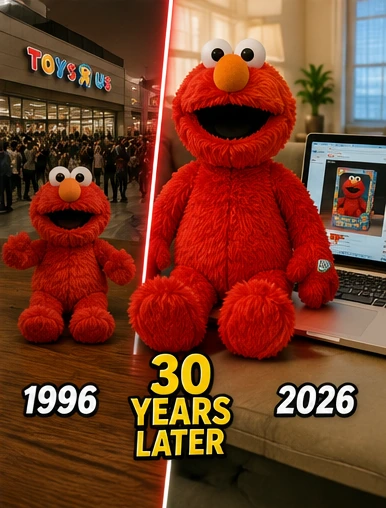
The Timing Marks 30 Years
The new release directly connects with adults who remember the 1996 shortage and now shop for another generation.
The New Elmo Is Larger
Product coverage describes an 18-inch format with a stronger physical presence.
More Touch Points Trigger Reactions
The updated toy responds to tickling around the belly and feet with expanded movement and laughter.
The Reaction Escalates Again
The more a child interacts, the more animated the response becomes—preserving the original cause-and-effect loop.
Nostalgia Is Part of the Product
The toy is marketed to children while deliberately reminding parents and grandparents of 1996.
Modern Retail Changes the Search
Preorders, online inventory and delivery tracking make a perfect repeat of the 1996 frenzy less likely.
The Original Story Gives the Return Meaning
Without the holiday chaos, a new laughing Elmo would be another preschool release. The anniversary turns it into a cultural callback.
The 2026 advantage: this time the adults can check inventory on a phone instead of calling the mall from a kitchen wall handset while somebody else shouts the number.
This section is date-stamped for July 2026 and should be reviewed if product availability, specifications or release timing changes.
The Craze Is Valuable History. Not Every Red Doll Is Valuable Money.
How to Collect an Original 1996 Tyco Tickle Me Elmo
Collectors should identify the manufacturer, release, packaging, voice, movement and condition before trusting a broad “vintage Elmo” description.
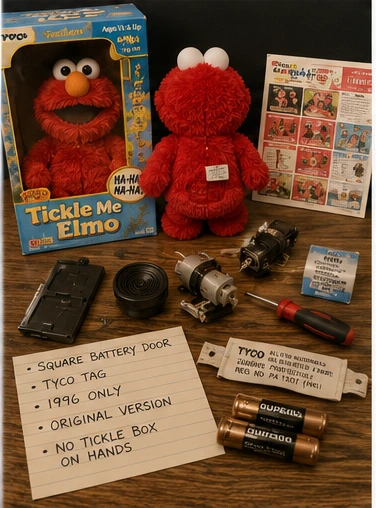
Start With Tyco
The original 1996 release was produced by Tyco Preschool.
Inspect the Tags
Fabric and manufacturing labels help establish company, copyright and production information.
Check the Packaging
Original box graphics, Tyco marks and retailer labels help confirm the era.
Test the Voice Carefully
The laugh and phrases should sound clear rather than slowed, distorted or intermittent.
Watch the Movement
The body should respond through the intended sequence without grinding or locking.
Inspect the Battery Compartment
Old leakage can corrode contacts and damage internal wiring.
Look for Fur Wear
Face, hands, feet and activation areas often show the most handling.
Separate Reissues
Later dolls can resemble the original but use different packaging, electronics and manufacturer marks.
Use Completed Sales
Current value depends on exact version, working condition, box quality and actual sold prices.
The Fur Is Red. That Does Not Finish the Identification.
How to Identify an Original 1996 Tickle Me Elmo
Many electronic Elmo dolls have been released since 1996, so exact identification requires more than recognizing the character.
Find the Tyco Preschool Name
Original packaging and labels should connect the doll to Tyco rather than a later manufacturer.
Read the Copyright and Production Labels
Dates can refer to character rights, design or production, so interpret them alongside the full label.
Compare the Face
Eye placement, mouth shape, fur texture and body proportions vary across generations.
Listen to the Audio
The original sequence and recording differ from later editions with additional phrases.
Observe the Movement
Later toys may stand, fall, roll, flap arms or use more advanced animation.
Check the Battery Door
Screw placement, plastic color and labeling can help distinguish versions.
Match the Box Exactly
Do not rely on a seller’s title. Compare front, back, side panels and manufacturer information with documented examples.
The collector rule: “Looks old” is not a model number.
The 1996 Resale Headlines Are Not Today’s Price Guide
How Much Is an Original Tickle Me Elmo Worth Today?
Some examples attract collector interest, but most ordinary dolls do not reproduce the four-figure panic prices reported during Christmas 1996.
Sealed Condition Matters
An unopened doll with a clean original box is different from a played-with loose example.
Working Condition Matters
Collectors generally pay more for clear audio, complete movement and clean battery contacts.
Box Condition Matters
Crushing, tears, fading, tape and price stickers can affect display appeal.
Exact Release Matters
Original Tyco dolls, international variants, promotional items and later editions have different demand.
Asking Prices Are Not Sold Prices
An online listing can remain at any number indefinitely. Completed sales show what buyers actually paid.
Charity Auctions Were Exceptional
Highly publicized 1996 fundraiser prices included donation value and media attention, not ordinary toy valuation.
Battery Damage Can Destroy Value
Corrosion can affect both appearance and operation.
Current Values Change
Check recent sales for the same version and condition rather than relying on a decade-old “toys worth thousands” article.
The realistic conclusion: your attic Elmo may be a fun collectible. It is probably not the exact doll somebody overpaid for during a national nervous breakdown.
Sometimes Elmo Stops Laughing. Sometimes He Laughs Like a Haunted Fax Machine.
Common Tickle Me Elmo Mechanical Problems
Age, battery leakage, worn switches and hardened internal parts can affect a nearly thirty-year-old electronic plush toy.
No Sound
Dead batteries, corroded contacts, broken wiring or failed electronics may prevent audio.
Slow or Distorted Voice
Weak batteries are the first suspect, though aging components can also affect playback.
No Movement
A worn motor, damaged gear, disconnected linkage or jammed mechanism may stop the shaking response.
Continuous Activation
A stuck switch can make Elmo respond without being pressed, which is charming for approximately four seconds.
Battery Corrosion
Leaked alkaline batteries leave residue that can damage metal contacts and nearby wiring.
Hardened Stuffing Around the Mechanism
Age and storage can change how the outer body moves around internal parts.
Cleaning Is Complicated
Electronic plush should not be submerged. Surface cleaning must protect the mechanism and labels.
Repair Can Affect Collector Condition
Opening seams, replacing parts or changing electronics may reduce originality even when function improves.
The safety rule: remove old batteries before troubleshooting and stop if corrosion, heat, odor or damaged wiring is present.
The First Preservation Step Is Getting the 1998 Batteries Out
How to Store a Vintage Tickle Me Elmo
Remove the Batteries
Long-term battery leakage is one of the largest preventable risks.
Keep the Battery Door and Screw Together
Small hardware disappears easily once removed.
Avoid Attic Heat
Extreme temperatures can damage plastic, electronics, adhesives and fur.
Avoid Damp Basements
Moisture encourages corrosion, odor and fabric damage.
Protect the Box From Crushing
Do not place heavy storage bins on top of the original package.
Limit Direct Sunlight
UV exposure can fade red fur and printed packaging.
Use Breathable Protection
Keep dust away without sealing damp fabric inside an airtight container.
Document the Condition
Photograph labels, box panels and battery compartment before long-term storage.
The preservation checklist: batteries out, box supported, room temperature, no basement smell and no mystery storage tote labeled “Christmas Stuff Maybe.”
From Tickles the Chimp to Giggle Max
Tickle Me Elmo Timeline: 1995–2026
The core laugh-and-move idea survived three decades of new owners, new mechanisms and new generations of adults explaining what happened in 1996.
1995: Prototype Development
Ron Dubren and Greg Hyman develop a laughing plush concept remembered as Tickles the Chimp.
Early 1996: Tyco Prepares Elmo
The mechanism is paired with the Sesame Street character and presented to retail buyers.
July 1996: Retail Launch
Tickle Me Elmo reaches stores with an initial plan of roughly 400,000 units.
October 1996: Rosie Exposure
Appearances and giveaways on The Rosie O’Donnell Show accelerate national awareness.
November 1996: Sellouts
Black Friday demand clears shelves and Tyco orders more production.
December 1996: Peak Frenzy
Lines, lotteries, store incidents and four-figure resale reports dominate holiday coverage.
1997–2006: Sequels and Reinvention
More Tickle Me characters, reissues, Surprise Elmo and T.M.X. Elmo extend the concept.
2026: 30th Anniversary
Just Play announces Tickle Me Elmo Giggle Max for a new generation.
The Toy Was Cute. The Frenzy Was a Preview of Everything Coming Next.
Why the Tickle Me Elmo Craze Still Matters
The 1996 shortage captured the moment when television exposure, retail scarcity and early resale networks could create a nationwide consumer event.
It Defined the Must-Have Toy
One product became the symbol of an entire holiday season.
It Showed Character Power
Elmo’s existing relationship with children made the feature emotionally stronger.
It Demonstrated Instant Play
The toy could sell itself in one squeeze.
It Exposed Supply Limits
Even a major manufacturer could not respond instantly to late demand.
It Made Resale Mainstream News
Ordinary families heard about toys changing hands for extraordinary prices.
It Previewed Influencer Marketing
A trusted television personality helped transform awareness without a conventional ad campaign.
It Fed on Media Coverage
The shortage became larger because everybody watched the shortage become larger.
It Strengthened Elmo’s Merchandising Role
The character became permanently associated with interactive preschool toys.
It Remains Peak 90s Christmas
Malls, phone calls, local news, newspaper classifieds and adults discovering that “sold out” was apparently a challenge.
The Rest of the Toy Aisle We Have Rebuilt So Far
More Completed 90s Toy Deep Dives
Elmo’s shortage makes more sense beside the decade’s other major crazes, from backyard hardware and tiny compacts to digital pets and plush animals adults thought would fund college.
Because “Everybody Knows Parents Rioted” Is Not Enough
History, Sales and 2026 Update Sources
The development of Tickles the Chimp, Ron Dubren and Greg Hyman’s roles, the Tickle Me Taz stage and Tyco’s move to Elmo were checked against The Strong National Museum of Play’s Greg Hyman history and its must-have holiday toy overview. Elmo’s character profile was checked against Sesame Workshop. The 1996 launch, one-million-unit sellout, holiday shortage and 2026 Giggle Max return were checked against People’s June 2026 anniversary report. Historical retail price and resale context were checked against AARP’s holiday-craze history. The Rosie O’Donnell promotional story and broader development timeline were compared with LiveNOW from FOX and Mental Floss’s oral history. Current Giggle Max specifications were checked against The Toy Insider. Current resale values are intentionally excluded because exact version, packaging, condition and completed-sale date change the market.
Frequently Asked Red-Monster Questions
Tickle Me Elmo 1996 FAQ
When did Tickle Me Elmo come out?
The original Tyco Tickle Me Elmo was released in the United States in July 1996.
What company made the original Tickle Me Elmo?
Tyco Preschool, a division of Tyco Toys, produced and marketed the original 1996 doll.
Who invented Tickle Me Elmo?
Toy inventors Ron Dubren and Greg Hyman developed the core laughing-plush concept that eventually became Tickle Me Elmo.
What was Tickles the Chimp?
Tickles the Chimp was an early laughing monkey prototype created before the mechanism was paired with Elmo.
Was the toy almost Tickle Me Taz?
Yes. Tyco explored using the Tasmanian Devil while it held Looney Tunes plush rights before shifting the concept to Sesame Street and Elmo.
How did the original Tickle Me Elmo work?
Pressing Elmo’s stomach activated recorded laughter, and repeated interaction produced escalating laughter and body movement.
Why was Tickle Me Elmo so popular?
It combined a beloved Sesame Street character, a simple interactive feature, strong television exposure and a holiday supply shortage.
What role did Rosie O’Donnell play?
Her talk show demonstrated and gave away the toy in fall 1996, exposing it to a large audience of parents and holiday shoppers.
Did Rosie O’Donnell single-handedly cause the craze?
No. Her exposure accelerated awareness, but Elmo’s popularity, the toy’s strong design, limited supply, Black Friday demand and news coverage all contributed.
How many Tickle Me Elmos were originally made?
Tyco initially planned roughly 400,000 units and added about 600,000 more as demand grew.
How many Tickle Me Elmos sold in 1996?
Reports state that all one million units produced between July and December 1996 sold.
How much did Tickle Me Elmo cost in 1996?
The original retail price was about $30, commonly reported as $28.99.
How much did resellers charge in 1996?
Some listings and reported sales exceeded $1,000, while special charity auctions produced even higher headline numbers.
Why did stores run out of Tickle Me Elmo?
Holiday demand surged after production and retail orders were already set, and electronic plush toys required time to manufacture, ship and distribute.
Did people really fight over Tickle Me Elmo?
News reports documented arguments, store incidents and at least one serious crowd rush, although most shoppers experienced ordinary lines, lotteries and empty shelves.
What happened at the Fredericton Walmart?
A store employee was injured when a crowd rushed a limited Elmo shipment during a December 1996 event in Fredericton, New Brunswick.
Was Tickle Me Elmo the hottest Christmas toy of 1996?
Yes. It became the defining must-have toy of the 1996 holiday season.
What other toys were popular in 1996?
Nintendo 64, Beanie Babies, Polly Pocket, Power Rangers, Toy Story merchandise and many dolls and electronic games competed for holiday attention. See the Top 10 Toys of 1996.
What happened after Christmas 1996?
More inventory reached stores, rain checks were filled and the extreme resale premium fell as the fixed holiday deadline passed.
Were there other Tickle Me Sesame Street toys?
Yes. Tyco released versions involving Ernie, Big Bird and Cookie Monster, along with later Elmo reissues.
What was T.M.X. Elmo?
T.M.X. Elmo was a 2006 tenth-anniversary version with much more dramatic movement and a secretive marketing campaign.
Is Tickle Me Elmo back in 2026?
Yes. Just Play announced Tickle Me Elmo Giggle Max for the 30th anniversary, with broad retail availability scheduled beginning in July 2026.
How is Giggle Max different from the original?
The 2026 version is larger and includes more touch points, laughter and body movement while keeping the original tickle-and-giggle concept.
How can I identify an original 1996 Tickle Me Elmo?
Check for Tyco Preschool markings, matching labels and packaging, the original audio sequence, body proportions and movement pattern.
Is an original Tickle Me Elmo worth money?
Some boxed or working originals attract collectors, but most do not match the extraordinary resale prices reported during the 1996 shortage.
Does the original box matter?
Yes. Clean original packaging can increase collector interest and helps document the exact release.
Why does an old Tickle Me Elmo sound slow?
Weak batteries are a common cause, but aging audio components, corrosion or motor drag can also affect performance.
Can Tickle Me Elmo be washed?
Electronic plush should not be submerged. Follow model-specific instructions and use cautious surface cleaning that protects the battery compartment and mechanism.
Should batteries be left inside for storage?
No. Remove batteries before long-term storage to reduce the risk of leakage and corrosion.
Where does Tickle Me Elmo fit in the larger 90s toy story?
It is the decade’s clearest holiday-shortage case and connects directly to 90s Christmas toy crazes, 90s dolls and plush toys, and the wider 90s Toys collection.
Elmo Laughed. Adults Checked Another Store.
Tickle Me Elmo Was the Perfect 90s Holiday Storm
The toy did not need cutting-edge artificial intelligence, a giant accessory system or a complicated game. It needed Elmo, a squeeze, a laugh and enough movement to make a preschooler press the same spot again.
The chaos came from everything around it: television exposure, limited inventory, mall culture, local news, resale speculation and parents staring at a calendar. That combination turned a good electronic plush toy into the symbol of Christmas 1996—and gave an entire generation a permanent reaction to the phrase “We might be getting a shipment Friday.”