The Five-Dollar Plush Animals That Became a Retirement Plan
Beanie Babies in the 90s: The Collectible Craze and Bubble
The 90s Beanie Babies craze began with small, floppy plush animals that could sit in a kid’s backpack without taking up half the room. Then the heart tags gained birthdays and poems, stores started running out, characters were suddenly “retired,” adults discovered price guides, and the internet turned a cute five-dollar toy into something people discussed like pork-belly futures.
By the late 90s, families were protecting cardboard tags more carefully than the animals themselves. Kids wanted the bear because it was cute. Adults wanted the bear because somebody’s cousin said it would pay for college. That difference is the entire Beanie Baby craze in one deeply 90s sentence.
Why Did Beanie Babies Become Such a Huge 90s Craze?
The Beanie Babies craze of the 90s exploded because Ty combined an inexpensive, appealing plush toy with artificial scarcity, character retirements, collectible tags, small-store distribution and a growing internet resale market. Each animal had a name, birthday and poem, which made a five-dollar toy feel personal. Limited shipments and sudden retirements made it feel scarce.
The result was the Beanie Baby bubble: collectors bought because prices were rising, rising prices attracted more collectors, and every new buyer became evidence that the toys would keep going up. Children saw floppy animals to play with. Adults briefly saw an alternative asset class with whiskers.
From Gift-Shop Plush to National Economic Delusion
The Complete Story of Beanie Babies in the 90s
The story begins with an under-stuffed frog and ends with adults learning that a newspaper price guide is not the same thing as a buyer.
The Four-Part Beanie Formula
Why Beanie Babies Hit at Exactly the Right Moment
Beanie Babies were not the first collectible plush toys. They were the first to combine kid appeal, adult speculation, controlled supply and early internet culture this efficiently.
They Were Cheap to Enter
At roughly five dollars in ordinary stores, the first purchase did not feel like collecting. It felt like picking up a small gift. The collection formed one harmless animal at a time.
They Looked Collectible
Names, birthdays, poems and heart-shaped tags made each animal feel like an individual character instead of generic plush inventory.
They Seemed Scarce
Small shipments, uneven availability and sudden retirements created the constant fear that today’s common animal would become tomorrow’s impossible one.
The Internet Amplified Everything
Collectors could trade, compare tags, announce retirements and repeat value rumors faster than any previous toy craze.
Before the Plastic Cases and Price Guides
Ty Warner and the Origin of Beanie Babies
The earliest Beanie Babies were not launched as miniature investment vehicles. They were small, floppy animals designed to feel more natural than the stiff plush toys around them.
Ty Inc. Before Beanie Babies
Ty Warner founded Ty Inc. in 1986 after working in the plush-toy business. His company focused on stuffed animals with careful faces, soft materials and poses that looked less rigid than traditional plush.
That attention to shape mattered. A stuffed animal is simple until somebody tries to make it expressive at a price ordinary families will pay. Warner’s strength was recognizing how small changes in stuffing, fabric and facial proportion could make one plush animal feel more appealing than another sitting six inches away.
The Bean-Filled Idea
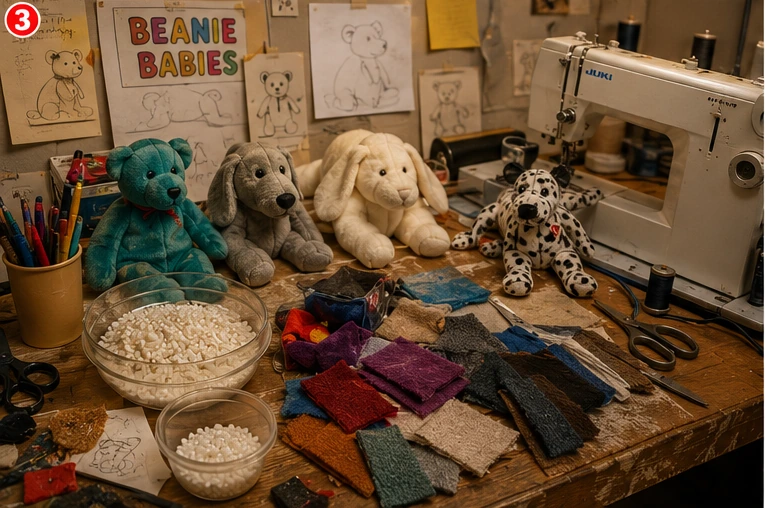
Beanie Babies used plastic pellets in the lower body and less conventional stuffing than typical plush toys. The “beans” gave them weight and flexibility. A frog could sprawl. A dog could slump. A bear could sit without looking like it had been filled with couch cushions.
The animals felt good in the hand and could be posed on shelves, desks and beds. The design looked casual, which helped create the impression that each one had a personality.
The 1993 Introduction
Beanie Babies entered the U.S. market in 1993, during a toy year already crowded with big brands and changing play habits. The initial group later became known as the Original Nine. Early sales were not an instant nationwide explosion. Stores had to be convinced that tiny, lightly stuffed animals with plain names belonged beside larger plush toys.
The slow beginning is important because the later craze often makes Beanie Babies look inevitable. They were not. The product needed the right distribution, identity system and collector behavior before it became larger than the toy itself.
Why the Low Price Mattered
A family could buy one without planning. A child could spend birthday money. A relative could add one to a gift. That made Beanie Babies easy to repeat.
The collector did not begin with a major purchase. The collector began with Patti, Spot or Chocolate and then noticed the empty space beside it.
From Toy to System
The animals became a system once Ty layered names, tags, dates, retirements and availability onto the basic plush. The toy remained simple. Everything around the toy became complicated.
The Gen X translation: somebody made a floppy five-dollar animal, then America built a commodities exchange around the cardboard tag.
Why the origin matters: Beanie Babies succeeded because the physical toy was charming enough to start the relationship before scarcity and speculation took control.
The Animals That Started the Bean-Filled Avalanche
The Original Nine Beanie Babies
The first group established the basic Beanie vocabulary: familiar animals, simple names, soft bodies and just enough variation to make collecting feel manageable.
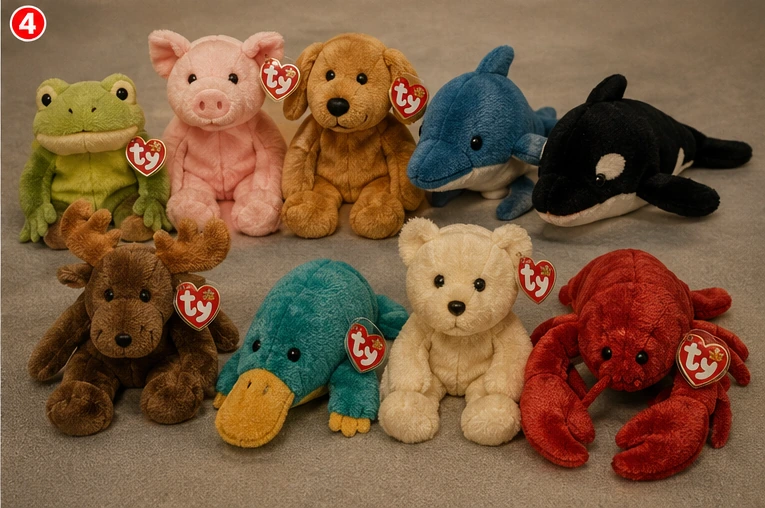
Legs the Frog
A bright green frog whose flat, flexible body showed exactly what the under-stuffed design could do. Legs could sprawl across a shelf instead of standing like a carnival prize.
Squealer the Pig
A soft pink pig with a simple shape and immediate kid appeal. Squealer helped prove the line did not need elaborate accessories or licensed characters.
Spot the Dog
A black-and-white dog that looked familiar enough to feel like a pet. Early versions and later changes made Spot important to collectors studying production differences.
Flash the Dolphin
A gray dolphin that broadened the line beyond land animals. The bean-filled body gave Flash a curved, relaxed pose that worked well in a small plush.
Splash the Whale
A black-and-white whale whose compact shape looked good beside Flash. Aquatic pairs encouraged collectors to think in sets before Ty ever needed to say the word.
Chocolate the Moose
A brown moose with soft antlers and a name that sounded warmer than “Moose.” Chocolate demonstrated how one friendly word could turn an animal into a character.
Patti the Platypus
Patti became one of the most recognizable early Beanies and later a star of the 1997 Teenie Beanie promotion. The unusual animal choice helped the line stand apart from ordinary teddy-bear shelves.
Brownie, Later Cubbie
The brown bear was originally known as Brownie and later renamed Cubbie. That name change became exactly the kind of production detail collectors loved to catalog.
Pinchers the Lobster
The red lobster completed the group with a strange, memorable shape. Some early references and tags used “Punchers,” adding another historical detail for collectors to argue about forever.
Why the Original Nine matter: they were not the most elaborate Beanie Babies. They were the proof that a small group of simple animals could create attachment, completion anxiety and an entire vocabulary of versions.
Floppy Was the Feature
Why the Beanie Baby Design Worked
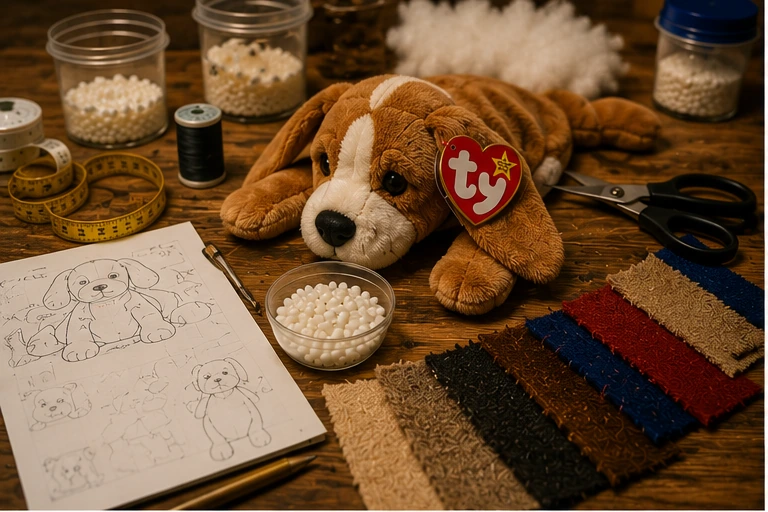
The design looked almost too simple to become a billion-dollar phenomenon. That simplicity made it easy to recognize, touch, display and collect.
Under-Stuffed Bodies
Traditional plush toys often held one rigid pose. Beanie Babies folded, slumped and rested naturally. The loose body made them feel less manufactured.
Weighted Pellets
The pellets gave the toys physical presence. A small animal felt substantial without becoming hard or overfilled.
Simple Faces
Small eyes, stitched noses and uncomplicated expressions allowed owners to project personality. The toys did not tell you exactly what they were feeling.
Compact Size
Several Beanies fit on one shelf, in one basket or across one bed. Collections could grow before the household realized a storage problem had begun.
Color Variety
Tie-dye fabric, natural patterns, holiday colors and themed bears gave the same basic construction endless visual variation.
No Batteries Required
During a decade filled with electronic toys, Beanie Babies offered immediate play. No startup sequence, no dead screen and no parent searching for a screwdriver.
They Photographed Well
The animals sat easily for catalogs, magazines and early website images. A row of Beanies instantly communicated abundance and collectibility.
They Felt Personal
A small toy can become “mine” quickly. Different animals let children choose by species, color, birthday or whatever logic made sense that week.
They Were Built for Groups
One Beanie looked cute. Ten looked like a collection. The product became more visually persuasive with every purchase.
The Most Protected Piece of Cardboard in the House
Heart Tags, Birthdays and Poems Changed Everything
The toy lived in the room. The value supposedly lived in the tag.
The Heart-Shaped Hang Tag
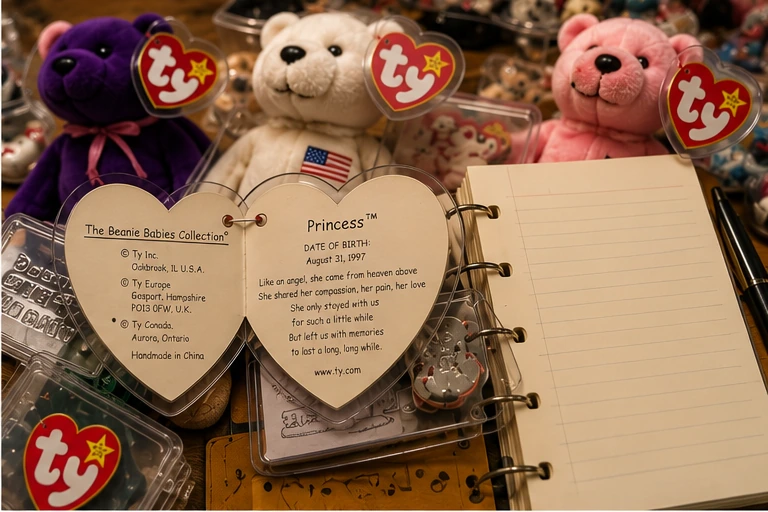
The red Ty heart became the visual seal of the brand. It told shoppers that the animal belonged to a larger world. Once collectors began studying tag generations, that small piece of cardboard became evidence.
A crease, tear or missing tag could change how a collector viewed the toy. Children were suddenly expected to play gently with a plush animal while protecting a cardboard object attached to its ear.
Birthdays Made Them Personal
Adding birthdays gave owners another reason to connect. A Beanie could share a birthday with a child, parent, sibling or friend. That transformed a random gift-shop animal into “the one with my birthday.”
Birthdays also created calendar behavior. Collectors remembered dates and looked for animals connected to family milestones.
Poems Created Character
Short poems turned species into personalities. A bear was no longer simply a bear; it had a name, birthday and a few lines suggesting who it was.
The poems also gave the tag interior a reason to exist. Opening the heart became part of meeting the toy.
Swing Tags and Tush Tags
Collectors used both the hanging heart tag and the sewn fabric tag to identify versions. Changes in logos, wording, punctuation, materials and manufacturing information became a classification system.
That system was useful when applied carefully and ridiculous when every ordinary variation was advertised as a priceless error.
The Tag Protector Era
Clear plastic tag protectors became standard collector equipment. The protector announced that this plush animal was no longer living under normal childhood rules.
Some Beanies went from store shelf to plastic display case without ever experiencing the humiliation of being hugged.
The memory: being told not to bend the tag on a stuffed animal that had supposedly been purchased for you.
Why the tags mattered: they turned a simple toy into a documented object with identity, production history and a permanent reason to handle it carefully.
The Craze Was Bigger Than One Man and One Heart Logo
The People Behind the Beanie Babies Phenomenon
Ty Warner controlled the company and the product strategy, but the craze also depended on employees, designers, retailers and early internet builders who made the toys feel like a living culture.
Ty Warner
Warner’s product instincts shaped the under-stuffed design, controlled distribution and retirement strategy. His secrecy and willingness to ignore normal mass-retail expectations helped build mystery.
Lina Trivedi
Trivedi is widely credited with helping create the birthday-and-poem format and building Ty’s early website presence. Those contributions connected the physical toy to identity and the emerging internet collector community.
Independent Retailers
Gift shops and small stores became local information centers. Employees knew shipment days, retirements, customer wish lists and which collectors would call before opening.
Collector Publishers
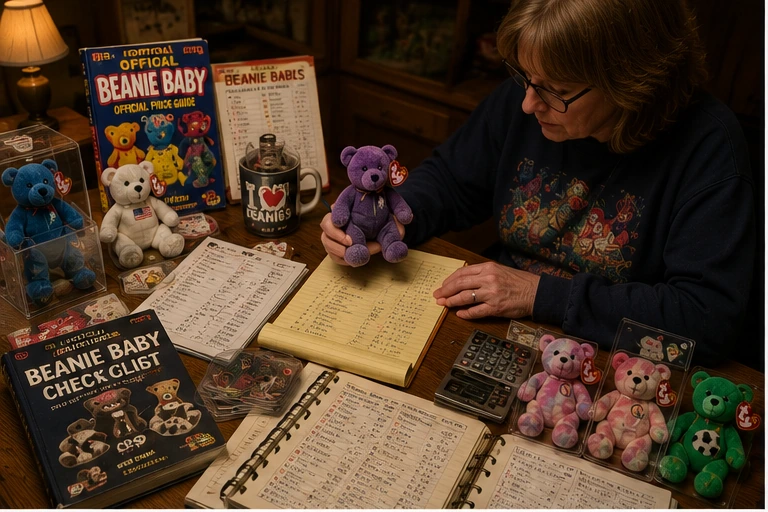
Magazine editors, guidebook writers and checklist makers organized an exploding market. Their charts looked authoritative even when the prices were estimates built on a moving target.
Early Web Collectors
Fan sites, message boards and online traders spread news faster than print. They also spread rumors faster, which turned ordinary tag differences into overnight legends.
Parents and Grandparents
Adults supplied transportation, store calls, money and the belief that buying two was smart because one could stay mint. The bubble needed grown-ups with storage space.
The craze did not come from one commercial. It came from thousands of small decisions: a store holding one behind the counter, a website posting a retirement, a magazine printing a value and a family deciding not to remove the tag.
The Gift Shop Became a Trading Floor
The Small-Store Distribution Strategy
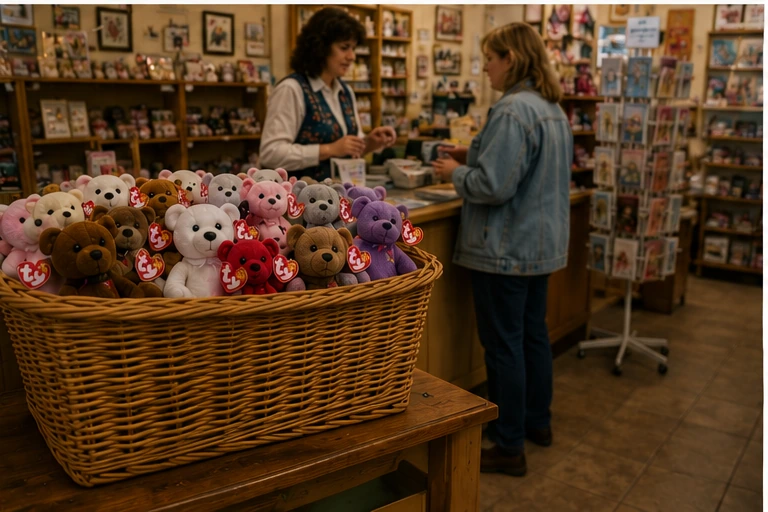
Beanie Babies built much of their identity outside the giant toy chains. Small gift shops, card stores and specialty retailers gave the product a different kind of visibility.
Why Small Stores Helped
A Beanie display near a register looked special. The animals were not buried beside hundreds of competing plush toys. Employees could talk about new arrivals and retired characters.
Small stores also created uneven availability. One town might have a new animal while another had none. That regional inconsistency made finding a character feel like discovery.
Limited Orders Created Local Shortages
Retailers could not simply reorder unlimited quantities of every character. Small allocations meant a few determined collectors could clear a shipment quickly.
Empty baskets became evidence of demand. A store that received twelve and sold twelve looked more exciting than a warehouse that received ten thousand.
The Employee Phone Call
Collectors developed relationships with store employees. Shipment information became valuable. A call saying “the new bears came in” could change an afternoon.
Stores kept lists, enforced limits and occasionally hid stock for regular customers. Every local market developed its own rules and grievances.
Toy-Store Culture Without the Toy Superstore
The broader 90s toy-store experience usually meant Toys “R” Us, KB Toys and mall aisles. Beanie Babies created a parallel map that included card shops, florist counters, hospital gift stores and places nobody had previously considered toy destinations.
The memory: entering a store for a greeting card and finding three adults whispering about whether a bear had been retired.
Retired Was the Most Powerful Word in the Hobby
How Retirements and Scarcity Fueled the Craze
Ty did not need every retired Beanie Baby to be rare. The company needed collectors to believe any current character might become difficult later.
The Collector Feeling
A retirement announcement felt like a countdown. The animal was still in stores, but its future supply had supposedly ended. That transformed an ordinary purchase into a last chance.
Collectors bought extras because a retired Beanie might appreciate. Stores saw demand increase, which made the retirement look justified. Rising resale prices encouraged the next round of buying.
Even people who did not like a particular animal could fear missing it. Completion became more important than taste.
The Business Reality
Retirement ended production of a character, not the existence of every unit already made. A retired Beanie could still be extremely common if large quantities had entered the market.
Supply was also difficult for ordinary buyers to measure. Without reliable production numbers, collectors used store availability, guidebook prices and rumor as substitutes.
Scarcity was sometimes real. The mistake was treating every retired animal as equally scarce and every scarcity as permanent.
The Retirement Feedback Loop
1. Rumor
Collectors hear that an animal may retire or become difficult.
2. Rush
Buyers clear remaining local stock and purchase duplicates.
3. Price Increase
Secondary-market sellers ask more because demand has jumped.
4. Proof
The higher price becomes “proof” that the next retirement will be profitable too.
One Basket Became One Room Became One Estate Problem
How Beanie Babies Collecting Took Over the House
Beanie Babies were small, which made the collection look reasonable until hundreds of small things occupied every available shelf.
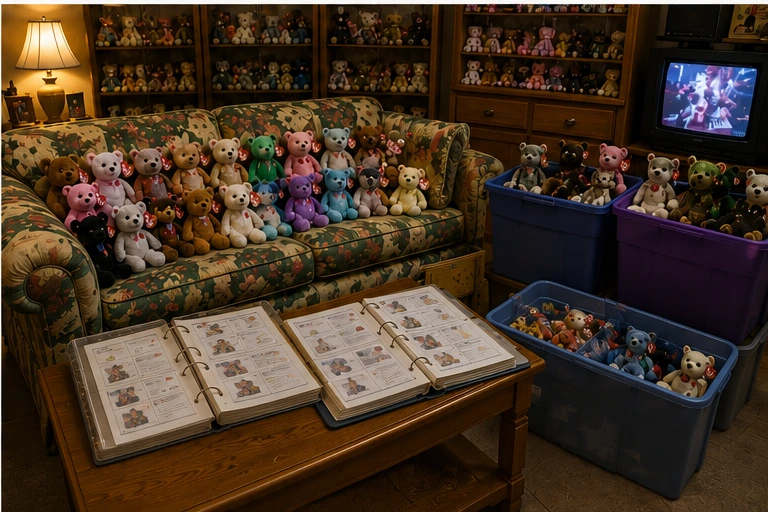
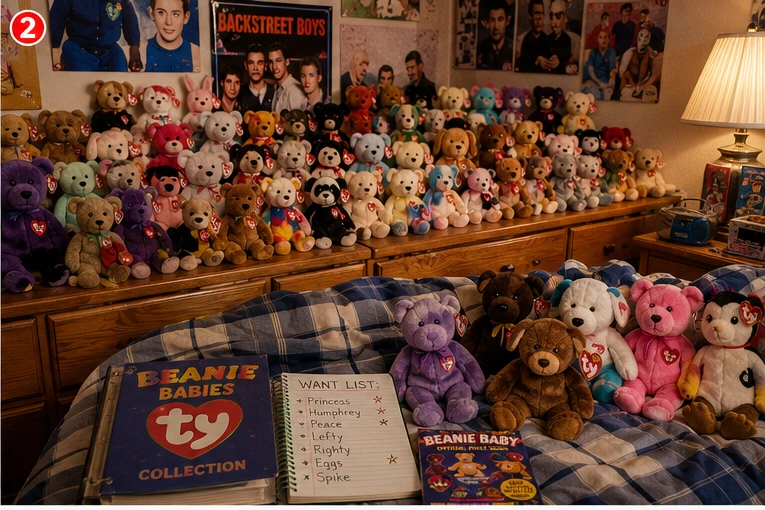
The first few animals sat on a dresser or bookshelf. Soon they were arranged by species, color, birthday, retirement status or whatever system the household’s chief curator preferred.
Clear plastic shields appeared on every heart. Protecting the tag became more urgent than keeping dust off the plush.
Higher-status Beanies received acrylic boxes, turning a five-dollar toy into a museum exhibit beside the family television.
One was for display. One was for investment. One was for trading. Nobody asked why a mass-produced plush animal required a diversified inventory position.
Collectors carried lists to stores and crossed off acquisitions. The joy of the toy became the relief of completing another line.
Once shelves filled, mint animals entered sealed containers. A collection supposedly purchased for enjoyment spent years in darkness.
One person believed the collection was valuable. Another asked where the Christmas decorations were supposed to go now.
Children were invited to admire the animals without bending tags, removing protectors or introducing the collection to ordinary play.
The collection would someday pay for college, retirement, a car or at least the original purchases. The deadline remained flexible.
The First Great Plush Craze of the Online Age
Beanie Babies, the Early Internet and eBay
The internet did not create Beanie Babies, but it turned local shortages into national information and national information into a 24-hour rumor machine.
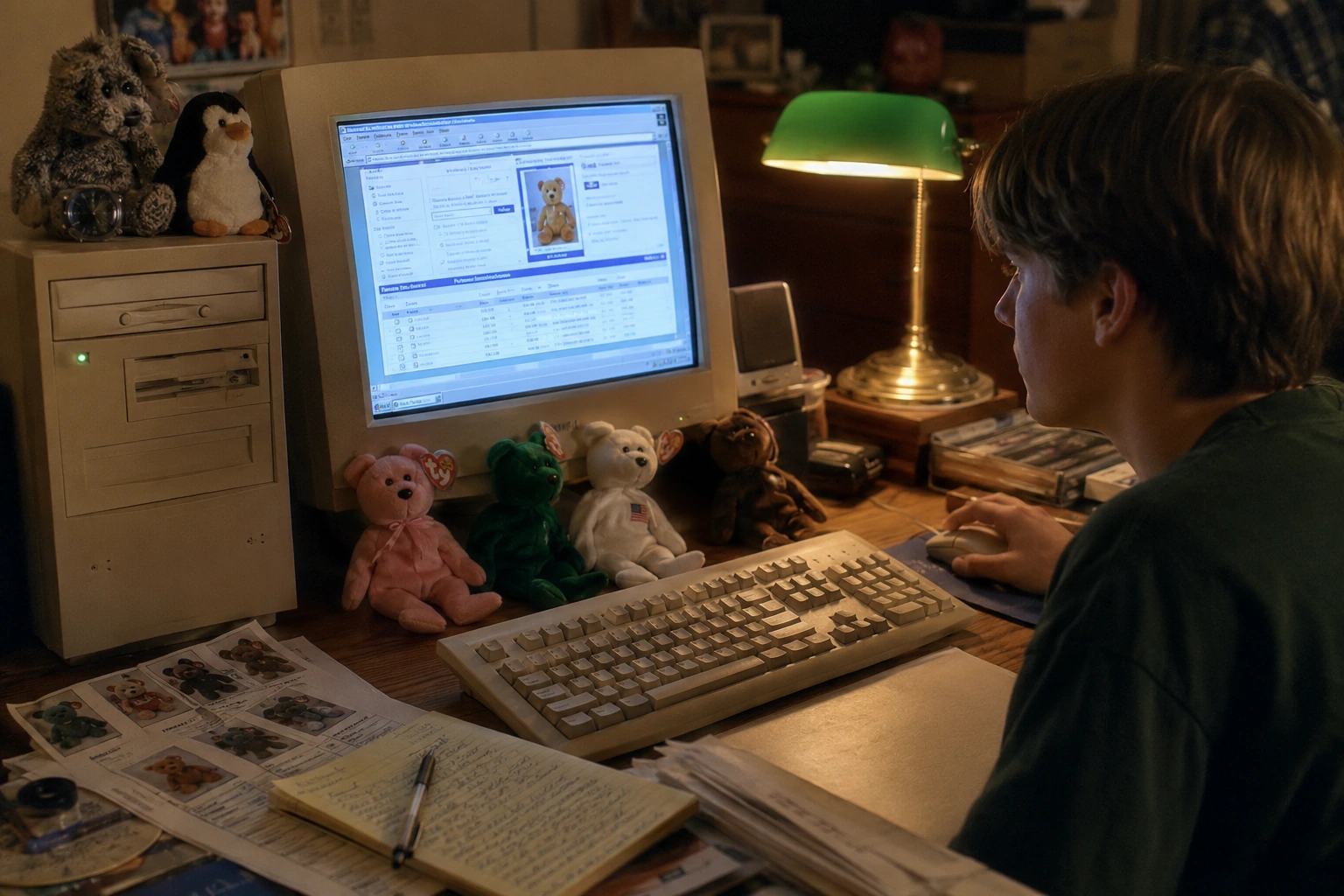
The Official Ty Website
Ty established an early consumer-facing web presence when most families still associated the internet with dial-up noises and asking whether somebody was using the phone.
The website could announce new characters, retirements and brand information directly to collectors. That made Ty’s updates feel immediate and official.
Fan Sites and Collector Pages
Independent sites published checklists, tag guides, retirement lists and photographs. Collectors no longer needed the same local store or magazine to share information.
The web also created expertise quickly. Somebody with a scanner, a list and confidence could become a national authority before breakfast.
eBay and the Visible Resale Market
Online auctions gave collectors a place to see characters that were unavailable locally. They also made prices visible in real time.
A high auction result could circulate through message boards and stores, encouraging owners to value every similar Beanie at the same amount regardless of tag generation, condition or buyer demand.
Why Online Trading Changed Collecting
Before the internet, scarcity could remain local. A Beanie unavailable in Ohio might be sitting in a basket in Arizona. Online trading connected those markets.
That should have reduced scarcity. Instead, it initially increased excitement because collectors could see how many characters, versions and prices existed.
The Internet Made the Bubble Faster
Retirement news moved instantly. Value rumors repeated without verification. Photos of unusual tags traveled widely. Buyers could participate from home.
The same network that accelerated the boom eventually helped expose the supply. Once thousands of identical Beanies appeared online, scarcity became harder to imagine.
The memory: waiting for a Beanie Baby page to load one line at a time while somebody in the house yelled that they needed the phone.
Why the internet mattered: Beanie Babies became one of the first toy crazes where collectors could watch the market, trade nationally and panic together in real time.
Printed Confidence in a Market Nobody Controlled
Beanie Baby Price Guides, Magazines and Checklists
The collector-publishing industry made the craze feel organized, measurable and financially serious—even when values changed faster than the next issue could reach a newsstand.
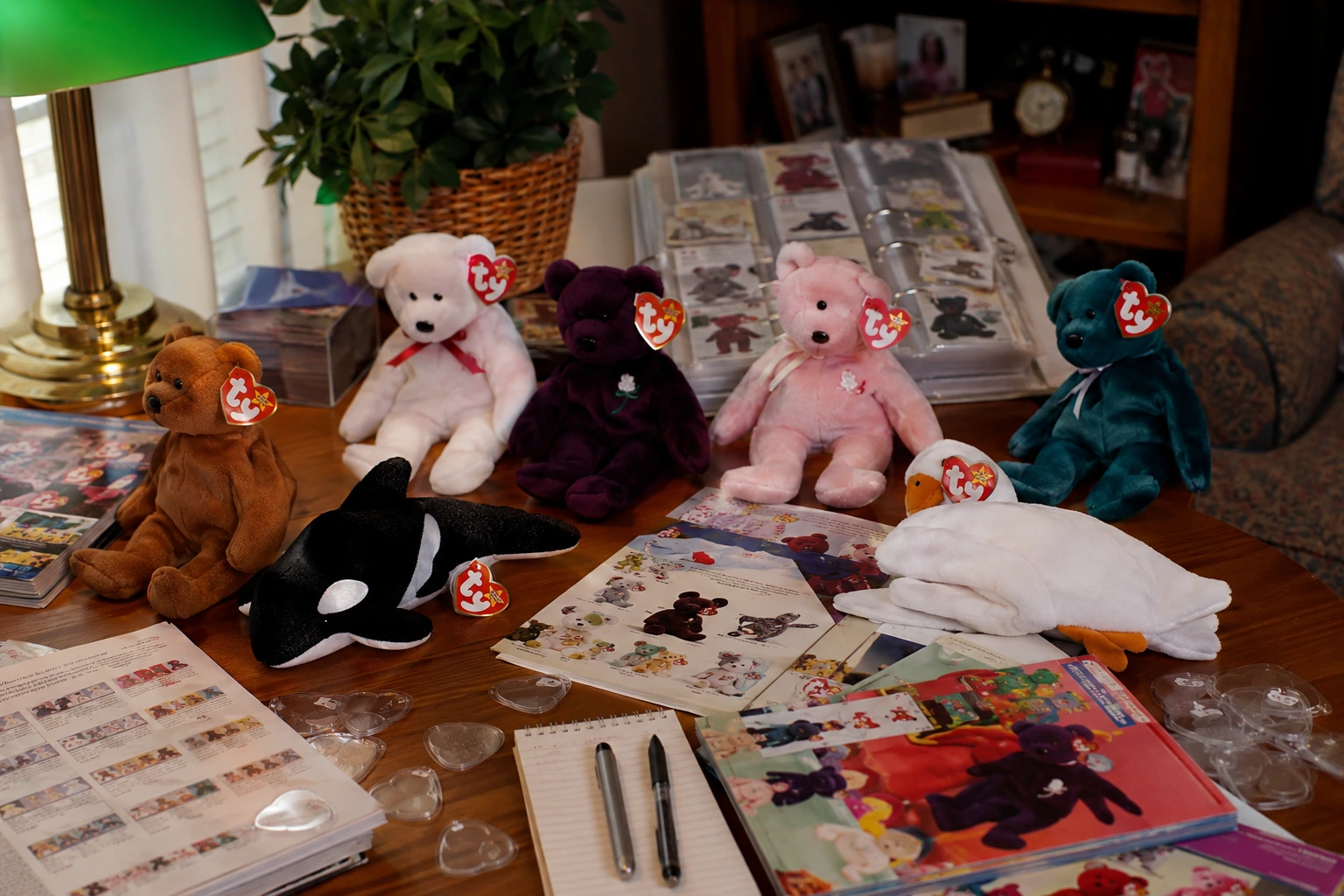
Why Price Guides Felt Official
Printed books and magazines used tables, photographs, value ranges and condition language. The format resembled established collectible markets such as coins, stamps and baseball cards.
That visual authority encouraged readers to treat estimates as fact. A price printed in a magazine looked more stable than a rumor from a store, even when both came from the same overheated market.
The Publication Delay Problem
A guide had to be researched, written, printed and distributed. During a fast-moving craze, the market could change before the issue reached the shelf.
A Beanie listed at a high value might already be declining. Another might have been retired after the printing deadline. The magazine documented momentum more than permanent worth.
Checklists Turned Shopping Into Completion
Lists made the collection visible. Empty boxes created goals. New generations and special editions extended the finish line.
A child could enjoy five favorite animals. A checklist could make that same child feel fifty animals behind.
Collector Magazines Created Community
Publications shared reader stories, retirement news, convention reports and photos of enormous collections. They showed collectors that the obsession was not isolated.
They also normalized behaviors that would have looked extreme without a glossy cover: buying duplicates, tracking pellet types and storing plush animals in protective cases.
The Price-Guide Feedback Loop
High resale prices entered guides. Collectors read the guides and demanded high prices. Sellers pointed back to the guide as evidence. The market quoted itself.
The memory: flipping through a price guide and mentally multiplying every animal in the bedroom by the highest number in the column.
The Collectible Bubble Goes Through the Drive-Thru
McDonald’s Teenie Beanie Babies Changed the Scale of the Craze
The 1997 Teenie Beanie promotion brought the collector frenzy to families who had never visited a specialty gift shop or studied a retirement list.
Beanie Babies were already popular. McDonald’s made them unavoidable.
The 1997 Promotion
McDonald’s introduced miniature Ty characters as Teenie Beanie Babies in 1997. Patti the Platypus became one of the best-known examples and remains part of McDonald’s own Happy Meal history.
The scale was enormous. The promotion placed collectible animals inside an everyday family routine and gave parents a new reason to discuss inventory at lunch.
Why Teenie Beanies Worked
The miniature toys looked connected to the full-size collector market but were cheap and accessible. A child could join the craze through a meal even if local stores had no regular Beanies.
The packaging encouraged “mint” behavior. Leaving the toy sealed made it feel more valuable, which meant some children received a Happy Meal toy they were advised not to open.
Collecting the Set
Different characters created repeat visits. Families compared restaurant locations, traded duplicates and learned which animal was available on which day.
The completion problem from the regular Beanie market now included fries.
Adult Buying Behavior
Some customers bought meals in quantity, sought toys without food or treated the promotion like a limited retail release. Restaurant employees became the front line of collector demand.
The Long-Term Reality
Massive distribution made many Teenie Beanies memorable rather than rare. Sealed packages survived in huge numbers because collectors expected future value.
The promotion remains culturally important because it captured the peak better than almost anything else: a five-dollar plush craze had become a national fast-food event.
The full restaurant story continues in 90s Happy Meal Toys and Fast-Food Giveaways, where Teenie Beanies join Pokémon, Furby, Disney and every other reason the toy mattered more than the meal.
Why Teenie Beanies mattered: McDonald’s converted collector culture into mass participation and proved the craze could move from gift shops to drive-thru windows without losing urgency.
The Purple Bear at the Center of a Million-Dollar Myth
The Princess Diana Beanie Baby
No Beanie Baby better represents the gap between emotional importance, perceived scarcity and actual market evidence.
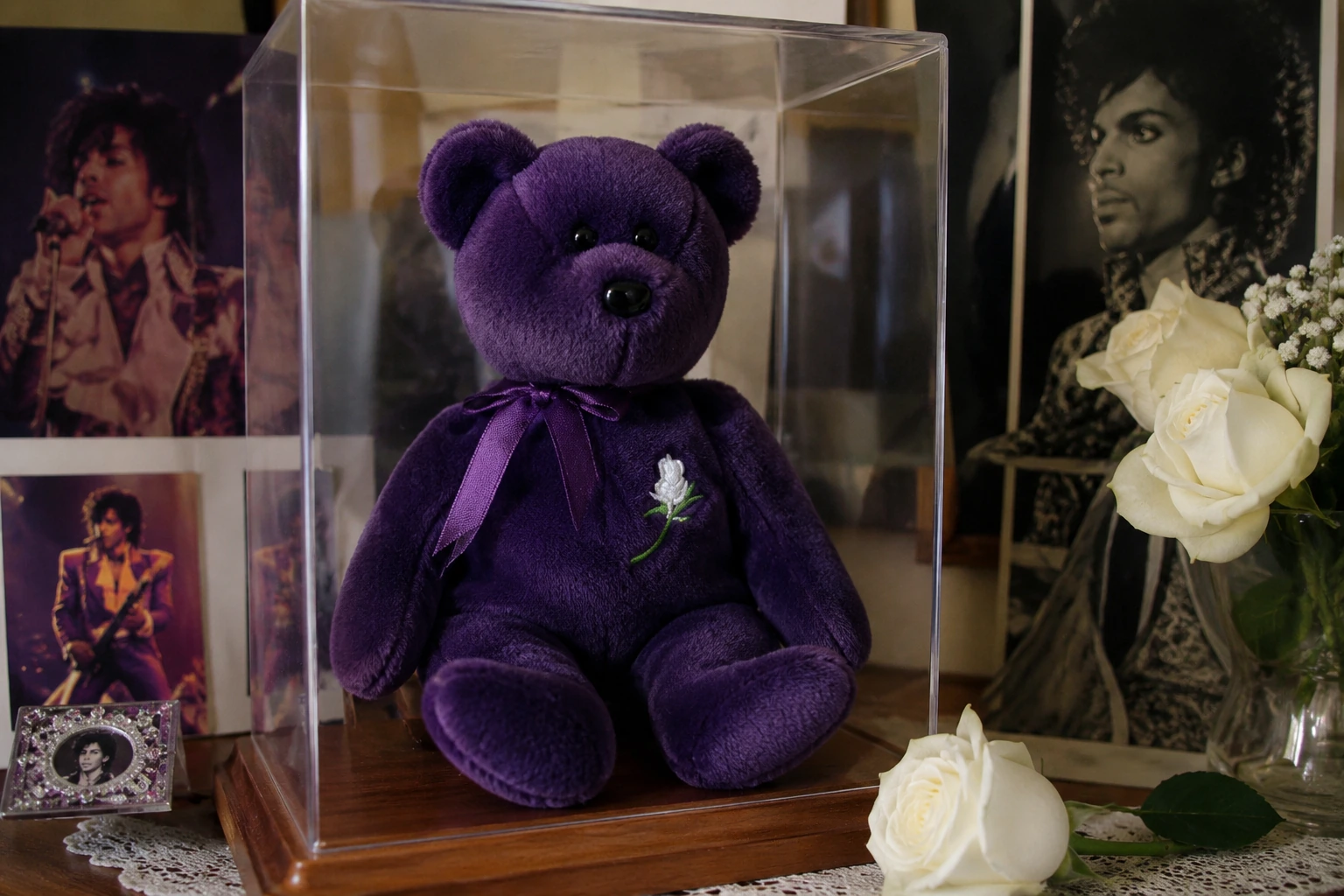
A Memorial Bear
Ty introduced the royal-purple Princess bear in late 1997 after the death of Diana, Princess of Wales. The bear featured a white rose and a poem honoring Diana, and proceeds benefited the Diana, Princess of Wales Memorial Fund.
The subject made Princess emotionally different from ordinary character releases. Buyers were responding to public mourning, charity and collectibility at the same time.
Early Limited Shipments
Initial store allocations were limited, which created immediate scarcity stories. Some retailers used drawings or waiting lists because demand exceeded the first shipments.
Collectors interpreted limited early availability as permanent rarity. Later production complicated that assumption.
The Internet Listing Problem
Princess became the most common example in articles claiming an ordinary Beanie Baby might be worth a fortune. Sellers posted enormous asking prices, and search results repeated those prices without showing completed sales.
An asking price proves one thing: the seller owns a keyboard.
Pellets, Tags and Variations
Collectors examine pellet type, country of manufacture, tag details and other production differences. Those details can matter to specialists.
They do not automatically turn every Princess bear into a rare version. Most owners have a common production example from a widely collected release.
Sentimental Value Versus Market Value
Princess remains meaningful as a memorial object and a symbol of 1997. That history does not require a six-figure price to matter.
The memory: a purple bear in a plastic case while somebody explained that nobody should touch it because it would be worth “a lot someday.”
The honest verdict: Princess is culturally important, emotionally meaningful and surrounded by more price misinformation than almost any toy of the decade.
The Names That Made Collectors Change Weekend Plans
The Beanie Babies Everyone Chased
Some characters became famous because they were genuinely difficult, some because of early versions, and some because the story grew larger than the supply facts.
Peanut the Royal Blue Elephant
The early royal-blue version of Peanut became one of the strongest examples of a meaningful color variation. It is not the same as the much more common light-blue Peanut.
Patti the Platypus
Early color differences and Patti’s place in the Original Nine made the character central to the hobby. The Teenie Beanie promotion pushed Patti into mainstream memory.
Brownie and Cubbie
The name change turned one early bear into a lesson about versions. Collectors learned that the same basic animal could have different historical identities.
Pinchers and “Punchers”
The lobster’s early naming variation became a classic example of why tags mattered and why collectors studied small wording differences.
Valentino
The white bear with a red heart became one of the most frequently misrepresented “rare error” Beanies online. Common production quirks are often advertised as extraordinary.
Peace
Tie-dye fabric meant individual bears could look noticeably different. Color pattern became part of the appeal, even when the underlying release was widely available.
Garcia
The tie-dye bear became culturally notable through its name and later replacement. That history attracted collectors beyond the ordinary plush design.
Princess
The memorial story, early allocations and endless online claims made Princess the most famous Beanie Baby value myth.
Holiday and International Bears
Patriotic, national and holiday-themed bears encouraged set collecting. They also gave adults a reason to classify plush animals by geography.
A Missing Comma Is Not Automatically a Yacht
Beanie Baby Tag Errors and Manufacturing Myths
Errors can matter in collecting. The 90s Beanie market taught the internet to label almost every normal production difference an error.
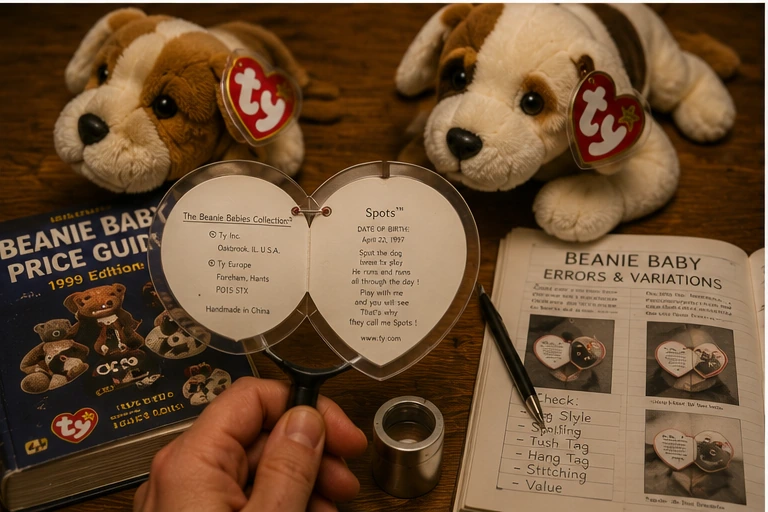
The Myth: Any Error Makes a Beanie Rare
Online listings often highlight misspellings, punctuation, spacing, pellet wording or tag differences as proof of enormous value.
The argument sounds logical: errors are accidental, accidents are scarce and scarce things are valuable.
The missing step is proof. Some “errors” appeared on large production runs. Some are normal tag-generation differences. Some are misread wording. Some exist on thousands of toys.
The Reality: Demand Must Match Scarcity
A variation matters when it is documented, uncommon, desirable and supported by actual buyer behavior.
Condition, authenticity and exact version matter more than a seller’s use of capital letters. A genuine rare variation can be valuable. A common typo on a common Beanie remains common.
Collectors should compare verified examples and completed sales, not copy descriptions from another listing.
Common “Error” Claims That Need Context
Oakbrook Versus Oak Brook
Address wording appears in many online claims. The presence of one format does not automatically establish a rare production error.
Surface Versus Suface
Misspellings may identify a tag version, but value depends on how many were produced and whether collectors care.
PVC Versus PE Pellets
Pellet type can help identify production, but it is one factor—not a magic sentence that creates a fortune.
No Stamp or Number
Factory stamps and numbers vary by period and location. Absence alone does not prove an unusual prototype.
Different Birthday or Poem
Verified changes can be important, but the exact character, tag generation and distribution must be established.
Odd Stuffing or Stitching
Manufacturing variation may be normal quality inconsistency rather than a recognized collector error.
How Five-Dollar Animals Became an Asset Bubble
How the Beanie Baby Bubble Actually Worked
The market grew because collectors expected future collectors to pay more. That expectation temporarily mattered more than the toy’s supply.
Step 1: A Real Product With Real Demand
Beanie Babies were appealing, affordable toys. Children liked them. Gift buyers liked them. Early collectors had a genuine reason to purchase.
Step 2: Supply Appeared Limited
Small-store distribution and limited shipments produced empty displays. Buyers could see scarcity without knowing total production.
Step 3: Retirements Created Deadlines
A character leaving production turned ordinary inventory into a last chance. Collectors rushed before verifying how many already existed.
Step 4: Resale Prices Rose
Some early or difficult Beanies sold for much more than retail. Those success stories became the model for every new purchase.
Step 5: Adults Entered as Investors
Once adults believed Beanies could appreciate, demand no longer depended on children wanting toys. Buyers purchased duplicates and sealed inventory for future resale.
Step 6: Media Validated the Craze
News reports, magazines and price guides showed high values and extreme collectors. Publicity attracted more buyers, which produced more publicity.
Step 7: The Internet Connected the Market
Online auctions made profitable sales visible. The highest result circulated more widely than the ordinary unsold listings.
Step 8: New Buyers Supported Old Prices
Collectors could sell at higher prices while more people entered. The market looked healthy because participation kept expanding.
Step 9: Supply Expanded and Collections Saturated
More characters, more editions and more total Beanies entered homes. The number of objects requiring future buyers grew faster than the number of people who wanted them for play.
Step 10: Confidence Broke
Once buyers stopped believing prices would rise automatically, speculative demand disappeared. The toy returned to being a toy, and millions of stored Beanies returned to being supply.
The bubble in one sentence: people bought because prices were rising, and prices rose because people were buying.
The plush animals did not fail. The promise that every careful collector would become wealthy failed.
The Years When Every Store Had a Rumor
The Peak of Beanie Mania: 1997 and 1998
By the late 90s, Beanie Babies had moved beyond toy culture into news, finance, family strategy and fast-food logistics.
The Store Network
Independent retailers became appointment destinations. Collectors called ahead, followed shipments and traveled across town for new releases.
The Teenie Explosion
McDonald’s introduced the craze to an enormous audience. Sealed miniatures appeared in drawers, glove boxes and future yard-sale bins.
The Guidebook Economy
Magazines, books, cases, protectors and checklists created an industry around maintaining the collection.
The Investment Story
Families began discussing Beanies as future money. Rare sales were treated as evidence that ordinary collections would follow.
The Culture Around the Peak
Beanie Babies were perfect 1997–1998 objects. They were analog toys managed through digital information. The plush animal stayed simple while the market around it used websites, online auctions and instant rumor.
They also fit the era’s enthusiasm for collecting. Trading cards, Pogs, Happy Meal sets, action figures and later Pokémon all reinforced the idea that childhood products should be acquired systematically.
The 90s collectible-toy craze was larger than Beanie Babies, but Beanies made the speculation unusually visible because adults participated so openly.
Year pages show the timing clearly: 1996 toys caught the rise, 1997 toys lived through Teenie Beanie chaos, and 1998 toys arrived at the center of the bubble.
The Millennium Needed One More Collectible Panic
The 1999 Announcement That Beanie Babies Would End
In 1999, Ty announced that all Beanie Babies would be retired at the end of the year. The message immediately created confusion, urgency and another buying wave.
Why the Announcement Was So Powerful
The entire market had been trained to react to retirements. Announcing the retirement of the whole line sounded like the ultimate scarcity event.
Collectors who had slowed down returned to stores. Owners imagined every existing Beanie becoming part of a closed historical set.
The End Bear
Ty released The End, a black bear tied to the apparent conclusion. The bear converted a company announcement into a physical collectible.
Collectors could buy a souvenir of the market ending while participating in the market it supposedly ended.
The Public Vote and Continuation
Fans were later given an opportunity to vote on whether Beanie Babies should continue. Production resumed in 2000.
The reversal weakened the finality that made retirement so powerful. If the entire line could end and return, collectors had to reconsider what “retired” meant.
The Beginning
A new bear called The Beginning marked continuation. The symbolism was tidy. The market confidence was not.
The memory: buying a bear called The End because Beanie Babies were ending, then discovering The Beginning because they were not.
Why 1999 mattered: the line’s dramatic “ending” created one last urgency wave but also exposed how heavily the market depended on announcements.
The Animals Stayed Cute. The Economics Did Not.
Why the Beanie Baby Bubble Burst
The crash was not one event. It was the moment several weaknesses became impossible to ignore at the same time.
Too Much Supply
Millions of owners preserved the same toys because everyone expected scarcity. Careful storage created a future market full of mint examples.
Too Many Characters
New releases expanded the collection faster than casual buyers could follow. Completion became exhausting and expensive.
Retirement Fatigue
Constant retirements reduced the emotional impact. A special event became routine inventory management.
Investor Demand Disappeared
Many buyers wanted future profit rather than the toy. When prices stopped rising, those buyers stopped adding demand.
The Internet Revealed Supply
Online marketplaces showed thousands of available examples. Local rarity was not global rarity.
Price Guides Lost Authority
Printed estimates could not force buyers to pay. A guide value without a willing purchaser remained ink.
McDonald’s Made Collecting Ordinary
Teenie Beanies expanded the audience but also showed how many collectibles could be produced and preserved.
New Crazes Arrived
Furby, Tamagotchi and Pokémon offered new technology, play and collecting systems. Attention moved.
Confidence Was the Real Scarcity
Once collectors stopped believing every purchase would appreciate, the market could no longer support speculative prices.
The hard truth: the market required an endless supply of new collectors willing to pay more. The toy company could make more Beanies. It could not manufacture infinite confidence.
From Investment Case to Yard-Sale Basket
What Happened to Beanie Babies After the Craze
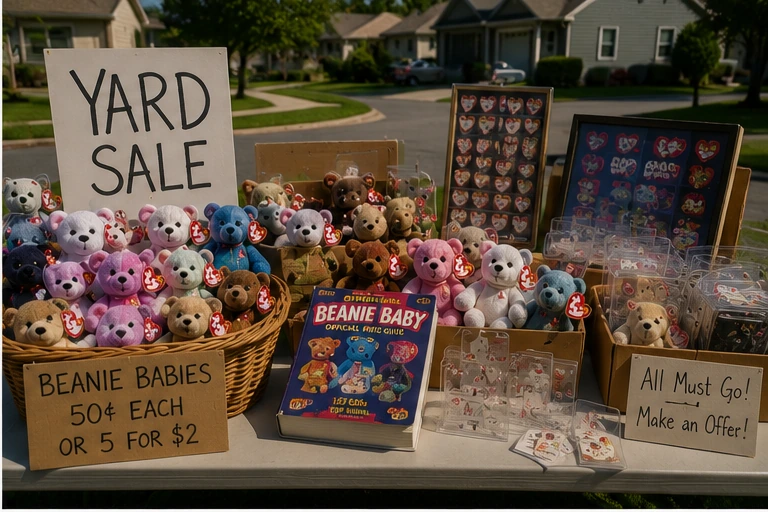
The bubble collapsed, but the toys did not disappear. They moved into storage, charity boxes, family collections and a smaller specialist market.
Many collections remained untouched because selling at lower prices felt like admitting the investment story had failed.
Animals once protected in acrylic cases appeared in bins with handwritten prices. The tag protector sometimes survived longer than the confidence.
Beanies became popular donations because they were small, clean and often stored in excellent condition.
Younger children inherited collections and finally used them as toys, resolving the decades-old question of what stuffed animals are for.
Serious collectors continued studying early tags, rare variations, prototypes and documented special editions.
Adults began collecting the specific animals they remembered rather than trying to own every release.
Books, films and documentaries reframed the craze as a story about scarcity, marketing, the internet and financial psychology.
Ty remained in the plush business and introduced later lines, including Beanie Boos and other character formats.
Articles and listings still claim ordinary Beanies are worth life-changing amounts, proving the bubble’s strongest product was always the story.
Rare Does Not Mean “I Found It in Mom’s Basement”
The Biggest Rare Beanie Baby and Value Myths
Some rare Beanie Babies are genuinely scarce and desirable. Most viral Beanie Baby value claims confuse asking prices, ordinary variations and wishful thinking.
Myth: Every 90s Beanie Is Valuable
Age alone does not create value. Millions of Beanie Babies were produced, and collectors deliberately preserved them.
A common animal with a common tag remains common even after twenty-five years in a plastic tub.
Reality: Exact Version and Demand Matter
Collectors evaluate the specific character, tag generation, production variation, condition, provenance and actual market demand.
A documented early version may be meaningfully different from a later mass-produced example with the same name.
“Listed for” Is Not “Sold for”
Anyone can list an item at any price. Completed transactions show what buyers accepted.
Retired Does Not Mean Rare
A retired Beanie may have been produced in enormous quantities before retirement.
Errors Need Documentation
A spelling difference matters only when the variation is verified, scarce and desired.
Princess Is Usually Common
The memorial bear is famous, but most surviving examples are not the extraordinary rarity described in viral posts.
McDonald’s Sets Were Mass Produced
Sealed Teenie Beanies are nostalgic and collectible, but widespread preservation limits scarcity.
Condition Is More Than a Tag Protector
Odor, fading, stains, crushed plush, damaged seams and tag wear all affect collector interest.
Collect the Memory, Verify the Market
How to Collect Original Beanie Babies Today
The best modern collection starts with accurate identification and realistic Beanie Baby value research—not a screenshot of somebody’s unsold listing.
Collect one animal type, Original Nine characters, holiday bears, specific years or the Beanies you personally remember.
Compare hang tags, tush tags, names, materials and known production details. Similar-looking Beanies may come from different periods.
Look for recent sold examples matching the same version and condition. Ignore spectacular asking prices without buyer evidence.
A lower-condition example may be perfect for display. Do not pay mint prices for a toy with odor, fading or a damaged tag.
High-demand early characters have been copied. Compare construction, fabric, tags and trusted reference material.
“Found in a warehouse,” “employee exclusive” and “prototype” require evidence, not enthusiasm.
Photograph tags and note where an item came from. Provenance matters more for unusual or expensive pieces.
Oil, moisture and repeated tag opening can create wear. A collectible can be enjoyed without being treated like a hostage.
The safest emotional return comes from owning a character that makes you happy even if the market never moves.
Market boundary: current prices change constantly. This page explains the craze and the evidence collectors should use; any serious purchase should be checked against recent comparable sales at the time of buying.
The Tag Survived 1998. Do Not Finish It Off Now.
How to Store and Preserve Beanie Babies
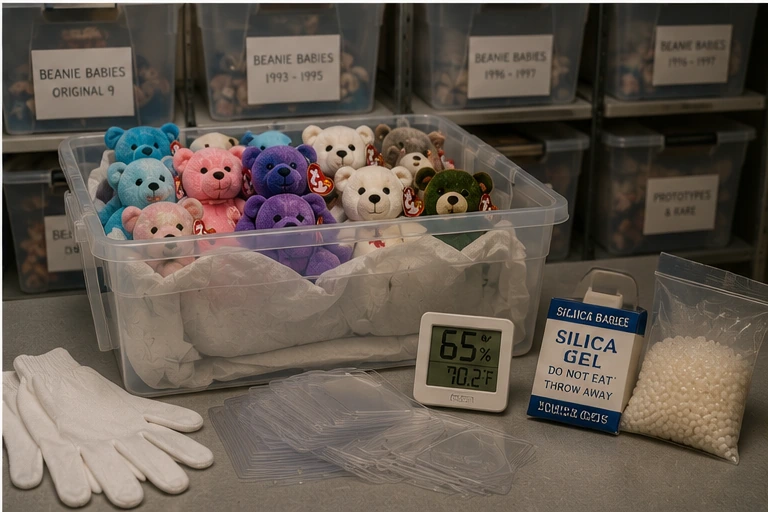
Keep Them Dry
Moisture can create odor, mildew, staining and tag damage. Basements and garages are risky when temperature and humidity change.
Avoid Direct Sunlight
Sunlight can fade fabric, ribbons and tags. Tie-dye and bright colors can lose the exact appearance collectors care about.
Protect Without Crushing
Overpacked bins can flatten plush, bend tags and distort shapes. Use clean containers with enough space.
Separate Tags From Friction
Tag protectors reduce edge wear, but poorly fitted protectors can also press or crease the heart. Check the fit rather than assuming plastic solves everything.
Control Odor
Smoke, perfume, attic air and pet odors can become part of the fabric. Strong cleaning methods may create more damage than the original problem.
Do Not Machine-Wash Collector Examples
Water, agitation and heat can damage tags, seams, surface texture and pellets. Valuable or unusual pieces deserve specialist advice before cleaning.
Photograph the Tags
Clear photos create a record without repeated handling. Capture front, inside, back and tush-tag details.
The practical rule: cool, dry, dark, clean and not packed like a moving truck.
From Nine Animals to a National Bubble
Beanie Babies Timeline: 1986–2000
The craze grew slowly, accelerated rapidly and then discovered that no collectible market stays vertical forever.
1986: Ty Inc. Begins
Ty Warner establishes the plush-toy company that will later create Beanie Babies.
1993: Beanie Babies Debut
The first group enters the market, later remembered as the Original Nine.
1994–1995: Slow Growth
Small stores carry the line while collectors begin noticing limited availability and character changes.
1995–1996: Identity Expands
Birthdays, poems, tag changes and early web activity deepen the character system and collector culture.
1996: The Craze Accelerates
Retirements, price guides and a growing collector network move Beanies from gift-shop toys to national conversation.
1997: Teenie Beanies Arrive
McDonald’s takes the craze mass-market. Princess arrives later in the year as a memorial and charity release.
1998: Peak Speculation
Collector publications, online auctions and resale stories push the market toward full bubble behavior.
1999: “The End”
Ty announces all Beanies will retire at year’s end, producing another rush before the line continues in 2000.
The Kids Picked Favorites. The Adults Built Portfolios.
How Adults Took Over the Beanie Babies Market
The Beanie Babies craze changed when grown-ups stopped seeing the animals as children’s purchases and started seeing them as inventory.
Children Collected by Affection
Kids chose the dog that looked like the family pet, the bear with the matching birthday or the tie-dye animal with the best colors. The collection could be inconsistent because the point was liking the toys.
A child might remove the tag, sleep with the animal and trade it for something more interesting next week. That behavior was normal until the market decided normal play destroyed value.
Adults Collected by Forecast
Adults learned tag generations, retirement dates and guidebook values. They bought characters they did not like because those characters might appreciate.
The purchase changed from “this is cute” to “this may be important.” Once that happened, quantity became easier to justify. Buying three looked cautious rather than excessive.
The Mint-One and Play-One Strategy
Families sometimes bought duplicates so one animal could be touched and another could remain pristine. That strategy revealed the conflict inside the craze: Beanies were marketed as toys but managed like collectibles from the moment they entered the house.
The untouched copy represented future money. The played-with copy represented the reason the toy existed.
Parents Became Market Analysts
Adults discussed supply, condition and retirement rumors in parking lots, at work and over the phone. A person who had never tracked a stock price could explain why a particular bear’s tag generation mattered.
The market felt accessible because the objects were familiar. Plush animals appeared safer than unfamiliar investments, even though the resale market was far less regulated and far more dependent on fashion.
Grandparents Became Supply Chains
Relatives in other towns checked local stores and mailed hard-to-find animals. Family networks turned regional distribution differences into collecting advantages.
A grandmother who found a basket nobody had noticed could temporarily become the most valuable person in the hobby.
Adults Protected the Market From Childhood
Tag protectors, cases and no-touch rules preserved condition. They also removed the toys from play. Some collections became adult property while remaining physically arranged in children’s rooms.
The Investment Language Changed the Household
Words such as “mint,” “retired,” “rare” and “book value” entered normal family conversation. The collection gained a financial story, which made reducing it feel like selling too early.
The contradiction: adults bought plush animals because children made them popular, then prevented children from doing anything that might lower their value.
Before Marketplace Apps, There Were Folding Tables and Phone Lists
Beanie Baby Trading, Clubs and Collector Events
The craze built a social world around the toys. Collectors did not only shop; they met, compared, traded and argued over tags in public.
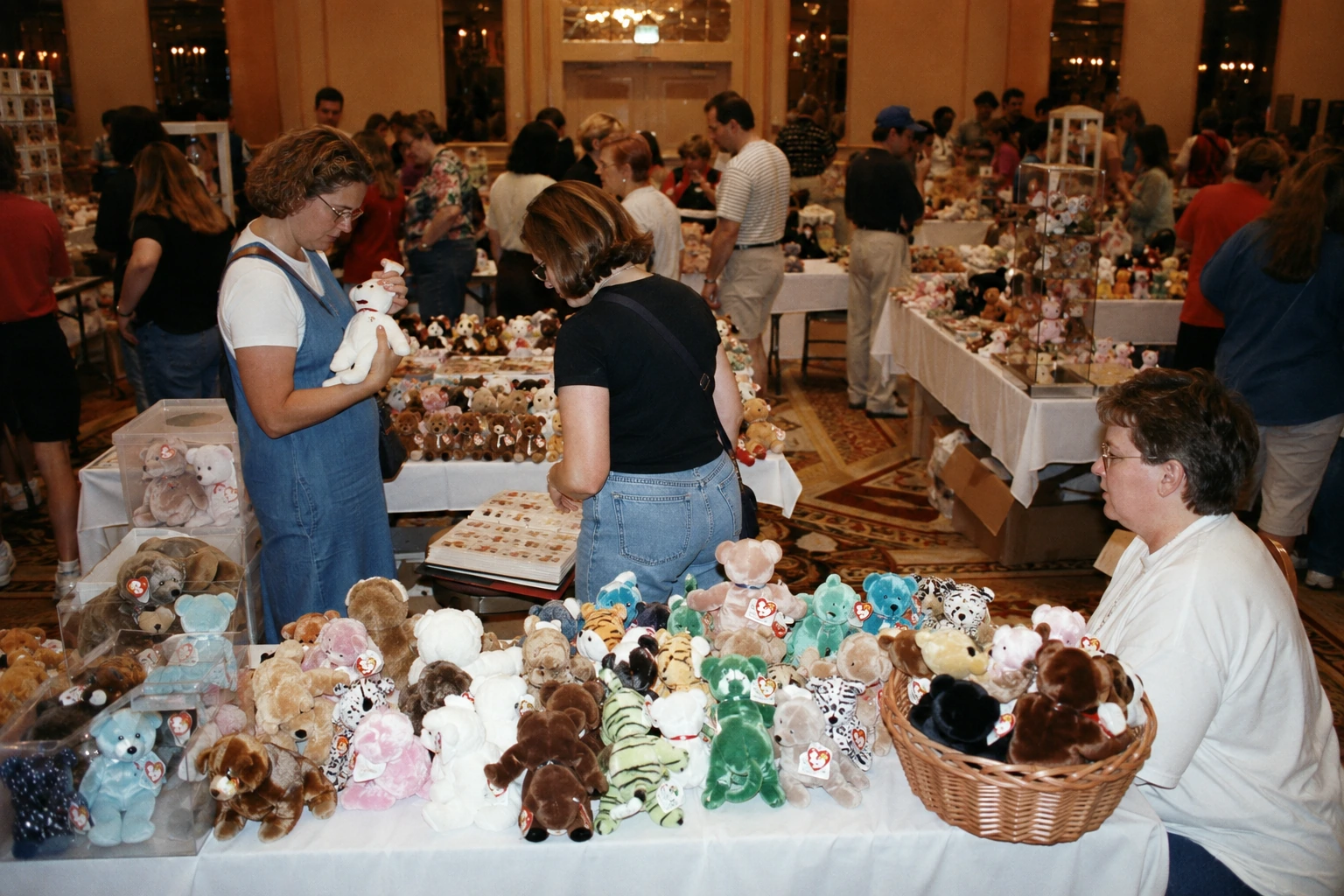
Local Trading Nights
Card shops, malls and community spaces hosted informal exchanges. Collectors arrived with bags, lists and strong opinions about what counted as an even trade.
Collector Clubs
Clubs shared retirement news, wanted lists and buying tips. Membership made the hobby feel established rather than temporary.
Convention Tables
Rows of tagged animals, cases and handwritten prices turned plush collecting into something that looked like a coin show with softer merchandise.
Phone Trees
One collector heard about a shipment and called three others. News moved through friendships before the whole group descended on the store.
Mail Trades
Collectors exchanged toys through postal mail, trusting descriptions, photographs and reputation. A damaged tag discovered after delivery could become a full diplomatic incident.
Store Waiting Lists
Retailers recorded names for desired characters. The list gave regular customers hope and employees another administrative task nobody had expected from selling plush frogs.
Collector Friendships
For many people, the community was real and positive. The hobby created reasons to talk, travel and share information.
Collector Rivalries
Scarcity also created suspicion. People accused stores of favoritism, buyers of hoarding and sellers of inflating prices.
The Trade That Became a Story
Every collector remembered one exchange that felt brilliant at the time and questionable once the market cooled.
The social side explains why the craze cannot be reduced to bad investing. People joined a community. The mistake was assuming community enthusiasm guaranteed permanent prices.
The Best Advertisement Was an Empty Basket
How Beanie Babies Spread Without a Normal Toy-Commercial Machine
Many 90s toy crazes were driven by loud television campaigns. Beanie Babies grew through visibility, scarcity, stores, news and collector conversation.
Word of Mouth Did the Heavy Lifting
A friend showed up with a new animal. A parent heard that a local shop had a shipment. A coworker mentioned a retired bear selling for more than retail.
Each story carried more credibility than an advertisement because it appeared to come from ordinary people discovering a market.
Empty Displays Became Social Proof
When a shopper saw an empty basket and a limit sign, the shortage itself communicated desirability. The product looked important before the shopper had touched one.
News Coverage Reached Adults
Television segments about resale prices and extreme collections moved the story beyond children’s programming. Adults heard about Beanie Babies through the same formats that covered business and consumer trends.
McDonald’s Supplied Mass Awareness
Teenie Beanies placed the heart logo in millions of hands. The promotion acted like a national advertising campaign with a toy attached.
Collector Publications Extended the Message
Magazines appeared on newsstands beside established hobbies. Their presence told casual shoppers that Beanie collecting had experts, values and rules.
The Official Website Created Anticipation
Announcements and product information gave collectors reasons to return. News did not end when the store closed.
The broader 90s toy-commercial era sold products through spectacle. Beanie Babies proved rumor, scarcity and local discovery could create an equally powerful campaign.
The marketing genius: collectors advertised the product to one another for free and treated the lack of product as evidence they should advertise harder.
Where There Is Hype, Somebody Owns a Label Printer
Counterfeit Beanie Babies and the Authentication Problem
High secondary-market prices created an incentive to copy desirable animals, tags and packaging. Authentication became another layer of the hobby.
Why Beanies Were Copyable
The basic materials—plush fabric, pellets, thread and printed tags—were not exotic. A counterfeit did not need advanced electronics or complex molds.
The challenge was matching details closely enough to fool a buyer who knew the character but not the production history.
Tags Could Be More Convincing Than the Toy
Because collectors focused heavily on tags, counterfeiters had a clear target. A heart-shaped label with the right name could create initial confidence even when font, spacing or construction was wrong.
Construction Details Matter
Experts examine fabric texture, proportions, stitching, eyes, nose, ears, pellet feel and tag attachment. A fake may look reasonable in one photograph and wrong when compared side by side.
Rare Characters Deserve More Scrutiny
A common Beanie bought for a few dollars carries limited counterfeit risk. A supposedly early, scarce or high-value version deserves stronger evidence.
Provenance Helps
Original receipts, long-term ownership records, old photographs and credible collection history can support authenticity. A dramatic seller story without documentation does not.
Authentication Is Not the Same as Valuation
A genuine Beanie can still be common. Proving that the toy was made by Ty does not prove it is rare or valuable.
Modern Photographs Can Hide Problems
Lighting, filters and selective angles can make faded fabric look brighter and damaged tags look cleaner. Buyers should request clear, unedited close-ups.
The safe rule: the more extraordinary the claim, the less you should rely on one blurry photo and the word “RARE” repeated six times.
Completion Anxiety With a Heart-Shaped Logo
The Psychology That Kept Collectors Buying
Beanie Babies worked because they made several powerful human habits feel like one harmless hobby.
Fear of Missing Out
A retirement or limited shipment suggested the chance might disappear. Waiting felt more dangerous than buying.
The Completion Effect
Once a collector owned most of a group, the missing pieces felt more important than the animals already present.
Social Proof
Lines, empty shelves and news coverage suggested everyone else understood an opportunity the buyer should not miss.
Anchoring
A high guidebook value or famous auction result made lower prices feel reasonable, even when the original anchor was unrealistic.
Sunk Cost
After spending hundreds or thousands, stopping felt like wasting the earlier purchases. Buying more seemed like protecting the investment.
Confirmation Bias
Collectors noticed stories of profitable sales and ignored ordinary examples that failed to sell.
Endowment Effect
Owners valued their own Beanies more highly because the collection carried memories, effort and personal history.
Variable Reward
Most store visits produced nothing special. Occasionally finding a hard-to-get animal made the search more addictive.
Identity
Collectors became “Beanie people.” Leaving the hobby meant losing routines, friendships and a piece of self-definition.
None of this means collectors were foolish. It means the hobby aligned with normal human behavior so well that normal caution felt unnecessary.
Same Decade, Different Kind of Panic
Beanie Babies Versus Furby, Tamagotchi, Pogs and Pokémon
The 90s produced several giant crazes, but Beanie Babies were unusual because adult speculation became as important as children’s play.
Beanie Babies
Hook: affordable plush plus scarcity and retirement.
Adult role: investors, traders and condition managers.
Furby
Hook: electronic personality and Christmas shortage.
Adult role: holiday hunters and battery removers.
Tamagotchi
Hook: constant care and portable responsibility.
Adult role: buying batteries and explaining digital death.
Pokémon
Hook: collecting connected to games, cards, television and play.
Adult role: transportation, purchasing and trying to understand why two nearly identical games were required.
Pogs required trading and competition. Tamagotchi required care. Furby promised interaction. The decade’s electronic toys and digital pets demanded batteries, attention and constant button pushing. Pokémon built an enormous play system. Beanie Babies required almost nothing after purchase, which made buying and preserving the collection the main activity.
That difference helped adults take control. A parent could understand condition and scarcity more easily than a video game battle system. The collection became legible as inventory.
The next fuzzy craze arrived with moving ears and a voice. Furby mania borrowed the holiday urgency but sold technological wonder instead of investment potential.
Keep the Late-90s Rewind Going
The Beanie Bubble Years: 1996–1999
Beanie Babies did not happen in isolation. They grew during four years packed with toy frenzies, mall culture, early internet optimism and increasingly organized nostalgia.
The Bubble Burst. The Lesson Stayed.
Why the Beanie Babies Craze Still Matters
Beanie Babies were a toy, a community, a marketing system, an early internet phenomenon and a financial-psychology lesson disguised as a floppy moose.
They Changed Plush Collecting
Names, birthdays, poems and retirements turned simple animals into a character universe with documented versions.
They Showed the Internet’s Power
Online communities accelerated news, trading and speculation before social media existed.
They Made Scarcity a Product Feature
Availability and retirement became as important as design. Collectors purchased the fear of missing out.
They Blurred Play and Investment
Children wanted toys. Adults wanted appreciation. The same object carried two incompatible expectations.
They Predicted Modern Hype Markets
Limited drops, resale platforms, influencer authority and community price signals all existed in primitive form inside Beanie culture.
They Remain Perfectly 90s
Optimistic, collectible, internet-assisted and somehow stored in a plastic tub for thirty years.
Beanie Babies did not become worthless. They became what they had been before the speculation: small plush animals with memories attached. For most owners, that was always the real value.
Keep the Toy Aisle Rewinding
More 90s Toy Crazes and Collector Culture
Because “Rare” Has Been Doing a Lot of Work Since 1997
Dates, History and Source Notes
Historical details were checked against Ty’s official company history and current brand information, McDonald’s official Happy Meal archive, the federal-court record in Ty, Inc. v. Jones Group, contemporary coverage of Ty’s 1999 retirement announcement, reporting on the 1997 Princess release, and historical reporting on the early web, small-store distribution and collector bubble. Current value claims are intentionally not quoted from asking-price articles. A listing is an invitation, not a sale.
Frequently Asked Bean Questions
Beanie Babies Craze and Value Myth FAQ
When did Beanie Babies first come out?
Beanie Babies were introduced in 1993 by Ty Inc. The earliest group later became known as the Original Nine.
Who created Beanie Babies?
Ty Warner, founder of Ty Inc., created and marketed Beanie Babies. Employees and collaborators also helped develop the tags, poems, website and collector culture surrounding the line.
What were the Original Nine Beanie Babies?
The Original Nine were Legs the Frog, Squealer the Pig, Spot the Dog, Flash the Dolphin, Splash the Whale, Chocolate the Moose, Patti the Platypus, Brownie the Bear—later Cubbie—and Pinchers the Lobster.
Why were Beanie Babies under-stuffed?
The lighter stuffing and pellet-filled bodies made the toys flexible, poseable and pleasant to hold. The floppy design distinguished them from rigid traditional plush animals.
Why were Beanie Babies so popular?
They combined an affordable price, appealing design, names and birthdays, sudden retirements, limited store supply, collector guides and early internet trading.
What caused the Beanie Babies craze?
Real toy demand grew into speculative demand. Scarcity and rising resale prices attracted more collectors, whose purchases pushed prices and attention higher.
What is a retired Beanie Baby?
A retired Beanie Baby is a character Ty stopped producing. Retirement can affect collectibility, but it does not automatically mean the toy is rare or valuable.
Why were the tags so important?
The heart-shaped hang tags contained names, birthdays and poems and helped identify production versions. Condition-conscious collectors treated the tag as part of the collectible.
What is a tush tag?
The tush tag is the fabric label sewn into the lower part of the Beanie Baby. Collectors use its wording, design and production details to help identify versions.
Did Beanie Babies help make eBay popular?
Beanie Babies became one of the most visible categories in early online auction culture. eBay made national trading and real-time price watching possible for collectors.
When did McDonald’s release Teenie Beanie Babies?
McDonald’s launched the famous Teenie Beanie promotion in 1997 and followed it with additional series in later years.
Are McDonald’s Teenie Beanie Babies rare?
Most Teenie Beanies were produced and preserved in very large numbers. Specific variations may interest collectors, but sealed packaging alone does not make an ordinary example rare.
Is the Princess Diana Beanie Baby valuable?
Some production variations are more desirable than others, but most Princess bears are common compared with viral claims. Exact version, condition and completed sales must be checked.
Why do people list Princess Beanie Babies for huge prices?
Online sellers can choose any asking price. Large listing prices are often repeated by articles even when there is no evidence of a completed sale.
What is the rarest Beanie Baby?
There is no useful one-name answer without defining version and condition. Early production versions, prototypes, authenticated employee items and documented scarce variations may be much rarer than mass-market releases with the same character name.
Is Peanut the royal-blue elephant rare?
The early royal-blue Peanut is meaningfully scarcer than the common light-blue version. Identification and authentication are important because color descriptions can be confused online.
Do tag errors make Beanie Babies valuable?
Not automatically. A tag difference must be documented, genuinely scarce and desired by collectors. Many widely advertised “errors” appeared on large numbers of toys.
Does PVC pellet wording make a Beanie valuable?
Pellet type can help identify production, but PVC wording alone does not establish rarity or high value.
Are retired Beanie Babies worth more?
Retirement can reduce future supply, but value still depends on how many were already produced, exact version, condition and buyer demand.
Why did the Beanie Baby bubble burst?
Supply expanded, collections saturated, retirements lost urgency, new crazes arrived and speculative buyers left when prices stopped rising.
Did Ty really end Beanie Babies in 1999?
Ty announced that all Beanie Babies would retire at the end of 1999, but the line continued in 2000 after a public vote and additional releases.
What was The End Beanie Baby?
The End was a black bear released around Ty’s 1999 announcement that the Beanie Babies line would retire at year’s end.
How can I find the real value of a Beanie Baby?
Identify the exact version and compare recent completed sales for the same character, tag generation and condition. Do not use unsold asking prices as market evidence.
What condition problems reduce Beanie Baby value?
Missing or creased tags, stains, odors, fading, damaged seams, crushed plush and poor storage can reduce collector interest.
Should Beanie Babies be stored in plastic cases?
Cases can protect from dust and handling, but they do not solve heat, humidity, sunlight or odor problems. Clean, cool and dry storage matters most.
Can Beanie Babies be washed?
Machine washing can damage tags, fabric, seams and pellets. Collector examples should be cleaned cautiously, and unusual or valuable pieces may require specialist advice.
Are counterfeit Beanie Babies common?
Counterfeits exist, especially around famous early or high-demand characters. Tag details, construction, fabric and trusted references help with authentication.
Are Beanie Babies still made?
Ty continues to produce Beanie-branded plush products and related lines, although the original late-90s speculative craze has passed.
What is the best way to start collecting Beanie Babies?
Choose a focused theme, learn tag identification, buy condition you can verify and collect characters you enjoy even if prices never rise.
Where can I read more about 90s collectible toys?
Visit 90s Collectible Toy Crazes for Beanie Babies, Pogs, Pokémon cards and the rest of the decade’s completion anxiety.
The Tag Was Mint. The Financial Plan Was Not.
Beanie Babies Were Toys Until Adults Made Them Something Else
Kids understood Beanie Babies immediately. They were soft, weird little animals with names. Adults added scarcity charts, retirement rumors, price projections and a belief that an untouched plush bear could outperform the stock market.
The bubble is funny now because so many of us recognize the plastic bins. But the craze also mattered. It showed how community, scarcity and the early internet could turn an ordinary product into a shared financial story. The market collapsed. The memories did not.