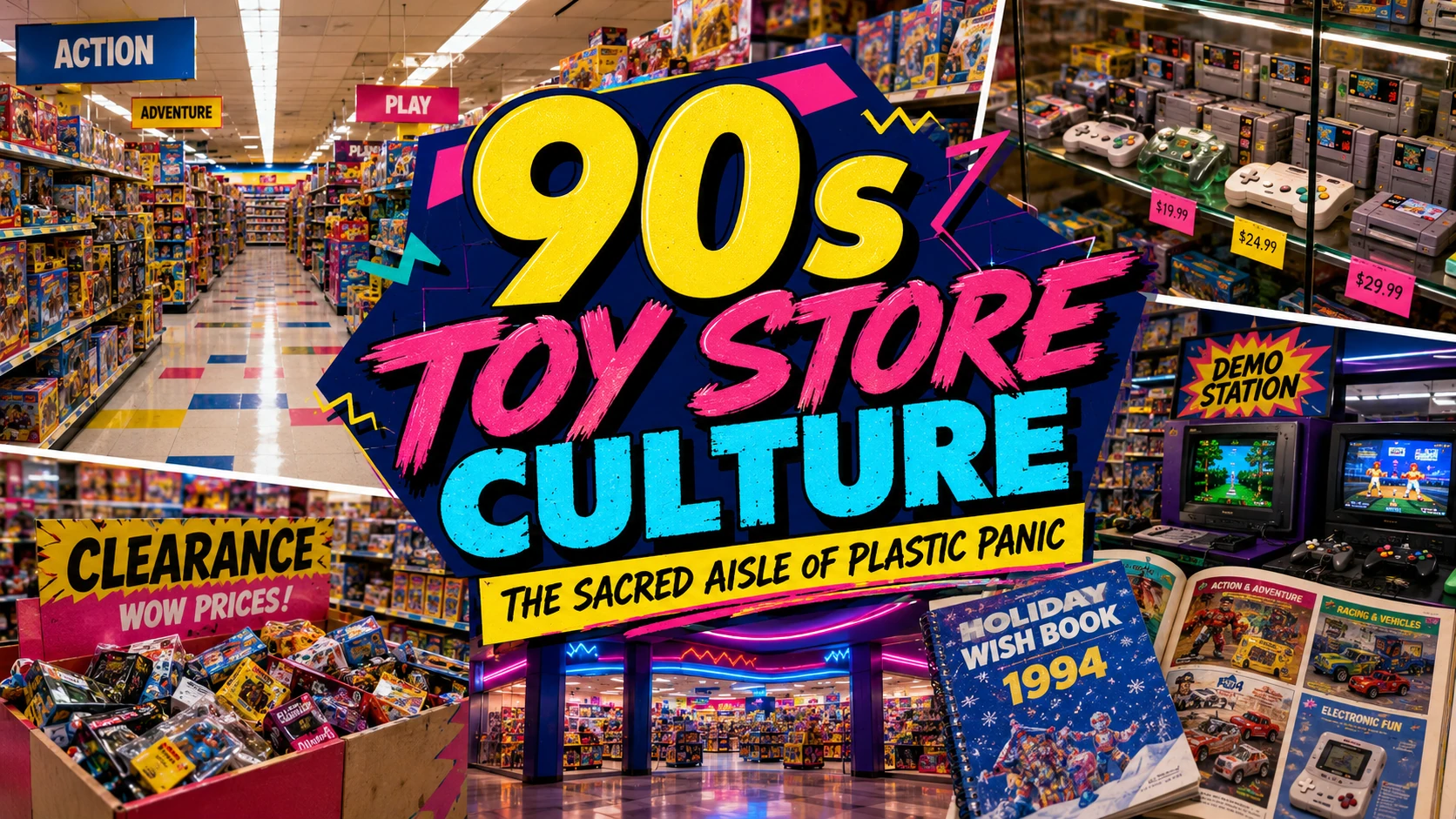
90s Toy Store Culture: The Sacred Aisle of Plastic Panic
Before online carts, wish lists, and algorithmic “you may also like” nonsense, there was the toy store run. Toys “R” Us, KB Toys, mall toy shops, glass video-game cases, noisy demo stations, endcaps, checkout impulse bins, holiday catalogs, collector shelves, and fluorescent aisles where every box seemed to scream your name personally.
This is the rewind for 90s toy store culture: the places, displays, rituals, smells, sounds, and tiny emotional disasters that made the toy aisle feel like a full-body event. It was birthday money, Christmas lists, “just looking,” locked video games, Beanie Baby rumors, Pokémon card panic, Furby dread, Power Rangers hunts, and the sacred parental phrase that crushed a generation: “Maybe next time.”
90s Toys
Head back to the full 90s Toys hub for action figures, collectibles, electronic pets, handheld games, dolls, plush, board games, backyard toys, deep cuts, and toy commercials.
Shelf PanicCollectible Toy Crazes
Beanie Babies, Pokémon cards, Pogs, Crazy Bones, sealed action figures, Happy Meal toys, and the playground economy that made toy stores feel like trading floors.
Deep Shelf EnergyForgotten Toys of the 90s
Street Sharks, Mighty Max, Monster in My Pocket, Z-Bots, Crash Dummies, Skeleton Warriors, Mini Boglins, and the weird stuff hiding below eye level.
What Was 90s Toy Store Culture?
90s toy store culture was not just buying toys. It was the ritual around toys: the car ride, the mall trip, the aisle scan, the commercial memory, the glass video-game case, the catalog circling, the birthday-money calculation, the “can I just look?” lie, and the crushing math of realizing one action figure plus one vehicle was already more than you had.
It was Toys “R” Us feeling like the cathedral, KB Toys feeling like the mall trap, toy departments inside bigger stores feeling like bonus levels, and small impulse sections near checkout somehow eating the rest of your money. It was standing in front of the video-game case like the cartridges were ancient artifacts. It was looking for the one Power Ranger color, the one Pokémon pack, the one Furby, the one Beanie Baby, the one figure the commercial made look unstoppable.
The store mattered because it made toys physical before everything became invisible. You could see the aisle. You could smell the plastic and cardboard. You could compare box art. You could hold the package. You could notice what was sold out. You could feel the entire decade’s marketing machine pressing directly against your face.
Why 90s Toy Stores Felt Different
90s toy stores felt different because the store was where all the culture collided. Saturday morning cartoons, movie trailers, video-game magazines, fast-food promos, schoolyard rumors, commercials, birthday parties, holiday catalogs, and mall trips all led to the same place: the shelf.
The shelf gave the hype a body. A toy commercial could make something look amazing, but the store proved whether it was real, sold out, too expensive, smaller than expected, or somehow even cooler in person. That moment mattered. You were not scrolling through options. You were standing there, surrounded by boxes, trying to make the most important financial decision of your young life with $11 and terrible judgment.
The 90s toy-store formula
- Commercial pressure: kids arrived already trained by TV ads, cartoons, and movie tie-ins.
- Physical discovery: random shelf finds could become instant obsessions.
- Scarcity drama: sold-out shelves made certain toys feel legendary.
- Store geography: aisles, endcaps, glass cases, demo stations, and clearance bins all had their own meaning.
- Parent negotiation: the real final boss was not the toy. It was the adult holding the money.
That is why the memory still works. The toy store was not passive. It was noisy, bright, overwhelming, and emotionally rigged. You entered to “just look” and left with a permanent memory of something you did not get.
90s Toy Store Culture Timeline
A fast visual map of the aisle from Turtle Power to Pokémon panic
The 90s toy-store experience changed across the decade. Early aisles still carried late-80s action-figure energy, Game Boy momentum, and TMNT leftovers. The middle years brought Power Rangers hunts, Talkboy wish lists, Jurassic Park dinosaurs, Batman shelves, SNES displays, Toy Story toys, and Tickle Me Elmo chaos. The late years turned stores into collector-and-electronic panic zones with Beanie Babies, Tamagotchi, Giga Pets, Furby, Game Boy Color, Pokémon cards, Star Wars Episode I displays, and the creeping feeling that every toy now beeped, traded, or sold out immediately.
TMNT keeps the aisle loud
Action figures, vehicles, playsets, and cartoon-backed toys keep the early decade feeling like the late 80s with more neon.
Game Boy lives behind the case
Portable gaming turns glass counters and locked cases into sacred viewing areas for kids with no money.
Power Rangers becomes the hunt
Rangers, Megazords, morphers, and weapons make toy aisles feel like emergency rooms for wish lists.
Jurassic Park and Batman own shelves
Movie tie-ins make toy stores feel like theaters with price tags, dinosaurs, vehicles, and endless hero variants.
The toy aisle gets cinematic
Talkboy, Toy Story, Batman, Disney, and mid-90s shelves make movie-linked toys feel unavoidable.
Tickle Me Elmo changes the mood
A plush toy becomes holiday panic, and parents learn that the toy aisle can absolutely turn feral.
Virtual pets beep from the shelf
Tamagotchi, Giga Pets, Nano Pets, and electronic toys make stores feel more battery-powered.
The late-90s shelf starts talking
Electronic plush, handheld upgrades, and collector toys make the aisle louder and weirder.
Cards turn the store into a stock exchange
Booster packs, binders, Game Boy games, Star Wars displays, and Y2K hype close the decade in retail chaos.
The Sacred Zones of a 90s Toy Store
Big-box aisles, mall traps, glass cases, demo stations, endcaps, and clearance bins
A 90s toy store had geography. You knew where the action figures lived, where the video games were locked up, where the dolls and plush were, where the board games stacked like homework with better packaging, where the ride-ons and bikes sat, where the clearance bin lurked, and where the checkout toys tried to drain the last $2 from your pocket.
Those zones mattered because each one had a different emotional temperature. The action-figure aisle was combat. The video-game case was reverence. The mall toy store was temptation. The clearance bin was archaeology. The holiday catalog was strategy. The checkout rack was psychological warfare.
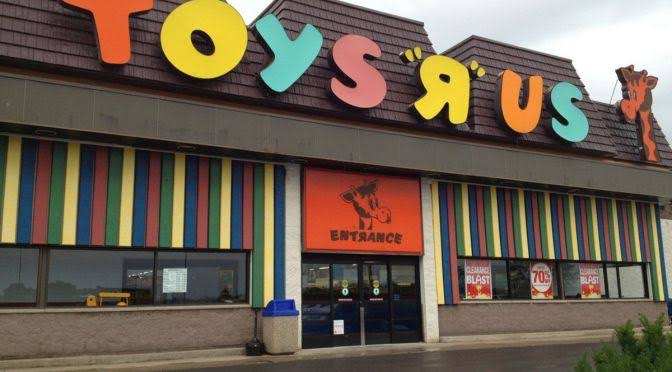
Toys “R” Us: The Big-Box Cathedral of 90s Want
Toys “R” Us in the 90s felt massive because it made toys feel important enough to deserve their own world. This was not a few shelves next to toothpaste. This was aisle after aisle of boxes, displays, bikes, games, dolls, plush, board games, outdoor toys, baby toys, action figures, video games, and wish-list sabotage.
For kids, walking in felt like crossing a border. The rest of the world had rules, errands, school, chores, and adults saying no. Toys “R” Us had scale. It had signage. It had entire sections that looked like they were built to expose your lack of birthday money.
The aisle scan
The first move was always the scan. You looked down the aisle for shapes and colors you recognized: a Ranger helmet, a Batman logo, a Jurassic Park dinosaur box, a Nintendo sign, a Furby face, a Barbie wall, a Pokémon display, or anything that looked like the commercial had recently lied to you in a way you enjoyed.
The scale made discovery possible. You could find the toy you came for, but you could also discover something totally random: a clearance figure, a weird vehicle, a board game you forgot existed, or a deep-cut line that would haunt you for decades.
Why big-box toy stores made memories
Big toy stores made the toy aisle feel ceremonial. You did not accidentally end up there. A Toys “R” Us trip was a planned event. That made the stakes higher. If you were going, you had probably been thinking about what you wanted for days.
That anticipation is why the memories are so sticky. The car ride, the entrance, the aisle, the negotiation, the box in your hands, the ride home — the whole thing became part of the toy.
- Core appeal: scale, selection, signs, full aisles, bikes, video games, wish lists, and holiday energy.
- Memory trigger: giant shelves, bright packaging, fluorescent lighting, and the feeling that you had to choose correctly.
- Most 90s detail: a store so big it made one action figure feel like a responsible compromise.
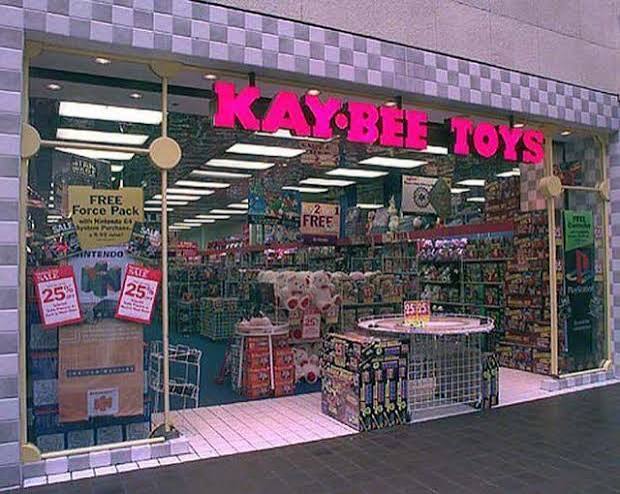
KB Toys: The Mall Store That Ambushed Your Allowance
KB Toys had a different kind of power. It was smaller than Toys “R” Us, but its location made it dangerous. You could be at the mall for shoes, school clothes, a food court stop, or some adult errand, and then suddenly there it was: toy-store gravity.
The store felt packed. Pegs, shelves, bins, small figures, board games, plush, discount toys, weird battery-powered things, candy-adjacent impulse junk, and clearance items all compressed into a space that felt like it had more toys than oxygen.
The mall ambush effect
KB Toys worked because it interrupted the mall trip. It did not require a special outing. It could appear between stores, after lunch, before a movie, or while your parents were trying to get through the day without spending extra money. Good luck with that.
That made the store feel opportunistic in the best possible way. You might not have planned to buy a toy, but suddenly there was a wall of action figures and a bin of discounted weirdos making a strong case.
Clearance-bin archaeology
KB-style mall toy stores were also great for finding oddball toys. The big names were there, but so were the strange leftovers, discounted figures, forgotten lines, and weird single items that did not make sense anywhere else.
Those bins helped create deep-cut memories. A lot of kids discovered secondary toy lines, random figures, or “I have no idea what this is but I want it” purchases in stores like this.
- Core appeal: mall convenience, tight shelves, clearance bins, impulse buys, and surprise toy discovery.
- Memory trigger: packed aisles, price stickers, pegs, bins, mall noise, and the feeling that you had limited time.
- Most 90s detail: a toy store hiding inside the mall like a trap for birthday money.
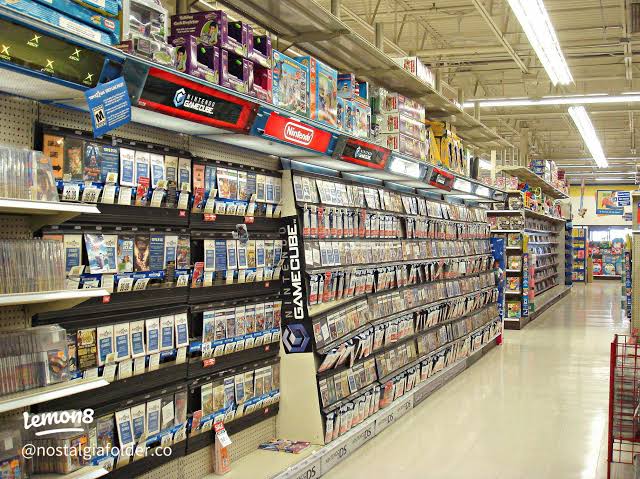
The Glass Video-Game Case: Where Cartridges Became Sacred Objects
The 90s video-game glass case was a sacred zone. Nintendo, Super Nintendo, Sega Genesis, Game Boy, PlayStation, Nintendo 64, controllers, memory cards, cartridges, discs, and accessories were often locked away like the store was guarding state secrets.
That glass changed everything. A toy on a shelf felt available. A game behind glass felt official, expensive, and important. You had to ask an employee. An adult had to be involved. There were keys. Suddenly Mortal Kombat or Mario Kart felt like a financial decision that required legal witnesses.
Box art did the selling
Before trailers were instantly available, box art mattered. Kids judged games by covers, screenshots, magazine ads, friends’ opinions, and whatever demo station was running. The case became a wall of possibilities.
You could stand there comparing titles for way too long, mentally owning ten games you would not actually receive. The art, logos, ratings, screenshots, and price tags created their own kind of fantasy.
Why games felt different from regular toys
Video games were expensive enough to change the whole shopping mood. Buying a figure was one level of negotiation. Buying a cartridge was a parental hearing. That made game-store sections feel more serious.
It also made the purchase feel huge. Leaving with a new game was not just getting a toy. It was getting dozens of hours of future frustration, sibling arguments, and controller grip marks.
- Core appeal: systems, cartridges, handhelds, box art, locked cases, demo stations, and high-stakes prices.
- Memory trigger: glass doors, price tags, employee keys, controller displays, and choosing one game you had to live with.
- Most 90s detail: judging an entire game by three screenshots and a cover that was doing way too much.
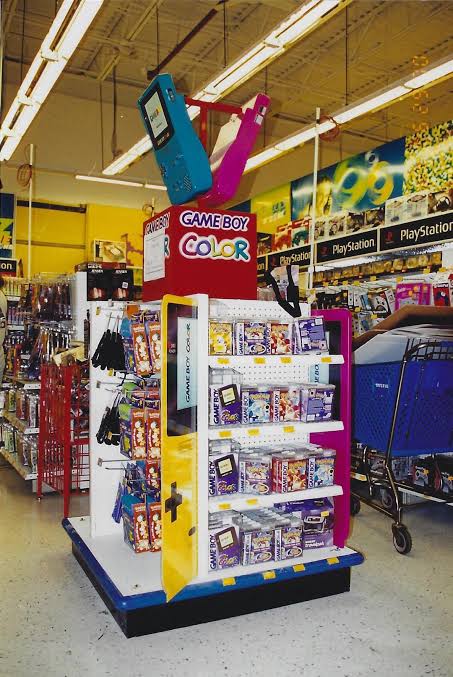
Endcaps and Checkout Impulse Toys: The Final Boss of Small Money
The big toy was the dream, but the checkout impulse toy was the consolation prize. Stickers, mini figures, keychains, bouncy balls, small collectibles, weird candy toys, batteries, cards, and tiny plastic nonsense waited near the register like they knew your parents were tired.
These items mattered because they were affordable enough to become bargaining chips. If you could not get the vehicle, maybe you could get the small figure. If you could not get the game, maybe you could get cards. If the whole trip was a “no,” maybe one tiny thing could still sneak through.
The psychology of cheap plastic
Cheap toys are powerful because they feel harmless. Adults saw a small price tag. Kids saw a chance to leave with evidence that the toy-store trip was not completely wasted.
That made endcaps dangerous. They turned leftover coins, birthday money change, and parental guilt into little purchases that still felt meaningful.
Endcaps made hype visible
Endcaps also told you what was hot. If a brand had a display at the end of the aisle, it felt important. Power Rangers, Pokémon, Batman, Star Wars, Furby, Beanie Babies, board games, and seasonal toys all benefited from that “look at me first” placement.
A good endcap could make a toy feel urgent before you even reached the correct aisle. It was retail shouting, and 90s kids were very easy to shout at.
- Core appeal: small prices, cards, stickers, mini toys, checkout pressure, and endcap hype.
- Memory trigger: register racks, discount bins, small boxes, sticker packs, and the “can I just get this?” voice.
- Most 90s detail: leaving with something tiny and acting like you had successfully beaten the system.
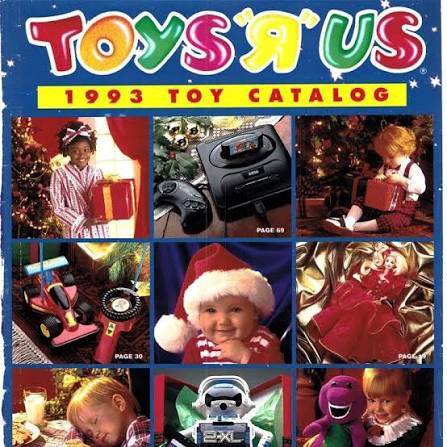
Holiday Catalogs: The Paper Internet for Kids With Markers
The 90s Christmas toy catalog was basically the internet printed on paper and mailed directly into a kid’s nervous system. You circled toys, folded corners, made lists, revised lists, ranked your priorities, and pretended that circling twelve expensive items was a reasonable communication strategy.
Catalogs mattered because they let kids study the aisle before they ever reached the store. You could compare playsets, vehicles, dollhouses, bikes, video games, board games, action figures, and electronic toys from the floor of your living room like a tiny consumer analyst in pajamas.
The circle strategy
Every kid had a technique. Some circled everything. Some starred the most important toys. Some wrote names in the margins. Some folded pages. Some left the catalog open in suspiciously visible places. It was not subtle, but subtlety was not the point.
The catalog turned wanting into planning. A toy in a store could be impulse. A toy in the catalog became part of an argument you had prepared for weeks.
Why catalogs made toys feel bigger
Catalog layouts gave toys a kind of dream logic. The perfect photo, the grouped accessories, the staged play scenes, the big playset spread — everything looked complete in a way real life rarely matched.
That is why the memory of catalogs is so strong. They made toys feel like worlds. Even if you never got the big-ticket item, you may still remember the page.
- Core appeal: wish lists, toy photography, gift strategy, page circling, holiday anticipation, and fantasy ownership.
- Memory trigger: glossy pages, marker circles, folded corners, price boxes, and the dangerous phrase “Dear Santa.”
- Most 90s detail: browsing toys offline with the intensity of someone planning a bank job.
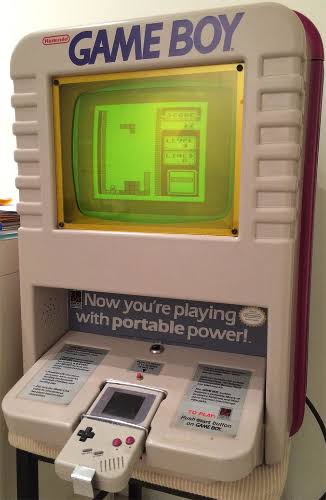
Demo Stations and Display Toys: The Store Let You Touch the Future
90s toy stores understood one thing very well: if a kid could touch a toy, the negotiation got worse. Demo stations, display models, talking toys, electronic games, Bop It-style button toys, video-game kiosks, ride-ons, bikes, and noisy sample units all existed to convert curiosity into desperation.
A display toy felt like a preview of ownership. You pressed the button. It made the sound. You saw the lights. You held the controller. You watched the demo loop. Suddenly the toy was no longer theoretical. It had entered your hands, and now your parents had a problem.
The button wall effect
Toys that made noise were impossible to ignore. A talking plush, electronic pet, sound board, game demo, or button toy could dominate the surrounding area. The aisle did not just look like toys. It sounded like batteries dying in real time.
That noise was part of the culture. A toy store without sound would have felt wrong. The 90s aisle beeped, laughed, barked, talked, played music, and begged for AA batteries like a tiny plastic civilization.
Video-game demos were social spaces
Demo stations were especially powerful because kids could gather around them. You watched someone else play, waited for a turn, judged their skill silently, and hoped the controller still worked after a thousand other kids had attacked it.
Even a short demo could sell a system or game better than a magazine ad. It let kids experience the future for free, which of course made leaving without it feel personally unfair.
- Core appeal: buttons, sounds, lights, controllers, sample toys, demos, and public hands-on chaos.
- Memory trigger: sticky buttons, looping demo audio, half-broken controllers, and a crowd of kids waiting too close.
- Most 90s detail: trying a toy in-store and immediately presenting it as evidence in your purchase argument.
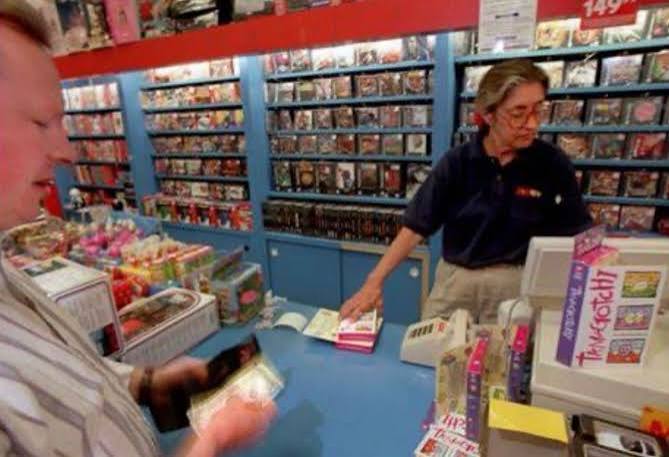
Clearance Bins: The Island of Misfit Plastic
The 90s clearance bin was where toy lines went to become legends in one kid’s house and nowhere else. It was full of damaged boxes, last-wave figures, strange vehicles, forgotten villains, oddball brands, and items that had clearly missed their hype window but still had enough plastic dignity to tempt you.
Clearance mattered because it changed the math. A toy that was too expensive at full price could suddenly become “actually, this is a great deal.” That phrase worked on adults sometimes, which made the bin feel powerful.
Where deep cuts were born
A lot of forgotten toy memories came from clearance. Kids discovered lines they never saw advertised, characters from shows they barely watched, random vehicles with no context, and figures that looked cool enough to buy even if the brand meant nothing.
That is why clearance-bin toys feel personal. They were not always the thing everyone wanted. They were the thing you found.
The damaged-box bargain
A crushed corner or faded price sticker could become opportunity. Adults saw reduced value. Kids saw the same toy, just cheaper. The box was going in the trash anyway, which seemed like an obvious argument that adults somehow failed to appreciate.
Clearance also made toy stores feel less polished and more alive. Not everything was a perfect launch display. Some toys lingered, got marked down, and waited for the one kid who would give them a second life.
- Core appeal: low prices, oddball finds, deep cuts, damaged boxes, random figures, and unexpected wins.
- Memory trigger: red stickers, open bins, mixed brands, bent cards, and the thrill of finding something strange.
- Most 90s detail: discovering a toy nobody else had because nobody else wanted it until it was cheap.
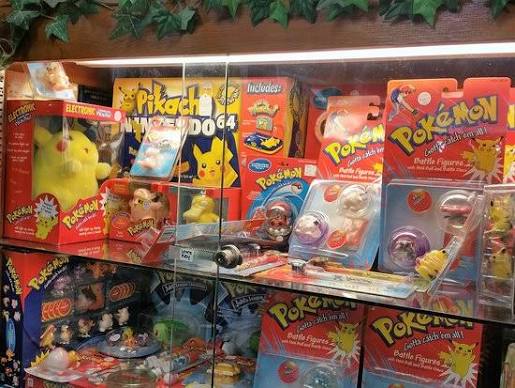
The Collector Shelf: When Toys Started Feeling Like Investments
By the late 90s, toy stores had a different kind of energy. Collectible toys changed the mood. Beanie Babies, Pokémon cards, sealed figures, special editions, chase items, and rarity rumors made shelves feel less like simple toys and more like small markets with stuffed animals.
This was strange because adults got involved in a new way. Some toys were not just for playing; they were for saving, protecting, tagging, shelving, pricing, or “maybe worth something someday.” Kids mostly wanted to play with them. Adults occasionally wanted to retire on a plush frog. The decade was complicated.
Beanie Baby shelf behavior
Beanie Babies changed how people looked at plush. Tags mattered. Names mattered. Retirements mattered. Display condition mattered. Stores that had new shipments could become little rumor centers.
That collector behavior made the shelf feel tense. A stuffed animal was no longer just cute. It was maybe rare, maybe valuable, maybe already claimed by someone’s aunt with a plastic tag protector and investment dreams.
Pokémon cards changed kid behavior
Pokémon cards turned toy-store shelves into schoolyard infrastructure. Booster packs were not just packs; they were future trades, binder pages, arguments, status symbols, and possible holographic destiny.
The store was only the first stop. The real value happened later at recess, on the bus, at a kitchen table, or in a binder that was guarded like nuclear codes.
- Core appeal: scarcity, cards, tags, sealed packaging, rarity rumors, collections, and schoolyard status.
- Memory trigger: booster packs, Beanie tags, plastic sleeves, display shelves, price stickers, and sold-out racks.
- Most 90s detail: adults explaining that a stuffed animal was an investment while kids just wanted the cute one.
Mall Toy-Store Culture Was Its Own Thing
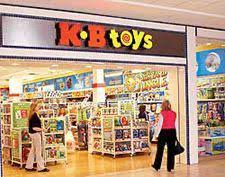
The 90s mall already had its own ecosystem: food court, arcade, music store, clothing stores, movie theater, kiosks, posters, neon signs, and the constant feeling that everyone was wandering around with nowhere better to be. A toy store inside that environment felt like a bonus level.
Mall toy stores had speed. You were often there between other stops, which made every toy decision feel compressed. You had to scan fast. Action figures, plush, video games, candy toys, weird novelty items, mall-kiosk junk, clearance bins, and impulse toys all fought for attention in a smaller space.
Why the mall changed the toy-store run
- It was spontaneous: you could stumble into a toy store during a regular mall trip.
- It was social: friends, siblings, cousins, and other kids were often around.
- It was fast: you had limited time before adults moved on.
- It was full of weird finds: smaller stores often had odd leftovers and unexpected deep cuts.
- It connected toys to the rest of mall culture: arcades, movies, music, snacks, and toys all felt part of the same trip.
That is why mall toy-store memories hit differently than big-box toy-store memories. Toys “R” Us felt like a destination. KB Toys felt like an ambush.
The Late-90s Collector Era Changed the Aisle
Early-90s toy-store culture was still mostly about play: action figures, dolls, board games, bikes, playsets, vehicles, and video games. By the late 90s, collecting had changed the emotional temperature. Beanie Babies, Pokémon cards, sealed action figures, Star Wars Episode I packaging, limited editions, and electronic pets made the store feel more urgent.
Kids were not just asking, “Is it fun?” They were asking, “Is it rare?” “Does anyone else have it?” “Can I trade it?” “Is this the right color?” “Is this the one from the commercial?” “Is this pack going to have something good?” The toy store became a place where status, scarcity, and play all collided.
This was one of the biggest changes of the decade. The toy aisle stopped being only about what you could play with and became about what you could own, display, trade, protect, and brag about.
Tiny Toy-Store Details You Probably Still Remember
Price stickers on everything
Sometimes on the box. Sometimes on the card. Sometimes right over the best part of the art, because retail had no mercy.
Empty pegs
The saddest possible confirmation that the toy from the commercial existed and someone else got there first.
Package backs
The back of the card was research material: figures in the wave, vehicles, villains, and toys you had never seen in stores.
Locked game cases
Nothing made a kid feel underqualified like needing an employee to unlock the thing you wanted.
Clearance stickers
The red-tag miracle that transformed a random forgotten figure into a suddenly reasonable purchase.
Demo buttons
Every electronic toy with a “try me” button became public property and sounded worse by December.
Display bikes
Too big to casually buy, too cool to ignore, and always positioned like freedom had a price tag.
Board game towers
Stacks of games that promised family fun and delivered shouting, missing pieces, and one sibling cheating.
The checkout rack
The last-minute trap of stickers, small toys, cards, candy toys, and tiny junk that knew your parents were tired.
Why 90s Toy Store Culture Still Hits
90s toy store culture still hits because it was physical, limited, and emotional. You could not see everything online. You had to go. You had to scan shelves. You had to hope the thing was there. You had to make choices. You had to accept that sometimes the toy was sold out and your whole afternoon was ruined for deeply dramatic reasons.
The stores also created accidental memories. Maybe you did not get the toy you wanted. Maybe you found something better. Maybe you got a clearance figure you never saw again. Maybe you stood in front of the video-game case and memorized a box you would not own for another year. Maybe you circled the catalog and still got socks. These are formative wounds.
And maybe the biggest reason it still works is that the toy store made childhood want feel huge. The aisles were bigger than your room. The boxes were brighter than real life. The commercials were still echoing in your head. The money was not enough. The parent was saying no. The toy was right there. That is nostalgia with a price tag.
90s Toy Store Culture FAQ
What were the big 90s toy stores?
The biggest 90s toy-store memories usually center on Toys “R” Us, KB Toys, mall toy stores, toy departments inside larger retailers, video-game sections, and holiday catalog shopping. For kids, Toys “R” Us felt like the destination, while KB Toys felt like the mall ambush.
Why do people remember Toys “R” Us so strongly?
Toys “R” Us felt memorable because it gave toys an entire big-box world. Instead of one small department, kids saw full aisles of action figures, dolls, games, bikes, video games, plush, board games, outdoor toys, and holiday displays.
Why was KB Toys important to 90s mall culture?
KB Toys mattered because it placed toy hunting inside the mall trip. Kids could stumble into a toy store while shopping for clothes, going to the movies, eating at the food court, or visiting the arcade, which made it feel spontaneous and dangerous to allowance money.
Why were video games locked in glass cases?
Video games, systems, and accessories were often kept in glass cases or behind counters because they were expensive, small enough to secure, and high-demand items. For kids, that made them feel even more important and harder to reach.
How did collector crazes change 90s toy stores?
Collector crazes like Beanie Babies, Pokémon cards, sealed action figures, and limited-edition toys made toy stores feel more urgent. Toys were not just for play anymore; they could be rare, traded, protected, displayed, or treated like investments.