90s Collectible Toy Crazes: The Playground Economy
The 1990s did not just make toys popular. It made them feel like currency. Pogs got traded like tiny cardboard poker chips. Beanie Babies came with tags adults treated like stock certificates. Pokémon cards turned binders into social ranking systems. Crazy Bones, sports cards, comic cards, Happy Meal toys, sealed action figures, and every “limited edition” object in a mall display case convinced kids and grown-ups that plastic, paper, plush, and cardboard might secretly be treasure.
This is the story of the 90s collectible toy crazes: how small objects became playground status, how scarcity became the sales pitch, how adults made everything weirder, and how a decade full of malls, commercials, price guides, school trades, and rumor-powered hype turned the toy aisle into a tiny economy with juice boxes.
90s Toys
Head back to the full 90s Toys hub for action figures, electronics, handhelds, plush, board games, backyard toys, commercials, and the rest of the decade’s plastic chaos.
Related Deep Dive90s Action Figure Wars
TMNT, Power Rangers, Toy Biz Marvel, Kenner Batman, Jurassic Park, Spawn, Star Wars, WWF Hasbro, and the plastic arms race on the peg wall.
Fad Energy90s Fads
The bigger trend pile: Beanie Baby economics, playground crazes, mall culture, school status symbols, and every fad that briefly felt like the future.
Quick Answer: What Were the Biggest 90s Collectible Toy Crazes?
The biggest 90s collectible toy crazes were the small, tradable, huntable objects that turned kids into collectors and adults into full-blown mall-kiosk economists: Beanie Babies, Pokémon cards, Pogs, Crazy Bones, sports cards, comic cards, collectible card games like Magic: The Gathering, Happy Meal toys, Star Wars Power of the Force figures, Spawn figures, and every limited-edition object that came with a tag, card, protector, checklist, or rumor attached.
What made these crazes different from regular toys was the pressure to collect, trade, preserve, and complete. Kids did not just want one Pokémon card. They wanted the rare one. Adults did not just buy a Beanie Baby. They protected the tag like it contained the nuclear codes. Pogs were not just circles of cardboard. They were playground ammo. Crazy Bones were not just tiny plastic figures. They were pocket-sized social currency.
The 90s collectible boom worked because it hit from every angle: TV, malls, fast food, trading culture, magazines, price guides, rarity rumors, schoolyard status, and the new idea that maybe — just maybe — the thing sitting in your binder or closet was worth money. Usually it was not. But the hope was the product.
Why the 90s Were the Perfect Decade for Collectible Toy Crazes
The 90s were the perfect laboratory for collectible madness because the decade sat in a weird middle zone. Kids still lived in physical toy culture. Malls mattered. Toy stores mattered. Card shops mattered. Fast-food promotions mattered. Saturday morning commercials mattered. But the decade was also starting to build the habits that would define modern collecting: scarcity, variants, chase items, limited drops, price speculation, fandom identity, and the fear that you might miss the one everybody else had.
The toy aisle had already been trained by the 80s. Kids understood characters, vehicles, playsets, and brand universes. But the 90s added the collector mindset to everything. Now the object did not always need to be big. It could be small, cheap, portable, and endlessly repeatable. A booster pack. A Pog tube. A Beanie Baby tag. A tiny Crazy Bone. A sealed action figure. A Happy Meal toy still in the bag. A card slipped into a plastic sleeve like it had entered witness protection.
That portability mattered. Collectible toy crazes moved easily through school. You could bring them in a backpack, jacket pocket, lunchbox, binder, pencil case, or suspicious Ziploc bag. They were easy to trade, easy to compare, easy to show off, and easy to confiscate. The cafeteria became a marketplace. Recess became a trade floor. The school bus became a negotiation chamber with terrible lighting.
Adults made the whole thing weirder. The Beanie Baby boom especially turned a kid-friendly plush line into a speculation frenzy. Parents, collectors, mall shoppers, and extended family members started treating toys like investments. That energy spread into action figures, cards, exclusives, and anything that could be kept sealed. Suddenly, toys were not just for playing. They were for saving, protecting, grading emotionally, and arguing about on the basis of “future value.”
The 90s collectible formula
- Small and portable: The best crazes fit in a pocket, binder, case, backpack, or tag protector.
- Easy to trade: Kids could compare collections instantly and negotiate during recess like tiny exhausted brokers.
- Rarity rumors: A rare card, retired plush, weird variant, limited run, or “my cousin said” story could launch a hunt.
- Checklist pressure: The collection was never done because there was always another one, a shinier one, a rarer one, or one you had never seen in person.
- Adult involvement: Once adults believed toys had future value, the whole category got louder, stranger, and way less fun for everyone at the mall.
90s Collectible Toy Craze Timeline
A fast visual map of how the playground economy escalated
The 90s collectible boom did not happen all at once. It built in waves: trading cards and comic speculation, Pogs, collectible card games, Beanie Babies, fast-food tie-ins, Crazy Bones, Pokémon cards, and finally the late-decade moment when every kid with a binder suddenly understood supply, demand, and regret.
Cards get louder
Sports cards, comic cards, movie cards, and binder pages become part of the kid-collector toolkit.
Collectible games arrive
Trading cards become playable strategy systems, not just things you stared at in nine-pocket pages.
Pogs flood recess
Milk caps, slammers, tubes, and playground rules turn tiny cardboard discs into temporary social power.
Beanie fever rises
Tags, retirements, scarcity, and adult collector panic turn soft toys into a national treasure hunt.
Meal toys become trophies
Promotions and mini collectibles make drive-thru runs feel like low-stakes treasure hunts with fries.
Crazy Bones hit pockets
Little figures with names, colors, and trade value keep the small-object craze alive.
Pokémon owns recess
Cards, games, TV, trading, rarity, and binder flexing create the decade’s final boss collectible craze.
Sealed culture hardens
Action figures, exclusives, variants, and collector packaging make unopened toys feel more valuable than fun.
The hangover begins
Some collections stay beloved. Some lose value. Everyone learns that “rare” was doing a lot of work.
The Major 90s Collectible Toy Crazes
The biggest fronts in the playground economy
Beanie Babies: Plush Toys Become a Speculation Bubble
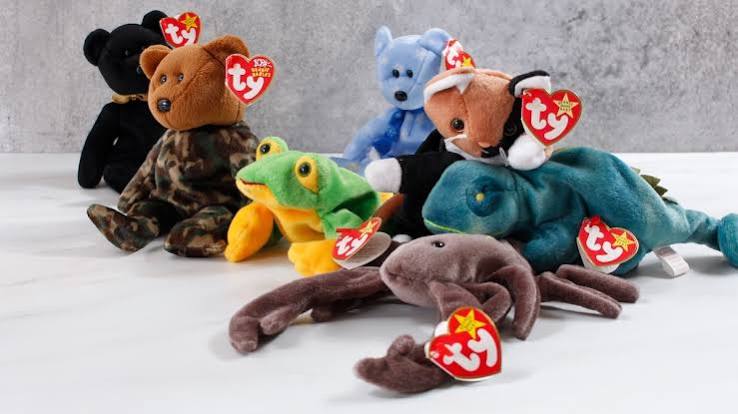
Beanie Babies were the 90s collectible craze that made adults completely lose the plot. Kids liked them because they were cute, small, soft, and easy to stack on a bed. Adults turned them into an economic theory with beans inside. The heart-shaped tag became sacred. Tag protectors appeared. Retirements mattered. Release dates mattered. Store availability mattered. Rumors traveled faster than facts, which is basically how every great 90s fad got its cardio.
The genius was that Beanie Babies looked simple. They were not huge. They were not electronic. They did not need a cartoon. They did not need a battery door or a transformation sequence. Their value came from perceived scarcity and the idea that you might be holding the next valuable one. That turned a plush toy into a hunt.
The actual toy-store experience was part of the madness. You did not always walk into a store and calmly choose the one you wanted. You checked racks, asked clerks, heard rumors, looked for specific animals, compared tags, and sometimes found an adult hovering nearby with the energy of someone buying concert tickets. It was cute plush collecting with the vibe of a stock exchange that also sold keychains.
Why Beanie Baby mania got so intense
Beanie Babies hit adults in the collector brain. They were affordable enough to buy casually, but scarce enough to feel strategic. Retirement announcements made certain toys feel suddenly important. Price guides and resale stories made the whole thing feel semi-official. Families started keeping plush toys in plastic boxes like they were museum artifacts, which was adorable and also deeply 90s.
The tag was the weirdest part. A stuffed animal is meant to be hugged, tossed, slept with, dragged around, and eventually loved into fabric collapse. But Beanie Babies trained people to treat the tag as the soul of the object. No creases. No bends. No stains. No detached tag. The plush could sit there smiling innocently while everyone around it worried about cardboard condition.
What people actually chased
Beanie collectors chased retired animals, new releases, store exclusives, early versions, oddities, tag errors, and anything that sounded scarce. Some people collected by animal type. Some collected by color. Some wanted complete waves. Some were just trying to find the one their kid wanted before the mall became a war zone.
- Core collector hook: small plush characters with names, birthdays, tags, and perceived rarity.
- Adult panic factor: the idea that a cheap plush toy could become valuable later.
- Kid appeal: they were cute, stackable, easy to display, and small enough to make collecting feel doable.
- Most 90s detail: tag protectors turning a heart-shaped paper tag into the crown jewels.
Beanie Babies mattered because they turned toy collecting into a mainstream adult behavior. They also taught a whole generation that collectibles could be beloved, ridiculous, overhyped, emotionally charged, and financially disappointing all at once. Range.
The hangover is part of the legacy. A lot of Beanie Babies did not become the retirement plan people imagined, but that almost makes the craze more interesting. It shows how 90s collecting was not just about objects. It was about stories people told around objects — rarity stories, future-value stories, “I heard this one is special” stories. The plush was soft. The speculation was not.
Pokémon Cards: The Final Boss of 90s Playground Collecting
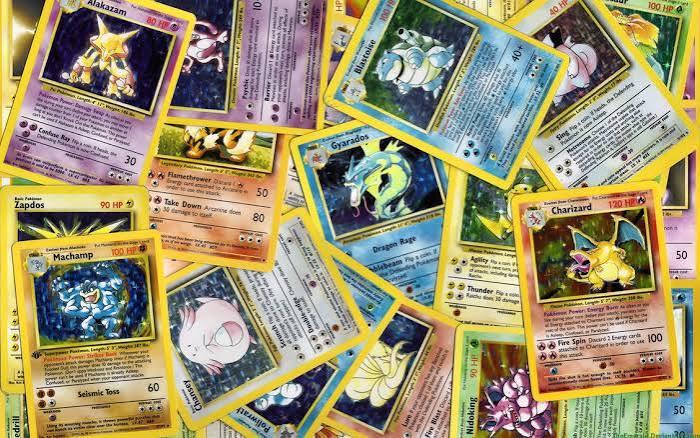
Pokémon cards were not just another trading-card fad. They were the late-90s collectible system that connected everything: video games, TV episodes, Game Boy link cables, schoolyard trades, booster packs, binders, rarity symbols, and the deep emotional crisis of watching someone else pull a holographic card you wanted.
Pokémon worked because the cards were not isolated collectibles. They represented creatures kids already knew from games and TV. The cards had names, types, evolutions, attacks, hit points, and rarity symbols. A binder was not just storage. It was a personality statement. Kids organized pages like museum curators with Capri Sun breath.
The booster pack was the magic trick. You paid for possibility. Maybe it was full of duplicates. Maybe it had the card you needed. Maybe it had a holographic card that made everyone at lunch suddenly notice your existence. That tiny sealed wrapper carried more drama than most adult meetings.
Why Pokémon took over school
The cards were social objects. Kids traded them, battled with them, compared them, argued about them, and measured each other’s collections with brutal efficiency. A good binder could create instant recess credibility. A bad trade could haunt you until adulthood. The cards were also easy to carry, which meant they could invade classrooms, buses, cafeterias, and any place adults were not ready to supervise a full economy.
Pokémon also had a built-in ladder of desire. First you wanted your favorite character. Then you wanted the evolution. Then you wanted the holographic. Then you wanted the rare one. Then you wanted the card your friend had. Then you wanted a full page arranged perfectly in the binder because apparently interior design starts early.
The binder flex was real
The binder was where the social hierarchy lived. Loose cards in a stack were fine. Cards in sleeves were better. Cards in nine-pocket pages felt official. A full binder meant you had history, access, and probably at least one trade you were still bragging about. Kids knew which pages mattered. They knew which cards got shown first. They knew when someone was hiding the good stuff in the back.
- Core collector hook: characters tied to games, TV, evolutions, and rarity symbols.
- Playground pressure: binders, trades, holographics, and the eternal hunt for the card everyone talked about.
- Media engine: games, TV, merchandise, playground talk, and card packs all reinforced each other.
- Most 90s detail: schools eventually realizing that cardboard had become a behavioral problem.
Pokémon mattered because it represented the next stage of toy collecting. It was not just a toy, not just a card game, not just a cartoon, and not just a video game. It was a full ecosystem, and by 1999 it made almost every other craze look like it was playing on beginner mode.
It also changed how kids thought about collecting. The best 90s crazes made you want more. Pokémon made you want more across categories: more cards, more games, more knowledge, more trades, more characters, more evolutions. It was a collecting machine disguised as a pocket-monster universe, and honestly, it was very good at its job.
Pogs: Tiny Cardboard Discs, Maximum Recess Drama
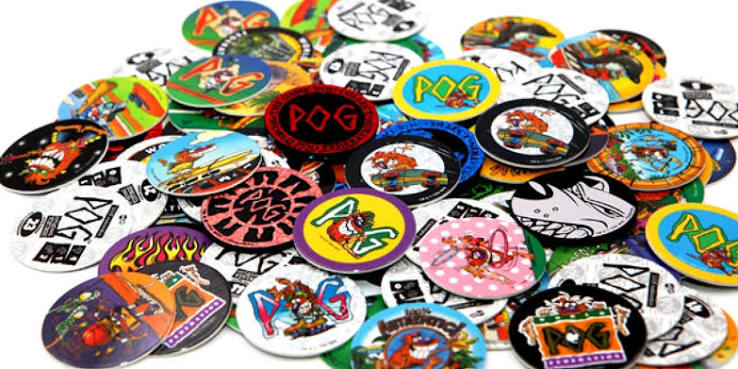
Pogs were the kind of fad that sounds fake until you remember standing around a playground, clutching a tube of cardboard circles like you were managing a casino. They were simple: little round discs with graphics on them, stacked up and flipped with a heavier slammer. Somehow that became a whole school-year economy.
The beauty of Pogs was the low barrier to entry. You did not need a giant playset, expensive console, or adult collector strategy. You needed a stack, a slammer, and the confidence to play under rules that changed depending on which kid was currently losing. The designs did a lot of work: skulls, cartoons, sports logos, neon graphics, weird mascots, shiny foil, holographic effects, and anything that looked like it had been designed on a sugar rush.
Pogs were also one of the purest examples of 90s visual collecting. A Pog did not need lore. It just needed to look cool enough that another kid wanted it. That meant every design could become a little identity badge. Sports Pogs, skull Pogs, cartoon Pogs, random mascot Pogs, shiny Pogs, ugly Pogs that somehow became favorites — it was chaos in a tube.
Why Pogs burned hot and fast
Pogs were perfectly portable and perfectly disposable. That made them powerful and fragile as a fad. They were easy to collect, easy to trade, easy to play, and easy for schools to decide they were becoming a problem. The slammers made the whole thing feel more serious than it had any right to be. A metal slammer could make a kid feel like a warlord.
The game itself also gave the craze risk. You could play “for keeps,” which turned cardboard discs into real stakes. That is the moment a cute little collectible became playground gambling with better graphics. Even when kids did not play for keeps, the threat was there. The stack mattered. The flip mattered. The slammer mattered. Every kid had a theory about technique. Most of those theories were nonsense, naturally.
Why the slammer mattered
The slammer was the personality piece. Pogs were the collection, but the slammer was the weapon. Plastic slammers were common. Metal slammers felt elite. Heavy slammers felt unfair in the best way. The slammer gave kids something to compare beyond the artwork, and it made the game feel physical. You did not simply collect Pogs. You deployed them.
- Core collector hook: cheap, portable discs with endless visual designs.
- Playground pressure: winning, losing, trading, and arguing about rules nobody wrote down.
- Game hook: the collectible was also playable, which made every stack feel active.
- Most 90s detail: carrying a tube of cardboard circles like it was military-grade equipment.
Pogs mattered because they showed how quickly a playground craze could spread when the object was small, social, visual, and gameable. They did not need deep lore. They needed a stack and a crowd.
They also showed how fast 90s fads could peak and vanish. One year they felt unavoidable. Then suddenly they were drawer fossils. That was the decade in miniature: obsession, saturation, school bans, forgotten tubes, and then nostalgia decades later when someone says “slammer” and your brain boots up like an old computer.
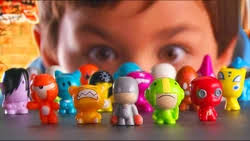
Crazy Bones: Pocket-Sized Plastic Status
Crazy Bones were tiny, strange, colorful little plastic figures that looked like someone turned cartoon goblins into pocket debris. They were collectible, tradable, and gameable — the holy trinity of 90s schoolyard nonsense. Like Pogs, they were small enough to carry anywhere. Unlike Pogs, they had little faces and personalities, which made kids assign emotional value to what were essentially weird lumps with attitude.
Their power came from being tactile. You could hold a Crazy Bone, line them up, trade them, flick them, sort them, rank them, and decide some were cooler because the color looked rarer or the face seemed more intense. That is how kid economies work. Logic was present, but not in charge.
They also felt more character-driven than a lot of small collectibles. A Pog could have cool art, but a Crazy Bone felt like a little creature. It had a shape. It had a face. It could be a favorite. Kids could build tiny armies of them, assign importance to colors, invent rules, and treat a handful of plastic pieces like a serious collection.
Why Crazy Bones worked
They arrived in the perfect small-collectible lane. Kids already understood Pogs, cards, mini figures, and playground trading. Crazy Bones gave them another tiny object to chase that felt more character-driven than a disc and less expensive than a card binder. They were also wonderfully easy to lose, which is apparently a feature in childhood.
Crazy Bones were not as culturally massive as Pokémon cards, but they owned a particular kind of kid attention. They were pocket toys. They lived in pencil cases, desk trays, backpacks, jacket pockets, and those random household containers every parent eventually found and did not understand. They were easy to bring to school and easy to turn into a trade conversation.
Trading mattered more than rules
Yes, there were games you could play with Crazy Bones, but a lot of the appeal lived in collecting and trading. Which ones did you have? Which colors looked better? Which figures felt rare because nobody else had them? Which one did your friend swear was special for reasons he definitely could not prove? That was enough. A 90s collectible did not always need official logic. It needed playground logic.
- Core collector hook: tiny named figures with different colors, shapes, and trade value.
- Playground pressure: pocket collections, quick trades, and games that varied by friend group.
- Character appeal: the figures had just enough personality to feel like more than generic pieces.
- Most 90s detail: convincing yourself one tiny plastic goblin was clearly superior to another tiny plastic goblin.
Crazy Bones mattered because they captured the late-90s appetite for small collectibles that could move through school quickly. They were not as massive as Pokémon, but they fit perfectly into the decade’s obsession with little objects that somehow became social currency.
They also sit in that sweet spot of “forgotten but instantly remembered.” The second you see them, the whole thing comes back: the colors, the tiny shapes, the trades, the pocket full of plastic, and the feeling that maybe the next pack would finally give you the one you actually wanted.
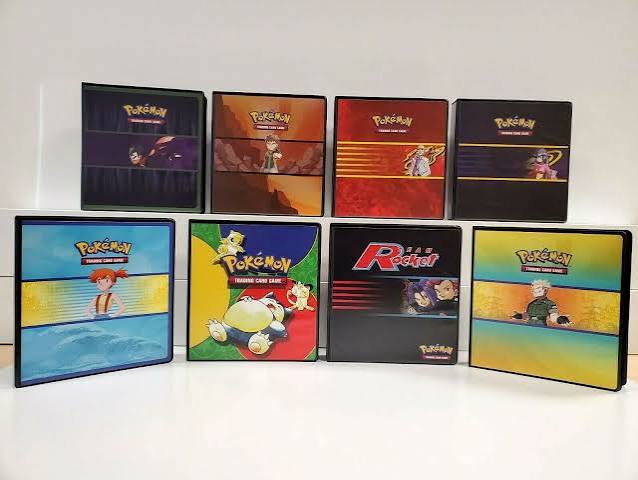
Sports, Comic, and Pop-Culture Cards: Binder Culture Before Pokémon
Before Pokémon turned every school into a binder-based negotiation zone, 90s kids already understood trading cards. Sports cards were everywhere. Comic cards were huge with kids who wanted X-Men, Spider-Man, Marvel Universe stats, holograms, and character art. Movie cards, TV cards, and pop-culture sets gave almost every fandom a card version.
The binder was the real object of power. Nine-pocket pages transformed cards into a display system. You were not just collecting. You were curating. Some pages were arranged by team, character, rarity, color, or emotional importance. The sound of a binder zipper had authority. The kid who opened one carefully on the cafeteria table was not playing around.
Card collecting also made condition feel important. A loose toy could have scuffs and still be fun. A card with a bent corner felt like a tragedy. Cards trained kids to understand sleeves, pages, corners, checklists, doubles, trades, and the difference between “I like this” and “this might be worth something.” That was a big shift in how kids thought about objects.
Why card collecting shaped the decade
Cards taught 90s kids the language of condition, value, rarity, inserts, checklists, and protection. Sleeves mattered. Corners mattered. Creases were tragic. A shiny card could produce immediate envy. Price guides and card shops gave the hobby an adult-coded seriousness that made collecting feel more official than it probably was.
Sports cards carried the older collecting tradition, but comic and pop-culture cards made the hobby feel more connected to 90s kid life. Marvel cards, superhero stats, foil inserts, movie tie-ins, and character art gave kids something to organize even if they were not sports fans. A card binder could be a comic collection, a sports archive, a movie souvenir album, and a personal museum at the same time.
What kids chased before Pokémon
Kids chased rookie cards, stars, villains, superheroes, holograms, foil inserts, chase cards, complete sets, and cards with artwork that simply looked cooler than everything else. Some cards mattered because they had value. Some mattered because they had a favorite character. Some mattered because the kid across the table wanted it, and that alone made it powerful.
- Core collector hook: visual sets, checklists, stats, characters, foil cards, inserts, and binder completion.
- Playground pressure: showing off pages, negotiating trades, and protecting favorite cards like historical documents.
- Adult crossover: card shops, price guides, sports collecting, and speculation made cards feel serious.
- Most 90s detail: thinking a plastic sleeve made a card feel 800% more important.
Trading cards mattered because they created the habits Pokémon would later weaponize: binders, rarity, trades, booster-pack hope, and the belief that the next pack might change your social life.
They also bridged generations. Parents understood sports cards. Kids understood superheroes, movies, and eventually Pokémon. The format was flexible enough to absorb anything. If something was popular in the 90s, there was a decent chance somebody tried to put it on cardboard and sell it in packs.
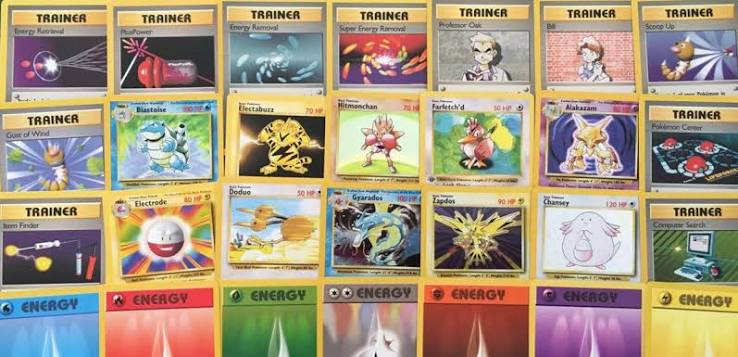
Collectible Card Games: When Cards Became Strategy
Collectible card games changed the logic of card collecting. Instead of cards being valuable only because they looked cool, represented an athlete, or completed a set, now they could also do something. They had rules. They had powers. They worked together. The collection became a toolkit, and the rare card was not just a trophy — it might actually win.
That mattered because it made collecting deeper. Booster packs became both a collection hunt and a strategy hunt. Kids and older players were not only asking, “Do I have this?” They were asking, “Can I use this?” That shift helped create a different kind of collector: the player-collector who cared about rarity, mechanics, decks, expansions, and the social rituals of hobby shops.
Collectible card games also changed where collecting happened. This was not only a playground thing. It lived in card shops, comic shops, hobby stores, kitchen tables, cafeteria corners, and friend groups where at least one person took the rules extremely seriously. The cards were portable, but the culture around them felt bigger and more structured than a quick recess trade.
Why collectible card games felt different
CCGs had a seriousness that regular toy crazes did not always have. They required rules, opponents, deck construction, and at least one person who explained the game with the intensity of a courtroom deposition. They also made card scarcity feel functional. A rare card could be valuable because it looked cool, because collectors wanted it, and because it changed gameplay.
This was a different kind of collecting loop. You opened packs to improve a deck. You traded to fill gaps. You learned what cards worked together. You started thinking about combinations, timing, and strategy. That made the cards feel alive in a way standard trading cards did not. They were not just displayed. They were used.
Why this mattered to 90s toy culture
Collectible card games helped normalize booster-pack culture and expansion thinking. A toy line might release new waves. A card game could release new sets. That meant the collection was always evolving. The hobby rewarded both knowledge and access, which made it feel more intense than casual collecting.
- Core collector hook: rarity plus playability.
- Social hook: games, hobby shops, tournaments, and friend-group metas.
- Buying loop: booster packs, deck improvement, expansions, and trade needs kept the cycle moving.
- Most 90s detail: needing a rulebook, a deck box, and someone older to explain why you were playing wrong.
Collectible card games mattered because they showed how collecting could become a system, not just a shelf. Pokémon cards would later ride a more kid-friendly version of that same logic, with characters, battles, rarity, and a playable structure wrapped around a mass-media empire.
They also pointed toward modern hobby culture: organized play, card value, deck tech, expansions, secondary markets, and the idea that a collectible could be both entertainment and inventory. That was very 90s, and also very future.
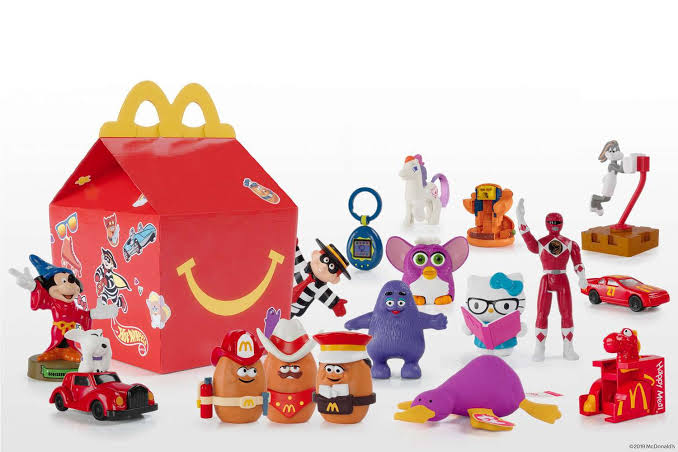
Happy Meal Toys and Fast-Food Collectibles: Drive-Thru Treasure Hunts
Fast-food toys were the stealth collectibles of the 90s. They were small, cheap, tied to movies or characters, and available for a limited time. That made them perfect little hype objects. The meal was technically the purchase, but every kid knew the toy was the point. Fries were just the side quest.
The best promotions turned a restaurant visit into a hunt. You did not just want a toy. You wanted the right toy. Maybe you needed one more character to complete the set. Maybe your sibling got the better one. Maybe the location across town still had the one your local place ran out of. This is how a drive-thru became an emotional battlefield.
Fast-food collectibles were also sneaky because they felt more attainable than normal toys. A full action-figure line was expensive. A video game was a major ask. A Happy Meal toy could happen on a random weeknight if the family schedule, parental mood, and coupon gods aligned. That made the collecting loop feel accessible.
Why fast-food collectibles worked
They were accessible and urgent. A big toy might require a birthday, Christmas, or advanced parental negotiations. A meal toy felt possible on a random Saturday. That made them powerful. They also attached collecting to movie releases, cartoon characters, plush trends, and limited-time marketing, which made fast food feel like part of the toy aisle.
The set structure mattered. One toy was fun. A set was a mission. The second a promotion had multiple characters, kids started tracking what they had and what they still needed. Duplicates became bargaining chips or sibling evidence. The unopened bag became a tiny collector artifact for anyone who had absorbed the 90s belief that sealed meant special.
How they connected to bigger media
Fast-food toys were often tied to movies, cartoons, seasonal promotions, or massive kid brands. That meant the toy did not have to explain itself. Kids already knew the character. The restaurant simply added a miniature version to the meal. It was cross-promotion before kids knew what cross-promotion was, which is probably healthier.
- Core collector hook: small themed sets with limited promotional windows.
- Family pressure: one kid always got the duplicate, because the universe is cruel.
- Media hook: movies, cartoons, plush trends, and character brands could become quick collectible runs.
- Most 90s detail: keeping the toy sealed in the little plastic bag because it might be “worth something.”
Fast-food collectibles mattered because they made toy hunting part of ordinary errands. You did not have to go to the mall or toy store. The craze could arrive through a paper bag, smelling faintly of fries and destiny.
They also helped make collecting feel normal. Not every kid had access to specialty shops or expensive toys, but almost everyone understood the thrill of getting the toy they wanted in a meal box. It was mass-market collecting at kid scale.
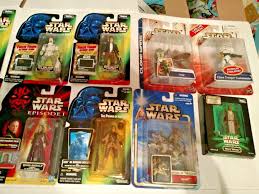
Sealed Action Figures: The “Do Not Open It” Era
The 90s were when “mint on card” stopped being a niche phrase and started leaking into mainstream toy culture. Action figures had always been collected, but the decade made packaging part of the object. A figure still sealed on a blister card felt different from the same figure loose in a toy box. One was a toy. The other was apparently an investment, according to someone’s uncle with a price guide.
Star Wars Power of the Force 2, Spawn, comic-book figures, exclusives, variants, and collector-focused packaging all fed the idea that some toys should not be opened. That idea was both powerful and slightly tragic. The whole purpose of an action figure is to be posed, battled, lost under a couch, and eventually found with one accessory missing. The 90s collector mindset said: absolutely not. Leave it sealed. Protect the corners. Respect the bubble.
Packaging became part of the nostalgia machine. Card art, logos, character portraits, cross-sell images, special stickers, foil bursts, collector numbering, and “limited” language made the front of the package feel like a poster and the back feel like a checklist. Kids saw a toy. Collectors saw condition, variants, and future value. Same aisle. Different disease.
Why sealed collecting grew
The decade had a lot of adult nostalgia colliding with new retail. Adults who grew up with Star Wars, comics, wrestling, and action figures were now old enough to buy toys intentionally. Toy companies noticed. Packaging became more dramatic. Variants became more meaningful. Collector language became part of marketing.
Sealed collecting also benefited from the broader 90s obsession with scarcity. If there were variants, short packs, exclusives, or packaging differences, collectors had something to chase. The difference between two versions could seem tiny to normal people and extremely important to someone staring at a peg wall like they were decoding a crime scene.
What stayed sealed
Star Wars figures were a major part of the sealed-card mindset, especially as nostalgia and new movie hype started building. Spawn and McFarlane-style figures pushed the display side. Comic figures, store exclusives, chase variants, wrestling figures, and anything with special packaging could become a “don’t open it” candidate. Condition became a language: card bends, bubble dents, sticker placement, shelf wear, and whether the package looked like a shopping cart had attacked it.
- Core collector hook: unopened figures, clean cardbacks, variants, exclusives, and display value.
- Adult pressure: nostalgia plus speculation plus disposable income.
- Packaging hook: blister cards, collector numbering, foil bursts, cross-sells, and limited-edition language.
- Most 90s detail: owning a toy you were actively discouraged from enjoying as a toy.
Sealed action figures mattered because they changed the meaning of the toy aisle. It was no longer only for kids. It was also for older fans, collectors, and people who believed the future would reward them for never opening Darth Vader. Sometimes it did. Usually, it got complicated.
The sealed-figure mindset is still with us. Modern collector culture owes a lot to the 90s moment when toy packaging became display, condition became currency, and “mint on card” became a phrase normal people had to pretend to understand.
Why These 90s Collectible Crazes Spread So Fast
Most 90s collectible crazes spread because they were easy to carry and easy to talk about. That sounds simple, but it mattered. A toy that lived at home could only create envy when friends came over. A collectible that fit in your pocket, binder, lunchbox, or backpack could create envy anywhere. School was the distribution network. Recess was the sales floor. The bus ride was the rumor mill. The cafeteria was the exchange.
They also spread because the rules were easy to understand. You did not need a manual to know that a shiny card looked important, a full binder looked impressive, a sealed tag looked safer, or a rare color felt more valuable. The best 90s collectibles communicated status instantly. Other kids could look at them and know whether you had something good.
The four engines behind the craze
- Visibility: Cards, Pogs, plush tags, and mini figures were easy to show off.
- Rarity: Whether real, exaggerated, or completely invented by playground rumor, scarcity made the hunt feel urgent.
- Repeat buying: Booster packs, small figures, meal toys, and new releases made collecting feel affordable one purchase at a time.
- Social proof: The minute enough kids cared, everybody else had to at least understand the craze or risk being culturally unemployed at recess.
That is why the 90s collectible boom still feels so specific. It was not just marketing. It was marketing filtered through malls, classrooms, lunch tables, siblings, price guides, commercials, family rumors, and kids who could turn almost anything into a ranking system.
Adult Collector Panic Made Everything Weirder
Kids made collectible crazes emotional. Adults made them financial. That is where the 90s became its most ridiculous and fascinating. A child might want a Beanie Baby because it was cute. An adult might want the same Beanie Baby because someone said it had been retired and could be worth money later. A kid might want a Pokémon card because it looked powerful. An adult might want it because the market was already teaching everyone to think in rarity, condition, and resale.
Adult involvement changed the tone. Suddenly toys needed protection. Cards needed sleeves. Plush tags needed plastic covers. Action figures needed to stay sealed. Stores had to manage demand. Mall kiosks became hunting grounds. Price guides felt like sacred documents. Collectibles started sitting in closets, bins, and display cases instead of getting destroyed in normal childhood fashion.
This was not completely new, but the 90s made it mainstream. The decade loved the idea that ordinary objects could become valuable if you picked the right one, kept it perfect, and waited. That logic ran through cards, plush, figures, fast-food toys, and limited editions. It was a toy aisle with a speculative fever, and nobody had a thermometer.
The adult collector checklist
- Condition: corners, tags, bubbles, bags, sleeves, and boxes suddenly mattered.
- Scarcity: the word “limited” could make a normal object feel urgent.
- Documentation: price guides, checklists, magazines, and collector rumors made the hobby feel official.
- Storage: closets, bins, display shelves, and boxes under beds became tiny museums of hope.
- Regret: the eventual realization that not every “rare” item was rare enough to retire on. Shocking. Hurtful. Necessary.
Playground Rules: How 90s Kids Decided What Was Valuable
The playground had its own market logic, and it was ruthless. A toy could be valuable because it was rare, but it could also be valuable because one loud kid said it was. A holographic card had obvious power. A weird Pog with a skull on it had power because it looked cool. A Crazy Bone in a strange color had power because nobody else had it. A Beanie Baby might have power because an adult whispered that it was retired, which made the whole thing sound illegal and important.
Kid value was not always rational. It was visual, social, and immediate. The best collectible was the one that made other kids lean in. That is why binders, tubes, tag protectors, and carrying cases mattered. They were not just storage. They were presentation. The 90s taught kids that half of collecting was having the thing, and the other half was revealing it dramatically.
Why 90s Collectible Toy Crazes Still Hit
The nostalgia is not just about the objects. It is about the ritual. Opening a booster pack. Sliding cards into a binder page. Digging through a bin of plush toys looking for the right tag. Pulling a Pog tube out of a backpack. Comparing Crazy Bones on a desk. Keeping a figure sealed even though every kid instinct screamed to rip it open. These were tiny rituals that made the collectible feel bigger than its size.
The 90s collectible craze also sits at a very specific cultural moment. It happened before everything became digital, but after marketing had gotten very good at creating desire. You still had to physically hunt for things. You had to go to the mall, card shop, toy aisle, fast-food counter, flea market, or schoolyard. You had to hear rumors from friends. You had to trade in person. That gave the whole thing texture.
Today, collecting is more online, more global, more searchable, and often more expensive. The 90s version was messier. You found things by chance. You believed nonsense. You made bad trades. You put faith in price guides. You protected tags. You learned that rarity and hype were not the same thing. Honestly, not a bad education.
90s Collectible Toy Crazes FAQ
What was the biggest collectible toy craze of the 90s?
Pokémon cards were probably the defining late-90s kid collectible craze because they combined TV, video games, trading cards, rarity, binders, school status, and actual gameplay. Beanie Babies were the biggest adult-driven collectible craze because they pulled parents, collectors, mall shoppers, and resale speculation into the toy aisle.
Why were Beanie Babies so popular in the 90s?
Beanie Babies were affordable, cute, easy to collect, and marketed around scarcity through retirements and limited availability. The heart-shaped tags, price guides, resale stories, and adult collector interest made them feel more valuable than ordinary plush toys.
Were Pogs really that popular?
Yes. Pogs became a huge playground fad because they were cheap, portable, collectible, tradable, and playable. Kids collected different designs, carried tubes of them, used slammers, argued over rules, and turned stacks of cardboard discs into recess drama.
What made 90s toy collecting different from 80s toy collecting?
80s toy collecting was often about big character-driven toy lines, vehicles, playsets, and cartoons. The 90s kept that energy but added more small collectibles, trading-card culture, limited editions, price speculation, fast-food promotions, adult collectors, and schoolyard trading systems.
What 90s collectibles are still remembered today?
Beanie Babies, Pokémon cards, Pogs, Crazy Bones, Magic: The Gathering cards, sports cards, comic cards, Happy Meal toys, Star Wars Power of the Force figures, Spawn figures, and sealed 90s action figures all remain major nostalgia triggers.