Carpet Cities & Tiny Roads: 70s Toy Cars, Tracks & Garage Play
70s Toy Cars Carpet Cities, Hot Wheels and Tiny Roads
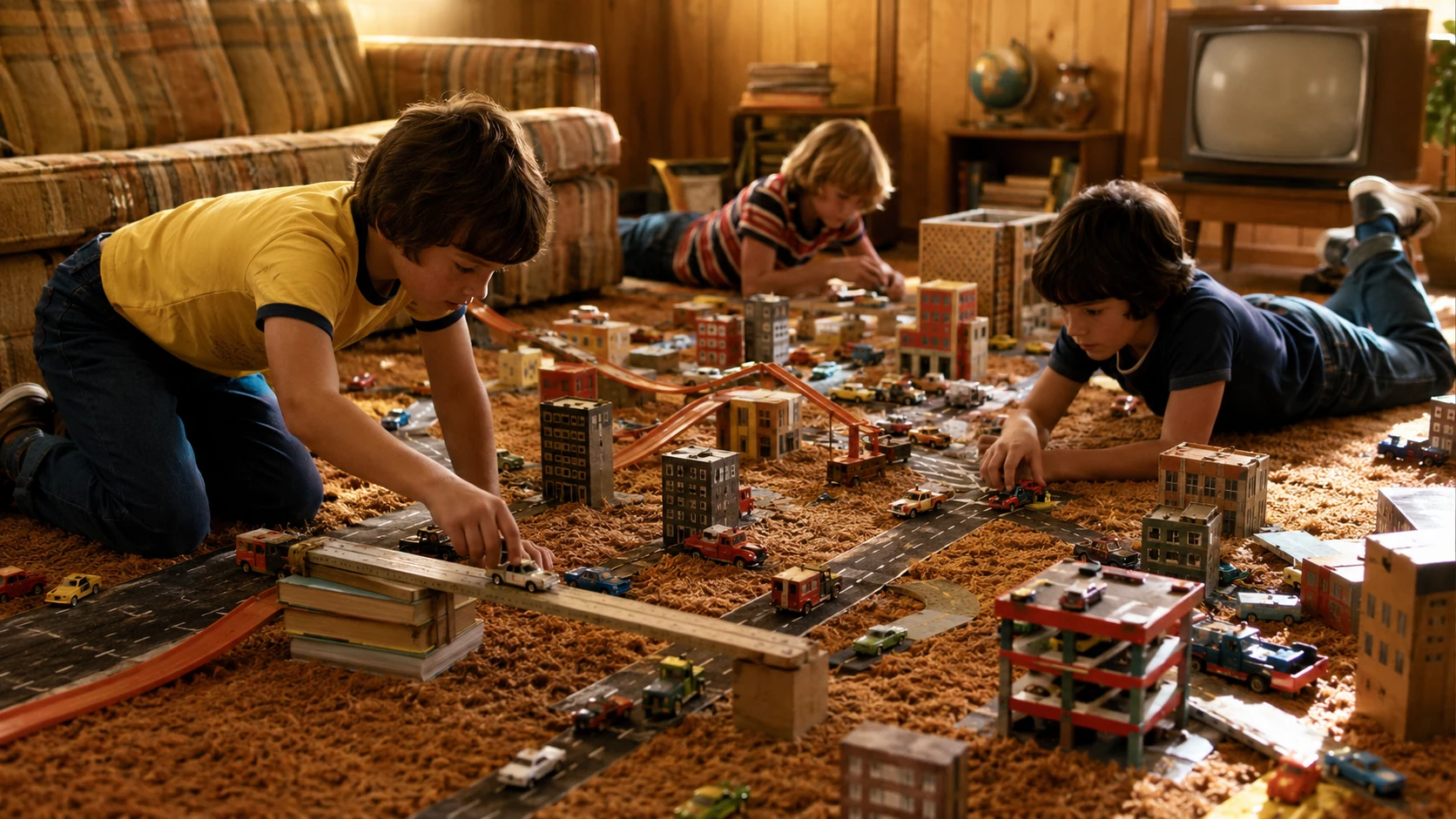
Before open-world video games, kids built the world themselves. Shag carpet became highways, coffee tables became tunnels, books became ramps and a handful of 70s toy cars could keep an entire afternoon moving.
This deep dive revisits Hot Wheels Redlines, Matchbox Superfast, Tonka trucks, SSP Racers, Evel Knievel, AFX slot cars, Fisher-Price garages, LEGO buildings and the homemade infrastructure that turned the living-room floor into a city.
 The Speed Lane
Hot Wheels Redlines
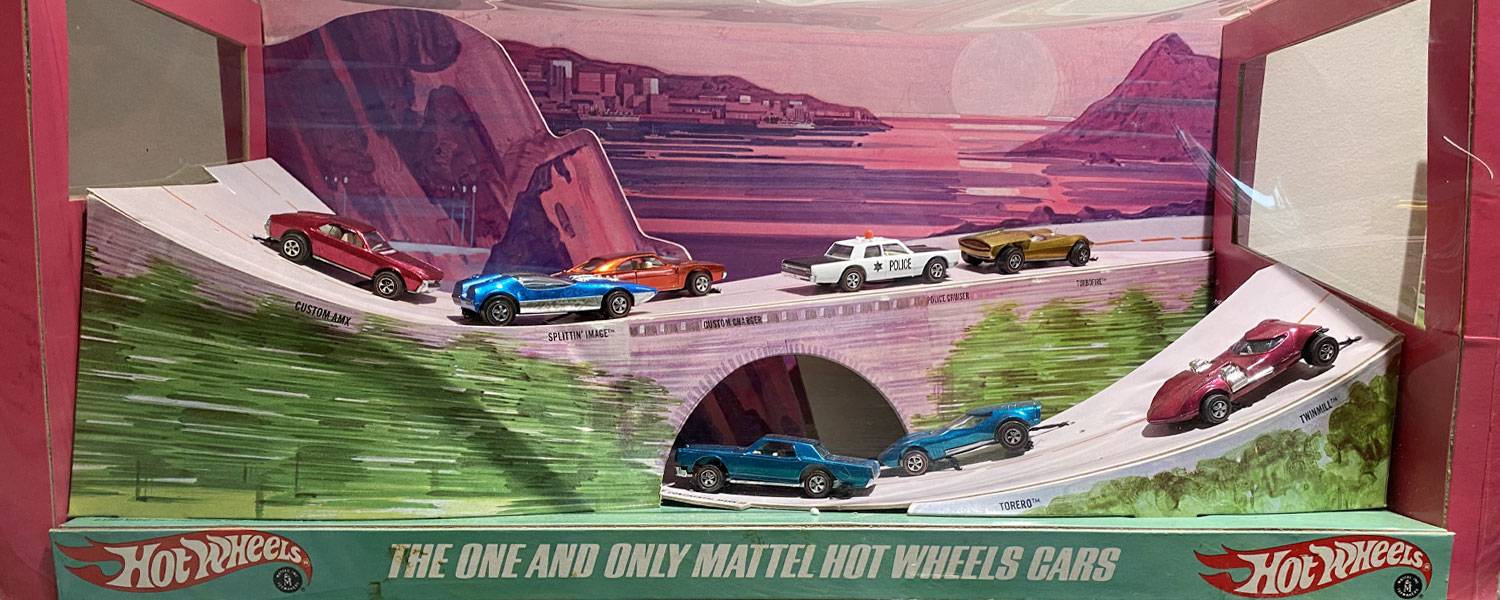
Bright custom cars, red-striped tires and orange track supplied the fastest roads in the carpet city.
The Speed Lane
Hot Wheels Redlines
Bright custom cars, red-striped tires and orange track supplied the fastest roads in the carpet city.
What Were 70s Carpet Cities?
Carpet cities were the imaginary road systems, neighborhoods, garages, racetracks and construction zones kids built across the living-room floor with Hot Wheels, Matchbox cars, Tonka trucks, Fisher-Price garages and Little People, blocks, slot-car pieces, homemade ramps and household furniture. They were not one official product. They were a style of open-ended 1970s play where unrelated toys became one working world.
Essential 70s Toy Cars and Carpet-City Systems
No single brand created the carpet city. The magic came from mixing fast cars, realistic vehicles, heavy trucks, powered raceways, garages, buildings and whatever household objects could be reassigned as public infrastructure.
Why 70s Toy Cars Dominated the Living-Room Floor
Seventies toy cars were almost perfectly designed for open-ended play. They were small enough to collect, durable enough to survive crashes and cheap enough that a toy box could slowly build a real fleet. One vehicle worked as a quick distraction. Ten vehicles became traffic, police work, construction, racing, emergencies and an entire city government.
The brands also supplied different kinds of imagination. Hot Wheels brought custom-car fantasy, speed and stunts. Matchbox supplied recognizable everyday traffic. Tonka trucks provided construction and hauling power. Fisher-Price garages and villages created destinations. Aurora AFX and Ideal TCR added structured electric racing. The toys did not need to match because every piece had a job.
That flexibility is the real reason the play lasted. A road layout could begin as a race and become a police chase. The police chase could create a crash. The crash created work for the tow truck, ambulance and construction crew. Every problem generated the next story without a screen, script or instruction manual.
Custom styling, low-friction wheels and orange track made racing and spectacle the main event.
Buses, emergency vehicles, delivery vans and work trucks gave the city a believable everyday fleet.
Larger steel trucks hauled blocks, cleared wreckage and demolished neighborhoods with official-looking authority.
AFX and TCR added powered cars, controllers, lanes and the technical drama of keeping the track connected.
The Living Room Was the First Open World
The 1970s did not need a loading screen. The map was already there, stretched out across the family room in the form of shag carpet, sofa legs, coffee tables, throw pillows, cardboard boxes, end tables, baseboards, and whatever pieces survived under the couch. Kids did not wait for a game to generate a world. They built one in real time.
A toy car was never just a toy car. It could be a race car, police cruiser, getaway vehicle, rescue unit, delivery van, family station wagon, garbage truck, construction rig, airport shuttle, demolition derby victim, or the official mayoral vehicle of a town that existed for one afternoon and then got vacuumed into history.
That was the beauty of carpet cities. They were rarely sold as one complete universe. They were assembled from mixed toy-box leftovers: die-cast cars, garage playsets, wooden blocks, Fisher-Price buildings, LEGO bricks, plastic ramps, slot-car pieces, Tonka trucks, shoeboxes, books, board-game parts, army men, dollhouse furniture, and one battered mystery car from a cousin. Nothing matched. That was the point.
The Vehicles: The Fleet That Made the City Move
Every carpet city started with vehicles. They were the reason roads had to exist, why garages mattered, why bridges collapsed, why emergency services were needed, and why the family-room floor slowly became a municipal planning disaster.
The 70s were loaded with toy vehicles that worked perfectly for this kind of play because they were small, durable, collectible, and easy to mix. A Hot Wheels car could race beside a Matchbox truck, get hauled by a Tonka wrecker, crash into a LEGO wall, park inside a Fisher-Price garage, and then get rescued by a completely unrelated fire engine from the bottom of the toy bin.
Hot Wheels Redlines: Speed, Color, and Orange Track Energy
Hot Wheels Redlines had already changed the tiny-car game by the time the 70s began. The early Redline-era cars were flashier than older die-cast vehicles, with muscle-car attitude, bright colors, custom looks, and the famous red-striped tires that collectors still obsess over. They were not just miniature versions of ordinary cars. They looked fast sitting still.
For carpet-city play, Hot Wheels brought the fantasy of speed. A Redline Camaro, Mustang, Barracuda, Firebird, Deora, or Twin Mill-style custom did not feel like a regular neighborhood vehicle. It felt like the car that blew through the city, ignored every stop sign, launched off a book ramp, and somehow became the hero because it survived the most crashes.
The orange track was the other half of the magic. It turned toy cars from “push them around” objects into stunt machines. Kids could clamp track to a table, run it down a chair, loop it across the floor, or build a ramp that was clearly unsafe but emotionally necessary. The track gave the carpet city a freeway system, even if that freeway ended in a laundry basket.
Matchbox Superfast: The Everyday Cars Got Faster
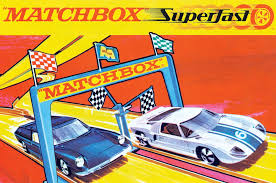
Matchbox Superfast had a different feel. Where Hot Wheels leaned into California speed and custom-car swagger, Matchbox often felt more like the real vehicles you saw in the world: delivery vans, police cars, fire engines, construction trucks, buses, tow trucks, dumpers, and work vehicles. That made them perfect for carpet cities because every city needs more than race cars.
When Matchbox moved into the Superfast era at the end of the 60s and into the 70s, those vehicles became better suited for track-style racing and high-speed floor play. A Matchbox Superfast model could still be the practical city vehicle, but now it could also compete with the fast kids on the block.
That mix mattered. The Hot Wheels car might win the stunt jump, but the Matchbox ambulance had to show up afterward. The Matchbox cement mixer had a job. The tow truck had authority. The double-decker bus turned any road into public transportation. The city felt more real because Matchbox filled in the working parts.
Tonka Trucks: The Heavy Equipment Division
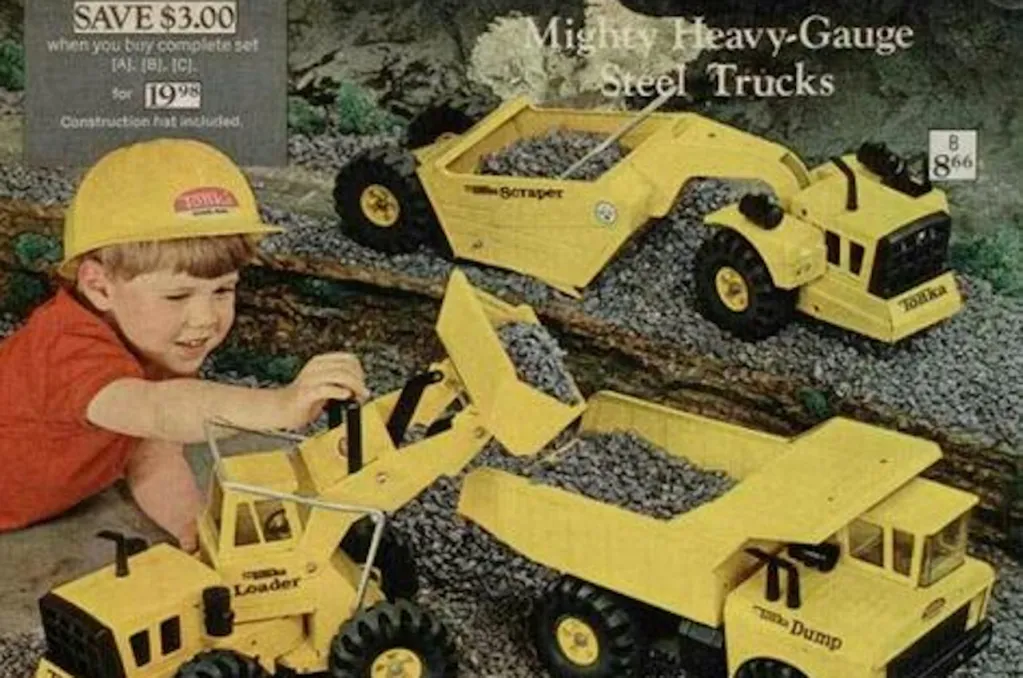
Tonka trucks were not tiny-road toys in the same scale as Hot Wheels or Matchbox, but they absolutely belonged in the carpet-city ecosystem. They were the heavy equipment. The dump truck hauled blocks. The bulldozer cleared wreckage. The crane lifted things it had no business lifting. The cement mixer made the city feel like it was under construction forever, which is basically every real city anyway.
Tonka’s larger pressed-steel trucks had a different kind of authority. They were not delicate. They were not precious. They could handle carpet, dirt, driveway gravel, backyard mud, and being filled with whatever a kid decided counted as cargo. In a carpet city, a Tonka Mighty Dump Truck could become a supply truck, emergency response vehicle, construction hauler, or the thing that rolled through and demolished half the town because someone got bored.
This is one of the reasons 70s vehicle play felt so rich: it moved between scales. Tiny cars created traffic. Bigger trucks created industry. Slot cars created speed. Ripcord racers created chaos. The city worked because every vehicle had a role, even if that role was “crash into everything.”
Kenner SSP Racers: Ripcord Violence in Vehicle Form
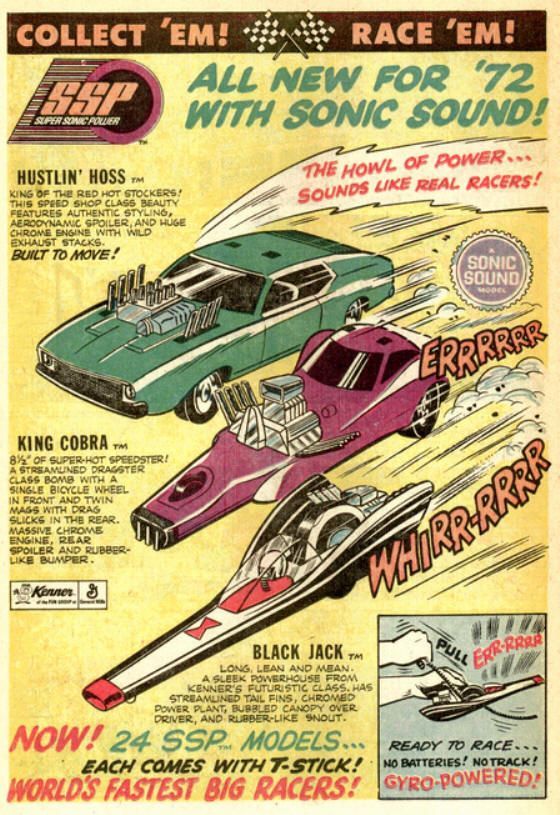
Kenner SSP Racers brought a different kind of vehicle energy. These were not gentle push cars. They used a T-handle ripcord system connected to a gyro wheel. You fed the strip in, yanked it out, and the car took off like it had something to prove.
In carpet-city terms, SSP Racers were the problem child. They were too powerful for polite neighborhood traffic. They were drag-race toys, stunt toys, hallway missiles, and demolition specialists. A regular die-cast car rolled. An SSP car attacked the room.
That made them perfect for the 70s. They felt mechanical and physical. You had to load them, pull them, aim them badly, and then deal with whatever happened. The fun was partly the speed and partly the risk. If it shot under the couch, hit the baseboard, or wiped out a block city, that was not a failure. That was the show.
Ideal Evel Knievel Stunt Cycle: The Carpet Became a Stadium
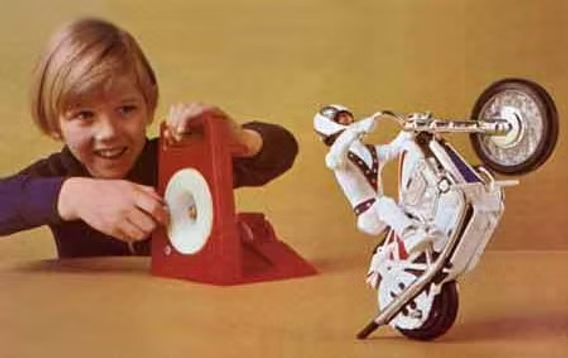
The Ideal Evel Knievel Stunt Cycle turned toy-vehicle play into an event. The crank-powered launcher gave kids a ritual: wind it up, aim the bike, set the ramp, back everyone up, and act like this was a nationally televised daredevil special even though it was happening next to a sofa.
Evel Knievel toys changed the way a floor could feel. A carpet city was not just roads and garages anymore. It now had stunt zones, jump ramps, spectators, crash sites, and a reason to line up cars like they were buses waiting to be jumped by a tiny plastic daredevil with absolutely no fear and limited steering.
That mattered because it connected toy play to real 70s pop culture. Evel Knievel was not just a toy. He was a television-era daredevil translated into a living-room ritual. The kid did not just push the motorcycle. The kid staged the jump.
Aurora AFX and Electric Race Sets: Roads With Power
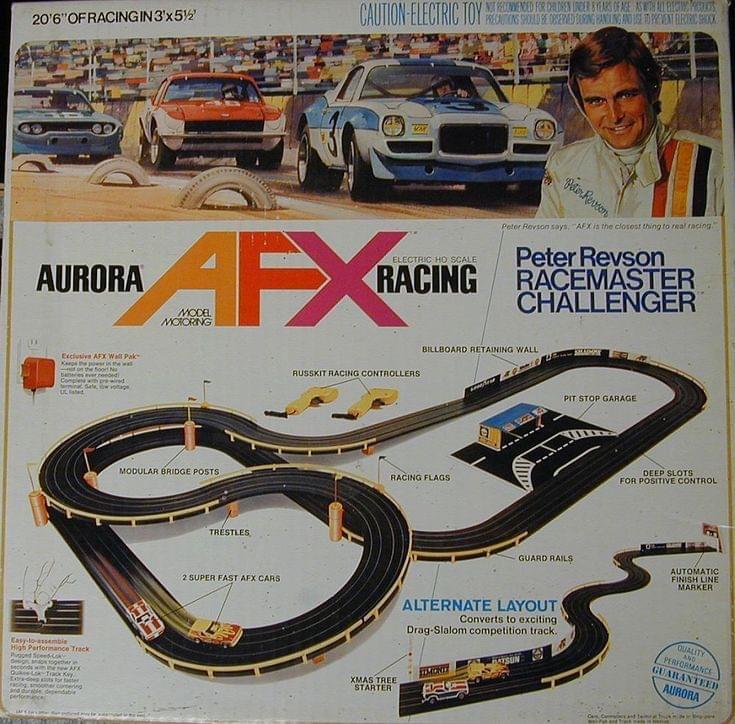
Slot cars brought a more structured version of the tiny-road fantasy. Aurora AFX sets and other HO-scale racing systems gave kids a controlled road network with powered cars, curves, straightaways, controllers, and layouts that felt like miniature motorsport engineering.
Compared with carpet play, slot cars were more formal. The track decided where the road went. The cars were powered. The controller mattered. The layout had to connect. But that structure also made them feel serious. AFX-style racing brought the racetrack into the house in a way that loose die-cast play could not.
The funny thing is that kids often blended both worlds. The official slot-car layout might be the “raceway,” while the surrounding carpet became parking lots, garages, spectator areas, construction zones, and crash recovery. Even the structured toy world got swallowed by the bigger carpet city.
Hot Wheels Sizzlers: Early Electronic Road Trouble
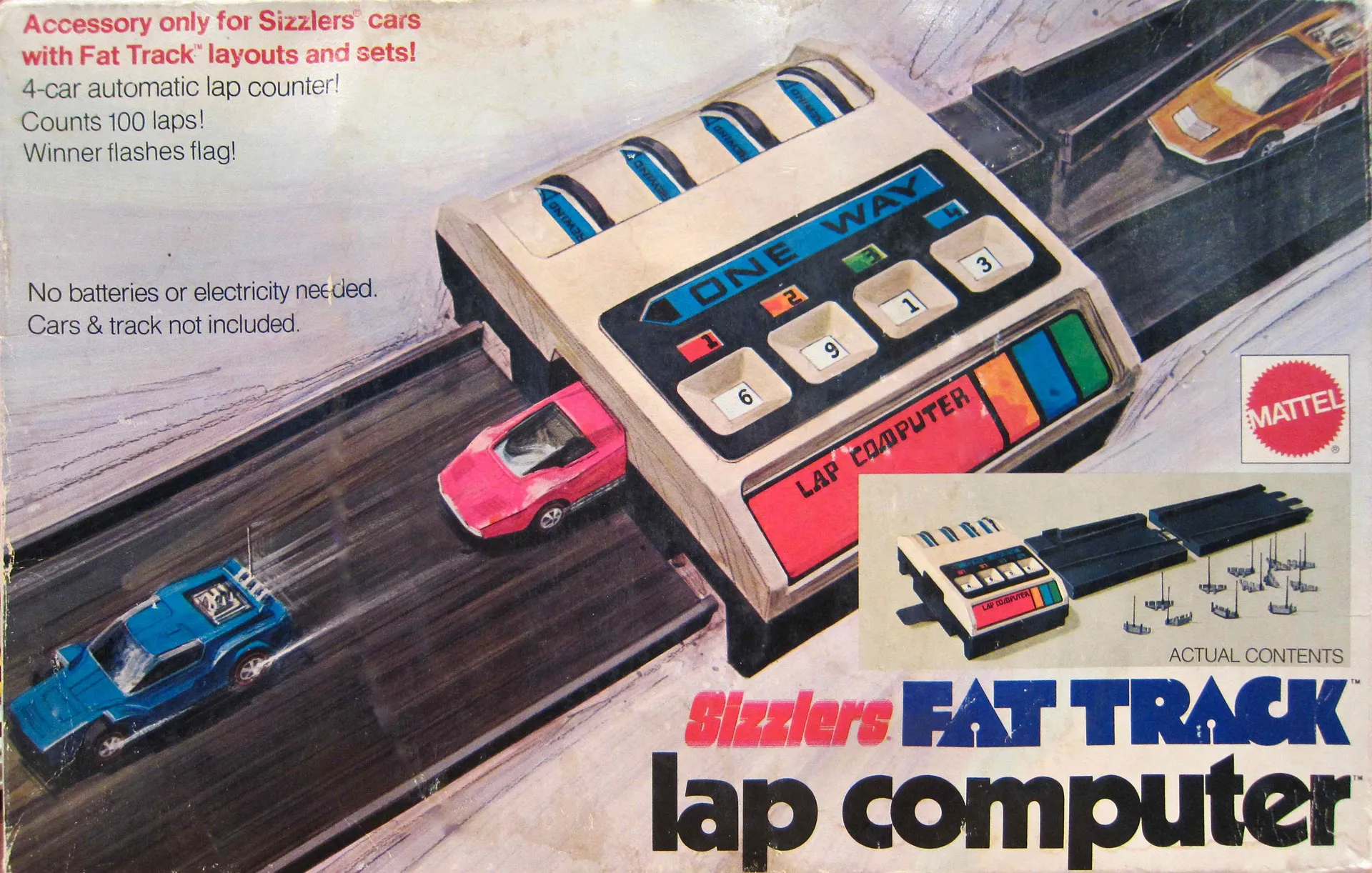
Hot Wheels Sizzlers added another twist: motorized, rechargeable car play. Instead of only pushing a car or launching it from a ramp, kids could send a tiny powered vehicle around track systems designed for speed and endurance.
Sizzlers fit perfectly into the late-70s transition. They were still physical toys, still track-based, still living-room friendly, but they hinted at the coming shift toward battery-powered, screen-adjacent, electronic play. They made the road feel more alive because the car had its own movement. That was a big deal in a decade where toys were starting to light up, beep, buzz, and move on their own.
The Roads: Tracks, Ramps, Hallways, and Completely Fake Infrastructure
Roads were where the carpet city became a system. Without roads, you just had cars scattered across the floor. With roads, suddenly there was purpose: races, deliveries, police chases, construction detours, traffic jams, stunt routes, and emergency response scenes with a suspicious number of rollovers.
Some roads were real toy parts. Some were improvised. Some were imaginary. The best 70s carpet cities used all three.
Hot Wheels Orange Track: The Interstate System
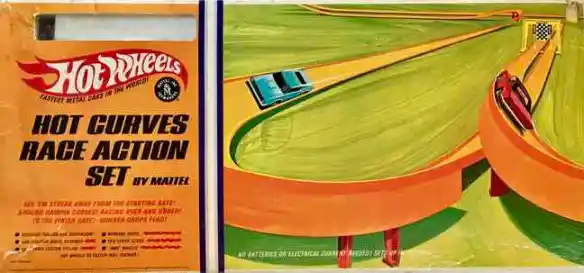
Hot Wheels orange track was the dream road because it did what carpet could not: it made cars fast. The familiar strips could become downhill speedways, loop approaches, stunt jumps, drag strips, or impossible elevated highways running from furniture to floor.
The track also taught kids basic physics in the most 70s way possible: through failure. Too steep? The car flew off. Too flat? It died halfway. Bad connector? Disaster. Loop not stable? Lawsuit waiting to happen. Kids learned angle, speed, friction, momentum, and structural collapse without anyone turning it into homework.
In carpet-city play, orange track often acted like a special road — not the normal street grid, but the freeway, race strip, testing facility, stunt bridge, or forbidden high-speed route that ended in a crash zone made of pillows.
Books, Rulers, and Cardboard: The Homemade Road Department
The best roads were often not official toys. A hardcover book became a ramp. A ruler became a bridge. A cardboard strip became a lane. A shoebox lid became a parking lot. A board-game box became a tunnel. A cereal box became a garage if you cut it badly enough.
This homemade infrastructure gave 70s play its personality. Kids were not limited to what came in the box. They modified the room. They used whatever was nearby. They learned that the difference between “trash” and “public works project” was mostly confidence.
That improvisation is what made carpet cities feel endless. The official toy pieces were only the start. The rest of the house was supply chain.
Aurora AFX Track: The Serious Raceway
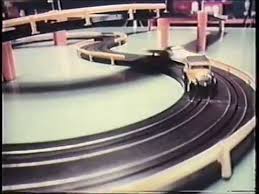
Aurora AFX-style slot-car track gave tiny roads a different mood. This was not random traffic. This was racing with controllers, lanes, curves, power, and the possibility of yelling at someone because their car flew off the turn again.
Slot-car roads were more permanent-feeling than a line of books or a strip of cardboard. They had a layout. They had rules. They had speed limits, even if nobody respected them. They also introduced a more technical style of play: cleaning contacts, reconnecting track, adjusting controllers, and trying to figure out why one car was suddenly dead.
That made electric race sets feel slightly older-kid, slightly hobbyist, and slightly more serious than loose carpet play. But they still belonged in the same ecosystem because they turned the floor into a world built around roads.
Ideal TCR and Slotless Racing: Changing Lanes Like a Big Shot
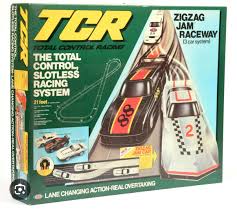
Ideal TCR-style slotless racing pushed the road fantasy even further by letting cars change lanes instead of being locked into a traditional slot. That mattered because lane-changing made the race feel more like real driving. Passing, blocking, and traffic suddenly became part of the game.
For kids used to pushing cars on carpet, this felt like the toy road was catching up to the imagination. The road was not just a fixed path anymore. It was interactive. You could make choices. You could cause problems on purpose. Naturally, children used this power responsibly for about eleven seconds.
Carpet Seams, Table Legs, and Hallways: The Invisible Road Network
Not every road had to be built. Sometimes it was declared. A carpet seam became a highway. A hallway became a drag strip. The space between sofa and coffee table became Main Street. The area under the dining table became a tunnel district. A doorway became a toll booth for reasons nobody could explain.
This imaginary road network was what made the city feel alive. Kids did not need perfect realism. They needed enough shared belief to keep the game moving. If someone said, “This is the bridge,” then congratulations, that was the bridge. Until it collapsed dramatically fifteen seconds later.
The Buildings: Garages, Villages, Blocks, and Furniture With New Jobs
A carpet city needed more than roads. It needed destinations. That is where buildings came in — garages, service stations, block towers, LEGO houses, Fisher-Price villages, shoebox warehouses, cardboard airports, couch-cushion mountains, and furniture that had been forcefully reassigned to municipal duty.
Fisher-Price Play Family Action Garage: Downtown, Basically
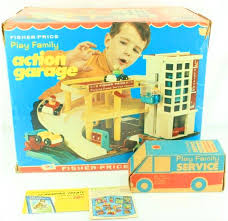
The Fisher-Price Play Family Action Garage was one of the great building anchors for 70s vehicle play. It had the things a carpet city needed most: levels, ramps, an elevator, parking, service areas, gas-station energy, and Little People scale charm. It gave toy cars a reason to arrive, leave, park, get repaired, and race down a ramp like the building had no insurance policy.
What made the Action Garage work so well was that it combined structure with motion. The elevator gave the building vertical play. The ramps gave the cars movement. The service station details gave the whole thing a pretend job. A kid could play mechanic, parking attendant, traffic controller, tow-truck dispatcher, or chaos goblin who kept sending cars down the ramp for no reason.
In a carpet city, the garage was not just another accessory. It was the downtown district. Everything connected to it. Roads led there. Cars lined up there. Trucks delivered there. Crashes happened near it. The garage made the city feel like it had a center.
Fisher-Price Play Family Village: A Whole Neighborhood in One Toy
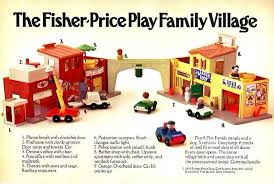
The Fisher-Price Play Family Village added a different kind of building energy. Instead of focusing only on cars and service stations, it gave kids a broader neighborhood: buildings, people, shops, community spaces, and little destinations that could sit beside the road system.
That mattered because toy-car worlds need places to go. The village could become the town center, the shopping district, the place the delivery truck visited, the area the police car patrolled, or the neighborhood that had to be evacuated because an SSP Racer was clearly out of control.
Fisher-Price Little People toys also had the advantage of being sturdy, simple, and easy to mix with everything else. Their scale was not always perfect next to die-cast cars, but children have never cared about zoning consistency. If the Little People fit emotionally, they fit.
LEGO Buildings and the 1978 Minifigure Shift
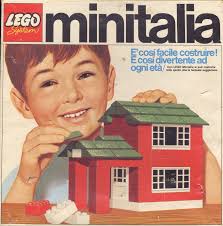
LEGO buildings gave carpet cities something important: custom architecture. Blocks could become houses, garages, bridges, gas stations, fire stations, police stations, toll booths, apartment buildings, warehouses, or suspiciously fragile towers built specifically to be knocked over by a truck.
The arrival of the modern LEGO minifigure in 1978 made LEGO worlds feel more populated. Suddenly buildings had workers, drivers, police officers, firefighters, astronauts, or random citizens with the same pleasant little smile while their entire city collapsed around them.
LEGO did not have to be the whole city to matter. Even a small LEGO wall or garage could become part of the bigger carpet map. It gave kids a way to build exactly the structure the story needed, even if that structure had no roof, no door, and fell apart the moment a Tonka truck looked at it.
Lincoln Logs, Blocks, and Wooden Building Toys
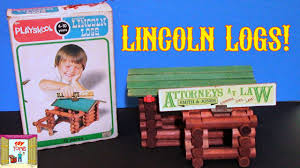
Older building toys still had a place in 70s carpet cities. Lincoln Logs, wooden blocks, alphabet blocks, Tinkertoy-style construction pieces, and generic building sets could all become road-town architecture. A block was rarely just a block. It was a wall, bridge support, gas station, school, warehouse, road divider, ramp support, or emergency barrier.
These toys worked because they were open-ended. They did not force one story. A kid could use the same wooden blocks to build a town one day, a racetrack wall the next day, and a mountain pass after that. The toy did not care. The carpet city absorbed everything.
Shoeboxes, Cereal Boxes, and Furniture: The Free Expansion Pack
The cheapest buildings were usually the best. A shoebox became a garage. A cereal box became a skyscraper. A tissue box became a tunnel. A record album sleeve became a ramp. A coffee table became an overpass. Sofa cushions became mountains. The underside of the couch became a forbidden tunnel where only the bravest cars went and many never returned.
This was the secret power of 70s play: the house itself became part of the toy. Kids did not need a branded expansion pack. They had cardboard, furniture, and a willingness to ruin the living room.
The Play Loops: What Kids Actually Did for Hours
The reason carpet cities lasted was that they had built-in play loops. Kids were not just moving cars randomly. They were creating repeatable patterns of action, disaster, repair, and escalation.
Race, Crash, Rebuild
Hot Wheels and Matchbox cars raced across carpet roads, hit ramps, crashed into blocks, then got reset for another attempt. Every failure became a new scene.
Garage, Service, Launch
Cars entered the Fisher-Price garage, rode the elevator, got imaginary gas, received questionable repairs, and rolled back into traffic like nothing happened.
Build, Haul, Dump
Tonka trucks and construction vehicles hauled blocks, dumped cargo, cleared wreckage, rebuilt bridges, and turned the carpet city into a permanent job site.
Stunt, Fail, Try Again
Evel Knievel cycles, ramps, SSP Racers, and orange track created one eternal question: “Can it make the jump?” The answer was usually no, which made it better.
Emergency Response
Every crash created jobs for police cars, ambulances, fire trucks, tow trucks, helicopters, and one random figure who was apparently in charge.
Total Demolition
Eventually the city had to be destroyed. Sometimes by a truck. Sometimes by a sibling. Sometimes by a parent saying, “Clean this up before dinner.”
The Vehicles Had Personalities
Every kid had favorite cars, and those favorites developed personalities through use. The shiny one was the hero. The chipped one was the veteran. The weird one was the villain. The heavy one always won crashes. The missing-wheel car became scenery. The one with the best rolling speed was treated like secret military technology.
Hot Wheels customs often felt like celebrities. Matchbox work vehicles felt like the adults in the room. Tonka trucks were the muscle. SSP Racers were reckless teenagers. Evel Knievel was a whole event. Slot cars were the serious athletes. The city worked because every vehicle seemed to bring its own attitude.
This is why actual toy wear mattered. Paint chips, bent axles, scratched roofs, missing windshields, and loose wheels did not ruin the toy. They gave it history. A battered car looked like it had survived the city. Which, honestly, it had.
Scale Was a Suggestion
Adult collectors care about scale. Kids did not. A Tonka dump truck could park next to a Matchbox car. A LEGO minifigure could drive a vehicle that made no physical sense. A Fisher-Price Little Person could stand beside a Hot Wheels car like a giant traffic inspector. Nobody cared.
The 70s toy box was not a museum display. It was a working imagination system. If a piece could contribute to the story, it belonged. That is why the city could include die-cast cars, giant steel trucks, plastic figures, cardboard buildings, blocks, slot-car track, and a dollhouse chair that somehow became a bus stop.
This looseness is what separates 70s toy play from later, more brand-locked toy universes. The pieces did not need to match. They just had to work.
How Kids Built a 70s Carpet City
There was no official order, but most cities came together through the same practical ingredients: vehicles, destinations, road rules, household construction materials and a willingness to ignore scale completely.
- Choose the main fleet: race cars, work trucks, emergency vehicles and at least one unexplained oddball.
- Declare carpet seams, hallways and furniture gaps to be roads, tunnels, bridges or restricted zones.
- Add a downtown anchor such as a Fisher-Price garage, village, LEGO building or shoebox service station.
- Use books, rulers, cardboard and blocks for ramps, overpasses, walls and doomed civil-engineering projects.
- Create a repeatable story loop: race, crash, rescue, repair, construction, stunt show or total demolition.
- Mix brands and scales freely. Emotional compatibility mattered much more than measurements.
How Carpet Cities Fit the 70s Toy Timeline
Carpet-city play runs through the entire 1970s, but the mood changes as the decade moves forward.
In the early 70s, the play pattern still feels very classic: cars, trucks, blocks, garages, board-game pieces, dolls, and homemade structures. This is the age of loose toy-box mixing, where the floor becomes whatever the kid needs it to be.
In the middle of the decade, stunt energy gets stronger. Evel Knievel toys, SSP Racers, bigger track layouts, construction play, and more aggressive commercials make the toy world feel louder and more action-driven. The city is no longer just roads and parking garages. It has daredevil events, demolition scenes, and vehicles built around impact.
By the late 70s, the future is clearly pushing in. Star Wars changes how kids think about small-scale figures and vehicles. LEGO minifigures bring more people into block worlds. Electronic and motorized toys make movement feel less manual. Slot cars, Sizzlers, and other powered play systems hint at the screen-heavy 80s waiting around the corner.
1970 Toys
Hot Wheels, Matchbox, Tonka, SSP Racers, Sizzlers, garage play, and early-70s toy-room momentum.
1971 Toys
Aurora AFX, slot-car energy, track layouts, and a more serious version of tiny-road racing.
1973 Toys
Evel Knievel stunt play, Fisher-Price village energy, and the toy aisle getting louder.
1977 Toys
Star Wars, Ideal TCR, franchise momentum, and the late-70s toy aisle shifting hard.
1978 Toys
LEGO minifigures, block-world people, and the carpet city becoming more populated.
1970 Toys
Hot Wheels, Matchbox, Tonka, SSP Racers and garage-based floor play establish the early-decade road system.
1971 Toys
Aurora AFX and slot-car layouts add powered racing, controllers and more structured competition.
1972 Toys
UNO and family-table play grow, but cars, tracks and construction toys still own large parts of the floor.
1973 Toys
Evel Knievel turns the carpet into a stadium while Fisher-Price and creative toys expand the surrounding world.
1974 Toys
Cleaner repeat play arrives, but Hot Wheels, Barbie and established toy systems remain strong.
1975 Toys
Novelty and television characters get louder while vehicle systems keep their analog momentum.
1976 Toys
Stretch Armstrong and Evel Knievel make demonstration and spectacle central to the room.
1977 Toys
Star Wars begins shifting small-scale toy play from mixed cities toward licensed fictional universes.
1978 Toys
LEGO minifigures and Star Wars figures populate more structured worlds as electronics move in.
1979 Toys
Atari, Simon and Speak & Spell share the room with Big Wheel, Hot Wheels and the surviving analog toy box.
Why This Kind of Play Still Hits
Carpet cities hit because they were never just about toy cars. They were about control. Kids got to design the world, set the rules, create the problems, and solve them badly. They could build a city, destroy it, rebuild it, and declare victory without anyone asking if the urban planning made sense.
There is something very Gen X about that. The toys were simple, but the play was complicated. It was independent, physical, funny, slightly destructive, and totally self-directed. It taught kids how to make a story out of objects and how to turn boredom into infrastructure.
The 70s carpet city was not polished. It was not balanced. It did not have achievements, updates, skins, or downloadable content. It had Hot Wheels, Matchbox cars, Tonka trucks, Fisher-Price garages, LEGO buildings, orange track, dangerous ramps, missing pieces, and a kid on the floor making engine noises like the fate of civilization depended on it.
Honestly, that was enough.
The nostalgia is not only about the brands. It is about the freedom of a toy system that was never fully finished. A new car changed the city without replacing it. A cardboard box expanded the map for free. A broken vehicle often gained a new role instead of becoming useless.
That is also why 70s vehicle play still feels different from later franchise-heavy childhoods. The toys gave kids useful pieces, but the child supplied the world, the rules and most of the sound effects. The play was not polished or canonically correct. It was personal.
70s Toy Cars and Carpet Cities FAQ
What were carpet cities in 1970s childhood?
Carpet cities were imaginary towns, roads, garages, racetracks and construction zones built across the living-room floor with toy cars, trucks, blocks, playsets, furniture and cardboard. They were open-ended worlds rather than one official boxed toy.
What toy cars were popular in the 70s?
The biggest 70s toy-car names included Hot Wheels, Matchbox Superfast, Tonka trucks, Kenner SSP Racers, Aurora AFX slot cars, Ideal TCR and Hot Wheels Sizzlers. Fisher-Price garages and villages gave those vehicles destinations.
What was the difference between Hot Wheels and Matchbox cars?
Hot Wheels emphasized custom styling, speed, stunts and orange track. Matchbox leaned more heavily toward realistic everyday vehicles such as buses, tow trucks, emergency vehicles and work trucks. Kids mixed both brands constantly.
Why were 70s toy cars so popular?
They were small, durable, collectible and immediately playable. One car worked by itself, while a handful of vehicles could support racing, construction, emergency scenes, police chases, deliveries and an entire imaginary city.
Were slot cars popular in the 1970s?
Yes. Aurora AFX and other electric racing sets gave kids powered cars, controllers and structured track layouts. Later systems such as Ideal TCR added lane changing and helped bridge traditional toy-car play with the electronic toy era.
What made the Fisher-Price Action Garage important?
The Fisher-Price Play Family Action Garage gave carpet cities a true center with parking levels, ramps, an elevator, service areas and a recognizable place where loose vehicles could arrive, leave and begin another story.
How did Star Wars change carpet-city play?
Kenner Star Wars toys made small-scale vehicles and figures part of one licensed fictional universe. Kids still built floor worlds, but more of those worlds now followed recognizable characters, locations and stories instead of mixing every toy in the bin.
How was 70s vehicle play different from 80s toy play?
Seventies vehicle play was usually looser and more brand-mixed. Kids combined die-cast cars, Tonka trucks, Fisher-Price buildings, blocks and cardboard. Many 80s toy lines arrived with tighter cartoon, character and franchise identities.