Appointment TV: When Everybody Watched the Same Show at the Same Time
Appointment TV: When Everybody Watched the Same Show at the Same Time
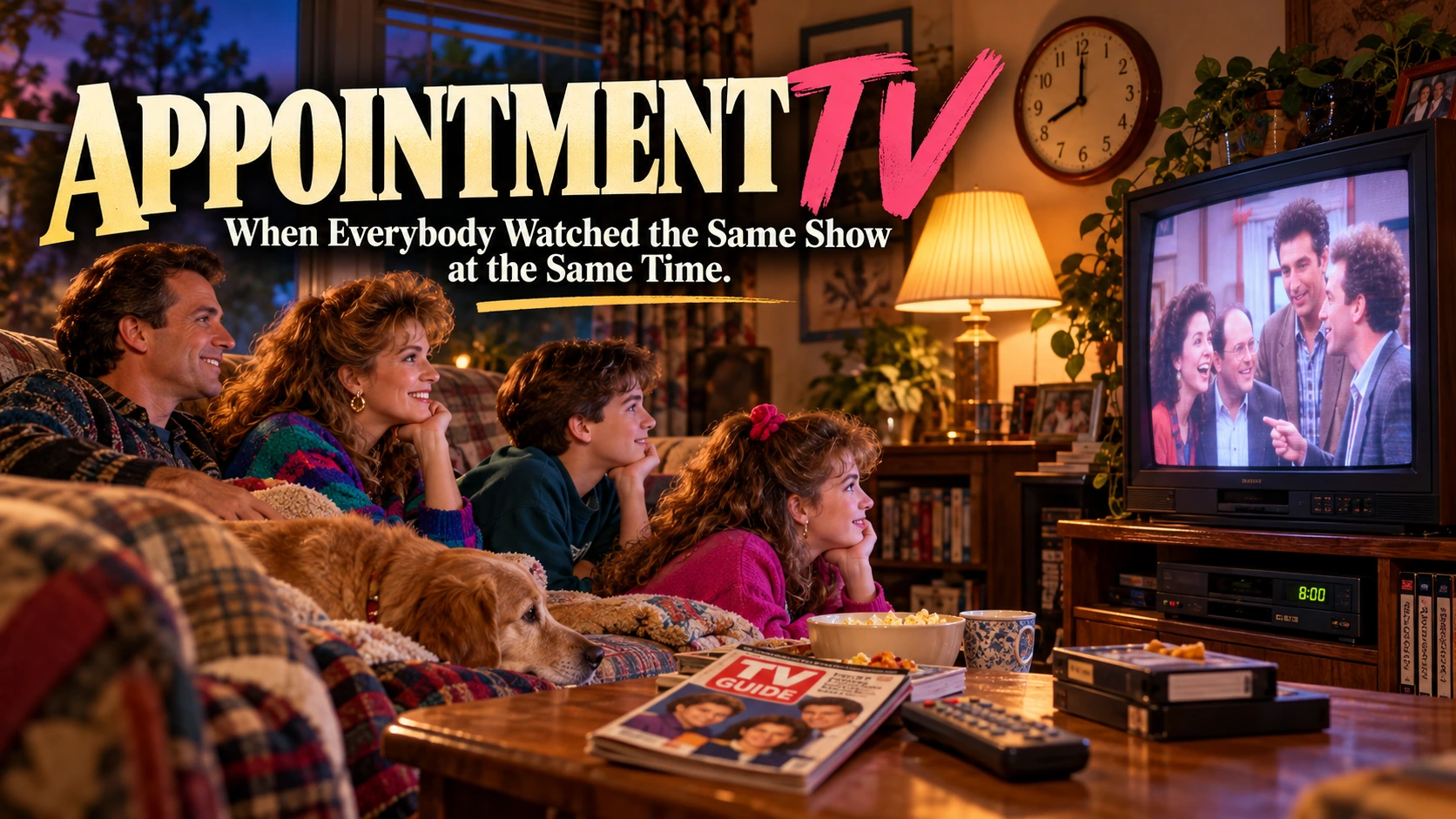
Before streaming, the clock mattered. Appointment TV turned schedules, sports, finales and Sunday-night habits into shared national rituals.
What made 1990s television “appointment TV”?
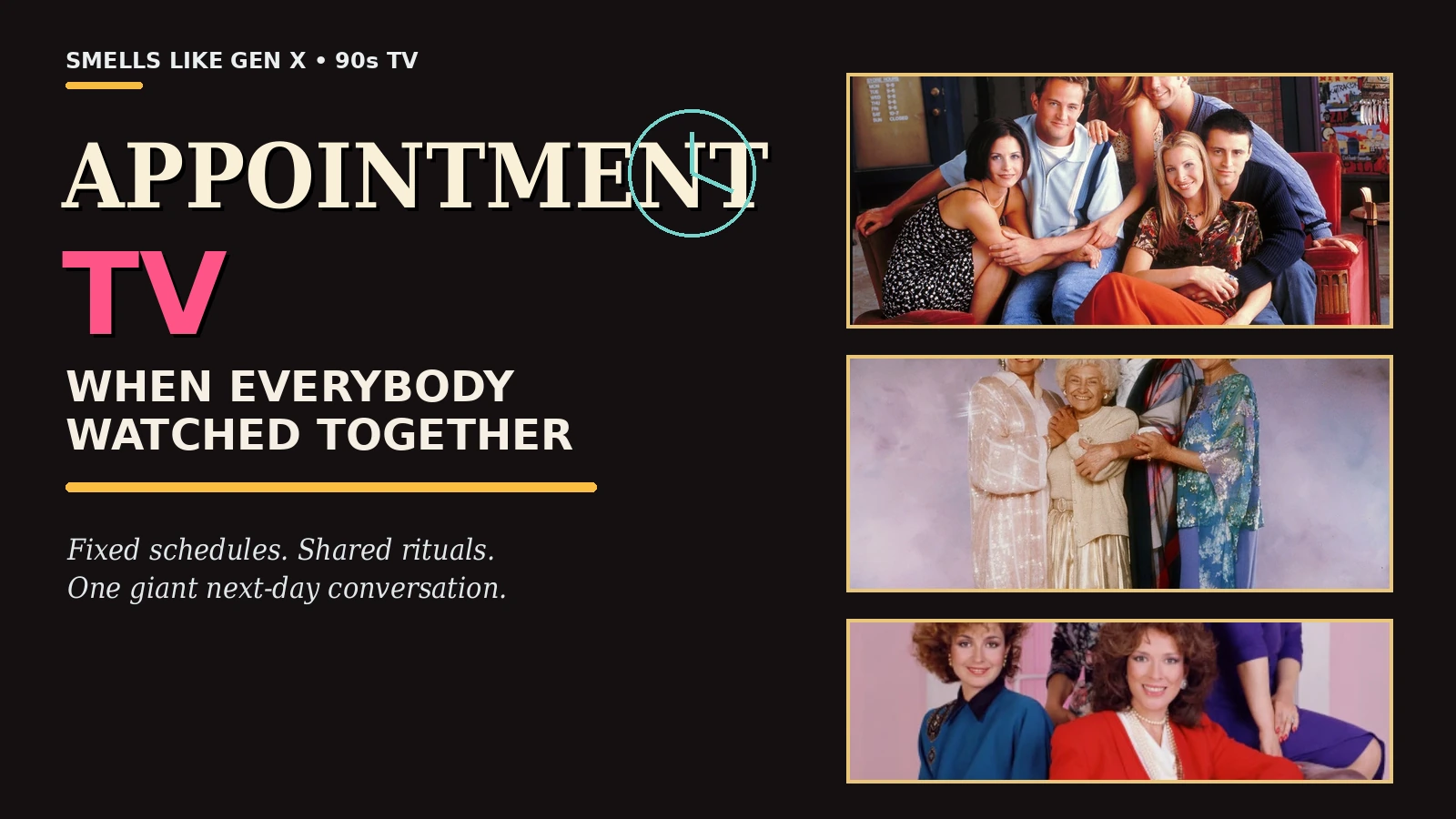
The schedule was part of the experience. You watched a show when the network aired it or accepted the risk of missing it. That fixed timing concentrated audiences, turned finales and live sports into events, and gave millions of people the same reference point the next morning.
A Show Started at Eight Whether You Were Ready or Not
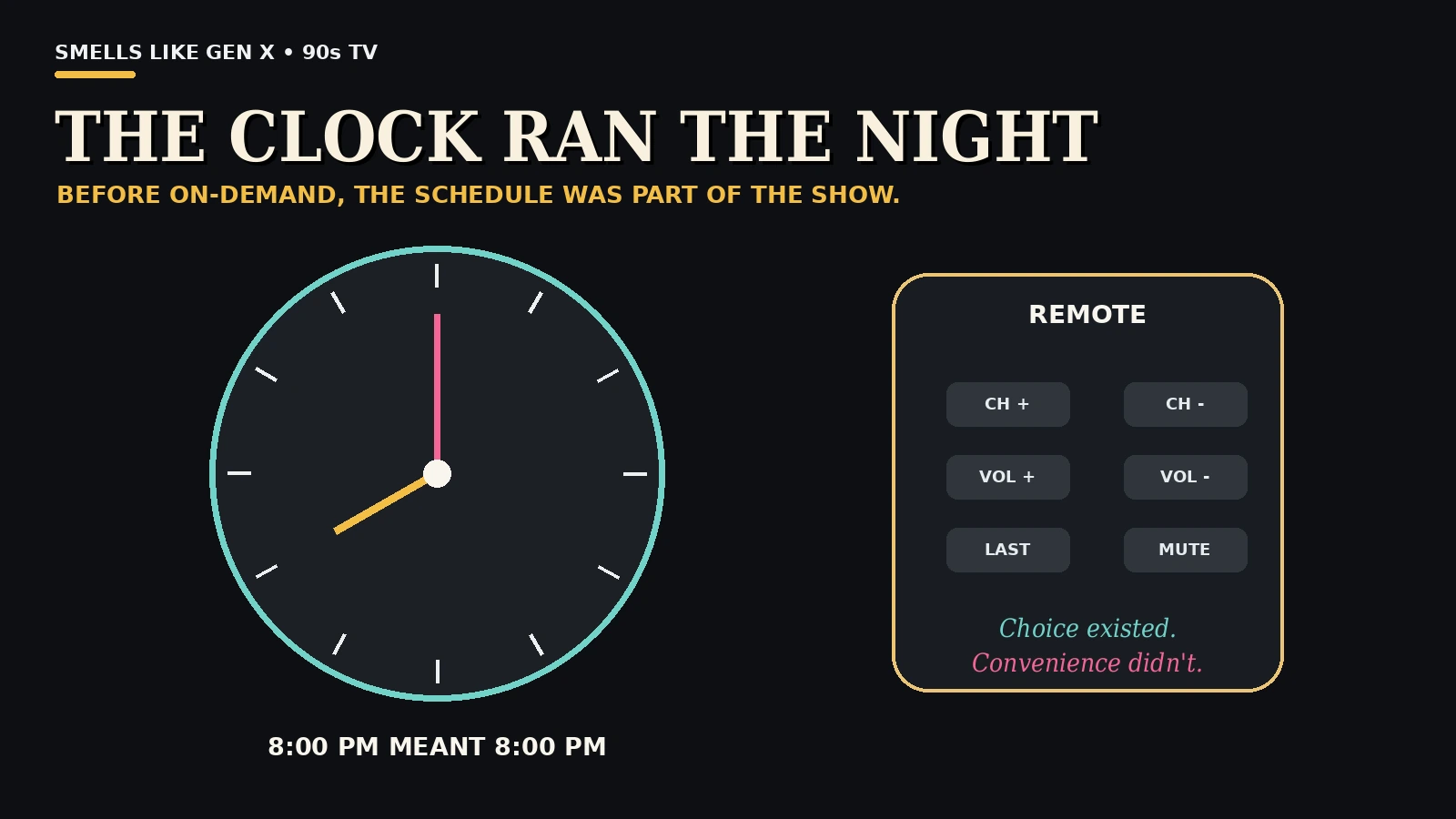
Appointment television begins with a fact that now feels strangely physical: time mattered. If the show started at 8:00, your choices were to be there, record it, or miss it. The network did not wait for dinner to end. It did not remember where you stopped. There was no season sitting patiently in a menu. The clock and the program were tied together.
That inconvenience created concentration. People organized around the schedule because the schedule was non-negotiable. In the larger 1990s television world, that meant the most popular shows were not merely successful content. They were recurring national appointments with a start time everybody knew.
The discipline of the clock affected the whole household. One person might want the sitcom, another the ballgame, somebody else the movie. The television was shared infrastructure, and the schedule forced negotiation before the show even started.
Recording Television Still Required Commitment
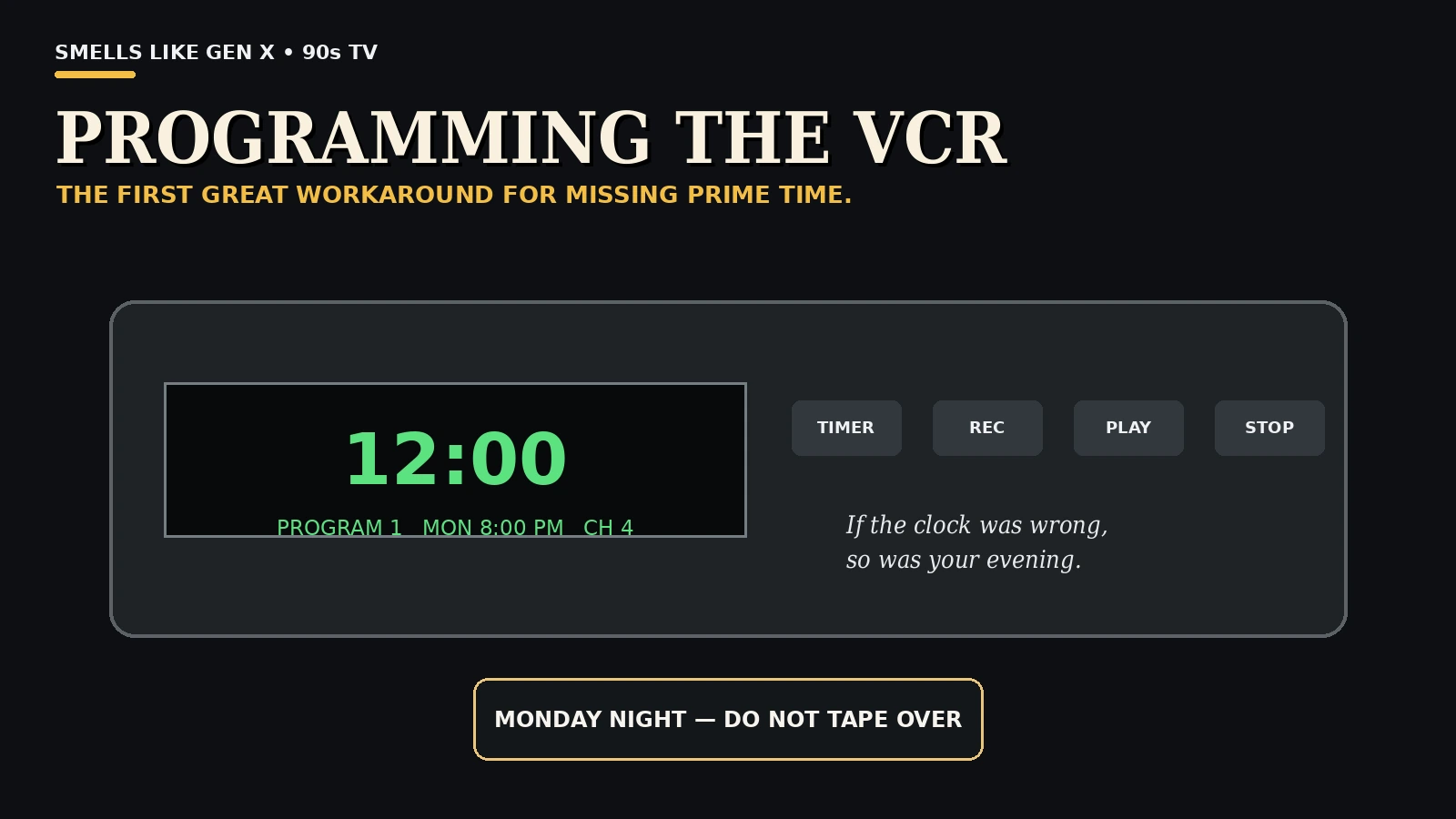
Gen X absolutely time-shifted television. We had VCRs, blinking 12:00 displays and drawers full of tapes with labels that stopped being accurate after the third reuse. But recording was work. You had to know the time, program the machine or press record, have enough tape, and hope nobody changed the channel or unplugged something.
That friction preserved the value of live viewing. A VCR was a safety net, not an infinite library. If an episode mattered enough—season finale, wedding, cliffhanger—you were more likely to watch when it aired. The backup technology existed without dissolving the appointment.
There was also a practical difference between “I recorded it” and “I can watch it whenever.” A tape could be lost, overwritten, loaned out, or simply forgotten. The live broadcast remained the cleanest route, which is why the weekly habit survived despite millions of VCRs sitting under televisions.
Shared Timing Created Shared Conversation
The social side of appointment TV is the part streaming can reproduce least cleanly. When a big episode aired, people encountered it within the same narrow window. School, work, radio and newspapers could assume a large audience had seen the same thing. Spoilers were not an online-policy debate; they were your coworker walking into the room too loudly.
That simultaneity made television feel bigger than its content. The audience itself became part of the event. A mediocre episode of a huge show could still dominate conversation because everybody had experienced it at once. The next-day discussion was effectively the second half of the broadcast.
This shared timing also gave programmers confidence to create cliffhangers and stunt episodes. The network knew viewers understood the bargain: watch now or spend the next day trying not to hear what happened. The deadline itself became part of the marketing.
Monday Night Football Was the Purest Appointment
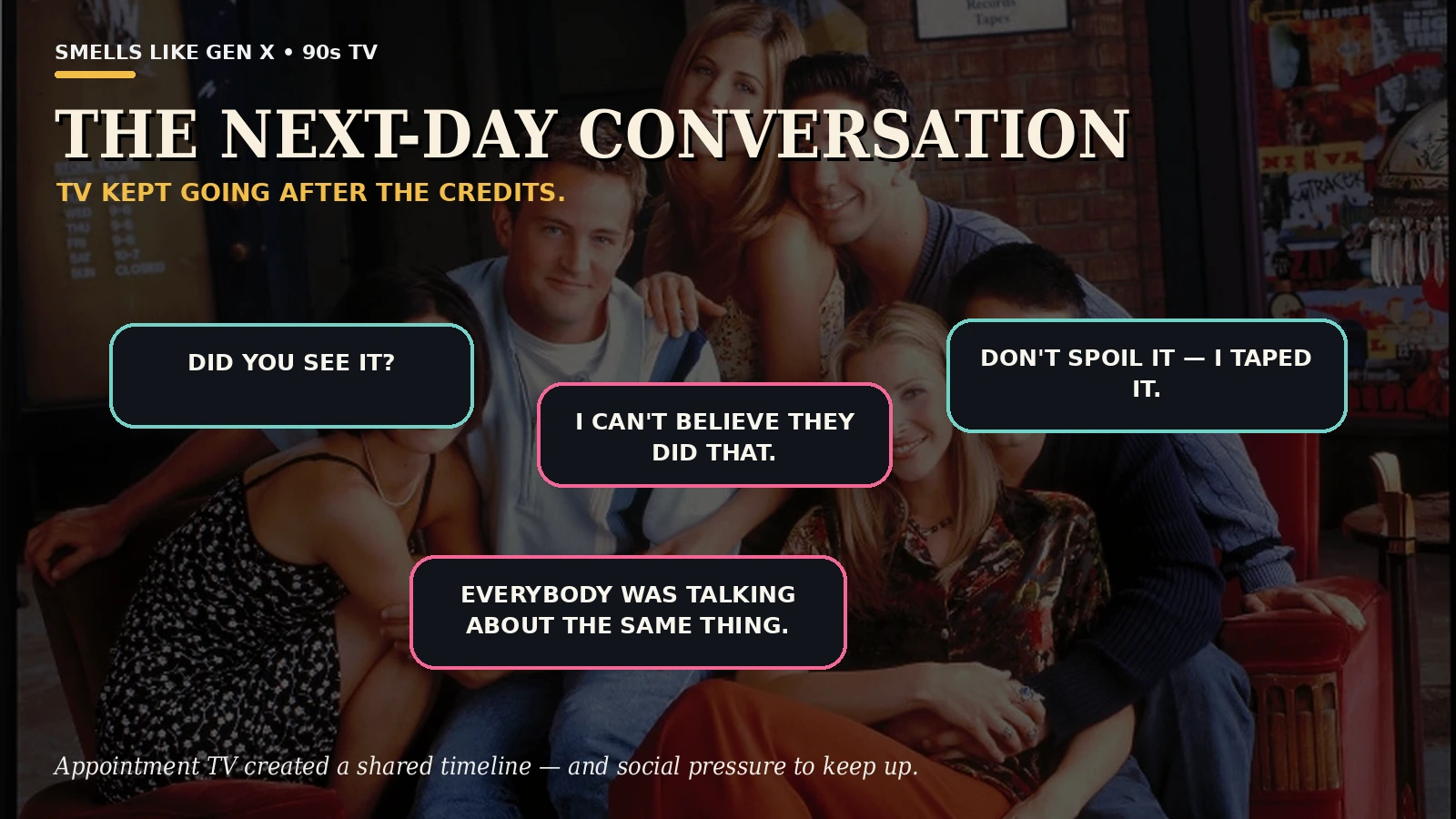
Sports never needed a theory of appointment viewing because the event itself demanded it. Monday Night Football repeatedly sat near the top of the decade’s charts because football came with built-in urgency. A game loses much of its value once you know the result, and the broadcast turned Monday into a weekly national ritual.
That same event logic influenced entertainment. Networks wanted finales, weddings, cliffhangers and stunt episodes to feel like games: something you had to see before somebody told you what happened. The more a show could turn an ordinary episode into an event, the more valuable the appointment became.
Sports also showed the advertising advantage of simultaneity. Commercials aired to a huge audience in the same window, which made live attention especially valuable. Scripted television could not recreate the score uncertainty, but it could borrow the urgency.
60 Minutes Proved Habit Could Be as Powerful as Buzz
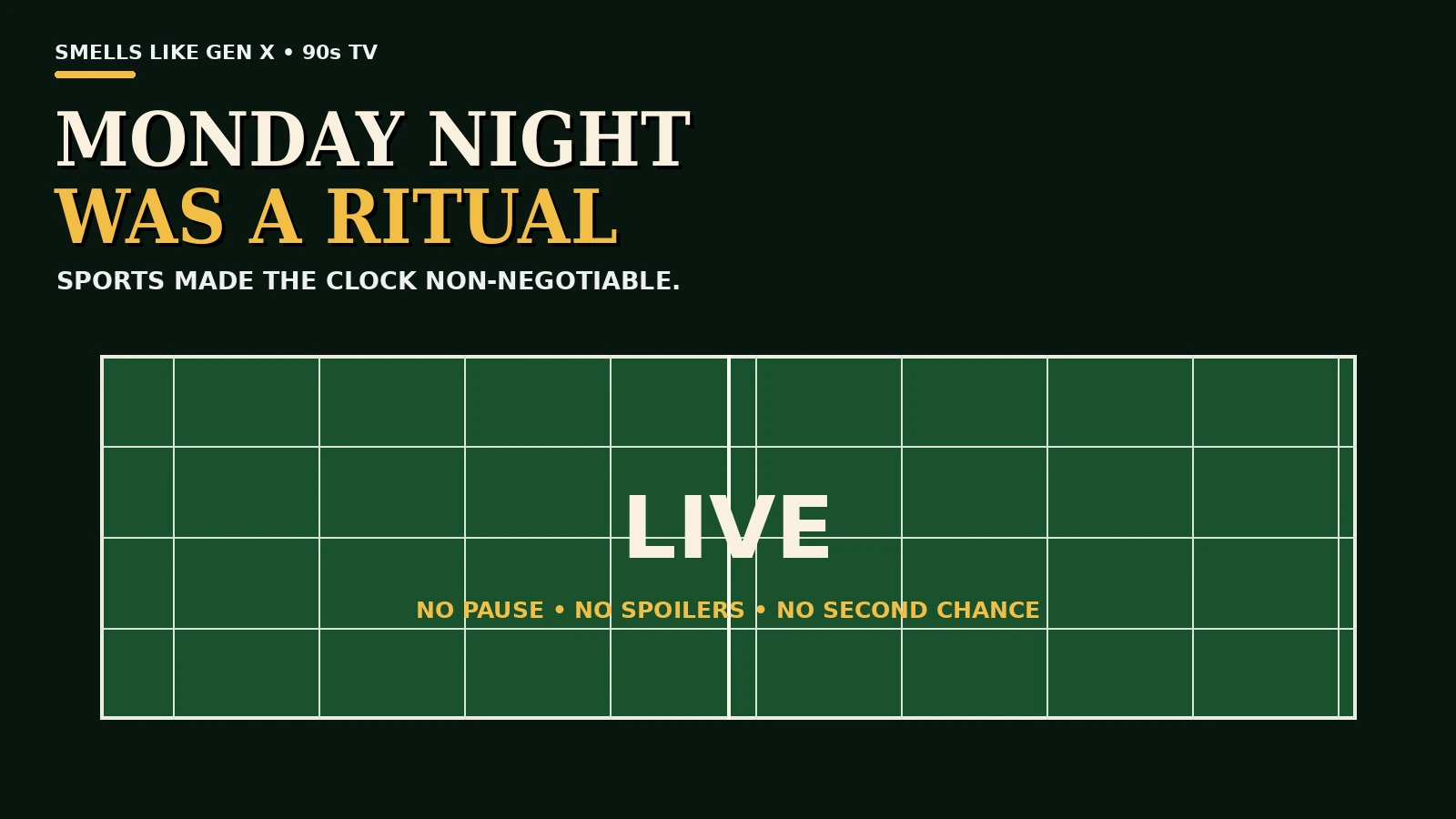
Not every appointment was driven by suspense. 60 Minutes showed the other model: ritual. The ticking stopwatch, Sunday evening and the transition from weekend to workweek became one package. Millions of households did not need a cliffhanger. They needed the familiar beginning of Sunday night.
That difference matters because appointment TV was not always youthful or trendy. It could be institutional. News, sports and network movies created habits that lasted for years. The appointment worked because the audience trusted the hour, not because each week arrived with a marketing stunt.
For a lot of Gen X households, Sunday night also carried its own emotional weather: homework, laundry, school tomorrow, work tomorrow, dinner winding down. The television schedule fit into that rhythm so naturally that the programs became timestamps for the week.
1991 to 1999 Was a Slow Unraveling, Not a Switch
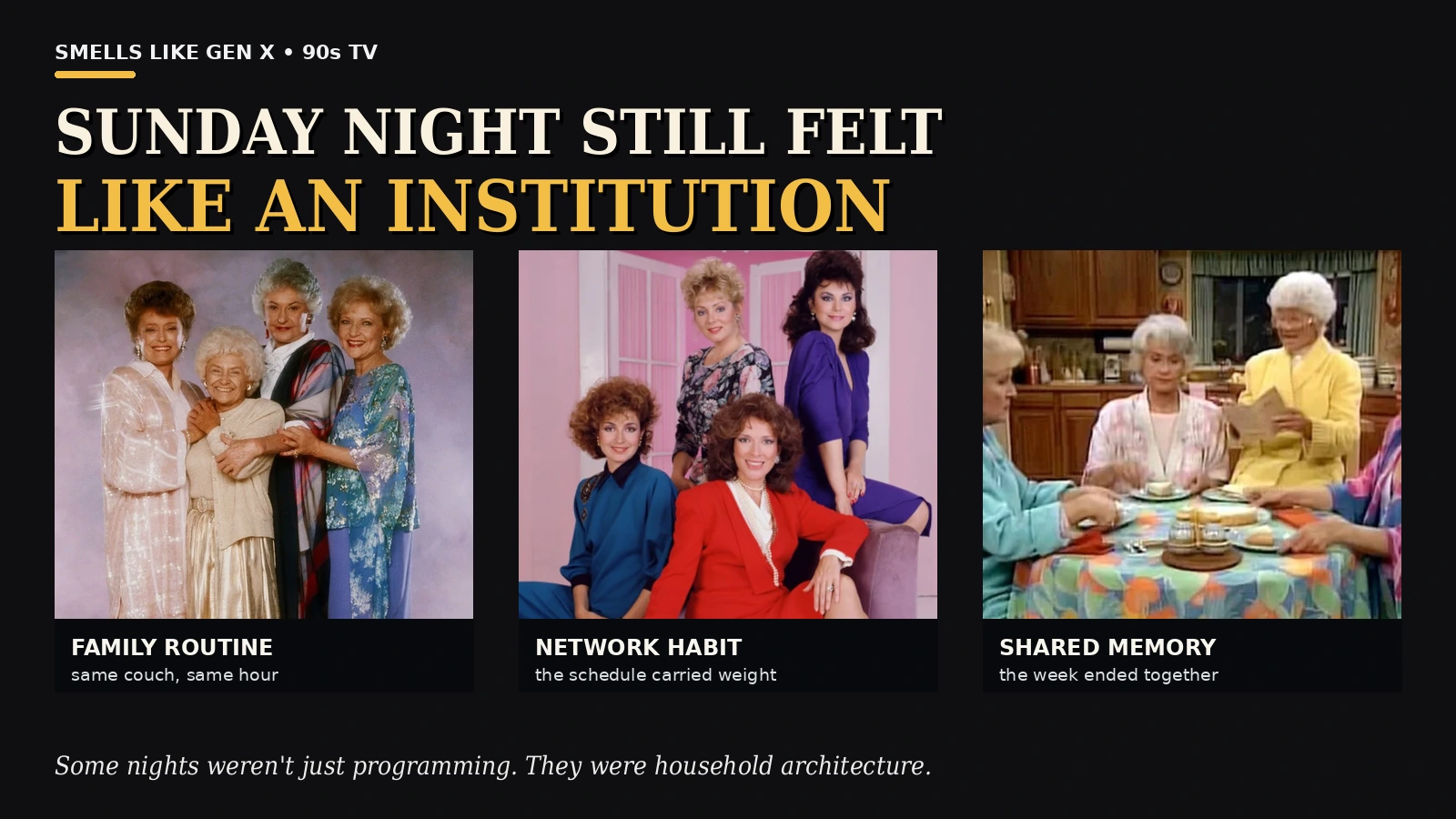
1991 still looks like classic mass television: enormous network hits, broad family viewing and a relatively concentrated chart. 1996 and 1997 show the power of NBC’s event-driven Thursday block. 1999 shows fragmentation increasing while programs like ER, Friends, Frasier and CBS Sunday remained huge.
The shared-viewing habit was therefore weakening before it disappeared. More cable channels, more personal televisions in the home and more competing media chipped away at the idea of one national schedule. Yet the structure survived long enough for late-90s television to feel simultaneously modern and old-fashioned.
That overlap is important. The decade did not move from “everybody watched together” to “nobody did” in one leap. It produced fewer universal appointments while the strongest shows still behaved like national events.
Concentration Made Events Bigger, and Events Reinforced Concentration
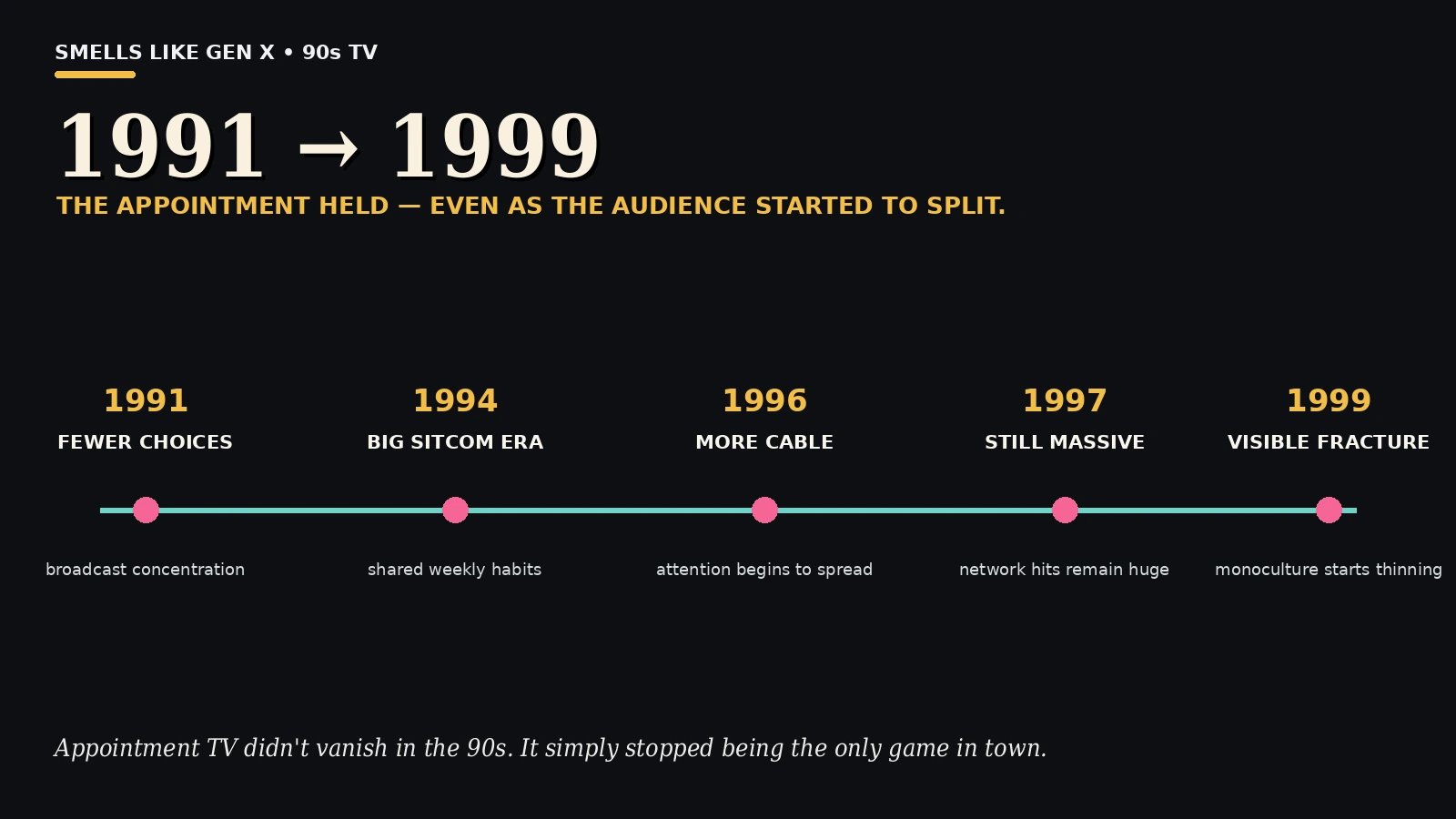
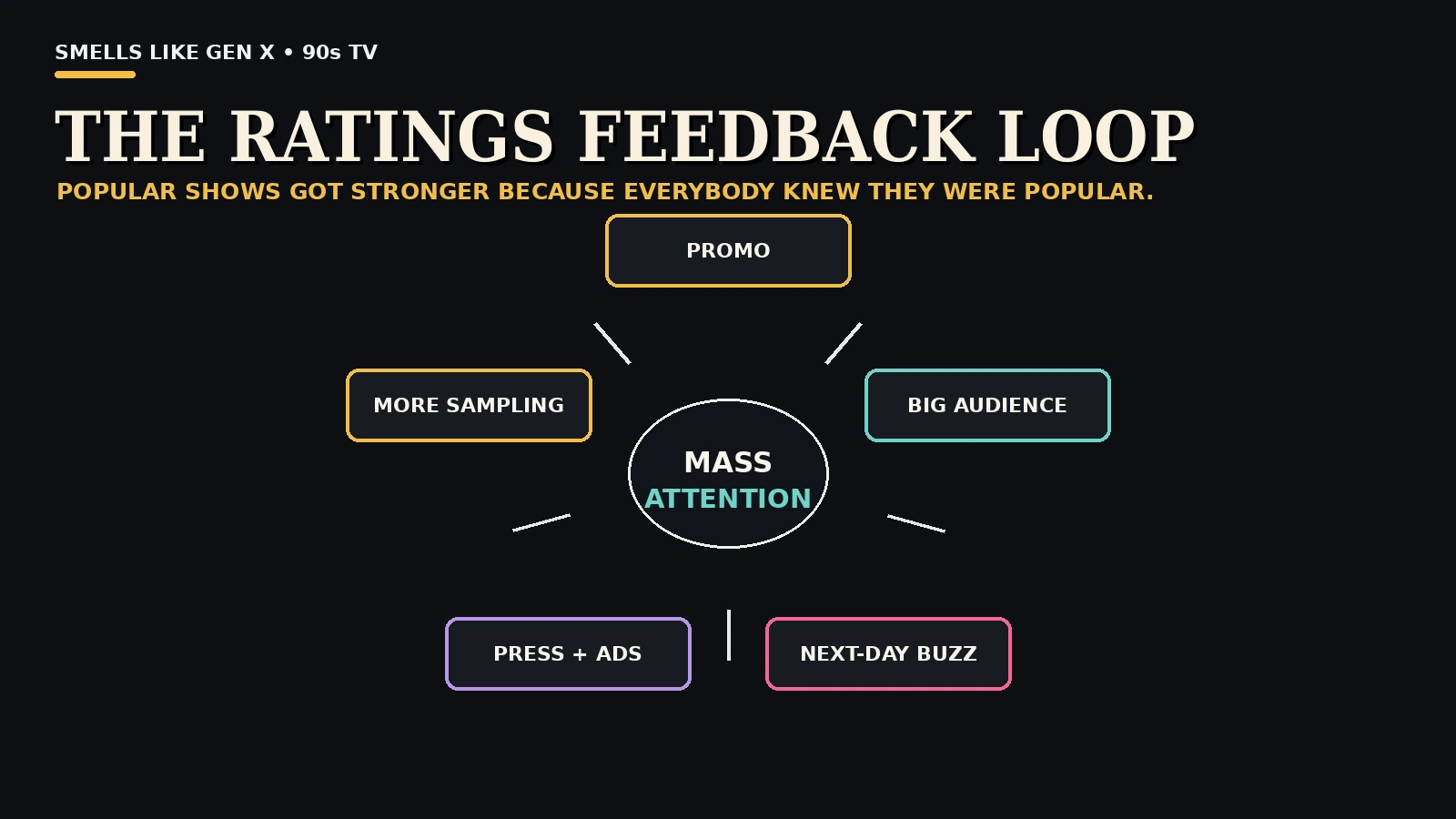
The numbers and the behavior were linked. Our ratings explainer shows why fewer choices and live viewing produced enormous Nielsen numbers. Appointment behavior was the human side of the same system. When millions of households agreed that Thursday at 9 or Sunday at 7 belonged to one program, the rating climbed; when the rating climbed, the show became more culturally unavoidable.
That feedback loop is harder to create now. A streaming hit can be massive, but its audience may encounter the season over days or weeks. A 90s network hit compressed attention into one hour. The scale was not merely how many people watched—it was how many watched together.
The same concentration also changed how a hit felt to non-viewers. Even if you skipped the show, you could not always skip the conversation around it. Appointment TV made absence visible. You knew what everybody else had watched because they would tell you.
It Died Because Choice Won
The easiest nostalgic story says television used to be better, so everybody watched the same thing. That confuses quality with infrastructure. Great shows exist in every era. What changed was distribution. Cable, satellite, DVDs, the internet, DVRs and eventually streaming gave viewers more control over what they watched and when they watched it.
That is why 1999 feels like the end of the great network-TV monoculture rather than a sudden collapse. The audience was learning to leave the schedule. Once that freedom arrived, there was no reason to give it back. Appointment TV survives in sports, live finales, awards, breaking news and occasional cultural events—but it is now the exception instead of the default.
The trade was obvious in hindsight. We gained convenience, choice and control. We lost some of the accidental togetherness that came from a schedule everybody had to obey. Whether that was better or worse depends on what you value, but it was unquestionably different.
Convenience Changed More Than the Schedule
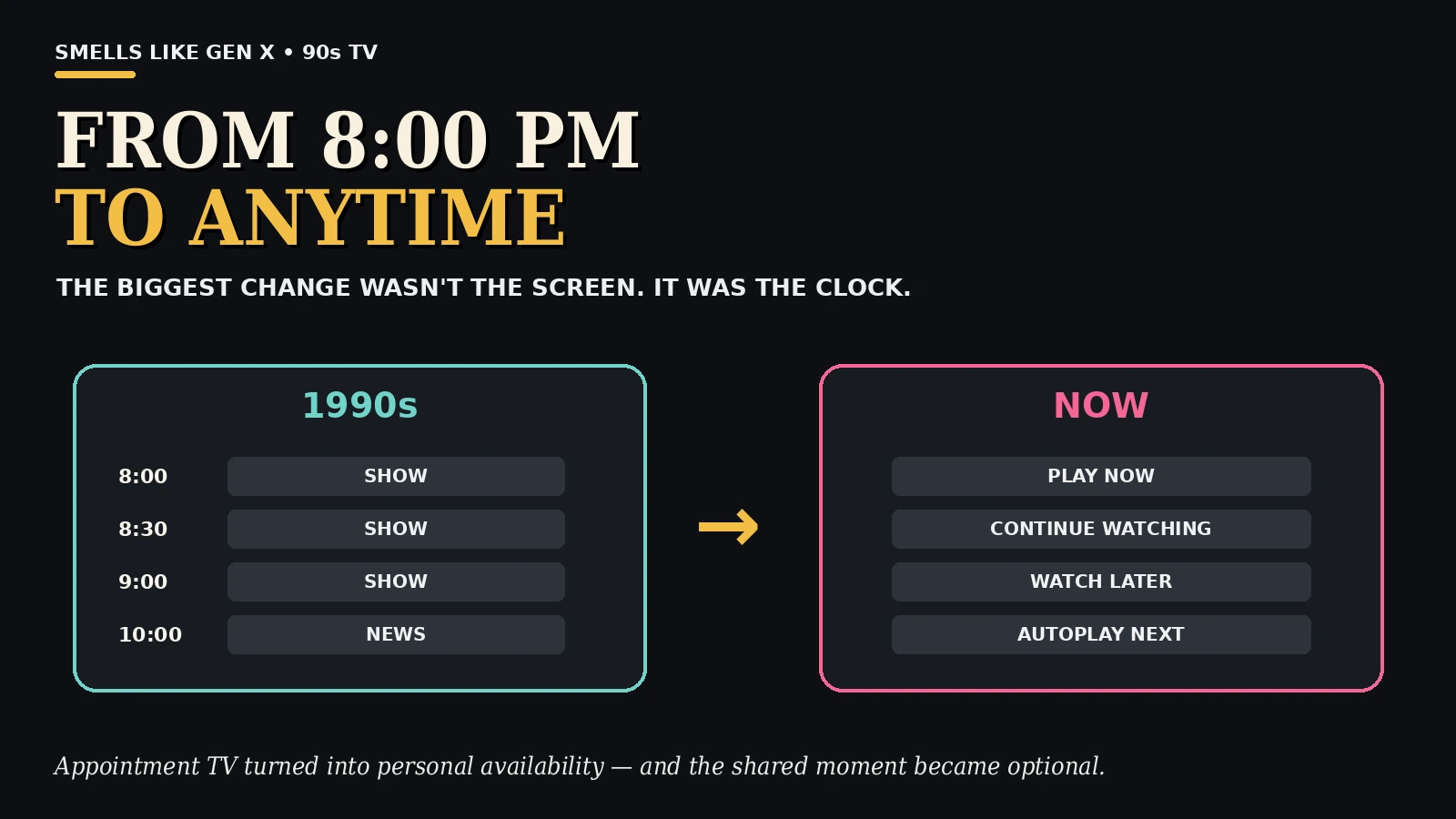
The old appointment system could be annoying. Miss an episode and you might wait months for a rerun. Start watching a show late and there was no easy way to catch up. Local preemptions, weather alerts and power outages could wipe out the one airing you had been waiting for. Streaming solved real problems. It gave viewers control over time, order and access in a way 90s television simply could not. Any nostalgia for the old ritual should admit that the ritual was partly built out of inconvenience.
But inconvenience had side effects that were socially powerful. When the audience had limited control, people tended to bunch together. They watched the same episode in the same week, often in the same hour. That synchronization gave television a kind of public square quality. You could reasonably assume a coworker had seen the finale. A newspaper could publish a recap the next morning without worrying that half its readers planned to watch three weeks later. The schedule created a shared calendar that streaming largely dissolved.
The change also altered how episodes were written and promoted. A cliffhanger once had to hold viewers for seven days, not seven seconds before the “next episode” button. A season premiere had to reorient people who might not have seen the finale in months. Networks built sweeps stunts, weddings, guest stars and live episodes around the fact that a large audience would arrive together. The structure of distribution shaped the structure of storytelling more than we usually remember.
That is why appointment TV still comes roaring back around certain events. Sports, breaking news and a handful of finales recreate the old synchronized feeling because time becomes scarce again. The moment has value before it is spoiled. Those nights remind us that the audience never lost the appetite for watching together; the technology simply stopped forcing us to do it every week. In the 90s, togetherness was the default. Now it has to be earned by the event.
There was also a physical geography to appointment viewing that is easy to forget. Many homes had more than one television by the 90s, but plenty of major shows were still watched in a shared room. The remote sat on the coffee table, the phone was attached to a wall or base station, and there was no second-screen feed quietly competing for attention in every hand. People still talked during commercials, argued over channels and yelled from another room when the show came back. The social experience was not automatically better, but it was more visibly collective. The television set was a place in the house as much as it was a device, and appointment programming turned that place into a weekly meeting point.
Commercial breaks were part of the choreography too. They created synchronized pauses when everybody in the room got up at once, called somebody, grabbed a drink, checked the stove or argued about what had just happened. Networks built their pacing around those breaks, and viewers developed instincts for them. The phrase “we’ll be right back” had practical meaning because the audience actually had to come back before the show resumed. That shared pause is another small thing streaming changed: the old rhythm of collective attention included collective interruption.
Local television also mattered more to the experience than national nostalgia usually remembers. Your affiliate carried the network schedule, but local news, weather crawls, sports preemptions and station promos framed the evening. A severe-weather interruption could wipe out a scene for an entire city. A delayed sports game could push a show late. The national appointment traveled through local infrastructure, which meant viewers in the same market often shared not only the program but the exact interruption. That made television feel geographically communal as well as national.
Finally, appointment TV shaped memory by forcing waiting into the experience. A cliffhanger lived in your head for a week or a summer because there was no next-episode button. Anticipation had time to become speculation, and speculation had time to become conversation. The delay could be maddening, but it also gave episodes a longer cultural half-life. Today a great scene can be watched, clipped, discussed and replaced by the next episode in one night. In the 90s, a single unresolved moment could own an entire week.
The old system also made cancellation and renewal feel unusually public. Because audiences followed schedules and newspapers printed weekly rankings, viewers could sense whether a show was thriving or disappearing. A time-slot move felt like news. A finale date mattered. Television was not only watched together; its business rhythms were visible to ordinary viewers in a way that made the schedule itself part of pop culture.
Frequently asked questions
What does appointment TV mean?
Television that viewers plan to watch at a specific broadcast time because missing the live airing means waiting, recording it, or risking spoilers.
Was everything in the 90s appointment TV?
No. The term is most useful for major weekly hits, live sports, finales, news institutions and schedule blocks that audiences deliberately organized around.
Didn’t people record shows on VCRs?
Yes, but VCR recording required planning and physical media, so it reduced scheduling pressure without eliminating it.
Why did appointment TV create bigger ratings?
Fixed timing concentrated viewers into the same hour, while fewer viewing choices kept the audience from fragmenting as much as it does today.
What were examples of 90s appointment television?
Monday Night Football, 60 Minutes, NBC Thursday hits such as Friends, Seinfeld and ER, major finales and other event episodes.
Does appointment TV still exist?
Yes, especially in live sports, breaking news and occasional event programming, but it is no longer the default way most scripted television is consumed.