America’s Funniest Home Videos: How Home Video Predicted YouTube
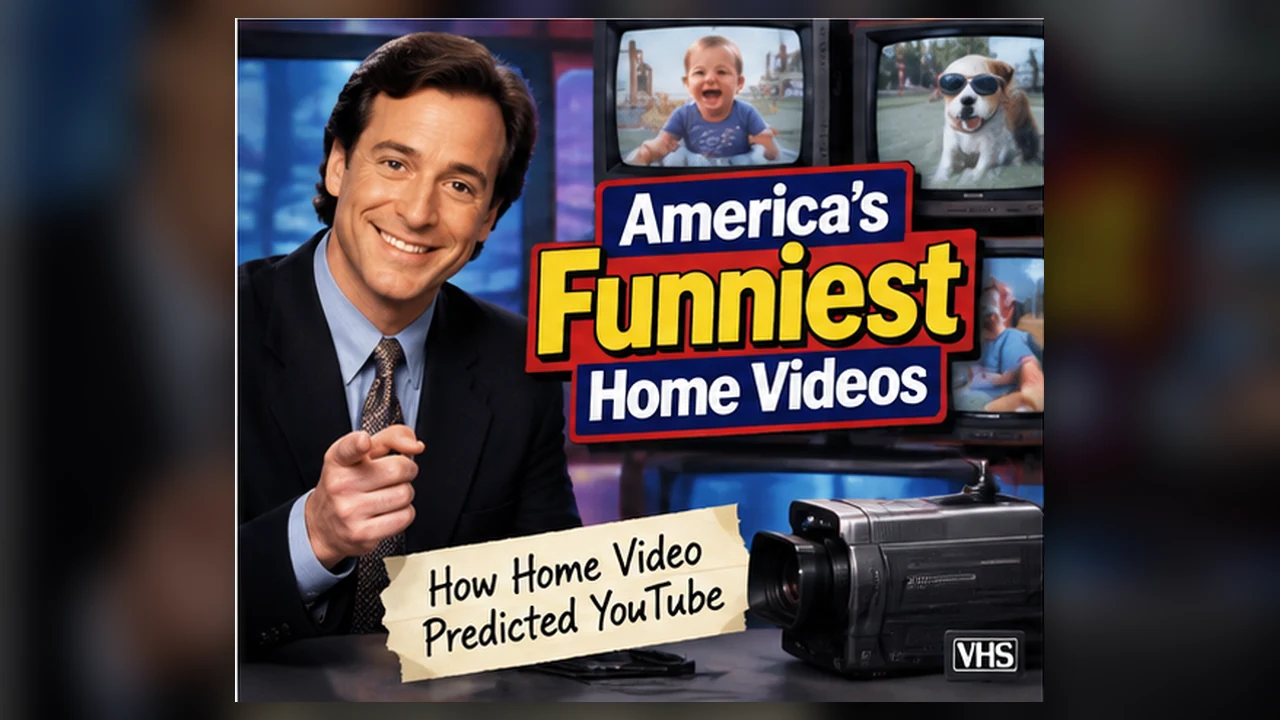
AMERICA’S FUNNIEST HOME VIDEOSHow Home Video Predicted YouTube
Before YouTube, before smartphones and before anybody used the phrase “user-generated content,” America’s Funniest Home Videos built a top-ten network hit from footage ordinary people recorded themselves. The technology looks ancient now. The appetite looks completely modern.
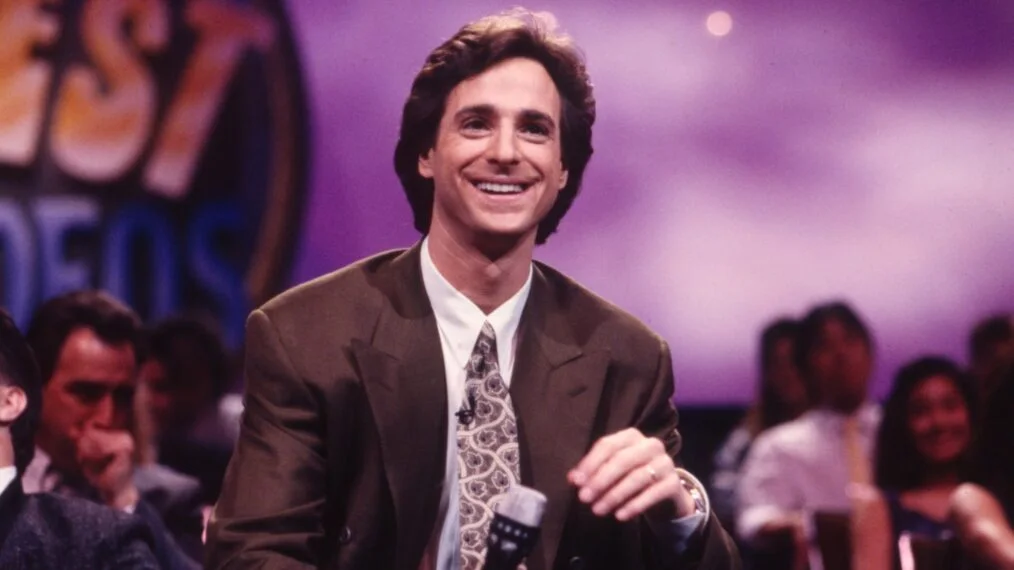
How did America’s Funniest Home Videos predict YouTube?
AFHV proved that millions of people would watch short videos created by ordinary viewers rather than professional television producers. Families mailed physical tapes to the show, producers curated them, and ABC turned the clips into appointment television.
America’s Funniest Home Videos in the Early 90s: User-Generated Video Before the Internet
Long before phones recorded everything and before uploading a clip took seconds, America’s Funniest Home Videos built a hit television show around ordinary people sending their own footage to a network.
The technology was completely different. Families owned camcorders. A funny accident happened on tape. Somebody duplicated or mailed the cassette. Producers screened it. The clip might eventually appear on ABC in front of millions of viewers. By modern standards, that pipeline feels impossibly slow. The underlying idea feels completely familiar.
People wanted to watch people. Pets, kids, weddings, birthdays, backyard disasters, fathers falling off things they should not have climbed and the thousand small humiliations families once preserved privately became national entertainment. The joke was not celebrity. The joke was recognition.
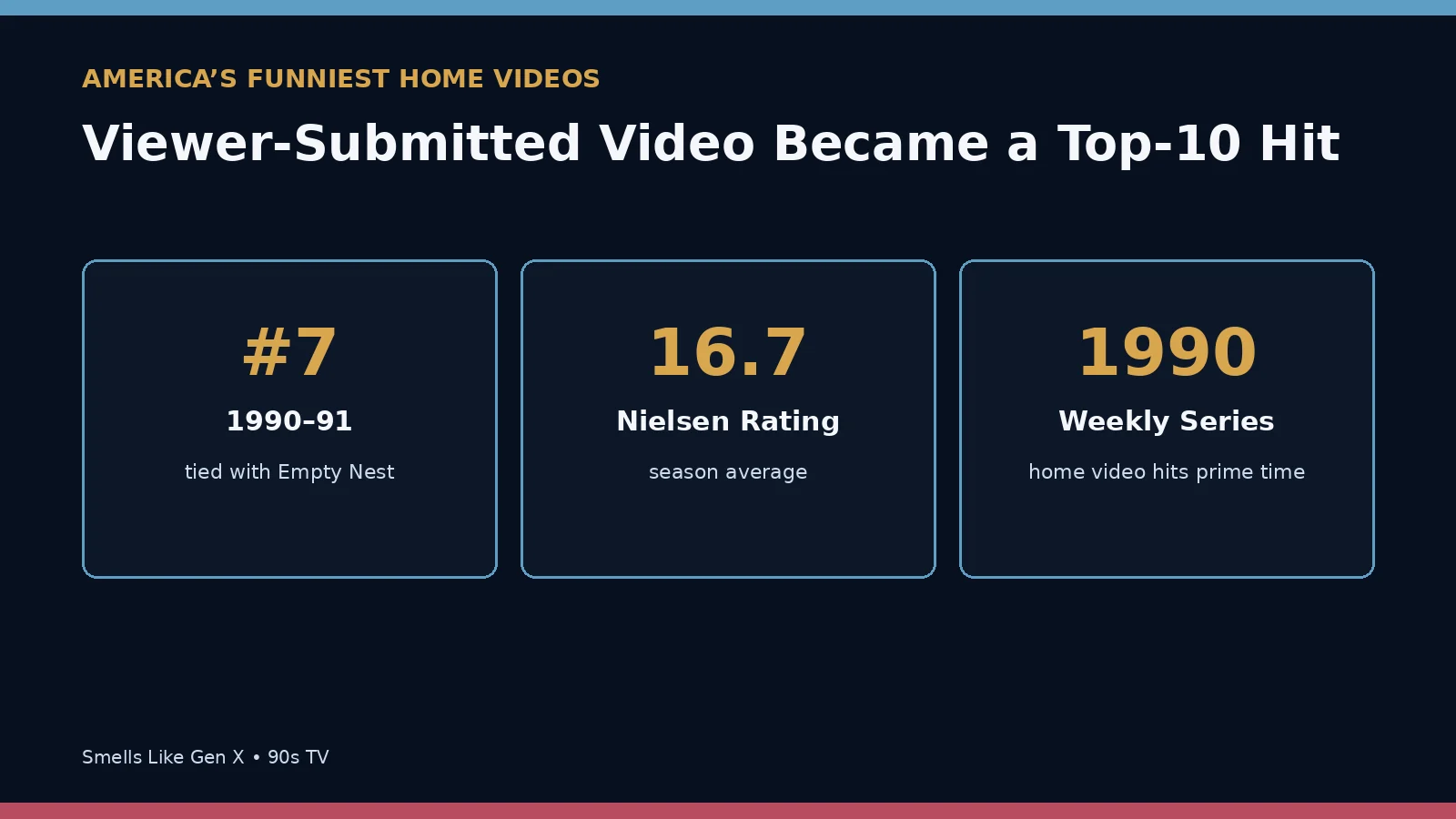
The format exploded almost immediately. The January 1990 weekly premiere drew about 16.5 million homes. By March, the show was trading the weekly #1 spot with Cheers. In the 1990–91 season it finished tied at #7 with a 16.7 Nielsen rating, putting viewer-submitted tapes inside the national top ten.
That makes AFHV one of the strangest and most important entries in the 1990s television landscape. It was a mass-broadcast show powered by content created outside the television industry.
Bob Saget Made America’s Funniest Home Videos Feel Like a Family Show With an Adult Hiding Inside It
Bob Saget’s stand-up reputation and his AFHV persona were famously different, and that contrast became part of how people remembered him.
On the show, Saget was warm, goofy, quick with voices and willing to sell a corny setup because the real attraction was always the tape. He did not need to dominate the format. He needed to move viewers from one clip to the next, keep the studio audience engaged and make a collection of unrelated home movies feel like a television episode.
The hosting style mattered because the footage itself could be rough. Audio was inconsistent. Framing was bad. The funniest moment might happen in the corner of a shaky shot. Saget’s narration, reactions and transitions gave the mess a rhythm.
The result felt less like a traditional variety show than a national living-room watch party. The host was the person sitting beside you saying, basically, “You have to see this one.”
Vin Di Bona Built a Network Hit Around Viewer-Submitted Video
Producer Vin Di Bona’s key insight was simple enough to sound obvious now: ordinary home video contained entertainment people would watch even when they did not know the people on the tape.
The Television Academy’s AFHV archive identifies Di Bona as the producer most closely associated with the early series and points to contemporary coverage about how camcorders were changing television. That historical context matters. Home video was not yet background noise. Owning a camcorder still felt like access to a relatively new consumer technology.
AFHV turned that technology into a supply chain. The producers did not have to invent every sketch. Families across the country were generating raw material every weekend. The show’s job was to collect, filter, sequence and package it.
That is strikingly close to the logic of later user-generated platforms. The difference was who controlled distribution. AFHV still had a gatekeeper, a network schedule and a limited number of slots. YouTube would eventually remove much of that bottleneck.

Camcorder Culture Made America’s Funniest Home Videos Possible
The show arrived at exactly the right technological moment.
Consumer camcorders made it easier for families to record birthdays, vacations, school events, pets and ordinary life without hauling out earlier generations of bulky home-movie equipment. The tapes were not made for broadcast. That was why they felt different when they reached broadcast.
The awkward framing and delayed reactions became part of the authenticity. A polished network camera would have ruined most of the clips because the humor came from the fact that nobody planned what happened next.
AFHV taught viewers to look at accidental footage as a genre. A toddler saying something weird, a dog stealing food or a backyard stunt collapsing could be replayed, scored, narrated and turned into a tiny story.
That habit would eventually become normal online. In 1990, seeing strangers’ home movies on national television still felt new.
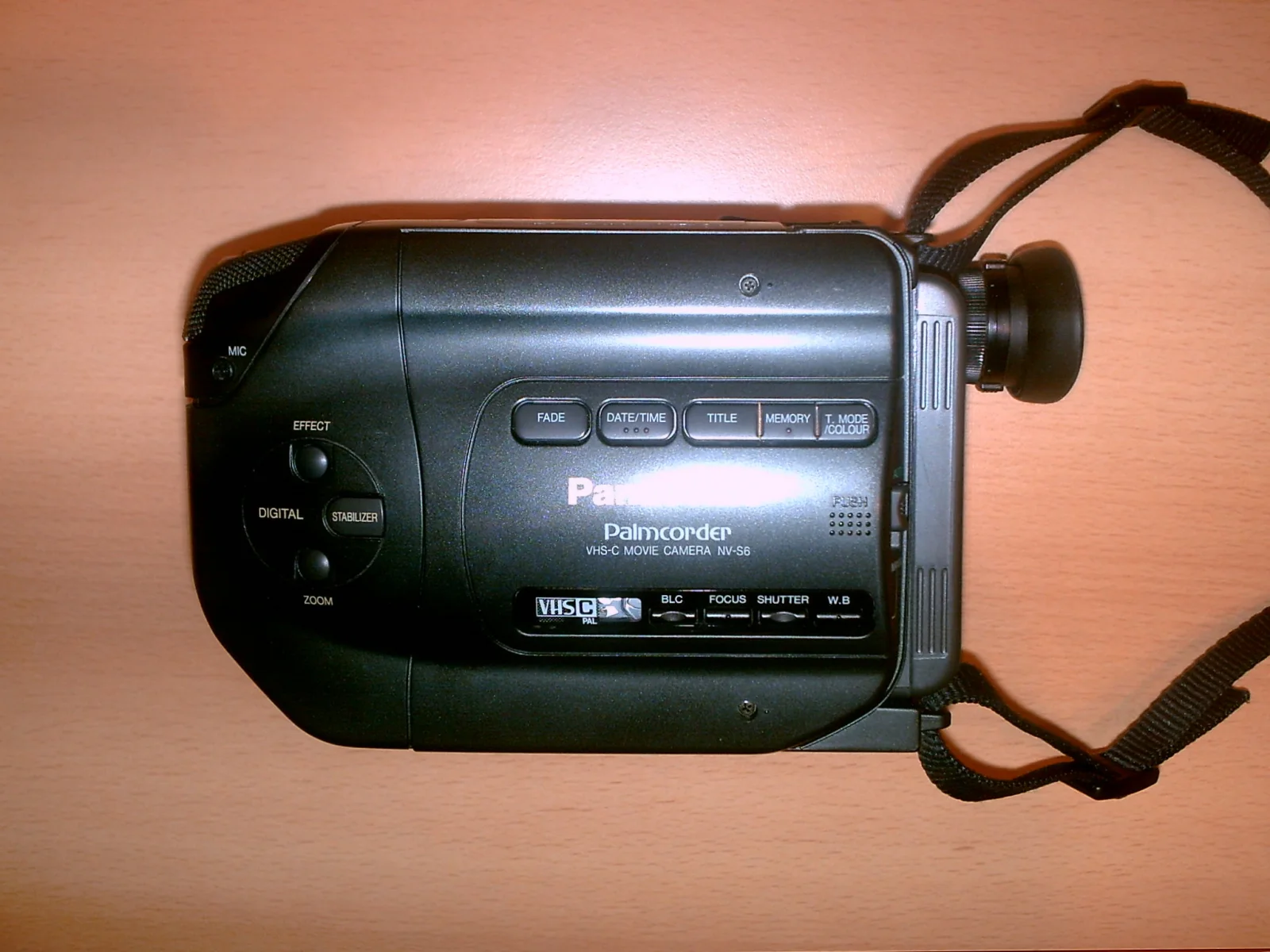
Mailing a VHS Tape Was the Original AFHV Submission System
Today, a funny clip can be online before the person in it has finished getting up off the floor. AFHV belonged to a world where sharing took physical effort.
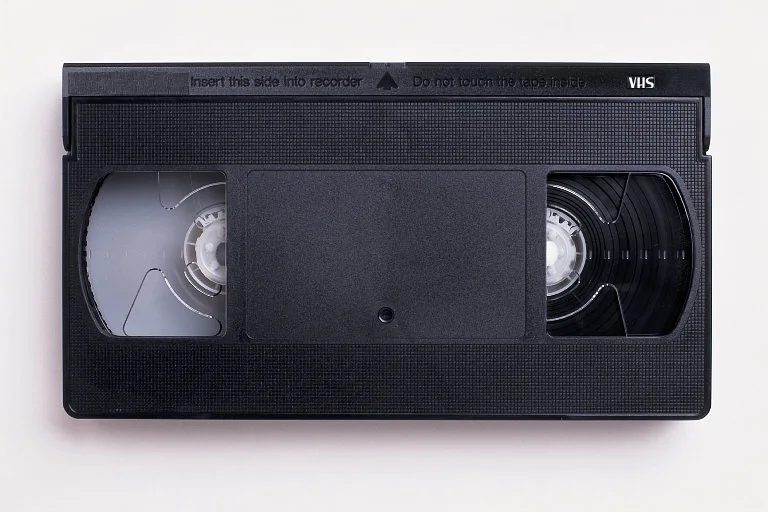
You had to know the funny moment was worth sending. You had to get the tape to the show. You had to accept that your cassette might sit in a production office with thousands of others. The delay changed the culture around the clip.
There was no instant comment section, no algorithmic trend and no overnight repost economy. A home video could be months old by the time millions of people saw it. Yet the emotional mechanism was already there: somebody outside traditional entertainment created something funny, and a distribution system amplified it to strangers.
The series turned that slow pipeline into ritual television. The waiting happened offscreen. Sunday night delivered the finished feed.
America’s Funniest Home Videos Ratings in 1991: A Top-10 Hit
The Nielsen numbers prove that viewer-generated video was not a novelty viewers sampled once and forgot.
During the 1990–91 season, AFHV finished tied at #7 with a 16.7 rating. Our 1991 Nielsen ranking places it alongside Empty Nest and just behind Murphy Brown. That was an extraordinary position for a series whose basic raw material was people falling down in their own homes.
Weekly ratings could be even more dramatic. In February 1991, the show ranked #3 for the week with a 19.2 rating. A year earlier, in March 1990, it finished just behind Cheers, 22.0 to 22.1. This was direct competition with the biggest scripted hits in America.
The ratings also cut across age groups. Contemporary Nielsen demographic breakdowns placed AFHV among the most-watched programs for both younger adults and adults 25 to 54. That broadness fits the format: the joke rarely depended on knowing a character, following a plot or understanding a cultural reference.
AFHV Worked Because the Humor Needed Almost No Context
The strongest clips were instantly understandable.
A person swings and misses. A wedding cake tips. A dog steals something. A child mispronounces a word. Somebody walks into a glass door. You do not need a backstory, a season arc or even much dialogue. The setup and payoff can happen in ten seconds.
That made AFHV unusually compatible with family viewing. A child could laugh at the fall. An adult could recognize the bad decision that caused it. Grandparents did not need to know a character. The clip began, the mistake happened, everybody reacted.
The show’s broad accessibility helps explain why it fit Sunday night and why the format survived far beyond Bob Saget’s original run. The underlying unit of entertainment was tiny, portable and almost language-proof.
AFHV Combined Home Video With the Old Shared-TV Ritual
The content came from viewers, but the viewing experience was still pure network-era television.
You did not browse clips when you wanted them. ABC scheduled them. Everybody watching saw roughly the same sequence at the same time. The studio audience voted. Viewers at home compared favorites. The network turned decentralized creation into centralized consumption.
That tension is what makes the show historically interesting. The larger story of 90s appointment television and shared viewing is usually told through scripted hits and live sports. AFHV belongs there too because it transformed the future’s most fragmented content form—short user videos—into a weekly mass-audience ritual.
The internet would later break those two ideas apart. User-generated video became available constantly, while shared national viewing became less common. AFHV briefly gave us both at once.
How America’s Funniest Home Videos Predicted YouTube Without Actually Being YouTube
Calling AFHV “YouTube before YouTube” is useful only if we are precise about what was similar and what was not.
The similarity is obvious: ordinary people created short videos, submitted them and watched strangers react. Accidents, pets, children and unexpected moments dominated because those clips travel without much context.
The difference is control. AFHV was curated by producers, distributed by one network and limited by a weekly time slot. The person who shot the tape did not build an audience around a channel. There was no recommendation engine, comment section or endless scroll.
So AFHV did not invent online video culture. It demonstrated one of the appetites that online video would eventually industrialize: people are fascinated by authentic, brief, funny moments captured by other people.
The show was a bridge between the family camcorder and the platform era.
America’s Funniest People Showed How Quickly the Home-Video Boom Expanded
Success produced imitation and expansion almost immediately.
ABC launched America’s Funniest People, and the two shows could appear near each other in weekly ratings. In February 1991, AFHV was #3 and America’s Funniest People was right behind it among the week’s biggest entertainment programs.
That tells you how hot the broader idea had become. Home video was not simply a segment inside another variety show. Networks saw a repeatable format family.
Most of the imitators did not develop the same longevity, which underscores how important the original combination of curation, hosting, prize structure and recognizable branding was.
AFHV Sat Beside Sitcoms That Were Changing Prime Time
The 1990–91 chart is fascinating because it captures television in transition.
Cheers was #1. Roseanne was #3. A Different World was #4. Murphy Brown was #6. Then at #7 was a home-video clip show. It did not fit the same cultural story as the sitcoms, but that is exactly why it matters.
The broader early-90s prime-time shift explains how working-class realism, Black college life and outspoken professional identity were changing scripted comedy. AFHV was changing something else at the same time: who was allowed to make the raw material television used.
The top ten was not moving in one direction. It was widening in several directions at once.
Prize Money and Audience Voting Turned Random Home Movies Into a Weekly Event
AFHV did more than string together funny footage. It gave the clips stakes.
The studio audience could react, favorites could advance and families at home could argue over which tape deserved to win. That small layer of competition gave unrelated videos a beginning, middle and end. Instead of watching a pile of clips, viewers were watching toward a decision.
The prize structure also changed how people thought about their own tapes. A family mishap was no longer just something to show relatives. It might be worth sending to ABC. That possibility encouraged viewers to search their shelves for moments that could work outside the family who originally recorded them.
In that sense, the show was already teaching people to think like later online creators: identify the moment, package it for strangers and hope an audience rewards it. The mechanics were slower and the gatekeeper was a network producer rather than an algorithm, but the instinct was recognizable.
The contest element also helped the show feel live even when the footage was old. The home movies may have been recorded months earlier, but the question of which clip would win belonged to that night’s broadcast.
Watching America’s Funniest Home Videos in the Early 90s
There was something incredibly specific about watching AFHV before the internet made short clips ordinary.
You could not just pull up “funny dog videos.” If you wanted strangers doing stupid things on camera, Sunday night television was one of the places you got them. That made a ten-second clip feel more valuable than it would now.
And because home video still looked like home video, the footage carried a familiar texture: blown-out indoor lighting, shaky zooms, date stamps, someone laughing behind the camera and the sudden whip-pan after the thing everybody would remember actually happened.
It was basically the national version of somebody saying, “Come here, you have to see what happened at Thanksgiving,” except Bob Saget was standing between the tapes.
What Has Aged Unevenly About Early America’s Funniest Home Videos
Some of the early show’s narration, sound effects and edited comedy can feel busy compared with how people consume clips now.
Modern viewers are used to a video beginning immediately. Early AFHV sometimes wrapped a short moment in setup, host patter, music and replay. What once made rough footage feel like television can now feel like extra packaging.
There are also clips involving falls or childhood mishaps that audiences may judge differently after decades of discussion about safety and consent. Home movies were not originally recorded with national distribution in mind.
What has aged perfectly is the basic appetite. People still watch pets, kids, accidents, surprises and tiny moments of chaos. The distribution system changed much more than the human curiosity did.
AFHV Television Legacy: Home Video Became Mass Entertainment
The lasting significance of America’s Funniest Home Videos in the 90s is not that it literally invented YouTube. It proved that ordinary people’s footage could support a national entertainment franchise.
That seems obvious now because user-generated video is one of the basic languages of the internet. In 1990 it was a programming bet, and the bet paid off almost immediately.
The show turned private moments into public clips, developed a repeatable system for receiving and curating viewer submissions, and taught audiences to watch short accidental videos as entertainment in their own right.
Then the technology caught up with the appetite. Digital cameras removed tape. Broadband removed mailing. Platforms removed the network gatekeeper. Phones removed the need to carry a dedicated camera. The clip escaped the television show.
AFHV remained because the original format still worked. But its most interesting legacy is everywhere else: the world eventually became one giant submission reel.
America’s Funniest Home Videos FAQ: Ratings, Bob Saget and the Pre-YouTube Era
When did America’s Funniest Home Videos become a weekly series?
The weekly ABC series began in January 1990 after an earlier special.
Who hosted AFHV in the early 90s?
Bob Saget was the original long-running host of the weekly series.
How high did AFHV rank in 1990–91?
It finished tied at #7 in the Nielsen rankings with a 16.7 rating.
Who produced America’s Funniest Home Videos?
Vin Di Bona is the producer most closely associated with creating and building the format in the United States.
Why is AFHV compared with YouTube?
Both depend on video created by ordinary people, especially short funny clips. AFHV differed because producers selected the footage and ABC controlled distribution through a weekly network broadcast.
How did people submit videos before the internet?
Families physically sent tapes to the show for producers to review.
Why was AFHV so popular?
The clips were short, instantly understandable and family-friendly, while the home-video look made them feel authentic rather than produced.
Was AFHV appointment television?
Yes. Although the content came from viewers, the network still scheduled the clips as a shared weekly program watched by millions at the same time.