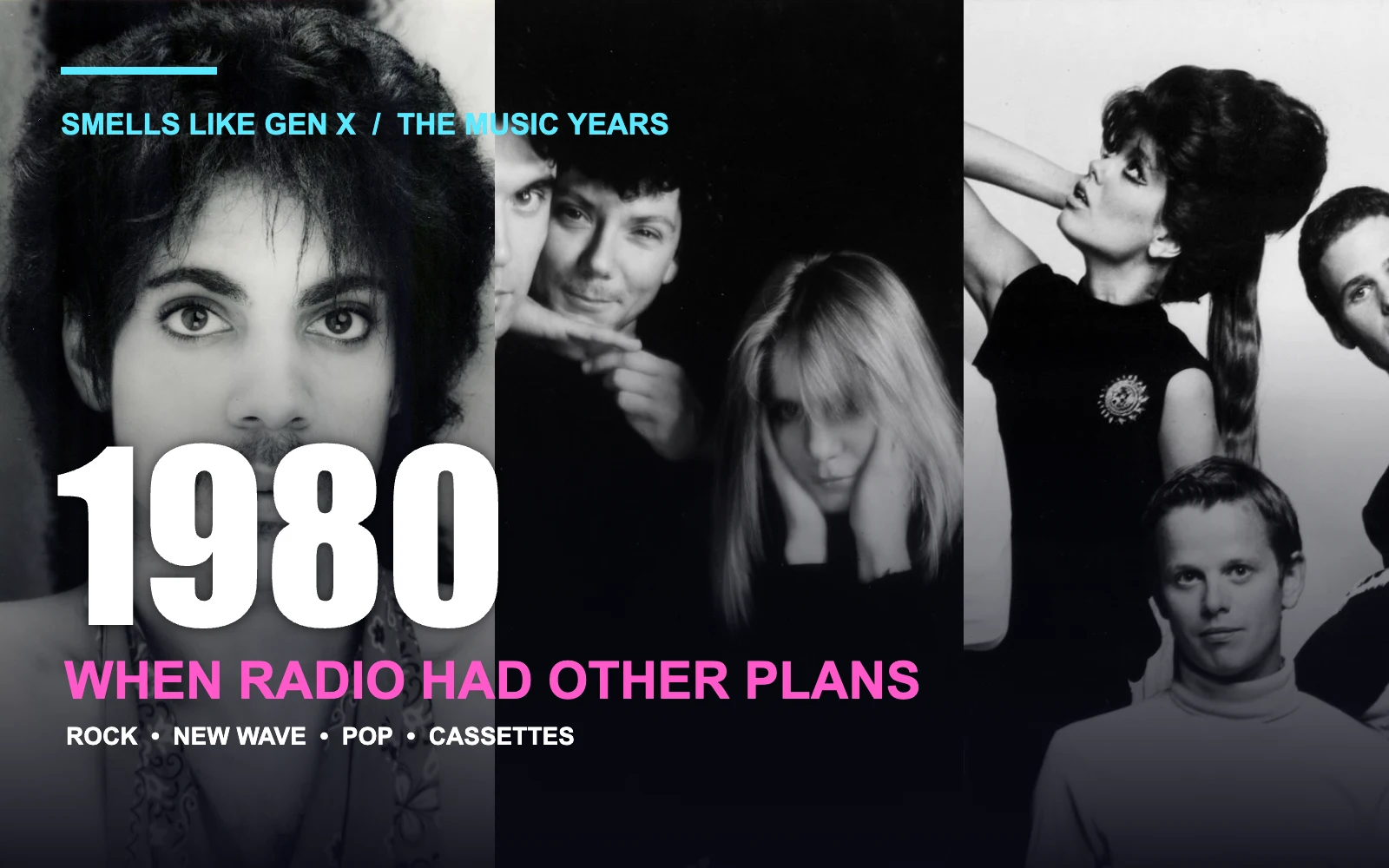
1980IN MUSICTHE 70s FADED.
RADIO HAD OTHER PLANS.
The year Blondie ruled the airwaves, AC/DC came roaring back, Prince was just getting started, and the future arrived one strange record at a time.
ONE YEAR. EVERY SOUND.
1980 on the dial — four defining moments
AC/DC faces a devastating loss before regrouping with Brian Johnson.
A hard-rock classic is released, and Queen’s The Game era is in full swing.
Prince’s Dirty Mind, Talking Heads’ Remain in Light and Springsteen’s The River appear.
The music world ends the year grieving an artist who had just returned with new work.
The record was probably playing before anybody called it a new decade. A car radio, a kitchen countertop, a transistor perched beside a bed — wherever it was, the music didn’t stop at midnight on December 31, 1979 and suddenly turn into a synthesizer wearing a skinny tie.
That was the fun of 1980. It was a year that hadn’t made up its mind yet. Disco still knew how to fill a dance floor. Classic rock wasn’t ready to hand over its leather jacket. Soft rock could still take over a station for an afternoon. And somewhere between Blondie, Queen, Prince, the Cars and Talking Heads, the next decade was starting to make a very different noise.
In the United States, Blondie’s “Call Me” was Billboard’s biggest year-end Hot 100 single of 1980. But the chart is only part of the story. AC/DC came back with Back in Black. Bruce Springsteen delivered The River. Prince put out Dirty Mind. Talking Heads released Remain in Light. And a little blue cassette player was teaching listeners that music didn’t have to stay in the house.
This isn’t a second countdown of the year’s ten biggest songs. We’ve already got that. This is the whole messy, glorious year — the music on the radio, the records in the stores, and the moment the eighties began to sound like themselves.
Flip through this story
The two different meanings of “music from 1980”
There’s a small trap in any trip back to a musical year: what came out that year isn’t always what you remember hearing that year. The record store had a release calendar. Your radio had other priorities. A single might arrive in late 1979, crawl up the charts in January, become the song of somebody’s entire summer, and live in your head forever as a 1980 song. That isn’t bad memory. That’s how listening worked.
Michael Jackson’s Off the Wall was released in 1979, but “Rock with You” was still a defining pop-radio record in the opening months of 1980. Pink Floyd’s The Wall was a 1979 album, yet “Another Brick in the Wall, Part II” became one of the year’s enormous singles. And the Clash’s London Calling landed in the U.K. in December 1979 but had its U.S. release in 1980. A strict album-release list and a picture of an American radio dial won’t match perfectly.
Then there’s the other problem: your location mattered. A New York station, a small-town Top 40 station, a rock FM outlet, a country station and a college station could sound like they were broadcasting from different planets. Even within the same city, the music you heard depended on who controlled the car radio and whether you were old enough to reach the dial without getting your hand slapped away.
So this tour uses two lenses. One is what actually arrived in 1980: the albums, singles, concerts and changes that can be dated. The other is what living through 1980 sounded like: carryover hits, new records, old favorites and the different musical neighborhoods people inhabited. When a record began in 1979 or became a bigger deal in 1981, we’ll say so. The memories deserve better than pretending every great song neatly obeyed a calendar.
If you want the strict year-end chart, we’ve already got Billboard’s top songs of 1980. Here, we’re trying to remember what it felt like to be in the room when all those sounds were arriving at once.
1980 was a musical crossroads, not a clean break
There’s a temptation to remember the eighties as one uninterrupted montage: neon lights, big hair, MTV, drum machines and people walking in slow motion through dry ice. All of that happened. Just not on January 1, 1980.
The first year of the decade sounded like someone had brought several radio stations to the same party and forgotten to separate the speakers. On one side, you had the big, smooth pop of Christopher Cross and Air Supply. Turn the dial and you could run into Pink Floyd. Turn it again and Queen was doing something entirely different from what Queen had been doing five minutes ago. Another station would hit you with a disco bass line that absolutely did not care whether a critic had declared disco dead.
That jumble mattered. The new decade wasn’t created by throwing the seventies in the trash. It borrowed from them, argued with them and occasionally turned the volume up just to prove a point.
You can hear that moment especially clearly on the records that were released in 1980. Some of them belong unmistakably to the late seventies. Others sound as though somebody had already peeked at the rest of the eighties and brought back a few souvenirs.
Put the needle on the radio dial: the wonderfully crowded 1980 hit parade
Imagine one of those old radios where the station number lived behind a plastic window. You turned the knob slowly, and the next song didn’t appear on a screen. First came a burst of static, then a commercial, maybe a DJ with a voice that sounded about fourteen feet tall, and finally somebody’s chorus. The suspense was part of it. You didn’t know which song was coming until you heard the first few notes.
In 1980, those notes could belong to wildly different records. There was the stomp and classroom chorus of Pink Floyd’s “Another Brick in the Wall, Part II.” There was Olivia Newton-John’s “Magic,” dreamy enough to make Xanadu seem like it might actually work as a place to live. There was Billy Joel swaggering through “It’s Still Rock and Roll to Me,” Queen tossing off “Crazy Little Thing Called Love,” and the impossibly catchy synthesizer pulse of “Funkytown.” The top of the pop chart wasn’t a single style; it was a traffic jam with surprisingly good music.
Christopher Cross had “Ride Like the Wind” and “Sailing,” the sort of records that sounded perfectly at home on a glossy dashboard with fake wood trim. Smokey Robinson’s “Cruisin’” made a trip to the grocery store sound like a romantic evening. The Spinners’ “Working My Way Back to You/Forgive Me, Girl” could sit comfortably between rock songs on a full-service station. It was a musical democracy conducted by people with enormous power over the playlist.
A teenager might have called some of that music hopelessly square. An adult in the same household might have called the teenager’s favorite band noise. Both were listening to the same cultural moment through different speakers. That friction is one of the best clues to what made 1980 interesting. The future wasn’t replacing the past yet. They were sharing a frequency.
Even the songs we now automatically call “eighties” weren’t always understood that way at the time. A drum sound that seems instantly dated today could sound daringly fresh on its first play. A guitar part now buried under decades of classic-rock repetition could make someone pull over and wait for the DJ to announce the title. We know how the decade turned out. The people listening in 1980 didn’t have that luxury.
Radio was still king — and Blondie had the keys
Before music videos became part of the daily routine, a song’s main job was to win over your ears. You heard a few seconds on the radio and decided whether to wait through the rest, change stations, or turn it up before anybody in the car complained.
Then there was “Call Me.” Blondie had already spent the late seventies blurring lines between punk attitude, pop melodies and dance music. The song, created for the film American Gigolo, made that mixture sound effortless: Debbie Harry’s voice out front, Giorgio Moroder’s sleek production underneath, and the kind of hook that didn’t ask permission before moving into your head.
It wasn’t merely a hit that happened to arrive in 1980. Billboard placed it at No. 1 on the U.S. Hot 100 year-end list. That’s different from being No. 1 on a particular weekly chart, and it’s worth keeping the distinction straight. Our 1980 Billboard year-end Top 10 has the actual ranking if you want to relive the countdown.
But what’s more interesting here is the way “Call Me” sounded. It wasn’t apologizing for having a rock edge and a dance beat. It was simply a pop record that understood the room had changed. You didn’t need a thesis on music history. You needed a radio with a volume knob.
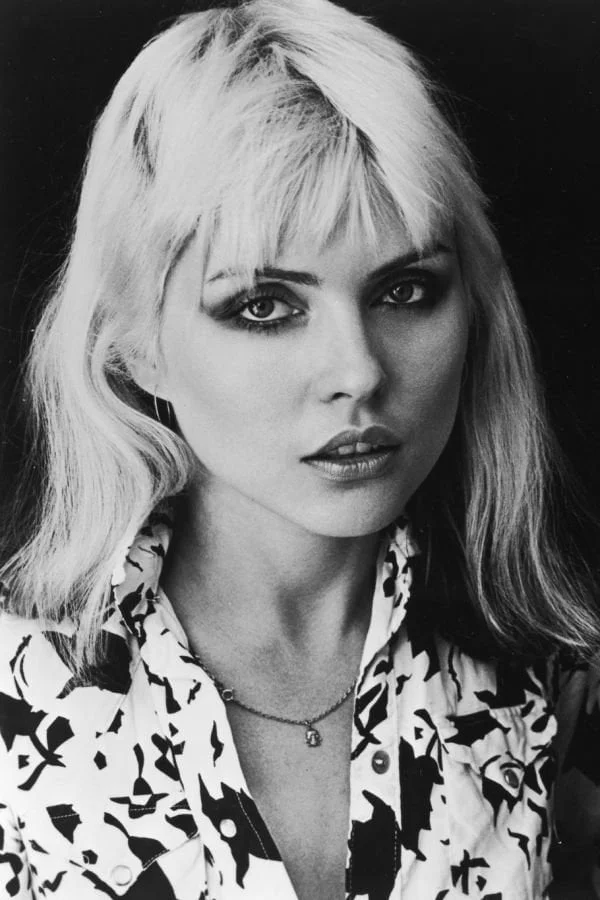
The rest of the dial was just as wonderfully unpredictable. Pink Floyd’s “Another Brick in the Wall, Part II” brought a schoolyard chorus to a rock epic. Michael Jackson’s “Rock with You,” from the 1979 album Off the Wall, carried its groove deep into the new year. Olivia Newton-John gave the movie Xanadu its dreamy “Magic.” Billy Joel insisted, rather memorably, that it was still rock and roll to him.
And Lipps Inc.’s “Funkytown”? That was a disco record that sounded as though somebody had accidentally let a computer into the club. It’s one of those songs that makes the phrase “disco was over” sound a little premature.
Soft rock, country crossovers and the grown-up side of the dial
There’s a temptation to edit the eighties down to spiky hair, leather jackets and people playing keyboards while standing in interesting fog. But in 1980, a good portion of America was listening to music that required neither fog machines nor dangerous amounts of hairspray. This was a huge year for warm, meticulously produced pop, and that side of the decade deserves its own turn on the dial.
Christopher Cross’s self-titled debut had arrived in 1979, but its singles became major 1980 listening. “Ride Like the Wind” had movement; “Sailing” seemed to smooth the air around it. Air Supply’s “Lost in Love” and “All Out of Love” perfected the feeling of being melodramatic about somebody you might not even have talked to yet. You could make fun of those records until the car radio played one when you were alone. Then suddenly the window needed to be rolled down and the volume turned up.
Kenny Rogers’s “Lady,” written and produced by Lionel Richie, crossed country and pop boundaries in 1980, while Dolly Parton was becoming an even larger crossover presence. Country wasn’t an isolated universe; it was sharing space with pop on charts, television specials and radio stations. And Billy Joel’s Glass Houses proved that a performer people associated with piano-driven songwriting could give listeners a sharper, guitar-forward sound without throwing away his melodic instincts.
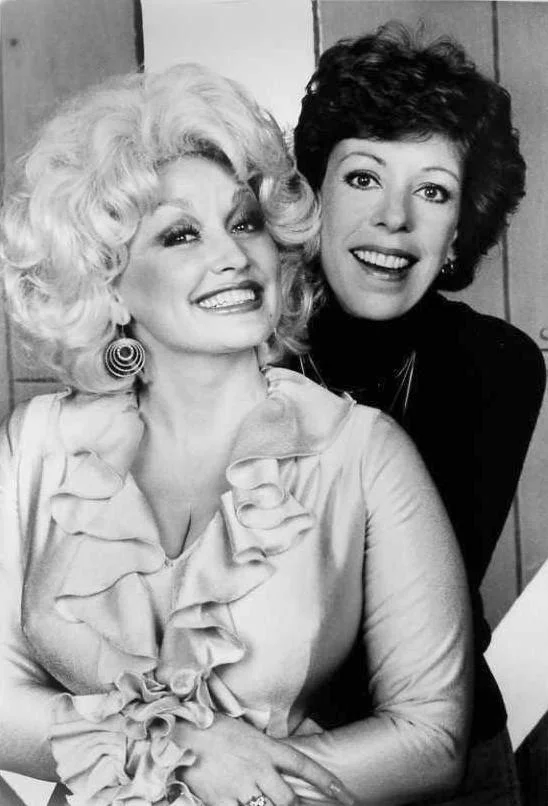
Not every household remembers 1980 as a parade of underground breakthroughs. Sometimes it was the song your mom sang while folding laundry, the one that came on every time your dad took the long way home, or the ballad drifting through the department-store speakers while you waited for somebody to finish shopping. Nostalgia has room for all of that. The mellow material wasn’t a footnote. It was the soundtrack for a lot of actual living.
Queen could do almost anything — and in 1980 they did
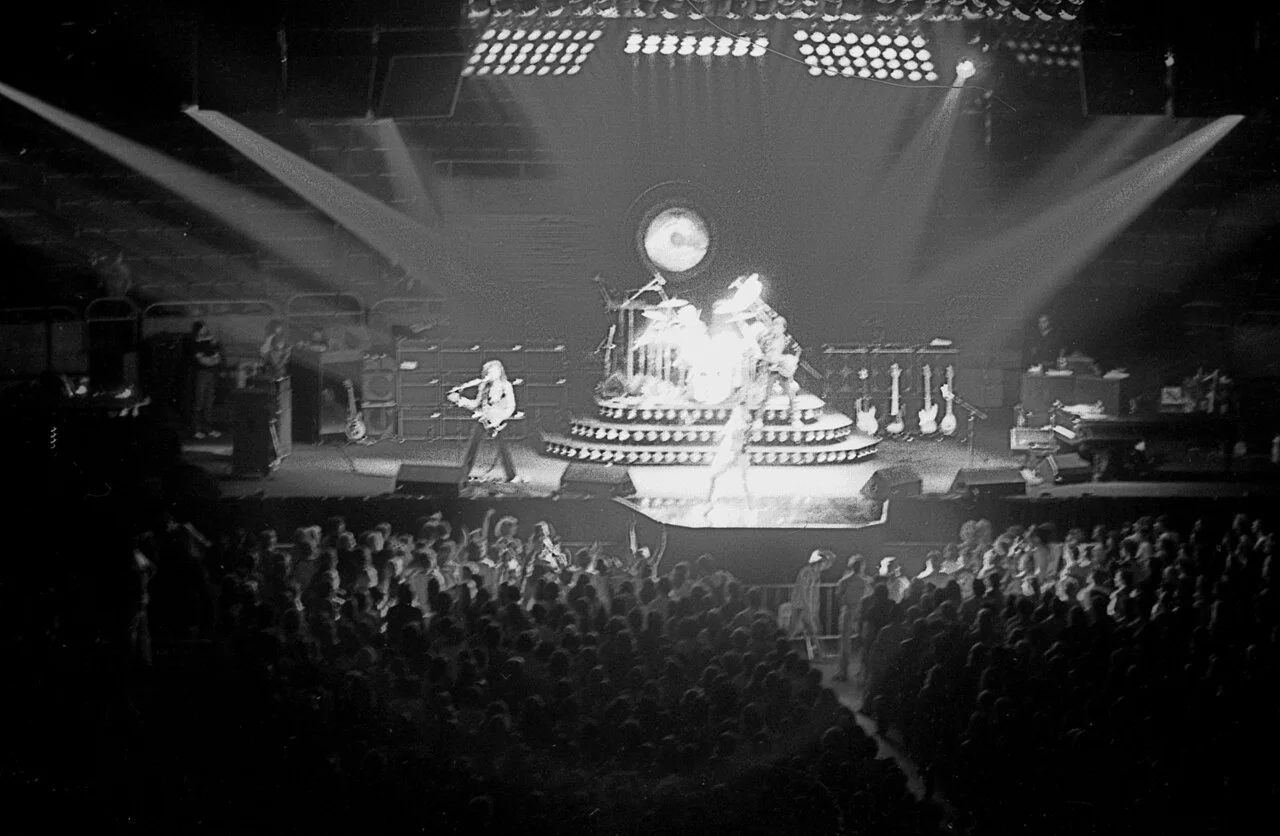
Picture a band so comfortable with changing direction that one song could sound like a throwback rockabilly single and another could come marching in on an enormous bass line. That was Queen in 1980.
“Crazy Little Thing Called Love” and “Another One Bites the Dust” were both huge U.S. hits, and their appeal came from almost opposite directions. One was lean, playful and rooted in earlier rock and roll. The other stripped things down to a rhythm so commanding you could practically hear it walking through the room before the vocals arrived.
The Game, released in 1980, gave Queen a fresh way to sound like Queen without repeating the old formula. This is part of why it’s a mistake to write off 1980 as nothing but a transition year. Some acts were having career-defining moments right then — not waiting for MTV to tell them what mattered.
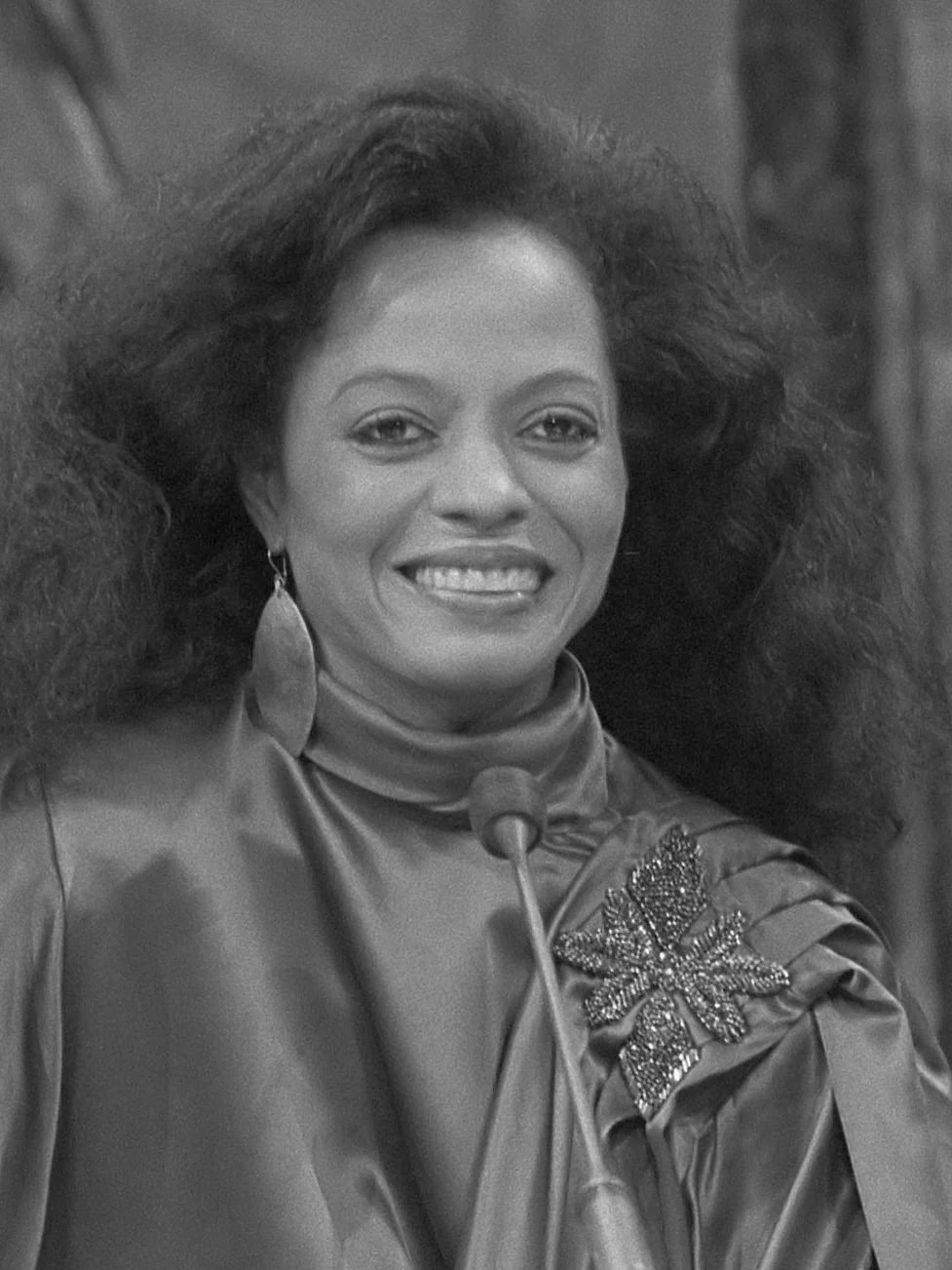
At the same time, Diana Ross teamed up with Nile Rodgers and Bernard Edwards of Chic for diana. “Upside Down” turned that collaboration into a major pop hit. If you listened closely, you could hear the sophisticated dance-floor DNA of the late seventies heading somewhere new: slicker, punchier, and very much ready for the rest of the decade.
No, the country didn’t wake up one morning and decide disco had vanished. Plenty of people still wanted to dance, and the musicians knew it. The labels might change. The bass lines weren’t going anywhere.
FIVE DIFFERENT RADIO STATIONS.
Pop in the kitchen. Guitars in the garage. Disco at the roller rink. Something wonderfully weird on the college station.
The women weren’t waiting around for the eighties to begin
The popular version of eighties music can sometimes turn into a parade of male guitar heroes and a few famous pop queens dropped in afterward. Put the radio back in 1980 and that picture falls apart pretty quickly. Women were driving the hits, changing the way rock sounded, and proving they didn’t have to stay in anybody’s assigned lane.
Debbie Harry had already helped Blondie blur punk attitude, pop hooks and disco rhythm. “Call Me,” made for the film American Gigolo with Giorgio Moroder, sounded sleek and impatient at the same time. The song belonged in a nightclub, but it also belonged on every car radio in town. The big lesson wasn’t that rock had surrendered to dance music; it was that a smart band could borrow what it needed from anywhere.
Diana Ross’s diana brought Chic’s Nile Rodgers and Bernard Edwards into her world. The result wasn’t a museum piece honoring disco’s glory days. “Upside Down” and “I’m Coming Out” sounded like an artist stepping into a new decade without asking permission. That bass line on “Upside Down” is a good reminder that a musical style can survive a backlash by getting too good to ignore. You don’t need to know the personnel credits to feel the groove, but once you do, you hear a whole history of dance music inside it.
Pat Benatar’s Crimes of Passion gave rock radio “Hit Me with Your Best Shot,” a performance with the kind of confidence that makes a song feel bigger than its running time. Pretenders, fronted by Chrissie Hynde, made lean, muscular rock with genuine bite; their self-titled debut reached American listeners in 1980. And Donna Summer, whose name had become synonymous with the disco era, was still making records that pushed against the idea that an artist had to be only one thing. Listen across those performers and the alleged dividing lines between rock, pop, punk and dance begin to look pretty flimsy.
Olivia Newton-John’s “Magic” was on the same year’s mainstream pop landscape, as was Irene Cara’s “Fame.” Those songs represented very different kinds of star power: one ethereal and immaculate, the other all ambition and open-throated determination. Both stayed in people’s heads because a great hook doesn’t ask which shelf at the record store it came from.
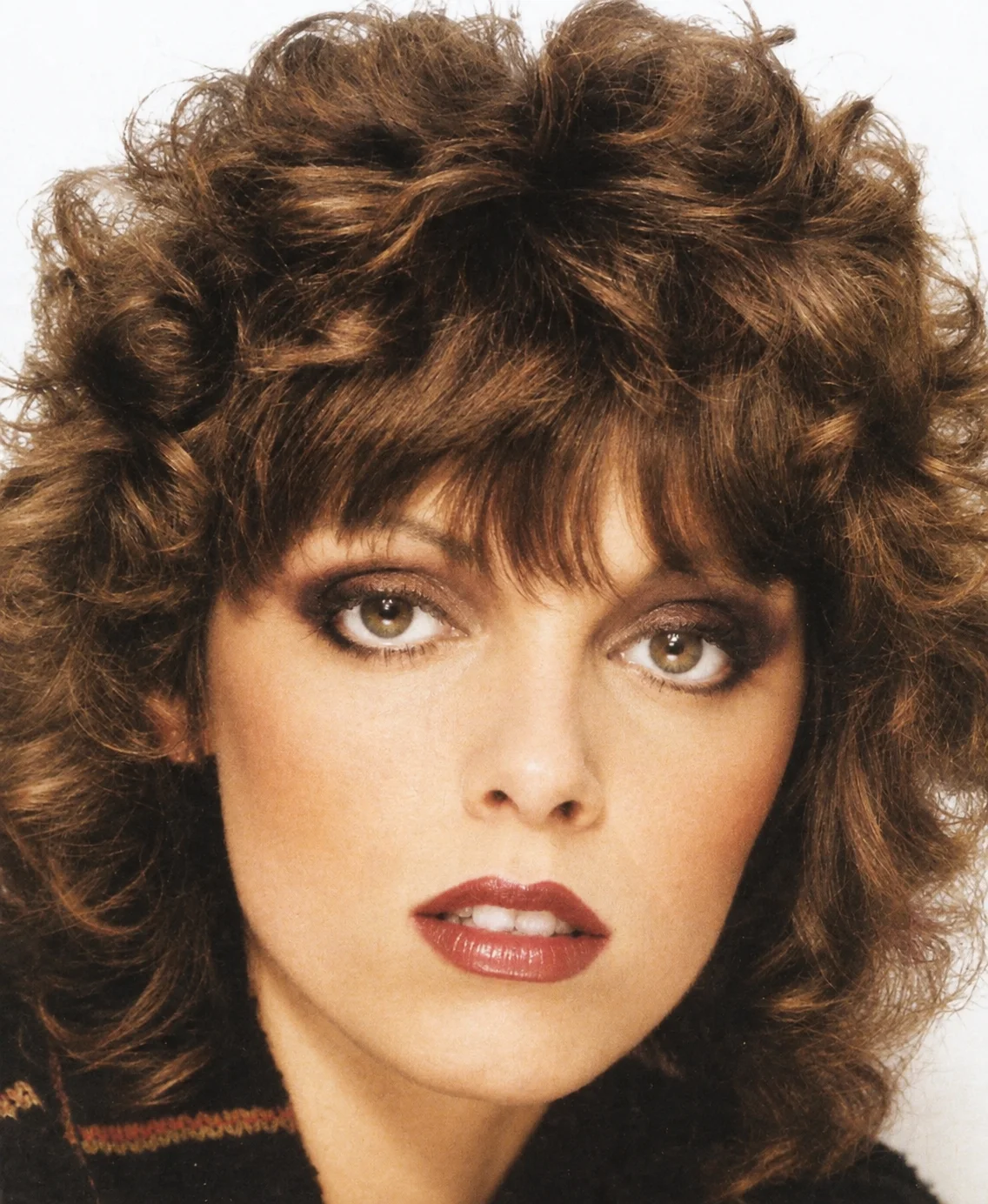
The eighties would bring Madonna, Whitney Houston, Janet Jackson and many more defining stars. But 1980 wasn’t waiting for them before putting women at the center of the story. The story was already moving.
And then AC/DC practically kicked the door off its hinges
If pop radio was learning new moves, hard rock was busy reminding everyone what an electric guitar could do when given enough room.
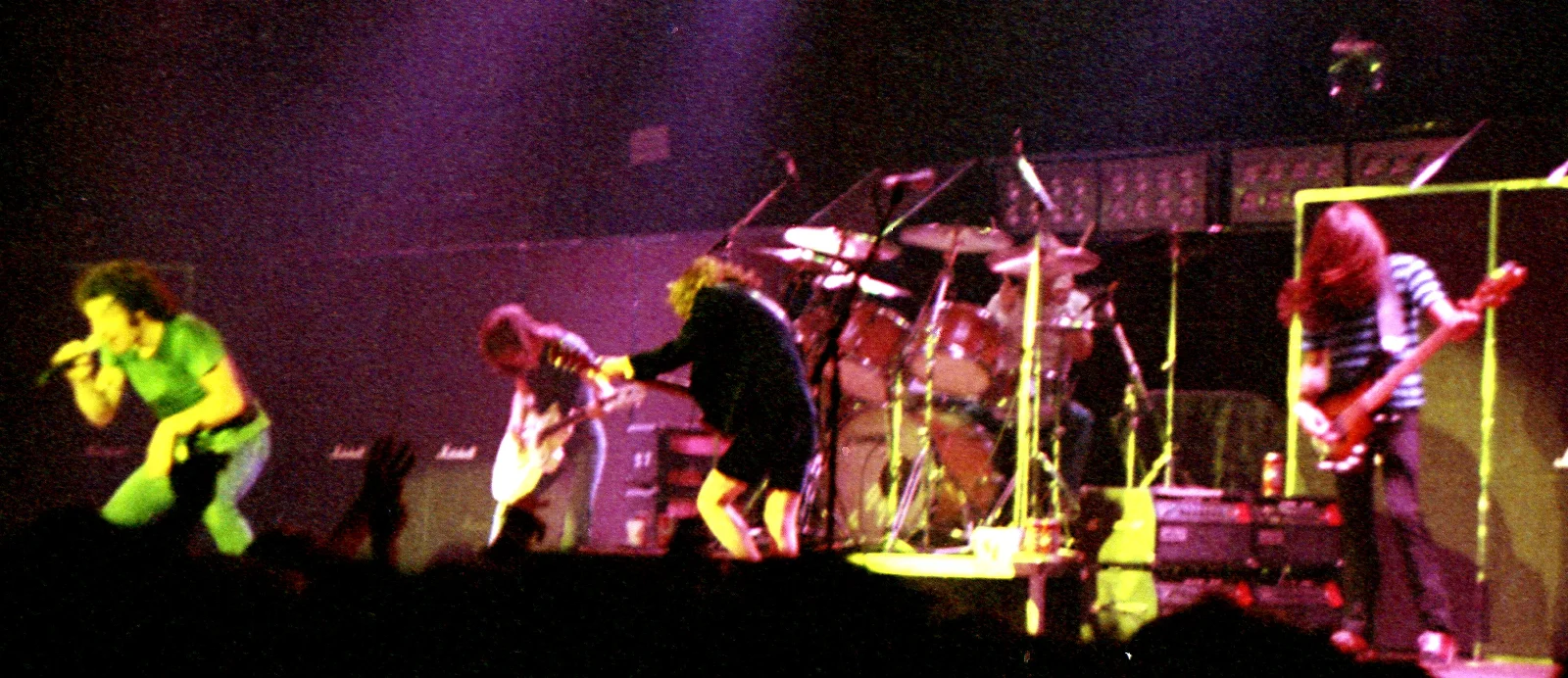
AC/DC entered 1980 in grief. Singer Bon Scott died in February. For many bands, that would have been the end of the road. Instead, AC/DC regrouped with Brian Johnson and released Back in Black in July. The title itself was a tribute, and the album’s sound had the opposite of a tentative comeback: giant riffs, an unmistakable groove and a set of songs built to survive generations of car stereos.
You can still put on “Hells Bells,” “Back in Black,” or “You Shook Me All Night Long” and understand instantly why this record stuck around. Not because the recording made you feel nostalgic for 1980, necessarily — because the music seems almost physically incapable of getting old.
Elsewhere, Pat Benatar’s Crimes of Passion helped make her one of the great rock voices of the era. “Hit Me with Your Best Shot” had the confidence of a song that already knew every bar band in America would eventually learn it. Rush were pushing forward with Permanent Waves. And the Police’s Zenyattà Mondatta kept building that clean, propulsive sound that could be reggae-influenced, rock-driven and pop-friendly without belonging neatly in any one box.
The great thing about a 1980 rock station was that these weren’t competing definitions of the same sound. They were different neighborhoods of the same very noisy city.
Hard rock had no intention of turning down the volume
Let’s not pretend everybody was thrilled by the arrival of synthesizers. For plenty of listeners, 1980 meant an electric guitar played loudly enough that the bedroom door shook. They weren’t wrong, either. The year was packed with bands that kept rock heavy while also preparing the ground for the metal boom that would grow through the decade.
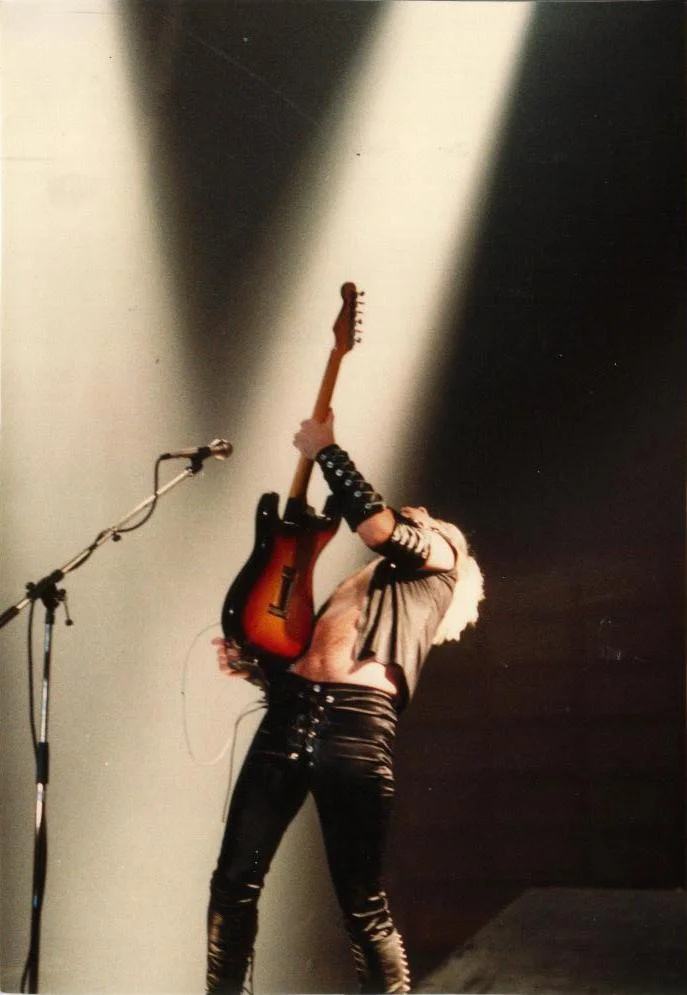
Van Halen released Women and Children First, sounding loose, flashy and absolutely uninterested in an indoor volume limit. Rush’s Permanent Waves married intricate playing to songs that could travel beyond the most devoted prog-rock listeners. Judas Priest put out British Steel, a record whose harder, cleaner impact helped define the sound of the New Wave of British Heavy Metal. Iron Maiden’s self-titled debut introduced another major force from that scene, while Black Sabbath entered a new chapter with Ronnie James Dio on Heaven and Hell.
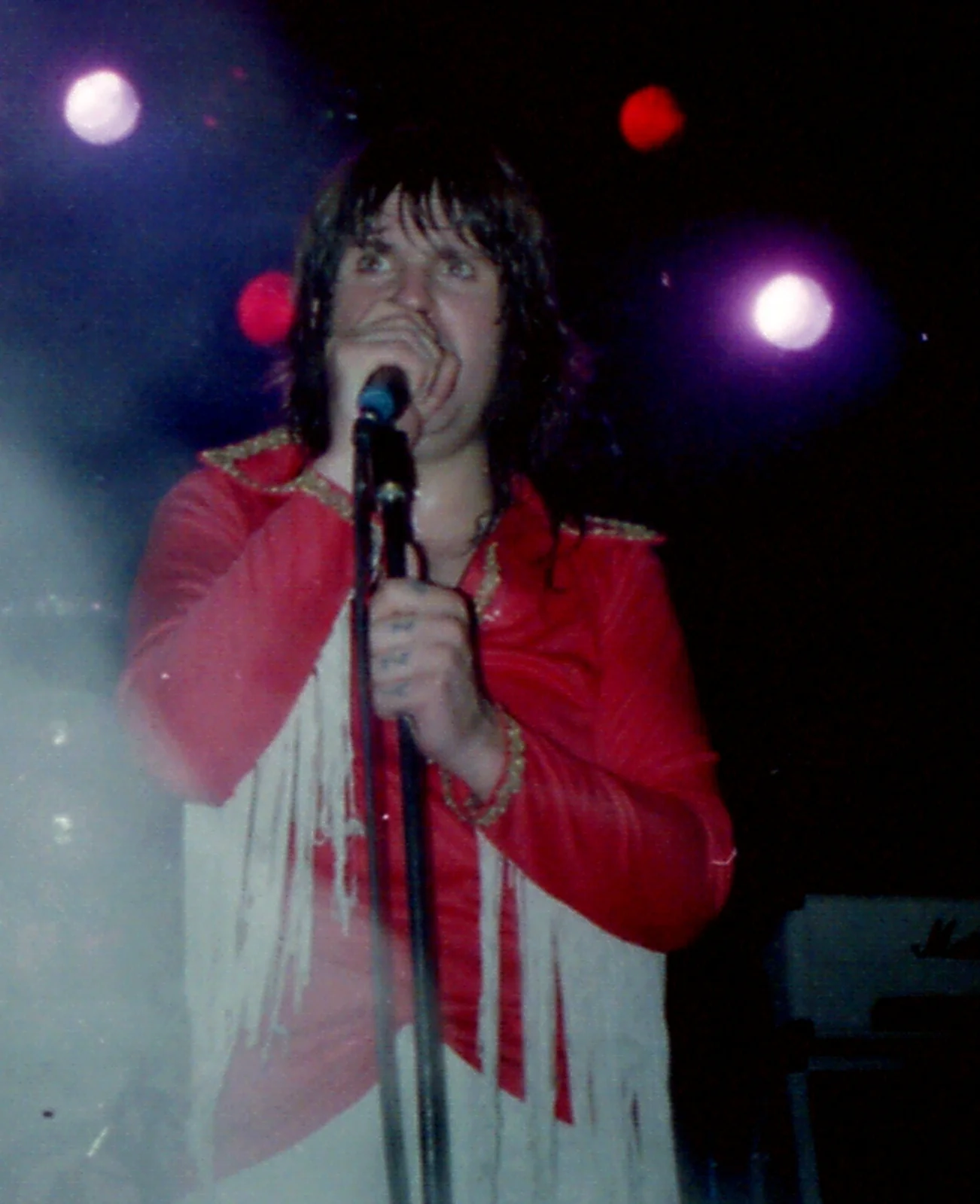
Here’s the thing that gets lost in the greatest-hits retelling: those bands were not interchangeable. Rush could make a complicated idea feel urgent. Van Halen could make technical ability sound like a party. Priest could sharpen a riff until it felt almost industrial. Iron Maiden built drama through rhythm, melody and storytelling. AC/DC, meanwhile, needed only a few expertly placed chords to make a room feel as though the roof had lifted six inches.
Some of these records lived on dedicated rock stations rather than the family Top 40 preset. That didn’t make them minor. It made the musical landscape bigger. The kid with a patched denim jacket and the kid playing “Sailing” on the living-room stereo could both be having their own authentic 1980. If you had an older sibling, you might have been subjected to both before lunch.
That mix of sounds also helps explain why the later eighties got so much bigger and flashier. The foundation was already there: heavy guitars, massive live shows, radio-friendly choruses, musical ambition and the belief that a band ought to be felt as much as heard. The hair-metal era hadn’t fully arrived. The amplifiers certainly had.
Meanwhile, the weird kids were building the future
Here’s where 1980 gets especially interesting. Imagine going from AC/DC’s gigantic drums to a Talking Heads record that seemed to be having an entirely different conversation about what a band should be.
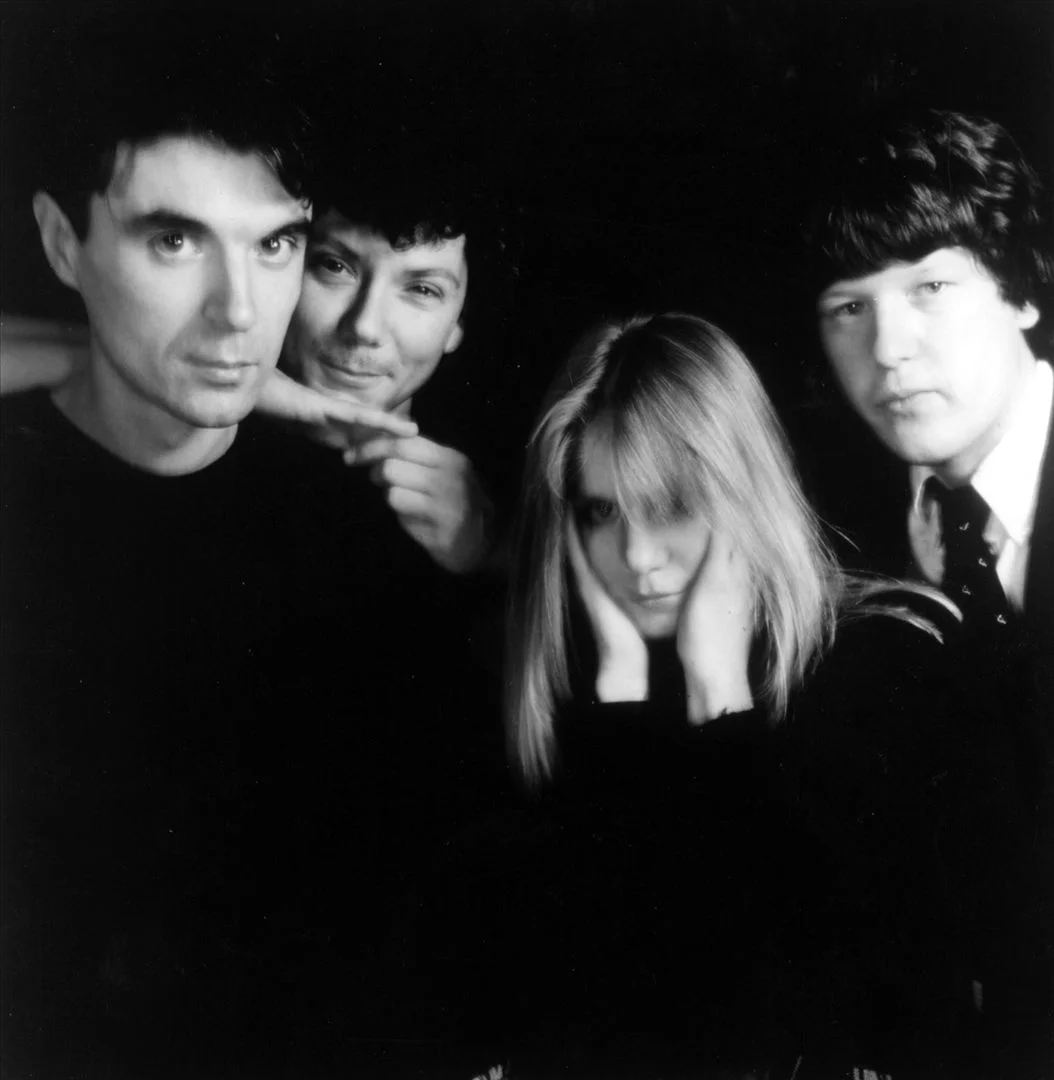
Remain in Light arrived in October, and it wasn’t interested in being a conventional guitar record. David Byrne, Tina Weymouth, Chris Frantz and Jerry Harrison were experimenting with layered rhythms and unusual musical textures alongside producer Brian Eno. It could be hypnotic, anxious, funky and strange — sometimes inside the same passage.
This was music that made the future sound not necessarily shinier, but more complicated. It wasn’t guaranteed to be the thing the school bus was singing the next morning. It was the record you might hear at a friend’s house and spend the next week trying to figure out.
The Cars were doing their own sleek trick. Their 1980 album Panorama was darker and less immediately sunny than some of their earlier hits, but that combination of sharp guitars, cool vocals and keyboards remained unmistakable. There was no law saying a rock band had to sound old-fashioned, and Ric Ocasek’s crew kept finding ways to prove it.
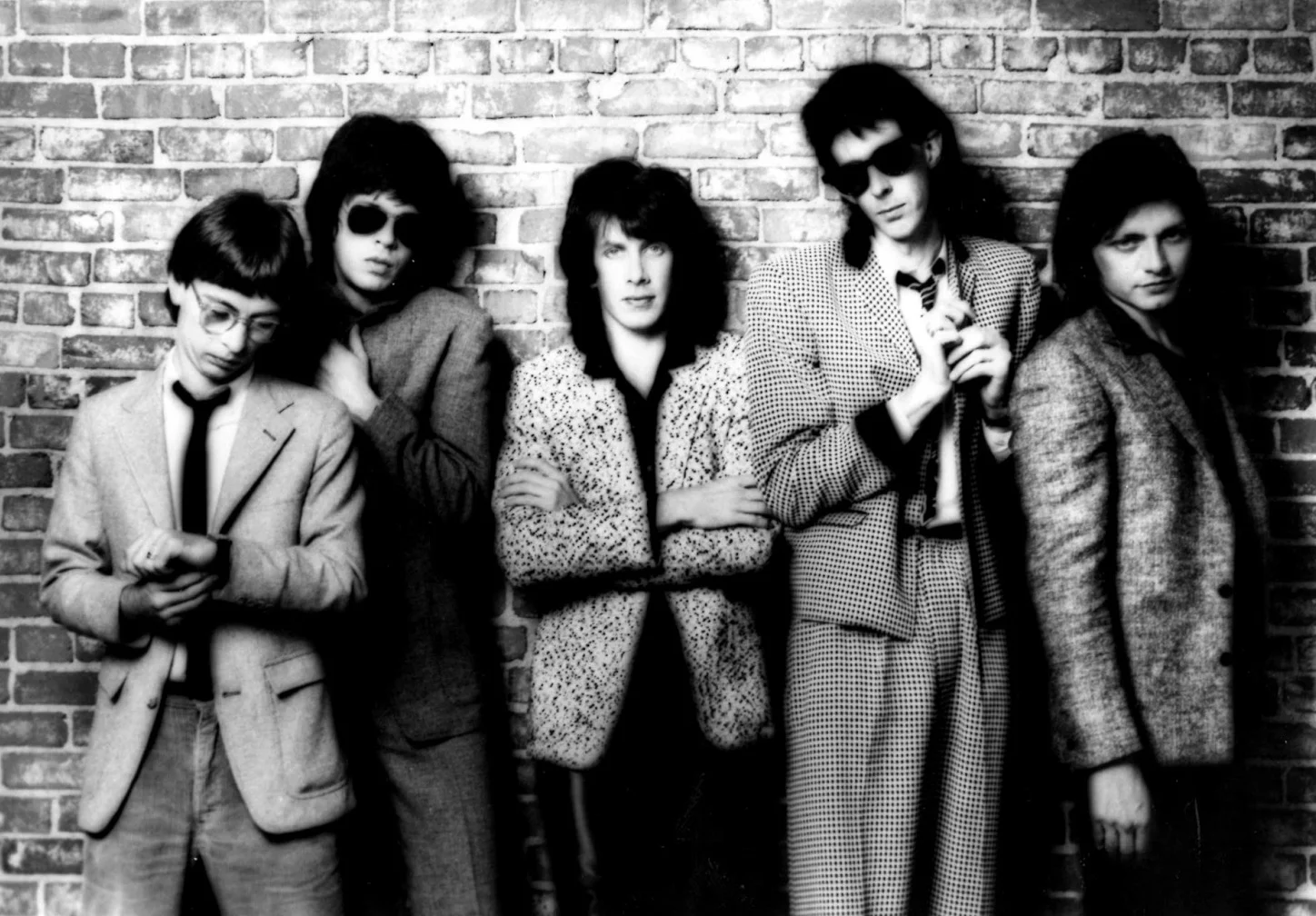
Gary Numan was a different kind of clue. “Cars” was first released in 1979 and became a U.S. hit in 1980, exactly the sort of date detail that tends to get mangled when everything is casually filed under “eighties music.” The song’s icy electronic sound made ordinary radio feel briefly as though it was broadcasting from tomorrow. That radio-to-record-store leap also earns him a spot among our 80s one-hit wonders—a category that never tells the whole story of an artist.
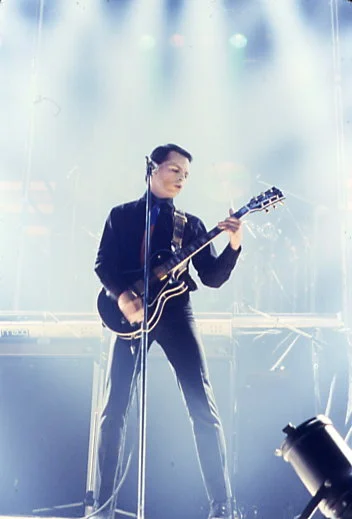
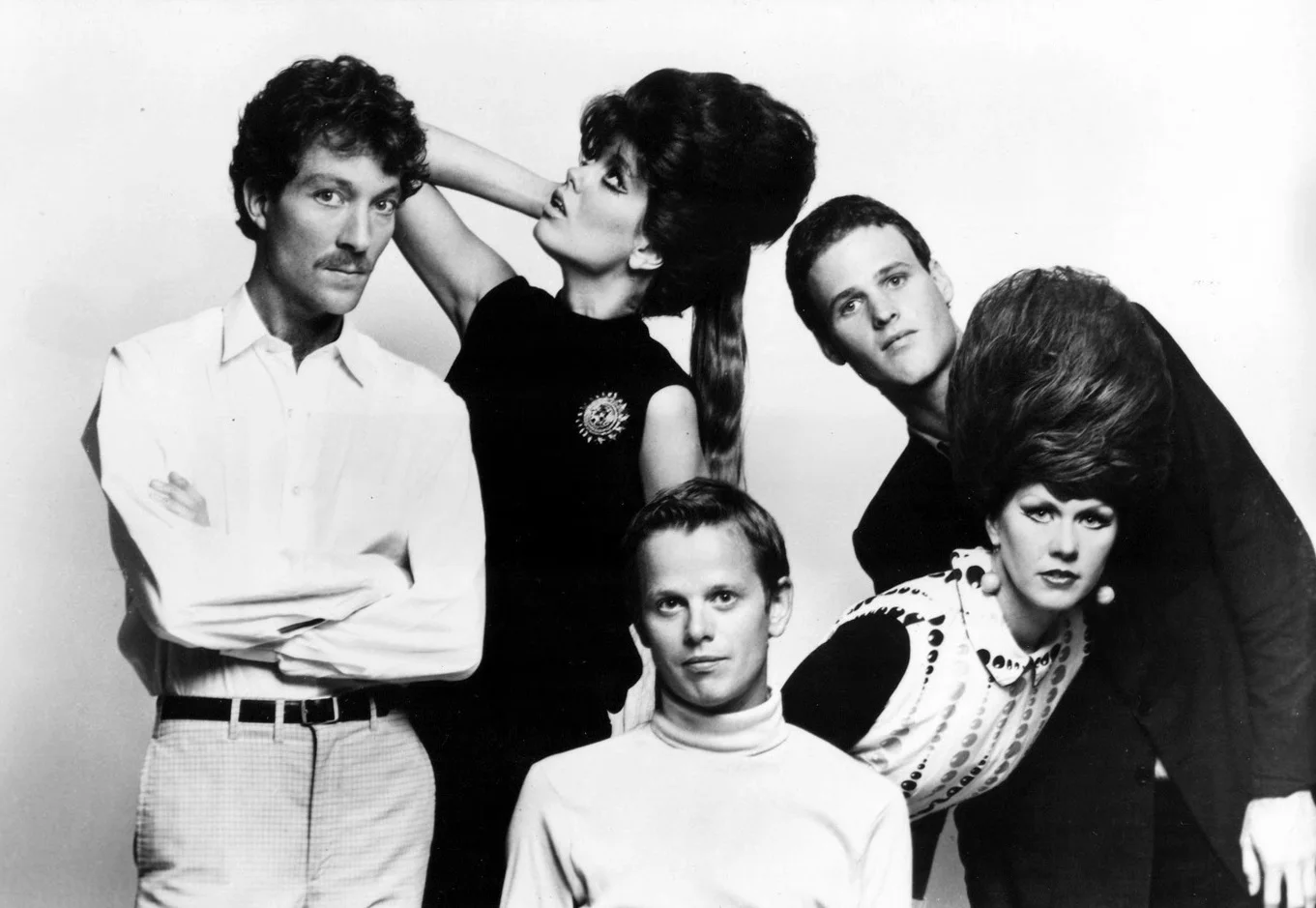
And then there were the B-52’s. Wild Planet, their second album, arrived in 1980 with “Private Idaho” and more of the cheerful, off-center energy that made the group impossible to confuse with anybody else. Their whole world sounded like a beach party happening in a science-fiction movie. It was gloriously odd, and that’s the point.
You can trace this side of 1980 into the new wave and synth-pop sounds of the eighties, but don’t confuse the early sound with the polished pop that followed. This was still a wild laboratory. Not everything had been tested, focus-grouped or assigned a music video.
Disco didn’t disappear. It changed its clothes.
If you only learned about the end of the seventies from quick nostalgia specials, you might imagine that a giant switch flipped and disco was outlawed on January 1, 1980. The reality was far more entertaining. By then the word disco could be a liability in some circles, but the rhythms, producers, players and audiences didn’t simply evaporate.
“Funkytown” by Lipps Inc. was practically a neon sign pointing into the future: crisp, repetitive, mechanical in all the right ways and impossible to ignore once it started. Diana Ross’s “Upside Down” carried the craftsmanship of Chic into a new setting. Blondie’s “Call Me” used Giorgio Moroder’s dance-floor instincts to make a rock-and-pop crossover that felt completely contemporary. Queen’s “Another One Bites the Dust” was built around a bass line that could live as comfortably in a club as it did on rock radio.
That’s an important difference between a cultural backlash and the music itself. People could argue over the label, the fashion, and the scene. They could make jokes about the clothes and declare that the party was over. The groove kept showing up in new records anyway. Funk, R&B, post-disco and emerging electronic dance sounds carried forward ideas that had already proved too useful to abandon.
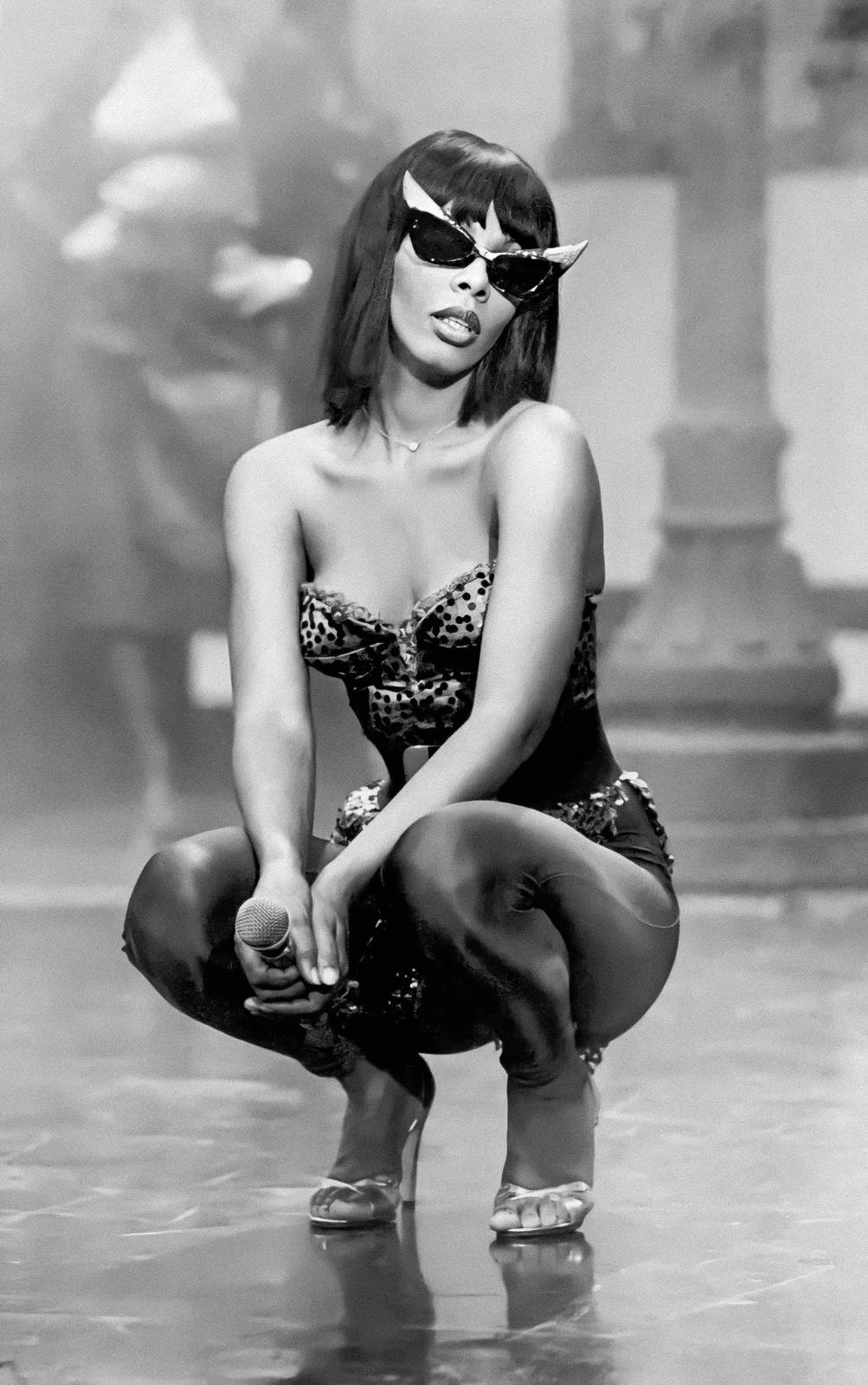
And the people listening weren’t all the same. A dance-floor record could be part of Black radio, pop radio, club culture and a teenager’s homemade cassette, sometimes without those audiences using the same language to describe it. The rhythm was doing the traveling even when the marketing departments disagreed about what to call it.
Listen to this year with your ears instead of a strict genre chart and you hear continuity everywhere. The eighties didn’t win by erasing the seventies. They rearranged the furniture, plugged in a few new machines and turned the same party into something different.
Prince was getting ready to change the conversation
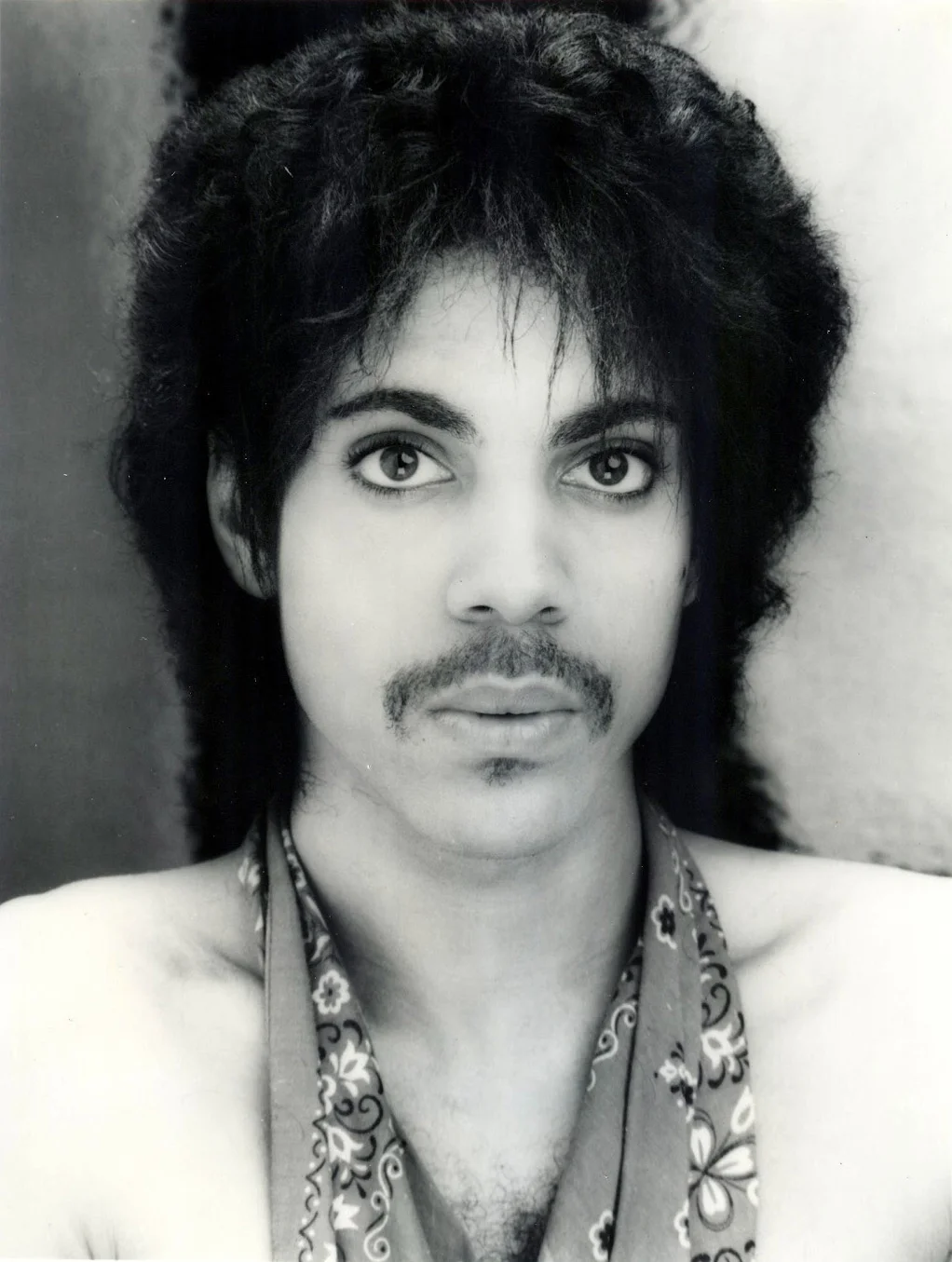
It’s easy, from today’s perspective, to picture Prince immediately in his Purple Rain years: the purple coat, the arena lights, the legend already fully formed. But go back to 1980 and there’s a younger artist pushing the boundaries of what a pop album could say or sound like.
Dirty Mind was bold, lean and provocative. Prince was folding funk, rock, new wave and his own impossible-to-file instincts into songs that didn’t sound designed for a comfortable radio format. It wasn’t the mega-commercial Prince moment yet. It was the moment when somebody with unusually large ideas decided that the usual rules were negotiable.
That mattered for the eighties to come. The most memorable artists of the decade weren’t always the ones who fit the existing categories best. Sometimes they were the ones who forced the categories to catch up.
Hip-hop was becoming a record-store reality
In the cartoon version of eighties music, hip-hop doesn’t show up until somebody in an Adidas tracksuit walks into the frame halfway through the decade. That’s a terrible way to tell the story. By 1980, DJs, MCs, dancers and neighborhood scenes had already been building a culture for years, especially in New York. The records were beginning to carry that culture beyond the parties where it had grown.
The Sugarhill Gang’s “Rapper’s Delight” arrived in 1979 and helped introduce recorded rap to a far wider audience. In 1980, Kurtis Blow released “The Breaks,” one of the first rap singles to become a major commercial milestone. It didn’t sound like the tightly edited rap records that would dominate later charts. It sounded closer to a party that had found a microphone and decided everybody needed to know about it.
Other early recordings—including work by Funky 4 + 1 and Spoonie Gee—show how quickly rap was developing its own recorded identity. But don’t mistake the records for the whole culture. Turntables, MC routines, breakdancing and graffiti were connected to a larger creative life that couldn’t be reduced to a chart position. Much of what mattered most was happening before a national pop audience knew what to listen for.
It’s also worth remembering that the first audiences for this music didn’t need permission from rock radio to decide it mattered. Hip-hop was already compelling where it was being made. Commercial records widened its reach; they didn’t create the ideas from scratch. Later landmarks like Grandmaster Flash and the Furious Five’s “The Message” (1982) and Afrika Bambaataa’s “Planet Rock” (1982) were still ahead, but the momentum was unmistakable.
For a Gen X kid in 1980, exposure depended heavily on where you lived, your age and what radio you could receive. Some listeners were hearing this music in real time. Others wouldn’t encounter it until a friend brought a tape to school a few years later. Both memories belong to the same story. The future of popular music was already being built outside the most obvious stations. For where those early records helped take the decade, revisit our 80s rap, R&B and dance guide.
The records you might not have heard on the family radio
Not every important 1980 record was going to appear between commercials for carpet stores and discount furniture. That is part of the story, too. The same year that soft rock was flourishing, punk and post-punk were taking plenty of fascinating turns.
In the United States, the Clash’s London Calling reached listeners in 1980 even though the album had first been released in the U.K. in December 1979. That’s a perfect example of why release territory matters when somebody makes an “albums of 1980” list. Different countries, different timing, same extraordinary album.
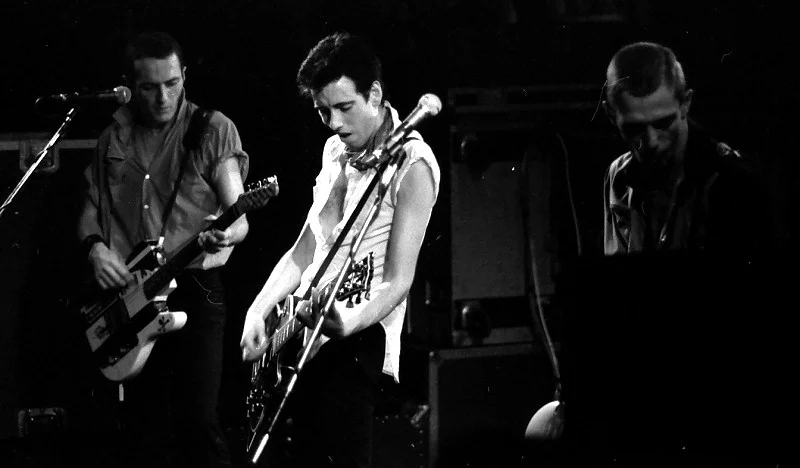
Joy Division released Closer in 1980, a chilling record that would matter enormously to generations of alternative musicians. U2 released their debut Boy. Iron Maiden issued their self-titled first album. The Cure released Seventeen Seconds. Bruce Springsteen went wide and emotionally complicated with The River. David Bowie gave the new decade his Scary Monsters (and Super Creeps).
Those records didn’t all live in the same record-store bin. Some were huge. Others were discoveries passed from friend to friend, the kind that made you feel as though you’d found a secret frequency on the dial.
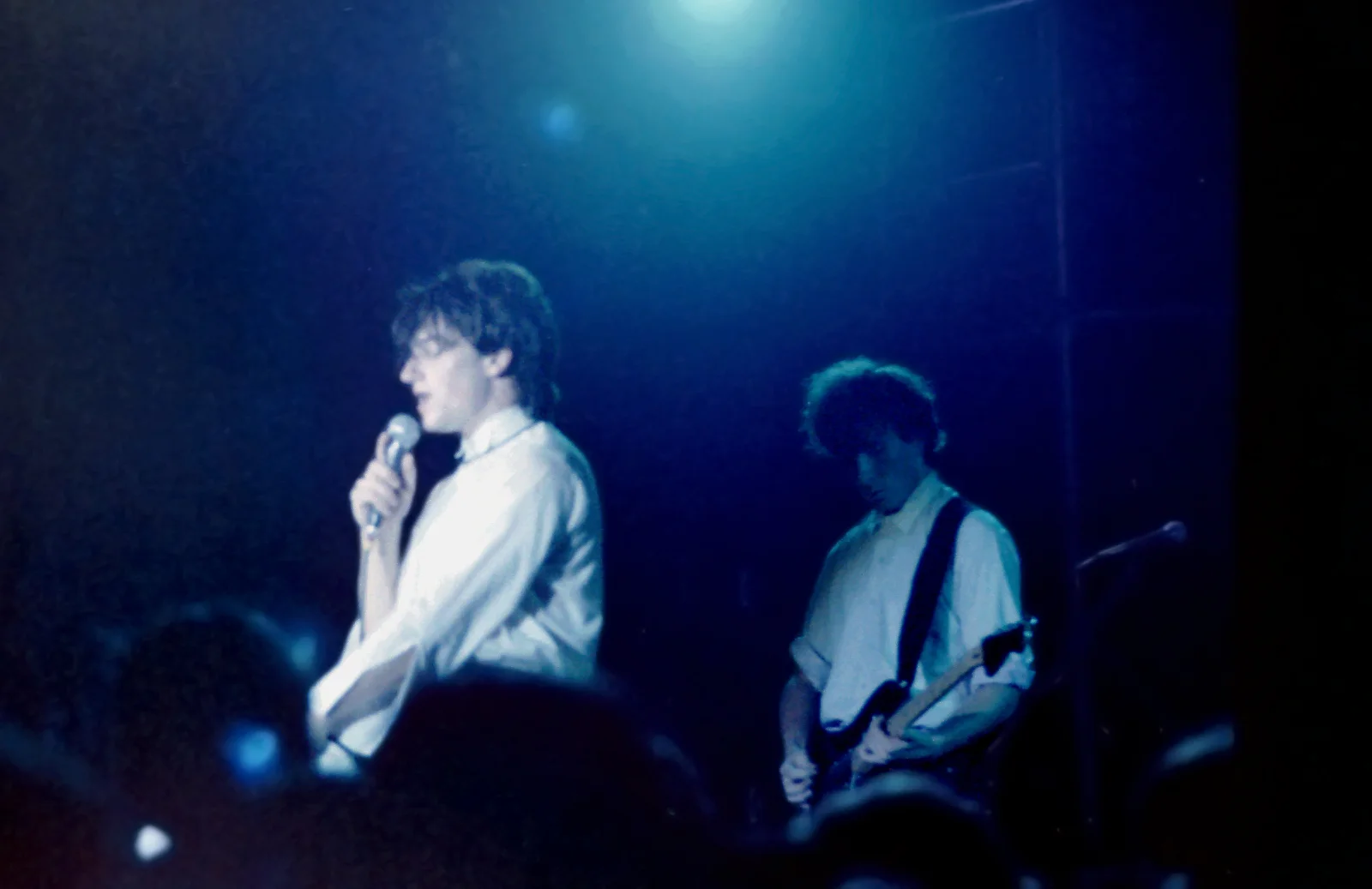
And isn’t that half the fun of remembering music? Not just what everybody knew. What you found that felt like yours.
New wave, post-punk and the records you had to find for yourself
Here is where 1980 gets especially fun. You could walk into a record shop, see an album cover you didn’t recognize and take a chance on something that sounded nothing like the records your parents owned. Maybe the gamble was a disaster. Maybe it became your entire personality for six months. Without a preview button, there was no way to know for sure.
The B-52’s Wild Planet had the energy of a band that had somehow wandered out of its own private party. Talking Heads’ Remain in Light treated repetition, percussion and texture as something much richer than ordinary rock decoration. Gary Numan was showing how synthetic sounds could support songs that felt oddly vulnerable beneath their machine-like surfaces. The Cars could put sleek keyboard parts next to sharp guitar hooks and make both feel natural.
Across the Atlantic, post-punk was moving in darker directions. Joy Division’s Closer, released in 1980, became one of the enduring records of its era. The Cure’s Seventeen Seconds explored a spare and chilly atmosphere. Siouxsie and the Banshees released Kaleidoscope, while the Jam’s Sound Affects showed another way to turn punk’s urgency into something more elaborate. You didn’t necessarily hear these albums while your family ate dinner. That was part of their appeal.
And then there were the records that don’t quite fit under a tidy new-wave label at all. David Bowie’s Scary Monsters (and Super Creeps) sounded like a performer trying to unsettle the habits he’d helped create. The Clash moved beyond the limits of straightforward punk. Japan and other art-minded acts were working in sonic colors that mainstream pop would borrow over the coming years. The decade was full of people experimenting before the audience had agreed on the terminology.
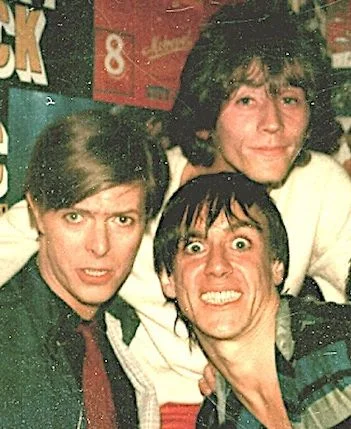
If your school had one kid who knew every import-store release, you remember how useful—and how annoying—that person could be. They always seemed to have heard the next thing first. They could also make you feel like an uncultured fool for loving Queen. But in the right mood, they’d hand you a tape that opened a new door. That is the part of musical history a release-date list can’t capture: the thrill of hearing something that sounded as though it had traveled from the future.
The albums that made 1980 bigger than its hit singles
Singles can freeze a moment in place. Albums tell you what the musicians were trying to build around it. These are not ranked, and they’re not meant to be the entire year’s record-store inventory. They’re eight quick stops worth making when you revisit 1980.
It is hard to discuss 1980 without the enormous shadow cast by Bon Scott’s death and the determination of AC/DC to continue with Brian Johnson. The album’s bells, riffs and unapologetic punch became part of rock’s shared vocabulary. It is both a mourning-and-rebuilding story and the soundtrack to countless bedrooms where the volume knob no longer had numbers on it.
Queen sounded eager to prove that being a great rock band did not mean staying inside a narrow style. “Crazy Little Thing Called Love” bounced through a rockabilly mood; “Another One Bites the Dust” made the rhythm section the main attraction. The result feels like the band looking at the changing musical weather and deciding to enjoy it rather than hide from it.
A young Prince was mixing funk, guitars, synthesizers, pop instincts and uncomfortable subjects into something unmistakably his own. It did not sound like a safe attempt to please every station. That was the attraction. This was the kind of record that might have reached you through a friend long before mainstream radio finally caught up to its creator.
Try to pin this album to one comfortable genre and it slips away. Rhythms lock together, voices move in strange patterns, and grooves stretch far beyond the usual rock-band arrangement. Listening now, it is easier to hear how adventurous the record was. Listening in 1980 must have felt like finding a station that nobody else in the car knew existed.
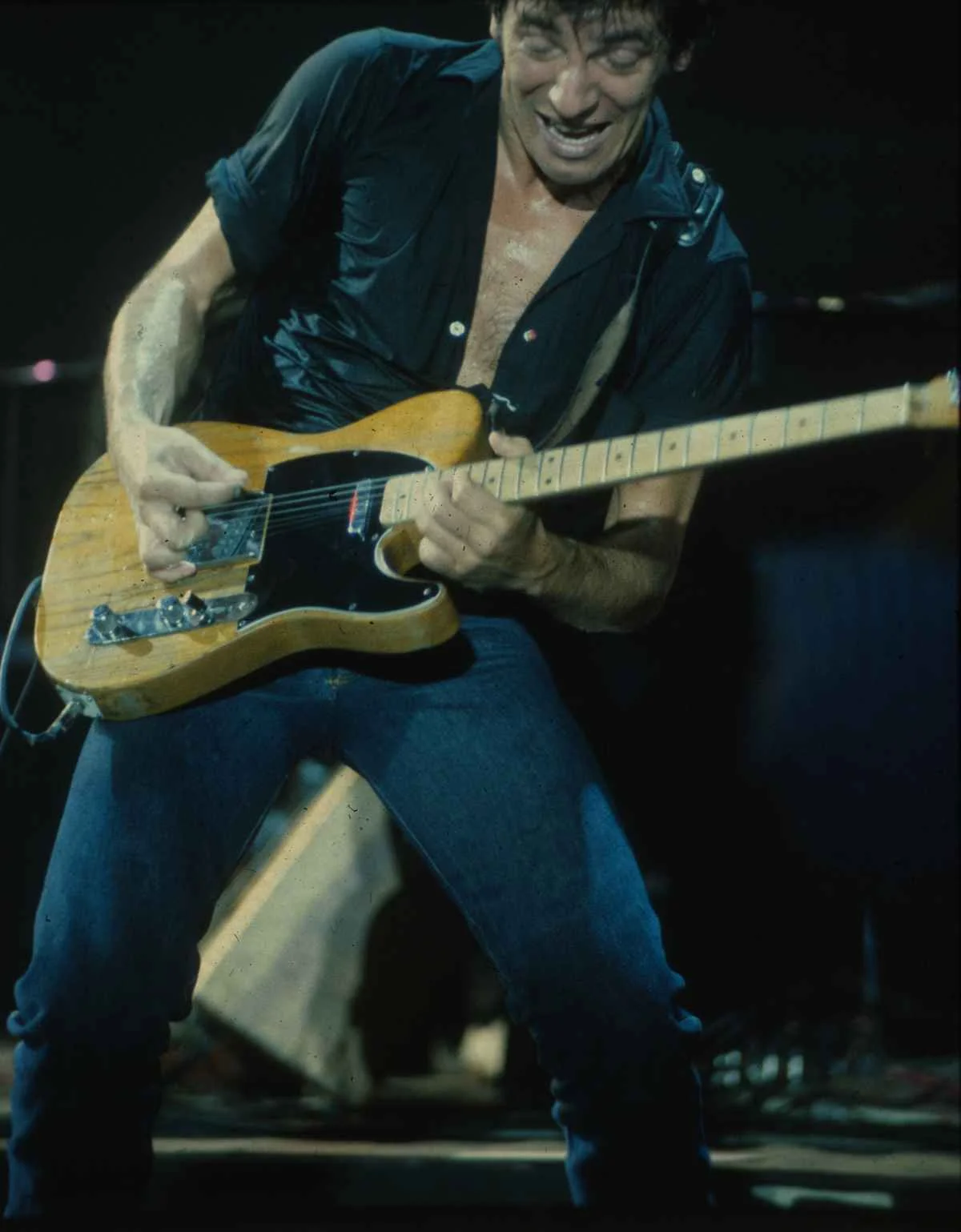
A double album big enough for party songs, aching ballads and ordinary people who could not always get what they needed. Springsteen could make a chorus sound like a neighborhood gathering, then turn around and tell a story that left the room quiet. It is proof that popular rock could be huge without losing its interest in specific lives.
This is the record to put on when everyone has become much too serious about musical categories. It is jittery, funny, danceable and entirely certain of its own weirdness. The band did not need to sound like anyone else or dress like anyone else. For listeners who felt slightly out of step with the mainstream, that confidence was a gift.
Bowie entered the decade with sharp guitars, unsettling voices and a willingness to make catchy music feel strange. “Ashes to Ashes” carried the familiar and the uncanny at the same time. The album has the sound of somebody refusing to become his own greatest-hits museum, even when the museum would have been a pretty successful business.
The debut arrived in October, long before U2 became an arena-sized institution. Listen for the nervous energy and the sense of people trying to make something enormous out of limited tools and enormous feeling. “I Will Follow” still sounds restless. It is an excellent reminder that even bands we think we know well once sounded completely new.
Benatar could make a tight, radio-friendly rock song sound fearless. “Hit Me with Your Best Shot” was not the whole album, but it became the kind of signature track that could win over the kid listening from the next room. The record belongs in any account of how much energy women were bringing to early-eighties rock.
Nile Rodgers and Bernard Edwards brought their exacting rhythmic craft to Ross, and she brought the unmistakable authority of a star. “Upside Down” and “I’m Coming Out” kept dance music moving forward when the fashionable thing was to announce disco’s funeral. This is what musical reinvention sounds like when it has a bass line worth following.
A landmark of heavy music that helped sharpen the sound and image of metal for the coming decade. The riffs are direct, the choruses memorable and the attitude unmistakable. It is not the same kind of loud as AC/DC or Van Halen, which is exactly why 1980 rock was too varied to fit in one tidy picture.
More angular and less immediately sweet than some of the Cars’ earlier singles, this album showed that the group’s keyboards-and-guitars marriage had room to get stranger. It is a good record to hear after talking about the polished pop charts: the same instruments, used to make an edgier and occasionally more anxious world.
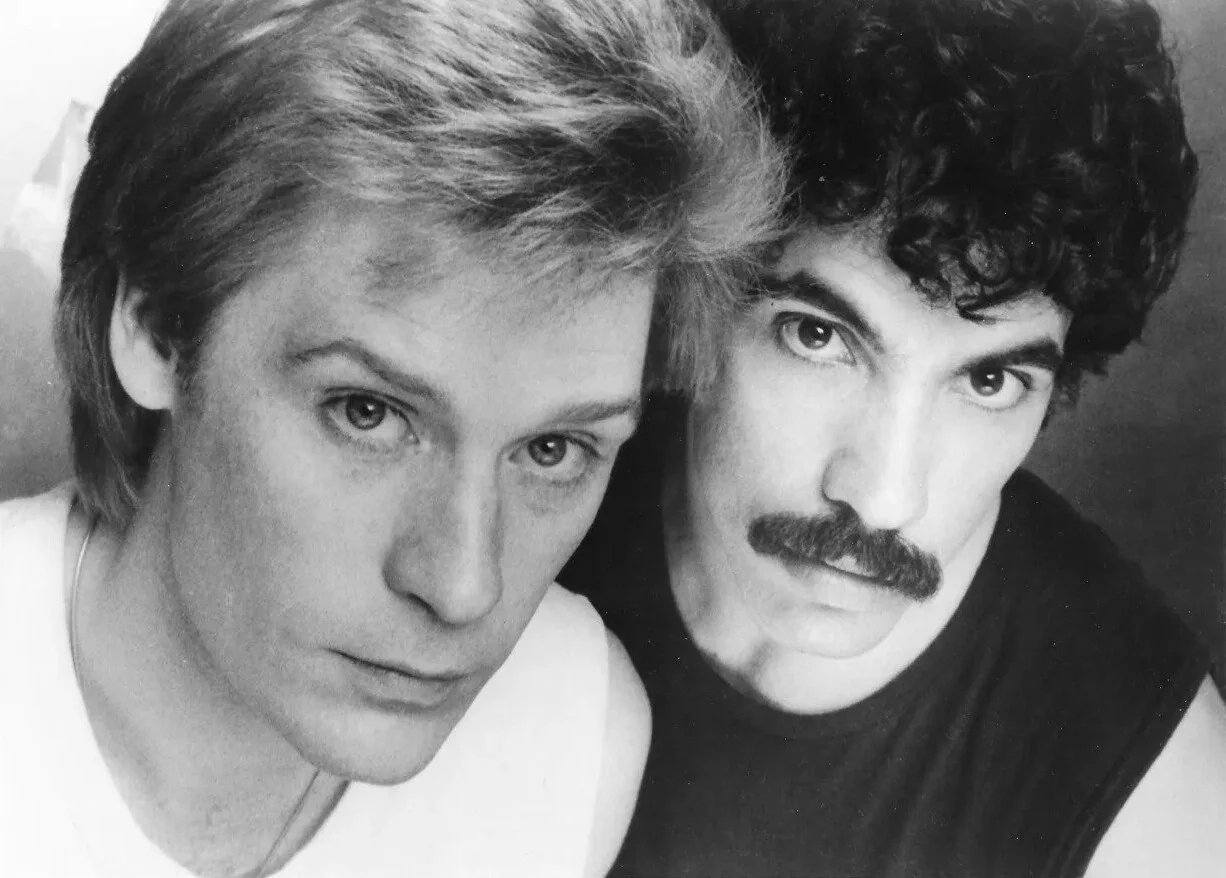
Take Hall & Oates’ Voices as an example. The album helped set up the extraordinary pop run that followed, but in 1980 it was still a reminder that polished blue-eyed soul and rock could evolve alongside new wave. The following years would make the hits sound inevitable. At the time, the future hadn’t happened yet.
Or think about Stevie Nicks and Fleetwood Mac. Tusk was a 1979 album, not a 1980 release, but the band’s music still occupied the radio atmosphere around the new decade. That’s why a history of what you actually heard in 1980 can’t be limited to the titles printed on records released between January and December.
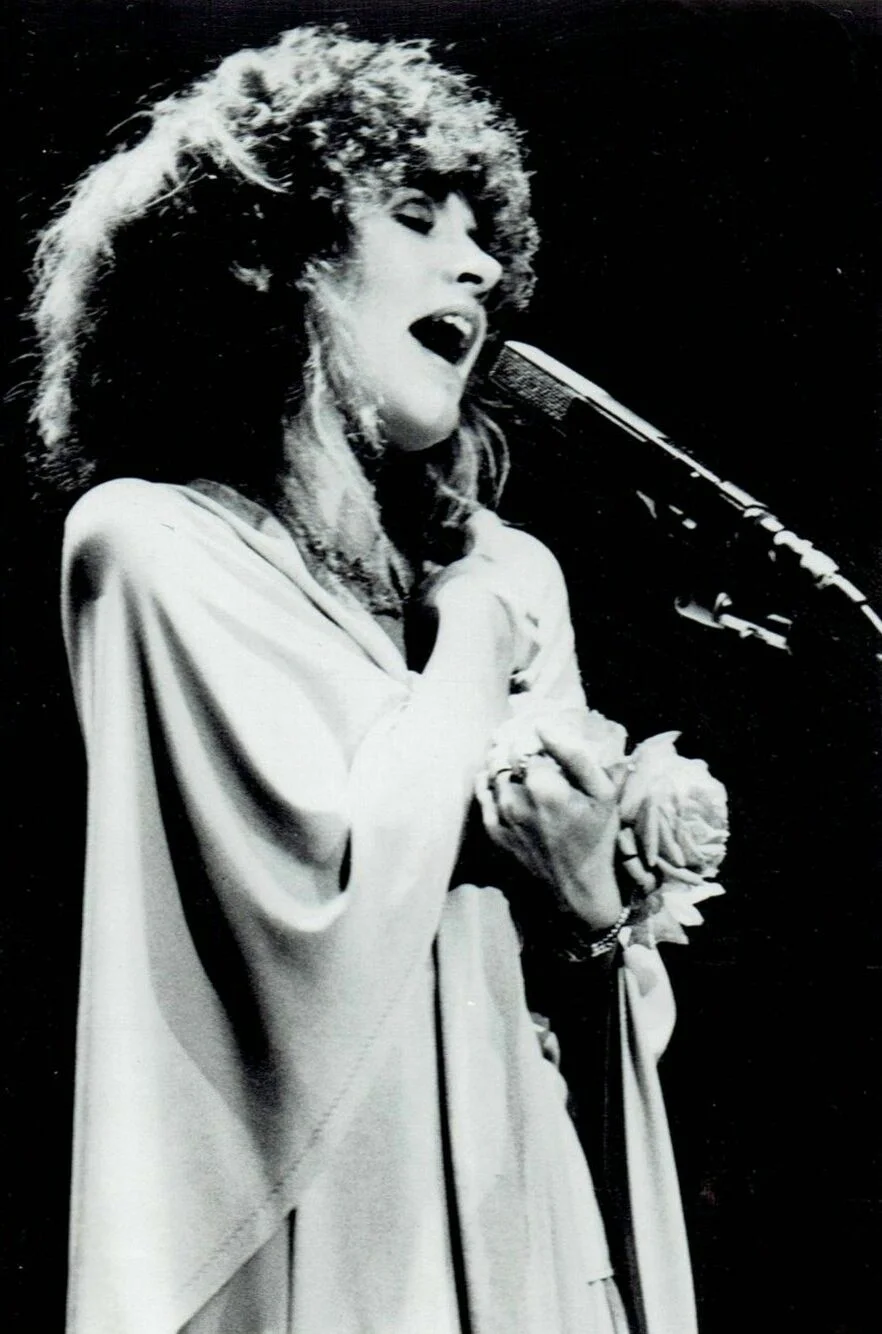
The difference between “released in 1980” and “all over the radio in 1980” may sound small. It isn’t. One is a discography. The other is a memory.
Put on the headphones. Press play. Try not to let the tape get eaten.
The movie theater was becoming another music station
Music and movies had always been friends, but in 1980 they were particularly good at getting into each other’s business. A film could create a hit. A hit could make people remember a film more fondly than they remembered its actual plot. And sometimes the song outlived the movie by a comfortable margin.
Take “Call Me.” Blondie’s recording with Giorgio Moroder was tied to American Gigolo, but you didn’t need to know anything about the movie to recognize the opening seconds. Irene Cara’s “Fame” did a different job, carrying the movie’s hunger and drama in a song built for a person who imagined they might someday leave a smaller world behind. Then there was Xanadu, whose soundtrack joined Olivia Newton-John with Electric Light Orchestra. The film had a complicated afterlife in popular memory. The music was much harder to forget.
Bette Midler’s “The Rose” is a useful calendar reminder. The film arrived in 1979, while the title song became one of the major pop hits people heard in 1980. It was another case of the listening year and the release year refusing to line up as neatly as a spreadsheet would like. Those complications are not errors in the memory; they’re clues to how music circulated.
You could come out of a movie humming a song and then spend days waiting to catch it on radio. Or you could know the song before you even understood it came from a soundtrack. That loop between theater, television commercials, record stores and radio was becoming a promotional system with enormous power. MTV would soon add another screen to the equation, but the connection between music and moving images was already firmly in place. The connection would only get bigger; our 80s movie songs collection follows the soundtracks through the rest of the decade.
The bigger point isn’t that every soundtrack song was wonderful. It’s that a movie song could become part of your own life story. Years later, the opening notes might bring back the friend you went to the theater with, the sticky floor, the giant soda, or the moment you realized that one part of a film was going to live in your head a lot longer than the rest.
The cassette was about to take a victory lap
Picture a bedroom stereo with a record spinning, a blank tape in reach and a finger hovering over the record button. That was a whole kind of anticipation. Catch the song at the right time and you had it. Miss the opening because a DJ decided to give a weather update, and you’d be trying again tomorrow.
The original Sony Walkman had appeared in Japan in 1979, and personal stereo listening began spreading as the new decade got underway. It wasn’t the first time people could hear recorded music away from home, but it was a memorable turning point for portable, private listening. The idea that your soundtrack could travel with you would become one of the defining pleasures of the eighties.
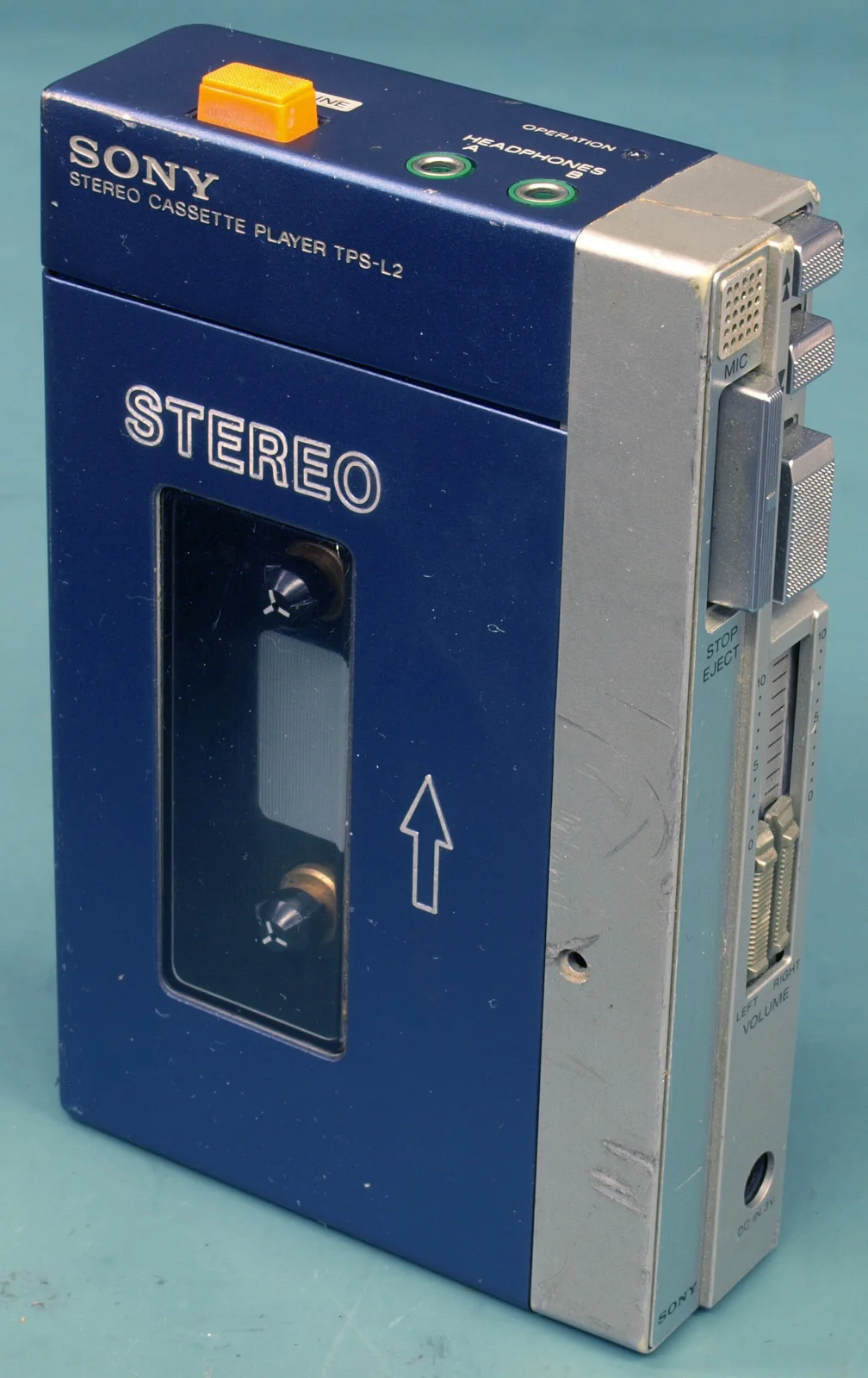
Records still mattered. So did the turntable beside the living-room speakers, the big cardboard sleeve and the ritual of lowering a needle carefully enough that an adult didn’t yell from the next room. Cassettes mattered too, especially if you wanted to bring music into the car or eventually turn a collection of favorites into your own personal radio station.
And the record store? That was more than a place to buy something. It was where covers caught your attention, where somebody behind the counter might make you feel old at sixteen, and where an album you had only heard about could suddenly become something you could hold.
Nobody needed an algorithm to tell them what the next song should be. You had curiosity, friends, radio, magazines and whatever you could afford that week. Sometimes that was plenty.
Making a mixtape was a minor engineering project
It seems ridiculous now that pressing Record at exactly the right moment could count as a skill. But there was a time when putting your favorite songs in one place involved planning, patience and the occasional four-letter word directed at a cassette deck.
If you were taping songs from the radio, the biggest enemy was the DJ. You’d wait through a commercial, hear the first beat of the record you wanted, dive for the buttons—and then somebody would announce the station’s call letters halfway through the introduction. Congratulations: your mixtape now included a local furniture-store ad and a weather forecast. It was an educational experience.
A dual-cassette deck made the process easier later in the decade, and a home stereo with an LP and tape player offered another route. But even then, you had to think about running time. Songs needed to fit on Side A and Side B. A slow ballad after three blistering rock tracks might be a genius emotional decision or an unforgivable mistake, depending on the audience. Writing a track list in tiny letters on a cassette insert was its own art form.
None of that was universal in January 1980; equipment and habits evolved through the eighties. But the portable cassette’s rise helped turn music into something you could choose, arrange, carry and give away. A tape made for someone else wasn’t just a collection of songs. It was an argument about taste, an introduction, an apology or a declaration, depending on who received it.
You might laugh at the technology now. You probably remember the feeling of handing over the tape. The machinery was awkward. The gesture wasn’t.
December brought a loss that changed the year forever
Any honest look at 1980 music has to end up here eventually.
John Lennon returned to recording with Yoko Ono for Double Fantasy, released in November. It was a major moment after years away from making new solo albums. Then, on December 8, 1980, Lennon was murdered in New York City.
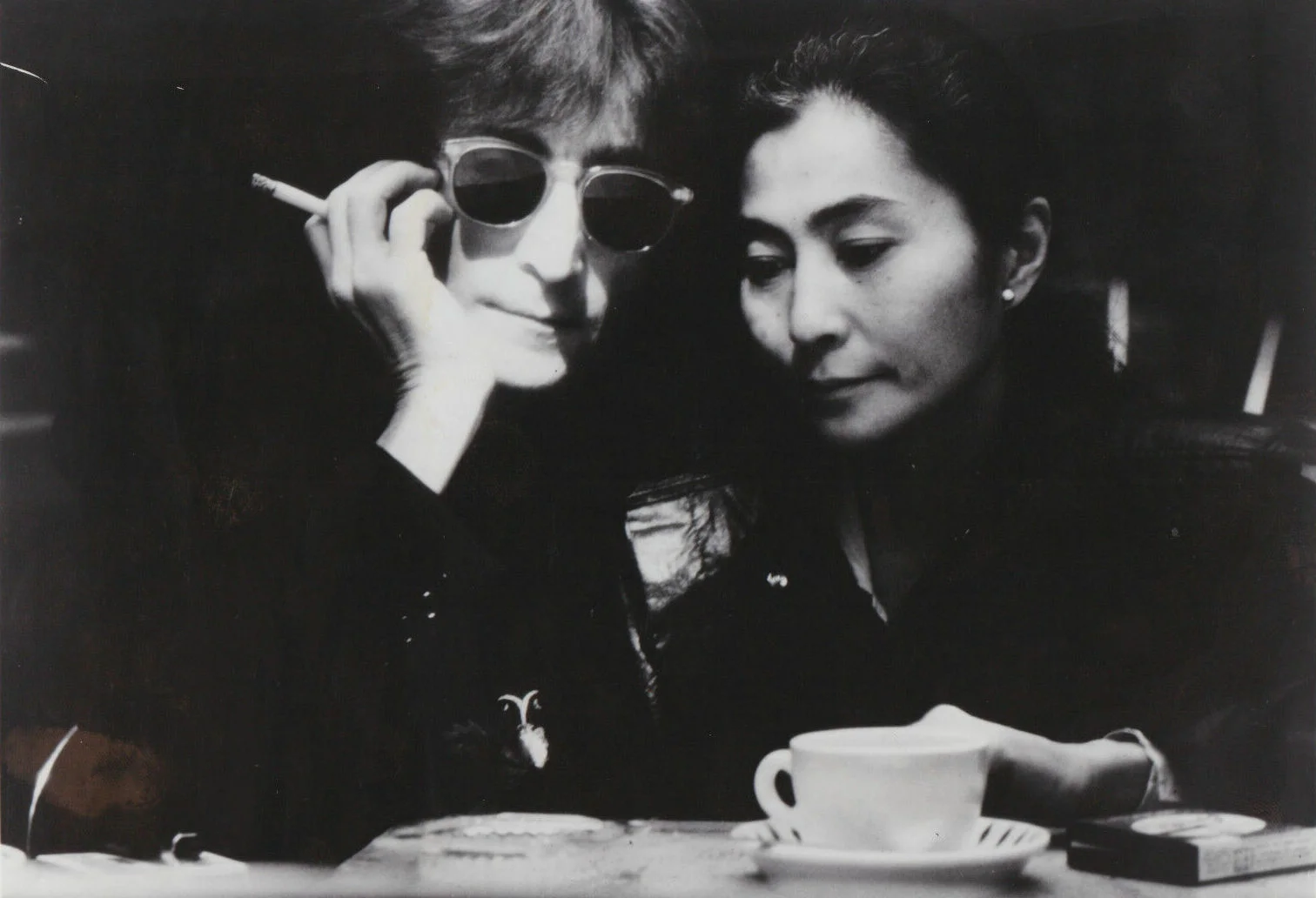
For people who grew up with the Beatles, the news was devastating. For younger listeners who knew Lennon as a name on their parents’ records — and perhaps as the voice of a new song on the radio — it was a different kind of jolt. Music wasn’t merely the thing playing while you got ready for school. It had history. It had people behind it. And those people could disappear.
The grief and attention surrounding Lennon’s death stretched into 1981. His single “(Just Like) Starting Over” and the album Double Fantasy took on a meaning no release plan could have anticipated. The year’s last few weeks felt different from its first few months, for reasons nobody would have wished for.
There’s no clever punch line to put on that part of the story. It deserves to sit there, in the record, exactly as it was.
Twelve records worth pulling out for a 1980 listening night
If you’re spending an evening with this year, don’t think of these as a scientific ranking. Think of them as the records you pull from different stacks because each one opens another door. A few were born in 1979 and were still part of 1980’s soundtrack; others were unmistakably new that year. The point is the contrast.
- “Call Me” — Blondie. Flashing city lights, an unstoppable beat and a band demonstrating how to cross genres without losing its identity.
- “Rock with You” — Michael Jackson. The Off the Wall album was from 1979; the single was a major part of the 1980 radio experience.
- “Another One Bites the Dust” — Queen. A bass line so memorable that the rest of the instruments have to wait their turn.
- “Magic” — Olivia Newton-John. Movie-pop escapism delivered with remarkable confidence.
- “Upside Down” — Diana Ross. A powerhouse groove from the Rodgers-Edwards partnership.
- “Funkytown” — Lipps Inc. The future of electronic dance music announcing itself in extremely catchy fashion.
- “Hit Me with Your Best Shot” — Pat Benatar. Rock-radio toughness with an enormous chorus.
- “Sailing” — Christopher Cross. The soft-rock side of the decade, polished until it practically gleams.
- “The Breaks” — Kurtis Blow. A major early recorded-rap milestone, with energy that started far beyond the pop charts.
- “Once in a Lifetime” — Talking Heads. Appearing on Remain in Light in 1980, a song whose mainstream afterlife continued to unfold later.
- “Hungry Heart” — Bruce Springsteen. A hit single that makes a sprawling double album feel immediately approachable.
- “(Just Like) Starting Over” — John Lennon. A late-year return heard differently after December 8.
Notice how little these recordings have in common at first. That’s the pleasure. Let them play in sequence and they start answering each other. You hear a culture experimenting with polish and rough edges, deep groove and loud guitars, romantic certainty and uneasy questions. You hear the end of one era without the next era being fully written.
A 1980 timeline for the side of the fridge
Dates are easier to remember when they come with a sound. Here are a few real milestones to pin to the calendar—not the only things that mattered, but moments that show how much was happening at once.
- Early 1980: “Rock with You,” from Michael Jackson’s 1979 Off the Wall, is a major chart presence. It is a perfect case of a 1979 album defining part of the following year.
- Summer 1980: Queen releases The Game, and the band continues moving across rock, pop and dance rhythms.
- July 25: AC/DC releases Back in Black in the U.S. and U.K. after the death of Bon Scott, with Brian Johnson now singing.
- 1980: Diana Ross’s diana, featuring her collaboration with Nile Rodgers and Bernard Edwards, brings “Upside Down” and “I’m Coming Out.”
- October 8: Prince releases Dirty Mind, a lean, provocative album that points to much of the work still ahead of him.
- October 17: Bruce Springsteen releases The River, his sprawling double album of house-party songs and harder personal stories.
- October 20: U2 releases its debut album Boy, years before the band becomes an arena-rock giant.
- November 17: John Lennon and Yoko Ono release Double Fantasy.
- December 8: Lennon is murdered outside his New York home. The year closes in grief.
The calendar doesn’t replace the records. It gives the records a little context. It reminds us how easy it is, with decades of hindsight, to pack a huge number of unrelated stories into one neat label: “eighties music.” In 1980, none of it was neat. That was the point.
So what did 1980 actually sound like?
It sounded like Blondie proving a rock band could own a dance floor. Queen making a bass line feel like a headline. AC/DC rebuilding around the kind of riffs you could recognize from the other side of a parking lot. The Cars and Talking Heads giving guitars and synthesizers new jobs. Prince leaving fingerprints all over a musical future that hadn’t quite caught up to him.
It also sounded like Olivia Newton-John, Christopher Cross, Diana Ross, the Police, Pat Benatar and about a hundred songs you know within three notes, even if you couldn’t tell someone what year they came out without cheating.
Most importantly, 1980 sounded like a decade discovering what it could become. MTV wasn’t on the air yet; it launched on August 1, 1981. The next wave of giant video stars, stadium spectacles and ultra-polished pop records was still ahead. But a lot of the ingredients were already sitting on the table. Those 80s pop and MTV hits were still just around the corner.
You didn’t have to predict the future. You just had to turn on the radio.
A few quick questions before we turn the dial
What was the biggest Billboard song of 1980?
Blondie’s “Call Me” ranked No. 1 on Billboard’s U.S. Hot 100 year-end chart for 1980. That’s a full-year ranking, not a list of the songs that reached No. 1 in an individual week.
Did MTV begin in 1980?
No. MTV launched on August 1, 1981. The musical changes that helped make it successful — new wave, pop image-making, memorable visuals and a growing appetite for music television — were already taking shape in 1980.
What important albums came out in 1980?
Among the best-known and influential releases were AC/DC’s Back in Black, Bruce Springsteen’s The River, Prince’s Dirty Mind, Talking Heads’ Remain in Light, Queen’s The Game, the B-52’s Wild Planet, U2’s Boy and David Bowie’s Scary Monsters (and Super Creeps). Their styles were dramatically different, which is part of what makes the year interesting.
Was disco really dead by 1980?
No. The disco boom had lost some mainstream momentum, but dance music remained enormously popular and influential. “Funkytown,” “Upside Down,” and the dance-rock pulse of “Call Me” are good reminders that musical styles don’t disappear just because the mood around them changes.
What 1980 gave the rest of the decade
The easiest mistake is to treat 1980 as a rough draft of the “real” eighties—as though music history was simply waiting for MTV, Thriller and the biggest stadium tours to arrive. But the rough edges are why this year matters. Rock artists were bending toward dance rhythms. Electronic instruments were making themselves heard in new places. Women were making some of the year’s most distinctive records. Hip-hop was moving from local scenes onto commercially released records. And album-oriented bands were making music that would keep echoing years later.
The next decade wasn’t going to belong to just one of those sounds. It was going to belong to all of them, often fighting over the same speakers. That’s why a year-in-music page should feel like opening a crowded record-store door, not reading a list of release dates. You should come away remembering a chorus, picturing a cover, and wanting to hear the record again.
So maybe your 1980 was a cassette on the bus. Maybe it was your parents’ favorite easy-listening station. Maybe it was the older kid down the block who had Back in Black and acted like he’d personally invented loud music. Maybe it was discovering that Gary Numan and Queen and Diana Ross could coexist in the same world. There wasn’t a single correct soundtrack. There were millions of them.
That’s the 1980 we want to remember: not a year sitting politely between the seventies and eighties, but a year with the dial turned up and every room playing something different.
What do you remember hearing in 1980?
Maybe you were playing a record you technically weren’t supposed to touch. Maybe an older brother had Back in Black going loud enough to rattle the hallway. Maybe “Call Me” was coming out of every radio on the block. Or maybe you were still trying to figure out why a band called the B-52’s sounded like that.
What was the song or album that made 1980 yours? Tell us in the comments. And if you’re in the mood to keep the radio on, head back to the 80s music collection, revisit the actual 1980 Billboard year-end hits, or take a turn through the rock and new wave shelves. They were all playing at the same time — which is exactly why the year was so much fun.
Photo credits, image licenses and research sources
Photographs appear in the story without distracting links beneath them. Source, photographer and license details are preserved here. Images were resized and converted to WebP for the article.
- Blondie: Brian McLaughlin / Chrysalis Records — Commons: PD-US-1978-89. Source photo
- Queen: Mark James Miller — CC BY-SA 3.0 — credit and share-alike conditions. License terms · Source photo
- Acdc: kitmasterbloke — CC BY 2.0 — attribution required. License terms · Source photo
- Talking: Sire Records publicity photograph — Commons: PD-US-1978-89. Source photo
- Cars: Lynn Goldsmith / Elektra Records — Commons: PD-US-1978-89. Source photo
- Gary: Jean-Luc Ourlin — CC BY-SA 2.0 — credit and share-alike conditions. License terms · Source photo
- B52: Lynn Goldsmith / Warner Bros. Records — Commons: PD-US-1978-89. Source photo
- Prince: Warner Bros. Records publicity photograph — Commons: PD-US-1978-89. Source photo
- Clash: Helge Øverås — CC BY-SA 4.0 — credit and share-alike conditions. License terms · Source photo
- Hall: RCA Records publicity photograph — Commons: PD-US-1978-89. Source photo
- Walkman: Binarysequence — CC BY-SA 4.0 — credit and share-alike conditions. License terms · Source photo
- Stevie: Warner Bros. Records publicity photograph — Commons: PD-US-1978-89. Source photo
- Lennon: Kishin Shinoyama / Geffen Records publicity photograph — Commons: PD-US-1978-89. Source photo
- Dolly: Unknown photographer / television publicity image — Commons: PD-US-1978-89. Source photo: Wikimedia Commons
- Diana: Hans van Dijk / Anefo / Nationaal Archief — CC BY-SA 3.0. Source photo: Wikimedia Commons · License terms
- Benatar: Chrysalis Records publicity image; digitally colorized on Wikimedia Commons — Commons: PD-US-1978-89 (1981 photo); digitally colorized. Source photo: Wikimedia Commons
- Ozzy: Andrew King — CC BY-SA 2.0. Source photo: Wikimedia Commons · License terms
- Priest: Watt Dabney — CC BY-SA 2.0. Source photo: Wikimedia Commons · License terms
- Donna: ABC publicity photograph, photographer uncredited — Commons: PD-US-1978-89 (publicity image). Source photo: Wikimedia Commons
- Bowie: Ivan Kral — CC BY-SA 4.0. Source photo: Wikimedia Commons · License terms
- U2: P. Douglas Middlemiss — CC BY-SA 4.0. Source photo: Wikimedia Commons · License terms
- Springsteen: Carl Lender — CC BY 2.0. Source photo: Wikimedia Commons · License terms
Selected history references
- Billboard year-end songs of 1980
- AC/DC — Back in Black (official 1980 release)
- Prince — Dirty Mind (official discography)
- Bruce Springsteen — The River (official album)
- U2 — Boy (official album)
- Sony — Walkman history
- Rock Hall — Early Hip-Hop playlist
- PBS — John Lennon in 1980
- MTV launched August 1, 1981
- Diana Ross — Diana album