80s Pop & MTV Hits: 25 Songs That Owned the Video Era

80s Pop & MTV Hits

80s Pop & MTV Hits: 25 Songs That Owned the Video Era

The 80s did not merely give us pop songs. It gave us pop songs with fog machines, leather jackets, animated pencil sketches, synchronized attitude, exploding hair, and videos that made every living room feel like it had accidentally subscribed to cable. MTV turned music into a full-body experience, and suddenly a song had to sound great, look expensive, and survive being watched after school while someone yelled that dinner was ready.

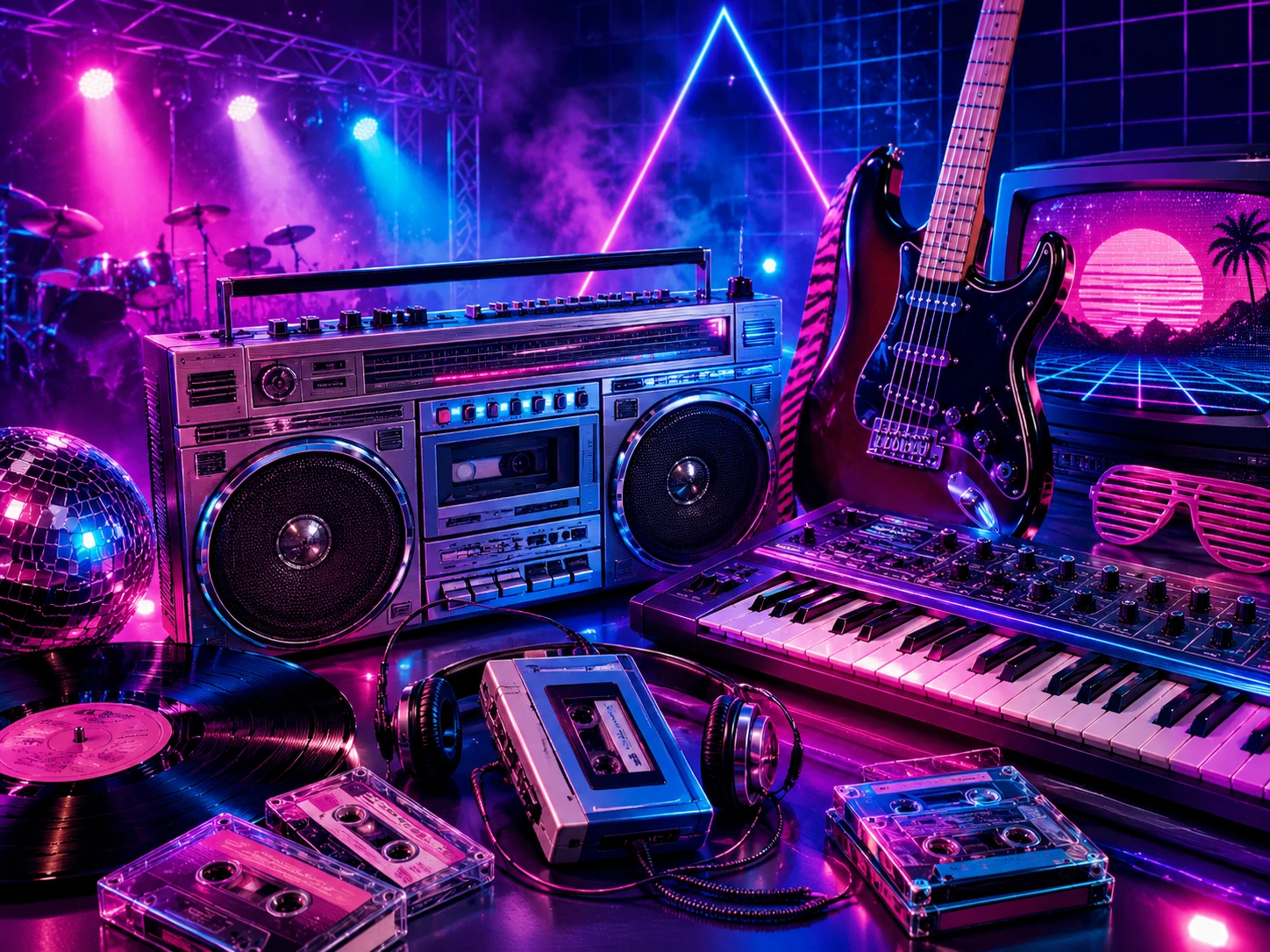
80s pop and MTV hits collage with neon colors, cassette tapes, boombox, guitar, and video-era music nostalgia

When the song had to look good, too.

Michael Jackson. Madonna. Prince. Duran Duran. Cyndi Lauper. A-ha. The 80s pop machine did not come quietly. It arrived with eyeliner, choreography, and a video budget.

When Pop Music Got a Glow-Up

Before MTV fully kicked in the door, a hit song could live mostly on radio, record stores, jukeboxes, and somebody’s older sibling’s stereo. Then the 80s showed up wearing sunglasses indoors and said, “Cute song. But what does it look like?” Suddenly, videos mattered. Style mattered. Hair mattered way more than society was emotionally prepared for.

This is the lane where 80s pop became giant: the songs that crossed over from radio into television, mall culture, movie soundtracks, dance floors, school gyms, sleepovers, and bedroom walls covered in posters. Some were pure pop. Some were rock in a shiny jacket. Some were new wave with a camera crew. Some were R&B, dance, or soundtrack hits that MTV helped turn into pop-cultural wallpaper.

For the full decade rewind, jump back to the 80s Music hub. For the yearly countdowns, start with 1983 songs, 1984 songs, and 1985 songs, because the middle of the decade was basically the Super Bowl of pop excess.

Listen to the 80s Pop & MTV Hits Playlist

Press play and let the synths, drum machines, power choruses, cable-TV flashbacks, and mall-speaker memories do what they came here to do. Warning: may cause sudden urge to adjust tracking on a VCR that is not there.

The 25-Song Pop & MTV Hit List

# Song Artist Year Why It Belongs Here
1 Thriller Michael Jackson 1983 The video-era monster. Literally. Pop music, horror movie, choreography, and event television all wearing one red jacket.
2 Like a Virgin Madonna 1984 The moment Madonna stopped being a rising pop star and became a full cultural weather system.
3 When Doves Cry Prince 1984 Minimal, strange, sexy, dramatic, and completely Prince. The 80s did not deserve him, but took the gift anyway.
4 Hungry Like the Wolf Duran Duran 1982 MTV made Duran Duran look like a vacation, a fashion shoot, and a spy movie all at once.
5 Take On Me a-ha 1985 A perfect synth-pop hook attached to one of the most unforgettable videos of the entire decade.
6 Girls Just Want to Have Fun Cyndi Lauper 1983 Loud clothes, louder personality, and a chorus that could survive any sleepover, skating rink, or mall speaker.
7 Sweet Dreams (Are Made of This) Eurythmics 1983 Cold synths, sharp visuals, and Annie Lennox looking cooler than everyone in the building.
8 Sledgehammer Peter Gabriel 1986 The video was so creative it made half the decade look like it had been filmed in a furniture store.
9 Money for Nothing Dire Straits 1985 A hit song about MTV that became an MTV staple. The snake ate its own neon tail.
10 Every Breath You Take The Police 1983 Sleek, moody, massive, and somehow mistaken for romance by an alarming number of school dances.
11 I Wanna Dance with Somebody Whitney Houston 1987 Pure 80s joy, huge vocals, bright video energy, and a chorus that still knows exactly what it is doing.
12 Faith George Michael 1987 Leather jacket, jukebox, guitar riff, perfect stubble. The man weaponized casual leaning.
13 Rhythm Nation Janet Jackson 1989 Choreography, message, military precision, and the sound of pop entering the next decade early.
14 Livin’ on a Prayer Bon Jovi 1986 Pop-metal became a singalong sport, and every chorus suddenly needed to be yelled from a moving vehicle.
15 Jump Van Halen 1984 A rock band discovered keyboards and accidentally helped define mid-80s pop-rock brightness.
16 Everybody Wants to Rule the World Tears for Fears 1985 Glossy, thoughtful, anxious, beautiful — basically the 80s staring at itself in a chrome toaster.
17 Don’t You (Forget About Me) Simple Minds 1985 The Breakfast Club made it eternal. One fist in the air and every Gen X hallway memory comes back.
18 Karma Chameleon Culture Club 1983 Bright, catchy, colorful, and practically engineered to live on pop radio until the sun burned out.
19 Wake Me Up Before You Go-Go Wham! 1984 Relentlessly cheerful, aggressively bouncy, and dressed like the 80s had eaten a highlighter.
20 Walk Like an Egyptian The Bangles 1986 A novelty-adjacent pop smash that somehow became cool, catchy, and completely inescapable.
21 Never Gonna Give You Up Rick Astley 1987 Before the internet got its hands on it, this was just a gigantic late-80s pop hit with industrial-strength drums.
22 Straight Up Paula Abdul 1988 Dance-pop stepping into the spotlight, complete with sharp choreography and late-decade attitude.
23 All Night Long (All Night) Lionel Richie 1983 Warm, smooth, enormous, and proof that the 80s could party without needing a fog machine. Usually.
24 Rebel Yell Billy Idol 1983 Punk sneer polished into MTV gold. Bleach, leather, fist pumps, and a chorus built for bad decisions.
25 Addicted to Love Robert Palmer 1986 Stylized, icy, instantly recognizable, and copied by basically every parody department for the next 40 years.

The Songs That Made MTV Feel Like a New Planet

#1

“Thriller” — Michael Jackson

“Thriller” did not feel like a regular music video. It felt like somebody had figured out how to make Halloween, choreography, pop superstardom, and cable television all happen at the same time. For kids watching MTV, this was not just a song. This was an event you talked about at school the next day like it had aired from space.

The lifestyle memory around “Thriller” is almost bigger than the track itself. It was sleepovers where everyone waited for the long version. It was parents pretending they were not impressed. It was siblings arguing over whether the zombie dance was scary, cool, or both. It was the kind of video that made a living room with orange carpet feel like a movie theater, even if the TV weighed as much as a small Buick.

Michael Jackson turned the music video into appointment viewing. Suddenly every pop star needed visuals, story, style, lighting, and preferably at least one dance move your cousin would attempt badly in the living room. Before “Thriller,” a video helped sell a song. After “Thriller,” the video could become the song’s entire mythology.

For Gen X, this is one of those pop-culture memories that exists in multiple formats: the record, the cassette, the VHS dub, the red jacket, the dance, the Vincent Price voice, the schoolyard reenactments, and the strange pride of knowing you saw it back when it still felt dangerous enough to make adults ask, “What exactly are you watching?”

#2

“Like a Virgin” — Madonna

1984 Songs 1984 #1 Hits Video Pop Reinvention

Madonna understood the 80s pop rulebook before most people knew there was a rulebook: the song mattered, but the image made it detonate. “Like a Virgin” was catchy, controversial, theatrical, and perfectly timed for a decade that loved being shocked in a shopping mall.

This was not background music. This was identity music. Lace gloves, rubber bracelets, teased hair, crucifix jewelry, attitude, and a hook that cut through Top 40 radio like a neon switchblade. You did not simply hear Madonna in the mid-80s. You saw her copied in school hallways, on bedroom walls, at dances, and on girls who suddenly realized pop stars could be self-invented instead of manufactured by someone else’s boring committee.

The lifestyle piece is huge here. “Like a Virgin” lived in the land of mall fashion, teen magazines, cable TV, tabloid panic, and parents who were very concerned, which of course made the song even more powerful. Nothing made an 80s kid pay attention faster than adults saying something was inappropriate. That was basically free advertising.

Madonna made pop feel like a costume box and a power move at the same time. She did not just sell a song; she sold reinvention as a lifestyle. New look, new era, new controversy, new posters. The 80s loved big personalities, and Madonna arrived like she had already read the decade’s diary.

#3

“When Doves Cry” — Prince

Prince did not make pop songs like everyone else. “When Doves Cry” was stripped down, weird, emotional, and magnetic, with enough mystery to make every other song on the radio sound like it had arrived wearing sensible shoes.

This was the kind of song that made the 80s feel more adult than kids were probably ready for. It was dramatic, stylish, romantic, tense, and strange. You could hear it on the radio, see it tied to Purple Rain, and feel like some grown-up world of motorcycles, heartbreak, eyeliner, and purple lighting existed just beyond your suburban cul-de-sac.

In the MTV era, Prince was not just heard. He was watched, studied, copied, misunderstood, and worshipped by kids who had no idea what half of it meant but knew it was cooler than anything happening in algebra. He made mystery feel like part of the song. You did not need every answer. You just needed the beat, the stare, and the sense that something forbidden was happening in four minutes.

“When Doves Cry” also represents the 80s at its most theatrical. It was pop, rock, funk, soul, film, fashion, and persona all fused together. Prince did not decorate the decade; he bent it around himself. Which is obnoxious if anyone else does it, but completely acceptable when you are Prince.

#4

“Hungry Like the Wolf” — Duran Duran

1982 Songs New Romantic Gloss

Duran Duran were practically designed for MTV: stylish, exotic-looking, slightly dangerous, and always appearing like they were late for a yacht-based spy mission. “Hungry Like the Wolf” made the band feel less like a group and more like an imported lifestyle choice.

The song had the hook, but the video had the fantasy. For a generation watching from wood-paneled living rooms, it looked impossibly glamorous. Jungles, travel, fashion, sweat, mystery, and dudes with hair so sculpted it probably required its own travel visa. Meanwhile, the rest of us were eating microwave burritos and wondering why our lives did not have better lighting.

This was one of the great early MTV lessons: a band could become bigger if they looked like they belonged somewhere more exciting than wherever you currently were. Duran Duran sold escape. They sounded sleek, but they looked expensive. That mattered in a decade where video turned pop into a lifestyle catalogue with better cheekbones.

“Hungry Like the Wolf” belongs here because it captures that early-80s moment when British new wave, fashion-magazine cool, and cable television collided. It was not just a song coming through the speakers. It was a postcard from a cooler planet, addressed directly to every kid stuck doing homework under fluorescent kitchen lights.

#5

“Take On Me” — a-ha

Some 80s videos were memorable. “Take On Me” was unforgettable. The pencil-sketch animation, the comic-book escape, the romantic drama, the impossible high note — all of it felt like MTV had briefly turned into a portal.

The lifestyle memory is pure mid-80s bedroom culture. This was the kind of song you heard on a clock radio, saw on MTV, taped off the radio if you had quick reflexes, and then replayed in your head while drawing in the margins of a notebook. It turned ordinary teen longing into something cinematic, like your boring school day might suddenly rip open into a pencil-drawn adventure. Spoiler: it did not. You still had gym.

The video helped make “Take On Me” feel like more than a synth-pop single. It was romantic, stylish, slightly weird, and technically dazzling in a way that made kids stop whatever they were doing. In the 80s, that meant something. You could not just pull it up later on your phone. You had to catch it. MTV turned timing into a survival skill.

The song still works because it carries the whole package: bright keyboards, aching melody, visual imagination, and that high note everyone attempts once before accepting their limitations. It is one of the cleanest examples of an 80s hit becoming permanent because the sound and the image are impossible to separate.

#6

“Girls Just Want to Have Fun” — Cyndi Lauper

1983 Songs Sleepover Anthem

Cyndi Lauper brought color, chaos, humor, and a voice that sounded like it had escaped from a cartoon with excellent emotional range. “Girls Just Want to Have Fun” became one of the decade’s defining pop anthems because it felt loose, joyful, and completely alive.

This song lived in sleepovers, skating rinks, bedroom dance routines, school talent-show daydreams, and the kind of Saturday afternoons where MTV was on in the background while nobody in the house was technically supervising anything. It had the spirit of prank calls, jelly bracelets, mismatched clothes, and laughing so hard someone’s mom yelled down the hallway.

The video mattered because Cyndi Lauper looked like a person who had built herself out of thrift-store treasure, hair dye, rebellion, and pure nerve. She was not polished in the traditional pop-star sense. She was better than polished. She was specific. For Gen X kids watching, that was huge. It suggested you could be weird, loud, colorful, and still own the room.

“Girls Just Want to Have Fun” is not just a party song. It is an independence song wrapped in confetti. It gave the decade one of its brightest, most replayable pop moments and made every boring living room feel temporarily like a video set, minus the budget and plus a suspicious amount of shag carpet.

#7

“Sweet Dreams (Are Made of This)” — Eurythmics

1983 Songs Synth Cool

“Sweet Dreams” sounded colder than most pop hits, which is exactly why it cut through. The beat was mechanical, the synth line was hypnotic, and Annie Lennox looked like she had arrived from the future to judge everyone’s terrible wardrobe choices.

In lifestyle terms, this was not sunny mall pop. This was late-night MTV, dark bedrooms, weird dreams, black clothing, and the sense that synthesizers could make pop music feel mysterious instead of cheerful. It sounded like technology had learned how to brood.

Annie Lennox’s look was a major part of the song’s power. In an era obsessed with image, she did not look like a standard pop princess. She looked sharp, controlled, and untouchably cool. For kids used to loud colors and big smiles, “Sweet Dreams” felt like a stylish slap from another dimension.

The song belongs in the MTV lane because it showed how visuals could sharpen a track’s identity. The sound was already strong, but the video gave it an entire mood: surreal, icy, elegant, and slightly unsettling. Basically, the 80s after midnight, when the mall closed and the weird stuff started breathing.

#8

“Sledgehammer” — Peter Gabriel

“Sledgehammer” was funky, weird, playful, and visually ridiculous in the best possible way. The stop-motion video made every frame feel like something you wanted to pause, which was difficult because pause buttons on old VCRs made everything look like haunted lasagna.

This was one of those MTV moments where the room just stopped. It was not only a song playing on TV; it was a miniature art installation interrupting your afternoon. Clay, fruit, animation, faces, objects moving around like they had union representation — it was strange enough to make you stare and catchy enough to keep you from changing the channel.

The lifestyle memory is very specific: sitting too close to the TV, watching something you could not fully explain, and knowing it was cooler than whatever adult programming was supposed to be on instead. “Sledgehammer” made MTV feel creative, not just glamorous. It proved that a music video could be funny, surreal, handcrafted, and still absolutely commercial.

Peter Gabriel turned a pop hit into an art project that still felt accessible. That was the MTV sweet spot: strange enough to feel cool, catchy enough to stay on the radio, and visual enough to make everyone else raise their budget. Or at least ask if they could borrow some clay.

#9

“Money for Nothing” — Dire Straits

“Money for Nothing” was basically the 80s looking into a mirror, seeing MTV, and then writing a guitar riff about it. The computer animation looked futuristic at the time, which is adorable now, but also exactly why it belongs here.

This song captured how deeply MTV had invaded daily life. By the middle of the decade, music videos were not a novelty anymore. They were furniture. MTV was on at friends’ houses, in older siblings’ rooms, at parties, and anywhere cable existed like some glowing portal to a better-dressed universe.

The video’s blocky animation now looks like early computer graphics trying very hard to understand elbows, but at the time it felt cutting-edge. That matters. “Money for Nothing” is a time capsule of the moment when digital visuals, rock guitar, pop culture satire, and MTV branding all crashed into each other and somehow became a smash.

It also had one of the most recognizable guitar openings of the decade, which helped. Even if you did not understand the satire, you understood the riff. And if you were a kid, you mostly understood that MTV was now big enough for a song about MTV to become massive on MTV. The 80s loved a loop.

#10

“Every Breath You Take” — The Police

Sleek, black-and-white, and ominous, “Every Breath You Take” looked and sounded like adult pop had moved into a very expensive empty room. The song was massive because it was simple, elegant, and just unsettling enough to make you wonder why everyone kept slow-dancing to it.

This is one of the great 80s examples of a song being misunderstood in public. It floated through school dances, weddings, radio dedications, and late-night drives like some grand romantic statement, even though the mood underneath is much darker. The 80s were not always big on lyrical due diligence. We had vibes. Vibes were apparently enough.

In the MTV context, the video stripped everything down. No neon overload. No jungle adventure. No zombie choreography. Just mood, shadow, musicianship, and Sting looking intense enough to make the camera nervous. That restraint made it stand out in a decade where many videos were throwing everything at the wall, including smoke machines and emotionally unstable saxophones.

“Every Breath You Take” is lifestyle memory for older Gen X: car radios at night, adult-contemporary stations your parents tolerated, black-and-white MTV cool, and the strange feeling of hearing a song everywhere before fully understanding what it was actually saying. Which, honestly, explains a lot about growing up in the 80s.

#11

“I Wanna Dance with Somebody” — Whitney Houston

Whitney Houston did not need MTV to prove she could sing, but the video era helped package that voice into bright, sparkling, full-color pop dominance. “I Wanna Dance with Somebody” is huge, joyful, and built like a chorus delivery system.

This song lived everywhere: bedroom radios, shopping centers, skating rinks, school dances, family parties, and every place where someone with zero rhythm felt suddenly invited. It had that late-80s production glow where the drums were enormous, the synths were polished, and the chorus felt like it had been engineered to lift an entire gymnasium off the ground.

The lifestyle of this song is pure fluorescent joy. It is not moody. It is not trying to be mysterious. It is lonely, sure, but lonely in a way that comes with bright colors, big hair, and the kind of vocal performance that makes ordinary humans sound like they are speaking from inside a paper bag.

Whitney made pop feel effortless even when the singing was clearly superhuman. In the MTV era, that mattered. She was glamorous but approachable, polished but warm, and powerful enough to make every other singer in the room quietly reconsider their career choices.

#12

“Faith” — George Michael

1987 Songs 1987 #1 Hits Video Solo Star Power

“Faith” was the clean break from teen-pop George Michael into solo superstar George Michael. The guitar riff, the jeans, the leather jacket, the jukebox — it was simple, iconic, and probably responsible for an entire generation leaning against things incorrectly.

The lifestyle memory here is late-80s cool stripped down to its essentials. No giant fantasy set. No complicated storyline. Just attitude, style, and a performer who knew exactly how much power could live in a pair of sunglasses and a well-timed pause. The video was minimal, but every detail became part of the image.

This song was everywhere in the world of cassette singles, mall music stores, Top 40 radio, and bedrooms where posters slowly replaced stuffed animals. It had a retro pulse but a modern shine, which made it feel both old-school and completely new. The 80s loved that trick: borrow the past, polish it into chrome, then sell it back with better hair.

George Michael’s solo arrival felt like a pop star shedding one skin and stepping into another. “Faith” was not just a hit; it was a repositioning. Less bubblegum, more swagger. Less group branding, more personal mythology. The song sounded casual, but the image was surgical.

#13

“Rhythm Nation” — Janet Jackson

1989 Songs 1989 #1 Songs Video Dance-Pop Future

By the end of the decade, Janet Jackson was helping point pop toward the 90s. “Rhythm Nation” had a message, a look, and choreography so sharp it made everybody else seem like they were just wandering near a camera.

This was not casual dance-pop. This was formation, discipline, black-and-white visuals, military-inspired style, and a sense that pop could still be fun while having a spine. The video made choreography feel like architecture. Every move clicked into place like a machine built out of attitude.

The lifestyle memory belongs to the late-80s shift: dance crews, music-video choreography, sharper fashion, heavier beats, and a growing sense that the 90s were loading in the background. Janet was not just following the MTV playbook. She was upgrading it.

“Rhythm Nation” also changed what young viewers expected from pop performance. Singing was not enough. Looking good was not enough. You needed movement, concept, message, precision, and enough control to make the whole thing feel inevitable. Janet Jackson walked into the end of the 80s like she already had the next decade’s keys.

#14

“Livin’ on a Prayer” — Bon Jovi

1986 Songs 1986 #1 Songs Video Pop-Metal Anthem

“Livin’ on a Prayer” is what happened when rock, pop, working-class drama, and skyscraper hair all signed the same record deal. It was huge on radio, huge on MTV, and huge in every car where someone thought they could hit the chorus. They could not.

The lifestyle connection is massive. This was the sound of denim jackets, school dances, Camaro dreams, bedroom air-guitar concerts, and kids who had never paid rent screaming about Tommy and Gina like they were personally invested in their financial future. The 80s made blue-collar struggle sound like an arena chant, because subtlety had apparently been misplaced around 1984.

MTV helped Bon Jovi turn rock into visual pop mythology. The hair, the stage lights, the sweat, the crowd, the giant chorus — it all sold the idea that ordinary life could become epic if someone added enough reverb. That was the magic. Your town might be boring, but this song made it feel like a movie trailer.

“Livin’ on a Prayer” belongs here because it crossed lines. Rock fans claimed it, pop radio played it, MTV pushed it, and everyone knew the chorus. It was the rare song that could work at a pep rally, a parking lot hangout, a roller rink, and a wedding reception where somebody’s uncle absolutely overcommitted.

#15

“Jump” — Van Halen

1984 Songs 1984 #1 Hits Video Synth-Rock Crossover

Van Halen adding a giant keyboard hook could have gone horribly wrong. Instead, “Jump” became one of the most recognizable pop-rock songs of the decade. It sounded bright, cocky, and absurdly confident, which is basically the 80s mission statement.

This song lived in gyms, cars, sporting events, bedrooms, MTV afternoons, and anywhere people needed a blast of motivational nonsense delivered through expensive-looking synthesizers. It had the personality of someone doing a split in tight pants while daring gravity to complain.

The video was simple compared to some of the decade’s mini-movies, but that simplicity worked. It was just the band being huge, loose, ridiculous, and magnetic. David Lee Roth did not perform so much as explode repeatedly in human form. Eddie smiled like the keyboard hook had personally solved a national problem.

“Jump” matters because it helped make hard rock safe for the pop charts without removing the swagger. It proved that a rock band could go shiny, synthy, and MTV-friendly while still feeling like a party you were probably not cool enough to attend.

#16

“Everybody Wants to Rule the World” — Tears for Fears

This song is smooth enough to play in a convertible and anxious enough to remind you the Cold War was basically humming in the background of the decade. That tension is what makes it so perfectly 80s.

The lifestyle memory here is sunlit but uneasy: car windows down, radio on, suburbs rolling by, and a song that sounds beautiful while quietly suggesting the adults may have made a complete mess of everything. Very 80s. Very soothing. Very “please enjoy this chorus while civilization worries in the corner.”

Tears for Fears had a way of wrapping heavy thoughts in polished pop surfaces. “Everybody Wants to Rule the World” sounded effortless, but underneath it carried ambition, fear, power, and uncertainty. That mix made it perfect for a generation growing up with nuclear anxiety, cable news, mall culture, and no helmets for anything.

In the MTV era, the song’s visual world reinforced that smooth, open-road feeling. It did not need cartoon effects or horror choreography. It had atmosphere. It had motion. It had a strange calm that made the whole decade feel like it was cruising toward something it could not quite name.

#17

“Don’t You (Forget About Me)” — Simple Minds

1985 Songs 80s Movie Songs Video Teen Movie Immortal

Some songs become hits. This one became a closing shot. The second that fist goes up at the end of The Breakfast Club, “Don’t You (Forget About Me)” becomes permanently fused to 80s teen identity.

This is the sound of lockers, detention, misunderstood kids, jean jackets, cafeteria politics, and pretending you did not care while caring more than humanly recommended. It turned teenage isolation into an anthem without making it too pretty. There is still a little ache in it, which is exactly why it stuck.

The lifestyle memory is pure VHS-era adolescence. Maybe you saw the movie in a theater. Maybe you caught it later on cable. Maybe you rented it and watched it too many times because returning tapes was somehow both simple and stressful. Either way, the song became bigger than radio. It became attached to a feeling.

MTV and movie soundtracks worked together constantly in the 80s, and this is one of the best examples. The song did not just promote the movie. It extended the movie’s emotional life into the real world, where every kid could imagine walking across a football field with slightly more dramatic lighting than their actual school provided.

#18

“Karma Chameleon” — Culture Club

1983 Songs Color-Saturated Pop

Culture Club made pop feel playful, stylish, and instantly recognizable. “Karma Chameleon” was bright enough to power a mall fountain and catchy enough to lodge itself in your brain permanently, probably without a permit.

This song lived in the colorful side of the early 80s: music magazines, Top 40 countdowns, variety-show appearances, MTV rotation, and bedrooms where posters slowly turned walls into personality tests. Boy George’s image made Culture Club impossible to ignore before the chorus even arrived.

The lifestyle pull was huge because Culture Club brought fashion, personality, and pop melody together in a way that felt new to a lot of American viewers. For Gen X kids, this was another MTV lesson: pop stars did not have to look like rock stars, disco survivors, or clean-cut variety-show guests. They could look like walking art projects and still own radio.

“Karma Chameleon” is also one of those songs that feels instantly social. It belongs in car rides, family rooms, retail speakers, and parties where nobody requested it but everyone somehow knew it. Bright, strange, catchy, and completely 80s — like a sticker collection learned to sing.

#19

“Wake Me Up Before You Go-Go” — Wham!

1984 Songs Day-Glo Pop

If a song could wear a giant T-shirt and smile directly into a camera until your parents became suspicious, it would be this. “Wake Me Up Before You Go-Go” is pure sugar-rush pop, complete with bounce, handclaps, and enough brightness to damage retinas.

The lifestyle memory is all day-glo everything: oversized shirts, school dances, sleepovers, posters, shopping malls, soda, and that specific 80s cheerfulness that felt like it had been printed on glossy paper. This was not cool in a dark, mysterious way. It was cool because it was shamelessly happy.

Wham! understood the power of youth culture as a look. The song sounded like a party, but the video made it feel like a club you wanted to join. It was coordinated, bright, silly, confident, and catchy enough to survive decades of people pretending they are too sophisticated for it. They are not.

The 80s needed songs like this because not everything was leather, danger, or moody synths. Sometimes the decade just wanted to bounce around in white shorts and fingerless gloves. Was it subtle? Absolutely not. Was subtlety invited? Also no.

#20

“Walk Like an Egyptian” — The Bangles

1986 Songs Pop Weirdness

“Walk Like an Egyptian” is the kind of song that sounds like it should not work nearly as well as it does. But the 80s were friendly to weird hooks, group charisma, and music videos that gave everyone at school a new dumb thing to do with their arms.

The lifestyle memory is instant: kids doing the pose in hallways, at skating rinks, in living rooms, at school dances, and probably in places where ancient history teachers quietly questioned their life choices. It was catchy enough for radio and silly enough to become a physical gesture, which is basically the holy grail of mid-80s pop.

The Bangles made it stylish instead of disposable, which is harder than it looks. Plenty of novelty-flavored hits vanish. This one stuck around because the band had real pop instincts, strong visual presence, and enough cool to keep the song from collapsing into pure gimmick.

It belongs on an MTV hits page because the visual hook mattered almost as much as the musical one. You heard the song, saw the move, copied the move, regretted the move, and then did it again because it was 1986 and apparently we all had to participate.

#21

“Never Gonna Give You Up” — Rick Astley

1987 Songs 1987 #1 Hits Video Late-80s Pop Machine

Long before it became an internet prank, “Never Gonna Give You Up” was a gigantic pop hit powered by glossy production, booming drums, and Rick Astley’s voice sounding like it belonged to someone much older and possibly employed at a bank.

In its original habitat, this was late-80s pop efficiency at full strength. The beat was clean, the chorus was undeniable, the production was shiny enough to blind passing aircraft, and the video had that unmistakable late-decade look: simple locations, confident dancing, trench coats, and emotional commitment to shoulder movement.

The lifestyle memory is radio-heavy. This song was everywhere: cars, malls, school buses, grocery stores, and bedrooms where someone was trying to make a mixtape without the DJ talking over the intro. It was the sound of pop becoming machine-tooled, built for maximum replay, and still somehow charming.

The internet later turned it into a joke, but the song survived because the hook was never the problem. The hook was the weapon. In the 80s, Rick Astley was not a meme. He was a young guy with an old soul voice and the full force of late-80s production behind him like a drum machine army.

#22

“Straight Up” — Paula Abdul

1988 Songs 1988 #1 Hits Video Dance-Pop Breakout

By the late 80s, choreography was not optional. Paula Abdul brought dancer precision into pop stardom, and “Straight Up” gave the decade one more sleek, black-and-white, shoulder-padded hit before the 90s started rearranging the furniture.

The lifestyle shift here is important. Pop was becoming more dance-driven, more camera-aware, and more dependent on movement. It was not enough to stand there and sing under dramatic lights. The video era increasingly rewarded performers who could move like the beat had issued legal instructions.

“Straight Up” lived in dance classes, bedroom mirror routines, school talent-show fantasies, and late-80s radio blocks where everything sounded polished, clipped, and rhythmically exact. Paula Abdul’s background as a choreographer gave the song a visual sharpness that made it feel modern even before the 90s arrived.

This is one of those bridge songs between eras. It still belongs to the 80s, but you can hear and see the next phase coming: tighter choreography, pop-R&B influence, dance-forward videos, and performers expected to be full-package entertainers. Basically, the job description got harder. Thanks, Paula.

#23

“All Night Long (All Night)” — Lionel Richie

Lionel Richie made 80s pop feel warm, smooth, and communal. “All Night Long” was not trying to be edgy. It was trying to make everyone at the party move, including uncles who should have remained seated.

The lifestyle memory is family-party 80s. This is the song that could work at a backyard gathering, a school dance, a wedding reception, a car ride, or a TV special where everyone seemed suspiciously well-lit. It was joyful without being frantic, global-flavored without feeling heavy, and smooth enough for adults while still catchy enough for kids.

In a decade full of icy synths, big poses, and dramatic rebellion, Lionel Richie brought warmth. “All Night Long” sounded like the neighborhood decided to stop arguing for five minutes and dance. That alone qualifies it as borderline science fiction.

MTV helped give the song a visual celebration around its sound. It was colorful, crowded, festive, and easy to understand immediately. Some 80s songs sold attitude. This one sold togetherness. And honestly, after enough moody videos in abandoned warehouses, a party looked pretty good.

#24

“Rebel Yell” — Billy Idol

1983 Songs MTV Sneer

Billy Idol looked like punk rock had been kidnapped, bleached, and taught how to sell records on cable television. “Rebel Yell” had grit, hooks, attitude, and just enough danger to make suburban kids feel like rebels before bedtime.

The lifestyle memory is all leather jackets, posters, late-night videos, older siblings, and the thrill of something that seemed slightly too intense for daytime. Billy Idol was perfectly built for MTV because you understood the character instantly: peroxide hair, curled lip, fist pump, sneer, and the general energy of someone who had just kicked over a motorcycle for emotional reasons.

“Rebel Yell” gave rock a video-era identity that was aggressive but still pop-accessible. It was hard enough to feel rebellious, catchy enough to cross over, and stylish enough to become visual shorthand. This was not underground punk. This was punk attitude buffed until it could survive heavy rotation.

For Gen X kids, Billy Idol felt like a permission slip to be a little louder, a little weirder, and a little more dramatic than the adults preferred. Did most of us express that rebellion by listening quietly in our rooms and still doing homework? Yes. But spiritually, we were very dangerous.

#25

“Addicted to Love” — Robert Palmer

1986 Songs 1986 #1 Songs Video Iconic Video Look

“Addicted to Love” is one of those videos that became a visual shorthand for the entire decade. Sharp suits, blank expressions, synchronized models, and a groove polished so clean it probably had its own reflection.

The lifestyle memory is not just the song. It is the look. The video was copied, parodied, referenced, and absorbed into pop culture until it became one of those 80s images people recognize even if they cannot immediately name the track. That is MTV power: a visual concept so strong it becomes cultural wallpaper.

The song itself had a sleek adult-pop confidence that fit perfectly into the mid-80s world of expensive suits, glossy surfaces, luxury branding, and everyone pretending shoulder pads were a structural necessity. It sounded like a cocktail party discovered a rock groove and decided to be mildly dangerous.

“Addicted to Love” closes this list because it shows how fully the MTV formula had matured. The song was strong, but the image made it permanent. In the 80s, a great video could turn a hit into an icon. Robert Palmer did that with a blank stare, a killer groove, and enough visual discipline to make the whole thing feel like pop music in a designer showroom.

Why These Songs Still Feel So 80s

The big 80s pop and MTV hits worked because they were built for multiple places at once. They had to survive Top 40 radio, look good on television, fit inside movie soundtracks, blast from a boombox, and somehow still make sense during a middle-school dance held under fluorescent lights in a gym that smelled like floor wax and emotional damage.

MTV did not create every 80s star, but it changed the scoreboard. The artists who thrived understood that image, movement, fashion, editing, and attitude could make a song feel bigger. Michael Jackson made videos feel like events. Madonna made reinvention a career strategy. Prince made weirdness look royal. Duran Duran made pop look expensive. Janet Jackson made choreography feel like command structure.

That is why this lane deserves its own page inside the 80s Music hub. These were not just songs. They were the moment music became visual, branded, replayable, quotable, and permanently burned into the Gen X operating system.

The 80s Made Pop Impossible to Ignore

These songs were not background noise. They were videos, posters, dance moves, fashion choices, car-radio moments, school-dance trauma, and proof that MTV could turn a great hook into a full-blown cultural event.

Get the Weekly Gen X Drop

New videos, rewinds, and savage nostalgia — first.

JOIN THE NEWSLETTER WATCH VIDEOS

MORE REWINDS