Airwolf in the 80s: The Helicopter Show That Felt Like a Movie
The theme got you looking at the screen. Then you could hear something coming up out of the rocks.
Dominic has something to say. There’s time to hear it before the helicopter takes off.
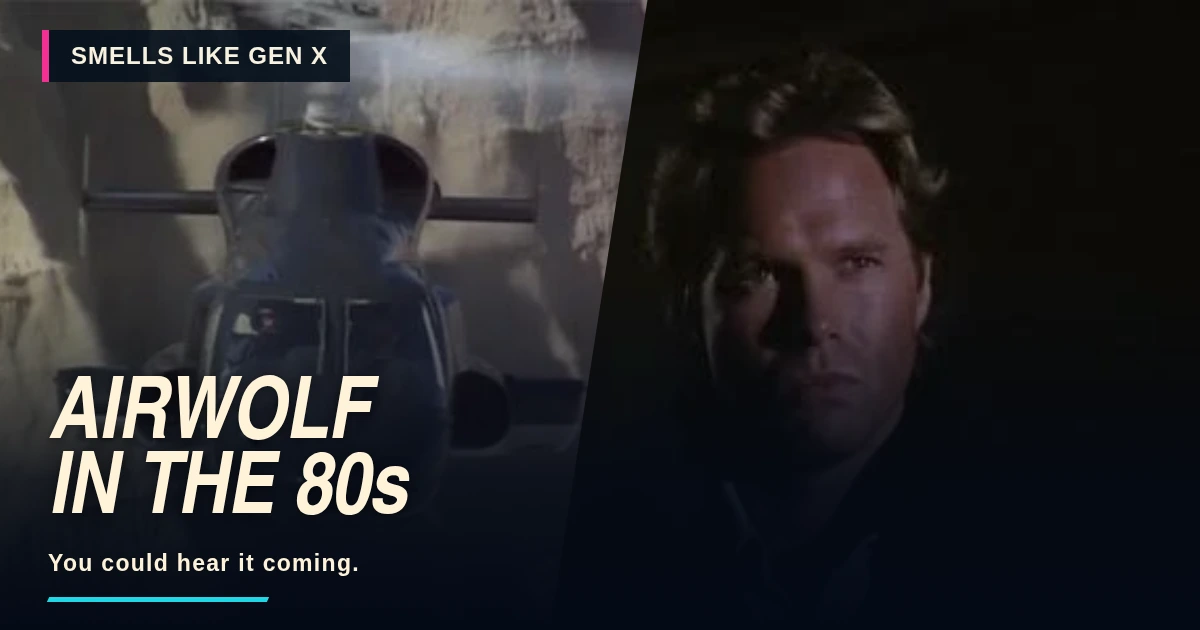
You could hear Airwolf before you could see it. There was the music starting to move and that noise the show gave the helicopter, and then a shot wide enough to make you wait for something dark to come up out of the rocks. A television didn’t have to be very big to make it feel as if the machine was getting close.
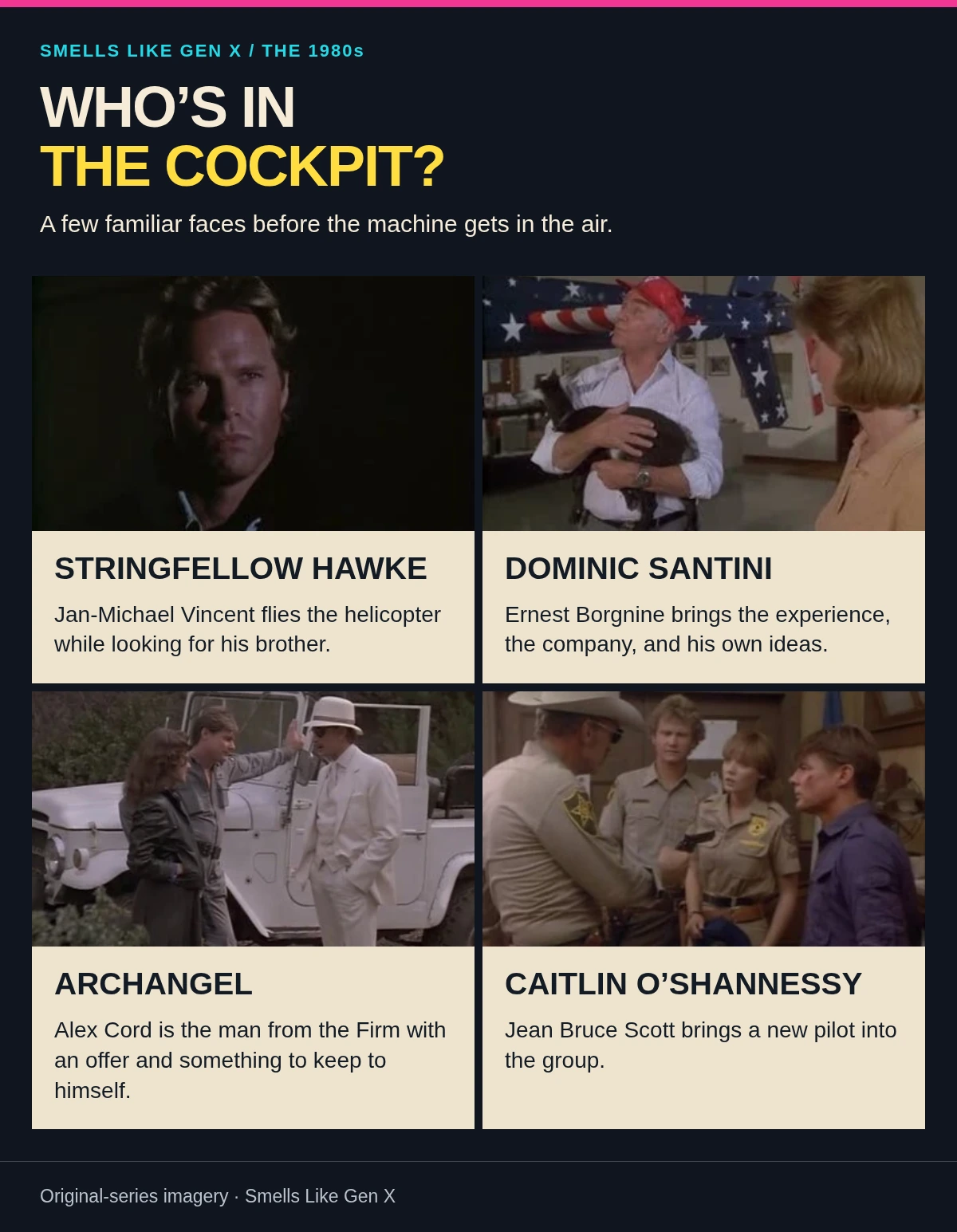
Airwolf arrived on CBS in January 1984. Donald P. Bellisario created it. Jan-Michael Vincent played Stringfellow Hawke, Ernest Borgnine was Dominic Santini, and Alex Cord was Archangel. The helicopter was a modified Bell 222, dressed for a job that asked it to fly faster, carry more weapons, and make a much stranger sound than the real thing could. I remember the hour as a chance to wait for that machine to turn up and watch the people in the way change their minds.
I’m still fond of the minutes when you can’t see the helicopter. Hawke has to decide whether he’s going to trust the man in the white suit. Dominic has an idea about how much good it will do to tell him what he thinks. Somewhere beyond the people having that conversation there’s a machine we’re going to get to hear again. The show knew how much fun it was to wait for it.
Inside This Article
The sound did half the work
Sylvester Levay’s theme moves in a way I still associate with getting somewhere in a hurry. You can hear the melody and start thinking about the shape of the nose and the rotor coming through the picture. It didn’t take long to learn what the sound meant. A person who’d come in to ask whether you were ready to leave might have to wait until you found out where the helicopter was going.
That familiar sound changes a little if you spend time with the first two seasons. The Television Academy’s account describes a move toward more synthesizer-oriented scoring early in the second season. Udi Harpaz also contributed scores as the run went on. I hear the big, patient music in the early episodes and the more electronic pulse later. It’s a good reminder that the Airwolf in your head can have parts from several seasons flying at once.
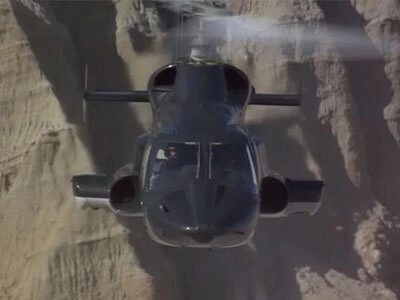
The sounds belonged to different parts of the show. Music could get you up to speed before anyone had made a decision. The rotor could tell you the decision had already been made. I like how much of an episode you can remember through one or the other. A lot of eighties TV will come back as soon as you hear the first few notes. Airwolf gives you another sound to wait for after the tune is over.
Our 1984 TV lineup brings back what else was coming out of the set around then. You had enough adventure to hear a car, a helicopter, or a crew talking each other into a plan and know what part of the week it was. Airwolf’s opening had its own pace. I can still tell when I’ve waited long enough for the shot I want.
Stringfellow Hawke had a reason to keep the helicopter
Vincent’s Hawke had a cabin, a cello, and a brother who hadn’t come home from Vietnam. That’s a surprisingly quiet place to start for a guy who’s going to fly a helicopter you can pick out of almost any picture. I like the scenes where he’s away from the machine. He can have something he’s thinking about before anybody arrives to give him a job.
In the two-part “Shadow of the Hawke,” Dr. Charles Henry Moffet steals the helicopter he designed. David Hemmings gives Moffet the confidence of a man who thinks the machine belongs to him. Archangel needs Hawke to get it back. Once Hawke has the aircraft, he keeps it and makes the search for his missing brother part of his arrangement with the Firm.
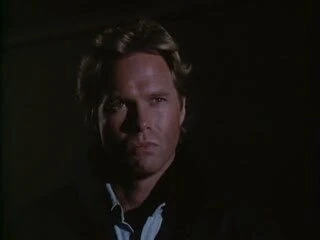
That gives you a reason to follow the show through the weeks when he’s flying for somebody else. He has a thing they want and a reason to listen when they come to see him. You can keep the whole arrangement in your head while you watch a story that begins miles away from the cabin. There’s still somebody he wants to find by the time he’s done with the week’s work.
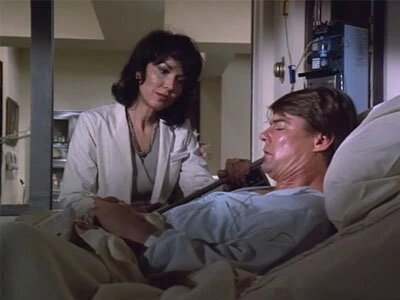
“Echoes from the Past” gets a lot of mileage out of that search. Hawke gets a lead on his brother, loses consciousness after he flies away, and wakes in a hospital where people tell him that he has been out for months. It’s a different kind of suspense from watching a machine close in on another one. You already know why he’d want the information to be good. You can see him trying to decide how much of what he’s hearing makes sense.
Dominic was the person I wanted in the other seat
Ernest Borgnine could make a quick exchange feel as if the people having it had been on the job together for years. Dominic runs Santini Air. He knows machines and he knows Hawke. Give him a minute with a plan that’s about to become everybody’s problem and he’ll make sure you hear what he thinks of it.
I remember that as one of the reasons the show was good company. Vincent could do a lot with a look and a silence. Borgnine could hear a silence, give it a moment, and get to work on it. Whatever was happening with the helicopter, the conversation would still feel like two people who could keep flying together after a bad day.
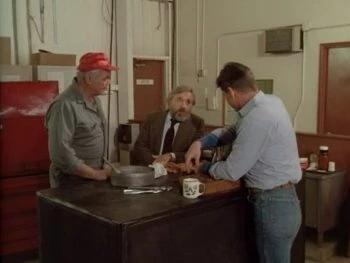
“Sins of the Past,” from the second season, gives Borgnine another kind of evening. Dominic learns his daughter has died and goes back to the place he came from. Later, he is suspected of killing his ex-wife, and Hawke has to look into what’s happening there. I’d revisit it for the chance to spend time with the person who usually has to help someone else get through a story.
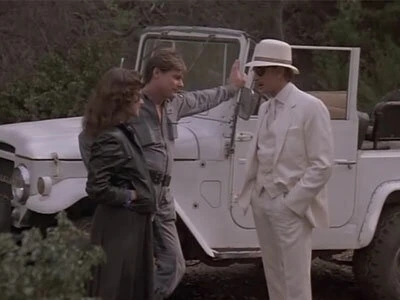
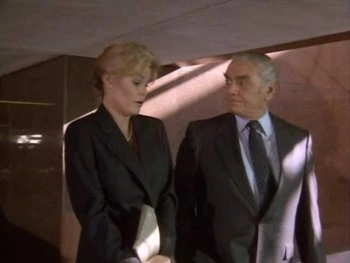
Alex Cord’s Archangel supplied a different kind of company. The white suit and the eye patch make him easy to remember even if you’ve forgotten the formal name Michael Coldsmith Briggs III. He’s the man who can arrive with information Hawke wants and a reason Hawke might want to wait before using it. I like the way Dominic fits in a scene with those two. He can hear how much of a straightforward question is about to take the whole afternoon.
Caitlin made room for another pilot
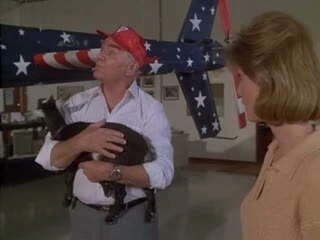
Jean Bruce Scott’s Caitlin O’Shannessy turns up in “Sweet Britches,” the second-season opener. She’s a capable pilot who has her own reason to get involved when Hawke and Dominic run afoul of a sheriff. As the season goes on, she becomes part of the flying side of the show. You get to see what happens to two people who’ve become used to deciding things between themselves when somebody else can get in the air and do the work.
I like “The Hunted” for that. Caitlin has a flying job to do, and a man she’s involved with may have a part in the trouble. For a viewer waiting for the helicopter, it can be easy to assume everybody who gets to fly is waiting on Hawke. Episodes like this make me remember how many people the show had who could get themselves into and out of a situation while he was doing something else.
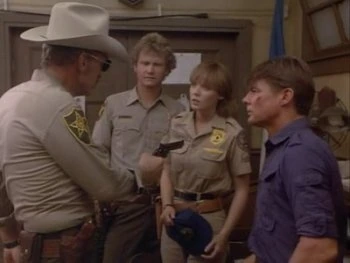
You could watch a lot of adventure shows from the era with a favorite machine in mind. It helped if there was a person around to be surprised by it. Caitlin gives the familiar group a different set of reactions. She can be glad to be flying and still have every reason to ask what the other people have gotten her into.
The real Bell 222 already looked right in the air
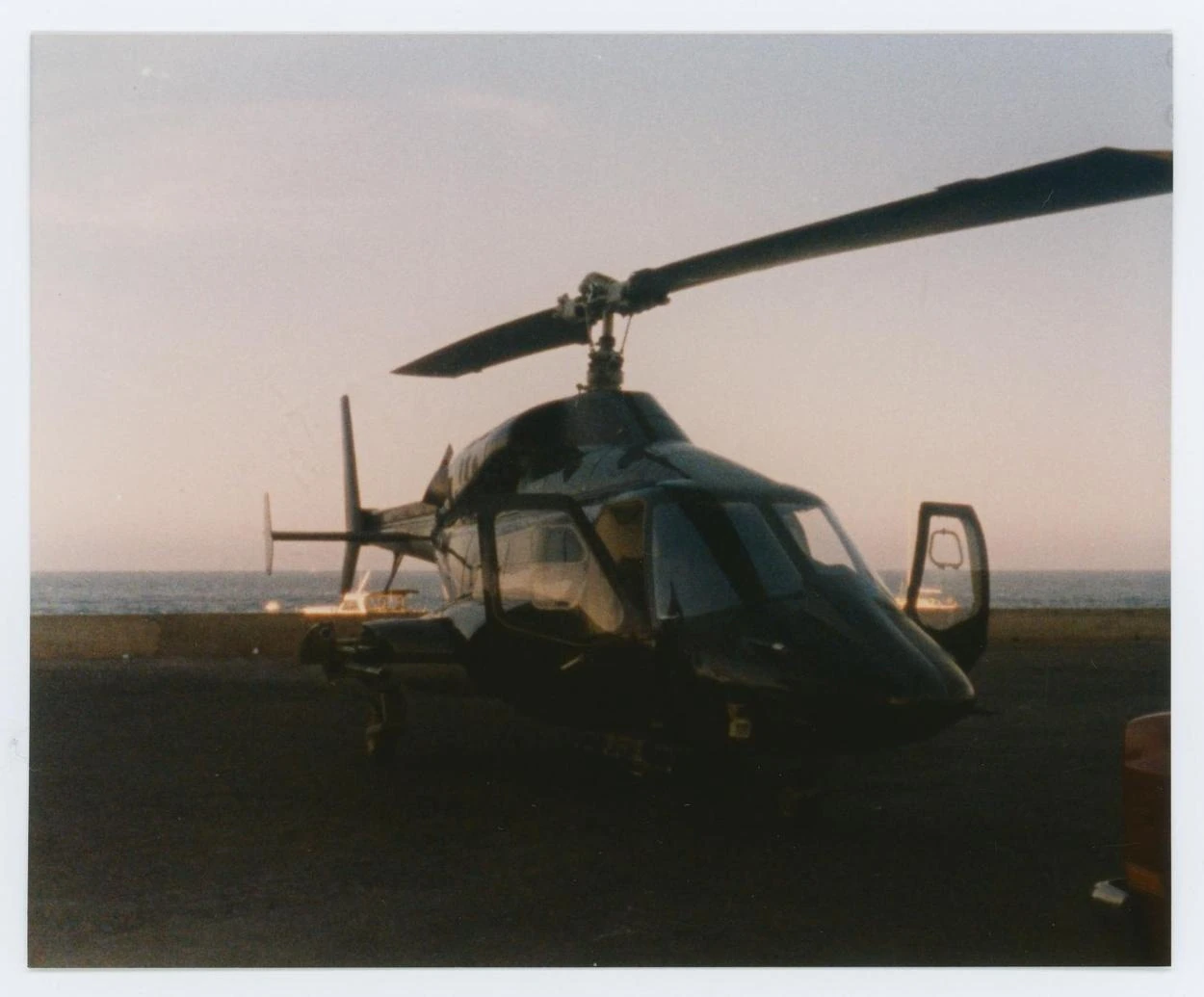
There’s a photograph in the Bell Helicopter records at the University of North Texas of the Airwolf Bell 222 parked with its doors open. Seeing it still makes me remember the shots of the dark machine starting to move. The production put the look of a fictional prototype on a real flying helicopter. When you saw the aircraft in the landscape, the landscape and the machine belonged in the same shot.
The fantasy could take it quite a bit further. In “HX 1,” somebody steals a prototype that may be able to rival Airwolf. Hawke thinks his brother might be involved. That’s a useful episode if you remember wanting to find out what would happen when the machine met something that might be able to keep up. It also gives the chase a reason to matter to the person who’s doing the flying.
The shot I wait for is usually one of the simple ones. The helicopter is small enough to tell you how far away it is. It turns and you get a better idea what you’re looking at. You can hear that sound again. The show can make me enjoy that even if I’ve seen the move before. I don’t need to believe everything the helicopter does to believe it’s there.
I can see how much the crew knew about flying for the camera if I go back and look at a shot that had no dialogue to help it. The valley has some depth. There’s a place for the eye to land before the helicopter turns. When it does turn, you can see it doing something in relation to the ground and the hills. I remember being willing to wait a whole episode for a few seconds like that. It helped that you could hear the music change as if it had been waiting with you.
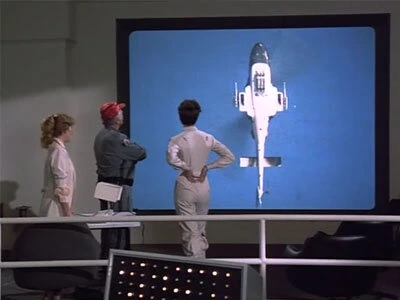
There are smaller helicopters in the show that are useful for remembering how much work the big dark one had to do to look different. Santini Air’s Bell JetRanger, for instance, is the one with a job to do in the world people know about. I like seeing a familiar shape and the recognizable paint of that working aircraft. When Airwolf turns up later it has a place of its own in the picture. It’s easy to see why the name would still make you think of the shape before you thought of the pilot.
“Mind of the Machine” is another first-season stop. A simulator lets people get a look at Airwolf’s capabilities on the ground, and somebody who’s interested in the results has a reason of their own for being there. It’s an episode I’d show somebody who remembered the helicopter primarily in the air. The people with the most to gain from knowing what it can do still have to spend time in a room together deciding what they’re going to tell one another.
The CBS years and the time the crew changed
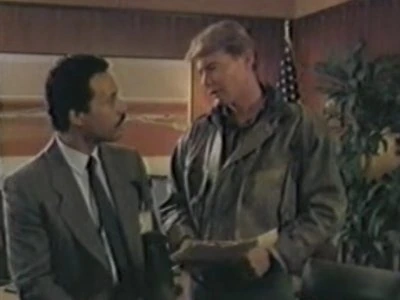
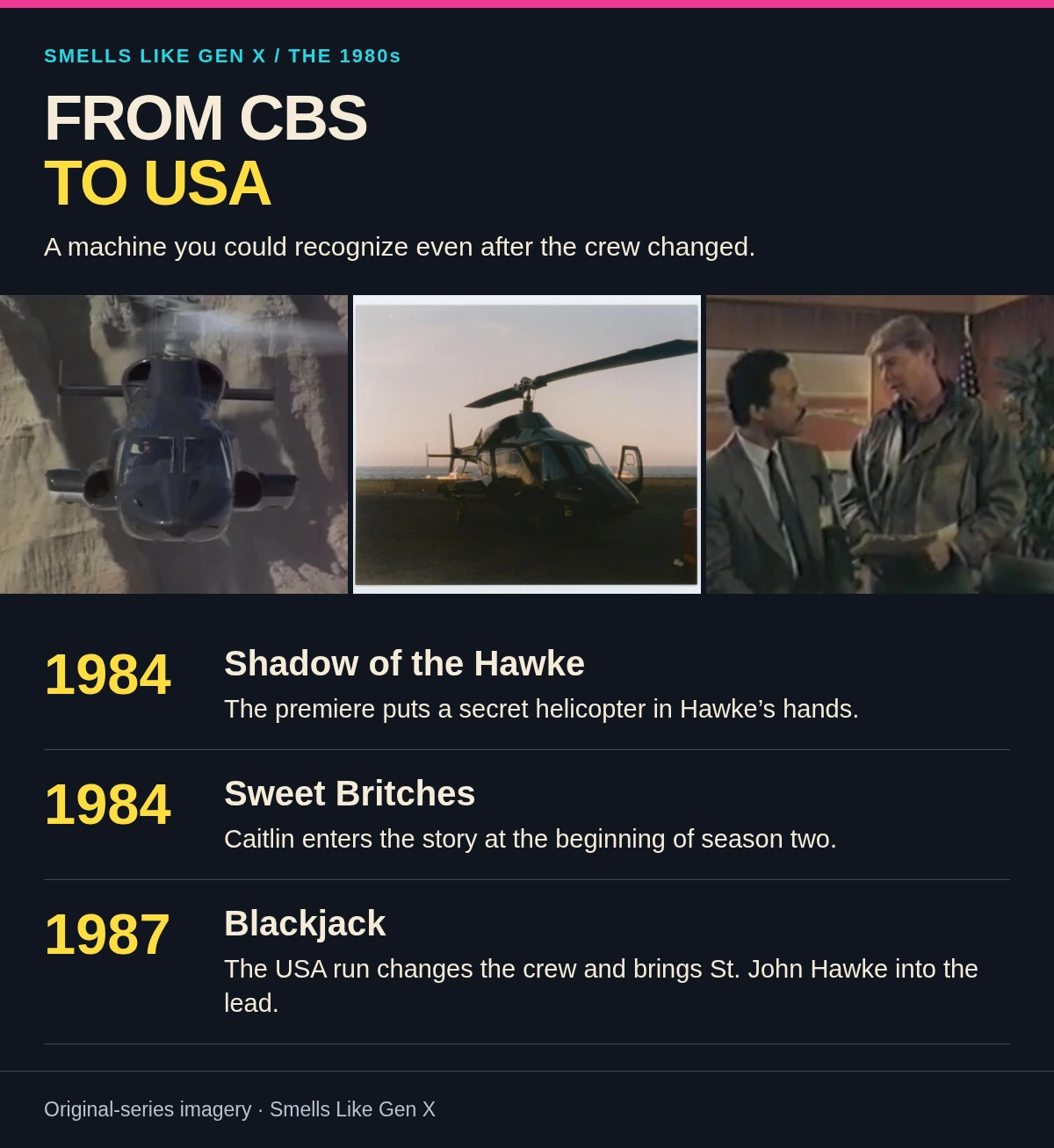
CBS carried the first three seasons. A fourth season followed on USA Network in 1987, with a new regular cast and production in Canada. Barry Van Dyke played St. John Hawke, the brother the early episodes had spent so long looking for. If your rerun goes from the people you’ve been watching to a different group, there’s a real change in the show behind the feeling that you’ve missed something.
The USA run makes a particular kind of sense as a rerun memory. You can come across a helicopter that looks familiar and find yourself trying to work out who’s supposed to be flying it. Some of the aerial footage carried over. You can recognize the aircraft before you recognize the arrangement of people around it. I remember the CBS faces as the ones I expect to see when the music starts.
I’d start a rewatch with the January 1984 premiere. Let the whole thing take its time getting Hawke to the machine. Then put on “Sweet Britches” and see how much Caitlin changes the company. Try “Sins of the Past” when you’d like to spend an evening with Dominic. I can get most of what I wanted from Airwolf out of those three visits, including the few seconds of waiting to see the helicopter again.
The part that still feels most like a movie to me is how long you can look at something before you get told what to think about it. You get a view out of the cabin and a minute with Hawke. Later you get a long look across the sky. I don’t remember sitting down with a checklist of what the machine could do. I remember having a chance to recognize it in the distance and wanting to see where the person flying it had decided to go.
If I were showing Airwolf to somebody who’d never seen it, I’d give them the theme and the opening hour before I tried to explain why people still talk about the machine. Let them hear the way Dominic talks to Hawke. Let them get a look at Archangel before he gets a chance to introduce himself. A few minutes later there’ll be a helicopter in the picture and somebody in the room will know exactly which one it is.
Before the rotor starts again
What helicopter was used in Airwolf?
The production’s flying Airwolf was a modified Bell 222. The show gave the aircraft fictional weapons, performance, and sounds.
Who played Stringfellow Hawke and Dominic Santini?
Jan-Michael Vincent played Hawke and Ernest Borgnine played Santini in the original CBS seasons. Alex Cord played Archangel and Jean Bruce Scott joined as Caitlin.
Who wrote the Airwolf theme?
Sylvester Levay composed the theme. He also scored episodes. Udi Harpaz contributed scores during the run.
Why is the fourth season different?
USA Network carried the Canadian-produced fourth season in 1987. It introduced a new regular cast, including Barry Van Dyke as St. John Hawke.
Sources & Further Reading
- Television Academy Interviews — original cast, scoring, and the CBS and USA runs
- The Paley Center — an original 1984 CBS episode and production credits
- Mill Creek Entertainment — complete-series episode list and dates
- TVmaze — original broadcast episode guide
- University of North Texas — original Bell 222 Airwolf photograph
- Internet Movie Plane Database — aircraft used in the original CBS series