Hotel in the 80s: The Glossy Prime-Time Drama You Barely Remember
A familiar desk, a lobby full of people, and somebody who just checked in with an entire story.
Christine’s already at the desk. Give the new guests a minute.
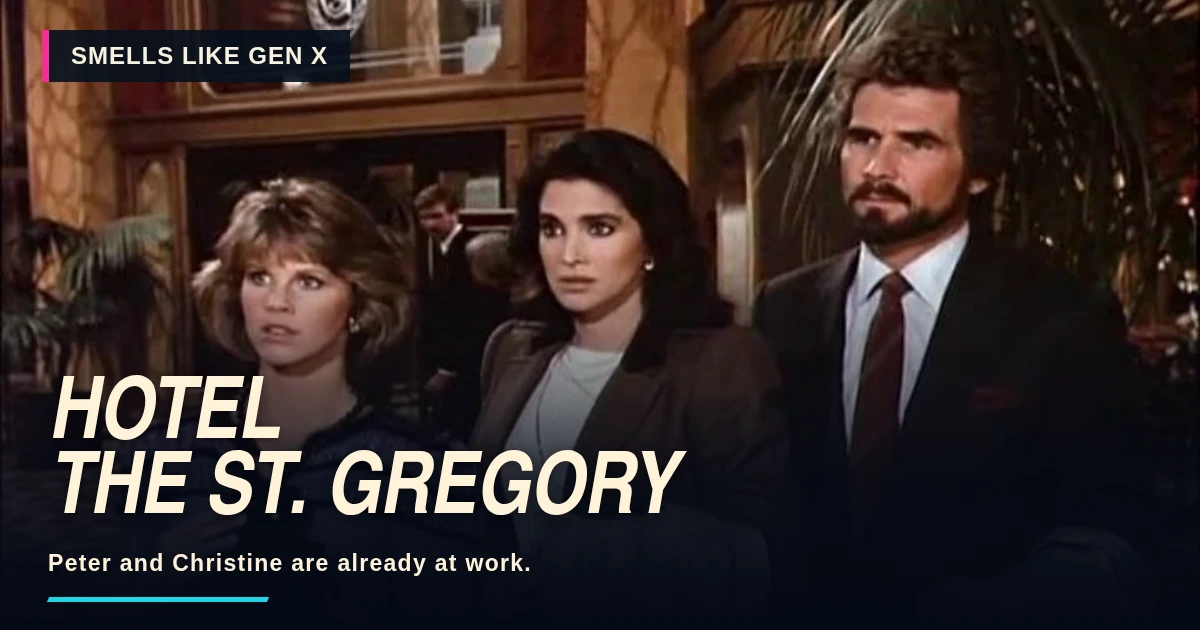
The lobby was the first thing I remembered. You could come in partway through Hotel, see somebody with luggage walking toward the desk, and have a pretty good idea how much of the evening they were about to take up. There’d be a little conversation about a room. Then Peter McDermott would get a look at the guest, and you could settle in to find out what they’d brought with them besides the luggage.
I used to think of the St. Gregory as the kind of place adults got to go. The people at the front desk knew where everything was. Somebody at the bar always seemed to be wearing the good clothes they’d brought along. If a guest came in with a mess they’d put off dealing with at home, there was a chance they’d get through most of it before checking out.
ABC began the regular run in fall 1983. Hotel made it to ninth in the 1983–84 TV season. You might remember it as the thing that came on after Dynasty and have a hard time naming three episodes. I can remember the feeling of seeing a new guest come through the lobby doors more readily than I can remember any particular room number. For a show about a place where people were always coming and going, that seems about right.
The lobby was the room you always came back to
Hotel was set in the fictional St. Gregory in San Francisco. The exterior you saw belonged to the Fairmont. Inside, there was a desk, a bar, and a lot of room for people to cross paths. The show could get you up to speed on a story by letting somebody walk past another person without getting recognized. You’d spend the next scene waiting to see whether they’d have to go past each other again.
Arthur Hailey’s novel had already become a 1967 movie. Aaron Spelling’s television version could keep a new group of guests moving through the same address for five seasons. A good part of the pleasure was coming back to the people who knew the building. If there was any doubt about whether somebody at the desk would pick up on a problem, I was usually willing to give them a minute to look at the guest.
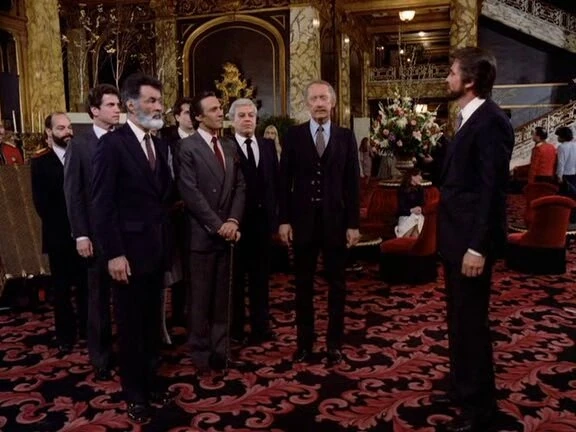
The Love Boat crew had a related advantage. They already knew the ship before the passengers got there. On Hotel, the people who had checked in could walk out onto the street, get a cab, or take a phone call they’d been putting off. You had the run of a city around the building. The address kept pulling the stories back in.
I like that the St. Gregory has a place for almost everybody to stand while they decide what they’re doing. The person at the counter can pretend they’re interested in checking in. The person at the bar can give an entirely different account of why they’re in town. As a viewer you could go wherever the better conversation was. In a lot of episodes, somebody on the staff was already on their way to it.
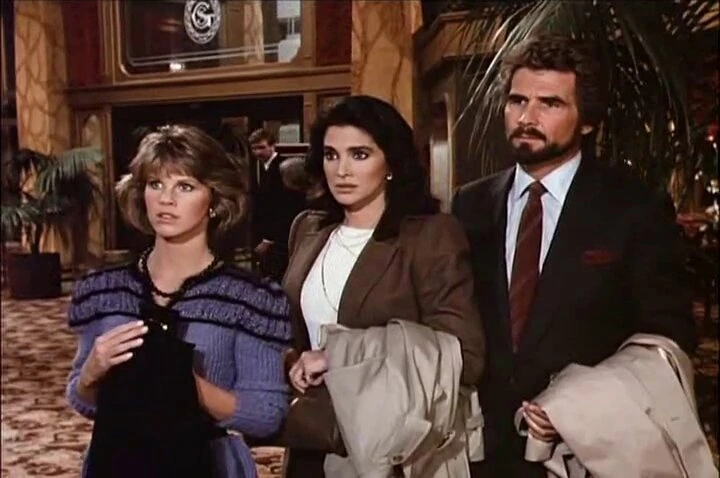
Peter and Christine had to get through a shift
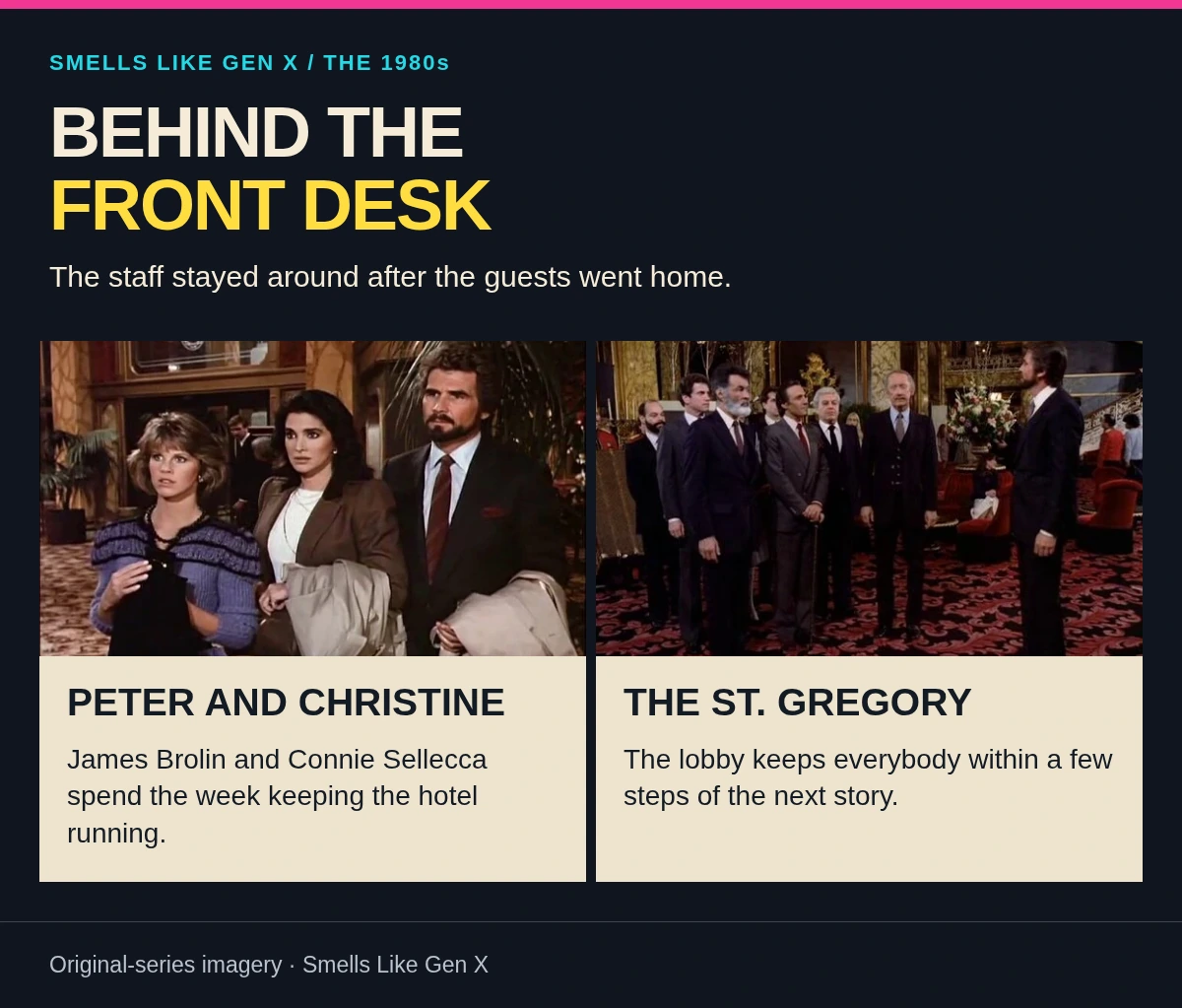
James Brolin played Peter McDermott, the general manager. Connie Sellecca played Christine Francis, who worked with him. There’s a quiet satisfaction in watching two people on a show know how to do their jobs. They could deal with a problem in a room upstairs and still have something to say to one another as soon as it was over. Every now and then you could tell that the conversation they’d wanted to finish had been waiting most of the day.
I remember Brolin’s Peter as the person you wanted to hear was on his way. He could look at a problem and give you a few seconds of faith that somebody would sort it out. Sellecca’s Christine has a different kind of authority. She can take in what somebody has said and keep paying attention when they start to tell her what they really meant. The show could give them a good scene without emptying the building of guests first.
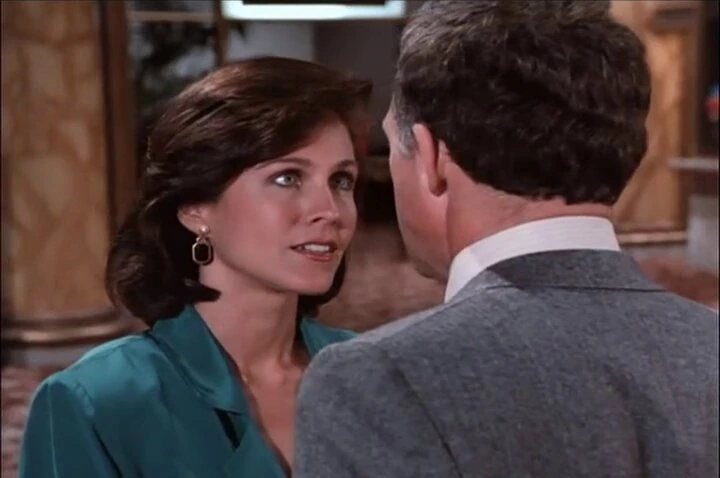
Their personal relationship became part of what kept people coming back. Even without remembering precisely when they got closer, you can go back to an episode and hear something that would be hard to mistake for a conversation between strangers who only happened to work together. A story could end and the guests could go. I still wanted to know what Peter and Christine were going to say to each other when they finally had a minute.
It’s easy to remember their faces and forget how much of the hour was actually spent listening to somebody else. That suited the show. I like catching a scene when both of them are busy with the work and one of them finds time to look across the lobby. It can make a short exchange feel like part of a much longer one.
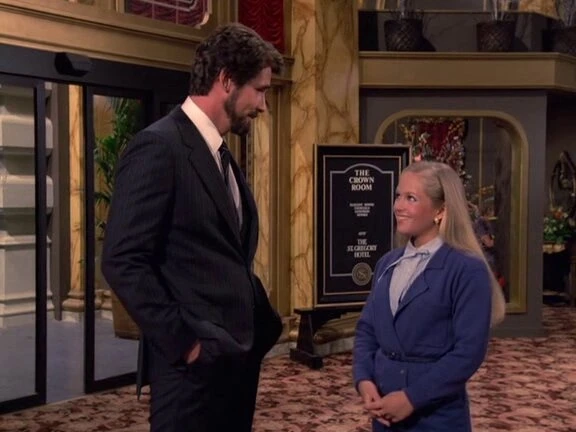
Victoria Cabot knew whose hotel it was
Anne Baxter played Victoria Cabot through the first three seasons. Bette Davis had appeared in the pilot as Laura Trent. I like keeping those names straight because seeing either woman in a hotel setting feels like a whole piece of casting in itself. Baxter as Victoria gives you the impression somebody has already told her what’s going on. You can bring her a fresh bit of news and still find yourself waiting to see if it makes any difference to her.
The staff is one reason the series can do more than hand people their keys. Shari Belafonte’s Julie Gillette works reception. Nathan Cook’s Billy Griffin is on the security side. Shea Farrell’s Mark Danning works with guests. Give any of them a little time with somebody checking in and the story can go up in the elevator before Peter has a reason to hear about it.
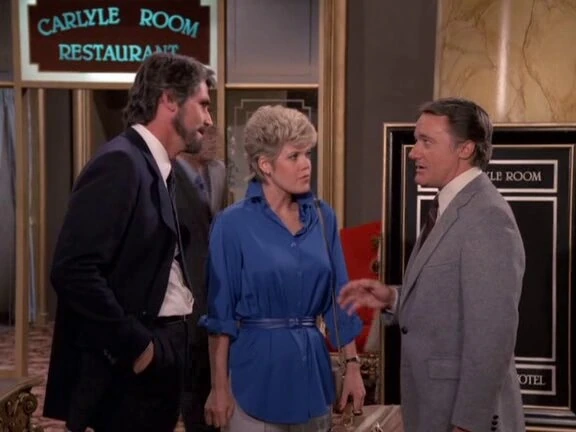
I also like being reminded of the people who spent their time on the stairs, in the halls, and at the desk. Dave and Megan Kendal, played by Michael Spound and Heidi Bohay, gave the show another couple to follow. Their lives could keep going while somebody arriving for a night had the loudest thing happening on the premises. There’s a lot of television I remember for its biggest scene. Hotel comes back to me in the little stretches between them.
In “Choices,” early in the run, the hotel is hosting a beauty competition and Billy has an old acquaintance asking him for a favor. That’s a good way back to the staff if you mostly remember the stars. One person is here for a room and a chance to win something. Somebody else has walked in to remind Billy he had a whole life before he wore a jacket and went to work at the St. Gregory.
Some weeks you could remember who checked in
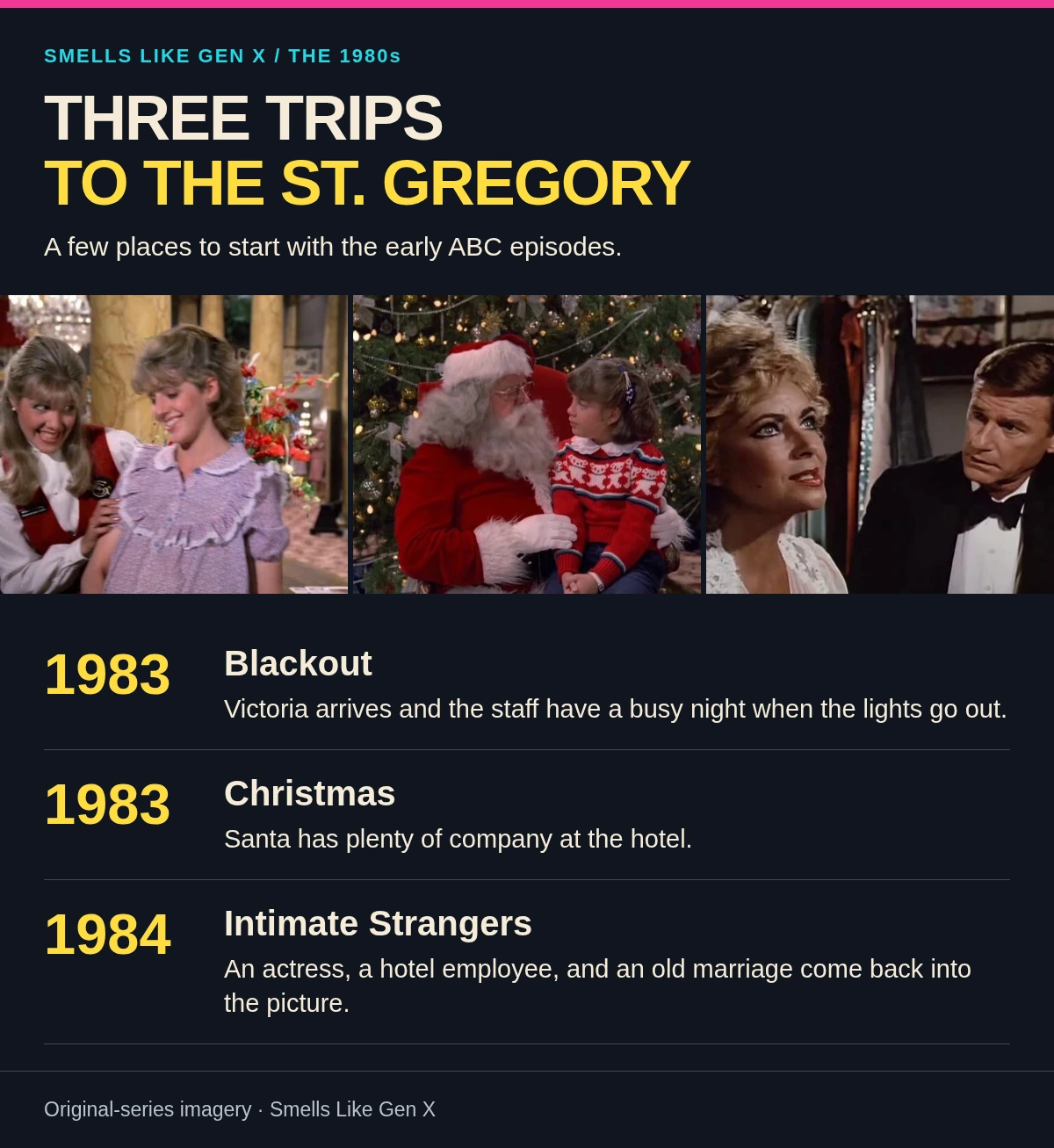
The regular run opened with “Blackout.” It has Victoria taking over, Christine receiving threats, and a woman whose plans change before she gets to her wedding. Then the lights go out. Put a roomful of different people in a building, take away one thing everybody relies on, and suddenly the staff has to do an impressive amount of work before anybody can get back to their evening.
“Christmas,” from December 1983, feels like another useful place to start. A young guest wants a baby brother. An older woman is lonely. Somebody is looking to steal from the hotel. You get several kinds of company for Christmas in one building, including somebody you’d be happy to sit beside and somebody who has no business being left alone with the valuables.
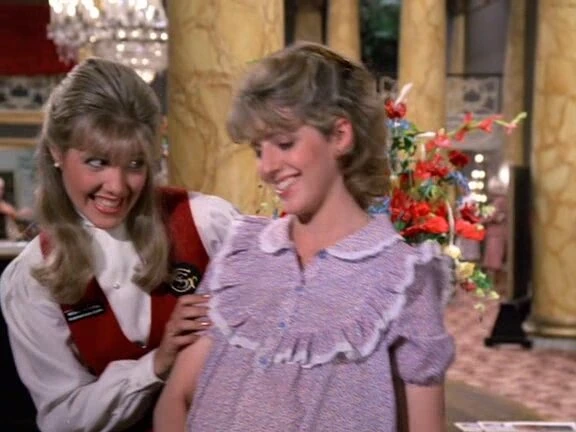
“The Offer” gives a hotel mogul, a rock star, and a couple with anniversary plans a chance to be in the building at once. It’s one of the episode descriptions that makes me want to find the original and put it on. I’d like to see who recognizes the rock star and who would rather have help with their own reservation. Everybody who walks in the door is entitled to think they’re the main reason the hotel is here.
There were episodes with a person whose face I recognized as soon as they were handed a room key. There were also ones where I spent half the night placing the face and missed part of what the guest had said. That feels like an honest part of remembering the show. The name you got from the opening was a reason to pay attention. The episode could still do something you didn’t expect with the person who had it.

“Intimate Strangers,” from the opening of the second season, is a good example of the way the guests could change the staff’s day. An actress arrives in town for a play. A woman runs into the husband who left her years before. He’s at the hotel because he works there as an electrician. That last bit is what makes me want to watch the story. One of them gets to check out. The other one was going to have to come in to work again in the morning.
There’s a nice smaller turn in “Fallen Idols.” Two guests who are getting on well realize they knew each other as teenagers. At the same time Dave’s extra work is making things harder at home with Megan. I like the way you can go from somebody pleasantly surprised by time passing to a couple who would be happy just to have some more time to themselves. Both stories have a little more to say once you see them sharing the same hour.
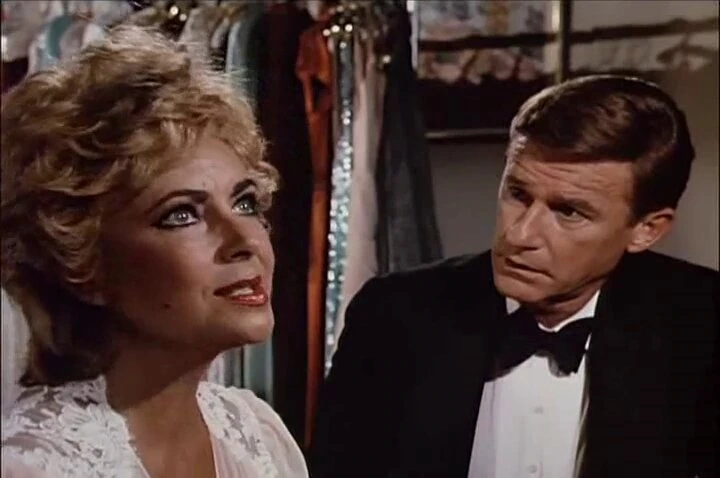
By “Opening Moves” at the start of the fourth season, the business of owning the hotel is important in its own right. Victoria has left Peter an interest in the St. Gregory, and her brother-in-law is determined to challenge it. The staff you’ve spent three years watching now has to come to work while somebody is arguing over who gets to decide what happens to the building. It’s a way to use a familiar address that a guest-of-the-week episode could never have got to on its own.
I get why a viewer who mostly remembers the dresses and the lobby might forget the long-running stories. You might have come in for a recognizable guest and caught only a couple minutes of Peter or Christine trying to get something done. That’s enough to start wanting to see what the room looks like from their point of view. On a second visit, I usually wind up staying with the staff longer than I intended.
The show that was on after Dynasty
The 1984 television season gives you a sense of what else a viewer had to choose from. Dynasty and Hotel put a lot of well-dressed people into the same stretch of an ABC Wednesday. If you already had the channel on, you could go from the Carringtons to a room at the St. Gregory in the time it took to get something out of the fridge.
The pairing makes sense even if the shows come back to you in different ways. Dynasty could leave you thinking about a quarrel that had been going on a long time. Hotel had the pleasure of somebody starting a story by saying they had a reservation. It only takes one person coming up to the desk to make a good reason for the next hour.
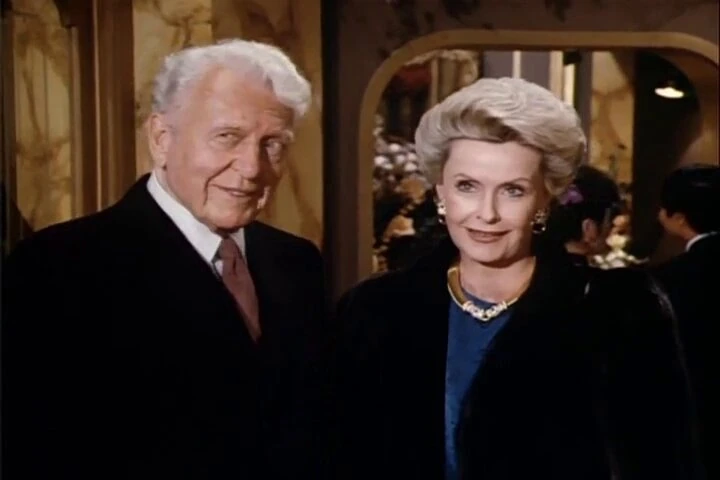
The early Nielsen number still makes me stop for a second. Ninth in the season is a lot of people who knew where the lobby was. Kate & Allie finished eighth. I enjoy thinking of those shows together, one with a busy New York household and one where an entire floor of people might be somewhere else next week. They both gave the audience people it was easy to come back to.
I’m glad the week had room for a show you could settle into by watching somebody wait at a front desk. It had plenty of big stories. It also had scenes where a person came down to the lobby because they didn’t want to be in their room anymore. I still recognize that feeling even if my own room key usually opens the door to a much smaller hotel.
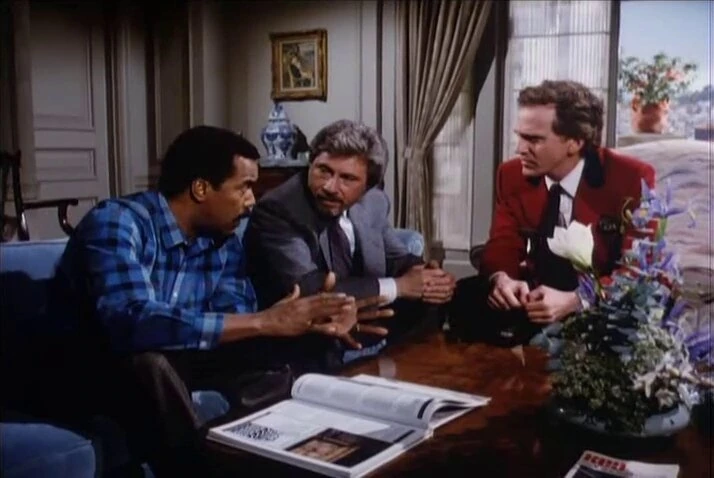
One bit of “The Offer” that places it in its time is Liberace, who turns up in the anniversary story. If you were changing channels in 1983, the sight of him could stop you long enough to see who’d found a reason to invite him. Hotel had a place for that kind of visit. It could give somebody a reason to be staying there without asking you to believe they were ever going to move into the building.
I also like the name of the late two-parter, “Grand Designs” and “Aftershocks.” By then Peter has a fiancée whose decisions affect the running of the hotel. You can see how much the desk and the office have come to matter to the people watching. An argument over who gets to make a decision here can keep you around without a new guest having to say a word.
A few questions at the front desk
Where was Hotel set?
The St. Gregory was a fictional San Francisco hotel. The Fairmont San Francisco was used for exterior views.
Who played Peter and Christine?
James Brolin played Peter McDermott and Connie Sellecca played Christine Francis. Anne Baxter was Victoria Cabot in the first three seasons.
When did the regular ABC series air?
The weekly run began in September 1983 and continued until May 1988. An earlier pilot featured Bette Davis.
Which episode is a good place to start?
“Blackout” brings in Victoria and puts the staff to work on several problems at once. “Christmas” is an early episode for watching the guests and the regulars share an evening.
Sources & Further Reading
- Television Academy Interviews — Hotel and the people at the St. Gregory
- epguides — air dates, original cast, and episode titles
- TVmaze — episode descriptions for the original ABC series
- The Classic TV Archive — original Wednesday schedule and first-season credits
- Fairmont San Francisco — the hotel’s role in the series