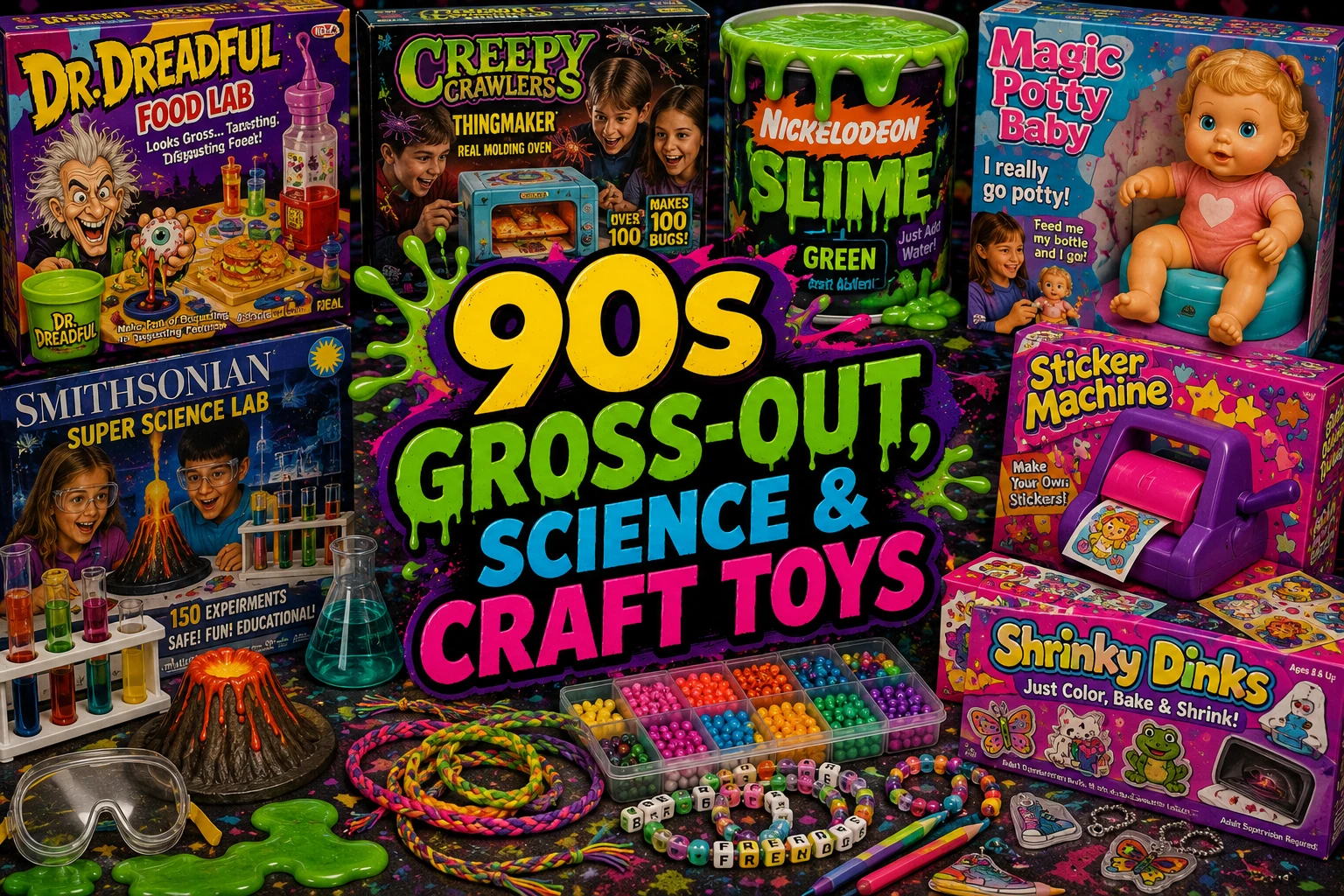
90s Gross-Out, Science & Craft Toys: The Sticky, Weird, Questionably Educational Era
The 90s toy aisle had two modes: make something pretty or make something disgusting. Sometimes it did both before lunch. This was the decade of Dr. Dreadful Food Lab, Creepy Crawlers, Nickelodeon slime energy, Magic Potty Baby, kitchen-table science kits, sticker machines, bead kits, friendship bracelets, glitter, shrink plastic, mystery goo, and craft projects that left tiny evidence all over the carpet.
So yeah, this is the rewind for 90s gross-out toys, science toys, and craft toys: the stuff that made parents ask, “Is this safe?” while kids were already mixing powder, squeezing goo, baking plastic bugs, stringing beads, making stickers, or proudly presenting a homemade bracelet that looked like it had survived a tornado in a Lisa Frank folder.
90s Toys
Head back to the full 90s Toys hub for action figures, collectibles, electronic pets, handheld games, dolls, plush, board games, commercials, and the rest of the decade’s plastic chaos.
Family-Room CousinsBoard Games & Family-Room Toys
Mall Madness, Dream Phone, Guess Who?, Don’t Wake Daddy, Grape Escape, Perfection, Bop It, Jenga, Crocodile Dentist, and carpet-floor arguments.
Battery-Powered WeirdnessElectronic Toys & Digital Pets
Tamagotchi, Giga Pets, Furby, Talkboy, Yak Bak, Bop It, Tiger handhelds, electronic diaries, and the toys that beeped when no one asked.
So What Were the Big 90s Gross-Out, Science, and Craft Toys?
The big 90s gross-out, science, and craft toys were the ones that made play feel like an experiment, a mess, or a questionable kitchen-table decision: Dr. Dreadful Food Lab, Creepy Crawlers, Nickelodeon-style slime kits, Magic Potty Baby, crystal-growing kits, chemistry sets, microscope kits, volcano kits, sticker makers, bead kits, friendship bracelets, Shrinky Dinks carryover, Spirograph-style art toys, stamp sets, sand art, glitter crafts, and all the neon creative junk that made a room look like a craft store exploded.
What made this category so 90s was the collision. Science toys tried to sound educational. Gross-out toys tried to be disgusting. Craft toys tried to be pretty. But they all lived in the same zone: hands-on, parent-annoying, cleanup-heavy play. They needed tables, trays, molds, powder packets, markers, string, glue, water, heat, batteries, or the kind of optimism only a child has before making slime on carpet.
This was also the toy category most likely to produce evidence. Action figures could be put away. Board games could go back in the box. But gross-out and craft toys left fingerprints: glitter on the floor, dried goo in a cup, beads in a couch cushion, rubber bugs on a windowsill, and one “science experiment” nobody wanted to smell twice.
Why the 90s Were Built for This Stuff
The 90s were perfect for gross-out, science, and craft toys because the decade loved anything that felt interactive. Kids did not just want to watch something happen. They wanted to mix it, mold it, stretch it, bake it, grow it, stamp it, bead it, shrink it, peel it, stick it, or make it look like something a parent would immediately regret approving.
This was the pre-app version of “maker culture,” except with more goo and less adult branding. Kids had kits. Kits had steps. Steps created anticipation. Sometimes the final result looked amazing. Sometimes it looked like a science fair project after a power outage. Either way, the process was the toy.
The category also hit because it felt like kids were doing something slightly forbidden. Not actually dangerous, ideally, but definitely messy enough to feel important. Making bugs from hot molds, creating fake gross food, stirring slime, mixing powders, stamping stickers, or weaving bracelets all felt more involved than just opening a figure and putting it on a shelf.
The 90s messy-toy formula
- Gross-out humor: fake food, slime, bugs, goo, potty jokes, and “eww” as a sales strategy.
- Science disguise: kits that looked educational enough for parents to say yes.
- Craft identity: stickers, beads, bracelets, stamps, glitter, and art supplies that let kids decorate their entire personality.
- Process over product: mixing, baking, growing, shrinking, sticking, and assembling mattered as much as the result.
- Permanent evidence: the toy was over, but the glitter was eternal.
The best 90s gross-out and craft toys understood that kids loved transformation. Powder became slime. Goop became bugs. Plastic shrank. Paper became stickers. Beads became jewelry. A normal table became a scene. That little “before and after” magic is why these toys still hit.
90s Gross-Out, Science, and Craft Toy Timeline
A fast visual map of how the decade got sticky
The 90s messy-toy wave came in layers: old-school craft kits and Shrinky Dinks energy carried over, Creepy Crawlers brought hot plastic bugs back into bedrooms, Nickelodeon slime made goo feel like a lifestyle, Dr. Dreadful turned gross food into a toy lab, Magic Potty Baby leaned into bodily-function chaos, science kits stayed parent-approved, and sticker machines, bead kits, friendship bracelets, and glitter crafts kept the craft table glowing.
Stickers, beads, stamps, and shrink plastic keep going
The decade starts with hands-on craft kits already living in closets, bedrooms, and kitchen drawers.
Creepy Crawlers crawls back
Rubbery bugs, goop, molds, heat, and the strange joy of making insects on purpose.
Nickelodeon goo becomes the mood
Slime stops being just a substance and becomes an entire visual language of kid chaos.
Science kits stay in the mix
Crystals, volcanoes, microscopes, chemistry sets, and “learning” that still made tables dirty.
Dr. Dreadful makes snacks suspicious
Powders, molds, fake brains, candy goo, and the idea that “edible” could still be alarming.
Magic Potty Baby gets weird
Doll play meets bodily-function humor, because the 90s had absolutely no chill.
Sticker machines and sticker culture peak
Kids turn paper, photos, labels, and random flat objects into sticky treasure.
Beads and friendship bracelets keep wrists busy
String, beads, knots, charms, and homemade accessories become social currency.
Lisa Frank-style color takes over everything
Folders, stickers, glitter, stamps, markers, and rainbow craft energy end the decade loudly.
The 90s Gross-Out, Science, and Craft Toys We Actually Remember
Goo, bugs, stickers, beads, fake food, and craft-table evidence
The toys below are not one neat category, and that is the point. The 90s did not separate “gross,” “science,” and “craft” as cleanly as adults probably wanted. Kids moved from making fake disgusting candy to growing crystals, then to stringing beads, then to sticking glitter on a folder, then to baking rubber bugs, all with the same basic attitude: let me make something with my hands and leave the cleanup for later.
This is the corner of the toy aisle where process mattered. The final result might have been a rubber spider, a questionable edible blob, a sticker, a bracelet, a crystal, a shrunken plastic drawing, or a slime cup that slowly became a biohazard. But the real fun was in making it happen.
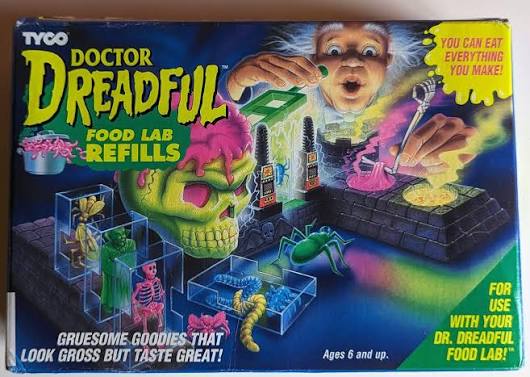
Dr. Dreadful Food Lab: The Gross Candy Lab That Made Snacks Look Like Evidence
Dr. Dreadful Food Lab was the kind of toy that made kids feel like mad scientists and made parents quietly question every decision that led to that purchase. The idea was simple: mix powders, use molds, create fake gross food, and then eat something that looked like it came from a haunted cafeteria.
That was the appeal. It was not just candy. It was candy with a performance. You were not eating a normal treat. You were making brains, bugs, guts, slime, or whatever disgusting little creation the kit promised. The grossness was the point, and the fact that it was technically edible made it feel even more forbidden.
Why the lab setup worked
The lab framing gave the toy its personality. Kids got to pour, stir, squeeze, mold, and reveal. It felt more involved than opening a pack of candy, and it felt weirder than a normal science kit. Dr. Dreadful found the perfect middle ground between food, science, Halloween, and 90s “eww” humor.
It also had strong reaction value. A kid could proudly show off something disgusting and wait for someone to gag, laugh, or refuse to try it. That social reaction was half the toy. Making the thing was fun. Watching someone else respond to the thing was better.
The commercial energy
This was exactly the kind of toy that worked in a commercial because it was visual. Bright colors, dramatic gross molds, kids laughing, candy that looked wrong, and a narrator selling disgusting as desirable. The ad did not need subtlety. It just needed to show kids making something gross and having the time of their lives.
In real life, the results were often stickier, messier, and less perfect than the commercial promised. But that made it more memorable. Nobody remembers a perfectly clean Dr. Dreadful session. They remember the weird smell, the powder packets, the sticky residue, and the pride of making something adults did not want to eat.
- Core appeal: gross candy, lab roleplay, mixing, molds, edible weirdness, and adult reactions.
- Kid behavior: making the grossest thing possible, daring siblings to eat it, and leaving sticky tools in the sink.
- Most 90s detail: a toy convincing parents that fake edible organs counted as creative play.
Dr. Dreadful mattered because it captured the 90s gross-out sweet spot: weird enough to feel rebellious, structured enough to be a kit, and edible enough to become a dare.
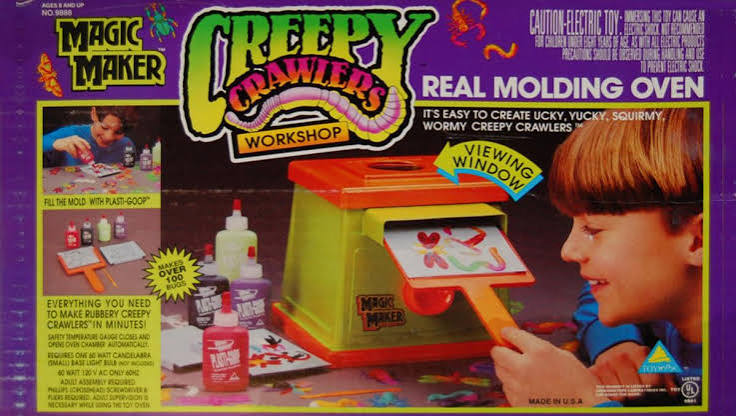
Creepy Crawlers: Rubber Bugs, Hot Molds, and the Joy of Making Things Nobody Asked For
Creepy Crawlers had one of the most satisfying toy promises of the decade: pour goop into a mold, heat it up, wait, peel out a rubber bug, and suddenly you had created something weird with your own hands. Not drawn. Not assembled. Created. Like a tiny creature factory, but for fake insects.
The process was the magic. Picking colors mattered. Filling the mold mattered. Waiting mattered. The reveal mattered. Even when the bug came out lumpy, uneven, or not remotely as cool as the box art, it still felt like you made something real.
Why the heat made it feel serious
Creepy Crawlers had a ritual to it. There was equipment. There were molds. There was heat. There was a cooling period. That made the toy feel more important than a simple craft kit. You were not just coloring; you were manufacturing rubber monsters in a bedroom-adjacent industrial process.
That also gave the toy a little edge. Anything involving heat automatically felt more grown-up and slightly forbidden. It needed supervision, or at least it should have. The 90s were very comfortable letting kids orbit questionable plastic technology as long as the box looked fun.
Why bugs were perfect
Bugs were the ideal output because they were supposed to look weird. If your creation came out messy, it still worked. A lopsided butterfly or half-formed spider did not ruin the experience. It made it yours. Creepy Crawlers understood that imperfect results were part of the charm.
It also gave kids something to display, trade, hide, or use to annoy siblings. A craft kit that produces prank-adjacent rubber bugs is basically 90s design philosophy in one sentence.
- Core appeal: molds, colored goop, heat, rubber bugs, monster-making, and tactile reveal.
- Kid behavior: mixing colors badly, overfilling molds, peeling bugs too soon, and leaving creations everywhere.
- Most 90s detail: a toy that turned “do not touch that, it is hot” into part of the fun.
Creepy Crawlers mattered because it made craft play feel like mad science. It was messy, sensory, strange, and exactly the kind of toy that burned itself into memory.
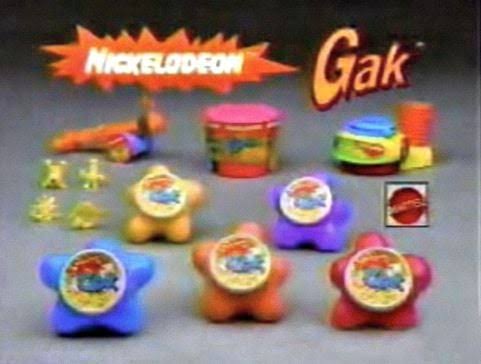
Nickelodeon Slime Energy: When Goo Became a Whole Personality
Nickelodeon slime energy was everywhere in the 90s. It was on TV, in toy aisles, in kits, in containers, in commercials, and eventually in places it should not have been. Slime was not just a substance. It was a mood. It meant kid culture, mess, rebellion, game-show chaos, and the sacred right to make something gross for no productive reason.
What made slime powerful was how simple it was. Stretch it. Squeeze it. Let it ooze. Watch it make a noise. Pretend it was disgusting. There were no complicated rules. The texture was the toy.
Why Nickelodeon made goo feel cool
Nickelodeon helped turn slime into a badge of honor. Getting slimed looked gross, but it also looked fun. It belonged to kids, not adults. It was loud, messy, colorful, and anti-formal. That attitude carried into slime toys and goo kits, where the mess was not a flaw. It was the entire point.
Slime also fit the 90s because the decade loved exaggerated kid identity. Bright colors, splat graphics, gross humor, weird textures, and “parents hate this” energy all worked together. Slime was basically the physical version of a Nickelodeon bumper.
The cleanup was part of the memory
The problem with slime was that it did not know when playtime ended. It stuck around. It got in fabric. It dried out. It picked up hair and dust and became something darker than its original purpose. A good slime toy started as fun and ended as evidence.
That is part of why it remains nostalgic. You remember the color and texture, but also the container, the smell, the residue, and the adult voice saying not to put it on the couch approximately seven seconds too late.
- Core appeal: texture, stretch, splat, gross humor, TV connection, and mess.
- Kid behavior: stretching it too far, hiding it in containers, making disgusting sounds, and ignoring all furniture warnings.
- Most 90s detail: green goo becoming a symbol of childhood freedom.
Slime mattered because it turned mess itself into play. It was not about building a perfect result. It was about feeling the goo and knowing adults did not fully understand why this was important.
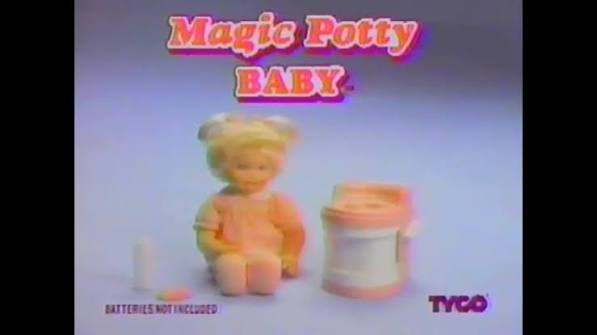
Magic Potty Baby: Doll Play Meets the 90s Potty-Joke Industrial Complex
Magic Potty Baby belonged to the very specific 90s toy category of “why does this exist, and why did kids want it?” It took classic baby doll nurturing — feeding, caring, pretending — and added a potty gimmick because the decade could not leave anything normal alone.
The toy worked because it mixed familiar doll play with a weird reveal. Baby dolls had long used feeding and diaper-changing as pretend-care routines, but 90s toy design loved turning routines into gimmicks. Suddenly potty time was not just pretend. It was the feature.
Why gross doll play worked
Kids already loved baby dolls because they let them imitate grown-up care. Feeding, holding, changing, dressing, and putting a doll to bed all made sense. Adding a potty function made that care loop more interactive and, frankly, more 90s.
There was also reaction value. Some toys were fun because they were pretty. Some were fun because they were weird. Magic Potty Baby lived on the weird side. It gave kids something to demonstrate, laugh about, and proudly explain while adults stared into the middle distance.
The decade had no fear of bodily-function humor
The 90s were full of gross-out jokes, potty humor, slime, fake food, weird dolls, and toys that pushed the line between cute and disgusting. Magic Potty Baby fit right into that world. It was not trying to be elegant. It was trying to be memorable.
And it was. Not always for the reasons a toy company might put in a catalog, but memorable is memorable.
- Core appeal: baby doll care, feeding, potty gimmick, novelty, and weird demonstration value.
- Kid behavior: feeding the doll, showing off the gimmick, laughing, and making adults regret asking questions.
- Most 90s detail: turning potty training into a toy feature and acting like this was normal shelf behavior.
Magic Potty Baby mattered because it shows the 90s doll aisle was not all fashion and sweetness. Sometimes it was novelty, bodily humor, and a toy premise that would absolutely derail a family conversation.
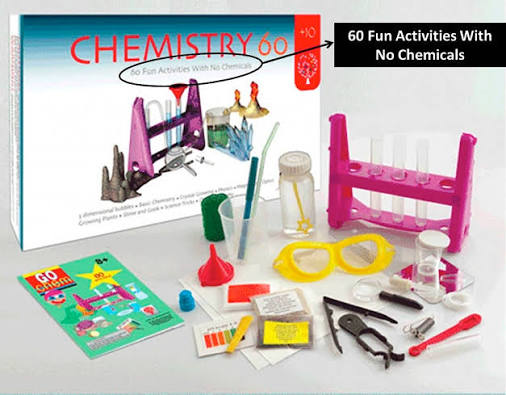
90s Science Kits: Volcanoes, Crystals, Microscopes, and Parent-Approved Mess
90s science kits were the category parents loved because they could tell themselves the mess was educational. Volcano kits, crystal-growing kits, chemistry sets, microscope kits, mineral kits, glow experiments, and weather projects all promised learning while quietly requiring table space, supervision, and a cleanup plan no one had.
Kids loved them because they came with tools. Tiny beakers, magnifiers, droppers, powders, labels, trays, and instruction booklets made the whole thing feel official. Even a simple experiment became more exciting if it looked like it belonged in a lab.
Why science kits felt special
A science kit was not instant gratification. You had to follow steps. Mix things. Wait. Observe. Sometimes the result was dramatic. Sometimes it was a sad little crystal patch that looked nothing like the box. But the waiting made it feel real.
These toys also gave kids a sense of control over transformation. You could make something erupt, grow, fizz, glow, or appear under a microscope. That little cause-and-effect loop was powerful, especially when the result looked slightly magical.
The parent approval loophole
Science kits got away with more because they sounded productive. A gross-out toy was “messy.” A craft kit was “creative.” But a science kit was “educational,” which meant it could sneak into the house under the banner of personal development.
Of course, kids still used them like toys. They rushed steps, mixed things too aggressively, lost instructions, and treated every bubbling reaction like a breakthrough. The educational value was real enough, but the fun came from feeling like you were doing forbidden kitchen chemistry.
- Core appeal: tools, experiments, crystals, volcanoes, microscopes, powders, and grown-up lab energy.
- Kid behavior: skipping steps, mixing too much, checking crystals every five minutes, and calling anything bubbling a success.
- Most 90s detail: a cardboard box promising science while the kitchen table prepared for war.
Science kits mattered because they made hands-on learning feel like play. They were not always glamorous, but they gave kids the rare toy feeling of making something happen instead of just pretending.
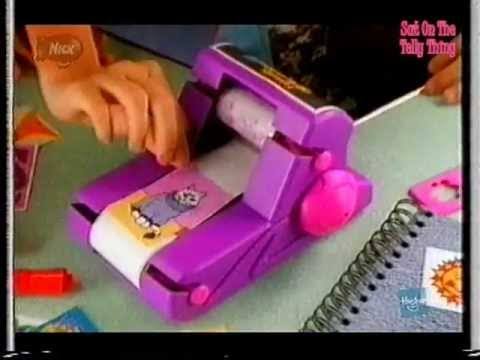
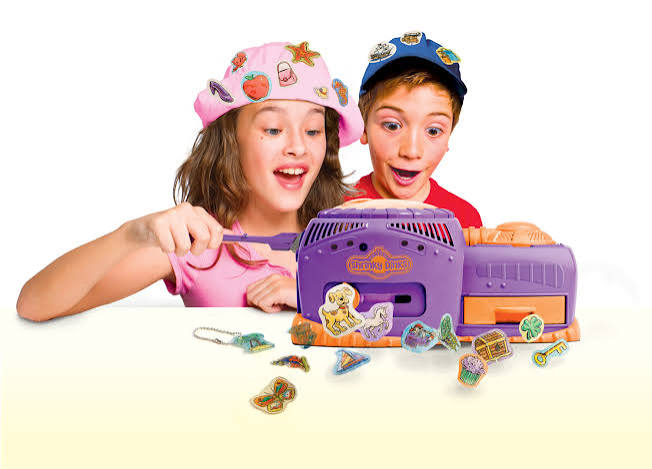
Sticker Machines and Sticker Culture: Making Everything Sticky Because We Could
Sticker machines and sticker culture were a whole 90s ecosystem. Stickers were not just rewards from teachers or tiny decorations. They were identity. You put them on folders, notebooks, letters, mirrors, binders, pencil boxes, bedroom doors, and anything that seemed too plain to survive childhood.
Sticker-making toys made that power feel even bigger. If you could turn your own pictures, drawings, labels, or cutouts into stickers, then suddenly every flat object had potential. The entire world became a surface waiting to be improved or damaged, depending on whether you were the kid or the parent.
Why stickers ruled the 90s
The 90s were visually loud. Lisa Frank colors, holographic designs, neon graphics, glitter, cartoon animals, smiley faces, hearts, stars, dolphins, aliens, yin-yangs, and bubble letters were everywhere. Stickers were cheap, portable, collectible, and perfect for personalizing school stuff.
They also gave kids low-stakes creativity. You did not need to be good at drawing. You just needed to choose, peel, and place. That little act of decorating made boring objects feel owned.
The permanent-decision problem
Every sticker carried a tiny emotional crisis: where does this go? Once you used a good sticker, it was used. You could not waste the holographic dolphin on a bad folder. Sticker books became museums of indecision, filled with perfect stickers too precious to actually stick anywhere.
Sticker machines added another layer. Now you could make more, but the pressure shifted to what deserved to become a sticker. The 90s prepared children for graphic design and commitment anxiety at the same time.
- Core appeal: decorating, collecting, personalization, sticker books, homemade labels, and school-supply identity.
- Kid behavior: saving the best stickers forever, covering folders, trading sheets, and making every surface a victim.
- Most 90s detail: a holographic sticker becoming more emotionally significant than most homework.
Sticker culture mattered because it turned crafts into identity. It was cheap, colorful, personal, and exactly the kind of low-tech creativity that defined a lot of 90s school life.
Bead Kits and Friendship Bracelets: Tiny Plastic Pieces, Giant Social Meaning
Bead kits and friendship bracelets were the quieter side of 90s craft chaos, but they were everywhere. Plastic beads, alphabet beads, charms, elastic string, embroidery floss, safety pins, keychains, and homemade bracelets turned bedrooms and sleepovers into tiny accessory factories.
The appeal was not just making something. It was making something for someone. A bracelet could mean friendship, a favorite color combo, a name, a crush, a club, a camp memory, or just “I had beads and free time.” That social layer made the craft feel bigger than the materials.
Why wearable crafts worked
Wearable crafts had a built-in reward. You did not just finish the project; you put it on. You gave it to a friend. You attached it to a backpack. You wore it until it stretched out, faded, snapped, or became permanently damp from life.
They were also flexible. A kid could make something simple or complicated. A bracelet could take five minutes or an entire afternoon. Patterns mattered. Colors mattered. Letter beads mattered. And if the knot failed, the floor became a bead explosion with no survivors.
Sleepover craft-table energy
Bead kits and friendship bracelets were perfect for sleepovers because they kept hands busy while everyone talked. Unlike a board game, they did not require the room to focus on one thing. Kids could craft, gossip, watch TV, eat snacks, and still produce a bracelet by midnight.
That is why they stick in memory. They were not always flashy toys, but they were part of the social texture of the decade. Crafts were something you did while life happened around them.
- Core appeal: colors, names, wearable results, gifting, friendship, and backpack decoration.
- Kid behavior: spelling names, making matching bracelets, losing beads, and tying knots that either lasted years or nine minutes.
- Most 90s detail: alphabet beads turning friendship into a wrist-based public statement.
Bead kits and friendship bracelets mattered because they made craft toys personal and social. They were not just projects. They were tiny handmade declarations.
Shrinky Dinks, Sand Art, Stamp Sets, and Neon Art Kits: The Craft Drawer Never Died
Shrinky Dinks, sand art, stamp sets, Spirograph-style art, glitter crafts, and neon art kits formed the classic craft drawer side of the 90s. These were the kits pulled out on rainy days, snow days, sick days, sleepovers, and any afternoon when an adult needed kids occupied but did not want to hear another video game fight.
Shrink plastic had the best transformation hook. You colored something big, put it near heat, watched it curl and panic-induce, then flatten into a tiny hard charm. It looked like something had gone wrong right before it worked. That was elite toy drama.
Why craft kits survived the electronic toy wave
Even as video games and electronic toys got louder, craft kits stayed useful because they gave kids something physical to make. A finished craft could be worn, displayed, gifted, mailed, stuck on a wall, or shoved into a drawer with fifty other important creations.
They also let kids control style. Colors, patterns, stamps, glitter, sand layers, and doodles all became personal choices. The result did not have to look professional. It just had to feel yours.
The Lisa Frank-adjacent effect
90s craft culture had a look: neon, rainbow, animals, hearts, stars, dolphins, glitter, bubble letters, and colors that did not believe in moderation. Even when a kit was not officially tied to Lisa Frank, the vibe was in the air. Everything wanted to be brighter.
That visual loudness is why these toys still feel so tied to the decade. The supplies were not subtle. The finished projects were not subtle. The glitter trail was not subtle. The 90s craft table entered a room at full volume.
- Core appeal: transformation, color, personalization, finished crafts, and rainy-day table takeover.
- Kid behavior: over-coloring, over-glittering, saving scraps, making gifts, and leaving supplies uncapped.
- Most 90s detail: a craft project with enough neon color to qualify as school-supply camouflage.
These craft kits mattered because they kept creativity physical. They were messy, imperfect, bright, and satisfying in a way that clicking a button never replaced.
Gross-Out Culture: Why the 90s Loved “Eww” So Much
The 90s did not invent gross-out humor, but it absolutely gave it better packaging. Kids had slime on TV, weird candy, fake food labs, bugs, potty jokes, gross board games, toilet humor, snot jokes, and commercials that understood one sacred truth: if a toy made adults say “that’s disgusting,” kids wanted to see it immediately.
Gross-out toys worked because they gave kids control over disgust. Real gross things are not fun. Fake gross things are hilarious. A candy brain, a rubber bug, a slime cup, or a potty-gimmick doll let kids play near the edge without actual danger. It was controlled rebellion in a plastic tray.
The category also gave toy companies a strong visual hook. Bright green goo, purple bugs, fake organs, slime splats, and weird food molds looked incredible in commercials. You could understand the appeal from across the room. Subtlety was not invited.
Why “gross” sold
- It got reactions: kids loved making adults cringe, laugh, or refuse to touch the finished product.
- It felt rebellious: gross toys seemed slightly wrong in a way that was still allowed.
- It was visual: goo, bugs, slime, and fake food looked great on packaging and TV.
- It was tactile: stretching, squeezing, peeling, pouring, and molding made the toy feel active.
- It fit 90s media: Nickelodeon slime and kid-TV chaos made grossness feel normal.
The 90s gross-out toy aisle was basically a permission slip for weirdness. Kids could make disgusting things, laugh at them, dare someone else to touch them, and then leave the cleanup for whoever had made the mistake of buying the kit.
Craft-Table Culture: The Other Kind of 90s Mess
Not every messy 90s toy was gross. Some were pretty, sparkly, colorful, and still somehow just as destructive. Sticker makers, bead kits, friendship bracelets, glitter crafts, stamp sets, shrink plastic, sand art, and marker-heavy art kits turned kitchen tables into creative battlefields.
Craft toys mattered because they gave kids identity tools. You could decorate your folder, make a bracelet for a friend, create a sticker, stamp a letter, layer colored sand, or make a shrink-plastic charm that looked like your personality had been microwaved into a keychain. It was self-expression before every profile had a customize button.
Why 90s Gross-Out, Science, and Craft Toys Still Hit
The nostalgia is not just about the kits. It is about the process: opening packets, reading instructions, ignoring instructions, pouring too much water, waiting for plastic to cool, peeling rubber bugs from molds, tying knots badly, losing beads, checking crystals every ten minutes, saving sticker sheets, and proudly showing off something that looked nothing like the box.
These toys also hit because they were physical. They had smells, textures, colors, sounds, and cleanup. Slime felt like slime. Creepy Crawlers had a goop-and-heat ritual. Stickers had peel. Beads had tiny weight. Friendship bracelets had knots. Science kits had fizz, patience, and disappointment when the crystal did not become a museum specimen overnight.
And maybe that is the real memory: the 90s gave kids permission to make stuff badly. Not every project had to be perfect. The rubber bug could be lopsided. The bracelet could be uneven. The sticker could wrinkle. The fake food could look cursed. The volcano could underperform. It still counted because you made it.
90s Gross-Out, Science, and Craft Toys FAQ
What were the most popular 90s gross-out toys?
Some of the most remembered 90s gross-out toys include Dr. Dreadful Food Lab, Creepy Crawlers, Nickelodeon-style slime kits, Magic Potty Baby, gross candy makers, fake food kits, bug-making toys, and goo-based activity toys.
What were popular 90s science toys?
Popular 90s science toys included crystal-growing kits, volcano kits, microscope kits, chemistry sets, mineral kits, glow experiments, weather kits, and other hands-on experiment sets that mixed learning with kitchen-table mess.
What were popular 90s craft toys?
Popular 90s craft toys included sticker makers, sticker books, bead kits, friendship bracelet kits, Shrinky Dinks carryover, sand art, stamp sets, glitter kits, marker sets, and neon art kits tied to school-supply and bedroom culture.
Why were gross-out toys so big in the 90s?
Gross-out toys fit the 90s because kid culture was loud, messy, and heavily influenced by slime, game shows, weird commercials, novelty candy, bodily-function humor, and toys that got big reactions from adults.
Why do 90s craft toys feel so nostalgic?
They were tied to physical creativity: stickers, beads, string, glitter, markers, shrink plastic, stamps, and handmade projects. They also lived in bedrooms, school supplies, sleepovers, and kitchen-table afternoons before everything became digital.