90s Action Figure Wars: The Toy Aisle Arms Race
The 80s built the action-figure empire. The 90s mutated it, painted it neon, gave it a TV show, slapped a holographic sticker on it, added a spring-loaded gimmick, and told every kid in America that the one figure they already owned was emotionally useless unless they also had the vehicle, the villain, the deluxe version, the movie version, and the weird repaint that somehow looked more powerful.
This is the story of the 90s action figure wars: Teenage Mutant Ninja Turtles, Mighty Morphin Power Rangers, Toy Biz X-Men, Kenner Batman, Jurassic Park, Spawn, Star Wars, WWF Hasbro, Street Sharks, Biker Mice, video-game fighters, movie tie-ins, collector packaging, and the moment the toy aisle stopped being just a kid zone and started becoming a battlefield for franchises.
90s Toys
Head back to the full 90s Toys hub for collectibles, electronics, dolls, plush, video games, backyard toys, board games, commercials, and the rest of the decade’s plastic chaos.
The Prequel80s Action Figure Wars
He-Man, G.I. Joe, Transformers, ThunderCats, M.A.S.K., GoBots, and the cartoon-to-toy machine built the battlefield the 90s inherited.
Video ArchiveToy Commercial Energy
Watch the ad style that trained an entire generation to treat every new figure, vehicle, and playset like an emergency broadcast.
Quick Answer: What Were the 90s Action Figure Wars?
The 90s action figure wars were the decade-long fight for toy-aisle space between cartoon-driven lines, comic-book heroes, movie franchises, wrestling figures, collector-focused brands, and every weird mutant copycat that tried to grab a piece of the same plastic money pile.
In the 80s, the biggest action-figure lines were usually built around a clear brand universe: He-Man, G.I. Joe, Transformers, Star Wars, ThunderCats. In the 90s, the battlefield fractured. TMNT carried late-80s cartoon power into the new decade. Power Rangers turned live-action TV into a retail stampede. Toy Biz made Marvel and X-Men figures feel like comic-shop energy had invaded the toy store. Kenner turned Batman and Jurassic Park into movie/cartoon shelf empires. Spawn made action figures darker and more collector-oriented. Star Wars returned. Wrestling figures turned real performers into playground combatants. Meanwhile, every second-tier line seemed to ask the same question: “What if the Ninja Turtles, but sharks?”
That is what made the 90s different. It was not one dominant toy-aisle empire. It was a crowded, loud, brand-versus-brand cage match where every company needed a hook: a cartoon, a movie, a comic, a gimmick, a transformation, a dinosaur, a monster, a collector card, a spring-loaded weapon, or at minimum one villain who looked like he had been designed by a sleep-deprived eight-year-old.
Why the 90s Action Figure Aisle Felt Different
The 90s did not invent the action figure. It inherited a toy aisle that had already been trained by the 80s. Kids knew how this worked. A cartoon introduced the heroes. Commercials announced the new figures. Toy stores turned those figures into a shopping-list crisis. Vehicles and playsets made the collection feel incomplete. Villains made the heroes matter. Repaints and variants convinced everyone that technically, yes, you did need another version of the same character.
But the 90s changed the mix. The action-figure aisle became less about one giant boys’ adventure brand and more about competing media pipelines. Saturday morning cartoons still mattered, but now live-action TV mattered. Blockbuster movies mattered. Comic books mattered. Video games mattered. Wrestling mattered. Collectors mattered. Packaging mattered. Sometimes the figure was not even the main attraction — the dinosaur, vehicle, creature, hologram, trading card, or package art did half the work.
The result was a toy aisle that felt more unstable than the 80s. TMNT could dominate one year. Power Rangers could cause a retail panic the next. Jurassic Park could make dinosaurs the coolest “action figures” in the store. Batman could be a cape, a cartoon, a movie, and fifteen different armored variants of the same guy. Toy Biz could make Marvel feel enormous. Spawn could show older kids and collectors that action figures did not have to look bright, simple, or child-safe in spirit. Star Wars could return after years away and remind everyone that the old king still had shelf power.
This is why the 90s action-figure wars are so fun to revisit. It was not clean. It was not organized. It was brand chaos. Every peg had a different universe hanging from it. A kid could stand in one aisle and choose between a mutant turtle, a Power Ranger, Wolverine, Batman, a velociraptor, a wrestler, Darth Vader, Spawn, a Street Shark, or some baffling figure from a cartoon that lasted five minutes but somehow got a full toy line.
The 90s action-figure formula
- Instant team identity: Four Turtles, five Rangers, X-Men teams, Batman rogues, wrestling factions — the decade loved character groups.
- Action features: Spring-loaded weapons, kicking legs, karate chops, slashing claws, talking gimmicks, transformation parts, and anything else that justified the phrase “with real action.”
- Vehicle pressure: The toy line was never complete without the van, Zord, Batmobile, jeep, dinosaur cage, spaceship, ring, sewer, base, or completely unnecessary rolling missile platform.
- Variant overload: New outfit, new armor, new repaint, new movie version, new deluxe version, new metallic finish, new battle-damaged version, new “why is Batman wearing arctic scuba armor?” version.
- Collector creep: By mid-decade, more figures were being purchased by older fans who cared about package condition, sculpt detail, limited runs, and whether the blister card looked like it had been breathed on wrong.
The 90s Action Figure Wars Timeline
A fast visual map of the toy lines that changed the aisle
Here’s the fast visual read on how the 90s action figure aisle changed: TMNT carried the late-80s cartoon-to-toy machine into the decade, wrestling and Marvel crowded the pegs, Power Rangers and Jurassic Park blew up retail, Spawn made figures darker and more collectible, and Star Wars helped close the decade by proving nostalgia could still own shelf space.
TMNT lights the fuse
Playmates turns four sewer weirdos into the decade’s first giant action-figure monster.
Turtlemania meets WWF
The TMNT movie spikes the craze while Hasbro brings wrestling stars into kid-play combat.
Marvel muscles in
Toy Biz builds X-Men and Marvel into a serious toy-shelf force before superhero movies take over.
Batman owns the suit rack
Kenner’s Batman toys prove one hero can sell endlessly if every version has new armor.
Rangers and raptors attack
Power Rangers and Jurassic Park make team collecting and creature toys explode at once.
Spawn darkens the aisle
McFarlane pushes sculpt detail, darker designs, and older-fan display culture into action figures.
Star Wars returns
Power of the Force 2 brings classic characters back and gets kids and adult collectors buying.
Collector culture hardens
Variants, exclusives, sealed cards, and comic-shop energy become part of the toy conversation.
Action figures get crowded
Pokémon, Furby, digital toys, video games, and Episode I change what the toy aisle is fighting over.
The Major Fronts of the 90s Action Figure Wars
Each toy line fought a different kind of battle
Teenage Mutant Ninja Turtles: The Mutant Empire
TMNT was the monster at the beginning of the decade. It had four instantly identifiable heroes, a hit cartoon, a movie, vehicles, playsets, weird villains, endless variants, and the magical ability to make a sewer seem like prime real estate. It carried the late-80s cartoon-to-toy machine into the 90s and set the tone for what action-figure saturation could look like.
Mighty Morphin Power Rangers: The Live-Action Stampede
Power Rangers turned after-school TV into toy-store chaos. The figures, Zords, role-play weapons, villains, and color-coded team identity gave kids a new faction system. If TMNT was sewer chaos, Power Rangers was martial-arts neon with giant robot upsell pressure.
Toy Biz Marvel and X-Men: Comic Shop Energy Goes Mainstream
X-Men figures hit during a perfect comic-book/cartoon moment. Wolverine, Cyclops, Storm, Gambit, Magneto, Apocalypse, and the rest made Marvel feel huge before the movie universe existed. Toy Biz figures were not the fanciest toys in the aisle, but they made superhero collecting feel alive.
Kenner Batman: The Variant Machine
Batman had movies, cartoons, vehicles, villains, and one of the strongest action-figure identities in the store. Kenner understood that Batman could wear anything: arctic armor, jungle armor, missile armor, sonar armor, underwater armor, probably emotional-avoidance armor. Kids kept buying.
Jurassic Park: Dinosaurs as Action Figures
Kenner’s Jurassic Park line made the dinosaurs the stars. Humans mattered, sure, but the real action figures had teeth, capture gear, damage wounds, and the ability to ruin every peaceful scene on the living-room carpet. Jurassic Park proved creature toys could dominate the action aisle when the movie was big enough.
Spawn and McFarlane Toys: The Collector Shift
Spawn figures looked different from the kid-focused lines around them: darker, sharper, more detailed, more display-oriented. They helped push action figures toward the collector market, where paint, sculpting, packaging, and shelf presence mattered as much as play value.
Star Wars: The Comeback Army
Power of the Force 2 brought Star Wars figures back in 1995, and by the end of the decade Episode I turned the brand into a full retail event again. Some figures were weirdly muscular. Some characters peg-warmed forever. None of that stopped the Force from reclaiming shelf space.
WWF Hasbro and Wrestling Figures: Real People, Fake Violence, Perfect Toys
Hasbro’s WWF figures turned televised wrestling into chunky plastic backyard drama. The action features were simple, the likenesses were charmingly odd, and the roster made kids stage matches that definitely broke at least one lamp.
Street Sharks, Biker Mice, Extreme Dinosaurs, and the Copycat Zone
Every hit creates imitators, and the 90s had no shortage of anthropomorphic attitude brands. Sharks, mice, dinosaurs, monsters, bikers, mutants, martial artists — if you could give an animal sunglasses, muscles, and a cartoon intro, someone probably tried.
Video Game Fighters: Mortal Kombat, Street Fighter, and the Arcade Shelf
As video games became more central to kid culture, action figures followed. Mortal Kombat and Street Fighter figures brought arcade characters into toy aisles, sometimes awkwardly, sometimes gloriously, always with the sense that the action-figure world had to make room for screens.
The Toy-Line Breakdown
Teenage Mutant Ninja Turtles: the decade’s opening boss fight
TMNT was not technically born in the 90s, but it absolutely owned the front half of the decade. Playmates had the dream setup: a cartoon that ran constantly, characters kids could instantly identify, heroes that came in a neat set of four, villains that looked like they crawled out of a toxic-waste joke, and a premise flexible enough to justify almost any toy idea.
The original Turtles had obvious personality roles. Leonardo led. Raphael had attitude. Donatello built things. Michelangelo brought party energy. That simple breakdown made playground identity easy. You could ask a kid which Turtle they liked and immediately understand their entire recess personality. The villains were just as important. Bebop and Rocksteady were mutant goon perfection. Shredder was a boss fight. Krang was a brain in a machine, because the franchise was already committed to nonsense and refused to apologize.
The real power was expansion. TMNT had the Party Wagon, the Sewer Playset, the Technodrome, Pizza Thrower, Wacky Action figures, Storage Shell figures, Movie Star Turtles, Universal Monsters, sports versions, disguise versions, mutation gimmicks, and a mutant bench deep enough to make the toy aisle look infected. It was not a line. It was a spreading condition.
Mighty Morphin Power Rangers: color-coded retail panic
Power Rangers arrived like someone had combined martial arts, team identity, monster-of-the-week TV, giant robots, and every kid’s need to own the red one. The figures were not complicated. That was part of the point. They were instantly readable. Red Ranger. Pink Ranger. Blue Ranger. Black Ranger. Yellow Ranger. Green Ranger. White Ranger. Villains. Zords. Weapons. Role-play gear. Done.
The power of the line was the team system. Like TMNT, Power Rangers gave kids identities to choose from. But where TMNT was sewer comedy, Power Rangers was live-action after-school transformation fantasy. The morphing sequence made the toys feel ceremonial. The Zords gave the line a massive second layer. A kid might start with a Ranger figure, but the real pressure was the Megazord, Dragonzord, Tigerzord, and every giant robot problem that followed.
Power Rangers also proved that American toy aisles could absorb imported-style live-action hero teams and turn them into mainstream retail events. It did not need to look like a traditional cartoon. It needed color, repetition, monsters, robots, and playground arguments about who got to be the Green Ranger.
Toy Biz X-Men and Marvel: before the MCU, there were blister cards
Before superhero movies ate the planet, 90s kids met a lot of Marvel through comics, cartoons, trading cards, arcade games, and Toy Biz figures. X-Men was the big one. Wolverine, Cyclops, Storm, Gambit, Rogue, Beast, Magneto, Apocalypse, Mr. Sinister, Sabretooth — this was a roster built for toy shelves. The characters looked different from one another, had powers kids understood, and came with just enough action features to make the figures feel specific.
Toy Biz figures had a very 90s charm. They were not luxury collectibles. They were bright, sometimes awkward, often gimmicky, and deeply tied to the comic/cartoon energy of the moment. Wolverine got claw-slashing action. Cyclops had optic-blast logic. Archangel had wings. Apocalypse looked like he should require a separate shelf permit. The line made Marvel feel huge at retail long before Marvel became the box-office machine we know now.
X-Men also mattered because it pulled comic-book culture into mainstream kid space. Comic shops had their own world, but the Toy Biz aisle made mutants visible to kids who might never buy an issue. The cartoon did the storytelling. The figures made the team physical. The trading cards made the roster feel collectible. It all worked together.
Kenner Batman: one hero, endless suits
Batman was one of the decade’s greatest action-figure cheat codes. He had movies. He had Batman: The Animated Series. He had villains. He had gadgets. He had vehicles. He had a costume that could be remixed forever. Kenner understood the business model: sell Batman, then sell Batman again wearing a different suit that solved a problem no child had previously imagined.
Arctic Batman. Jungle Batman. Battle Armor Batman. Hydro Batman. Sonar Batman. Infrared Batman. Some of these names may sound like emergency weather alerts, but the concept worked. Batman figures were less about strict story accuracy and more about giving kids a new version of a character they already liked. Parents could reasonably ask, “Don’t you already have Batman?” and kids could reasonably respond, “Not this Batman.” The court accepts this argument.
The Animated Series figures brought a different kind of appeal. The show had style. The toys leaned into that universe with villains, vehicles, and a darker Gotham feel. Batman’s rogues gallery gave the line depth, while the endless Batman variants kept the cash register awake.
Jurassic Park: when the dinosaurs were the main figures
Jurassic Park changed the shelf by making the creatures the main event. Yes, there were human figures. Alan Grant, Ellie Sattler, Ian Malcolm, Robert Muldoon — they mattered because they gave kids someone to run away. But the real stars were the dinosaurs: T. rex, Velociraptor, Triceratops, Dilophosaurus, and every scaled nightmare Kenner could package.
What made Jurassic Park different was weight. A dinosaur toy felt big, physical, and dangerous in a way standard figures did not. They had biting action, capture gear, dino-damage wounds, roaring presence, and movie credibility. The toys did not need a Saturday morning cartoon to explain them. The film had already done the work. Every kid knew the raptor was trouble. Every kid knew the T. rex owned the room.
Jurassic Park also blurred action figures and creature toys. Were dinosaurs action figures? In the 90s toy aisle, absolutely. They fought, chased, captured, escaped, destroyed jeeps, and made human figures feel like accessories in their own line. Respect.
Spawn and McFarlane Toys: action figures get darker
Spawn did not feel like a standard kid toy line. That was the point. McFarlane Toys brought darker characters, sharper sculpting, heavier paint detail, and more collector-focused packaging to the aisle. These figures looked like they belonged in comic shops, bedrooms of older kids, and on shelves where nobody was supposed to touch them.
The first Spawn figures helped change expectations. Action figures did not have to be simple. They could be detailed. They could be creepy. They could come with comic-book attitude. They could appeal to teens and adults, not just kids staging battles under the dining-room table. This mattered because the 90s was when collector culture became much harder to ignore.
Spawn also helped create a split in the aisle: figures meant for rough play versus figures meant for display. Of course, plenty of kids still played with Spawn figures because kids are agents of chaos. But the shelf presence was different. The packaging told you these were not just toys. They were “collectibles,” which is toy-company language for “please buy two and open neither.”
Star Wars: nostalgia strikes back
Star Wars returned to action-figure shelves in the mid-90s with Power of the Force 2, and the comeback was weird, muscular, and extremely 90s. The early figures looked like the franchise had spent ten years at a gym drinking protein shakes. Luke was jacked. Leia was stylized. Vader looked ready to deadlift a landspeeder. It was strange. It was also irresistible to a lot of fans.
The return of Star Wars proved that nostalgia itself could drive action-figure sales. Kids bought them. Adults bought them. Collectors hunted variants, short cards, long sabers, red cards, green cards, freeze frames, exclusives, and all the little details that made the line feel like a market. By 1999, Episode I turned the entire thing into a retail flood.
Star Wars was not fighting the same war as TMNT or Power Rangers. It was fighting the memory war. It had decades of mythology, returning fans, and a new generation waiting. The toy aisle had changed, but Star Wars still knew how to occupy it.
WWF Hasbro: wrestling becomes playground architecture
Hasbro’s WWF figures were chunky, colorful, and built around simple action features. Hulk Hogan could slam. Macho Man could punch. Ultimate Warrior could do whatever wild shoulder-tackle chaos kids imagined. The figures were not realistic by modern standards, but they were perfect for the era.
Wrestling figures mattered because they brought a different kind of action play. These were not cartoon heroes, comic mutants, or movie monsters. They were real performers translated into plastic. Kids already knew the moves, the rivalries, the catchphrases, and the personalities. The figures turned the floor into a ring, and the official ring playset became sacred furniture for any kid who had it.
They also proved that action figures did not need laser guns or mutant powers to work. Sometimes a bright outfit, a famous name, and a spring-loaded body slam were enough.
The Action Figure War Room
The biggest fronts in the decade’s plastic battlefield
Teenage Mutant Ninja Turtles: The Decade’s Opening Boss Fight
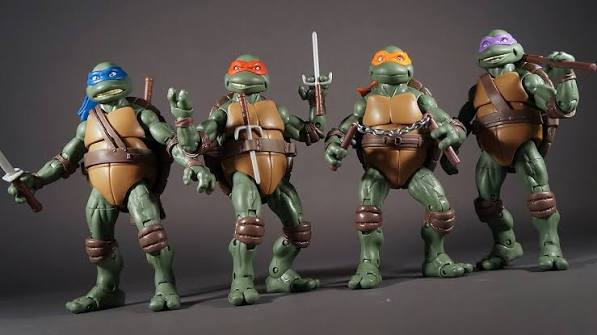
Teenage Mutant Ninja Turtles were the opening boss fight of the 90s action-figure wars. The line launched in the late 80s, but by the early 90s it had become the toy aisle’s green, pizza-scented empire. Playmates had the dream setup: a cartoon that ran constantly, characters kids could instantly identify, heroes that came in a neat set of four, villains that looked like they crawled out of a toxic-waste joke, and a premise flexible enough to justify almost any toy idea.
The four Turtles worked because they were basically a personality quiz with weapons. Leonardo was the leader. Raphael was the attitude problem. Donatello was the tech brain. Michelangelo was the party dude. That made playground identity easy. You were not just buying a figure — you were picking your sewer representative. The color-coded masks, different weapons, and exaggerated sculpts made each Turtle feel specific even before the cartoon voices took over your brain.
The villains were just as important. Shredder gave the line a main threat. Bebop and Rocksteady were mutant goon perfection. Krang made the whole thing weirder. Baxter Stockman, Leatherhead, Rat King, Slash, Muckman, Mutagen Man, Scumbug, and the rest turned the toy shelf into a parade of freaks. That was the real genius: TMNT made ugly, gross, strange figures feel collectible.
Why the TMNT line kept expanding
TMNT was built to mutate. Once kids had the four main figures, the line could sell vehicles, playsets, villains, allies, variants, movie versions, sports versions, disguise versions, Wacky Action figures, Storage Shell figures, and anything else that could be explained by mutagen, pizza, or toy-company nerve. The Party Wagon and Sewer Playset made the world feel complete. The Technodrome gave the villains a base. The Pizza Thrower turned a running joke into a projectile system, because apparently childhood needed one.
- Core play pattern: four heroes versus a growing army of mutant villains and Foot Clan chaos.
- Big-ticket pressure: the Turtle Van, Sewer Playset, Technodrome, and Pizza Thrower made the line feel larger than a figure collection.
- Collector hook: endless character waves and variants made every toy-store trip feel like there might be a new mutant you had never seen before.
TMNT mattered because it carried the late-80s cartoon-to-toy machine directly into the 90s and proved that an action-figure line could be funny, gross, colorful, character-driven, and completely absurd without losing power. If anything, the absurdity was the power. It made the toy aisle feel unpredictable, and that unpredictability became the model a lot of 90s imitators chased.
Mighty Morphin Power Rangers: Color-Coded Retail Panic
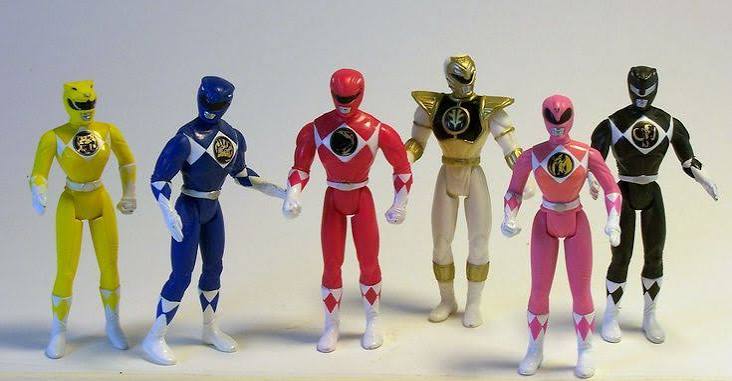
Mighty Morphin Power Rangers hit the 90s toy aisle like a siren. TMNT had made team-based action figures huge, but Power Rangers brought a different kind of urgency: live-action TV, martial arts, monsters, giant robots, color-coded heroes, and the kind of after-school repetition that made kids feel like the latest toy was not optional. It was morphin time, which was 90s kid language for “please take me to the store.”
The brilliance of Power Rangers was how easy it was to understand. Red, Pink, Blue, Black, Yellow, Green, White. Every kid could pick a Ranger instantly. The show’s structure did half the selling: normal teens, transformation sequence, fight scene, monster grows, Zord battle, Megazord finish. That rhythm trained kids to see the toys as pieces of a ritual. You did not just want the figures. You wanted the whole transformation fantasy.
The figures were only the first layer. The Zords were the real financial ambush. Megazord, Dragonzord, Tigerzord, Thunderzords, role-play weapons, villains, bikes, deluxe sets — the line constantly pushed upward from small figures to bigger-ticket toys. If TMNT sold the sewer clubhouse, Power Rangers sold the giant robot escalation ladder.
Why Power Rangers created retail panic
The toy line had three powerful hooks firing at once: team identity, transformation fantasy, and robot combination. Kids could collect the Rangers, act out fights, wear the role-play gear, and then pressure parents for the Zords because the figures alone did not feel like the full experience. The show made every piece feel connected. That is why certain Rangers and Zords felt impossible to find during peak demand.
- Core play pattern: heroes transform, fight monsters, summon Zords, and combine into bigger robot power.
- Big-ticket pressure: Megazord and Dragonzord were not accessories — they were the dream centerpieces.
- Playground hook: everyone had a favorite Ranger, and the Green Ranger/White Ranger energy was basically social currency.
Power Rangers mattered because it proved live-action kids’ TV could dominate the toy aisle just as hard as animation. It also pushed the 90s farther into team collecting, role-play gear, and bigger modular toys. The line did not just compete with TMNT. It replaced the conversation for a while.
Toy Biz X-Men and Marvel: Before the MCU, There Were Blister Cards
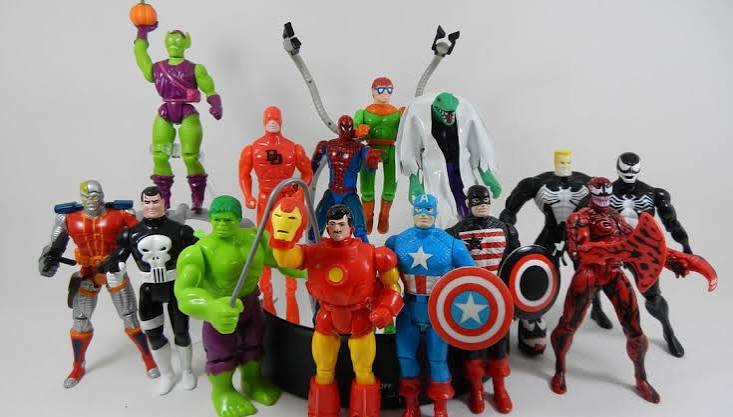
Toy Biz Marvel and X-Men figures were the comic-book front of the 90s action-figure wars. Before the Marvel Cinematic Universe, before superhero movies became the default language of pop culture, a lot of kids met Marvel through comics, trading cards, arcade games, Saturday morning cartoons, and blister-carded Toy Biz figures hanging from toy-store pegs.
X-Men was the big engine. Wolverine, Cyclops, Storm, Gambit, Rogue, Beast, Magneto, Apocalypse, Mr. Sinister, Sabretooth, Archangel, Bishop — this roster was made for toys. Every character looked different, had a clear power, and came with some kind of action gimmick or visual hook. Wolverine needed claws. Cyclops needed optic-blast logic. Archangel needed wings. Apocalypse needed to look like he required his own zoning permit.
Toy Biz figures were not always polished by modern standards, but they had the perfect 90s energy: bright colors, comic-card poses, character-specific gimmicks, and a roster that kept getting deeper. The figures gave kids access to a universe that felt bigger than the cartoon. You might know Wolverine from TV, then find some strange villain on the peg and suddenly realize Marvel had a whole basement full of weirdos.
Why Toy Biz Marvel mattered
Toy Biz helped pull comic-shop culture into mainstream kid space. Marvel was not just for comic readers anymore. The figures made the characters physical. The cartoon made them emotional. Trading cards made them collectible. Arcade games made them playable. All of those pieces reinforced each other, and the toy line sat right in the middle.
- Core play pattern: hero teams versus villain teams, usually with powers replacing weapons.
- Big roster appeal: X-Men made kids want teams, villains, alternates, and deep-cut characters.
- Collector bridge: comic fans and kids could both justify buying the same figures for different reasons.
Marvel mattered because it showed how strong character libraries could become action-figure fuel. The 90s were full of toy lines built around one show or one movie, but Marvel had decades of characters waiting. Toy Biz turned that archive into peg-wall momentum long before Hollywood figured out how much money was hiding there.
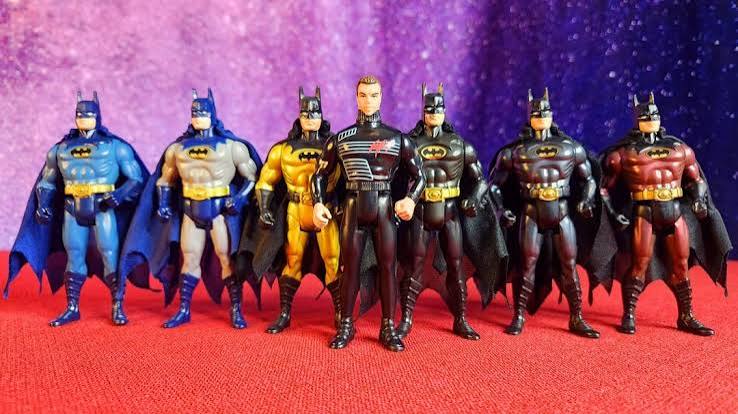
Kenner Batman: One Hero, Endless Suits
Kenner Batman was one of the decade’s greatest action-figure cheat codes. Batman had movies, Batman: The Animated Series, vehicles, gadgets, villains, a massive visual identity, and one very convenient toy-company advantage: he could wear anything. If a company wanted to sell another Batman figure, all it had to do was invent a suit and pretend Gotham had a new problem.
That is how you got Arctic Batman, Jungle Batman, Battle Armor Batman, Hydro Batman, Sonar Batman, infrared Batman, missile Batman, and every other specialized version that made parents say, “Don’t you already have Batman?” The answer, obviously, was no. Not this Batman. This Batman was for a completely different imaginary emergency. The legal case was airtight.
The Animated Series line gave Batman toys a different kind of weight. The show was stylish, darker, sharper, and more atmospheric than most kids’ cartoons. Kenner’s animated-style figures brought that Gotham mood into the toy aisle while still keeping the line accessible. Joker, Penguin, Catwoman, Two-Face, Riddler, Mr. Freeze, and the rogues gallery gave kids actual enemies worth owning, not just another Batman in scuba armor.
Why Batman could sell forever
Batman had the strongest single-character variant engine of the decade. TMNT and Power Rangers sold teams. Batman sold versions of one hero. The Batmobile, Batwing, Batcave-style playsets, and villain roster gave the line depth, but the endless suits kept the pegs moving. It was ridiculous. It also worked.
- Core play pattern: Batman versus Gotham villains, powered by gadgets, vehicles, and specialized suits.
- Big-ticket pressure: Batmobile-style vehicles and playsets made Batman feel bigger than one figure.
- Variant hook: one character could become an entire subcategory through armor, missions, and repaint logic.
Kenner Batman mattered because it perfected the variant strategy that still defines superhero toy aisles. The line understood that kids did not always need a new character. Sometimes they needed the same character dressed for a situation nobody asked for. That is both absurd and deeply 90s.
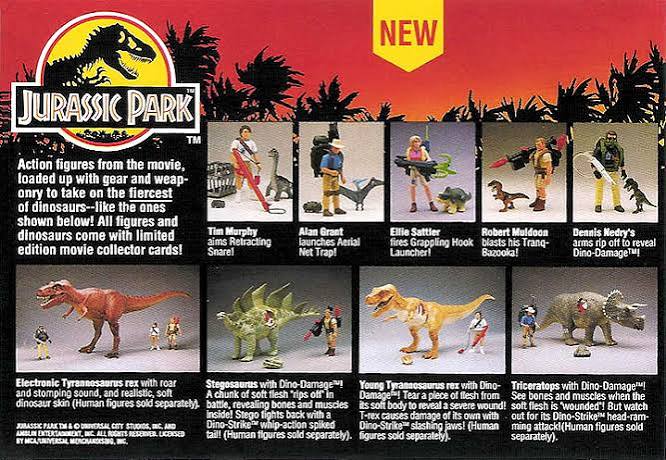
Jurassic Park: When the Dinosaurs Were the Main Figures
Jurassic Park changed the action-figure aisle by making the dinosaurs the stars. Yes, there were human figures. Alan Grant, Ellie Sattler, Ian Malcolm, Robert Muldoon, and the rest mattered because they gave kids someone to run, scream, trap, rescue, or abandon near a plastic fence. But the real action figures had teeth.
Kenner’s Jurassic Park dinosaurs felt heavy, dangerous, and cinematic in a way standard figures did not. The T. rex was not just a toy. It was an event. Velociraptors were instant villains. Dilophosaurus had spit-attack energy. Triceratops and other dinosaurs gave the line creature variety. Damage wounds, capture gear, electronic roars, cages, jeeps, and fences made the toys feel connected to the movie’s survival chaos.
What made Jurassic Park different was that kids did not need a weekly cartoon to understand it. The movie had already installed the fear and awe. Every kid knew what a raptor meant. Every kid knew the T. rex owned the room. The toys converted that movie tension into living-room destruction.
Why dinosaurs belonged in the action-figure war
Jurassic Park blurred the line between creature toys and action figures. The dinosaurs were characters, threats, vehicles of chaos, and centerpiece toys all at once. A human figure without a dinosaur was lonely. A dinosaur without a human figure was still perfectly capable of ruining the carpet ecosystem.
- Core play pattern: humans, vehicles, fences, and capture gear versus dinosaurs that immediately made everything worse.
- Big-ticket pressure: larger dinosaurs acted like centerpiece figures, especially the T. rex.
- Movie power: the toys rode the credibility of a blockbuster that made dinosaurs feel real again.
Jurassic Park mattered because it proved a movie creature line could compete directly with superheroes, mutants, and TV teams. It also helped teach the decade that not every action-figure war needed humanoid heroes. Sometimes the best figure was the one that ate them.
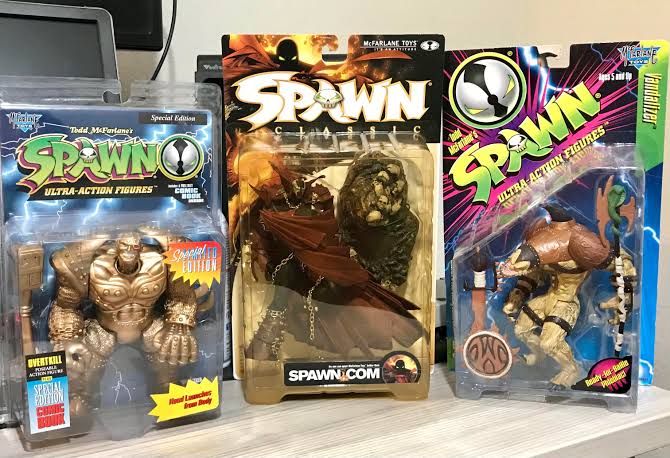
Spawn and McFarlane Toys: Action Figures Get Darker
Spawn and McFarlane Toys changed the mood of the action-figure aisle. These did not feel like standard kid toys. That was the point. Spawn figures were darker, sharper, more detailed, more grotesque, and more display-oriented than most of what surrounded them. They looked like comic-shop creatures that had wandered into mass retail and made the brightly colored toys nervous.
McFarlane Toys pushed sculpting, paint, packaging, and shelf presence in a way that older kids and adult collectors noticed immediately. Spawn, Violator, Clown, Medieval Spawn, and the expanding character roster were not built around the same simple play logic as TMNT or Power Rangers. They were built to look intense. The figures had texture, chains, capes, spikes, monsters, and a general “maybe don’t give this to your little cousin” energy.
Spawn also arrived during a decade obsessed with comics, variant covers, collector speculation, and sealed packaging. That made it feel perfectly timed. These figures were toys, but they also acted like collectibles. The package mattered. The sculpt mattered. The display pose mattered. The line helped make action figures feel like something you might buy and not open, which is both collector culture and a little bit tragic.
Why Spawn shifted the category
Spawn helped widen the action-figure audience. Kids could still play with them, obviously, because kids will smash anything into anything. But the line also appealed to teens, comic readers, collectors, and people who cared about detail more than a spring-loaded punch. That collector-first attitude influenced how later action figures were sculpted, packaged, and marketed.
- Core appeal: dark comic characters, monsters, sculpt detail, and display-friendly presentation.
- Collector hook: packaging, paint, variants, and character selection mattered more than simple play features.
- Long-term impact: Spawn helped push action figures toward the modern collector market.
Spawn mattered because it made the aisle grow up a little. Not completely. This was still the 90s, and the shelf was still full of neon chaos. But Spawn proved action figures could be darker, weirder, more detailed, and more collectible without needing to apologize for it.
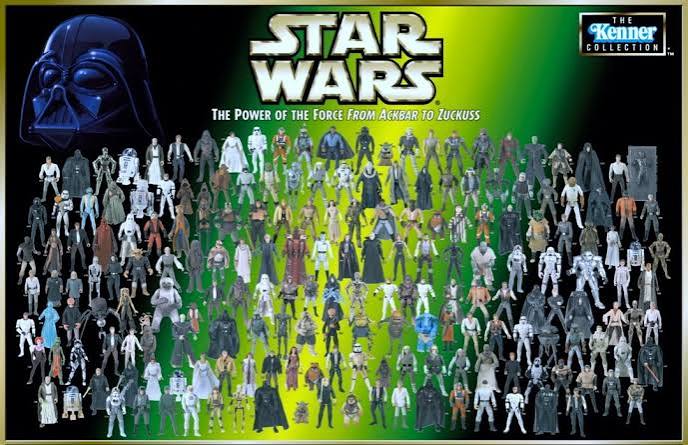
Star Wars: Nostalgia Strikes Back
Star Wars Power of the Force 2 was the nostalgia front of the 90s action-figure wars. After years away from regular retail dominance, Star Wars returned to the pegs in the mid-90s and reminded everyone that the old empire still had power. The early figures were weirdly muscular, aggressively 90s, and sometimes looked like the characters had spent the missing years trapped in a gym. It was strange. It still worked.
The line had two audiences at once. Kids saw Darth Vader, Luke, Han, Leia, Chewbacca, Boba Fett, Stormtroopers, aliens, ships, and lightsabers. Adult fans saw the return of a childhood universe and started caring about card backs, variants, packaging, short sabers, long sabers, freeze frames, exclusives, and whether the figure should be opened at all. Star Wars did not just sell toys. It sold memory.
Power of the Force 2 also helped normalize the idea that a toy line could be powered by nostalgia and still reach kids. It was not just a retro adult product. It was a bridge. Parents knew the characters. Kids discovered them on shelves, VHS tapes, re-releases, and playground conversations. By the time Episode I arrived in 1999, the aisle was ready for a full Star Wars retail flood.
Why Star Wars came back so strong
Star Wars had something most 90s toy lines did not: mythology that already felt permanent. TMNT, Power Rangers, and Jurassic Park were current explosions. Star Wars was a returning empire. The characters were iconic, the vehicles were legendary, and the collector market gave the line a second engine.
- Core play pattern: classic heroes, villains, aliens, troopers, vehicles, and space battles.
- Collector hook: packaging variations, card styles, exclusives, and completist behavior drove adult interest.
- Decade shift: the line helped prove nostalgia could be a retail strategy, not just a memory.
Star Wars mattered because it showed how action figures could serve two generations at once. Kids played with them. Adults preserved them. Toy companies noticed. That dual audience became a huge part of modern franchise merchandising.
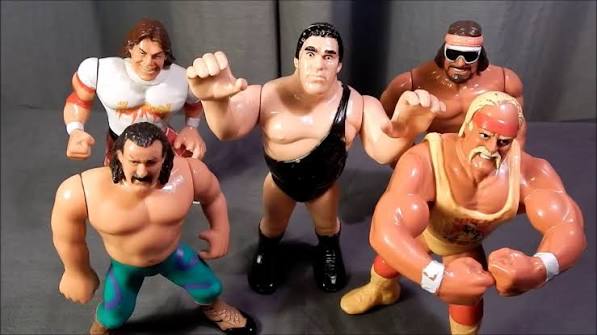
WWF Hasbro: Wrestling Becomes Playground Architecture
WWF Hasbro brought a completely different kind of action figure to the 90s toy aisle. These were not mutants, superheroes, movie monsters, or armored billionaires. They were real TV personalities translated into chunky plastic combat toys. Hulk Hogan, Macho Man Randy Savage, Ultimate Warrior, Undertaker, Bret Hart, Jake “The Snake” Roberts, Ted DiBiase, and the rest turned the living-room floor into a pay-per-view event with worse commentary and more couch damage.
The figures were simple, but that simplicity worked. Each one had a built-in action move: punch, slam, kick, squeeze, throw, or some version of “this torso does violence if you move it right.” They were not realistic by modern standards, but they captured the larger-than-life nature of wrestling at the time. Bright outfits, exaggerated bodies, famous names, and action features made them instantly playable.
The wrestling ring was the centerpiece. If you had it, you were basically hosting WrestleMania on the carpet. Kids could stage matches, rivalries, tag teams, betrayals, royal rumbles, and the kind of dramatic storylines that made absolutely no sense but felt emotionally correct. Wrestling figures did not need laser guns because every figure was already a weapon.
Why wrestling figures belonged in the war
WWF figures proved that action toys did not need fantasy lore to compete. The lore was already on TV. Kids knew the heroes, villains, catchphrases, finishing moves, and rivalries. Hasbro just gave that energy a physical form. The line also fit perfectly with the 90s obsession with personalities as brands.
- Core play pattern: matches, tag teams, rivalries, ring battles, and extremely unsafe imaginary stunts.
- Big-ticket pressure: the wrestling ring turned loose figures into a full play environment.
- TV connection: weekly wrestling made the figures feel current, familiar, and endlessly replayable.
WWF Hasbro mattered because it widened the definition of action figures. The aisle was not just for fictional heroes. Real performers could become toy characters too, especially when they already dressed like superheroes and shouted like cartoon villains.
The Collector Shift: When “Don’t Open It” Became a Personality
One of the biggest differences between the 80s and 90s action-figure wars was the rise of obvious collector behavior. Kids still ripped open packages like normal human beings. But older fans, comic-shop regulars, and nostalgia-driven adults started paying closer attention to packaging, variants, limited releases, card backs, paint differences, mail-away offers, and whether a blister card had a crease that would “ruin the value.”
The 90s were already obsessed with collecting: trading cards, comic variants, Beanie Babies, pogs, Pokémon cards, sports cards, chase editions, holograms, foil covers, limited runs, and the fantasy that everything in your closet might someday pay for college. Action figures got dragged into that same mentality.
McFarlane Toys amplified it by making figures look like display pieces. Star Wars Power of the Force 2 fed it through nostalgia, variants, and completist energy. Toy Biz and Marvel fed it through massive rosters. Spawn fed it through sculpt detail and darker packaging. Even kid-driven lines benefited from the mood. Suddenly the action figure was not just something to play with. It was something to preserve, display, speculate on, and occasionally refuse to let your younger cousin touch.
Was every sealed 90s figure a retirement plan? Absolutely not. Was that fantasy extremely 90s? Painfully. Somewhere, a grown adult still has a box full of common figures they were told would be worth a fortune, and every single one of those figures is silently judging the Beanie Babies nearby.
The Weapons of the 90s Action Figure Wars
Not literal weapons. Mostly. We did lose a lot of tiny missiles.
Spring-Loaded Everything
If a figure could punch, kick, slash, spin, launch, mutate, transform, or awkwardly wobble forward, the package made sure you knew.
The Upsell Garage
Vans, Zords, Batmobiles, jeeps, ships, blimps, rings, bases, cages, and giant rolling things that never fit on shelves.
Same Hero, New Excuse
Batman in ice armor. Turtles in disguises. Power Rangers with karate features. Wolverine again, but with a new claw situation.
Card-Back Mind Control
The back of the package was a catalog, checklist, wish list, and psychological operation all in one glossy rectangle.
Collect the Group
Four Turtles. Five Rangers. X-Men rosters. Wrestling lineups. Star Wars aliens. The team format made one figure feel lonely.
Bad Guys Sold the World
Shredder, Rita, Lord Zedd, Magneto, Joker, raptors, Violator, Vader — the hero was only as fun as the enemy across the carpet.
Screen-to-Shelf Speed
The faster a character moved from screen to toy aisle, the faster a kid could turn fandom into plastic ownership.
Never Enough Pegs
Completists, collectors, variants, exclusives, chase mentality, and the eternal fear that the one you skipped would disappear forever.
The Weird Second-Tier Lines Were Half the Fun
The biggest brands get the nostalgia headlines, but the 90s action-figure aisle was also packed with strange challengers. Some had cartoons. Some had comics. Some had commercials that made them look like the next big thing. Some felt like they were designed by someone who saw TMNT make money and immediately shouted, “What if animals, but angrier?”
This is where the decade gets gloriously messy. Street Sharks. Biker Mice from Mars. Extreme Dinosaurs. Skeleton Warriors. Toxic Crusaders. Swamp Thing. WildC.A.T.s. The Tick. Mortal Kombat. Street Fighter. VR Troopers. Beetleborgs. Judge Dredd. The Shadow. Congo. Waterworld. Small Soldiers at the decade’s edge. Not all of them were massive. Not all of them lasted. But they made the aisle feel alive.
The second-tier lines mattered because they showed how every company was chasing the same formula. You needed a hook. Mutants. Monsters. Vehicles. Armor. Attitude. A cartoon intro. A movie logo. A video-game name. A comic pedigree. A villain with too many teeth. Something. Anything. The 90s action-figure war was not just fought by the winners. It was fought by every weird line trying to survive between TMNT, Power Rangers, Batman, Marvel, and Star Wars.
And honestly, those oddball lines are often the ones that hit hardest now. Everyone remembers Wolverine. But the kid who had a random Street Shark, a Skeleton Warriors figure, or some bizarre Toxic Crusaders mutant remembers the feeling of finding something strange on the peg and thinking it was made specifically for them. That is deep toy-aisle magic.
The Playground Politics of 90s Action Figures
The Kid With the Playset Had Power
The Sewer Playset, Megazord, Batmobile, Jurassic Park compound, wrestling ring, or giant vehicle instantly changed your social ranking. You did not just own a toy. You hosted the universe.
The One Nobody Could Find
Every line had that figure: the villain, late-wave character, popular Ranger, weird mutant, or movie tie-in that seemed to vanish from shelves the second you learned it existed.
You Had a Favorite
Favorite Turtle. Favorite Ranger. Favorite X-Man. Favorite wrestler. Favorite Batman suit. The figure you wanted said something about you, even if what it said was “I am loud and like claws.”
Accessories Were Born to Disappear
Every collection eventually became a pile of mismatched missiles, swords, claws, backpacks, capes, belts, and unidentified gray plastic objects no one could throw away.
TV Made You Feel Behind
The ad showed the new wave. Your friend saw it too. Now the countdown began until someone got it first and ruined your sense of peace.
Toys “R” Us Was the Battlefield
The long wall of figures was a museum, a wishlist, a financial threat, and a test of parental patience. Truly, a sacred place.
Why the 90s Action Figure Wars Still Matter
The 90s action-figure wars matter because they show the toy industry at a turning point. The decade still had classic kid play — figures crashing into each other on bedroom floors, vehicles rolling under couches, tiny missiles disappearing forever — but it also had the beginnings of modern franchise collecting.
The same aisle had children buying figures to play with and older fans buying figures to preserve. It had cartoon toys, comic toys, movie toys, wrestling toys, collector toys, video-game toys, and nostalgic relaunches competing side by side. That mix feels very modern now, but in the 90s it still felt chaotic and new.
This is why those figures still hit. They were not just toys. They were tiny plastic receipts from a decade when every franchise wanted your allowance, every card back looked like a checklist of personal failure, and every new figure somehow felt like the missing piece that would finally complete your childhood. Spoiler: it did not. But we kept trying.
Keep Rewinding the 90s Toy Aisle
90s Toys
Go back to the main 90s Toys hub for the decade’s collectibles, electronics, dolls, plush, board games, backyard toys, video games, and toy-store chaos.
Peak Shelf YearTop Toys of 1993
Power Rangers, Jurassic Park, Talkboy, SNES, Barbie, Batman, and the mid-90s toy aisle heating up fast.
Watch the Ads80s Toy Commercials & Videos
See the commercial style that shaped the action-figure arms race before the 90s mutated it into something louder.
90s Action Figure Wars FAQ
What were the biggest 90s action figure lines?
The biggest and most important 90s action figure lines included Teenage Mutant Ninja Turtles, Mighty Morphin Power Rangers, Toy Biz X-Men and Marvel, Kenner Batman, Kenner Jurassic Park, Spawn by McFarlane Toys, Star Wars Power of the Force 2, WWF Hasbro, and several cartoon or movie tie-in lines.
Were Teenage Mutant Ninja Turtles an 80s or 90s action figure line?
Both. The Playmates TMNT line launched in the late 80s, but it became one of the defining early-90s action figure brands thanks to the cartoon, live-action movie, vehicles, playsets, variants, and huge retail presence.
Why were Power Rangers toys so hard to get in the 90s?
Power Rangers hit with massive kid demand because the show created a simple color-coded team fantasy, and the toys added figures, Zords, role-play weapons, and villains. The combination of TV exposure and holiday demand made certain items feel impossible to find.
How did Spawn change action figures?
Spawn and McFarlane Toys helped push action figures toward darker, more detailed, collector-oriented designs. The figures emphasized sculpting, paint, packaging, and display value in a way that helped reshape expectations for older fans and collectors.
Why did 90s action figures have so many variants?
Variants kept popular characters on shelves without needing entirely new casts. Batman could wear different armor, the Turtles could get disguises or sports outfits, Power Rangers could gain action features, and Star Wars could repackage classic characters. It was part creativity, part retail strategy, part childhood financial ambush.
What made the 90s different from the 80s action figure era?
The 80s action figure era was dominated by giant toy-driven universes like He-Man, G.I. Joe, Transformers, and Star Wars. The 90s were more fragmented: cartoon lines, live-action TV, movies, comics, wrestling, video games, nostalgia, and collector culture all competed at once.
Where should I go next?
Start with the 90s Toys hub, then revisit the 80s Action Figure Wars for the decade that built the battlefield. For commercial energy, jump into the 80s Toy Commercials & Videos archive.