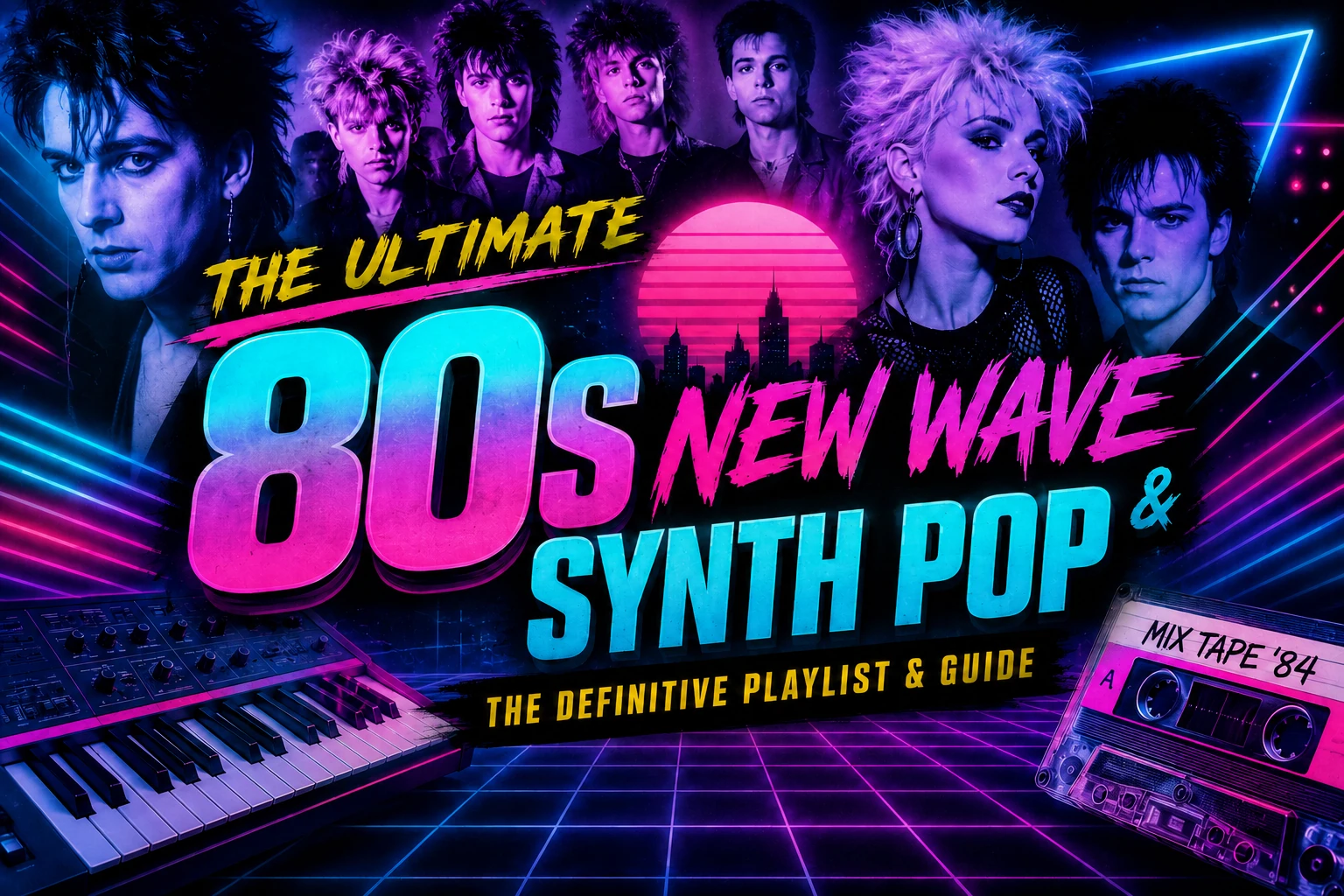
80s New Wave & Synth Pop: 25 Songs That Made the Future Sound Weird

80s New Wave & Synth Pop: 25 Songs That Made the Future Sound Weird
80s New Wave & Synth Pop

80s New Wave & Synth Pop: 25 Songs That Made the Future Sound Weird

The 80s were when guitars stopped having all the fun. Keyboards got dramatic, drum machines started acting smug, videos got wonderfully strange, and pop music discovered that the future apparently required eyeliner, trench coats, asymmetrical hair, and at least one person standing in smoke while staring into the middle distance.

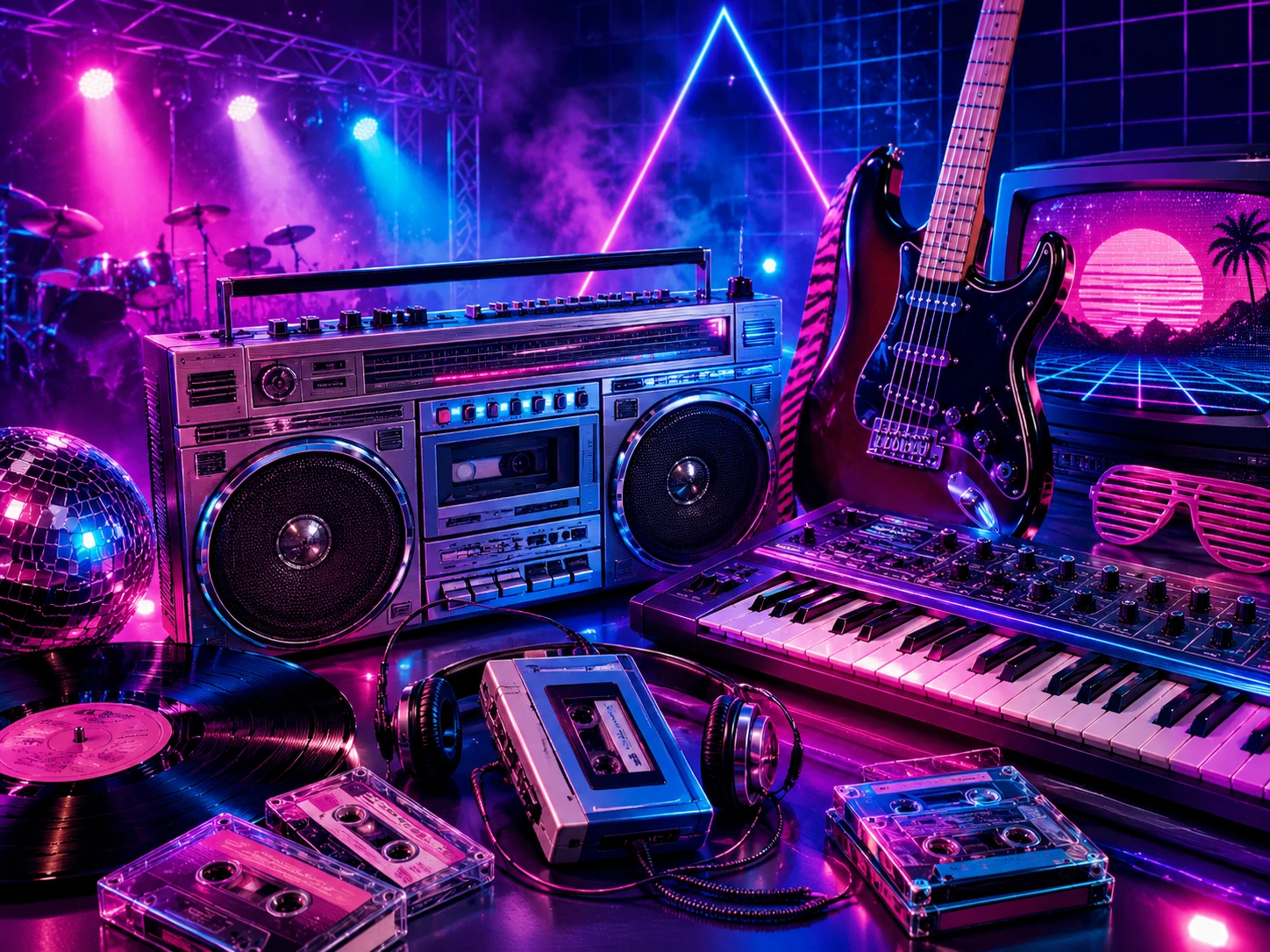
80s new wave and synth pop nostalgia collage with keyboards, cassette tapes, neon lights, drum machines, and MTV energy

Keyboards, weird videos, cool hair, and emotional robots.

Devo. Soft Cell. Duran Duran. Eurythmics. Depeche Mode. New Order. Tears for Fears. a-ha. The 80s future sounded synthetic, stylish, nervous, and completely unforgettable.

When the Future Got a Keyboard Hook

New wave and synth pop gave the 80s its sleekest, strangest, most video-ready sound. It took punk’s nervous energy, disco’s dance-floor pulse, art-school weirdness, electronic experimentation, pop hooks, and fashion choices that looked like someone lost a bet in a European nightclub. The result was music that sounded modern even when it was being played on a cassette with a pencil wound through it.

This was the lane where songs could be cold and catchy, anxious and danceable, stylish and completely bizarre. It was music for MTV afternoons, college radio, mall record stores, late-night headphones, school dances, and kids who were starting to realize that rock did not have to mean guitars, denim, and someone yelling about the road.

For the full decade rewind, head back to the 80s Music hub. For the shinier pop side, check out 80s Pop & MTV Hits. For the louder guitar lane, jump into 80s Rock & Hair Metal. This page is where the keyboards glow, the videos get weird, and the future arrives wearing too much gel.

Listen to the 80s New Wave & Synth Pop Playlist

Press play and let the keyboards, drum machines, neon hooks, college-radio mood swings, weird videos, and emotionally complicated haircuts do what they came here to do. Warning: may cause sudden eyeliner confidence or the urge to stare dramatically through blinds.

The 25-Song New Wave & Synth Pop Hit List

# Song Artist Year Why It Belongs Here
1 Whip It Devo 1980 Weird, robotic, catchy, and proof that the 80s were about to get aggressively strange.
2 Just Can’t Get Enough Depeche Mode 1981 Bright early synth pop before Depeche Mode discovered darker rooms and better coats.
3 Tainted Love Soft Cell 1981 A minimal synth pulse that turned heartbreak into a neon dance-floor warning label.
4 Don’t You Want Me The Human League 1981 Synth pop became mainstream melodrama, and suddenly everyone was arguing over a chorus.
5 I Ran (So Far Away) A Flock of Seagulls 1982 The haircut, the video, the shimmering guitar, the synths — new wave entered full MTV mode.
6 Hungry Like the Wolf Duran Duran 1982 Stylish, cinematic, exoticized MTV gloss with a hook sharp enough to cut through cable static.
7 Blue Monday New Order 1983 Electronic dance music, post-punk mood, and club culture quietly rewriting the decade.
8 Sweet Dreams (Are Made of This) Eurythmics 1983 Cold synths, Annie Lennox’s stare, and one of the most iconic video-era images of the decade.
9 The Safety Dance Men Without Hats 1983 A medieval fever dream of synth-pop absurdity that somehow became permanently catchy.
10 Burning Down the House Talking Heads 1983 Art-rock nerves, funk rhythms, and David Byrne making panic sound danceable.
11 Hold Me Now Thompson Twins 1983 Warm synth-pop emotion with enough 80s production shine to fog up a bedroom mirror.
12 Relax Frankie Goes to Hollywood 1984 Provocative, booming, club-ready, and very much not designed to make parents comfortable.
13 People Are People Depeche Mode 1984 Industrial clanks, synth-pop hooks, and Depeche Mode moving toward darker territory.
14 Shout Tears for Fears 1984 Big, serious, synth-driven drama that made emotional release sound like a stadium command.
15 Everybody Wants to Rule the World Tears for Fears 1985 Glossy, anxious, gorgeous, and somehow perfect for both MTV and the end of civilization.
16 Take On Me a-ha 1985 A perfect pop hook plus one of the most unforgettable videos MTV ever put into rotation.
17 Don’t You (Forget About Me) Simple Minds 1985 The Breakfast Club turned new wave mood into permanent detention-era mythology.
18 West End Girls Pet Shop Boys 1986 Cool, detached, stylish synth pop with a city-night pulse and zero wasted motion.
19 If You Leave Orchestral Manoeuvres in the Dark 1986 Prom-night synth melancholy, John Hughes atmosphere, and peak 80s romantic ache.
20 Bizarre Love Triangle New Order 1986 Dance-floor melancholy with synths, yearning, and emotional confusion wearing a perfect beat.
21 Need You Tonight INXS 1987 Sleek new wave rock, minimalist groove, and Michael Hutchence making cool look legally unfair.
22 Just Like Heaven The Cure 1987 Romantic, jangly, dreamy, and proof that gloomy bands could still absolutely sparkle.
23 Never Tear Us Apart INXS 1988 Cinematic, moody, dramatic, and the slow-motion side of late-80s new wave rock polish.
24 Personal Jesus Depeche Mode 1989 Dark, bluesy, electronic, and a bridge from synth pop into something heavier and stranger.
25 Love Shack The B-52’s 1989 Campy, colorful, weird, and proof that new wave’s party side survived all the way to the decade’s exit.

The Songs That Made the 80s Sound Synthetic

#1

“Whip It” — Devo

1980 Songs New Wave Weirdness

“Whip It” felt like someone had taken punk, advertising jingles, factory machinery, and a nervous breakdown, then shoved the whole thing through a synthesizer. Devo did not sound like a normal rock band trying to be cool. They sounded like a committee of sarcastic robots had been sent to warn America that pop culture was about to get very strange.

The song’s clipped rhythm, deadpan delivery, and robotic energy made it one of the clearest early signs that the 80s were not going to behave like the 70s. It had a guitar in the mix, sure, but the attitude was something else entirely: stiff, funny, angular, and deliberately artificial. That artificial quality became a huge part of the new wave identity.

The video helped lock the song into Gen X memory. Red energy domes, surreal visuals, odd choreography, and a look that felt like a parody of both corporate America and science fiction. It was weird enough to confuse adults and catchy enough that kids could not stop repeating it. That is basically the new wave business model.

“Whip It” belongs near the front because it made weirdness mainstream without sanding it down. It was not smooth, romantic, or glamorous. It was twitchy, funny, and slightly unsettling — exactly the kind of song that made the decade feel like the future had arrived wearing a plastic hat.

#2

“Just Can’t Get Enough” — Depeche Mode

1981 Songs Early Synth Pop

“Just Can’t Get Enough” captures Depeche Mode before the black clothing, religious imagery, and emotional weather systems fully rolled in. This is early synth pop in its bright, clean, almost innocent form: bouncing keyboard lines, simple hooks, and a shiny electronic sound that still felt new enough to make guitars seem suddenly old-fashioned.

What makes the song important is how proudly synthetic it is. It does not try to hide the machines or make them imitate a traditional band. The keyboards are the point. The rhythm is crisp, the melody is direct, and the whole thing feels like pop music learning how to run on electricity instead of sweat.

For early-80s listeners, this kind of sound helped redefine what a pop group could be. You did not need a guitar hero. You did not need a huge drum kit. You could build a song out of electronic patterns, minimalist parts, and a chorus that burrowed into your head like it had a lease agreement.

It also works as a funny snapshot of Depeche Mode’s evolution. The band would eventually become much darker, moodier, and more dangerous-sounding, but “Just Can’t Get Enough” shows the starting point: synth pop as bright neon candy before somebody turned off the lights and found the fog machine.

#3

“Tainted Love” — Soft Cell

1981 Songs Synth Minimalism

“Tainted Love” is one of the cleanest examples of how synth pop could make heartbreak feel colder, sharper, and more modern. Soft Cell took a soul-era song and rebuilt it as something stripped-down and electronic, with a beat that felt less like a live band and more like a warning light blinking in a dark room.

The arrangement is brilliantly minimal. There is no need for a huge wall of sound because the pulse does all the work. Marc Almond’s vocal gives the song its wounded drama, while the synth line makes the whole thing feel emotionally distant in the most 80s way possible. It is pain you can dance to, which the decade was weirdly good at.

In Gen X memory, this song belongs to dance floors, cassette singles, alternative clubs, early MTV, and radio moments where it sounded completely different from the rock and soft pop around it. It had attitude without needing volume. It was cool because it did not seem desperate to be liked.

“Tainted Love” matters because it helped prove electronic pop could be dramatic, stylish, and commercially massive. It made heartbreak sound sleek instead of messy. Which is useful, because actual heartbreak is a disaster and absolutely should not be trusted with live drums.

#4

“Don’t You Want Me” — The Human League

1981 Songs Synth Pop Drama

“Don’t You Want Me” turned synth pop into a full relationship argument with better lighting. The Human League built the song around sleek electronics and a conversational back-and-forth that made it feel like a miniature drama unfolding under neon. It was cold, catchy, and theatrical without needing guitar heroics or rock-star swagger.

The song’s genius is how simple the story feels. Two people are rewriting their shared past in real time, each one trying to control the narrative. That made it more memorable than a standard love song. It had conflict. It had ego. It had resentment. Basically, it was a breakup text before texting existed, which means everyone had to suffer in person like pioneers.

Musically, it helped push synth pop into the mainstream. The arrangement sounded modern and precise, but the chorus was huge enough for radio. That balance mattered. New wave could be strange, but songs like this proved it could also dominate pop culture without losing its icy charm.

For Gen X, “Don’t You Want Me” is early-80s nightlife, MTV mood, and school-dance drama rolled into one. It helped make synthesizers feel glamorous, not nerdy. A major accomplishment, considering keyboards had spent years looking like furniture for math teachers.

#5

“I Ran (So Far Away)” — A Flock of Seagulls

1982 Songs MTV New Wave

“I Ran” is one of the songs where the sound and the image fused so completely that you cannot separate them anymore. The shimmering guitar, pulsing synth atmosphere, dramatic vocal, and futuristic mood all made it feel like a transmission from some chrome-plated planet where everyone had complicated hair and emotional distance.

A Flock of Seagulls became one of MTV’s early visual shorthand bands because they looked as unusual as they sounded. The hair became the joke, but that joke sometimes distracts from how effective the song is. The track is moody, driving, and surprisingly atmospheric, with a chorus that feels like panic running through fog.

For early-80s Gen X kids, this was exactly the kind of music that made MTV addictive. You were not just hearing a song — you were watching a whole identity. The band looked new, the video felt strange, and the sound was not the same old rock-radio lane your older siblings were defending like unpaid security guards.

“I Ran” belongs here because it captures new wave at the point where visual style became inseparable from the music. It was a song, a look, a haircut, a video, and a punchline all at once. The 80s loved efficiency.

#6

“Hungry Like the Wolf” — Duran Duran

1982 Songs New Romantic MTV Gloss

Duran Duran understood MTV like they had been briefed by spies. “Hungry Like the Wolf” was not just a song with a video; it was a whole glossy fantasy package. The rhythm, the hook, the stylish vocal delivery, and the cinematic visuals all helped define what new wave could become when it got expensive and photogenic.

The track has a sleek, propulsive energy that blends pop, rock, dance, and new romantic style. It is not as cold as pure synth pop and not as rough as guitar rock. It lives in that perfectly 80s middle lane where everything is polished, stylish, and slightly dramatic for no practical reason.

For Gen X, this is mall record store music, MTV afternoon rotation, bedroom posters, and the dawning realization that bands could now be marketed as visual icons as much as musicians. Duran Duran did not just sound good on a cassette. They looked like the future had discovered hair product and travel budgets.

“Hungry Like the Wolf” belongs here because it made new wave glamorous. It pushed the genre away from purely nervous art-school energy and toward full pop spectacle. It was stylish enough for MTV, catchy enough for radio, and ridiculous enough that the decade immediately said, yes, more of this nonsense, please.

#7

“Blue Monday” — New Order

“Blue Monday” sounds less like a traditional single and more like a machine slowly waking up in a nightclub. New Order blended post-punk atmosphere, electronic sequencing, dance-floor structure, and a cool emotional distance that made the song feel futuristic without trying to be friendly about it.

The track matters because it helped connect alternative music, synth pop, and club culture in a way that shaped the rest of the decade and beyond. It was not built like a standard verse-chorus radio hit, yet it became iconic because the groove was undeniable. The machines sounded cold, but the effect was weirdly emotional.

For Gen X listeners who discovered it through clubs, college radio, import records, older siblings, or late-night alternative shows, “Blue Monday” felt like a secret door. It was not the same as Top 40 pop, but it was too powerful to stay hidden. It sounded like the underground had better equipment.

“Blue Monday” belongs here because it is one of the most important electronic tracks of the 80s. It made melancholy danceable, made machines feel stylish, and proved that a song could be emotionally distant and still hit like a brick through a mirror ball.

#8

“Sweet Dreams (Are Made of This)” — Eurythmics

1983 Songs 1983 #1 Hits Video Iconic Video Era

“Sweet Dreams” is one of the definitive moments where synth pop became visually unforgettable. The song itself is cold, hypnotic, and built around a synth line that feels like it was designed in a dark room with excellent taste. Then Annie Lennox appeared in the video looking like nothing else on mainstream television, and the whole thing became permanent.

The production is stripped down but powerful. It does not need clutter because the central groove is so strong. Lennox’s voice gives the song authority, mystery, and emotional sharpness, while the electronic backing keeps everything sleek and slightly unsettling.

For Gen X, this was one of those MTV moments where a song became an image. The orange hair, the suit, the stare, the surreal visuals — it looked adult, strange, stylish, and impossible to ignore. It made earlier pop performances feel like they belonged to another planet, or at least another mall.

“Sweet Dreams” belongs near the top because it captures what made 80s new wave and synth pop so powerful: sound, image, attitude, and identity all arriving together. It did not just play through speakers. It stared back from the television and dared you to look away.

#9

“The Safety Dance” — Men Without Hats

1983 Songs 1983 #1 Hits Video Synth Pop Absurdity

“The Safety Dance” is what happens when synth pop wanders into a medieval village and nobody stops it. Men Without Hats created one of the decade’s strangest and most enduring songs, a track that is both absurd and genuinely catchy. The 80s had a gift for making things that should not work become unavoidable.

Musically, the song has a stiff electronic bounce and a chant-like hook that makes it instantly memorable. It is playful, odd, and slightly ridiculous, but not in a throwaway way. The production still fits the synth-pop moment, even if the whole thing feels like it escaped from a costume department.

The video pushed it into full Gen X memory. The dancing, the costumes, the village setting, the surreal little-world quality — it became one of those clips that made MTV feel like anything could happen between a Michael Jackson video and a hair-metal power ballad. There were no rules, just vibes and questionable hats.

“The Safety Dance” belongs here because new wave had room for weirdness, humor, and novelty energy without losing the beat. It proves the genre did not always need to be cool in a detached way. Sometimes it could be goofy, catchy, and impossible to erase from your brain. Annoying? Yes. Effective? Also yes.

#10

“Burning Down the House” — Talking Heads

1983 Songs 1983 #1 Hits Video Art-Rock Anxiety

Talking Heads made nervous energy sound like a rhythm section. “Burning Down the House” is not synth pop in the clean, icy Depeche Mode sense, but it absolutely belongs in the new wave story because it captures the art-rock, funk-driven, anxiety-dancing side of the movement.

David Byrne had a way of making panic look intentional. The song’s groove is funky and propulsive, but the delivery is twitchy and surreal. That combination made Talking Heads feel smarter, stranger, and more unpredictable than most mainstream rock acts around them.

For Gen X, this was part of the alternative vocabulary before “alternative” became a mall section. It was music for kids who liked pop hooks but also wanted something off-center. It sounded like a party where everyone had read too much and nobody knew where to stand.

“Burning Down the House” belongs here because new wave was not just keyboards. It was also attitude, rhythm, art-school weirdness, and a willingness to make mainstream audiences dance to something they did not fully understand. Honestly, that may be the genre’s finest achievement.

#11

“Hold Me Now” — Thompson Twins

“Hold Me Now” is synth pop with actual warmth, which is not always where the genre naturally lived. Thompson Twins built a song that used electronic textures and 80s production shine, but the emotional center is soft, romantic, and surprisingly human.

The track works because it balances polish with vulnerability. The percussion, keyboards, and layered vocals place it firmly in the 80s, but the chorus has the kind of emotional simplicity that made it perfect for radio dedications, slow dances, and teenagers dramatically staring at telephones attached to walls.

For Gen X, this song sits in the softer side of new wave memory. It was not the cold club track, not the weird art-school song, not the futuristic robot anthem. It was the song that made synth pop feel like it could hold your hand at the roller rink without making the moment too normal.

“Hold Me Now” belongs here because it shows the genre’s emotional range. New wave did not always need to be detached, ironic, or strange. Sometimes it could be a neon-lit hug from someone with excellent cheekbones and a percussion setup nobody’s dad understood.

#12

“Relax” — Frankie Goes to Hollywood

1984 Songs 1984 #1 Hits Video Club Provocation

“Relax” sounded huge, glossy, provocative, and completely uninterested in making parents comfortable. Frankie Goes to Hollywood brought club culture, synth-driven production, controversy, and marketing genius into one massive 80s package.

The production is the key. It does not feel like a small band playing in a room. It feels constructed, engineered, and inflated into something bigger than life. That polished artificiality is part of why it belongs in the new wave and synth-pop conversation, even though it also connects to dance music and club culture.

For Gen X, this was the kind of song adults whispered about, radio stations debated, and kids noticed precisely because of that. The 80s loved controversy, but “Relax” had the sound to back it up. It was not just scandal bait. It was a giant, booming, stylish track that knew exactly how much attention it was getting.

“Relax” belongs here because it shows the decade’s electronic pop becoming bold, commercial, and dangerous-feeling. It was not the cute keyboard future anymore. It was the nightclub future, with better lighting and much worse permission slips.

#13

“People Are People” — Depeche Mode

1984 Songs 1984 #1 Hits Video Darker Synth Pop

“People Are People” is where Depeche Mode’s synth-pop sound started getting heavier, clankier, and more serious. The bright early keyboard bounce had evolved into something with industrial textures, sharper edges, and a message that gave the band more weight.

The song’s metallic percussion and electronic structure make it feel mechanical, but the theme is deeply human. That contrast became one of Depeche Mode’s strongest tricks: making machines carry emotional and moral weight. Very dramatic. Very 80s. Very “someone is definitely wearing black.”

For Gen X listeners, “People Are People” helped establish Depeche Mode as more than a catchy synth group. They became a gateway into darker electronic music, alternative culture, and eventually the kind of bedroom moodiness that required posters, headphones, and a door that could be closed with meaning.

It belongs here because it marks a shift in synth pop from bright futurism to darker, more complex territory. The machines were still there, but now they sounded like they had judgment, politics, and maybe a leather jacket.

#14

“Shout” — Tears for Fears

1984 Songs 1984 #1 Hits Video Big Synth Drama

“Shout” turned emotional release into a massive synth-rock command. Tears for Fears made pop music sound like it had been reading psychology books and had some concerns. The result was a song that felt serious, polished, and enormous without drifting into standard arena rock.

The track builds slowly, using space, repetition, and atmosphere before opening into that huge chorus. It is synth-driven, but not lightweight. It has weight and purpose, which helped separate Tears for Fears from the more disposable side of 80s pop.

For Gen X, “Shout” sits in that mid-80s pocket where music sounded expensive and emotionally intense. It was the kind of song that made a school dance feel briefly like a political rally, even though everyone mostly just wanted someone to notice their jacket.

It belongs here because it shows synth pop growing up and getting massive. The genre could be weird, cute, stylish, or icy. “Shout” proved it could also be serious and stadium-sized without giving the guitars full custody.

#15

“Everybody Wants to Rule the World” — Tears for Fears

“Everybody Wants to Rule the World” is smooth, gorgeous, and quietly anxious, which may be the most 1985 combination possible. Tears for Fears created a song that feels breezy on the surface but carries a darker sense of power, pressure, and uncertainty underneath.

The production is pure mid-80s sophistication: clean guitars, polished synth textures, a relaxed groove, and a chorus that sounds effortless even while the lyrics are staring directly at human ambition and saying, “This seems like a problem.”

For Gen X, this song belongs to car radios, MTV rotation, mall speakers, and that strange Cold War background hum that made even glossy pop feel slightly uneasy. The 80s could make geopolitical dread sound like a perfect summer drive. Honestly, that is a skill.

It belongs here because it captures synth-pop maturity at its peak. Beautiful, smart, stylish, and built to last, it proves the genre could move beyond novelty and become timeless without losing its electronic glow.

#16

“Take On Me” — a-ha

“Take On Me” had everything the 80s wanted from a perfect video-era hit: a bright synth hook, an impossible vocal leap, romantic urgency, and a music video concept so strong it became part of the song’s DNA. You do not just hear “Take On Me.” You see pencil-sketch animation in your head immediately.

The song itself is a masterpiece of glossy synth-pop construction. It is fast, bright, emotional, and technically impressive without feeling cold. The chorus launches like someone kicked open a window in a neon apartment.

For Gen X, this was an MTV stop-everything moment. The rotoscope animation, comic-book romance, and live-action crossover made it feel like pop music had discovered an entirely new way to tell a story. Kids who saw it once remembered it forever, mostly because MTV played it like the network owed it money.

“Take On Me” belongs here because it may be the ultimate example of 80s synth pop becoming a full sensory experience. Song, video, style, technology, and memory all fused into one perfect artifact. Also, everyone tried to sing that note and everyone should apologize.

#17

“Don’t You (Forget About Me)” — Simple Minds

1985 Songs 1985 #1 Songs Video John Hughes Mythology

“Don’t You” is inseparable from The Breakfast Club, which means it is also inseparable from a huge piece of Gen X emotional mythology. Simple Minds gave the decade a song that sounded big, moody, and open-ended — perfect for a movie about teenagers trying to figure out who they were under fluorescent school lighting.

Musically, the track sits between new wave, arena pop, and soundtrack drama. It has the atmospheric feel of the genre, but the chorus is built for a much bigger room. That made it perfect for both MTV and movie memory.

For Gen X, the song does not just remind people of a movie. It reminds them of a feeling: detention, alienation, cliques, awkward crushes, misunderstood kids, and the fantasy that one emotionally intense Saturday could somehow fix adolescence. Spoiler: it could not, but the song did heavy lifting.

It belongs here because it shows how new wave became the emotional language of 80s teen cinema. Synths and atmospheric rock textures turned hallway feelings into cultural memory. A raised fist, a football field, and this song — that is basically a Gen X stained-glass window.

#18

“West End Girls” — Pet Shop Boys

1986 Songs 1986 #1 Songs Video Cool City Synth Pop

“West End Girls” is sleek, detached, urban, and cooler than it has any right to be. Pet Shop Boys made synth pop feel less like a bright arcade cabinet and more like a late-night city street where everyone is dressed better than you and nobody explains anything.

The track’s spoken-sung delivery, minimalist production, and cool atmosphere gave it a completely different flavor from the more dramatic synth pop around it. It did not shout for attention. It glided in quietly, took over the room, and left without paying for parking.

For Gen X listeners, this song captured the sophisticated side of 80s electronic pop. It felt urban, adult, mysterious, and stylish. Not adult in the boring tax-document way — adult in the “this person knows which train to take and owns a black coat” way.

“West End Girls” belongs here because it proved synth pop could be subtle and still be massive. It expanded the genre’s emotional palette from neon excitement and icy heartbreak into cool observation, city tension, and deadpan elegance.

#19

“If You Leave” — Orchestral Manoeuvres in the Dark

1986 Songs 1986 #1 Songs Video Prom Synth Melancholy

“If You Leave” is pure John Hughes emotional weather. OMD created a song that feels like prom decorations, last chances, awkward silence, unresolved feelings, and someone standing near a doorway because the symbolism demanded it.

The song works because it uses synth-pop polish to make teenage emotion feel enormous. The arrangement is clean and melodic, but the mood is full of romantic anxiety. It is the sound of someone trying to act casual while absolutely not being casual.

For Gen X, this belongs to Pretty in Pink, school dances, slow-motion heartbreak, and the deeply unfair idea that every emotional crisis should come with a perfect soundtrack. Real life rarely provided one. The 80s movies lied beautifully.

“If You Leave” belongs here because synth pop became one of the main emotional engines of 80s teen cinema. The keyboards did not just sound futuristic. They sounded like adolescent longing wearing a rented tux and hoping nobody noticed the panic.

#20

“Bizarre Love Triangle” — New Order

1986 Songs Dance-Floor Melancholy

New Order had a rare gift: they could make emotional confusion sound like the best night of your life. “Bizarre Love Triangle” is bright, propulsive, and sad all at once, which is the exact emotional contradiction synth pop was built to exploit.

The beat moves forward with dance-floor confidence, while the lyrics and melody carry yearning and uncertainty. That tension is why the song lasts. It does not ask whether you are happy or heartbroken. It assumes both and gives you something to dance to while sorting out the damage later.

For Gen X, this was college radio, alternative clubs, mixtapes, imported cool, and the kind of song someone put on a tape to seem emotionally complex. It worked. Mixtape psychology was an entire unlicensed field.

“Bizarre Love Triangle” belongs here because it captures the sophisticated emotional engine of synth-based alternative music. It is danceable melancholy, polished confusion, and proof that sometimes the best songs are the ones that understand you are a mess but still expect you to keep moving.

#21

“Need You Tonight” — INXS

1987 Songs 1987 #1 Hits Video Sleek New Wave Rock

“Need You Tonight” is minimal, stylish, and dangerously cool. INXS blended new wave, rock, funk, and pop into a groove so tight it barely needed to raise its voice. Everything about it feels controlled, confident, and perfectly late-80s.

The song’s restraint is its power. It does not chase the huge synth drama of earlier new wave or the oversized guitar attack of hair metal. It stays lean, seductive, and rhythmic, while Michael Hutchence delivers the vocal like he already knows he has won.

For Gen X, this was MTV cool at a different temperature. Less neon cartoon, more black-and-white attitude. The video style, the groove, and the band’s presence made INXS feel like the grown-up version of new wave polish — still stylish, but sharper and less goofy.

“Need You Tonight” belongs here because it shows how new wave evolved by the late 80s. The synth-pop lane had blurred into sleek rock, dance, and alternative style. INXS made that blend feel effortless, which is rude because most people could not even make rolled sleeves look natural.

#22

“Just Like Heaven” — The Cure

1987 Songs Dreamy Alternative Pop

“Just Like Heaven” is proof that The Cure could sparkle without losing their emotional weirdness. It is romantic, jangly, urgent, and dreamy, with enough brightness to make even gloomy kids briefly consider optimism before remembering their wardrobe.

The song’s beauty comes from the contrast between its glowing melody and Robert Smith’s distinct emotional world. It feels ecstatic and fragile at the same time, like a perfect memory you already know is slipping away. Very cheerful stuff, obviously.

For Gen X, The Cure became a gateway into alternative identity: messy hair, black clothes, emotional intensity, college radio, bedroom posters, and the idea that feeling too much could somehow become a look. “Just Like Heaven” gave that world one of its most accessible and beloved songs.

It belongs here because new wave’s influence stretched into alternative pop and college-radio culture. Not every important 80s keyboard-adjacent song sounded robotic. Some sounded dreamy, jangly, and beautifully haunted.

#23

“Never Tear Us Apart” — INXS

1988 Songs 1988 #1 Hits Video Cinematic Late-80s Mood

“Never Tear Us Apart” is dramatic, slow-burning, and impossibly stylish. INXS took late-80s new wave rock polish and turned it into something cinematic, romantic, and moody enough to make every hallway feel like a music video.

The arrangement is spacious and controlled, with orchestral touches and that unmistakable saxophone reminding everyone what decade they were trapped in. Hutchence’s vocal gives the song its gravity, making it feel intimate even when the production opens up into something huge.

For Gen X, this is the slow-motion side of late-80s cool: serious looks, dramatic lighting, couples with complicated feelings, and the belief that emotional intensity could be improved by a stylish coat. The 80s were not always wrong.

It belongs here because by the late 80s, new wave had spread into slicker, moodier pop-rock territory. The genre’s edges blurred, but the atmosphere remained. “Never Tear Us Apart” keeps that stylish emotional distance while still hitting directly in the chest.

#24

“Personal Jesus” — Depeche Mode

1989 Songs 1989 #1 Songs Video Dark Electronic Edge

“Personal Jesus” sounds like Depeche Mode walking out of the synth-pop decade and into something darker, heavier, and stranger. The bluesy stomp, electronic production, and moody atmosphere made it feel less like glossy 80s pop and more like a doorway into the 90s alternative world.

The track is fascinating because it does not rely on the bright keyboard signatures that defined early synth pop. Instead, it uses space, rhythm, attitude, and a darker electronic edge. It feels physical and mechanical at the same time, like a machine learned how to swagger.

For Gen X, this is Depeche Mode entering their fully iconic dark phase: black clothes, serious faces, alternative credibility, and songs that made suburban bedrooms feel briefly like underground clubs. It was still electronic, but now it had dirt under its nails.

“Personal Jesus” belongs here because it shows how far the genre traveled by 1989. What started as bright keyboard pop had become darker, heavier, sexier, and more influential. The decade was ending, but the machines were not done with us.

#25

“Love Shack” — The B-52’s

1989 Songs 1989 #1 Songs Video New Wave Party Exit

“Love Shack” is the party side of new wave refusing to leave quietly. The B-52’s had always specialized in campy, colorful, retro weirdness, and this song turned that energy into one of the decade’s final giant pop moments.

The song is not synth pop in the cold electronic sense, but it absolutely belongs in the new wave family because of its art-school absurdity, danceable groove, call-and-response chaos, and proudly strange personality. It is colorful, theatrical, and allergic to dignity.

For Gen X, “Love Shack” belongs to late-80s parties, MTV rotation, school dances, and that moment when the decade was almost over but still had enough energy to throw glitter at the exit sign. It is goofy, loud, communal, and impossible to hear without someone yelling along.

It belongs here because it proves new wave was not only icy synths, serious hair, and emotional robots. It could also be joyful, ridiculous, and deeply weird. Basically, the 80s leaving through the back door in a convertible full of glitter, yelling “Tin roof, rusted” like that explained anything.

Why New Wave & Synth Pop Still Feels So 80s

New wave and synth pop still feel like the 80s because they gave the decade its futuristic texture. The keyboards, drum machines, icy production, stylized videos, angular fashion, and weird emotional distance all made the music feel like it belonged to a world just slightly ahead of the one everyone was actually living in.

It was also perfect for MTV. A great new wave song did not just need a chorus. It needed a look. Hair, lighting, outfits, locations, strange concepts, blank stares, and occasionally a video idea that felt like someone had locked an art student in a room with a fog machine and a modest budget.

This lane is essential inside the 80s Music hub because it gave the decade its sleekest identity. Rock brought the volume, pop brought the superstar machine, hip-hop started rewriting everything, and new wave made the whole thing glow like a keyboard in a dark bedroom.

The 80s Made the Future Sound Like a Keyboard

These songs were not just hits. They were MTV memories, cassette-deck staples, college-radio gateways, dance-floor mood swings, teen-movie feelings, and proof that a drum machine could make Gen X feel sophisticated while still wearing regrettable pants.

Get the Weekly Gen X Drop

New videos, rewinds, and savage nostalgia — first.

JOIN THE NEWSLETTER WATCH VIDEOS

MORE REWINDS