
Just Say No in the 80s The Anti-Drug Campaign Gen X Couldn’t Escape
The Just Say No campaign became one of the most recognizable pieces of 1980s anti-drug culture. Championed by First Lady Nancy Reagan, it moved through schools, television, rallies, celebrity appearances, buttons, jerseys, public-service announcements and youth clubs until three short words felt almost impossible for Gen X kids to avoid.
Its greatest strength was that anyone could remember it. Its greatest weakness was that addiction, peer pressure, trauma, poverty, treatment and drug policy could not actually be reduced to a slogan.
This expanded rewind follows the campaign from a 1984 Oakland classroom to national school clubs, international walks, television appearances, the War on Drugs, D.A.R.E., criticism, collecting and the strange afterlife of a message that was everywhere and still was not enough.
Basically, the 80s took a national drug crisis, compressed it into three words, printed those words on everything, sent them to school and asked children to carry the nuance. Totally normal decade. No notes.
The school assembly became a media campaign.
Three words moved from a classroom answer to fluorescent posters, television PSAs, celebrity cameos, buttons, clubs and the loudest public-service branding of the decade.
What Was the Just Say No Campaign?
Just Say No was a youth-focused anti-drug campaign associated with First Lady Nancy Reagan and the broader Reagan-era War on Drugs. It encouraged children and teens to refuse drugs by saying no and became famous through schools, rallies, public-service announcements, celebrity appearances, television, pins, posters and clothing. The slogan was highly effective as branding, but critics argue that it reduced addiction, peer pressure, trauma, poverty and treatment needs to an overly simple matter of personal choice.
Just Say No in the 80s: The Fast Rewind
- Era: Early 1980s through early 1990s
- Most associated with: First Lady Nancy Reagan
- Core message: Refuse drugs by saying no
- Main audience: Children, teens, schools, families, and youth organizations
- Media channels: TV, public service announcements, speeches, rallies, school programs, and celebrity appearances
- Pop-culture footprint: Sitcoms, sports, buttons, jerseys, pins, posters, and classroom assemblies
- Political context: Reagan-era War on Drugs
- Why it worked as branding: Short, repeatable, easy to print, easy to chant
- Main criticism: Too simple for a complex public-health and social issue
- Gen X memory: School posters, assemblies, TV specials, pins, and adults saying it like it solved everything
Watch the Just Say No Campaign in Full 80s PSA Mode
This video captures the exact kind of anti-drug messaging that made “Just Say No” feel unavoidable in the 1980s: direct, slogan-heavy, morally certain, and aimed squarely at kids who were being asked to carry a very adult cultural panic in a very small backpack.
Why the Just Say No Campaign Looked So Unmistakably 80s
The Just Say No campaign did not merely belong to the 1980s because of when it happened. It looked and behaved like the decade. The graphics were bold. The colors were direct. The slogan was enormous. The message did not whisper from a policy booklet; it arrived on banners, buttons, television screens and school walls with the visual subtlety of a mall opening.
That mattered because the 80s were an age of compressed messages. Television commercials had seconds to sell cereal, sneakers, toys or a Saturday-night movie. Music videos had to create an identity before the channel surfer moved on. Political campaigns, charity events and public-service announcements all learned the same lesson: the phrase had to land fast, look good on camera and survive repetition.
The campaign button logic
A round button carrying three words worked like a tiny logo. It did not require explanation. It could sit on a denim jacket, backpack, school display or celebrity lapel and communicate instant participation. That visual economy is one reason the slogan remains more memorable than the details of many programs built around it.
The VHS effect
Gen X did not experience the campaign only in real time. It also arrived through recorded television, classroom tapes and reruns. The slightly soft picture, blocky on-screen type and institutional production style became part of the memory. Even now, old footage can trigger the exact feeling of a television being rolled into a classroom while everyone silently negotiated whether this counted as actual schoolwork.
How Just Say No Became the Reagan-Era Anti-Drug Slogan
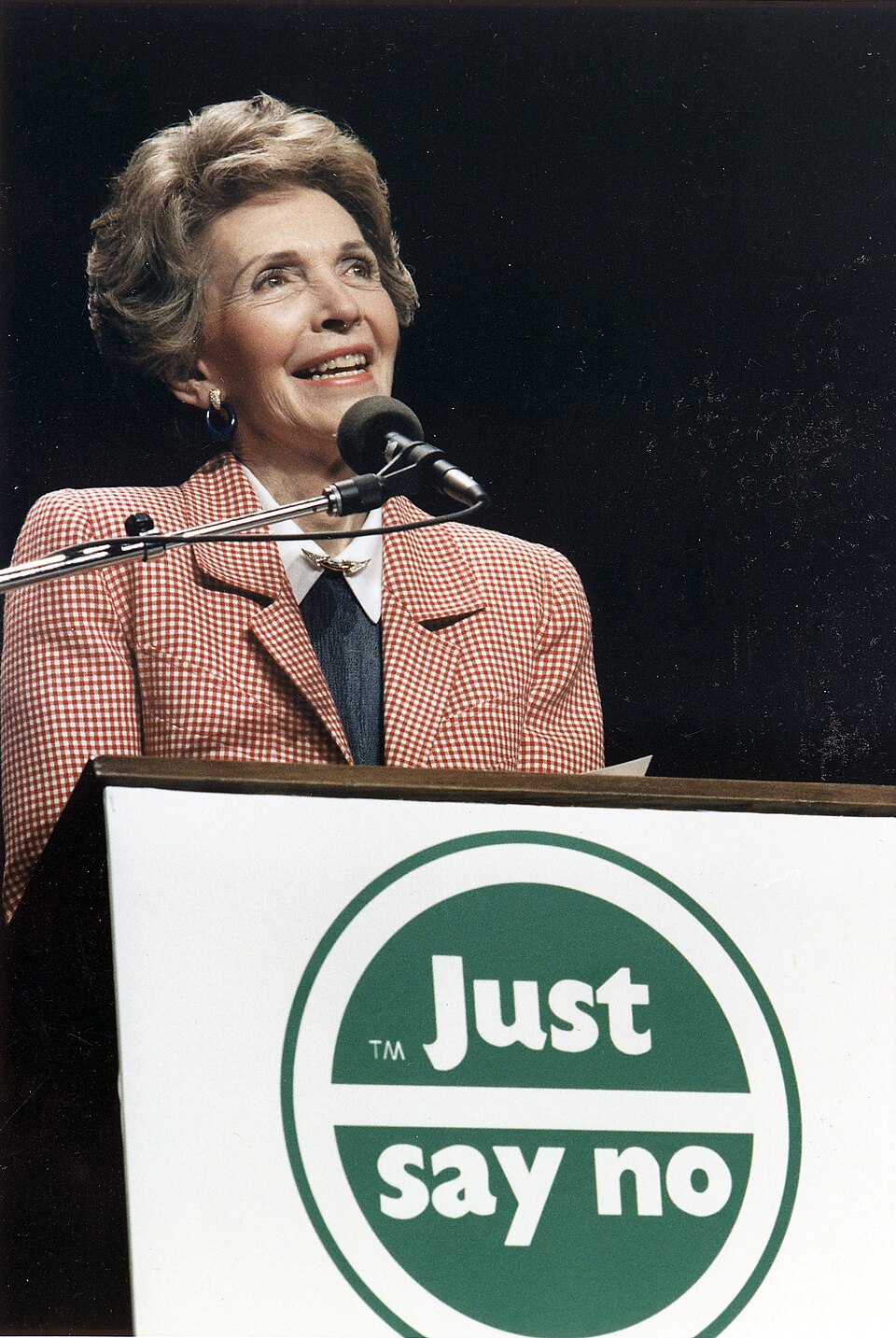
“Just Say No” became famous because it did what great slogans do: it compressed a giant issue into a phrase almost anyone could remember. Drug use, addiction, peer pressure, crime, family stress, schools, public policy, policing, poverty, media panic, and adolescent decision-making all got squeezed down into three words.
The phrase became closely tied to Nancy Reagan’s public role as First Lady. She visited schools, treatment centers, rallies, and youth events, using the slogan to encourage children to avoid drugs. It fit the administration’s broader Reagan-era message that personal choice, family values, discipline, and moral clarity could push back against drug abuse.
The campaign did not exist in a vacuum. It grew during a period when drug use — especially crack cocaine — became a major political, media, and law-enforcement issue. The 1980s were full of frightening news stories, public concern, political speeches, and tough-on-crime messaging. “Just Say No” sat inside that larger atmosphere, but it aimed its message directly at children.
That kid-facing simplicity made the slogan powerful. A child could repeat it. A teacher could write it on a bulletin board. A parent could point to it. A school could build an assembly around it. A button could carry it. A TV show could write it into a scene. Once a slogan becomes that portable, it stops being just a campaign line and starts becoming culture.
The 1984 Oakland Classroom Moment Behind “Just Say No”
The campaign’s most repeated origin story begins in an elementary-school classroom in Oakland, California, during the summer of 1984. Nancy Reagan was speaking with students about drug abuse when a girl asked what she should do if someone offered her drugs. Reagan answered, “Just say no.”
The phrase worked because it sounded like a natural answer rather than a committee-approved slogan. It was brief enough for a child to repeat, firm enough for adults to endorse and flexible enough to become the name of a club, a rally, a week of observance or a television segment. The White House later retold that classroom exchange repeatedly because it gave the campaign a clean origin story: a child asks a practical question, an adult gives a practical answer and a national movement grows from it.
By 1988, Ronald Reagan was publicly describing more than 10,000 Just Say No clubs operating in schools and on campuses. Other official remarks cited even larger counts as the movement expanded. The exact number changed depending on the date, but the important point is scale. What began as a sentence in a classroom became a ready-made identity for youth groups across the country.
Why the origin story was so powerful
Public campaigns love a moment that can be retold in one paragraph. The Oakland story provided a clear beginning, a child-centered purpose and an emotional image that fit television perfectly. It also reinforced the campaign’s core belief that refusing drugs could be taught as a direct personal skill.
That simplicity helped the movement spread, but it also foreshadowed the criticism that followed. A classroom answer became a national framework, and the framework often left little room for the difference between casual peer pressure, substance dependence, mental-health problems and the conditions that make drug use more likely.
From School Clubs to an International Just Say No Movement
The campaign grew because it was designed for multiplication. A national office did not need to manage every hallway poster or school club. Local adults, teachers, parents and youth organizations could take the slogan, attach it to an event and immediately become part of something larger.
In May 1986, Nancy Reagan participated in the first international Just Say No walk, framing the movement as a worldwide show of young people rejecting drugs. By 1988, Congress had designated a national Just Say No Week, and President Reagan issued a proclamation calling on schools, civic groups, clergy, media organizations and public officials to hold programs and ceremonies.
This was more than a slogan appearing in advertisements. It became a calendar of activity: walks, rallies, graduations, school clubs, speeches, sporting events and public appearances. The campaign’s visibility came from thousands of separate moments that all looked connected because they used the same three words.
The club model made the slogan feel participatory
A poster tells students what adults believe. A club lets students appear to join the message themselves. That distinction helped the campaign move from instruction to identity. Members could wear buttons, attend events, chant the slogan and appear in local news coverage. The movement offered schools a package that was inexpensive, camera-friendly and easy to explain to parents.
Why the Just Say No Campaign Spread Everywhere
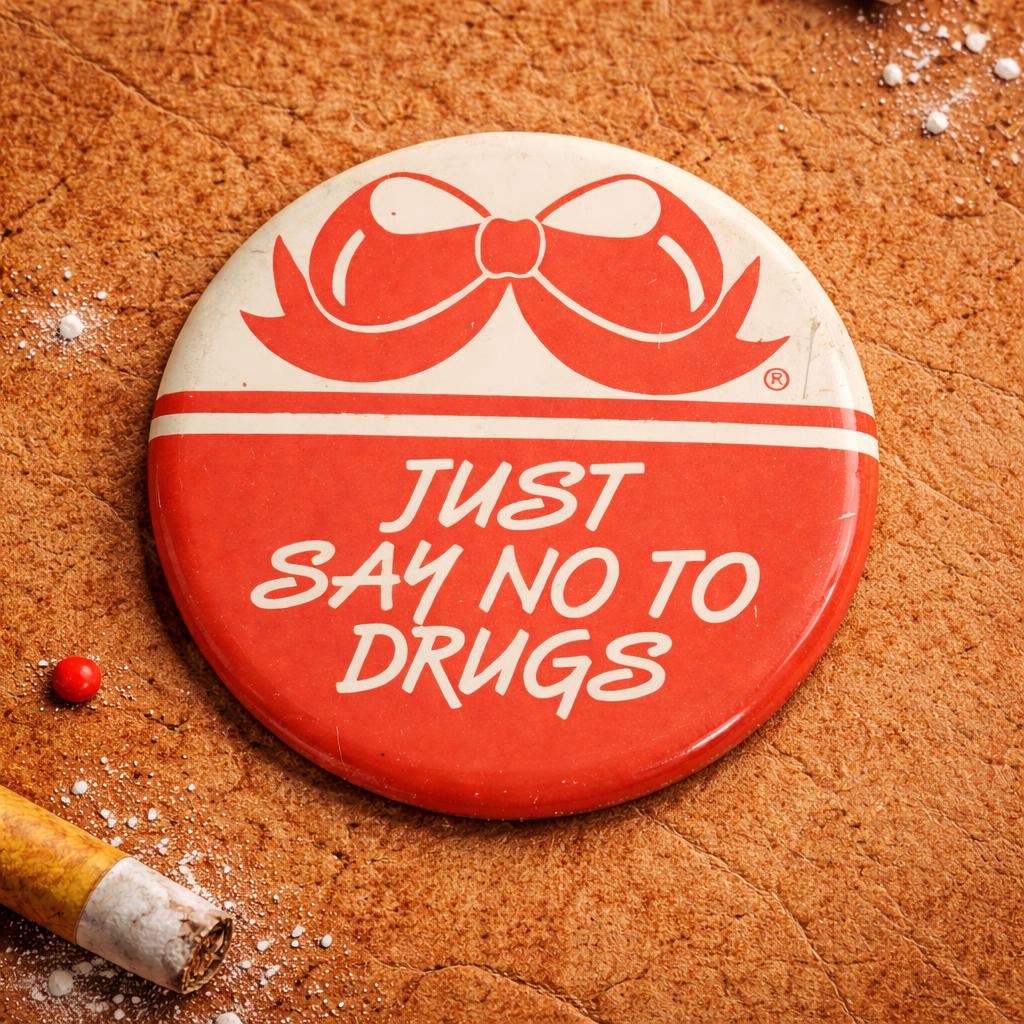
“Just Say No” spread because it was incredibly easy to reproduce. That sounds simple, but it matters. A slogan with three words can go anywhere. It can be printed on a pin, stitched onto clothing, shouted at a rally, used in a commercial, placed on a school poster, dropped into a sitcom, or repeated by a celebrity without needing a manual.
The campaign was also emotionally clean. It did not ask the public to wrestle with complicated questions about addiction, drug markets, sentencing, treatment, poverty, mental health, trauma, or race. It offered a direct answer: say no. For adults, that was comforting. For institutions, it was usable. For schools, it was easy to teach. For television, it was easy to package.
The school factor
Schools were a huge part of why the campaign became so memorable for Gen X. Posters, assemblies, classroom talks, anti-drug pledges, visits, buttons, and announcements made the message feel official. It was not just on TV. It was in the hallway. It was on the bulletin board. It was coming through the loudspeaker with the same energy as the lunch menu and a warning about running near the lockers.
The merchandise factor
The campaign also became wearable. Pins, buttons, jerseys, shirts, and banners made the slogan visible outside formal speeches. This is one reason it belongs in 80s fad culture. It did not just tell people what to think. It gave them something to display. In the 80s, that was half the battle.
The celebrity factor
Celebrities, athletes, television personalities, and performers helped amplify the campaign. When a message shows up through famous faces, it becomes less like a lecture and more like part of the entertainment environment. The 80s were extremely good at blurring that line.
What a Just Say No School Assembly Felt Like
For many Gen X kids, Just Say No was not first encountered as a White House initiative. It was an interruption to the school day. Teachers marched classes into an auditorium or gym, someone adjusted a microphone that immediately squealed, and a speaker explained that the next hour was extremely important. The chairs were uncomfortable. The message was serious. The possibility of missing math made everyone unusually cooperative.
The assembly format gave the campaign emotional weight. A normal classroom lesson could be ignored. An all-school event suggested emergency. Banners, police officers, counselors, local officials, athletes or recorded celebrity messages made the subject feel larger than any one teacher’s curriculum.
Role-playing refusal
Many prevention programs taught children to rehearse a refusal: say no clearly, leave the situation, suggest another activity or seek help from an adult. In theory, practice could make a real peer-pressure moment less intimidating. In reality, the role play could feel painfully staged, especially when adults wrote dialogue that no actual teenager had ever spoken in human history.
The hallway after the assembly
What remained was often visual rather than instructional. A poster near the cafeteria. A button on a backpack. A pledge card in a desk. A phrase repeated sarcastically by students because repetition and parody are basically neighboring classrooms. The campaign became part of school atmosphere whether students embraced it, ignored it or turned it into a joke.
That mixed reaction is important. The message did not need universal belief to become culturally dominant. It only needed to be present everywhere. Gen X memory is full of campaigns that adults delivered earnestly and children processed through a combination of attention, boredom, humor and accidental long-term recall.
How Just Say No Became Wearable Public-Service Merch
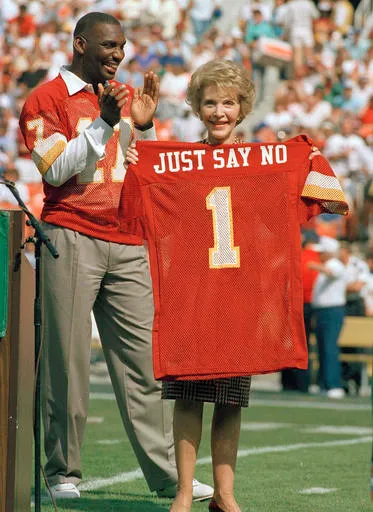
One of the most 80s things about “Just Say No” is how naturally it became merchandise. The decade loved slogan clothing. It loved pins. It loved simple visual identity. It loved anything that turned a message into something wearable, collectible, and camera-ready.
That is why the campaign could live as both policy messaging and pop-culture object. A “Just Say No” jersey or pin was not just an accessory. It was participation. It said the wearer had joined the correct side of a moral message. In a decade obsessed with branding, that mattered.
This is also where the campaign becomes complicated as nostalgia. The objects are very collectible and visually memorable now, but they came from a period of real public anxiety and hard-edged drug policy. That tension is part of why “Just Say No” remains so fascinating. It was both a sincere prevention campaign and a branding machine.
Just Say No Buttons, Jerseys and School Ephemera as 80s Collectibles
Campaign objects survive because everyday paper and plastic are often thrown away. A mass-produced button can become more emotionally powerful than an official speech because it occupied real space in a childhood bedroom, classroom or junk drawer.
Collectors now encounter Just Say No pins, jerseys, posters, school handouts, club materials, bumper stickers, photographs and event memorabilia. Their appeal is not limited to political collectors. They also belong to the wider world of 80s advertising, television, school culture, celebrity ephemera and wearable slogans.
Why the objects feel more nostalgic than the policy
Most children did not read federal legislation. They saw a button. They wore a shirt. They received a worksheet. Physical objects translated government messaging into kid-scale experience. That is why the material culture of the campaign can feel strangely familiar even to people who remember very little about the policy debate surrounding it.
The tension remains. These pieces can be funny, colorful and collectible while still representing an era of real fear, punishment and unequal enforcement. Nostalgia does not erase that history; it simply explains why the objects continue to trigger recognition.
How Pop Culture Turned Just Say No Into an 80s Media Event
The campaign became impossible to miss because it did not stay in government speeches. It moved into entertainment. Nancy Reagan appeared on television, the message showed up in public service spots, and the slogan traveled through the same media channels that sold cereal, toys, sneakers, music, and Saturday morning cartoon characters.
That is what made the campaign feel so deeply 80s. It used the same cultural machinery as everything else. The decade already knew how to turn a phrase into a thing. “Just Say No” became a phrase, a symbol, a public performance, and a brand-style message that could be repeated by almost anybody.
The sitcom effect
Anti-drug messaging appeared in the world of television at a time when sitcoms were still massive family-viewing platforms. When a First Lady or public-service message showed up in that environment, it did not feel like a policy memo. It felt like part of the living-room routine. For Gen X kids, that meant the anti-drug message was not just something adults said at school. It was something TV said too.
The sports and wrestling connection
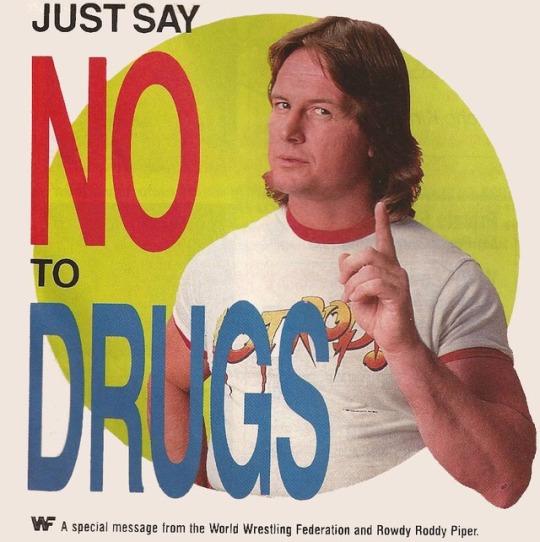
Sports and entertainment figures gave the message extra visibility. The Roddy Piper connection is especially 80s because professional wrestling was exploding into mainstream pop culture at the same time. Wrestling was loud, moralistic, colorful, slogan-driven, and built around heroes and villains. That made it strangely compatible with a message that wanted kids to make a simple good-versus-bad choice.
The result was a campaign that could appear almost anywhere: a rally, a school, a sitcom, a sports event, a pin, a poster, or a celebrity photo op. That saturation is why the slogan stuck.
Just Say No and D.A.R.E. Were Connected—but They Were Not the Same Program
Gen X memory often blends Just Say No and D.A.R.E. into one giant anti-drug presentation, but they were not identical. Just Say No was a broad national slogan and public-awareness movement associated with Nancy Reagan. D.A.R.E.—Drug Abuse Resistance Education—was a structured school program developed in 1983 through a partnership between the Los Angeles Police Department and the Los Angeles Unified School District.
D.A.R.E. placed trained police officers in classrooms for a series of lessons on drugs, alcohol, peer pressure, self-esteem and refusal skills. Just Say No could appear in a thirty-second PSA or on a button. D.A.R.E. was a curriculum with workbooks, discussions, role-playing and a recognizable graduation culture.
Why they felt like the same thing
Both programs used refusal language. Both targeted school-age children. Both expanded rapidly during the same Reagan-era push for drug prevention. Both relied on highly visible symbols and trusted adults. And both eventually became part of the same nostalgic package: officer visits, gym assemblies, red ribbons, certificates, slogans and the strong suspicion that every fictional drug dealer was waiting behind the school with free merchandise.
Why the difference matters
Evaluating a slogan is not the same as evaluating a classroom curriculum. Just Say No can be judged as political messaging, cultural branding and public awareness. D.A.R.E. can be studied as a specific educational intervention with measurable outcomes. Later evaluations of the original D.A.R.E. curriculum generally found that it did not produce lasting reductions in drug use, even when students liked the program or reported more negative attitudes toward drugs.
How Just Say No Fit Into the Reagan-Era War on Drugs
The clean slogan sat inside a much harsher policy environment. The Reagan-era War on Drugs emphasized tougher enforcement, stronger penalties, public warnings, and a moralized national conversation around drug use. “Just Say No” was the softer, kid-facing side of that world — the school-poster version of a much larger political project.
That contrast is important. On the surface, the campaign seemed simple and positive: encourage kids to avoid drugs. But the broader War on Drugs involved policing, sentencing, incarceration, racial disparities, and a public-health crisis that could not be solved by slogans alone.
This is why the campaign remains controversial. As a memory, it is vivid. As a slogan, it is brilliant. As policy, it is limited. Saying no may help in a peer-pressure moment, but addiction, substance abuse, and drug markets are not just individual willpower problems. They are also shaped by trauma, poverty, mental health, family instability, availability, criminalization, and treatment access.
Why Just Say No Was Memorable but Not Enough
The biggest criticism of “Just Say No” is right there in the slogan: it made refusal sound simple. That may work as a classroom phrase, but real life is rarely that tidy. Kids and teens do not make choices in a vacuum. Peer pressure, family chaos, depression, trauma, neighborhood conditions, addiction, abuse, loneliness, and social belonging all complicate the idea that a single phrase can do the job.
Critics have also argued that the campaign focused too heavily on individual choice while the wider War on Drugs leaned into punishment instead of public health. That combination made the 80s drug conversation feel morally certain but often socially blunt. It gave schools a message, politicians a talking point, and media outlets a symbol — but it did not fully address why people use drugs, how addiction works, or what treatment requires.
The campaign also became easy to parody because it was so simple. Once a slogan becomes everywhere, it also becomes a joke. Gen X grew up with that contradiction: adults saying “Just Say No” with total seriousness while kids quietly understood that the world was more complicated than a button.
Why the slogan still mattered
None of that means the campaign had no cultural impact. It absolutely did. It made drug prevention visible. It gave parents and schools a shared phrase. It put the issue in front of children. It made anti-drug messaging part of the public conversation. The problem is that visibility is not the same as effectiveness, and a slogan is not the same as a solution.
Did Just Say No Work? Awareness, Behavior and the Limits of a Slogan
The fairest answer is that Just Say No worked extremely well as awareness and branding, but the evidence is far less convincing if the question is whether a slogan by itself prevented drug use. Those are different outcomes, and the campaign’s reputation becomes clearer when they are separated.
What it clearly accomplished
The campaign made youth drug prevention a national conversation. It gave schools and parents a common phrase. It created clubs and public events. It secured enormous media attention. It made refusal skills recognizable to children who might never have heard adults discuss drugs directly.
In that sense, the campaign achieved reach that most public-health messages would envy. Decades later, people who cannot remember the details of the Anti-Drug Abuse Acts or White House conferences can still repeat the slogan without hesitation.
What research makes harder to claim
Awareness does not automatically produce behavior change. Reviews of mass-media drug-prevention campaigns have found mixed results: some campaigns showed benefits, many showed little measurable effect and a few appeared capable of unintended harm. Researchers have repeatedly warned that broad, fear-heavy or generic messages can fail when they do not match the audience, provide practical skills or address the reasons young people use substances.
The original D.A.R.E. curriculum—often remembered as part of the same cultural package—was later rated ineffective by the National Institute of Justice’s CrimeSolutions program because studies generally found no significant long-term differences in drug use between participants and comparison groups. That does not mean every student learned nothing. It means positive memories and short-term attitudes did not reliably translate into the intended behavioral outcome.
Why simple refusal can still have value
A direct refusal is still a useful tool in a specific peer-pressure moment. The mistake was treating that tool as the entire toolbox. Effective prevention may also require accurate information, social skills, mental-health support, family involvement, community stability, early intervention and access to treatment.
The slogan was not wrong to tell children they could refuse. It was incomplete when institutions acted as though refusal alone explained addiction or justified the punitive policies surrounding the broader War on Drugs.
Why Just Say No Belongs in 80s Fad Culture
“Just Say No” was a public-service campaign, but it behaved like an 80s fad because it had all the visible markers: slogan merch, celebrity endorsement, school adoption, TV repetition, media saturation, and a phrase everyone could recognize instantly.
It also belongs because 80s culture loved turning messages into objects. The decade gave us slogan shirts, campaign pins, branded school materials, public-service merch, celebrity PSAs, and television moments designed to teach lessons between commercials. “Just Say No” fit that environment perfectly.
For Gen X, the campaign is less a single event and more a texture. It is the feeling of an assembly. A button. A poster near the cafeteria. A serious adult on TV. A famous person saying something direct. A school program with good intentions and slightly awkward execution. A slogan that was everywhere because the adults thought repetition could build armor.
Just Say No Campaign Timeline
Drug use, especially cocaine and later crack cocaine, becomes an increasingly visible media and political issue. Public anxiety rises, and prevention messaging becomes a major priority.
The slogan becomes closely associated with the First Lady’s anti-drug work, school visits, speeches, and youth-focused prevention messaging.
The slogan moves through classrooms, assemblies, public-service spots, buttons, posters, celebrity appearances, and youth organizations.
Television, celebrity endorsements, sports tie-ins, and entertainment culture help make “Just Say No” one of the most recognizable public-service slogans of the decade.
Critics argue that the slogan oversimplified addiction and that the broader War on Drugs caused serious social harm through punitive policy, incarceration, and unequal enforcement.
“Just Say No” survives as a symbol of Reagan-era public-service messaging: memorable, visually strong, deeply 80s, and still debated.
Why the Just Say No Campaign Still Sticks
“Just Say No” still sticks because it was one of the most successful slogans of its era. Not necessarily successful in solving drug abuse, but successful in becoming unforgettable. Three words did the work of a logo. They were easy to say, easy to print, easy to broadcast, and easy to remember decades later.
That is why the campaign lives in Gen X memory. It was not just a policy initiative. It was a school experience, a TV experience, a merch experience, and a cultural background signal. It was part of the same 80s world that turned everything into a slogan, a PSA, a button, a celebrity moment, or a Very Special Episode.
The legacy is complicated. The campaign was sincere and visible, but the issue was deeper than its message. It encouraged refusal, but it could not fully explain addiction. It gave adults a phrase, but it could not replace treatment, prevention science, or social support. It told kids to make the right choice, but it did not always help them understand the world that made the wrong choices easier.
That combination is what makes it fascinating. “Just Say No” was both a serious campaign and a cultural artifact. It was both earnest and easy to parody. It was both everywhere and not enough. In other words, it was extremely 80s.
Historical Sources and Further Reading
The campaign’s history is documented through presidential-library speeches, proclamations, photographs and recordings, along with later evaluations of school-based and mass-media prevention.
Questions About the Just Say No Campaign
What was the Just Say No campaign?
Just Say No was a Reagan-era anti-drug campaign associated with First Lady Nancy Reagan. It encouraged children and teens to refuse drugs by saying no and became famous through schools, rallies, public service announcements, television appearances, pins, posters, and celebrity support.
Who started Just Say No?
The campaign is most closely associated with First Lady Nancy Reagan, who championed the slogan and made drug-prevention messaging a major part of her public work during the Reagan administration.
When was Just Say No popular?
Just Say No became especially prominent during the 1980s and continued into the early 1990s as part of youth-focused anti-drug messaging and the broader War on Drugs era.
Why did Just Say No become so famous?
It became famous because the slogan was short, repeatable, easy to print, easy to teach, and easy to use in schools, rallies, television, public-service announcements, celebrity appearances, and youth campaigns.
Was Just Say No effective?
The slogan was extremely effective as branding and public awareness, but it has been criticized as too simplistic for preventing drug abuse or addressing addiction, trauma, poverty, peer pressure, mental health, and treatment needs.
How did Just Say No connect to the War on Drugs?
Just Say No was the youth-facing prevention message inside the larger Reagan-era War on Drugs, which also included tougher law-enforcement policies, stronger penalties, and a broader national focus on drug crime and drug abuse.
Why is Just Say No remembered by Gen X?
Gen X remembers Just Say No because it showed up in schools, public-service announcements, sitcoms, pins, posters, assemblies, celebrity events, and TV messaging. It became part of the everyday media and school environment of the 1980s.
Why is Just Say No considered an 80s fad?
It was a public-service campaign, but it behaved like a fad because it became a slogan, a visual identity, a merch item, a school program, a TV message, and a widely repeated cultural phrase.
What kind of Just Say No items existed?
Just Say No appeared on pins, buttons, shirts, jerseys, posters, banners, school materials, rally signs, public-service campaigns, and other anti-drug awareness items.
Why is Just Say No controversial today?
It is controversial because critics argue it oversimplified drug abuse and addiction while the broader War on Drugs contributed to punitive policies, incarceration, and unequal enforcement. The slogan is memorable, but the history around it is complicated.