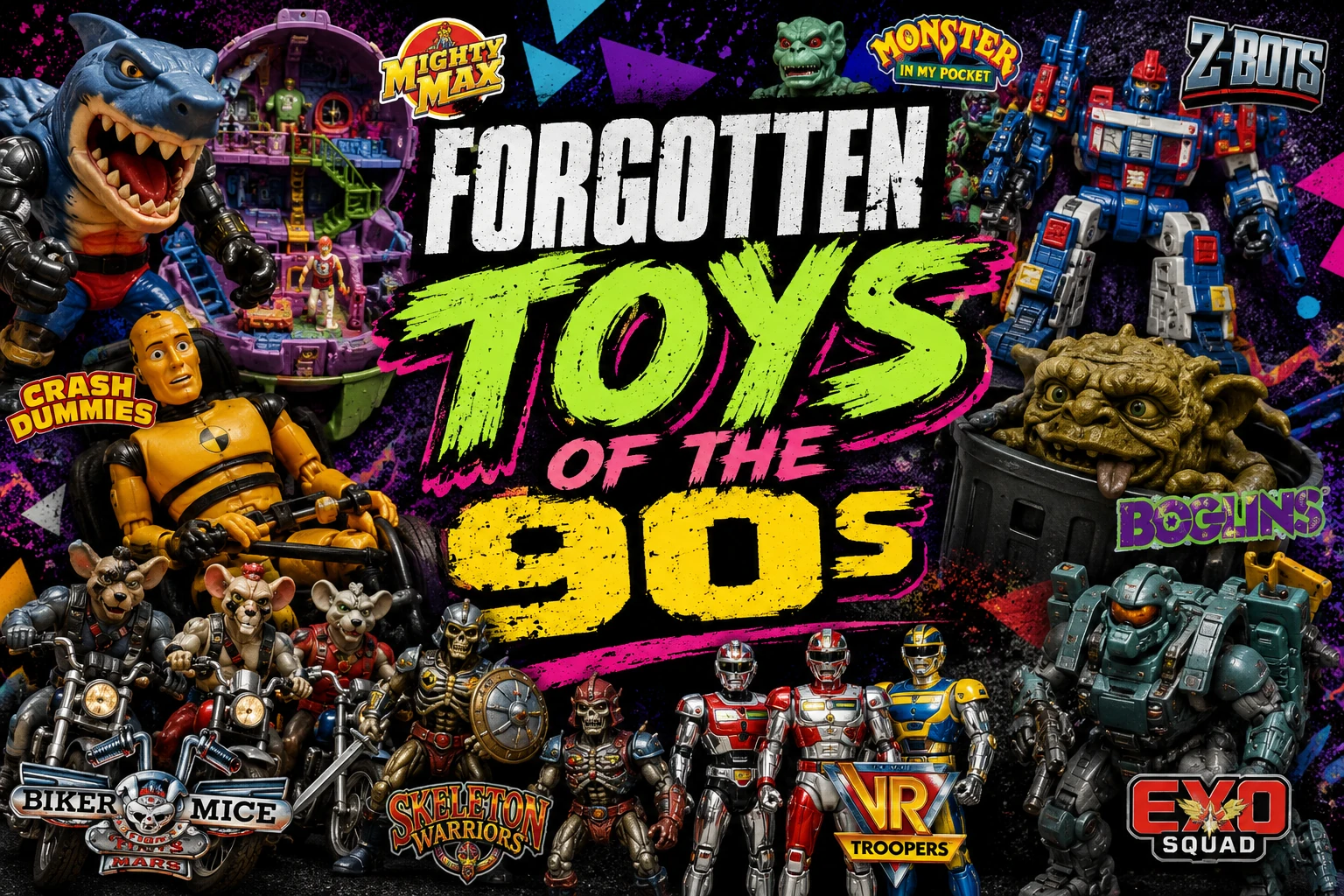
Forgotten Toys of the 90s: 16 Weird Toy Lines That Refuse to Die
Street Sharks. Mighty Max. Monster in My Pocket. Z-Bots. Crash Dummies. The 90s toy aisle was packed with strange little universes that arrived with cartoons, commercials and enough plastic attitude to feel permanent—right up until they vanished.
These are the forgotten toys of the 90s that lived hard, disappeared fast and still unlock an entire KB Toys aisle the second somebody says the name.
What Were Some Forgotten Toys of the 90s?
Forgotten toys of the 90s include Street Sharks, Mighty Max, Monster in My Pocket, Z-Bots, The Incredible Crash Dummies, Biker Mice from Mars, Skeleton Warriors, VR Troopers, Mini Boglins, ExoSquad, Barnyard Commandos, Battle Trolls, Earthworm Jim toys, SWAT Kats toys, Captain Planet figures and Food Fighters that survived into early-90s toy boxes.
Most were not failures. They were short-lived toy lines trapped in an overcrowded decade where cartoons ended quickly, gimmicks aged fast and the next playground or Christmas craze was already clearing shelf space.
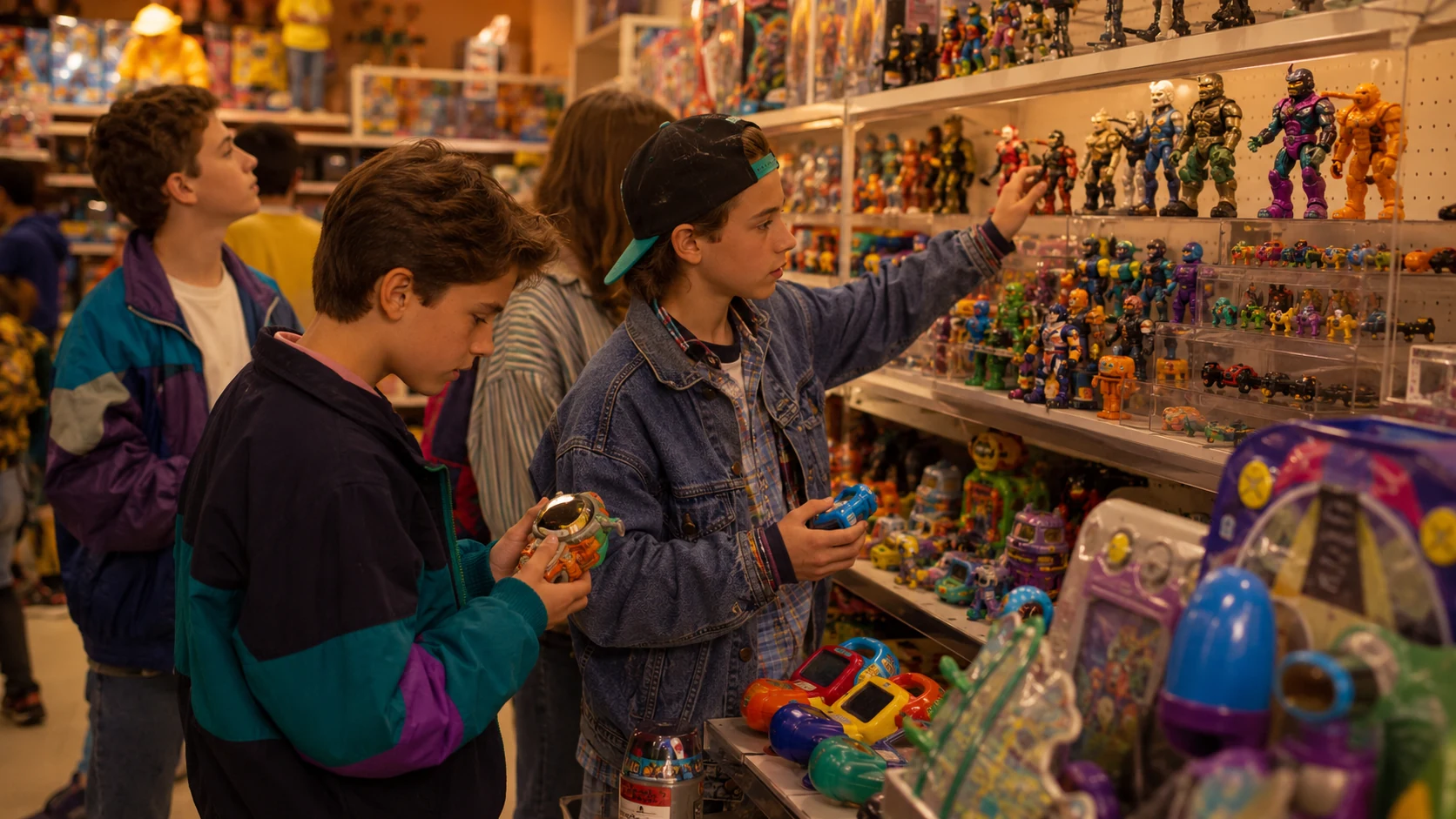
90s Toys
Head back to the full 90s Toys hub for the big names, the weird little names, and the shelves that made every birthday list financially irresponsible.
Plastic Combat90s Action Figure Wars
TMNT, Power Rangers, Toy Biz X-Men, Kenner Batman, Jurassic Park, Spawn, Street Sharks, Star Wars, and the toy aisle arms race.
Screen to ShelfMovie & Cartoon Toy Tie-Ins
Batman, Jurassic Park, Toy Story, Star Wars Episode I, Space Jam, Power Rangers, Pokémon, X-Men, Spider-Man, and all the tie-in chaos.
Jump Straight to the Toy You Half Remember
The name may be gone, but the blister card, weird action feature and one missing accessory are probably still taking up space in your brain.
What Counts as a Forgotten 90s Toy?
A forgotten 90s toy is not always obscure in the strictest collector sense. Some had cartoons. Some had commercials. Some had full toy lines. Some even had a brief moment where they looked like the next big thing. But they did not become the decade’s permanent nostalgia shorthand the way Pokémon, Power Rangers, Game Boy, Beanie Babies, Furby, or Tickle Me Elmo did.
These were the toy lines that lived in the second wave of memory: the ones you remember only after seeing the logo, the weird figure sculpt, the tiny accessory, the playset lid, or the commercial voiceover. They were not always failures. A lot of them were legitimately fun. They just got swallowed by a decade where every shelf was already full of turtles, mutants, superheroes, dinosaurs, electronic pets, trading cards, and movie tie-ins.
The best forgotten 90s toys usually had one of three things: a strange hook, a great sculpt, or a gimmick that made the toy feel bigger than its shelf life. They might not have ruled the decade, but they made the toy aisle weirder. That counts.
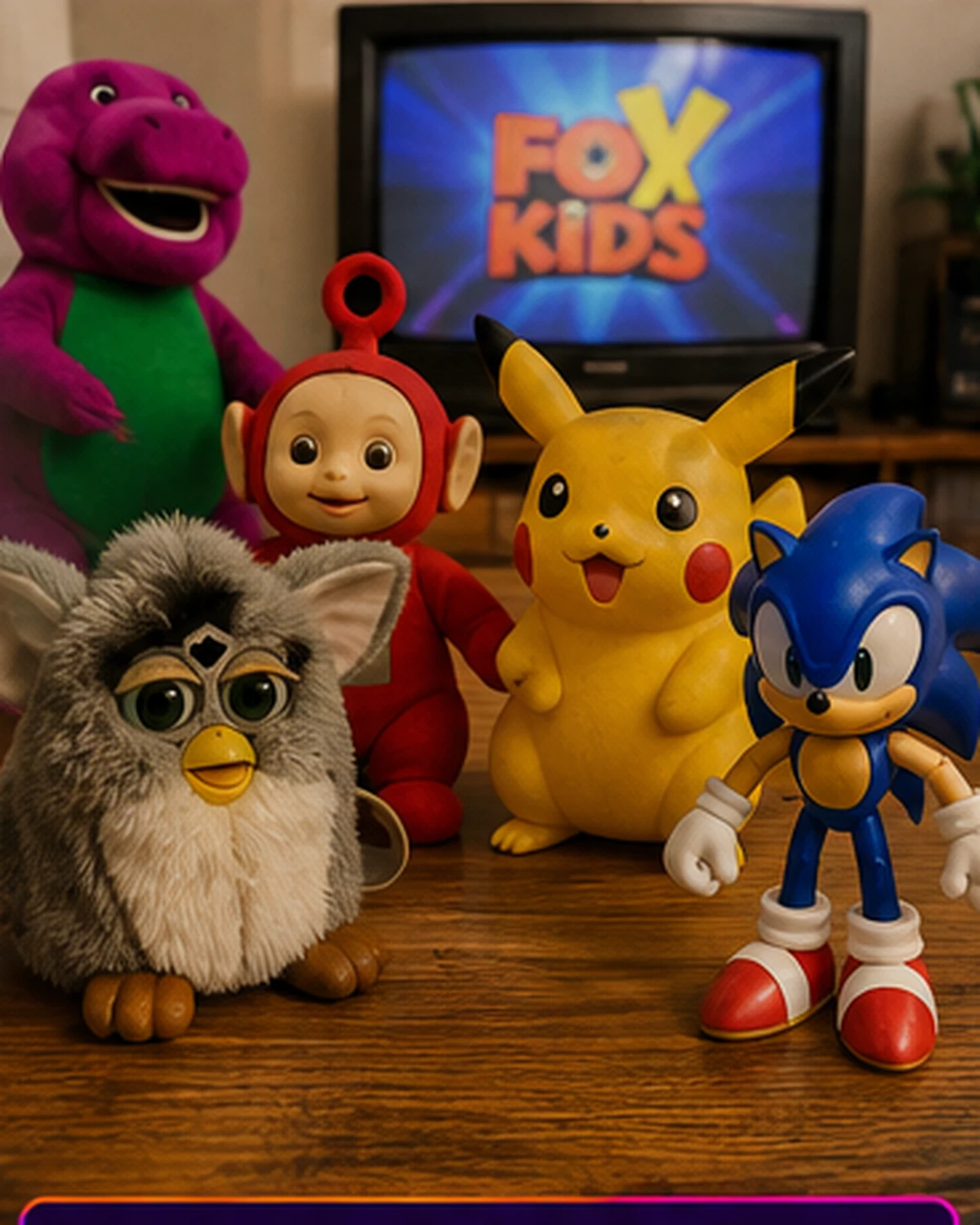
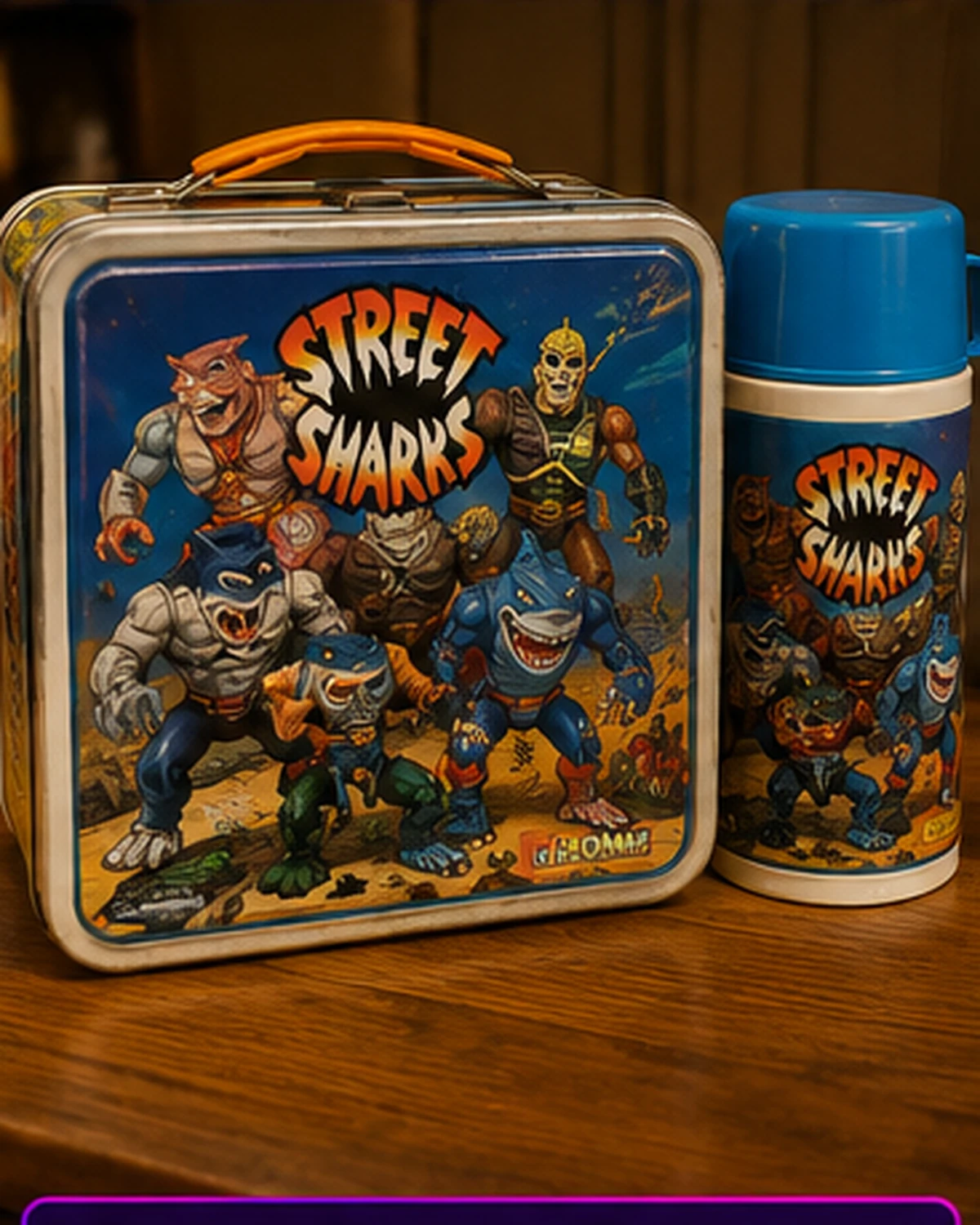
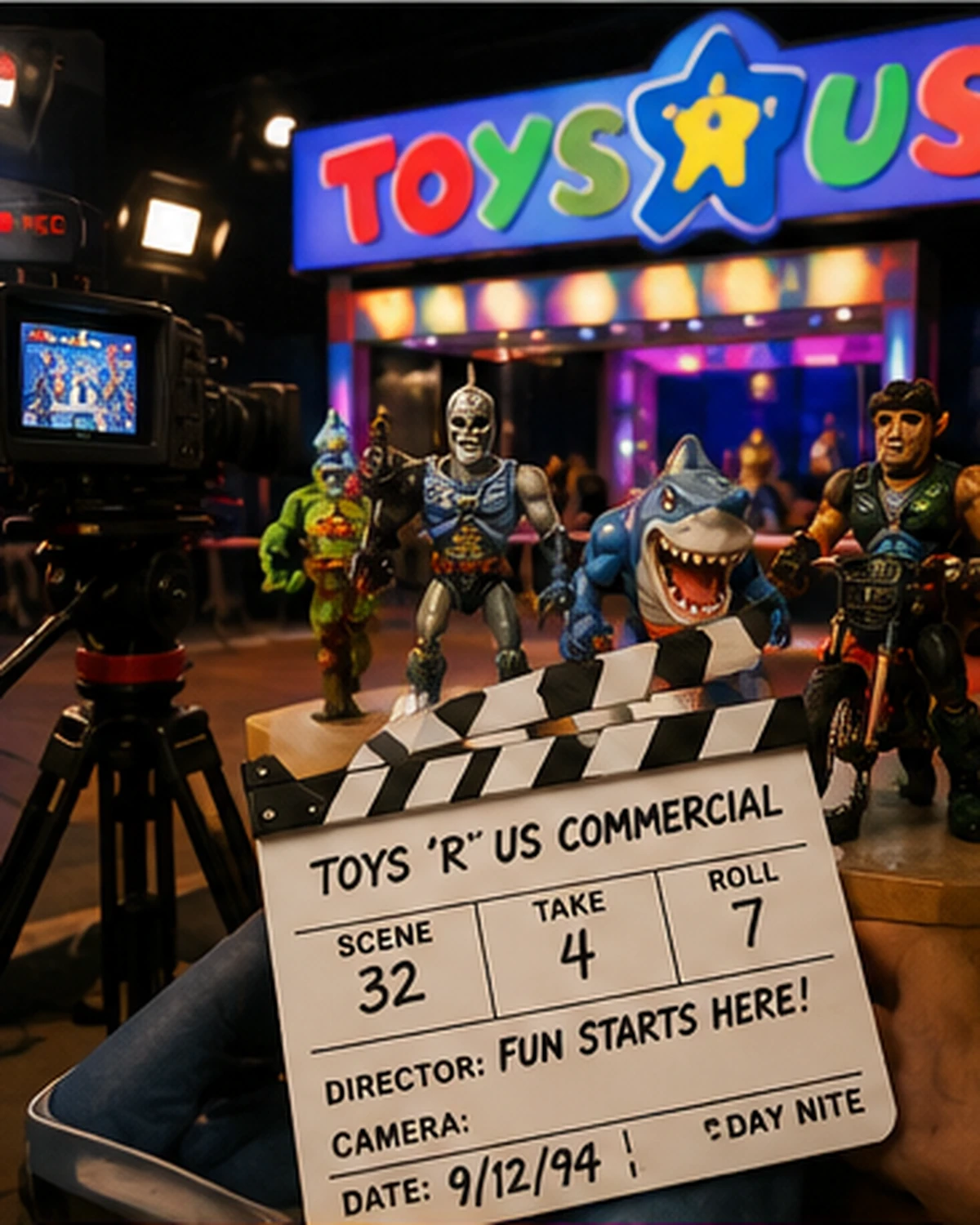
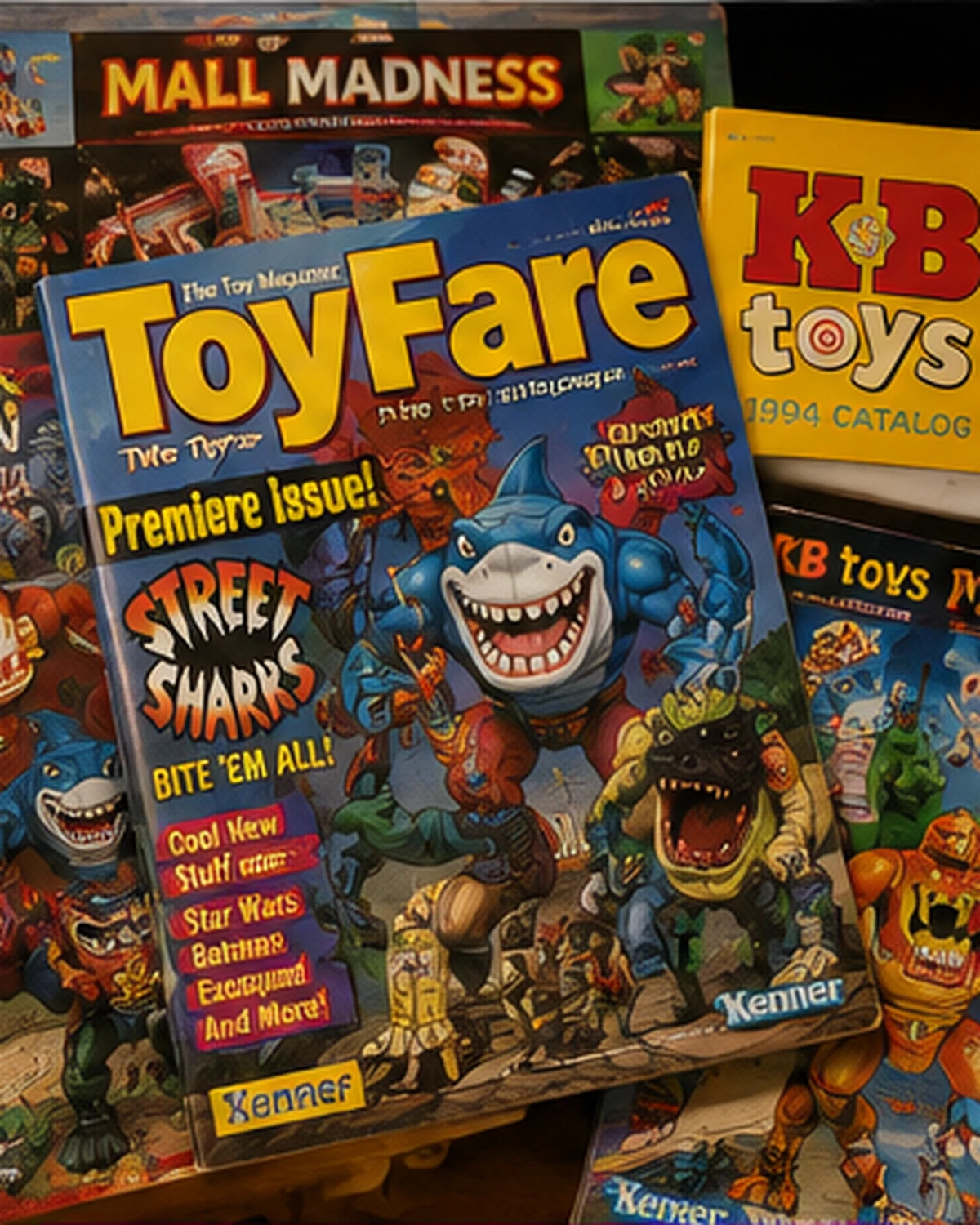
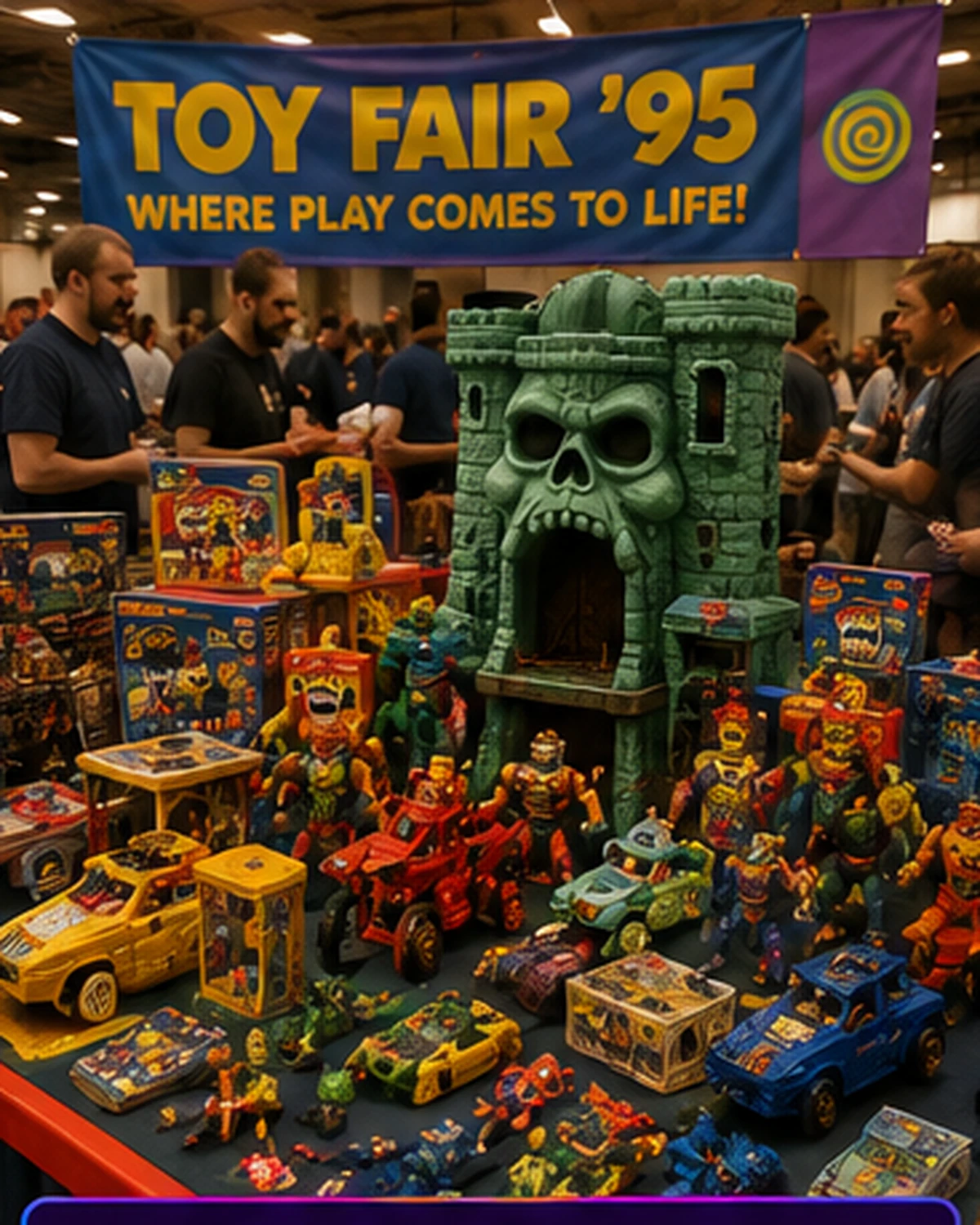
The visual trail mattered almost as much as the toy: cartoons, catalogs, lunchboxes, blister cards and mall displays made a short-lived line feel like it had always been there.
Why So Many 90s Toys Disappeared
The 90s toy aisle was crowded in a way that is hard to explain unless you lived through it. Action figures were fighting with cartoons. Cartoons were fighting with movie tie-ins. Movie tie-ins were fighting with video games. Video games were fighting with trading cards. Trading cards were fighting with electronic pets. Electronic pets were fighting with whatever weird thing the mall kiosk was pushing that month.
That meant a toy could be good and still disappear. A line could have a cartoon, a commercial, a cool gimmick, and great packaging, then still get buried by Pokémon cards, Power Rangers, Batman variants, Jurassic Park dinosaurs, Toy Story toys, or the next retail panic.
The forgotten-toy formula
- Great hook, short window: a weird idea caught attention, but not long enough to become permanent.
- Too many competitors: the big brands owned the aisle, the endcaps, and the kid conversations.
- Cartoon support was uneven: some shows helped; others came and went too fast.
- Scale confusion: some lines were too tiny, too niche, or too odd to fit with other toys.
- Collector afterlife came later: a lot of these toys became cooler once kids grew up and realized how strange they were.
That is the funny thing about forgotten toys. They often age better than the safe hits because they feel less polished and more specific. The weirdness is the memory.
What Pushed These Toys Out of the Aisle?
The forgotten lines did not disappear in a vacuum. They were buried by bigger systems—television machines, schoolyard economies, electronic pets, collector bubbles and holiday shortages that made one strange action figure look almost calm.
The Big Franchises Kept Reloading
Power Rangers toys and the Megazord rush had new teams, armor, vehicles and television exposure. Smaller action lines had to fight a franchise that refreshed itself before the old figures reached the clearance bin.
Recess Became a Trading Floor
The decade’s schoolyard toys and recess crazes rewarded anything small enough to carry and trade. Pogs could create status, rules and arguments without needing a cartoon or a giant vehicle.
Electronic Toys Started Demanding Attention
Tamagotchi needed care, while Furby talked back from the bedroom. A regular figure suddenly had to compete with toys that beeped, reacted and interrupted class.
Scarcity Became Part of the Product
Tickle Me Elmo and the decade’s hottest Christmas toys turned empty shelves into free advertising. A forgotten toy still sitting there had already lost the psychological battle.
Collecting Escaped the Kids’ Aisle
Beanie Babies pulled adults into the chase, while cards and tiny collectibles made incompleteness the whole business model. One self-contained toy could not compete with a collection designed never to feel finished.
Toys Followed Kids Everywhere
Fast-food giveaways put toys in the car, at dinner and in school trades. Super Soaker owned the backyard, while Polly Pocket packed a whole world into a compact.
The permanent winners are gathered in 50 Most Iconic Toys of the 90s. The toys on this page are the ones that lost the long game but still won one extremely specific corner of our memory.
Where the Forgotten Toys Fit in the 90s
The decade changed fast. Use the year pages to see what these deep cuts were competing against when they appeared—and what replaced them when the aisle moved on.
Forgotten 90s Toys Timeline: 1990–1999
A fast visual map of the weird middle shelf
Forgotten 90s toys did not follow one neat trend. The early decade had pocket monsters, micro figures, and late-80s carryover weirdness. The middle decade leaned into mutant animals, crash-test chaos, small collectibles, and cartoon-backed action figures. The late decade brought darker fantasy lines, sci-fi mechs, TV tie-ins, and toy ideas that were too strange, too niche, or too late to become permanent household names.
Monster in My Pocket hits tiny and strange
Little monster figures, point values, and mythological weirdos make the pocket-scale shelf feel collectible.
Mighty Max opens the doom compact
Tiny horror-fantasy playsets give boys a pocket-sized answer to Polly Pocket, but with more skulls.
Z-Bots bring pocket sci-fi armies
Small robot figures, factions, vehicles, and collectible variety give the decade another tiny-war obsession.
Crash Dummies turn destruction into play
Figures designed to fly apart make safety mascots weirdly fun and deeply 90s.
Street Sharks bite the action aisle
Buff shark men, big jaws, denim energy, and loud sculpts make the mid-90s feel completely unhinged.
Biker Mice from Mars rides in
Motorcycle aliens, leather-jacket attitude, and cartoon-backed action figures land in the weird animal-hero lane.
Skeleton Warriors goes full bone army
Glow, armor, skeleton villains, and fantasy action figures give the aisle a darker Saturday-morning edge.
VR Troopers tries the techno-fighter lane
Live-action armor, cyber battles, and role-play energy show how badly the 90s wanted another morphing hit.
Mini Boglins lurk in the weird bin
Small rubbery creatures, gross sculpting, and pocket-monster energy hit the exact right level of strange.
How the Forgotten 90s Toy Aisle Actually Worked
The toys on this page were not random failures. They were products of a retail system that could create a universe quickly, flood television with commercials and replace the whole thing before the next school year.
Cartoons Were the Weekly Instruction Manual
A new show explained who the heroes were, what the weapons did and why the vehicle mattered. When the cartoon ended, the toy line lost its loudest sales tool. That is why so many forgotten figures feel familiar even when the story is gone.
Specialty Toy Stores Created Extra Shelf Space
Toys “R” Us, KB Toys and mall stores carried enough inventory to support stranger lines. A modern aisle might choose only the safest brands. The 90s could give skeleton warriors, shark men and tiny robot factions their own pegs for one glorious season.
The Action Feature Sold the Commercial
Working jaws, detachable limbs, dissolving bags, secret compartments and launchers gave every toy one moment that looked great on television. The feature could sell the first figure. It could not always sustain an entire franchise.
Clearance Bins Extended the Afterlife
A toy line could disappear from commercials and still survive for years through discount shelves, hand-me-downs and yard sales. That is why some kids remember toys long after the official franchise had already ended.
Packaging Did Half the World-Building
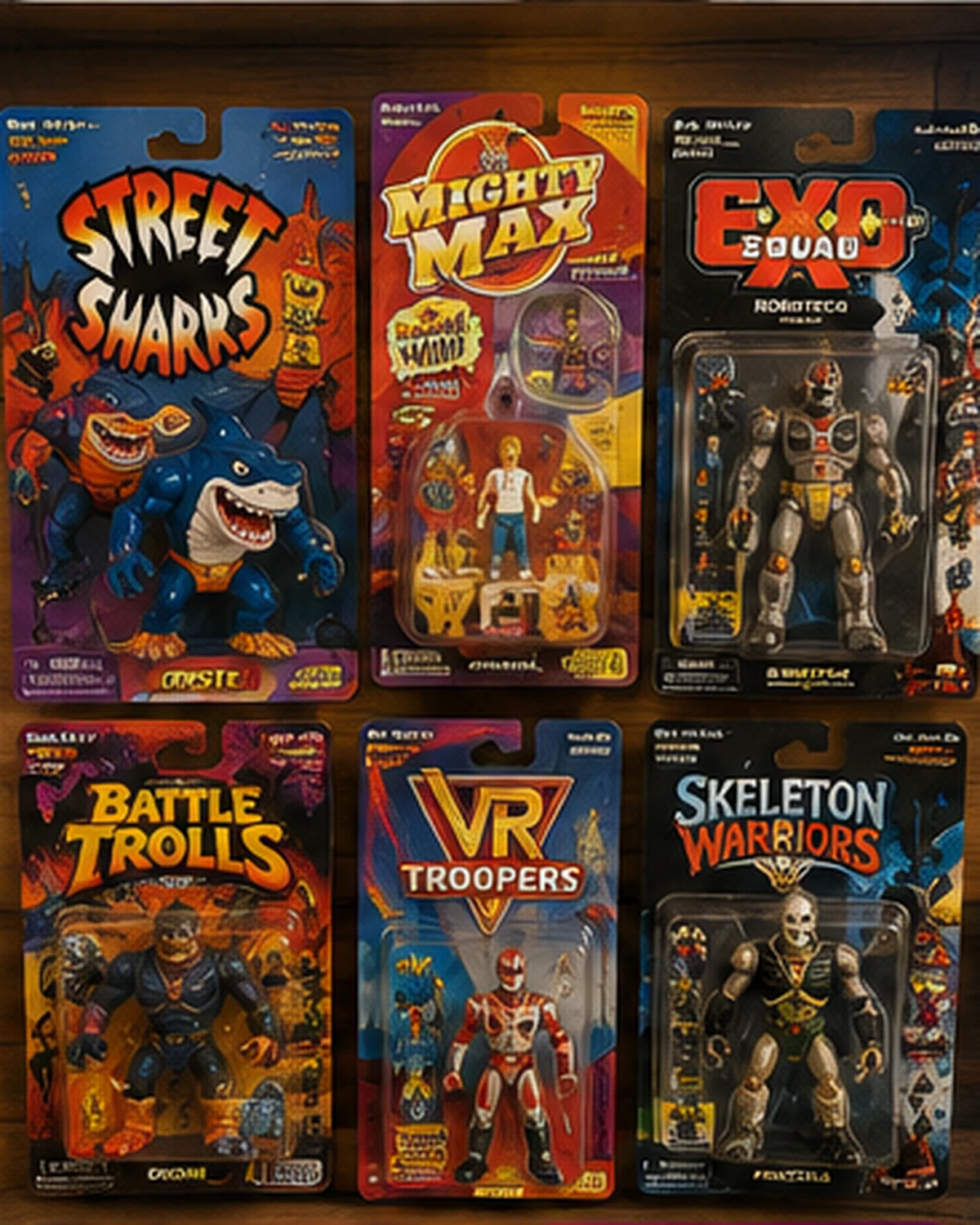
Card backs, character checklists and painted battle scenes made small lines feel enormous. A loose figure may look obscure today, but the original package often reveals the full promise the toy was trying to sell.
The Decade Never Stopped Moving
Early-90s action figures competed with mid-decade schoolyard crazes, late-decade electronics and the Pokémon takeover. A line could be well designed and still get buried by the speed of the market.
10 Forgotten 90s Toy Lines We Still Remember
Mutant sharks, skull compacts, tiny monsters, robots, crash gimmicks, biker mice, and whatever Mini Boglins were doing
The big 90s toy names get the easiest nostalgia. These lines are different. They are the ones that hit a specific shelf, a specific commercial block, a specific birthday party, or one random toy-store trip that lodged itself in your memory even though the franchise never became decade-defining.
Some were genuinely popular for a moment. Some were niche. Some were late-80s ideas still echoing through early-90s toy bins. Some were obvious attempts to ride whatever was working: mutant animals, cartoons, tiny collectibles, robots, monsters, gross-out figures, or action features. But that is what makes them fun. They are toy-aisle fossils from the weird middle.
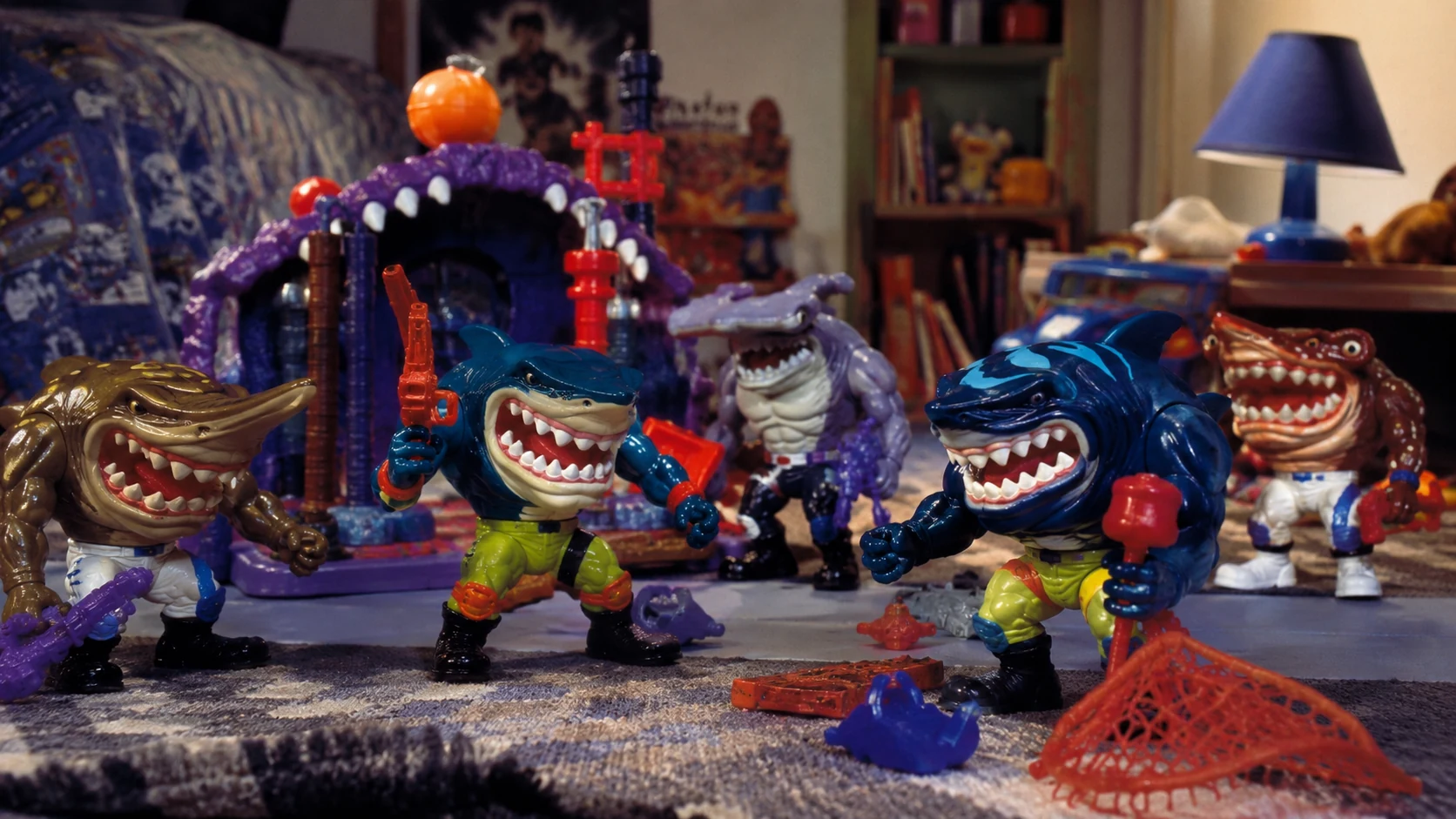
Street Sharks: The Mutant Shark Men Who Made the Toy Aisle Bite Back
Street Sharks is one of those toy lines that sounds fake if you explain it too calmly. Four brothers become mutant shark men, fight evil, wear extremely 90s clothes, and look like they could smash through a toy-store wall. Perfectly normal. Please continue.
The figures had presence. They were chunky, colorful, aggressive, and different from the slimmer action figures around them. The jaws mattered. The torsos mattered. The whole shelf vibe said, “What if Ninja Turtles, but bigger, angrier, and possibly sponsored by a denim vest?”
Why they worked for kids
Street Sharks were easy to understand. You did not need complex mythology. Shark men were cool. Mutants were cool. Fighting villains was cool. Big plastic figures with bite action were cool. The line had the kind of visual hook that made a kid stop in the aisle immediately.
It also hit during the perfect mutant-animal window. TMNT had already trained kids to accept humanoid animal heroes as totally reasonable. Street Sharks took that formula and made it louder, wider, and more ridiculous.
Why they became a deep cut
The problem was not that Street Sharks were boring. The problem was the 90s were crowded. Power Rangers, Batman, X-Men, Jurassic Park, TMNT, Toy Story, and later Pokémon all had stronger staying power. Street Sharks had a moment, but not the kind of cross-generational machine that keeps a brand constantly alive.
That actually helps the nostalgia now. Street Sharks feel like a perfect time capsule because they are so specific to the mid-90s. They could not have come from another decade without major damage to the timeline.
Where it sat in the toy aisle
Street Sharks lived in that strange mid-90s space where toy companies were chasing the next mutated-animal hit. The figures were bigger and louder than a lot of the competition, which helped them stand out on pegs that were already packed with turtles, superheroes, dinosaurs, wrestlers, and movie figures.
What made them memorable was the physical design. They were not delicate figures. They were chunky, exaggerated, and built around the joke of the concept. The heads, jaws, fins, torsos, and expressions made them look like they had already smashed through a wall before you opened the package.
What made them fun outside the cartoon
You did not need to follow the show closely for the toys to work. That is important. A good 90s action figure could survive without perfect story knowledge if the figure itself looked cool enough. Street Sharks passed that test. A shark-man hero is instantly playable. He can fight villains, dinosaurs, Power Rangers, Ninja Turtles, Batman, or whatever unlucky toy is closest.
The toys also had crossover power. They fit into other kids’ action-figure wars because their scale and designs felt imposing. Even if a kid only had one Street Shark, that one figure could become the heavy hitter in a mixed toy-box universe.
- Core appeal: mutant sharks, oversized bodies, bite gimmicks, cartoon attitude, and loud character design.
- Kid behavior: making them fight TMNT, superheroes, dinosaurs, and anything else unlucky enough to be in the toy box.
- Most 90s detail: shark men in jeans being treated like a perfectly valid action-figure franchise.
How the Toy Worked
Street Sharks were designed to feel bigger than the ordinary five-inch figure. The bodies were broad, rubbery and exaggerated, with action features built directly into the sculpt. The jaws were the signature. You could make the sharks bite smaller figures, pencils, accessories or whatever object was unfortunate enough to fit between the teeth. That physical gimmick mattered because it gave the toy a personality even before a kid knew the character name.
The figures also arrived during the peak of “mutant animal equals instant franchise” thinking. The packaging, colors and character designs were not trying to look realistic. They were trying to win a shelf fight from six feet away. Massive shoulders, bright street gear and weapon accessories made the line look louder than the rows around it.
Why Kids Wanted It
Street Sharks benefited from the same kid logic that made Ninja Turtles unstoppable: animals were already cool, monsters were cool and action heroes were cool, so combining all three felt mathematically correct. The figures were also easy to understand. There was no need to read a rulebook or know a complicated universe. A giant shark-man with a working jaw had already explained himself.
The cartoon helped, but the toys carried the concept on their own. Even kids who barely watched the show could recognize that these were meant to be the heavy hitters of the toy box. Their size let them bully smaller figures, and their rubber construction made them feel different in the hand from harder plastic lines.
Why It Vanished
The mutant-animal aisle eventually became overpopulated. Biker Mice, Extreme Dinosaurs, Battletoads and other lines all chased the same post-Turtles audience. Street Sharks never built the decades-long character mythology that kept the Turtles alive, and the cartoon ended before the toys could become generational.
The line also reached the market just as the decade started moving toward smaller collectibles, handheld electronics and schoolyard trading. Big rubber figures still looked great, but they were competing against products that followed kids everywhere.
Collector Afterlife
Collectors now care about working jaw mechanisms, intact fins, clean rubber and original accessories. Rubber can harden, split, discolor or become tacky over time, so condition matters more here than with many hard-plastic figures. Complete boxed examples are the strongest nostalgia hit because the blister card restores the entire loud mid-90s presentation.
Street Sharks is one of the rare forgotten lines that regularly gets rediscovered because the basic design still works. Even without the cartoon, a giant shark with fists remains a pretty convincing toy idea.
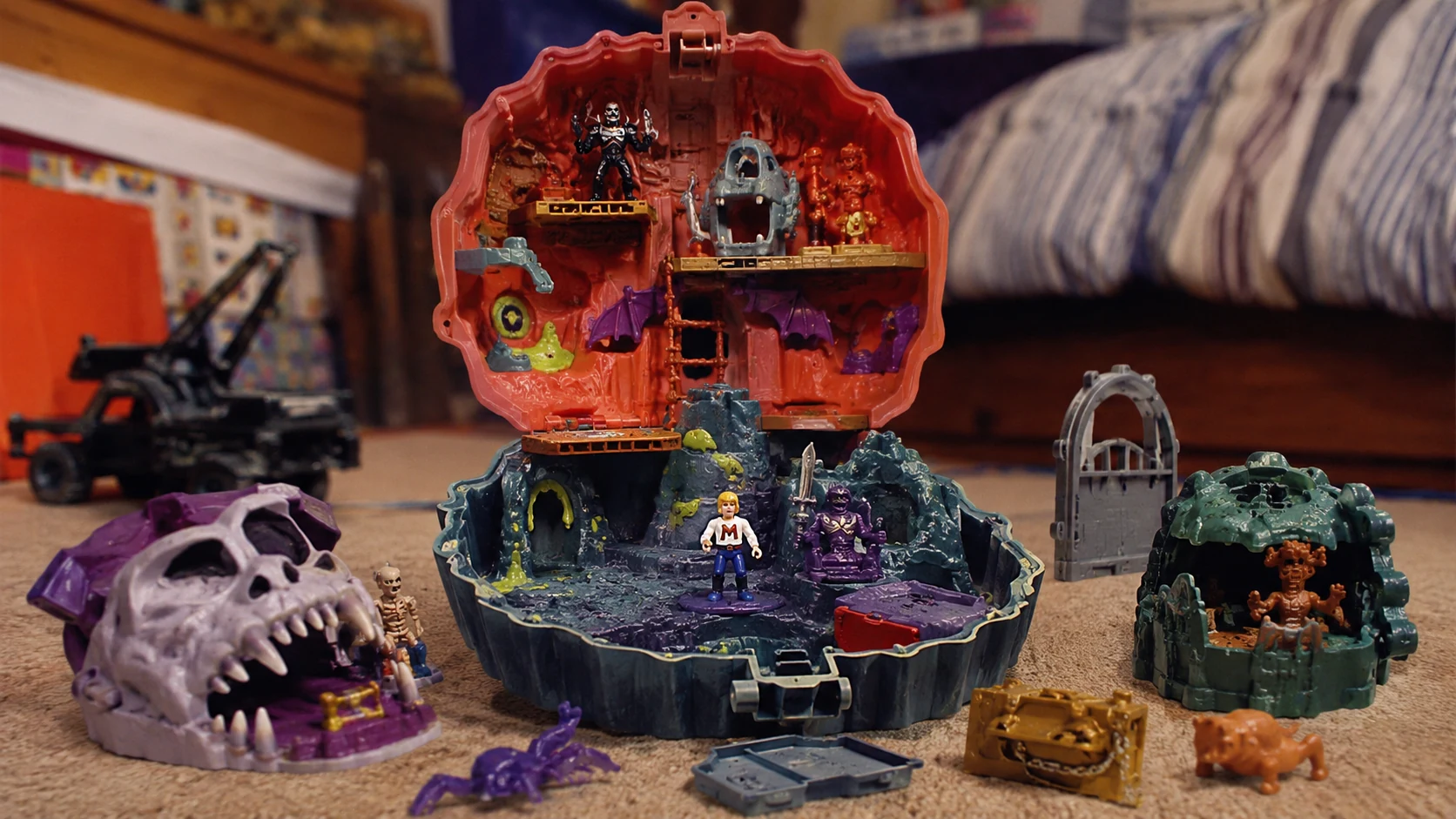
Mighty Max: Tiny Horror Playsets for Kids Who Wanted Polly Pocket With More Skulls
Mighty Max was one of the best 90s deep cuts because it had a clear idea: take the pocket playset concept and make it darker, weirder, and more monster-filled. It was often described as the boys’ answer to Polly Pocket, but that undersells how strange and creative the line actually was.
The cases were the hook. They opened into miniature worlds packed with tiny figures, little rooms, traps, monster faces, lava pits, skulls, sci-fi doors, and fantasy danger. You could throw one in a backpack and carry an entire tiny nightmare around like it was homework.
Why Mighty Max worked
Mighty Max understood scale. Small toys can feel huge if the environment is good. The tiny Max figure was not impressive by himself, but inside a compact monster world, he became part of a whole adventure. That made each set feel complete.
The line also had great visual identity. Skulls, monsters, snakes, robots, dragons, aliens, and weird little interiors made the toys feel like forbidden mini dioramas. They were small, but they had atmosphere.
Why it still has cult energy
Mighty Max did not need to be the biggest toy line to be memorable. Its strength was specificity. If you had one, you remember the way it opened, the tiny pieces, the molded details, and the feeling that the whole world could close shut in your hand.
That kind of design ages well. It feels tactile in a way modern nostalgia loves. It was compact, weird, and full of personality. Basically the exact opposite of a generic plastic rectangle pretending to be fun.
The design trick that made Mighty Max feel bigger
Mighty Max sets were small, but they were not empty. The best ones used every bit of space: hinged walls, molded platforms, monster mouths, tiny doorways, hidden corners, raised ledges, and little environmental details that made the set feel like a miniature level from a game nobody had to load.
That density mattered. Some toys feel small because they are small. Mighty Max felt compressed, like a full adventure had been folded into a case. Opening one felt like discovering a secret layout, which is exactly the kind of physical interaction 90s toys did well.
Why it appealed to kids who liked weird stuff
Mighty Max leaned into horror-fantasy without going too far for the toy aisle. It had skulls, monsters, snakes, aliens, lava, traps, and danger, but it still felt playful. That balance made it perfect for kids who liked the creepy side of toys but were not necessarily looking for full horror.
The tiny scale also made it feel personal. These were not toys you had to spread across a room. They could sit on a desk, a bed, a car seat, or a kitchen table. It was portable doom, and the 90s knew exactly what to do with that.
- Core appeal: compact playsets, tiny figures, skulls, monsters, traps, portability, and creepy little worlds.
- Kid behavior: losing tiny Max immediately, closing figures inside, carrying sets around, and treating the case like treasure.
- Most 90s detail: making a tiny plastic skull open into a full playset and acting like that was normal.
Mighty Max makes even more sense beside Polly Pocket in the 90s: the same pocket-world magic, just with more skulls, traps and tiny monsters waiting to disappear.
How the Toy Worked
Mighty Max turned horror into architecture. Each compact shell opened into a miniature environment packed with platforms, doors, traps, monsters and tiny figures. The outside shape often previewed the danger inside: skulls, monster heads, temples and strange creatures acted as both packaging and playset.
The small scale made every detail feel important. A ladder, cage, throne or hidden room might be only an inch wide, but it created the sense that the set contained a complete adventure. The tiny Max figure and villains could be repositioned through the environment, and larger Doom Zones often had multiple levels or action features.
Why Kids Wanted It
Mighty Max gave kids the same pocket-world appeal that made Polly Pocket so powerful, but replaced bedrooms and boutiques with monsters, crypts and traps. It felt slightly forbidden without actually being scary enough to trigger parental concern. That balance was perfect.
The line also rewarded collecting. Every shell was a different world, and each world had its own creatures and visual language. One set could stand alone, but several sets created an entire horror-adventure universe that could fit in a backpack.
Why It Vanished
Tiny accessories were both the strength and the weakness. They were easy to lose, hard to replace and difficult for younger kids to manage. The line also depended on elaborate tooling for relatively small playsets, which made expansion expensive.
As the decade shifted toward electronic pets, Pokémon and handheld games, miniature physical worlds lost some of their novelty. Mighty Max did not have the permanent media machine needed to survive that transition.
Collector Afterlife
Completeness drives the collector market. A set missing Max, one villain or a small door may still display well, but the full appeal comes from having every tiny figure and moving part present. Hinges, tabs and internal mechanisms should also be checked because compact shells were opened and closed constantly.
Collectors usually separate the line by Horror Heads, Doom Zones and larger playsets. The strongest pieces are the ones where the shell and interior work together as one visual idea. Mighty Max remains one of the most respected forgotten 90s toy lines because the design was genuinely clever, not just nostalgic.
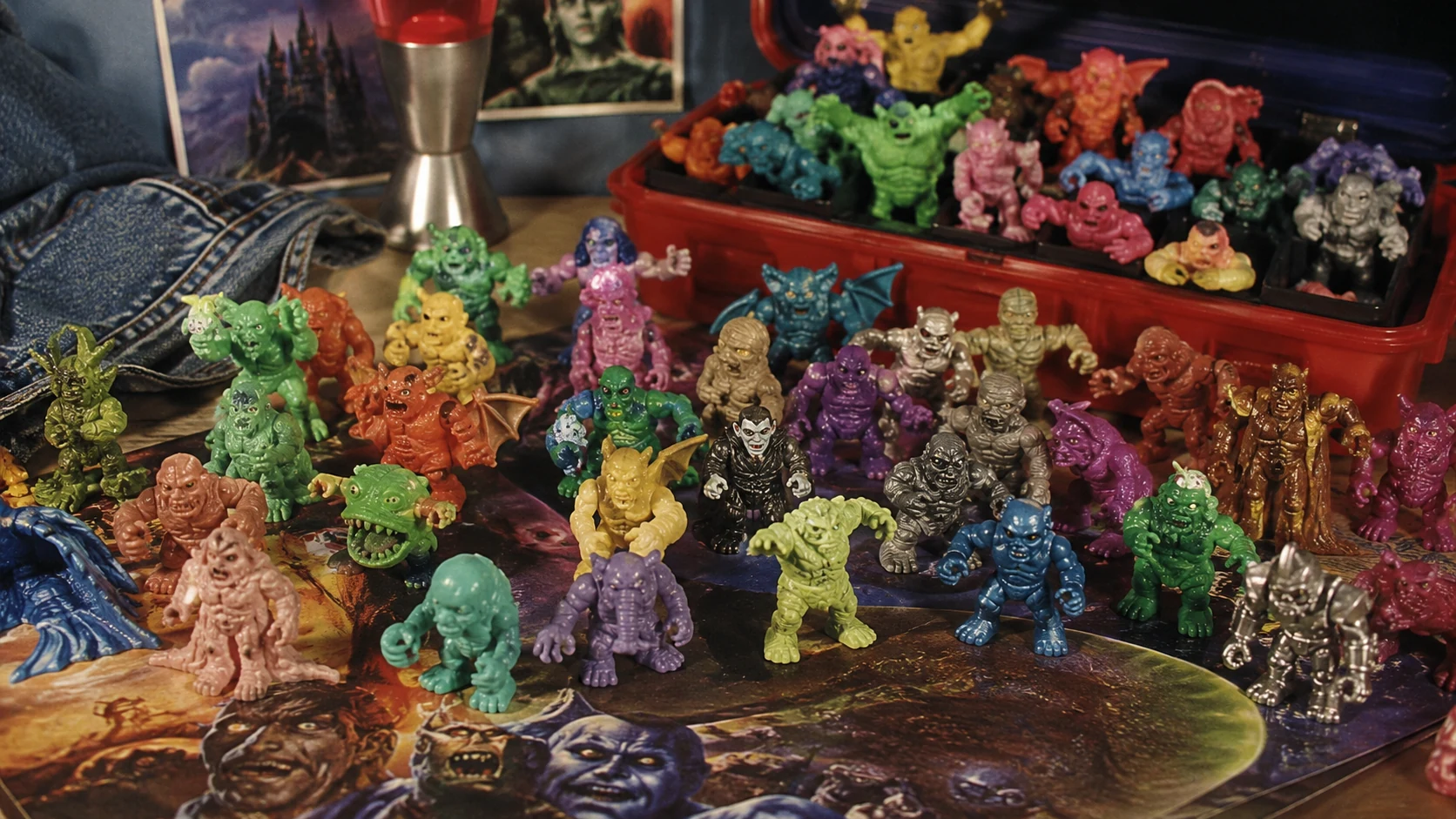
Monster in My Pocket: Tiny Creatures, Point Values, and the Original Pocket Monster Confusion
Monster in My Pocket feels like a warning from the early 90s that kids were always going to love tiny collectible creatures. These little figures pulled from monsters, myths, folklore, and weird creature concepts, then gave kids a pile of tiny rubbery weirdos to collect, trade, and carry around.
The point values helped make them feel more game-like than simple minis. Suddenly a little monster had a number, and a number means kids can rank things, argue about things, and pretend there is a system even when the real system is “this one looks cooler.”
Why tiny monsters worked
Small figures are dangerous because they feel collectible by default. One monster is a toy. Ten monsters are a collection. A handful of tiny monsters in a pocket feels like power, even if most of them are just brightly colored goblin-shaped things waiting to get lost in a couch.
The line also benefited from the weirdness of its subjects. Vampires, werewolves, ghosts, demons, mythological creatures, and oddball monsters gave kids variety without needing a cartoon every day. The figures were the hook.
Why it became a memory trigger
Monster in My Pocket is not always the first toy line people name when talking about the 90s, but once you show someone the figures, the memory often comes back instantly. That is deep-cut power.
It also sits in a strange pre-Pokémon pocket-monster lane. Not the same thing, obviously, but the basic kid impulse is familiar: collect the creatures, know the names, compare the values, carry them around, and act like tiny plastic has social meaning.
The point values made them feel official
The point values were a small detail, but they changed the way kids read the figures. They gave each monster a ranking, even if most kids were not playing by any strict rules. A number printed into the toy made it feel like part of a larger system, which made collecting feel more important.
That was very 90s. Kids loved anything that could be sorted, ranked, traded, or argued over. Monster in My Pocket did not need a giant playset to create that behavior. The little figures and numbers did enough of the work.
Why the creature variety mattered
The line pulled from monsters, mythology, legends, horror tropes, and weird creature lore, which gave it a different flavor from superhero or cartoon toys. It felt like a little plastic monster encyclopedia, except the encyclopedia was probably sticky and living in a kid’s pocket.
That range also meant kids could have favorites for strange reasons. One monster looked scary. One looked goofy. One had a higher point value. One felt rare because nobody else had it. That is exactly how tiny collectibles become playground objects instead of just little figures.
- Core appeal: tiny monsters, point values, trading, creature variety, mythology, and pocket-scale collecting.
- Kid behavior: ranking monsters, carrying them in pockets, losing them constantly, and pretending the numbers meant something official.
- Most 90s detail: a toy line that made tiny weird creatures feel like a secret club.
How the Toy Worked
Monster in My Pocket figures were small rubber creatures based on mythology, folklore, horror and legend. Each monster carried a point value, giving the line a loose game structure even when kids ignored the official rules. The figures were usually molded in solid colors, which made them feel like strange erasers or museum pieces from a tiny haunted collection.
The point system encouraged comparisons and trades. A child could sort monsters by value, color, creature type or personal preference. That flexibility helped the line move beyond simple figure collecting.
Why Kids Wanted It
The variety did the work. A handful might include a vampire, Hydra, ghost, witch, ogre or creature nobody had heard of before. The line rewarded curiosity while still feeling creepy and slightly gross. It was mythology education disguised as pocket-sized monster hoarding.
Because the figures were inexpensive and small, kids could build large collections quickly. They also crossed easily into other toy worlds. A Monster in My Pocket creature could become a villain for action figures, a game piece or something traded at school.
Why It Vanished
The brand expanded through color changes, spin-offs and different formats, which diluted the simplicity of the original idea. The line also lacked one central character powerful enough to carry a long-term media franchise.
By the middle of the decade, Pogs and later Pokémon cards delivered stronger schoolyard systems. Monster in My Pocket remained collectible, but it no longer controlled the conversation.
Collector Afterlife
Collectors look for specific series, colors, rare figures, point values and regional variations. Condition issues include paint rub on later painted figures and deformation in softer rubber. Bulk lots are common, but complete series are much harder.
The line’s strongest modern advantage is that the figures still look good grouped together. A display of dozens of tiny monsters recreates the original appeal better than one isolated figure ever could.
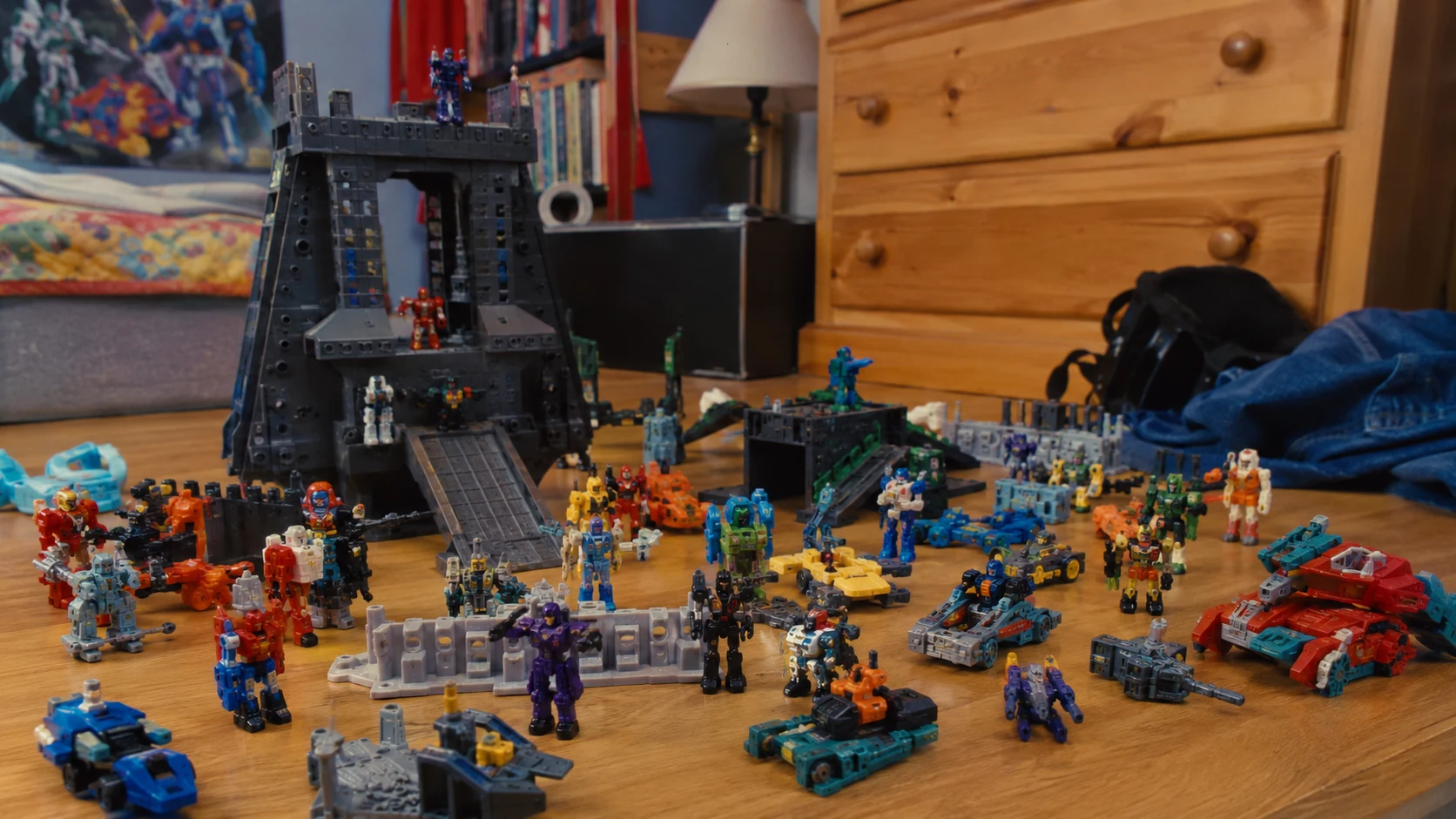
Z-Bots: Tiny Robot Armies for Kids Who Liked Sci-Fi but Had Limited Shelf Space
Z-Bots lived in the same dangerous zone as a lot of 90s mini-figure lines: small enough to collect, weird enough to notice, and easy enough to lose in a carpet forever. They were tiny robots with factions, names, vehicles, and a sci-fi war setup that made the scale feel bigger than it was.
The figures had variety. Some looked like classic robots. Some looked like little machines. Some looked like background characters from a cartoon you were sure existed even if you could not prove it. That mystery was part of the charm.
Why Z-Bots worked
Z-Bots were perfect for kids who liked armies. A single robot was fine, but a group looked like a battle. The small scale made collecting more tempting because you could build a whole force without needing a huge play area.
The line also scratched the sci-fi itch. Not every kid was going to get the big expensive vehicle or robot playset from another franchise. A pack of small robot figures could still feel like a world.
The mini-army advantage
Tiny toys have a special kind of play value because kids can create numbers quickly. You could line them up, rank them, sort them by side, stage battles, or turn a desk into a robot battlefield.
But that small scale also made them easy to forget. Z-Bots did not have the giant character recognition of Transformers or Power Rangers. They were more like sci-fi pocket troops, which is exactly why they feel like a deep cut now.
Why Z-Bots were perfect for mixed toy-box battles
Z-Bots were small enough to work almost anywhere. They could be enemies for bigger figures, armies for tabletop battles, background robots in a larger sci-fi setup, or little factions fighting each other across a desk. Their size made them flexible.
That flexibility helped them survive in memory. They were not locked into one play pattern. A kid could treat them like collectible minis, robot soldiers, tiny villains, or spare characters in whatever bigger story was already happening on the floor.
The appeal of not needing a famous character
Unlike Batman or Spider-Man, Z-Bots did not depend on a household-name hero. That was a weakness for mass recognition, but a strength for imagination. The figures invited kids to decide who mattered, who was powerful, and which robot was the leader.
That kind of open-ended play was common in the 90s mini-toy world. The packaging gave just enough structure, then the toy box handled the rest. Z-Bots were small, but they gave kids a lot of room to invent.
- Core appeal: small robots, factions, collecting, portable battles, vehicles, and sci-fi variety.
- Kid behavior: building armies, sorting sides, losing figures, and making them fight larger toys at a dramatic disadvantage.
- Most 90s detail: pocket-sized robot warfare that looked like it came from a cartoon you half-remembered.
How the Toy Worked
Z-Bots were miniature robot figures divided into heroic Z-Bots and villainous Voids. The small size let Galoob release a huge number of designs without asking families to surrender an entire bedroom. Many figures were only around an inch tall, but each had a distinct silhouette, weapon shape or machine function.
Vehicles and playsets expanded the conflict, though the figures themselves remained the heart of the line. They could be lined up as armies, sorted by faction or thrown into giant battles that used the entire floor.
Why Kids Wanted It
Army-building was the real hook. One robot was interesting; ten robots felt like a war. The figures were cheap enough to collect in groups and small enough to carry everywhere. That made Z-Bots ideal for school desks, backpacks and fast battles before somebody heard an adult coming.
The designs also felt futuristic without copying one famous robot property too closely. Each figure suggested a job or personality through shape alone.
Why It Vanished
Z-Bots lived under the broader Micro Machines umbrella but never gained the media visibility needed to stand beside Transformers or Power Rangers. Small-scale robot collecting was a strong idea, yet it lacked the weekly cartoon reinforcement that kept other toy armies alive.
The size also created a survival problem. Collections were easily scattered, vacuumed or mixed into other bins. Many kids owned them without remembering the official name.
Collector Afterlife
Modern collectors often identify figures by mold, faction and series. Complete vehicles and larger sets can be harder to assemble because the smallest figures and accessories disappeared first. Paint wear and bent limbs are common.
Z-Bots is one of the best examples of a line remembered by physical shape rather than brand name. Show a former owner the right tiny robot and the memory usually arrives before the explanation.
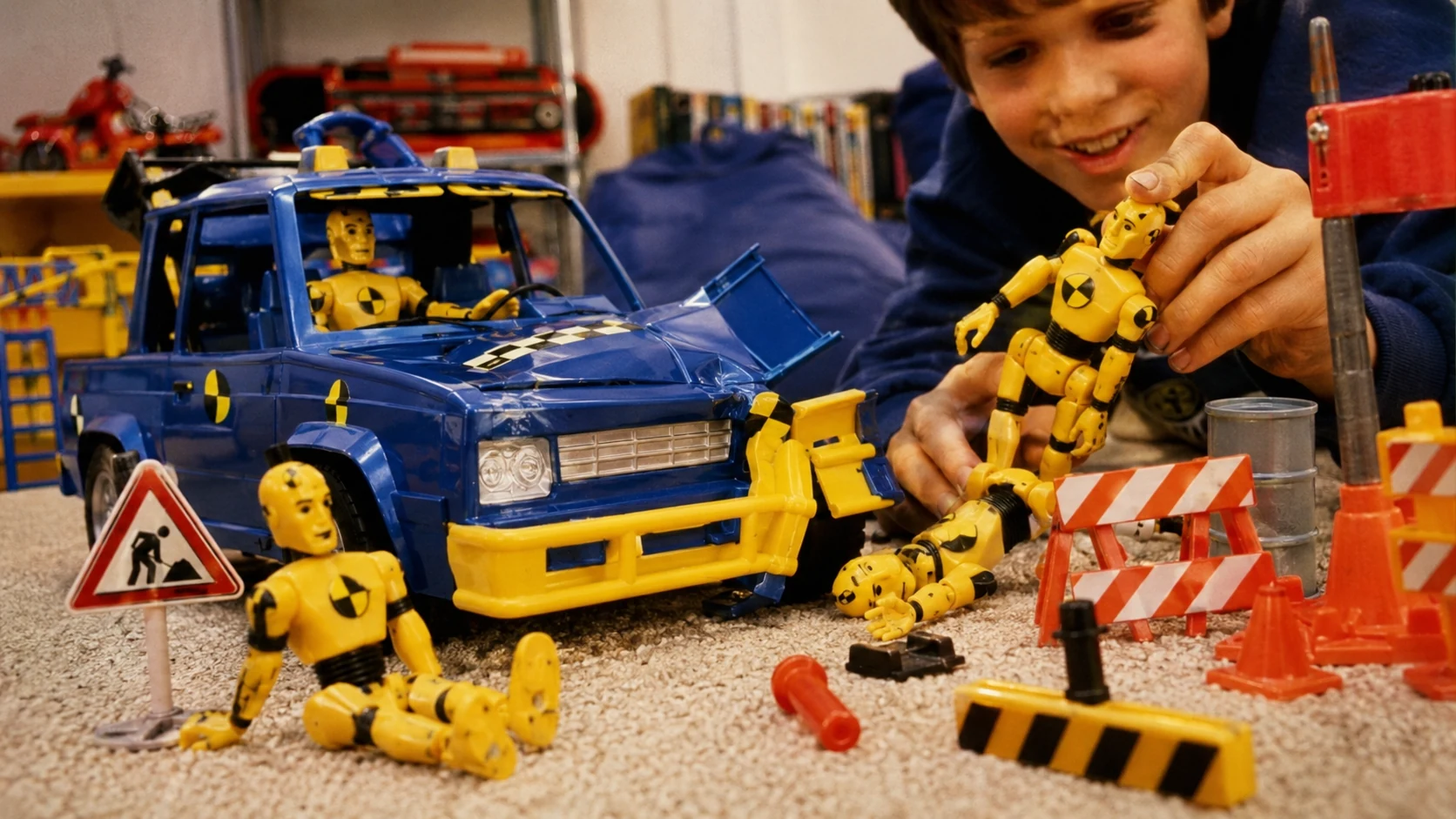
Crash Dummies: The Toy Line That Turned Seatbelt Safety Into Exploding Plastic
Crash Dummies are one of the most beautifully weird 90s toy ideas because they turned a safety campaign concept into toys kids crashed on purpose. The figures were built to come apart. That was the whole point. Hit them hard enough, and limbs, heads, and panels went flying. Educational? Technically. Fun? Absolutely.
The genius was the reset. Kids love destruction, but permanent destruction is a problem. Crash Dummies solved that by letting the toy explode apart and then snap back together. It gave you the drama without the guilt, which is basically the ideal childhood loop.
Why the gimmick worked
Some toys need stories. Crash Dummies needed impact. You could understand the play pattern instantly: crash the figure, watch it fly apart, put it back together, do it again harder. That kind of physical action is hard to beat.
Vehicles made it even better because they gave kids a reason to stage crashes. Ramps, floors, couches, stairs, and tabletops all became testing zones. If the toy had a warning lesson buried somewhere in there, kids were mostly focused on how far the head could fly.
Why it belongs in the forgotten 90s hall of fame
Crash Dummies had a very specific cultural moment. The characters were recognizable, the commercials were memorable, and the toys had a strong gimmick. But once the crash feature stopped feeling new, the brand did not have the same deep character bench as superheroes, mutants, dinosaurs, or Pokémon.
That is why the memory is so clean. You might not remember every figure name, but you remember the satisfying snap of reassembling a toy that was literally designed to suffer.
The action feature was the whole story
Crash Dummies did not need a complicated villain roster or deep mythology. The action feature was the plot. Crash the toy, watch it come apart, snap it back together, and immediately look for a better surface to crash it into. That loop was simple, physical, and incredibly satisfying.
The figures also gave kids permission to do what they were already going to do with toys anyway. Most action figures were not designed to be smashed repeatedly. Crash Dummies were. That made them feel almost rebellious, even though the concept came from safety messaging. Very 90s.
Why vehicles made the line better
The vehicles gave the crash gimmick a stage. A figure flying apart by itself was funny, but a figure flying apart because a car hit a wall, launched off a ramp, or slammed into another toy made the whole thing feel bigger.
That is why Crash Dummies worked as more than a novelty. It gave kids repeatable cause and effect. Setup, impact, explosion, reset. You could do it again and again without needing new rules, batteries, or anyone to explain the brand’s deeper meaning.
- Core appeal: break-apart action, crashes, vehicles, resettable destruction, and physical comedy.
- Kid behavior: launching them off ramps, testing impacts, losing limbs, and insisting the next crash would be better.
- Most 90s detail: turning public-safety mascots into toys kids intentionally demolished.
How the Toy Worked
The Incredible Crash Dummies were built around controlled destruction. Pressing impact points or crashing vehicles caused heads, arms and legs to detach. The figures could then be snapped back together for another collision, making the breakage intentional instead of a reason to panic.
Vehicles were engineered to crumple, eject or pop open. Windshields, doors and body panels turned the crash into a small mechanical performance.
Why Kids Wanted It
The toy allowed kids to do exactly what adults normally told them not to do: smash the vehicle and make the figure fall apart. Because the line was connected to crash-test safety imagery, the destruction somehow felt educational enough to pass inspection.
The humor mattered too. The characters were not treated like serious soldiers. They were cheerful victims of repeated bad decisions, and the commercials leaned into the slapstick.
Why It Vanished
The core action was extremely clear but difficult to expand forever. New vehicles created new crashes, yet the emotional experience remained the same. Once the novelty faded, the line needed stronger characters or stories to keep going.
The safety-mascot concept also belonged to a specific early-90s moment. As the decade moved toward more connected franchises, the Crash Dummies looked like a great gimmick without a permanent universe.
Collector Afterlife
Collectors need to check whether every detachable limb, pin, panel and vehicle part still functions. A figure that no longer holds together properly loses the main appeal. Complete vehicles are especially difficult because the parts designed to fly off did exactly that.
The line remains popular in nostalgia circles because the play pattern was so physical. Few toys expressed their concept more clearly: crash it, rebuild it and crash it again.
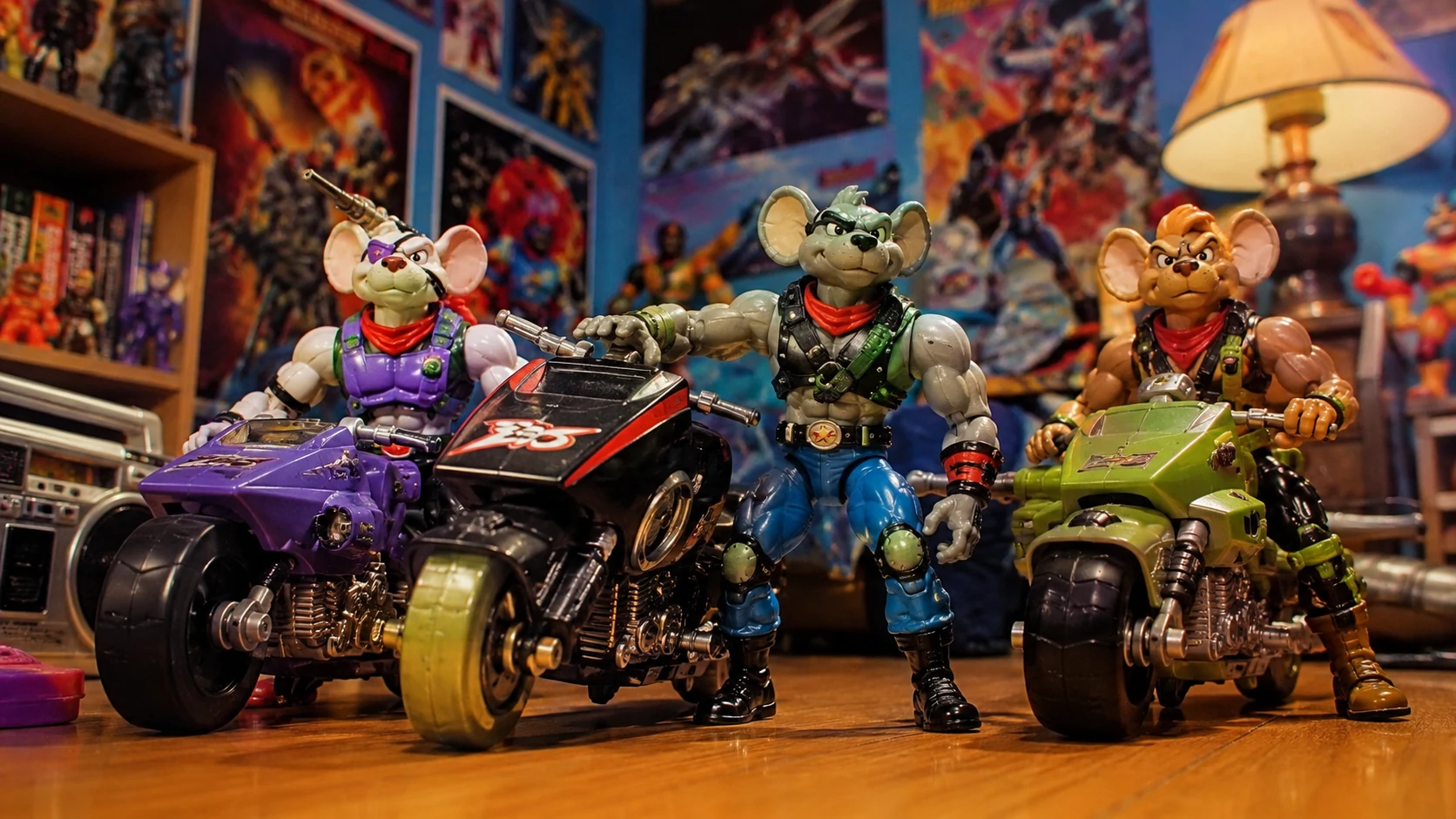
Biker Mice from Mars: Mutant Animal Heroes With Motorcycles Because the 90s Demanded It
Biker Mice from Mars is exactly what it says on the box, which is part of the charm. They were mice. They were from Mars. They rode motorcycles. They had attitude. The 90s looked at that sentence and said, “Yes, shelf space immediately.”
The toy line fit perfectly into the era’s mutant-animal obsession. After TMNT, every toy company seemed convinced that kids would accept any animal if it was humanoid, rebellious, and accessorized. The motorcycles helped because vehicles make any action line feel bigger.
Why the bikes mattered
A figure with a vehicle has instant play value. Biker Mice from Mars understood that the motorcycles were not side items; they were part of the identity. The bikes gave the characters motion, speed, and a reason to feel different from other mutant teams.
That mattered in a crowded aisle. If a kid already had turtles, sharks, superheroes, and dinosaurs, the bikes gave this line a specific lane. Literally.
Why it feels like a pure 90s artifact
The line is so aggressively 90s that it almost functions as a parody of the decade: animal heroes, space origin, motorcycles, leather, villains, cartoon action, and enough attitude to fill a lunchbox. But it was not parody. It was sincere, which makes it better.
Biker Mice from Mars may not sit at the top of the nostalgia mountain, but it absolutely belongs in the weird-toy foothills where the best memories hide.
The motorcycles made them more than animal heroes
Biker Mice from Mars had a key advantage over other mutant-animal lines: vehicles were baked into the premise. The motorcycles were not optional add-ons. They were part of the identity, which made the toys feel faster and more action-ready right out of the package.
A hero with a vehicle always feels like a bigger purchase. The bike gave the figure a purpose, a pose, and a way to enter any toy-box battle dramatically. It also made the line easier to understand from across the aisle. Mice. Bikes. Mars. Done.
Why it fit the attitude era of toys
The mid-90s loved attitude. Toys needed sunglasses, jackets, weapons, bikes, fins, claws, armor, or some kind of aggressive branding to look like they belonged. Biker Mice from Mars had that built in. It was not subtle, but subtle toys were not exactly winning the decade.
The line also carried that Saturday-morning feeling where the premise sounded like it had been pitched in one breath. That was part of the charm. The 90s did not always need elegant worldbuilding. Sometimes it needed motorcycle mice from space.
- Core appeal: motorcycles, mutant animal heroes, space origin, cartoon action, and attitude-heavy design.
- Kid behavior: racing bikes across the floor, crossing them over with TMNT, and making vehicle crashes more dramatic than necessary.
- Most 90s detail: alien mice with bikes being presented as an obviously viable hero franchise.
How the Toy Worked
Biker Mice figures combined humanoid animal bodies with motorcycle gear, armor and weapons. The motorcycles were essential. Oversized tires, bright bodywork and action features made the bikes feel like extensions of the characters rather than optional vehicles.
The figures were usually larger and more muscular than standard human heroes, which helped them hold their own beside Street Sharks and other mutant lines.
Why Kids Wanted It
The concept stacked multiple forms of kid coolness together: aliens, mice, motorcycles, sunglasses and rebellion. The cartoon gave the characters personalities, but the toys made sense even without it. A mouse from Mars riding a combat bike had already completed the pitch.
The vehicles also created fast physical play. They could race, crash and invade playsets belonging to completely different franchises.
Why It Vanished
Biker Mice entered a crowded lane. Ninja Turtles owned the animal-team formula, while Street Sharks and other competitors chased the same audience. The show ended before the property could build a permanent second generation of fans.
The figures were also tied heavily to the mid-90s extreme aesthetic. Once tastes changed, the leather-jacketed space rodents looked like a very specific time capsule.
Collector Afterlife
Collectors usually want the bikes as much as the figures. Missing handlebars, weapons, helmets and vehicle pieces are common. Complete character-and-bike combinations display far better and recreate the original identity of the line.
The property’s visual confidence gives it lasting appeal. Even people who never watched the cartoon can understand why the toys looked cool on a shelf.
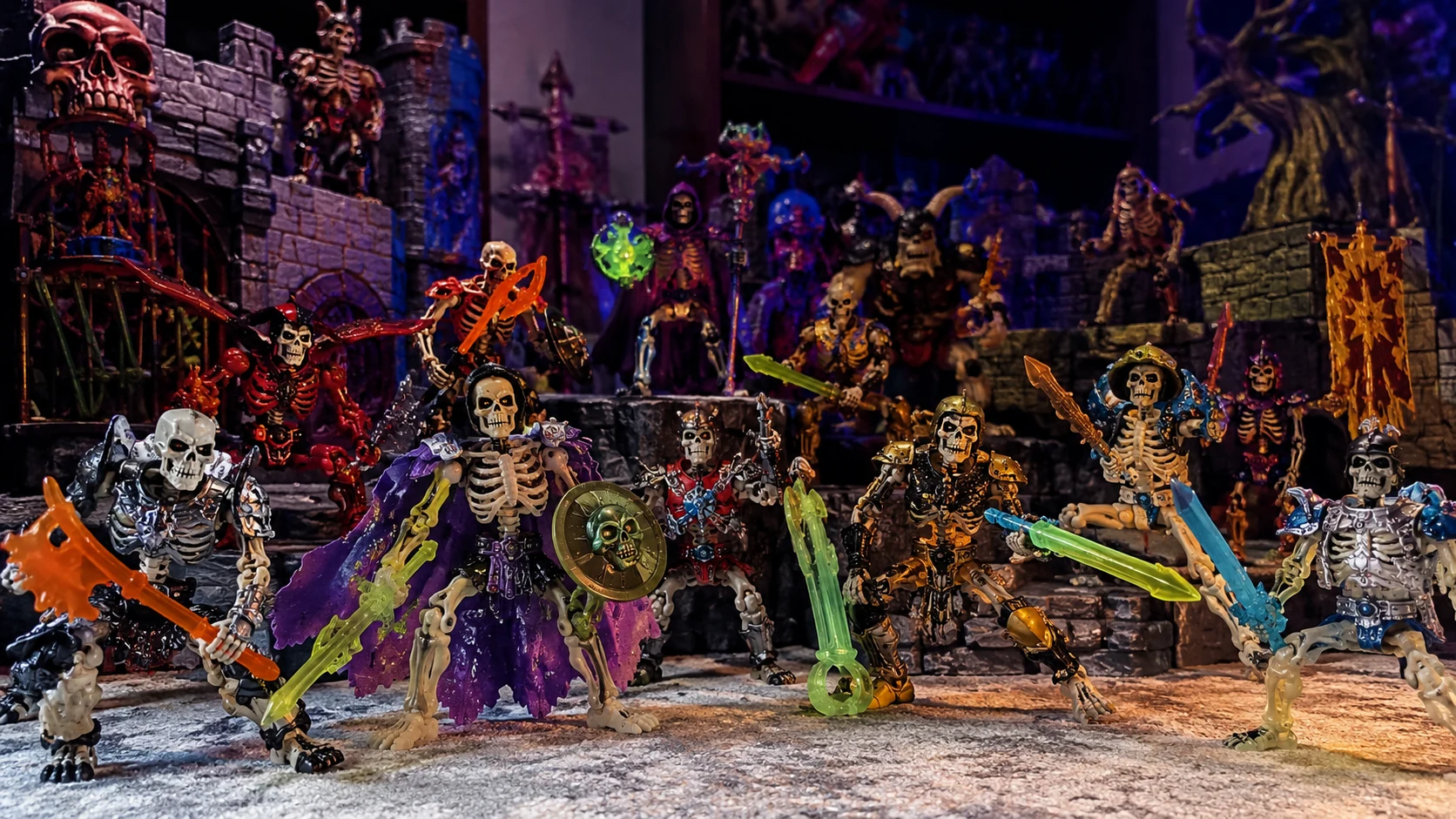
Skeleton Warriors: The Dark Fantasy Toy Line That Looked Like a Heavy-Metal Sticker
Skeleton Warriors looked like the toy aisle had briefly wandered into a fantasy-metal album cover. Skeleton villains, armor, weapons, glowing details, and a darker animated-series vibe made the line stand out immediately.
The figures had a visual hook that was almost too strong. Skeletons already look cool to kids. Add armor and fantasy weapons, and suddenly the villain shelf starts looking more interesting than the hero shelf.
Why the look worked
Skeleton Warriors had texture. Bones, armor, helmets, weapons, and fantasy styling made the toys feel different from the bright superhero lines around them. They had a spooky quality without being full horror, which put them in a perfect kid-safe danger zone.
The line also benefited from the 90s willingness to make kids’ toys a little intense. A whole skeleton army sounds dark on paper, but in plastic form it became action-figure fuel.
Why it stayed a cult memory
Skeleton Warriors did not have the staying power of Batman, Power Rangers, or X-Men, but it had a strong enough look to survive in memory. If you saw one of the figures on a shelf, you knew exactly what kind of strange world it came from.
That visual specificity is why it belongs here. Forgotten toy lines often survive because of one image, one sculpt, or one shelf moment. Skeleton Warriors had all three.
Why villains carried the visual appeal
Skeleton Warriors stood out because the villains looked like the main event. A lot of toy lines needed heroes to anchor the shelf, but this one had skeleton designs that could stop a kid immediately. The bone armor, weapons, skull faces, and fantasy styling gave the line a darker look than most mainstream action toys around it.
That darker look made the figures feel slightly forbidden, which was a strong selling point for kids. They were spooky without being too adult, intense without being fully horror, and cool in the way a trapper keeper doodle could be cool if it came to life.
Why it deserved a bigger memory
Skeleton Warriors had the ingredients collectors love now: distinctive sculpts, strong visual identity, a short-lived feel, and enough weirdness to make the line stand apart from safer hero toys. It did not look interchangeable with everything else.
That is why the line has aged into deep-cut status. It may not have dominated the decade, but it represents a specific 90s willingness to let kids’ action figures get darker, stranger, and more fantasy-heavy than expected.
- Core appeal: skeleton villains, armor, fantasy weapons, spooky designs, and dark toy-shelf presence.
- Kid behavior: making skeletons fight every hero line, admiring the villains more than the heroes, and losing weapons instantly.
- Most 90s detail: a kids’ toy line that looked one step away from a heavy-metal lunchbox.
How the Toy Worked
Skeleton Warriors figures leaned heavily into armor, exposed bones, crystals and fantasy weapons. The sculpts were more detailed than many cartoon lines, with translucent parts, metallic colors and dramatic silhouettes.
The toys worked as both action figures and display pieces. Even static poses looked theatrical because the characters were designed like living fantasy-metal artwork.
Why Kids Wanted It
The line felt darker than the average toy aisle without crossing into genuine horror. Skeletons, swords and magical crystals created a forbidden-looking world that still passed as a cartoon property.
Kids who liked fantasy games, monster art or heavy-metal imagery could connect with the toys immediately, even if they rarely watched the show.
Why It Vanished
The animated series was brief, and the mythology was not simple enough to spread without television support. The line also competed with better-known fantasy and superhero properties.
Without a long-running story engine, the figures became visually impressive objects disconnected from a world most kids no longer remembered.
Collector Afterlife
Collectors value complete weapons, capes, armor and translucent pieces. Paint rub and missing accessories are the major problems. Carded figures are especially attractive because the packaging restores the original dark-fantasy mood.
Skeleton Warriors has aged better visually than many forgotten lines. The sculpts still look dramatic, which gives the toys appeal beyond pure nostalgia.
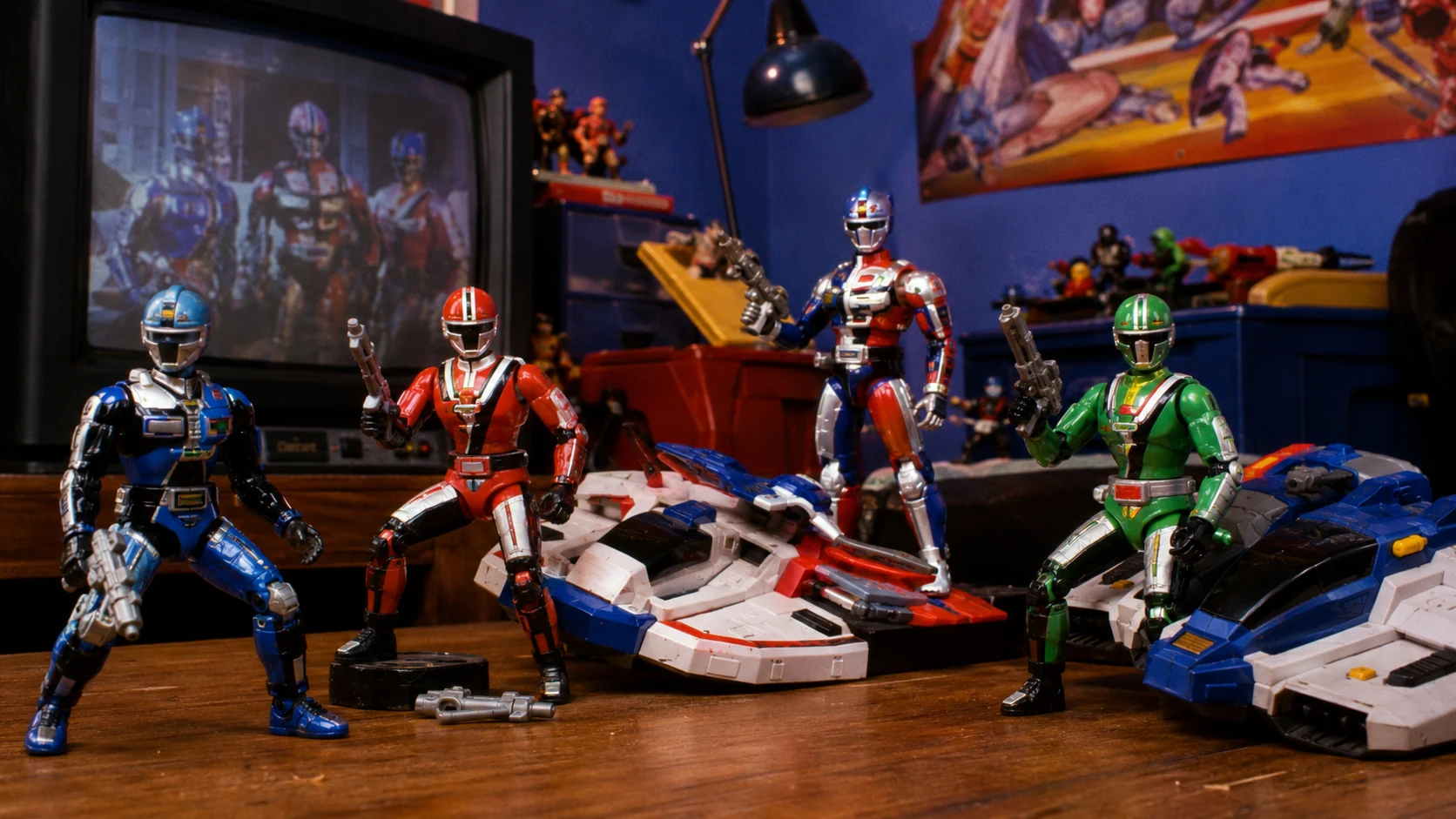
VR Troopers: The Techno-Armor Toy Line That Tried to Catch the Morphin Lightning
VR Troopers was very 90s because it combined live-action heroes, armor, fight scenes, techno language, and the phrase “virtual reality” at a time when that phrase made everything sound futuristic even if nobody really knew what it meant.
The toy line had the pieces kids understood: armored heroes, villains, weapons, vehicles, and role-play energy. It looked like it belonged in the same broader universe of after-school action as Power Rangers, which was both its strength and its problem.
Why the concept made sense
After Power Rangers exploded, the toy aisle had room for copycat energy, parallel concepts, and adjacent action brands. VR Troopers offered a tech-flavored version: less dinosaur robot, more cyberspace armor. For kids already wired into martial arts poses and transformation fantasy, the appeal was obvious.
The figures and gear gave the show physical form. That mattered because 90s TV action needed toys to complete the loop. Watching the show made the toys feel relevant; owning the toys made the show feel playable.
Why it became a deep cut
VR Troopers got caught in the shadow of the stronger brand. Power Rangers had colors, Zords, monsters, catchphrases, role-play, and a cleaner toy identity. VR Troopers had a cool techno angle, but not the same simple shelf dominance.
That makes it a perfect forgotten 90s toy. It is not random. It is extremely of its moment: a live-action sci-fi toy line chasing the future while standing right next to the biggest kids’ action franchise of the decade.
The 90s were obsessed with “virtual” everything
VR Troopers arrived during a moment when “virtual reality” sounded like the future, even if most kids’ actual experience with VR was magazine articles, arcade rumors, and blocky computer graphics. The toy line borrowed that futuristic feeling and turned it into armor, weapons, villains, and action figures.
That buzzword power mattered. In the 90s, putting “cyber,” “virtual,” “techno,” or “VR” near a toy could instantly make it feel more advanced. VR Troopers leaned into that energy hard, which makes it a perfect artifact of the decade.
Why it still worked in mixed play
Even if VR Troopers never reached Power Rangers status, the figures were useful in a kid’s larger action universe. Armored heroes can fight anything. They can team up with Rangers, battle villains, fight robots, or get folded into whatever sci-fi story is already happening.
That is an underrated part of forgotten 90s toys. Even if the brand faded, the figures could keep working because kids were not strict about canon. The toy box was a lawless crossover event every afternoon.
- Core appeal: armor, techno themes, live-action fighting, TV tie-in, role-play, and futuristic buzzword energy.
- Kid behavior: using them as Power Rangers backup, staging cyber battles, and mixing them into larger action-figure wars.
- Most 90s detail: a toy line that believed “VR” could make anything sound ten years ahead of schedule.
The comparison was unavoidable. Power Rangers toys and the Megazord craze owned the lane VR Troopers was trying to enter, complete with stronger recognition and a much louder holiday hunt.
How the Toy Worked
VR Troopers toys used armored heroes, role-play weapons and technology-themed vehicles. The figures translated the live-action suit designs into a format familiar to kids already buying Power Rangers.
The line also leaned into virtual-reality language, giving ordinary plastic accessories a futuristic identity. In 1994, the letters VR could make almost anything sound advanced.
Why Kids Wanted It
Power Rangers created enormous demand for armored live-action teams, and VR Troopers offered more of that formula. The heroes had distinctive suits, the villains were strange and the technology theme sounded like the next step into the future.
For many kids, VR Troopers was also available when the more famous Power Rangers toys were sold out. That made it a second-choice purchase that could become a first-choice favorite once it reached the toy box.
Why It Vanished
The franchise never escaped comparison with Power Rangers. Similar presentation, weaker brand recognition and a shorter media run limited its ability to become permanent.
The virtual-reality theme also aged quickly. What sounded futuristic in the mid-90s became a dated buzzword as real gaming technology advanced.
Collector Afterlife
Collectors look for intact armor, weapons, transformation accessories and role-play gear. The figures are often easier to find than complete boxed sets, while larger accessories can be surprisingly scarce.
VR Troopers remains valuable as a snapshot of the live-action hero boom. It shows how powerful one television formula became—and how hard it was for any competitor to escape the Rangers’ shadow.
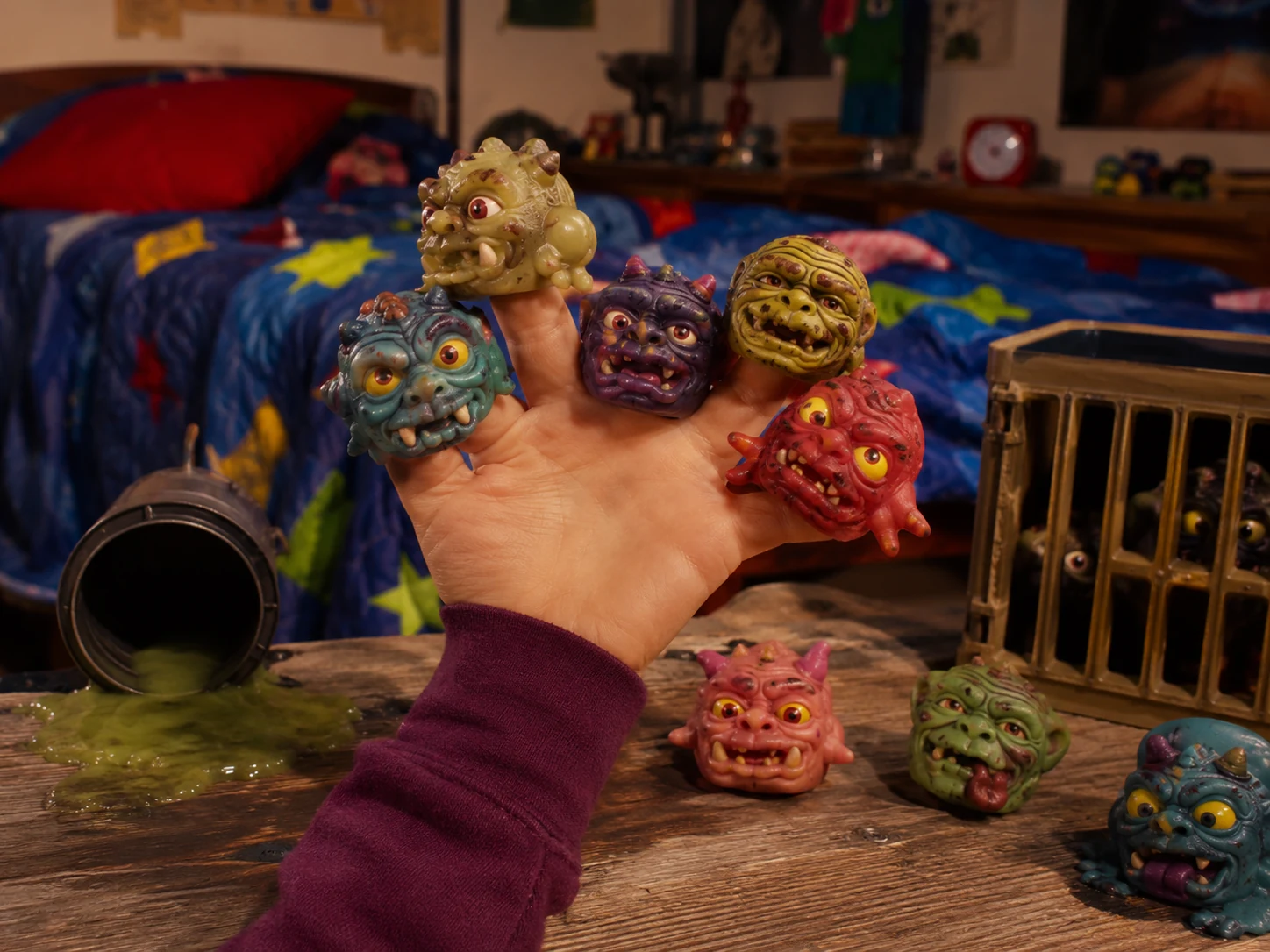
Mini Boglins: Tiny Gross Creatures From the Weird Rubber Monster Zone
Mini Boglins were exactly the kind of small gross creature toys that made the 90s toy aisle feel like it had a secret lower shelf for weirdos. They were tiny, rubbery, strange-looking, and designed for kids who wanted something uglier than cute and smaller than an action figure.
The appeal was partly mystery. A lot of kids encountered toys like this without fully understanding the larger brand. You saw the figures, noticed the ugly little faces, and wanted them because they looked like something adults would not quite understand.
Why gross minis worked
Kids love small creatures because they are easy to collect, hide, trade, and carry. Add gross sculpting and monster energy, and suddenly the toy feels like contraband from a stranger corner of the aisle.
Mini Boglins fit the same broader 90s appetite for little monsters, mutants, slime, gross-out kits, and creature collections. They were not polished heroes. They were tiny weird things. That was the point.
Why they remain a deep cut
Mini Boglins did not have the mainstream recognition of Pokémon or the huge shelf presence of action figures. They survived more through collector memory and “I forgot these existed” recognition.
But that is exactly why they belong here. Forgotten toy nostalgia is strongest when the memory comes back suddenly, like finding one in a dusty junk drawer and immediately smelling old carpet and plastic storage bins.
The gross little creature lane was real
Mini Boglins belonged to a specific 90s category: small things that looked like they should not be in your pocket but absolutely were. The decade had plenty of polished heroes and cute plush, but it also had a strong appetite for ugly little creatures, slime-adjacent weirdness, rubber monsters, and toys that felt slightly gross on purpose.
That made Mini Boglins feel different from more heroic or collectible lines. They were not aspirational. They were not cute in a traditional way. They were little monsters with personality, which made them more fun to own than they had any right to be.
Why small weird toys traveled well
A small toy could go places larger figures could not. Pockets, backpacks, pencil boxes, lunch tables, car rides, desks, and sleepovers all became possible habitats. That portability gave Mini Boglins and similar creature lines a social life.
They were also easy to trade, show off, hide, or use as tiny villains in other toy worlds. A Mini Boglin could be a collectible one minute and a monster attacking a completely unrelated action figure the next.
- Core appeal: small monsters, rubbery figures, gross designs, collecting, trading, and weird-pocket energy.
- Kid behavior: carrying them around, grossing people out, forgetting names, and still somehow caring about them.
- Most 90s detail: tiny ugly creatures competing for space in a decade that loved both cute pets and gross little monsters.
How the Toy Worked
Mini Boglins were small hard-plastic monster figures built around exaggerated faces, giant eyes and strange tribal groupings. Unlike the larger Boglins puppets, the minis were simple collectibles without moving mechanisms.
The size encouraged mass collecting. A few figures became a crowd, and a crowd looked like an entire goblin civilization had infested the desk.
Why Kids Wanted It
They were weird, cheap and highly expressive. Each face seemed to have a personality, even when the child had no idea what the official name was. That made them perfect pocket monsters before pocket monsters became a global empire.
The figures also worked as background creatures for every other toy line. They could be enemies, pets, mutants or whatever role the afternoon required.
Why It Vanished
Without a major cartoon or game, Mini Boglins depended almost entirely on visual charm. That was enough to create a fan base but not enough to hold permanent retail space.
Regional availability and changing brand ownership also made the line feel inconsistent. Many people remember owning them without remembering where they came from.
Collector Afterlife
Collectors sort them by tribe, color, sculpt and release series. Because the toys were small and often sold in groups, identifying complete collections can take real research.
Mini Boglins display well in large numbers. Their appeal has actually improved with age because modern collectors can appreciate the sculpt variety that kids simply dumped into one container.
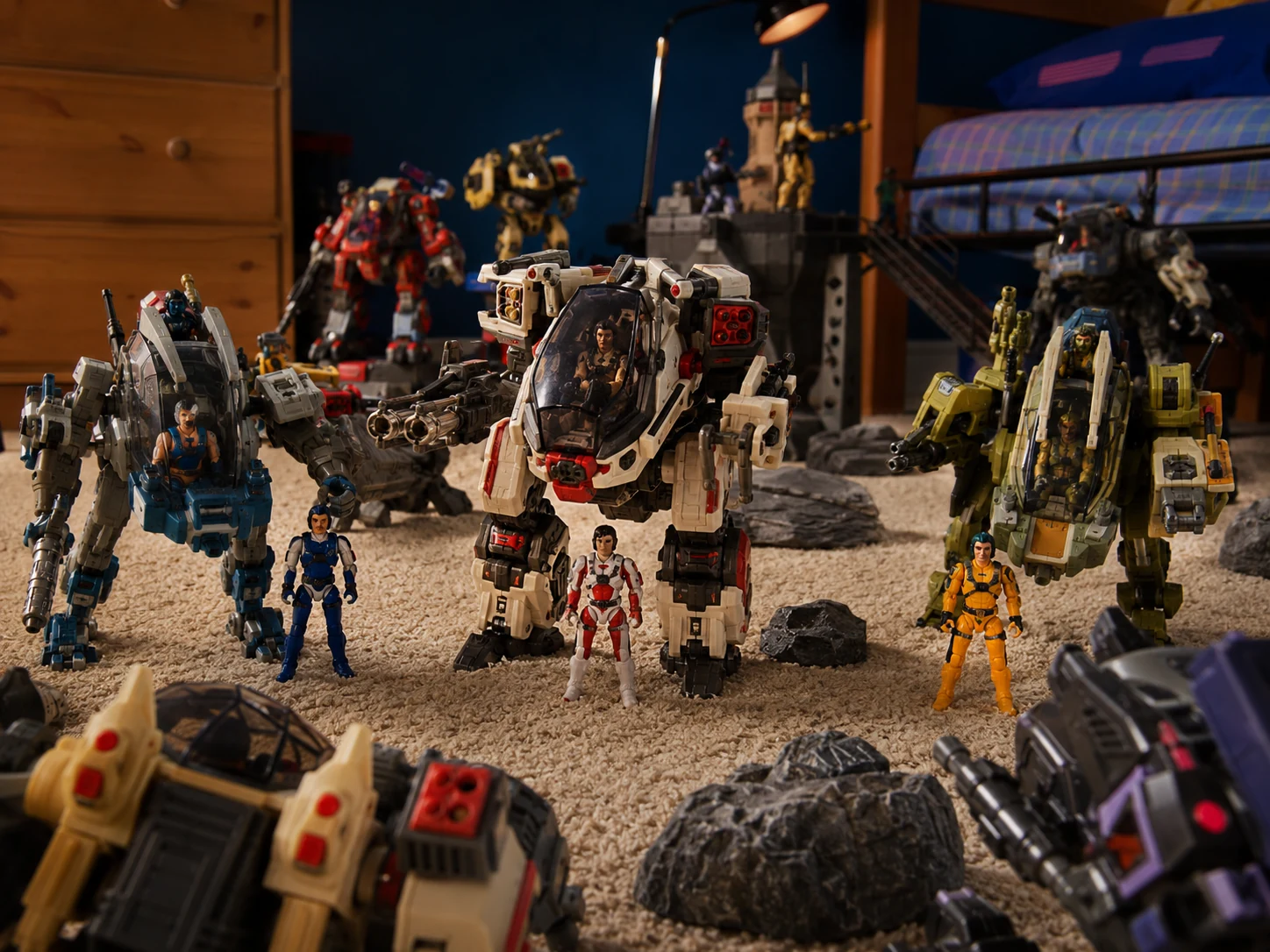
ExoSquad: The Sci-Fi Mech Line That Was Smarter Than the Average Toy Aisle
ExoSquad was a different kind of 90s toy line. It did not feel as goofy as mutant animals or as simple as color-coded heroes. It had pilots, E-Frame mech suits, military-sci-fi styling, and a cartoon that felt more serious than most kids expected from the toy aisle.
The figures and vehicles had a lot going for them: detail, mechanical design, cockpit play, and a sense that the world behind them was bigger than a quick commercial. ExoSquad felt like it belonged to kids who wanted their action figures to have a little more weight.
Why the mech suits worked
Mech toys are satisfying because they combine figure and vehicle. A pilot goes inside the machine, the machine changes the scale of the battle, and suddenly the toy feels more complex than a normal figure.
ExoSquad used that well. The E-Frames looked like equipment, not just accessories. They made the figures feel part of a bigger sci-fi conflict, which gave the line a more mature edge.
Why it stayed niche
ExoSquad had depth, but depth is not always the easiest thing to sell in a toy aisle dominated by immediate visual hooks. Batman had a cape. Power Rangers had colors. Jurassic Park had dinosaurs. ExoSquad had detailed sci-fi worldbuilding and mechs, which was cool but less instantly universal.
That is why its fans remember it so strongly. It felt like a smarter action line hiding inside a loud decade.
Why ExoSquad felt different from louder 90s lines
ExoSquad had a tone that felt more serious than a lot of the toy aisle. It was not built around a simple gag, color team, or mutant-animal hook. It felt like military sci-fi, with pilots, machines, factions, and conflict that seemed bigger than a single play feature.
That gave it a different kind of appeal. It was not necessarily the loudest toy on the shelf, but it looked more detailed and more story-driven. For kids who liked vehicles, mechs, and more complex worlds, that mattered.
The cockpit factor
A cockpit changes everything. When a figure can sit inside a machine, the toy becomes more than a figure with accessories. It becomes a pilot-and-vehicle relationship, which automatically makes play feel more involved.
ExoSquad’s E-Frames used that appeal well. The machines gave the pilots scale, protection, and personality. They also made the line feel closer to model-kit sci-fi or military hardware than simple cartoon action figures.
- Core appeal: mech suits, pilots, detailed vehicles, sci-fi conflict, cockpit play, and a more serious tone.
- Kid behavior: staging military battles, putting pilots in E-Frames, mixing them with other sci-fi toys, and feeling oddly sophisticated about it.
- Most 90s detail: a cartoon-backed mech line trying to be complex while the next aisle over was screaming “pizza shark mutant.”
How the Toy Worked
ExoSquad figures were built around pilots and Exoframe suits. The pilot could be placed inside a larger mechanical rig filled with weapons, control arms, panels and moving parts. The Exoframe was not a vehicle in the traditional sense. It was the body of the play pattern.
Many frames opened or transformed around the figure, creating a layered mechanical experience. Kids could remove pilots, swap positions and stage battles between machines that looked industrial instead of sleek.
Why Kids Wanted It
The line felt more serious than most cartoon toys. The machines looked functional, the pilots looked vulnerable and the story treated war as more than a collection of laser sounds. That gave ExoSquad an older-kid appeal.
The toys were also visually dense. Missiles, claws, arms and cockpit details made them feel like a lot of toy for the money, assuming every small piece survived the first week.
Why It Vanished
ExoSquad was ambitious in a market that often rewarded immediate simplicity. The serious story required commitment, and the larger Exoframes were more expensive than basic figures.
When the show ended, the toy line lost the support needed to maintain such a complicated world. Simpler franchises could refresh faster and sell characters without giant mechanical systems.
Collector Afterlife
Complete Exoframes are the prize. Missing missiles, panels, hoses, claws and pilot figures are common, so collectors inspect parts carefully. Sticker condition and joint strength also matter.
ExoSquad now has one of the strongest reputations among forgotten 90s lines because collectors can see the engineering and ambition more clearly than the original market did.
6 More Forgotten 90s Toys From the Deep-Cut Bin
The 90s had too much weird plastic for one list. Some toy lines were short-lived. Some were late-80s carryovers still floating through early-90s bedrooms. Some were regional, niche, or better remembered by collectors than casual nostalgia fans. But they all belong in the conversation.
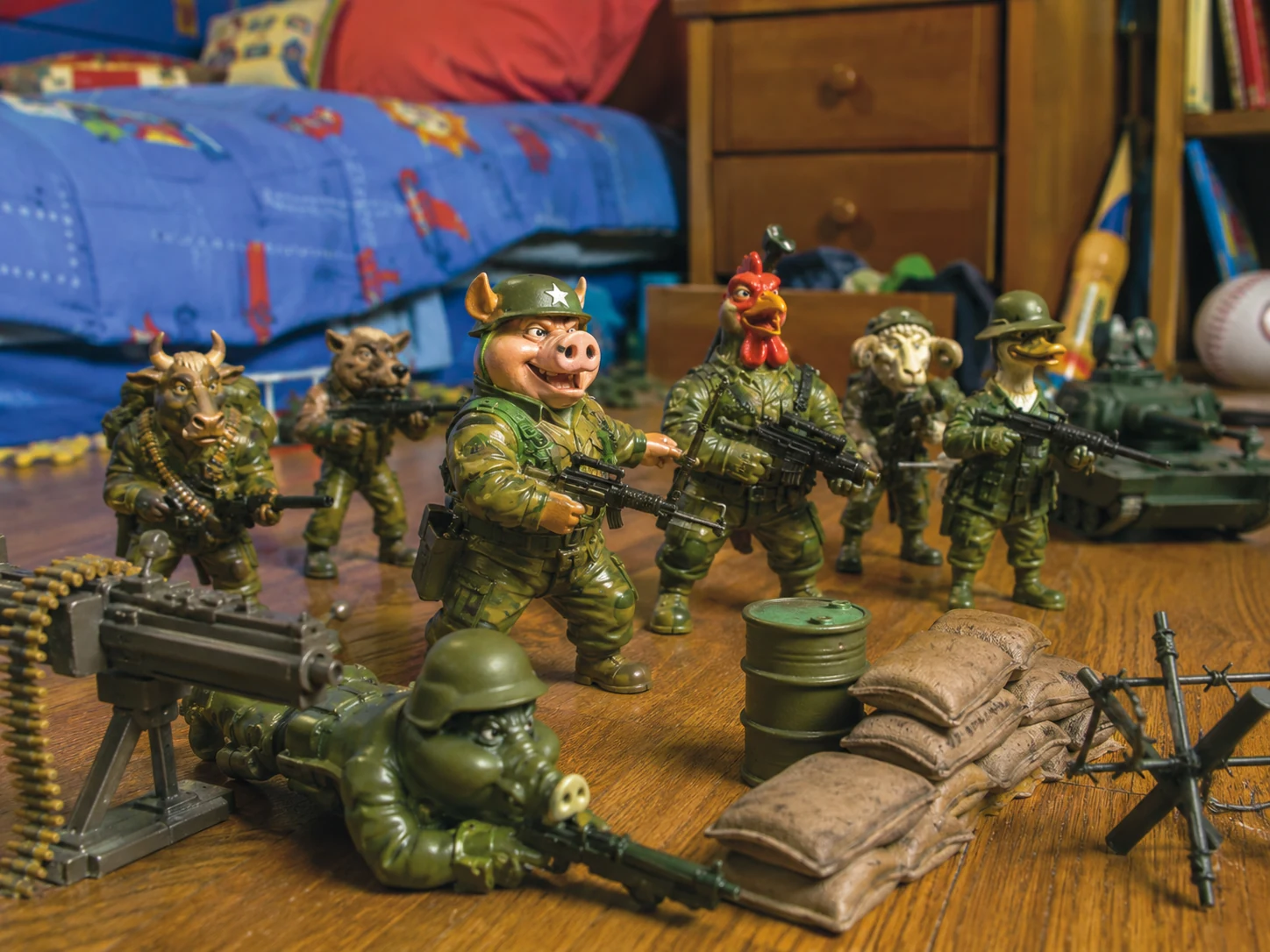
Barnyard Commandos
Military farm animals with a deeply strange premise and rubbery action-figure energy. Not every late-80s/early-90s carryover needed to make sense. Some just needed to be pigs with weapons.
Barnyard Commandos technically began before the 90s, but the toys stayed alive through hand-me-downs, clearance shelves and early-decade toy boxes. The figures were solid, squat animal soldiers with almost no articulation, which somehow made them more durable and more ridiculous.
The lack of moving parts meant the personality had to come from sculpt and paint. Pigs and sheep carried military gear, exaggerated expressions and faction identities that turned a farm into a war zone. They could survive rough play better than many complicated lines because there was almost nothing to break.
Collectors now care about character identification, paint condition and original weapons. The line is a useful reminder that childhood toy history never followed clean release-year boundaries. Kids experienced the aisle through cousins, yard sales and whatever was still alive in the bottom of the bin.
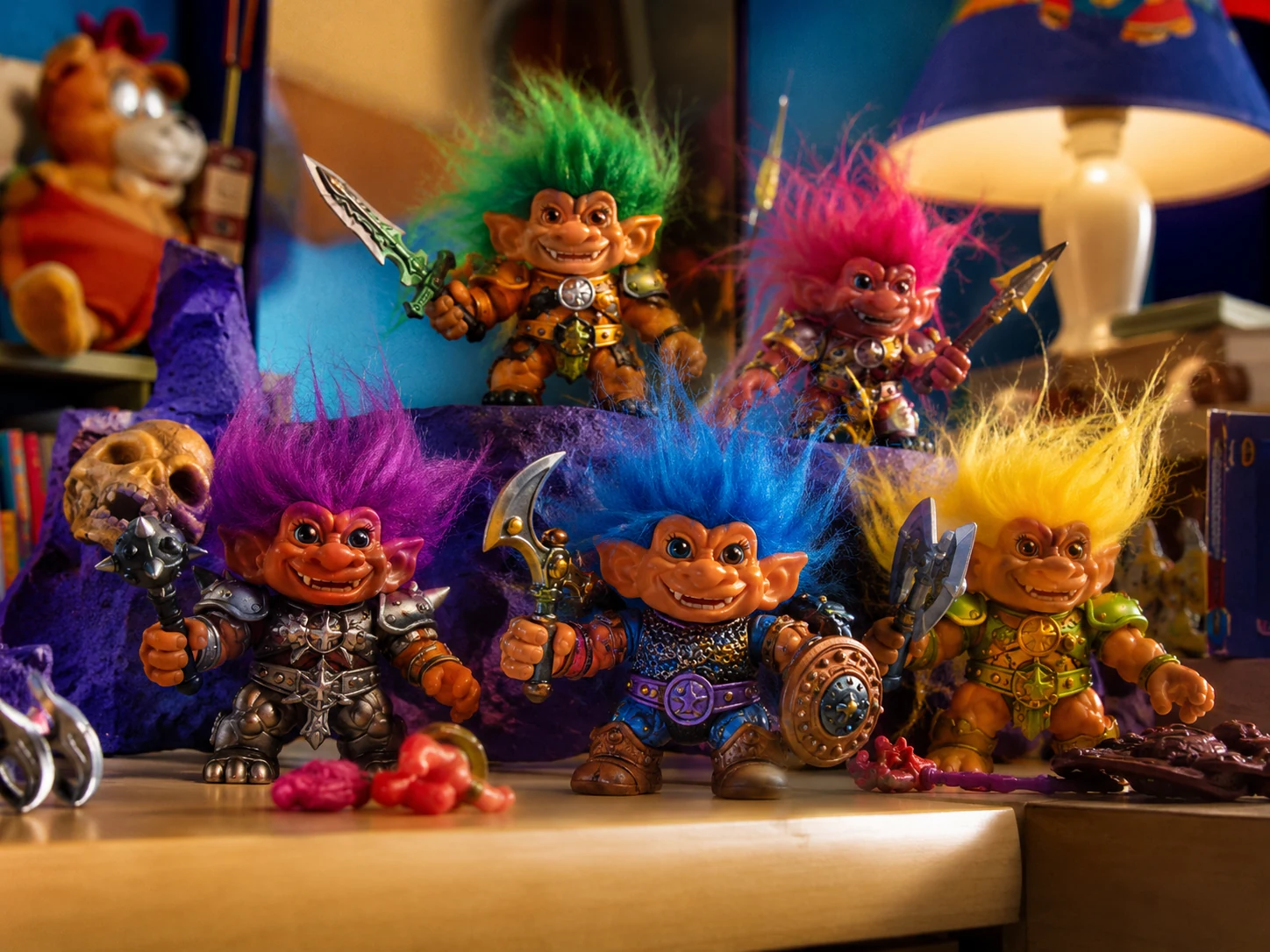
Battle Trolls
Troll-doll DNA mixed with action-figure aggression. A perfect example of the decade asking, “What if cute, but now it has armor and weapons?”
Battle Trolls took the troll-doll revival and gave it armor, weapons and a full action-figure attitude. The wild hair and gemstone bellies were still there, but now the characters looked ready to invade a castle or headline a very confusing rock festival.
The figures worked because the mashup was immediate. Trolls were already collectible, and action figures needed new gimmicks. Combining them created a line that looked familiar and completely wrong at the same time.
The broader troll craze cooled before Battle Trolls could become a lasting universe. Today, complete examples with weapons and clean hair are more appealing than loose figures that have spent thirty years pressed against the side of a storage tub.
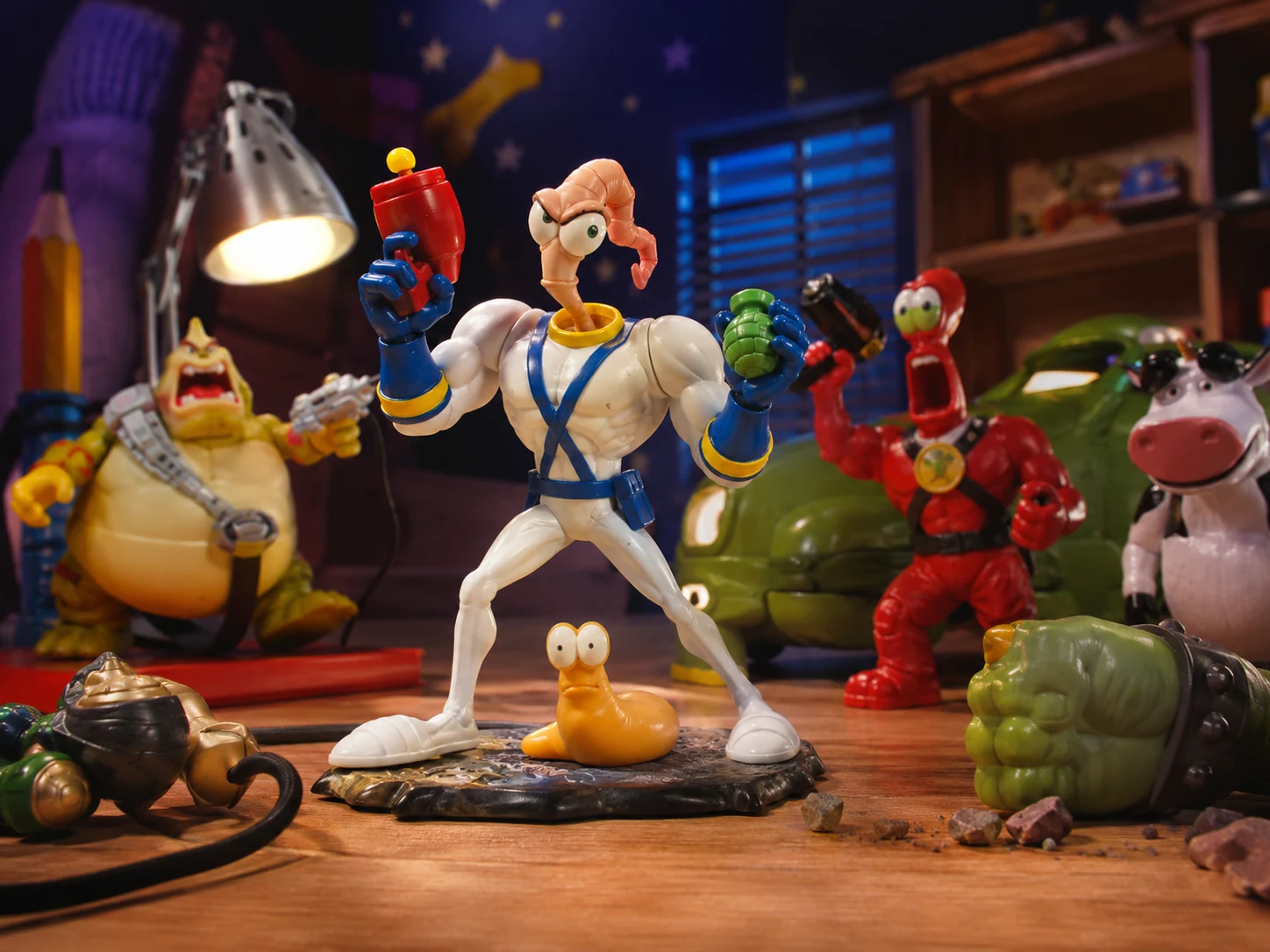
Earthworm Jim Toys
Video-game weirdness crossed into action figures with exactly the kind of absurd character design the 90s loved.
Earthworm Jim toys translated a video-game world already built around exaggerated animation. Jim had long limbs, huge expressions and a super suit that made the figure visually different from standard heroes. The villains were even stranger, which gave the line a strong supporting cast.
The toys arrived before game merchandise became an automatic retail category. That makes them important as an early example of a video-game property moving into action figures without relying on a movie adaptation.
Collectors now look for complete weapons, good paint and carded examples that preserve the game artwork. The games and cartoon remained more famous than the toys, but the figures capture the character design in a way that still holds up.
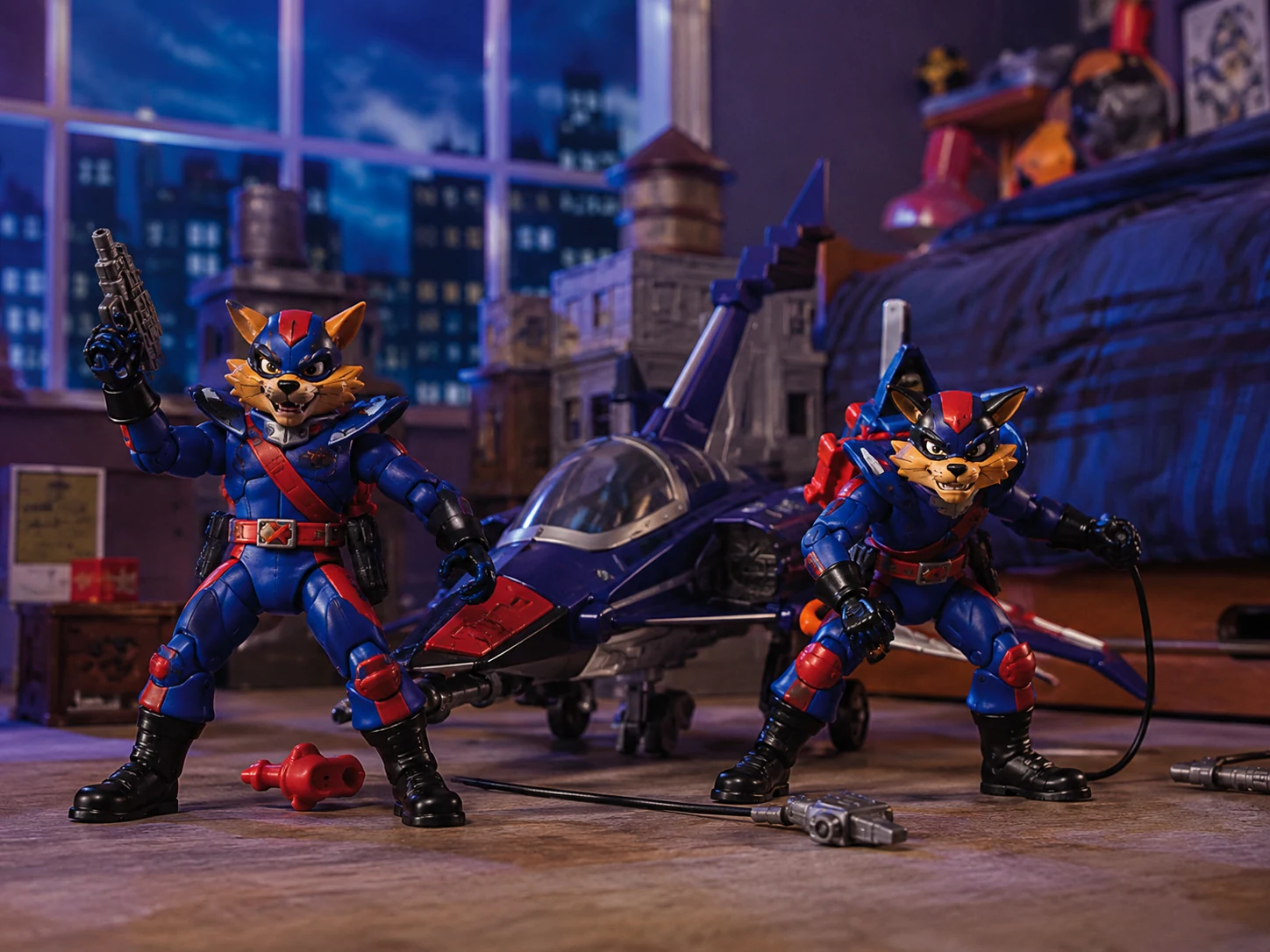
Swat Kats Toys
Cartoon-backed jet-fighter cat chaos that had the right action ingredients but never became a household toy giant.
SWAT Kats toys came from a cartoon world built around fighter jets, mechanics and anthropomorphic cat heroes. The character designs were made for action figures, but the toy line never received the depth or longevity that stronger 90s brands enjoyed.
The vehicle potential was enormous. The cartoon’s aircraft and technology could have supported a much larger line, but limited retail momentum kept the toys from becoming a full aisle system.
That unrealized potential is part of the collector appeal. SWAT Kats figures feel like evidence from a franchise that should have had more vehicles, more villains and more shelf space than it received.
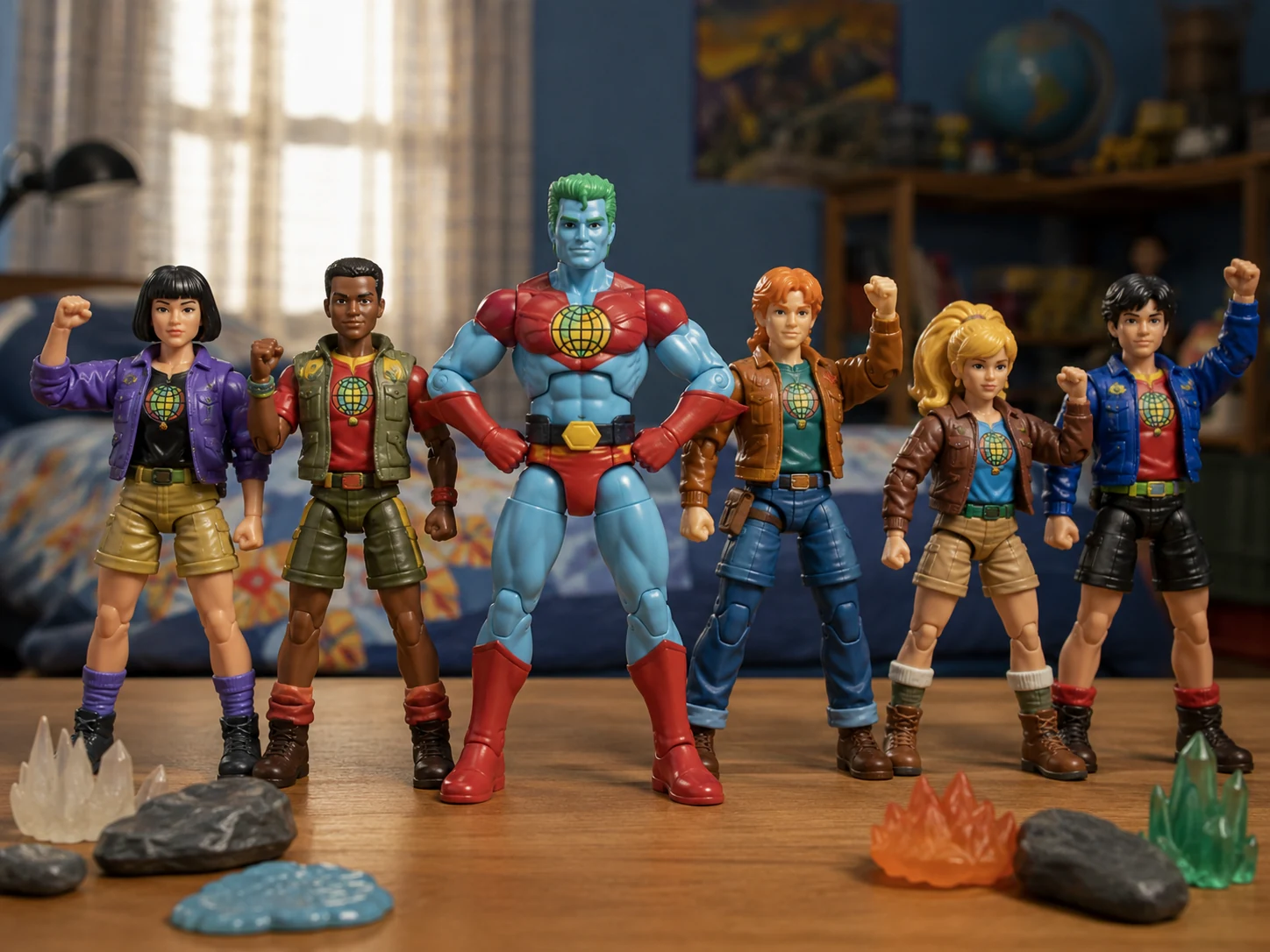
Captain Planet Toys
Eco-hero messaging, rings, villains, and figures from a cartoon that every 90s kid remembers more clearly than they expected.
Captain Planet toys turned an environmental cartoon into a traditional hero-and-villain line. The Planeteers had rings, vehicles and powers, while the villains personified pollution with the subtlety of a public-service announcement delivered through a megaphone.
The figures were easier to understand if a child watched the show, but Captain Planet himself remained recognizable even without context. The bright blue skin, red costume and team structure fit the early-90s action aisle perfectly.
Collectors now look for complete rings, accessories and vehicles. The toys are remembered less than the theme song, which makes them a perfect example of a franchise where the cultural memory outlived the merchandise.
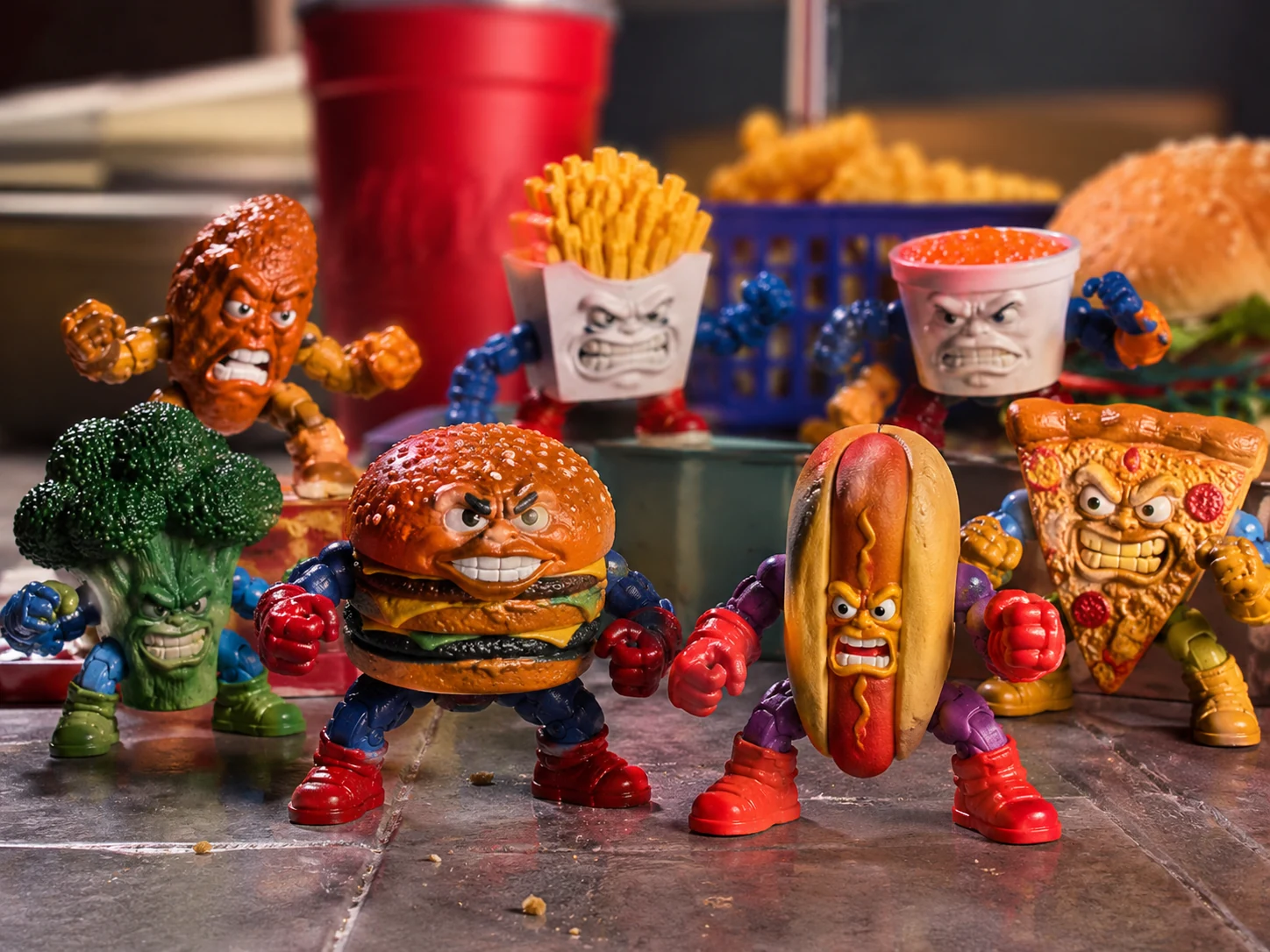
Food Fighters Carryover
More of an 80s oddity, but the memory lingered into early-90s toy boxes: military food figures, because apparently even lunch needed combat readiness.
Food Fighters were an 80s line, but the figures crossed into early-90s childhood through older siblings, yard sales and mixed toy boxes. Armed hamburgers, fries and other food soldiers were too strange to respect decade boundaries.
The toys had a soft, slightly rubbery construction and tiny weapons that disappeared immediately. They were not tied to a massive cartoon universe, which meant kids could make up any story they wanted. A hamburger with a machine gun required very little additional world-building.
Collectors now separate original accessories carefully because the weapons are often missing. The line matters here because childhood nostalgia is based on ownership and play, not the date stamped in a catalog.
Why Some Forgotten Toys Survived Better Than Others
Not every vanished toy line ages the same way. The strongest survivors usually have a visual identity, play pattern or physical feature that still makes sense without the original cartoon.
A Strong Silhouette Still Works
Street Sharks, Skeleton Warriors and Biker Mice can be recognized across a room. Distinctive shapes give forgotten toys a second life because the design does not depend entirely on remembering the character name.
Complete Systems Reward Collectors
Mighty Max and ExoSquad offer more than isolated figures. Playsets, pilots, frames and accessories create a complete display challenge, which gives collectors something meaningful to rebuild.
Tiny Toys Create Big Collection Goals
Monster in My Pocket, Z-Bots and Mini Boglins become more impressive in groups. The desire to complete a series keeps the line active long after one common figure would have been forgotten.
Commercial Memory Keeps the Name Alive
Crash Dummies and Yak Bak-style novelty toys survive because the advertisement explained the fun instantly. A remembered slogan or action feature can keep a line alive even when the larger franchise vanished.
Why Forgotten 90s Toys Became Collector Favorites
A lot of forgotten 90s toys got better with age because they feel less overexposed. You can still love Batman, Pokémon, Jurassic Park, and Power Rangers, but everyone remembers those. The deep cuts feel more personal. They remind you of a specific shelf, a specific friend’s house, a specific commercial, or a toy you got because the big thing was sold out.
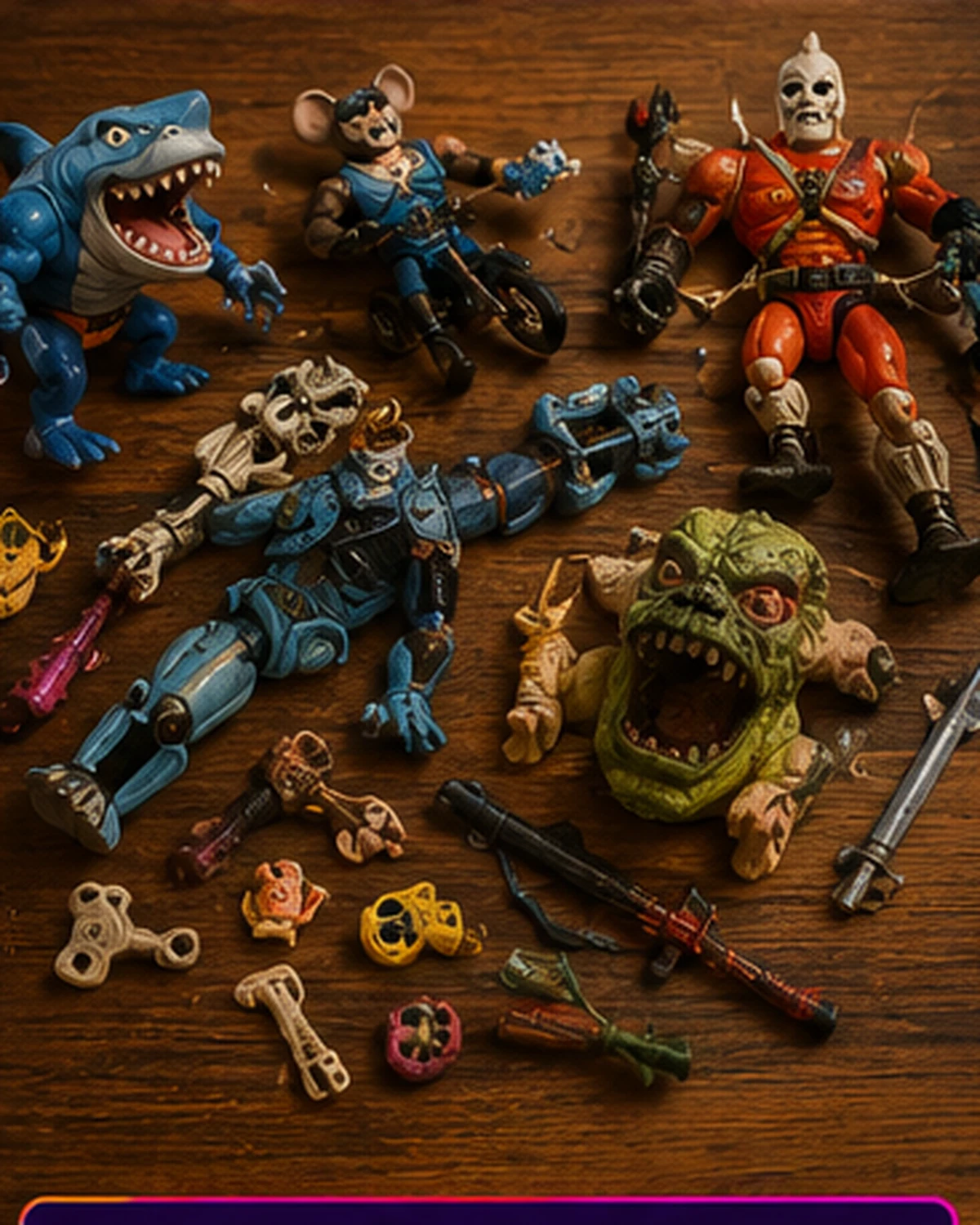
Collectors also helped rescue these lines. Once the internet made it easier to identify half-remembered toys, people started rediscovering Mighty Max sets, Street Sharks figures, Monster in My Pocket collections, Z-Bots, Crash Dummies vehicles, Skeleton Warriors, ExoSquad mechs, Mini Boglins, and other oddball lines that had been living quietly in storage bins.
That is the afterlife of forgotten toys: they go from “whatever happened to that thing?” to “oh no, now I need to find it again.”
The collector side of the decade makes more sense beside the 90s collectible-toy crazes and the full Beanie Babies bubble. Forgotten figures are usually valuable because somebody wants that exact memory—not because every loose toy from 1994 is secretly a mortgage payment.
Why Forgotten Toys of the 90s Still Hit
Forgotten 90s toys still hit because they feel like private nostalgia. The biggest toys belong to everyone. The deep cuts feel like they belong to the kids who actually noticed them, wanted them, traded them, or dug them out of a clearance bin after the big franchises had already claimed the spotlight.
They also remind us how experimental the 90s toy aisle could be. Toy companies were throwing wild ideas at shelves: mutant sharks, biker mice, skeleton armies, tiny monsters, robot factions, crash-test figures that exploded, pocket horror playsets, and sci-fi mechs with serious lore. Not all of it lasted. A lot of it should not have worked. That is exactly why it is interesting.
And maybe the best part is the sudden memory jolt. You see one figure, one logo, one playset, one little rubber monster, and the whole toy-store aisle comes back. The lighting. The packaging. The smell. The feeling that some plastic thing you forgot for decades was apparently still waiting in the back of your brain like it paid rent.
That personal memory is also why 90s toy-store culture matters. The shelf, endcap, catalog and commercial often survive in the brain right beside the toy itself.
Forgotten Toys of the 90s FAQ
What are some forgotten toys of the 90s?
Forgotten 90s toys include Street Sharks, Mighty Max, Monster in My Pocket, Z-Bots, The Incredible Crash Dummies, Biker Mice from Mars, Skeleton Warriors, VR Troopers, Mini Boglins, ExoSquad, Barnyard Commandos, Battle Trolls, Earthworm Jim toys, SWAT Kats toys and Captain Planet figures.
Why did so many 90s toy lines disappear?
The toy aisle was overcrowded. Cartoons ended, gimmicks lost their novelty, licenses cooled, accessories disappeared and retailers replaced slower lines with the next television, electronic, schoolyard or holiday craze.
Was Mighty Max a 90s toy?
Yes. Mighty Max became a major early-90s miniature playset line, using compact horror and adventure worlds filled with tiny figures, monsters, traps and skull-shaped shells.
Were Street Sharks toys popular?
Street Sharks had a memorable mid-90s run with oversized mutant-shark figures, working jaws and strong cartoon support. They became a cult favorite rather than one of the decade’s permanent mass-market franchises.
What were Z-Bots?
Z-Bots were tiny robot figures released through the Micro Machines world. Their small scale, factions, vehicles and army-building appeal made them one of the decade’s most memorable miniature science-fiction toy lines.
What were The Incredible Crash Dummies toys?
The Incredible Crash Dummies were figures and vehicles designed around impact play. Buttons and crashes made heads, arms and legs detach, turning crash-test safety mascots into repeatable plastic destruction.
Were VR Troopers toys connected to Power Rangers?
VR Troopers was a separate franchise, but the live-action armored-team format made comparisons with Power Rangers unavoidable. The toys included figures, role-play gear and technology-themed action products.
Why do collectors like forgotten 90s toys?
Forgotten toys can trigger highly specific nostalgia and are often harder to find complete. Cult lines such as Mighty Max, ExoSquad, Z-Bots and Street Sharks attract collectors because their accessories, packaging and designs are more distinctive than ordinary loose figures.
Are forgotten 90s toys worth money?
Some are, but value depends on the exact line, character, variation, condition, packaging and completeness. Recent completed sales are more useful than high asking prices.
Why are complete forgotten 90s toys hard to find?
Many lines included tiny missiles, armor, helmets, figures, keys and vehicle parts. Ordinary childhood play separated those accessories decades before collectors began searching for complete examples.
Where can I watch commercials for forgotten 90s toys?
The 90s Toy Commercials and Videos archive is the best next stop for the ads, announcer voices and overproduced demonstrations that made these toys look larger than life.
Where can I find the most popular toys from each year of the 90s?
Use the year-by-year toy pages from 1990 through 1999, or start with 50 Most Iconic Toys of the 90s for the full-decade view.