ABC
The network owns the three biggest shows in America.Laverne & Shirley, Happy Days, Three’s Company and Charlie’s Angels gave ABC comedy chemistry, nostalgia, farce, glamour and the season’s clearest pop-culture temperature.
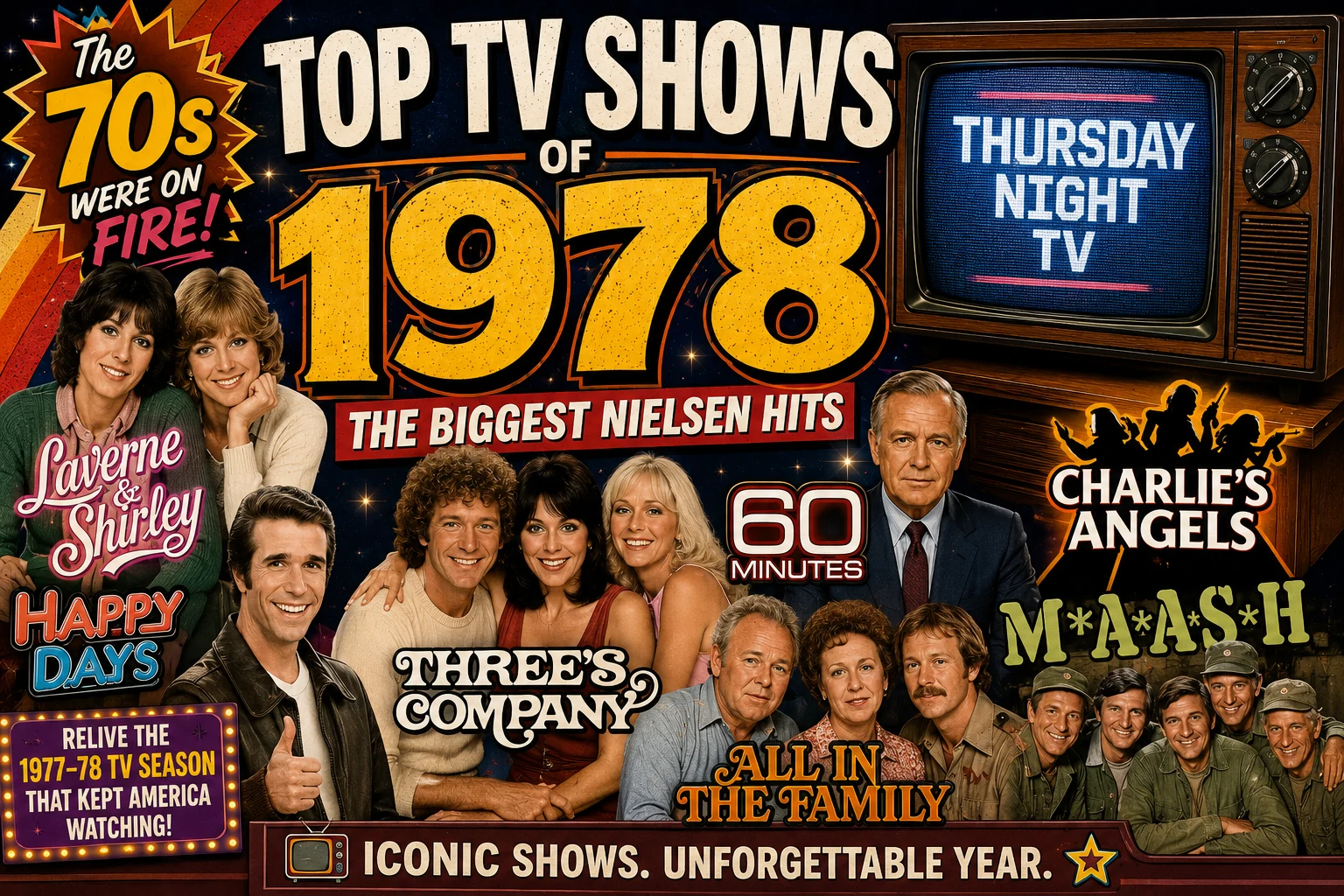
The top TV shows of 1978 reveal a late-70s network turf war at full volume. ABC owns the top three positions with broad, high-energy 70s sitcoms, while CBS places more distinct shows across news, social comedy, workplace comedy, family realism and M*A*S*H.
This countdown uses the 1977–78 Nielsen season, the site’s season-ending-year method for the 1978 rankings. Laverne & Shirley takes #1, Happy Days holds #2 and Three’s Company reaches #3. A three-way tie at #4 and two-way tie at #8 keep the rest of the board crowded with very different versions of successful television.
Laverne & Shirley ranked #1 in the 1977–78 Nielsen season. Happy Days finished #2 and Three’s Company ranked #3. CBS placed five distinct shows in the top 10, ABC placed four and NBC placed one—but ABC controlled the three highest positions. Jump to the complete ranking or begin the full show-by-show countdown.
The ranking moves from modern family and workplace comedy through sincerity, nonfiction, glamour and social satire to three giant ABC sitcoms controlling the top.
ABC controls #1 through #3 and part of the #4 tie. CBS places five distinct shows across more formats. NBC holds one emotionally powerful position through Little House on the Prairie.
Laverne & Shirley, Happy Days, Three’s Company and Charlie’s Angels gave ABC comedy chemistry, nostalgia, farce, glamour and the season’s clearest pop-culture temperature.
60 Minutes, All in the Family, Alice, M*A*S*H and One Day at a Time gave CBS news, social satire, workplace comedy, dramedy and grounded family storytelling.
Little House on the Prairie reached #7 and proved heartfelt family drama still had real muscle in a glossier television year.
From One Day at a Time at #10 to Laverne & Shirley at #1, the countdown shows two different versions of late-70s success colliding: ABC’s bright, fast pop machine against CBS’s deeper mix of news, social comedy, workplace stories and emotionally heavier television.

One Day at a Time landing at #10 is a useful reminder that late-70s television had not completely traded real life for glossy escapism. By 1978, prime time was getting slicker, brighter, and more calculated, but this show still held a top-10 slot by staying closer to recognizable day-to-day struggle than a lot of its competitors. It did not need to sell fantasy. It sold friction, resilience, and the messy chemistry of a family still figuring itself out.
That mattered in 1978 because the sitcom was evolving. Earlier domestic comedies often leaned too hard on tidy setups and easy reassurance. One Day at a Time felt more contemporary. It had sharper edges, more emotional push-and-pull, and a family structure that felt less like a television ideal and more like something viewers might actually know. It helped show how 1970s family television could stay relevant without pretending home life was frictionless.
What makes its ranking especially interesting is how it sits against the rest of the list. This is a year dominated by network efficiency, broad hooks, and instantly marketable series. CBS still managed to keep a show like this in the mix because there was real value in character-based sitcoms that felt grounded rather than pumped full of TV sugar. It was a different kind of commercial strength: less flashy, more durable.
There is also something deeply late-70s about the way the series balanced humor and strain. It understood that audiences wanted warmth, but not the fake, frictionless kind. The characters bickered, worried, adapted, and held things together with varying levels of success. That made the laughs land harder, because they came out of a world that felt at least semi-real.
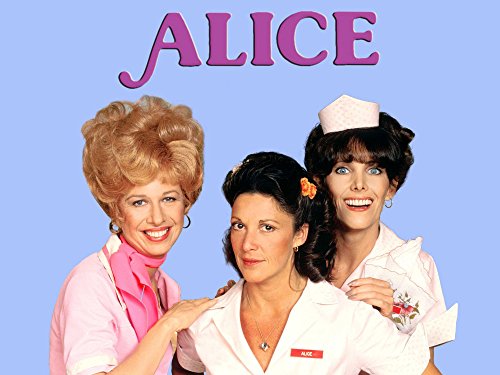
Alice tying for #8 shows how powerful a good setting could still be in late-70s television. Mel’s Diner was not just a place where scenes happened. It was the whole engine. The show understood exactly why workplace sitcoms could keep generating stories: personality, conflict, routine and social hierarchy were already built into the room.
What made the series work so well in 1978 was the balance it struck between grounded and performative. It felt blue-collar enough to connect, but never so stripped-down that it stopped being television. It gave viewers a version of working life they could recognize, then sharpened it with strong character rhythms, recurring tension, and just enough exaggeration to make the weekly return feel rewarding. In other words, it knew exactly how to turn labor into comfort viewing.
In the broader story of the year, Alice matters because it represents a different kind of hit than ABC’s broad shiny crowd-pleasers. Where ABC was increasingly mastering velocity, glamour, and hook-driven entertainment, CBS still knew how to place series that felt rooted in actual routine. Alice did not have to scream for attention. It just had to keep being funny, steady, and specific.
The show also gave late-70s TV one of its better portraits of female endurance without turning that idea into a sermon. That is part of why it connected. It let competence, frustration, humor, and survival all occupy the same space. The characters felt like people with shifts to work, bills to pay, and patience that occasionally ran out — which, shockingly enough, turned out to be relatable.

M*A*S*H tying for #8 is the kind of ranking that says more than it seems to at first glance. By 1978, the show was no longer the revolutionary newcomer proving television could be smarter, sadder, and more tonally complex than people expected. That argument had already been won. Now it was the veteran still hanging near the top while the rest of the medium drifted toward broader and easier forms of entertainment.
That is what makes its continued strength so impressive. This was not a series built on empty comfort or instantly marketable glitz. It asked more of the viewer. Its humor was laced with exhaustion, grief, absurdity, and moral wear. Its characters felt worn down in ways most network comedies never risked. And yet there it was, still in the top 10, still proving that mass audiences had not completely abandoned television with emotional complexity.
In the context of 1978, M*A*S*H acts like a measuring stick. It shows just how far network TV had shifted while also proving there was still room for shows that carried actual weight. ABC may have owned the big commercial temperature this year, but CBS still had a series that treated viewers like adults and remained commercially elite anyway.
The bigger legacy here is that M*A*S*H helped stretch the definition of what a hit series could sound like. It refused to stay inside one emotional lane. It could be funny, bleak, humane, bitter, and strangely comforting all within the same episode. A lot of television wanted to simplify itself for the biggest audience possible. M*A*S*H stayed messy, and the audience kept showing up.
Little House on the Prairie at #7 is proof that all the decade’s newer network instincts did not erase the appetite for sincerity. In a season packed with louder concepts, glossier surfaces, and more aggressively promotable series, this show remained a major draw by doing almost the opposite. It leaned into emotional clarity, family attachment, moral weight, and a kind of earnestness television was already beginning to treat as old-fashioned.
But that earnestness was exactly the point. The series gave viewers a weekly emotional refuge without turning itself into fluff. It had hardship, sacrifice, grief, and struggle built into its DNA, which meant the sentiment actually had something to push against. That is why the show lasted as more than mere comfort food. It gave audiences the reassurance of emotional order while still letting pain and tension into the room.
In the bigger 1978 landscape, Little House is important because it keeps the year from reading like a simple story of ABC flash versus CBS structure. NBC may not have dominated the board, but this show gave the network a serious presence with a type of storytelling the others were not emphasizing in quite the same way. It represented continuity, moral drama, and family-centered television that still felt powerful in a medium turning increasingly commercial and fast-moving.
It also says a lot about the breadth of late-70s audiences. Even as television got better at selling glamour, innuendo, and high-concept appeal, a huge number of viewers still wanted something emotionally steady and openly heartfelt. Not everything had to sparkle. Sometimes people just wanted to cry a little and feel like decency still existed.

60 Minutes tying at #4 is one of the most revealing things on this entire list. A news magazine sitting shoulder to shoulder with huge sitcoms and glossy action television tells you that late-70s audiences had not fully surrendered to pure escapism. They still wanted authority. They still wanted seriousness. More importantly, they wanted those things delivered in a format that felt like television rather than homework.
That is what 60 Minutes figured out better than just about anything else in its lane. It turned journalism into appointment viewing. The reporting mattered, but so did the construction. The pacing, the tone, the correspondents, the shape of the segments — it all worked together to make information feel dramatic and urgent without becoming cheap. That is an incredibly hard balance to strike, and CBS absolutely knew it had a powerhouse.
In 1978, the show also serves as a rebuttal to the idea that the top of the ratings chart was now all sitcom bounce and fantasy packaging. While ABC was mastering pop sheen, CBS still had a nonfiction property strong enough to stand among the biggest entertainment series in America. That gives the season texture. It means the audience was not one thing. The networks were not selling one version of value.
Culturally, 60 Minutes mattered because it raised the prestige ceiling of prime time. It suggested television could still function as something more than diversion without sacrificing mass appeal. In a medium increasingly driven by slickness, it made credibility into a brand.
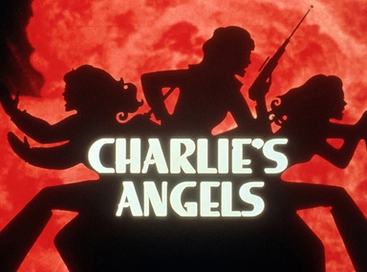
Charlie’s Angels tying at #4 confirms that by 1978 the show was no longer just a sensation. It was infrastructure. It represented one of the clearest examples of how ABC understood television’s new commercial language: make it stylish, make it instantly recognizable, make it easy to market, and make sure viewers know exactly what kind of pleasure they are getting before the opening credits are even over.
That can sound dismissive if you say it wrong, but it is really a compliment to the network’s precision. Charlie’s Angels knew how to turn image into habit. It fused action, glamour and the episodic detective structure that powered so many 1970s private-eye shows into something frictionless for the mass audience. You could drop in almost anywhere and understand the pitch immediately.
In the larger ratings story, the show helps explain why ABC owned the era’s pop-culture temperature even when CBS often had more institutional depth. ABC was better at building programs that felt like events, posters, magazine covers, and conversation starters all at once. Charlie’s Angels was not just watched. It was circulated through the culture as image.
It also captures something important about late-70s television’s evolution: the medium was getting more comfortable turning its stars and concepts into cleanly branded weekly experiences. The show’s success was not just about plots. It was about vibe. And by 1978, vibe was becoming one of network TV’s most valuable currencies.
All in the Family tying at #4 in 1978 is one of those rankings that carries history with it. Earlier in the decade, this show did not just dominate ratings. It cracked open the idea of what network comedy could do. By 1978, it is no longer the insurgent grenade rolling across the living room floor. It is the established giant that once changed the rules.
That is what makes the placement so interesting. Television had clearly shifted toward smoother, more comforting, more commercially frictionless forms of entertainment, yet All in the Family remained right near the top. The earlier moment when 1970s sitcoms started talking about real life still had enormous ratings power, even if every major hit no longer needed to feel like an argument with the country.
In the context of 1978, the show works almost like a bridge between two phases of the decade. On one side is the earlier 70s, where network television often felt more openly combative and politically charged. On the other side is the later 70s, where charisma, comfort, and fast audience gratification start taking over the top of the board. All in the Family sits between those worlds and reminds you how much the medium had already changed.
Its continued strength also proves something else: once television truly alters the culture, it does not disappear just because newer, shinier things arrive. It becomes part of the architecture. This show was not merely surviving in 1978. It was still exerting force.
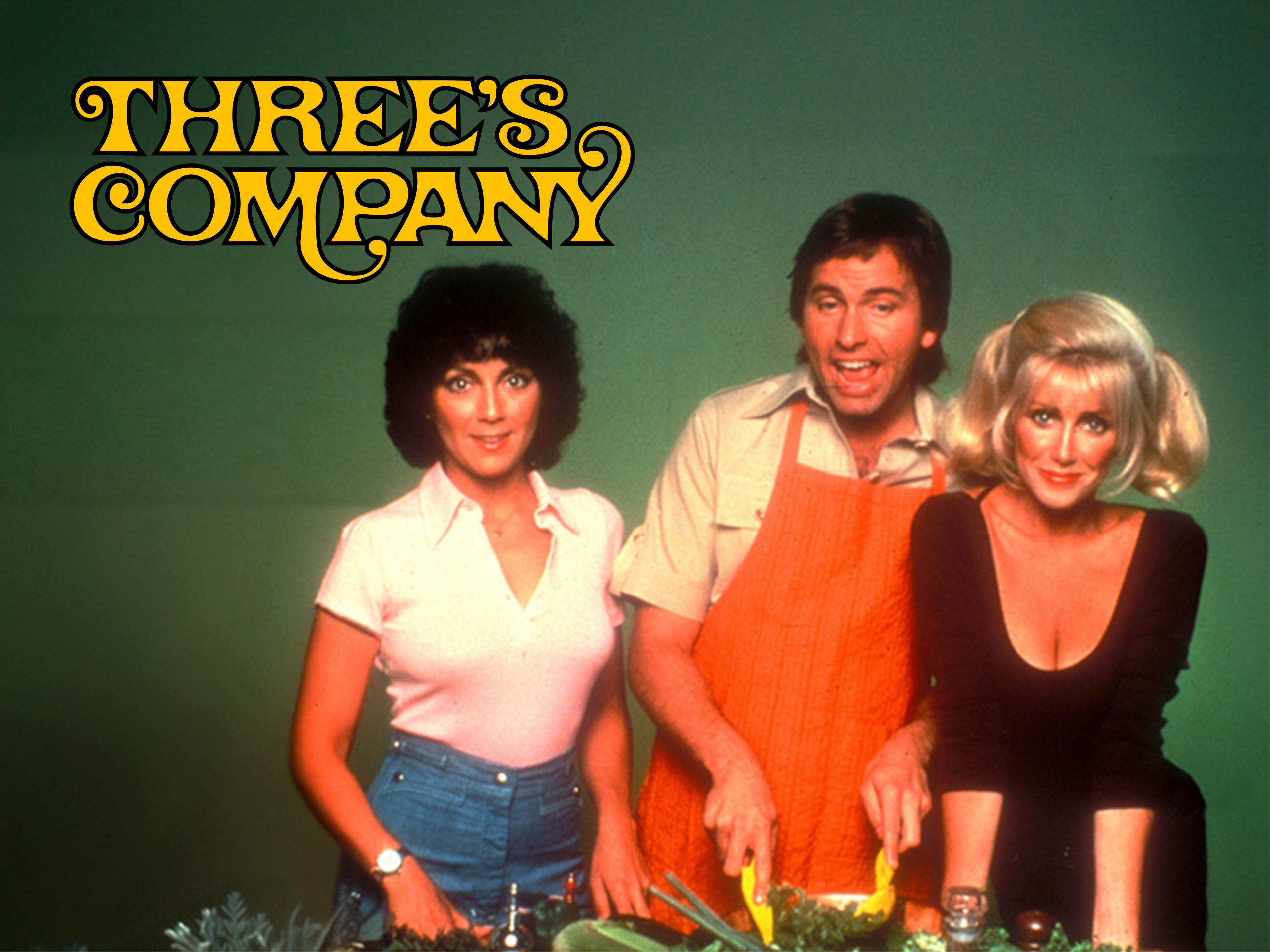
Three’s Company at #3 is the sound of ABC’s ratings machine purring like it knows exactly what America will laugh at before America does. The show took a premise with just enough sexual anxiety to feel a little dangerous, wrapped it in broad farce, and delivered it as one of the most accessible packages on television. It was modernity made digestible.
That was the genius of the show in 1978. It flirted with changing social norms without ever becoming truly threatening. Cohabitation, innuendo, misunderstandings, and sexual tension gave it energy, but the structure always pulled things back into harmless comic rhythm. It promised spice, then reassured the audience that the kitchen was still safe. Network television loves that trick because it gets the charge of transgression without the risk of genuine rupture.
In the larger story of late-70s TV, Three’s Company matters because it shows how efficiently the medium had learned to convert cultural shift into easy entertainment. Instead of confronting social change head-on, it treated that change as a renewable source of confusion and laughter. The result was a hit that felt current without becoming heavy.
It also helped lock in ABC’s identity as the network most fluent in clean, mass-friendly pleasure. If CBS still had the deeper adult bench, ABC had the better sugar rush. Three’s Company was a huge part of that formula.

Happy Days finishing at #2 in 1978 is less a sign of slippage than proof that ABC had built an absurdly powerful comedy ecosystem. The show was still one of the decade’s defining comfort engines, still selling nostalgia, familiarity, and character warmth with almost industrial efficiency. It was a hit because it knew exactly what emotional product it was offering and never got confused about the assignment.
What makes it especially revealing in this season is how completely it represents television’s changing center of gravity. Earlier 70s hits often leaned into social abrasion, topical argument, or realism. Happy Days leaned into atmosphere, routine, and the appeal of re-entering a world that always felt welcoming. It did not want to challenge the audience. It wanted to host them.
By 1978, the series also shows how profitable nostalgia had become as a network strategy. Not nostalgia as history lesson. Nostalgia as emotional design. It took the idea of the past, cleaned it up, warmed it over, and served it as a weekly ritual viewers could trust. That instinct would echo through television for decades, but here it already feels polished and fully monetized.
The larger cultural point is that Happy Days helped teach television how to turn familiarity into an event. It was not just a show people liked. It was a mood people returned to. That kind of repeatable comfort is one of the most valuable things a network can own.
Laverne & Shirley taking the top spot in 1978 is the purest possible statement of where prime time had arrived by the late 70s. This was a big, bright, character-driven sitcom powered by chemistry strong enough to carry an entire network strategy. It was not simply popular. It was one of the defining entertainment machines of the era.
What made the show so powerful is that it sat right at the intersection of several winning instincts at once. It had some of the warmth and familiarity that made nostalgia-adjacent TV so commercially potent, but it also moved faster and hit harder on personality than a lot of older sitcom formulas. It felt more kinetic. More playful. More like television had figured out how to bottle comic chemistry and sell it at scale.
In the context of 1978, the series also says something important about what audiences were rewarding. They wanted recognizable characters, strong comic identity, and a world that could deliver immediate pleasure without needing much setup. Laverne & Shirley was accessible on first contact and sticky in rerun memory, which is basically the dream if you are a network trying to dominate a mass audience.
There is also something telling about a female-led comedy sitting at #1 in a season this competitive. The show did not win by seeming prestigious or important in the traditional sense. It won by being instantly likable, endlessly promotable, and totally locked in on what made people come back. In 1978, that made it nearly unbeatable.
The ranking shows late-70s television at peak commercial efficiency without collapsing into one format: bright sitcoms, news, social comedy, dramedy, glamour and family sincerity all remain competitive.
The top TV shows of 1978 do not tell a simple one-network story. Laverne & Shirley , Happy Days , Three’s Company , and Charlie’s Angels gave ABC the flashiest wins and the clearest pop-culture identity. But CBS quietly stacked the board with 60 Minutes , All in the Family , M*A*S*H , Alice , and One Day at a Time , which means the season feels less like a massacre and more like a turf war.
That is what makes 1978 such a good TV year. ABC had mastered image, momentum, and broad-audience entertainment. CBS still owned seriousness, depth, and a sturdier bench. NBC had one major foothold with Little House on the Prairie , proving sincerity still had commercial juice in a medium moving steadily toward glossier packaging.
It is also one of the clearest years in the decade where recurring series—not just movie slots or one-off event nights—feel like the full backbone of the schedule. The networks wanted characters and formats that could become habits, not just attractions. For a lot of us, those habits survived into reruns, syndication and the hand-me-down channel memory that made these shows feel permanently available.
That is why 1978 still feels so familiar: stronger brands, smoother tones, bigger personalities and networks that knew exactly what kind of emotional experience they wanted us to come back for every week.
Move from the prime-time dial to the toy box, radio and movie theater, revisit the decade’s theme songs, then compare the television season before and after it.
Follow the ratings from the western-heavy opening of the decade through topical sitcoms, action mythology, network turf wars and the polished television machine approaching the 1980s. For the whole decade beyond the rankings, explore the complete 70s TV guide.
Quick answers about the #1 show, both ties, the network split, the Nielsen-season method and why 1978 matters.
According to the 1977–78 Nielsen season, Laverne & Shirley was the #1 TV show tied to 1978.
The top-rated shows of the 1977–78 Nielsen season were Laverne & Shirley , Happy Days , Three’s Company , and a three-way tie at #4 between 60 Minutes , Charlie’s Angels , and All in the Family .
The 1977–78 Nielsen season ranked Laverne & Shirley at #1, followed by Happy Days , Three’s Company , and a three-way tie at #4 between 60 Minutes , Charlie’s Angels , and All in the Family .
Happy Days ranked #2 in the 1977–78 Nielsen television season.
Yes. There was a three-way tie at #4 between 60 Minutes , Charlie’s Angels , and All in the Family , plus a two-way tie at #8 between Alice and M*A*S*H .
ABC owned the top of the chart with the #1, #2, and #3 shows, plus part of the #4 tie. But CBS actually placed more distinct shows in the top 10, so the season is really a split between ABC’s flash and CBS’s deeper bench.
Because television popularity was measured by season rather than calendar year. For year-based nostalgia rankings, the season ending in that year is the standard reference point.
It is the year recurring series fully dominate the board while network television becomes even more polished, character-branded, and commercially efficient.
New television countdowns, decade guides, videos and exactly the kind of woodgrain-fueled memory damage you came here for.