Top 10 Toys of 1975 That Totally Took Over the Living Room

Top 10 Toys of 1975 That Totally Took Over the Living Room
Smells Like Gen X • Top Toys of 1975

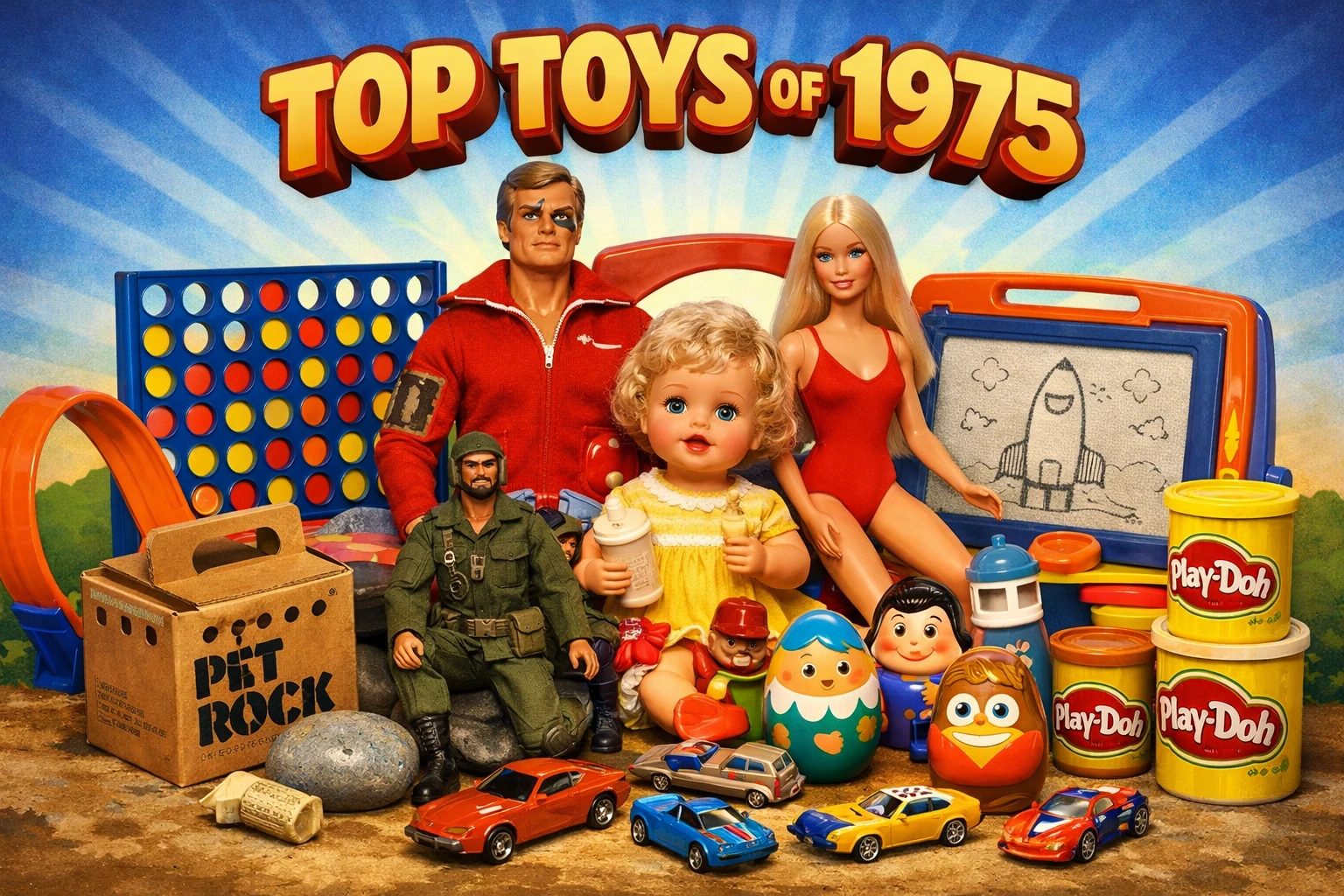
The Top 10 Toys of 1975

The top 10 toys of 1975 feel like the year the toy aisle develops a sense of humor and a sharper instinct for spectacle. The early 70s are still very much here — still analog, still tactile, still built around kids doing the actual play instead of pressing a button and watching a machine perform for them — but 1975 is less innocent about what sells. This is a year where novelty hits harder, branding gets smarter, and personality becomes part of the product.

That is what makes 1975 so different from 1974. Last year leaned toward cleaner creativity, faster strategy, and more streamlined replay. This year keeps all of that, but adds a new layer of cultural wink. The toys do not just need to be fun. They need a hook. They need an angle. They need to feel like something kids will talk about at school, nag for in stores, and drag into every conversation until the adults crack.

Like the rest of this series, this is a best-supported editorial countdown rather than a fake official chart. There is no one clean year-end toy ranking for 1975, so this list is built around cultural impact, shelf presence, longevity, era fit, and the toys that best capture what this particular year felt like: part fad economy, part licensed-character boom, part still-glorious analog childhood chaos.

Gen X Note: 1975 is where the toy aisle figures out that a great gift does not always need to make sense. Sometimes it just needs a gimmick, a personality, and enough hype to make kids absolutely unbearable about it.

Quick List: The Top 10 Toys of 1975

  1. Weebles
  2. Play-Doh
  3. Hot Wheels
  4. Barbie
  5. G.I. Joe Adventure Team
  6. Magna Doodle
  7. Connect Four
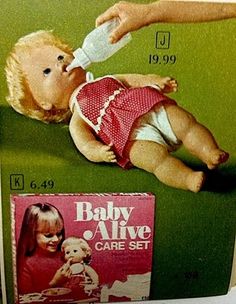
  8. Baby Alive
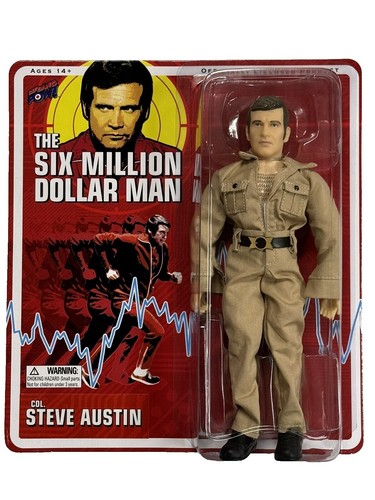
  9. The Six Million Dollar Man
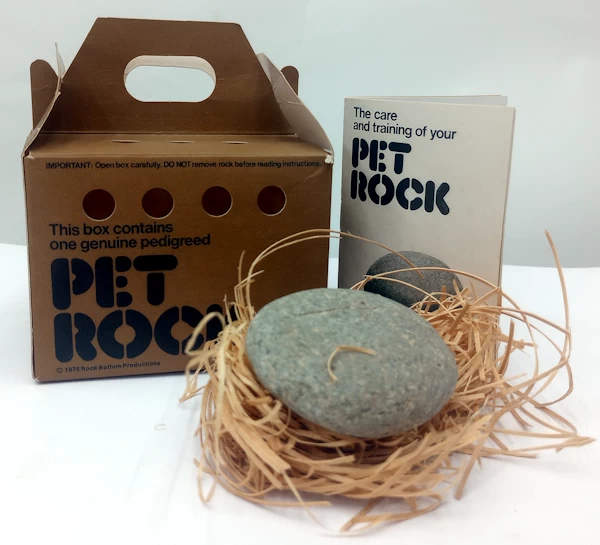
  10. Pet Rock

Countdown: The Top 10 Toys of 1975

Weebles
1975

#10 — Weebles

Preschool Physics Comfort Zone
Toy TypeRoly-poly preschool toy
Brand LanePreschool personality play
1975 Rank#10

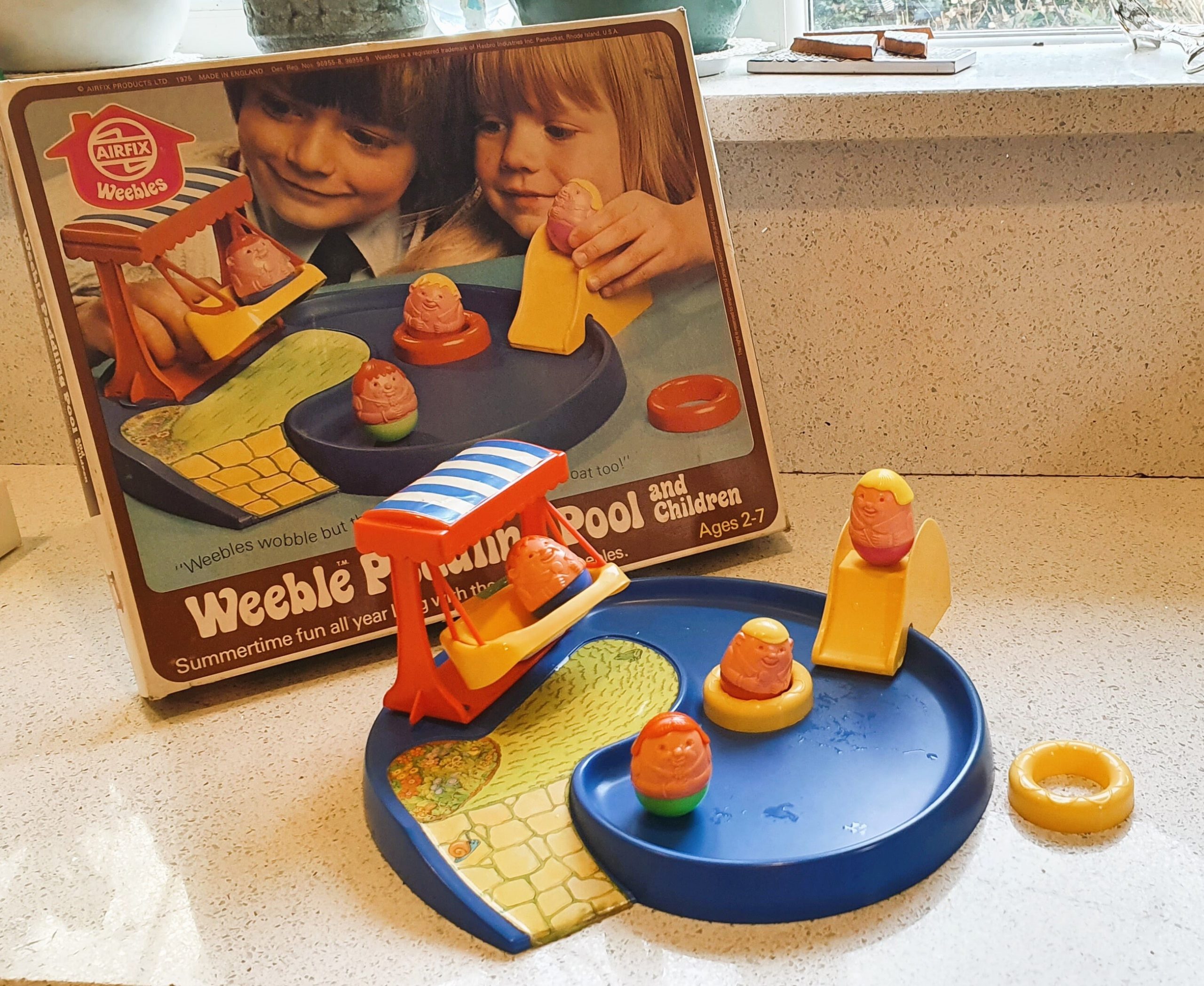
Weebles stay in the top 10 because 1975 may be getting weirder and more hype-driven, but the market still needs toys that simply work. The wobble gimmick is immediate, the figures are friendly, and the play loop is obvious enough that very young kids can jump right in without needing an explanation longer than five seconds.

That matters in a year like this. While bigger headlines go to novelty crazes and TV-tied characters, toys like Weebles quietly prove that dependable preschool design still has shelf power. They are not flashy in the same way as the year’s louder hits, but they remain a strong lane because they are sturdy, memorable, and easy to love.

In the context of 1975, Weebles almost act as a grounding force. They remind you that the decade’s toy box is still broad enough to support something simple and cheerful even as the rest of the aisle starts getting more theatrical, more branded, and more knowingly ridiculous.
Fun Fact / Why It Still Matters Weebles lasted because their main gimmick was physical, elegant, and instantly understandable — which is exactly what great preschool design usually looks like.
Play-Doh
1975

#9 — Play-Doh

Messy Classic With Staying Power
Toy TypeModeling compound
Brand LaneSensory creative play
1975 Rank#9

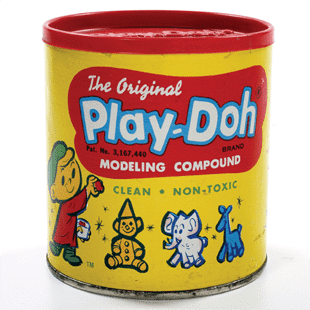
Play-Doh still earns its place because tactile play remains one of the decade’s great constants. Kids still want to poke, squish, flatten, roll, and turn a table into a soft little crime scene. The material itself is the entertainment, which gives the brand a built-in advantage before a child even decides what they are making.

What makes Play-Doh interesting in 1975 is that it starts looking even more old-school next to the year’s cleaner and more packaged-up forms of creativity. Magna Doodle offers low-mess drawing. Connect Four offers compact strategy. Pet Rock barely offers product at all and still wins on marketing. Play-Doh, by comparison, stays gloriously primitive: here is a compound, now go ruin the mood of the dining room.

That is exactly why it stays important. A toy does not survive this long by being refined. It survives by being satisfying. Play-Doh keeps its foothold because no matter how clever the packaging around it gets, kids still enjoy direct hands-on play that feels immediate and a little uncontrolled.

Fun Fact / Why It Still Matters Play-Doh endured because the medium itself was already fun. The accessory molds and sets helped, but the real product was the feeling in your hands.
Hot Wheels
1975

#8 — Hot Wheels

Speed-Track Household Infrastructure
Toy TypeDie-cast cars and track system
Brand LaneCollect-and-race obsession
1975 Rank#8

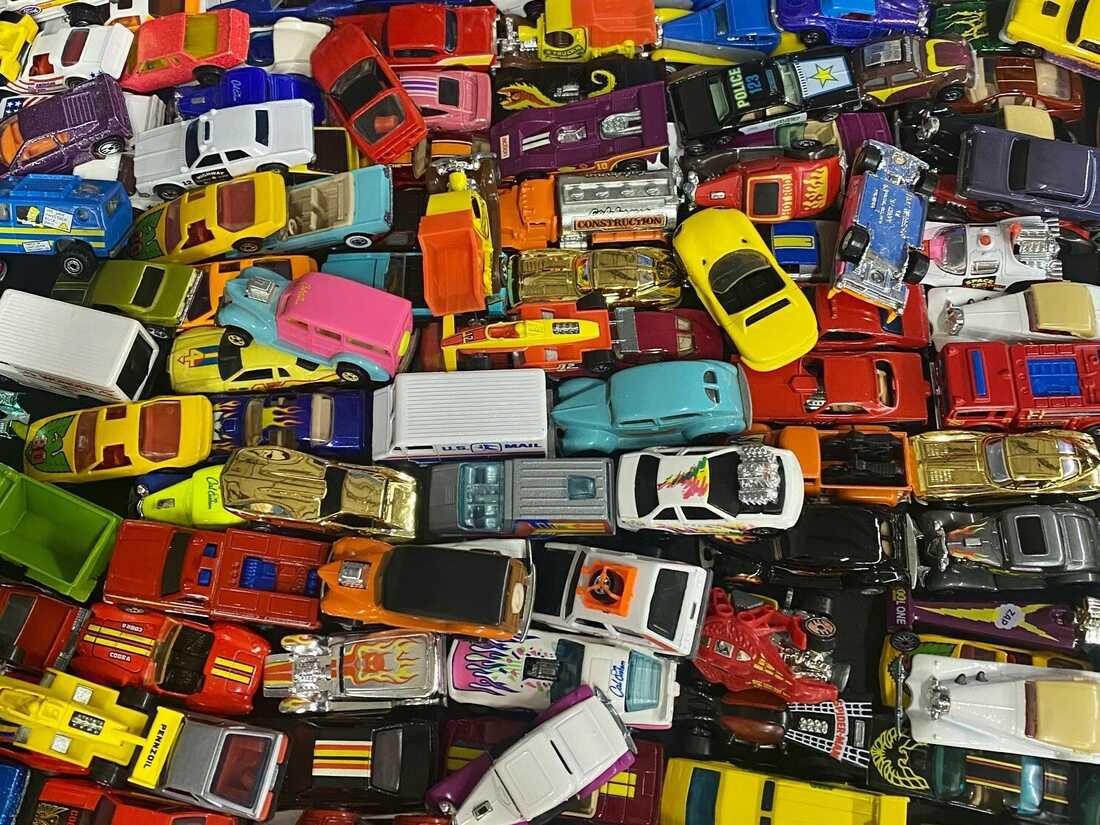
Hot Wheels remain a force because they still do two things extremely well: they create object desire, and they deliver actual play. The cars are collectible enough to want individually, but the full line becomes more compelling once the tracks, loops, and launchers come out and the house starts doubling as a test facility.

By 1975, though, Hot Wheels are competing in a more crowded emotional marketplace. They are no longer the obvious kings of spectacle because the year is full of toys with stronger personality hooks, cultural gimmicks, or character identity. Hot Wheels still matter, but now they have to share the spotlight with toys that generate conversation as much as action.

That is why they sit in the middle of the ranking rather than at the very top. They are still essential to understanding the decade’s love of motion and repeat play, but 1975 is starting to reward toys that tell a bigger story about the culture around them, not just the track across the floor.

Fun Fact / Why It Still Matters Hot Wheels stayed huge because they balanced collecting with doing — a rare trick that kept the brand active instead of merely admired.
Barbie
1975

#7 — Barbie

Lifestyle Empire Still Standing
Toy TypeFashion doll line
Brand LaneWorld-building role play
1975 Rank#7

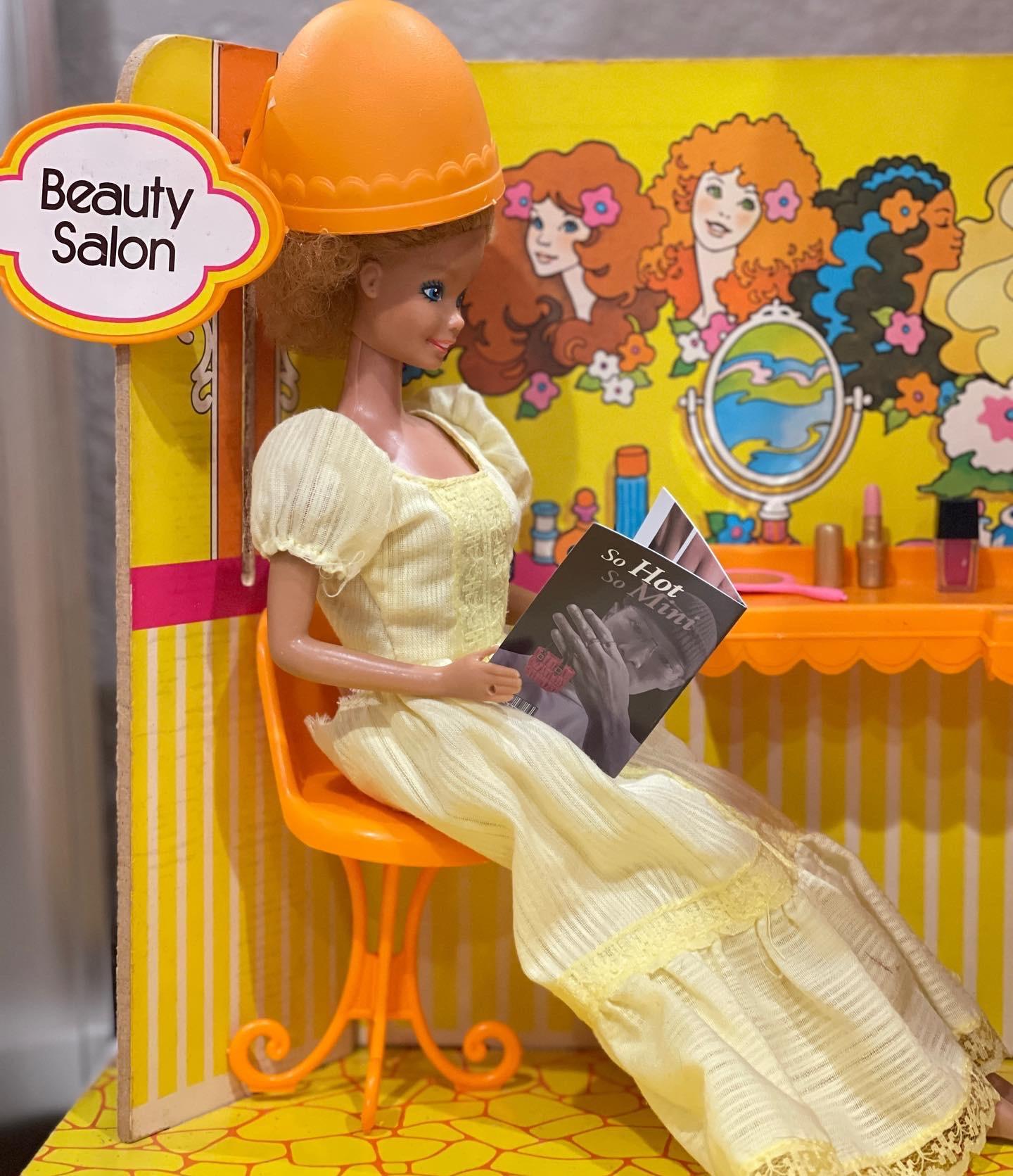
Barbie remains on the list because by 1975 she is still operating on a level most toys cannot match. She is not one item. She is an ecosystem. Clothes, careers, accessories, environments, social dynamics, aspiration, projection — it all folds into the Barbie machine, and that machine does not need to stop just because the toy aisle is flirting with novelty mania.

What changes in 1975 is the tone around her. Barbie is still powerful, but she feels less like the only glamorous empire in town and more like one of several major lanes competing for attention in an increasingly segmented market. This is a year where silliness, realism, games, and licensed characters all grab shelf space more aggressively.

She still belongs because the core appeal remains bulletproof. Barbie lets kids build an ongoing social world rather than play one isolated scenario. In any decade, that is strong. In 1975, it becomes even more impressive because she holds her space while the market around her gets noisier and stranger.

Fun Fact / Why It Still Matters Barbie stayed relevant because she functioned like a renewable story engine, not just a single doll in a box.
G.I. Joe Adventure Team
1975

#6 — G.I. Joe Adventure Team

Big-Scale Adventure Holdout
Toy TypeAction figure line
Brand LaneMission-based pretend play
1975 Rank#6

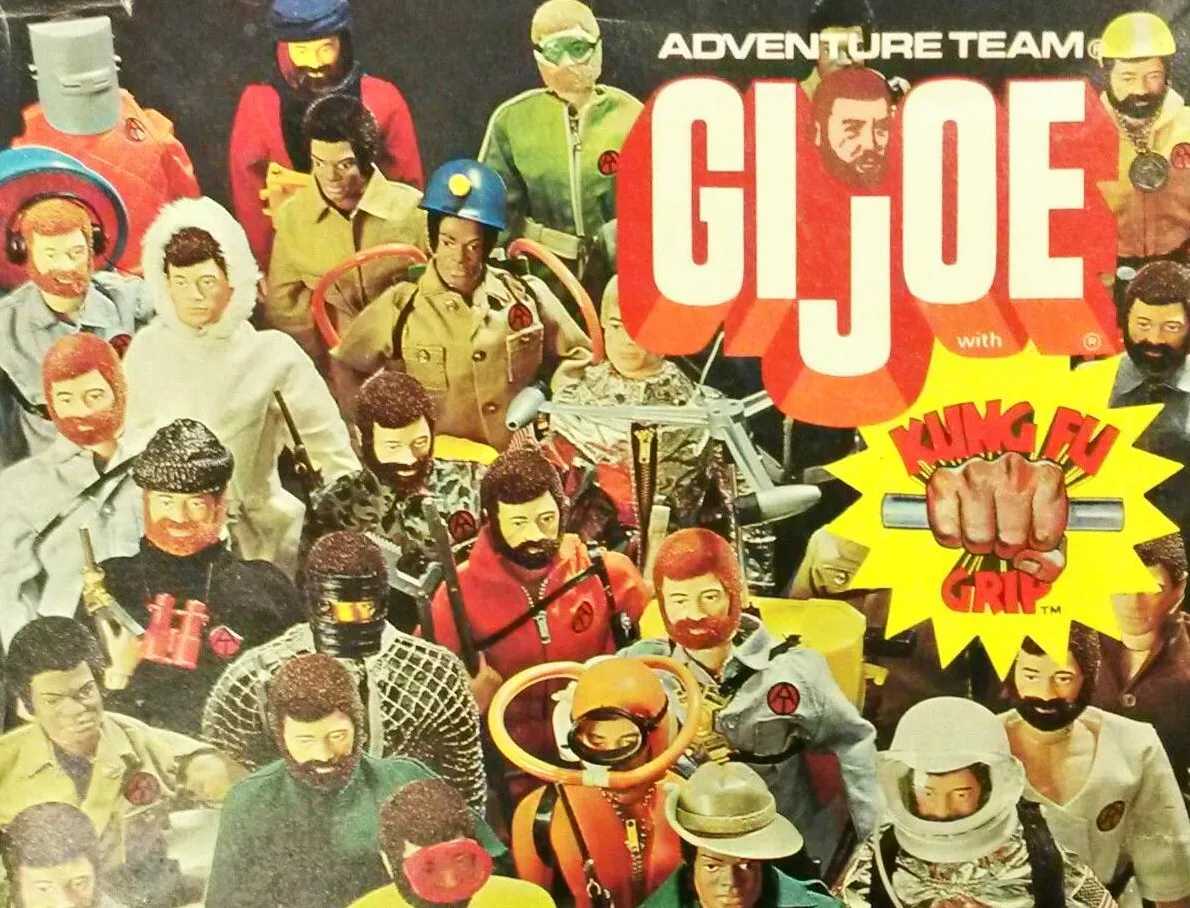
G.I. Joe Adventure Team remains strong because it still understands scale. The figures have presence, the gear matters, and every added accessory expands the play instead of merely decorating it. Even as the market shifts, there is still a lot of power in giving kids a toy that feels substantial and scenario-rich.

What makes 1975 interesting for G.I. Joe is that the action lane is starting to change around it. More toys are arriving with stronger media ties, more overt gimmicks, and more instantly marketable identities. Adventure Team still delivers scope, but it starts to look like the seasoned veteran in a field that is about to get even more character-driven.

That tension is exactly why it belongs here. G.I. Joe shows the old action format still working, even as 1975 begins setting the table for toys that will be sold harder through TV presence, personality, and recognizable narrative hooks. It is still vital, but the winds are shifting.

Fun Fact / Why It Still Matters Adventure Team matters because it helped prove action figures could support a full world of missions, equipment, and expansion long before later toy booms took that idea mainstream.
Magna Doodle
1975

#5 — Magna Doodle

Clean Creativity With Replay Logic
Toy TypeMagnetic drawing toy
Brand LaneMess-free creative play
1975 Rank#5

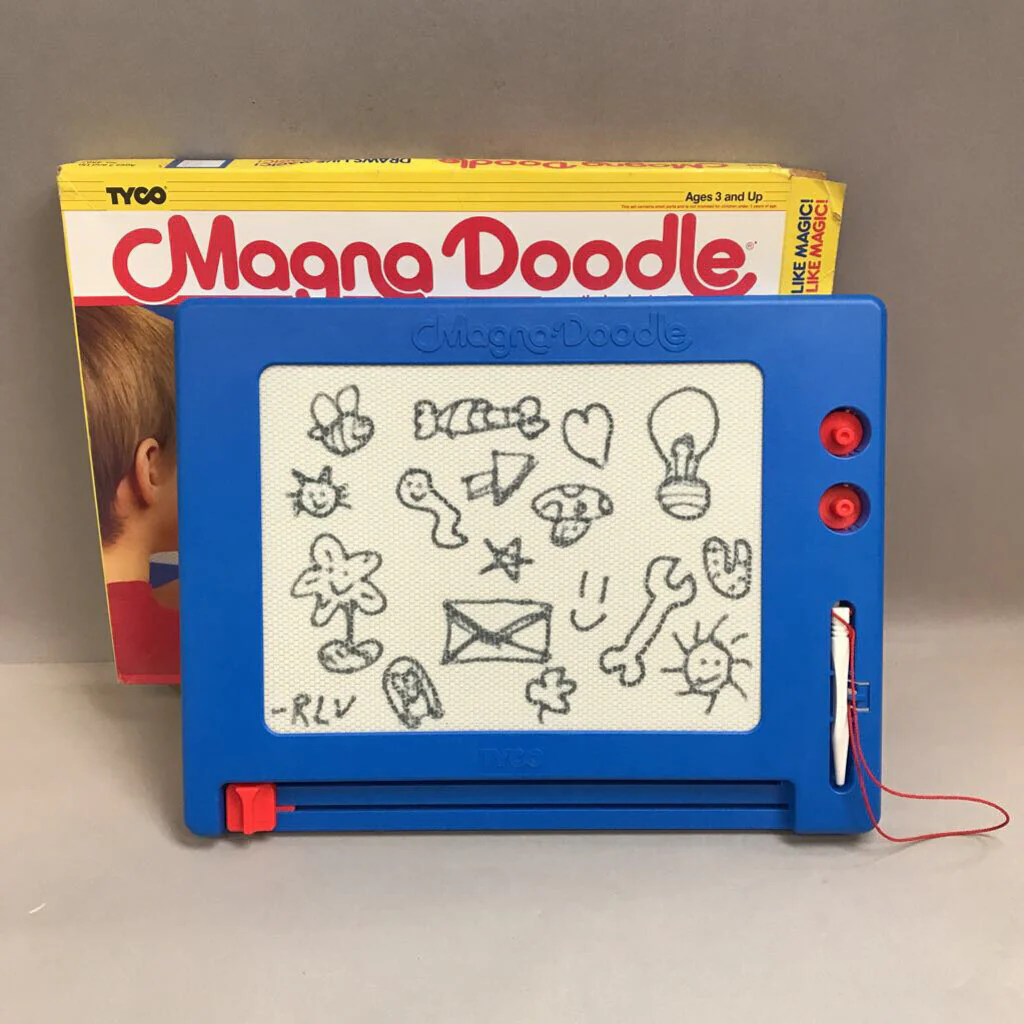
Magna Doodle stays high because its core idea still feels remarkably smart: let kids draw freely without forcing the household to absorb the aftermath. It keeps the tactile satisfaction of a drawing toy, but removes much of the friction that makes adults regret saying yes in the first place.

In 1975, that usability matters even more. The toy aisle is getting more gimmick-aware, more packaging-savvy, and more interested in products that can earn repeated use. Magna Doodle fits beautifully into that shift. It is not loud, but it is efficient in the best possible way. Kids can create, erase, and restart almost instantly.

It also helps define the year by contrast. Pet Rock wins on absurdity. Six Million Dollar Man wins on character and gadget appeal. Magna Doodle wins by solving a real problem while still being fun. That makes it one of the smartest toys on the list and one of the clearest signs that 1975 valued usability right alongside spectacle.

Fun Fact / Why It Still Matters Magna Doodle endured because it made creativity feel low-risk. Kids could experiment freely, erase fast, and never worry about ruining the result.
Connect Four
1975

#4 — Connect Four

Fast Family Strategy With Teeth
Toy TypeStrategy game
Brand LaneQuick tabletop competition
1975 Rank#4

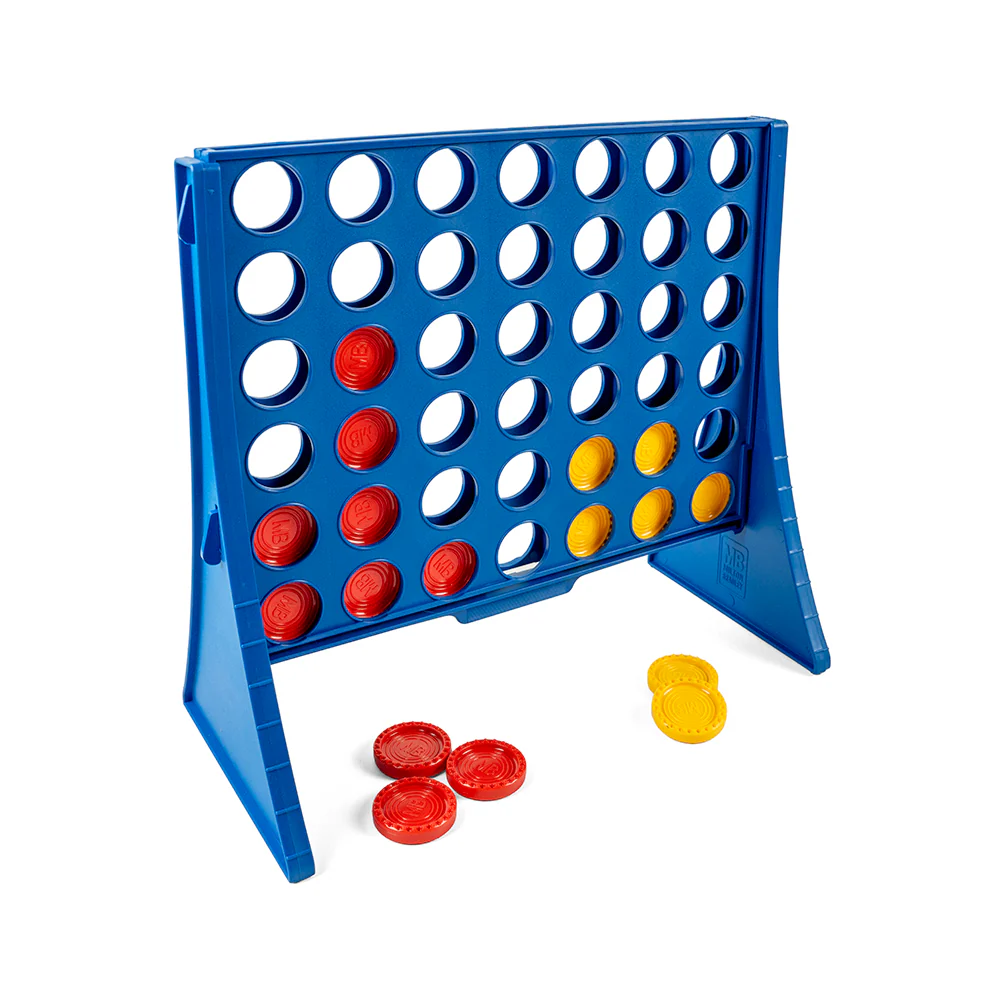
Connect Four remains near the top because it gets almost everything right. The rules are easy, the matches are quick, the rematches are inevitable, and the game is just strategic enough to make players feel smart or betrayed depending on how the round ends. That is a near-perfect family-room formula.

In 1975, its appeal becomes even clearer because the market is rewarding toys that fit real household rhythms. Connect Four does not require a huge commitment, a giant board, or an evening blocked off on the calendar. It delivers concentrated competition in a format that can be pulled out, played, reset, and played again with almost no friction.

It also says something important about the year. Even as novelty items and media-driven toys rise, families still want products that generate direct person-to-person interaction. Connect Four provides that without becoming boring or slow, which is harder than many games ever manage.

That is why it outranks a lot of bigger names. It may not have the broad fantasy ecosystem of Barbie or the collectible energy of Hot Wheels, but it captures one of 1975’s key strengths: compact, repeatable fun that earns its place in a busy house.

Fun Fact / Why It Still Matters Connect Four stayed iconic because it distilled strategy into a format that felt instant, portable, and just competitive enough to start arguments in under five minutes.
Baby Alive
1975

#3 — Baby Alive

Realism Becomes a Selling Point
Toy TypeInteractive doll
Brand LaneRealistic caregiving play
1975 Rank#3

Baby Alive rises this high because 1975 keeps rewarding toys that feel more active and more lifelike than the generations before them. This is not just doll play as wardrobe and posing. This is doll play as process. Care, feeding, routine, response — the child is asked to do more than simply imagine a baby. They are asked to manage one.

That realism is a huge part of the appeal. The mid-70s are increasingly interested in toys that mimic real life more closely, whether through behavior, structure, or cause-and-effect. Baby Alive captures that beautifully. It turns pretend care into a more procedural experience, which makes the play feel more serious, more specific, and more memorable.

It also reflects the broader market trend toward toys with stronger demonstrations. A doll that simply exists is one thing. A doll that can be shown doing something in a commercial or demonstrated in a store has a very different kind of selling power. Baby Alive lives in that lane.

From a memory standpoint, it is perfect 1975 material because it mixes wonder with commitment. Kids got the thrill of realism; adults got a front-row seat to how quickly realism could become a household event. That kind of toy does not vanish from memory easily.

Fun Fact / Why It Still Matters Baby Alive stood out because it made doll play feel procedural and immersive — less “pretend there is a baby” and more “you are now on duty.”
The Six Million Dollar Man
1975

#2 — The Six Million Dollar Man

Bionic TV Tie-In Breakout
Toy TypeAction figure
Brand LaneTV-driven character play
1975 Rank#2

The Six Million Dollar Man hits #2 because it feels like the future of toy marketing arriving in full view. This is where television-driven character appeal gets a bigger, sharper foothold in the toy aisle. Kids were not just buying an action figure. They were buying into a known hero, a built-in story world, and a set of recognizable abilities that already had cultural heat behind them.

That matters a lot in 1975. G.I. Joe still holds the broader adventure lane, but The Six Million Dollar Man makes the case for a more specific kind of action figure: one tied to a face, a catchphrase, a premise, and a televised identity. It is a more targeted fantasy, and that precision gives it real power.

The toy also reflects the decade’s love of gadget appeal. The bionic concept is not just cool in story terms; it is merchandisable. It invites features, accessories, demonstrations, and that wonderful 70s sense that science fiction is now close enough to package in cardboard. This is action play with a media-assisted upgrade.

In a longer historical sense, it is one of the clearest signs that toy culture is moving toward stronger licensing, stronger character attachment, and stronger crossover between what kids watch and what they ask for. That makes it absolutely central to a serious 1975 ranking.

Fun Fact / Why It Still Matters The Six Million Dollar Man matters because it helped push action figures further into recognizable media character territory — a lane that would only get bigger from here.
Pet Rock
1975

#1 — Pet Rock

The Absurdist Fad That Owned the Year
Toy TypeNovelty toy
Brand LaneMarketing-driven cultural craze
1975 Rank#1

Pet Rock takes the top spot because 1975 is the one year where it would almost be dishonest to put anything else first. This was not the most mechanically impressive toy, the most imaginative toy, or the toy with the deepest play pattern. It was something more revealing: a cultural object so perfectly timed, so perfectly packaged, and so shamelessly self-aware that it became the defining toy story of the year.

That is exactly why it worked. The joke was the product. The packaging mattered. The “care” concept mattered. The absurdity mattered. Pet Rock turned marketing into entertainment and entertainment into ownership. Kids loved the silliness, adults got the joke, and the whole thing spread because it felt like being in on a national wink.

In terms of what it says about 1975 toy trends, it is invaluable. This is the year where the aisle proves that cultural heat can matter as much as engineering. A toy does not always need a deep play system if it has a killer concept, a memorable presentation, and enough momentum to become a phenomenon. That is not true every year. It is very true here.

Pet Rock also gives 1975 its personality. 1974 was smarter and cleaner. 1975 is sharper, stranger, and much more comfortable turning hype into a product category. That is why Pet Rock belongs at #1. Not because it was the “best” in a pure toy-design sense, but because no other item captures the year’s cultural energy more perfectly.

Fun Fact / Why It Still Matters Pet Rock hits #1 because it made the package, the joke, and the hype part of the toy itself — which is both ridiculous and kind of brilliant.

Rewind Verdict

The top 10 toys of 1975 show the decade becoming more self-aware about what sells. Compared with 1974, the toy aisle is not just optimizing for cleaner creativity or faster replay anymore. It is also learning how to package personality, media heat, and novelty as products in their own right.

That is why Pet Rock sits at the top. It is the clearest symbol of a year where concept can beat complexity. The Six Million Dollar Man shows TV-connected character play getting stronger. Baby Alive keeps pushing realism. Connect Four and Magna Doodle continue the move toward efficient, repeatable play that fits real households better.

At the same time, 1975 does not erase the earlier decade. Barbie is still a lifestyle machine. Hot Wheels still dominate speed and system play. Play-Doh still owns tactile chaos. G.I. Joe still gives action play scale. The difference is that all of them now coexist with a market that is more branding-savvy, more gimmick-friendly, and more interested in toys that can become conversation pieces.

For Gen X memory, 1975 feels like the year the toy aisle develops a smirk. The play is still real, the floor is still covered, but now the products are getting a little smarter about seducing the culture first and the kid second.

FAQ: Top Toys of 1975

What was the biggest toy of 1975?

Pet Rock is the strongest editorial choice for #1 because it best captures the actual cultural insanity of 1975 — a year when novelty, packaging, and hype became part of the play value.

Was there an official annual toy chart for 1975?

No. Like the other posts in this series, this is a best-supported editorial ranking based on cultural impact, shelf presence, longevity, and how strongly each toy represents the year.

Why rank Pet Rock above more traditional toys?

Because this series is about which toys most defined the year’s toy box and cultural memory, not just which one had the deepest play mechanics. In 1975, Pet Rock was the phenomenon.

How was 1975 different from 1974 in toys?

1974 leaned more toward cleaner creative formats and streamlined replay. 1975 keeps that energy, but adds stronger novelty marketing, sharper gimmicks, and more character-driven appeal.

What toy trends defined 1975?

The biggest trends were novelty gifting, TV-linked character toys, realistic interactive dolls, quick family strategy games, and creative toys designed to be reused constantly instead of just admired once.

Get the Weekly Gen X Drop

New videos, rewinds, and savage nostalgia — first.

JOIN THE NEWSLETTER WATCH VIDEOS

MORE REWINDS