
Swatch Watches in the 80s How Colorful Plastic Turned Time Into Fashion
Swatch watches in the 80s took an ordinary wristwatch and turned it into color, personality, collecting, mall fashion and full-volume self-expression. A watch stopped being something quiet and practical. Suddenly your wrist had a design opinion.
Launched in 1983, Swatch paired affordable quartz construction with Swiss-made credibility, lightweight plastic, bold graphics and advertising that sold attitude instead of heirloom seriousness.
This rewind covers the 1983 launch, the quartz crisis, the designs and ads, the multiple-watch flex, the collecting craze, the mall-culture takeover and the reason Swatch remains one of the clearest wearable symbols of the decade.
Basically, the 80s looked at a watch and said, “Fine. But can it match the leg warmers, annoy a parent and create a collecting problem before lunch?”
DO NOT TOUCH
YOU WILL TOUCH IT
Time went full MTV.
Color, plastic, graphics, collecting and enough visible attitude to make one watch feel suspiciously inadequate.
What Made Swatch Watches an 80s Fashion Fad?
Swatch watches were colorful, affordable Swiss-made quartz watches that became a major 1980s fashion and collecting fad after their 1983 launch. Their plastic construction, graphic designs and youth-focused marketing turned timekeeping into personal style. People bought different models for different outfits, collected unusual designs and sometimes wore more than one at once because the 80s rarely encountered an accessory it could not multiply.
Swatch Watches in the 80s: The Fast Rewind
- Launch era: 1983
- Origin: Switzerland
- Core idea: Affordable Swiss-made fashion watch
- Main appeal: Color, design, collecting, and personal style
- Big 80s energy: Plastic, bright, playful, and logo-friendly
- Fashion impact: Made watches feel casual and expressive
- Collector behavior: People bought multiple designs and treated them like wearable art
- Marketing angle: Not just timekeeping — identity
- Why Gen X remembers them: They were everywhere on wrists, ads, malls, and style-conscious school hallways
- Rewind verdict: A perfect 80s mix of fashion, function, branding, and collectible obsession
How Swatch Watches Started in 1983
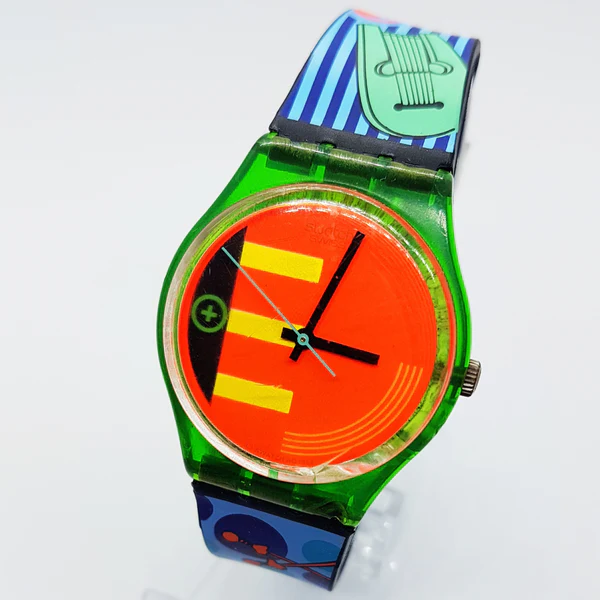
Swatch arrived at a time when the watch industry was under serious pressure. Traditional Swiss watchmaking had long been associated with craftsmanship, mechanical movements, prestige, and expensive seriousness. Then quartz watches changed everything. Battery-powered quartz watches were accurate, cheaper to produce, and increasingly popular. Japanese companies in particular had pushed quartz technology hard, and the Swiss watch industry suddenly looked vulnerable.
Swatch was a response to that crisis, but it was not just a cheaper watch. That is what made it brilliant. It did not try to win by pretending to be a luxury heirloom. It won by becoming the opposite: modern, light, plastic, colorful, playful, and affordable enough that buying more than one did not feel completely unhinged.
The name itself has often been associated with the idea of a “second watch” — not the formal watch you inherited or wore with a suit, but the extra watch you could buy for fun. That idea mattered. It reframed the watch from a once-in-a-long-time purchase into something more like fashion. You could have different watches for different moods, outfits, seasons, or personalities. Very normal. Very restrained. Very 80s.
When Swatch launched in 1983, it hit a culture that was ready for exactly this. The early 80s were becoming brighter, more design-conscious, more youth-focused, and more comfortable with branding as personality. Swatch fit right into that shift. It was useful, but it was also expressive. It had Swiss credibility, but it did not act stuffy. It told time, but the real message was: look at my wrist.
How Swatch Helped Answer the Quartz Crisis
To really understand Swatch, you have to understand the watch-world panic behind it. The so-called quartz crisis changed the global watch industry. Quartz watches were accurate, battery-powered, and cheaper to mass-produce than many traditional mechanical watches. That made them dangerous to the old Swiss model, which had been built around precision craftsmanship and heritage.
Swatch helped flip the script. Instead of treating quartz as a threat, it turned quartz-powered simplicity into an advantage. The watches could be made with fewer parts, priced more affordably, and sold as modern lifestyle accessories. They were not trying to be timeless in the old luxury sense. They were trying to be right now.
That is where Swatch becomes more than just an 80s fad. It was also a business response. It helped Swiss watchmaking compete in the affordable quartz space without surrendering its identity completely. The genius was that Swatch did not just make a cheaper Swiss watch. It made a Swiss watch that felt fun enough for teenagers and design-conscious adults who wanted something less formal.
The great repositioning
Swatch basically repositioned the wristwatch as a style accessory. That seems obvious now because people are used to fashion watches, smartwatch bands, color options, limited drops, and accessories that change with outfits. But in the early 80s, that shift felt fresh. Swatch made the watch less like jewelry and more like pop culture.
Why Swatch Watches Became an 80s Phenomenon
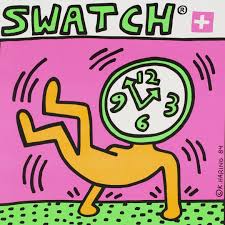
Swatch exploded because it understood the 80s better than a lot of products did. The decade was increasingly visual. Music videos mattered. Logos mattered. Mall culture mattered. Color mattered. Personal style mattered. A watch that came in bright designs, looked good in ads, and felt affordable enough to collect was basically custom-built for the moment.
The watches also solved a very 80s fashion problem: how do you show personality without changing your whole outfit? A Swatch did that instantly. It was small enough to be wearable every day but loud enough to be noticed. You could keep the jeans and T-shirt, add the right Swatch, and suddenly your wrist was doing more work than your haircut.
They were affordable but still cool
Swatch hit the sweet spot between accessible and aspirational. It was not a throwaway toy watch, but it also was not a luxury piece locked behind adult money. That made it perfect for teens, college students, young adults, and style-conscious shoppers who wanted something with design credibility without needing to refinance their allowance.
They came in enough designs to make one feel insufficient
The real trick was variety. A single Swatch was nice. Multiple Swatches made sense. Different colors, patterns, straps, and limited designs created the feeling that there was always another one worth owning. This is how the brand moved from product to collection. Once you start thinking of a watch as a style rotation, one wrist suddenly feels like a scheduling problem.
They were visible social signals
In 80s school and mall culture, visible details mattered. Sneakers, socks, jeans, pins, shirts, hair, and watches all communicated taste. Swatch slid right into that system. It was functional, but nobody bought one just because they needed to know when math class ended. They bought one because it said something.
How Swatch Turned a Watch Into 80s Fashion
Swatch belongs in 80s fashion history because it made the wristwatch feel less like a practical object and more like a style move. The decade already loved accessories: jelly bracelets, pins, big earrings, sunglasses, hair clips, friendship pins, slogan shirts, and sneakers that carried social meaning. Swatch fit perfectly because it was functional but still expressive.
A Swatch could be playful, sporty, bright, clean, weird, artsy, or graphic. That flexibility made it useful across different style tribes. It could work with preppy mall clothes, new wave fashion, casual school outfits, beachy looks, streetwear-adjacent style, or the general mid-80s belief that more color meant more personality.
The two-watch flex
One of the funniest Swatch memories is the way people sometimes wore more than one. Two Swatches at once. Sometimes more. This was not because anyone needed multiple time zones to navigate homeroom. It was because the watches had become accessories, and accessories in the 80s had a way of multiplying when nobody was supervising.
Wearing multiple Swatches turned the product into a visual statement. It said you had options. It said you understood the fad. It said your wrist was apparently hosting a small fashion convention. And because Swatch was playful by design, the excess did not feel completely ridiculous. It felt on brand.
Why Gen X remembers the look
Gen X remembers Swatch because it was one of those objects that instantly dates a photo. You see the colors, the plastic strap, the bold face, the logo, and you know exactly what universe you are in. It is not just a watch. It is a little neon timestamp from the decade of mall mirrors and unnecessary confidence.
How Swatch Advertising Sold Personality Instead of Time

Swatch advertising did not talk like traditional watch advertising. It did not lean heavily into heritage, status, boardrooms, heirlooms, or the idea that one day your grandson would weep over your timepiece. Swatch sold the opposite: movement, play, design, youth, and immediate visual impact.
That mattered because the product itself was part of the message. The ads did not need to convince people that a watch was useful. Everybody understood that. The ads needed to convince people that a watch could be fun. A watch could be colorful. A watch could be chosen the way you chose a shirt or a pair of sneakers. A watch could feel like pop culture.
The brand also understood that a good 80s ad needed to be visually sticky. Strong colors, bold layouts, simple logos, and playful design made Swatch feel at home in magazines, mall displays, and youth-focused retail environments. The watches looked like they belonged in the same world as MTV graphics, album covers, posters, and fashion spreads.
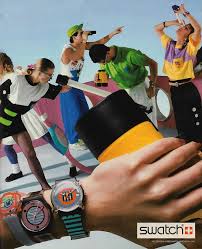
The real pitch: collect the mood
The real pitch was not “buy a watch.” It was “choose a version of yourself.” That is a very different sales message. It makes every new design feel like a new possibility. Today that kind of identity-based marketing is everywhere, but Swatch was early and very good at it.
Why Everyone Wanted More Than One Swatch
Swatch was built for collecting because the design variety made ownership feel open-ended. If every model looks different, then buying one does not finish the story. It starts the story. That is how Swatch turned a practical object into a mini hobby.
The brand’s constant stream of new looks created the same feeling that drives a lot of great fads: there is always another one. Another color. Another pattern. Another strap. Another limited design. Another watch that feels like it fits the outfit, the season, the mood, or the version of yourself you are trying to sell to the cafeteria.
Swatch made watches feel seasonal
Traditional watches were often designed to be long-term purchases. Swatch made watches feel more seasonal, more immediate, and more changeable. That was a huge mindset shift. It connected watches to fashion cycles, not just timekeeping needs.
The collector psychology
The collecting behavior also gave Swatch a social layer. People noticed which one you had. They compared designs. They recognized limited or unusual models. They wore them visibly. A watch became something people could talk about, not just something they glanced at.
That is exactly how a fad deepens. The product becomes a conversation. Then it becomes a collection. Then it becomes a memory.
Why Swatch Belongs Among the Biggest Fads of 1983
Swatch belongs in the 1983 fad conversation because that was the year the brand launched and started changing how people thought about watches. It was not yet just another accessory. It was a sign of where the decade was going: brighter, more branded, more youth-focused, more design-driven, and more comfortable turning everyday objects into identity statements.
That is why it connects so cleanly to the broader 1983 fads lane. The early 80s were full of products and trends that helped define the decade’s direction. Swatch did that from the wrist up. It took function and made it fashionable. It took Swiss watchmaking and made it young. It took plastic and made it cool.
By the mid-80s, the fad had fully expanded into malls, magazines, closets, school hallways, and collector culture. But 1983 matters because that is where the Swatch story starts — before the wrist stacks, before the collector obsession, before the watch became one of the decade’s most recognizable style symbols.
Swatch Watches Timeline: From Quartz Crisis to 80s Icon
Affordable quartz technology puts pressure on traditional Swiss watchmaking, forcing the industry to rethink pricing, production, and consumer appeal.
Swatch introduces colorful, affordable, Swiss-made plastic watches that feel more like fashion accessories than formal timepieces.
The watches spread through youth fashion, mall culture, magazine ads, and school hallways as people start treating them as collectible design objects.
Collectors and style-conscious fans buy multiple models, sometimes wearing more than one at a time because the 80s never met an accessory it could not over-accessorize.
Swatch continues releasing new designs, collaborations, and limited models while original 80s watches become nostalgic collector items.
The brand is still remembered as one of the clearest examples of how the 80s turned everyday objects into colorful lifestyle statements.
Why Swatch Watches Still Matter
Swatch still matters because it proved that design could completely change how people understood a product. A watch did not have to be expensive to feel desirable. It did not have to be serious to feel legitimate. It did not have to be formal to be stylish. It could be plastic, bright, playful, and still carry real cultural weight.
The brand also helped define how accessories would be marketed in the years that followed. Swatch made the case for constant design refreshes, collectibility, limited releases, and personal identity through small wearable objects. You can see echoes of that thinking in everything from fashion watches to sneaker drops to phone cases to smartwatch bands.
For Gen X, though, the legacy is more personal. Swatch is a mall memory. A school memory. A magazine-ad memory. A birthday-gift memory. A “which one did you have?” memory. It is one of those products that instantly brings back the feeling of fluorescent lights, glass display cases, colorful packaging, and the sense that one little accessory could upgrade your whole outfit.
That is why Swatch remains one of the defining 80s fads. It was not just a watch. It was a tiny wearable billboard for the decade’s entire personality: colorful, branded, optimistic, plastic, collectible, and completely allergic to subtlety.
Questions About Swatch Watches in the 80s
What were Swatch watches?
Swatch watches were colorful, affordable, Swiss-made plastic watches that became a major 1980s fashion fad. They were known for bright designs, playful marketing, collectible appeal, and the way they turned watches into casual style accessories.
When did Swatch watches launch?
Swatch watches launched in 1983, making them a perfect fit for the early-80s fad and fashion boom.
Why were Swatch watches so popular in the 80s?
They were popular because they were colorful, affordable, stylish, collectible, and different from traditional watches. Swatch made watches feel youthful and expressive instead of formal and expensive.
Why did people wear more than one Swatch?
Some people wore more than one Swatch because the watches had become fashion accessories and collectibles. Wearing multiple Swatches was a way to show off different colors and designs, and it fit the 80s habit of over-accessorizing with confidence.
Were Swatch watches expensive?
Compared with many traditional Swiss watches, Swatch watches were affordable. That was part of their appeal: they had Swiss-made credibility but were priced and marketed like fun fashion accessories.
How did Swatch help the Swiss watch industry?
Swatch helped the Swiss watch industry respond to the quartz crisis by offering affordable, stylish quartz watches that could compete globally while still carrying Swiss-made identity.
Were Swatch watches a fashion fad or a collector fad?
They were both. Swatch watches were fashion accessories because people wore them to express style, and they were collector items because the brand released many designs that encouraged people to buy more than one.
Why are Swatch watches remembered by Gen X?
Gen X remembers Swatch watches because they were visible in malls, magazines, ads, school hallways, and birthday wish lists. They were one of the decade’s most recognizable wearable fads.
Are vintage Swatch watches collectible?
Yes. Many vintage Swatch watches, especially unusual designs, limited editions, and early models, remain collectible among fans of 80s fashion, watch history, and nostalgic design.
Why do Swatch watches still matter?
Swatch watches still matter because they changed how people thought about watches. They helped make timepieces more casual, colorful, collectible, and fashion-driven, influencing how accessories are marketed even today.