What Were the 6 Biggest Fads of 1986?The Year Top Gun, Adidas, Acid Wash and Just Say No Took Over
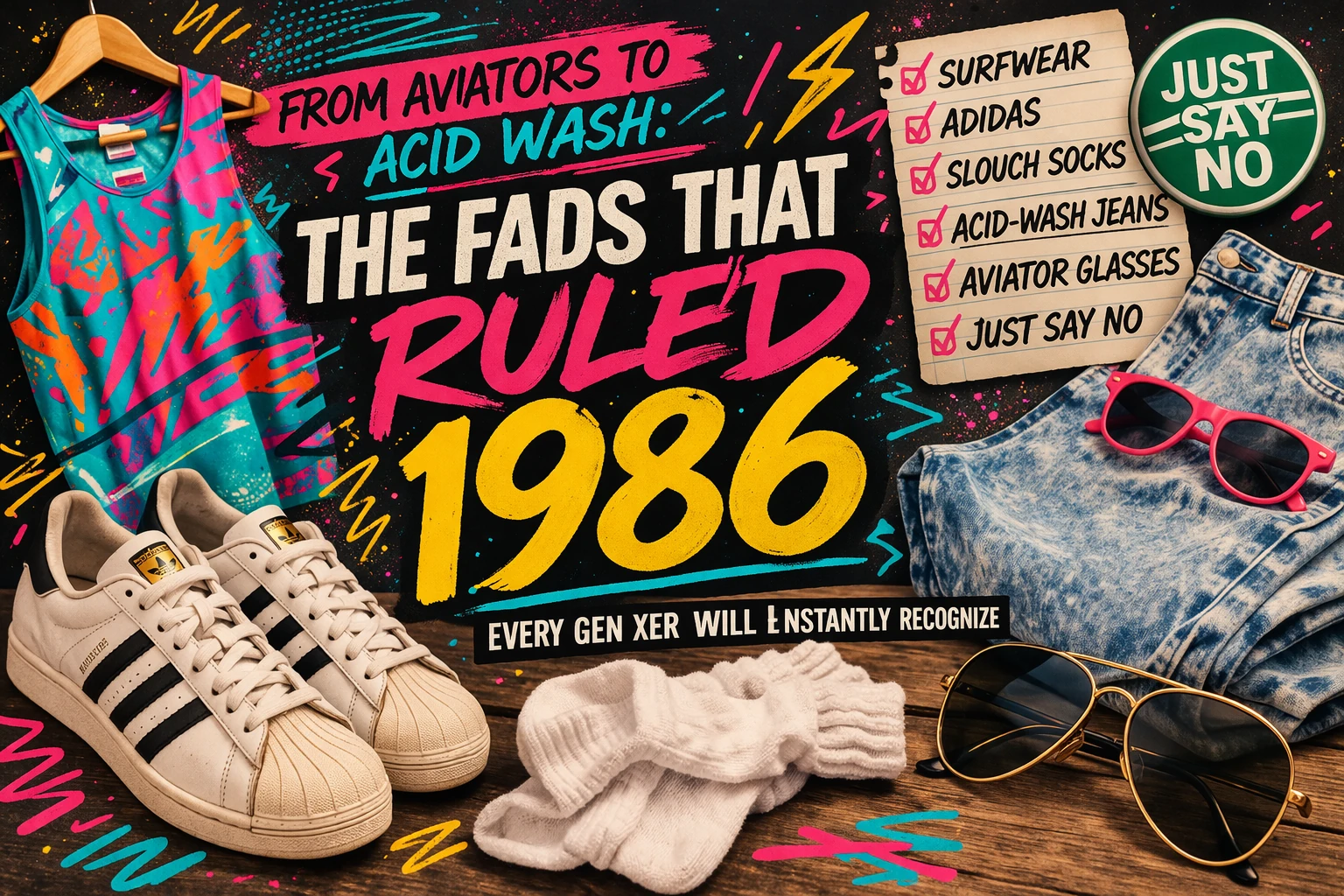
1986 was a fashion-driven fad year with a movie soundtrack running underneath it. Aviators and bomber jackets borrowed confidence from Top Gun, shell-toes carried hip-hop into mainstream style, acid-wash denim demanded attention and surfwear convinced kids in landlocked suburbs that the beach was mostly a state of mind.
These six fads capture 1986 as Gen X actually lived it: in school hallways, malls, skating rinks, movie-theater lobbies, bedroom mirrors and assemblies where the adults handed out Just Say No buttons as though they had finally solved youth culture.
1986 Style Flight Plan
Aviators go on indoors. White sneakers require active protection. Jeans receive a chemical weather pattern. Surf logos travel inland. Slouch socks need adjustment. The school hands everybody a slogan and calls the mission complete.
The year’s biggest fads were built to be seen from across the hallway.
The strongest 1986 trends combined movies, music and wearable identity. They were easy to recognize, possible to copy and specific enough to leave permanent evidence in yearbooks.
What Were the 6 Biggest Fads of 1986?
Our six biggest fads of 1986 are Top Gun aviators and bomber-jacket style, Adidas shell-toes and Run-D.M.C. streetwear, surfwear and Ocean Pacific style, acid-wash jeans, slouch socks with white sneakers, and the Just Say No campaign. The ranking reflects visibility, participation, media saturation, school-hallway impact and how specifically each trend still identifies 1986 for Gen X.
Why 1986 Felt Like the Year Image Became a Full-Time Job
Some 80s fad years belonged to a toy or novelty. The biggest 1986 trends were worn. They appeared on faces, feet, legs and jackets, turning ordinary school mornings into a sequence of decisions about whether the outfit was broadcasting the correct message.
The year also showed how entertainment could supply a ready-made identity. Top Gun offered movie cool in a few recognizable pieces. Run-D.M.C. made Adidas part of a music and streetwear language. Surf brands sold a coastal fantasy. Acid wash transformed the default pair of jeans. Even Just Say No became wearable through buttons and shirts.
The hallway became the inspection line
Every fad on this list could be judged immediately. The shoes were either clean or they were not. The socks were arranged or ignored. The denim was dramatic enough or merely ordinary. Aviators could look cinematic until somebody walked into a locker.
1986 rewarded complete looks
The strongest trends did not stop at one object. They came with attitude, posture, music and a suggested lifestyle. That is why the year feels so specific in memory. Clothing was not only covering people. It was auditioning them for a role.
How Fads Spread in 1986 Before Feeds and Influencers
Trends moved in a physical loop. Entertainment supplied the image, stores sold a version and school decided whether it survived. Nobody needed an algorithm. One strong movie trailer, music video or older sibling could do the entire job.
The result remains visible in yearbooks and home videos. These were not passing images on a screen. They were clothes people wore repeatedly while family members kept recording.
How These 1986 Fads Were Ranked
This is an editorial Gen X ranking based on visibility, participation, media reach, school-life impact, 1986 specificity and long-term memory. A trend ranks higher when it shaped more than one part of everyday life and remains easy to identify without a history lesson.
Top Gun style takes the top spot because no look is more tightly stamped with the year. Adidas and Run-D.M.C. rank second for deeper cultural influence. Surfwear, acid wash, slouch socks and Just Say No complete the list by showing how fashion, music, movies and adult messaging all competed for the same hallway.
The Rest of 1986: Music, Movies, TV, Toys and Commercials
The fads were one slice of a packed year. Keep the same-year rabbit hole going through the 1986 songs, television, movies, toys, chart videos, commercials and deep dives already connected across Smells Like Gen X.
Why These Six Belong on the 1986 List
A real fad does not remain trapped in a campaign, movie or celebrity wardrobe. It escapes into ordinary life. That happened repeatedly in 1986. Movie fashion moved into parking lots. Hip-hop style reshaped sneaker culture. Surf logos traveled inland. Denim received a louder surface. Socks became adjustable accessories.
Just Say No belongs for the same reason, even though it arrived from adults rather than youth culture. The slogan became part of the year’s visible environment through clubs, buttons, posters, assemblies and public-service announcements. Recognition was universal whether enthusiasm was not.
Together, the six fads capture the year’s full visual range: cinematic swagger, streetwear authenticity, mall fantasy, processed denim, carefully styled basics and an official slogan delivered with absolute confidence.
What 1986 Looked Like From Inside the Hallway
Somebody had aviators on before lunch and was clearly committed to the role. Somebody else protected white shell-toes as though the floor had been declared hostile territory. Slouch socks were arranged to look unarranged. Acid-wash denim competed with itself. Surfwear suggested a beach weekend that was not geographically possible.
Meanwhile, the school was covering the walls with Just Say No messaging and apparently believed the same students negotiating sneaker status would appreciate receiving national drug policy in button form.
The 1986 Fad Countdown
- #6 Just Say NoThe slogan that moved into clubs, assemblies, posters and wearable school messaging.
- #5 Slouch Socks with White SneakersA small fashion detail that required surprisingly active management.
- #4 Acid-Wash JeansDenim stopped being background clothing and began demanding its own lighting.
- #3 Surfwear and Ocean Pacific StyleBeach identity traveled far beyond the beach through bright logos and mall fashion.
- #2 Adidas and Run-D.M.C. StreetwearHip-hop, shell-toes and tracksuits changed the meaning of sportswear.
- #1 Top Gun Aviators and Bomber JacketsThe movie-fueled look that became instant 1986 shorthand.
Just Say No
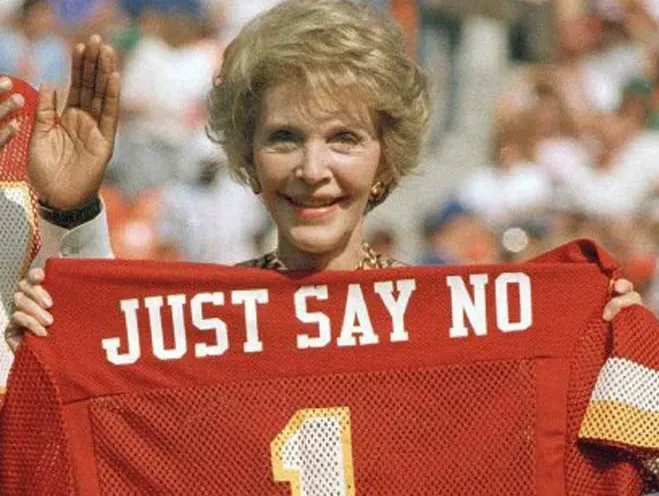
By 1986, Just Say No had moved far beyond a First Lady’s talking point. It was in schools, assemblies, community programs, buttons, posters, public-service announcements and every other place adults could find an empty surface and decide children needed a slogan.
That visibility is why it qualifies as a fad even though it began as a campaign. The phrase was short, repeatable and easy to print. Kids wore it, clubs adopted it and schools treated it as though a three-word answer could carry the entire weight of the drug crisis.
The campaign also shows how thoroughly adults could brand youth culture in the 80s. While kids were choosing sneakers, jeans and jackets, schools were issuing their own approved message in matching fonts and primary colors. Whether students believed it, mocked it or simply absorbed it, nobody missed it. For the full history, school messaging, celebrity PSAs and Gen X memories, read our deep dive into the Just Say No campaign in the 1980s.
The school became the distribution network
Assemblies, clubs, classroom materials and bulletin boards gave the slogan daily repetition. It did not need to be cool in the usual sense. It only needed to appear everywhere until recognition became automatic.
The button turned policy into an accessory
Pins and shirts made the campaign wearable. That visual presence placed the message alongside the year’s fashion fads, even though the adults producing it would not have described the campaign as style.
Slouch Socks with Keds and White High-Tops
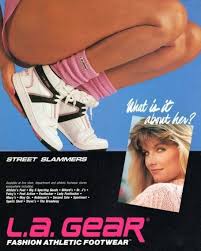
It is hard to explain how much work the 80s put into making an outfit look casual. Slouch socks are perfect evidence. They were not simply pulled on. They were adjusted, scrunched, checked and paired with Keds or clean white high-tops until the arrangement looked as though no effort had occurred.
The fad spread because it was accessible. You did not need an expensive jacket or designer jeans. A pair of socks and the right sneakers could make a basic school outfit feel finished, which gave more kids a way to participate in the year’s image competition.
The look also captured a larger 1986 rule: nothing was too small to become style-sensitive. Hair, cuffs, laces, socks and accessories all carried information. By the time the outfit reached the ankle, the decade was still making decisions.
White sneakers needed maintenance
Clean shoes were part of the effect. One trip through a wet parking lot could turn the crisp school-hallway look into evidence that practical footwear might have been a better idea.
The wristwatch of the lower leg
Slouch socks were visible, easy to compare and simple to change. Colors, height and the exact amount of scrunching created more variation than an ordinary pair of socks had any right to support.
Acid-Wash Jeans
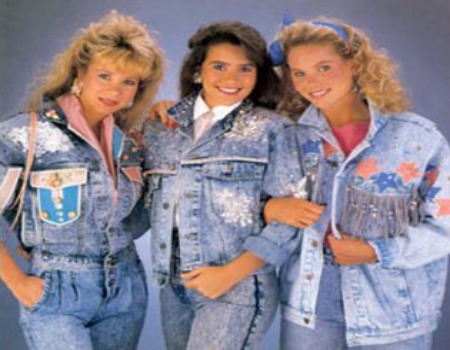
Acid-wash jeans were the opposite of subtle, which is probably why 1986 welcomed them so enthusiastically. The bleached, marbled surface made plain denim look unfinished by comparison and gave the most ordinary item in the closet a full special-effects department.
That transformation mattered because almost everybody wore jeans. When denim changed, the visual default of school, malls and weekend life changed with it. A fad attached to an everyday item spreads farther than a novelty that only comes out occasionally.
Acid wash also worked across style groups. It could appear in fitted jeans, oversized jackets, skirts and coordinated outfits that tested whether the human eye had a practical limit for processed denim. The look photographed loudly and remains one of the quickest ways to place a family snapshot in the second half of the 80s.
The pattern did the styling for you
The finish created texture and contrast before another item was added. Even a simple top looked more deliberate beside denim that appeared to have survived a chemical weather event.
Too much denim remained a theoretical concept
Jeans could be matched with an acid-wash jacket because the decade did not believe one highly visible surface should prevent the addition of another.
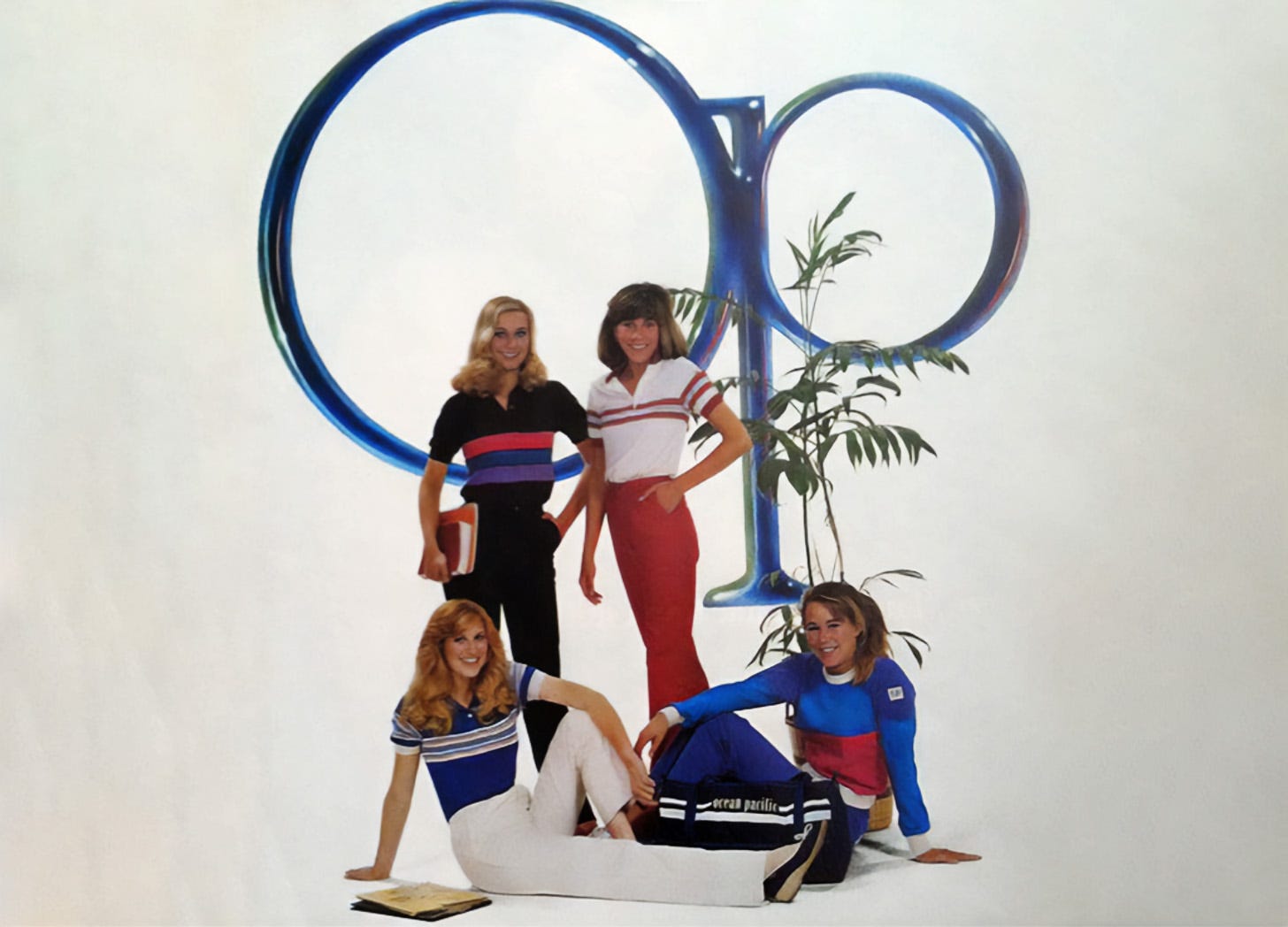
Surfwear and Ocean Pacific Style
One of the most wonderfully 1986 details was how many people embraced surfwear without having any meaningful relationship with surfing. That did not matter. Ocean Pacific–style clothing sold a fantasy—sunshine, beach freedom, bright color and a much cooler schedule than the one most suburban kids were actually living.
The mall made the fantasy portable. A kid could be hours from the coast, standing beneath fluorescent lights in February, and still dress as though the next obligation involved checking the waves.
Surfwear ranked high because it offered a complete identity without becoming formal or expensive-looking. The style felt relaxed, but it was not accidental. Logos, color combinations, shorts and casual tops created a recognizable lane that worked for school, weekends and the general belief that summer should last longer than weather permitted.
The logo supplied the geography
Ocean Pacific and similar surf brands allowed clothing to carry the coastal connection. The wearer did not need proof of surfing ability. The shirt handled the paperwork.
Casual still required coordination
Bright colors, striped tops, shorts and accessories could be combined into a look that appeared easy while quietly depending on every piece agreeing about the imaginary beach day.
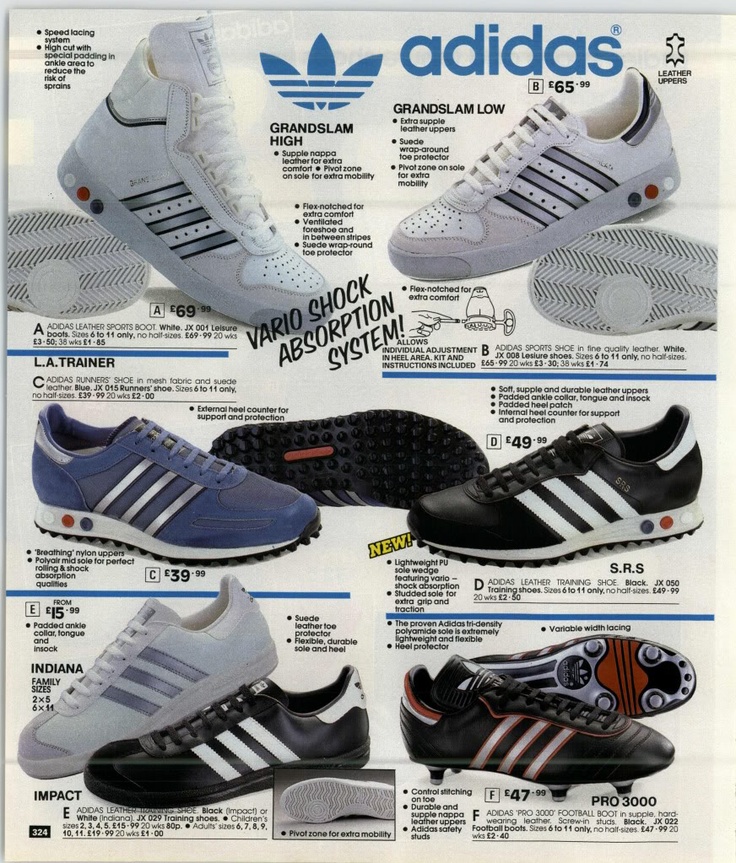
Adidas Shell-Toes and Run-D.M.C. Streetwear
By 1986, Adidas shell-toes were no longer simply athletic shoes. Run-D.M.C. had turned the Superstar, tracksuit and three-stripe look into a complete cultural statement. The style carried music, neighborhood identity and confidence in a way ordinary mall fashion could not manufacture on its own.
The release of “My Adidas” made the relationship explicit. Adidas records 1986 as the year Run-D.M.C. helped turn the Superstar into a streetwear icon and opened a new kind of partnership between a music act and a sports brand.
That history is why this ranks second. The trend had immediate visual power, but its influence extended much farther. It helped establish the modern idea that artists could shape sneaker culture, that sportswear could operate as lifestyle fashion and that brand loyalty could carry cultural meaning rather than merely product preference.
Clean sneakers carried status
The shell-toe silhouette was recognizable from a distance. Condition mattered, too. A bright white pair could look almost illuminated beneath school fluorescent lights.
The outfit had a point of view
Tracksuits, hats and unlaced Superstars did not feel like random pieces. Together they created a disciplined visual language tied directly to hip-hop’s growing mainstream force.
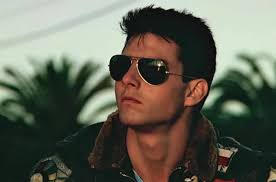
Top Gun Aviators and Bomber-Jacket Style
If 1986 had one visual shortcut, it was Top Gun style. Paramount’s film opened on May 16, became the year’s biggest movie and delivered a complete wearable fantasy: aviator sunglasses, bomber-jacket energy, military patches, confidence and the belief that every ordinary entrance deserved its own soundtrack.
The look spread because it was easy to borrow. Nobody needed an actual flight suit. Aviators, the right jacket and enough attitude could produce a low-budget version of Maverick before somebody reached the mall parking lot.
Top Gun takes number one because the film and the look are welded to the year. Other trends moved across several seasons, but aviators and flight-jacket cool hit with a clean 1986 timestamp. The movie’s MTV-influenced visual style, huge soundtrack and blockbuster reach turned costume details into everyday aspiration.
The sunglasses did most of the work
Aviators were affordable, instantly recognizable and capable of adding confidence without requiring the wearer to say anything. This was useful because the spoken explanation would usually have weakened the effect.
The jacket supplied the fantasy
Bomber and flight-jacket styling carried patches, military associations and cinematic swagger. It made an ordinary person look prepared for a mission that was almost certainly located near the food court.
What Happened to the Biggest Fads of 1986?
Adidas and Run-D.M.C. had the deepest structural afterlife because their connection helped shape modern sneaker culture and entertainment endorsements. Top Gun remained the strongest year-specific image, reinforced by the film’s permanent place in popular culture.
Acid wash, surfwear and slouch socks continue to return whenever fashion decides the recent past is ready to be sold back to people who remember the first version. Just Say No survives less as fashion than as one of the most recognizable messages of the decade.
The Final Verdict on the Biggest Fads of 1986
1986 was one of the decade’s clearest image years. Movies, music and fashion did not merely influence one another. They arrived as complete identity kits. Top Gun gave the culture a cinematic uniform. Run-D.M.C. made sneakers and tracksuits part of a powerful music language. Surfwear sold location as lifestyle. Acid wash and slouch socks made everyday clothing trend-sensitive from waist to ankle.
Just Say No shows the adult side of the same system. The campaign used repetition, branding and wearable messaging to compete for attention in the same visual world as every fashion fad around it.
More than anything, 1986 felt like a year when everyone was being handed a role. The only question was whether the costume came from a movie, a record, a surf shop, a denim rack or the school office.
Historical Sources and Further Reading
These sources document the strongest historical anchors behind the ranking: Top Gun’s May 1986 debut and cultural reach, Run-D.M.C.’s role in turning the Adidas Superstar into a streetwear icon, and the national visibility of the Just Say No campaign during 1986.
Questions About the Biggest Fads of 1986
What were the six biggest fads of 1986?
Our ranking is Top Gun aviators and bomber-jacket style, Adidas shell-toes and Run-D.M.C. streetwear, surfwear and Ocean Pacific style, acid-wash jeans, slouch socks with white sneakers, and the Just Say No campaign.
Why is Top Gun style ranked number one?
It is the most instantly and specifically tied to 1986. The movie supplied a simple, wearable formula—aviators, flight-jacket energy and cinematic confidence—that spread far beyond theaters.
Why does Adidas and Run-D.M.C. rank second?
The 1986 release of “My Adidas” helped turn the Superstar into a streetwear icon and established a highly influential connection between hip-hop artists, sneaker culture and sports brands.
Why is Just Say No considered a fad?
The campaign became part of everyday youth culture through clubs, assemblies, buttons, posters, television appearances and public-service announcements. Its visibility operated like a national slogan craze.
When did Top Gun come out?
Top Gun opened in the United States on May 16, 1986. Its soundtrack, visual style and blockbuster success made it one of the year’s defining pop-culture events.
What were slouch socks?
Slouch socks were socks deliberately scrunched around the ankle and commonly paired with Keds or white high-top sneakers. The arrangement was styled to look casual.
Why were acid-wash jeans so popular?
They transformed ordinary denim into a high-contrast statement piece. Because jeans were everyday clothing, the new finish spread visibly through schools, malls and family photographs.
What was Ocean Pacific style?
Ocean Pacific and similar surfwear brands sold a bright, casual beach identity through logos, shorts, tops and accessories. The style spread far beyond coastal communities.
Did Run-D.M.C. really change Adidas history?
Yes. Adidas describes 1986 and the song “My Adidas” as a turning point that made the Superstar a streetwear icon and led to a groundbreaking music-and-sportswear partnership.
How did fads spread in 1986 without social media?
They spread through movies, MTV, radio, television commercials, malls, teen magazines, school hallways, older siblings and word of mouth.
Which 1986 fad had the longest-lasting influence?
Adidas and Run-D.M.C. had the strongest structural influence because the music-sneaker partnership helped shape modern streetwear, endorsements and sneaker culture.
Is this an objective historical ranking?
No. It is an editorial Gen X ranking based on visibility, participation, media reach, school-life impact, 1986 specificity and long-term memory.