The Year the Toy Aisle Changed Generations
Top 10 Toys of 1995: Barbie, Sky Dancers & the Toy-Aisle Handoff
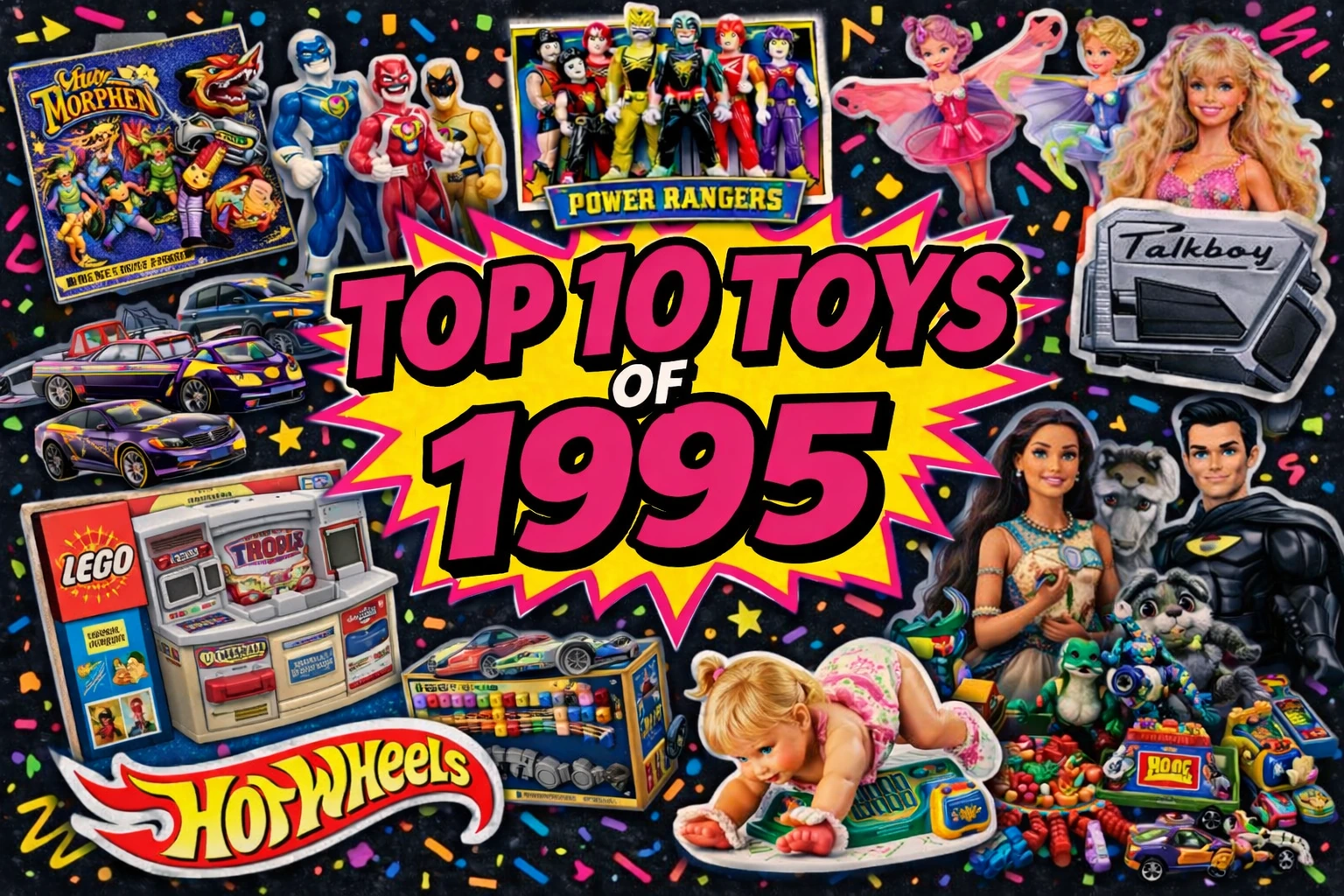
The top toys of 1995 were Barbie, Sky Dancers, Mighty Morphin Power Rangers, Deluxe Talkboy, Batman Forever toys, Baby Tumble Surprise, Pocahontas dolls and toys, Hot Wheels, Kitchen Center All-In-One and Lego.
This was not a year with one clean toy monarch. It was a transition year: classic brands remained powerful, media properties still moved merchandise, flying dolls delivered a new visual gimmick, and the shelf increasingly spoke to younger Gen X and older millennial kids.
The Short Answer
What Were the Most Popular Toys of 1995?
The most popular toys of 1995 included Barbie, Sky Dancers, Mighty Morphin Power Rangers, Deluxe Talkboy, Batman Forever toys, Baby Tumble Surprise, Pocahontas dolls and toys, Hot Wheels, Kitchen Center All-In-One and Lego.
Barbie ranks first because 1995 was a fragmented year without one dominant craze, making the brand’s category leadership, gift flexibility and permanent shelf strength especially important. Sky Dancers were the clearest new sensation, while Power Rangers and Talkboy remained major carryover hits.
The Fast Rewind
Top 10 Toys of 1995 at a Glance
Start with the complete ranking, then jump directly to any toy for the full explanation.
- #1BarbieThe most durable toy empire wins a fragmented year
- #2Sky DancersA flying launch gimmick becomes the year’s clearest new sensation
- #3Mighty Morphin Power RangersThe action dynasty cools but remains a major shelf force
- #4Deluxe TalkboyThe movie gadget outlives its first panic season
- #5Batman Forever ToysBatman absorbs another movie cycle without leaving the aisle
- #6Baby Tumble SurpriseVisible movement gives the baby-doll lane a stronger commercial hook
- #7Pocahontas Dolls and ToysDisney recognition turns a movie event into doll and accessory demand
- #8Hot WheelsLow price and endless variation keep the die-cast system nearly bulletproof
- #9Kitchen Center All-In-OneA large role-play set becomes a major gift for younger children
- #10LegoOpen-ended construction play keeps classic toy strength alive
How the List Came Together
How the Top Toys of 1995 Were Ranked
This is a transparent editorial ranking. No single complete public chart cleanly compares fashion dolls, flying toys, action figures, electronic gadgets, movie merchandise, pretend-play sets, construction toys and die-cast cars across the entire year.
Holiday demand and retail visibility
The ranking considers Christmas-list energy, shelf presence, commercial repetition, giftability and whether the product was a recognizable category leader during a fragmented season.
New sensation versus durable system
Sky Dancers represent new heat. Barbie, Lego and Hot Wheels represent systems that remained strong without depending on one short craze. Both kinds of success matter.
How clearly each toy defines 1995
The strongest entries capture the year’s specific handoff: flying dolls, fading Ranger mania, movie gadgets, Disney tie-ins, classic-toy resilience and larger role-play products for younger children.
Category differences stay visible
A low-priced car, a giant play kitchen, a fashion doll and an electronic recorder do not compete through identical sales patterns. The order weighs year-specific strength without pretending they do.
The Shelf Loses One Center of Gravity
Why 1995 Changed Toy Culture
The year matters because no single craze owns the whole market. Several categories remain powerful at once, and the handoff toward a younger mid-90s audience becomes much easier to see.
Durability mattered more in a fragmented year.
Barbie, Lego and Hot Wheels did not need one explosive season to justify their places. Their expandable systems, broad price points and cross-generational recognition gave them stability.
The newest hits needed a visible performance.
Sky Dancers launched. Baby Tumble Surprise moved. Talkboy changed voices. The feature had to be easy to demonstrate in a commercial and easy to repeat when the toy reached the living room.
Media still converted awareness into merchandise.
Batman Forever and Pocahontas show how films could create immediate toy recognition even when neither property controlled the entire year.
The audience was visibly shifting younger.
Kitchen Center All-In-One, interactive baby dolls and spectacle-driven products helped mark the transition from toys many Gen X kids considered their own toward the toy culture arriving for the next group.
Five Power Centers in a Fragmented Aisle
What Actually Drove the 1995 Toy Market?
The year becomes clearer when the toys are grouped by the kind of demand they created. Each force gets a full-width horizontal card instead of another narrow card grid.
The Durable Toy Empire
Barbie, Lego and Hot Wheels survived because each product connected easily to earlier purchases. Another doll, set or car expanded a familiar system instead of starting from zero.
In a season without one universal craze, permanent shelf infrastructure became a major advantage.
The Flying Demonstration Hit
Sky Dancers offered one of the clearest new product demonstrations of the year: pull the launcher and watch the doll spin upward.
Motion, surprise and visual spectacle made the feature instantly understandable, while character designs gave the product collectible and display appeal.
The Carryover Franchise
Power Rangers and Talkboy remained significant even after their first explosive seasons. Their strength now came from familiarity plus repeatable behavior rather than novelty alone.
The brands were cooling, but they had not disappeared—and that distinction tells the story of a market between waves.
The Movie-Merchandise Lane
Batman Forever and Pocahontas translated film awareness into action figures, dolls, vehicles and accessories without needing to become the only toy story of the year.
Media recognition remained valuable even when demand was spread across several categories instead of concentrated in one phenomenon.
The Younger Role-Play Market
Kitchen Center All-In-One and Baby Tumble Surprise point toward a younger audience attracted to large environments, visible movement and familiar domestic or nurturing play.
These products show why 1995 feels less like an ending than a handoff: the aisle remained active, but it was increasingly speaking to someone else.
From #10 to #1
The Top 10 Toys of 1995 Countdown
Ten products and one transitional year where classic systems, fading phenomena, movie merchandise and a few unmistakable new sensations shared the shelf.
Classic Toy Strength at the Exact Right Time
Lego
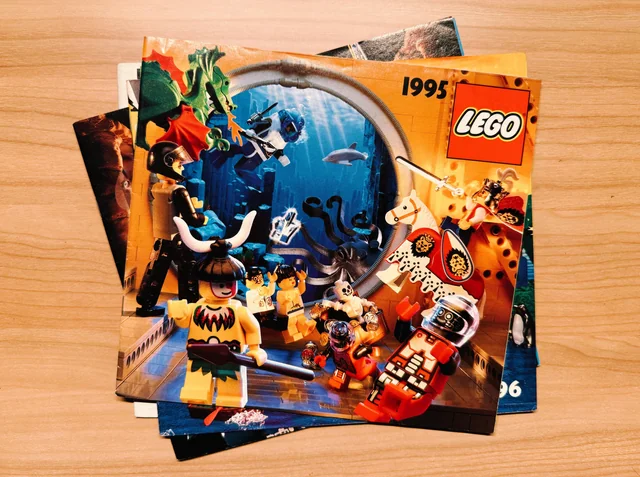
Lego opens the countdown because 1995 rewarded dependable toys as well as hot new products. The bricks offered something many trend items could not: old sets and new sets still worked together, and the play pattern did not expire when a television season ended.
That compatibility created unusual value. A small box could expand a collection already spread across several birthdays, while a large set still felt substantial enough to serve as the main gift. Children could follow instructions, ignore them completely or combine everything into one unstable structure with no known building code.
Lego also carried cross-generational trust. Adults understood why it was worth buying, older siblings recognized it and younger children needed no introduction. In a year defined by a changing audience, that continuity helped the brand remain culturally neutral territory.
Its number-ten position reflects year-specific heat rather than long-term importance. Lego may have been less frantic than Sky Dancers or Power Rangers, but it remained one of the strongest examples of open-ended play surviving a louder commercial environment.
For Gen X, Lego in 1995 feels like proof that a toy did not need batteries, a catchphrase or a movie logo to keep earning floor space and foot injuries.
Big Plastic Domestic Empire Energy
Kitchen Center All-In-One
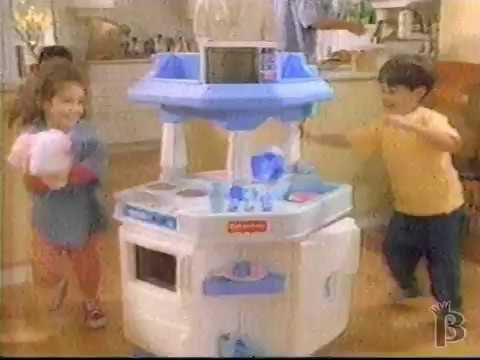
Kitchen Center All-In-One makes the list because large pretend-play environments remained major gifts even when action figures and gadgets attracted more headlines. The size of the set created immediate Christmas-morning impact and made the product feel complete before one accessory was arranged.
Pretend kitchens worked through recognition rather than fantasy lore. Children already understood counters, sinks, food, dishes and the strange authority of telling another person what was being served. The play environment turned ordinary household behavior into a child-controlled world.
The product also points toward the younger audience becoming more central in 1995. Older children were increasingly focused on media brands, gadgets or games, while large role-play sets remained powerful for kids still in the stage where an entire corner of a room could become the toy.
Its strength was category leadership rather than cultural domination. In a fragmented year, being one of the most desirable products within a major developmental lane was enough to matter.
For Gen X, a toy kitchen in 1995 could feel less like the center of your own world and more like visible evidence that the aisle had started marketing to the kids behind you.
Cheap, Collectible and Basically Bulletproof
Hot Wheels
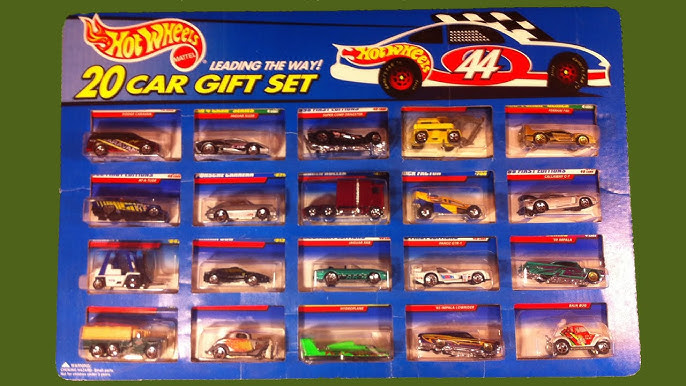
Hot Wheels stay in the top ten because a fragmented year is good for a product that can win through price, familiarity and endless variation. One car worked as an impulse purchase, stocking stuffer or small reward, while tracks and playsets expanded the system into larger gifts.
The line also benefited from a nearly frictionless collecting loop. Every new paint scheme or vehicle shape looked like another legitimate addition, and the small package made comparison easy. Children could own several without feeling finished or requiring a second bedroom.
Cross-generational recognition gave Hot Wheels another advantage. Adults knew the brand, older siblings understood the format and younger kids could begin without instructions. That continuity made the cars one of the aisle’s most dependable background systems.
The product did not need to own television or movies. It only needed enough fresh designs to keep the next hook visible on the peg, which is a remarkably durable business model.
For Gen X, Hot Wheels in 1995 feel like one of the last toy lines still operating under the ancient law that small metal cars are always acceptable.
Disney Movie Awareness Still Converts
Pocahontas Dolls and Toys
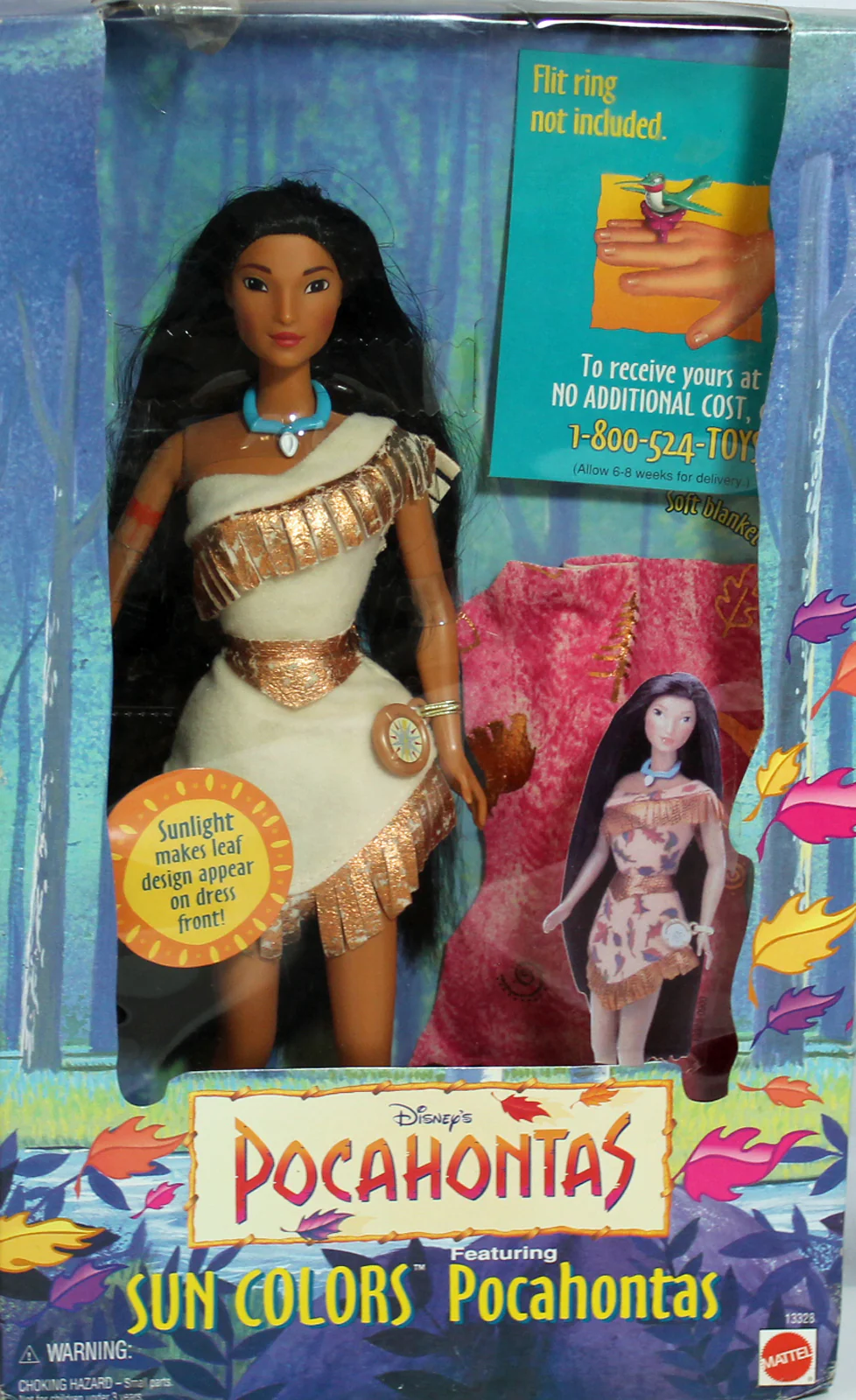
Pocahontas dolls and toys rank seventh because Disney could still translate a major movie event into immediate product recognition. Character dolls, outfits and accessories arrived with a story, visual identity and soundtrack awareness already established.
That shortened the distance between seeing the film and understanding the merchandise. Adults knew the title, children knew the character and the package did not need to build a new fantasy from scratch. The film performed much of the introduction before the shopping trip.
The line also reflects the audience transition visible across 1995. Disney animation had become a major part of the shared childhood culture inherited by younger Gen X and older millennial kids, making movie dolls feel central rather than peripheral.
Pocahontas did not dominate the year, but it shows why movie merchandise remained dependable in a fragmented market. Recognition could produce a meaningful product lane even without creating one nationwide shortage.
For Gen X, Pocahontas merchandise in 1995 feels like one more sign that the toy aisle was being reorganized around the next group’s movie memories.
Baby-Doll Personality Gets Louder
Baby Tumble Surprise
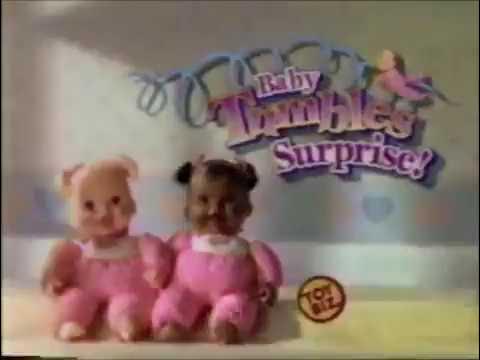
Baby Tumble Surprise ranks sixth because the mid-90s doll aisle increasingly rewarded products that performed. A traditional baby doll depended on nurturing play after the package opened. An interactive doll added a visible behavior adults could understand in a commercial.
Movement supplied the “watch this” moment. The feature made the product easier to demonstrate, easier to remember and easier for children to show other people. That social visibility mattered in a market where toys were expected to explain themselves quickly.
The line also reveals the generational handoff. Earlier doll categories remained recognizable, but the presentation grew louder and more feature-driven for children accustomed to products with stronger demonstrations and character identities.
Its ranking reflects how well the toy represents 1995 rather than how long the brand lasted. Baby Tumble Surprise feels tied to the moment when interactivity became a basic expectation across more of the doll aisle.
For Gen X, Baby Tumble Surprise feels like the kind of product that clearly belonged to the younger kids coming up behind you—and wanted everyone in the room to notice.
Batman Refuses to Leave the Aisle
Batman Forever Toys
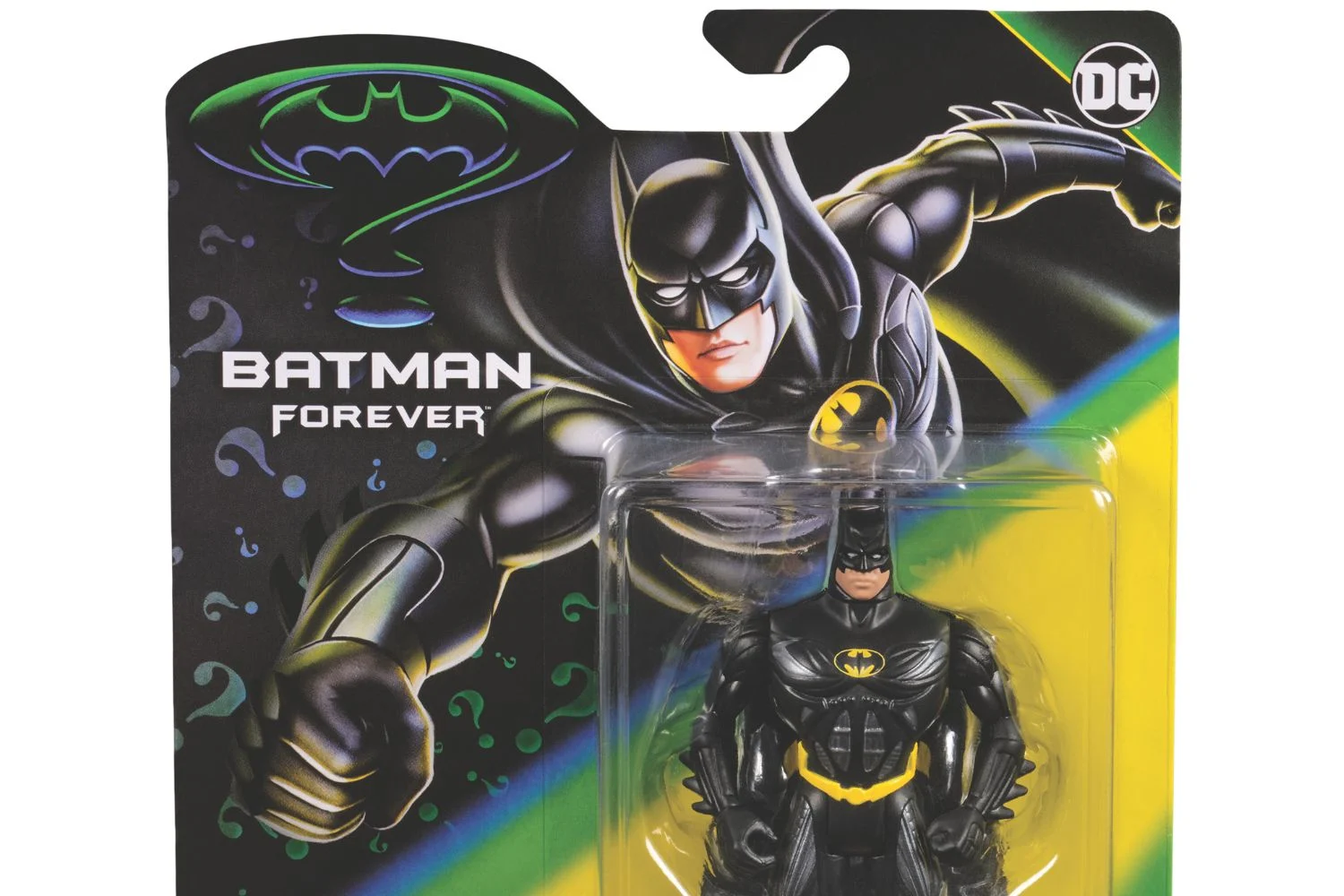
Batman Forever toys sit in the middle of the ranking because Batman remained one of the decade’s most reusable merchandising platforms. A new movie could introduce costumes, villains, vehicles and color schemes without forcing the brand to begin again.
That flexibility was especially useful in 1995. The market was fragmented, so a durable property did not need to become the only craze. Batman simply needed to remain consistently recognizable and give toy makers enough visual material for another assortment.
The line also bridged several audiences. Older Gen X kids remembered earlier Batman cycles, while younger viewers could enter through the newest movie, animated television or the universal appeal of gadgets and a black cape.
Inside the wider 90s action figure wars, Batman survived because the character could absorb toy-only armor and accessories without becoming completely unreadable.
For Gen X, Batman Forever toys feel like the brand proving once again that neon packaging, oversized launchers and another Batmobile were apparently all valid interpretations of the same basic idea.
The Gadget Craze With Real Staying Power
Deluxe Talkboy
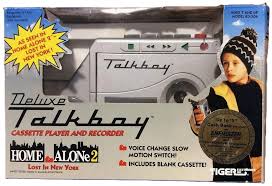
Deluxe Talkboy staying this high is one of the most revealing parts of 1995. Many gadget toys vanish after one holiday rush. Talkboy lasted because recording, playback and voice changing created a social loop children still wanted to use.
The product generated behavior immediately. Record a voice, change the speed, play it back, laugh, hand it to somebody else and make the joke worse. That repeatable interaction allowed the gadget to move beyond simple recognition from a movie.
Talkboy also pointed toward the toy culture arriving later in the decade: more media-derived electronics, more products valued for reactions and more devices that sat somewhere between toy, prop and personal technology.
Its ranking below Power Rangers, Sky Dancers and Barbie reflects the cooling of the original craze, not irrelevance. Remaining a major product several seasons after the movie connection was an achievement by itself.
For Gen X, Talkboy in 1995 feels like the moment toys started becoming gadgets you performed with rather than objects you merely placed into a fictional battle.
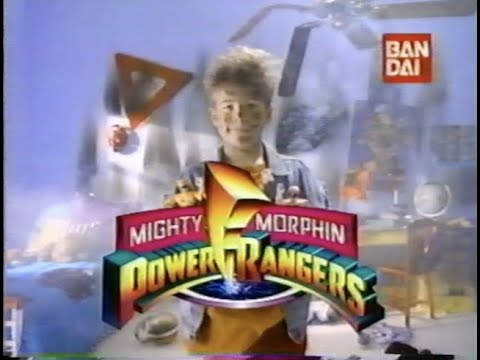
No Longer the Dynasty, Still a Force
Mighty Morphin Power Rangers
Mighty Morphin Power Rangers rank third because the line was no longer the uncontested emergency of 1994, yet it remained one of the strongest action brands in the country. The difference between cooling and disappearing is enormous.
Color-coded identity, team collecting, villains, role-play equipment and Megazord products still supplied several ways to participate. A child could want one Ranger, the entire team or the premium combining-machine fantasy without leaving the same brand universe.
The shift also makes the line useful for understanding 1995. Power Rangers represent the previous wave still breaking while the market searches for what comes next. The property remained culturally important, but it no longer organized every conversation by itself.
Its television-native structure continued to define mid-90s toy culture. Children knew the names, colors and roles before the package appeared, making exact-character demand easier to create than broad category demand.
For Gen X, 1995 Power Rangers feel like the last giant wave still rolling through the aisle while everybody could already see the shoreline changing.
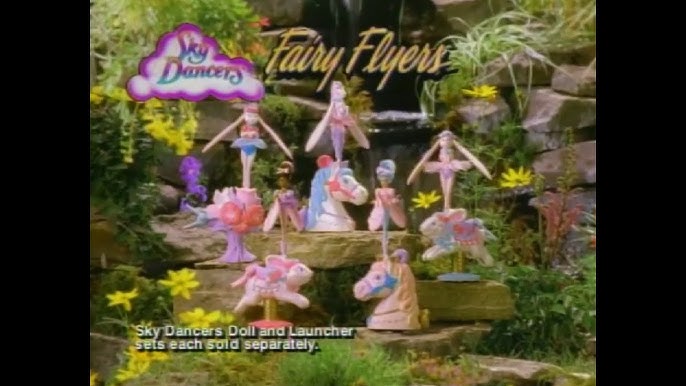
The New Sensation of 1995
Sky Dancers
Sky Dancers take the number-two spot because they were one of the year’s clearest genuinely new sensations. Pulling the launcher and sending the doll spinning upward created exactly the kind of visual demonstration the mid-90s market rewarded.
The product blended several appeals at once. The figure could be displayed like a doll, collected by character and launched like an action toy. Motion created the spectacle, while costume and personality helped the line remain more than a one-use mechanical trick.
Sky Dancers also fit the generational handoff perfectly. The toy borrowed familiar doll styling but delivered it through a louder, performance-oriented feature aimed at children growing up inside a commercial culture obsessed with “watch this.”
The launch carried a small element of unpredictability too, which made the toy exciting, memorable and occasionally relevant to ceiling fans, lamps and adult warnings that arrived several seconds too late.
For Gen X, Sky Dancers in 1995 feel like the kind of hit you could identify immediately even while realizing the toy aisle was no longer centered on your age group.
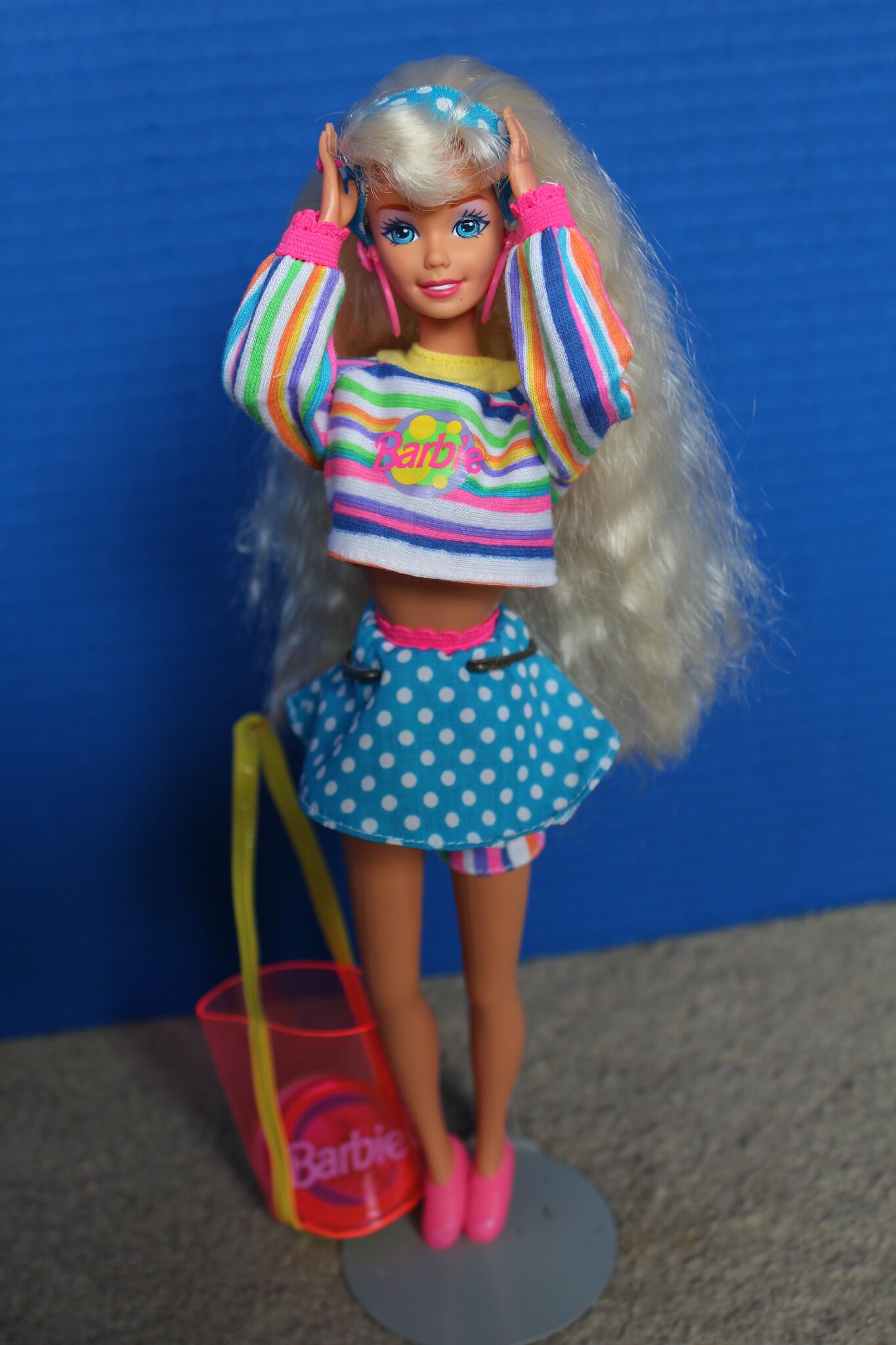
The Durable Queen of a Fragmented Toy Aisle
Barbie
Barbie takes the number-one spot because 1995 was fragmented rather than ruled by one blockbuster craze. In that environment, permanent category leadership mattered. Barbie could support dolls, outfits, vehicles, environments, special editions and several price levels without losing recognition.
The brand’s strength was not one headline gimmick. It was infrastructure. A new Barbie purchase could connect to items already owned, fit a small gift or dominate Christmas morning and remain understandable to children, parents and grandparents at the same time.
That cross-generational durability makes Barbie especially appropriate for a handoff year. Earlier Gen X knew the brand, younger Gen X still participated and older millennial children inherited the fantasy without needing the product explained.
Barbie also demonstrated how a mature toy empire survives fragmentation. The brand did not need every child to want the same doll. It needed enough variations and accessories to serve several tastes while retaining one recognizable identity.
For Gen X, Barbie at number one feels less like a flashy upset than the obvious result of a toy empire remaining too adaptable, too visible and too permanently installed to move.
The Meaning of the Handoff
1995 Was Not the End of Toys—It Was a Change in Who the Aisle Was Talking To
Gen X nostalgia remains visible in Barbie, Lego, Hot Wheels, Batman and Talkboy, but the center of the market is increasingly shaped by younger children and the mid-90s commercial language they inherited.
What Still Felt Familiar
Classic Systems and Durable Brands Held Their Ground
Barbie, Lego, Hot Wheels and Batman remained strong because each could absorb new products without abandoning the identity children already understood.
Cross-Generational Recognition
Adults and older siblings knew the brands, lowering the friction around the purchase.
Backward Compatibility
New bricks, cars, dolls and figures could connect to earlier purchases.
Broad Gift Ladders
Each system supported small add-ons and larger Christmas-morning boxes.
The familiar-brand argument: the toy still works, the collection still grows and nobody needs a tutorial.
The Toy Box Afterlife
Collecting Toys From 1995 Today
Exact version, condition, completeness, working mechanisms, packaging and real buyer demand matter much more than age alone.
Dolls depend on hair, clothing and exact release.
Barbie, Sky Dancers, Baby Tumble Surprise and Pocahontas dolls should be checked for original clothing, accessories, hair condition, launcher parts, working mechanisms, packaging and manufacturer markings.
Talkboy and moving toys need functional testing.
Test recording, playback, speed controls, microphones, speakers, launchers and movement features. Battery corrosion, repairs and missing proprietary parts can materially change value.
Action figures and cars depend on completeness.
Power Rangers and Batman pieces may require weapons, armor, capes, role-play parts, vehicles, stickers or card backs. Hot Wheels should be matched by exact casting, color, wheel type and packaging.
Sold prices matter more than nostalgic asking prices.
Compare completed sales for the same version and condition. The guides to 90s collectible crazes and forgotten 90s toys provide broader context before assuming every attic box contains a financial miracle.
What the Wish List Felt Like
Christmas Morning 1995 Looked Like Several Toy Eras at Once
One room could hold classic brands, movie merchandise, interactive dolls, a flying novelty and large pretend-play furniture without any one item explaining the entire season.
A doll, outfit or playset could connect immediately to a collection that already existed.
The first demonstration turned wrapping-paper cleanup into a low-altitude aviation test.
The brand no longer owned the year, but one figure still looked suspiciously like the beginning of five more purchases.
Recording and altered playback guaranteed several family voices would be preserved without consent.
Batman Forever and Pocahontas connected the toy box directly to the year’s theatrical calendar.
A large kitchen set could dominate the physical room even when it never entered the schoolyard conversation.
The memory: the gifts no longer looked like one generation’s toy culture. They looked like a relay race where several age groups had dropped their boxes in the same living room.
Under Fluorescent Lights
What the 1995 Toy Store Looked Like
The store no longer revolved around one emergency. It was divided into durable brand walls, movie promotions, demonstration toys and large younger-child products.
The permanent brand wall
Barbie, Lego and Hot Wheels occupied reliable space because retailers understood the demand without waiting for a craze.
The demonstration shelf
Sky Dancers, Baby Tumble Surprise and Talkboy sold the action, sound or motion right on the package.
The movie promotion zone
Batman Forever and Pocahontas translated theatrical awareness into fast seasonal product recognition.
The oversized role-play display
Kitchen sets used physical scale to signal major-gift status and target younger children from across the aisle.
The full 90s Toy Store Culture guide follows the aisle layouts, catalogs, mall trips, demonstrations and holiday rituals that made finding the toy part of the memory.
Commercial-Break Pressure
Watch the 1995 Toy Commercial Energy
Sky Dancers needed the launch. Baby Tumble Surprise needed the movement. Talkboy needed the altered voice. Batman and Pocahontas needed movie recognition, while Barbie needed the empire to keep looking current.
The best 1995 ads made the feature impossible to miss, even when the year itself lacked one dominant toy craze.
The 90s Toy Commercials & Videos archive is the direct next stop for the advertising behind Sky Dancers, Barbie, Power Rangers, Talkboy, Batman, Disney dolls and interactive toys.
The Rest of the Year
Keep Rewinding 1995
The toy aisle was only one part of a year in full handoff mode, with pop, R&B, alternative music, network television, blockbuster movies and the first fully computer-animated feature all sharing the culture.
The 1995 Toy Aisle Verdict
Why These Toys Define 1995
The top 10 toys of 1995 work because they do not tell one simple story. Barbie represents durable infrastructure. Sky Dancers represent the new sensation. Power Rangers and Talkboy represent cooling phenomena still strong enough to remain major products.
Batman Forever and Pocahontas keep movie merchandising important. Hot Wheels and Lego preserve classic toy logic. Baby Tumble Surprise and Kitchen Center All-In-One show the shelf turning toward a younger audience that expected movement, demonstration and larger role-play environments.
For Gen X, 1995 feels like a real endpoint only in the emotional sense. The aisle still remembers older toy culture, but it is already speaking more clearly to the next generation. The rewind continues because that handoff is part of the story, not an excuse to stop telling it.
Questions From the Toy Aisle
Top Toys of 1995: Frequently Asked Questions
What were the most popular toys of 1995?
Popular toys of 1995 included Barbie, Sky Dancers, Mighty Morphin Power Rangers, Deluxe Talkboy, Batman Forever toys, Baby Tumble Surprise, Pocahontas dolls and toys, Hot Wheels, Kitchen Center All-In-One and Lego.
What was the biggest toy of 1995?
Barbie takes the number-one spot because 1995 was a fragmented year, making the brand’s durable category leadership and permanent shelf strength especially important.
Why is Barbie ranked above Sky Dancers?
Sky Dancers were the clearer new sensation, but Barbie represented the strongest overall toy system in a year without one dominant craze. The ranking weighs category strength and year-specific market structure.
Were Sky Dancers popular in 1995?
Yes. Sky Dancers were one of the clearest new sensations of the year because the flying launch feature created an immediate and memorable demonstration.
Were Power Rangers still popular in 1995?
Yes. Power Rangers had cooled from the peak 1994 panic but remained one of the strongest action franchises and a major Christmas-list brand.
Why was Deluxe Talkboy still popular?
Talkboy retained demand because recording, playback and voice changing created repeatable social play beyond the original movie connection.
Why are Batman Forever toys included?
Batman remained a durable action platform, and the 1995 movie supplied new costumes, villains and vehicles inside the wider world of 90s movie toy tie-ins.
What was Baby Tumble Surprise?
Baby Tumble Surprise was an interactive baby doll built around visible movement, reflecting the stronger demonstration features found in the mid-90s doll aisle.
Why were Pocahontas toys popular?
Disney movie recognition gave the dolls and accessories an established character, visual identity and story before they reached the shelf.
Why are Hot Wheels and Lego on the list?
Both brands remained strong because they were affordable, expandable, familiar across generations and less dependent on one short entertainment cycle.
What was Kitchen Center All-In-One?
Kitchen Center All-In-One was a large pretend-play kitchen set that functioned as a major gift for younger children and represented the growing importance of complete role-play environments.
Why does 1995 feel like a toy-audience handoff?
Classic Gen X-recognizable brands remained visible, but more of the market was being shaped by interactive dolls, spectacle-driven products, movie tie-ins and toys aimed at younger children.
Was 1995 the final Gen X toy year?
It works as an emotional transition point rather than a hard historical cutoff. Many Gen X kids were aging out of toys, while younger Gen X and older millennials increasingly shaped demand.
What made 1995 toys different from early-90s toys?
The market was more fragmented, more demonstration-driven and less dominated by one craze. Classic systems shared the shelf with interactive dolls, movie merchandise and carryover media phenomena.
What were the hottest Christmas toys of 1995?
Hot Christmas toys included Barbie, Sky Dancers, Power Rangers, Deluxe Talkboy, Batman Forever toys, Baby Tumble Surprise, Pocahontas toys, Hot Wheels, Kitchen Center All-In-One and Lego.
Are toys from 1995 valuable today?
Some can be, but value depends on exact version, condition, completeness, working mechanisms, original accessories, packaging and current demand. The guides to 90s collectible crazes and forgotten 90s toys provide broader context.
Was there one official top-10 toy chart for all of 1995?
No single complete public list cleanly compares every toy category across the full year. This page uses a transparent editorial method based on holiday visibility, category strength, cultural memory and year-specific relevance.
Where can I watch commercials for 1995 toys?
The 90s Toy Commercials and Videos archive connects Sky Dancers, Barbie, Power Rangers, Talkboy, Batman, Disney toys and interactive dolls with the advertising that sold them.
Move Through the Decade
Explore the Top Toys From Every Year of the 90s
Follow the aisle from Turtle Power and Troll comebacks through the 1995 handoff, then into electronic pets, collectible bubbles, talking toys and late-90s shortages.