The Top 10 Toys of 1981

The Top 10 Toys of 1981
Smells Like Gen X • Top Toys of 1981

The Top 10 Toys of 1981

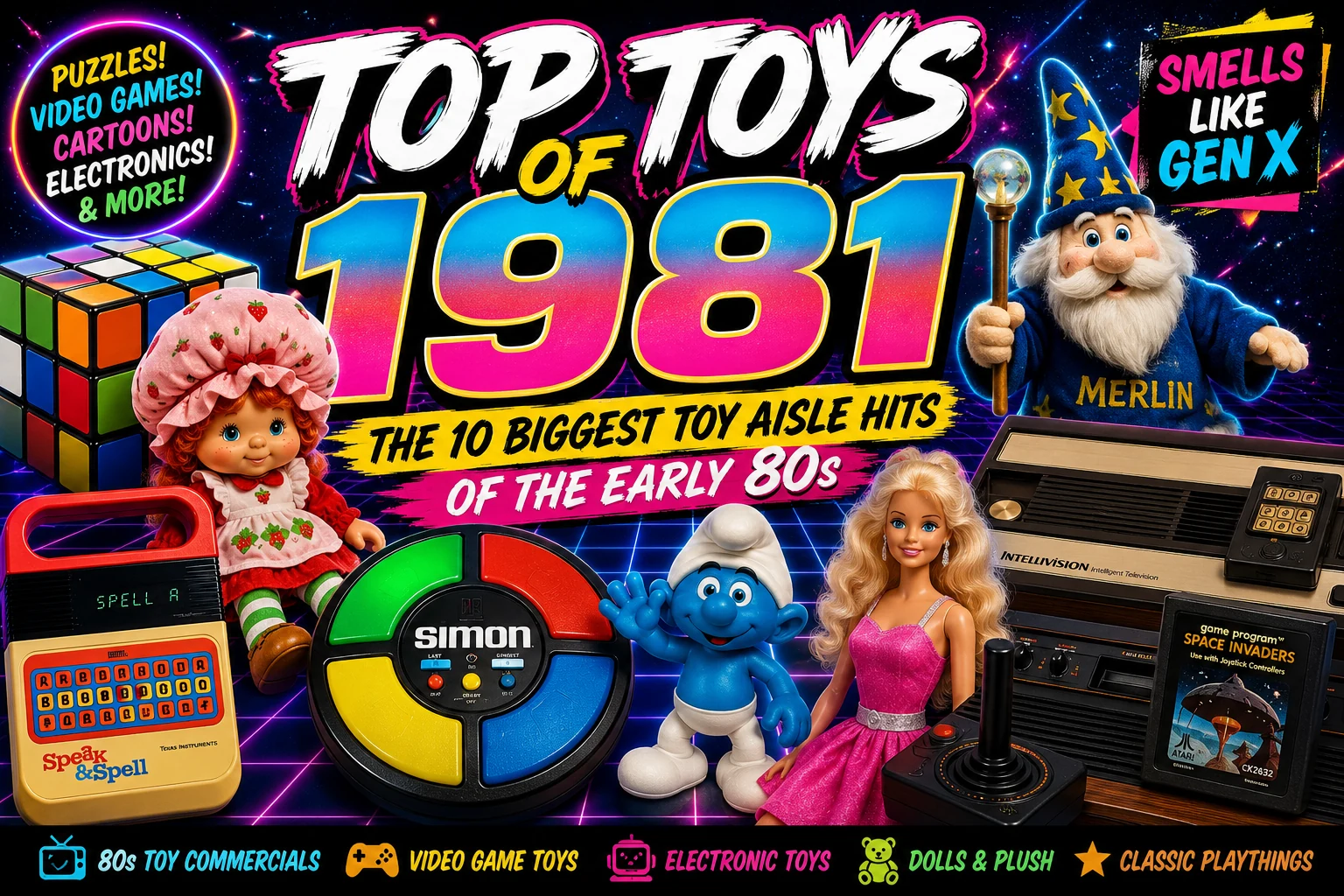
The top 10 toys of 1981 feel less like the opening tremor of the decade and more like the moment the 80s toy aisle starts understanding exactly what kind of machine it wants to be. If 1980 was about transition, 1981 is about confidence. Puzzle crazes are now full-blown social phenomena. Video games are no longer just an interesting new lane. Character branding is expanding fast. Electronic toys have proven they are not a fad. And the shelf itself is starting to feel more colorful, more competitive, and more obsessed with instantly recognizable identities.

This 1981 countdown follows the same strongest-signals approach as 1980, leaning on the surviving best-selling and hottest-selling evidence rather than pretending there is one perfect preserved trade chart for the year. That makes 1981 especially fun to read as a snapshot, because what rises to the top is not just what sold, but what dominated conversations, wish lists, and that unmistakable “you had to have this” energy that defined early-80s toy culture.

For Gen X, 1981 feels like the toy aisle getting louder and more self-aware. Rubik’s Cube stops being a surprise and becomes a cultural obsession. Strawberry Shortcake grows from cute newcomer into an expanding brand world. Atari settles in as a living-room force. Smurfs go from imported oddity to cartoon-fueled shelf invasion. Simon stays hot. Barbie refuses to budge. Pretty Cut & Grow turns hairstyling into a weirdly irresistible gimmick. And the whole year feels like childhood being packaged in brighter colors and sharper hooks.

Gen X Note: 1981 is the year the toy aisle stops warming up and starts acting like it already knows it runs the culture.

Quick List: The Top 10 Toys of 1981

  1. Speak & Spell
  2. Pretty Cut & Grow
  3. Intellivision
  4. Merlin
  5. Barbie
  6. Simon
  7. Smurfs
  8. Atari 2600
  9. Strawberry Shortcake
  10. Rubik’s Cube

Countdown: The Top 10 Toys of 1981

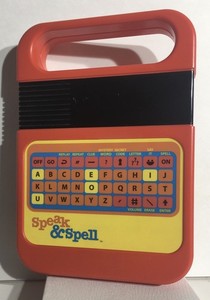
Speak and Spell
1981

#10 — Speak & Spell

Smart Toy Cool
Toy TypeElectronic learning toy
MakerTexas Instruments
1981 Rank#10

Speak & Spell opens the 1981 list because by this point electronic learning toys were no longer just little glimpses of the future. They were becoming part of the mainstream childhood landscape. In 1980, Speak & Spell felt like a technological novelty that happened to teach you something. In 1981, it reads more like a trusted category player — a machine that had already proven it could make learning feel modern, interactive, and just cool enough to survive the increasingly crowded toy aisle.

What makes Speak & Spell such a useful 1981 entry is that it reflects how parents and kids often wanted different things from the same product and still ended up satisfied. Parents saw vocabulary, spelling, and educational value. Kids saw buttons, synthetic voice, challenge modes, and the thrill of owning something that felt more like a computer than a flash-card set. That dual appeal helped products like this stay visible even as louder, more obviously flashy toys fought for shelf space.

It also feels distinctly 1981 because the toy aisle is starting to treat intelligence itself as a sellable vibe. Rubik’s Cube does it through puzzle obsession. Speak & Spell does it through machine-assisted learning. Both suggest that early-80s kids were being sold not just fun, but a version of themselves as sharper, more advanced, and a little more tuned into the future than previous generations.

For Gen X, Speak & Spell still carries a very specific flavor of tech optimism. It is not glamorous and it is not built around a fantasy world, but it earns its place by making the future seem usable. It turns education into interface, and interface into play. That alone makes it one of the more revealing toys in the 1981 lineup.

Fun Fact / Why It Still Matters Speak & Spell still stands out because it made being the “smart toy” feel like an advantage instead of a compromise.
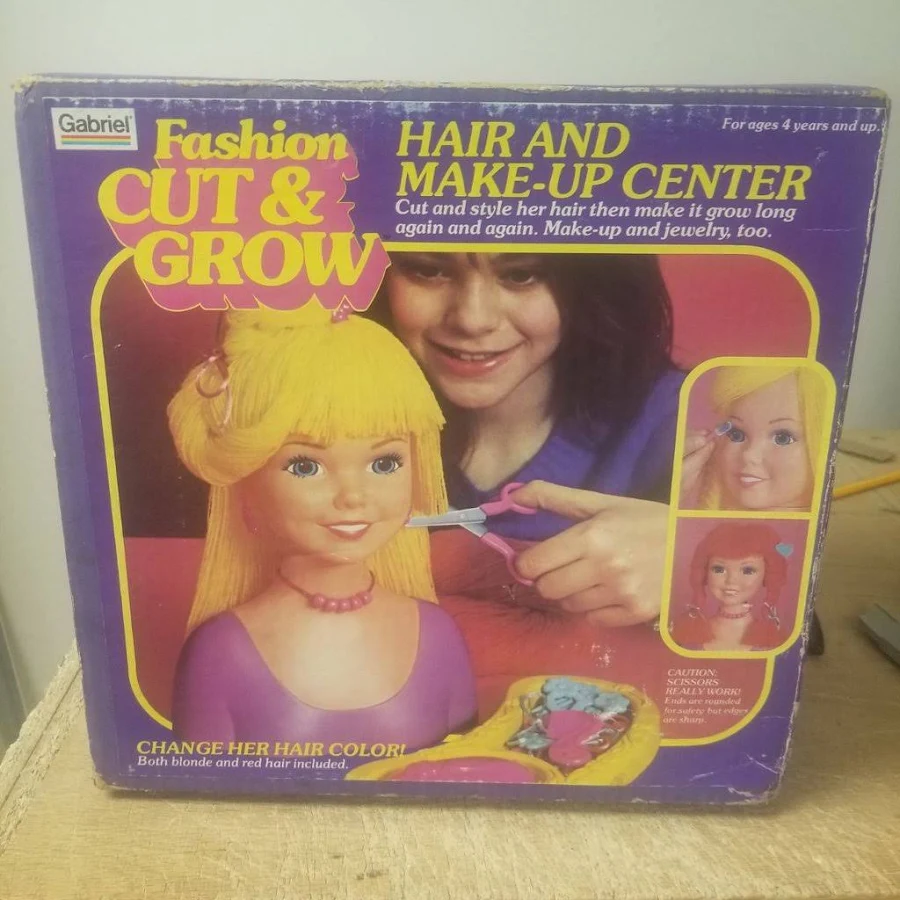
Pretty Cut and Grow doll
1981

#9 — Pretty Cut & Grow

Must-Have Gimmick
Toy TypeHair-play fashion doll
MakerMattel
1981 Rank#9

Pretty Cut & Grow lands at number nine because 1981 is a year when the toy aisle gets even better at turning one clever hook into full-on demand. The genius of this doll was not just that she had hair. It was that the hair became the whole event. Kids could cut it, style it, and then “grow” it back, which is exactly the kind of tactile gimmick that sells fast because the concept can be understood in about three seconds.

What makes the doll especially interesting is that it sits inside the broader Barbie-adjacent glamour lane but still manages to feel like its own distinct object of fascination. This is not simply another pretty doll in a nice outfit. It is a doll with a built-in interactive promise. That difference matters, because by 1981 the strongest toy ideas often came down to giving children one highly visible reason to demonstrate the product to somebody else. Pretty Cut & Grow practically sells itself in conversation.

There is also something deeply early-80s about the combination of beauty play and mechanical novelty. The toy does not need electronics, a TV screen, or a giant media property to feel current. It just needs a visually satisfying gimmick that feels slightly magical and endlessly repeatable. That is the kind of design logic that could dominate a holiday season because it transformed basic hairstyling into an action feature.

For Gen X, Pretty Cut & Grow remains one of those dolls that perfectly represents the period’s willingness to get weirdly specific. Somebody looked at the market and realized that hair itself could become the product mechanic, and children responded exactly the way toy companies hoped they would. It is niche, flashy, and memorable — a perfect lower-top-10 toy.

Fun Fact / Why It Still Matters Pretty Cut & Grow is classic 80s toy thinking: one irresistible gimmick, packaged so clearly that kids could pitch it to each other.
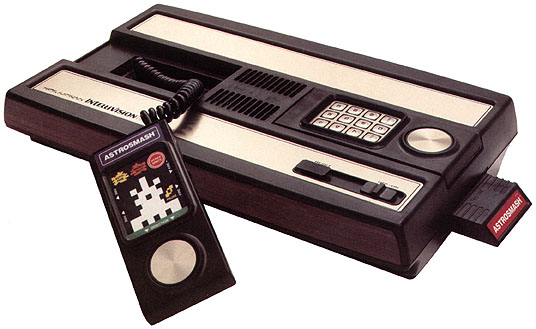
Intellivision console
1981

#8 — Intellivision

Challenger Console
Toy TypeHome video game console
MakerMattel Electronics
1981 Rank#8

Intellivision returns in 1981, but its role feels a little different than it did in 1980. Before, it helped signal that home gaming was becoming a contested category. In 1981, it represents the fact that the contest is now part of the toy story itself. Kids and parents are no longer simply deciding whether video games belong in the house. They are starting to absorb the idea that different systems project different kinds of value and prestige.

That matters because toy competition is becoming more identity-driven. Intellivision carried itself like the more sophisticated choice, the system for families who wanted to feel like they were getting something advanced rather than merely trendy. Whether or not every buyer thought in exactly those terms, that was the aura. It was a product that benefited from comparison, and comparison is one of the most powerful things a toy market can produce.

The console also helps show how fast the living room was being redefined. A game system was no longer just another electronic box competing with toys from a distance. It was now sitting right inside the toy conversation, influencing wish lists, holiday budgets, and family expectations. That is part of what makes 1981 feel like a consolidation year. The categories are no longer isolated. They are starting to compete inside the same emotional space.

For Gen X, Intellivision still matters because it represents ambition. It is the system that told families and kids that home gaming could have tiers, quality arguments, and bragging rights. That kind of rivalry would only get bigger, but by 1981 you can already feel the culture rehearsing it.

Fun Fact / Why It Still Matters Intellivision mattered because it taught the toy aisle that video game systems could be compared like status objects, not just bought like gadgets.
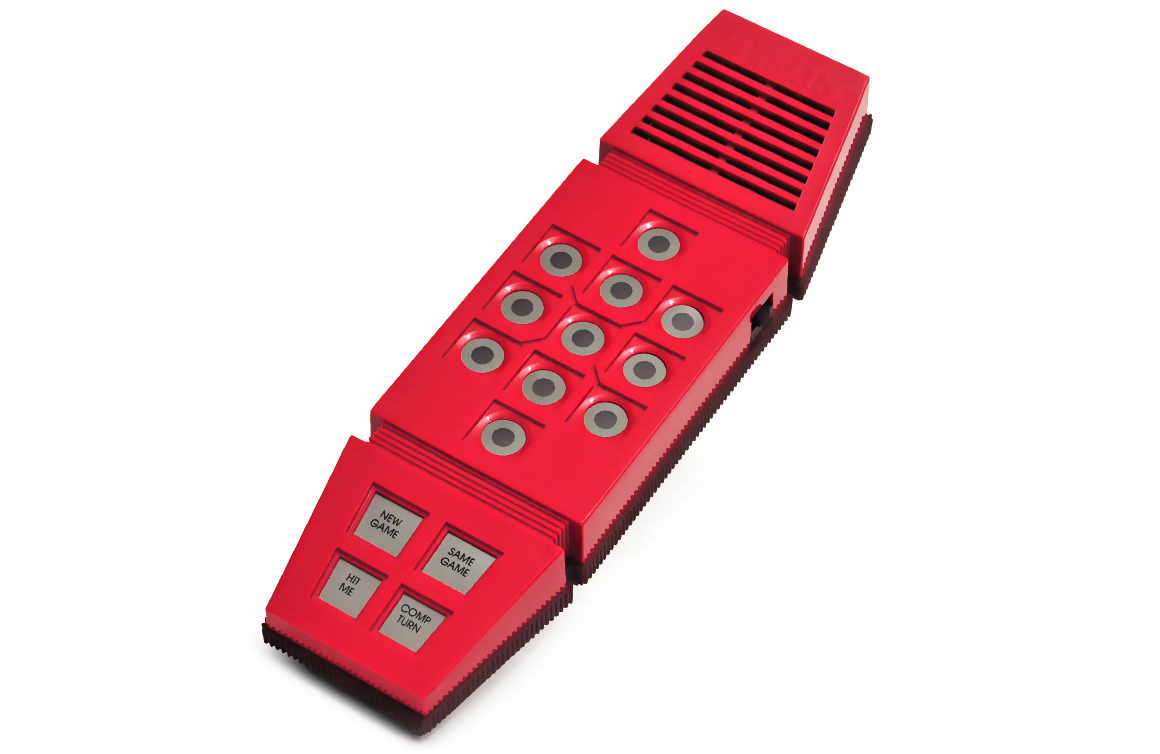
Merlin toy
1981

#7 — Merlin

Pocket Future
Toy TypeHandheld electronic game
MakerParker Brothers
1981 Rank#7

Merlin sticks around in 1981 because the toy’s charm had moved beyond novelty and into durability. That is a big shift. In 1980, Merlin felt like a futuristic curiosity that showed what electronics could do in a kid-sized handheld format. By 1981, it feels more established — the sort of toy that people recognized immediately and understood as part of the new normal for play.

What keeps Merlin relevant in a stronger, louder 1981 market is that it occupies a very useful middle ground. It is less expensive and less socially demanding than a full console, but still electronic enough to feel advanced. It delivers challenge, sound, and gadget appeal in a compact package, which made it a practical but still exciting gift. That balance helped electronic handhelds remain important even as video games were pulling more attention into the TV set.

Merlin also reflects one of the hidden pleasures of early-80s toy culture: objects that looked like they belonged in the future but still behaved like toys. It had a wizard name, a chunky body, blinking lights, and a sense of mystery that fit the era perfectly. It did not need realism. It needed to feel like a little machine from tomorrow that had somehow landed in a department-store toy section.

For Gen X, Merlin still has a special place because it delivered private, repeatable challenge in a time before pocket electronics became ordinary. It made solitary play feel high-tech and portable. That alone is a huge part of why it continued to matter in 1981.

Fun Fact / Why It Still Matters Merlin stayed hot because it kept the “future in your hands” feeling alive even as bigger electronic categories crowded the market.
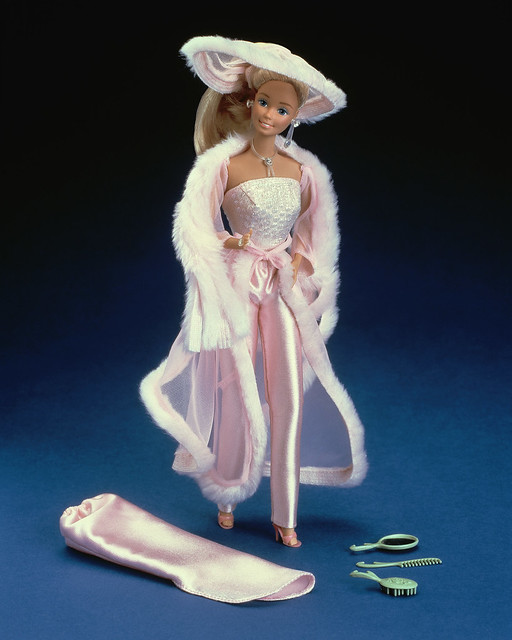
Barbie doll
1981

#6 — Barbie

Evergreen Power
Toy TypeFashion doll line
MakerMattel
1981 Rank#6

Barbie remains in the top 10 in 1981, but the story is a little sharper this year. In 1980, Barbie’s presence was proof that a giant from an earlier toy era could still hold her ground. In 1981, Barbie feels more like a veteran champion holding position inside a market that is becoming increasingly crowded with novelties, licensed characters, and interactive gimmicks. That endurance is part of what makes her remarkable.

Barbie’s strength is not that she can out-gadget her competition. It is that she remains an expandable imaginative platform in a toy economy that is getting better and better at building worlds. Accessories, fashion, identity play, domestic aspiration, glamour, and collectability all continue to work in her favor. She does not need to reinvent the rules every year because her basic structure already supports almost endless variation.

She also matters because Barbie helps anchor the aisle emotionally. Amid all the blinking lights, puzzles, and machine energy, Barbie preserves a more open-ended form of play rooted in styling, storytelling, and projection. That matters even more in 1981 because so many other hot toys are becoming more system-driven and more mechanically defined. Barbie’s staying power shows how much children still valued narrative play that they controlled themselves.

For Gen X, Barbie in 1981 feels less like a relic and more like one of the permanent institutions of childhood. The decade around her is changing fast, but she remains deeply legible, commercially flexible, and impossible to push completely out of the top tier.

Fun Fact / Why It Still Matters Barbie stayed powerful because she did not need one gimmick to sell her — she was already an entire play system.
Simon electronic game
1981

#5 — Simon

Replay Monster
Toy TypeElectronic memory game
MakerMilton Bradley
1981 Rank#5

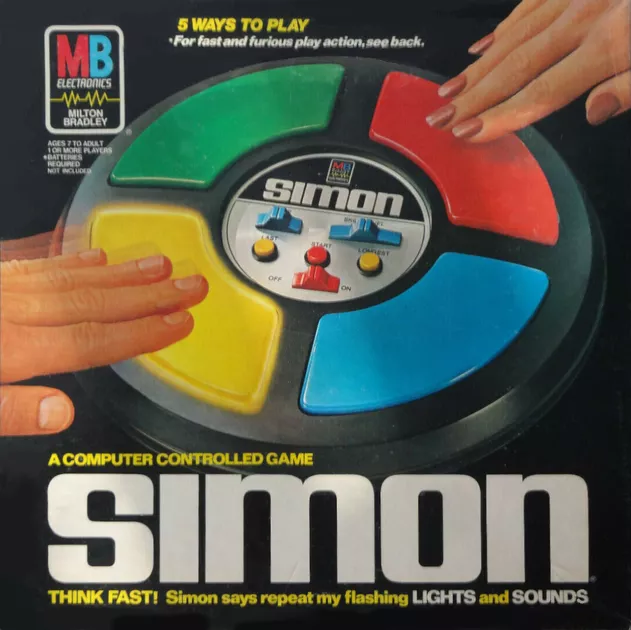
Simon lands at number five because 1981 proves it was not just a flash of electronic novelty. The toy had staying power because the concept was so brutally clean. Lights, tones, memory, escalation. That formula is almost impossible to overcomplicate, which is part of why it kept working. By 1981, Simon felt less like a curiosity and more like one of those reliable challenge toys that could still impress new kids while staying addictive for the ones who already knew it.

What changes in 1981 is the surrounding market. More electronic toys are visible. Home gaming is getting louder. Character brands are rising. And Simon still manages to matter because it offers a very different kind of pleasure than those other categories. There is no lore to memorize, no console to set up, and no collectible line to build. The toy is pure response loop, which gives it a kind of timeless efficiency even inside a very trend-driven moment.

Simon also functions as a social object in a way that is easy to underestimate. People watched each other play it. They challenged siblings and friends with it. It created little stages of embarrassment and triumph because success or failure was instantly visible. That made the toy feel lively in groups even when only one person was technically playing. In a market full of products designed to capture attention, Simon did it with astonishing economy.

For Gen X, Simon’s 1981 relevance comes from its refusal to become background noise. It remained sharp, recognizable, and slightly intimidating. A lot of toys depend on atmosphere. Simon depends on pressure. That is why it stayed in the mix.

Fun Fact / Why It Still Matters Simon stayed hot because it delivered instant tension and replay value without needing anything beyond its own simple loop.
Smurfs toys
1981

#4 — Smurfs

Blue-Shelf Invasion
Toy TypeCharacter figure line
Brand LaneCartoon-fueled collectible characters
1981 Rank#4

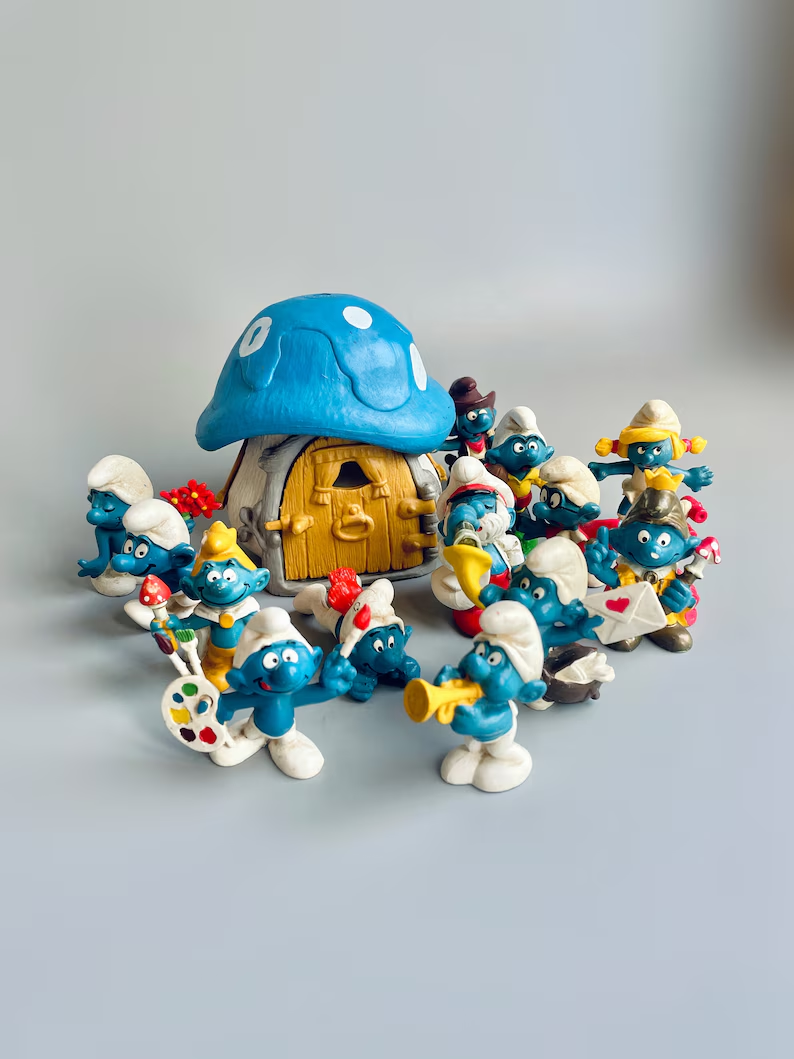
Smurfs hit number four because 1981 is exactly the kind of year when a character brand can suddenly tip from “interesting imported oddity” into “why are these little blue guys everywhere?” The cartoon gave American kids an easy point of entry, but the toy appeal ran deeper than mere TV recognition. Smurfs were collectible, visually uniform but individually differentiated, and small enough to accumulate quickly. That is a dangerous combination in the best possible toy-business sense.

What makes them especially fascinating in the 1981 lineup is how they occupy a lane between figures, mini collectibles, and character merchandise. They were not trying to be big, imposing action toys. They were tiny, numerous, and strangely charming. That let them spread through households almost by stealth. A single Smurf was cute. A handful of Smurfs became a little society. And once a toy line starts implying that children should keep building the population, you have the beginnings of a habit-forming shelf presence.

The Smurfs also reflect the growing importance of character ecosystems that did not need huge complexity to work. They were easy to identify, easy to gift, easy to collect, and easy to remember. In a year when toy companies were increasingly fighting for attention, the Smurfs succeeded with a concept that was both simple and expandable. That made them feel fresh without being intimidating.

For Gen X, Smurfs still feel like one of the purest examples of the early-80s cartoon-to-toy pipeline clicking into place. They were bright, weird, compact, and surprisingly pervasive. Once they arrived, they seemed to multiply everywhere — which, in a way, was the whole point.

Fun Fact / Why It Still Matters Smurfs took off because tiny collectible characters plus cartoon familiarity is basically one of the most durable toy formulas ever created.
Atari 2600 console
1981

#3 — Atari 2600

Playroom Power
Toy TypeHome video game console
MakerAtari
1981 Rank#3

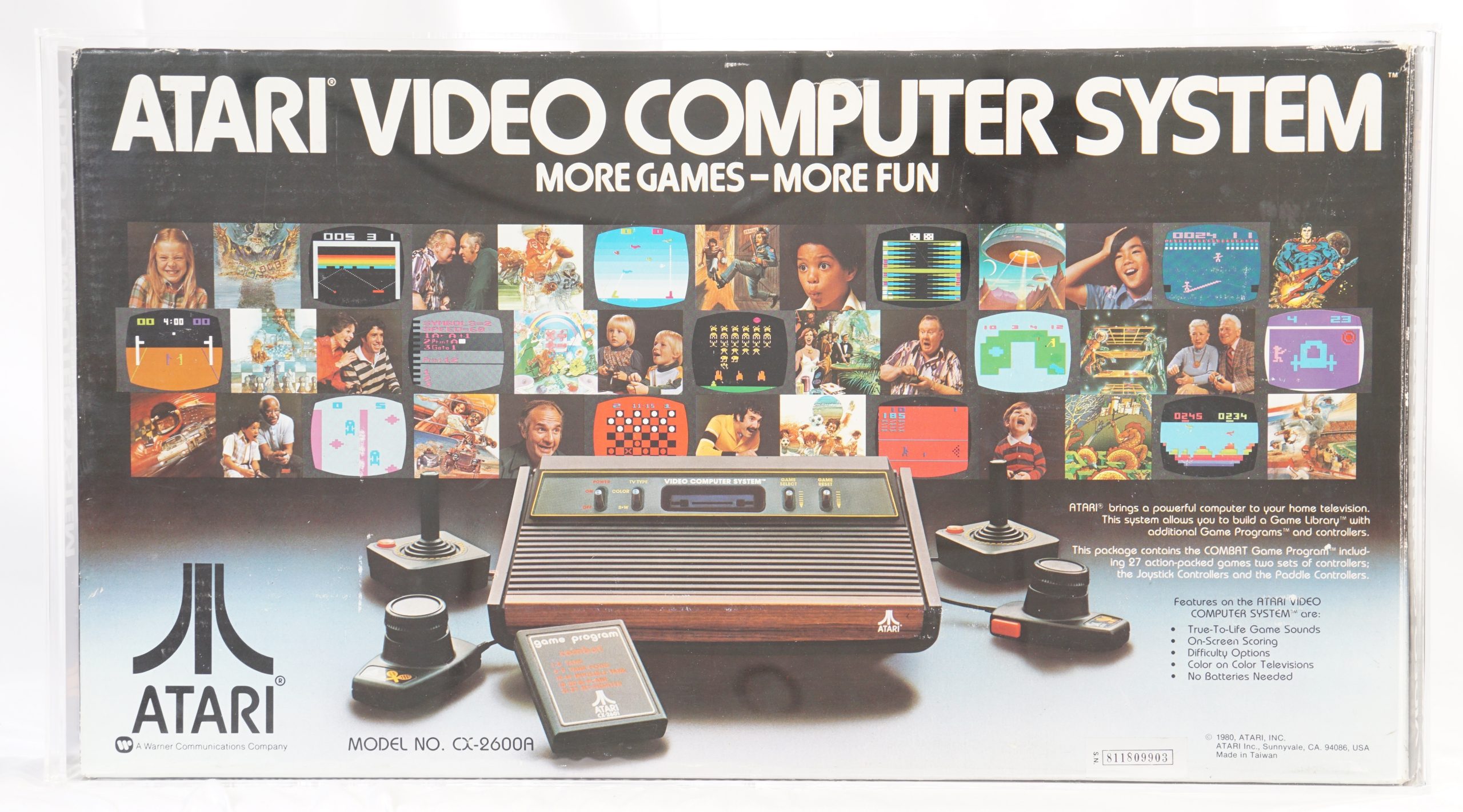
Atari 2600 climbs near the top because by 1981 it no longer feels like the system that introduced the idea of home console play. It feels like the system that normalized it. That distinction matters. The early excitement had already proven the category could work. Now the machine was becoming part of everyday childhood aspiration, which is a much bigger kind of success. Once a product stops needing to explain itself and starts being treated as an obvious wish-list item, it has crossed into cultural infrastructure.

Atari’s role in 1981 is also about repetition and routine. Children were learning to think in cartridges, game sessions, turn-taking, and that specific ritual of gathering around the television for active play rather than passive viewing. This is one of the reasons Atari feels even more significant here than it did in the 1980 list. The novelty was still alive, but it had been joined by habit. And habit is what turns a strong toy into a category ruler.

The console also becomes a symbol of how the toy aisle was opening itself to a different kind of desire. Some toys invited imaginative storytelling. Some offered tactile craft or grooming play. Atari offered software-based variety. One machine could generate a whole evolving library of experiences, which meant the purchase did not feel static. That made it powerful not just as a product, but as a promise.

For Gen X, Atari in 1981 is not the future arriving. It is the future unpacking itself and taking up permanent space in the house. That is why it ranks so high. The system was no longer being tested. It was being expected.

Fun Fact / Why It Still Matters Atari 2600 hit this high because by 1981 home gaming had moved from novelty to routine — and routine is where cultural dominance really starts.
Strawberry Shortcake toy
1981

#2 — Strawberry Shortcake

Brand Explosion
Toy TypeScented doll line
Brand LaneSensory collectible universe
1981 Rank#2

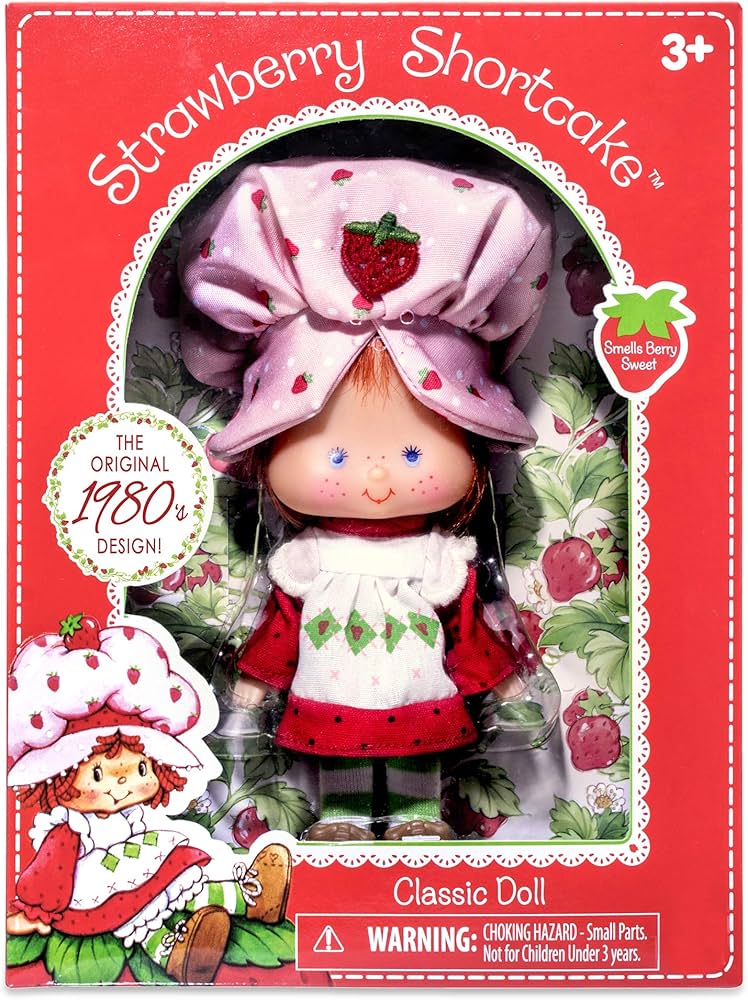
Strawberry Shortcake rises to number two because 1981 is the year the brand stops feeling like a breakout and starts feeling like a phenomenon with systems underneath it. In 1980, Strawberry Shortcake looked like an ingenious doll concept with a powerful sensory hook. In 1981, that hook had clearly expanded into a larger commercial world. The line was not simply being bought because it was cute. It was being bought because it had become its own atmosphere.

That atmosphere is what gives the brand so much strength. The colors, names, sweetness, scents, and supporting characters all work together to create something more immersive than a standard doll line. By 1981, the brand’s appeal is not tied to one single doll or one single gimmick. It is tied to a whole emotional package. That is exactly the kind of toy logic that the 80s would reward over and over again: a toy line that can become a mini world children want to live inside.

It also matters that Strawberry Shortcake offered an alternative to the growing machine-and-screen culture of the toy aisle without feeling old-fashioned. This was not a defensive throwback against electronics. It was a distinctly modern brand in its own way — tightly themed, visually consistent, emotionally specific, and extremely expandable. That is why it feels so different from legacy giants. It was built for the 80s shelf.

For Gen X, Strawberry Shortcake in 1981 represents the power of branding when it is done with total confidence. The dolls were adorable, yes, but the real magic was that the line made childhood feel color-coded, scented, and collectible all at once. That is a very hard thing to beat.

Fun Fact / Why It Still Matters Strawberry Shortcake surged because it was not just selling dolls anymore — it was selling an entire mood.
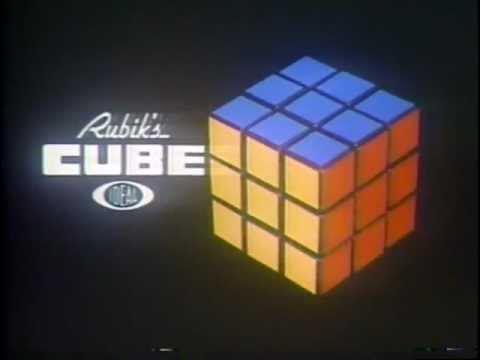
Rubiks Cube
1981

#1 — Rubik’s Cube

Culture-Stopping Craze
Toy TypePuzzle toy
Brand LaneMainstream obsession
1981 Rank#1

Rubik’s Cube stays number one because in 1981 it graduates from breakthrough toy to full cultural fixation. That is an important distinction. In the previous year, the Cube represented something new and electrifying. In 1981, it is everywhere — carried, discussed, scrambled, displayed, and battled over by people who might not have cared much about toys under ordinary circumstances. Once a product becomes part of everyday conversation across age groups, you are no longer talking about a normal hot seller.

The Cube’s power in 1981 is not only its difficulty, though the difficulty is obviously central. It is the way that difficulty becomes social. Solving it is private, but wanting to solve it is public. You can see it on a desk, in a backpack, in a waiting room, or in somebody’s hand at school and instantly understand what kind of object it is: a test, a fad, a challenge, and a weird little signal that the owner is participating in something bigger than themselves.

It also remains fascinating because it sits so awkwardly beside the rest of the 1981 toy market and still wins. This is a year full of scented dolls, cartoons, electronic games, hairstyling gimmicks, and home gaming systems, and the biggest thing on the whole list is still a color puzzle with almost no story attached to it. That says a lot about just how perfectly Rubik’s Cube fit the cultural mood. It made frustration fashionable, cleverness desirable, and repetition strangely glamorous.

For Gen X, Rubik’s Cube in 1981 is the image of a craze locking into place. It is no longer the strange new object people are discovering. It is the symbol of the moment itself. That is why it holds the top spot. Very few toys ever become shorthand for an entire year. Rubik’s Cube absolutely did.

Fun Fact / Why It Still Matters Rubik’s Cube stayed number one because by 1981 it was not merely a toy hit — it was a full pop-culture ritual.
Rewind Verdict

The top 10 toys of 1981 are so revealing because they show the 80s toy aisle moving from experimentation into identity. The categories are clearer now. Electronic toys have staying power. Video games are moving from novelty to household expectation. Character brands are multiplying. Doll lines are becoming more tightly themed and more expandable. Puzzle culture is strong enough to dominate across age groups. Nothing feels tentative anymore.

That is what makes 1981 different from 1980. The earlier year feels like clues. This year feels like confirmation. Rubik’s Cube is a full-scale phenomenon. Strawberry Shortcake proves branding can turn sweetness into empire. Atari becomes a fixture. Smurfs show how fast cartoons can fuel shelf presence. Simon and Merlin keep electronic play hot. Pretty Cut & Grow demonstrates the power of one perfect gimmick. Barbie remains unshaken. The aisle is not just changing — it is settling into its new shape.

For Gen X, 1981 feels like the year childhood starts getting packaged with real precision. The toys are brighter, more targeted, more self-aware, and more eager to become pieces of your identity. That is why the year still holds up so well. It is not simply nostalgic. It is formative.

FAQ: Top Toys of 1981

What was the biggest toy of 1981?

Rubik’s Cube was the clearest number one because by 1981 it had become more than a toy success story — it was a genuine mainstream craze.

Why is Strawberry Shortcake ranked higher in 1981 than in 1980?

Because 1981 is when the brand’s expansion and shelf power feel fully visible. It no longer reads like a breakout concept. It reads like a major retail system.

Why are Smurfs so high on the list?

Because the cartoon helped make the characters instantly accessible to American kids, and the toy line’s collectible small-figure format made it easy for the brand to spread quickly.

Why are both Atari and Intellivision on the list?

Because 1981 is one of the years when the home gaming category becomes too important to reduce to one name. Atari remained the dominant living-room force, while Intellivision represented rising competition and a more “advanced” image.

Why does this list still use a strongest-signals method instead of exact unit sales?

Because 1981, like 1980, does not preserve one neat open-web trade top 10 that can be treated as the single final answer. This ranking reflects the strongest surviving best-selling and hottest-selling evidence instead.

Get the Weekly Gen X Drop

New videos, rewinds, and savage nostalgia — first.

JOIN THE NEWSLETTER WATCH VIDEOS

MORE REWINDS