Top 10 Movies of 1976: Biggest Box Office Hits Ranked

Top 10 Movies of 1976: Biggest Box Office Hits Ranked
Smells Like Gen X • Top Movies of 1976

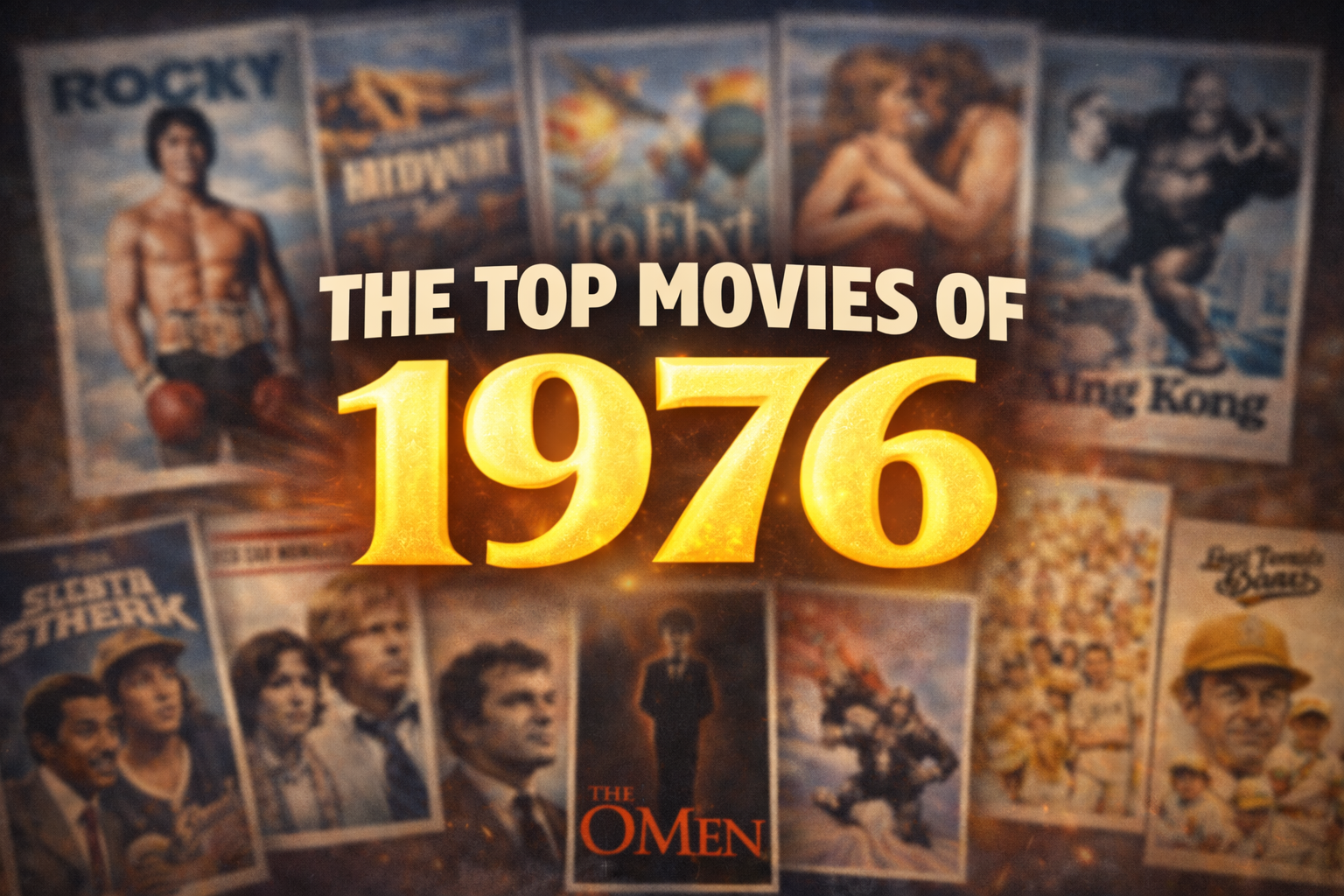
The Top 10 Movies of 1976

The top 10 movies of 1976 feel like the decade deciding it wants everything at once: underdog myth, giant-format spectacle, remake glamour, monster-size effects, political journalism, apocalyptic dread, war-pageant scale, Dirty Harry severity, and kids cursing on a baseball diamond. It’s a weird, revealing, very 70s lineup.

This countdown follows North American release-year grosses for films first released in 1976. That gives the year a fascinating commercial identity: one movie that basically rewires the American dream, one surprising IMAX outlier, one all-star romance meltdown, one oversized ape, one train-thriller comedy, one of the great newspaper movies, one all-time evil-child horror hit, a Clint sequel, a giant war picture, and one of the meanest-funniest sports comedies ever aimed at mainstream audiences.

For Gen X, 1976 matters because it shows the blockbuster era growing louder without flattening the culture into one shape. The hits are big, but they’re not all the same kind of big.

Gen X Note: 1976 feels like old-school Hollywood muscle, post-Watergate nerves, and modern blockbuster momentum all trying to occupy the same multiplex at once.

Quick List: The Top 10 Movies of 1976

  1. The Bad News Bears
  2. Midway
  3. The Enforcer
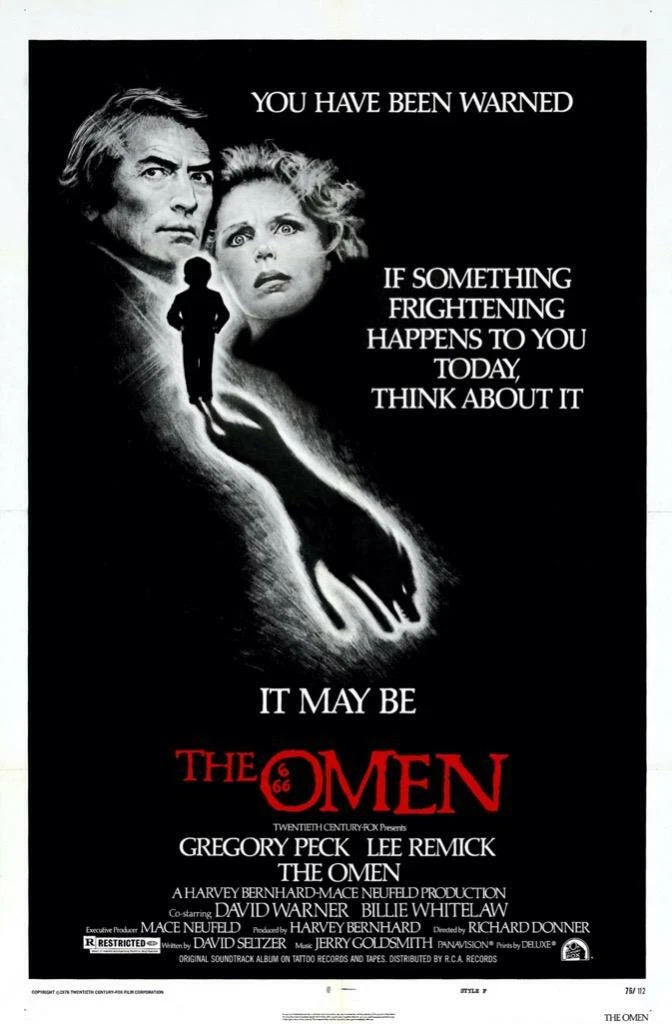
  4. The Omen
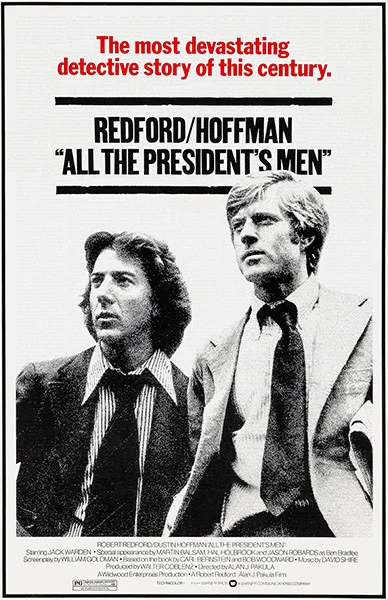
  5. All the President’s Men
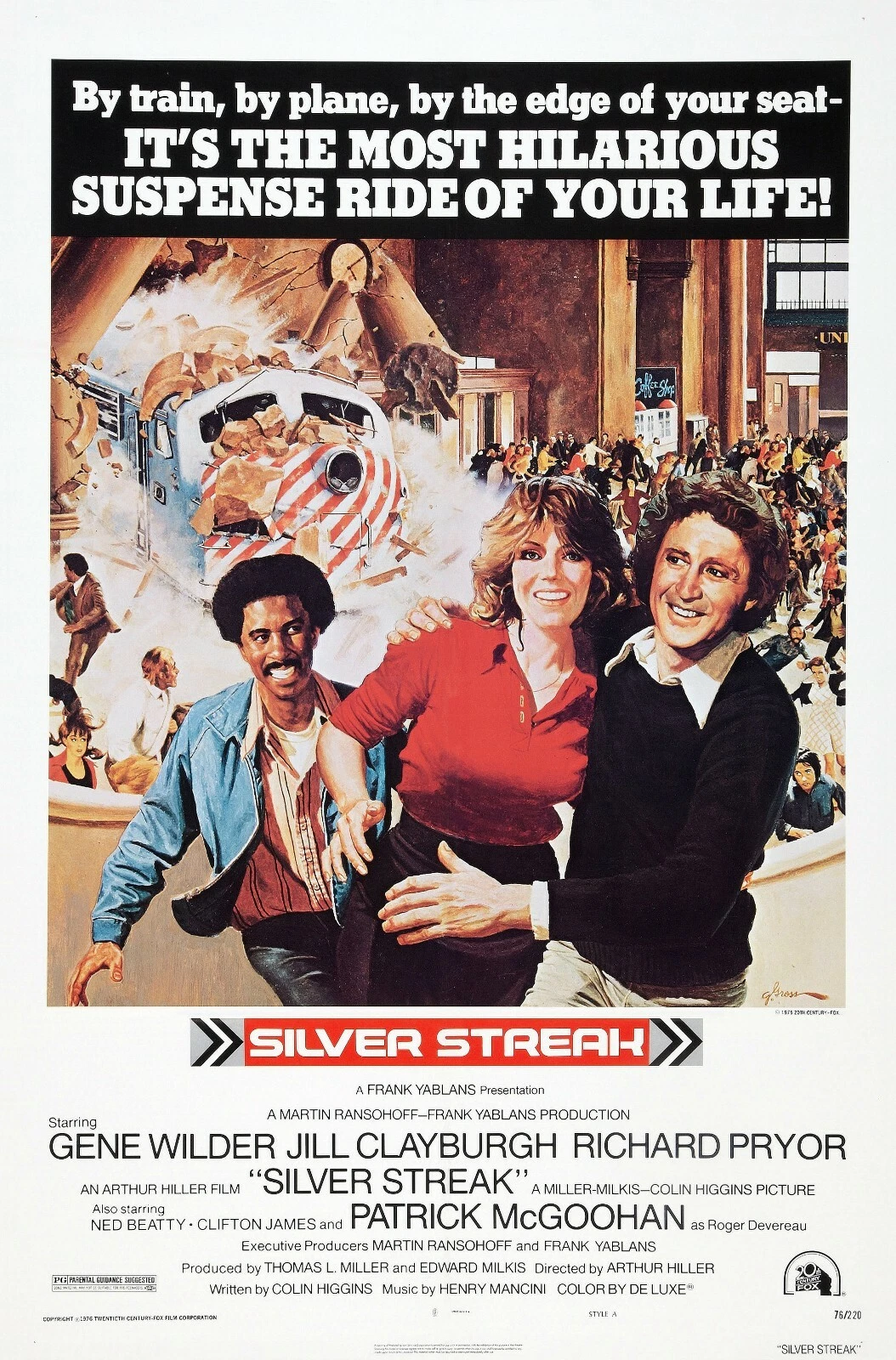
  6. Silver Streak
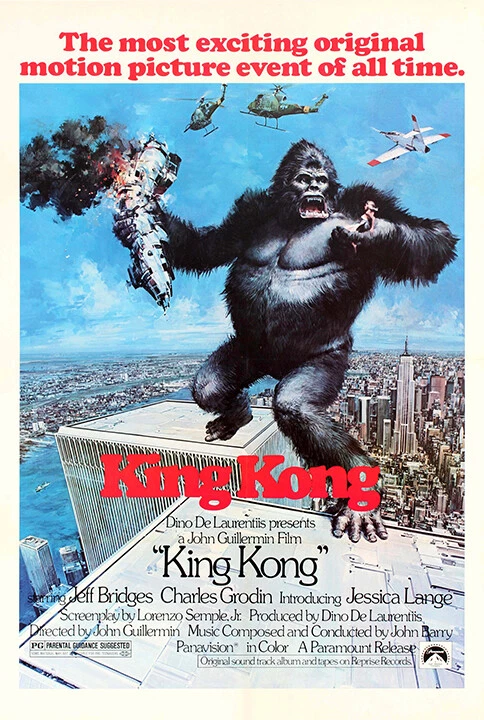
  7. King Kong
  8. A Star Is Born
  9. To Fly!
  10. Rocky

Countdown: The Top 10 Movies of 1976

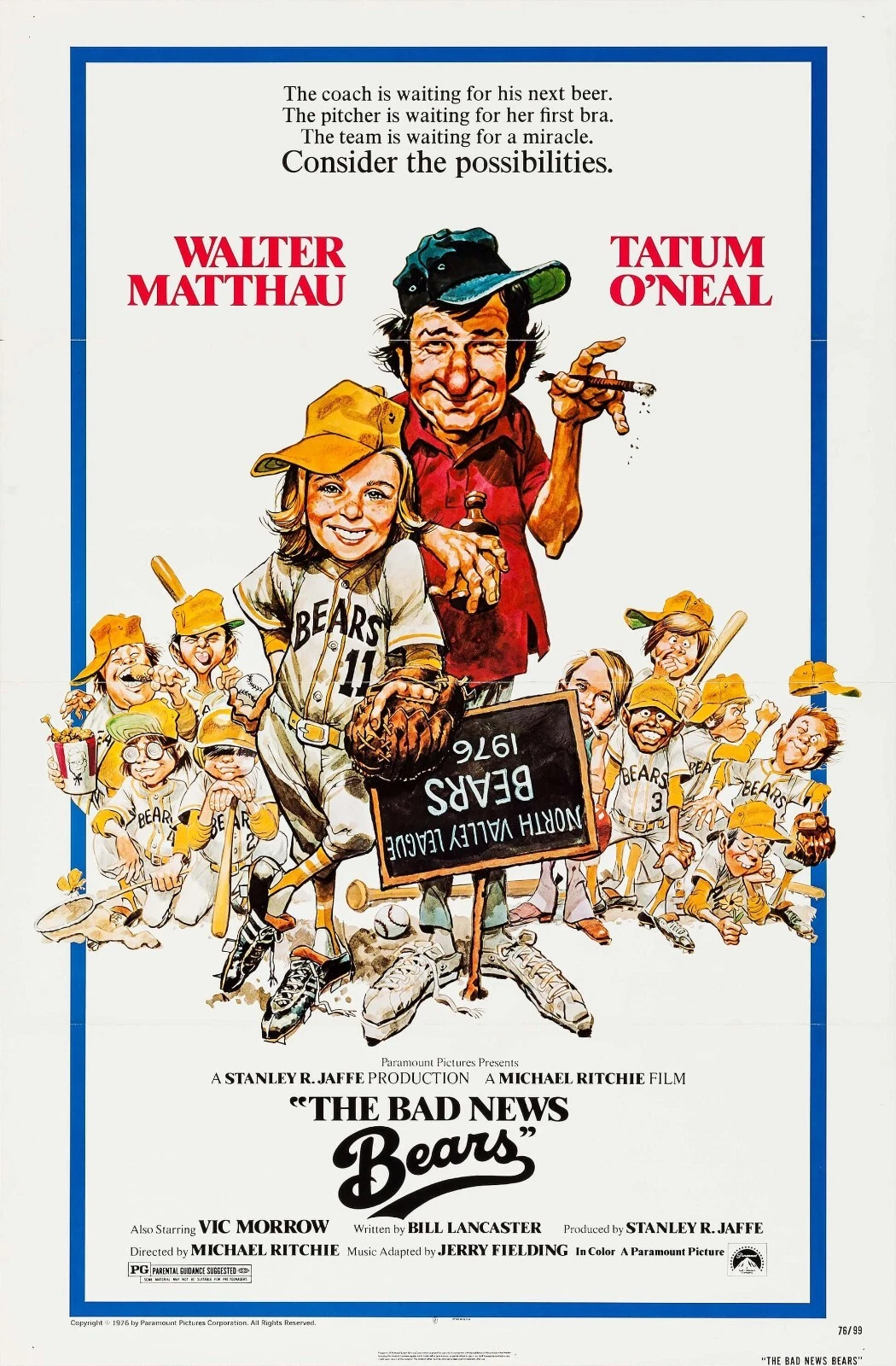
The Bad News Bears poster
1976

#10 — The Bad News Bears

Box Office: $42.3M
GenreSports comedy
DirectorMichael Ritchie
1976 Rank#10
Main Cast
  • Walter Matthau as Morris Buttermaker
  • Tatum O’Neal as Amanda Whurlitzer
  • Vic Morrow as Roy Turner
  • Joyce Van Patten as Cleveland’s mom

The Bad News Bears opens the 1976 top 10 by reminding everyone that family entertainment in the 70s was often a lot less sanitized than people remember. This is a youth-sports movie, sure, but it’s also rude, cynical, competitive, and weirdly honest about adult failure spilling all over childhood. That’s a big part of why it connected.

Walter Matthau’s performance gives the film its bruised soul. Buttermaker is funny because he’s a wreck, not because the movie wants to reassure you he secretly has everything figured out. That makes the underdog arc land harder. It’s not polished uplift. It’s messy competence crawling out of dysfunction.

In the commercial story of 1976, The Bad News Bears matters because it shows audiences would absolutely show up for a sports comedy that treated kids like combustible little people instead of Hallmark props. Its toughness is part of the appeal.

For Gen X, this belongs to the canon of movies that felt genuinely a little dangerous for “kid” entertainment, which is probably one reason it lasted.
Fun Fact / Why It Still Matters The film still matters because it helped define the anti-sentimental sports comedy — funny, mean, truthful, and way less cuddly than the genre usually allows.
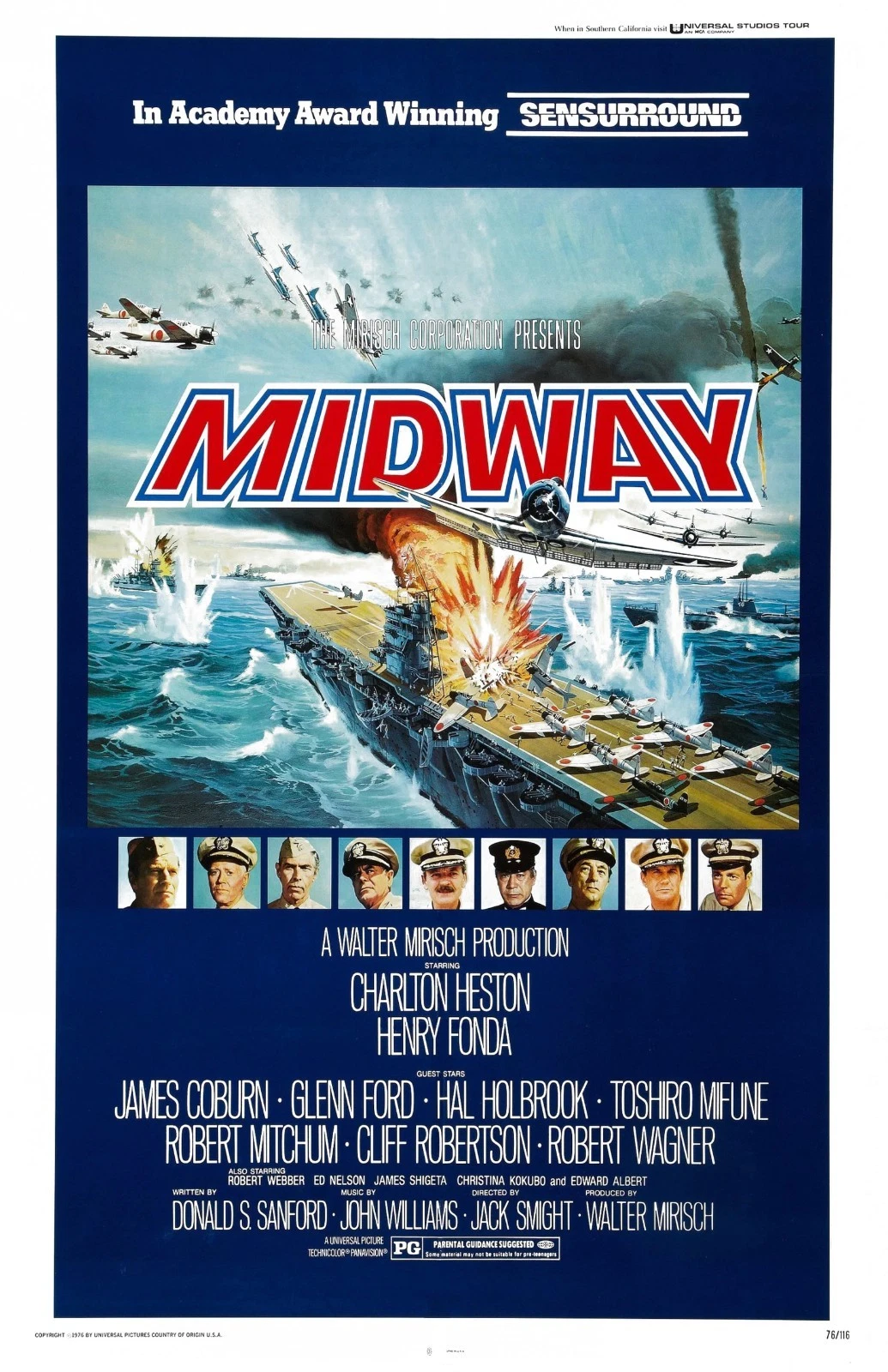
Midway poster
1976

#9 — Midway

Box Office: $43.2M
GenreWar epic
DirectorJack Smight
1976 Rank#9
Main Cast
  • Charlton Heston as Capt. Matt Garth
  • Henry Fonda as Adm. Chester Nimitz
  • James Coburn as Capt. Vinton Maddox
  • Toshiro Mifune as Adm. Isoroku Yamamoto

Midway at number nine is the kind of giant ensemble war picture Hollywood could still mount when it wanted to remind audiences what old-school scale looked like. It’s stacked with stars, loaded with military machinery, and built to turn history into event cinema. Even when it feels a little pageant-like, that pageantry is the point.

What makes it interesting in 1976 is how it sits between eras. It still has the monumental prestige impulse of older studio epics, but it’s playing in a decade increasingly drawn to paranoia, antiheroes, and grittier modern textures. That makes Midway feel like both a throwback and a holdout.

In the box-office story of 1976, Midway matters because it proves there was still a serious audience appetite for large-scale historical war spectacle, especially when sold as a big-screen patriotic event.

For Gen X, it became one of those perennial TV war movies that felt both educational and gloriously oversized in the exact way 70s studio craft often did.

Fun Fact / Why It Still Matters The film still matters because it’s a late example of the all-star American war epic still flexing theatrical muscle before blockbuster formulas got more standardized.
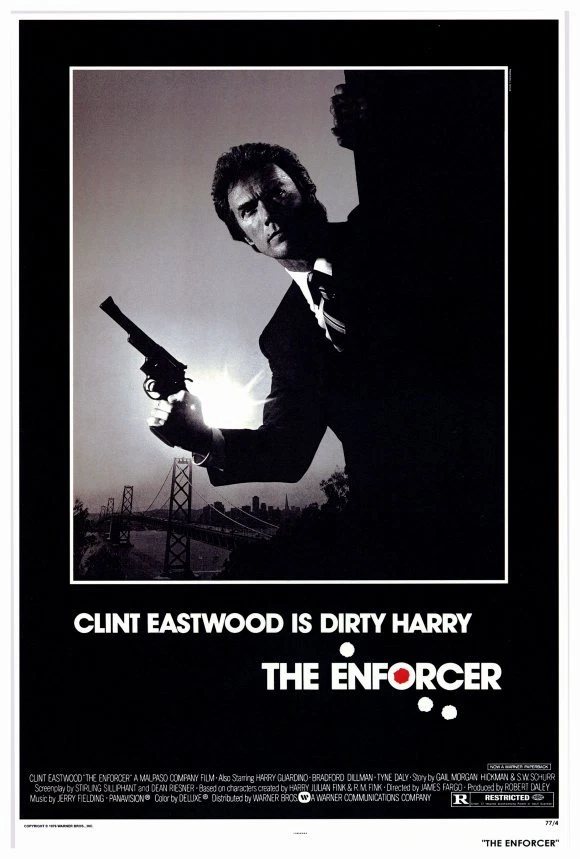
The Enforcer poster
1976

#8 — The Enforcer

Box Office: $46.2M
GenreAction crime thriller
DirectorJames Fargo
1976 Rank#8
Main Cast
  • Clint Eastwood as Harry Callahan
  • Tyne Daly as Kate Moore
  • Harry Guardino as Lt. Bressler
  • Bradford Dillman as Capt. McKay

The Enforcer at number eight is proof that Clint Eastwood’s screen authority was still one of the safest commercial bets in the country. By the third Dirty Harry film, audiences knew exactly what they were buying: steel-eyed contempt for bureaucracy, urban violence treated as civic sickness, and a lead performance that could turn minimal dialogue into star architecture.

What keeps the movie interesting is that it doesn’t simply photocopy the earlier entries. Pairing Harry with Tyne Daly’s Inspector Kate Moore gives the film a different friction point, and the whole movie feels plugged into the decade’s uneasy conversations about gender, policing, and institutional image-management even when it’s still operating as a hard-action machine.

In the story of 1976, The Enforcer matters because it shows the sequel economy humming along inside the 70s without yet feeling fully corporate. It’s a franchise movie, but it still has rough edges.

For Gen X, Dirty Harry sequels were part of the permanent cable curriculum: always grim, always watchable, always slightly more adult than the average action rerun.

Fun Fact / Why It Still Matters The film still matters because it shows how durable Eastwood’s anti-bureaucratic screen persona remained through the middle of the decade.
The Omen poster
1976

#7 — The Omen

Box Office: $48.6M
GenreSupernatural horror
DirectorRichard Donner
1976 Rank#7
Main Cast
  • Gregory Peck as Robert Thorn
  • Lee Remick as Katherine Thorn
  • David Warner as Keith Jennings
  • Billie Whitelaw as Mrs. Baylock

The Omen at number seven shows how fully horror had become premium mainstream product after the shockwaves of The Exorcist. This one trades possession terror for biblical dread, polished menace, and one of the decade’s best “everything is wrong and society is too respectable to admit it” vibes. That’s a very 70s kind of fear.

Gregory Peck’s presence matters because it gives the movie a layer of grave legitimacy. The film isn’t asking you to laugh off its premise. It wants to make satanic paranoia feel classy, inevitable, and impossible to outrun. That tonal seriousness is what helps the scares linger.

In the commercial story of 1976, The Omen matters because it proves that prestige-inflected horror was no fluke. Audiences were clearly hungry for supernatural movies that felt upscale and apocalyptic at the same time.

For Gen X, this became one of the core “don’t watch this too young” titles — the kind of movie whose reputation often arrived before the actual viewing.

Fun Fact / Why It Still Matters The film still matters because it helped lock in the idea that horror could be elegant, studio-polished, and still commercially huge.
All the President's Men poster
1976

#6 — All the President’s Men

Box Office: $51.0M
GenrePolitical thriller / drama
DirectorAlan J. Pakula
1976 Rank#6
Main Cast
  • Robert Redford as Bob Woodward
  • Dustin Hoffman as Carl Bernstein
  • Jason Robards as Ben Bradlee
  • Hal Holbrook as Deep Throat

All the President’s Men at number six is one of the clearest snapshots of the 70s converting civic distrust into riveting entertainment. This is journalism as suspense engine, bureaucracy as maze, and democracy as something that only survives if enough exhausted people keep asking questions after everybody powerful wants them to stop.

Pakula directs it with almost procedural reverence, which is exactly why it works. The movie understands that details can be thrilling if the stakes are real enough. Phones, notebooks, parking garages, and half-confirmed names become pulse-raising because the film never stops reminding you that power hides in boring places.

In the commercial story of 1976, All the President’s Men matters because it proves adults would turn journalism itself into a blockbuster-adjacent attraction if the cultural wound was fresh enough and the movie was sharp enough.

For Gen X, it remains one of the defining “serious movie that is somehow also a page-turner” texts — a film that made reporting look like a moral action genre.

Fun Fact / Why It Still Matters The film still matters because it’s one of the best examples of post-Watergate paranoia and civic responsibility turned into genuinely gripping mainstream cinema.
Silver Streak poster
1976

#5 — Silver Streak

Box Office: $51.1M
GenreComedy thriller
DirectorArthur Hiller
1976 Rank#5
Main Cast
  • Gene Wilder as George Caldwell
  • Jill Clayburgh as Hilly Burns
  • Richard Pryor as Grover Muldoon
  • Patrick McGoohan as Roger Devereau

Silver Streak at number five is one of those commercially revealing mid-70s hits that tells you audiences loved genre hybrids when the stars were right. It’s part mystery, part thriller, part train movie, part comic showcase, and it never seems overly worried about fitting inside one respectable box. That looseness is part of its charm.

Gene Wilder gives the movie its anxious comic heartbeat, and Richard Pryor’s arrival supercharges the whole thing. Their chemistry is a huge part of why the film stayed alive in memory. It doesn’t feel like an artificial pairing. It feels like the movie suddenly discovering a second engine.

In the commercial story of 1976, Silver Streak matters because it shows how valuable tonal flexibility could be. Suspense didn’t have to be solemn. Comedy didn’t have to be plotless. The movie wins by letting both modes feed each other.

For Gen X, this was one of those endlessly catchable cable titles where the train, the jokes, and the stars were enough to make you stay every single time.

Fun Fact / Why It Still Matters The film still matters because it helped prove Wilder and Pryor were a genuine commercial force and showed how well comedy and thriller mechanics could merge.
King Kong poster
1976

#4 — King Kong

Box Office: $52.6M
GenreMonster adventure
DirectorJohn Guillermin
1976 Rank#4
Main Cast
  • Jeff Bridges as Jack Prescott
  • Jessica Lange as Dwan
  • Charles Grodin as Fred Wilson
  • John Randolph as Capt. Ross

King Kong at number four is 70s remake logic at full, unapologetic scale. Giant ape, giant hype, giant visual ambition, and a whole lot of “let’s prove modern technology can remake a classic myth for a newer audience.” It’s commercial spectacle with its chest puffed all the way out.

What makes it interesting isn’t that it surpasses the original artistically. It’s that it reveals the decade’s appetite for large-format event remakes long before nostalgia became the default business model. The movie banks on everyone already knowing the legend and still wanting to see what a newer version can do with it.

In the commercial story of 1976, King Kong matters because it’s a clear example of Hollywood using old myth, new effects, and giant promotion to sell an event rather than just a film.

For Gen X, this version has its own permanent cultural footprint because it lived on as one of those big, weird, expensive creature features that felt impossible to ignore once television got hold of it.

Fun Fact / Why It Still Matters The film still matters because it shows the remake-as-event model gathering serious commercial muscle years before that became industry routine.
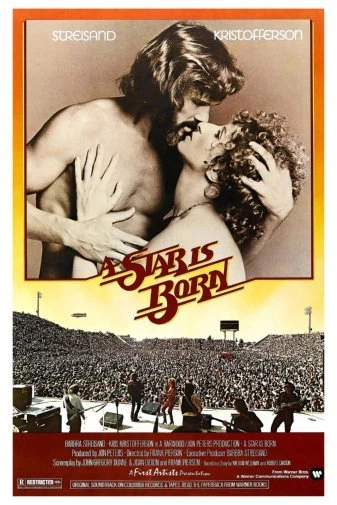
A Star Is Born poster
1976

#3 — A Star Is Born

Box Office: $63.1M
GenreMusical romantic drama
DirectorFrank Pierson
1976 Rank#3
Main Cast
  • Barbra Streisand as Esther Hoffman
  • Kris Kristofferson as John Norman Howard
  • Gary Busey as Bobby Ritchie
  • Oliver Clark as Gary Danziger

A Star Is Born at number three is one of the strongest reminders that glossy star vehicles could still compete ferociously in the middle of the 70s. This version drags the story into the rock era, which means the tragedy gets filtered through celebrity culture, amplified performance, and a more openly contemporary kind of masculine burnout.

Streisand is the movie’s gravitational center. The film is built to showcase her, and it knows it. That kind of star-led confidence is a huge part of the commercial appeal. The emotional architecture may be familiar, but the mood, styling, and music-business setting let it feel updated without losing the central melodramatic engine.

In the commercial story of 1976, A Star Is Born matters because it proves remakes could hit big not just through spectacle, but through era translation — taking a durable story and plugging it directly into contemporary celebrity mythology.

For Gen X, this became one of those major inherited showbiz tragedies whose soundtrack, mood, and iconography stayed in circulation long after the first run ended.

Fun Fact / Why It Still Matters The film still matters because it shows how effectively Hollywood could modernize a classic story by reshaping it around current fame, music, and star power.
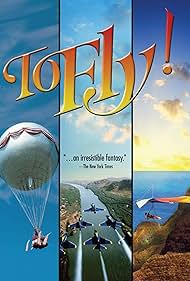
To Fly! poster
1976

#2 — To Fly!

Box Office: $86.6M
GenreDocumentary / IMAX
DirectorGreg MacGillivray & Jim Freeman
1976 Rank#2
Featured
  • Peter Walker
  • Ellen Bry
  • Jennifer Kaye Evans
  • Large-format aerial and flight photography as the main event

To Fly! showing up at number two is the kind of result that makes this release-year system so interesting. No, it doesn’t fit the same commercial narrative as the rest of the list. That’s exactly why it deserves to be here under this methodology. The IMAX era was still early, and this film’s performance shows there was a genuine audience for large-format spectacle built around experience rather than conventional dramatic storytelling.

In that sense, it almost feels like a future artifact dropped into 1976. People weren’t just paying for plot. They were paying for scale, sensation, and the feeling of seeing something their normal moviegoing couldn’t provide. That’s a powerful clue about where theatrical exhibition would keep heading.

In the commercial story of 1976, To Fly! matters because it broadens the definition of what “big box office” can mean. Spectacle doesn’t always require stars or franchise mythology. Sometimes the venue and the visual experience are the attraction.

For Smells Like Gen X, it’s one of those fascinating curveball titles that keeps the series honest. The box office doesn’t exist to flatter later nostalgia; it exists to show what actually sold.

Fun Fact / Why It Still Matters The film still matters because it shows immersive exhibition itself becoming a commercial draw, which makes it an oddly early hint of later premium-format moviegoing.
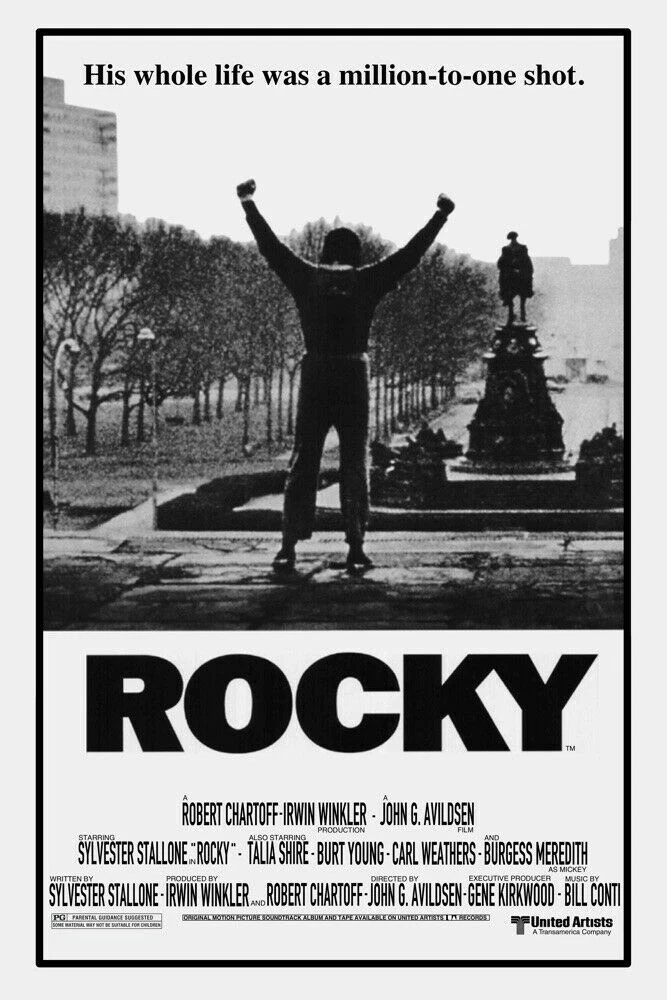
Rocky poster
1976

#1 — Rocky

Box Office: $117.2M
GenreSports drama
DirectorJohn G. Avildsen
1976 Rank#1
Main Cast
  • Sylvester Stallone as Rocky Balboa
  • Talia Shire as Adrian
  • Burt Young as Paulie
  • Carl Weathers as Apollo Creed

Rocky taking the top spot is one of those box-office facts that also feels like a national mood report. This isn’t just an underdog sports movie. It’s a myth-making machine built out of working-class frustration, bruised tenderness, self-respect, and the desperate need to go the distance at least once before life dismisses you entirely. That emotional architecture is why it exploded.

Stallone gives the film its heartbeat, but one of the smartest things Rocky does is refuse to make victory purely literal. The movie understands that dignity, love, and endurance can hit as hard as triumph. That makes it feel bigger than a simple sports story. It becomes a referendum on worth.

In the commercial story of 1976, Rocky matters because it’s the year’s biggest hit without needing giant effects or giant institutional machinery. It wins through identification. The audience doesn’t just watch Rocky. They climb the steps with him.

For Gen X, this is one of the foundational American pop-culture texts — the kind of movie that turned aspiration into a montage and somehow made that feel immortal rather than corny.

Fun Fact / Why It Still Matters Rocky still matters because it transformed a modestly scaled sports drama into one of the purest and most durable underdog myths in American cinema.

Rewind Verdict

The top 10 movies of 1976 are a fantastic reminder that “the late 70s” did not arrive fully standardized. Yes, Rocky is a huge populist phenomenon, and yes, the era is moving toward bigger and broader commercial language. But this same list also includes journalism, satanic horror, giant-format exhibition, war spectacle, remake hype, train-thriller comedy, and one nasty little baseball movie that refuses to get wholesome on command.

What makes the year so memorable is the sheer range of ways audiences were willing to show up. They would support aspiration, terror, civic mistrust, giant apes, giant formats, and cynical little underdog stories all in the same commercial ecosystem. That is a healthier, stranger, much more interesting marketplace than a neat one-note blockbuster narrative suggests.

For Smells Like Gen X, 1976 feels like one of those key bridge years: old forms are still viable, new commercial habits are getting louder, and the movies themselves haven’t yet been flattened into one dominant flavor. That’s a big reason the year still feels alive.

FAQ: Top Movies of 1976

What was the highest-grossing 1976 release at the North American box office?

Rocky was the biggest North American hit among films first released in 1976.

Why is To Fly! so high on the list?

Because this series is using the release-year domestic gross table from the 1976 American films list, and that source places To Fly! at number two for the year.

Why use release-year grosses instead of calendar-year totals?

Because release-year grosses keep 1976 focused on movies first released in 1976 rather than mixing them with older holdovers still earning money in the same calendar period.

Was 1976 already fully in blockbuster mode?

Not completely. Rocky is a giant populist smash, but the rest of the list shows plenty of room for political drama, horror, war spectacle, comedy-thrillers, and even premium-format documentary exhibition.

What makes the 1976 lineup so memorable?

Its variety. The year’s biggest hits include an underdog sports classic, an IMAX phenomenon, a giant ape remake, Watergate journalism, satanic horror, war epic scale, Dirty Harry severity, and one of the all-time great baseball comedies.

Get the Weekly Gen X Drop

New videos, rewinds, and savage nostalgia — first.

JOIN THE NEWSLETTER WATCH VIDEOS

MORE REWINDS