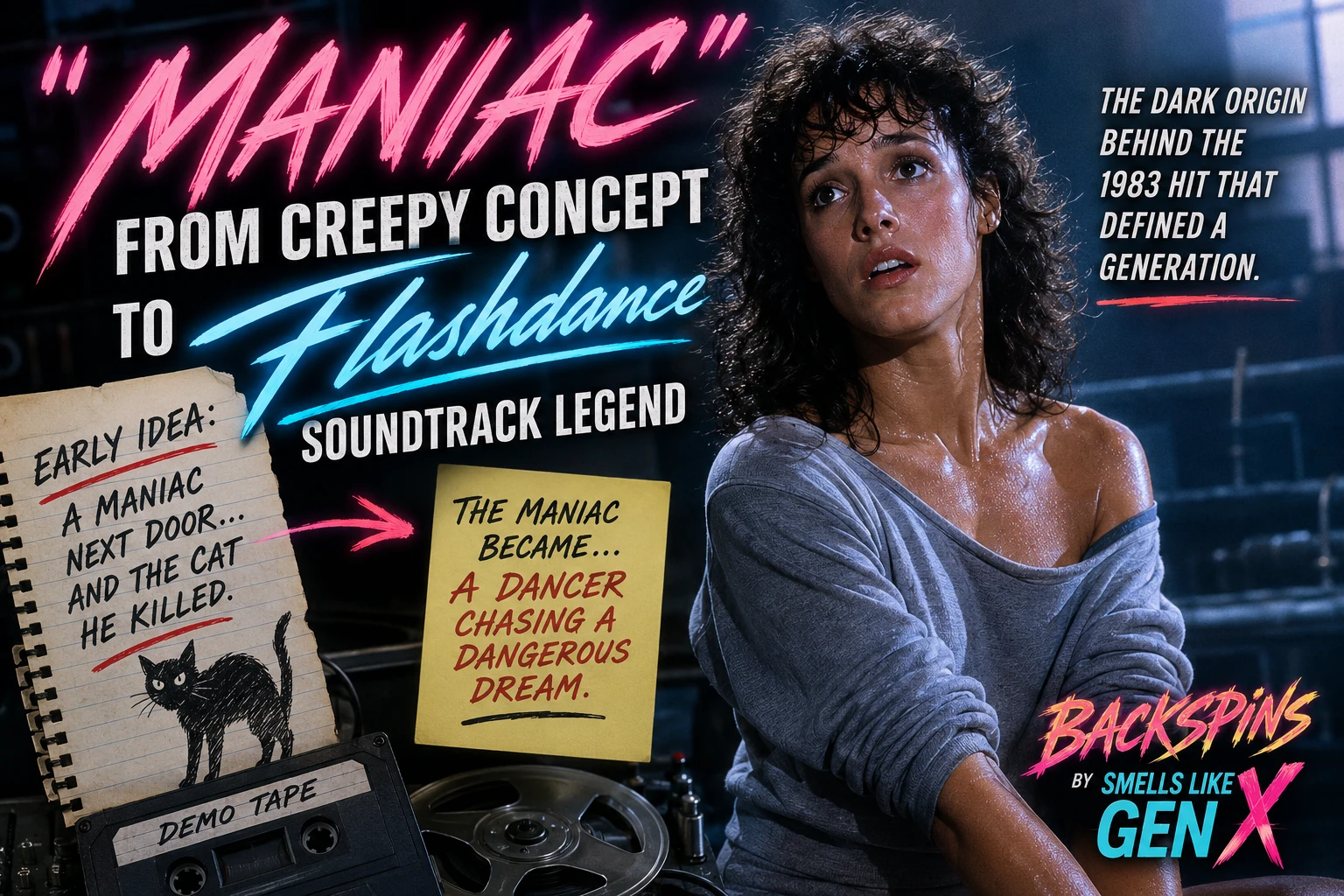
How “Maniac” Went from Creepy Concept to Flashdance Soundtrack Legend
Some 80s songs feel like they were born fully formed inside a gym bag full of leg warmers and panic sweat. Michael Sembello’s “Maniac” is one of them — a track so wired, tense, and relentless that it still sounds like someone chasing a dream with the brakes cut.
But the wild part is this: before Flashdance turned it into the sound of ambition, the idea behind “Maniac” reportedly came from a much darker place. The final version became dance-movie history, but the early spark had more midnight-thriller energy than ballet-audition glory.
The “Maniac” Backstory in Fast-Forward
Watch the Backspins video: This blog version goes deeper than the video page, focusing on why the song’s darker early DNA helped make the finished Flashdance version feel so intense. Watch the companion video page here: The Dark Story Behind “Maniac” from Flashdance.
Before It Was a Dance Anthem, “Maniac” Had a Creepier Pulse
When people remember “Maniac” from Flashdance, they usually remember movement first: the training, the sweat, the relentless physical grind, and that very 1983 belief that every personal transformation needed a montage.
But the song’s reported early inspiration was not really about a dancer chasing greatness. The idea was closer to someone dangerous living nearby — a “maniac” in a far more literal sense. That is a long way from steel mills, dance dreams, and Jennifer Beals becoming an 80s poster image for ambition.
What makes the story fascinating is that the music already had tension baked into it. Even after the lyrics changed, the track never became soft or safe. It kept that anxious, high-speed pressure. It still sounds like something is closing in.
The words changed, but the song kept its nervous system.
The Notorious Cat Lyric That Was Definitely Not Flashdance Material
One of the most repeated pieces of “Maniac” lore is the supposed early lyric involving a neighbor’s cat. In that version of the story, the original idea was not about a dancer at all — it was about a disturbing figure next door, with a lyric reportedly involving a cat being killed and nailed up.
Whether you hear the story told as the cat being nailed to a floor, a door, or simply as a grim image from the early draft, the point is the same: this was not exactly inspirational dance-movie language. It was closer to the kind of lyric you would expect in a slasher-adjacent demo than a glossy Paramount soundtrack smash.
That lyric change is the whole story in miniature: the original “maniac” was literal and creepy. The finished “maniac” became metaphorical — a dancer pushing herself so hard that ambition started to look dangerous.
And that is why the rewrite mattered. The song did not lose its intensity. It just changed targets. The fear became pressure. The danger became obsession. The horror image got stripped away, but the frantic energy stayed right where it was.
The Smartest Move Was Turning Fear Into Obsession
The genius of the rewrite was not that it erased the danger. It redirected it. Instead of making the “maniac” an outside threat, the song turned that intensity inward. Now the danger was discipline. Pressure. Hunger. A dancer pushing herself until the line between ambition and self-destruction started to blur.
That is why the song fit Flashdance so well. The movie is not just about dance. It is about escape. Alex Owens is trying to break out of one life and force her way into another. The song’s frantic drive makes that dream feel urgent instead of pretty.
In another context, that pulse could feel like a chase scene. In Flashdance, it becomes training-room electricity.
- The original edge gave the song bite: without that tension, “Maniac” might have become just another upbeat soundtrack track.
- The rewrite made it cinematic: the danger became emotional and physical instead of literal.
- The cat lyric had to go: a grim neighbor-cat image might work in creepy song lore, but it was never going to survive as a Flashdance anthem.
- The music matched the montage: the rhythm feels like motion, repetition, sweat, and exhaustion.
- The result was pure 80s alchemy: a strange origin, a perfect movie placement, and a song that sounded impossible to ignore.
Why “Maniac” Became Bigger Than the Backstory
The early 80s were a golden age for movie soundtrack hits, and Flashdance landed right in the sweet spot. Songs were not just promotional tools — they became part of the movie’s identity. A hit single could make a film feel larger, longer-lasting, and more culturally unavoidable.
“Maniac” worked because it did not simply decorate the film. It translated the film’s pressure into sound. The track made the body feel like a machine, the dream feel like a dare, and the training feel almost dangerous.
That is why it still hits. You can hear the 1983 production. You can hear the soundtrack polish. But underneath all of that, the song still has a weird little shadow. It is motivational, yes — but not relaxed. It is a pep talk from someone who has not slept.
“Maniac” became a dance anthem because it never sounded comfortable. It sounded desperate enough to matter.
The Song That Made Ambition Sound Slightly Unhinged
For Gen X, this song is fused to an entire visual language: the cut-up sweatshirt, the studio mirror, the sweat, the industrial setting, the impossible dream, and the idea that if you just worked hard enough, maybe life would finally open the door.
Looking back, the song’s darker origin almost makes too much sense. “Maniac” has never sounded like a casual dance track. It sounds obsessive. It sounds like someone refusing to stop. It sounds like the 80s taking the concept of self-improvement and turning it into a controlled explosion.
That is why it still lives rent-free in the Gen X brain. It is not just nostalgia. It is pressure, panic, and pop perfection — all moving at 1983 speed.
FAQ: Michael Sembello’s “Maniac” and Flashdance
What movie made “Maniac” famous?
“Maniac” became famous through the 1983 film Flashdance, where it was tied to the movie’s intense training and dance imagery.
Who performed “Maniac”?
The song was performed by Michael Sembello and became one of his signature hits.
Was “Maniac” always about dancing?
No. The song reportedly began with a darker concept before being rewritten to fit the emotional and physical intensity of Flashdance.
What was the original “Maniac” lyric about a cat?
According to the commonly repeated story, an early version reportedly included a much darker image involving a neighbor’s cat. That concept was rewritten before the song became part of Flashdance.
Why does “Maniac” still feel so intense?
The song’s fast pulse, tense structure, and obsessive energy make it feel urgent even decades later. That leftover edge is part of why it works so well.
Keep the Backspin Going
Dive into more 80s soundtrack stories, MTV-era music memories, and the weird little pop-culture details that somehow explain why these songs never left our heads.
Topics: Michael Sembello Maniac, Maniac Flashdance, how Maniac became a Flashdance anthem, Maniac original lyrics, Maniac cat lyric, The Dark Story Behind Maniac from Flashdance, Flashdance soundtrack, 1983 soundtrack songs, 80s movie music, 80s soundtrack hits, Backspins, Phil Ramone, Jennifer Beals, Alex Owens, 80s music stories, Gen X nostalgia, Smells Like Gen X.