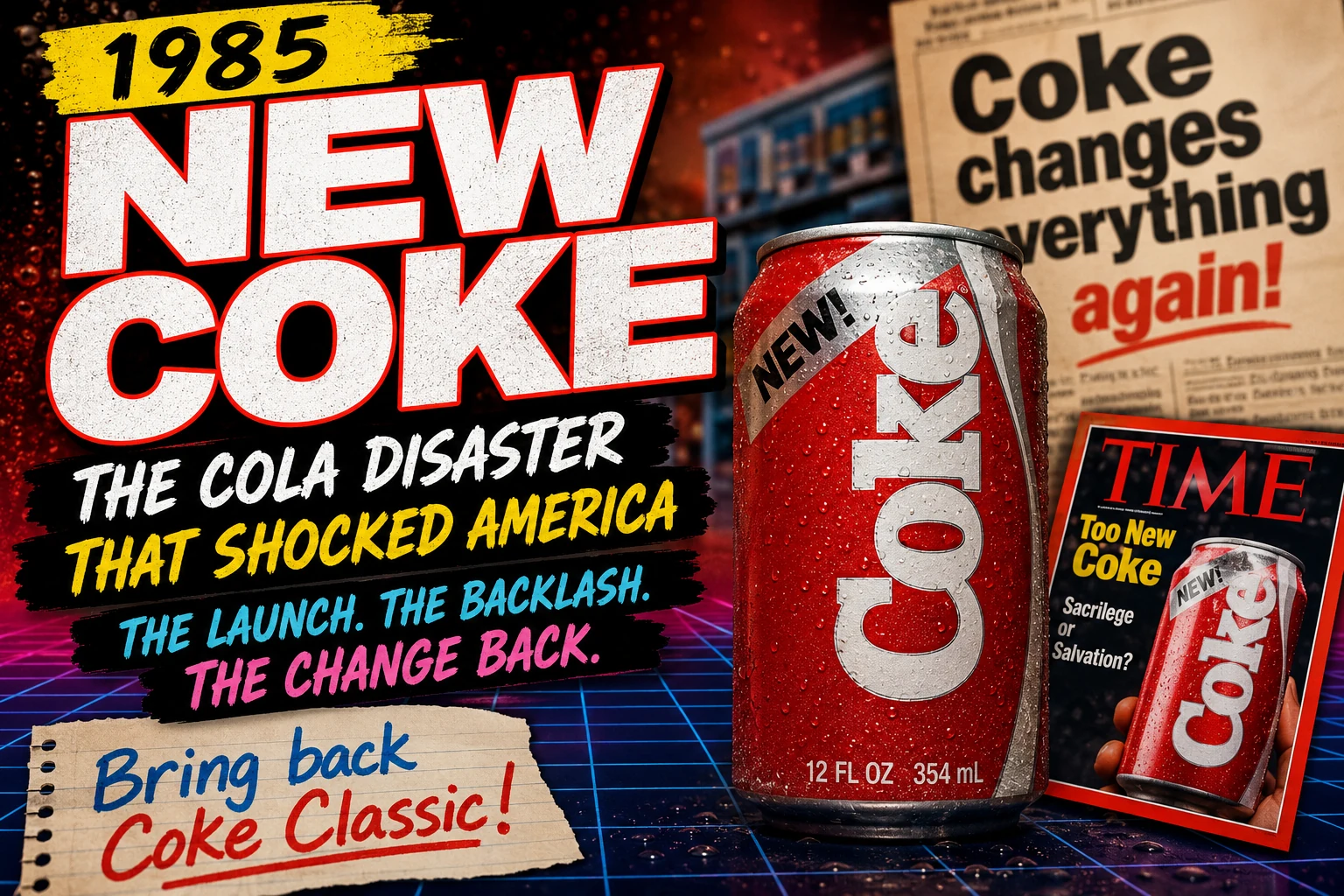
New Coke in 1985 The Formula Change Gen X Watched Turn Into a National Meltdown
New Coke was Coca-Cola’s 1985 reformulation of its flagship drink—and one of those rare product launches that escaped the grocery aisle and took over the culture. Coke expected a sweeter formula to slow Pepsi’s momentum. Instead, people reacted as though somebody had walked into the family kitchen, changed the wallpaper and thrown away the good glasses without asking.
If you were around in 1985, the setup made sense even before the disaster started. The Cola Wars were everywhere. Pepsi had the taste tests, younger advertising and commercials that made soda look like a lifestyle choice. Coke had history, glass bottles, family refrigerators and the confidence of a brand that assumed it would always be Coke. Then the company started listening very closely to the taste-test numbers and not closely enough to the people who had been drinking the stuff their entire lives.
This rewind follows the secret reformulation work, the big April launch, the store-shelf shock, the phone calls, the protest groups, the hoarding, the return of Coca-Cola Classic after 79 days and the strange years when both versions sat beside each other. It is part marketing history, part brand psychology and part reminder that the 80s could turn absolutely anything into appointment television.
Basically, Coke tried to beat Pepsi with a sweeter sip and discovered that nostalgia could body-slam a research department through a folding table.
The taste test won. The grocery aisle revolted.
Coca-Cola measured which sip people preferred. It did not fully measure what happened when the familiar can disappeared from the refrigerator.
What Was New Coke in 1985?
New Coke was the sweeter formula Coca-Cola introduced on April 23, 1985, replacing the original U.S. version. The company believed the new taste would help it fight Pepsi and appeal to younger consumers. What followed was 79 days of angry calls, letters, jokes, news coverage and people buying up the old formula like the soda aisle had suddenly become a survival bunker. Coca-Cola brought the original back as Coca-Cola Classic on July 11, 1985, while the reformulated drink remained on the market separately.
New Coke at a Glance: The 10-Point Rewind
- Launch: April 23, 1985—the day the familiar Coke disappeared from U.S. shelves.
- Company: The Coca-Cola Company, making the boldest possible move with its biggest product.
- Reason: Pepsi pressure, youth marketing and taste tests that favored a sweeter sip.
- The pitch: Smoother, sweeter and supposedly better suited to modern tastes.
- The problem: The new drink did not join original Coke. It replaced it.
- The backlash: Calls, letters, protest groups, jokes, hoarding and nightly-news coverage.
- Classic returns: July 11, 1985, with the old formula and a brand-new word on the label.
- New Coke-only era: 79 days—barely a summer, somehow an entire cultural event.
- Long-term legacy: The marketing mistake every business class still keeps in the drawer.
- Gen X verdict: The grocery aisle became a national identity crisis, because apparently 1985 had room for that.
The Cola Wars: When Soda Commercials Started Feeling Like Combat
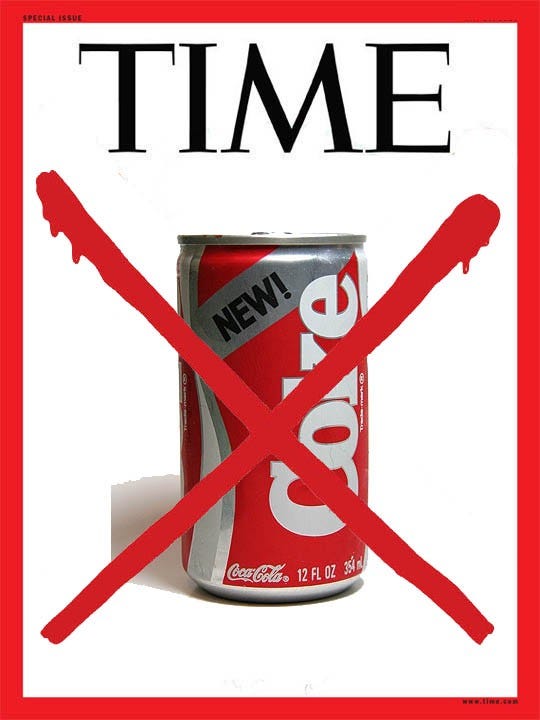
To understand New Coke, you have to remember how loud the Cola Wars felt in the late 70s and early 80s. Coke and Pepsi were not politely competing for shelf space. They were fighting through television, radio, supermarket displays, celebrity endorsements and commercials that treated choosing a soda like declaring a personality. Coke sold tradition. Pepsi sold youth. Every can apparently came with a worldview.
The Pepsi Challenge was especially effective because it turned a marketing claim into a little televised experiment. Two cups appeared, somebody took a sip, and Pepsi acted as though science itself had just ruled against Coca-Cola. It was simple, visual and perfect for the era. You did not need to understand market share. You just watched somebody point to the Pepsi cup.
Coke executives had a legitimate reason to be nervous. Pepsi was gaining cultural momentum, especially with younger drinkers, and the old assumption that Coca-Cola could coast forever on tradition was starting to look less comfortable. The company did what big 80s corporations did when the competition started looking cooler: it gathered data, called meetings and prepared to make a very large decision with an extremely confident presentation.
The research suggested that a sweeter, smoother cola could perform better in direct comparisons. On paper, that looked like the answer. Pepsi had built the fight around taste, so Coke decided to fight on the same battlefield. The trouble was that Coke’s greatest advantage had never been a two-ounce paper cup. It was everything surrounding the cup.
That was the part the numbers did not capture very well. Coca-Cola was in lunch counters, family cookouts, restaurant fountains, glass bottles, vending machines and refrigerators that had been opened a thousand times. The company studied the drink as a formula. A lot of customers experienced it as part of the furniture.
Project Kansas: The Secret New Coke Formula Nobody Asked For
Long before anybody saw the words New Coke on television, Coca-Cola was quietly working on a replacement formula under the name Project Kansas. It sounds like a Cold War operation because apparently “maybe we should change the soda” did not carry enough executive drama.
The pressure behind the project was real. Coca-Cola’s lead had been shrinking, the Pepsi Challenge had become a cultural weapon and Diet Coke had proved that a new cola could become a major hit. From the corporate office, reformulation looked less like madness and more like action. The company did not want to be the old brand watching Pepsi own the younger crowd.
A research project became a replacement plan
Creating another formula was one thing. Removing the original was the choice that changed the story. Coke could have introduced the new drink as an extra option and let people decide. Instead, executives treated the taste-test winner like a software update and pushed it onto every customer at once.
That was the moment the research project became a cultural experiment. A side product could have quietly succeeded or quietly disappeared. Replacing Coca-Cola meant that every grocery shopper, diner customer and kid reaching into the family refrigerator had been enrolled in Project Kansas whether they signed up or not.
Why New Coke Won the Taste Test and Lost the People Drinking It
New Coke is the perfect example of research being technically right and culturally blind. In small sips, sweeter colas often make a stronger first impression. Put two anonymous cups on a table and the new formula could win. Put the old formula back in a red can, connect it to years of memory and then announce that it is gone forever, and suddenly you are testing something completely different.
Coca-Cola’s research showed that many consumers liked the new taste. That part was real. The problem was the question being asked. People were not simply deciding which liquid tasted better for three seconds. They were being told that the drink they had known for years was being replaced because a company had found a more competitive answer.
The test room removed almost everything that made Coke feel like Coke. There was no bottle, no can, no logo, no restaurant glass, no family habit and no expectation built from years of commercials. That made the taste comparison cleaner, but it also removed the exact emotional baggage that later blew up the launch.
The fatal difference: addition vs. replacement
Had New Coke arrived as another option, people could have sampled it, ignored it, mocked it or adopted it without feeling robbed. Replacement created the outrage. The new formula did not merely ask for shelf space. It arrived carrying the original formula’s eviction notice.
What New Coke Actually Tasted Like in 1985
New Coke was generally described as sweeter and smoother than the original. That made sense in the taste-test world, where the first sip had to win quickly. It was not Pepsi poured into a red can, but it moved closer to the sweeter style that was performing well in direct comparisons.
Of course, almost nobody in 1985 stood in the kitchen taking tasting notes like a cola sommelier. People drank it while already knowing the original had been removed. By then, every sip came with expectations, annoyance and a television-news argument attached to it. Flavor never had the room to exist by itself.
Why a sip is not a serving
A quick sip and a full can are also different experiences. Extra sweetness can hit well in a small sample and become more tiring over an entire serving. That is one reason taste tests can answer a narrow question very well while missing the larger question customers actually care about.
Coca-Cola says the new formula was tested with nearly 200,000 consumers and often won the preference contest. That result was not fake. It just did not mean what the company hoped it meant. The tests found a drink people might choose in a blind comparison. They did not prove people wanted Coca-Cola erased and replaced.
April 23, 1985: The Day New Coke Hit the Shelf
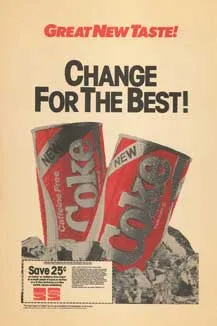
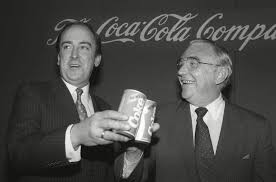
On April 23, 1985, Coca-Cola announced the new formula with the kind of confidence only a giant corporation in the 80s could summon. This was not presented as an experiment or limited edition. It was the new Coca-Cola, rolled out with cameras, executives and the assumption that America would taste the improvement and move on.
From inside the company, the logic probably felt airtight. Pepsi had momentum. Research favored the sweeter formula. The market rewarded brands that looked modern, aggressive and willing to change. Standing still looked dangerous, and the decade had very little respect for standing still.
Then came the detail that poisoned the whole launch: the original formula was leaving the U.S. market. Consumers were not being invited to try something new next to the familiar drink. They were being informed that the familiar drink had been replaced by management.
Coca-Cola believed it had improved the product. A lot of customers believed the company had broken an agreement nobody had realized existed until that moment. Once those two stories collided, the corporate launch speech never had a chance.
When America Lost Its Mind Over a Soft Drink
The backlash arrived fast and with far more emotion than anybody expects from brown sugar water. People called Coca-Cola, wrote letters, complained to bottlers, argued in stores and bought up remaining cases of the old formula. Television news loved it because the images were irresistible: ordinary Americans speaking about cola with the intensity usually reserved for taxes and foreign policy.
That was the first big lesson. Coke was not merely a beverage sitting beside the orange soda. It was tied to routines and memory. People had grown up with it, ordered it with burgers, poured it over ice at family gatherings and watched the same logo follow them through decades. Changing the taste was one thing. Removing the familiar version felt personal.
The phone-call problem
Coca-Cola expected resistance. Every product change creates complaints. What it did not expect was the scale, the heat and the sense that consumers believed something had been taken from them. The switchboards became a live reading of emotional attachment that no blind test had managed to capture.
The hoarding problem
Some people started hoarding old Coke, which is the point where a product complaint becomes full 80s theater. Cases disappeared into basements and garages. People who had never considered themselves collectors suddenly became curators of carbonated history.
The media problem
Once the backlash became a television story, it fed itself. Every angry caller showed the next viewer that the outrage was legitimate. New Coke stopped being a drink and became a punch line, a grievance, a nightly-news segment and a business-school case study before the cans had even finished rolling off the line.
Protest Groups, Hotline Calls and Basements Full of Old Coke
The revolt soon developed organizations with names that sounded half serious and half like they had been invented during a late-night radio call-in show. The Society for the Preservation of the Real Thing and Old Cola Drinkers of America demanded the return of the original formula. Coca-Cola later said one group claimed 100,000 supporters.
Consumers searched for old stock and stored it at home. Coca-Cola’s history includes stories of people buying hundreds of bottles or making expensive runs to bottlers. In 1985, seeing somebody stack cases of soda in a basement was not just funny. It was proof that the company had managed to manufacture scarcity around its own most famous product.
The complaint line became market research in reverse
Before the launch, Coca-Cola controlled the research. After the launch, customers took over. They created their own national survey through phone calls, letters, protests, jokes and refusal to let the story die. The answer was not neatly tabulated, but it was difficult to misunderstand.
When Coca-Cola Classic returned, the phones lit up again—this time with relief. Coca-Cola reports 31,600 calls in the first two days after the announcement. The return led network newscasts and landed on front pages. The country had spent the summer of 1985 turning a soda correction into a victory parade.
Coca-Cola Classic Returns: The Old Coke Was Back After 79 Days
On July 11, 1985, Coca-Cola announced that the original formula was coming back under a new name: Coca-Cola Classic. Before New Coke, nobody needed the word Classic. Coke was Coke. After 79 days of chaos, the old formula returned wearing a heritage badge like it had survived a war.
Seventy-nine days is barely enough time for a school summer vacation, yet it contained one of the loudest product reversals in American business. Coca-Cola had launched the future in April, spent May and June getting yelled at, and arrived in July carrying the past back through the front door.
The public reaction felt like more than relief. Consumers believed they had won. A giant company had changed course because people refused to stop complaining. That sense of victory made Coca-Cola Classic feel even more valuable than the old formula had felt before it disappeared.
New Coke did not vanish immediately
The detail that gets lost is that New Coke did not vanish immediately. Both drinks remained on shelves. But culturally, the argument ended the moment Classic returned. The original had the story, the emotion and the crowd. New Coke was left standing beside it like the replacement teacher after the regular teacher unexpectedly walked back into class.
When New Coke and Coca-Cola Classic Shared the Same Shelf
For a while, New Coke and Coca-Cola Classic sat beside each other, which made the soda aisle look like Coca-Cola was arguing with itself. One can represented the future the company had announced in April. The other represented the past consumers had demanded back in July.
The advertising split made the difference obvious. New Coke used the youthful Catch the Wave campaign. Coca-Cola Classic leaned into Red, White & You, tradition and the emotional comfort of the familiar brand. The company had accidentally created two different promises from one disaster.
Classic was no longer just the default
The word Classic changed the original forever. It stopped being merely the default formula and became the version people had defended. That is an astonishing branding upgrade to receive after nearly detonating the product.
New Coke eventually became Coke II and faded away. Coca-Cola Classic kept its extra name for years, long after the immediate need had passed. By then, “Classic” was not a clarification. It was a medal pinned to the can.
Was New Coke a Publicity Stunt—or Just a Very Expensive Mistake?
Because the return of Coca-Cola Classic generated enormous attention, the conspiracy theory practically wrote itself: maybe New Coke was planned. Maybe the company deliberately angered everyone so the original could come back stronger. It is the kind of theory that sounds perfect over a bar table because it turns chaos into genius.
The appeal is obvious. A disastrous decision becomes a brilliant setup. The angry calls become part of the script. The executives stop looking panicked and start looking like chess players. It is much more satisfying than admitting that a famous company misunderstood its own customers.
The simpler explanation is also the better one. Coca-Cola trusted the taste data, underestimated emotional ownership and treated the formula as the whole product. The company recovered brilliantly, but recovering from a mistake is not evidence that the mistake was secretly planned.
Also, large corporations generally do not enjoy lighting their flagship brand on fire in public and hoping the smoke smells like caramel syrup. The reversal created great publicity. That does not make the preceding 79 days a marketing masterstroke.
Why New Coke Failed: Six Lessons the Taste Tests Couldn’t Measure
Loss aversion beat novelty
In plain English, people hated losing the old Coke more than they enjoyed gaining a possible improvement. The company offered a sweeter drink. Consumers saw the familiar one disappearing. That imbalance made the launch feel like a loss before anybody finished the first can.
The endowment effect made Coke feel like “ours”
Years of use had given customers a sense of ownership. Coca-Cola owned the trademark and the factories, but people felt they owned the memories: the bottle from the corner store, the fountain drink at the mall, the can in the cooler. The launch exposed the difference between legal ownership and emotional ownership.
Coke fought on Pepsi’s strongest ground
Pepsi had built its attack around a blind sip, and Coke followed it onto that battlefield. But Coke’s strongest weapons were history, recognition, availability, ritual and trust. By trying to win Pepsi’s argument, Coca-Cola temporarily weakened its own.
The reversal worked because it restored agency
The return worked because it restored both the drink and the customer’s sense of control. People believed their complaints had forced the company to listen. That made Coca-Cola Classic feel like a victory, not merely a correction.
New Coke Myths, Facts and One Very Convenient Conspiracy Theory
Why New Coke Became One of the Loudest Stories of 1985
New Coke was not a fad like Garbage Pail Kids or friendship pins. Nobody was trading cans at recess or trying to match one to a Swatch. But it absolutely belonged to 1985 fad culture because it became a short, intense national obsession that crossed television, newspapers, stores, offices and dinner-table conversation.
A fad does not have to be loved. Sometimes it is simply the thing everybody is reacting to at the same time. New Coke had the full package: massive promotion, instant controversy, public complaints, jokes, scarcity, reversal and enough media coverage to make a soft drink feel like a breaking-news category.
It also fit the 80s because the decade treated brands like entertainment. Commercials had celebrities, jingles, story lines and loyalties. Coke and Pepsi were not only selling flavor; they were selling which side of the culture you wanted to stand on. New Coke turned that background rivalry into the main event.
New Coke Timeline: From Cola Wars Panic to Coca-Cola Classic
Pepsi turns the rivalry into youth culture and televised taste-test theater. Coke still leads, but the old confidence starts developing a nervous twitch.
Coca-Cola studies sweeter reformulations and becomes convinced the taste-test winner can solve the Pepsi problem. Project Kansas moves from experiment to replacement plan.
New Coke launches on April 23. The company presents the change as progress. Customers notice that the old formula is not sitting beside it.
Calls, letters, jokes, protest groups and hoarding turn a formula change into a national story. The complaint line becomes the loudest focus group in America.
Coca-Cola Classic returns on July 11 after 79 days. The old formula comes back, consumers declare victory and the word Classic becomes part of the can.
New Coke continues, later becomes Coke II and eventually disappears. The failure survives through business classes, collectibles, reruns and anyone who lived through the summer of 1985.
Why New Coke Still Matters to Anyone Who Lived Through the 80s
New Coke remains famous because it revealed what Coca-Cola was really selling. The company believed it was improving a beverage. Consumers reminded it that the red can also carried routine, recognition, memory and a small piece of American furniture.
That is why the story keeps returning. It is not really about whether the sweeter formula tasted terrible. Many people liked it. The lesson is that customers can accept a new product far more easily than they accept the disappearance of something familiar.
The backlash also proved the strength of the original brand. People do not organize protest groups for products they barely care about. New Coke embarrassed the company, but it also exposed a level of attachment most brands would sell a kidney to achieve.
In the end, the product failed and the brand survived. Coca-Cola Classic came back with more emotional power because the public had just spent 79 days demonstrating exactly how much the old formula meant to them.
Coke II, Stranger Things and the Weird Afterlife of New Coke
The failure turned ordinary packaging into memorabilia. Empty cans, unopened cans, advertisements, store displays and employee material now capture the brief moment when Coca-Cola expected the new formula to become permanent. Nothing makes an object collectible quite like a company trying very hard to forget it.
The reformulation continued after Classic returned and eventually became Coke II. By then, the main cultural moment was over. The drink was no longer the future or the enemy. It was the quiet leftover from the summer everybody remembered.
Stranger Things turned the disaster into nostalgia
In 2019, Coca-Cola brought New Coke back for a limited promotion tied to Stranger Things and its 1985 setting. The packaging, the commercials and the failure itself had become perfect period detail. What once looked like brand damage now looked like production design.
That revival completed the transformation. New Coke was finally free from competing with Pepsi or replacing anything. It had found the audience most likely to appreciate it: people willing to buy a drink because they remembered the argument around it.
Historical Sources and Further Reading
The dates and figures below come from Coca-Cola’s historical archive and Smithsonian collection records. They are the useful paperwork behind the Gen X memory: nearly 200,000 taste-test participants, 79 days before Classic returned, hotline floods, separate ad campaigns and the later revival of the formula everybody had spent decades arguing about.
Questions About New Coke
What was New Coke?
New Coke was Coca-Cola’s sweeter 1985 reformulation of its flagship drink. The important part—and the part that set off the national argument—is that it replaced the original U.S. formula instead of joining it as another option.
When did New Coke launch?
New Coke launched on April 23, 1985. Coca-Cola presented it as a bold improvement. A lot of customers heard, “We changed Coke and the old one is gone,” which was not quite the celebration the company had planned.
Why did Coca-Cola create New Coke?
Coca-Cola was under pressure from Pepsi, especially the Pepsi Challenge and youth-focused advertising. Taste tests favored a sweeter formula, and Coke believed changing the product would help it win the fight on Pepsi’s terms.
What were the Cola Wars?
The Cola Wars were the long-running Coke-versus-Pepsi rivalry turned into full-scale 80s entertainment. Commercials, celebrities, slogans and blind taste tests made choosing a soda feel weirdly close to choosing a team.
Why did people hate New Coke?
Many people objected less to the flavor than to the disappearance of the original. Coke had been part of routines and memories for decades. New Coke arrived with the message that management had decided those routines needed an upgrade.
When did Coca-Cola Classic come back?
Coca-Cola brought the original formula back as Coca-Cola Classic on July 11, 1985—79 days after New Coke launched. The announcement became national news because apparently the summer needed a happy cola ending.
Was New Coke discontinued immediately?
No. New Coke remained on shelves beside Coca-Cola Classic and was later renamed Coke II. Culturally, though, the main event ended the moment the original formula walked back into the room.
Was New Coke a publicity stunt?
People still suggest the whole thing was planned because Classic returned to enormous publicity. The more believable explanation is that Coca-Cola misread consumer attachment, then handled the reversal far better than it handled the launch.
Why is New Coke considered a marketing failure?
New Coke is considered a marketing failure because Coca-Cola replaced one of the world’s most familiar products despite deep emotional loyalty to the original. The backlash forced a public reversal after only 79 days.
Why does New Coke still matter?
New Coke still matters because it showed that a brand can live in people’s habits and memories, not just in a formula. Anyone changing a beloved product still has to answer the question Coca-Cola missed in 1985: what do customers think they own?