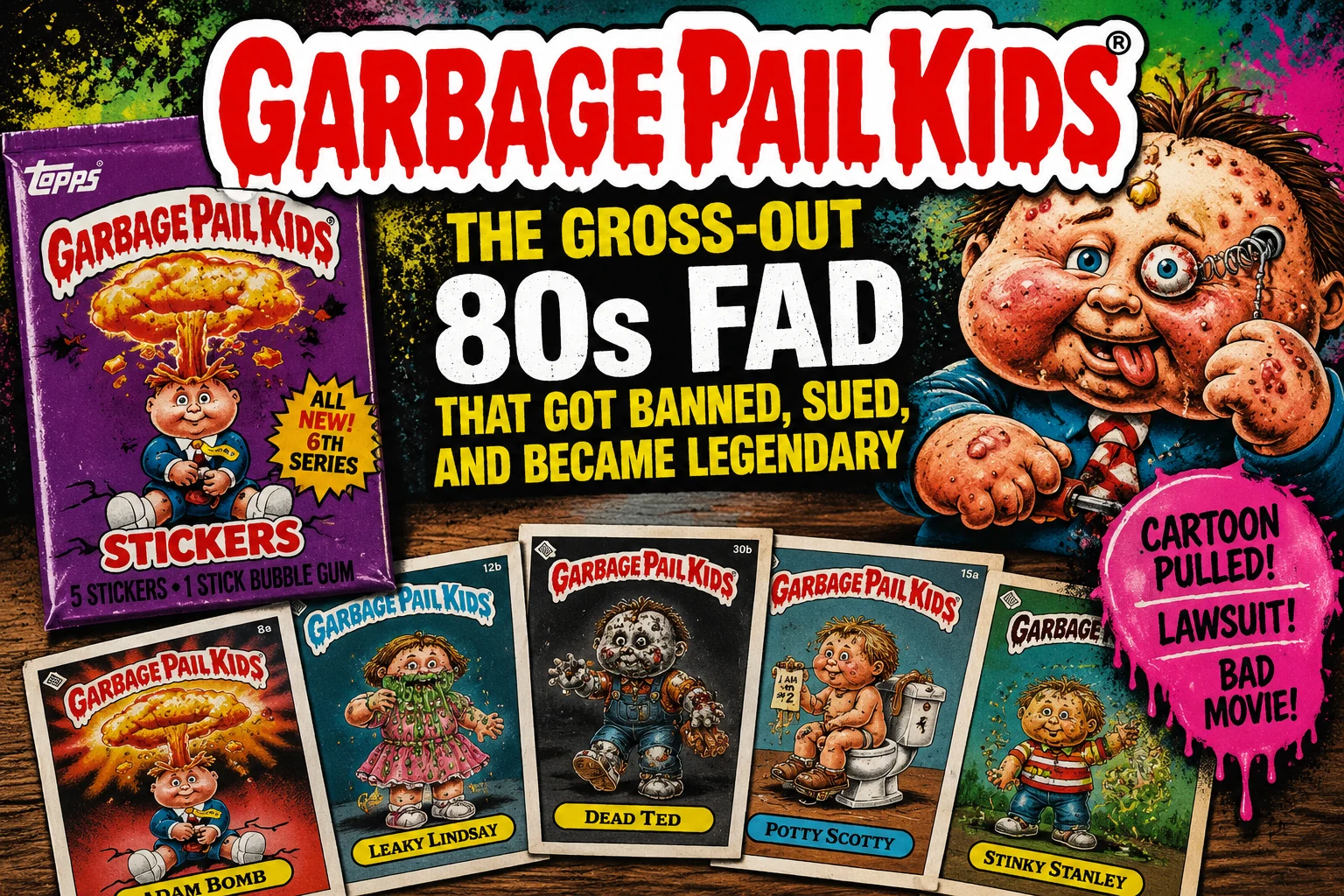
Garbage Pail Kids in the 80s The Gross-Out Card Craze Gen X Traded, Hid and Got Confiscated
Garbage Pail Kids arrived in 1985 as cheap sticker cards packed with slime, explosions, bodily fluids, injuries, mutations and names that sounded like the funniest kid in class had been given access to a professional art department.
Topps took the Cabbage Patch Kids craze, dragged it through a dumpster and created exactly the kind of collectible Gen X was built to love: portable, affordable, disgusting, tradeable and guaranteed to make at least one adult ask what was wrong with us.
This expanded rewind covers the original creative team, the 25-cent wax packs, A/B name pairs, school bans, playground trading, iconic first-series cards, the lawsuit, the unaired CBS cartoon, the cursed 1987 movie, collector details and the reason those little sticker nightmares still work.
Basically, Cabbage Patch Kids came with adoption papers. Garbage Pail Kids looked like they had escaped from detention after eating the papers.
One wax pack. Five stickers. Zero adult approval.
The cards mixed parody art, pun names, sticker collecting and schoolyard trading into a craze that could fit inside a jacket pocket—and therefore go absolutely everywhere.
What Were Garbage Pail Kids?
Garbage Pail Kids were Topps sticker trading cards launched in June 1985 as a gross-out parody of Cabbage Patch Kids. Each illustration appeared with pun-heavy character names and usually involved slime, injury, decay, bugs, toilet humor or some other schoolyard-approved disaster. The cards became a major Gen X craze because packs were cheap, the stickers were portable, duplicates created instant trades and adult disgust made them feel like contraband.
Garbage Pail Kids at a Glance: The Fast Rewind
- Launched: 1985
- Company: Topps
- Format: Sticker trading cards
- Core idea: Gross parody of cute doll culture
- Main target: Kids who liked disgusting jokes and collecting things
- Main enemies: Parents, teachers, school administrators, and good taste
- Major controversy: Lawsuit from the Cabbage Patch Kids side
- Cartoon controversy: CBS produced a series that was pulled before airing in the U.S.
- Movie adaptation: The Garbage Pail Kids Movie in 1987
- Legacy: One of the most memorable gross-out fads of the 1980s
- Gen X verdict: Repulsive, collectible, ridiculous, and completely perfect
How Garbage Pail Kids Started in 1985
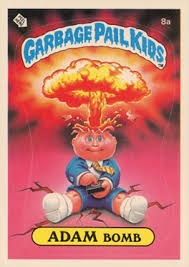
Garbage Pail Kids came out of one of the most reliable engines in 80s kid culture: the parody. Topps already had a long history of making funny, satirical, sticker-based products. Before Garbage Pail Kids, the company had Wacky Packages, which mocked familiar consumer brands with fake labels and twisted product jokes. So when Cabbage Patch Kids became a national doll obsession, the opportunity was sitting there like a lunch tray waiting to be flipped.
Cabbage Patch Kids were everywhere in the early 80s. They were soft, sentimental, adoption-themed, and marketed with a strange seriousness that made adults line up, argue, and sometimes lose their minds during the holiday shopping rush. They had names. They had birth certificates. They had backstories. They had the energy of a wholesome product that somehow came with paperwork.
Garbage Pail Kids took that entire emotional setup and detonated it. Instead of cute dolls with chubby cheeks and adoption certificates, kids got sticker cards featuring characters like Adam Bomb, Leaky Lindsay, Dead Ted, Potty Scotty, and other names that sounded like they were invented by a child who had just discovered both puns and plumbing.
The concept was simple, but the execution was brilliant. Each card looked like a distorted child portrait, usually with a grotesque visual gag and a punny name. The artwork had enough polish to feel collectible, but enough ugliness to feel forbidden. That balance mattered. Garbage Pail Kids were not just messy doodles. They were carefully rendered little nightmares.
That is why the fad worked so quickly. It was attached to something every kid already knew, but it twisted the premise into something funnier, nastier, and more rebellious. A Cabbage Patch Kid wanted you to love it. A Garbage Pail Kid looked like it might sneeze on your homework and laugh.
The Artists and Editors Who Built the Garbage Pail
Garbage Pail Kids did not look like ordinary kid doodles because they were not ordinary kid doodles. The project was driven by experienced cartoonists who understood parody, visual timing and exactly how much detail a disgusting joke needed before it became weirdly beautiful.
Art Spiegelman, already part of Topps’ creative world long before Maus made him famous outside trading cards, helped spearhead the concept with Mark Newgarden and artist John Pound. Pound painted the original characters with enough texture, lighting and personality to make every image feel like a miniature movie poster from a universe where nobody had discovered hygiene.
The paintings made the joke worth collecting
The art was the secret weapon. A rough cartoon of a kid exploding might get a laugh. A carefully rendered portrait of Adam Bomb calmly pushing a detonator while a mushroom cloud erupts from his skull becomes an icon. The cards were gross, but they were not lazy. The artists treated every zit, crack, puddle and flying eyeball like it deserved proper composition.
That polish separated Garbage Pail Kids from disposable novelty cards. The names got the first laugh, but the artwork made kids stare at the card, show it around and remember it years later. Adults saw ugliness. Kids saw production value.
Wax Packs, Bubble Gum and the A/B Name Trick
The original experience started with a wax wrapper and a quarter. According to The Strong National Museum of Play, the first set arrived in June 1985 and sold for 25 cents per pack. That price mattered. A kid did not need a birthday, a holiday or parental negotiations. You needed loose change and access to a corner store, candy counter or card shop.
The packs contained stickers and the traditional slab of trading-card gum that often felt capable of cracking a molar before it softened. Nobody was buying the pack for culinary excellence. The gum was simply the admission ticket sitting on top of the real event.
One picture, two names
Garbage Pail Kids used an A/B naming system. The same illustration could appear under two different character names. Adam Bomb shared artwork with Blasted Billy. Nasty Nick shared his image with Evil Eddie. That meant pulling the picture you wanted did not necessarily mean pulling the exact name you needed.
The first numbered series used 41 illustrations with two names each, creating 82 name cards before checklist and back variations entered the conversation. Topps had found a beautiful way to make the same artwork feel like two separate targets. Kids called it collecting. Adults might have used a different word.
The backs gave you more reasons not to peel them
Card backs could include checklists, mock certificates, awards and puzzle pieces. The sticker could be peeled, but peeling it changed the object forever. Some kids stuck them immediately on notebooks, lockers or furniture. Others guarded the full card like a museum piece. Both groups believed the other group was doing it wrong.
10 Iconic Original Garbage Pail Kids Cards and Name Pairs
Every kid had favorites, and half the fun was arguing over them. The first series established the visual language immediately: monsters, explosions, television damage, school disasters, bodily fluids, bad decisions and names that could be understood from three desks away.
Adam Bomb became the signature image because it summarized the whole brand in one painting: cute round face, calm expression, total catastrophe. Nasty Nick carries the prestige of card 1A, while the A/B pairs remind collectors that one illustration could create two different playground targets.
Why Garbage Pail Kids Took Over 80s Schoolyards
Garbage Pail Kids hit at the perfect moment because the 80s schoolyard was already built for them. Kids were used to collecting, trading, comparing, and showing off tiny objects that adults did not fully understand. Baseball cards had the structure. Stickers had the playground appeal. Gross-out humor had the emotional maturity level. Topps just shoved all three into a wax pack and let the cafeteria do the rest.
The cards had three things every great kid fad needs: collectibility, shock value, and social currency. You could collect the full set, trade duplicates, laugh at the names, gross out your friends, and hide them from adults who were already convinced the entire thing was lowering national standards. Which, honestly, was part of the charm.
They were cheap enough to spread
A major reason the fad grew was accessibility. These were not expensive toys locked behind a Christmas list. They were small, pack-based purchases. A kid could buy them, trade them, carry them in a pocket, stick them on notebooks, or stash them in a desk. That made them move fast through schools.
They were gross enough to feel rebellious
Garbage Pail Kids were not politely naughty. They were proudly disgusting. Vomit, snot, zits, explosions, garbage, weird injuries, creepy mutations, and toilet jokes were all part of the world. For kids, that was hilarious. For adults, that was evidence that civilization was sliding directly into a sewer grate.
They were collectible enough to become a playground economy
The trading aspect turned the cards into a small-scale economy. Certain characters became favorites. Duplicates became negotiation tools. Kids compared stacks, hunted missing cards, protected good ones, and made trades with the seriousness of tiny brokers wearing Velcro sneakers.
How Garbage Pail Kids Became Playground Currency
Garbage Pail Kids were not simply collected at home. Their natural habitat was the schoolyard. Packs created duplicates, duplicates created trades and trades created a tiny economy with no adult supervision, written rules or appeals process.
A card’s value depended on more than rarity. The picture mattered. The name mattered. Whether somebody already had it mattered. Whether the sticker had been peeled mattered. Whether the kid across from you was desperate enough to trade three cards for one mattered most of all.
The lunch table became a trading floor
Cards were spread across tables, compared in stacks and negotiated with the seriousness of mortgage paperwork. The seller wanted two good cards. The buyer offered five cards nobody wanted and acted insulted. Somewhere nearby, a carton of milk warmed itself while business continued.
Confiscation created artificial scarcity
When teachers took cards away, they accidentally removed supply from the market. A card trapped in a desk drawer until Friday became more valuable because nobody could trade it. Schools thought they were restoring order. They were running monetary policy.
This social layer is why the fad felt larger than the product. A card pack gave you objects. School gave those objects status, competition, stories and the possibility of making the worst trade of your young life.
Why Parents, Teachers and Schools Hated Garbage Pail Kids
Every great 80s fad needed a backlash, and Garbage Pail Kids came with one pre-installed. The cards were disgusting on purpose, and that meant adults had plenty to complain about. Parents thought they were too gross. Teachers thought they were distracting. Some schools reportedly banned them because kids were trading them during class, arguing over them, sticking them where they did not belong, or just generally acting like children who had been handed miniature cartoon filth.
The backlash only made the cards more powerful. That is one of the funniest laws of childhood: once adults say something is inappropriate, it immediately becomes more interesting. A card that might have been mildly funny became sacred contraband the second a teacher confiscated it.
And Garbage Pail Kids were engineered for exactly that reaction. They were anti-wholesome. They took the softest, cutest, most emotionally manipulative doll trend of the decade and made it ooze. The characters did not teach lessons. They did not model good behavior. They did not want to help you with your feelings. They wanted to explode, leak, barf, rot, mutate, and make your mother ask, “Why would anyone buy this?”
The schoolyard problem
Schools did not just dislike the content. They disliked the disruption. Trading cards create activity. Kids compare, bargain, argue, sneak, hide, and obsess. Add gross-out imagery and suddenly the cards become the kind of object that pulls attention away from spelling tests and directly toward a cartoon kid named something like Barfin’ Barbara.
The parent problem
Parents saw the cards as ugly, crude, and mean-spirited. They were not totally wrong. Garbage Pail Kids were ugly, crude, and mean-spirited. That was the point. The cards were not asking for adult approval. They were kid humor with commercial distribution.
The Cabbage Patch Kids Lawsuit That Changed Garbage Pail Kids
Garbage Pail Kids were not just controversial because they were gross. They were controversial because the parody target was obvious. The cards borrowed the visual language of Cabbage Patch Kids and twisted it into something grotesque. That made them funny to kids, irritating to parents, and legally radioactive to the people behind the original dolls.
Original Appalachian Artworks, the company associated with Cabbage Patch Kids, sued Topps, arguing that Garbage Pail Kids went too far in mocking the look and commercial identity of the dolls. The case became part of the brand’s legend because it proved something everyone already knew: Garbage Pail Kids were not a vague parody. They were aimed directly at one of the biggest toy crazes of the decade.
The dispute was settled in 1987. Topps agreed to change the way the characters looked so they were less directly tied to the Cabbage Patch visual style. That did not erase the brand. If anything, it added another layer to the mythology. Now Garbage Pail Kids were not only disgusting trading cards. They were disgusting trading cards with legal drama.
In a weird way, the lawsuit made the cards feel even more like an 80s artifact. The decade was obsessed with products, brands, licensing, characters, and kid culture as commerce. Garbage Pail Kids sat right at the center of that machine, covered in slime, making everyone uncomfortable.
The Garbage Pail Kids Cartoon CBS Pulled Three Days Before Airing
The Garbage Pail Kids fad did not stop at trading cards and a cursed live-action movie. It also almost became a Saturday morning cartoon in the United States, which is somehow both completely predictable and completely insane.
In 1987, CBS produced a Garbage Pail Kids animated series based on the Topps trading cards. On paper, that made sense. The cards were huge, kids knew the characters, and 80s television was already packed with toy-driven cartoons that existed somewhere between entertainment and commercial hypnosis. If cereal, robots, ponies, wrestlers, and military action figures could get animated shows, why not a bunch of gross little sticker gremlins?
The problem was that Garbage Pail Kids were already controversial before they ever hit television. Parent groups and watchdog organizations objected to the show’s gross-out tone, violent gags, and the idea that a Saturday morning cartoon based on trading cards was basically a program-length commercial for a product many adults already hated. CBS ended up pulling the show from its U.S. Saturday morning schedule before it aired domestically. The empty slot was reportedly filled by expanding Muppet Babies. That may be the most 1987 sentence ever written.
The cartoon was not completely lost, though. While it did not air in the United States at the time, the series did air in multiple international markets, including parts of Europe, Australia, and the Caribbean. So the Garbage Pail Kids cartoon became another weird piece of brand mythology: produced, promoted, protested, pulled, and then quietly released elsewhere like a piece of toxic Saturday morning contraband.
The series itself tried to turn the gross-out card concept into a more conventional cartoon setup, which was always going to be awkward. Trading cards worked because each gag was instant: one image, one name, one disgusting punchline. A cartoon had to stretch that into characters, plots, dialogue, and lessons. That is where the whole thing starts to wobble. Garbage Pail Kids were perfect as collectible little visual insults. As weekly animated heroes, they became harder to explain without making everyone in the room uncomfortable.
The 15 Original Garbage Pail Kids Series From 1985 to 1988
The craze did not stop with one checklist. Topps released 15 original series between 1985 and 1988. New waves meant new paintings, new puns, new duplicates and new reasons for kids to believe the collection would finally be complete after just one more pack.
Later series pushed beyond the first set’s Cabbage Patch resemblance and built a broader Garbage Pail universe. The jokes became more topical, the situations stranger and the artwork increasingly free to parody whatever happened to be passing through 80s culture.
Merchandise followed the cards
By 1986, the brand was moving onto shirts, school supplies, balloons and other licensed products. That expansion was peak 80s logic: if a sticker of a child covered in snot sells, put the same child on something a parent has to buy for school.
More products also meant more attention from the Cabbage Patch side, parent groups and anyone still clinging to the idea that kid culture should be wholesome. Garbage Pail Kids kept growing while every adult institution around it developed a headache.
The Garbage Pail Kids Schoolyard Trading Economy
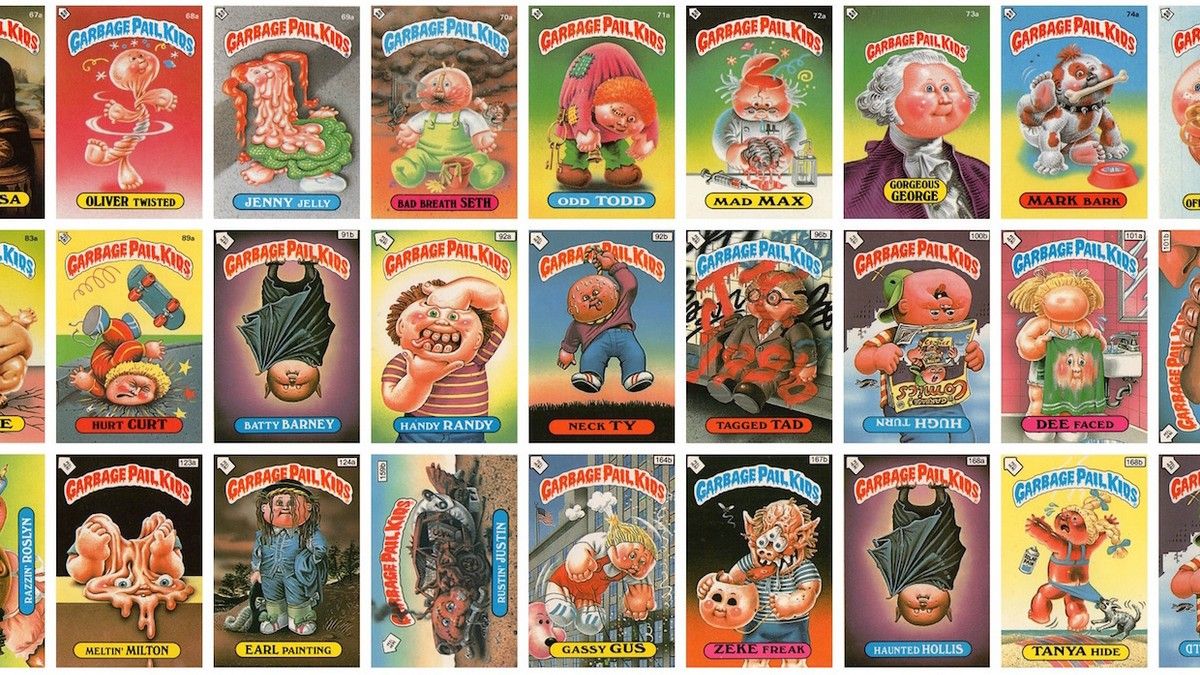
The actual experience of Garbage Pail Kids was not just opening a pack. It was the ritual around it. The smell of the cards. The feel of the sticker stock. The hunt for new characters. The disappointment of duplicates. The immediate calculation of whether a duplicate could be flipped for something better. The quiet thrill of having a card someone else wanted.
That is what made the fad stick. Garbage Pail Kids were not passive entertainment. They gave kids something to do. You collected them, traded them, organized them, ranked them, showed them off, and argued about which ones were the best. The cards created tiny social moments over and over again.
They also had the kind of humor that worked especially well at school age. They were visual. They were immediate. You did not need context. A kid with an exploding head, a leaking nose, a toilet joke, or a bug-covered face translated instantly. The names made it even better because they turned each card into a punchline.
The genius of the names
The names were half the appeal. Garbage Pail Kids names had that perfect playground rhythm: short, punny, rude, memorable, and usually connected to the visual gag. They made the cards easier to remember and easier to talk about. A great name could turn a card into a mini legend.
The sticker factor
The sticker format mattered too. These were not just cards. They were cards that could be peeled and stuck somewhere, which made them feel more interactive and more dangerous. A sticker is a commitment. A Garbage Pail Kids sticker on a notebook was not just decoration. It was a statement. Usually a bad one. Which made it better.
How to Identify and Collect Original 1985 Garbage Pail Kids Cards
Finding an old stack in a shoebox is exciting, but the date printed on the card is only the beginning. Original Garbage Pail Kids collecting involves series, card numbers, A/B names, printings, card backs, surface condition and whether the sticker was peeled forty years ago and slapped onto a Trapper Keeper.
Check the card number and name letter
A card such as 8A Adam Bomb shares its image with 8B Blasted Billy. The number identifies the artwork position; the letter and name identify the version. Collectors may pursue one name, both names or a full series with every variation.
Look at centering and surface condition
Original cards were not produced with modern grading in mind. Off-center printing, rough corners, gum contact, wax staining and handling wear are common. A card that survived lunch boxes, pockets and desk drawers in clean condition did something close to impossible.
Do not confuse a peeled border with a printing error
The sticker design included peelable material. On heavily used cards, borders or central stickers may be missing, which can make the remaining image look unusual. Before declaring a rare error, compare the card with a reliable checklist and examine whether part of the sticker layer was removed.
First series gets the most attention
The 1985 first series remains the foundation of the hobby, especially headline characters such as Nasty Nick and Adam Bomb. Later original series still have devoted collectors, but the first checklist carries the origin-story weight and the artwork most people recognize immediately.
The Garbage Pail Kids Movie: The 1987 Disaster That Became Legendary
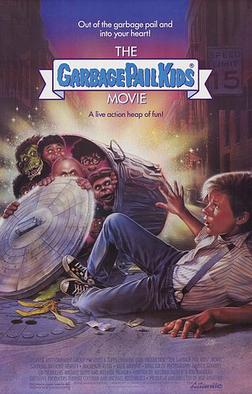
In 1987, the fad reached the point every 80s fad seemed legally required to reach: the movie. The Garbage Pail Kids Movie should have been a victory lap. The cards were famous. Kids knew the brand. The concept was visually distinctive. The movie had the kind of built-in recognition studios love.
And then the movie happened.
The film is widely remembered as one of the most bizarre, unpleasant, and baffling kid-culture adaptations of the decade. Instead of capturing the sharp, fast, collectible punch of the cards, the movie stretched the concept into a live-action story with rubbery costumes, awkward performances, strange pacing, and a plot that feels like someone tried to turn a sticker collection into a morality play while trapped inside a puppet storage closet.
Why the movie failed
The biggest problem is that Garbage Pail Kids worked as trading cards because they were quick hits. You looked, laughed, recoiled, traded, and moved on. A card could be gross for three seconds and be perfect. A movie has to sustain the world. It has to make the characters move, talk, interact, and carry scenes. That is where the whole thing gets cursed.
The grotesque designs that worked in small painted illustrations became unsettling in live action. The characters looked less like funny gross-out cartoons and more like creatures that should not be allowed near food preparation. Instead of amplifying the joke, the movie often smothered it under rubber masks and weird energy.
The plot problem
The story centers around a kid named Dodger, who encounters the Garbage Pail Kids after they escape from a mysterious container. The movie tries to mix bullying, fashion design, romance, crude humor, gross-out gags, and a message about appearances. That combination sounds strange because it is strange. The cards were anti-wholesome little punchlines. The movie tried to give them a plot with emotional lessons. That is like asking a whoopee cushion to write a graduation speech.
The box-office problem
The movie did not become the next great toy-brand cinema franchise. It opened in late August 1987 and grossed only about $1.58 million domestically. That is not blockbuster behavior. That is “please do not ask follow-up questions” behavior.
Why people still talk about it
The funny thing is that the movie’s failure became part of the brand’s weird immortality. If it had been merely average, nobody would care. But because it is so bizarre, so unpleasant, and so aggressively misguided, it became a cult object. The cards are remembered as a brilliant fad. The movie is remembered as a glorious disaster. Together, they create one of the most complete 80s nostalgia packages possible: genius product, angry adults, legal trouble, school bans, a pulled cartoon, and a movie so bad it somehow loops back into fascination.
Why Garbage Pail Kids Were Perfect for Gen X
Garbage Pail Kids hit Gen X right in the sweet spot because they were funny, rude, collectible, and anti-adult without being genuinely dangerous. They gave kids a way to participate in something that felt rebellious but still fit in a pocket. You were not stealing a car. You were trading a sticker of a child melting into a puddle. Manageable rebellion.
They also fit the emotional texture of Gen X childhood. This was a generation raised on latchkey independence, Saturday morning cartoons, toy commercials, weird cereal mascots, horror-tinged kid media, arcade noise, and playground social systems that operated with limited adult supervision. Garbage Pail Kids felt like they belonged in that world. They were a little mean, a little weird, very funny, and completely uninterested in being inspirational.
The cards also gave kids control over taste. Adults could decide what was respectable. Kids could decide what was awesome. Garbage Pail Kids made that divide very clear. Adults saw garbage. Kids saw treasure. Both were right.
Garbage Pail Kids Timeline: From Wax Packs to Cult Status
The wholesome doll craze creates the perfect target for parody. America gets emotionally invested in dolls with adoption papers, because the 80s were not a normal decade.
Topps releases the gross-out sticker trading cards, turning cute-doll parody into one of the decade’s most memorable schoolyard fads.
Kids trade them, parents complain, teachers confiscate them, and schools object to the distraction and gross-out content. Naturally, this makes kids want them more.
The Cabbage Patch side and Topps settle the dispute, with Topps agreeing to change character designs so they are less directly connected to the original doll look.
CBS produces a Garbage Pail Kids animated series, but controversy and pressure from parent and watchdog groups help keep it off the U.S. Saturday morning lineup.
The Garbage Pail Kids Movie hits theaters and becomes a strange, low-grossing, critically battered artifact that still gets talked about because bad taste has a long shelf life.
The cards remain a major 80s nostalgia object, collected by fans who remember the thrill of wax packs, duplicate trades, and getting yelled at by adults with no vision.
How Garbage Pail Kids Came Back for Adult Collectors
Garbage Pail Kids did not stay buried. Topps revived the line for the generation that had grown up, acquired disposable income and somehow developed nostalgia for stickers featuring catastrophic bodily failure.
Modern releases expanded into themed sets, artist interpretations, entertainment parodies, sports crossovers and anniversary products. The audience changed. The kids who once kept cards loose in a pocket now put them in sleeves, binders, magnetic holders and graded slabs sturdy enough to survive the next civilization.
The brand aged without becoming respectable
That is the key to the revival. Garbage Pail Kids became collectible history without cleaning itself up. The line can celebrate an anniversary and still look like somebody exploded in a cafeteria. It gained archival status while keeping the exact bad manners that made it famous.
The modern hobby also reconnects people with the original artists and production details. What looked like disposable kid junk in 1985 is now studied as illustration, satire, trading-card history and a perfect example of how children assign value to things adults dismiss.
Why Garbage Pail Kids Still Matter
Garbage Pail Kids lasted because they were more than a cheap parody. They captured something very specific about the 80s: the collision between aggressive marketing, kid rebellion, collectibles, gross-out humor, and a culture that could turn almost anything into a product if the packaging was loud enough.
They also represent one of the clearest examples of kid taste defeating adult taste. Adults did not need to understand them. In fact, adult confusion was part of the appeal. The cards lived in the gap between what children found hilarious and what parents found horrifying. That gap is where many of the best Gen X memories live.
And the artwork still works. That matters. A lot of fads only survive because people remember the hype. Garbage Pail Kids survive because the cards themselves are still visually memorable. The characters are gross, but they are designed with style. The jokes are juvenile, but they are efficient. The names are stupid, but in exactly the right way.
That is why Garbage Pail Kids remain one of the defining 80s fads. They were collectible trash art for kids who knew the world was funnier when it leaked.
Historical Sources and Further Reading
These sources document the 1985 launch, creative team, original pack price, lawsuit, CBS cartoon controversy, first-series checklist and the movie’s theatrical performance.
Questions About Garbage Pail Kids
What were Garbage Pail Kids?
Garbage Pail Kids were gross-out sticker trading cards released by Topps in 1985. They parodied Cabbage Patch Kids by turning cute doll-style characters into disgusting, pun-heavy cartoon kids with names based on slime, injuries, toilet humor, mutations, and other gross jokes.
Why were Garbage Pail Kids so popular in the 80s?
They were popular because they were collectible, funny, gross, cheap enough to spread through schools, and rebellious enough to annoy adults. Kids could trade them, collect them, stick them on notebooks, and laugh at the names and artwork.
Were Garbage Pail Kids a parody of Cabbage Patch Kids?
Yes. Garbage Pail Kids were created as a parody of the Cabbage Patch Kids craze. The connection was obvious enough that the Cabbage Patch side sued Topps, leading to a settlement and design changes.
Why were Garbage Pail Kids controversial?
They were controversial because many adults considered them crude, ugly, mean-spirited, and inappropriate for kids. Schools also disliked them because they distracted students and became trading-card contraband in classrooms.
Were Garbage Pail Kids banned in schools?
Some schools banned or confiscated Garbage Pail Kids because they were distracting, gross, and constantly being traded during class. Like most school bans, this only made the cards more interesting to kids.
What happened with the Garbage Pail Kids lawsuit?
Original Appalachian Artworks, connected to Cabbage Patch Kids, sued Topps over the cards. The dispute was settled in 1987, and Topps agreed to alter the designs so the characters looked less directly like Cabbage Patch Kids.
Was there a Garbage Pail Kids cartoon?
Yes. CBS produced a Garbage Pail Kids animated series in 1987, but it was pulled from the U.S. Saturday morning schedule before airing because of controversy and pressure from parent and watchdog groups. The series later aired in international markets, including parts of Europe, Australia, and the Caribbean.
Why did the Garbage Pail Kids cartoon not air in the United States?
The cartoon was pulled before its U.S. broadcast after objections from parent and watchdog groups over its gross-out tone, violent gags, and toy-commercial feel. It became part of the larger Garbage Pail Kids controversy.
Was there a Garbage Pail Kids movie?
Yes. The Garbage Pail Kids Movie was released in 1987. It is widely remembered as a strange, poorly received live-action adaptation that turned the card characters into unsettling costumed figures and became a cult bad-movie artifact.
Why is The Garbage Pail Kids Movie considered so bad?
The movie is considered bad because the card concept did not translate well into live action. The costumes were unsettling, the plot was awkward, the humor was crude in a less effective way than the cards, and the whole thing felt like a toy-fad cash-in that misunderstood the original appeal.
Are Garbage Pail Kids still collectible?
Yes. Original Garbage Pail Kids cards remain collectible, especially among fans of 80s nostalgia, trading cards, Topps history, gross-out art, and schoolyard fads.
Why do Gen X fans still remember Garbage Pail Kids?
Gen X remembers Garbage Pail Kids because they were funny, gross, forbidden-feeling, highly tradeable, and deeply tied to schoolyard culture. They were one of the most perfect examples of an 80s fad adults hated and kids loved.
Who created Garbage Pail Kids?
The concept was spearheaded at Topps by Art Spiegelman, Mark Newgarden and John Pound. Spiegelman and Newgarden helped develop the parody, names and editorial direction, while Pound’s painted artwork established the detailed original look.
How much did original Garbage Pail Kids packs cost?
The first 1985 packs sold for 25 cents and contained five stickers plus bubble gum. That low price helped the cards spread through schools because kids could buy them with allowance change.
What do A and B mean on Garbage Pail Kids cards?
The same illustration was issued with two names. The A and B letters distinguish those name versions, such as 8A Adam Bomb and 8B Blasted Billy.
How many original Garbage Pail Kids series were released?
Topps released 15 original series from 1985 through 1988, creating hundreds of names, variations and new reasons for collectors to keep buying packs.