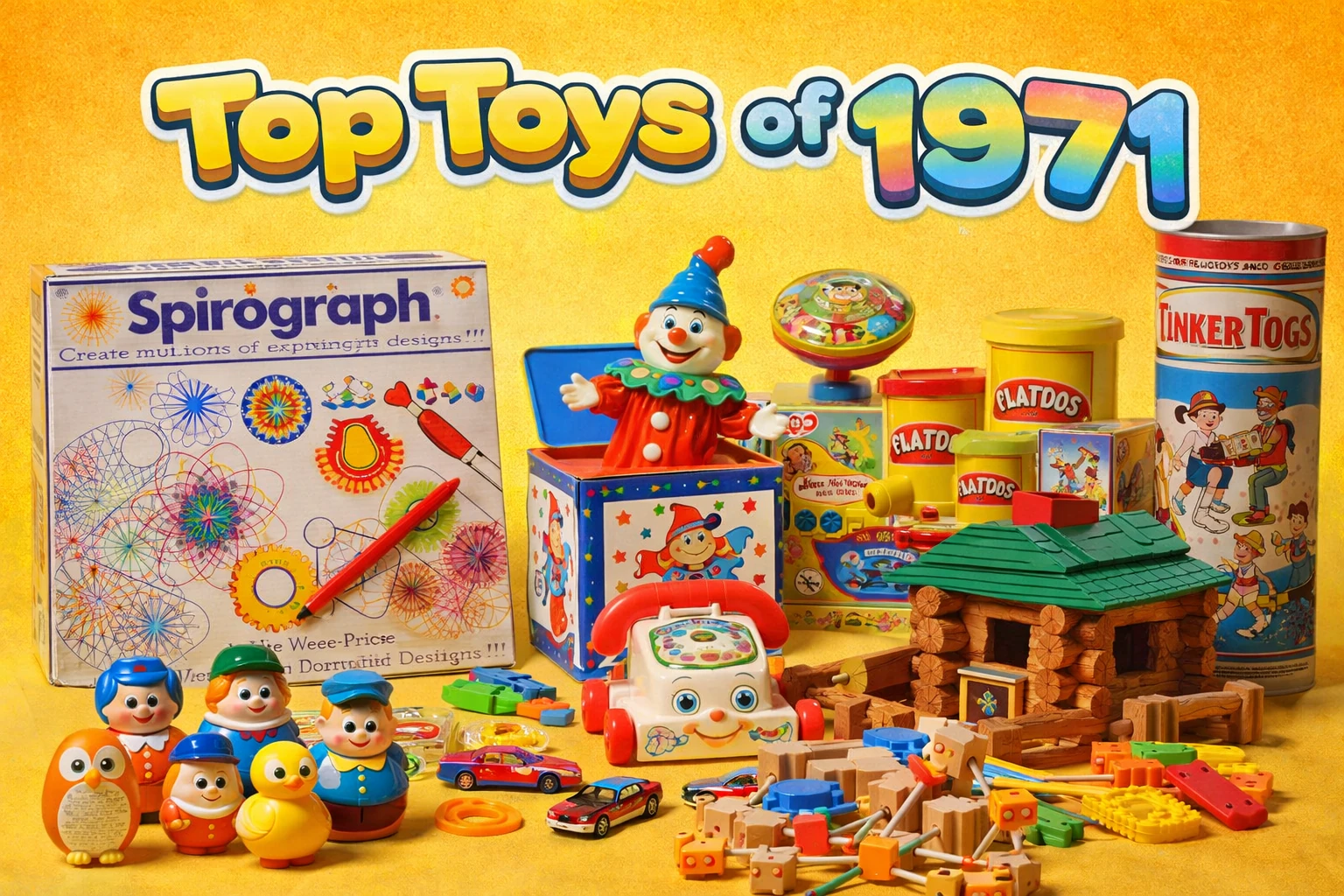
Top Toys of 1971: The Must-Have Toys That Defined the Year

Top Toys of 1971: The Must-Have Toys That Defined the Year
Smells Like Gen X • Top Toys of 1971

The Top 10 Toys of 1971

The top 10 toys of 1971 feel like the 70s toy box starting to loosen up a little. The bones are still physical, tactile, and gloriously analog, but the mix is tilting a little harder toward personality, activity, and toys that could turn one simple idea into a whole repeat-play ecosystem. This is still not the fully licensed, battery-bloated, cartoon-driven chaos of later years. But you can feel the aisle getting more colorful, more segmented, and a little more tuned to specific styles of play.

That makes 1971 a really interesting follow-up to 1970. A lot of the same heavy hitters are still here — Barbie, Hot Wheels, G.I. Joe, Etch A Sketch, and the usual analog legends — but the year gets a new center of gravity with Weebles. That matters because Weebles are not just another sturdy classic. They represent a different kind of toy appeal: preschool charm, visual personality, wobbling physicality, and a catchphrase sticky enough to lodge itself in American memory.

Like the 1970 post, this countdown works as a best-supported editorial ranking, not a pretend-official chart. Toys do not come with one neat yearly list the way songs and television do, so the ranking is built to reflect the toys that most strongly defined the 1971 season: shelf presence, period logic, staying power, and the kind of cultural force that made kids fixate and parents cave.

Gen X Note: 1971 is still deeply analog, but the toy box is getting a little bouncier, brighter, and more “build a whole little world around this thing” than it was a year earlier.

Quick List: The Top 10 Toys of 1971

  1. Tinker Toys
  2. Lincoln Logs
  3. Spirograph
  4. Play-Doh
  5. Etch A Sketch
  6. Lite-Brite
  7. G.I. Joe Adventure Team
  8. Hot Wheels
  9. Barbie
  10. Weebles

Countdown: The Top 10 Toys of 1971

Tinker Toys
1971

#10 — Tinker Toys

Classic Builder Set
Toy TypeConstruction toy
Brand LaneCreative building classic
1971 Rank#10

Tinker Toys land at #10 because 1971 still had plenty of room for classic construction toys that did not need a storyline, a character license, or a blinking light to prove their worth. Give kids a pile of rods, wheels, and wooden connectors and they would happily spend a chunk of the afternoon trying to build something ambitious, unstable, and weirdly sincere.

What makes Tinker Toys important in 1971 is that they reflect the older backbone of the toy aisle still hanging on strong. This was a period where the market was definitely shifting toward more personality-driven products, but construction sets still held real power because they rewarded experimentation. The toy did not tell you what to make. It offered possibility and then got out of the way.

That freedom matters. There is a big difference between a toy that performs its own gimmick and a toy that lets a child turn simple parts into a structure, a machine, or a vague sculpture that parents are politely told is “a helicopter.” Tinker Toys stayed alive because they trusted the child to supply ambition.

In a year like 1971, that kind of old-school open-ended play gives the list some necessary ballast. Not every hit needed to wobble, glow, or come with a slogan. Some of them just needed to keep kids busy building nonsense for hours.

Fun Fact / Why It Still Matters Tinker Toys remained a staple because they proved the simplest engineering toys can outlast trendier gimmicks when the play loop is strong enough.
Lincoln Logs
1971

#9 — Lincoln Logs

Frontier Building Staple
Toy TypeBuilding toy
Brand LaneCabin-and-fort imagination play
1971 Rank#9

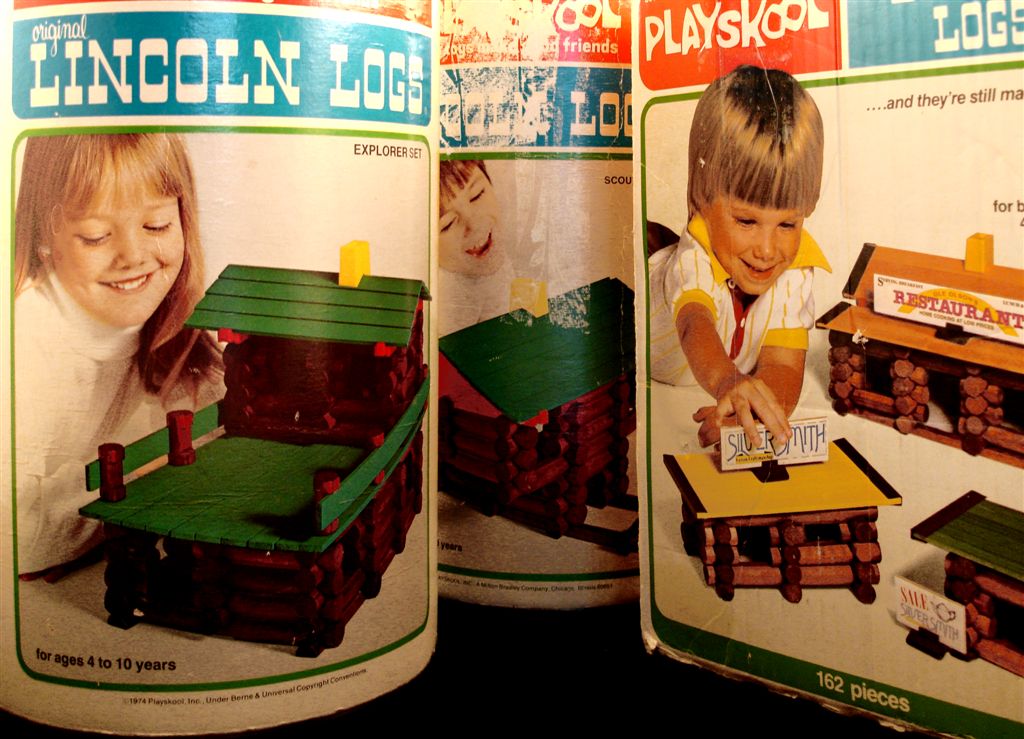
Lincoln Logs stay on the board in 1971 because the early 70s still had strong respect for analog building toys that were quietly durable instead of loudly trendy. These were not “special event” toys. They were reliable floor-space colonizers. You dumped the pieces out, started stacking, made some version of a cabin, then demolished it and did the whole thing again with fresh confidence and worse architecture.

They also help explain how similar 1971 still is to 1970 in overall toy texture. The era had not fully tipped into craze culture yet. A lot of the strongest sellers were still products that rewarded repetition and imagination over spectacle. Lincoln Logs are one of the clearest examples of that older toy philosophy holding its ground.

There is something very early-70s about the frontier fantasy too. Even as the culture kept changing, toy companies still sold children these little symbols of sturdy, self-made, rough-hewn American building. It is nostalgic now, but even then it was already a kind of packaged myth. Kids did not care. They just liked building forts out of notched wood.

And like all great building toys, Lincoln Logs lasted because the parts kept suggesting more than one right answer. That is the kind of replay value no catchphrase can fake.

Fun Fact / Why It Still Matters Lincoln Logs kept surviving because they offered one of the purest forms of open-ended analog world-building in the whole toy box.
Spirograph
1971

#8 — Spirograph

Geometric Art Obsession
Toy TypeDrawing system
Brand LanePattern-based creative toy
1971 Rank#8

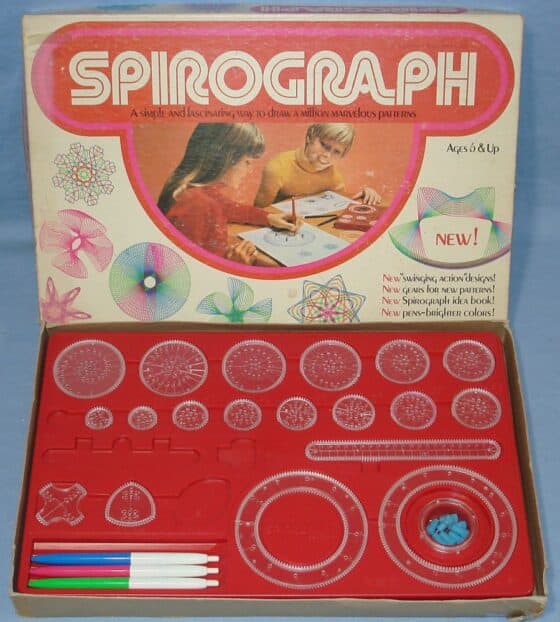
Spirograph belongs on the 1971 list because it captured one of the most satisfying early-70s toy instincts: make something that feels educational, artistic, and hypnotically repetitive all at once. The basic act was simple enough — pen in the gear, circle inside the frame, watch the pattern emerge — but the payoff felt much fancier than the mechanism.

In 1971, that kind of toy had real power. Parents liked that it seemed “constructive.” Kids liked that it made them feel capable of producing elaborate, almost psychedelic-looking designs with minimal actual artistic skill. That is a very strong combination. The toy gives the child the feeling of mastery without requiring genius.

It also fits the moment aesthetically. The early 70s were already swimming in bold graphics, decorative patterning, and leftover visual energy from the late 60s. Spirograph translated some of that same visual language into living-room play, which made it feel more contemporary than a plain old art pad.

And like the best activity toys, it had enough repeatability to keep going. New colors, new gear combinations, new tiny obsessive circles — once the child was locked in, the afternoon disappeared.

Fun Fact / Why It Still Matters Spirograph worked because it made complicated-looking design feel accessible, almost magical, and deeply satisfying to repeat.
Play-Doh
1971

#7 — Play-Doh

Messy Creative Mainstay
Toy TypeModeling compound
Brand LaneSensory creative play
1971 Rank#7

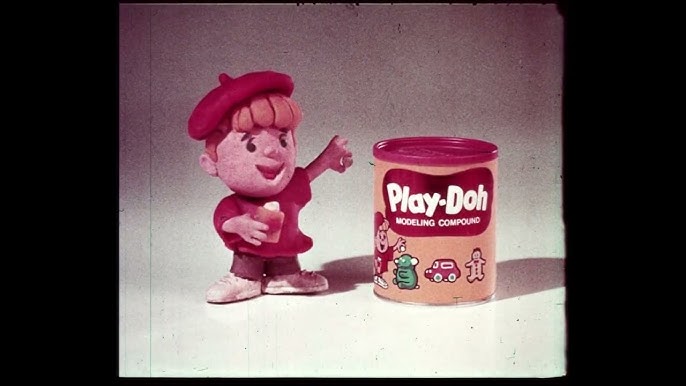
Play-Doh stays strong in 1971 because the toy box still had enormous respect for anything tactile, cheap, repeatable, and capable of occupying a child for longer than six glorious minutes. Play-Doh understood the child mind perfectly: the material itself is already fun before any mold, press, or tool even gets involved.

That matters because 1971 still rewards physical creativity over flashy self-performance. You do not buy Play-Doh for one big reveal. You buy it because the process is satisfying from the second the lid comes off. Roll it, flatten it, press it, stack it, ruin it, remake it — the toy works because its loop is endless and just messy enough to feel real.

It also reflects the way early-70s play still tolerated a little household collateral damage. Toys did not all have to stay neat. Some of them were supposed to leave a trace. Play-Doh understood that a little mess was not a bug. It was part of the sensory appeal.

Even compared with flashier 1971 contenders, Play-Doh holds up because it did not depend on trend. It depended on hands, texture, and repetition. That is a hard combination to beat.

Fun Fact / Why It Still Matters Play-Doh lasted because it offered one of the most satisfying sensory play loops ever sold in a cardboard box.
Etch A Sketch
1971

#6 — Etch A Sketch

Analog Challenge Toy
Toy TypeDrawing toy
Brand LaneSkill-based analog play
1971 Rank#6

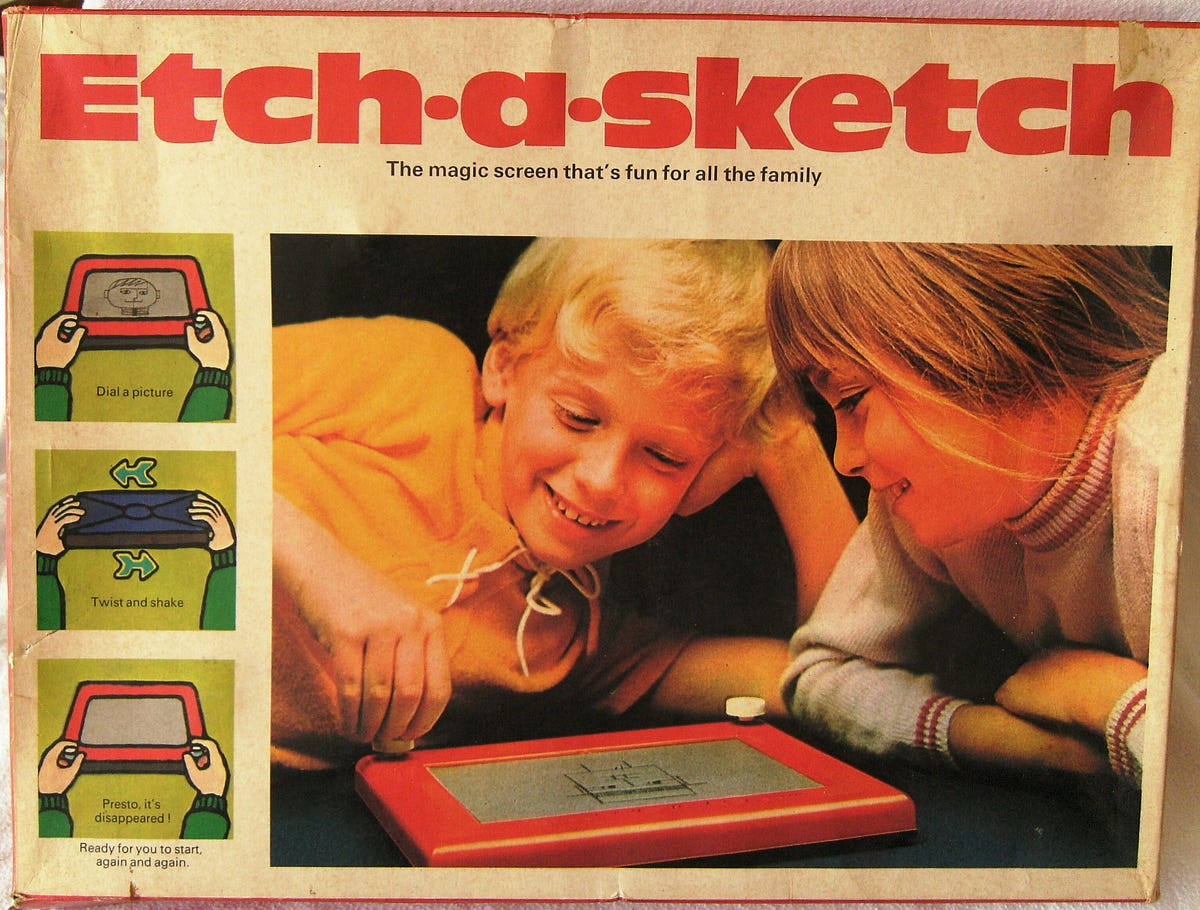
Etch A Sketch moves into the middle of the 1971 list because it continued doing what it does best: offering kids the illusion of total control, then immediately humbling them. The concept still felt elegant, and the challenge still felt brutal. That is part of why it endured. It was not merely a toy. It was a tiny gray lesson in coordination, ambition, and recurring disappointment.

In 1971, that kind of difficulty still had real market power. Not every toy was expected to create instant success. A toy could still be a little stubborn and a little demanding. Etch A Sketch benefited from that because the frustration was inseparable from the appeal. You were always one more twist away from maybe getting it right.

It also remained one of the cleanest examples of great analog design. No tie-in, no endless accessory ladder, no noise, no additional gimmick. Just a beautiful core mechanism and a child’s totally unreasonable faith in their own future masterpiece.

The memory also lives in the ritual: twist, fail, stare, shake, restart. That sequence is practically hardwired into toy history at this point.

Fun Fact / Why It Still Matters Etch A Sketch stayed relevant because it turned analog frustration into repeat play instead of making frustration a deal-breaker.
Lite-Brite
1971

#5 — Lite-Brite

Glow-Board Creativity
Toy TypeLight-up art toy
Brand LaneVisual creative play
1971 Rank#5

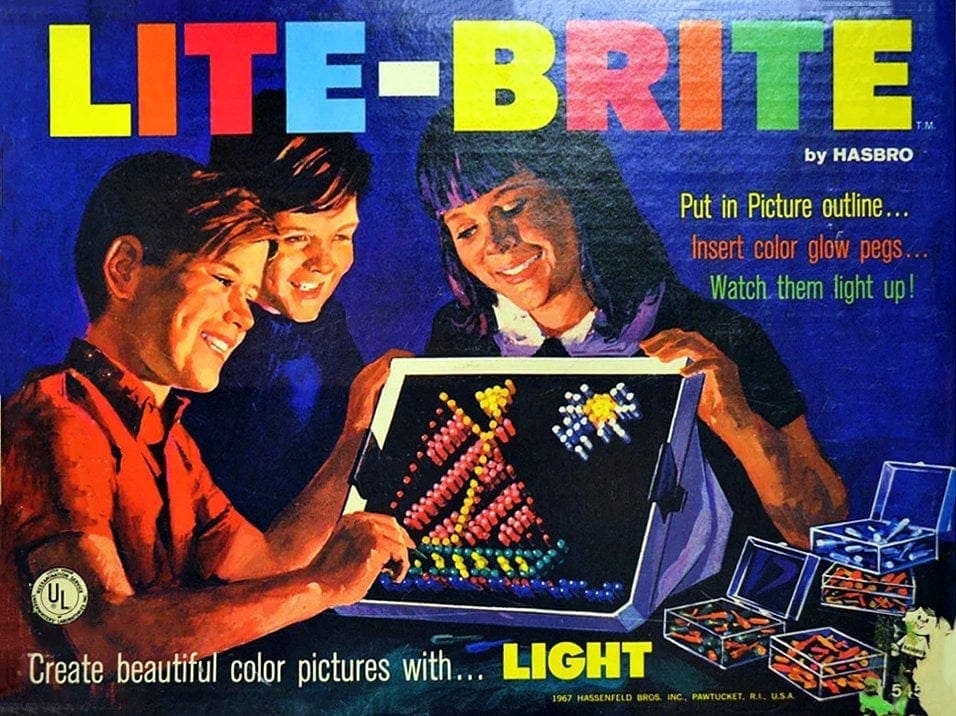
Lite-Brite climbs higher in 1971 because the year feels just a little more tuned to visual activity toys than 1970 did. The toy hits a sweet spot that parents and kids could both live with: it looked creative, felt constructive, and delivered a payoff flashy enough to feel special. That is a very useful combination in the holiday aisle.

What makes Lite-Brite especially powerful is that it takes ordinary peg placement and turns it into something that feels dramatic. Once the lights go down and the board glows, the child gets the sense they have made something larger than the work itself would suggest. That transformation is where the toy’s magic really lives.

It also fits 1971 aesthetically. The early 70s were already full of color, decorative visual language, and a kind of warm low-light atmosphere that Lite-Brite accidentally mirrors almost perfectly. It is one of those toys that feels of its era even when the mechanism is incredibly simple.

And yes, the peg spillage is part of the experience. Great toy memories are often half joy and half mild household nuisance.

Fun Fact / Why It Still Matters Lite-Brite lasted because it made kids feel like they were creating illuminated art, not just filling holes with colored pegs.
G.I. Joe Adventure Team
1971

#4 — G.I. Joe Adventure Team

Mission-Based Action World
Toy TypeAction figure line
Brand LaneExpandable adventure play
1971 Rank#4

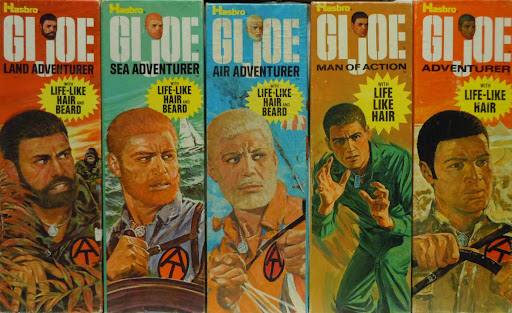
G.I. Joe Adventure Team stays high in 1971 because the toy line was already operating like a world instead of a lone figure. That mattered a lot. A child was not merely buying a man in a box. They were buying access to missions, outfits, vehicles, environments, and the possibility of endless backyard drama that could be reconfigured every weekend.

That broader system made the line more durable than a lot of single-concept toys. G.I. Joe could keep expanding without needing a totally new identity every season. The figure became a platform for scenarios, which is exactly the kind of design logic that creates long-term shelf power.

It also still feels very early-70s in tone. This is action play before total laser saturation, before franchise overload, and before the whole category becomes inseparable from TV tie-ins. The fantasy is rugged, exploratory, and competence-driven. It trusts the child to build danger instead of delivering all of it pre-scripted.

In the 1971 lineup, G.I. Joe also helps keep the ranking from skewing too preschool or too art-table. It reminds you the era’s toy box still had room for elaborate, gear-heavy adventure play with a real sense of scale.

Fun Fact / Why It Still Matters G.I. Joe Adventure Team mattered because it showed how powerful a figure line could become when it sold scenarios and expansion, not just one hero.
Hot Wheels
1971

#3 — Hot Wheels

Collect-and-Race Monster
Toy TypeDie-cast cars and track system
Brand LaneSpeed-and-system play
1971 Rank#3

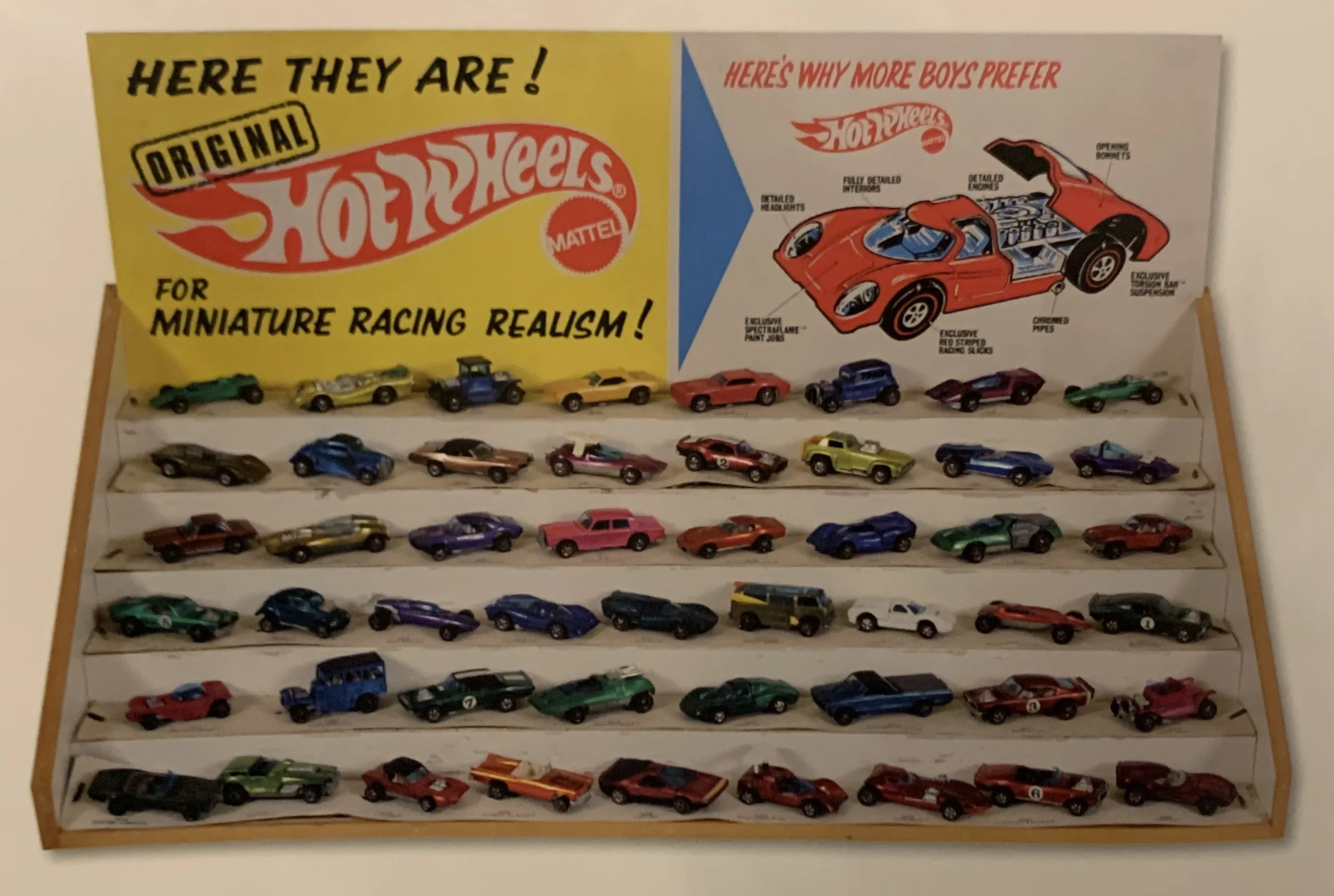
Hot Wheels remain at the top end of the list because they are one of the clearest examples of a toy line figuring out how to be collectible and kinetic at the same time. The cars look cool on their own, but the real power comes from the track systems, ramps, and layout experimentation that turn the floor into a racing lab.

In 1971, that still feels incredibly potent. The line gives children little chrome-rich objects they want to own, but it also gives them a repeatable play system that can keep evolving. That balance between object desire and ongoing activity is why Hot Wheels are more than just “tiny cars.”

They also fit the broader culture of the period. Cars, speed, visual style, and machine fascination were already huge, and Hot Wheels miniaturized all of that into something children could control directly. Then they let those children stage high-speed failure on the living-room floor, which is about as good as toy design gets.

By 1971, Hot Wheels also feel more deeply installed than they do at first-breakout stage. They are not just exciting. They are becoming infrastructure.

Fun Fact / Why It Still Matters Hot Wheels stayed elite because they combined the thrill of collecting with the endless replay value of building new racing setups.
Barbie
1971

#2 — Barbie

Fashion-and-Fantasy Empire
Toy TypeFashion doll line
Brand LaneLifestyle world-building
1971 Rank#2

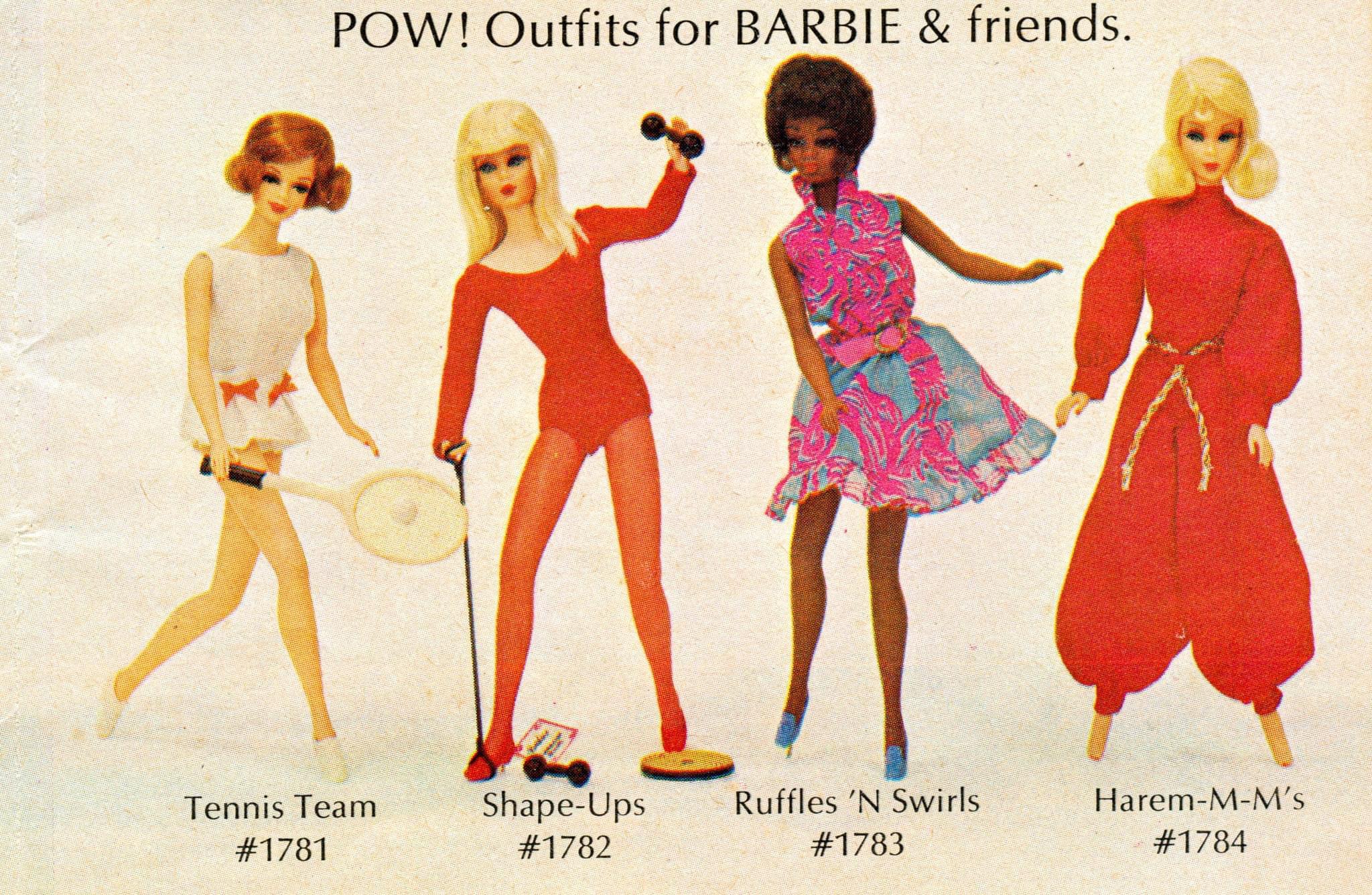
Barbie holds the #2 slot because by 1971 she is already operating as a full fantasy economy. Outfits, accessories, friends, furniture, dream settings, vehicles, and endless optional expansions meant Barbie was never really “one toy.” She was a whole social world you could keep feeding.

That scale is important. Barbie did not merely sell a doll. She sold image, identity, possibility, and the idea that one purchase could open into many more. In retail terms, that is genius. In kid terms, it means the play never has to stop at the first gift.

She also stayed dominant because the line could absorb whatever the culture was doing and repackage it into doll logic. Fashion changes, new ideas of glamour, shifting fantasies of adulthood — Barbie could keep shape-shifting without losing her core identity. That kind of adaptability is one reason she remained so hard to dislodge from the top tier.

In the context of 1971, Barbie also helps show that some categories were simply too strong to disappear because a new toy arrived. Preschool wobble toys can break out. Speed toys can dominate. But Barbie still occupies her own enormous lane.

Fun Fact / Why It Still Matters Barbie stayed near the top because she was already functioning like a self-expanding fantasy system instead of a one-off toy purchase.
Weebles
1971

#1 — Weebles

Wobbling Preschool Breakout
Toy TypeRoly-poly preschool toy
Brand LanePersonality-based wobble play
1971 Rank#1

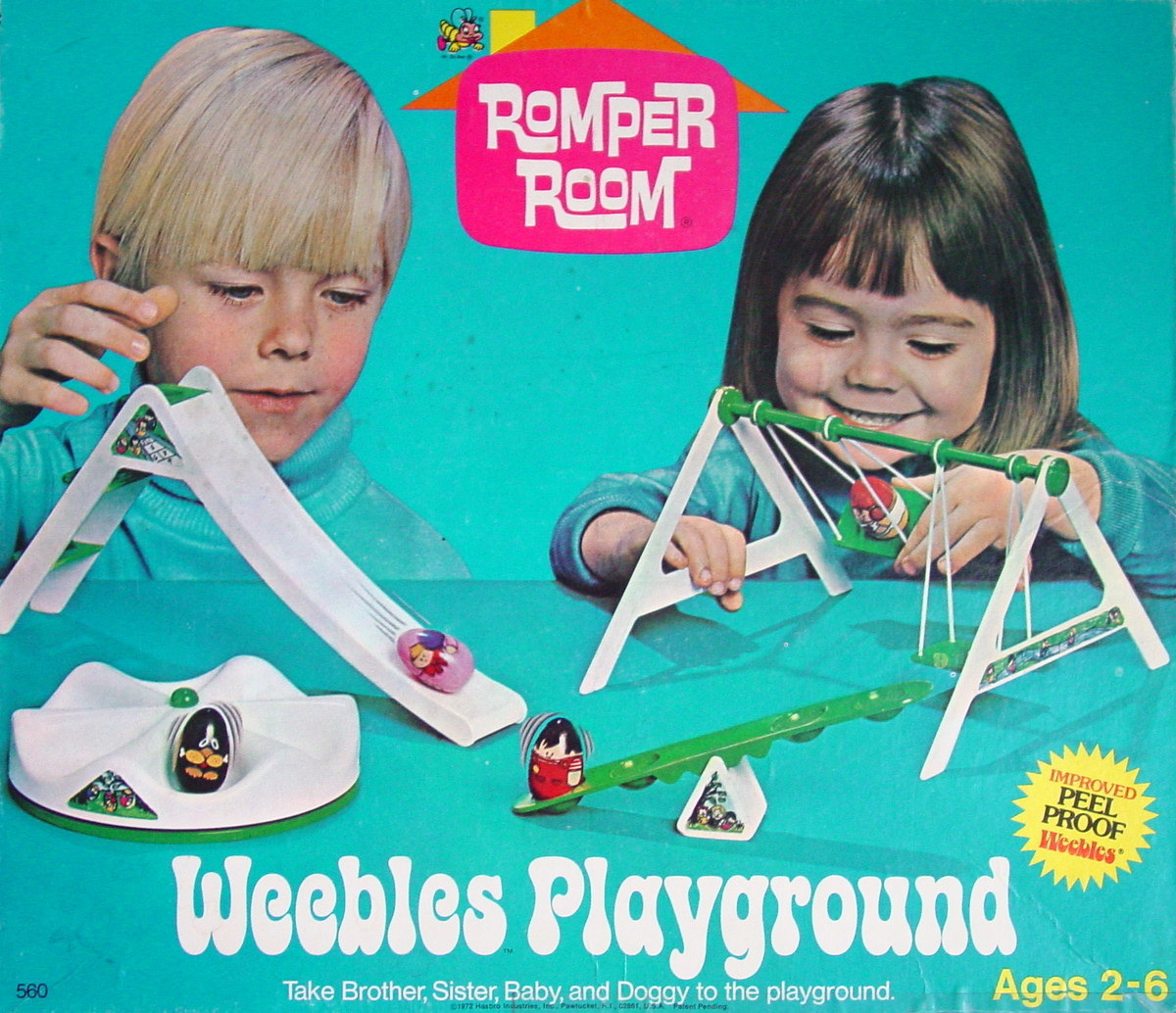
Weebles take the top spot because they are the cleanest symbol of what changed in 1971. These were not just little rounded figures. They were a full toy idea with instant visual identity, mechanical charm, preschool appeal, and one of the most unforgettable catchphrases in the whole decade. “Weebles wobble, but they don’t fall down” is toy marketing boiled down to perfection.

What makes Weebles such a strong #1 is that the concept is both simple and physically irresistible. Kids did not need instructions. They tipped them, watched them recover, laughed, repeated the action, and then started turning the figures into a little world. That combination of tactile behavior and character presence is incredibly powerful.

They also mark a tonal shift from 1970. Where Nerf Ball changes the household play zone, Weebles change the emotional center of the toy aisle. They feel gentler, more preschool-focused, more personality-driven, and more slogan-ready. That is a meaningful evolution. The toy box is starting to lean a little more toward branded charm rather than only pure mechanical play.

And from a memory standpoint, Weebles are exactly the kind of toy that burns in. The shape, the wobble, the phrase, the little figures — it all sticks. That is what a true breakout looks like.

Fun Fact / Why It Still Matters Weebles hit #1 because they paired one perfect physical gimmick with huge preschool charm and one of the most memorable toy slogans of the 70s.

Rewind Verdict

The top 10 toys of 1971 show a toy box that is still solidly analog but starting to shift in emphasis. The heavy-hitters from 1970 are still around — Barbie, Hot Wheels, G.I. Joe, construction toys, tactile art toys — but the emotional center moves. This year feels a little more preschool-friendly, a little more activity-set oriented, and a little more personality-driven.

That is why Weebles matter so much at the top. They are not just another toy line. They represent a specific kind of early-70s toy breakthrough: visually distinctive, physically satisfying, slogan-ready, and instantly expandable into a whole little world. That is different energy from a foam ball or a steel truck. It tells you the aisle is widening.

At the same time, 1971 is not a total reset. The list still leans heavily on durable analog play patterns: build something, draw something, race something, mold something, dress something, or stage a mission with too many accessories. That continuity is important. The decade is evolving, but it has not yet abandoned the tactile core.

For Gen X memory, 1971 feels like the toy aisle discovering how to be warmer, wobblier, and more segmented without giving up the physical, repeatable, floor-based magic that still defined the early 70s.

FAQ: Top Toys of 1971

What was the biggest toy of 1971?

Weebles are the strongest-supported choice for #1 because they debuted in 1971 and quickly became one of the decade’s most recognizable preschool toy lines.

Was there an official annual toy chart for 1971?

No. Like the 1970 post, this works as a best-supported editorial countdown built from period evidence, catalog strength, and long-term cultural impact rather than a single official year-end chart.

Why are older toys like Barbie and Hot Wheels still ranked so high?

Because this series ranks the biggest toys shaping the year, not just toys that debuted in that year. By 1971, Barbie and Hot Wheels were already major category powers.

How is 1971 different from 1970?

1971 still shares a lot of the same analog toy-box DNA, but it leans a little more toward preschool personality toys, activity-based creativity, and more segmented styles of play.

What kind of toys dominated 1971?

Mostly analog, repeat-play toys: wobble toys, fashion dolls, vehicle systems, action figures, art toys, and classic builders that let kids keep reinventing the same object in different ways.

Get the Weekly Gen X Drop

New videos, rewinds, and savage nostalgia — first.

JOIN THE NEWSLETTER WATCH VIDEOS

MORE REWINDS