Top 10 Movies of 1973: Biggest Box Office Hits Ranked | Smells Like Gen X

Top 10 Movies of 1973: Biggest Box Office Hits Ranked | Smells Like Gen X
Smells Like Gen X • Top Movies of 1973

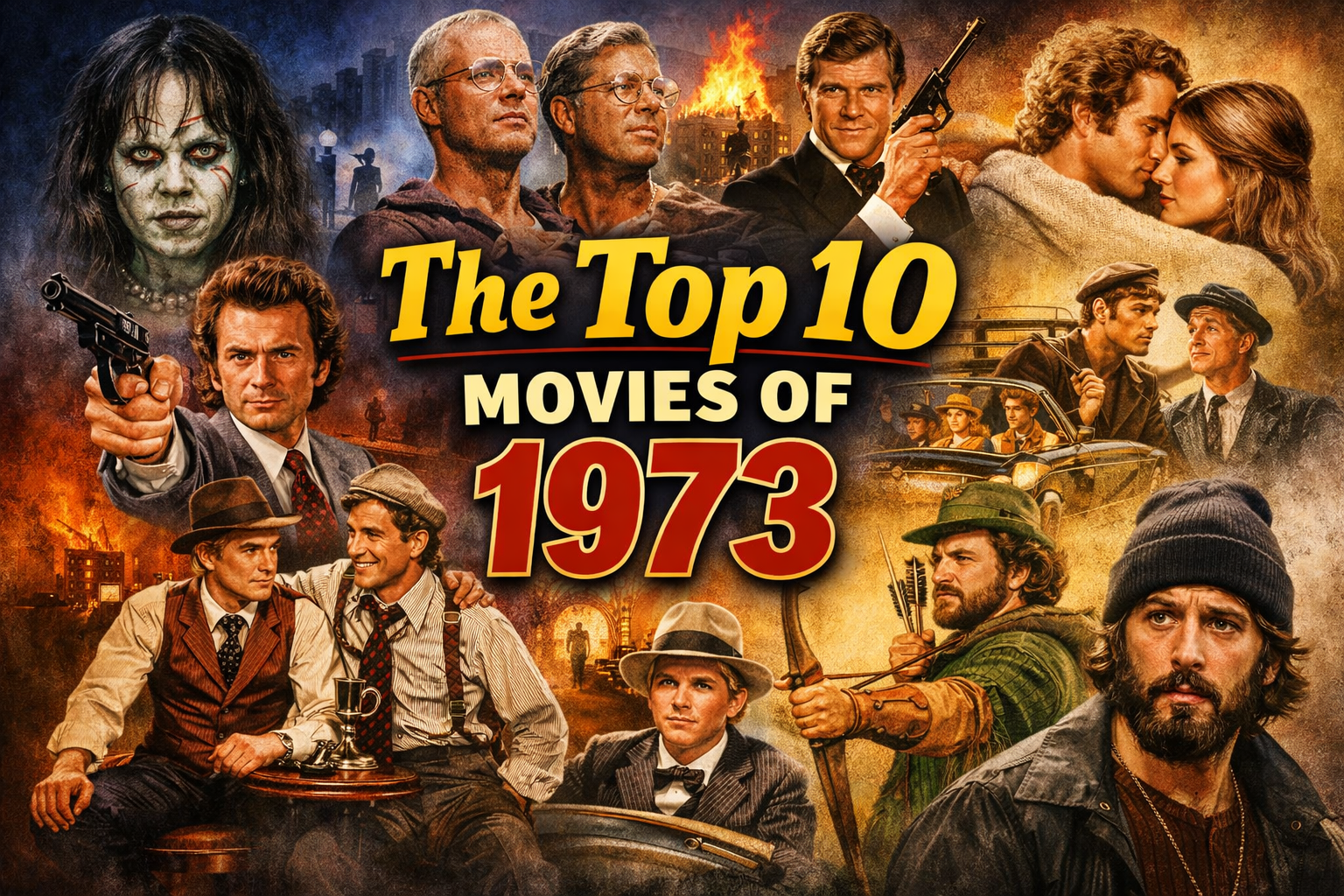
The Top 10 Movies of 1973

The top 10 movies of 1973 feel like the year Hollywood realizes it can scare the hell out of the public, charm them with old-school con artistry, sell them nostalgia, and still leave room for anti-corruption fury, prison suffering, Bond spectacle, and animated comfort food. It’s a fascinating split-screen year: New Hollywood nerves on one side, giant mainstream crowd-pleasers on the other.

This countdown focuses on the biggest North American grosses for films first released in 1973. What emerges is a box-office map with real range: a horror landmark that became a national event, a polished caper with movie-star electricity, a nostalgia machine that practically wrote the language of retro culture, a brutal prison epic, a melancholy romantic powerhouse, a Dirty Harry sequel, Roger Moore’s Bond debut, Disney’s fox-shaped comfort classic, a Depression-era hustler gem, and a Pacino corruption drama built on system rot.

For Gen X, 1973 matters because it looks like a prototype year. You can still feel the danger and adult roughness of the early 70s, but you can also see the modern blockbuster instinct starting to sharpen. Huge popularity no longer means safe storytelling.

Gen X Note: 1973 feels like the exact moment prestige, panic, nostalgia, franchise power, and antihero rot all start comfortably sharing the same box-office space.

Quick List: The Top 10 Movies of 1973

  1. Serpico
  2. Paper Moon
  3. Robin Hood
  4. Live and Let Die
  5. Magnum Force
  6. The Way We Were
  7. Papillon
  8. American Graffiti
  9. The Sting
  10. The Exorcist

Countdown: The Top 10 Movies of 1973

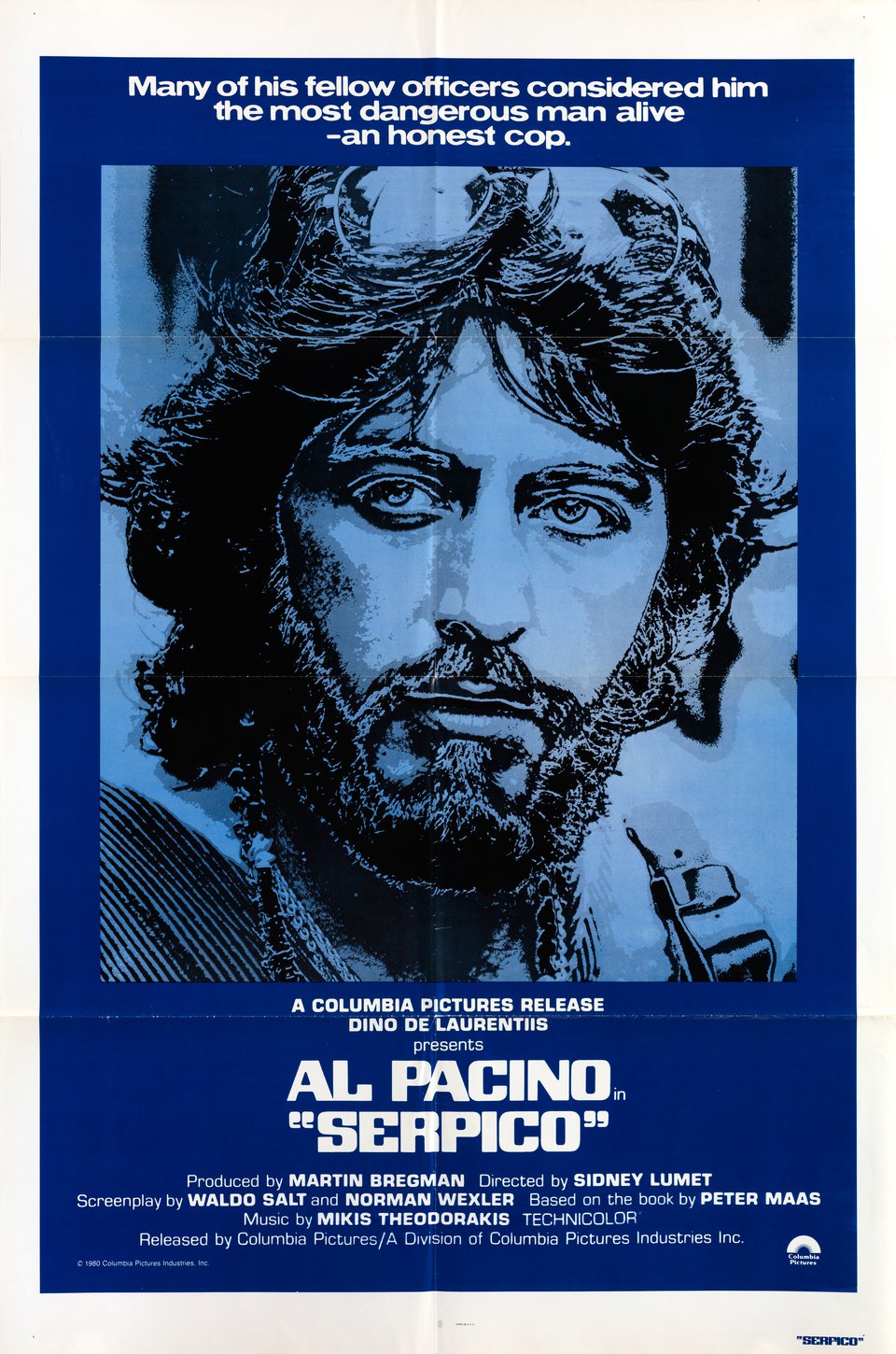
Serpico poster
1973

#10 — Serpico

Box Office: $27.3M
GenreCrime drama
DirectorSidney Lumet
1973 Rank#10
Main Cast
  • Al Pacino as Frank Serpico
  • John Randolph as Chief Sidney Green
  • Tony Roberts as Bob Blair
  • Biff McGuire as Inspector Lombardo

Serpico opens the 1973 top 10 as one of the year’s clearest signs that audiences were willing to pay for adult distrust. This is not a glossy cops-and-robbers crowd-pleaser. It’s a bruised, tense, institutional corruption drama that asks what happens when one decent man realizes the system around him is built to punish honesty instead of reward it.

Al Pacino gives the movie its raw nerve. He doesn’t play Serpico like a polished hero. He plays him like someone constantly being stripped of his illusions. That instability is what keeps the film alive. The movie understands that corruption isn’t only a plot engine. It’s a worldview, and 1973 audiences were clearly ready for stories that treated public institutions with open suspicion.

In the context of the year, the film matters because it shows how fully urban paranoia had become a mainstream commercial product. It belongs to the same larger early-70s mood as political distrust, whistleblower tension, and stories where personal integrity feels expensive rather than noble.

For Gen X, Serpico became one of those serious 70s cable staples that quietly trained you to expect more from crime movies than just chases and arrests. It showed that moral rot could be cinematic too.
Fun Fact / Why It Still Matters The film still matters because it helped define the 70s urban corruption movie and turned institutional distrust into gripping mainstream drama.
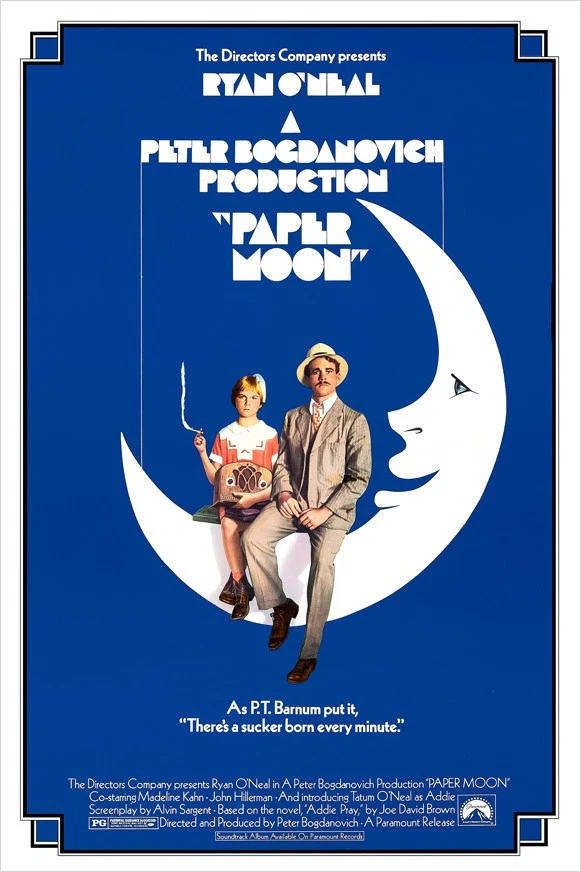
Paper Moon poster
1973

#9 — Paper Moon

Box Office: $30.9M
GenreRoad comedy-drama
DirectorPeter Bogdanovich
1973 Rank#9
Main Cast
  • Ryan O’Neal as Moses Pray
  • Tatum O’Neal as Addie Loggins
  • Madeline Kahn as Trixie Delight
  • John Hillerman as Jess Hardin

Paper Moon landing at number nine is one of the coolest things about this year’s lineup because it proves 1973 was not just about spectacle and panic. Audiences also showed up for something sly, intimate, and beautifully tuned. Shot in black and white and set in the Depression, the movie feels like a half-remembered American myth with a razor blade hidden inside it.

Tatum O’Neal is the movie’s secret weapon and really the reason it lingers. Addie isn’t written like a cute accessory to an adult story. She’s a hustler, a moral complication, and the smartest person in half the rooms the film enters. That gives the movie a sharpness that keeps it from becoming merely charming period nostalgia.

In the broader box-office picture of 1973, Paper Moon matters because it shows there was still real commercial appetite for elegance, wit, melancholy, and character-first storytelling. Hollywood had not yet surrendered entirely to volume.

For Gen X, it remains one of those inherited “your parents said this was great and they were annoyingly correct” movies — a film that earns its sweetness by refusing to become soft.

Fun Fact / Why It Still Matters The film still matters because it proved a small-scale, black-and-white character piece could still cut through commercially if the tone, performances, and emotional intelligence were strong enough.
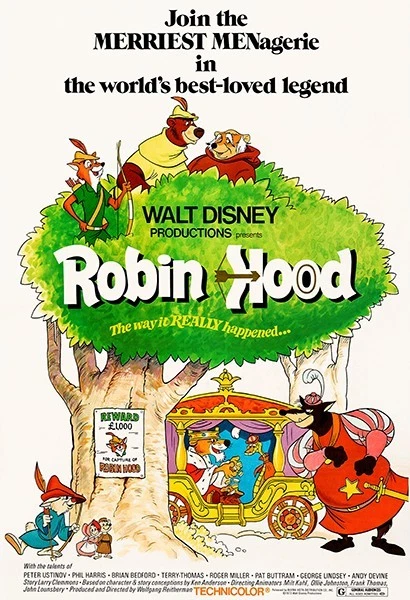
Robin Hood poster
1973

#8 — Robin Hood

Box Office: $32.1M
GenreAnimated adventure
DirectorWolfgang Reitherman
1973 Rank#8
Main Cast
  • Brian Bedford as Robin Hood
  • Phil Harris as Little John
  • Peter Ustinov as Prince John / King Richard
  • Monica Evans as Maid Marian

Robin Hood making the 1973 top 10 absolutely belongs here, because it’s the proof that a year full of corruption, demonic terror, prison suffering, and cynical antiheroes still had room for a loose, charming Disney crowd-pleaser. It brings a lighter energy to the lineup without feeling disposable.

What makes the movie especially interesting in retrospect is how scruffy and lived-in it feels compared with more polished Disney eras. The songs are easygoing, the animation has that handmade 70s texture, and the entire film carries the vibe of a family favorite that snuck into permanence without needing prestige validation first.

In the commercial story of 1973, the movie matters because it proves that mass audiences weren’t only chasing darker, more adult work. They also still wanted comfort, melody, and myth — just delivered with enough personality to stick.

For Gen X, Robin Hood has an outsized nostalgic footprint. It’s one of those movies that lived forever on repeat and became bigger in memory than its original release might initially suggest.

Fun Fact / Why It Still Matters The film still matters because it became one of those durable childhood rewatches that turned a strong 1973 hit into long-term generational comfort food.
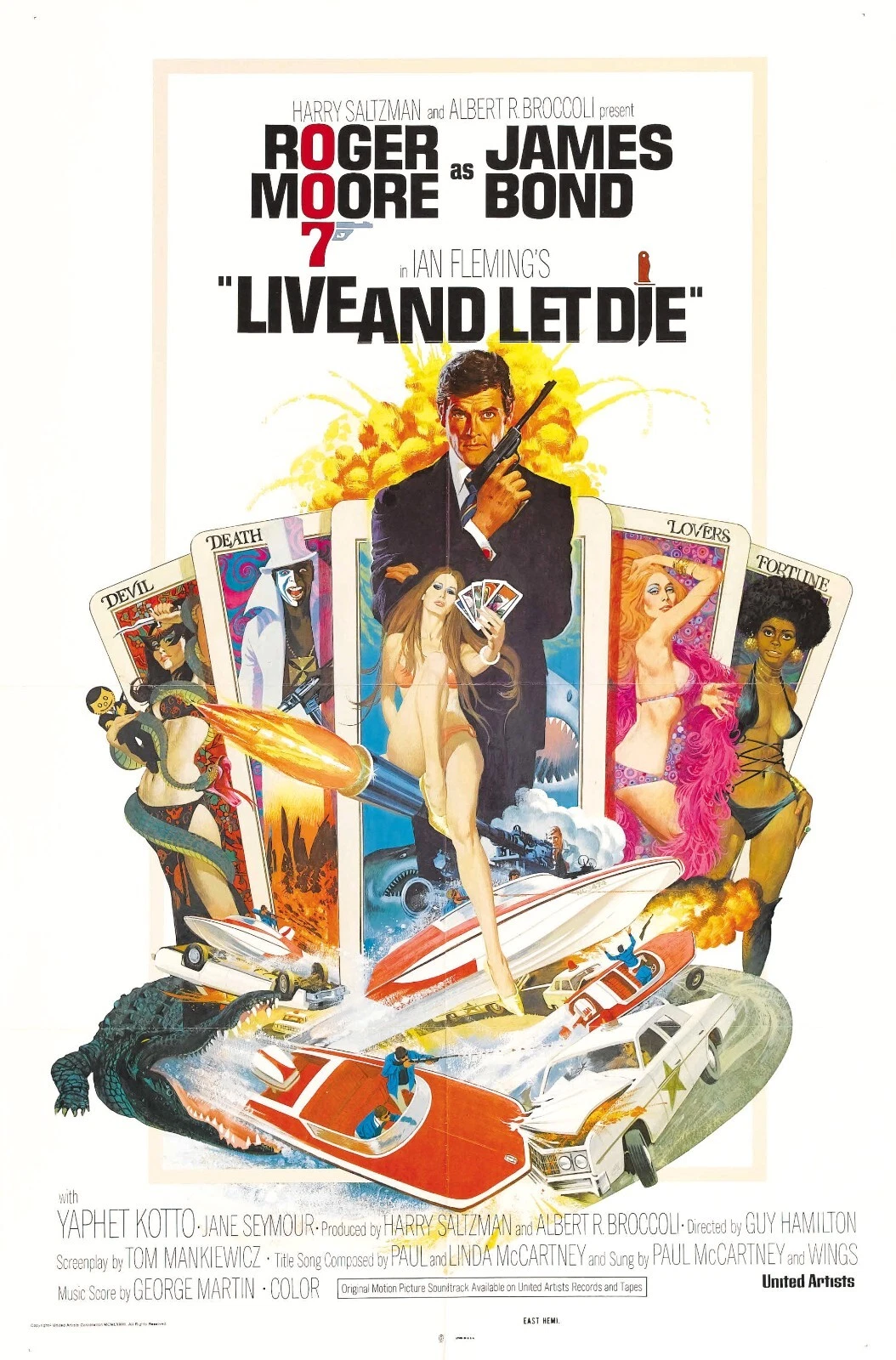
Live and Let Die poster
1973

#7 — Live and Let Die

Box Office: $35.4M
GenreSpy action adventure
DirectorGuy Hamilton
1973 Rank#7
Main Cast
  • Roger Moore as James Bond
  • Yaphet Kotto as Dr. Kananga / Mr. Big
  • Jane Seymour as Solitaire
  • Clifton James as Sheriff J.W. Pepper

Live and Let Die lands at seven and carries a lot more importance than a simple Bond entry might suggest. This is the movie that had to prove the franchise could survive the transition from Sean Connery to Roger Moore without feeling like the party was over. That is not a small task, and the film solves it by changing the flavor rather than pretending nothing has changed.

Moore’s Bond is smoother, lighter, and more amused by the absurdity of the world around him, which gives the movie its own identity fast. It still has action, scale, villain energy, and all the franchise machinery, but it also feels plugged into the pulp, speed, and pop sensibility of the early 70s in a very specific way.

In the larger box-office story of 1973, the film matters because it’s a franchise handoff that actually worked. Hollywood has always loved repeating money, and this is one of the clearer examples of a series successfully evolving instead of merely copying itself.

For Gen X, this became one of those foundational Bond cable movies — the kind you could drop into halfway through and still happily watch to the end because the whole vibe was already burned into memory.

Fun Fact / Why It Still Matters The film still matters because it proved James Bond could survive a lead-actor reinvention and remain a major commercial force.
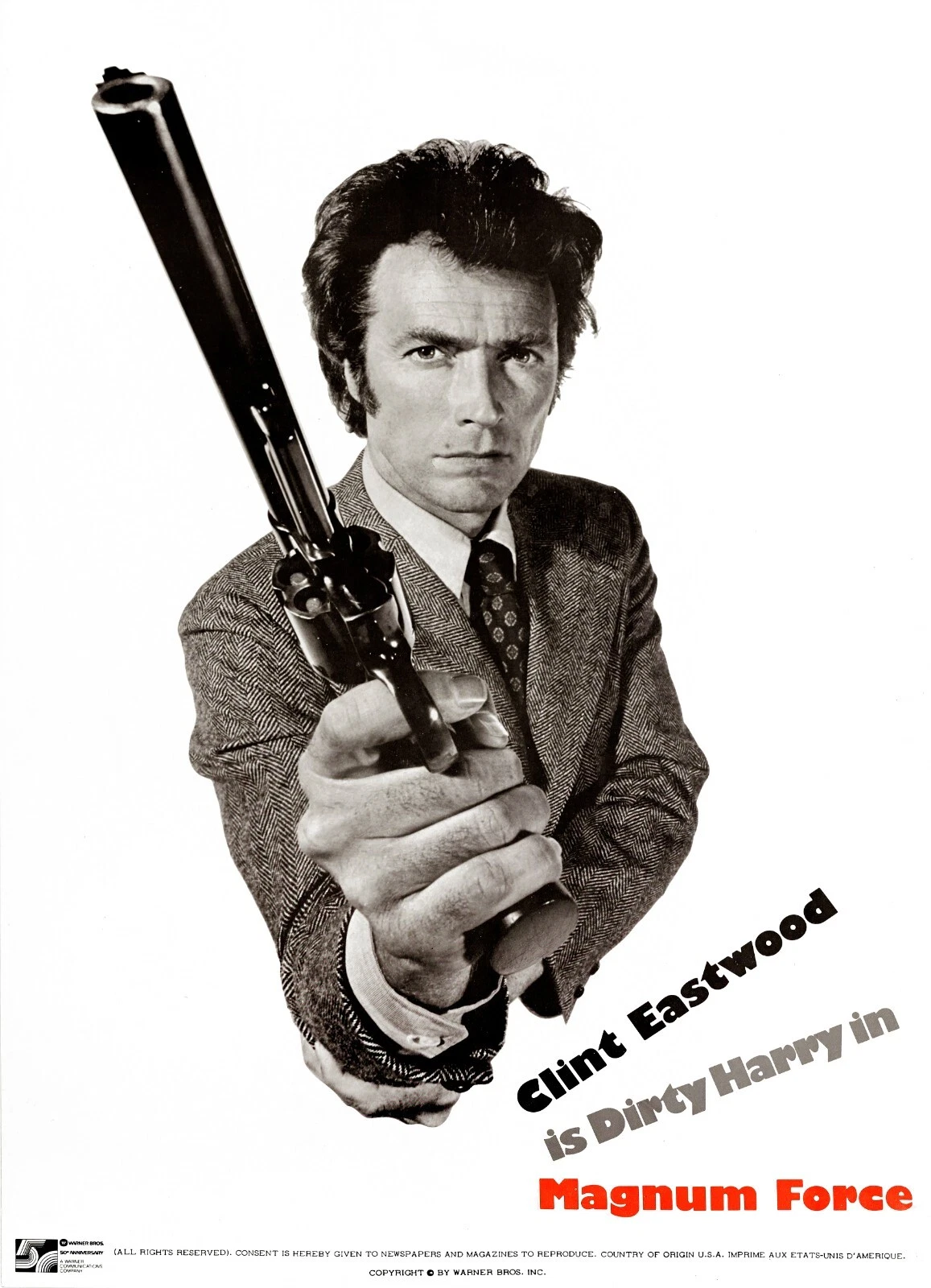
Magnum Force poster
1973

#6 — Magnum Force

Box Office: $44.7M
GenreAction crime thriller
DirectorTed Post
1973 Rank#6
Main Cast
  • Clint Eastwood as Harry Callahan
  • Hal Holbrook as Lt. Briggs
  • Mitch Ryan as Neil Briggs
  • David Soul as Davis

Magnum Force sits at number six as a reminder that Clint Eastwood’s screen authority was basically a form of box-office infrastructure by this point. As a sequel to Dirty Harry, the movie had to deliver the familiar Eastwood cool while widening the moral territory just enough to justify its existence.

What makes it more than a routine follow-up is the way it plays with vigilantism rather than simply celebrating it. Harry is still the hard-edged icon, but the film pushes the question of what happens when “justice” gets franchised into something more ideological and more dangerous. That tension gives it more bite than a simple repeat.

In the context of 1973, Magnum Force matters because it shows sequel logic already functioning inside the New Hollywood moment. Audiences wanted the icon back, but they also wanted the movie to reflect the era’s anxiety about violence, law, and collapsing institutional trust.

For Gen X, it remains part of the permanent Eastwood TV package — a durable action-crime sequel that still feels meaner, harder, and more adult than most later studio follow-ups.

Fun Fact / Why It Still Matters The film still matters because it helped prove the sequel economy could work in the 70s if the follow-up deepened the icon instead of just photocopying him.
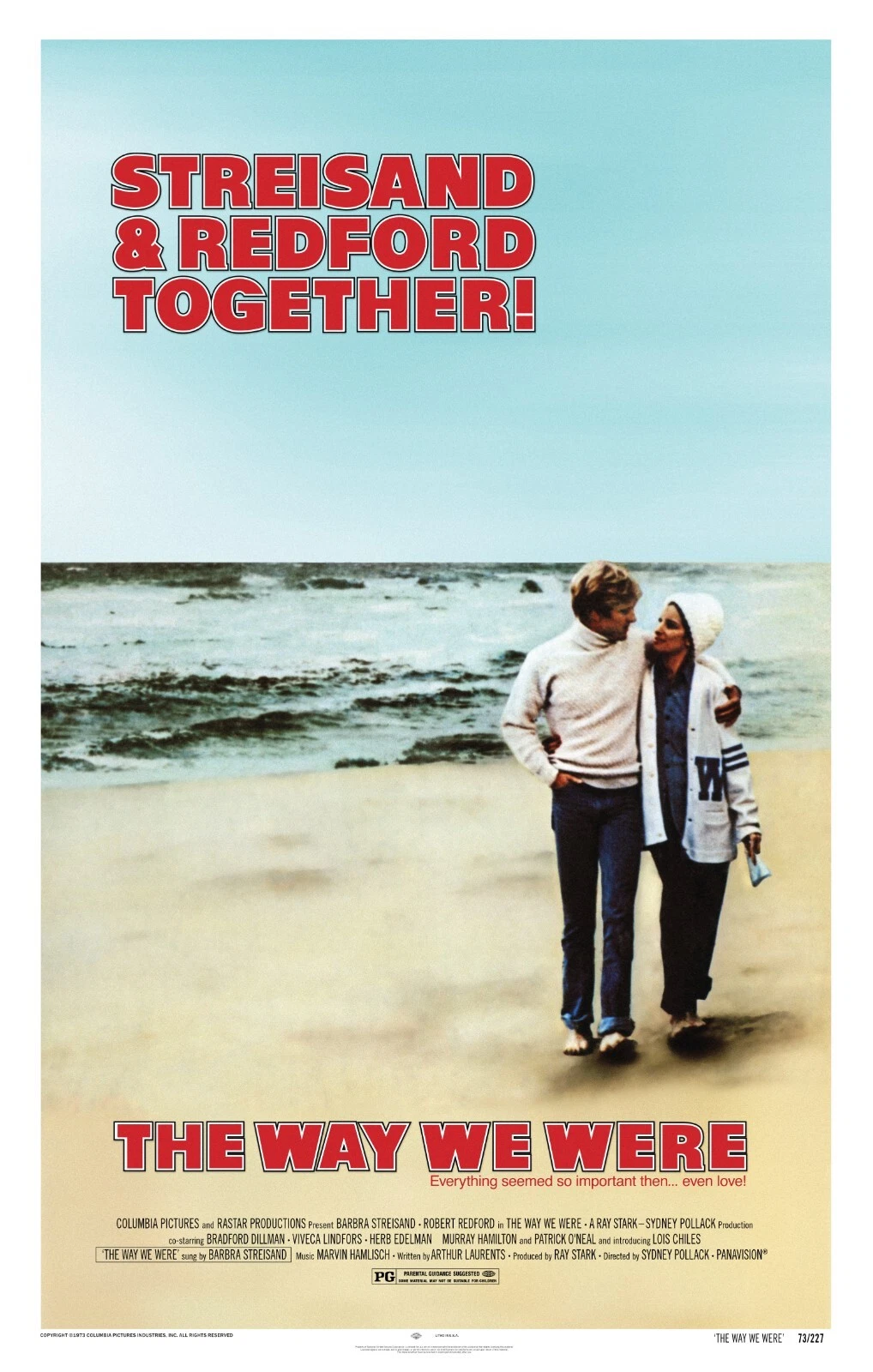
The Way We Were poster
1973

#5 — The Way We Were

Box Office: $49.9M
GenreRomantic drama
DirectorSydney Pollack
1973 Rank#5
Main Cast
  • Barbra Streisand as Katie Morosky
  • Robert Redford as Hubbell Gardiner
  • Bradford Dillman as J.J.
  • Viveca Lindfors as Paula Reisner

The Way We Were at number five is a good reminder that 1973 audiences still loved romance, but not necessarily the neat kind. This is a big, glamorous mainstream hit built around incompatibility, history, ideology, and the ache of watching two magnetic people fail to live in the same emotional weather for very long.

Streisand and Redford bring star power on a near-mythic level, and the movie absolutely knows how to frame them. But its lasting strength comes from the sadness under the sheen. The relationship isn’t undone by a cheap gimmick. It’s undone by temperament, politics, timing, and the brutal reality that chemistry does not automatically equal durability.

In the box-office story of 1973, the film matters because it shows mainstream adult drama could still be a major commercial force if it delivered glamour and emotional aftermath in equal measure. It’s not lightweight romance. It’s prestige melancholy with movie-star heat.

For Gen X, it became one of those inherited “adult movie” classics whose title song, imagery, and emotional vibe entered cultural memory long before many people ever saw the whole thing start to finish.

Fun Fact / Why It Still Matters The film still matters because it turned romantic disappointment into huge mainstream box office without softening the pain that makes it memorable.
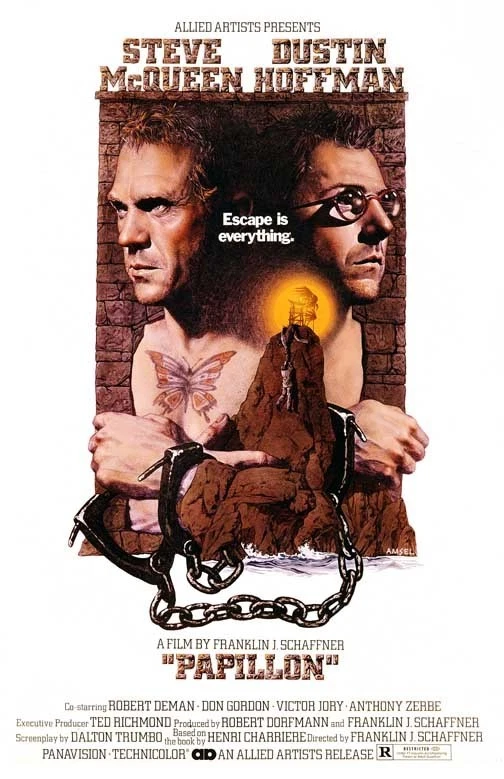
Papillon poster
1973

#4 — Papillon

Box Office: $53.3M
GenrePrison drama
DirectorFranklin J. Schaffner
1973 Rank#4
Main Cast
  • Steve McQueen as Henri “Papillon” Charrière
  • Dustin Hoffman as Louis Dega
  • Victor Jory as Indian Chief
  • Don Gordon as Julot

Papillon at number four is one of the strongest signs that 1973 audiences were still willing to commit to big, punishing, adult cinema on an epic scale. This is not a quick thrill. It’s a prison-survival endurance test built on suffering, obsession, star power, and the refusal to let confinement become the last word.

Steve McQueen gives the film its commercial spine, but one of the reasons it endures is that it doesn’t coast on cool. It breaks the cool down. It exhausts it. It turns the star into a body under pressure. Dustin Hoffman gives the film a different kind of fragility, which helps keep the whole thing from flattening into macho spectacle.

In the broader commercial picture, Papillon matters because it proves prestige and pain were not box-office poison in the 70s. If the movie had scale, stars, and conviction, audiences would absolutely show up for something grueling.

For Gen X, it remains one of those major “serious movie” touchstones that felt enormous on television and on VHS — the kind of film that taught you endurance itself could be cinematic drama.

Fun Fact / Why It Still Matters The film still matters because it’s one of the decade’s clearest examples of adult suffering and star power being sold at true event-movie scale.
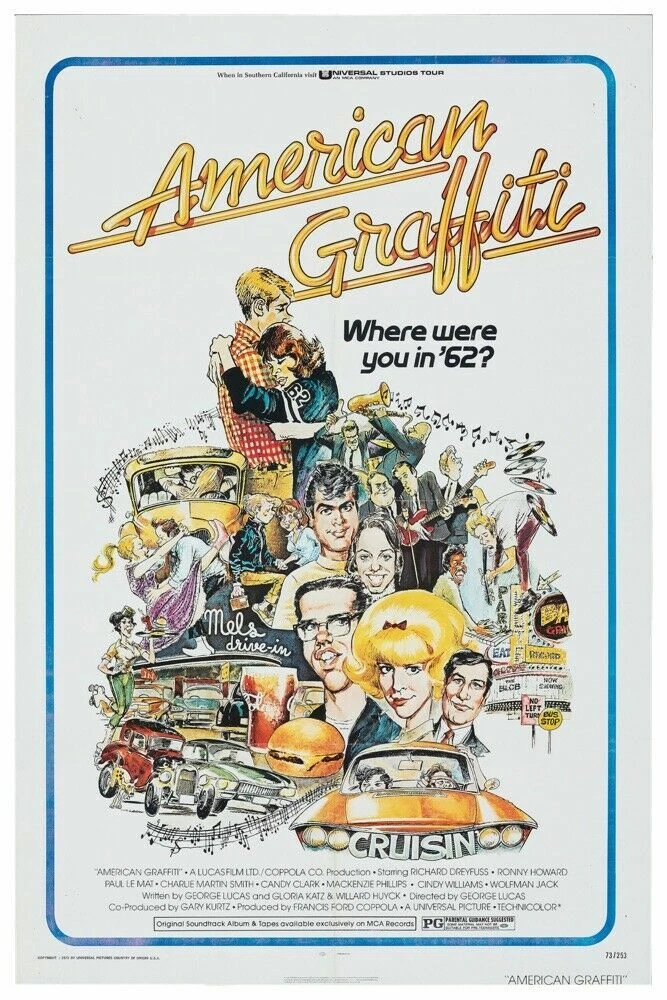
American Graffiti poster
1973

#3 — American Graffiti

Box Office: $115.3M
GenreComing-of-age comedy-drama
DirectorGeorge Lucas
1973 Rank#3
Main Cast
  • Richard Dreyfuss as Curt Henderson
  • Ron Howard as Steve Bolander
  • Paul Le Mat as John Milner
  • Cindy Williams as Laurie Henderson

American Graffiti taking the number three spot is a huge part of why 1973 feels so historically important. This is the movie that turned nostalgia into propulsion. George Lucas takes a single cruising night, loads it with music, cars, teenage uncertainty, and the ache of leaving home, and somehow makes it feel both intimate and generational at the same time.

What makes the film especially important to the larger culture is that it didn’t just succeed as a movie. It helped define a whole commercial language of memory. Pop songs, youth rituals, fashion details, regional specificity, and emotional longing all get fused into one package that later decades would borrow constantly.

In the box-office story of 1973, American Graffiti matters because it proves audiences were hungry not only for danger and dread, but also for curated longing. Nostalgia could be a business engine, not just a mood.

For Gen X, this film is practically part of the blueprint for how retro culture later got marketed, consumed, and emotionally organized. It’s one of the foundation texts for the whole nostalgia economy.

Fun Fact / Why It Still Matters The film still matters because it helped teach Hollywood that memory, music, and youth mythology could be sold as a major mainstream experience.
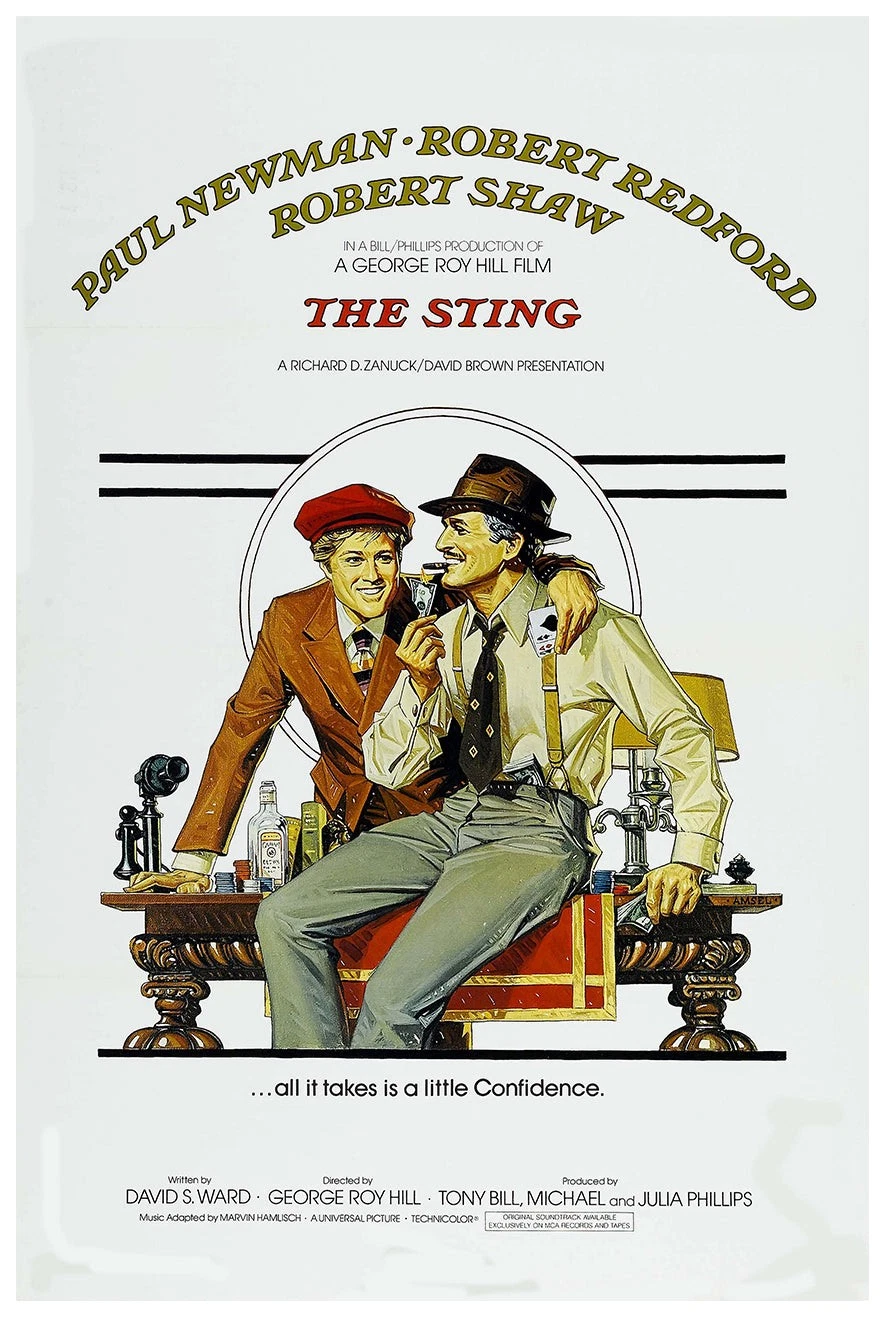
The Sting poster
1973

#2 — The Sting

Box Office: $159.6M
GenreCaper comedy-drama
DirectorGeorge Roy Hill
1973 Rank#2
Main Cast
  • Paul Newman as Henry Gondorff
  • Robert Redford as Johnny Hooker
  • Robert Shaw as Doyle Lonnegan
  • Charles Durning as Lt. Snyder

The Sting finishing second is one of the great reminders that a movie can be wildly popular without feeling artistically hollow. This thing is engineered beautifully. The pacing is playful, the reveals land cleanly, the period style has texture, and Newman and Redford operate with the kind of star chemistry that makes the whole enterprise feel lighter on its feet than it has any right to.

The movie’s brilliance is that it turns deception into pleasure without becoming smug. It’s clever, but not show-offy. Elegant, but not sterile. That balance is a huge part of why it connected so deeply with mainstream audiences. It gives you sophistication without demanding homework.

In the commercial story of 1973, The Sting matters because it proves polish, charisma, and structure still had enormous value in an era often remembered mainly for grit and danger. This is old-school entertainment refined rather than embalmed.

For Gen X, it became one of those endlessly rewatchable prestige-pop movies — a film that felt smart even when you caught it halfway through on television and stayed anyway because the ride was just that smooth.

Fun Fact / Why It Still Matters The film still matters because it remains one of the smoothest examples of commercial craftsmanship — a mega-hit built on wit, structure, and pure movie-star pleasure.
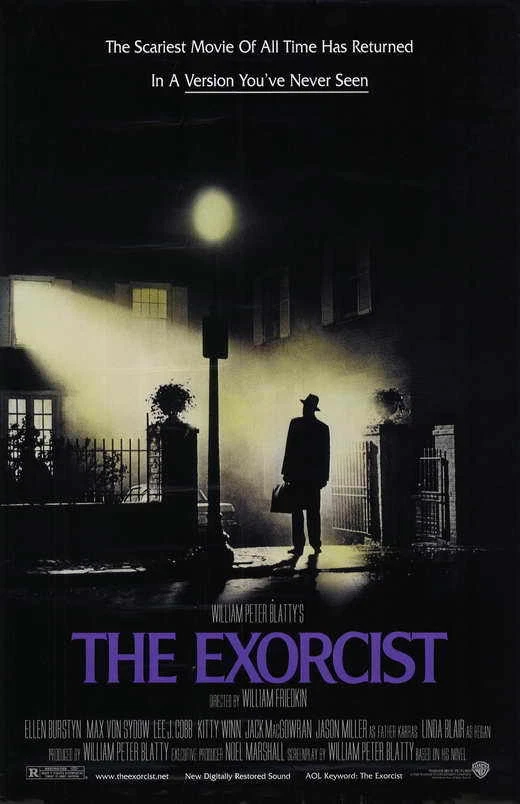
The Exorcist poster
1973

#1 — The Exorcist

Box Office: $193.0M
GenreSupernatural horror
DirectorWilliam Friedkin
1973 Rank#1
Main Cast
  • Ellen Burstyn as Chris MacNeil
  • Linda Blair as Regan MacNeil
  • Max von Sydow as Father Merrin
  • Jason Miller as Father Karras

The Exorcist taking the top spot is one of those box-office facts that still feels a little unreal in the best possible way. Plenty of horror movies become hits. Very few become genuine public events. This one did. People weren’t merely seeing it. They were reacting to it, warning each other about it, daring friends to go, and carrying the experience home like they’d survived something.

The reason it remains more than a sensational artifact is that William Friedkin directs it with the seriousness of a major drama. The performances are grounded. The emotional stakes are real. The fear comes not just from the imagery, but from the sense that the movie believes in its own nightmare completely. That conviction is what made the shock land so hard.

In the broader commercial story of 1973, The Exorcist matters because it proved horror could dominate the culture at the highest level. It wasn’t relegated to a niche. It became the year’s defining theatrical phenomenon.

For Gen X, it’s one of the ultimate forbidden-fruit titles — a movie with legendary status before many people even saw it. And once they did, the legend somehow still held up.

Fun Fact / Why It Still Matters The film still matters because it turned horror into full-scale mainstream cultural impact and changed the ceiling for what the genre could do commercially.

Rewind Verdict

The top 10 movies of 1973 work because they don’t feel like they were all manufactured from the same commercial blueprint. This is a year where horror can become a national event, a caper can become elegant blockbuster entertainment, nostalgia can turn into a giant business model, a prison epic can go big, a romance can get sad on purpose, a cop sequel can still have teeth, Bond can survive reinvention, and Disney can quietly plant lifelong memory.

What makes the lineup especially memorable is the balance between danger and accessibility. The year’s biggest movies are often entertaining in very different ways, but most of them still carry some kind of sharp edge underneath the surface. Even the smoother hits feel aware that the country, the culture, and the movies themselves have gotten rougher.

For Smells Like Gen X, 1973 feels like one of the clearest proof years that early-70s Hollywood was not just transitional. It was fully operational: more adult, more varied, more skeptical, and more willing to let mainstream popularity coexist with fear, sadness, moral uncertainty, and real cinematic personality.

FAQ: Top Movies of 1973

What was the highest-grossing 1973 release at the North American box office?

The Exorcist finished as the biggest 1973 release in North America.

Why is Robin Hood in the 1973 top 10?

Because this series uses release-year North American grosses, and Robin Hood was a 1973 release that earned enough domestically to make the top 10.

Why does this list use release-year grosses instead of calendar-year totals?

Because release-year grosses give 1973 a cleaner identity and keep the ranking focused on films first released in 1973 rather than earlier holdovers that kept earning into the same calendar period.

Was 1973 already moving toward the blockbuster era?

Yes. The Exorcist, The Sting, and American Graffiti show how event-level audience appeal, cultural conversation, and major box office were starting to align in a very modern way.

What makes the 1973 lineup so memorable?

Its range. The year’s biggest hits include horror, caper entertainment, nostalgia cinema, prison suffering, romance, franchise action, animation, and anti-corruption drama — all in one commercial ecosystem.

Get the Weekly Gen X Drop

New videos, rewinds, and savage nostalgia — first.

JOIN THE NEWSLETTER WATCH VIDEOS

MORE REWINDS