The School, Style, and Social Fads That Took Over 1988

The School, Style, and Social Fads That Took Over 1988
Smells Like Gen X • Fads of the 1980s

The School, Style, and Social Fads That Took Over 1988

1988 had a very specific kind of chaos. It was a year of glossy teen magazines, giant shoulders, scrunchies on wrists and ponytails, dances copied at school, slam books passed around like low-level contraband, and tiny clip-on music players that somehow made perfect sense to an entire generation of kids. It felt younger than 1987 in some ways, more school-centered, more notebook-and-locker-driven, but it was still unmistakably late 80s in how loud and visual everything had become.

Why 1988 Felt Different

1988 was not just about big pop culture. It was about what filtered down into everyday kid and teen life. The fads lived in classrooms, on wrists, in backpacks, at sleepovers, on dance floors, and in those little social rituals that made school feel like its own self-contained universe. It was fashion, yes, but it was also paper, gossip, movement, and portable little things kids could actually own.

#6 Pocket Rockers #5 Slam Books #4 Scrunchies #3 Colorful Clothing & Shoulder Pads #2 Running Man / Cabbage Patch Dance Craze #1 Teen-Mag Craze

Why these were the biggest fads of 1988

A real fad year is not just about what got advertised or what sold well. It is about what broke out of the store, the TV, or the magazine page and became part of daily life. That is why 1988 works so well. Its biggest fads were not stuck in one lane. They spilled into school culture, after-school culture, bedroom culture, and the strange little status systems kids and teens invent for themselves.

This was also a year that felt a little more social and hands-on than the two years before it. The trends were not all about standing there and looking cool, though that still mattered. They were also about movement, note-passing, reading, styling, carrying around small gadgets, and building identity out of whatever was physically around you. One fad lived in magazines. Another lived in your hair. Another got passed across desks. Another clipped onto your shirt and blasted tiny music into the world like that seemed remotely practical.

That is what gives 1988 its flavor. It had big late-80s visuals, but it also had a more playful, school-centered energy. It felt like the kind of year where style, gossip, dance, and little possessions all mixed together until the whole thing became one giant scrapbook of very specific memories.

Gen X Note

If you were there, you remember that 1988 could feel like a full sensory experience. Somebody was showing off a magazine, somebody was adjusting a scrunchie, somebody else had shoulder pads making a basic outfit look ten times more dramatic, and somewhere in the room a slam book was quietly ruining somebody’s peace. Then there was always at least one kid trying to dance like they had MTV-level confidence when they absolutely did not.

The countdown

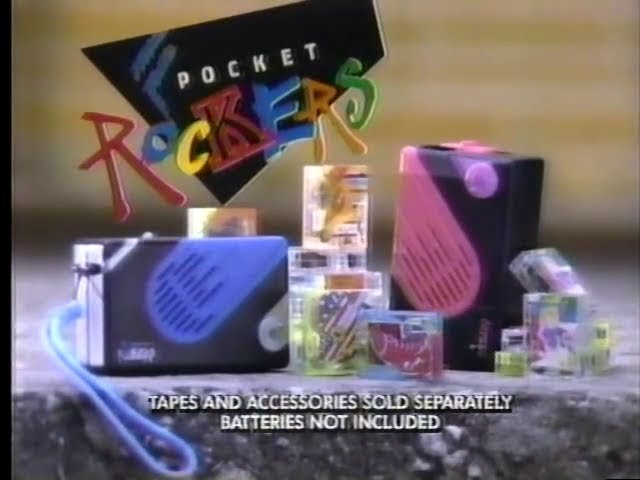
  1. #6 Pocket RockersTiny clip-on music players that felt futuristic, annoying, and extremely elementary-school cool all at once.
  2. #5 Slam booksNotebook gossip culture at its most chaotic, awkward, and aggressively pre-digital.
  3. #4 ScrunchiesThe accessory that lived on ponytails, wrists, and half the girls in any hallway worth remembering.
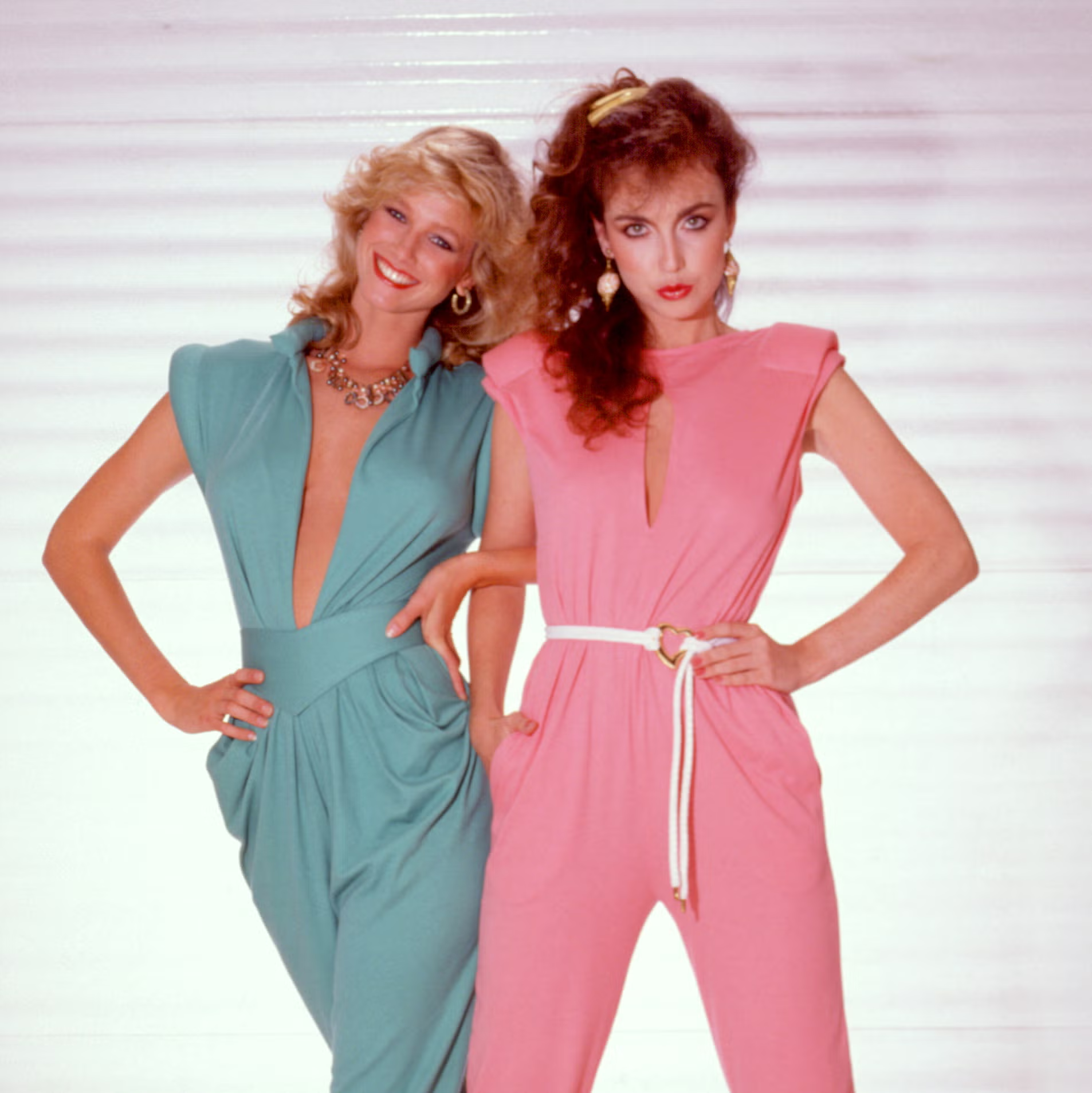
  4. #3 Colorful clothing and shoulder padsLate-80s fashion stopped asking permission and started taking up space.
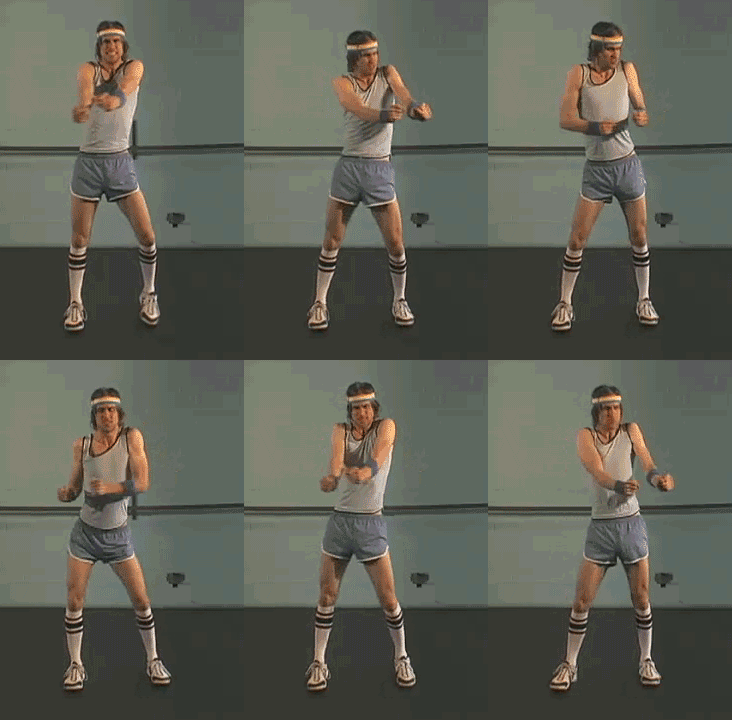
  5. #2 Running Man / Cabbage Patch dance crazeSchool dances, talent shows, and random living rooms suddenly became choreography experiments.
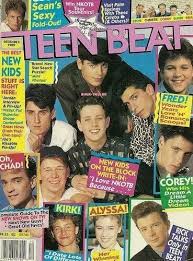
  6. #1 Teen-mag crazeGlossy magazines turned teen identity into a monthly subscription.
Pocket Rockers fad in 1988
#6 Biggest Fad

Pocket Rockers

Why it hitPortable music, kid appeal, clip-on gadget cool
1988 anchorTiny music players suddenly felt like a huge deal
Why it matteredKids got their own little piece of portable tech culture

Pocket Rockers are one of those very specific late-80s memories that instantly take you back to a certain kind of kid excitement. They were tiny. They clipped onto clothes. They played little cartridges. And for a brief moment, that was enough to make them seem like the future had arrived in toy form and brought its own soundtrack.

What makes them belong here is that they hit that perfect younger-kid sweet spot: portable, show-off-able, and just annoying enough that adults and schools were not always thrilled. That is usually a good sign. Once something becomes cool enough for kids and irritating enough for authority figures, it starts to behave like a real fad. It becomes part toy, part accessory, part social object.

If you were there, you remember how much the scale of them was part of the magic. They felt personal. They felt like your own little machine. They were not practical in any adult sense, but practicality has never been the point of a good kid fad. The point is that kids suddenly want one, carry one, compare one, and make it part of their personality for a minute. Pocket Rockers absolutely did that.
Slam books fad in 1988
#5 Biggest Fad

Slam Books

Why it hitSchool gossip, notebook culture, anonymous drama
1988 anchorPaper-based chaos moved from desk to desk
Why it matteredIt was social media with bad handwriting and no delete button

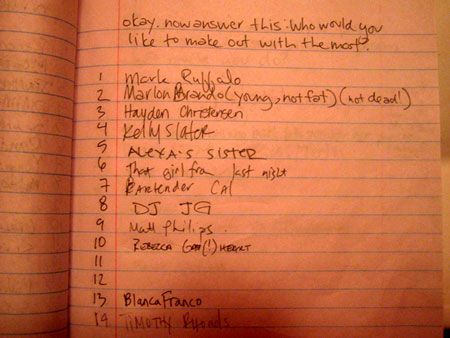
If you want a fad that screams school life before the internet, slam books are hard to beat. They were messy, mean, fascinating, irresistible, and exactly the kind of thing kids and teens would pass around because the combination of gossip and secrecy is basically eternal. You answered questions, rated people, wrote comments, and hoped your own page was not about to become the source of next week’s emotional damage.

That is why slam books belong on a 1988 list. They were not just a trend in theory. They lived physically in schools. They passed from hand to hand. They created minor scandals, major hurt feelings, and the kind of notebook-level drama that adults tended to discover about three beats too late. That is classic fad behavior: social, portable, easy to copy, and just scandalous enough to keep it alive.

If you lived through it, you probably remember that slam books had a very specific tension to them. Everybody knew they were trouble. That never stopped them. In fact, it probably helped. The whole thing was a crude little prototype for future gossip culture, except instead of apps and group chats, you had lined paper, suspicious handwriting, and the constant risk of the wrong person flipping to the wrong page.

Scrunchies fad in 1988
#4 Biggest Fad

Scrunchies

Why it hitHair accessory, wrist accessory, easy style signal
1988 anchorThe most wearable trend of the year might have been elastic
Why it matteredIt turned a practical item into a full visual statement

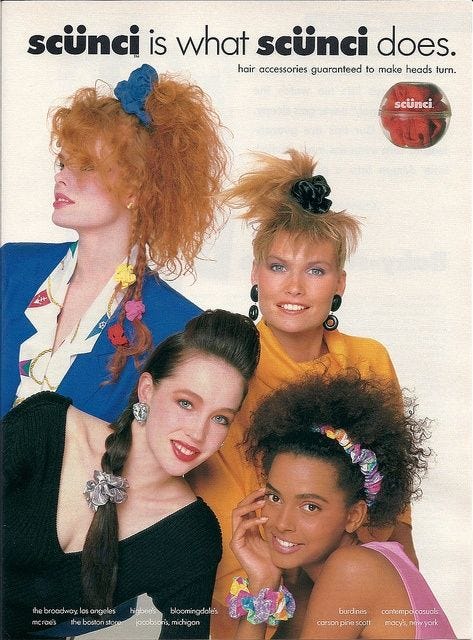
Scrunchies were one of those perfect late-80s accessories because they were practical enough to use and visible enough to matter. They held hair back, yes, but they also added color, softness, volume, and just enough style to make them feel like more than a basic necessity. By 1988, they were everywhere — on ponytails, around wrists, and attached to entire categories of school-day outfits.

Part of the reason they worked so well is that they were flexible in every possible sense. They could be cute, bright, coordinated, casual, or extra, depending on the rest of the look. That made them ideal for a year when fashion still loved being noticeable but was starting to distribute that energy into smaller, everyday objects. Scrunchies let people participate in the look without needing an entire wardrobe overhaul.

If you were there, you remember how normal it felt to see them constantly. They blended into the visual language of the time so completely that it is easy to forget they were once a fad. But they absolutely were. They took something ordinary, made it bigger and more stylish, and convinced an entire generation that even a ponytail holder should be doing image work.

Colorful clothing and shoulder pads in 1988
#3 Biggest Fad

Colorful Clothing and Shoulder Pads

Why it hitBold fashion, exaggerated silhouettes, instant visibility
1988 anchorThe outfit was expected to make an entrance
Why it matteredLate-80s style was less interested in subtlety than ever

By 1988, late-80s fashion had fully accepted that “a normal amount” was for quitters. Color got brighter. Shapes got stronger. Shoulder pads kept making even basic clothes look like they had opinions. This was the kind of trend that made an ordinary top or dress suddenly feel more theatrical, more grown-up, and more aggressively of-the-moment.

That is why this works as a real fad category rather than just general fashion history. It was visible in everyday life. It showed up at school, in family photos, in malls, at church, at parties, and anywhere people were trying to look current. The look made its presence known immediately. You did not need to ask what year a picture came from once the shoulders came into frame.

If you lived through it, you remember that this style had a kind of late-80s confidence that bordered on absurdity and somehow made that a selling point. The bright colors and bold shapes were not apologizing. They were announcing. That is a big part of what made 1988 feel so distinct. Even the clothes looked like they were trying to win a conversation.

Running Man and Cabbage Patch dance craze in 1988
#2 Biggest Fad

Running Man / Cabbage Patch Dance Craze

Why it hitDance culture, school events, copyable moves
1988 anchorEverybody suddenly knew at least one move badly
Why it matteredIt turned social spaces into performance spaces

Dance crazes are always a great test of whether something has actually entered everyday life, because once people start doing it at school, at parties, in talent shows, in living rooms, and with absolutely no regard for whether they are any good at it, the fad has officially escaped. That is what happened here. The Running Man and Cabbage Patch dance moves became the kind of thing kids and teens tried because they were visible, shareable, and easy enough to imitate badly.

That matters because these were not passive fads. They required participation. You had to move. You had to copy. You had to be willing to make a fool of yourself just enough to try. That is a huge part of why dance crazes tend to hit hard in memory. They are not just something you saw. They are something you did, or at least attempted, and probably not gracefully.

If you were there, you remember how quickly one or two moves could spread through a school or a neighborhood. Somebody learned it from TV or older kids, and suddenly every gym, dance floor, and patch of open room turned into a stage. Even people who did not really dance somehow ended up involved. That is genuine fad energy.

Teen magazine craze in 1988
#1 Biggest Fad

Teen-Mag Craze

Why it hitIdentity, trends, celebrity access, monthly obsession
1988 anchorTeen life got packaged in glossy pages
Why it wonIt shaped what people wore, liked, wanted, and talked about

If one fad best captures how 1988 fed information and identity into teen life, it is the magazine boom. Teen magazines were not just reading material. They were manuals, wish books, celebrity briefings, fashion guides, beauty suggestions, social reassurance, and mild emotional manipulation, all stapled together with glossy covers and a lot of confidence. For a lot of kids and teens, they helped define what was current long before anything like social media existed.

That is why this takes the top spot. It reached into everything else. The magazines shaped crush culture, style choices, beauty experiments, music awareness, and even the general feeling of what kind of girl or guy you were supposed to want to be. They influenced outfits, bedroom walls, lunch-table conversation, and the general mood of sleepovers. They did not just reflect teen life. They actively helped script it.

If you lived through it, you remember how big that could feel. A magazine was not just something you read once and tossed aside. You flipped through it repeatedly. You dog-eared pages. You studied the quizzes, the advice, the spreads, the celebrity photos, and the little promises that this issue would somehow explain your hair, your face, your crushes, and your social life. In 1988, that kind of glossy influence was hard to beat.

Rewind Verdict

1988 felt like a year where school culture, younger-kid culture, and late-80s style all collided in a really specific way. Teen magazines were shaping what people wanted and how they saw themselves. Dance crazes were turning social spaces into little performance zones. Shoulder pads and bright clothing kept fashion loud. Scrunchies made the simplest accessory feel era-defining. Slam books brought paper-based chaos into the classroom. And Pocket Rockers proved that if you gave kids a tiny portable gadget that clipped to their clothes, they would absolutely make it a moment.

That is why this lineup works. These were not just things people noticed in 1988. They were things people wore, read, passed around, danced, clipped on, and built into everyday life while the year was actually happening. More than anything, 1988 felt like a year of shared rituals — the little school-and-social behaviors that still stick in memory long after the trend itself is gone.

1988 Fads FAQ

Why are teen magazines ranked above the fashion and dance fads?
Because they influenced almost everything else. Teen magazines were not just a trend on their own. They shaped what people wore, what celebrities they followed, what beauty ideas they tried, and what kinds of social conversations they were having.
Why include slam books as a major 1988 fad?
Because they were incredibly school-specific and social. They lived in classrooms and friend groups, moved physically from person to person, and created exactly the sort of drama that makes a fad feel lived-in rather than abstract.
Why do Pocket Rockers belong on a fad list?
Because they hit the younger-kid lane perfectly. They were portable, visible, shareable, and just disruptive enough to feel special. That is exactly the kind of product that turns into a real school-year craze.
Was 1988 more school-centered than 1987?
In a lot of ways, yes. 1987 felt more image-and-label driven across broader teen culture, while 1988 had more fads that lived directly in schools, on desks, in notebooks, on wrists, and in younger day-to-day routines.

Get the Weekly Gen X Drop

New videos, rewinds, and savage nostalgia — first.

JOIN THE NEWSLETTER WATCH VIDEOS

MORE REWINDS