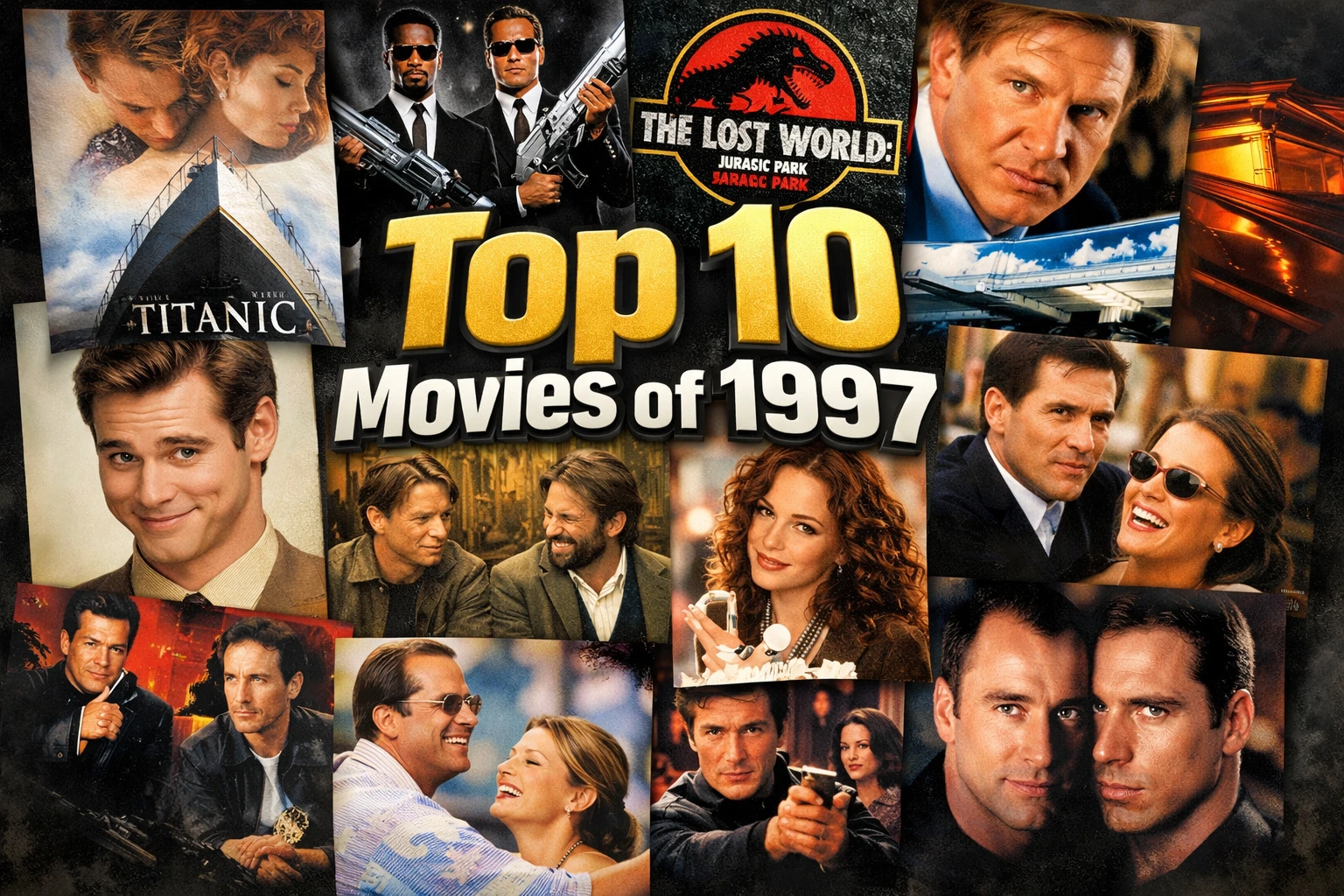
Top 10 Movies of 1997

Top 10 Movies of 1997
Smells Like Gen X • Top Movies of 1997

The Top 10 Movies of 1997

The top 10 movies of 1997 feel like the year the 90s blockbuster fully learned how to be both gigantic and strangely varied at the same time. This is a lineup where one movie becomes a cultural tidal wave, one rebrands sci-fi cool for the summer crowd, one turns courtroom-level emotional catharsis into Oscar-friendly box office, and another makes two major movie stars literally swap faces like that is a perfectly normal thing for a studio thriller to ask of the public.

What makes 1997 so rich is that the hits do not all point in one direction. Titanic becomes a historic all-audience phenomenon. Men in Black makes aliens sleek, funny, and radio-ready. The Lost World: Jurassic Park proves sequel spectacle still sells at brute-force levels. Liar Liar keeps Jim Carrey’s commercial run alive. Air Force One turns presidential rescue fantasy into a crowd-pleasing action machine. Good Will Hunting and As Good as It Gets keep adult relationship-driven storytelling alive near the top of the market. Then Face/Off slides into the ten spot like a deranged transmission from a better, sweatier action universe.

For Gen X, 1997 still has instant recall: the Titanic soundtrack everywhere, black suits and flashy neuralyzers, dinosaurs stomping through San Diego, Harrison Ford growling in the air, Jack Nicholson weaponizing disgust, Matt Damon and Ben Affleck becoming unavoidable, Pierce Brosnan keeping Bond glossy, and Nicolas Cage plus John Travolta acting like realism had politely left the building. It is one of those years where the multiplex still feels huge, crowded, and full of totally different kinds of hit-making energy.

Gen X Note: 1997 is one of the last years where mega-blockbuster spectacle, adult prestige crossover, high-concept comedy, glossy Bond, and completely unhinged action excess all manage to share the same mainstream without one formula flattening everything else.

Quick List: The Top 10 Movies of 1997

  1. Face/Off
  2. Tomorrow Never Dies
  3. My Best Friend’s Wedding
  4. Good Will Hunting
  5. As Good as It Gets
  6. Air Force One
  7. Liar Liar
  8. The Lost World: Jurassic Park
  9. Men in Black
  10. Titanic

Countdown: The Top 10 Movies of 1997

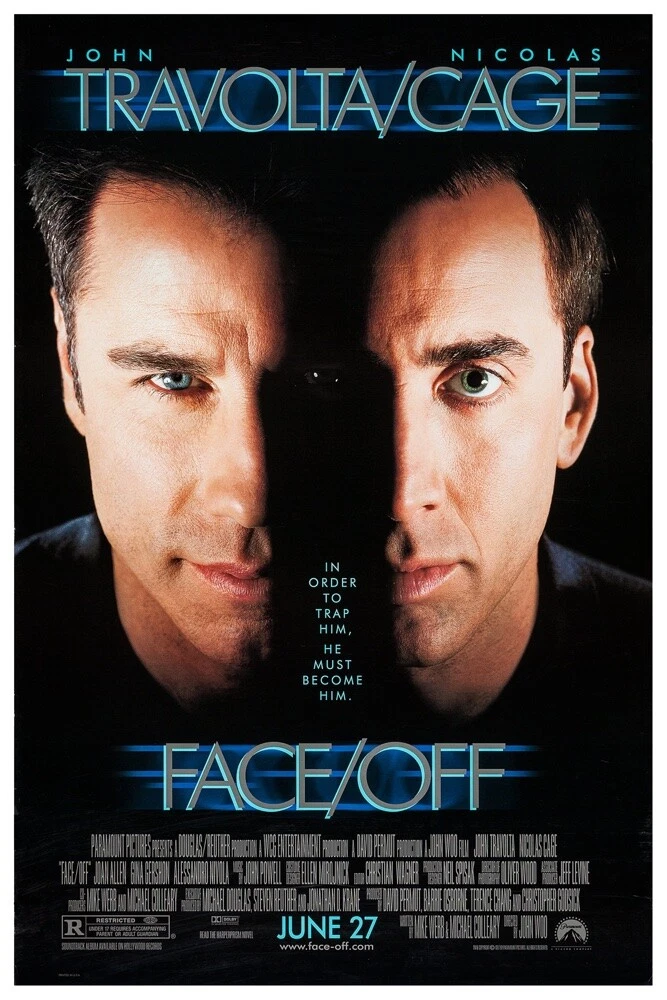
Face/Off poster
1997

#10 — Face/Off

Box Office: $112.3M
GenreAction thriller
DirectorJohn Woo
1997 Rank#10
Main Cast
  • John Travolta as Sean Archer / Castor Troy
  • Nicolas Cage as Castor Troy / Sean Archer
  • Joan Allen as Eve Archer
  • Alessandro Nivola as Pollux Troy

Face/Off closing out the 1997 top 10 is one of the best arguments imaginable for why this decade still had room for glorious studio insanity. The premise is objectively ridiculous. A lawman and a terrorist surgically exchange faces, then spend the rest of the movie destroying each other’s identities, families, and furniture. But the movie does not apologize for the madness. It treats it like opera.

John Woo’s direction is the key. The doves, the dual pistols, the slow motion, the emotional overstatement — it all works because the movie understands that excess is not a side effect. Excess is the language. If the premise is already impossible, the only smart move is to heighten everything else until the audience accepts the film on its own beautifully deranged terms.

The casting is what makes the whole thing sing. Cage gets to play Travolta and Travolta gets to play Cage, but really both men get to perform movie-star identity as a kind of action special effect. They are not chasing realism. They are chasing maximal screen personality, and the result is one of the most deliriously entertaining star duels of the decade.

In the context of 1997, Face/Off matters because it reminds you that action movies still had permission to be personal, bizarre, stylized, and emotionally overheated without first being ironed flat into franchise-safe sameness.

For Gen X, it remains one of the great “I cannot believe a major studio made this and thank God they did” movies.
Fun Fact / Why It Still Matters It still rules because it turns a laughably bonkers hook into one of the decade’s purest examples of action cinema as heightened movie-star performance art.
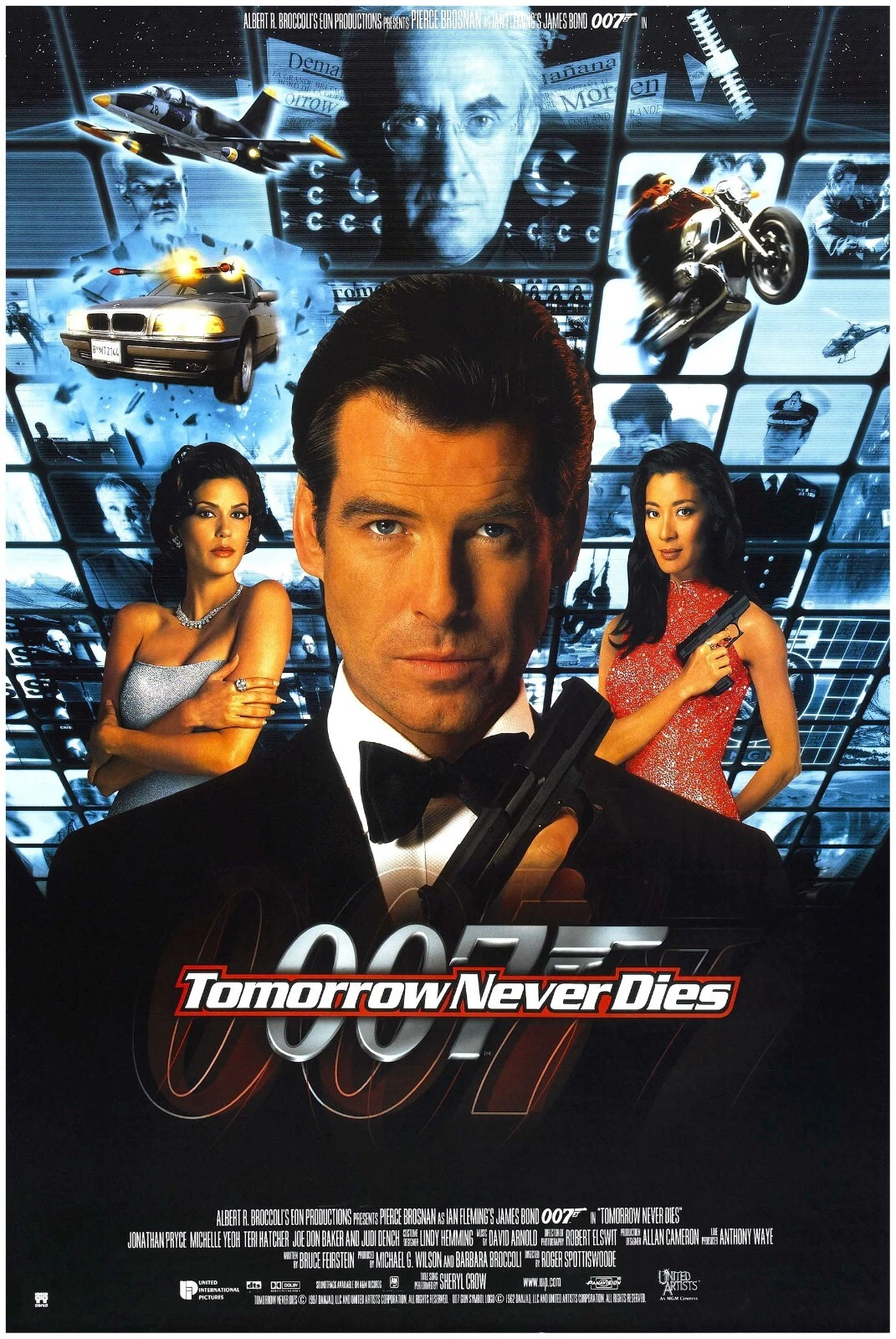
Tomorrow Never Dies poster
1997

#9 — Tomorrow Never Dies

Box Office: $125.3M
GenreSpy thriller
DirectorRoger Spottiswoode
1997 Rank#9
Main Cast
  • Pierce Brosnan as James Bond
  • Jonathan Pryce as Elliot Carver
  • Michelle Yeoh as Wai Lin
  • Teri Hatcher as Paris Carver

Tomorrow Never Dies at number nine shows just how successfully the Bond franchise had re-entered the 90s conversation after GoldenEye. This time the series leans even harder into modern-media paranoia, using a villain built around news manipulation, spectacle manufacturing, and geopolitical chaos sold as content. That hook has only gotten uglier and more relevant with age.

Pierce Brosnan again proves why he fit the era so cleanly. He is sleek enough to carry the tuxedo fantasy, efficient enough to handle the action upgrade, and self-aware enough to make Bond feel polished instead of stale. The movie is shinier and more overtly mechanical than GoldenEye, but that polish is part of the appeal. It knows it is selling glossy international danger.

Michelle Yeoh is a major reason the movie still has lift. Wai Lin is not decorative backup. She arrives with actual physical authority and helps the film feel more contemporary than a simple “Bond plus gadgetry” rerun. That gives the movie a useful edge inside late-90s action.

In the context of 1997, Tomorrow Never Dies matters because it proves Bond was not merely back — he was commercially stable again, capable of competing inside a marketplace increasingly crowded with louder, faster, more postmodern action brands.

For Gen X, it remains one of the cleanest expressions of late-90s Bond polish: glossy, efficient, media-savvy, and built to go down easy on a big screen or a Saturday night rewatch.

Fun Fact / Why It Still Matters It still plays because its villain understood that controlling information could be just as commercially cinematic as controlling missiles.
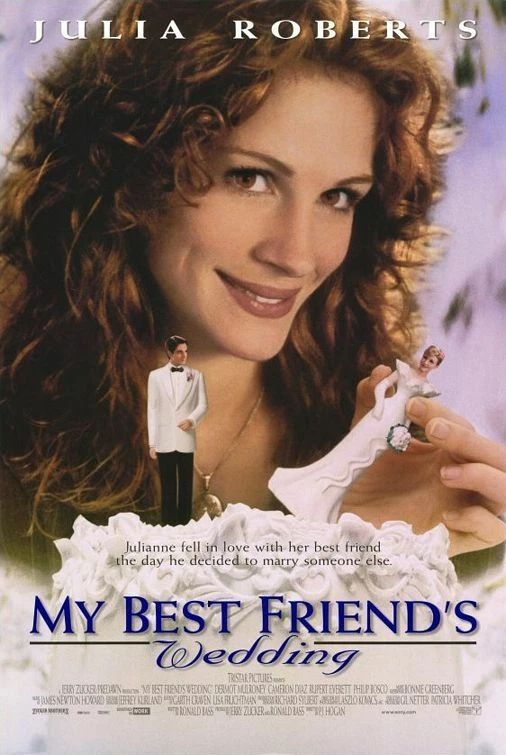
My Best Friend's Wedding poster
1997

#8 — My Best Friend’s Wedding

Box Office: $127.1M
GenreRomantic comedy
DirectorP.J. Hogan
1997 Rank#8
Main Cast
  • Julia Roberts as Julianne Potter
  • Dermot Mulroney as Michael O’Neal
  • Cameron Diaz as Kimberly Wallace
  • Rupert Everett as George Downes

My Best Friend’s Wedding at number eight is one of the strongest reminders that 1997 still had a healthy appetite for adult romantic comedy with teeth. This is not a soft, passive love story where the audience is simply asked to root for fate. It is a movie built around jealousy, self-delusion, panic, sabotage, and the dawning realization that being the protagonist of your own feelings does not make you morally right.

Julia Roberts is essential because the film lets her be charismatic and messy at the same time. Julianne is funny and compelling, but she is also frequently wrong, selfish, and operating under emotional emergency logic. That gives the movie much more bite than a lot of conventional romantic comedies from the period.

Rupert Everett’s presence also matters enormously. He gives the movie wit, glamour, and an outsider’s perspective sharp enough to puncture Julianne’s fantasy without killing the fun. Cameron Diaz, meanwhile, helps the movie by refusing to turn the “other woman” into a simple obstacle. That complexity is part of why the film aged well.

In the context of 1997, the film matters because it shows how powerful star-led romantic comedy still was when the writing trusted adults to be contradictory and imperfect.

For Gen X, it remains one of the era’s best “I know this is a rom-com, but it’s meaner and smarter than that label sounds” studio hits.

Fun Fact / Why It Still Matters It still works because it lets romantic comedy flirt with emotional bad behavior instead of pretending love always arrives in morally tidy packaging.
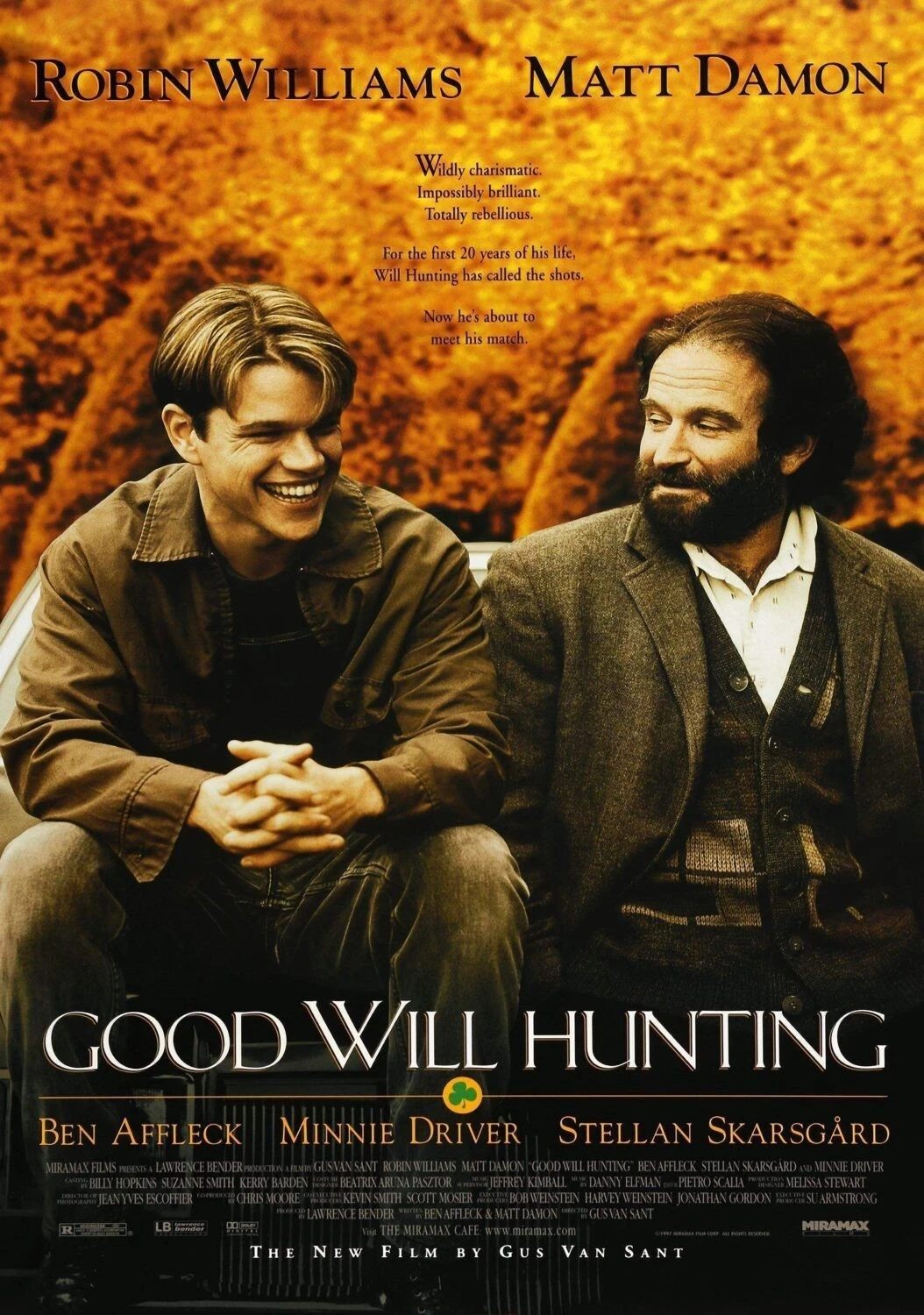
Good Will Hunting poster
1997

#7 — Good Will Hunting

Box Office: $138.4M
GenreDrama
DirectorGus Van Sant
1997 Rank#7
Main Cast
  • Matt Damon as Will Hunting
  • Robin Williams as Sean Maguire
  • Ben Affleck as Chuckie Sullivan
  • Minnie Driver as Skylar

Good Will Hunting at number seven is one of the most revealing success stories of the year because it feels, at first glance, like the kind of movie that should have remained “critically admired” instead of becoming a serious commercial player. But it connected because it offered something the big effects movies did not: an emotionally legible fantasy about intelligence, class, emotional paralysis, and the terrifying possibility that you might actually have to become the person people say you could be.

Matt Damon’s performance grounds the whole thing in anger and damage instead of empty genius mythology. Will is brilliant, yes, but the movie knows brilliance is not the problem. Avoidance is the problem. Pride is the problem. Fear is the problem. That is what gives the film its human weight.

Robin Williams is the emotional equalizer. Sean does not merely dispense wisdom. He brings grief, patience, and lived-in sadness that keeps the therapy scenes from collapsing into screenplay trickery. Ben Affleck also gives the movie one of its most memorable emotional jolts by making friendship feel less sentimental and more rough-edged, practical, and real.

In the context of 1997, Good Will Hunting matters because it shows that a talky, intimate, prestige-adjacent drama could still become a mainstream success if it hit the right emotional nerves and arrived with enough word-of-mouth momentum.

For Gen X, it remains inseparable from that late-90s moment when Miramax-era prestige breakthroughs still felt like real cultural events rather than niche awards-season obligations.

Fun Fact / Why It Still Matters It still lands because it wraps big emotional wounds and class anxiety inside an accessible, quotable, crowd-pleasing character drama.
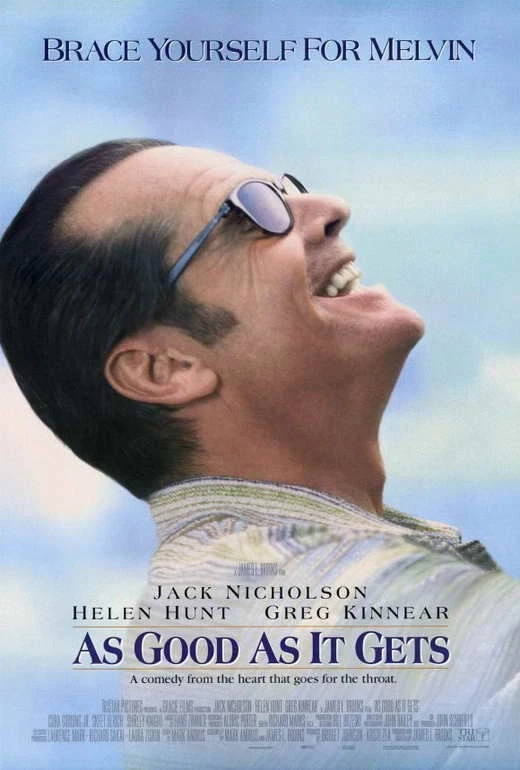
As Good as It Gets poster
1997

#6 — As Good as It Gets

Box Office: $148.5M
GenreRomantic comedy-drama
DirectorJames L. Brooks
1997 Rank#6
Main Cast
  • Jack Nicholson as Melvin Udall
  • Helen Hunt as Carol Connelly
  • Greg Kinnear as Simon Bishop
  • Cuba Gooding Jr. as Frank Sachs

As Good as It Gets at number six is a great example of how the late 90s could still turn sharp adult writing and difficult personalities into crowd-sized entertainment. The movie is funny, but it is not soft. Melvin Udall is not designed to be instantly lovable. He is abrasive, controlling, petty, and exhausting. That the film became this big tells you audiences were still willing to follow a character if the performance and writing were strong enough.

Jack Nicholson, of course, is a huge reason it works. He makes Melvin awful in ways that stay entertaining without making the cruelty weightless. Helen Hunt matters just as much because Carol gives the movie its real-world grounding. Without her impatience, exhaustion, and intelligence, the movie would drift off into “eccentric genius jerk” indulgence.

James L. Brooks also knows how to make adult discomfort feel cinematic. The movie is filled with small humiliations, defensive jokes, personal rituals, and emotional transactions that become dramatically satisfying because the script understands people as contradictory instead of programmatically likable.

In the context of 1997, the film matters because it shows that character-driven adult studio filmmaking was still capable of crossing into broad mainstream success with the right mix of star power, emotional damage, and wit.

For Gen X, it remains one of the most distinctly late-90s hits in the best way — prestige-friendly, quotable, emotionally barbed, and deeply dependent on performance.

Fun Fact / Why It Still Matters It still works because it never fully cleans up its difficult people, and that messiness gives the romance and compassion real weight.
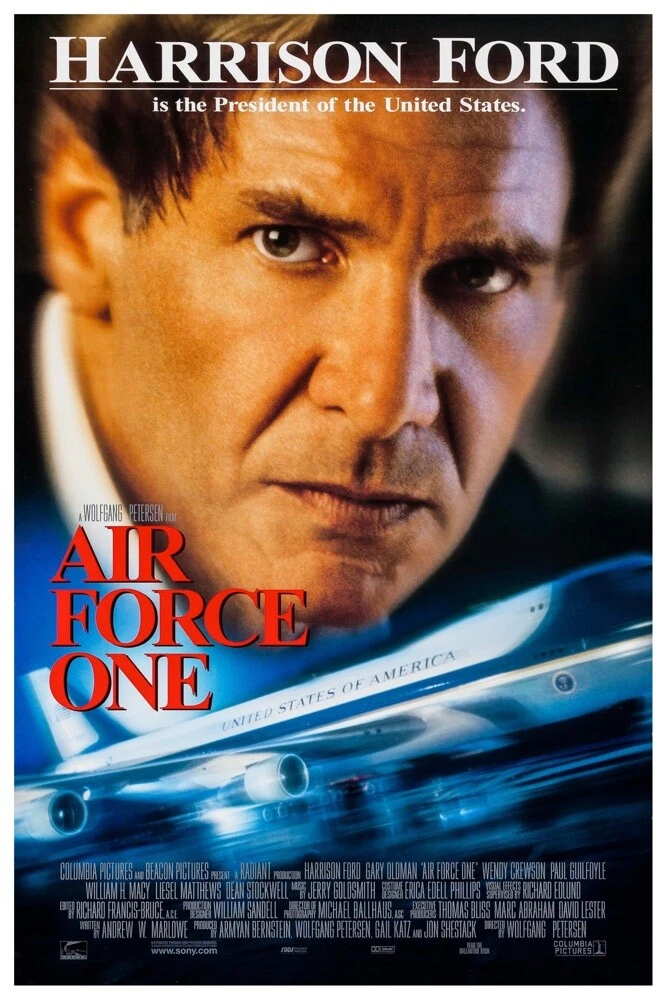
Air Force One poster
1997

#5 — Air Force One

Box Office: $173.0M
GenreAction thriller
DirectorWolfgang Petersen
1997 Rank#5
Main Cast
  • Harrison Ford as President James Marshall
  • Gary Oldman as Ivan Korshunov
  • Glenn Close as Vice President Kathryn Bennett
  • Wendy Crewson as Grace Marshall

Air Force One at number five is one of those studio hits that knows exactly what fantasy it is selling and sells it with almost no wasted motion. The premise is pure premium-grade 90s commercial engineering: what if the president were basically Harrison Ford in a suit and had to personally save his family, his staff, and the symbolic center of American power from hijackers at 30,000 feet?

The answer, naturally, is that audiences showed up. Ford’s value here is his immense credibility. He can make a wildly heightened premise feel solid because he plays it with the conviction of a man who absolutely believes duty includes punching terrorists in airplane corridors. That seriousness is why the movie’s pulpy fantasy works instead of curdling into camp.

Gary Oldman helps by giving the villain enough fury and theatrical menace to keep the stakes hot, while Wolfgang Petersen directs the whole thing with that sturdy, high-pressure thriller craftsmanship that keeps every corridor, cockpit, and communication line feeling tense.

In the context of 1997, Air Force One matters because it shows the old-school action-thriller model still thriving at a high level, even as CGI spectacle and franchise logic were taking up more oxygen elsewhere in the marketplace.

For Gen X, it remains one of the great dad-movie blockbusters of the decade — serious-faced, tightly wound, thoroughly rewatchable, and powered by pure star authority.

Fun Fact / Why It Still Matters It still slaps because it takes an outrageous hook and treats it with enough straight-faced conviction to make it feel like national myth instead of mere pulp.
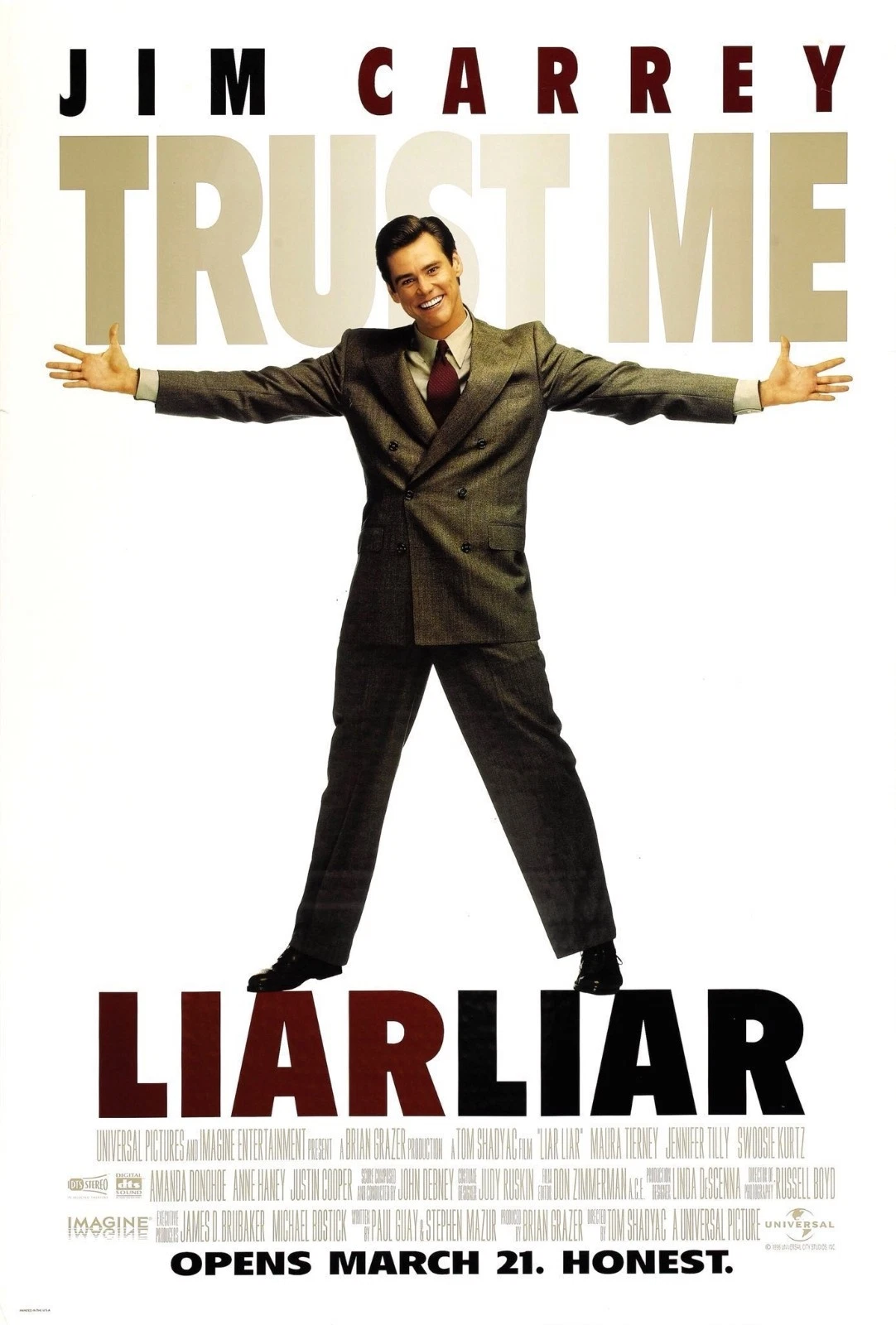
Liar Liar poster
1997

#4 — Liar Liar

Box Office: $181.4M
GenreComedy
DirectorTom Shadyac
1997 Rank#4
Main Cast
  • Jim Carrey as Fletcher Reede
  • Maura Tierney as Audrey Reede
  • Justin Cooper as Max Reede
  • Cary Elwes as Jerry

Liar Liar at number four is one of the cleanest examples of high-concept 90s comedy working at full strength. The premise is perfect. A dishonest lawyer suddenly becomes physically unable to lie. That is the whole engine, and it is strong enough to sustain a star showcase, a family story, a redemption arc, and one of Jim Carrey’s best opportunities to turn verbal panic into full-body comic catastrophe.

What makes the movie more durable than lesser concept comedies is that the hook is not just funny. It attacks the exact kind of man Fletcher has become. The enforced honesty is not random magic for magic’s sake. It is punishment tailored to character, which gives the movie more shape and payoff than a simple sketch premise.

Carrey, of course, is the event. By 1997 he was already one of the defining commercial comic forces of the decade, and Liar Liar is one of the best uses of his manic energy because the concept itself keeps generating new ways for him to spiral. The film understands that his face, voice, and movement are still blockbuster assets.

In the context of 1997, the film matters because it shows broad star comedy still operating at enormous power before the industry drifted further toward effects-centered tentpoles.

For Gen X, it remains one of the era’s most instantly watchable comedies because the premise, the performance, and the crowd-pleasing emotional turn are all so efficiently engineered.

Fun Fact / Why It Still Matters It still kills because it pairs a flawless comedy premise with a performer built to wring every possible physical and verbal panic beat out of it.
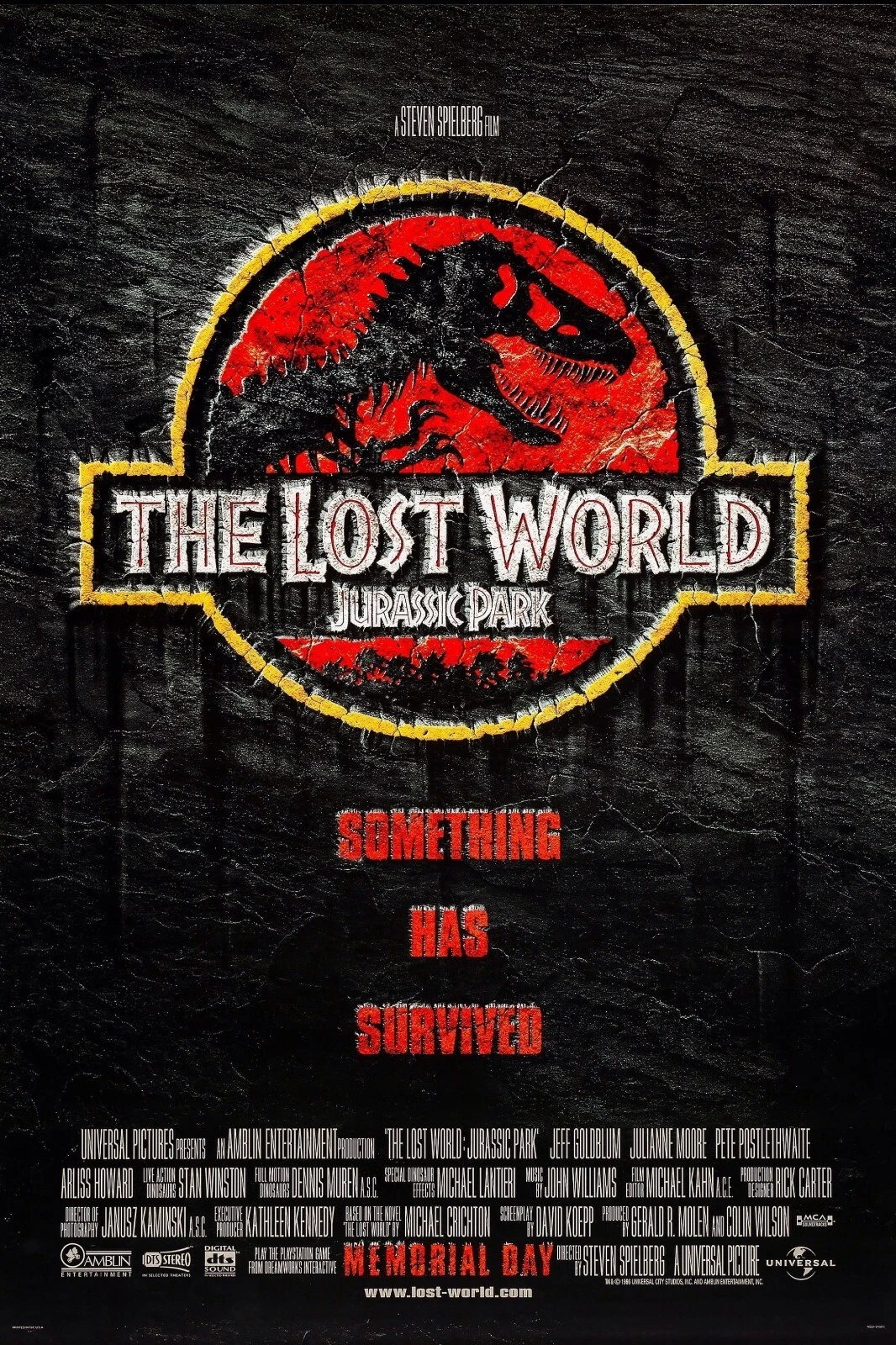
The Lost World Jurassic Park poster
1997

#3 — The Lost World: Jurassic Park

Box Office: $229.1M
GenreSci-fi adventure
DirectorSteven Spielberg
1997 Rank#3
Main Cast
  • Jeff Goldblum as Dr. Ian Malcolm
  • Julianne Moore as Dr. Sarah Harding
  • Vince Vaughn as Nick Van Owen
  • Pete Postlethwaite as Roland Tembo

The Lost World: Jurassic Park at number three is sequel spectacle doing exactly what 90s sequel spectacle was expected to do: go bigger, get meaner, add more teeth, and remind everybody how much money dinosaurs can still print when sold with sufficient scale. It may not carry the same awe-struck freshness as the original, but it absolutely carries blockbuster muscle.

Spielberg shifts the tone toward something darker and more punishing, and that matters. This is not merely “more dinosaurs.” It is a grimmer, more chaotic follow-up that treats human arrogance with less wonder and more appetite for mayhem. That shift gives the film a different identity, even if not everyone likes it as much as the original’s sense of discovery.

Jeff Goldblum taking over as the center works because Ian Malcolm brings skepticism, wit, and a permanently rattled worldview that fits a sequel built around consequences rather than revelation. The San Diego material, in particular, gives the film that memorable “studio sequel loses its mind in a fun way” energy.

In the context of 1997, The Lost World matters because it proves the decade’s biggest franchises could still generate huge returns without having to reinvent themselves from scratch. Size, familiarity, and spectacle were enough.

For Gen X, it remains one of the more fascinating 90s sequels: not as beloved as the first, but absolutely part of the era’s blockbuster vocabulary.

Fun Fact / Why It Still Matters It still stomps around because it takes the original film’s awe and mutates it into sequel-scale menace with enough Spielberg craft to keep the machine moving.
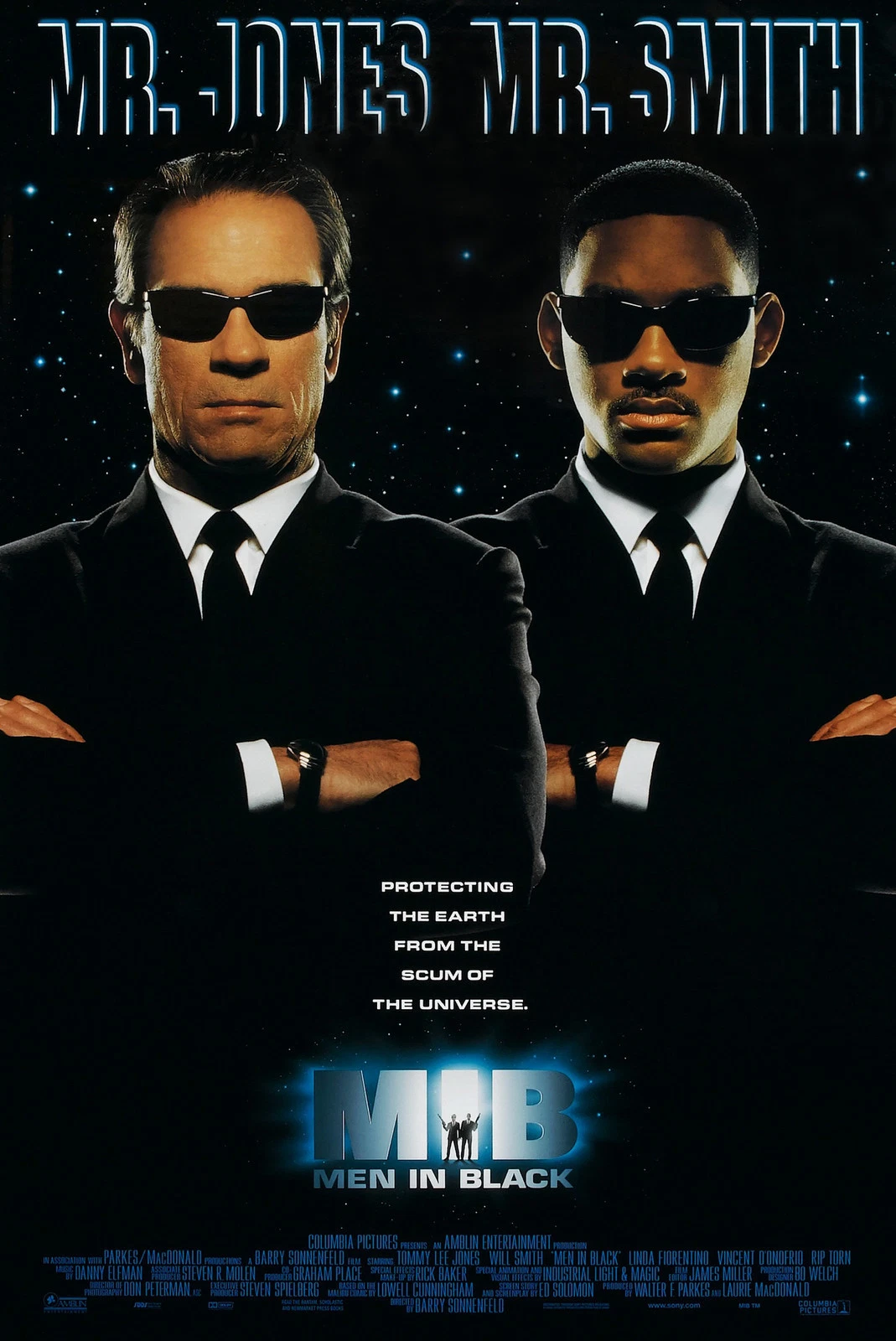
Men in Black poster
1997

#2 — Men in Black

Box Office: $250.7M
GenreSci-fi comedy
DirectorBarry Sonnenfeld
1997 Rank#2
Main Cast
  • Will Smith as Agent J
  • Tommy Lee Jones as Agent K
  • Linda Fiorentino as Dr. Laurel Weaver
  • Vincent D’Onofrio as Edgar

Men in Black at number two is one of the most efficient star-and-concept hits of the decade. The pitch alone is strong: hidden agents policing alien life on Earth with deadpan bureaucracy, memory-erasing gadgets, and a secret cosmopolitan underworld living right under ordinary society. But the movie becomes huge because it gives that premise the exact right tone — slick, funny, fast, and cool without trying too hard.

Will Smith is a major reason it becomes more than a neat idea. He brings star electricity, musical-era charisma, and just enough surprise to make Agent J feel like a fresh kind of blockbuster lead. Tommy Lee Jones, on the other hand, gives the movie dryness and weary competence, which lets the contrast between them do most of the heavy lifting.

Barry Sonnenfeld also deserves credit for not letting the world-building turn into clutter. The aliens, gadgets, and mythology all arrive with enough clarity to feel exciting rather than exhausting. That clean design is why the film plays so well as a summer blockbuster instead of a lore dump.

In the context of 1997, Men in Black matters because it shows how powerful a totally coherent new blockbuster identity could be — not a sequel, not a remake, not a dinosaur rerun, but a fresh high-concept world that instantly felt merchandisable, quotable, and sequel-ready.

For Gen X, it remains one of the coolest movies of the late 90s because it made sci-fi feel less solemn and more stylish without sacrificing commercial scale.

Fun Fact / Why It Still Matters It still pops because it paired airtight world-building with perfect star chemistry and never once forgot to make the alien bureaucracy fun.
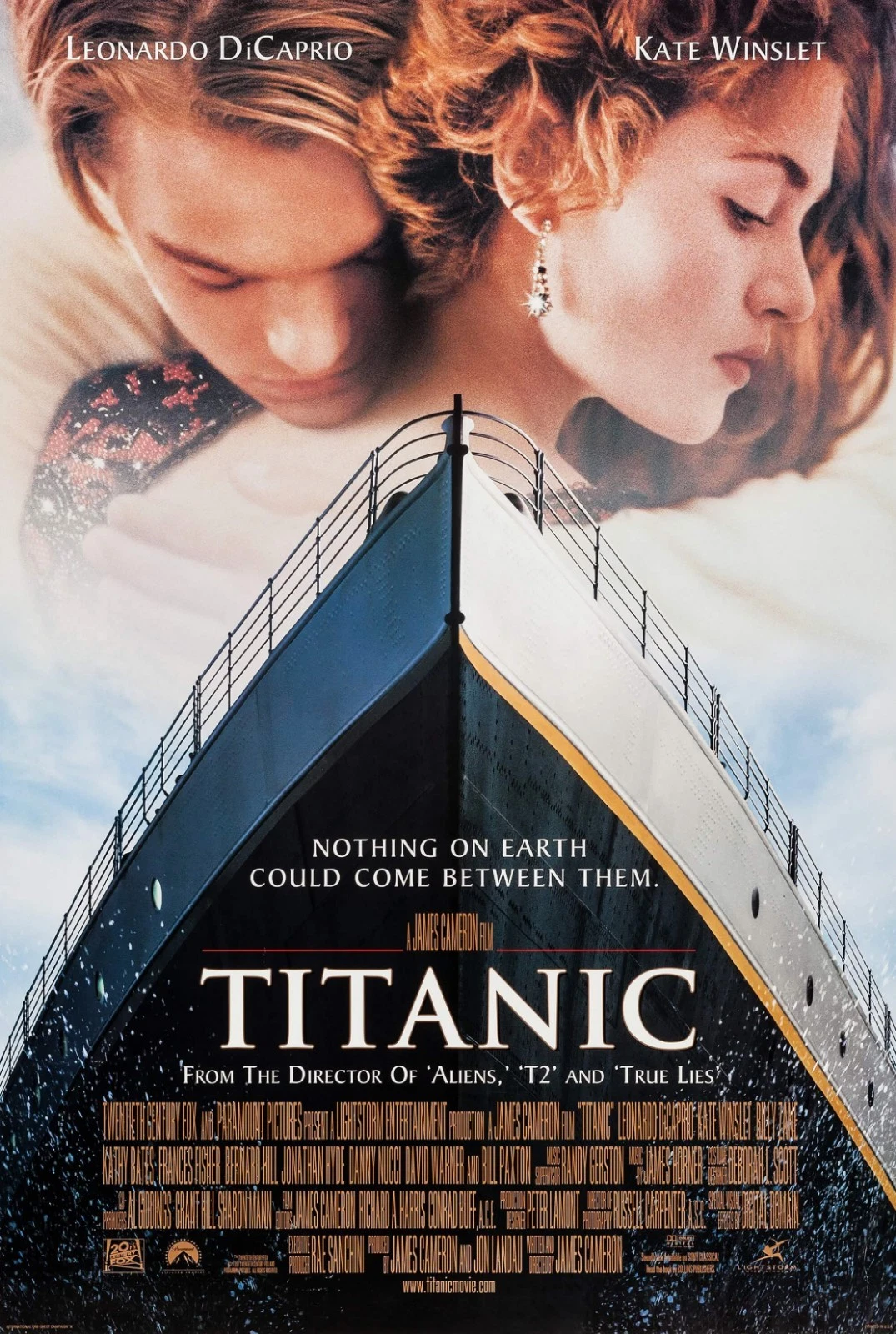
Titanic poster
1997

#1 — Titanic

Box Office: $600.7M
GenreEpic romance / disaster film
DirectorJames Cameron
1997 Rank#1
Main Cast
  • Leonardo DiCaprio as Jack Dawson
  • Kate Winslet as Rose DeWitt Bukater
  • Billy Zane as Cal Hockley
  • Kathy Bates as Molly Brown

Titanic at number one is not just the biggest first-release movie of 1997. It is the kind of cultural event that changes the scale of what a hit can look like. James Cameron takes historical catastrophe, class romance, technical spectacle, youth-idol chemistry, and old-fashioned melodrama and fuses them into something that felt less like a hit movie and more like a national weather system.

Part of why the film exploded is that it did not belong to one audience. Teen viewers came for Leonardo DiCaprio. older viewers came for the grand romantic tragedy. spectacle-seekers came for the sinking. awards-season audiences came for the craft and scale. The movie managed to be several different box-office products at once, which is one reason its commercial gravity became so overwhelming.

Cameron’s control is the crucial ingredient. The film’s first half makes the ship feel tactile, lived-in, and stratified by class, so that when the second half turns into a survival nightmare, the destruction actually carries emotional charge. The scale is huge, but it is not anonymous. The movie wants the audience to feel both the machinery and the human cost.

In the context of 1997, Titanic matters because it is one of the clearest examples of a studio blockbuster transcending normal blockbuster logic. It is romance, disaster, technical flex, pop phenomenon, and prestige juggernaut all at once. Very few movies ever manage that combination.

For Gen X, it remains inseparable from the late-90s cultural atmosphere itself — the soundtrack, the repeat viewings, the DiCaprio saturation, the “I’m the king of the world” afterlife, and the feeling that one movie had somehow swallowed the entire culture whole.

Fun Fact / Why It Still Matters It still endures because it married spectacle and melodrama so completely that audiences could experience it as both giant event cinema and deeply personal romantic tragedy.

Rewind Verdict

The top 10 movies of 1997 work so well because they show a mainstream still comfortable with range even as the blockbuster was becoming larger, more brand-driven, and more globally engineered. This is a year where one movie becomes a cultural supernova, one launches a sleek new sci-fi franchise, one keeps dinosaurs commercially massive, one lets Jim Carrey keep torching courtroom ceilings, one turns the president into an action hero, and another lets John Travolta and Nicolas Cage chew through identity itself like it is a premium summer snack.

That mix is what makes 1997 feel so complete. Titanic dominates at a historic level. Men in Black makes coolness look commercially effortless. The Lost World shows sequel power still roaring. Liar Liar keeps high-concept comedy huge. Air Force One and Tomorrow Never Dies keep star-led action and espionage hot. As Good as It Gets, Good Will Hunting, and My Best Friend’s Wedding preserve adult emotional storytelling in the same top 10. Face/Off reminds everyone that action can still be gloriously weird.

For Gen X, 1997 feels like one of the last truly broad multiplex years — a year when romance, prestige, aliens, dinosaurs, courtroom honesty, presidential fists, glossy Bond fantasy, and delirious Hong Kong-inflected action excess could all coexist without being forced into one approved blockbuster personality.

FAQ: Top Movies of 1997

What was the highest-grossing first-release movie of 1997?

Titanic finished as the biggest North American first-release hit of 1997 under the total-gross ranking used for this series.

Why are the 1997 Star Wars Special Editions not included?

Because this series ranks movies by their first-release year. The 1997 Star Wars Special Editions were re-releases of earlier films, so they do not qualify as first-release 1997 titles.

Why is Face/Off in the top 10 for 1997?

Because once re-releases are removed, Face/Off moves into the tenth slot for first-release 1997 movies by North American total gross.

What makes 1997 feel different from 1996?

1997 feels even more culturally concentrated. The very biggest hit becomes overwhelming in scale, while the rest of the top 10 still preserves an unusual amount of tonal variety.

What makes the 1997 lineup so memorable?

Its mix of mega-event spectacle and adult crossover variety. The year delivered Titanic-sized obsession, sci-fi cool, sequel muscle, comedy, Bond polish, prestige breakouts, romantic messiness, presidential action fantasy, and one of the decade’s most beautifully absurd action movies.

Get the Weekly Gen X Drop

New videos, rewinds, and savage nostalgia — first.

JOIN THE NEWSLETTER WATCH VIDEOS

MORE REWINDS