The Top 10 Movies of 1993

The Top 10 Movies of 1993
Smells Like Gen X • Top Movies of 1993

The Top 10 Movies of 1993

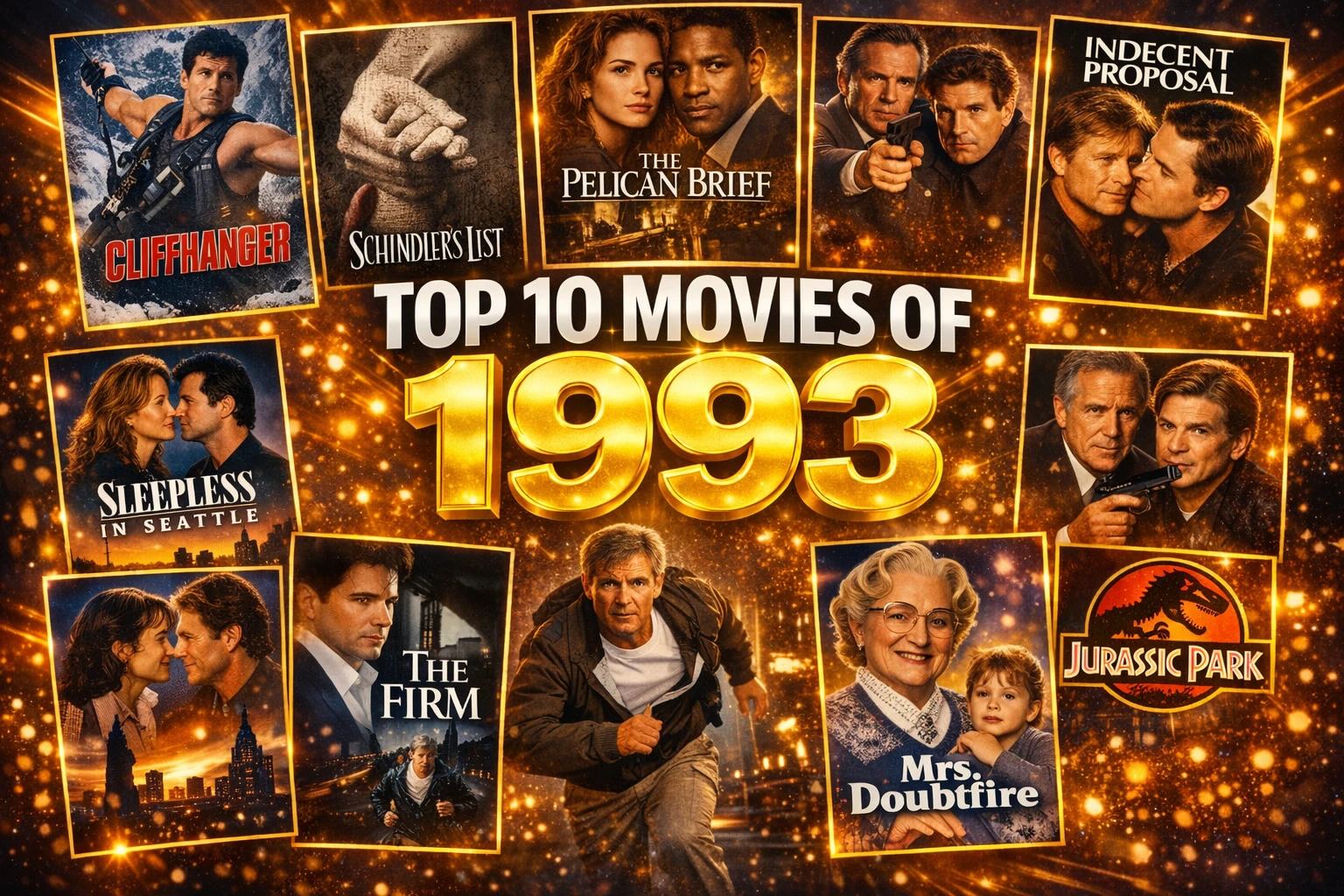
The top 10 movies of 1993 feel like Hollywood standing with one foot in blockbuster modernity and the other in a still-thriving adult mainstream. This is the year CGI stops feeling like a novelty and starts looking like destiny, but it is also a year when legal thrillers, prestige drama, political suspense, romantic longing, and grown-up star vehicles still command serious box-office power.

What makes 1993 so strong is that the lineup never narrows into one formula. Dinosaurs dominate. Robin Williams turns family chaos into one of the year’s biggest hits. Harrison Ford runs for his life inside a perfect studio thriller. Tom Cruise and John Grisham rule the multiplex. Tom Hanks and Meg Ryan prove romance still sells. Spielberg delivers both the year’s biggest spectacle and one of its most morally serious movies.

For Gen X, 1993 is one of those movie years that still arrives preloaded with atmosphere: the first time the T. rex made everybody shut up, Sally Field’s exasperated face at the dinner table, Tommy Lee Jones barking his way through pursuit, Julia Roberts and Denzel Washington inside conspiracy machinery, and the strange fact that one year could hold both Jurassic Park and Schindler’s List under the same commercial sky.

Gen X Note: 1993 is where blockbuster technology leaps forward, but the multiplex still has plenty of room left for adults, thrillers, romance, courtroom-adjacent suspense, and prestige history.

Quick List: The Top 10 Movies of 1993

  1. Cliffhanger
  2. Schindler’s List
  3. The Pelican Brief
  4. In the Line of Fire
  5. Indecent Proposal
  6. Sleepless in Seattle
  7. The Firm
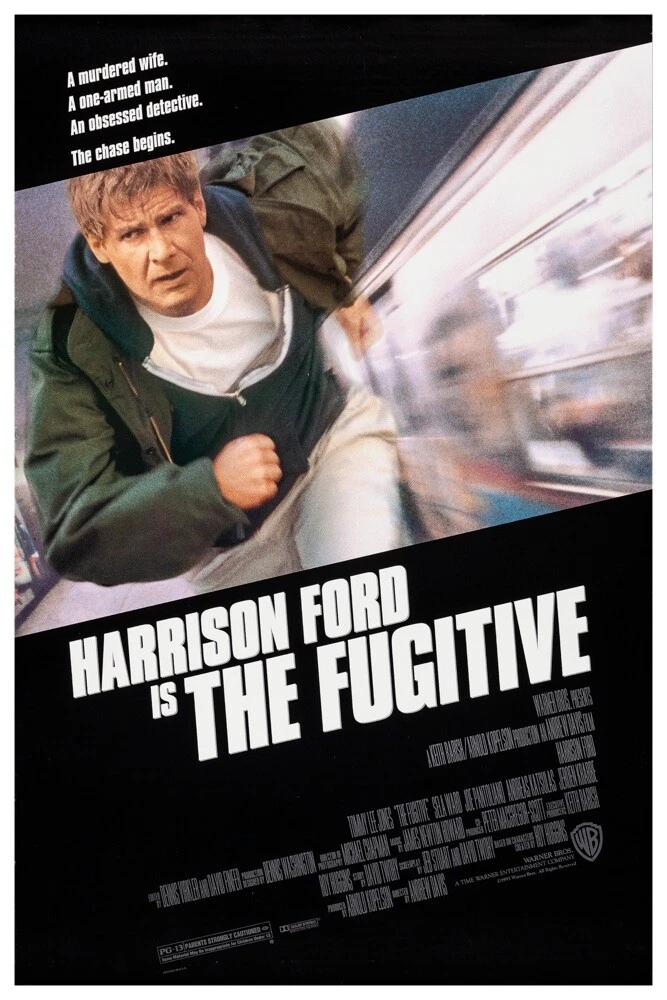
  8. The Fugitive
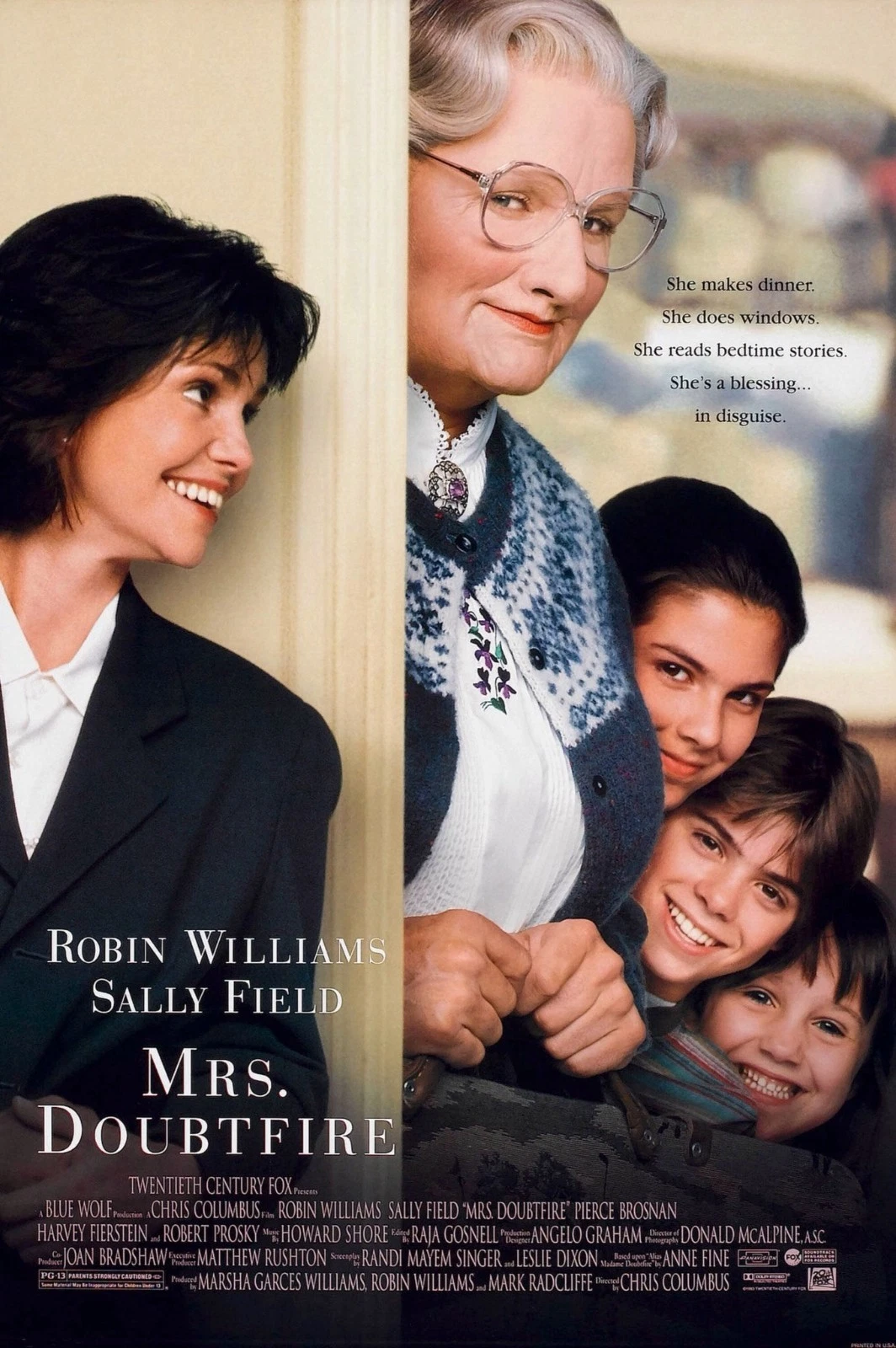
  9. Mrs. Doubtfire
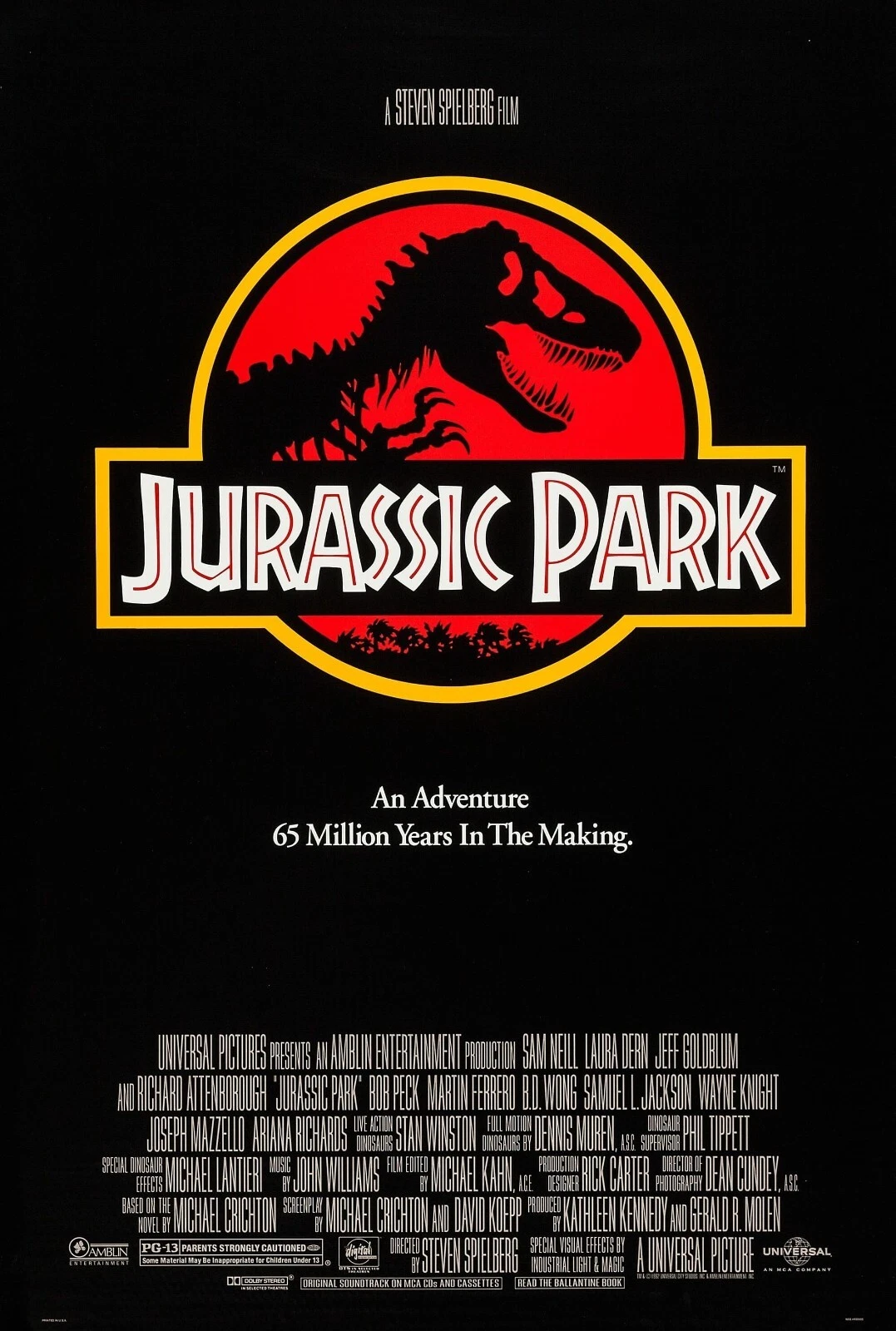
  10. Jurassic Park

Countdown: The Top 10 Movies of 1993

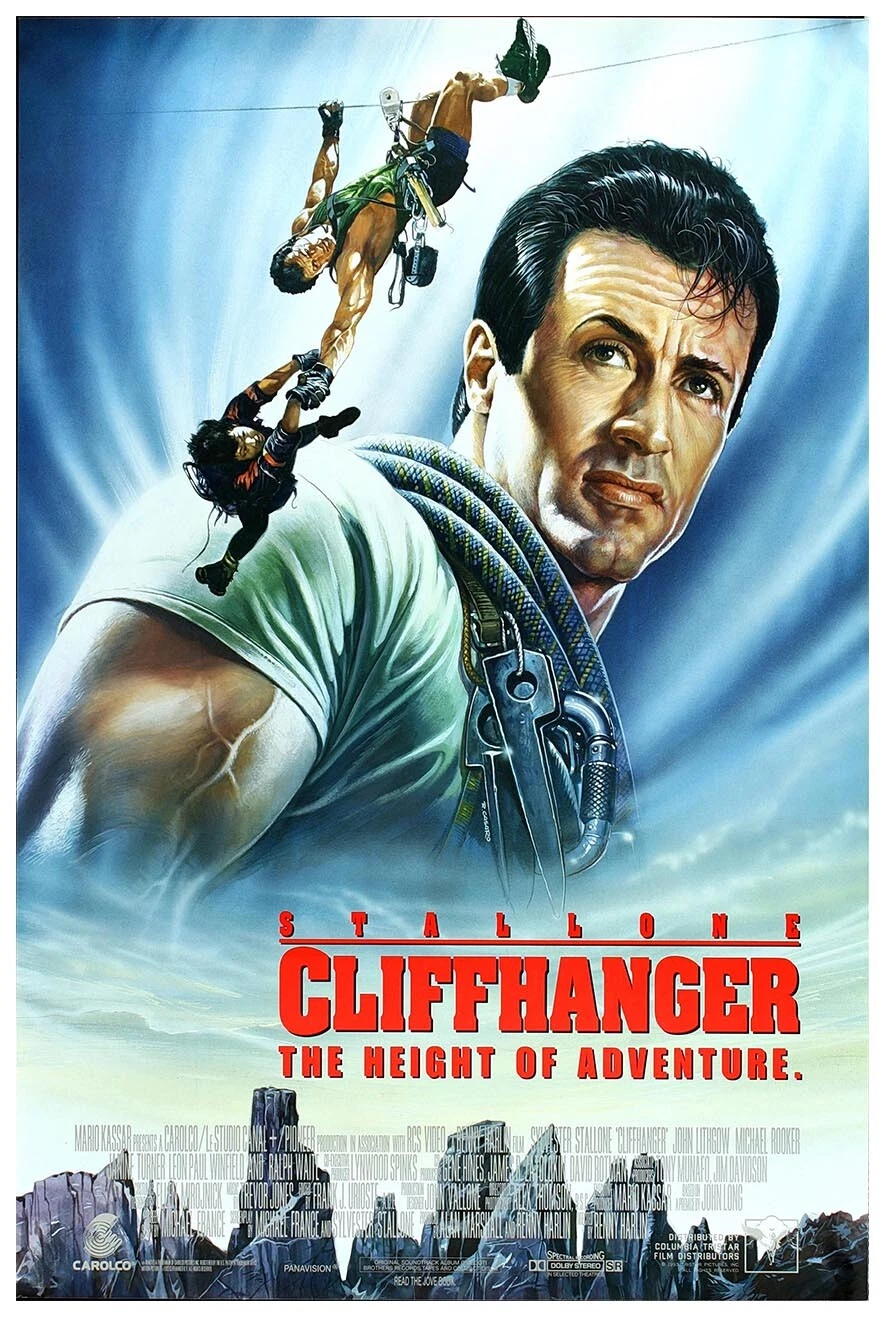
Cliffhanger poster
1993

#10 — Cliffhanger

Box Office: $84.0M
GenreAction thriller
DirectorRenny Harlin
1993 Rank#10
Main Cast
  • Sylvester Stallone as Gabe Walker
  • John Lithgow as Eric Qualen
  • Michael Rooker as Hal Tucker
  • Janine Turner as Jessie Deighan

Cliffhanger opening the 1993 top 10 is a useful reminder that old-school star action still had real commercial pull even as the decade was starting to mutate around it. Stallone is still selling physical jeopardy, location spectacle, and pure survival pressure, but the movie’s biggest strength is that it gives action a hostile environment instead of just more bullets.

The mountains matter. Height, cold, unstable footing, and exposure turn the whole film into a constant anxiety machine. That makes Cliffhanger feel more tactile than a lot of interchangeable early-90s action product. You are not simply watching men shoot at one another. You are watching bodies fail in open space.

John Lithgow helps enormously because he brings theatrical intelligence to the villain slot. The movie needs a bad guy who can match the extremity of the setting, and he gives it just enough cultured malice to make the whole thing feel less generic.

In the context of 1993, the film matters because it shows the muscle-action template still working, but increasingly needing environmental hooks and greater technical polish to compete inside a changing blockbuster landscape.

For Gen X, it remains one of those “this used to just be a summer movie and that was enough” action hits: big, cold, punishing, and unapologetically physical.
Fun Fact / Why It Still Matters It still lands because the mountain setting turns action spectacle into something tactile, vertiginous, and much harder to fake emotionally.
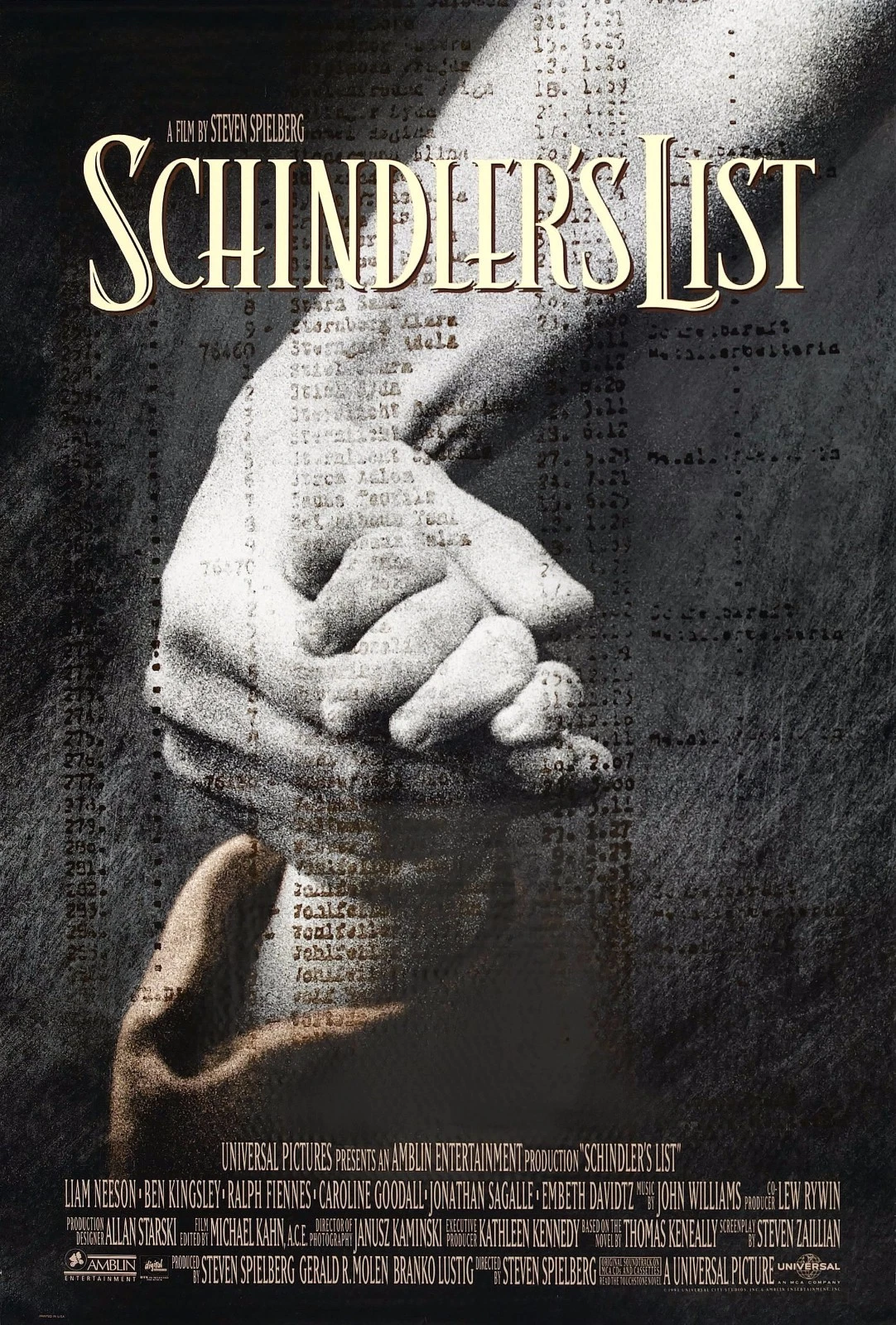
Schindler's List poster
1993

#9 — Schindler’s List

Box Office: $96.1M
GenreHistorical drama
DirectorSteven Spielberg
1993 Rank#9
Main Cast
  • Liam Neeson as Oskar Schindler
  • Ben Kingsley as Itzhak Stern
  • Ralph Fiennes as Amon Göth
  • Caroline Goodall as Emilie Schindler

Schindler’s List at number nine is one of the strongest reminders that the 1993 marketplace had not yet sealed itself off from moral seriousness. This is not a minor specialty success drifting quietly through awards season. It is a major historical drama that reached a broad audience despite being demanding, devastating, and completely uninterested in easy consolation.

Spielberg’s achievement here is not simply that the film is powerful. It is that he refuses to prettify suffering into prestige décor. The movie is formally controlled, but never emotionally distant. It asks the audience to look, to remain present, and to understand that administrative brutality and everyday complicity are part of the horror.

Liam Neeson’s Schindler matters because the film never lets him become a simple saint. He is compromised, opportunistic, charismatic, and gradually transformed by proximity to suffering he can no longer convert into abstraction. That moral movement gives the film a human center without simplifying the scale of the atrocity around him.

In the context of 1993, the movie matters because it proves that mainstream culture could still pause for a work of grave historical reckoning even in the same year it was racing toward digital spectacle.

For Gen X, Schindler’s List remains one of those movies that changed the emotional atmosphere around a year in film. It was not just acclaimed. It felt consequential.

Fun Fact / Why It Still Matters It still matters because it treats historical memory as an obligation, not a pose, and refuses to turn atrocity into something merely tasteful.
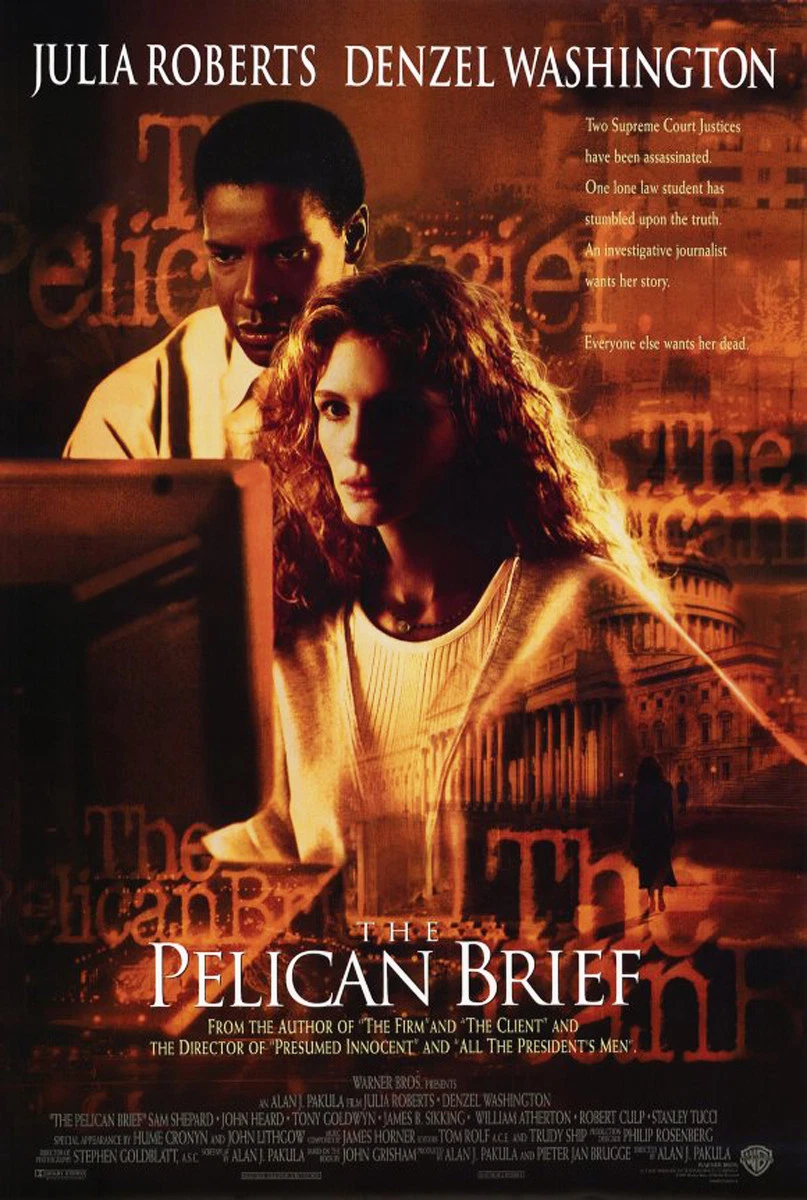
The Pelican Brief poster
1993

#8 — The Pelican Brief

Box Office: $100.8M
GenreLegal thriller
DirectorAlan J. Pakula
1993 Rank#8
Main Cast
  • Julia Roberts as Darby Shaw
  • Denzel Washington as Gray Grantham
  • Sam Shepard as Thomas Callahan
  • John Heard as Gavin Verheek

The Pelican Brief at number eight is another sign that 1993 belonged heavily to the adult-thriller audience. This is conspiracy cinema in a polished studio register: law, power, institutions, assassination, paranoia, and a young woman realizing that one piece of reasoning can get you much closer to danger than safety.

Julia Roberts brings immediate mainstream accessibility, which is crucial because Darby is not a trained action hero. She is smart, exposed, and suddenly stuck inside a machinery much larger than she ever intended to touch. That vulnerability keeps the suspense grounded.

Denzel Washington’s presence matters too because Gray Grantham gives the movie journalistic seriousness and procedural traction. The story works best when it becomes a relay between legal curiosity and investigative persistence rather than just another chase picture.

In the context of 1993, the film matters because it shows the Grisham-era legal thriller becoming its own commercial lane. Audiences clearly wanted stories where institutions looked polished on the surface and rotten underneath.

For Gen X, it remains one of those definitive “grown-up thriller night” movies from the era: glossy, tense, watchable, and built for people who still liked suspense driven by documents, phone calls, and bad people in expensive suits.

Fun Fact / Why It Still Matters It still works because it turns research, deduction, and institutional fear into something as suspenseful as any explosion-heavy action plot.
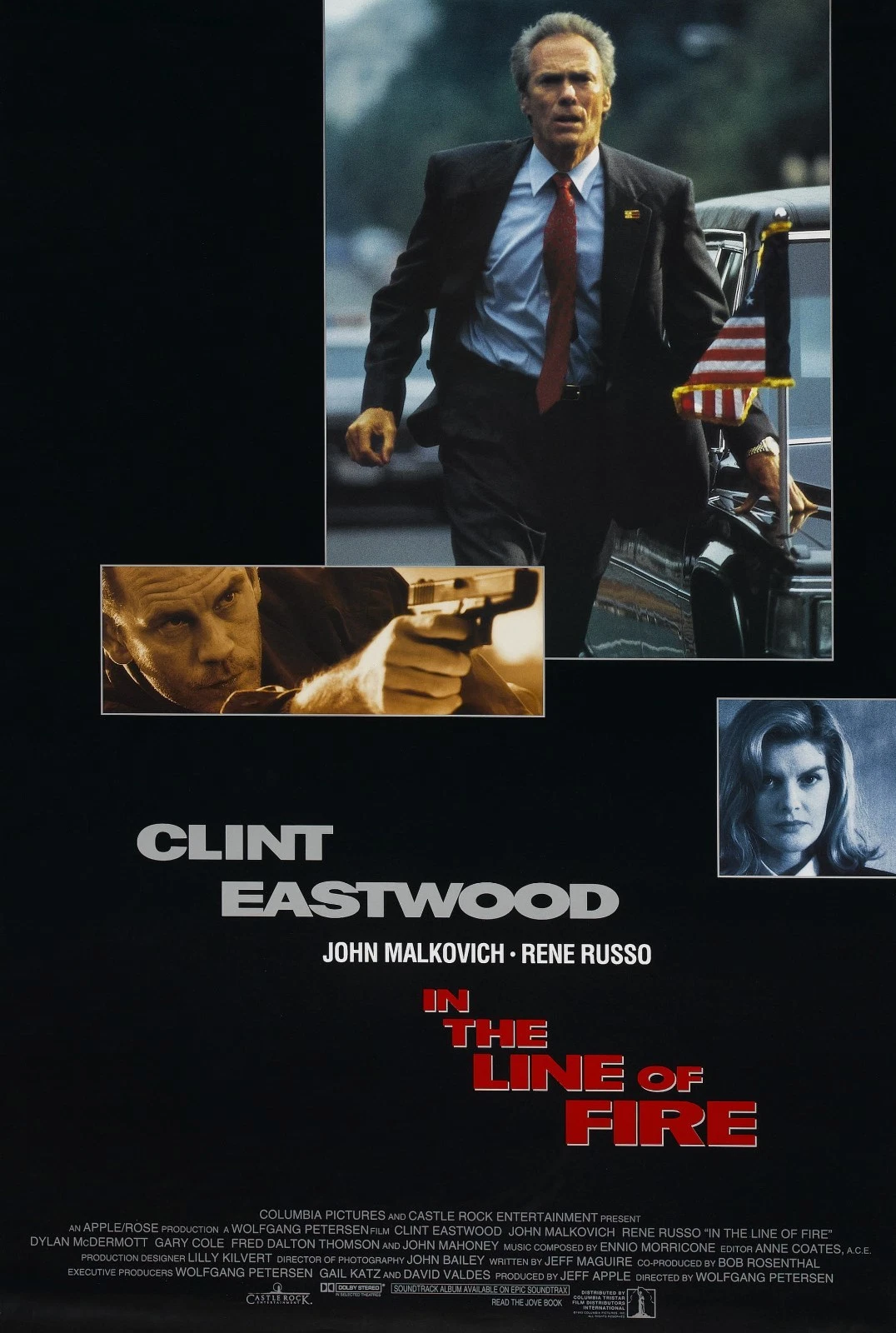
In the Line of Fire poster
1993

#7 — In the Line of Fire

Box Office: $102.3M
GenrePolitical thriller
DirectorWolfgang Petersen
1993 Rank#7
Main Cast
  • Clint Eastwood as Frank Horrigan
  • John Malkovich as Mitch Leary
  • Rene Russo as Lilly Raines
  • Dylan McDermott as Al D’Andrea

In the Line of Fire at number seven is one of the best examples of 1993’s grown-up multiplex strength. This is a tense, star-driven political thriller built around age, regret, procedural duty, and one of the creepiest cat-and-mouse relationships of the decade.

Clint Eastwood’s Frank Horrigan is a great character because the movie understands that age is not just texture here. It is the whole wound. He is competent, tough, and still standing, but he is also haunted by history and desperate for one last chance to correct what cannot truly be corrected.

John Malkovich gives the film its unnerving charge. Mitch Leary is not just a threat because he is violent. He is dangerous because he studies Frank emotionally and insists on a relationship through obsession. The phone-call dynamic between them turns the movie into something more intimate and disturbing than a simple assassination-thwarting plot.

In the context of 1993, the film matters because it proves adult thrillers could still be elegant commercial objects: smart, tense, star-powered, and rooted in performance instead of overwhelming gimmickry.

For Gen X, it remains a classic of the era because it feels serious without being slow, exciting without being stupid, and emotionally haunted without losing mainstream momentum.

Fun Fact / Why It Still Matters It still grips because it makes professional competence and private guilt feel just as suspenseful as the assassination plot itself.
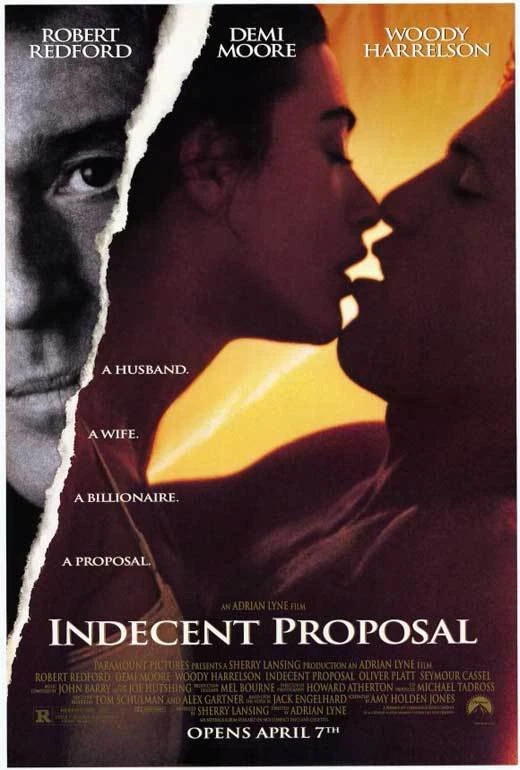
Indecent Proposal poster
1993

#6 — Indecent Proposal

Box Office: $106.6M
GenreRomantic drama
DirectorAdrian Lyne
1993 Rank#6
Main Cast
  • Robert Redford as John Gage
  • Demi Moore as Diana Murphy
  • Woody Harrelson as David Murphy
  • Oliver Platt as Jeremy Green

Indecent Proposal at number six is one of the clearest reminders that early-90s adult melodrama could still become a giant mainstream conversation. The premise is simple enough to market instantly and provocative enough to make people argue all the way home. That combination was commercial gold.

Adrian Lyne knows how to turn upscale surfaces into emotional pressure cookers, and this movie lives in that exact zone. Desire, money, compromise, fantasy, and humiliation all circulate through beautifully lit spaces that make moral corrosion look expensive.

Demi Moore is central because Diana cannot simply function as an abstraction in a debate. She has to feel like a person whose agency, vulnerability, and emotional confusion are all colliding at once. The movie’s power depends on the fact that everybody involved can rationalize what they are doing until the emotional cost arrives.

In the context of 1993, the film matters because it shows how alive adult relationship drama still was at the box office when dressed in the right star package and built around a premise that touched nerves people did not like admitting they had.

For Gen X, it remains one of those quintessentially 90s mainstream hits that felt slick, taboo, debatable, and impossible not to have an opinion about.

Fun Fact / Why It Still Matters It still lingers because it understands that the most commercially powerful melodrama often begins with one question people insist they would answer easily.
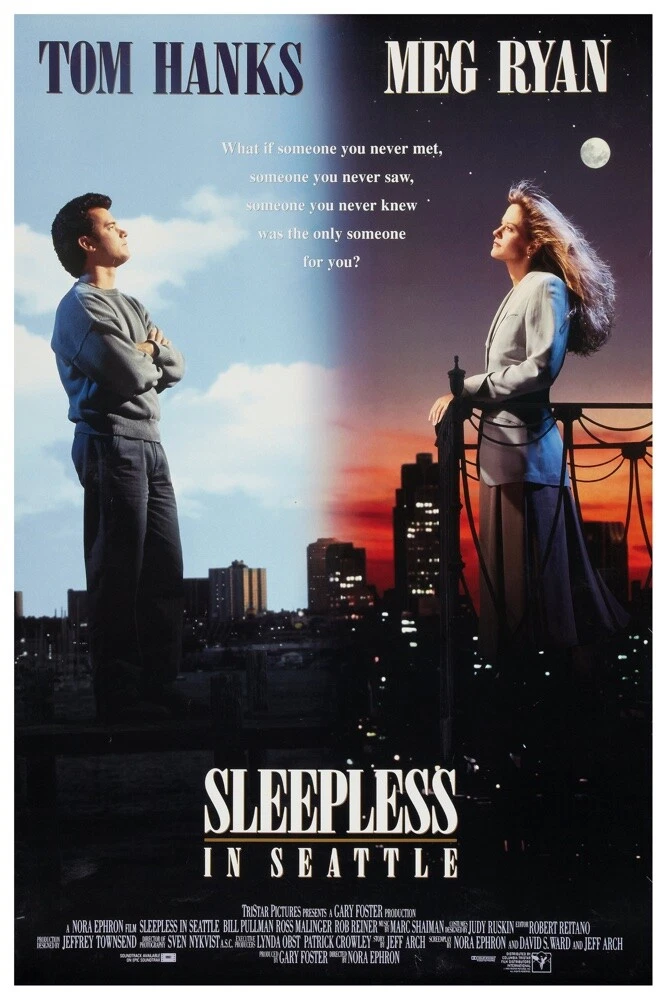
Sleepless in Seattle poster
1993

#5 — Sleepless in Seattle

Box Office: $126.7M
GenreRomantic comedy-drama
DirectorNora Ephron
1993 Rank#5
Main Cast
  • Tom Hanks as Sam Baldwin
  • Meg Ryan as Annie Reed
  • Ross Malinger as Jonah Baldwin
  • Bill Pullman as Walter Jackson

Sleepless in Seattle at number five is one of the purest demonstrations that 1993 still had room for romantic fantasy aimed squarely at adults. It is gentle, yearning, highly constructed, and emotionally open in a way mainstream cinema would increasingly stop trusting later.

Nora Ephron understands that romance does not always need constant proximity to work. The movie is built on anticipation, projection, narrative desire, and the audience’s willingness to believe that longing itself can carry dramatic weight. That is why it feels airy and strangely sturdy at the same time.

Tom Hanks and Meg Ryan are ideal because they bring familiarity without heaviness. The film needs them to feel like people the audience already likes enough to root for before the mechanics fully lock in. Ross Malinger’s Jonah also matters because the child’s intervention turns the story from wistful possibility into active emotional pursuit.

In the context of 1993, the movie matters because it shows that romantic comedies could still occupy premium box-office space without needing to become louder, cruder, or more cynical than their own emotional logic required.

For Gen X, it remains one of the defining romances of the era because it treats love as a mix of media fantasy, emotional timing, and irrational hope without apologizing for the sincerity of any of it.

Fun Fact / Why It Still Matters It still charms because it trusts anticipation, longing, and star chemistry more than constant plot noise.
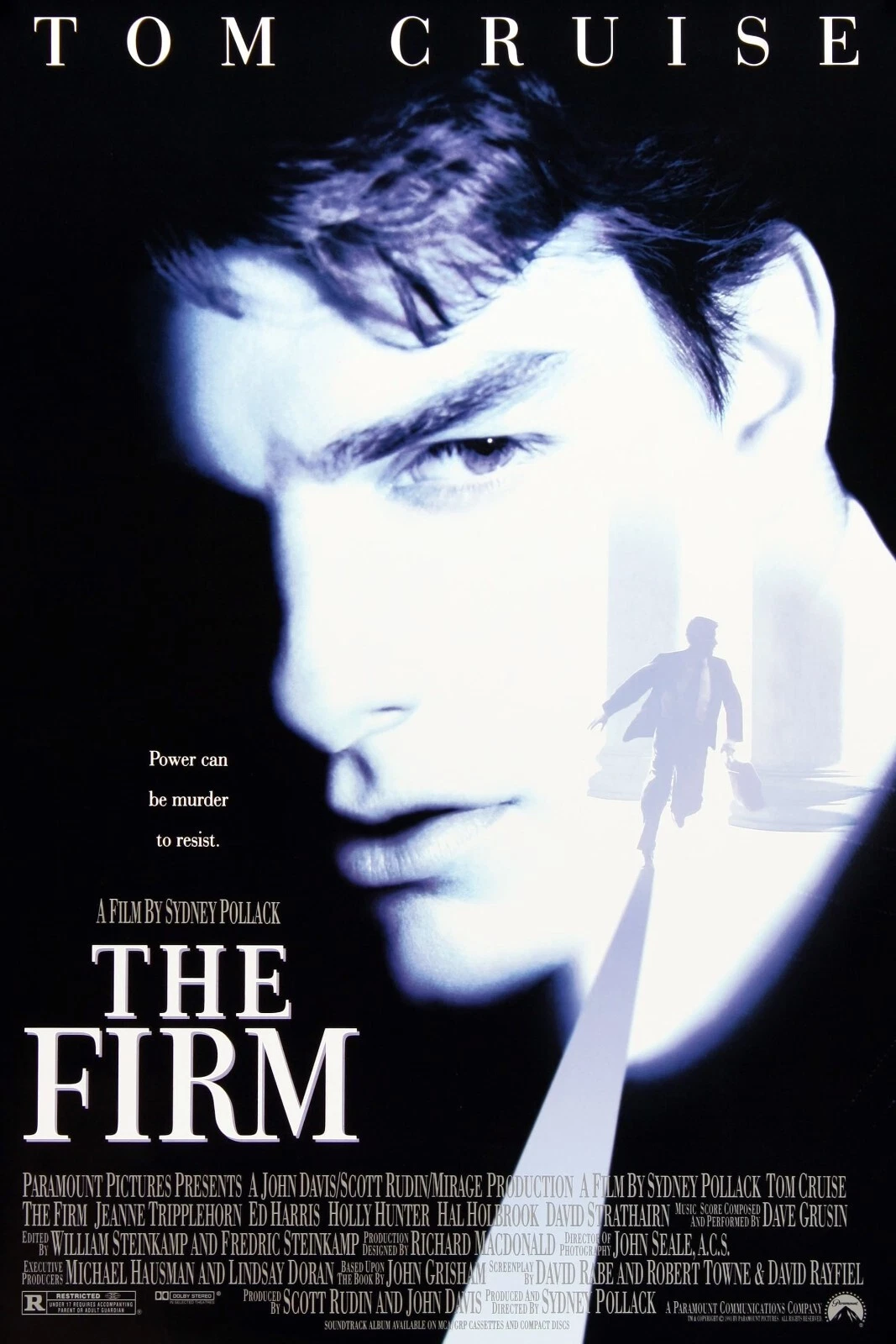
The Firm poster
1993

#4 — The Firm

Box Office: $158.3M
GenreLegal thriller
DirectorSydney Pollack
1993 Rank#4
Main Cast
  • Tom Cruise as Mitch McDeere
  • Jeanne Tripplehorn as Abby McDeere
  • Gene Hackman as Avery Tolar
  • Holly Hunter as Tammy Hemphill

The Firm at number four is peak Grisham-era box-office confidence. The premise is commercial catnip: ambitious young lawyer gets the dream job and slowly realizes the dream has teeth. That combination of aspiration and corruption was exactly the kind of anxiety early-90s audiences loved to watch weaponized.

Tom Cruise is perfectly placed because Mitch needs to feel hungry, bright, and slightly vain enough to plausibly walk into the trap. The movie works because success is not merely bait from the outside. It is something the protagonist actively wants. That makes the unraveling more interesting than if he were innocent of his own ambition.

Sydney Pollack directs the material with patience and clarity. The Firm is not trying to overwhelm with stylistic stunt work. It is trying to let dread accumulate through professional detail, surveillance, and the slow recognition that the whole life-package was designed to be impossible to leave.

In the context of 1993, the film matters because it shows just how dominant adult legal suspense had become. Audiences were fully willing to buy tickets to movies about contracts, ethics, document trails, and institutions that looked respectable until they didn’t.

For Gen X, it remains one of those essential 90s thrillers because it captures the decade’s anxiety that the cleanest corporate surfaces often hid the ugliest bargains.

Fun Fact / Why It Still Matters It still works because it knows corruption is scariest when it arrives disguised as career success and lifestyle upgrade.
The Fugitive poster
1993

#3 — The Fugitive

Box Office: $183.9M
GenreAction thriller
DirectorAndrew Davis
1993 Rank#3
Main Cast
  • Harrison Ford as Dr. Richard Kimble
  • Tommy Lee Jones as Samuel Gerard
  • Sela Ward as Helen Kimble
  • Joe Pantoliano as Deputy Marshal Cosmo Renfro

The Fugitive at number three is one of the most efficient studio thrillers ever made. It moves like it has someplace urgent to be, but it never feels thin. The movie understands that momentum and clarity are not opposites. They are allies.

Harrison Ford gives Richard Kimble exactly the right level of weariness and stubbornness. He is not trying to become an action icon. He is trying to stay alive long enough to force reality back into focus. That grounding is a huge part of why the movie still feels credible.

Tommy Lee Jones is the great accelerant. Gerard is not a villain. He is a professional in motion, which makes the pursuit feel cleaner and more interesting than a simpler moral division would allow. The movie becomes thrilling in part because it respects competence on both sides.

In the context of 1993, the film matters because it shows what mainstream suspense could still do when built on precision rather than noise. It is a chase movie, a wrongful-accusation movie, and a procedural machine all at once.

For Gen X, it remains one of the decade’s most rewatchable hits because it never wastes energy. Every scene either deepens the pressure or sharpens the pursuit.

Fun Fact / Why It Still Matters It still rules because it treats procedural clarity, pursuit, and performance as enough to create a near-perfect commercial thriller.
Mrs. Doubtfire poster
1993

#2 — Mrs. Doubtfire

Box Office: $219.2M
GenreComedy-drama
DirectorChris Columbus
1993 Rank#2
Main Cast
  • Robin Williams as Daniel Hillard / Mrs. Doubtfire
  • Sally Field as Miranda Hillard
  • Pierce Brosnan as Stu Dunmeyer
  • Mara Wilson as Natalie Hillard

Mrs. Doubtfire at number two is one of the best examples of early-90s studio comedy understanding that broad premises land harder when they are anchored in real family pain. The setup is absurd and irresistible, but the movie works because it never completely forgets the divorce sitting underneath the disguise.

Robin Williams is obviously the main event, and the film uses every part of his energy: improvisational chaos, tenderness, desperation, mimicry, and the sense that humor can function as both gift and defense mechanism. Daniel is not simply lovable. He is exhausting, reckless, funny, and wounded enough to feel human.

Sally Field matters just as much as a counterweight. The movie does not treat Miranda as a villain for wanting stability. That keeps the family conflict from collapsing into cheap simplification and gives the movie more emotional durability than a mere high-concept comedy would usually earn.

In the context of 1993, the film matters because it shows family-centered comedy still operating at enormous scale when paired with the right star, the right premise, and enough emotional truth to keep audiences invested between the laughs.

For Gen X, it remains one of the era’s most beloved crowd-pleasers because it found the rare balance between silliness, sadness, and warmth without losing any of the movie-star electricity at the center.

Fun Fact / Why It Still Matters It still connects because beneath the costume, the movie is really about a parent trying to stay visible in a family that is changing without him.
Jurassic Park poster
1993

#1 — Jurassic Park

Box Office: $357.1M
GenreSci-fi adventure
DirectorSteven Spielberg
1993 Rank#1
Main Cast
  • Sam Neill as Dr. Alan Grant
  • Laura Dern as Dr. Ellie Sattler
  • Jeff Goldblum as Dr. Ian Malcolm
  • Richard Attenborough as John Hammond

Jurassic Park finishing at number one feels less like a chart result than a historical inevitability. This is the movie that made the future arrive in public. CGI had existed before, but here it became emotionally legible, commercially overwhelming, and impossible to dismiss. People were not just watching dinosaurs. They were watching the rules of blockbuster realism change in front of them.

Spielberg’s genius is that he never relies on technology alone. The movie works because awe comes first, then dread, then scale, then chaos. The dinosaurs are not there merely to prove a computer can render something. They are staged as animals, attractions, threats, and embodiments of the entire premise spinning fatally out of control.

The cast helps ground all of it. Sam Neill and Laura Dern bring competence and warmth, Jeff Goldblum gives the movie its jittery philosophical edge, and Richard Attenborough embodies the seductive optimism of building something extraordinary without respecting the consequences. That balance is part of why the film feels richer than mere spectacle.

In the context of 1993, the film matters because it is both the year’s biggest hit and one of the clearest before-and-after movies in modern Hollywood history. After Jurassic Park, event cinema had a new visual standard and a new appetite for digitally intensified scale.

For Gen X, it remains one of those releases that felt bigger than the year around it. It was a movie, a technology shock, a theme-park dream, a fear machine, and a shared cultural memory all at once.

Fun Fact / Why It Still Matters It still astonishes because it fused technical breakthrough to suspense, character, and wonder instead of mistaking innovation for a substitute for storytelling.

Rewind Verdict

The top 10 movies of 1993 work so well as a snapshot because they catch the mainstream at a fascinating pivot point. The future of blockbuster spectacle clearly arrives with Jurassic Park, but the rest of the list still belongs heavily to adult thrillers, relationship drama, prestige history, and star-driven studio craftsmanship.

That range is what makes 1993 feel so rich. Mrs. Doubtfire turns family pain into a massive crowd-pleaser. The Fugitive shows studio suspense operating at near-perfect efficiency. The Firm and The Pelican Brief prove the legal-thriller moment was real. Sleepless in Seattle keeps romantic longing commercially powerful. Schindler’s List reminds you that the same year that gave the world digital dinosaurs also gave it a work of historical gravity.

For Gen X, 1993 feels like one of those years when the multiplex still spoke several languages at once. Spectacle, suspense, romance, prestige, melodrama, and pure star comedy all shared the same commercial room, and the room was still full.

FAQ: Top Movies of 1993

What was the highest-grossing first-release movie of 1993?

Jurassic Park finished as the biggest North American first-release hit of 1993.

Why aren’t Aladdin and Home Alone 2 on this 1993 list?

Because this movie series ranks films by the year they were first released. Aladdin and Home Alone 2 are 1992 releases, even though they earned major money into 1993.

Why does Schindler’s List count here if it opened late in the year?

Because it was first released in 1993, so it belongs to the 1993 movie year under this system even though its cultural and awards momentum continued afterward.

Why does 1993 feel different from 1992?

Because 1993 pushes much harder into adult suspense and prestige while also marking a giant technological leap in blockbuster filmmaking through Jurassic Park.

What makes the 1993 lineup so memorable?

Its mix of transformation and range. The year delivered CGI spectacle, family comedy, legal thrillers, romantic yearning, prestige history, and one of the most efficient chase movies of the decade without collapsing into one dominant formula.

Get the Weekly Gen X Drop

New videos, rewinds, and savage nostalgia — first.

JOIN THE NEWSLETTER WATCH VIDEOS

MORE REWINDS