Top 10 Movies of 1986: Top Gun, Crocodile Dundee, and the Year the 80s Got Slicker

Top 10 Movies of 1986: Top Gun, Crocodile Dundee, and the Year the 80s Got Slicker
Smells Like Gen X • Top Movies of 1986

The Top 10 Movies of 1986

The top 10 movies of 1986 feel like the year the 80s got sleeker, shinier, and far more precise about how blockbuster cool should work. The underdog myth and rougher New Hollywood leftovers were not completely gone, but the biggest movies now understood how to sell themselves through image, soundtrack, star charisma, and polished confidence. This is a year where the box office increasingly looks like a machine built for immediate iconography.

This countdown uses the biggest North American grosses for films first released in 1986, which gives the year a cleaner identity than a calendar chart crowded with holdovers. The result is a revealing snapshot of what mainstream audiences wanted in the middle of the decade: fighter-jet glamour, fish-out-of-water swagger, a serious Vietnam correction, teen wish fulfillment, sci-fi franchise loyalty, broad comedy, and at least one all-time great day-skipping fantasy.

For Gen X, 1986 is one of those years where the box office splits beautifully between pure pop polish and darker, tougher material. Top Gun sells style like a religion. Crocodile Dundee turns charm into an event. Platoon drags war back into the room. Aliens transforms sci-fi into combat-horror adrenaline. Ferris Bueller makes skipping responsibility look like philosophy. It is a fantastic and surprisingly layered movie year.

Gen X Note: 1986 feels like the 80s refining their mainstream language. The hooks are cleaner, the surfaces shine harder, and the stars know exactly how to carry the machine.

Quick List: The Top 10 Movies of 1986

  1. Ferris Bueller’s Day Off
  2. Ruthless People
  3. The Golden Child
  4. Aliens
  5. Back to School
  6. Star Trek IV: The Voyage Home
  7. The Karate Kid Part II
  8. Platoon
  9. Crocodile Dundee
  10. Top Gun

Countdown: The Top 10 Movies of 1986

Ferris Bueller's Day Off poster
1986

#10 — Ferris Bueller’s Day Off

Box Office: $70.1M
GenreTeen comedy
DirectorJohn Hughes
1986 Rank#10
Main Cast
  • Matthew Broderick as Ferris Bueller
  • Alan Ruck as Cameron Frye
  • Mia Sara as Sloane Peterson
  • Jeffrey Jones as Principal Rooney

Ferris Bueller’s Day Off opens the top movies of 1986 as one of the most deceptively light entries on the whole chart. On the surface, it is a fantasy of skipping school, gaming the system, and turning Chicago into a personal amusement park. Underneath that glossy, quotable shell, it is also a movie about performance, teenage image management, parental absence, anxiety, and the strange sadness that can hide inside effortless cool.

Matthew Broderick gives Ferris exactly the kind of impossible ease the role requires. He is charming enough to get away with behavior that would feel unbearable in a less calibrated performance. But part of the movie’s brilliance is that it increasingly shifts emotional weight away from Ferris and onto Cameron. Alan Ruck’s performance gives the story its real ache, because Cameron is the character trapped under fear, repression, and the dead weight of expectation.

John Hughes knew that great teen movies worked best when the fantasy lane and the emotional lane were active at the same time. So while the movie gives the audience parade sequences, sports-stadium hijinks, direct-to-camera charm, and a near-perfect comic pace, it also quietly asks deeper questions. What happens when one kid seems naturally fluent in life and another feels crushed by a future he did not choose? What does freedom look like when you are young enough to still believe it can last forever?

The movie also matters in the broader context of 1986 because it shows the teen-comedy lane maturing into something sharper and more self-aware. Ferris is not just the cool kid. He is almost a theory of coolness, openly performing control in front of the audience. That self-consciousness is one of the reasons the film has lasted beyond the era that produced it.

For Gen X, Ferris Bueller’s Day Off is not merely a beloved comedy. It is a memory-object about adolescence as temporary freedom, adult structures as negotiable fiction, and friendship as the thing that actually matters once the charm burns off.

Fun Fact / Why It Still Matters Ferris Bueller’s Day Off still lands because its fantasy of escaping responsibility is fun, but its real emotional engine is Cameron’s breakdown and the movie’s quiet understanding that not every teenager gets to move through life like Ferris.
Ruthless People poster
1986

#9 — Ruthless People

Box Office: $71.6M
GenreBlack comedy
DirectorJim Abrahams, David Zucker, Jerry Zucker
1986 Rank#9
Main Cast
  • Danny DeVito as Sam Stone
  • Bette Midler as Barbara Stone
  • Judge Reinhold as Ken Kessler
  • Helen Slater as Sandy Kessler

Ruthless People sits at number nine as one of the nastier, funnier, and more revealing mainstream comedy hits of 1986. This is not a warm, cuddly studio laugh machine designed to make everyone lovable by the final reel. It is built around greed, incompetence, revenge, vanity, and mutual contempt, which is exactly why it works so well. The movie understands that commercial comedy sometimes hits harder when nobody is especially decent.

Danny DeVito and Bette Midler are the key to that tone. Both performers know how to push comic exaggeration right up to the edge of grotesque without losing the audience. Sam Stone is awful in a way that becomes structurally useful, because the movie keeps asking how much humiliation and chaos this kind of selfishness deserves. Barbara Stone, meanwhile, refuses to stay in the role the movie initially seems to assign her, and that shift keeps the comedy from becoming one-note.

The script operates almost like a machine for escalating stupidity and spite. Kidnapping, extortion, greed, infidelity, misunderstanding, and financial panic all pile up until the movie feels like a studio-black-comedy farce in slow-motion detonation. The pace matters here. This is not a contemplative satire. It is a collision engine.

In the context of the biggest movies of 1986, Ruthless People matters because it proves mainstream audiences were still willing to embrace comedy that had more bite than a typical broad crowd-pleaser. Not everything had to be aspirational, inspirational, or cool. Some hits could simply run on bad behavior and comic punishment.

For Gen X, the movie helps keep 1986 from looking too polished or too airbrushed. It reminds you that even in a slick commercial year, there was still room for a mainstream hit that found humor in awful people making everything worse.

Fun Fact / Why It Still Matters The film is a strong example of mainstream 80s comedy succeeding by making selfish, terrible behavior the actual joke rather than something to excuse or soften.
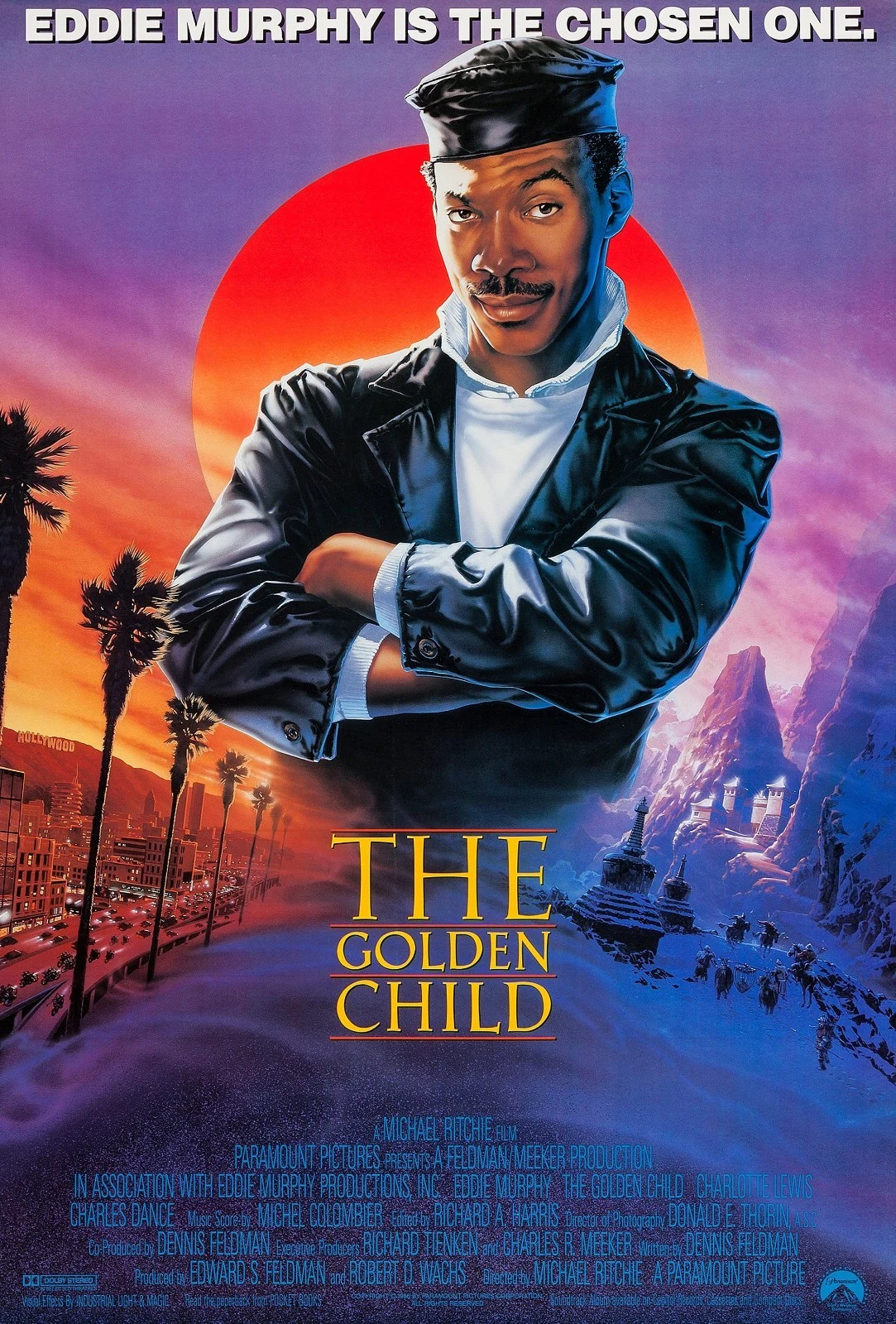
The Golden Child poster
1986

#8 — The Golden Child

Box Office: $79.8M
GenreFantasy action comedy
DirectorMichael Ritchie
1986 Rank#8
Main Cast
  • Eddie Murphy as Chandler Jarrell
  • Charlotte Lewis as Kee Nang
  • Charles Dance as Sardo Numspa
  • Victor Wong as the Old Man

The Golden Child is one of the strangest major hits of 1986, and that weirdness is a big part of what makes it useful when looking at the year as a whole. This is a studio movie living at the intersection of mystical quest fantasy, comedy, action, urban detective energy, and pure Eddie Murphy star voltage. On paper, that is an unstable mix. At the box office, it worked because Murphy’s presence was powerful enough to hold the whole machine together.

Chandler Jarrell is not a conventional chosen-one hero. He is not a solemn destiny figure or a polished adventurer. He is a wisecracking social worker-detective type dropped into a supernatural rescue story he cannot quite believe. That mismatch is the movie’s whole trick. Murphy gets to react to prophecy, demons, sacred objects, and mystic stakes with the same irreverent comic instincts he might bring to a street-level comedy, and that tone gives the film its identity.

The movie’s success also says a lot about 1986. It shows that even as the decade got slicker, the market had not fully lost its appetite for commercial oddities built around charismatic leads. The film does not fit neatly into a single lane, and that was part of the appeal. It felt like a star vehicle, a fantasy movie, and a studio experiment all at once.

In the broader box-office picture, The Golden Child matters because it measures the true breadth of Murphy’s mid-80s appeal. Audiences were not only willing to follow him in straightforward action-comedy. They were willing to follow him into stranger, more mystic, and more tonally unstable territory as long as his comic energy remained intact.

For Gen X, the movie remains one of those titles that feels impossible to separate from its moment. It is ambitious in a slightly lopsided way, very studio-80s in its shape, and built around the belief that the right star could sell almost any genre blend if the persona at the center stayed alive enough.

Fun Fact / Why It Still Matters The Golden Child is still one of the best illustrations of how large Eddie Murphy’s commercial pull was in the 1980s: he could carry a very odd fantasy-comedy hybrid straight into the year’s top tier.
Aliens poster
1986

#7 — Aliens

Box Office: $85.2M
GenreSci-fi action horror
DirectorJames Cameron
1986 Rank#7
Main Cast
  • Sigourney Weaver as Ellen Ripley
  • Michael Biehn as Hicks
  • Bill Paxton as Hudson
  • Carrie Henn as Newt

Aliens is one of the most important movies on the 1986 chart because it shows exactly how a sequel can change genre emphasis without losing the emotional core that made the original matter. Ridley Scott’s Alien is a haunted-house nightmare in space. James Cameron’s Aliens hardens that world into a war movie, a siege thriller, and a maternal action drama all at once.

Sigourney Weaver is the center of that transformation. Ripley is no longer merely the survivor of one horrifying encounter. She becomes the emotional, tactical, and moral anchor of the entire film. That matters because Aliens could easily have become a simple weapons-and-body-count sequel. Instead, Ripley’s bond with Newt adds grief, protection, and maternal urgency that elevate the whole enterprise.

Cameron also understands commercial escalation at a very high level. The marines, the colony, the gear, the pulse rifles, the swarm threat, the panic of group collapse — all of it makes the sequel feel bigger instantly. But unlike empty escalation, this version raises the scale while also raising emotional investment. The film gets louder without becoming hollow.

In the context of the top movies of 1986, Aliens matters because it represents one of the decade’s best marriages of genre intensity and mainstream accessibility. It is scary, physical, loud, emotionally driven, and cleanly legible enough that it could cut far wider than a pure horror sequel might have.

For Gen X, Aliens remains one of the clearest proofs that the 80s could make sequels bigger without making them dumber. It is iconic, muscular, and incredibly commercial, but it still feels like serious filmmaking rather than just a volume increase.

Fun Fact / Why It Still Matters Aliens remains one of the most admired sequels ever made because it changed the franchise’s grammar while keeping Ripley’s emotional core completely intact.
Back to School poster
1986

#6 — Back to School

Box Office: $91.3M
GenreComedy
DirectorAlan Metter
1986 Rank#6
Main Cast
  • Rodney Dangerfield as Thornton Melon
  • Keith Gordon as Jason Melon
  • Sally Kellerman as Dr. Diane Turner
  • Burt Young as Lou

Back to School at number six is one of the strongest signs that broad star comedy still had enormous commercial value in 1986. The premise is almost insultingly simple in the best possible way: a loud, rich, impossible father enrolls in college to help his son, and academic life is never the same again. That hook is instantly marketable, but the real engine is Rodney Dangerfield’s comic persona crashing into institutional seriousness.

Dangerfield’s whole screen identity runs on disrespect for decorum, which makes a university setting the perfect target. The movie does not need a subtle satirical frame because the joke is already built into the concept. Wealth, age, vulgarity, impatience, and anti-elitist swagger are thrown directly at systems that expect politeness and submission. That fantasy has enormous audience appeal.

One reason the movie connected so strongly is that it belongs to a very 80s populist lane: the idea that raw worldly success and confidence can outmaneuver official expertise. Thornton Melon is ridiculous, but the movie also sells him as someone capable of exposing the stiffness, pretension, and artificial hierarchy of higher education by simply refusing to act the way he is supposed to.

In the context of 1986, Back to School matters because it shows how much commercial life still existed in a film built almost entirely around one comic persona plus one strong setup. Not everything needed to be a giant fantasy or a franchise chapter. Sometimes a star, a target, and enough wisecracks were enough.

For Gen X, the film survives as one of those broad cable-era staples that turned anti-authority comedy into a major entertainment lane. It is not sophisticated, but it knows exactly which crowd it wants and how to keep feeding that crowd laughs.

Fun Fact / Why It Still Matters Back to School remains one of the best examples of a mainstream 1980s comedy built almost entirely around one dominant comic persona and a premise strong enough to let that persona run wild.
Star Trek IV: The Voyage Home poster
1986

#5 — Star Trek IV: The Voyage Home

Box Office: $109.7M
GenreSci-fi adventure comedy
DirectorLeonard Nimoy
1986 Rank#5
Main Cast
  • William Shatner as Admiral James T. Kirk
  • Leonard Nimoy as Spock
  • DeForest Kelley as Dr. Leonard McCoy
  • Catherine Hicks as Gillian Taylor

Star Trek IV: The Voyage Home sitting at number five shows how strongly Star Trek had matured into a fully mainstream theatrical franchise by 1986. What makes this entry especially interesting is that it gets there not by becoming harsher or more militarized, but by becoming funnier, warmer, and more broadly accessible. That is not always how franchises scale, which is one reason this movie stands out.

The time-travel premise does a lot of heavy lifting. By dropping the Enterprise crew into a recognizably ordinary 1980s Earth, the film creates a fish-out-of-water framework that can charm casual audiences without requiring deep lore to be enjoyable. Watching these characters navigate buses, swearing, city life, and modern confusion is a huge part of the movie’s crossover appeal.

Leonard Nimoy’s direction also understands that Trek’s deepest strength is the ensemble. The humor works because the personalities are already established and trusted. Kirk, Spock, McCoy, Scotty, Uhura, and the rest are not just franchise functionaries. They are people audiences already know how to enjoy together, which gives the film a natural buoyancy.

In the context of the top movies of 1986, The Voyage Home matters because it demonstrates a useful truth about franchise longevity: sometimes a property stays alive by becoming more inviting and more playful rather than by chasing scale alone. That is a very different kind of commercial intelligence than what many later franchises pursued.

For Gen X, this is one of the Trek films that feels easiest to love because it opens the door wide without flattening the identity of the series. It is a crowd-pleaser, but still very recognizably Trek in spirit.

Fun Fact / Why It Still Matters Star Trek IV remains one of the most audience-friendly Trek films because it translated the franchise’s ensemble charm into a time-travel adventure that could play far beyond core fans.
The Karate Kid Part II poster
1986

#4 — The Karate Kid Part II

Box Office: $115.1M
GenreMartial arts drama
DirectorJohn G. Avildsen
1986 Rank#4
Main Cast
  • Ralph Macchio as Daniel LaRusso
  • Pat Morita as Mr. Miyagi
  • Tamlyn Tomita as Kumiko
  • Yuji Okumoto as Chozen

The Karate Kid Part II at number four is a strong reminder that sequel culture in the mid-80s still had room for emotional expansion rather than simple repetition. Instead of just replaying the tournament structure of the first film, this sequel widens the story by taking Daniel and Mr. Miyagi into Miyagi’s past and making the conflict more personal, cultural, and intergenerational.

That change matters because the true heart of the franchise was never only “kid gets trained and wins.” The real emotional power lived in the Daniel–Miyagi relationship, and The Karate Kid Part II understands that. By giving Miyagi more history, regret, and unresolved pain, the film deepens the mentor figure in a way that lets the sequel feel like an actual continuation rather than a commercial rerun.

Ralph Macchio also benefits from the shift in setting. Daniel is no longer simply the local underdog trying to survive a suburban rivalry. He is now functioning in someone else’s social world, which makes him more uncertain, more reactive, and more dependent on his connection to Miyagi. That helps the character feel altered by the previous film rather than reset to factory settings.

In the context of the biggest movies of 1986, The Karate Kid Part II matters because it shows how much affection audiences still had for sincere, emotionally direct franchises. This was not a giant special-effects show or a style-driven blockbuster. It was a character-and-feeling sequel with enough martial-arts tension to stay in the event zone.

For Gen X, the movie helps prove the Karate Kid mythology was never just about one crane kick or one tournament. It was about dignity, guidance, loyalty, and the idea that even a commercially strategic sequel could still have some soul.

Fun Fact / Why It Still Matters The Karate Kid Part II worked because it understood the franchise’s deepest appeal lived in the Daniel–Miyagi bond, not just in repeating the first movie’s underdog sports structure.
Platoon poster
1986

#3 — Platoon

Box Office: $138.5M
GenreWar drama
DirectorOliver Stone
1986 Rank#3
Main Cast
  • Charlie Sheen as Chris Taylor
  • Tom Berenger as Sgt. Barnes
  • Willem Dafoe as Sgt. Elias
  • Forest Whitaker as Big Harold

Platoon at number three is one of the most important facts on the 1986 box-office chart because it proves the year was not only about sleek style and polished entertainment. A brutal, morally fractured Vietnam film broke through in a major way, which says a great deal about audience appetite for darker, more serious material when it felt urgent enough.

Oliver Stone brings a lived-in anger to the movie that separates it from more distant or more mythologized war films. Platoon is not trying to frame combat as redemptive spectacle. It is interested in fear, moral collapse, fragmentation, corruption, and the psychological war taking place inside the platoon itself. That interior fracture is what gives the movie much of its force.

Tom Berenger and Willem Dafoe give the film two opposing moral and military poles, with Charlie Sheen’s Chris Taylor caught in between them as witness, participant, and damaged conscience. That structure allows the movie to feel both intensely personal and nationally allegorical. It is about one young soldier, but also about a country split against itself.

In the context of the biggest movies of 1986, Platoon matters because it complicates any easy story about the mid-80s being all polish and fantasy. Yes, the decade loved image and iconography. But it could also make room for artful anger, violence stripped of patriotic glamour, and large-scale self-examination.

For Gen X, the movie remains one of the strongest reminders that the 80s did not only mythologize American conflict. Sometimes they dragged the wound back into the frame and forced audiences to sit with the mess instead of a simplified hero narrative.

Fun Fact / Why It Still Matters Platoon remains one of the defining Vietnam films because it brought the war back into the mainstream with emotional immediacy, moral ambiguity, and very little interest in clean patriotic myth.
Crocodile Dundee poster
1986

#2 — Crocodile Dundee

Box Office: $174.8M
GenreAdventure comedy
DirectorPeter Faiman
1986 Rank#2
Main Cast
  • Paul Hogan as Mick “Crocodile” Dundee
  • Linda Kozlowski as Sue Charlton
  • John Meillon as Wally Reilly
  • David Gulpilil as Neville Bell

Crocodile Dundee finishing at number two is one of the great reminders that pure charm can still move mountains at the box office. This is not a giant visual-effects event, not a sequel with heavy mythology, not an awards-driven prestige machine. It is a fish-out-of-water adventure comedy built around a lead character so easy to like that the movie becomes a phenomenon largely by force of persona.

Paul Hogan’s Mick Dundee is the key. He is designed as a genial anti-sophisticate whose confidence feels natural instead of aggressive. When the movie shifts him into New York and lets modern urban life bounce off his ease and competence, the result is both comic and aspirational. The movie sells the fantasy of someone moving through a complicated world without embarrassment, panic, or social overthinking.

One reason the film connected so strongly is that it does not seem to be straining. Its scale is modest compared with many other major 1986 hits, but that modesty becomes an asset. The movie feels like it can charm audiences directly rather than overwhelm them, and that directness can be more powerful than spectacle when the lead character is this commercially efficient.

In the context of the top movies of 1986, Crocodile Dundee matters because it shows how international flavor, broad comedy, and star persona could still generate massive mainstream success in the American market. Not every giant hit needed to arrive as American-made myth or franchise continuation.

For Gen X, the movie remains one of those weirdly durable crowd-pleasers where the lead character’s ease becomes the actual product. It is a giant hit built mostly on charisma and vibe, which is much harder to achieve than it looks.

Fun Fact / Why It Still Matters Crocodile Dundee became a phenomenon largely because it proved a single lovable star persona, placed inside the right fish-out-of-water structure, could still become one of the biggest events of the year.
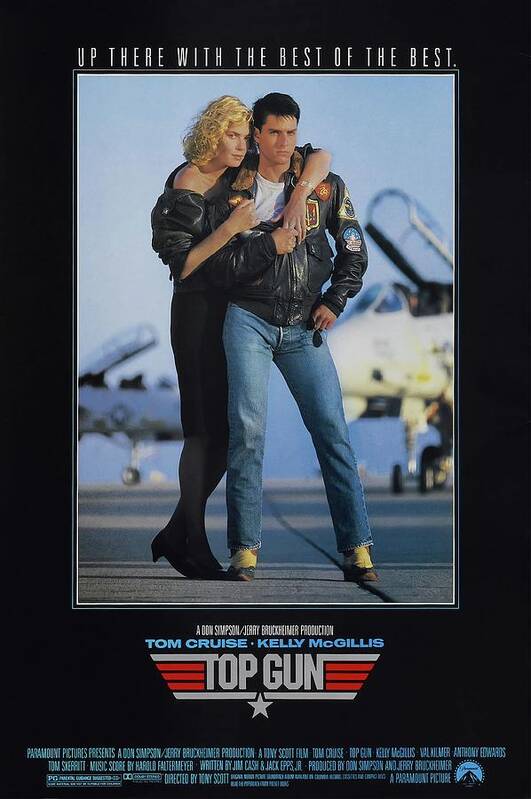
Top Gun poster
1986

#1 — Top Gun

Box Office: $176.8M
GenreAction drama
DirectorTony Scott
1986 Rank#1
Main Cast
  • Tom Cruise as Pete “Maverick” Mitchell
  • Kelly McGillis as Charlie
  • Val Kilmer as Iceman
  • Anthony Edwards as Goose

Top Gun does not just finish number one in 1986. It effectively announces a new late-80s commercial grammar. This is a movie that understands image, soundtrack, speed, masculinity, competition, desire, and star emergence as pieces of one integrated sales system. It is not merely watched. It is absorbed, imitated, quoted, dressed up as, and replayed in the imagination.

Tom Cruise is central to that effect. Maverick is arrogant, gifted, damaged, hyper-competitive, and visibly built for iconography. The character gives Cruise a perfect runway to become something more than a popular actor. He becomes the human face of a new kind of polished, physically dynamic, aspirational 80s cool — less rumpled, less earthy, and more aerodynamic than many earlier leading-man models.

Tony Scott’s direction matters just as much. The movie is made of gleam, sun, sweat, heat haze, speed, and highly charged surfaces. The jets matter, but the atmosphere matters too. This is one of the great examples of 1980s style becoming narrative force rather than simple decoration. The movie does not only tell you Maverick is living at high velocity. It makes the velocity feel like the whole language of the film.

The emotional structure underneath the cool is also more important than people sometimes admit. Maverick’s rivalry with Iceman, the bond with Goose, the need for approval from institutional father figures, and the movie’s handling of loss all give the style a skeleton. Without that structure, the film might have remained a visual event. With it, the film becomes a myth about talent, grief, competition, and self-construction.

In the context of the biggest movies of 1986, Top Gun matters because it shows audiences were fully ready for a movie that sold mood and image as aggressively as plot. For Gen X, it is one of the defining films of the decade because it turns patriotism, glamour, competition, desire, mourning, and star power into a package so sleek it feels almost architectural. If 1986 is the year the 80s get slicker, this is the movie that explains what “slick” actually means.

Fun Fact / Why It Still Matters Top Gun remains one of the defining examples of style functioning as blockbuster language, where soundtrack, image, velocity, and star power became inseparable from the story being sold.

Rewind Verdict

The top 10 movies of 1986 work so well as a box-office snapshot because they show the decade shifting into a more refined mainstream language. Earlier 80s variety is still there, but the movies increasingly look cleaner, feel more strategically branded, and understand how to turn stars, mood, and iconography into commercial velocity.

That does not make the year shallow. Platoon and Aliens bring real intensity. Ferris Bueller’s Day Off hides sadness under cool. Star Trek IV shows that a franchise can stay warm and inviting. But the overall feeling of 1986 is one of polish — movies that know exactly what version of themselves they are selling and how to sell it.

For Gen X, 1986 is one of the most revealing 80s movie years because it captures the decade refining its mass-market voice. The hooks are cleaner, the icons are stronger, the surfaces shine harder, and the stars know exactly how to carry the machine. It is a fantastic year not only because the movies are big, but because they feel engineered to last.

FAQ: Top Movies of 1986

What was the highest-grossing 1986 release at the North American box office?

Top Gun finished as the biggest 1986 release in North America.

Was Crocodile Dundee really bigger than Platoon?

Yes. Both were huge hits, but Crocodile Dundee finished ahead of Platoon among 1986 North American release-year grosses.

Why is Platoon so important on this chart?

Because it shows that a darker, morally serious Vietnam film could still become one of the biggest mainstream hits of the year in the middle of a very polished commercial decade.

Why use release-year grosses instead of calendar-year totals?

Because release-year grosses give 1986 a cleaner identity and avoid mixing in older films that were still earning money during the same calendar year.

What makes the 1986 lineup so memorable?

Its balance. The year delivered polished star vehicles, serious war drama, sci-fi intensity, broad comedy, teen-classic status, fish-out-of-water charm, and one of the purest style-driven blockbusters of the entire decade.

Get the Weekly Gen X Drop

New videos, rewinds, and savage nostalgia — first.

JOIN THE NEWSLETTER WATCH VIDEOS

MORE REWINDS