Top 10 Movies of 1981: Raiders of the Lost Ark, Superman II, and the Early-80s Blockbuster Boom

Top 10 Movies of 1981: Raiders of the Lost Ark, Superman II, and the Early-80s Blockbuster Boom
Smells Like Gen X • Top Movies of 1981

The Top 10 Movies of 1981

The top 10 movies of 1981 feel like the moment the early 80s stopped warming up and started flexing. The blockbuster was no longer just an exciting development — it was becoming a reliable machine. Adventure movies got bigger. Sequels felt more event-sized. Comedies were still driven by stars instead of intellectual property. And adult audiences could still push a relationship drama or reflective prestige picture into the upper tier of the yearly box office without anybody acting shocked.

That is what makes 1981 such a great year to revisit through its biggest releases. This countdown focuses on the top-grossing North American releases from 1981 itself, which gives the year a cleaner identity than a calendar chart cluttered by older holdovers. What you get is a snapshot of a movie culture that could still support sweeping adventure, broad military comedy, Bond cool, fantasy weirdness, and emotionally mature drama all at once.

For Gen X, these were the movies helping define what the multiplex really was: a place where you could get a globe-trotting hero, a drunken millionaire, an Olympic drama, a time-travel cult fantasy, and a giant superhero sequel all in the same year. That range is a huge part of why 1981 still feels so alive.

Gen X Note: 1981 is where the blockbuster starts looking less like an experiment and more like a system — but the really fun part is that the system still had room for personality, adult drama, and genuinely oddball hits.

Quick List: The Top 10 Movies of 1981

  1. Time Bandits
  2. The Four Seasons
  3. For Your Eyes Only
  4. Chariots of Fire
  5. The Cannonball Run
  6. Stripes
  7. Arthur
  8. Superman II
  9. On Golden Pond
  10. Raiders of the Lost Ark

Countdown: The Top 10 Movies of 1981

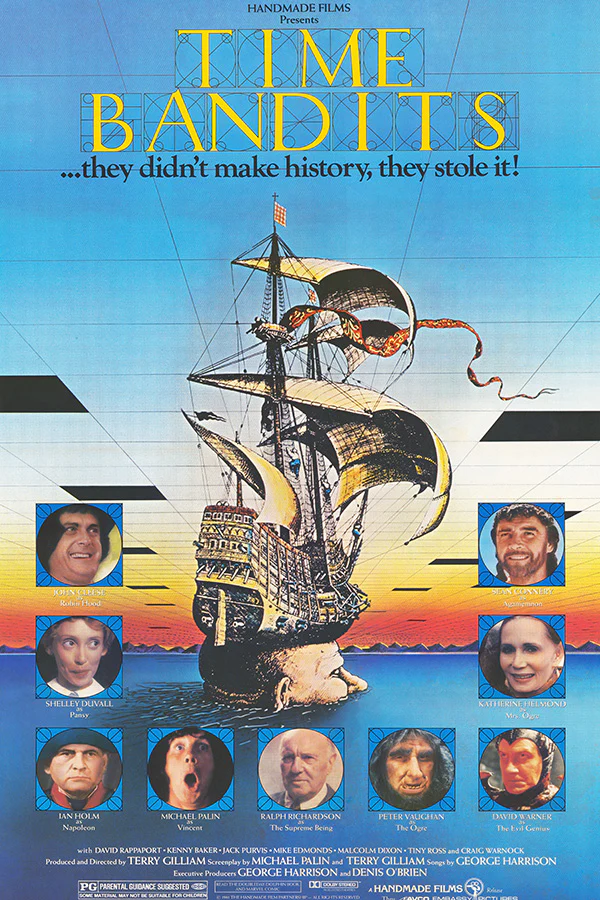
Time Bandits poster
1981

#10 — Time Bandits

Box Office: $42.4M
GenreFantasy adventure
DirectorTerry Gilliam
1981 Rank#10
Main Cast
  • Craig Warnock as Kevin
  • David Rappaport as Randall
  • John Cleese as Robin Hood
  • Sean Connery as Agamemnon

Time Bandits is the kind of movie that makes a yearly box-office list feel more interesting instantly. It is not a standard studio crowd-pleaser, and that is exactly why its presence matters. Terry Gilliam’s fantasy follows a kid who gets swept into time-hopping chaos with a gang of thieves, but the real hook is the tone: mischievous, visually strange, funny in a sideways way, and full of the kind of imagination that feels handmade instead of corporate.

That is important in a top movies of 1981 countdown because it shows the marketplace had not flattened into one dominant flavor yet. A surreal fantasy adventure with Monty Python DNA and a deliberately odd worldview could still break through and become a meaningful hit. It did not have to look like a four-quadrant franchise prototype to find an audience. It just had to feel distinctive enough that people wanted to talk about it.

For Gen X, Time Bandits lands as one of those movies that lives in memory a little differently than the bigger mainstream giants above it. It is not just remembered as a hit. It is remembered as a portal — one of those films that suggested fantasy could be weird, funny, eerie, and adventurous all at the same time. That kind of off-center imagination helped give early-80s movie culture some of its most interesting texture.
Fun Fact / Why It Still Matters It remains one of the clearest examples of a box-office hit that felt genuinely eccentric, proving early-80s audiences still had real appetite for fantasy that was imaginative instead of polished into sameness.
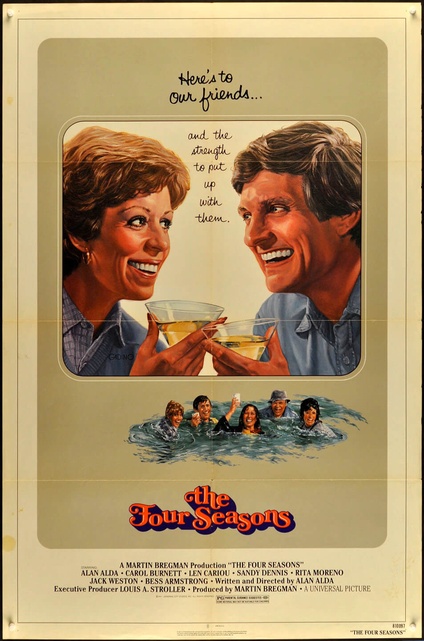
The Four Seasons poster
1981

#9 — The Four Seasons

Box Office: $50.4M
GenreComedy drama
DirectorAlan Alda
1981 Rank#9
Main Cast
  • Alan Alda as Jack Burroughs
  • Carol Burnett as Kate Burroughs
  • Len Cariou as Nick Callan
  • Rita Moreno as Claudia Zimmer

The Four Seasons is one of the best reminders that adult-oriented movies could still play very well in the early 80s if they had wit, a strong ensemble, and something recognizably human at the center. The premise is simple — three couples vacation together over the course of a year while their relationships shift, strain, and reveal themselves — but the simplicity is part of the appeal. This is a movie built on observation, timing, and the pleasure of watching talented people talk their way through emotional messiness.

On a list this full of spectacle and brand-sized entertainment, it helps show another side of what audiences were willing to pay for in 1981. Not every hit had to arrive with stunts, mythology, or giant scale. A sharply written ensemble piece with an upscale adult tone could still land solidly in the yearly top 10. That says a lot about the era, and it also says a lot about the range the marketplace still had at that point.

For Gen X, this kind of movie matters because it rounds out the memory of the period. The early 80s were not just about action heroes and giant franchises roaring to life. They also had room for relationship comedy-drama that felt literate, funny, and lived-in. The Four Seasons is one of those entries that makes the whole year look more complete and less like a one-note blockbuster montage.

Fun Fact / Why It Still Matters Its success is a great snapshot of a movie business that still made real room for adult ensemble stories to become big mainstream performers.
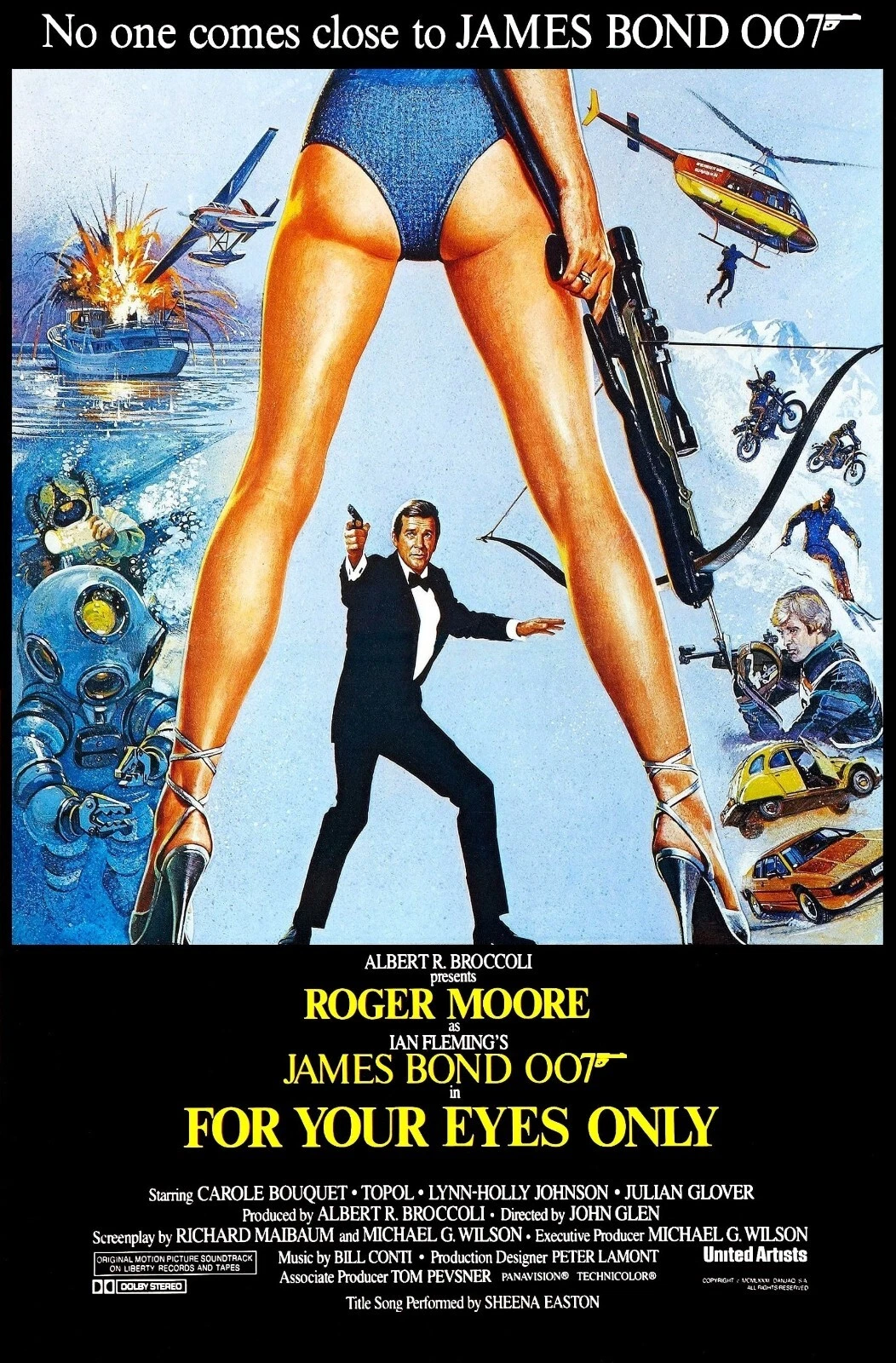
For Your Eyes Only poster
1981

#8 — For Your Eyes Only

Box Office: $54.8M
GenreSpy action
DirectorJohn Glen
1981 Rank#8
Main Cast
  • Roger Moore as James Bond
  • Carole Bouquet as Melina Havelock
  • Topol as Milos Columbo
  • Julian Glover as Aristotle Kristatos

For Your Eyes Only sits in a really useful spot on this list because it shows how durable the Bond formula still was in 1981, while also showing that the series knew when to recalibrate. After some of the franchise’s more gadget-heavy and increasingly outlandish turns, this entry pulled the tone back toward espionage, physical danger, and a slightly more grounded kind of adventure. It still looked like Bond, but it felt leaner and more deliberate.

That recalibration mattered. Bond movies were never just about plot; they were about maintaining a certain kind of cool. This one delivered underwater suspense, mountain-climb peril, sleek locations, and enough grown-up polish to remind audiences why the franchise had become such a durable theatrical habit in the first place. Roger Moore remained a major draw, but the movie also benefited from feeling a little tighter and less cartoonish than some of what surrounded it.

For Gen X memory, Bond is one of those constant presences that helped define the rhythm of moviegoing across multiple eras. For Your Eyes Only matters because it is not just “another Bond movie.” It is one of the entries that shows the series could bend without breaking, and that flexibility is a big reason James Bond remained part of the multiplex conversation decade after decade.

Fun Fact / Why It Still Matters It is often remembered as one of the more grounded Roger Moore Bond films, which helped give the franchise a useful course correction at the start of the decade.
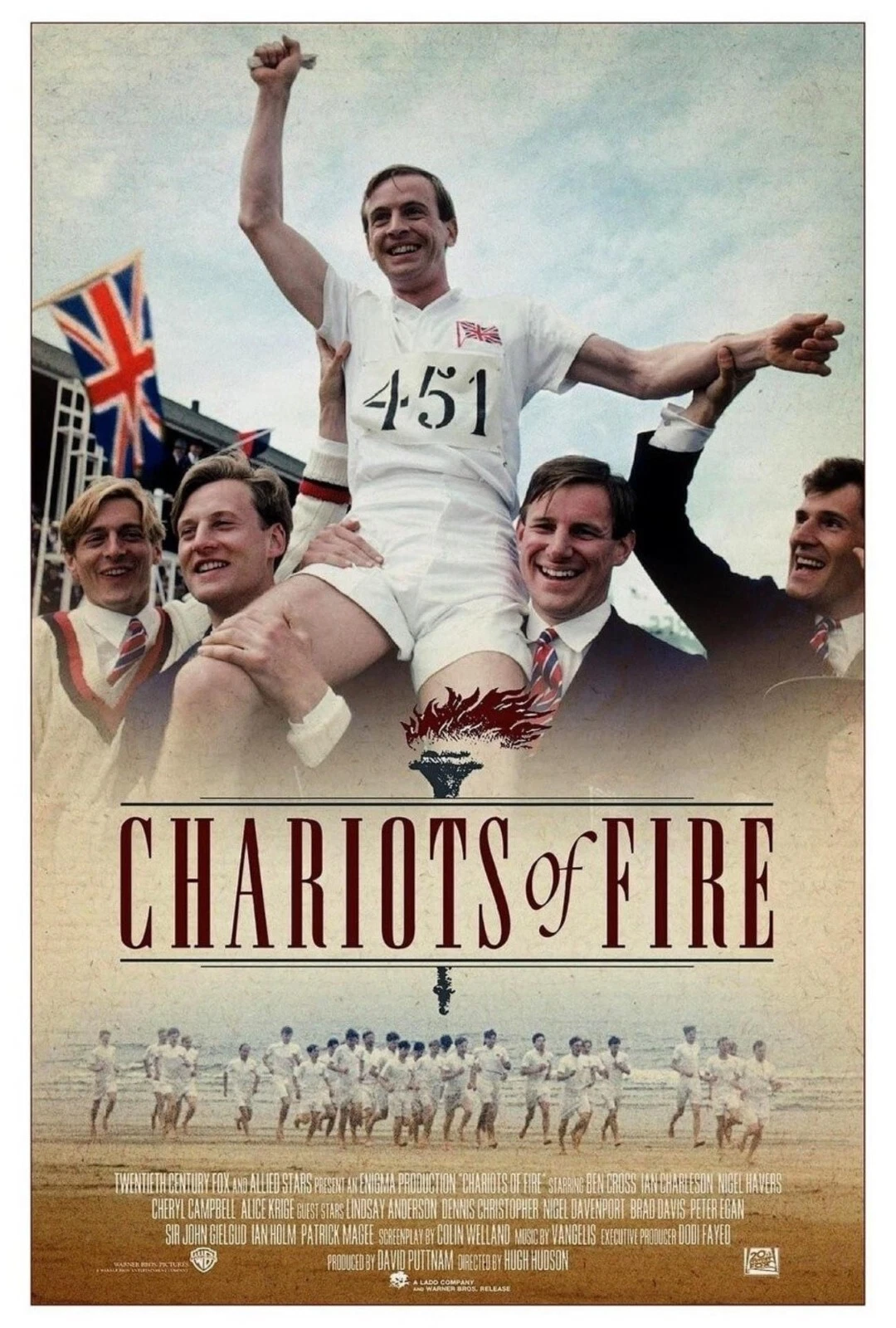
Chariots of Fire poster
1981

#7 — Chariots of Fire

Box Office: $59.0M
GenreHistorical drama
DirectorHugh Hudson
1981 Rank#7
Main Cast
  • Ben Cross as Harold Abrahams
  • Ian Charleson as Eric Liddell
  • Nigel Havers as Lord Andrew Lindsay
  • Ian Holm as Sam Mussabini

Chariots of Fire is one of the classiest entries on the 1981 chart, but it is important not to flatten it into “the serious one.” What made the film connect was not just awards prestige or historical setting. It was the emotional clarity of its story: ambition, faith, competition, identity, and the pressure of public performance. Those themes gave the movie real lift, and the elegant packaging only made that more accessible to a wide audience.

Its place in the yearly top 10 is a useful reminder that the early 80s still had a real lane for ambitious, intelligent drama that could become a mainstream conversation piece. The Vangelis score gave it instant sonic identity, the period detail gave it texture, and the athletic competition gave it a clean engine. Even people who never thought of themselves as “sports movie” viewers could get pulled into it because the emotional stakes were doing most of the real work.

For Gen X, Chariots of Fire is one of those movies whose cultural footprint extends beyond its plot. The music, the imagery, the slow-motion running, the aura of prestige — it all became part of the broader visual vocabulary of the era. That is what makes it more than a respectable hit. It became a recognizable reference point almost immediately, which is exactly what enduring top-10 movies tend to do.

Fun Fact / Why It Still Matters This is one of the best examples of a prestige drama becoming a true pop-culture object, with the score and imagery turning into shorthand far beyond the film itself.
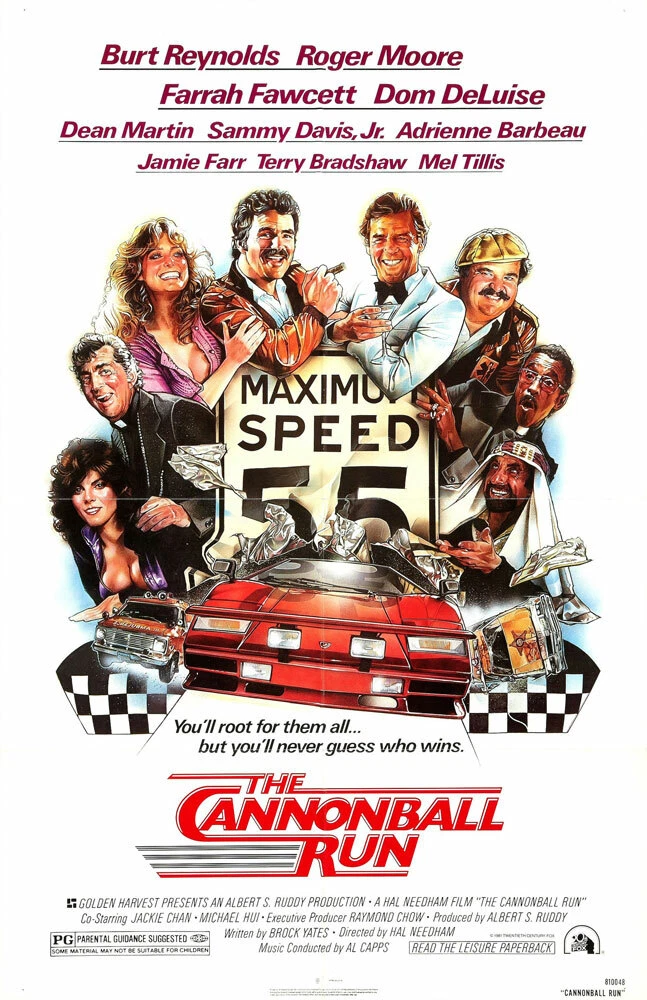
The Cannonball Run poster
1981

#6 — The Cannonball Run

Box Office: $72.2M
GenreAction comedy
DirectorHal Needham
1981 Rank#6
Main Cast
  • Burt Reynolds as J.J. McClure
  • Roger Moore as Seymour Goldfarb Jr.
  • Dom DeLuise as Victor Prinzi / Captain Chaos
  • Farrah Fawcett as Pamela Glover

The Cannonball Run is an excellent reminder that one of the most reliable genres in the early 80s was “a bunch of famous people having a very expensive, very stupid, very entertaining time.” That is not an insult. It is the sales pitch. The movie takes the idea of a cross-country road race and turns it into a celebrity-packed delivery system for car stunts, bits, chaos, and broad audience fun.

Its success says a lot about what commercial movie culture still valued in 1981. Personality mattered. Familiarity mattered. A star-studded ensemble could be the attraction all by itself. Audiences were not only buying tickets for story mechanics; they were buying tickets for energy, looseness, and the promise that the whole movie would keep topping itself with another gag, another chase, or another face they recognized.

For Gen X, this kind of movie is essential to understanding the era because it captures the anything-goes side of multiplex entertainment. Not every hit was trying to be elegant or groundbreaking. Some of them were trying to be a good hang with horsepower, celebrity excess, and the kind of dumb confidence that only really works when a film knows exactly how unserious it wants to be.

Fun Fact / Why It Still Matters It remains a perfect snapshot of a time when sheer star power, comic chaos, and stunt-driven fun could still be enough to produce a major mainstream hit.
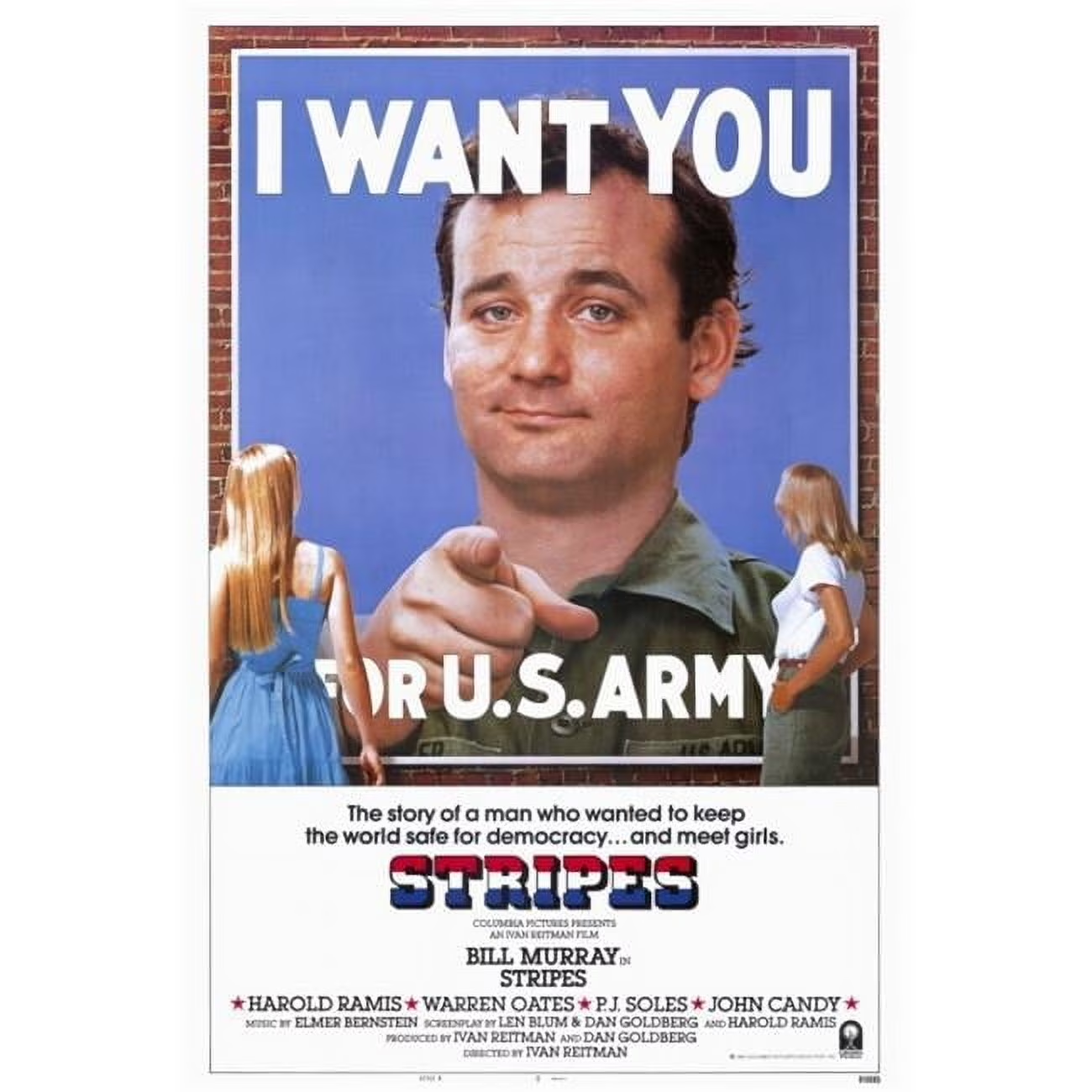
Stripes poster
1981

#5 — Stripes

Box Office: $85.3M
GenreMilitary comedy
DirectorIvan Reitman
1981 Rank#5
Main Cast
  • Bill Murray as John Winger
  • Harold Ramis as Russell Ziskey
  • John Candy as Dewey Oxberger
  • Warren Oates as Sgt. Hulka

Stripes is one of those huge comedy hits that tells you exactly where the culture was heading. Bill Murray was becoming one of the signature faces of early-80s comedy, Ivan Reitman was proving he understood how to package smart chaos for a mass audience, and the movie itself works because it knows the joy is not in military realism — it is in watching anti-authority slackers crash into structure and then somehow survive by force of personality.

What made the film hit so hard in 1981 was that it had a commercial premise everybody could understand, but it delivered that premise with a comic voice that felt looser, sharper, and more specific than generic studio comedy. Murray’s sarcasm is the engine, but the supporting cast matters just as much. Harold Ramis, John Candy, and Warren Oates help turn the whole thing into a comic ecosystem instead of a one-man riff showcase.

For Gen X, Stripes matters because it sits right in the sweet spot between the scruffier 70s comic sensibility and the glossier character-branding that would dominate the rest of the 80s. It still feels a little ragged around the edges, and that is part of the charm. It is a major studio hit that has not been sanded down too cleanly, which is exactly why it still has some bite.

Fun Fact / Why It Still Matters It helped cement both Bill Murray’s early-80s stardom and Ivan Reitman’s reputation as one of the defining architects of commercial comedy in the decade.
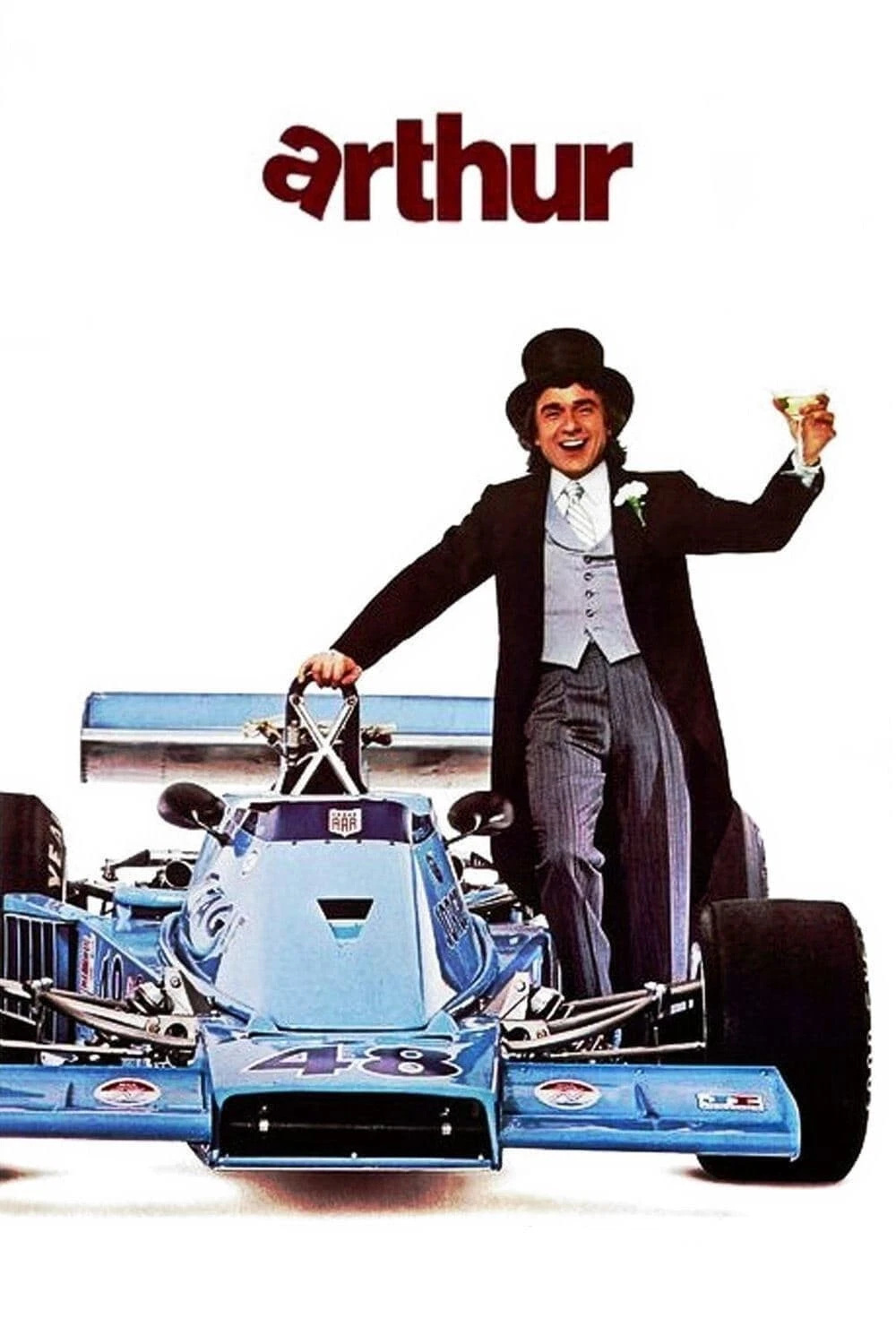
Arthur poster
1981

#4 — Arthur

Box Office: $95.5M
GenreRomantic comedy
DirectorSteve Gordon
1981 Rank#4
Main Cast
  • Dudley Moore as Arthur Bach
  • Liza Minnelli as Linda Marolla
  • John Gielgud as Hobson
  • Geraldine Fitzgerald as Martha Bach

Arthur becoming the number four movie of the year is one of those results that makes 1981 feel wonderfully human. In the middle of franchises, stunts, and spectacle, audiences turned a boozy romantic comedy about a rich man-child and the woman he falls for into one of the biggest hits in America. That does not happen unless the movie has real charm, and Arthur has it in bulk.

Dudley Moore gives the film its comic rhythm, but the movie works because it is not only interested in his eccentricity. It understands that warmth matters. The romance gives the story shape, and John Gielgud’s bone-dry butler performance gives it a second comic engine that keeps the whole thing sparkling. The result is a crowd-pleaser that feels elegant without becoming stuffy and silly without becoming disposable.

For Gen X, the movie is a good reminder that a major hit used to be able to build itself around performance and tone rather than just concept. The premise is memorable, sure, but what people really took with them was the feeling of spending time with these characters. That is a very old-school movie-star formula, and in 1981 it still had serious commercial power.

Fun Fact / Why It Still Matters It remains one of the strongest examples of a star-driven romantic comedy becoming a giant mainstream event largely through performance, chemistry, and quotable charm.
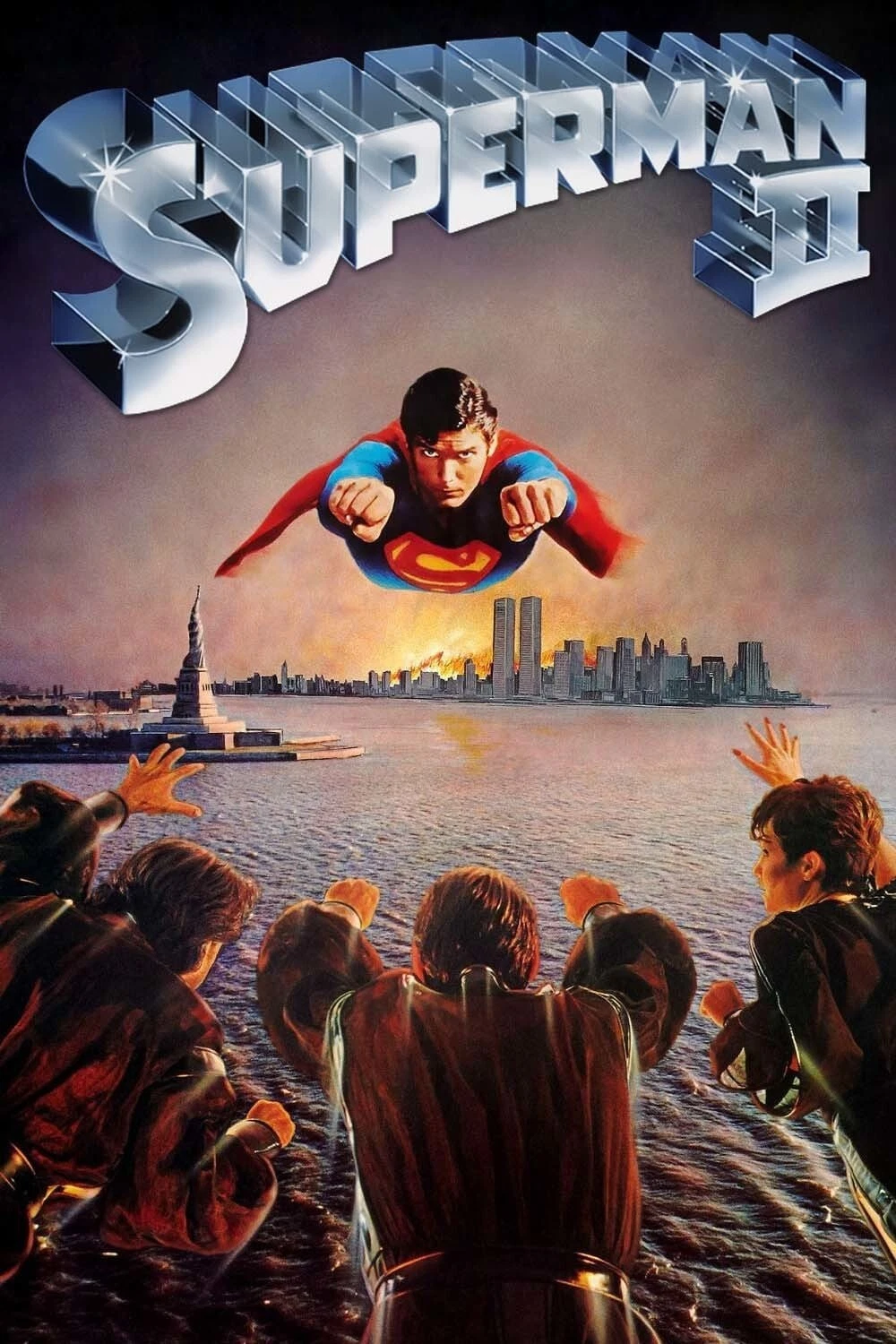
Superman II poster
1981

#3 — Superman II

Box Office: $108.2M
GenreSuperhero action
DirectorRichard Lester
1981 Rank#3
Main Cast
  • Christopher Reeve as Superman / Clark Kent
  • Margot Kidder as Lois Lane
  • Terence Stamp as General Zod
  • Gene Hackman as Lex Luthor

Superman II lands at number three, and that placement tells you a lot about what sequels were starting to become. This was not simply an encore built to coast on the goodwill of the first movie. It sold escalation. Bigger conflict, more destruction, more mythic villainy, and a broader sense that the superhero sequel could be a genuine event instead of just a repeat visit. That idea would become industrial doctrine later, but in 1981 it still felt excitingly fresh.

Christopher Reeve is the key to why the whole thing lands so hard. The spectacle matters, but his ability to shift between Clark Kent’s softness and Superman’s heroic authority gives the whole thing emotional balance. Then you add Terence Stamp’s General Zod — cold, theatrical, instantly memorable — and suddenly the movie has exactly what a sequel needs: not just more scale, but a stronger opposition force that audiences can actually enjoy hating.

For Gen X, Superman II is one of the clearest pre-modern examples of superhero cinema figuring itself out on a blockbuster level. It still belongs to an earlier filmmaking era, but you can see a lot of later comic-book logic taking shape inside it: recurring mythology, expanded stakes, fan-favorite villain lines, and the understanding that sequel escalation was not optional. It had to feel bigger.

Fun Fact / Why It Still Matters It helped prove that superhero sequels could play as major theatrical events long before the modern comic-book era turned that concept into a permanent business model.
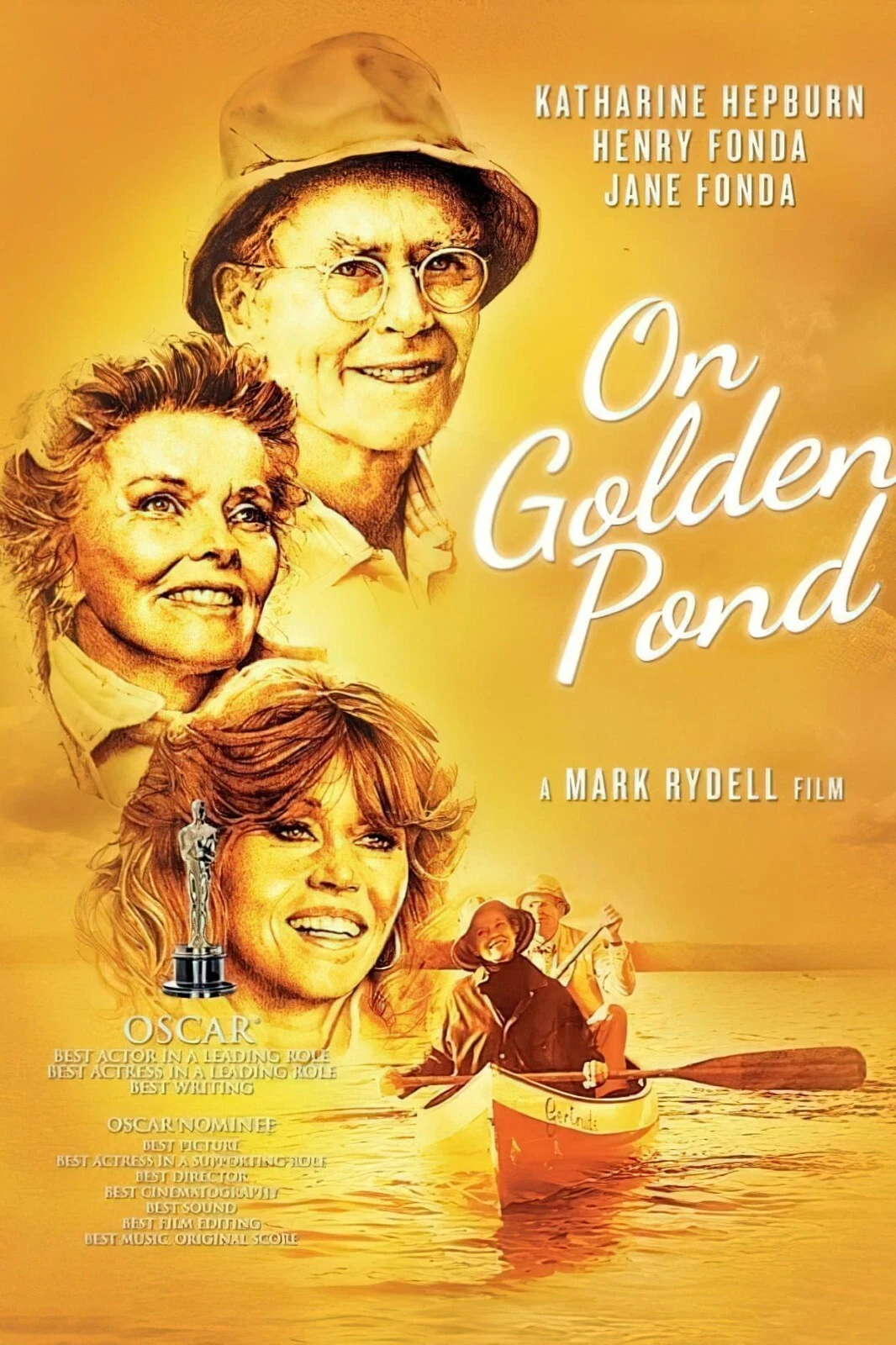
On Golden Pond poster
1981

#2 — On Golden Pond

Box Office: $119.3M
GenreDrama
DirectorMark Rydell
1981 Rank#2
Main Cast
  • Henry Fonda as Norman Thayer
  • Katharine Hepburn as Ethel Thayer
  • Jane Fonda as Chelsea Thayer
  • Doug McKeon as Billy Ray Jr.

On Golden Pond finishing as the number two movie of 1981 is one of the most useful facts on the whole chart because it disrupts the lazy story people sometimes tell about early-80s movie culture. Yes, the blockbuster was rising fast. Yes, spectacle was becoming more central. But audiences could still turn a quiet, reflective, emotionally intimate drama into one of the biggest hits in the country if the performances were strong enough and the emotional core was real enough.

The film works because it does not confuse gentleness with weakness. It is intimate, but it is not minor. Henry Fonda and Katharine Hepburn give it gravity, warmth, friction, and lived-in feeling, and the family dynamics give the movie its real dramatic engine. Viewers did not have to come for explosions or giant hooks here; they came for emotional truth, recognizable aging anxieties, and the ache of family relationships that have never fully healed.

For Gen X, On Golden Pond matters partly because it shows how much more room the mainstream once had for adult drama of real scale. A movie like this could be a true event because moviegoing had not yet been narrowed into a mostly youth-and-franchise reflex. That makes its presence near the very top of the 1981 box office feel not only impressive, but revealing. It tells you the audience was broader and more emotionally flexible than people sometimes remember.

Fun Fact / Why It Still Matters It stands as one of the most commercially successful examples of a quiet, performance-driven drama thriving right alongside franchise entertainment at the dawn of the blockbuster 80s.
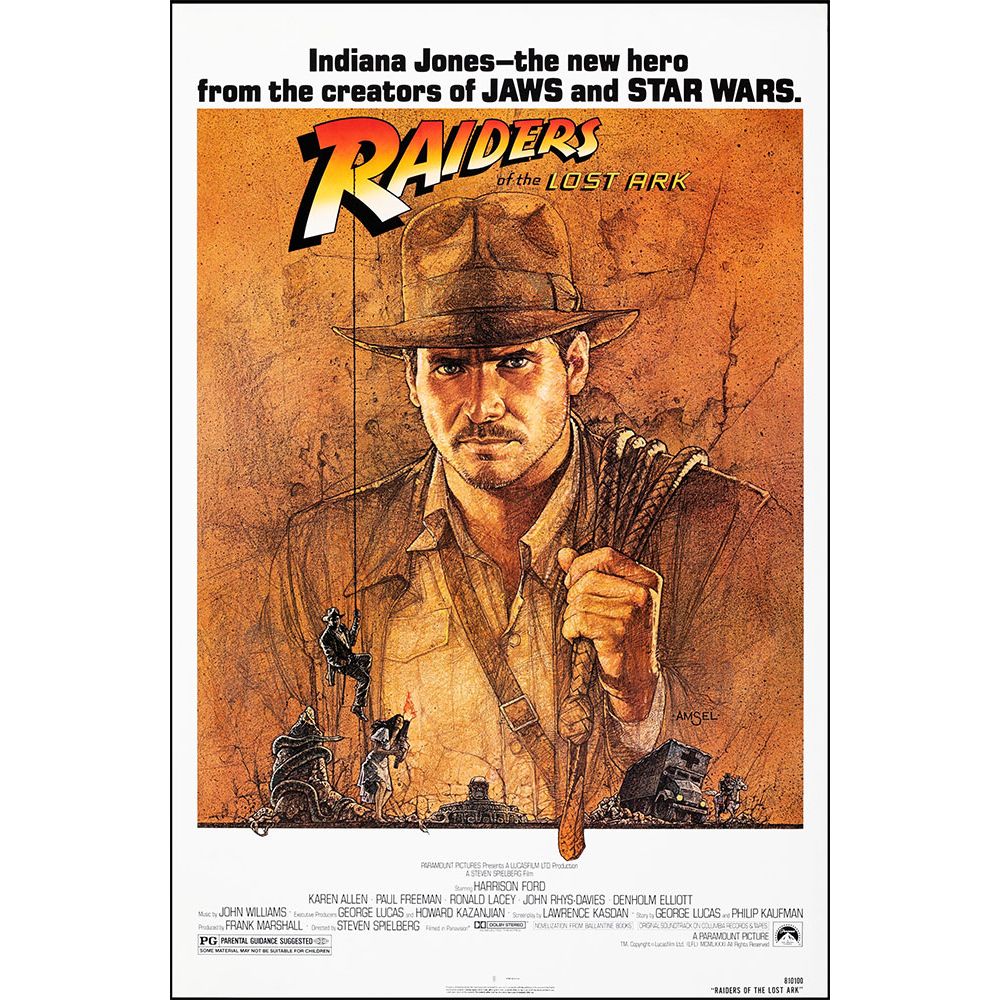
Raiders of the Lost Ark poster
1981

#1 — Raiders of the Lost Ark

Box Office: $212.2M
GenreAdventure
DirectorSteven Spielberg
1981 Rank#1
Main Cast
  • Harrison Ford as Indiana Jones
  • Karen Allen as Marion Ravenwood
  • Paul Freeman as René Belloq
  • John Rhys-Davies as Sallah

Raiders of the Lost Ark does not just top the 1981 box office. It defines the year. This is one of those number-one movies that feels bigger than a ranking because it captures a whole shift in what mainstream adventure could be. Steven Spielberg and George Lucas built the film out of old serial energy, but they did not make something quaint or museum-like. They made something fast, tactile, funny, dangerous, and myth-sized without feeling bloated.

Harrison Ford is the key to why the whole thing lands so hard. Indiana Jones is heroic, but not invincible. He gets hurt, makes mistakes, panics, improvises, and keeps moving. That balance matters because it makes the movie feel exciting instead of untouchable. The action sequences are thrilling because the character inside them still feels human enough to lose. Add Karen Allen’s crackling energy, the archaeological-myth hook, and the practical-stunt craftsmanship, and the whole film starts feeling less like a hit and more like a formula correction for blockbuster adventure.

For Gen X, Raiders of the Lost Ark is not just one of the biggest movies of 1981. It is one of the foundational movies of the decade, period. It helped create the shape of the modern adventure hero, showed that a new franchise could be born fully formed in front of an audience, and reinforced the idea that spectacle worked best when it had personality, motion, and actual danger. If 1981 is the year the blockbuster starts looking like a system, Raiders is the movie that made that system feel exhilarating.

Fun Fact / Why It Still Matters It remains one of the cleanest examples of blockbuster craft at full power: iconic hero, practical-action virtuosity, nonstop momentum, and a franchise launch that still feels electric rather than prepackaged.

Rewind Verdict

The top 10 movies of 1981 make a great argument for why early-80s movie culture still felt richer and less locked-in than what came later. Yes, the blockbuster is clearly taking command. Raiders of the Lost Ark and Superman II make that obvious. But the rest of the list refuses to behave like a single corporate template. You still have space for adult drama, elegant relationship comedy, Bond polish, military sarcasm, road-race nonsense, sports prestige, and cult-ready fantasy weirdness.

That variety is the real story. 1981 feels like a year where Hollywood is learning how to industrialize spectacle, but it has not yet strangled personality in the process. Stars still matter. Tone still matters. Adult audiences still matter. A movie can be huge because it is exciting, heartfelt, funny, or simply distinctive enough to cut through the noise.

For Gen X, these were not just successful movies. They were proof that the multiplex could still surprise you. The biggest films of 1981 did not all sound the same, look the same, or aim at the exact same viewer. That is a huge part of why the year still feels so replayable now. It is not one flavor. It is a whole buffet of early-80s moviegoing before the system got too efficient.

FAQ: Top Movies of 1981

What was the highest-grossing 1981 release at the North American box office?

Raiders of the Lost Ark finished as the top-grossing 1981 release in North America.

Why is On Golden Pond so high on this list?

Because it was a massive commercial success in addition to being a major prestige drama, showing that adult-oriented films could still perform at a very high mainstream level in 1981.

Was 1981 already fully in blockbuster mode?

Almost — but not completely. You can clearly see the blockbuster machine taking over, yet the year still had enough range for dramas, ensemble comedies, Bond thrillers, and eccentric fantasy to thrive.

Why does this countdown use release-year grosses instead of a calendar-year chart?

Using 1981 releases gives the year a cleaner identity and avoids mixing in older movies that happened to keep earning money during the same calendar year.

What makes the 1981 lineup so memorable?

Its balance. The year gave audiences an all-time adventure classic, a major superhero sequel, star-driven comedy, Bond cool, prestige drama, and a cult fantasy favorite — all in one top 10.

Get the Weekly Gen X Drop

New videos, rewinds, and savage nostalgia — first.

JOIN THE NEWSLETTER WATCH VIDEOS

MORE REWINDS