Top 10 Movies of 1975: Biggest Box Office Hits Ranked

Top 10 Movies of 1975: Biggest Box Office Hits Ranked
Smells Like Gen X • Top Movies of 1975

The Top 10 Movies of 1975

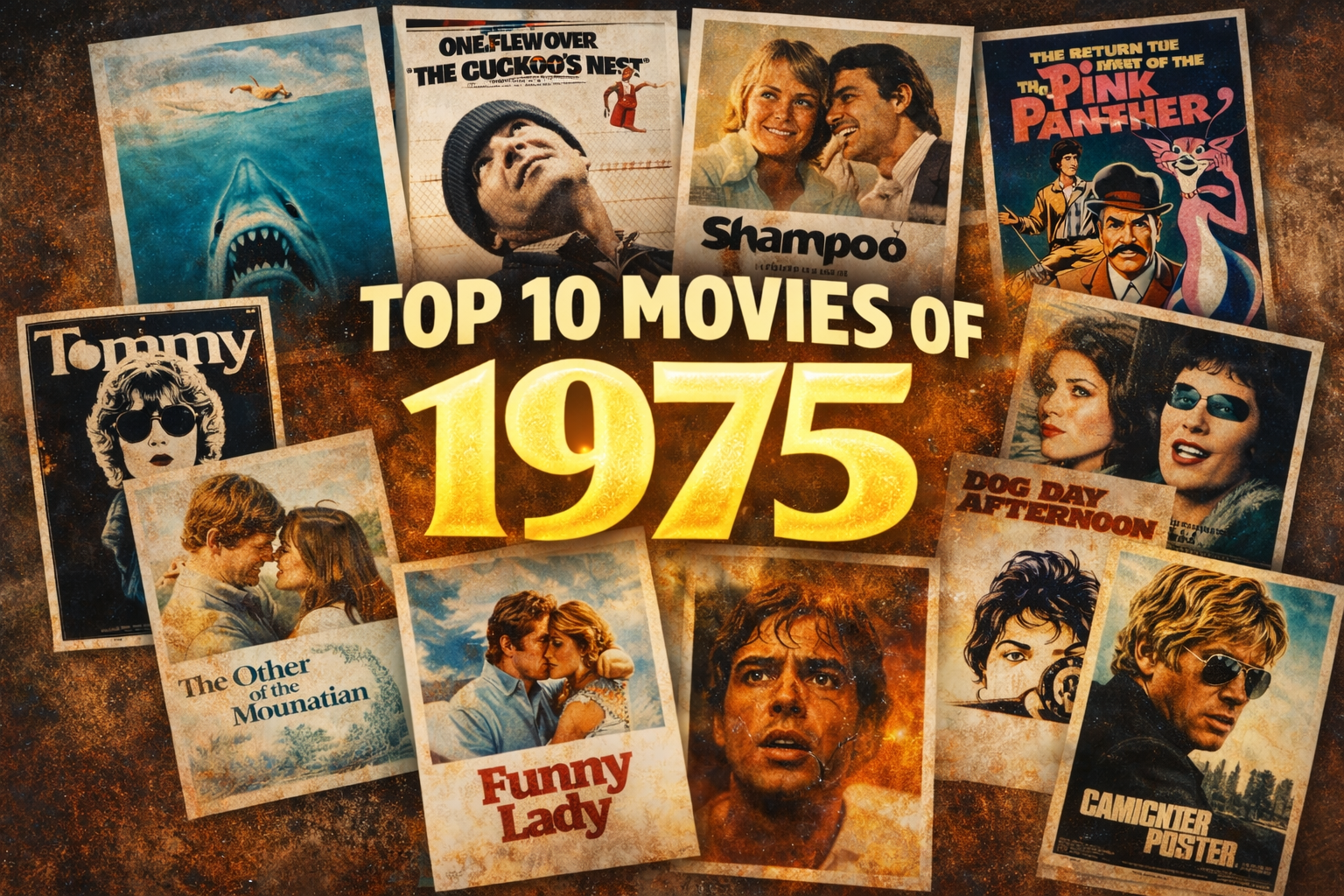
The top 10 movies of 1975 feel like the exact moment Hollywood discovers that the modern blockbuster can coexist with nervous adult drama, glam satire, raw New York panic, cult weirdness, glossy sequels, and giant teeth in open water. This is a year where the marketplace gets bigger, but the movies don’t get simpler.

This countdown focuses on the biggest North American grosses for films first released in 1975. What emerges is one of the decade’s most fascinating lineups: a killer-fish phenomenon, an anti-institution masterpiece, Beverly Hills vanity rot, a sweaty crime hostage drama, elegant franchise comedy, paranoid spy suspense, glam-rock midnight madness, old-Hollywood sequel sheen, inspirational mountain survival, and an explosive rock-opera adaptation.

For Gen X, 1975 matters because it feels like a hinge year. You can see the giant summer-event future arriving with Jaws, but you can also still feel the 70s appetite for damaged people, sharp satire, social unease, and movies that assume adults can handle messy endings.

Gen X Note: 1975 is the year Hollywood proves blockbuster scale and weird adult personality can live in the same top 10 without cancelling each other out.

Quick List: The Top 10 Movies of 1975

  1. Tommy
  2. The Other Side of the Mountain
  3. Funny Lady
  4. The Rocky Horror Picture Show
  5. Three Days of the Condor
  6. The Return of the Pink Panther
  7. Dog Day Afternoon
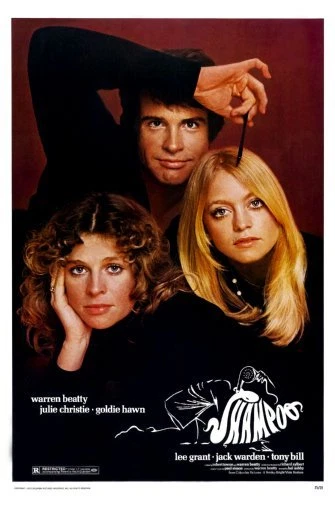
  8. Shampoo
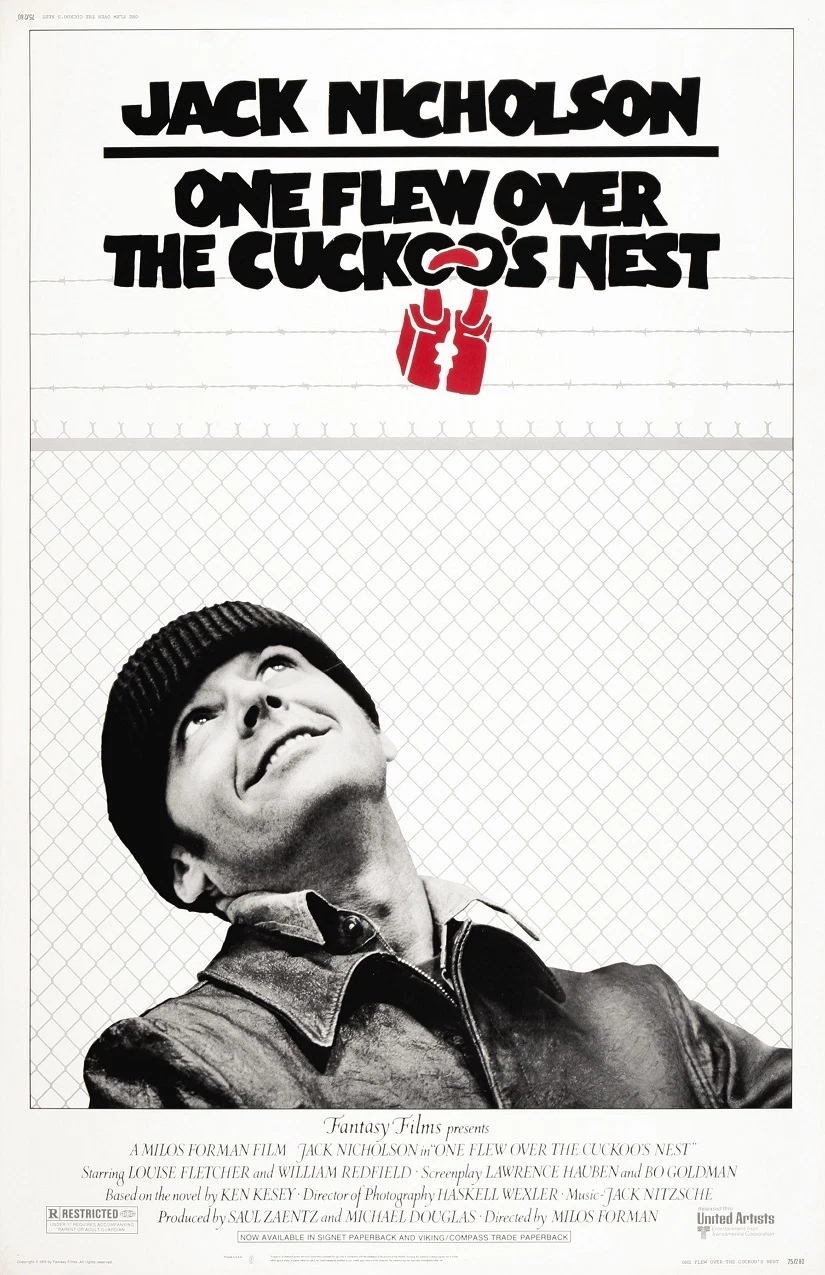
  9. One Flew Over the Cuckoo’s Nest
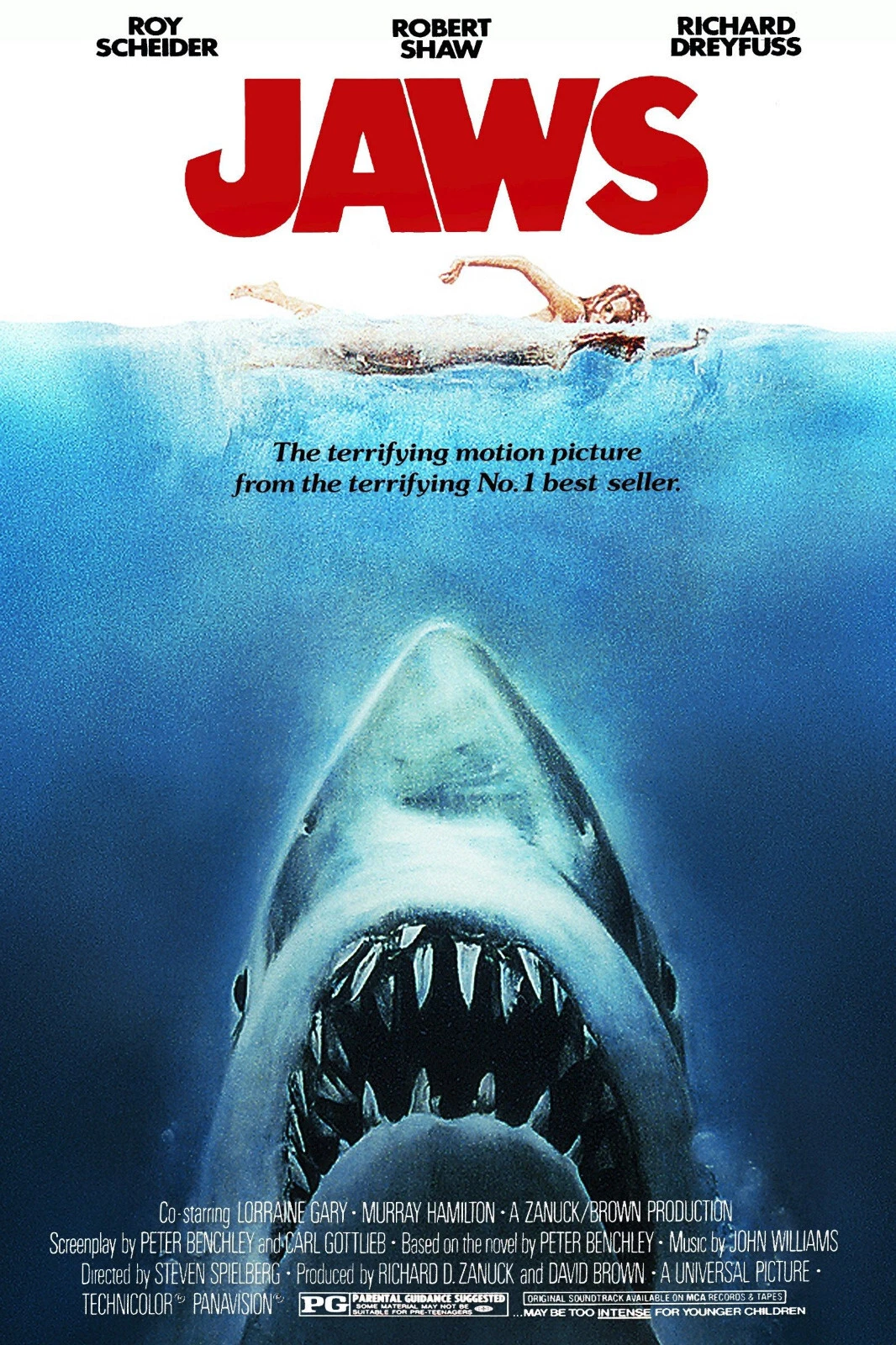
  10. Jaws

Countdown: The Top 10 Movies of 1975

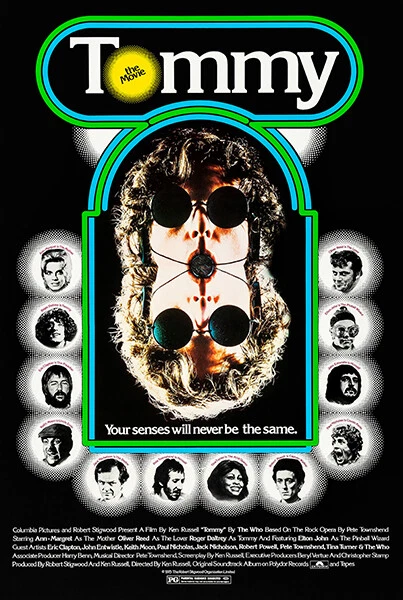
Tommy poster
1975

#10 — Tommy

Box Office: $34.3M
GenreRock musical fantasy drama
DirectorKen Russell
1975 Rank#10
Main Cast
  • Roger Daltrey as Tommy
  • Ann-Margret as Mrs. Walker
  • Oliver Reed as Frank Hobbs
  • Elton John as the Pinball Wizard

Tommy opens the 1975 top 10 with exactly the kind of glam-rock excess only the 70s could turn into major box office. Ken Russell doesn’t adapt The Who’s rock opera by sanding it down into something tidy. He turns it into a loud, gaudy, hallucinated pop-art spectacle that feels like religious iconography, celebrity satire, and a nervous breakdown all sharing the same soundstage.

That’s why the movie matters. It isn’t trying to behave like respectable middlebrow musical entertainment. It’s pushing scale, camp, trauma, sound, and image until the whole thing becomes overwhelming on purpose. Ann-Margret in particular gives the movie a kind of unhinged commitment that keeps it from feeling like a novelty package.

In the commercial story of 1975, Tommy matters because it proves audiences still had room for stylized musical risk, provided the experience felt big enough and strange enough to justify the ticket. This is not safe showbiz. It’s rock theatre weaponized.

For Gen X, it remains one of those cult-adjacent inherited artifacts that feels both absurd and essential — the kind of movie you hear about first, then finally see and think, yes, that is exactly as deranged as promised.
Fun Fact / Why It Still Matters Tommy still matters because it turned a rock concept album into a full-blown mainstream movie event without sacrificing its weirdness.
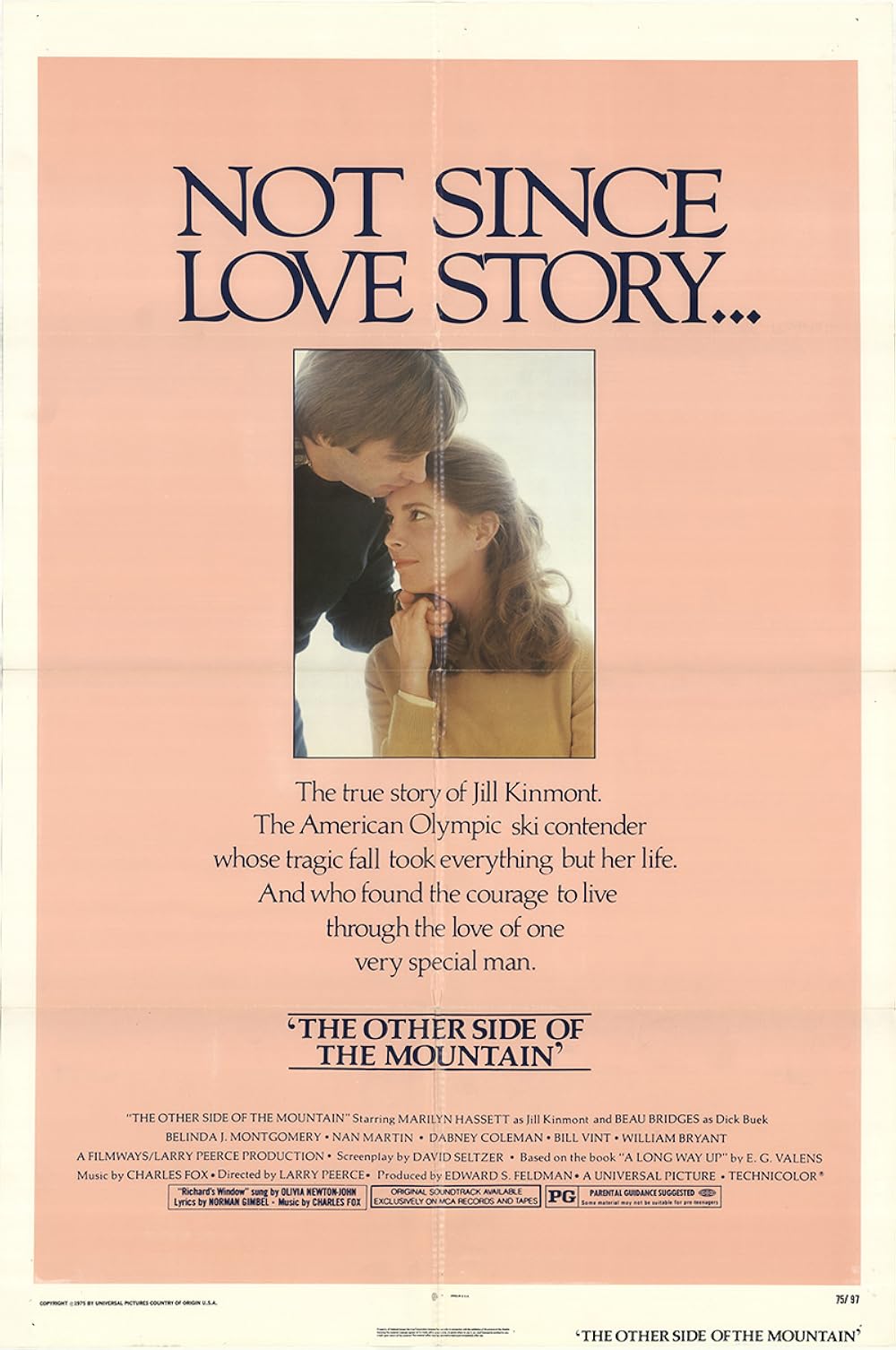
The Other Side of the Mountain poster
1975

#9 — The Other Side of the Mountain

Box Office: $34.7M
GenreBiographical drama
DirectorLarry Peerce
1975 Rank#9
Main Cast
  • Marilyn Hassett as Jill Kinmont
  • Beau Bridges as Dick Buek
  • Belinda Montgomery as Audra Jo
  • Nan Martin as June Kinmont

The Other Side of the Mountain landing at number nine is a reminder that 1975 audiences still reliably showed up for sincere, inspirational drama when the story had enough emotional pull. Based on Jill Kinmont’s life, the movie channels sports aspiration, catastrophic loss, endurance, and romantic melancholy into something that feels very 70s in its directness. It wants you to feel, and it doesn’t apologize for that.

That sincerity is part of why the film mattered commercially. In a year where the top 10 includes sharks, hostage crises, paranoia, and glam chaos, this film carved out space through vulnerability and perseverance. It didn’t need cynicism to connect. It needed conviction.

In the larger 1975 box-office story, The Other Side of the Mountain matters because it shows that serious mainstream drama still had a powerful emotional lane, even as blockbuster instincts were getting louder. The audience wasn’t only chasing sensation. It still wanted uplift with bruises on it.

For Gen X, this belongs to that class of films that lived a long second life as a deeply earnest “grown-up movie” your family may have revered even if you discovered it years later on television.

Fun Fact / Why It Still Matters The film still matters because it represents the kind of emotionally straight-ahead inspirational drama that could still compete commercially in the mid-70s.
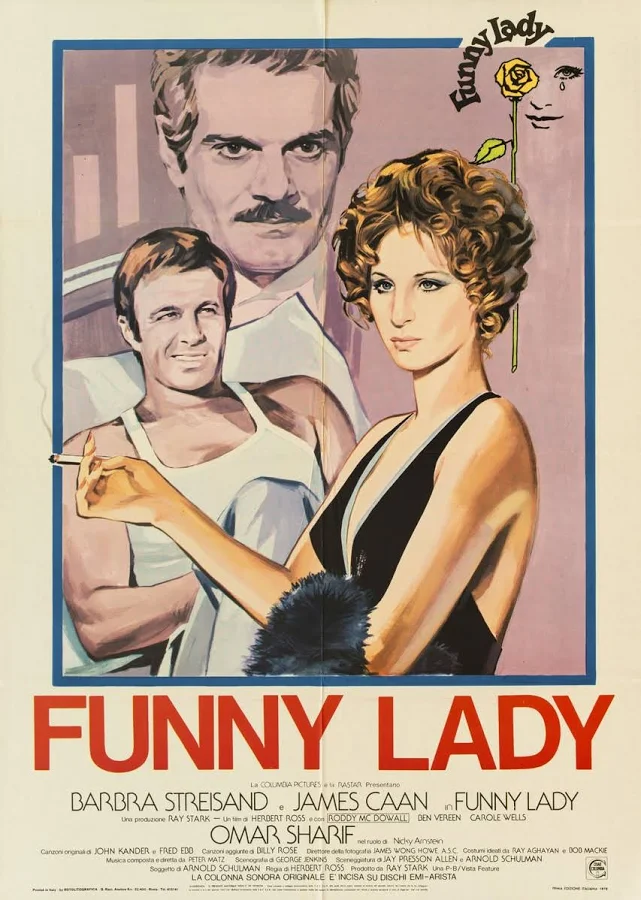
Funny Lady poster
1975

#8 — Funny Lady

Box Office: $40.1M
GenreMusical drama
DirectorHerbert Ross
1975 Rank#8
Main Cast
  • Barbra Streisand as Fanny Brice
  • James Caan as Billy Rose
  • Omar Sharif as Nick Arnstein
  • Roddy McDowall as Bobby Moore

Funny Lady at number eight shows that the movie musical may have been changing, but star power still had real commercial force. Barbra Streisand didn’t need the form to be fashionable in a universal sense. She just needed enough spotlight, enough emotional scale, and enough audience goodwill to make the sequel business work.

What makes the movie interesting in 1975 is that it’s operating in a culture that was already drifting toward rougher, stranger, more modern energies. That gives Funny Lady a slightly old-world feel, but not in a bad way. It functions as glamour persistence. It reminds you the industry hadn’t completely abandoned lush performance-driven vehicles just because the zeitgeist had gotten more anxious.

In the commercial story of 1975, the film matters because it proves there was still a big audience for polished star showcases, especially when the star in question could dominate the frame this effortlessly.

For Gen X, it sits in that interesting overlap zone between old-Hollywood inheritance and 70s modernity — a movie that feels like a bridge rather than a relic.

Fun Fact / Why It Still Matters Funny Lady still matters because it shows how long a truly magnetic star could keep a classic showbiz mode commercially viable.
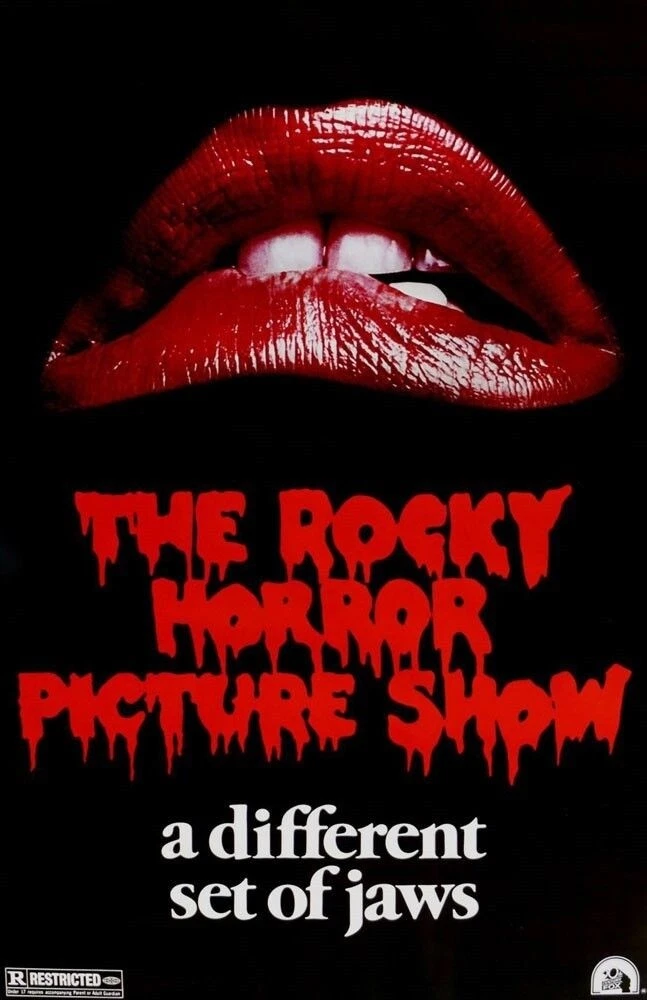
The Rocky Horror Picture Show poster
1975

#7 — The Rocky Horror Picture Show

Box Office: $40.4M
GenreMusical comedy horror
DirectorJim Sharman
1975 Rank#7
Main Cast
  • Tim Curry as Dr. Frank-N-Furter
  • Susan Sarandon as Janet Weiss
  • Barry Bostwick as Brad Majors
  • Meat Loaf as Eddie

The Rocky Horror Picture Show at number seven is one of those entries that comes with its own built-in caveat and legend. Its long afterlife is so enormous that it can distort how people think about its original place in the marketplace. But even before it became the all-timer midnight-movie ritual, it was already a 1975 release with real commercial footprint in the release-year domestic rankings used here.

What makes the film matter, obviously, goes way beyond raw numbers. It’s glam filth, camp theatre, sci-fi pastiche, sexual provocation, and audience participation destiny waiting to happen. It feels less like a product and more like a cultural mutation. Tim Curry’s performance alone would’ve guaranteed it some kind of immortality.

In the story of 1975, Rocky Horror matters because it shows how porous the mainstream could still be. Something this odd, this performative, and this joyfully impolite didn’t stay on the margins. It found a way to burrow in.

For Gen X, this is practically sacred text. Not just a movie, but a ritual, a quote factory, a costume excuse, and a gateway into the idea that fandom could become live performance.

Fun Fact / Why It Still Matters The film still matters because it transformed from theatrical release into one of the most durable participatory cult experiences in movie history.
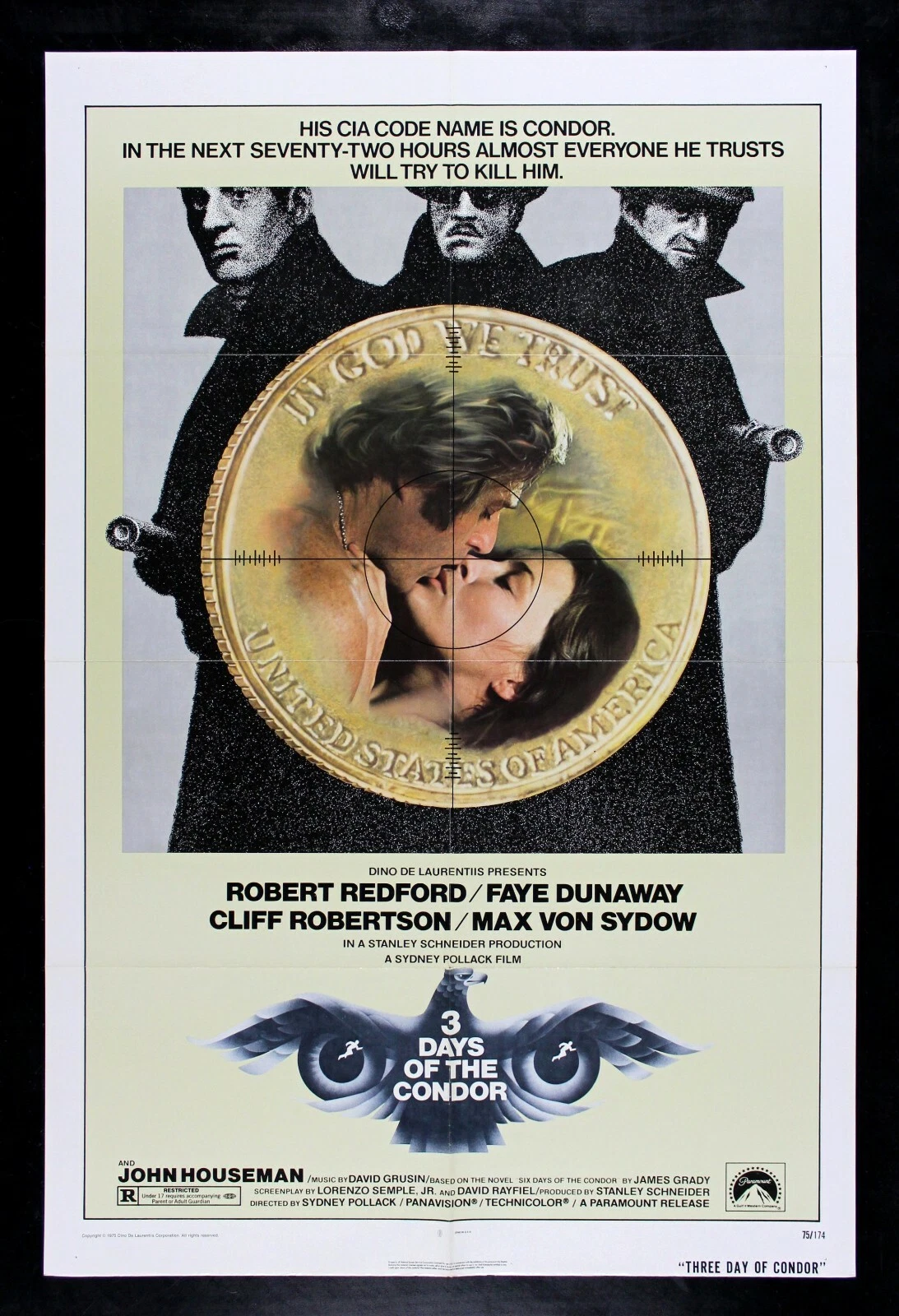
Three Days of the Condor poster
1975

#6 — Three Days of the Condor

Box Office: $41.5M
GenrePolitical thriller
DirectorSydney Pollack
1975 Rank#6
Main Cast
  • Robert Redford as Joe Turner
  • Faye Dunaway as Kathy Hale
  • Cliff Robertson as Higgins
  • Max von Sydow as Joubert

Three Days of the Condor hits number six as one of the year’s purest expressions of 70s institutional paranoia. This is the decade’s favorite question turned into a sleek thriller: what if the organization you trust is the organization hunting you? Sydney Pollack understands that fear doesn’t need to shout. It just needs to make every office, phone call, and ordinary street corner feel compromised.

Redford is crucial because he gives the movie the right balance of intelligence, unease, and movie-star readability. Joe Turner isn’t an indestructible action machine. He’s a man whose ordinary competency suddenly isn’t enough. That vulnerability is what makes the suspense work.

In the box-office story of 1975, Three Days of the Condor matters because it proves political distrust and spy-thriller tension could sell without needing giant spectacle. The movie’s hook is suspicion itself, and the audience was ready.

For Gen X, it became one of those indispensable 70s paranoia texts — the kind of film that permanently changes how stylishly distrust can be filmed.

Fun Fact / Why It Still Matters The film still matters because it helped define the elegant, urban, intelligence-community paranoia thriller that the 70s did better than anyone.
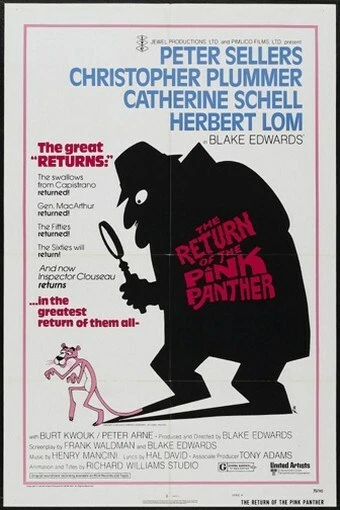
The Return of the Pink Panther poster
1975

#5 — The Return of the Pink Panther

Box Office: $41.8M
GenreComedy mystery
DirectorBlake Edwards
1975 Rank#5
Main Cast
  • Peter Sellers as Inspector Clouseau
  • Christopher Plummer as Sir Charles Litton
  • Catherine Schell as Lady Claudine Litton
  • Herbert Lom as Chief Inspector Dreyfus

The Return of the Pink Panther at number five is the kind of sequel success that makes perfect sense once you remember how durable a great comic persona can be. Peter Sellers’ Clouseau was not just a character. He was a machine for escalating embarrassment, exquisite incompetence, and physical-comedy chaos. Put him back in circulation and audiences were going to show up.

What gives the film more life than a simple retread is how comfortably it inhabits its own tone. Blake Edwards knows exactly how to pace this world: the misdirection, the pratfalls, the elegant settings, the slow burn of Dreyfus losing whatever sanity he had left. It’s franchise comedy made with craftsmanship rather than autopilot.

In the commercial story of 1975, the film matters because it shows the sequel economy was not only about action or scale. Comedy franchises could also cash in hard when the central comic engine was this reliable.

For Gen X, Clouseau belongs to the deep bench of characters who felt like they existed permanently on television, always one dropped clue and one destroyed room away from your next rewatch.

Fun Fact / Why It Still Matters The film still matters because it proves a great comic character can sustain a franchise almost as powerfully as any action hero.
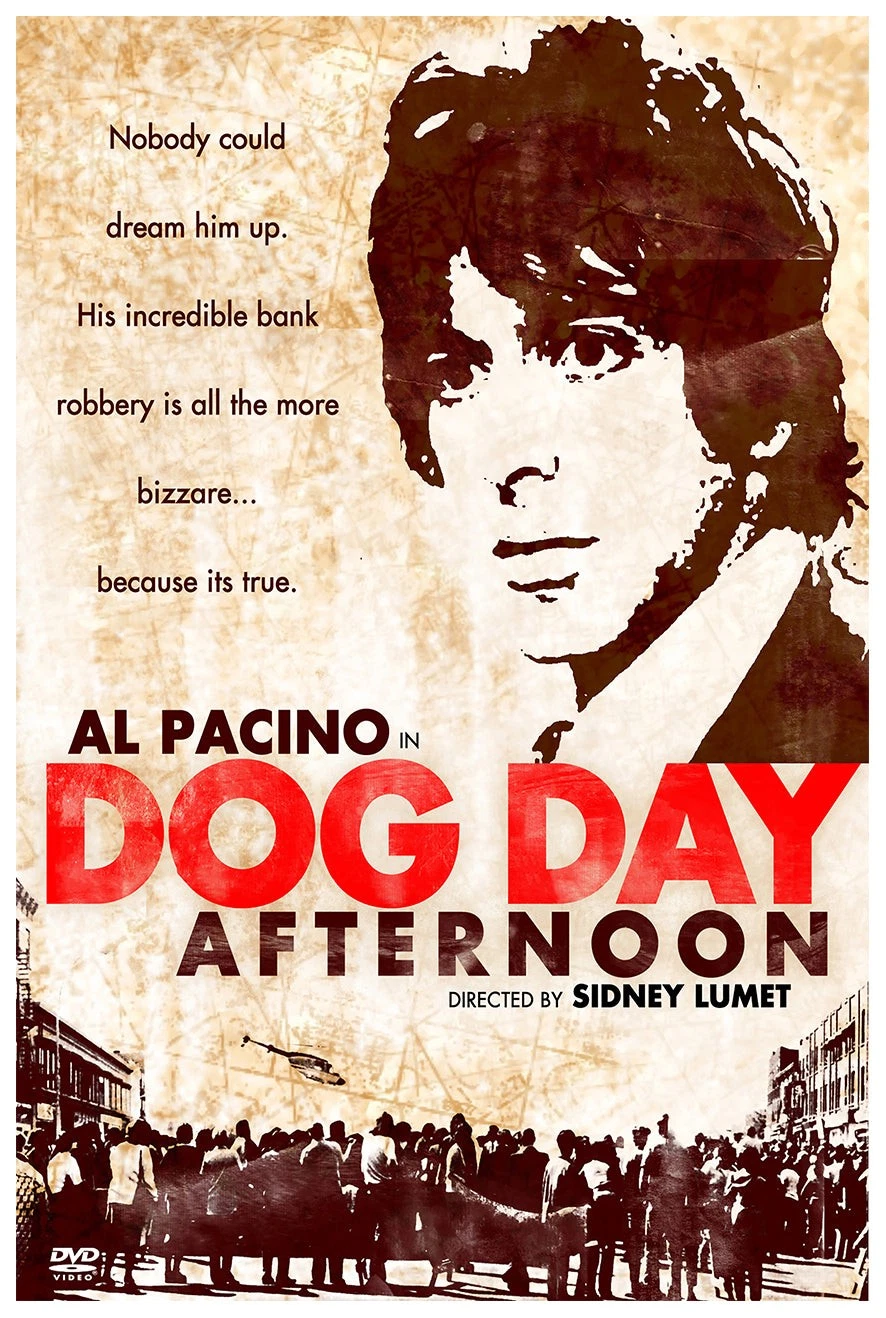
Dog Day Afternoon poster
1975

#4 — Dog Day Afternoon

Box Office: $46.7M
GenreCrime drama
DirectorSidney Lumet
1975 Rank#4
Main Cast
  • Al Pacino as Sonny Wortzik
  • John Cazale as Sal Naturile
  • Charles Durning as Sgt. Moretti
  • Chris Sarandon as Leon Shermer

Dog Day Afternoon at number four is one of the all-time examples of the 70s turning a ripped-from-the-headlines setup into something sweaty, human, politically charged, and weirdly funny. Sidney Lumet never lets the hostage crisis become pure mechanics. It’s always about desperation, performance, class tension, media glare, and the public chaos of one hot New York day boiling over.

Pacino is the reason the whole thing feels alive at every second. Sonny is erratic, charismatic, vulnerable, selfish, sympathetic, and impossible to reduce. The movie’s refusal to simplify him is what gives it such force. It’s a crime film, but it’s also a social x-ray.

In the commercial story of 1975, Dog Day Afternoon matters because it proves audiences would still show up in big numbers for adult urban drama as long as the writing, tension, and performances had enough voltage.

For Gen X, it became one of those movies that quietly taught you cinema could be funny, anxious, tragic, and politically observant all at the same time without ever feeling like homework.

Fun Fact / Why It Still Matters The film still matters because it remains one of the sharpest portraits of American desperation, media spectacle, and public performance ever put on screen.
Shampoo poster
1975

#3 — Shampoo

Box Office: $49.4M
GenreSatirical comedy-drama
DirectorHal Ashby
1975 Rank#3
Main Cast
  • Warren Beatty as George Roundy
  • Julie Christie as Jackie Shawn
  • Goldie Hawn as Jill Haynes
  • Lee Grant as Felicia Karpf

Shampoo landing at number three is one of the best clues that 1975 audiences were fully tuned into movies about vanity, sex, class, and the rotting self-importance of the beautiful people. Set on the eve of Nixon’s election, the film turns romantic chaos and salon gossip into a portrait of moral drift. It’s glossy on the surface and quietly corrosive underneath.

Warren Beatty’s George is exactly the right center for this kind of movie: charming, shallow, restless, and not nearly as in control as he imagines. Hal Ashby lets the whole world feel seductive without mistaking seduction for substance. That tonal balance is what makes the satire work.

In the commercial story of 1975, Shampoo matters because it shows that adult comedy-drama built around social observation and sexual politics could still break through in a big way. This is not broad farce. It’s polished disillusionment.

For Gen X, it remains one of those movies that captures an era not through giant events, but through hair, bedrooms, money, awkward silences, and the realization that cool people are often a mess.

Fun Fact / Why It Still Matters The film still matters because it packaged class satire, sexual politics, and political hangover into one of the decade’s smartest mainstream hits.
One Flew Over the Cuckoo's Nest poster
1975

#2 — One Flew Over the Cuckoo’s Nest

Box Office: $109.0M
GenrePsychological drama
DirectorMiloš Forman
1975 Rank#2
Main Cast
  • Jack Nicholson as Randle McMurphy
  • Louise Fletcher as Nurse Ratched
  • Will Sampson as Chief Bromden
  • Brad Dourif as Billy Bibbit

One Flew Over the Cuckoo’s Nest at number two is one of those glorious cases where a major commercial hit is also a full cultural statement. This isn’t a safe prestige drama. It’s a furious anti-institution film about control, humiliation, conformity, rebellion, and the price of refusing to stay manageable. That it connected this massively tells you everything about where the country’s head was.

Nicholson is electric, but the film’s deeper power comes from the whole ecosystem around him. Nurse Ratched becomes the face of bureaucratic cruelty without ever turning cartoonish, and the ward itself becomes a perfect container for the decade’s fear of systems that flatten people into obedience.

In the commercial story of 1975, Cuckoo’s Nest matters because it proves audiences would still rally around serious, abrasive, emotionally punishing adult drama if it gave them something recognizably human to fight against.

For Gen X, this became one of the canonical “important movies” that actually earns the label. It’s not dutiful. It’s alive, funny, brutal, and impossible to shake.

Fun Fact / Why It Still Matters The film still matters because it remains one of the strongest anti-authority dramas ever to also become a gigantic mainstream success.
Jaws poster
1975

#1 — Jaws

Box Office: $273.0M
GenreThriller / Adventure
DirectorSteven Spielberg
1975 Rank#1
Main Cast
  • Roy Scheider as Brody
  • Robert Shaw as Quint
  • Richard Dreyfuss as Hooper
  • Lorraine Gary as Ellen Brody

Jaws taking the top spot isn’t just a box-office result. It’s a before-and-after moment. This is the movie that made people rethink what a summer release could do, what wide mainstream anticipation could look like, and how a single giant premise could swallow the culture whole. Yes, it’s a shark movie. It’s also the sound of Hollywood’s future kicking the door in.

The reason it still works so ferociously is that Spielberg doesn’t rely on concept alone. The first half is all social denial, civic self-interest, class tension, and creeping dread. The second half becomes a stripped-down adventure machine powered by one of the best odd-couple-plus-maniac ensembles in the decade. It’s thrilling because it’s built like a real movie, not just a marketing hook.

In the commercial story of 1975, Jaws matters because it fundamentally changes the scale of the conversation. It doesn’t merely top the year. It redraws what topping the year can mean.

For Gen X, it is one of the primal shared-text movies — quoted, feared, endlessly revisited, and so culturally embedded that even people who haven’t seen it know its teeth before they know its plot.

Fun Fact / Why It Still Matters Jaws still matters because it didn’t just become the biggest hit of 1975. It helped invent the modern blockbuster playbook.

Rewind Verdict

The top 10 movies of 1975 are one of the best arguments that the 70s were not a straight line from gritty adult cinema to slick blockbuster emptiness. The year’s biggest movie absolutely is the dawn of the modern blockbuster, but the rest of the list keeps insisting on complexity: damaged people, unstable institutions, social satire, glam weirdness, cult energy, and stories that don’t always leave you feeling comfortable.

What makes the lineup so memorable is the tension between scale and personality. Jaws changes the business, but Cuckoo’s Nest, Dog Day Afternoon, Shampoo, and Condor remind you the audience still wanted discomfort, intelligence, and ambiguity. The year feels commercially huge without feeling culturally flattened.

For Smells Like Gen X, 1975 is one of the key proof years that the decade’s greatness lives in the overlap: the popcorn rush is arriving, but the strange, adult, nervous soul of 70s filmmaking hasn’t been pushed out yet. That tension is exactly why the year still hits.

FAQ: Top Movies of 1975

What was the highest-grossing 1975 release at the North American box office?

Jaws was the biggest 1975 release in North America by a massive margin.

Why isn’t Rocky Horror higher?

This series is using the release-year domestic box-office ranking source cited above for consistency. The Rocky Horror Picture Show became far larger culturally over time than its ranking here alone suggests.

Why use release-year grosses instead of calendar-year totals?

Because release-year grosses keep the list focused on films first released in 1975 rather than mixing them with older holdovers still earning money in the same calendar period.

Was 1975 really the start of the blockbuster era?

Jaws is the clearest reason people say that, but the rest of the 1975 top 10 also shows the decade still had plenty of room for adult drama, satire, paranoia, musicals, and cult weirdness.

What makes the 1975 lineup so memorable?

Its mix. The year gives you a culture-shaking shark thriller, an anti-institution classic, New York crime panic, Beverly Hills satire, spy paranoia, glam-rock insanity, and old-school star vehicles all in one commercial ecosystem.

Get the Weekly Gen X Drop

New videos, rewinds, and savage nostalgia — first.

JOIN THE NEWSLETTER WATCH VIDEOS

MORE REWINDS