Top 10 Movies of 1974: Biggest Box Office Hits Ranked | Smells Like Gen X

Top 10 Movies of 1974: Biggest Box Office Hits Ranked | Smells Like Gen X
Smells Like Gen X • Top Movies of 1974

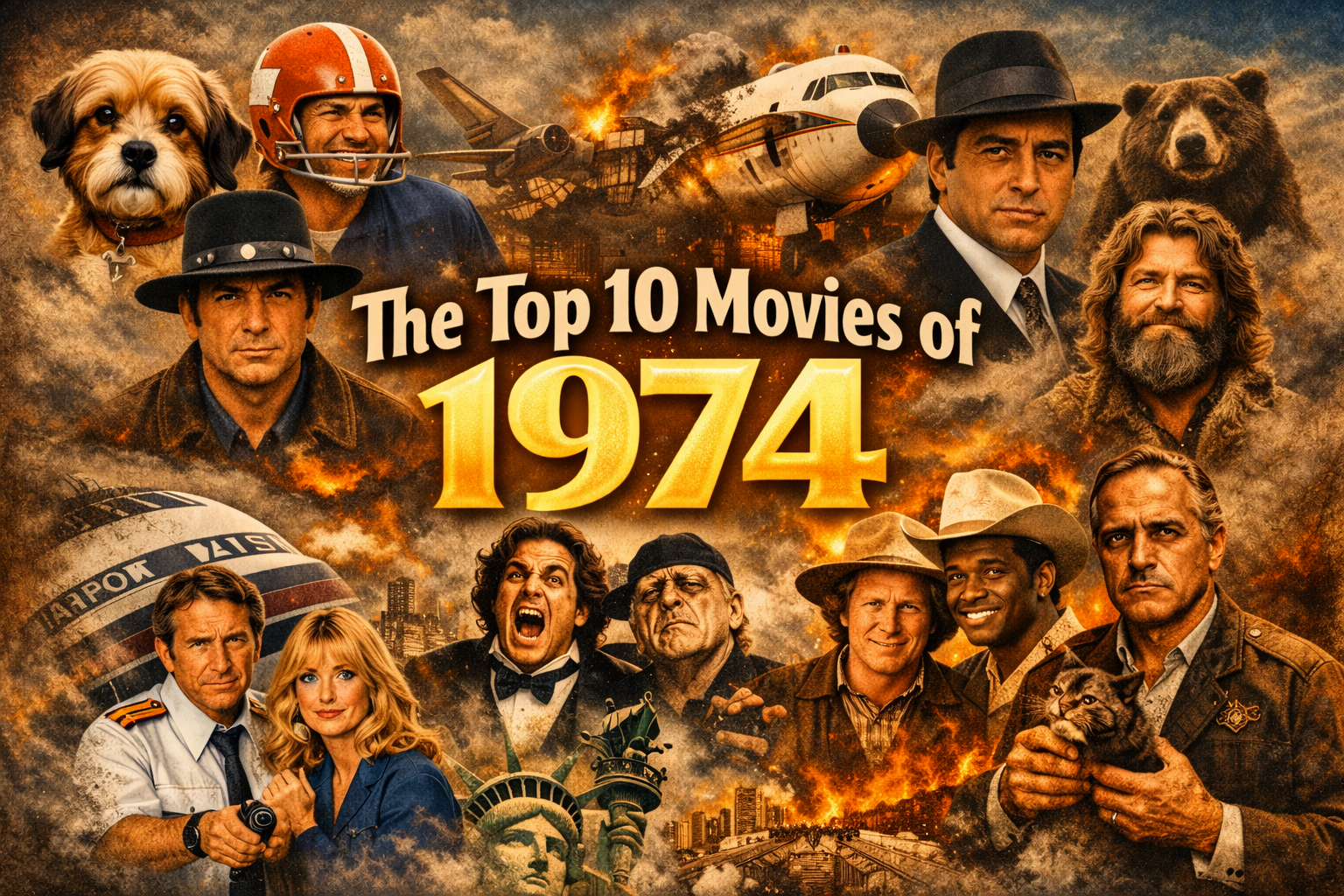
The Top 10 Movies of 1974

The top 10 movies of 1974 look like Hollywood trying everything at once and somehow getting away with it. You’ve got anarchic comedy, all-star disaster spectacle, indie-populist fury, gothic spoof, urban collapse, mob legacy, airport panic, wilderness mythmaking, prison football, and one scruffy dog becoming a genuine mainstream sensation.

This countdown focuses on the biggest North American grosses for films first released in 1974. What comes into view is a year where mass audiences clearly wanted scale and sensation, but not in just one flavor. They wanted rude comedy, nerve-shredding catastrophe, anti-establishment heat, prestige crime, family emotion, and movies that felt a little more unhinged than the old studio system would ever have allowed.

For Gen X, 1974 has one foot in grimy New Hollywood adulthood and the other in the big, broadly marketable crowd-pleaser era that would soon dominate everything. It’s a transitional year, but not a timid one.

Gen X Note: 1974 feels like the moment mainstream hits stop pretending they need to be respectable in only one way. They can be crude, massive, strange, sentimental, cynical, and still print money.

Quick List: The Top 10 Movies of 1974

  1. Benji
  2. The Longest Yard
  3. The Life and Times of Grizzly Adams
  4. Airport 1975
  5. The Godfather Part II
  6. Earthquake
  7. Young Frankenstein
  8. The Trial of Billy Jack
  9. The Towering Inferno
  10. Blazing Saddles

Countdown: The Top 10 Movies of 1974

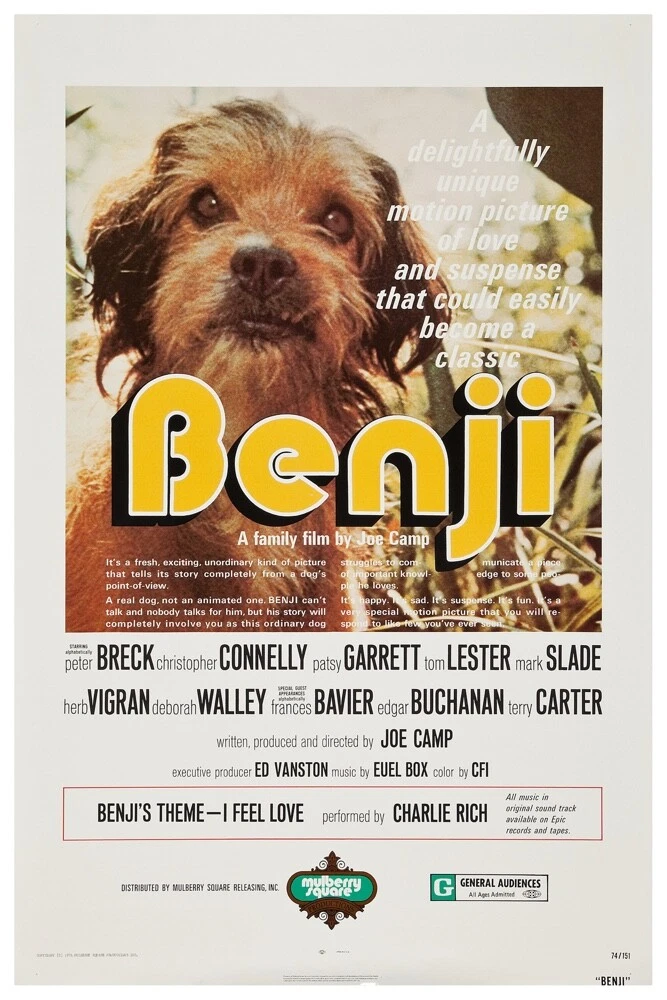
Benji poster
1974

#10 — Benji

Box Office: $39.6M
GenreFamily drama
DirectorJoe Camp
1974 Rank#10
Main Cast
  • Higgins as Benji
  • Peter Breck as Dr. Chapman
  • Deborah Walley as Mary
  • Patsy Garrett as Officer Tuttle

Benji closing out the 1974 top 10 is one of those perfect reminders that box office history is always stranger than prestige history. In a year full of political anger, collapsing buildings, mafia dynasties, and broad comedy acid, a little independent dog movie still found a way to become a major hit. That’s not a fluke. It’s a lesson in how wide the audience really was.

What makes the movie matter is that it isn’t merely cute. It understands exactly how to weaponize earnestness. The whole thing is engineered to disarm you without feeling cynical about it. It’s sentimental, but not lazy. It invites families in, yes, but it also hits that universal underdog frequency that makes people root harder than they expected.

In the commercial story of 1974, Benji matters because it shows there was still enormous room for a phenomenon that didn’t come from a major old-school blockbuster template. It’s small-scale, but it hits emotionally in a way that made it impossible to dismiss.

For Gen X, it belongs to the canon of “movies your childhood treated as sacred even if the adults around you acted above it.” The dog was the star, the vibe was pure 70s family sincerity, and it absolutely worked.
Fun Fact / Why It Still Matters Benji still matters because it proved independent family fare could punch far above its weight and become a genuine mainstream event.
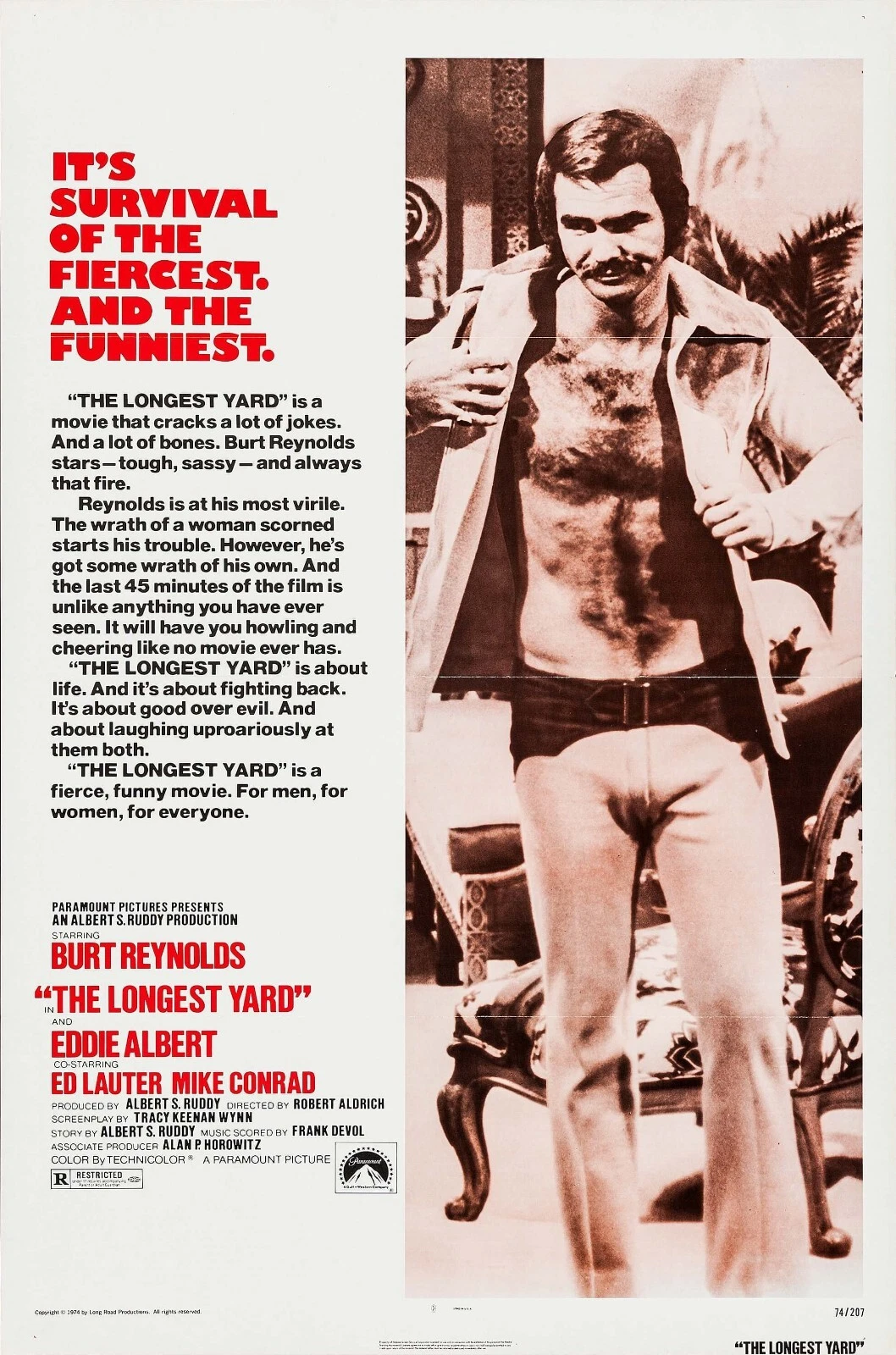
The Longest Yard poster
1974

#9 — The Longest Yard

Box Office: $43.0M
GenreSports comedy-drama
DirectorRobert Aldrich
1974 Rank#9
Main Cast
  • Burt Reynolds as Paul Crewe
  • Eddie Albert as Warden Hazen
  • Ed Lauter as Captain Knauer
  • Michael Conrad as Nate Scarboro

The Longest Yard lands at number nine as one of the year’s best examples of 70s mainstream cinema knowing exactly how to sell rebellion with a crowd-pleasing grin. It takes prison-movie bitterness, sports-movie structure, and anti-authority attitude, then bolts them together into something that feels mean enough to have edge and broad enough to play huge.

Burt Reynolds is central to the whole machine. He had that perfect mid-70s blend of cockiness, humor, and anti-establishment magnetism that let audiences feel they were watching a star and a smartass at the same time. The movie benefits from that looseness. It doesn’t feel overmanaged. It feels lived in, rowdy, and a little dangerous.

In the larger box-office picture, The Longest Yard matters because it shows sports entertainment could hit harder when it stopped pretending to be wholesome. This is competition filtered through corruption, cruelty, humiliation, and revenge. That edge is the point.

For Gen X, it became a durable cable favorite because the premise is almost bulletproof: authority figures are awful, the underdogs get organized, and the violence is half catharsis, half comedy.

Fun Fact / Why It Still Matters The film still matters because it turned a sports setup into a full-on anti-authority fantasy and helped define Burt Reynolds’ 70s box-office appeal.
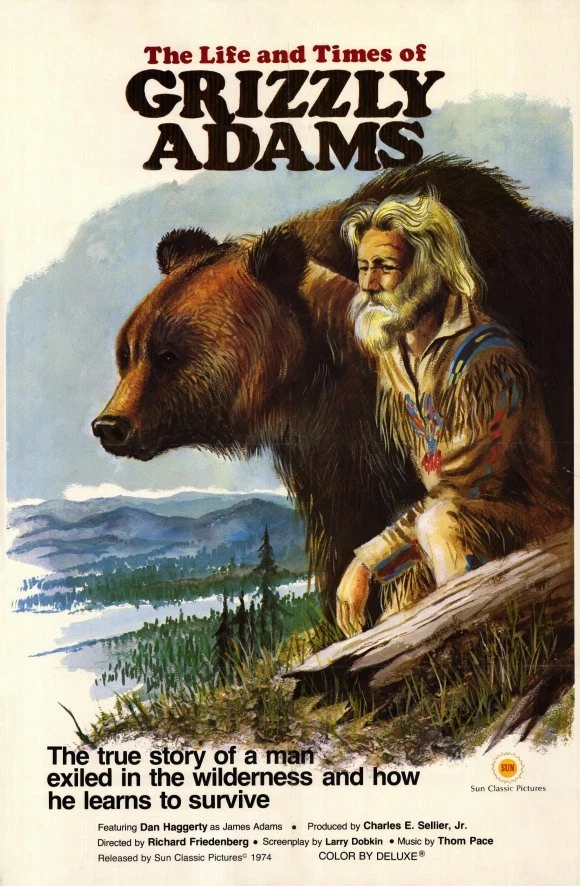
The Life and Times of Grizzly Adams poster
1974

#8 — The Life and Times of Grizzly Adams

Box Office: $45.4M
GenreAdventure drama
DirectorRichard Friedenberg
1974 Rank#8
Main Cast
  • Dan Haggerty as Grizzly Adams
  • Don Shanks as Nakoma
  • Marjorie Harper as Mrs. Bradley
  • Dennis Allen as Maddy

The Life and Times of Grizzly Adams at number eight is one of the great “only in the 70s” box-office results. This is frontier-mountain-man spirituality, wilderness escape, and communion-with-nature sincerity turned into major theatrical business. It doesn’t move like an urban panic movie or a gag machine. It works because it offers a totally different emotional frequency.

The appeal is obvious once you stop looking at it through prestige lenses. It’s a fantasy of opting out. No city rot. No institutional poison. No ironic distance. Just a bearded man, the outdoors, and a sense that the natural world might still hold some version of moral clarity. In a decade full of distrust, that idea sold.

In the context of 1974, the film matters because it proves counterprogramming didn’t have to look slick to be commercial. Sometimes audiences wanted noise and spectacle. Sometimes they wanted a rougher, more homespun myth of escape.

For Gen X, this title matters even beyond the movie because of the TV afterlife it helped create. The whole Grizzly Adams vibe became one of those deeply embedded, slightly shaggy cultural memories that lasted way beyond the theatrical run.

Fun Fact / Why It Still Matters The film still matters because it turned wilderness fantasy into a surprisingly big commercial lane and helped launch one of the decade’s most durable rustic pop-culture brands.
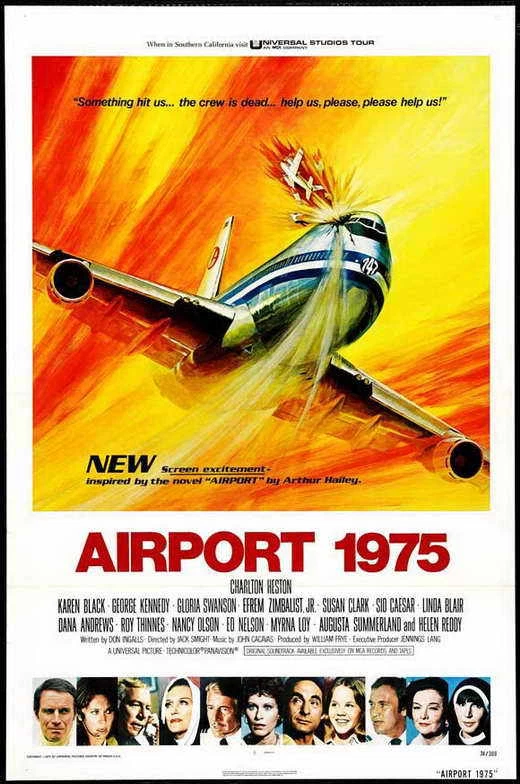
Airport 1975 poster
1974

#7 — Airport 1975

Box Office: $47.3M
GenreDisaster thriller
DirectorJack Smight
1974 Rank#7
Main Cast
  • Charlton Heston as Alan Murdock
  • Karen Black as Nancy Pryor
  • George Kennedy as Joe Patroni
  • Gloria Swanson as Mrs. Devaney

Airport 1975 slides in at number seven and helps explain exactly how hungry audiences were for disaster mechanics by the mid-70s. The original Airport had already shown that anxiety could be packaged elegantly, but this sequel leans further into the formula: bigger jeopardy, more absurd logistical tension, more event-movie “how are they going to fix this?” energy.

What makes it revealing isn’t that it’s tasteful. It’s that it’s efficient. The movie understands the power of a simple giant premise and a recognizable ensemble. It’s one of those films where plausibility is less important than momentum. You buy the ticket to watch catastrophe get organized into entertainment.

In the story of 1974 box office, Airport 1975 matters because it shows the disaster sequel economy kicking into gear. Once Hollywood realized people would pay to watch mass transit become an elaborate panic machine, the decade’s commercial lanes started getting clearer.

For Gen X, this is peak “Saturday afternoon TV movie if it had more stars and more panic” energy. That’s not an insult. That’s part of the charm.

Fun Fact / Why It Still Matters The film still matters because it helped lock in the 70s disaster sequel formula: recognizable stars, escalating peril, and a giant machine in crisis.
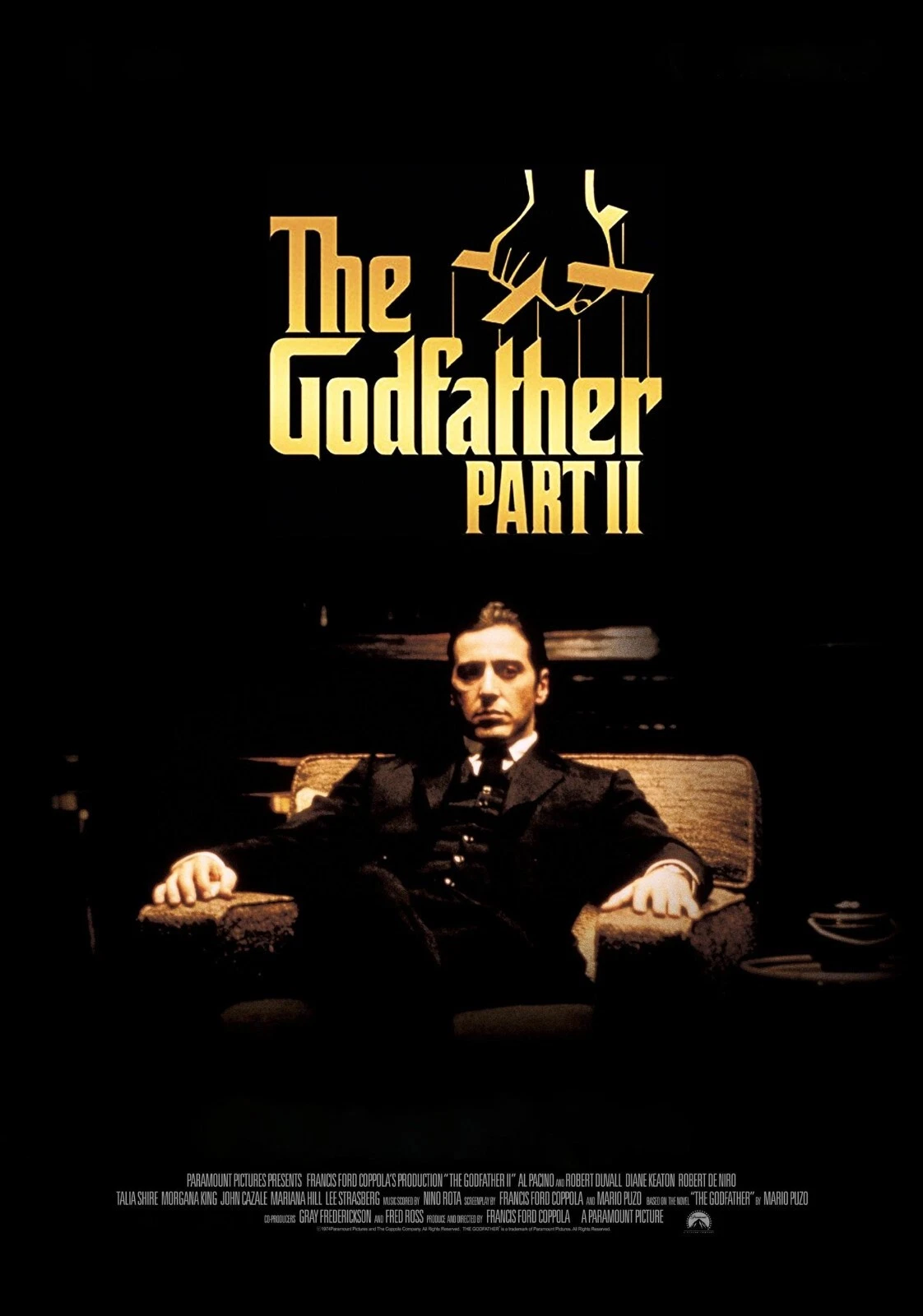
The Godfather Part II poster
1974

#6 — The Godfather Part II

Box Office: $47.5M
GenreCrime epic
DirectorFrancis Ford Coppola
1974 Rank#6
Main Cast
  • Al Pacino as Michael Corleone
  • Robert De Niro as young Vito Corleone
  • Robert Duvall as Tom Hagen
  • Diane Keaton as Kay Corleone

The Godfather Part II at number six is one of those rankings that looks almost wrong until you remember how late in the year it arrived and how strange a sequel it really is. This is not bigger-louder-repeat business. It’s a darker, sadder, more structurally ambitious continuation that somehow expands a masterpiece by turning inheritance itself into tragedy.

The brilliance is in the split design. Michael’s rise into colder, lonelier power is crosscut with young Vito’s building of the family myth, and the contrast makes the whole thing feel like a national autopsy. Where the first film had an operatic seduction to it, this one has a much icier soul. That’s part of why it lasts.

In the commercial story of 1974, The Godfather Part II matters because it proves a sequel could be artistically riskier and emotionally bleaker without collapsing at the box office. That is a huge lesson, even if most later sequels learned the wrong one.

For Gen X, this became one of the movies that taught you sequels didn’t have to be junk food. They could get more complex, more adult, and maybe even more devastating.

Fun Fact / Why It Still Matters The film still matters because it remains one of the rare sequels that deepened the original’s mythology while becoming its own towering work.
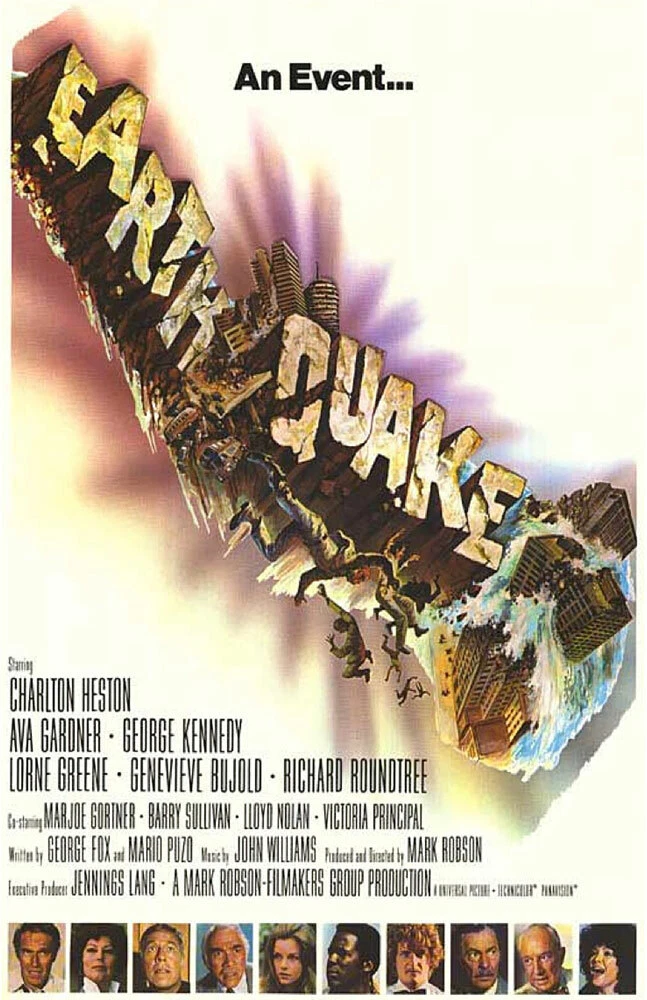
Earthquake poster
1974

#5 — Earthquake

Box Office: $79.7M
GenreDisaster drama
DirectorMark Robson
1974 Rank#5
Main Cast
  • Charlton Heston as Stewart Graff
  • Ava Gardner as Remy Royce-Graff
  • George Kennedy as Lew Slade
  • Geneviève Bujold as Denise Marshall

Earthquake at number five is the pure disaster boom in full dress uniform. If The Poseidon Adventure helped define the lane, Earthquake confirms that lane was no temporary fad. The movie sells destruction as an event, but it also sells the feeling that the modern city itself might be one structural crack away from chaos.

That’s why the appeal goes beyond simple effects spectacle. The 70s had a deep appetite for institutional and civic vulnerability. Planes fail, buildings burn, ships flip, and here the ground itself becomes the enemy. It’s a very efficient way to dramatize anxiety on a mass scale. The movie may be giant, but it’s really a fear-delivery system.

In the larger 1974 box-office picture, Earthquake matters because it proves disaster filmmaking had become premium mainstream product. This wasn’t novelty anymore. It was a dependable commercial strategy with stars, effects, and civic panic as the hook.

For Gen X, it’s one of the definitive “adults loved watching infrastructure fail” movies of the decade, which sounds bleak until you remember how entertaining the formula could be when it was done at full throttle.

Fun Fact / Why It Still Matters The film still matters because it helped cement the 70s disaster blockbuster as a core commercial genre, not just a one-off craze.
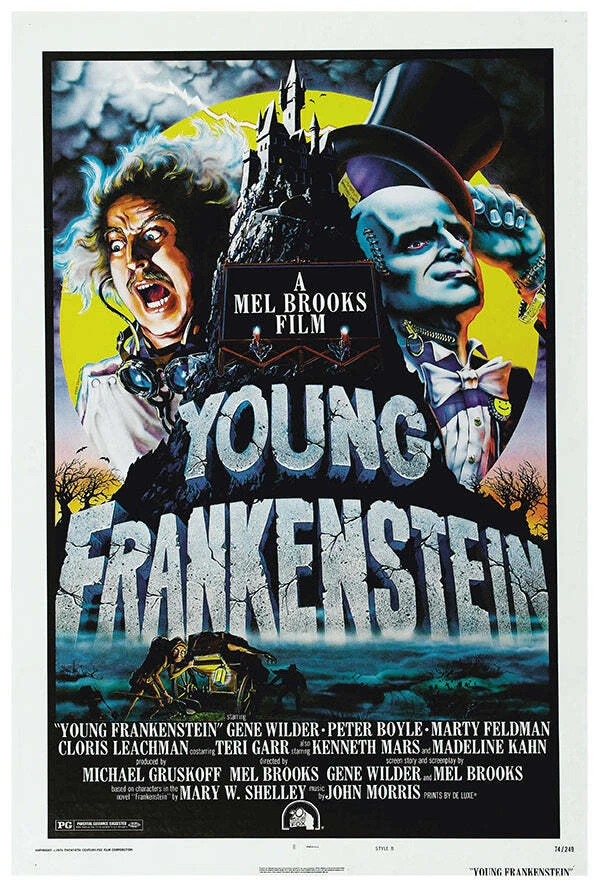
Young Frankenstein poster
1974

#4 — Young Frankenstein

Box Office: $86.3M
GenreComedy horror
DirectorMel Brooks
1974 Rank#4
Main Cast
  • Gene Wilder as Dr. Frederick Frankenstein
  • Peter Boyle as the Monster
  • Marty Feldman as Igor
  • Cloris Leachman as Frau Blücher

Young Frankenstein at number four is one of those hits that makes you appreciate just how smart the 70s mainstream could be. It’s a spoof, yes, but it doesn’t treat parody like disposable junk food. Mel Brooks and Gene Wilder approach the old Universal horror style with so much formal affection that the comedy lands harder because the movie actually respects what it’s playing with.

Shot in black and white, built with classic-movie texture, and stacked with performances that know exactly how far to push the absurdity, it works on two levels at once: as a loving recreation and as a demolition job. That double pleasure is a big part of why it became such a major hit. Audiences got silliness with craftsmanship.

In the story of 1974, Young Frankenstein matters because it proves broad comedy didn’t have to be lazy to play huge. It could be referential, stylized, weirdly elegant, and still absolutely connect.

For Gen X, this is one of the great hand-me-down comedies — the kind of movie older siblings, parents, and cable programmers all agreed was worth passing along.

Fun Fact / Why It Still Matters The film still matters because it remains one of the few parody films that is also a genuine piece of cinematic craftsmanship in its own right.
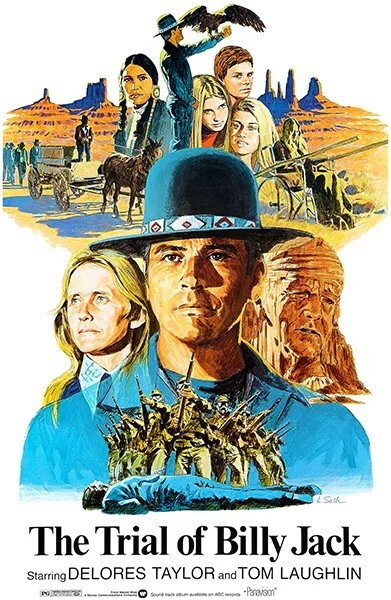
The Trial of Billy Jack poster
1974

#3 — The Trial of Billy Jack

Box Office: $89.0M
GenreAction drama
DirectorTom Laughlin
1974 Rank#3
Main Cast
  • Tom Laughlin as Billy Jack
  • Delores Taylor as Jean Roberts
  • Victor Izay as Doc
  • Teresa Kelly as Carol

The Trial of Billy Jack at number three is the kind of result that modern box-office memory almost never talks about, which is exactly why it’s so interesting. This was not slick studio polish. It was political, self-serious, confrontational, messy, and clearly wired into a populist audience that felt like the respectable gatekeepers were talking past them.

That gives the film enormous historical value even if it doesn’t slot neatly into later canon. It wasn’t selling refinement. It was selling intensity, attitude, and the feeling that the culture war had come to the multiplex. The size of its success tells you 1974 audiences were still willing to rally around something that felt like a movement as much as a movie.

In the commercial story of 1974, The Trial of Billy Jack matters because it’s a reminder that countercultural heat and outsider populism could still become huge theatrical business, even when critics rolled their eyes.

For Gen X, it’s one of those titles that works as a cultural weather report. Even if later generations don’t rewatch it constantly, its success tells you exactly how fractured, angry, and argument-hungry the era still was.

Fun Fact / Why It Still Matters The film still matters because its success shows that 70s audiences would still massively support anti-establishment, movement-style cinema outside the most polished studio lanes.
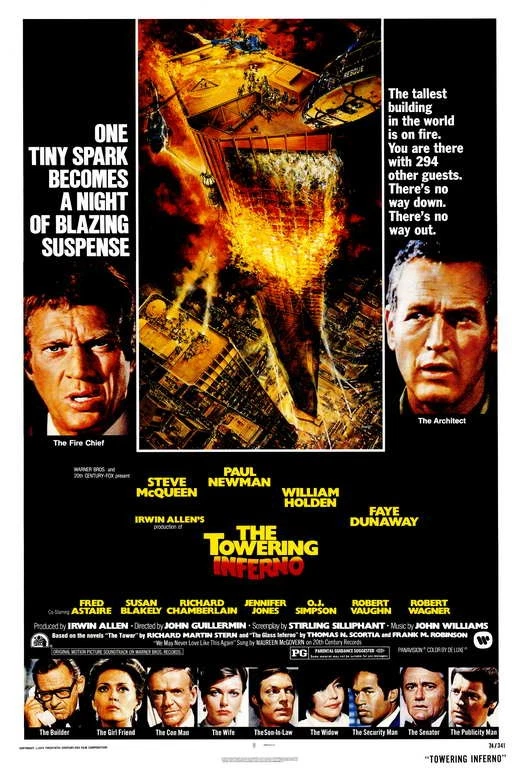
The Towering Inferno poster
1974

#2 — The Towering Inferno

Box Office: $116.0M
GenreDisaster epic
DirectorJohn Guillermin
1974 Rank#2
Main Cast
  • Steve McQueen as Chief O’Hallorhan
  • Paul Newman as Doug Roberts
  • William Holden as James Duncan
  • Faye Dunaway as Susan Franklin

The Towering Inferno at number two is disaster cinema at full prestige scale. If Earthquake is brute-force civic panic, this is deluxe catastrophe engineering. The cast is stacked, the premise is gigantic, and the movie understands one of the central pleasures of 70s event filmmaking: letting audiences watch status, architecture, ego, and technology all melt under pressure.

What separates it from a lesser formula picture is the amount of expensive seriousness poured into the machine. The film doesn’t wink at its own largeness. It treats the whole inferno like a moral and structural referendum on modern arrogance. That gives the spectacle a little extra weight, even when the main draw is still, obviously, watching a giant building become hell.

In the commercial story of 1974, The Towering Inferno matters because it’s the disaster cycle reaching one of its grandest commercial peaks. It turns ensemble star power and urban catastrophe into full premium event cinema.

For Gen X, it became one of those all-star, all-chaos cable landmarks where you always wind up staying longer than intended because the scale is so beautifully ridiculous.

Fun Fact / Why It Still Matters The film still matters because it represents the disaster blockbuster at near-maximum 70s scale: stars, spectacle, engineering panic, and moral collapse all in one package.
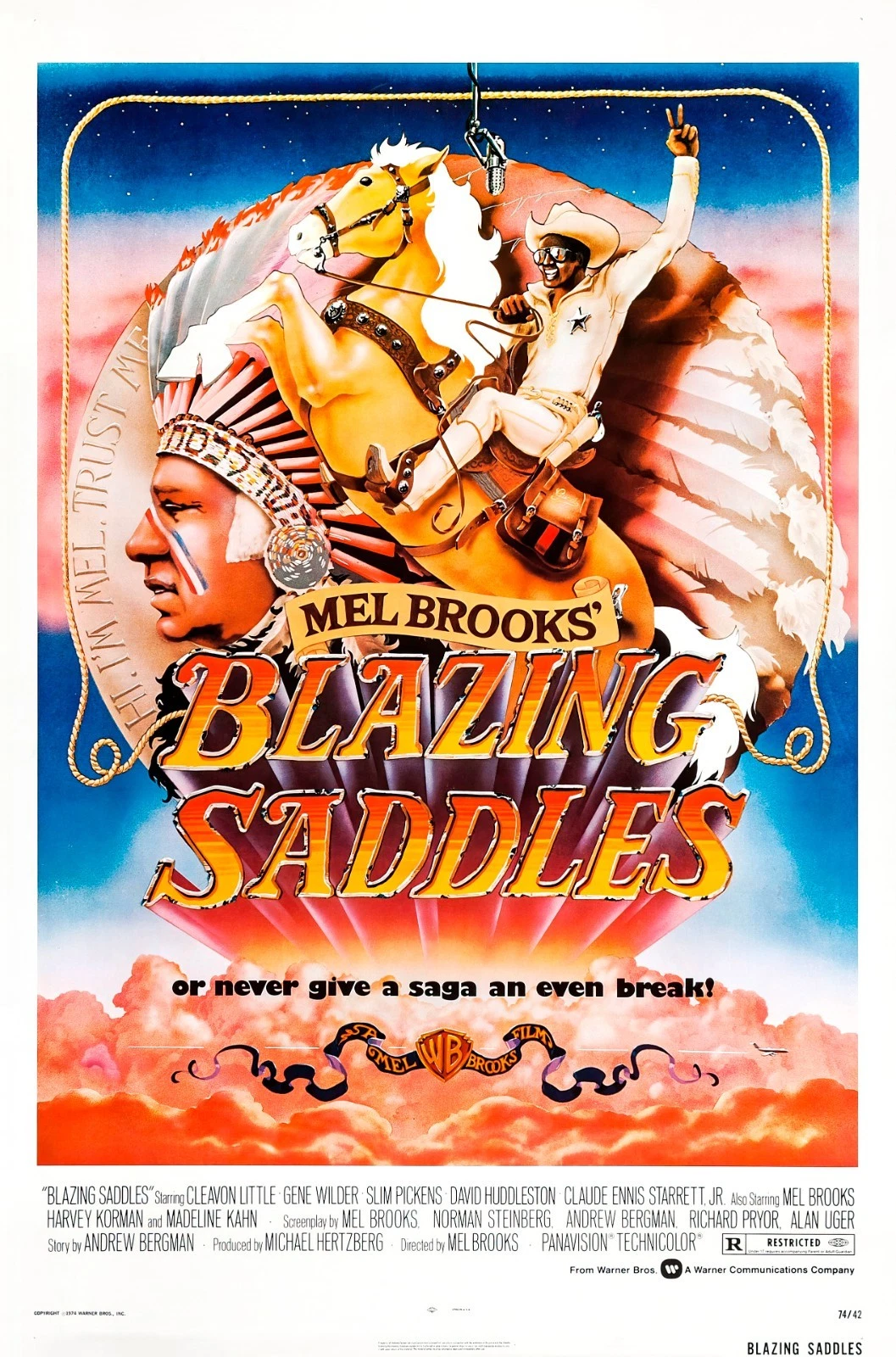
Blazing Saddles poster
1974

#1 — Blazing Saddles

Box Office: $119.5M
GenreComedy western
DirectorMel Brooks
1974 Rank#1
Main Cast
  • Cleavon Little as Sheriff Bart
  • Gene Wilder as Jim
  • Harvey Korman as Hedley Lamarr
  • Madeline Kahn as Lili Von Shtupp

Blazing Saddles taking the top spot is one of the great proof points that 1974 audiences were more than ready for comedy with teeth, nerve, and absolutely no interest in behaving politely. Mel Brooks doesn’t just spoof the western. He attacks myth, racism, macho posturing, Hollywood formality, and the very idea that genre reverence should protect anything from ridicule.

The miracle is that the movie stays so loose and funny while doing that much demolition. Cleavon Little gives it cool and grace, Gene Wilder gives it surreal rhythm, Harvey Korman goes magnificently rotten, and the whole thing moves with the energy of people who know they’re getting away with something. That danger is part of the laugh.

In the box-office story of 1974, Blazing Saddles matters because it shows the year’s biggest release could be a comedy that felt wild, confrontational, and impossible to fully sanitize. That’s a much more interesting cultural fact than “people like jokes.”

For Gen X, this is one of the definitive examples of a movie that arrived before the modern irony machine but already seemed to understand how to tear popular culture apart from the inside while still being insanely entertaining.

Fun Fact / Why It Still Matters Blazing Saddles still matters because it remains one of the biggest examples of a mainstream hit using comedy not just to entertain, but to torch a whole pile of American mythmaking.

Rewind Verdict

The top 10 movies of 1974 are such a fun mess because there is no single mood running the table. The biggest hit is a full-on comedy flamethrower. The runner-up is deluxe catastrophe. The year also makes room for gothic parody, prison sports rebellion, wilderness myth, family-dog sincerity, populist political anger, and one of the greatest sequels ever made.

What makes the year especially revealing is how commercial success keeps showing up in completely different costumes. Sometimes the audience wanted panic. Sometimes they wanted profanity and genre destruction. Sometimes they wanted emotional comfort. Sometimes they wanted the Corleones getting even colder. The marketplace was big enough to hold all of it.

For Smells Like Gen X, 1974 is one of those excellent proof years that the 70s were not one-note. They could be rowdy, serious, sentimental, cynical, vulgar, and grand in the same breath — and somehow still feel more alive than a lot of later, tidier blockbuster years.

FAQ: Top Movies of 1974

What was the highest-grossing 1974 release at the North American box office?

Blazing Saddles finishes first in this release-year ranking, narrowly ahead of The Towering Inferno.

Why is Benji in the 1974 top 10?

Because this series ranks films by North American gross for movies first released in that year, and current domestic box-office figures place Benji above some older year-summary borderline titles.

Why use release-year grosses instead of calendar-year totals?

Because release-year grosses keep the list focused on movies that actually belong to 1974 rather than mixing them with earlier holdovers still making money in the same calendar window.

Was 1974 more about disaster movies or comedies?

Both. The year’s biggest hits show a huge appetite for disaster spectacle, but Blazing Saddles and Young Frankenstein prove audiences also wanted comedy with personality and bite.

What makes the 1974 lineup so memorable?

Its range. It’s one of those years where giant commercial success belongs to a rude western spoof, a burning-skyscraper epic, a mafia tragedy, a prison-football movie, a mountain-man fantasy, and a dog movie all at once.

Get the Weekly Gen X Drop

New videos, rewinds, and savage nostalgia — first.

JOIN THE NEWSLETTER WATCH VIDEOS

MORE REWINDS