Top 10 Movies of 1995

Top 10 Movies of 1995
Smells Like Gen X • Top Movies of 1995

The Top 10 Movies of 1995

The top 10 movies of 1995 feel like a perfect bridge year between the older movie-star studio machine and the sleeker, franchise-heavier, CGI-accelerated future that was about to take over the multiplex. This is a lineup where animated revolution, legacy action brands, Disney prestige ambition, adult suspense, family adventure, broad comedy, and rebooted spy mythology all sit side by side without one lane completely flattening the others.

What makes 1995 so interesting is that the year’s biggest hits do not feel like copies of one another. Toy Story changes the visual language of mainstream animation. Batman Forever turns Gotham into a neon retail event. Apollo 13 proves adults will still come out in force for smart, expensive, emotionally grounded spectacle. Pocahontas shows Disney aiming for grandeur and cultural weight. GoldenEye resurrects Bond for a post-Cold War audience. Meanwhile, Seven slinks into the top 10 like a warning that the back half of the decade is about to get darker.

For Gen X, 1995 still has a very particular texture: Batman logos everywhere, Pixar suddenly feeling like the future, Jim Carrey still at peak chaos, Robin Williams trapped in a killer board game, Bruce Willis wrecking New York again, and Pierce Brosnan making Bond feel slick enough for the mall era. It is a year of transition, but not in a boring way. It is transition with hit songs, popcorn, VHS shelf life, and very different kinds of box-office power all colliding at once.

Gen X Note: 1995 is where the 90s movie machine gets shinier, more effects-driven, more toyetic, and more franchise-aware — but it still has enough room for grown-up thrillers, real movie stars, and movies that are willing to be strange in totally different ways.

Quick List: The Top 10 Movies of 1995

  1. Die Hard with a Vengeance
  2. Seven
  3. Jumanji
  4. Casper
  5. GoldenEye
  6. Ace Ventura: When Nature Calls
  7. Pocahontas
  8. Apollo 13
  9. Batman Forever
  10. Toy Story

Countdown: The Top 10 Movies of 1995

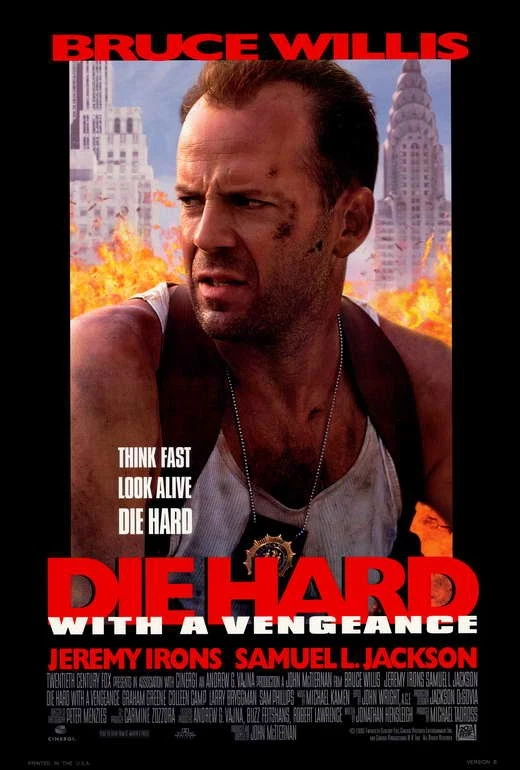
Die Hard with a Vengeance poster
1995

#10 — Die Hard with a Vengeance

Box Office: $100.0M
GenreAction thriller
DirectorJohn McTiernan
1995 Rank#10
Main Cast
  • Bruce Willis as John McClane
  • Samuel L. Jackson as Zeus Carver
  • Jeremy Irons as Simon Gruber
  • Graham Greene as Joe Lambert

Die Hard with a Vengeance showing up at number ten is a reminder that by 1995 the Die Hard brand still had real weight, but it also needed a jolt. The film understands that immediately. Instead of trying to simply remake the first movie’s claustrophobic tower pressure, it blows the whole thing out into a city-wide scavenger hunt powered by riddles, detonations, traffic, sweat, and public humiliation.

The smartest thing the movie does is pair John McClane with Zeus. That is not just a gimmick. It is the mechanism that gives the series fresh air. Bruce Willis gets to keep McClane’s wounded sarcasm and blue-collar irritation intact, but Samuel L. Jackson adds a sharper, more confrontational rhythm that keeps the whole movie from feeling like another round of the same punishment loop.

The New York setting matters just as much as the stars. It makes the movie feel broader, meaner, and more civic in its anxiety. This is not one guy trapped in one bad location. It is one increasingly wrecked man being used as a delivery system for public chaos, and the city becomes part obstacle course, part pressure cooker, part character.

In the context of 1995, the film matters because it represents the older action blockbuster model still operating at high efficiency: stars first, concept second, practical momentum everywhere. It does not need a cinematic universe to matter. It just needs Bruce Willis, a ticking clock, and a city that looks ready to explode.

For Gen X, it remains one of those endlessly rerunnable cable fixtures that somehow feels both oversized and stripped-down at once — a bruised summer action movie with enough attitude to survive endless revisits.
Fun Fact / Why It Still Matters It still hits because it proved the best way to refresh a franchise is not to sand down the hero — it is to throw him into a bigger, nastier system and give him somebody equally stubborn to argue with.
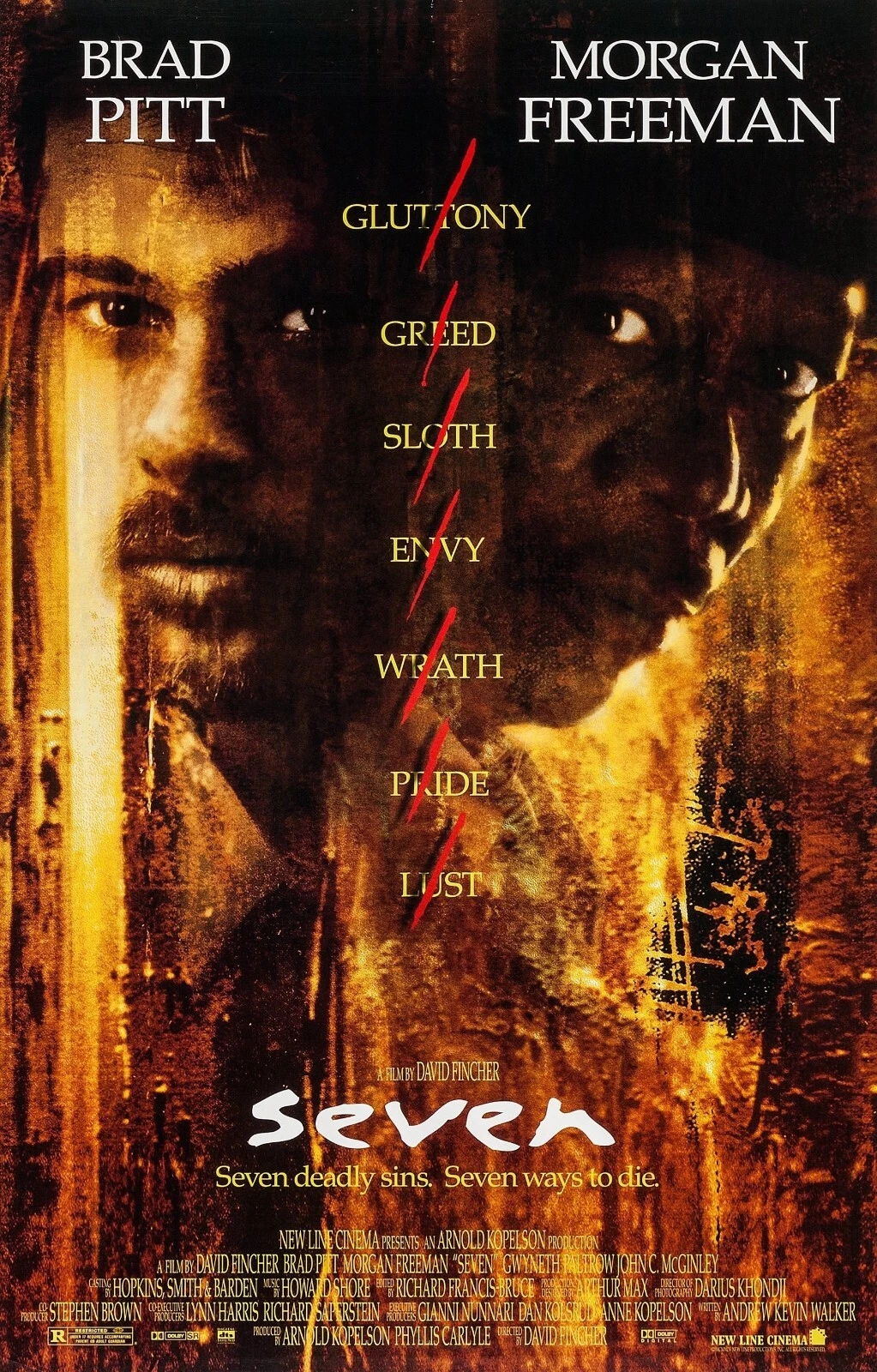
Seven poster
1995

#9 — Seven

Box Office: $100.1M
GenreCrime thriller
DirectorDavid Fincher
1995 Rank#9
Main Cast
  • Brad Pitt as Det. David Mills
  • Morgan Freeman as Det. William Somerset
  • Gwyneth Paltrow as Tracy Mills
  • Kevin Spacey as John Doe

Seven at number nine is one of the clearest signs that the mainstream was already growing darker in the middle of the decade. This is not a glossy police thriller designed to flatter the audience with competence and closure. It is a sickly, rain-streaked, spiritually rotten movie that seems determined to make every room feel moldy and every moral choice feel compromised.

David Fincher’s control is the thing that gives the movie its staying power. The film is not merely grim; it is disciplined. The city has no identity beyond collapse. The crimes are framed less as plot mechanics than as symptoms of a civilization that has gone septic. Even before the ending shows up to punch a hole in the audience, the movie has already poisoned the air.

Morgan Freeman and Brad Pitt matter because they embody two different responses to institutional decay. Freeman’s Somerset is tired enough to see the patterns clearly, while Pitt’s Mills still believes force, righteousness, and urgency can overpower a system that has already gone bad at the root. Their contrast gives the movie a real philosophical spine instead of just procedural dread.

In the context of 1995, Seven matters because it turns dread into a commercial language. This was not art-house gloom hiding in a corner. It was a major hit, which says something important about where audience taste was heading as the decade moved away from the warmer, softer mainstream tones of the late 80s and early 90s.

For Gen X, it remains one of those titles that felt like a tonal shift in real time. It was not just successful. It made a lot of thrillers that came after it look cleaner, safer, and less willing to stare into the abyss.

Fun Fact / Why It Still Matters It still lingers because it helped normalize a much harsher, more despairing kind of studio thriller without sacrificing commercial force.
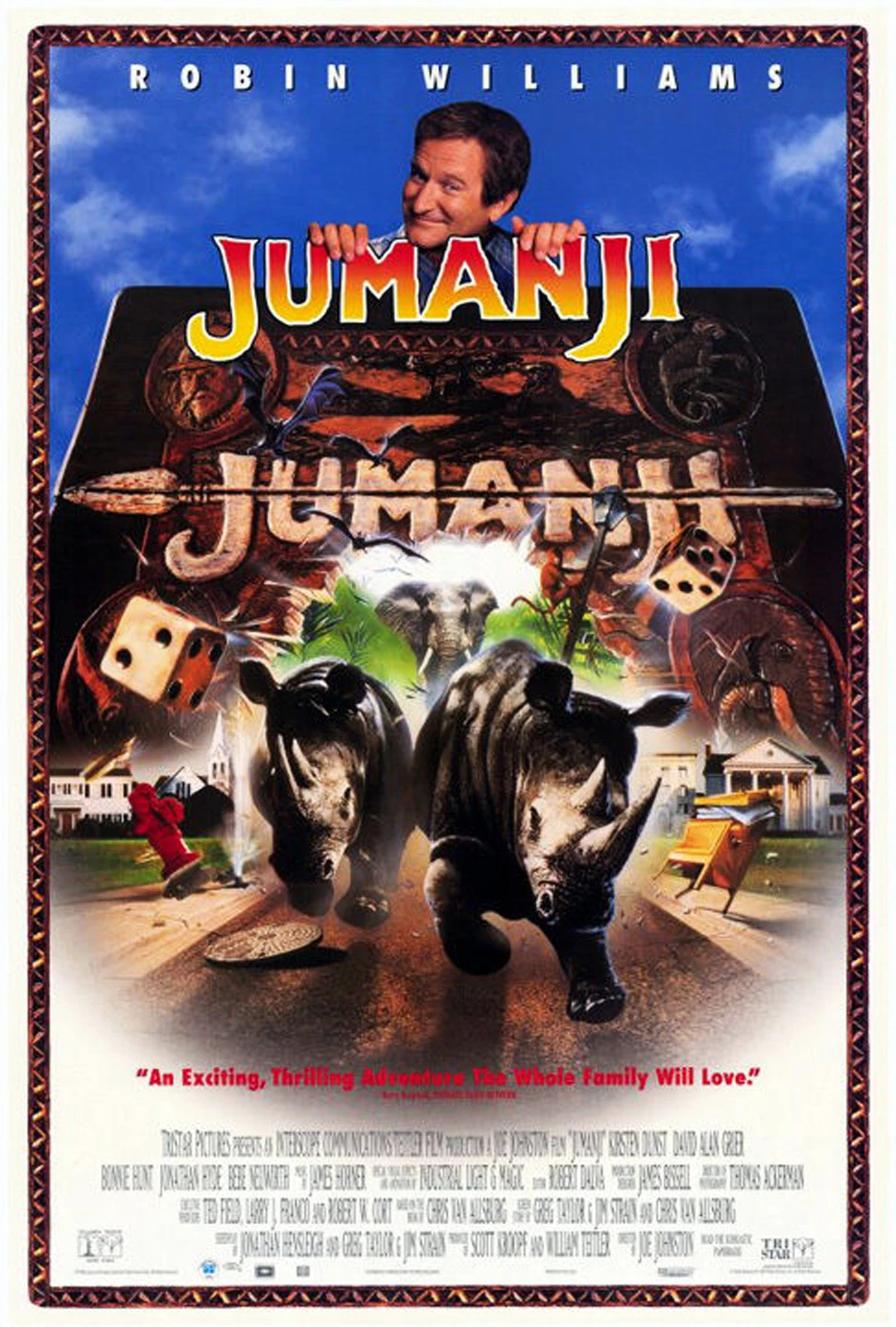
Jumanji poster
1995

#8 — Jumanji

Box Office: $100.5M
GenreFantasy adventure
DirectorJoe Johnston
1995 Rank#8
Main Cast
  • Robin Williams as Alan Parrish
  • Bonnie Hunt as Sarah Whittle
  • Kirsten Dunst as Judy Shepherd
  • Bradley Pierce as Peter Shepherd

Jumanji at number eight is peak mid-90s family blockbuster logic: take an irresistible premise, pour practical destruction and CGI creatures into it, and let a familiar suburban setting turn into total panic. The genius of the concept is that it instantly fuses wonder with danger. This is not a magical-object movie that politely decorates everyday life. It is a magical-object movie that punishes you for touching it.

Joe Johnston is exactly the right director for material like this because he understands how to make fantasy tactile. The movie is not elegant in a prestige sense, but it is deeply physical. Furniture breaks. animals stampede. vines burst through walls. even the ordinary house starts to feel like it is losing the battle against an invading world. That sense of invasion is what makes the movie pop.

Robin Williams gives the film the emotional glue it needs. Alan is not just an exposition machine explaining how the cursed board game works. He is a man emotionally stranded between childhood and adulthood, which gives the chaos underneath it a little ache. Williams can be frantic and warm at the same time, and that combination keeps the movie from becoming just an effects demo.

In the context of 1995, Jumanji matters because it shows how strongly family audiences still responded to original high-concept spectacle. This is not a sequel, not a superhero movie, not a pre-sold mega-franchise. It is an idea movie, and the idea was good enough to become a hit.

For Gen X and younger viewers who grew up just behind them, it remains one of those movies that made a perfectly safe household object feel permanently suspicious.

Fun Fact / Why It Still Matters It still works because it turns childhood imagination into a full-blown siege scenario without losing the sense that adventure and terror are often neighbors.
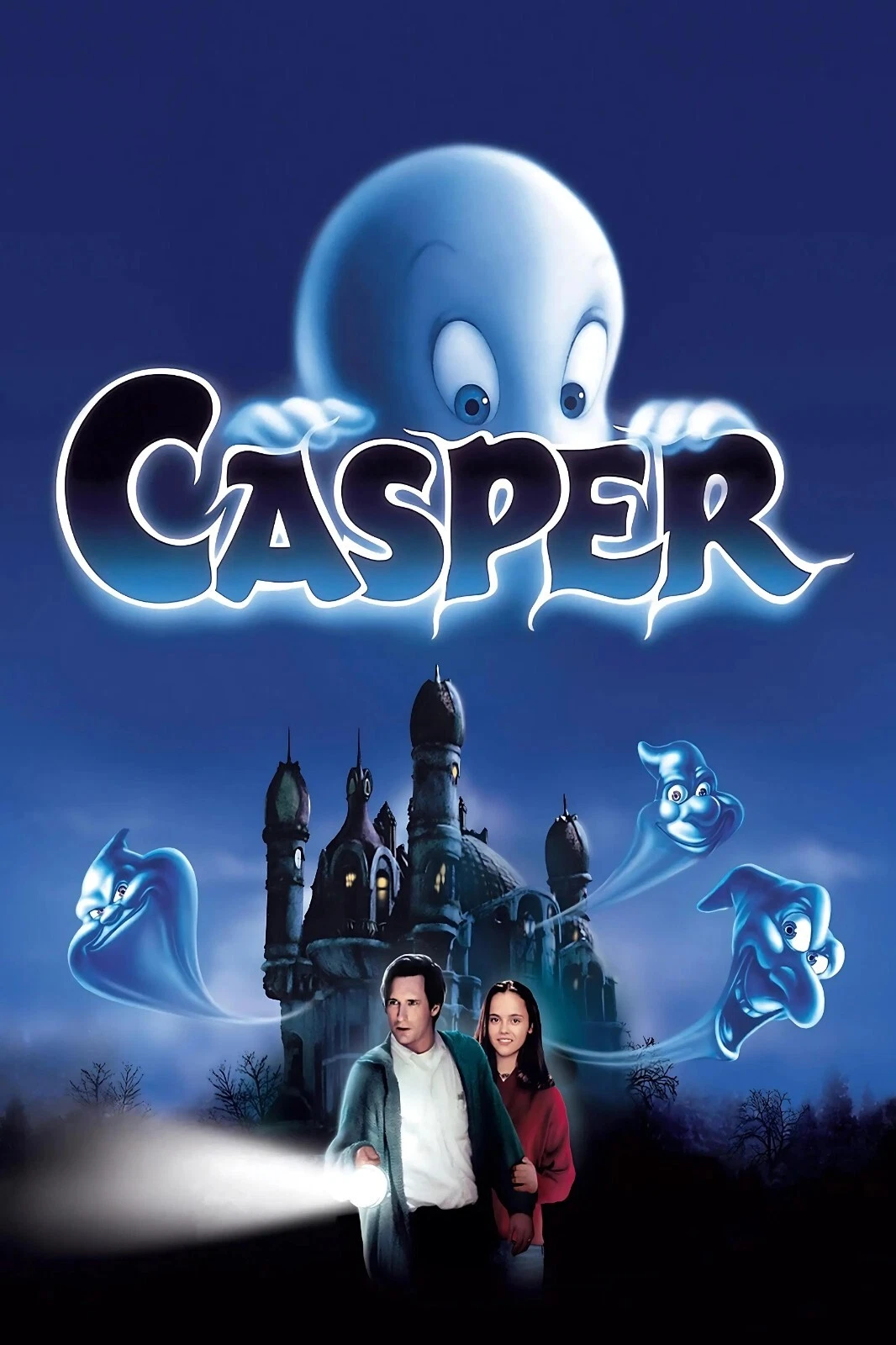
Casper poster
1995

#7 — Casper

Box Office: $100.8M
GenreFantasy comedy
DirectorBrad Silberling
1995 Rank#7
Main Cast
  • Christina Ricci as Kat Harvey
  • Bill Pullman as Dr. James Harvey
  • Cathy Moriarty as Carrigan Crittenden
  • Eric Idle as Paul “Dibs” Plutzker

Casper at number seven is one of the more revealing hits of 1995 because it looks like disposable family product from a distance, but it plays with a surprising amount of melancholy. Underneath the cartoon-ghost setup and digital showcase appeal, the movie is absolutely fixated on grief, loneliness, memory, and the way death lingers in rooms long after people want to move on.

That tonal mix is what makes it interesting. The movie can be broad and goofy one second, then quietly sad the next. Christina Ricci gives it a grounded teen presence, while Bill Pullman supplies the soft, yearning parental energy that keeps the emotional material from feeling like an afterthought. The ghost effects were the sell, but the emotional undertow is why the movie stuck.

It also matters as a snapshot of the era’s adaptation habits. Hollywood was very interested in reviving older cartoon and comic-strip properties by giving them expensive live-action or CG-assisted bodies, and Casper is one of the more successful examples because it is not embarrassed by sincerity. It really wants to be funny, spooky, and heartfelt at the same time.

In the context of 1995, the film matters because it shows that family movies did not have to be all sugar and noise to connect. They could still smuggle in sadness and longing, as long as the package was friendly enough to get parents to buy tickets.

For Gen X households, it became one of those movies that kept resurfacing every fall and every Halloween season, gradually earning a bigger afterlife than its original “friendly ghost movie” reputation might suggest.

Fun Fact / Why It Still Matters It still resonates because it wrapped kid-friendly effects and haunted-house fun around a very real sadness that gave the whole thing more emotional shelf life.
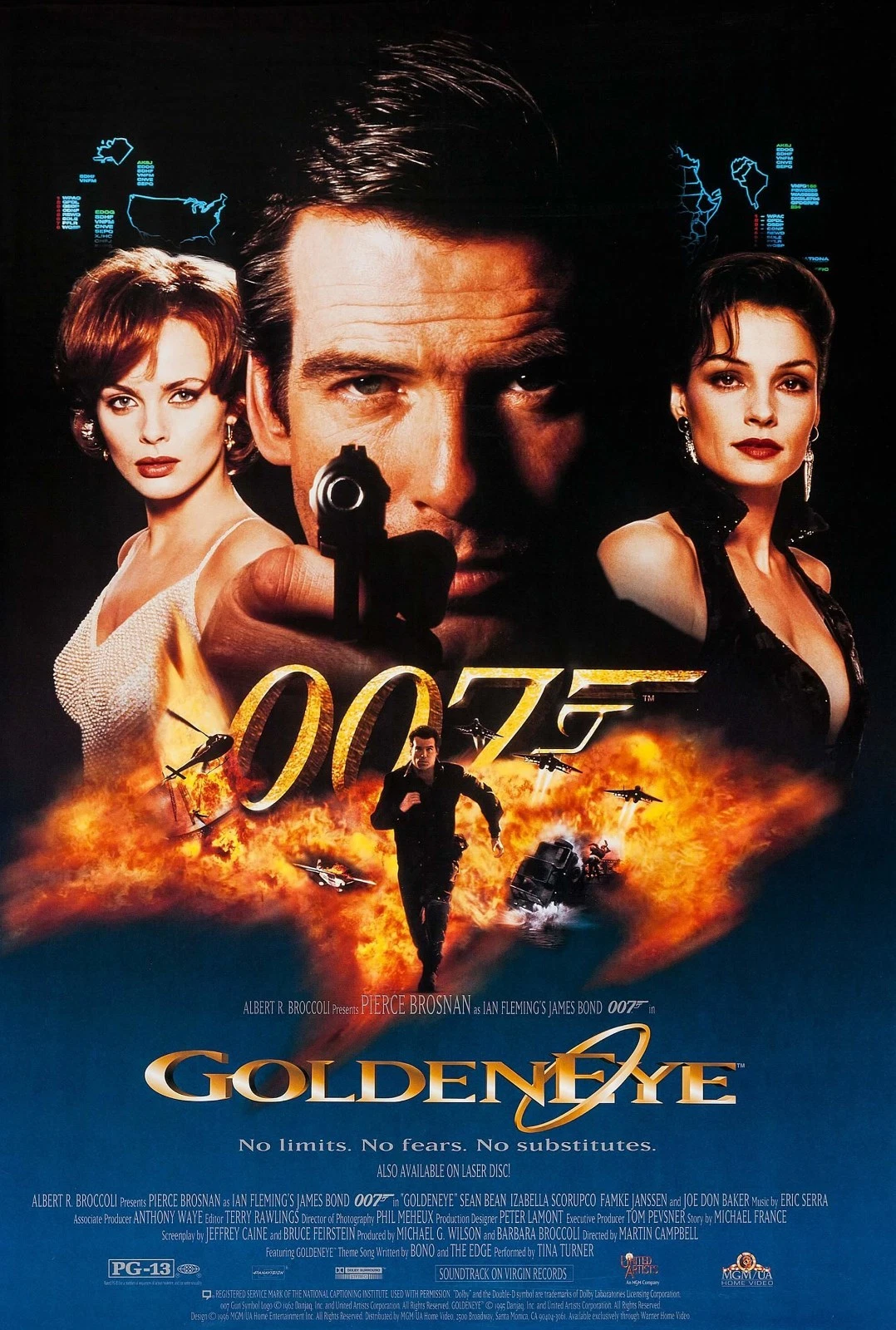
GoldenEye poster
1995

#6 — GoldenEye

Box Office: $106.4M
GenreSpy thriller
DirectorMartin Campbell
1995 Rank#6
Main Cast
  • Pierce Brosnan as James Bond
  • Sean Bean as Alec Trevelyan
  • Famke Janssen as Xenia Onatopp
  • Izabella Scorupco as Natalya Simonova

GoldenEye hitting number six is one of the biggest “legacy brand saved itself” moments of the decade. Bond had been gone long enough that the franchise risked feeling like elegant but irrelevant heritage product. The film understands that problem and makes it part of its text. The world inside the movie keeps asking whether Bond is outdated, and the movie answers by letting him be polished, dangerous, and slightly archaic in a way that becomes its own selling point.

Pierce Brosnan is crucial because he feels like a recalibration rather than a replacement. He has enough classic Bond smoothness to satisfy the fantasy, but enough edge to fit the more self-aware 90s action environment. He looks right in a tux and right in a firefight, which is exactly what the series needed after the long gap.

Martin Campbell also deserves credit for understanding that a relaunch has to do more than remind people of old pleasures. It has to make them feel current again. The action is muscular, the villains are memorable, the tone is slicker and more ironic without collapsing into parody, and the whole thing moves like it knows Bond cannot afford to feel dusty.

In the context of 1995, GoldenEye matters because it shows that older properties could be modernized without completely abandoning their fantasy core. It is neither nostalgic retreat nor total reinvention. It is a reboot before the culture got fully addicted to using that word.

For Gen X, it remains one of the cleanest examples of a franchise coming back with its suit pressed, its hair in place, and just enough new attitude to matter again.

Fun Fact / Why It Still Matters It still plays because it made Bond relevant again by modernizing the context without stripping away the cool that made the series a fantasy in the first place.
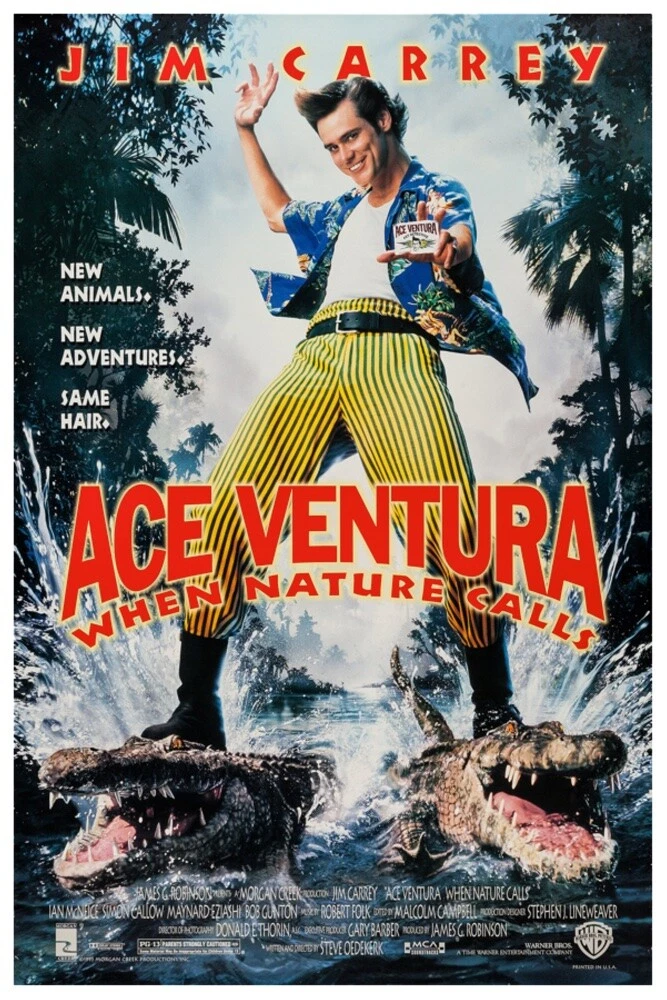
Ace Ventura When Nature Calls poster
1995

#5 — Ace Ventura: When Nature Calls

Box Office: $108.4M
GenreComedy
DirectorSteve Oedekerk
1995 Rank#5
Main Cast
  • Jim Carrey as Ace Ventura
  • Ian McNeice as Fulton Greenwall
  • Simon Callow as Vincent Cadby
  • Maynard Eziashi as Ouda

Ace Ventura: When Nature Calls at number five is one of the loudest reminders that in the mid-90s Jim Carrey was not just successful — he was a commercial weather system. The country was still fully willing to buy tickets for the chance to watch him shriek, contort, improvise, mug, and essentially behave like a human cartoon sketch that had escaped television and gotten its own theatrical release.

The sequel’s importance is less about refinement than about measurement. It shows just how far star heat could carry material in that era. This is not a film that carefully deepens its character or rethinks the formula. It expands the chaos, relocates the mayhem, and trusts that Carrey’s elastic performance style remains a big enough event to do the rest of the work.

That makes it a useful artifact of 1995 comedy culture. Before superhero brands swallowed so much audience oxygen, a single comic persona could still function like tentpole hardware all by itself. Carrey’s face, voice, and rhythm were the effects package. The premise existed mainly to give him a runway long enough to keep detonating bits.

In the context of 1995, the film matters because it captures peak broad-theatrical-comedy confidence. Studios were still comfortable letting a performer’s specific energy define the whole enterprise. That kind of stardom-driven absurdity feels much rarer now.

For Gen X, the movie remains inseparable from that strange, beautiful moment when Jim Carrey seemed capable of forcing the entire culture to meet him at his exact volume.

Fun Fact / Why It Still Matters It still fascinates because it is a near-pure example of a movie being sold on one performer’s comic force field rather than on mythology, continuity, or prestige.
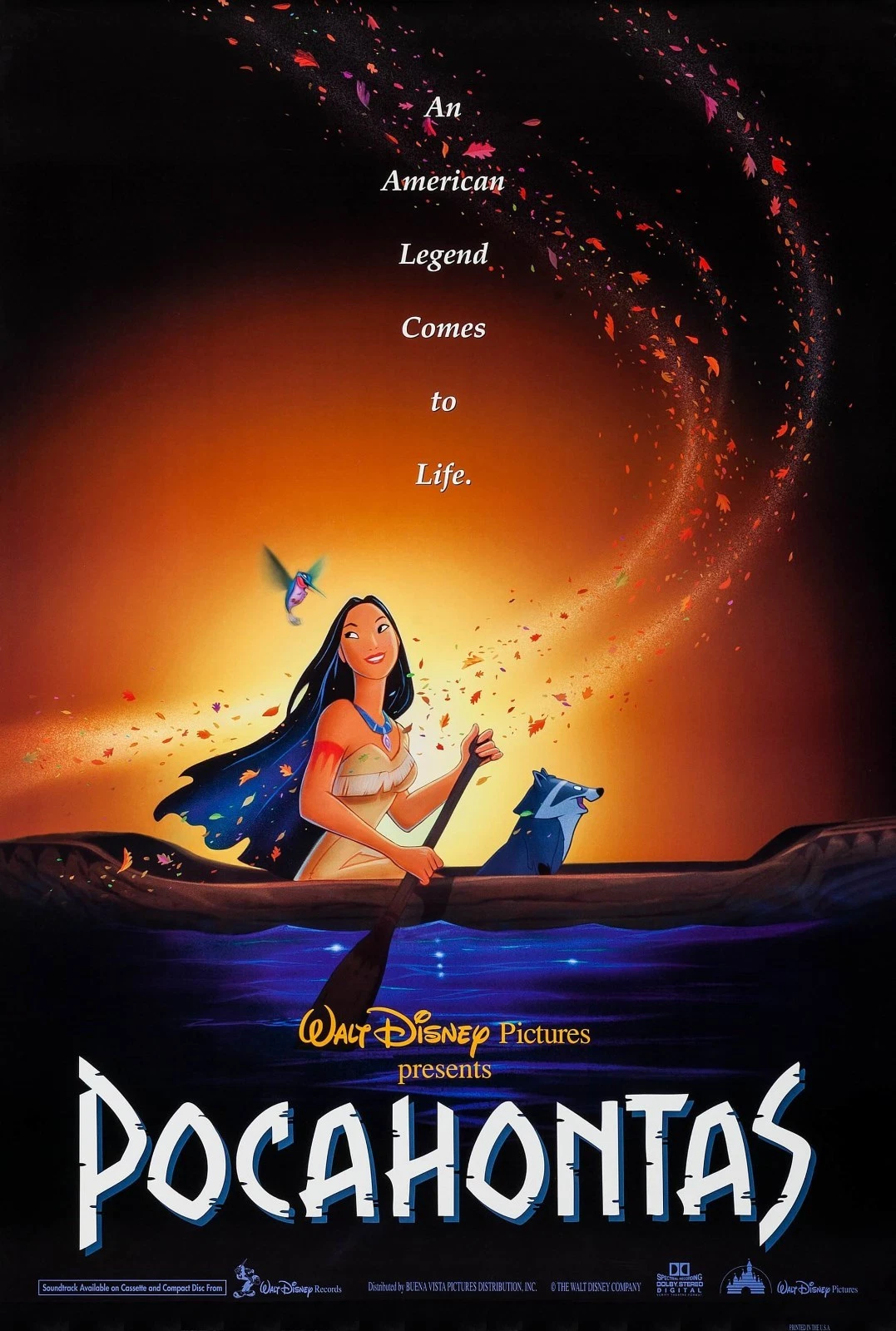
Pocahontas poster
1995

#4 — Pocahontas

Box Office: $141.6M
GenreAnimated musical drama
DirectorMike Gabriel & Eric Goldberg
1995 Rank#4
Main Cast
  • Irene Bedard as Pocahontas
  • Mel Gibson as John Smith
  • David Ogden Stiers as Governor Ratcliffe
  • Russell Means as Chief Powhatan

Pocahontas at number four captures Disney in one of its most ambitious and self-conscious phases. The studio was not merely trying to make another family hit. It was trying to make an event with scale, prestige, seriousness, and awards-friendly importance. You can feel that ambition in every inch of the movie — the sweeping visual design, the solemnity of the love story, the musical architecture, and the way the film carries itself like it knows it is expected to matter.

That ambition is part of what makes the movie interesting now. It is undeniably crafted with great care and visual confidence, but it is also one of the more debated Disney Renaissance titles because later audiences became much less willing to let its historical flattening slide. That does not erase its place in 1995. It explains why its legacy feels more complicated than its box office might suggest.

Commercially, though, the film absolutely belonged near the top of the year. Disney animation was still operating like a core national cultural language. These were not niche children’s products. They were major releases with soundtrack power, merchandising force, and enough emotional sweep to bring in multiple generations at once.

In the context of 1995, Pocahontas matters because it shows Disney aiming higher than mere comfort. Whether or not it fully earns every part of that ambition, the reach itself is revealing. The studio believed animation could occupy the same prestige-adjacent territory as live-action Oscar bait and blockbuster spectacle simultaneously.

For Gen X, it remains one of those movies that instantly evokes the era’s Disney dominance — a time when a new animated feature did not just open. It arrived like a full cultural season.

Fun Fact / Why It Still Matters It still matters as a snapshot of Disney treating animation not just as family entertainment, but as prestige-scale, culture-shaping studio power.
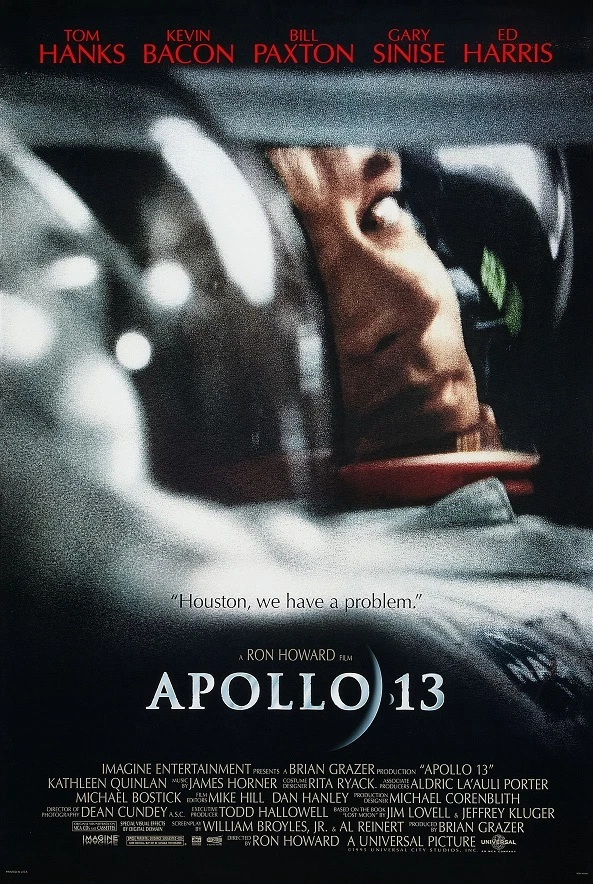
Apollo 13 poster
1995

#3 — Apollo 13

Box Office: $172.1M
GenreHistorical drama
DirectorRon Howard
1995 Rank#3
Main Cast
  • Tom Hanks as Jim Lovell
  • Kevin Bacon as Jack Swigert
  • Bill Paxton as Fred Haise
  • Ed Harris as Gene Kranz

Apollo 13 at number three is one of the strongest examples of a kind of studio blockbuster that now feels almost endangered: expensive, star-driven, adult-friendly, technically impressive, and built around competence rather than pure destruction. The film turns a real-life near-disaster into suspense not by faking ignorance about the ending, but by making process feel dramatic enough to grip you even when you know the broad historical outcome.

Ron Howard’s major achievement is clarity. The movie has a lot of moving parts — astronauts in peril, engineers improvising, families waiting, NASA trying to solve impossible problems under national pressure — and it never loses track of what matters. That kind of lucidity is what lets the tension build instead of diffusing into homework.

Tom Hanks anchors the film with steadiness, but Apollo 13 is really a movie about systems under strain. The control rooms, checklists, fuel calculations, equipment failures, and improvised fixes all become dramatically legible. It makes intelligence and professionalism feel cinematic without needing to fake them into gunfire.

In the context of 1995, the film matters because it proves that audiences still had a large appetite for grown-up spectacle. This was not a toyetic fantasy or a comic-book package. It was a historical crisis movie handled with studio confidence and broad emotional accessibility, and people showed up in huge numbers.

For Gen X, it remains one of those durable 90s hits that feels respectable without being stuffy, thrilling without being dumb, and emotional without dissolving into sentimentality overload.

Fun Fact / Why It Still Matters It still works because it makes engineering, teamwork, and procedural clarity feel every bit as gripping as the louder forms of blockbuster danger.
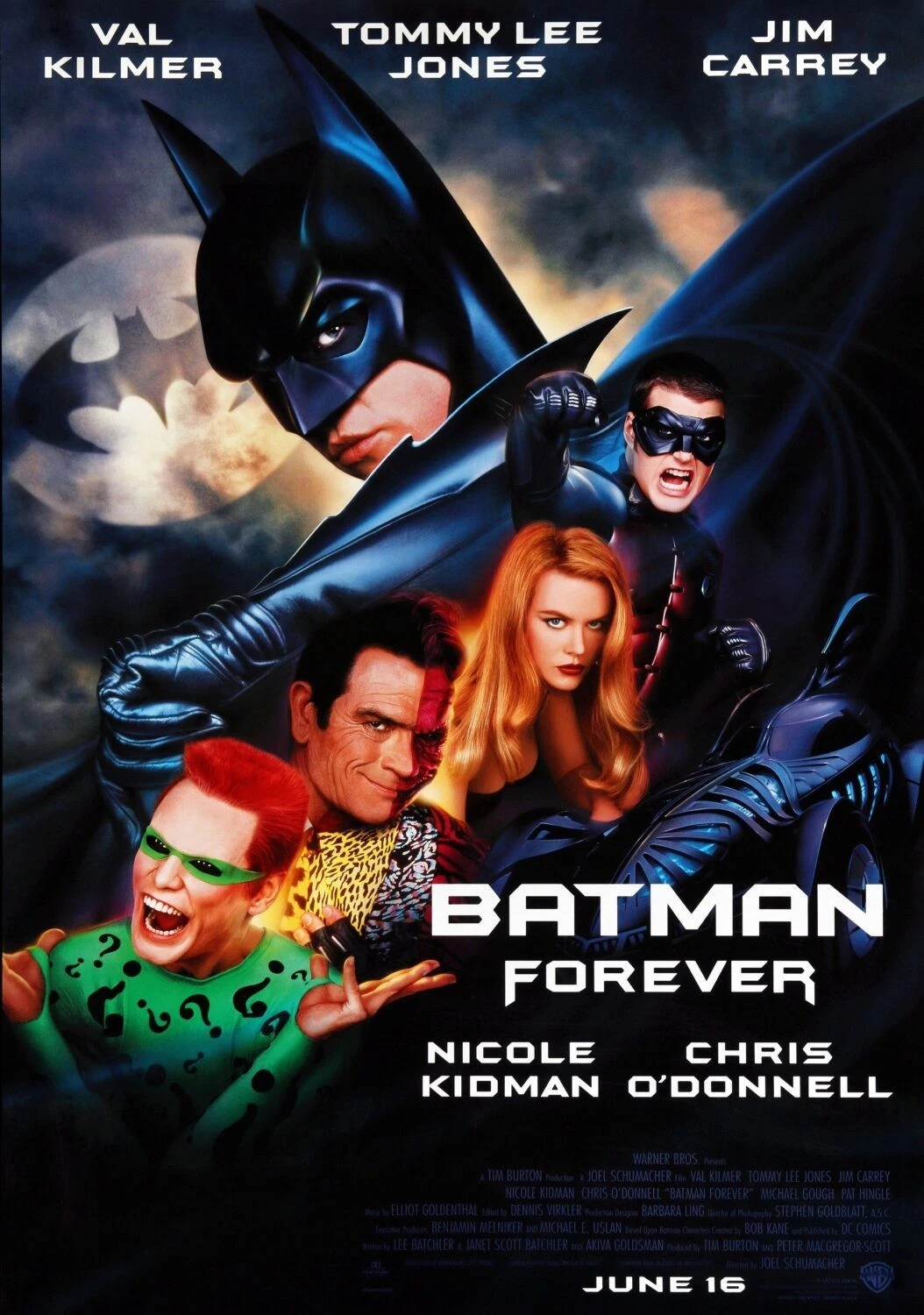
Batman Forever poster
1995

#2 — Batman Forever

Box Office: $184.0M
GenreSuperhero action
DirectorJoel Schumacher
1995 Rank#2
Main Cast
  • Val Kilmer as Bruce Wayne / Batman
  • Jim Carrey as The Riddler
  • Tommy Lee Jones as Two-Face
  • Nicole Kidman as Dr. Chase Meridian

Batman Forever at number two is 1995 in concentrated form. Neon. attitude. merchandising. celebrity casting. maximal production design. louder jokes. brighter surfaces. less Burton gloom, more high-volume event packaging. If the earlier Batman films still felt partly rooted in gothic oddness, this one pushes much harder toward franchise visibility. It wants to be seen from the toy aisle, the mall food court, the MTV block, and the summer blockbuster line all at once.

That tonal pivot is exactly what makes the movie such a revealing hit. It is not merely a Batman movie. It is a Batman movie recalibrated for broader, shinier commercial appetite. Gotham becomes a fluorescent fever dream. the villains stop nibbling scenery and start devouring it. the whole production hums with the logic of “bigger, brighter, more sellable.”

Jim Carrey is a huge part of that recalibration. He arrives with peak-90s manic force and essentially drags one of Batman’s villains into the same performance atmosphere that made his comedy career explode. Whether a viewer finds it exhilarating or exhausting, it is impossible to miss how much the film depends on that energy.

In the context of 1995, Batman Forever matters because it shows superhero cinema in an earlier and much stranger state — not yet standardized, not yet tonally locked, and not yet pretending to be one unified corporate style. It is messy, synthetic, aggressively designed, and commercially massive.

For Gen X, it remains one of the defining “you had to be there” blockbuster experiences of the decade because it captured a moment when Batman stopped brooding in the shadows and stepped directly into the glow of 90s pop spectacle.

Fun Fact / Why It Still Matters It still fascinates because it represents superhero filmmaking before the genre became disciplined into sameness — louder, weirder, more toyetic, and much more obviously of its moment.
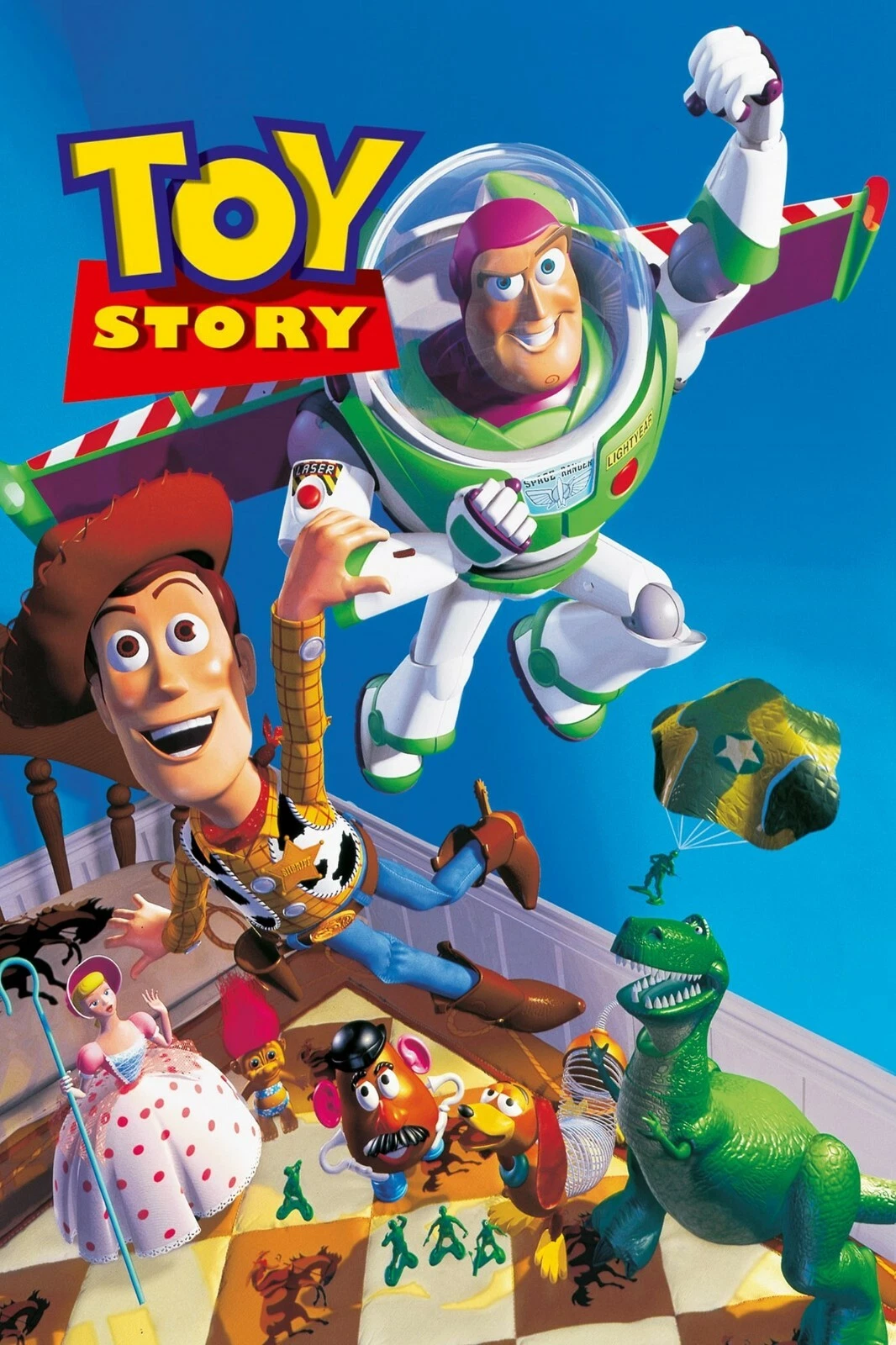
Toy Story poster
1995

#1 — Toy Story

Box Office: $191.8M
GenreAnimated adventure comedy
DirectorJohn Lasseter
1995 Rank#1
Main Cast
  • Tom Hanks as Woody
  • Tim Allen as Buzz Lightyear
  • Don Rickles as Mr. Potato Head
  • Annie Potts as Bo Peep

Toy Story finishing at number one makes 1995 feel like an actual hinge point instead of just another movie year. This is not merely the biggest first-release hit of the year under the ranking system for this series. It is the moment when computer animation stops feeling like a novelty experiment and announces itself as a viable, emotionally powerful mainstream future.

What makes that transition matter is that Pixar did not win with tech alone. The “first fully computer-animated feature” label gets people to look, but it does not explain why the film stayed lodged in the culture. The real reason is storytelling. The movie understands jealousy, obsolescence, status panic, friendship, and self-worth in a way that is unusually clean and emotionally legible.

Woody and Buzz are not just funny opposites. They are a perfect collision of old and new. Woody is the familiar comfort object terrified of replacement. Buzz is the shiny new thing too confident to understand the world he has entered. That conflict gives the movie real tension, but it also accidentally mirrors the cultural moment around it: older forms staring down a gleaming digital future.

In the context of 1995, Toy Story matters because it is both a box-office winner and a format shift. It does not merely join the lineup of big hits. It quietly changes what the industry thinks a major animated movie can look like, how it can move, and how it can be sold.

For Gen X parents, younger siblings, and kids growing up around them, it remains one of the cleanest “the future just arrived” experiences of the decade — except the future showed up warm, funny, deeply rewatchable, and smart enough to turn plastic toys into a story about relevance and fear.

Fun Fact / Why It Still Matters It still endures because it was not just a technological breakthrough — it was a breakthrough that understood character, anxiety, comedy, and heart well enough to survive long after the novelty wore off.

Rewind Verdict

The top 10 movies of 1995 work so well because they show a mainstream that still had room for real tonal variety. This is a year where an animated revolution, a neon comic-book spectacle, a serious NASA drama, a Disney prestige play, a Bond relaunch, a Jim Carrey chaos engine, a haunted family fantasy, a killer-board-game adventure, a grim serial-killer thriller, and a bruised buddy-action sequel all belong to the same commercial conversation.

That range is what makes 1995 feel so alive. Toy Story changes the future. Batman Forever turns superhero cinema into a fluorescent retail event. Apollo 13 proves adult blockbuster craftsmanship still matters. Pocahontas shows Disney at maximum ambition. GoldenEye revives one of the great franchise brands. Seven lets the darkness creep in. And the family lane stays strong through Jumanji and Casper, while Ace Ventura: When Nature Calls keeps Jim Carrey’s box-office dominance roaring.

For Gen X, 1995 feels like one of those years when the multiplex still belonged to several different kinds of audience at once. Kids got wonder, danger, ghosts, and toys. adults got astronauts, cops, bombs, and moral rot. everybody got Batman branding whether they asked for it or not. It is a transition year, but a rich one — not yet trapped inside one approved blockbuster template.

FAQ: Top Movies of 1995

What was the highest-grossing first-release movie of 1995?

Toy Story finished as the biggest North American first-release hit of 1995 under the total-gross ranking used for this series.

Why do some lists put Batman Forever ahead of Toy Story for 1995?

Because calendar-year rankings and first-release total-gross rankings are not the same thing. This series uses first-release 1995 films ranked by North American total gross, which places Toy Story ahead of Batman Forever.

Why is Seven in the top 10 if it feels darker than most mainstream hits?

Because it was not just critically noticed — it was a real commercial success in 1995 and earned enough domestically to finish inside the top 10 first-release titles for the year.

What makes 1995 feel different from 1994?

1995 feels more transitional: more obvious franchise recalibration, more visible CGI future-shock, a stronger sense of brand management, and a darker edge creeping into the mainstream alongside family spectacle.

What makes the 1995 lineup so memorable?

Its mix of transition and range. The year gave audiences a format-changing animated hit, a massive superhero pivot, serious adult spectacle, Disney grandeur, spy-franchise renewal, broad comedy, family adventure, haunted fantasy, and one of the decade’s bleakest mainstream thrillers — all in one top 10.

Get the Weekly Gen X Drop

New videos, rewinds, and savage nostalgia — first.

JOIN THE NEWSLETTER WATCH VIDEOS

MORE REWINDS