#10 — Lady Sings the Blues
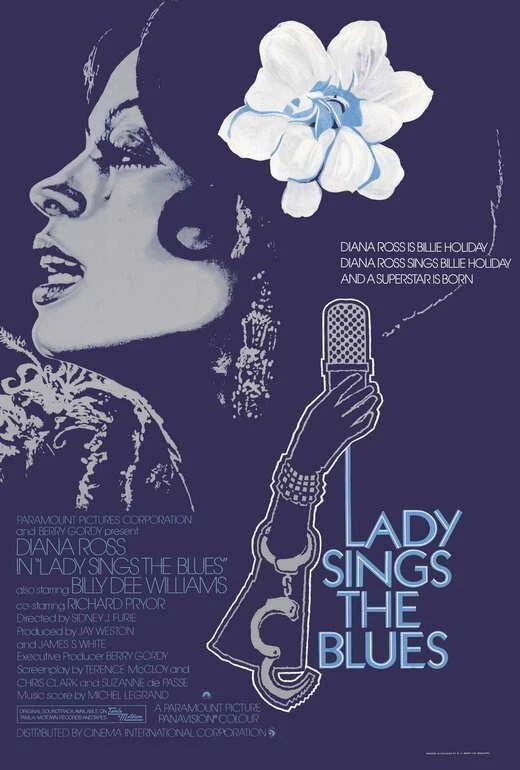
Box Office: $19.7M- Diana Ross as Billie Holiday
- Billy Dee Williams as Louis McKay
- Richard Pryor as Piano Man
- Scatman Crothers as Gerald
Lady Sings the Blues opens the 1972 top 10 as one of the year’s strongest examples of star reinvention becoming major box-office business. Diana Ross does not enter film gently here. She arrives carrying the weight of Billie Holiday, addiction tragedy, performance mythology, and the risk of asking a major music star to hold a full dramatic feature together.
What makes the movie commercially revealing is that it packages suffering, fame, music, and biography into something both prestige-coded and broadly accessible. The film understands that audiences are not only there for historical detail. They are there for emotion, transformation, glamour, pain, and the thrill of seeing a performer move into a larger artistic frame.
In the context of 1972, that matters because it shows how open the mainstream was to Black stardom operating at a more ambitious dramatic scale. The movie isn’t easy or casual, but it is still clearly designed to connect as a big theatrical event.
For Gen X, it remains one of the key “star becomes movie-star” origin points — a film where music, persona, and tragedy all fuse into something bigger than a conventional biopic.