Top 10 Movies of 1970: Biggest Box Office Hits Ranked

Top 10 Movies of 1970: Biggest Box Office Hits Ranked
Smells Like Gen X • Top Movies of 1970

The Top 10 Movies of 1970

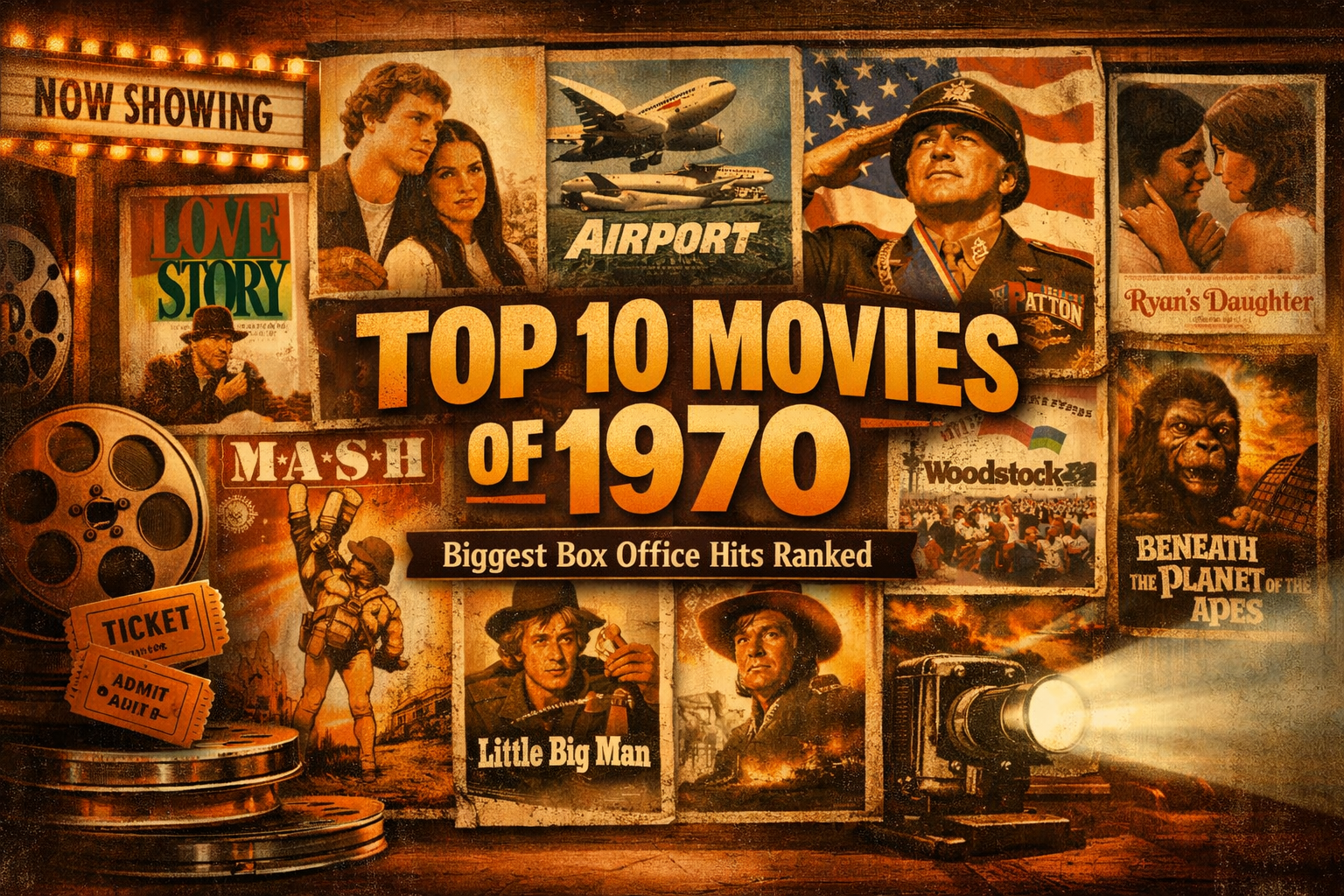
The top 10 movies of 1970 feel like Hollywood waking up from the polished dream factory of the 1960s and realizing the new decade is going to be messier, moodier, more adult, and a lot less interested in pretending everything is fine. The biggest hits still include giant studio crowd-pleasers, but the overall mix is already shifting toward war satire, emotional devastation, revisionist mythmaking, antihero energy, and stories that feel a little less clean around the edges.

This countdown focuses on the biggest North American grosses for films first released in 1970, which gives the year a stronger identity than a calendar chart clogged with holdovers. What emerges is a fascinating transition point: romantic tragedy, disaster spectacle, counterculture documentary, revisionist westerns, historical epics, war critique, and the first clear signs that the 1970s would reward movies willing to feel stranger, sadder, or more grown-up than the old studio formula preferred.

For Gen X, 1970 plays like the prequel to everything that would define the next two decades. The old world is still here, but it’s getting challenged from every angle. These movies are bigger, harsher, more morally complicated, and a little more willing to admit that American life — and American storytelling — had changed.

Gen X Note: 1970 feels like the 70s kicking the door open. The glamour isn’t gone yet, but the anxiety, ambiguity, and anti-establishment energy are already in the room.

Quick List: The Top 10 Movies of 1970

  1. Beneath the Planet of the Apes
  2. The Owl and the Pussycat
  3. Tora! Tora! Tora!
  4. Ryan’s Daughter
  5. Little Big Man
  6. Woodstock
  7. Patton
  8. M*A*S*H
  9. Airport
  10. Love Story

Countdown: The Top 10 Movies of 1970

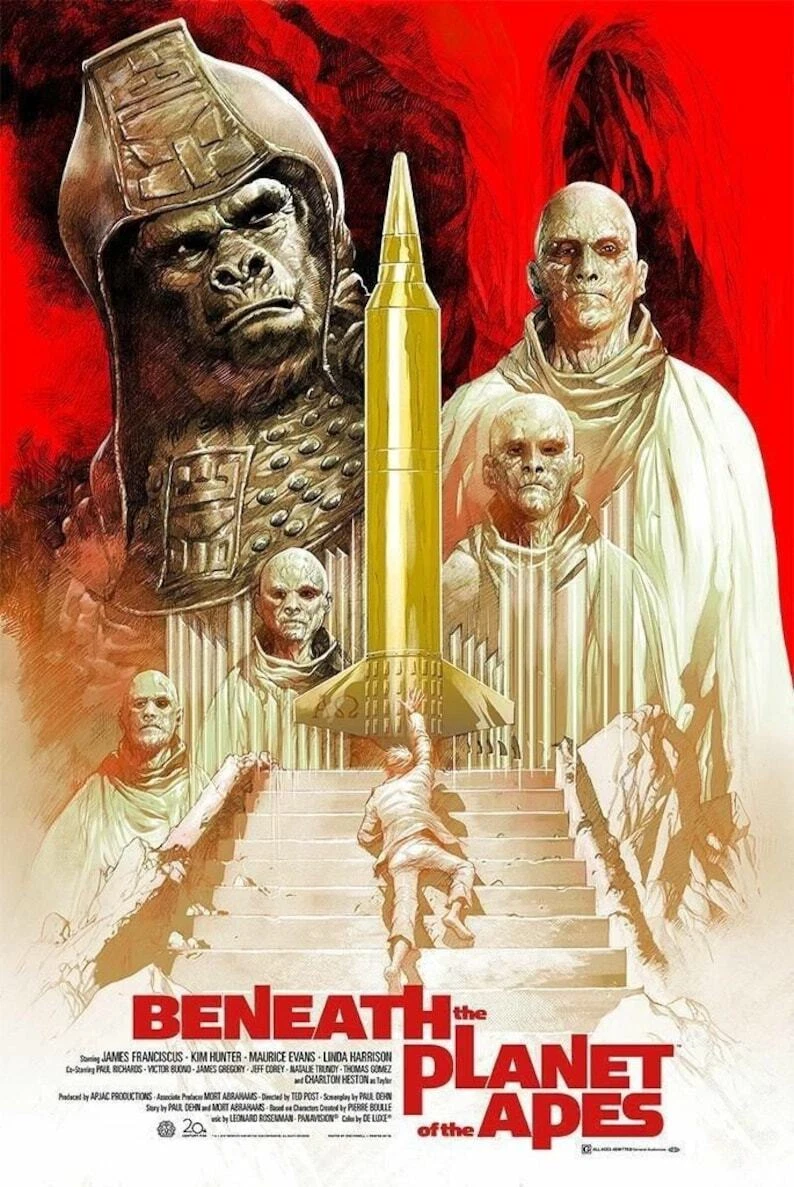
Beneath the Planet of the Apes poster
1970

#10 — Beneath the Planet of the Apes

Box Office: $18.9M
GenreSci-fi adventure
DirectorTed Post
1970 Rank#10
Main Cast
  • James Franciscus as Brent
  • Kim Hunter as Zira
  • Maurice Evans as Dr. Zaius
  • Linda Harrison as Nova

Beneath the Planet of the Apes opens the 1970 top 10 as one of the clearest signs that genre sequels were already learning how to get darker, weirder, and more apocalyptic instead of simply repeating the first hit. This is not a comfort-food follow-up. It takes the original film’s world and pushes it into stranger, more paranoid territory, which makes it a perfect fit for a year when mainstream movies were starting to feel less stable and more willing to flirt with annihilation.

What’s especially revealing is how little the movie cares about reassuring the audience. The tone is colder. The imagery is more unsettling. The mythology expands in ways that feel almost nasty for a studio sequel. That harshness matters, because it shows 1970 audiences were ready to follow a successful franchise somewhere more hostile than the usual “bigger but safer” path.

In a broader cultural sense, the film also reflects the era’s anxieties beautifully. Nuclear fear, civilizational collapse, and deep distrust of power all hover over the story. That gives it more resonance than a simple sci-fi cash-in. Even when it gets pulpy, it still feels connected to a country imagining its own systems might be rotten beneath the surface.

For Gen X, it plays like one of those key bridge texts between old-school studio spectacle and the darker genre instincts that would dominate so much later pop culture. It’s not subtle, but it absolutely knows the world is getting rougher.
Fun Fact / Why It Still Matters The movie endures because it shows an early franchise sequel getting bolder, bleaker, and more nihilistic instead of merely getting louder.
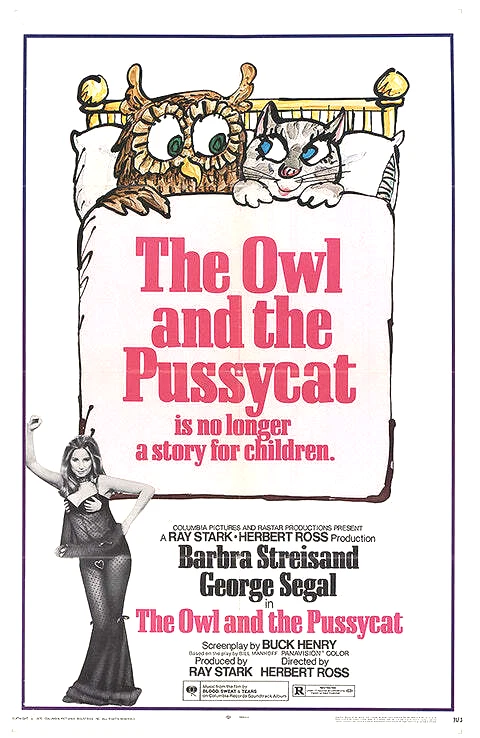
The Owl and the Pussycat poster
1970

#9 — The Owl and the Pussycat

Box Office: $23.0M
GenreRomantic comedy
DirectorHerbert Ross
1970 Rank#9
Main Cast
  • Barbra Streisand as Doris
  • George Segal as Felix
  • Robert Klein as Barney
  • Roz Kelly as Eleanor

The Owl and the Pussycat lands in the 1970 top 10 as one of the year’s more openly adult commercial hits, and that matters. This is not a glossy old-Hollywood romance pretending sex doesn’t exist. It’s loud, abrasive, urban, and built around the energy of two people who irritate each other almost as much as they attract each other. That sharper edge is a big part of what makes it feel so 1970.

Barbra Streisand is the engine. She turns Doris into the kind of character the old studio system might have softened or apologized for, but the movie instead lets her be brash, sexual, funny, and disruptive. George Segal provides the right neurotic counterweight, giving the film its rhythm of collision rather than dreamy romantic glide.

What makes the movie useful in a year-end box-office context is how clearly it shows mainstream audiences were ready for comedies that felt more urban and less pristine. The relationship dynamic is messy. The dialogue is aggressive. The whole thing feels like it belongs to a moment when movies were getting more comfortable with adults behaving badly in public.

For Gen X, it works as one of those prequel texts to later New York relationship comedies: faster, rougher, and less interested in packaging adulthood as neat or adorable.

Fun Fact / Why It Still Matters The movie still matters because it captures romantic comedy becoming more adult, urban, sexual, and verbally combative at the exact moment the decade was shifting tone.
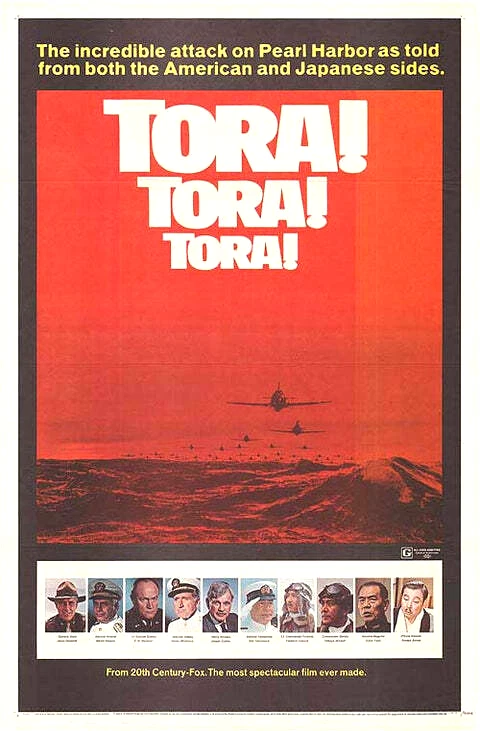
Tora! Tora! Tora! poster
1970

#8 — Tora! Tora! Tora!

Box Office: $29.5M
GenreWar epic
DirectorsFleischer, Fukasaku, Masuda
1970 Rank#8
Main Cast
  • Martin Balsam as Adm. Husband E. Kimmel
  • Joseph Cotten as Henry L. Stimson
  • So Yamamura as Adm. Isoroku Yamamoto
  • Tatsuya Mihashi as Cmdr. Minoru Genda

Tora! Tora! Tora! is one of the most revealing top 10 hits of 1970 because it’s an old-style epic that already feels touched by the decade’s new seriousness. The scale is grand, the production is expensive, and the historical event is monumental, but the film’s energy is procedural rather than patriotic pageantry. It is interested in systems, failure, miscalculation, and the terrifying mechanics of catastrophe.

That perspective gives the movie a different feel than many war films that came before it. Instead of leaning hard on heroic myth, it emphasizes process and institutional blindness. The dual American-Japanese production structure also matters, because it makes the movie feel broader and less locked into one national viewpoint than audiences might have expected from a Hollywood war epic.

In the context of 1970, the movie matters because it shows how mainstream historical spectacle was changing. Audiences still wanted scale, but they were increasingly open to films that felt cooler, more analytical, and less interested in easy triumph. That makes Tora! Tora! Tora! an important transitional blockbuster even when its tone feels more restrained than some of the flashier hits around it.

For Gen X, it stands as one of those “dad movie” giants that also quietly signals the beginning of a more skeptical cinematic era.

Fun Fact / Why It Still Matters The film holds up because it treats Pearl Harbor less as simple myth and more as a devastating systems failure, which gives its spectacle more gravity.
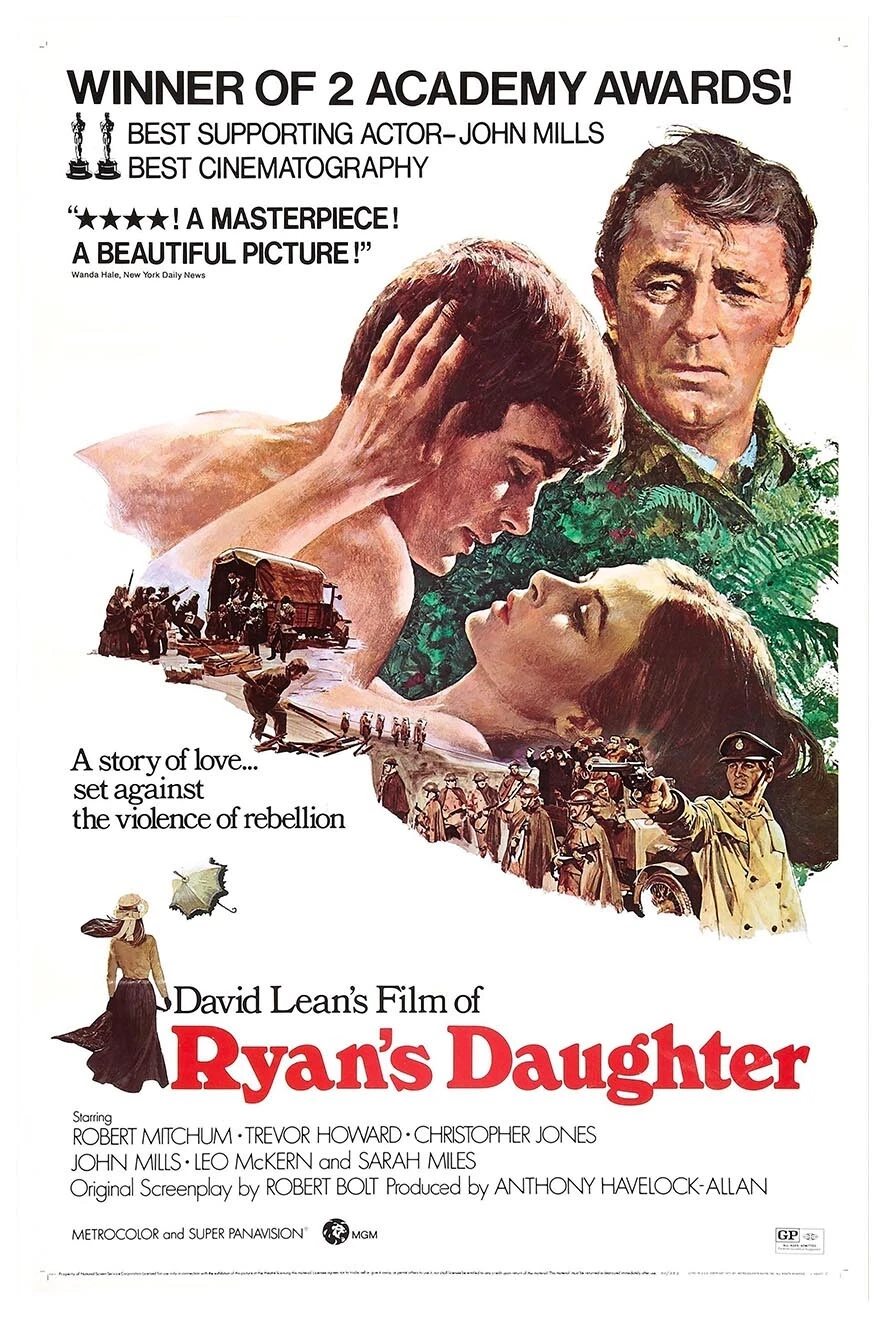
Ryan's Daughter poster
1970

#7 — Ryan’s Daughter

Box Office: $31.0M
GenreEpic romantic drama
DirectorDavid Lean
1970 Rank#7
Main Cast
  • Robert Mitchum as Charles Shaughnessy
  • Sarah Miles as Rosy Ryan
  • Christopher Jones as Maj. Randolph Doryan
  • John Mills as Michael

Ryan’s Daughter is 1970 box-office proof that the old roadshow epic wasn’t quite dead yet — but it was getting moodier, lonelier, and more psychologically bruised. David Lean still delivers scale, weather, landscape, and visual grandeur like a master, but the emotional engine of the film is not triumph. It’s frustration, longing, and the way desire can destabilize an entire social world.

That difference matters. In another decade, a film of this size might have centered more cleanly on romance or adventure. Here, the romance is uneasy, the setting is beautiful but oppressive, and the people inside the story feel trapped by forces larger than themselves. That makes it a useful marker for 1970: even the big, expensive prestige pictures were getting more emotionally unsettled.

The performances help sell that shift. Sarah Miles gives the movie its restlessness, while Robert Mitchum brings a grounded heaviness that keeps the film from floating off into pure melodrama. Lean’s visual control is still magnificent, but the emotional texture is a lot harsher than a casual glance at the production scale might suggest.

For Gen X, the film plays like one of those giant “serious movie” artifacts from the decade before the multiplex fully took over — but it also clearly belongs to a new era where large-scale filmmaking could be intimate, bleak, and uncomfortable.

Fun Fact / Why It Still Matters The movie still matters because it shows epic filmmaking getting less triumphal and more emotionally complicated right at the start of the 1970s.
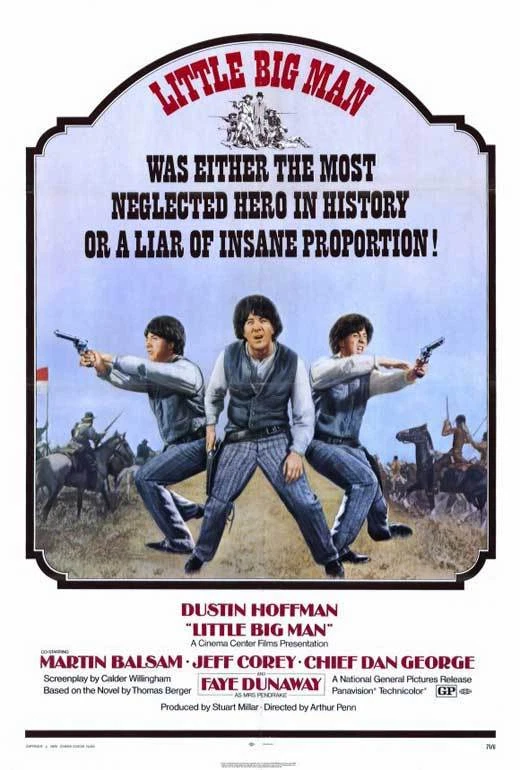
Little Big Man poster
1970

#6 — Little Big Man

Box Office: $31.6M
GenreRevisionist western
DirectorArthur Penn
1970 Rank#6
Main Cast
  • Dustin Hoffman as Jack Crabb
  • Faye Dunaway as Mrs. Pendrake
  • Chief Dan George as Old Lodge Skins
  • Martin Balsam as Mr. Merriweather

Little Big Man feels like the western getting pulled into the 1970s whether it likes it or not. The movie keeps the frontier setting, but it no longer believes the old national myths deserve a free pass. Arthur Penn turns the genre inside out with satire, absurdity, violence, and point-of-view shifts that make American legend feel unstable and compromised rather than noble and fixed.

Dustin Hoffman gives the film its elastic shape, moving Jack Crabb through one version of the West after another like the country itself is trying on incompatible identities. But one of the movie’s deepest strengths is Chief Dan George, whose performance gives the film much of its humanity and its moral center. Without that, the satire would feel thinner. With it, the movie has real weight.

In the broader 1970 box-office story, Little Big Man matters because it shows the mainstream was ready for revisionism in one of the most traditionally American genres. The western didn’t have to disappear. It could mutate into something more skeptical, more antiheroic, and more politically aware.

For Gen X, it stands as one of the key movies that helped teach the culture to question the stories it once accepted as patriotic truth.

Fun Fact / Why It Still Matters The film still matters because it helped turn the western into a vehicle for national self-critique instead of simple frontier hero worship.
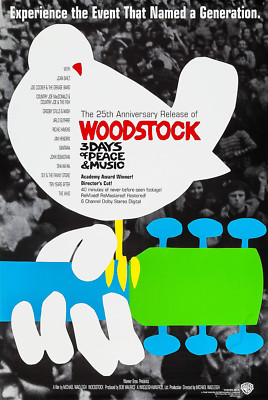
Woodstock poster
1970

#5 — Woodstock

Box Office: $50.0M
GenreConcert documentary
DirectorMichael Wadleigh
1970 Rank#5
Featured Performers
  • Joan Baez
  • The Who
  • Santana
  • Jimi Hendrix

Woodstock landing at number five is one of the strongest clues that 1970 still had one foot in the cultural upheaval of the late ’60s, even as the decade was already changing shape. This isn’t just a concert movie. It’s a myth-preservation device. It packages a giant communal event into a theatrical experience and lets mainstream audiences consume counterculture as both spectacle and memory.

What makes it especially important is that the film doesn’t merely document performances. It builds atmosphere. The editing, crowd imagery, weather, logistics, and sheer scale all make the festival feel like a temporary civilization rather than a playlist. That gives the movie more historical and emotional texture than a simple music compilation.

In a box-office sense, the success of Woodstock is fascinating because it shows how commercially viable documentary could become when tied to a big enough cultural moment. It also confirms that audiences in 1970 weren’t only buying escapism. They were buying access to shared identity, generational memory, and the feeling that they were seeing proof of something larger than themselves.

For Gen X, the movie is essential prequel material: one of the clearest snapshots of the cultural wave that shaped the adults, aesthetics, and contradictions the next generation inherited.

Fun Fact / Why It Still Matters The film still matters because it turned a live event into a durable pop-culture monument and proved documentary could be both box-office force and generational myth.
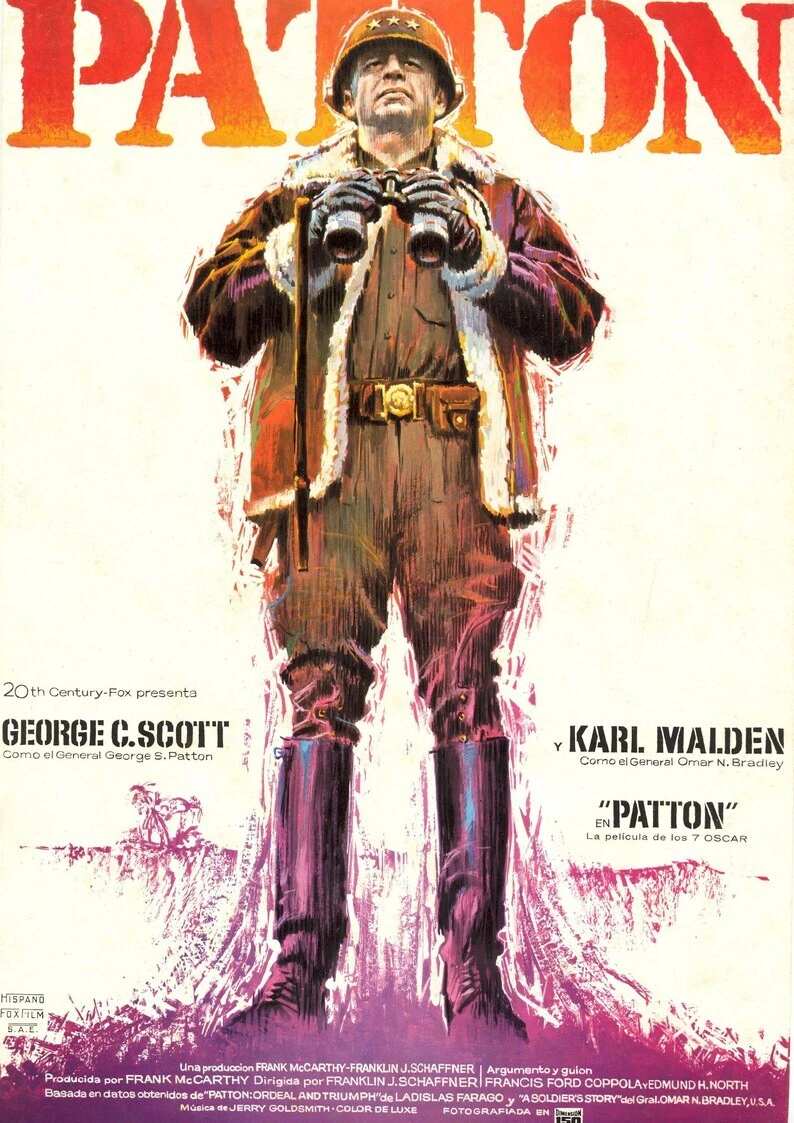
Patton poster
1970

#4 — Patton

Box Office: $61.7M
GenreBiographical war drama
DirectorFranklin J. Schaffner
1970 Rank#4
Main Cast
  • George C. Scott as Gen. George S. Patton
  • Karl Malden as Gen. Omar Bradley
  • Michael Bates as Major Gen. Bedell Smith
  • Edward Binns as Lt. Gen. Walter Bedell Smith

Patton is a big, old-fashioned war biography on the surface, but one reason it feels so powerful in 1970 is that it refuses to reduce its subject to simple patriotic reassurance. George C. Scott plays Patton as brilliant, theatrical, egotistical, driven, and deeply strange. That complexity gives the movie a more unstable center than a conventional triumph narrative would allow.

The famous opening alone tells you a lot. The movie presents grandeur, but it also presents performance. Patton is not just a man of action; he is a man of self-mythology. That makes the film feel surprisingly modern in its understanding that leadership, masculinity, and national identity are all partly theatrical constructions.

In the context of 1970, that matters because audiences were increasingly willing to embrace large-scale films that carried ambiguity inside them. Patton gives viewers the pageantry of a war epic, but also the discomfort of watching a heroic figure who is not emotionally easy to admire. That tension is a huge part of why the movie remains so durable.

For Gen X, it stands as a key transitional film: a prestige studio giant that still carries the era’s appetite for contradiction and unease.

Fun Fact / Why It Still Matters The film endures because it frames military grandeur through a personality so volatile and theatrical that heroism itself becomes something the audience has to interrogate.
MASH poster
1970

#3 — M*A*S*H

Box Office: $81.6M
GenreBlack comedy / war satire
DirectorRobert Altman
1970 Rank#3
Main Cast
  • Donald Sutherland as Hawkeye Pierce
  • Elliott Gould as Trapper John McIntyre
  • Sally Kellerman as Margaret “Hot Lips” Houlihan
  • Tom Skerritt as Duke Forrest

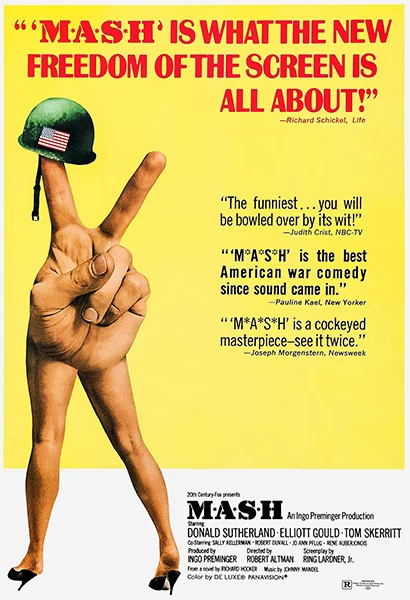
M*A*S*H at number three is one of the key events of 1970. This is the moment a major mainstream hit tells audiences that war can be filmed as chaos, cynicism, institutional absurdity, and gallows comedy rather than straightforward patriotic seriousness. Robert Altman’s style — overlapping dialogue, loose ensemble energy, tonal abrasion — makes the movie feel like it’s rejecting order on purpose.

That formal looseness is a huge part of what gives the film its punch. It doesn’t behave like a traditional studio comedy or a traditional war film. Instead, it creates a world where irreverence becomes survival, authority becomes ridiculous, and the whole institution looks sick enough that mockery feels almost moral.

In the broader context of 1970, M*A*S*H matters because it signals how strongly countercultural attitudes were now shaping commercially successful movies. You can feel the Vietnam-era skepticism hovering over it even though the story is set during Korea. The audience didn’t need the metaphor explained. They already knew what war, bureaucracy, and official language sounded like by then.

For Gen X, it’s a foundational bridge between old studio product and the sharper, looser, more anti-authoritarian tone that would define so much 70s and 80s screen culture afterward.

Fun Fact / Why It Still Matters The movie still matters because it proved a savage, loose, anti-authoritarian war satire could become one of the biggest mainstream hits in America.
Airport poster
1970

#2 — Airport

Box Office: $100.5M
GenreDisaster drama
DirectorGeorge Seaton
1970 Rank#2
Main Cast
  • Burt Lancaster as Mel Bakersfeld
  • Dean Martin as Vernon Demerest
  • Jean Seberg as Tanya Livingston
  • Jacqueline Bisset as Gwen Meighen

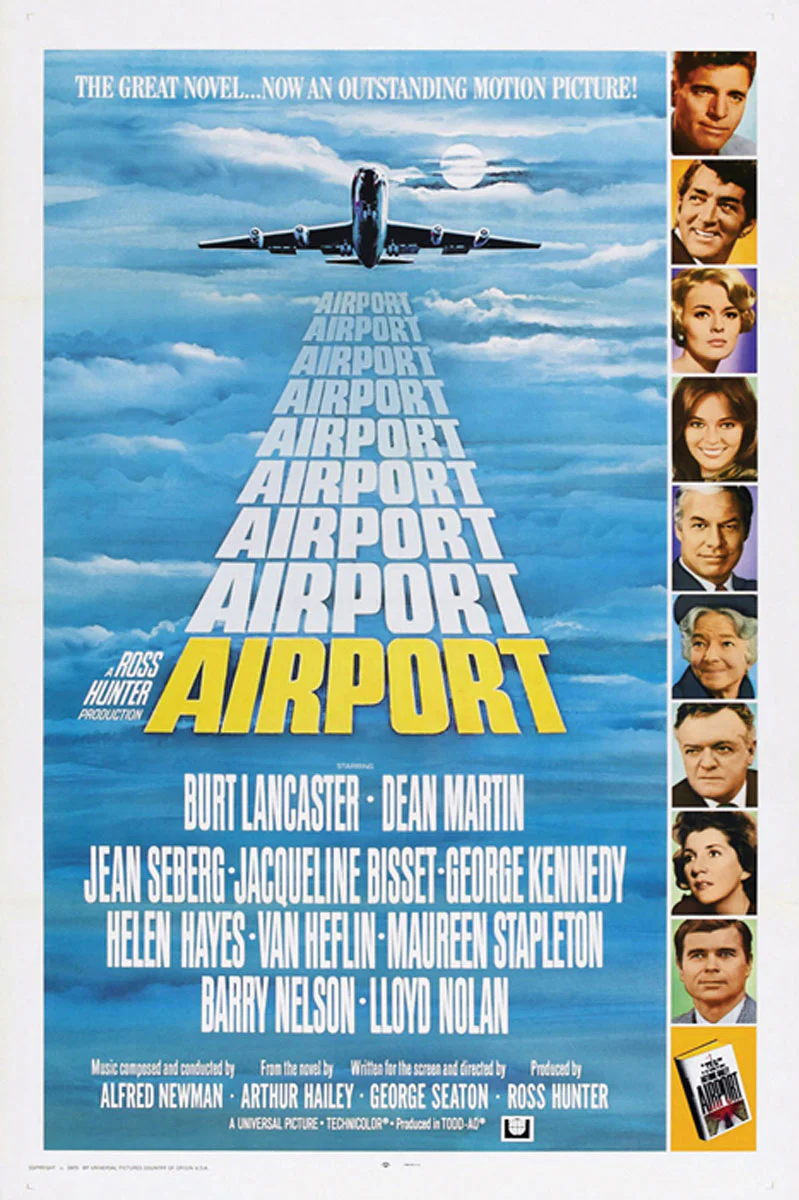
Airport is one of the clearest examples of 1970 audiences still loving giant studio entertainment — but now with a modern pressure-cooker premise. The film turns travel, weather, infrastructure, and human panic into a commercial machine, and in doing so it effectively helps launch the disaster cycle that would dominate so much of 1970s mainstream filmmaking.

What makes it such a useful number-two hit is how it combines old-Hollywood scale with newer anxieties. This isn’t just spectacle for spectacle’s sake. It’s spectacle organized around the fear that systems people depend on every day can fail catastrophically. Airports, planes, snowstorms, schedules, and public confidence all become fragile at once.

The all-star ensemble matters because that was still a major selling point in 1970, but the film’s larger significance is tonal. It packages anxiety as an event. That’s a huge part of why the disaster movie would become such a reliable decade-long box-office engine. Airport showed that audiences would absolutely pay to watch ordinary infrastructure become suspense.

For Gen X, it remains one of the essential early-’70s studio monsters: polished, crowded with stars, and built around the thrilling possibility that public order is one mechanical failure away from chaos.

Fun Fact / Why It Still Matters The movie remains historically important because it helped codify the all-star disaster-film formula that the rest of the 1970s would exploit repeatedly.
Love Story poster
1970

#1 — Love Story

Box Office: $106.4M
GenreRomantic drama
DirectorArthur Hiller
1970 Rank#1
Main Cast
  • Ali MacGraw as Jennifer Cavilleri
  • Ryan O’Neal as Oliver Barrett IV
  • Ray Milland as Oliver Barrett III
  • John Marley as Phil Cavilleri

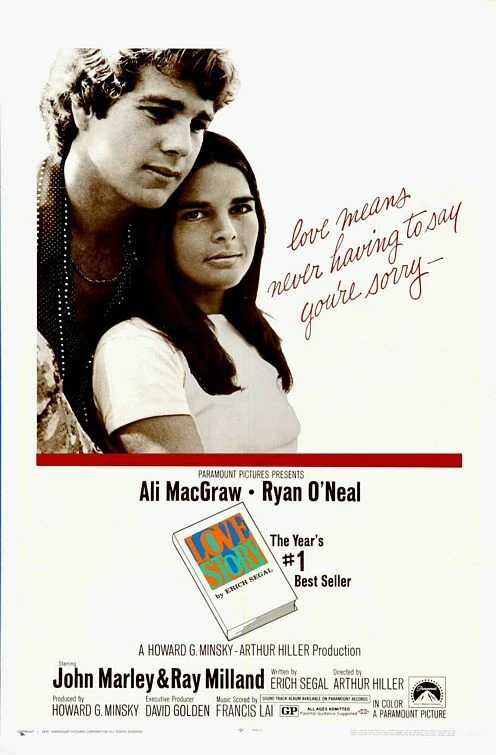
Love Story topping 1970 makes perfect sense when you understand what kind of emotional event it became. This wasn’t just a successful romance. It was mass grief, mass yearning, and mass quote-generation wrapped inside one elegantly packaged studio tearjerker. The movie took class tension, youthful love, illness, and tragedy and turned them into something mainstream audiences didn’t just watch — they carried it around with them.

Part of its power is that it feels both old-fashioned and new at the same time. On one hand, it’s a straight-up weepie, and it knows exactly how to play the emotional notes. On the other hand, the lovers feel more contemporary than old studio romance heroes. There’s friction, wit, youth-culture texture, and enough class difference to give the relationship some social shape instead of pure fairy-tale weightlessness.

In the context of 1970, Love Story matters because it proves the new decade’s emotional rawness wasn’t limited to satire, cynicism, or political unrest. Audiences would still absolutely show up for sincere heartbreak if the film gave them characters, conflict, and feeling packaged in a way that felt immediate. This movie didn’t win the year because it was trendy. It won because it made crying feel like a collective national pastime.

For Gen X, the film remains one of the ultimate “your parents’ big emotional movie” titles — but it’s also a genuine box-office landmark that shows just how much power a direct, romantic tragedy could still wield at the dawn of the 1970s.

Fun Fact / Why It Still Matters Love Story still matters because it turned a classic weepie structure into a full-scale modern phenomenon and became the biggest movie of 1970 by making heartbreak feel universal.

Rewind Verdict

The top 10 movies of 1970 are fascinating because they don’t point in just one direction. They show old Hollywood still functioning — the prestige epic, the giant romance, the all-star disaster movie — but they also show the new decade already changing the rules. Satire is harsher. Heroes are shakier. Institutions look less trustworthy. Genre movies are getting stranger. Even the big studio hits feel more anxious and more adult.

That’s what makes 1970 such a powerful starting point for a year-by-year movie series. It’s the sound of one era fading without disappearing and another one arriving before anyone has fully named it yet. You can see the road to the New Hollywood 70s, the blockbuster 80s, and the Gen X cultural worldview all starting to intersect here.

For Smells Like Gen X, 1970 works as the prequel chapter that explains a lot of what came later: skepticism about authority, fascination with antiheroes, romance mixed with fatalism, genre films getting more unstable, and mainstream entertainment growing up fast.

FAQ: Top Movies of 1970

What was the highest-grossing 1970 release at the North American box office?

Love Story finished as the biggest 1970 release in North America.

Why use release-year grosses instead of calendar-year totals?

Because release-year grosses give 1970 a cleaner identity and avoid mixing the year’s real newcomers with older films that were still earning money during the same calendar stretch.

Was 1970 already part of the New Hollywood shift?

Yes. You can see the shift clearly in movies like M*A*S*H, Little Big Man, and even darker sequels and epics that feel more skeptical, abrasive, or morally unsettled than classic studio-era hits.

Why is Woodstock such an important hit in this lineup?

Because it shows that documentary, youth culture, and countercultural myth could all become major box-office business when packaged as a shared generational event.

What makes the 1970 lineup so memorable?

Its transitional energy. The year includes romantic tragedy, war satire, revisionist westerns, historical spectacle, disaster setup, and counterculture documentary all in the same top 10, which makes it one of the most revealing opening years of any decade.

Get the Weekly Gen X Drop

New videos, rewinds, and savage nostalgia — first.

JOIN THE NEWSLETTER WATCH VIDEOS

MORE REWINDS