Top 10 Movies of 1987: Three Men and a Baby, Fatal Attraction, and the Year the 80s Turned More Adult

Top 10 Movies of 1987: Three Men and a Baby, Fatal Attraction, and the Year the 80s Turned More Adult
Smells Like Gen X • Top Movies of 1987

The Top 10 Movies of 1987

The top 10 movies of 1987 feel like the year the 80s turned more adult without losing their commercial gloss. The biggest movies are still highly marketable, highly polished, and very aware of star power, but they increasingly live in worlds shaped by marriage, work, sex, urban pressure, crime, career ambition, and the fear that grown-up life is a lot shakier than it looks from the outside.

This countdown focuses on the biggest North American grosses for films first released in 1987, which gives the year a cleaner identity than a calendar chart crowded with holdovers. What emerges is a fascinating mainstream cross-section: family chaos, erotic thriller panic, sequel confidence, radio-era warmth, gangster prestige, romantic comedy for grown-ups, police partnership, yuppie aspiration, and one of the decade’s foundational action-team formulas.

For Gen X, 1987 is one of those years that feels less like a toy aisle and more like a city. The movies are slicker, sharper, more adult, and often a little meaner. It is a year of attraction, careerism, danger, urban cool, domestic instability, and stars who know exactly how to dominate the screen.

Gen X Note: 1987 feels like the 80s growing up a little. The shine is still there, but now it is attached to adult tension, professional ambition, romance, crime, and urban unease.

Quick List: The Top 10 Movies of 1987

  1. The Witches of Eastwick
  2. Lethal Weapon
  3. Stakeout
  4. The Secret of My Success
  5. The Untouchables
  6. Moonstruck
  7. Good Morning, Vietnam
  8. Beverly Hills Cop II
  9. Fatal Attraction
  10. Three Men and a Baby

Countdown: The Top 10 Movies of 1987

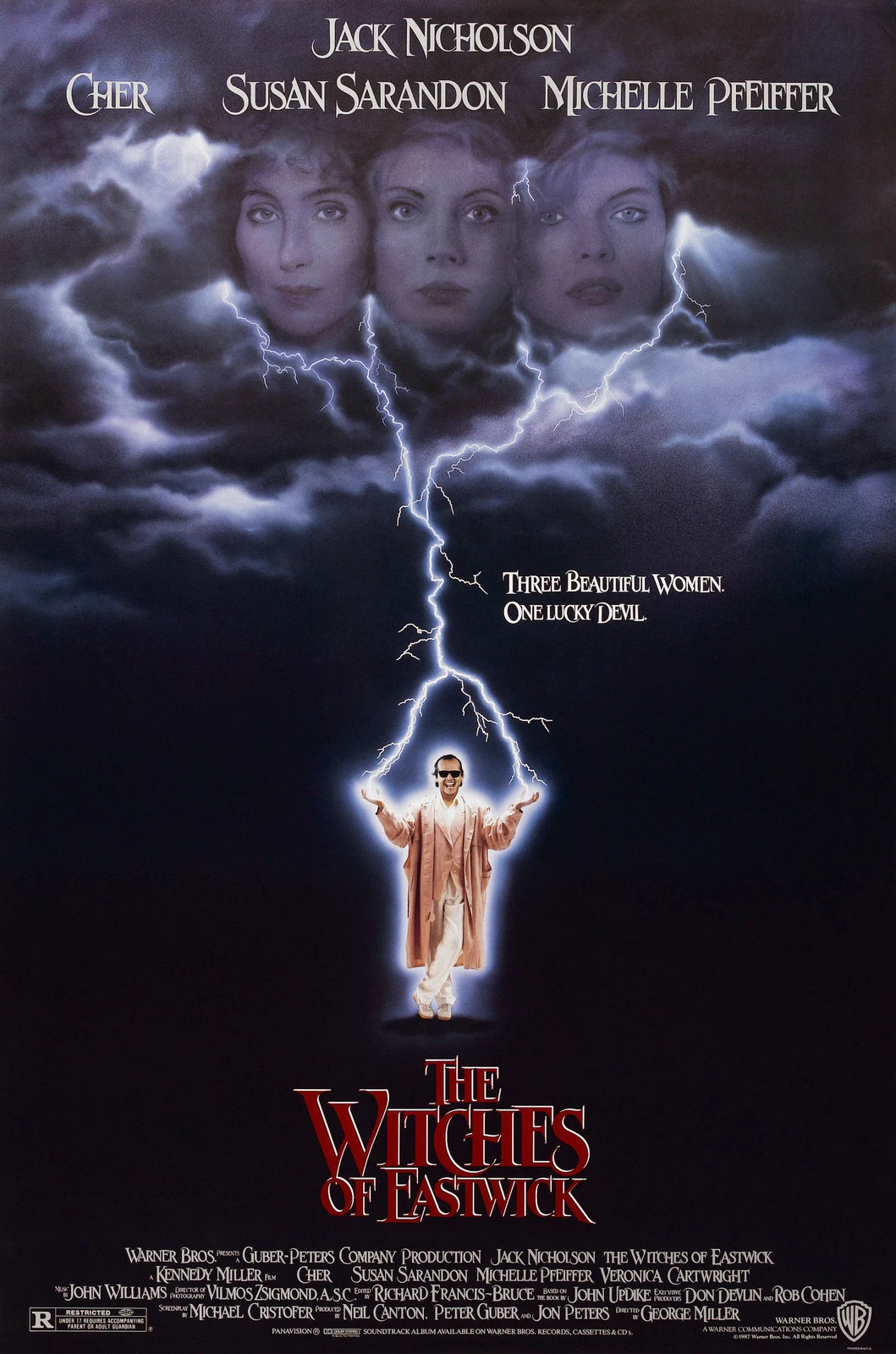
The Witches of Eastwick poster
1987

#10 — The Witches of Eastwick

Box Office: $63.8M
GenreDark fantasy comedy
DirectorGeorge Miller
1987 Rank#10
Main Cast
  • Jack Nicholson as Daryl Van Horne
  • Cher as Alexandra Medford
  • Susan Sarandon as Jane Spofford
  • Michelle Pfeiffer as Sukie Ridgemont

The Witches of Eastwick opens the 1987 top 10 as one of the year’s most openly sensual, mischievous, and star-saturated mainstream hits. It is a dark fantasy comedy, but it is also a movie about appetite, female friendship, suburban dissatisfaction, sexual power, and the danger of male charisma when it enters a closed emotional system. That makes it a perfect fit for a year where the box office clearly leaned older and a little more dangerous.

Jack Nicholson’s Daryl Van Horne is essentially a performance engine for chaos. He is less a simple character than a force that pulls hidden desires and insecurities to the surface. But the film would be a lot less interesting if it were only “Jack being wild.” The movie really lives or dies on the women at its center, and Cher, Susan Sarandon, and Michelle Pfeiffer give it the depth it needs. Each character has her own emotional hunger, her own form of dissatisfaction, and her own way of responding to the intoxicating disruption Daryl brings.

George Miller directs the whole thing with enough gloss and comic bite to keep the movie moving as entertainment, but there is something sharper underneath it. The fantasy premise allows the film to explore what happens when women stop behaving according to the emotional script their community expects. That makes the witchcraft feel like more than a gimmick. It becomes an expression of buried agency and appetite.

In the context of 1987, The Witches of Eastwick matters because it shows the mainstream was willing to embrace adult sexuality and supernatural weirdness in the same package if the cast and tone were right. It is not a prestige picture disguised as genre, and it is not a family fantasy trying to soften itself for everyone. It is a glossy adult studio movie that knows exactly how much misbehavior it wants.

For Gen X, the movie remains one of the most distinctly late-80s combinations of glamour, menace, comedy, and sexual politics — a commercial hit that is stylish enough to feel like pop entertainment and strange enough to stay memorable.

Fun Fact / Why It Still Matters The movie still stands out because it fused female-centered desire, supernatural power, star charisma, and adult studio fantasy into one of the era’s most entertainingly unruly mainstream packages.
Lethal Weapon poster
1987

#9 — Lethal Weapon

Box Office: $65.2M
GenreBuddy action thriller
DirectorRichard Donner
1987 Rank#9
Main Cast
  • Mel Gibson as Martin Riggs
  • Danny Glover as Roger Murtaugh
  • Gary Busey as Mr. Joshua
  • Mitchell Ryan as Gen. McAllister

Lethal Weapon landing at number nine is one of the clearest signs that 1987 was helping define the late-80s action template. This is not just another cop movie with guns and one-liners. It is one of the foundational buddy-action films of the era, and its success comes from understanding that audiences wanted both velocity and feeling. Violence alone would not have done it. The chemistry had to matter.

Mel Gibson and Danny Glover are the entire machine. Riggs and Murtaugh are not just “opposites.” They are emotional and social counterweights: one drifting toward self-annihilation, the other tied to home, family, routine, and a life worth preserving. That structure gives the movie deeper emotional stakes than a lot of action films built mainly around body-count escalation.

Richard Donner is also smart enough to let the movie’s darkness remain visible. Riggs is funny at times, but he is not simply a loose-cannon cartoon. His grief and instability are real, which means the friendship forming between the two men feels less like formula and more like rescue. That emotional honesty is one reason the movie endures.

In the broader context of 1987, Lethal Weapon matters because it helps show how action was evolving. The movies were still commercial, still accessible, still full of crowd-pleasing beats, but they increasingly wanted emotional damage, adult tension, and character-based friction to coexist with the spectacle.

For Gen X, the movie is one of the purest expressions of late-80s urban action: funny, bruised, kinetic, personal, and built around a partnership you want to stay with long after the first story is over.

Fun Fact / Why It Still Matters Lethal Weapon remains hugely influential because it helped lock in the emotional-and-comic buddy-cop formula that late-80s and early-90s action movies would mine relentlessly.
Stakeout poster
1987

#8 — Stakeout

Box Office: $65.7M
GenreAction comedy
DirectorJohn Badham
1987 Rank#8
Main Cast
  • Richard Dreyfuss as Det. Chris Lecce
  • Emilio Estevez as Det. Bill Reimers
  • Madeleine Stowe as Maria McGuire
  • Aidan Quinn as Richard “Stick” Montgomery

Stakeout is one of those hits that quietly explains the adult-professional mood of 1987. It takes surveillance, police work, romantic attraction, mismatched-partner energy, and city-space tension and turns them into a sleek mainstream thriller-comedy. That sounds modest on paper, but it is exactly the kind of grown-up commercial blend audiences were responding to that year.

Richard Dreyfuss and Emilio Estevez give the movie its rhythm. Their relationship is looser and less emotionally scorched than the partnership in Lethal Weapon, which is part of the point. Stakeout is less about trauma and more about proximity, banter, and the awkward ways professional distance collapses once desire enters the room.

Madeleine Stowe is especially important because the movie only really works if Maria feels like more than a target under observation. The romantic current inside the surveillance setup gives the film a distinct tone. It is about looking, but also about being drawn in, which makes the policing framework feel more intimate and more morally unstable than usual.

In the context of 1987, Stakeout matters because it shows how much the box office was now willing to reward urban adult stories that were not gigantic franchise statements. It has danger and humor, but its strongest selling point is really chemistry inside a grown-up premise.

For Gen X, the movie works as a reminder that not every major hit from the late 80s needed to arrive as a giant myth or media event. Some simply needed the right cast, the right city mood, and the right mix of flirtation, tension, and procedural cool.

Fun Fact / Why It Still Matters The film is a strong example of late-80s mainstream entertainment shifting toward adult workplace chemistry and urban-professional tension rather than purely youth-driven fantasy.
The Secret of My Success poster
1987

#7 — The Secret of My Success

Box Office: $67.0M
GenreComedy
DirectorHerbert Ross
1987 Rank#7
Main Cast
  • Michael J. Fox as Brantley Foster / Carlton Whitfield
  • Helen Slater as Christy Wills
  • Richard Jordan as Howard Prescott
  • Margaret Whitton as Vera Prescott

The Secret of My Success is one of the purest late-80s yuppie-era artifacts in the 1987 top 10, which is exactly why it deserves its place. This is a movie about ambition, reinvention, office ladders, image management, mistaken identity, and the fantasy that enough energy and enough charm can help you hack a corporate system from the inside. It turns class mobility and office politics into a slick mainstream comedy premise.

Michael J. Fox is ideal for this lane because he can project speed, upward-drive anxiety, and likability all at once. Brantley Foster is not a brute-force capitalist fantasy. He is a hustler with nerves, wit, and a face audiences still trust. That matters, because the movie asks viewers to enjoy workplace deception as a form of comic aspiration rather than see it as pure moral rot.

What makes the film especially useful in the wider 1987 box-office picture is that it shows corporate ambition itself becoming mainstream entertainment. This is not just a romance with office furniture in the background. It is directly about image, success, career performance, and the belief that identity can be strategically modified to survive inside a professional system built on appearances.

The movie also has that very late-80s Manhattan energy where business life becomes something sexy, fast, and theatrical instead of bleak. That is a huge part of its period value. It captures the moment when mainstream movies could present the corporate world as both obstacle course and fantasy playground.

For Gen X, The Secret of My Success remains one of the most vivid snapshots of the era’s careerist imagination: fast-talking, sharp-dressed, city-centered, and still convinced the office tower might be a ladder rather than a trap.

Fun Fact / Why It Still Matters The film remains a vivid mainstream snapshot of late-80s corporate aspiration as comedy fantasy rather than cautionary tale.
The Untouchables poster
1987

#6 — The Untouchables

Box Office: $76.3M
GenreCrime drama
DirectorBrian De Palma
1987 Rank#6
Main Cast
  • Kevin Costner as Eliot Ness
  • Sean Connery as Jim Malone
  • Robert De Niro as Al Capone
  • Andy Garcia as George Stone

The Untouchables at number six is one of the strongest examples of 1987’s prestige-mainstream blend. This is a gangster movie with historical iconography, star power, Brian De Palma visual confidence, and a tone that treats law enforcement, corruption, masculinity, and myth like pieces of the same American performance. It feels classical and highly stylized at the same time.

Sean Connery gives the movie much of its emotional and moral weight, while Robert De Niro’s Al Capone operates almost like a concentrated symbol of theatrical criminal power. Kevin Costner’s Eliot Ness is more straight-backed by design, which lets the movie build its atmosphere and larger mythic tension around him without overcomplicating the frame.

What makes the film important in the 1987 chart is that it proves audiences still showed up for well-made adult crime drama when it arrived with enough star voltage and enough cinematic authority. It did not need to be turned into a youth-market action machine to connect. It could be stately, violent, and self-consciously big-screen.

De Palma’s direction also matters because he understands how to turn genre into event through visual control. The movie is full of moments designed not just to move the plot, but to become part of the movie’s myth-making. That helps explain why it feels larger than a standard historical crime story.

For Gen X, The Untouchables remains one of the most polished examples of late-80s prestige genre entertainment — a film where violence, style, myth, and old-fashioned star acting all arrive sharpened for maximum big-screen effect.

Fun Fact / Why It Still Matters The film remains durable because it fused old-Hollywood gangster myth with modern visual swagger, prestige casting, and a full late-80s sense of event filmmaking.
Moonstruck poster
1987

#5 — Moonstruck

Box Office: $80.6M
GenreRomantic comedy-drama
DirectorNorman Jewison
1987 Rank#5
Main Cast
  • Cher as Loretta Castorini
  • Nicolas Cage as Ronny Cammareri
  • Olympia Dukakis as Rose Castorini
  • Vincent Gardenia as Cosmo Castorini

Moonstruck at number five is one of the best reminders that 1987’s adult turn did not only mean thrillers, crime, and urban pressure. It also meant mature romantic storytelling could still become a major mainstream event when it was funny, emotionally rich, and full of specific personality. This is a romantic comedy, yes, but it is also a family movie, a neighborhood movie, and a movie about appetite in every possible sense.

Cher gives the film its center of gravity. Loretta Castorini is practical, wounded, funny, sensual, and far too alive to fit inside a cute rom-com template. Nicolas Cage arrives as romantic chaos in human form, which gives the movie its operatic voltage. Their chemistry works because the film never asks romance to be neat. It asks it to be disruptive.

One of the reasons the movie holds up so well is that it does not isolate romance from community. The family around the central relationship matters. The kitchen-table energy, the emotional noise, the family disappointments, and the small domestic revelations all give the love story more density. This is romance happening in a social ecosystem, not in a sealed fantasy bubble.

In the broader context of 1987, Moonstruck matters because it shows audiences were still eager for grown-up love stories with wit, heat, contradiction, and texture. It is adult in the best sense: not cynical, but emotionally experienced.

For Gen X, the film remains one of the decade’s strongest reminders that mainstream romance did not have to be bland or overly polished to connect. It could be messy, familial, funny, theatrical, and deeply felt all at once.

Fun Fact / Why It Still Matters Moonstruck remains one of the great romantic comedies because it understands love is funnier, stranger, and more convincing when it arrives with family history and emotional mess attached.
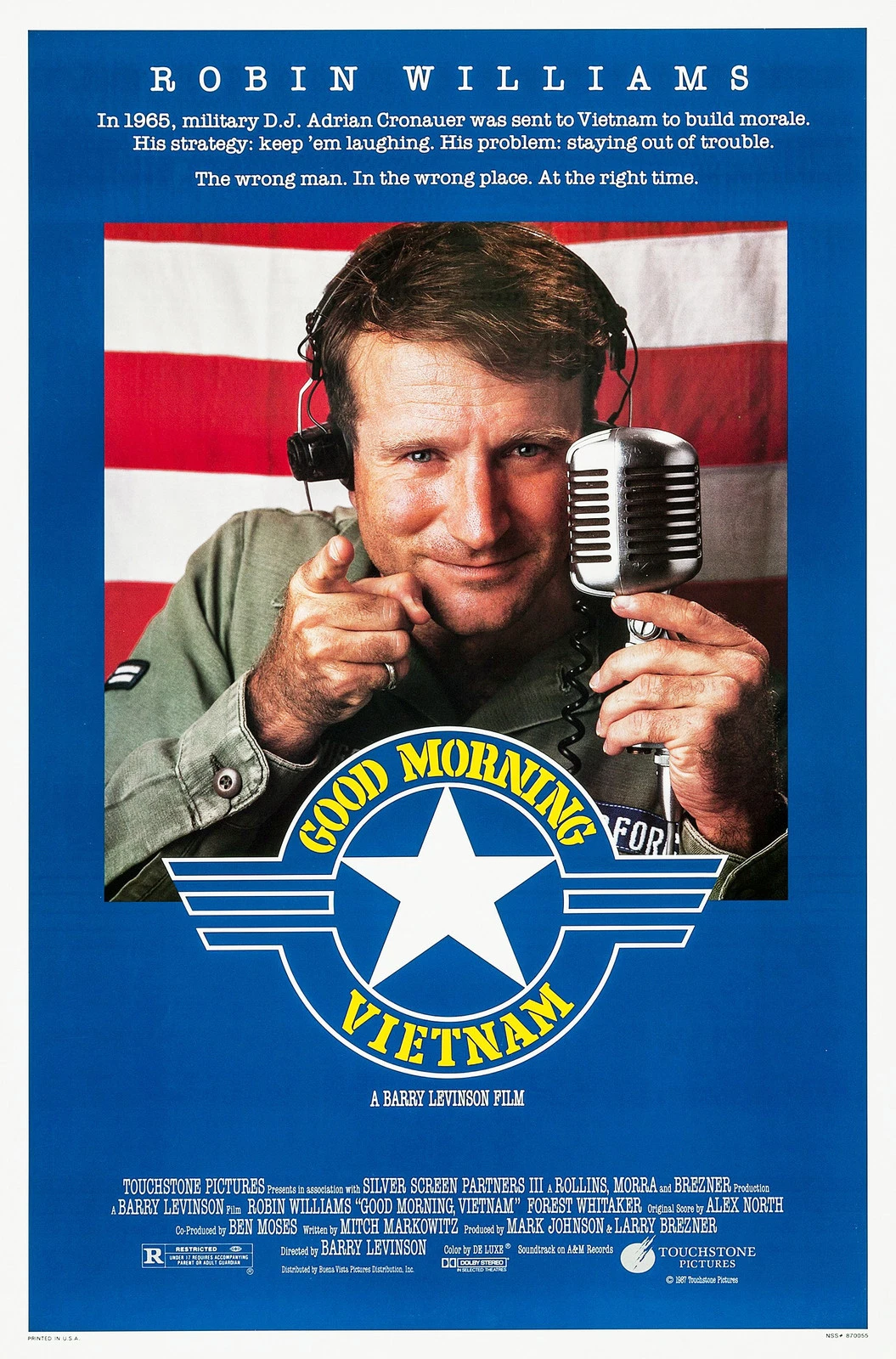
Good Morning, Vietnam poster
1987

#4 — Good Morning, Vietnam

Box Office: $123.9M
GenreComedy-drama
DirectorBarry Levinson
1987 Rank#4
Main Cast
  • Robin Williams as Adrian Cronauer
  • Forest Whitaker as Edward Garlick
  • Tung Thanh Tran as Tuan
  • Bruno Kirby as Lt. Steven Hauk

Good Morning, Vietnam is one of the most important hits on the 1987 chart because it takes comedy, performance, anti-authority energy, radio culture, and war-zone tension and fuses them into something warmly commercial and unexpectedly pointed. It is funny, but it is also deeply about censorship, morale, institutional fear, and the limits of performance when truth starts pressing in from the outside.

Robin Williams is the obvious engine, and the movie is smart enough to let his improvisational brilliance become part of the text rather than just a decorative feature. Adrian Cronauer’s broadcasts are not only entertaining. They are disruptive. His voice cuts through military stiffness, and the audience is invited to enjoy that disruption while watching the institution try to contain it.

What makes the film so revealing in 1987 is that it finds a way to keep Vietnam in the frame without making battlefield action the only route into the conflict. Instead, it uses media, morale, sound, and comic relief as the point of entry. That gave audiences a different angle on the war than a pure combat film, and it made the material more commercially permeable.

The movie also works because it understands the bittersweet value of comedy itself. Cronauer’s humor matters precisely because it exists in a setting that cannot be fixed by jokes alone. That tension between laughter and reality is what gives the film much of its emotional strength.

For Gen X, Good Morning, Vietnam remains a standout because it uses the joy of Williams’s comic speed to open the door, then lets the seriousness of the surrounding world complicate every laugh that comes after.

Fun Fact / Why It Still Matters The film stands out because it uses performance and comedy not to escape the reality of Vietnam, but to create a more emotionally accessible path into it.
Beverly Hills Cop II poster
1987

#3 — Beverly Hills Cop II

Box Office: $153.7M
GenreAction comedy
DirectorTony Scott
1987 Rank#3
Main Cast
  • Eddie Murphy as Axel Foley
  • Judge Reinhold as Billy Rosewood
  • John Ashton as Sgt. John Taggart
  • Jürgen Prochnow as Maxwell Dent

Beverly Hills Cop II at number three shows what happens when an already successful action-comedy franchise gets re-engineered for later-80s taste: more gloss, more polish, more style, more obvious commercial surface. The fundamental pleasure is still Axel Foley walking into polished environments and treating them like improv stages, but the sequel wraps that pleasure in a much shinier package.

Eddie Murphy’s star power remains the core reason it works. Axel Foley is still a disruption machine, and the audience still wants to watch him bend the temperature of every room he enters. That continuity matters. But Tony Scott’s direction changes the atmosphere. The film feels more lacquered, more stylized, and more in line with the decade’s increasing belief that cool itself is part of the product being sold.

The movie’s importance in the 1987 chart is that it helps measure where mainstream franchise logic was heading. This is not a sequel built on deepening mythology. It is a sequel built on presentation upgrade. Same star engine, brighter finish, more speed, more sheen, and a stronger sense that the brand now knows exactly what audiences expect it to deliver.

That does not mean the film is empty. It means its priorities are revealing. The late 80s increasingly wanted familiar characters delivered with greater visual confidence and a more premium-feeling surface. Beverly Hills Cop II is one of the cleanest examples of that shift.

For Gen X, the movie remains one of the clearest snapshots of the era’s sequel logic in motion: keep the star, sharpen the look, turn up the gloss, and trust that personality plus style can do the rest.

Fun Fact / Why It Still Matters The sequel works as a snapshot of the 80s evolving in real time: Axel Foley’s comic engine stays intact while the franchise itself gets polished into a more unmistakably late-80s action shape.
Fatal Attraction poster
1987

#2 — Fatal Attraction

Box Office: $156.6M
GenreErotic thriller
DirectorAdrian Lyne
1987 Rank#2
Main Cast
  • Michael Douglas as Dan Gallagher
  • Glenn Close as Alex Forrest
  • Anne Archer as Beth Gallagher
  • Ellen Hamilton Latzen as Ellen Gallagher

Fatal Attraction finishing at number two is one of the biggest clues to what kind of year 1987 really was. This is not a toy-driven fantasy, not a broad family comedy, not a sequel built around harmless comfort. It is an erotic thriller about adultery, obsession, domestic terror, professional-class fragility, and the collapse of male control. Its success tells you the American mass audience in 1987 was ready to turn adult anxiety into event viewing.

Glenn Close is the central reason the film became so culturally overwhelming. Alex Forrest is written and performed in a way that fuses vulnerability, rage, longing, and threat into one impossible-to-ignore presence. Michael Douglas brings exactly the right mix of attractiveness, self-deception, and weak moral confidence. Anne Archer grounds the film in the life that is supposedly stable, making the threat feel less abstract and more like an invasion of ordinary domestic order.

What makes the movie historically significant is that it helped harden the erotic thriller into a major commercial lane. It showed that fear could be sexual, domestic, professional, and psychological all at once. The danger is not “out there” in a remote genre landscape. It is in apartments, marriages, offices, weekend choices, and the belief that grown-up life can be compartmentalized safely.

In the context of 1987, Fatal Attraction matters because it crystallizes the year’s adult turn in its most commercially explosive form. It is glossy, but not reassuring. Sexy, but not safe. Mainstream, but built entirely around anxiety. That is late-80s adult box office in a nutshell.

For Gen X, the movie remains one of the defining adult-cultural events of the decade because it was not just watched. It was discussed, feared, moralized over, quoted, and folded into how the culture imagined desire and danger for years afterward.

Fun Fact / Why It Still Matters Fatal Attraction helped define the erotic thriller as a dominant commercial mode by proving adult fear, sex, and domestic instability could be among the biggest attractions in the country.
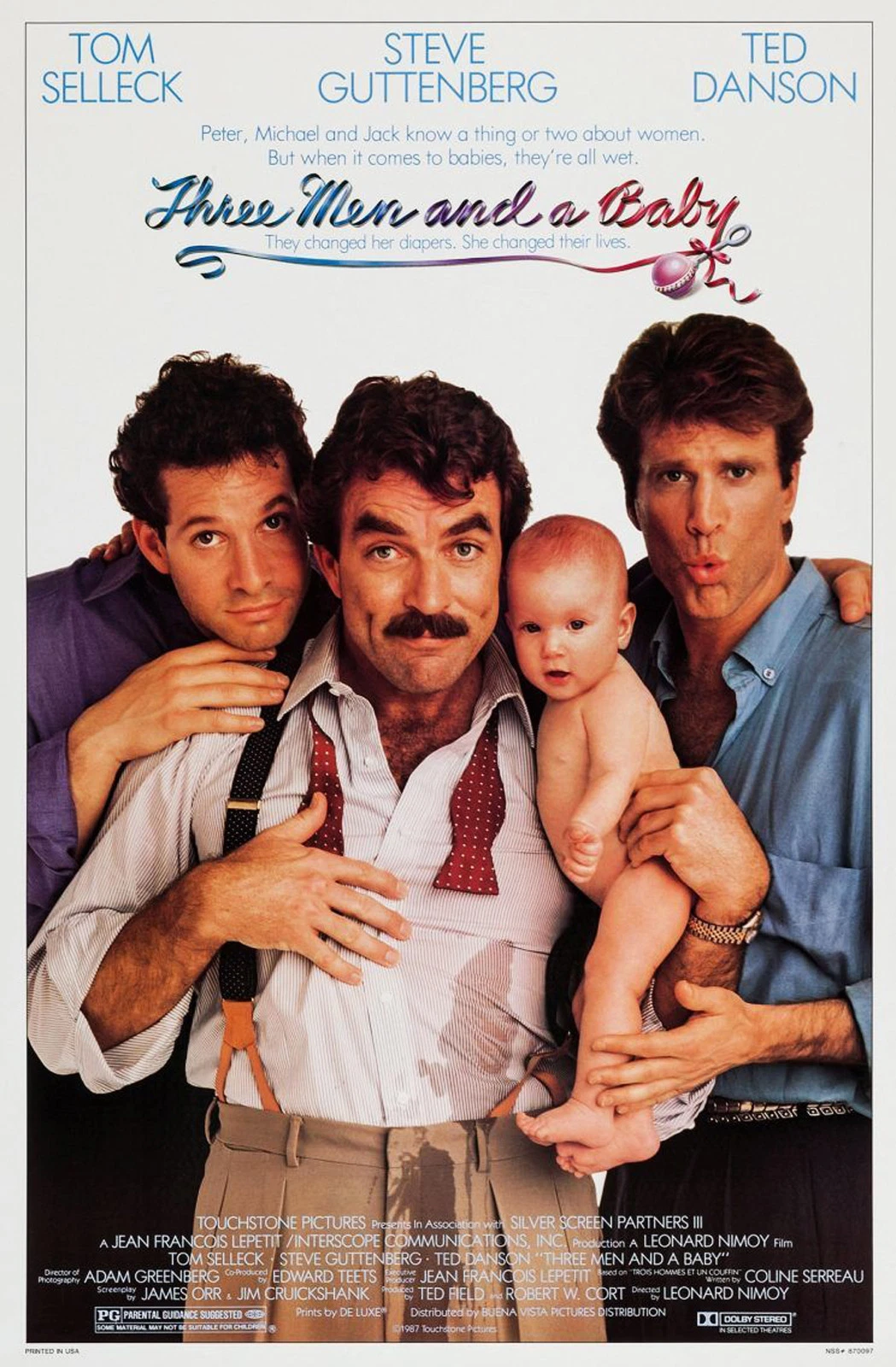
Three Men and a Baby poster
1987

#1 — Three Men and a Baby

Box Office: $167.8M
GenreComedy
DirectorLeonard Nimoy
1987 Rank#1
Main Cast
  • Tom Selleck as Peter Mitchell
  • Steve Guttenberg as Michael Kellam
  • Ted Danson as Jack Holden
  • Nancy Travis as Sylvia Bennington

Three Men and a Baby does not just top the 1987 box office. It does so in a way that tells you something crucial about the year: mainstream audiences still loved broad, clean-hook, star-driven comedy when the cast felt inviting enough and the premise was easy enough to sell in one sentence. A baby suddenly appears in the lives of three bachelors, and their self-image collapses into comic domestic chaos. That is textbook mainstream execution, and it worked on a massive scale.

What makes the film especially revealing is that it arrives in a year otherwise crowded with adult tension, erotic danger, professional ambition, crime, and urban cool. The number-one movie is instead a male-domestic comedy. That contrast matters. It suggests 1987 was not simply a year of darker adult anxiety. It was also a year where audiences still wanted warmth, accessibility, and comedy built out of watching supposedly capable men realize they are nowhere near as prepared for real life as they believed.

Tom Selleck, Steve Guttenberg, and Ted Danson give the movie exactly the right balance of appeal and differentiation. Each star brings a familiar persona, and the film smartly lets the baby reorganize those personas rather than flatten them. The humor works because adulthood itself is being disrupted. Routine, confidence, masculinity, competence, and self-centered freedom all get re-sorted by care.

In the context of the top movies of 1987, Three Men and a Baby matters because it proves broad studio comedy could still beat thrillers, sequels, and more aggressively “event” pictures if it found the right cast and the right universal premise. It is a number-one finish built on accessibility, likability, domestic disruption, and the quiet reassurance that people can be made less selfish by accident.

For Gen X, the movie remains one of the clearest reminders that the 80s box office could still go huge on pure concept execution. Not every number-one movie had to arrive like a franchise weapon. Sometimes the biggest hit in America was simply a comedy about three guys finding out adulthood is harder, funnier, and more inconvenient than they thought.

Fun Fact / Why It Still Matters Three Men and a Baby remains one of the era’s biggest comedy success stories because it turned one instantly understandable domestic disruption into a massive star-driven mainstream event.

Rewind Verdict

The top 10 movies of 1987 work so well as a year-end snapshot because they show the 80s shifting toward adult mainstream confidence. This is not primarily a year of kid adventure, innocent fantasy, or creature spectacle. It is a year of urban energy, marriage anxiety, work ambition, police partnerships, romantic danger, sexual tension, and stars who know how to dominate grown-up spaces.

That does not make 1987 joyless. It is funny, quotable, sexy, weird, and highly watchable. But the overall mood has clearly changed. The box office is increasingly interested in adults behaving badly, adults wanting too much, adults lying to themselves, adults trying to manage careers and relationships, and adults discovering that control is a lot less stable than it looks.

For Gen X, 1987 is one of the most revealing movie years of the decade because it captures mainstream 80s culture becoming more urban, more professional-class, more emotionally dangerous, and more self-aware. The shine is still there. It is just attached to more grown-up complications now.

FAQ: Top Movies of 1987

What was the highest-grossing 1987 release at the North American box office?

Three Men and a Baby finished as the biggest 1987 release in North America.

Was Fatal Attraction really bigger than Beverly Hills Cop II?

Yes. Both were huge hits, but Fatal Attraction finished ahead of Beverly Hills Cop II among 1987 North American release-year grosses.

Why does 1987 feel more adult than some earlier 80s movie years?

Because many of the biggest hits revolve around marriage, adultery, parenthood, work ambition, policing, romance, crime, urban life, and professional-class instability rather than primarily youth fantasy or kid adventure.

Why use release-year grosses instead of calendar-year totals?

Because release-year grosses give 1987 a cleaner identity and avoid mixing in older films that were still earning money during the same calendar year.

What makes the 1987 lineup so memorable?

Its mood. The year delivers adult thrillers, urban action, mature romance, gangster prestige, corporate comedy, family chaos, and star-driven mainstream storytelling with a sharper late-80s edge.

Get the Weekly Gen X Drop

New videos, rewinds, and savage nostalgia — first.

JOIN THE NEWSLETTER WATCH VIDEOS

MORE REWINDS