Top 10 Movies of 1983: Return of the Jedi, Terms of Endearment, and the Year the 80s Got Bigger

Top 10 Movies of 1983: Return of the Jedi, Terms of Endearment, and the Year the 80s Got Bigger
Smells Like Gen X • Top Movies of 1983

The Top 10 Movies of 1983

The top 10 movies of 1983 feel like the year the 80s got bigger, glossier, and much more confident about mixing blockbuster spectacle with adult emotion, star power, style, and attitude. This is a year where a giant sci-fi finale, an emotionally devastating family drama, a dance phenomenon, a class-swap comedy, a Cold War teen thriller, a Bond movie, Eastwood grit, suburban dad panic, and Tom Cruise cool all sit on the same chart without it feeling strange.

This countdown uses the biggest North American grosses for movies first released in 1983, which gives the year a cleaner identity than a calendar-year chart cluttered with holdovers. What you get is one of the best snapshots of how broad mainstream moviegoing still was in the early 80s: franchises were getting stronger, but audiences still had room for adult drama, domestic comedy, tech anxiety, fashion-driven dance hits, and weirdly specific commercial swings.

For Gen X, 1983 is one of those years that reads like a full cultural memory bank. Jedi closed out a trilogy obsession. Terms of Endearment proved adult drama could still move the mainstream. Flashdance turned style into box-office power. Trading Places became endlessly rewatchable. WarGames made teenage computer culture feel thrilling and dangerous. It is one of the strongest movie years of the decade because it feels huge without feeling generic.

Gen X Note: 1983 feels like the 80s settling into themselves. The movies are bigger and shinier now, but they still have emotional weight, comic bite, and room for very different audiences.

Quick List: The Top 10 Movies of 1983

  1. Risky Business
  2. Mr. Mom
  3. Staying Alive
  4. Sudden Impact
  5. Octopussy
  6. WarGames
  7. Trading Places
  8. Flashdance
  9. Terms of Endearment
  10. Return of the Jedi

Countdown: The Top 10 Movies of 1983

Risky Business poster
1983

#10 — Risky Business

Box Office: $63.5M
GenreTeen comedy-drama
DirectorPaul Brickman
1983 Rank#10
Main Cast
  • Tom Cruise as Joel Goodsen
  • Rebecca De Mornay as Lana
  • Joe Pantoliano as Guido
  • Bronson Pinchot as Barry

Risky Business opens the 1983 top 10 as one of the most important cool-temperature movies of the year. It is not a giant effects movie, not a sequel, not a broad family play. It is a slick, nervous, stylish youth-market hit that turns suburban pressure, sexual curiosity, money anxiety, and aspirational image into a movie that feels far more interesting than a simple teen comedy should.

The story follows Joel Goodsen, a high-achieving suburban teenager whose carefully managed life spins out when his parents leave town. What makes the movie hit harder than its setup suggests is its tone. It is funny, yes, but it is also anxious, seductive, satirical, and weirdly sharp about class and success. Underneath the comic situations, the movie keeps asking what ambition costs and what kind of person suburban privilege is supposed to produce.

Tom Cruise is the key to why the whole thing works so well. This is one of the early performances that made it obvious he was not just another charismatic young actor. He has that specific movie-star quality where he can look confident and panicked at the same time, which is exactly what Joel needs. Rebecca De Mornay brings an adult edge and danger that keeps the movie from floating off into harmless teen fantasy.

In the context of the biggest movies of 1983, Risky Business matters because it shows that a movie could become a hit through tone and attitude as much as through franchise scale. It sold a mood, a soundtrack, a posture, and a version of 80s cool that audiences wanted to step into.

For Gen X, it remains one of the essential early-80s “vibe as commerce” movies — stylish, quotable, a little dangerous, and still sharp enough to feel like more than nostalgia wallpaper.
Fun Fact / Why It Still Matters Risky Business helped turn Tom Cruise into a major star and remains one of the clearest examples of 80s cool being sold through mood, music, and image rather than plot alone.
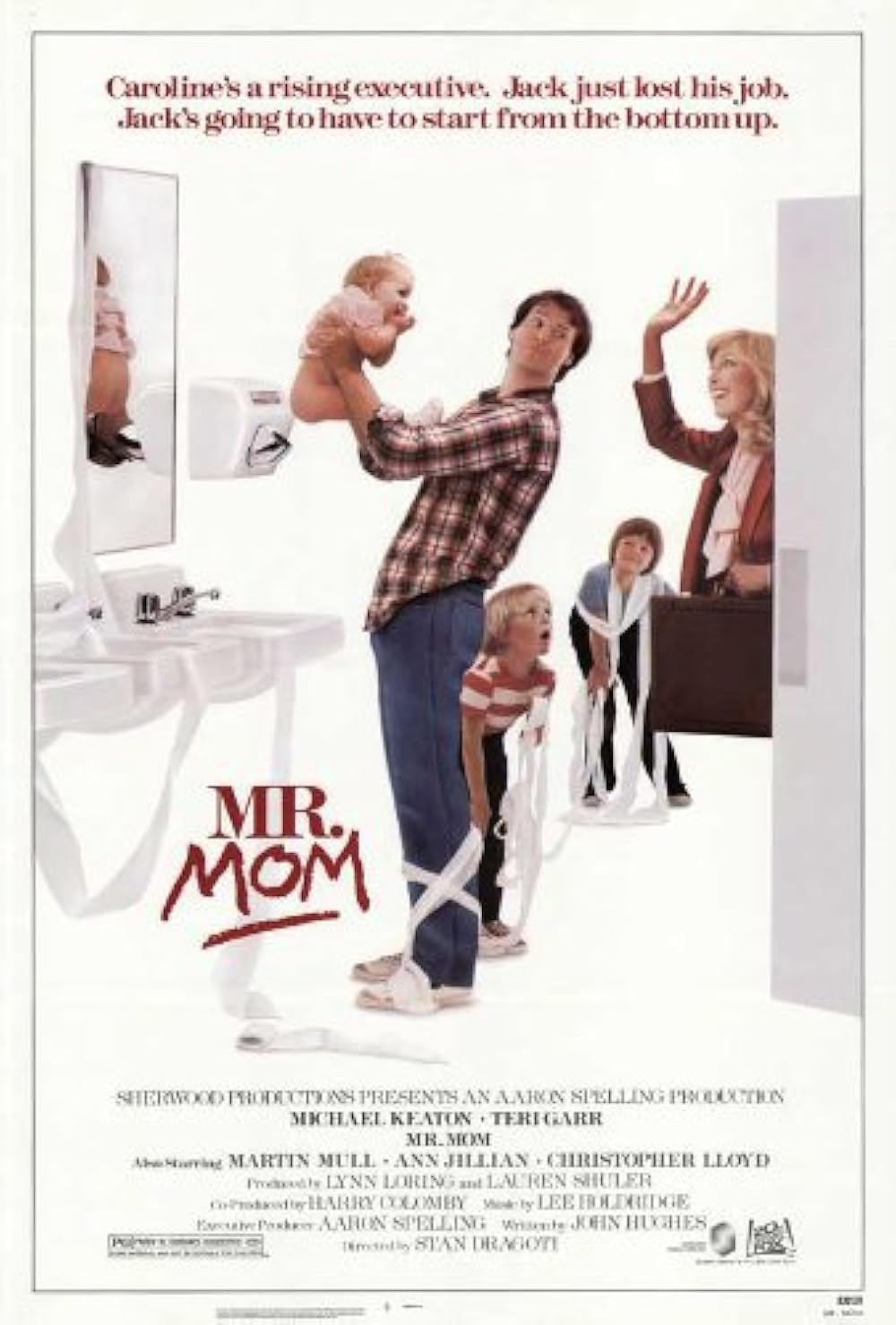
Mr. Mom poster
1983

#9 — Mr. Mom

Box Office: $64.8M
GenreComedy
DirectorStan Dragoti
1983 Rank#9
Main Cast
  • Michael Keaton as Jack Butler
  • Teri Garr as Caroline Butler
  • Christopher Lloyd as Larry
  • Martin Mull as Ron Richardson

Mr. Mom is one of the most purely commercial studio comedies on the 1983 chart, and that is a big part of its charm. The premise is easy to grasp instantly: a laid-off husband becomes the stay-at-home parent while his wife returns to work. In lesser hands, that could have become flat sitcom material. Instead, the film turns it into one of the year’s warmest and most recognizable mainstream hits.

Michael Keaton gives the movie its engine. He has the ideal comic energy for this material: frazzled, fast, likable, and just off-center enough to keep the domestic chaos funny instead of generic. Teri Garr is just as important because the movie needs the marriage to feel real for the role-reversal comedy to matter. She keeps the story from becoming a one-man showcase and gives the household dynamic actual emotional shape.

One reason the movie connected so strongly in 1983 is that it speaks directly to changing ideas about work, family, gender, and economic pressure without becoming preachy. It packages those anxieties as comedy, but they were not abstract. They were things audiences recognized from real life. That gave the movie a mainstream relatability that helped it cut through a very crowded year.

In a year full of giant franchises, Bond swagger, and big emotional dramas, Mr. Mom reminds you that everyday domestic comedy could still be a substantial box-office lane. That matters because it helps explain why early-80s movie culture felt broader than later decades often did.

For Gen X, the movie doubles as a time capsule of suburban family life and as a showcase for Keaton before full movie stardom kicked in. It is funny, familiar, and much smarter about changing family roles than it gets credit for.

Fun Fact / Why It Still Matters Mr. Mom remains one of the strongest early-80s domestic comedies because it turned social change into mainstream humor without losing warmth or rewatchability.
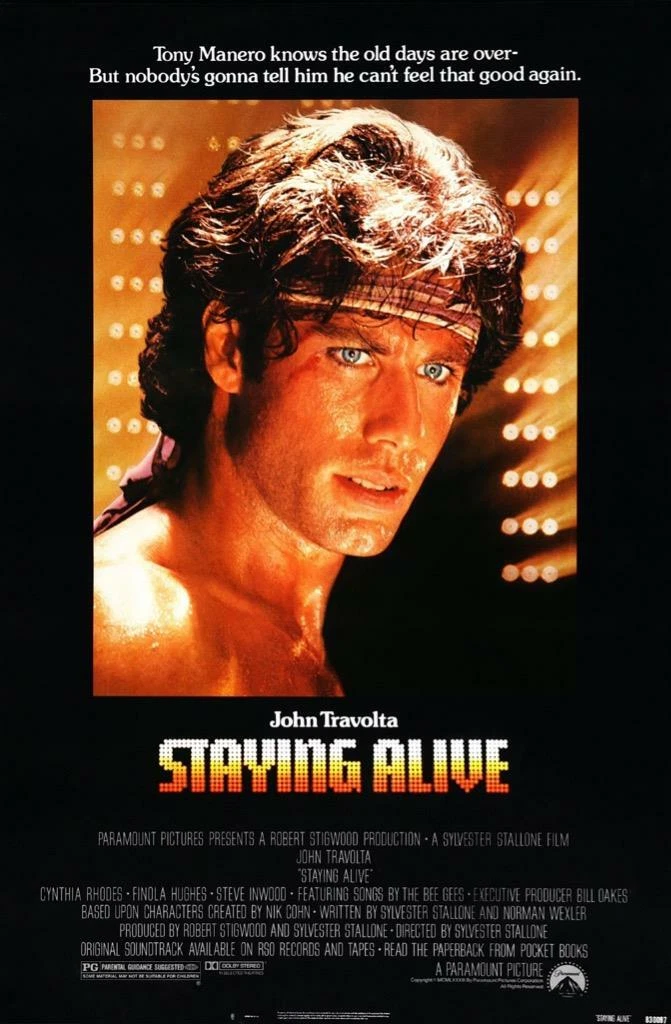
Staying Alive poster
1983

#8 — Staying Alive

Box Office: $64.9M
GenreDance drama
DirectorSylvester Stallone
1983 Rank#8
Main Cast
  • John Travolta as Tony Manero
  • Cynthia Rhodes as Jackie
  • Finola Hughes as Laura
  • Steve Inwood as Jesse

Staying Alive is one of the stranger and more revealing top-10 hits of 1983, which is exactly why it deserves attention. As a sequel to Saturday Night Fever, it carries obvious commercial weight, but the movie itself is a very different beast: glossier, more theatrical, more body-conscious, and much more aggressively 80s in its polish and intensity.

John Travolta remains the center of gravity. Audiences were still very willing to follow Tony Manero, even as the movie pushes him into a more stylized world of ambition, stage performance, and visual sheen. The film is less interested in disco-era social texture than in sweat, drive, self-reinvention, and performance as identity. That is a big tonal shift, but it is also a very 1983 one.

What makes the movie especially useful in a top movies of 1983 countdown is that it shows how sequel logic was evolving. A continuation did not have to preserve the exact tone of the original to make money. It just had to sell a bigger, brighter, more commercialized version of the emotional brand. Staying Alive does that almost to an extreme.

In the broader movie culture of 1983, the film also sits alongside Flashdance as evidence that movement, music, body image, and aspiration had become commercially potent cinematic ingredients. The decade was increasingly comfortable selling emotion through style.

For Gen X, Staying Alive is one of those movies that may not be universally loved in the same way as its predecessor, but it remains fascinating as a pure 80s object: slick, strange, ambitious, and fully committed to its own stylized version of intensity.

Fun Fact / Why It Still Matters The movie is a near-perfect example of how early-80s sequel logic often meant “more polished, more intense, more overtly commercial,” whether or not that made the tone cleaner.
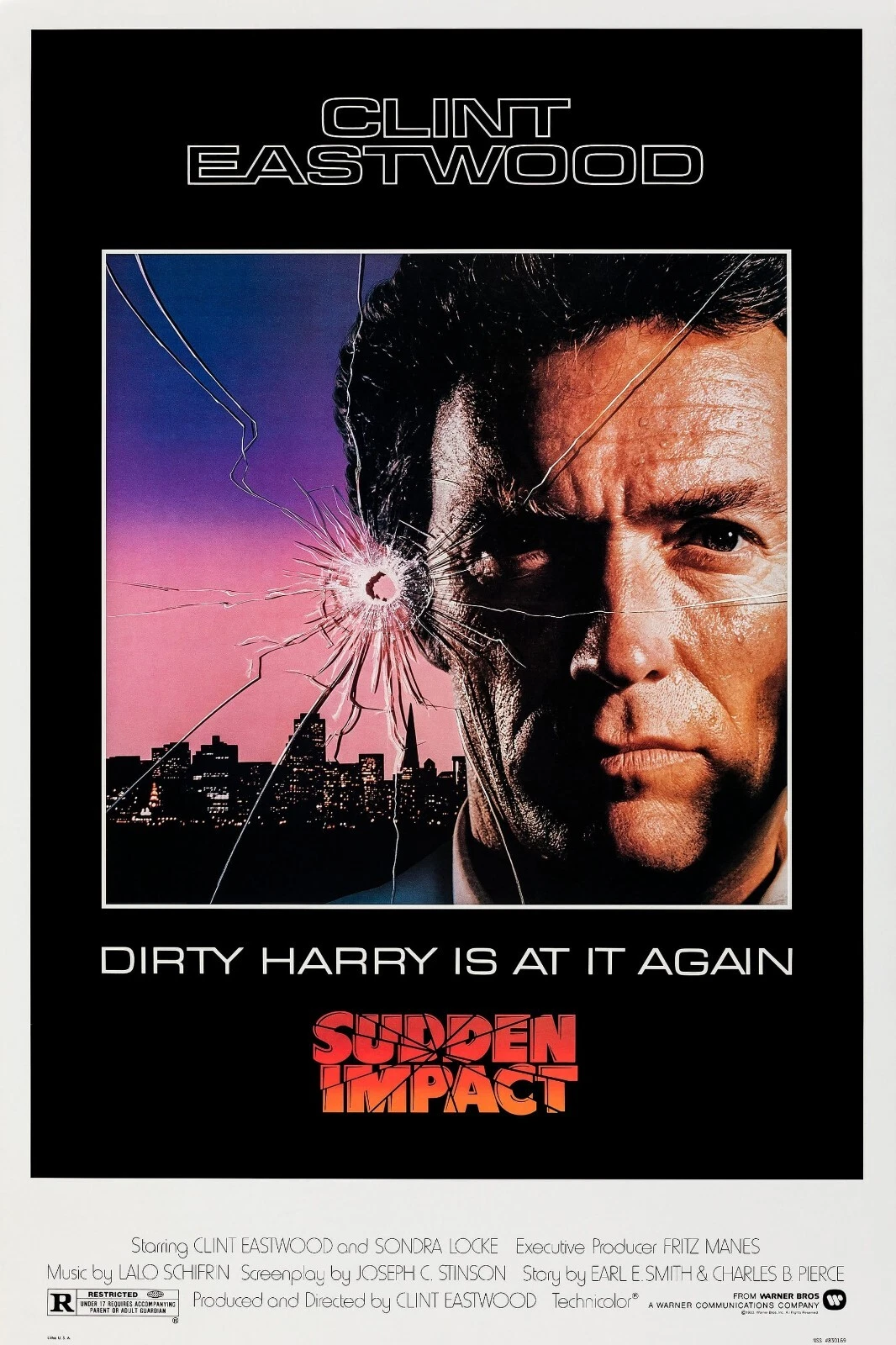
Sudden Impact poster
1983

#7 — Sudden Impact

Box Office: $67.6M
GenreAction thriller
DirectorClint Eastwood
1983 Rank#7
Main Cast
  • Clint Eastwood as Harry Callahan
  • Sondra Locke as Jennifer Spencer
  • Pat Hingle as Chief Jannings
  • Bradford Dillman as Capt. Briggs

Sudden Impact landing at number seven shows how much force Clint Eastwood still carried into the heart of the 80s. This was the fourth Dirty Harry movie, and by this point Harry Callahan was not just a familiar character. He was a full-blown pop-culture institution — blunt, confrontational, morally abrasive, and entirely capable of dragging a studio thriller into the yearly top 10 on persona alone.

What makes this entry more interesting than a routine sequel is that it pushes the material darker. Sondra Locke’s Jennifer Spencer introduces revenge, trauma, and a much murkier emotional center than a standard action-thriller setup might have offered. That keeps the movie from feeling purely mechanical. Eastwood, directing as well as starring, understands that the Dirty Harry machine still needs a little emotional heat if it is going to keep its edge.

In the context of 1983, Sudden Impact is also useful because it keeps the year from looking too glossy in retrospect. This was a very polished, commercially confident year, but there was still room for grit, street-level anger, and old-school star toughness. Eastwood’s box-office power remained very real even as younger stars and shinier entertainment took up more space around him.

The movie also demonstrates how the 80s could support multiple kinds of “event” films at once. Audiences might go from Jedi-sized franchise mythology to domestic comedy to a violent Eastwood thriller without feeling any contradiction. That tonal spread is a huge part of what made early-80s moviegoing so interesting.

For Gen X, Sudden Impact matters because it captures a moment when one of the last major 70s-style screen tough guys was still fully capable of dominating an 80s multiplex on his own terms.

Fun Fact / Why It Still Matters This is the Dirty Harry entry that gave pop culture the line “Go ahead, make my day,” which became bigger than the movie itself and locked it into permanent 80s quote history.
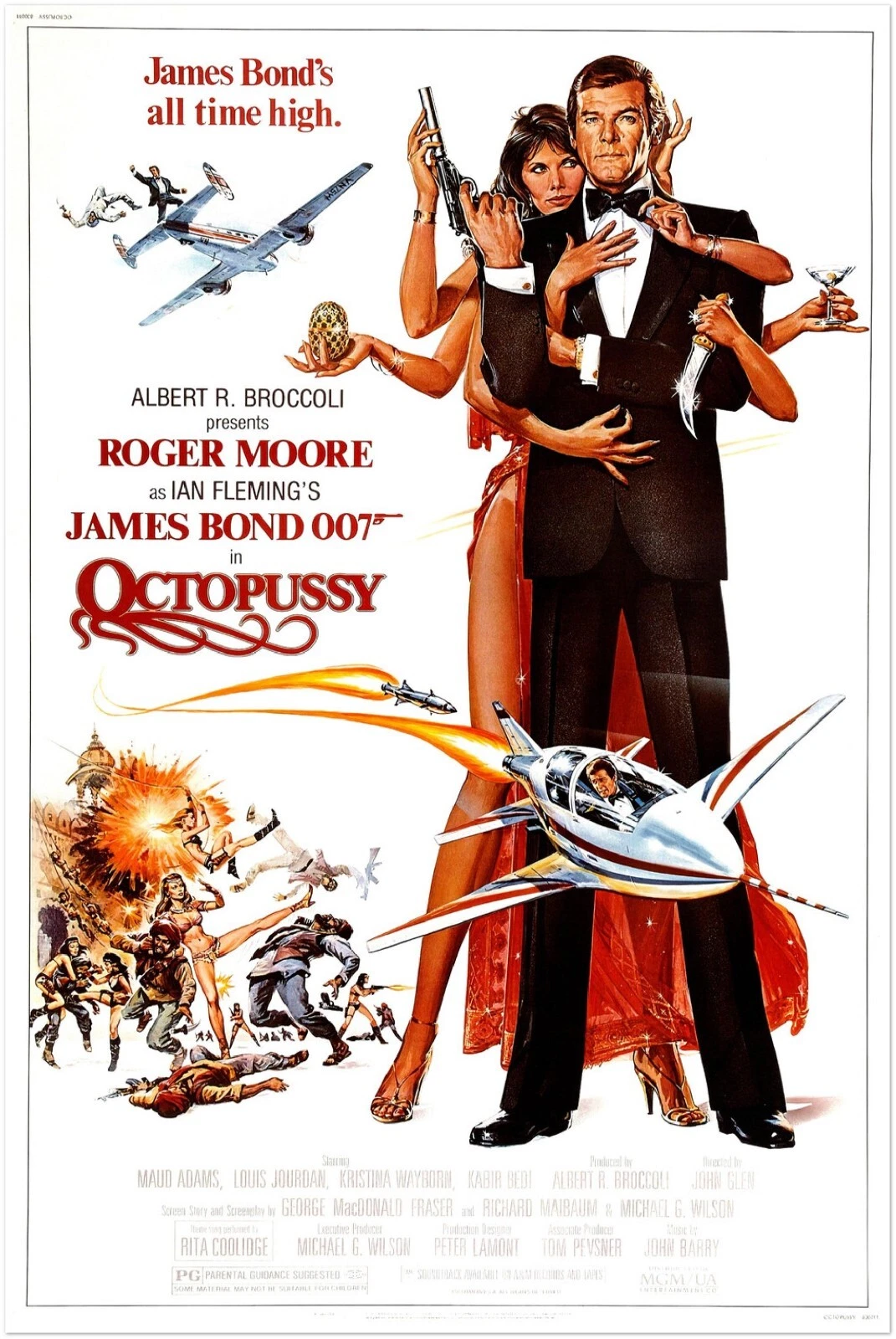
Octopussy poster
1983

#6 — Octopussy

Box Office: $67.9M
GenreSpy action
DirectorJohn Glen
1983 Rank#6
Main Cast
  • Roger Moore as James Bond
  • Maud Adams as Octopussy
  • Louis Jourdan as Kamal Khan
  • Kabir Bedi as Gobinda

Octopussy sits at number six as another reminder that Bond remained one of the most durable box-office habits in mainstream culture. By 1983, Roger Moore’s Bond was an established flavor of moviegoing all by itself: polished, international, lightly absurd, comfortably glamorous, and flexible enough to absorb whatever the moment needed without losing the core identity audiences were paying for.

The film delivers exactly the ingredients a Bond crowd expected — exotic settings, elaborate action, Cold War-adjacent intrigue, elegant nonsense, and a level of confidence that only works when a franchise knows it has been invited to the party already. That matters commercially because Bond did not need to reinvent itself from scratch each time. It needed to keep proving it could still deliver the package better than anyone else.

In 1983 terms, Octopussy is important because it shows how franchise endurance worked before modern cinematic universes. Bond movies were not just sequels; they were recurring cultural rituals. People showed up for the mood, the title, the locations, the gadgets, the villains, and the unspoken promise that everything would remain recognizably Bond no matter how the decade changed around it.

The movie also helps underscore how wide the box office still was. A Bond film could thrive right alongside emotional adult drama, dance spectacle, teen thrillers, domestic comedy, and the final chapter of the original Star Wars trilogy. That kind of variety is part of what makes 1983 feel so rich.

For Gen X, Octopussy helps capture the 80s taste for elegant ridiculousness played with total sincerity. That is not a flaw in Bond. It is one of the franchise’s superpowers.

Fun Fact / Why It Still Matters Its success shows how resilient Bond was in the 80s, surviving changing trends by treating adaptation as part of the formula instead of a crisis.
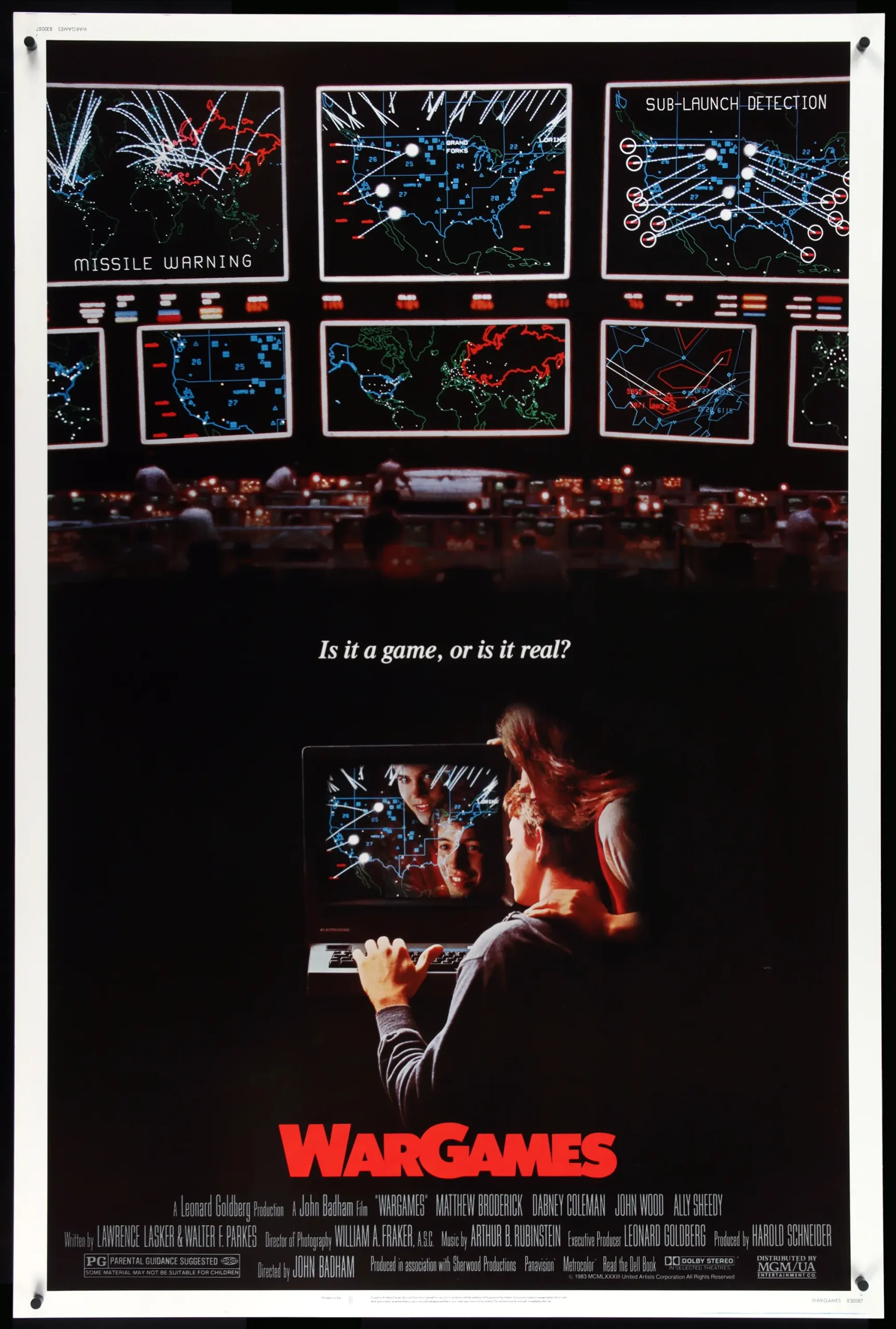
WarGames poster
1983

#5 — WarGames

Box Office: $79.6M
GenreTech thriller
DirectorJohn Badham
1983 Rank#5
Main Cast
  • Matthew Broderick as David Lightman
  • Ally Sheedy as Jennifer Mack
  • Dabney Coleman as Dr. John McKittrick
  • John Wood as Dr. Stephen Falken

WarGames is one of the most distinctly 1983 movies on the entire chart because it turns teenage curiosity, home computing, and Cold War paranoia into a mainstream thriller. That is a very specific early-80s mix, and the movie sells it beautifully. It feels futuristic and immediate at the same time, which is a big part of why it connected.

The premise is brilliantly accessible: a smart suburban teenager thinks he has found a computer game, but what he has really touched is a military system that should never be treated like play. That setup lets the movie do something unusually effective. It makes technology feel ordinary and terrifying simultaneously. The computer is not on a distant space station or in a secret lab only geniuses can access. It is suddenly close to home.

Matthew Broderick gives the movie its human center. David Lightman is bright, impulsive, confident enough to get in trouble, and recognizably like the kind of kid 1983 was beginning to imagine would grow up around home computers. Ally Sheedy helps ground the story socially, while the adult characters around them represent bureaucratic systems that feel increasingly incapable of understanding the stakes they have built.

In the context of the biggest movies of 1983, WarGames matters because it shows audiences were ready for tech anxiety before the internet era had fully arrived. The film packages that fear as popcorn entertainment, but the ideas underneath it are real enough that the movie still feels surprisingly sharp.

For Gen X, this is one of the essential early-computer-age thrillers because it captured the excitement and danger of the screen long before “tech thriller” became a fully standardized commercial lane.

Fun Fact / Why It Still Matters WarGames remains one of the best examples of early mainstream tech anxiety done right: accessible, suspenseful, and smart enough to outlast the era’s hardware.
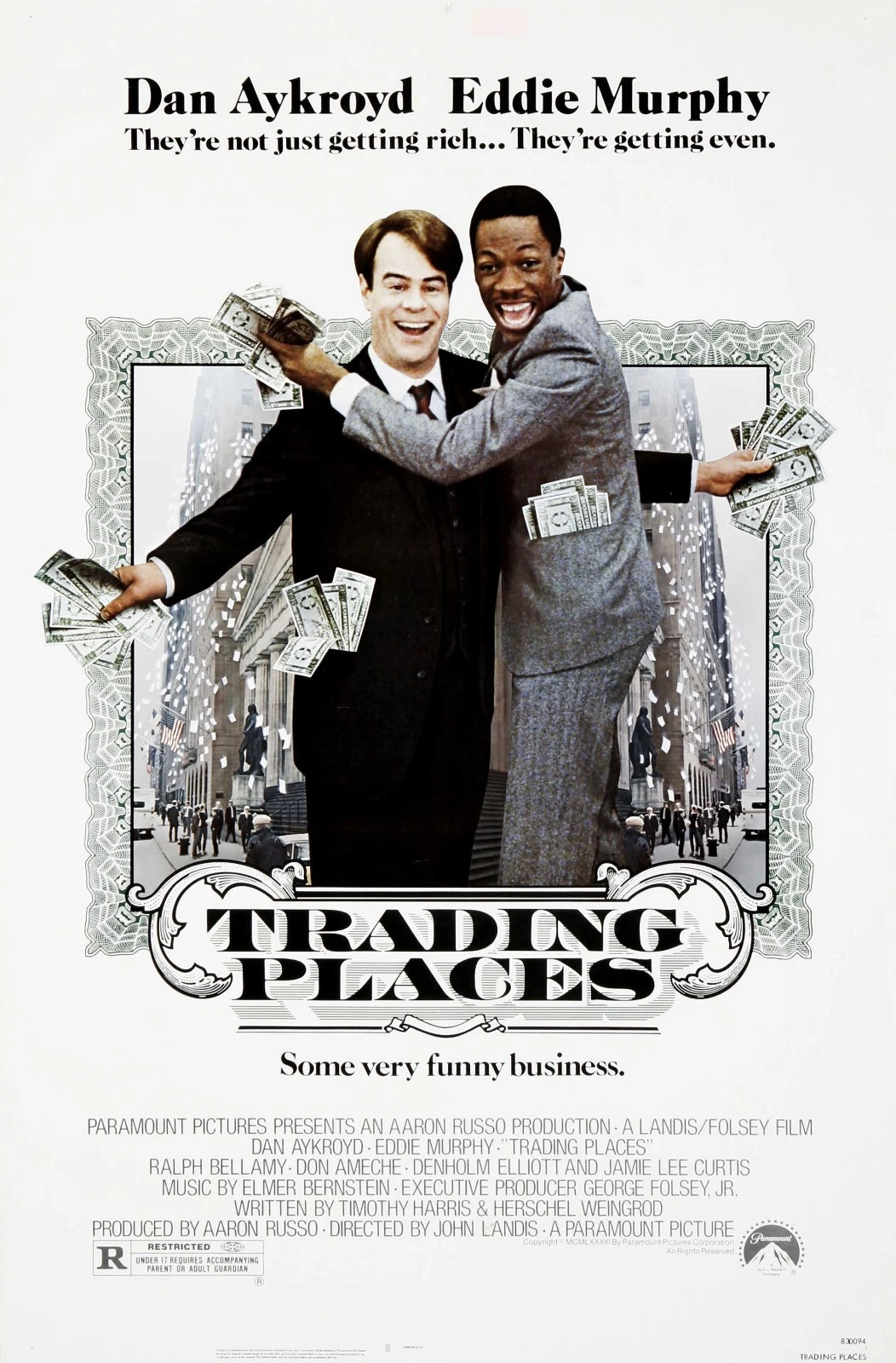
Trading Places poster
1983

#4 — Trading Places

Box Office: $90.4M
GenreComedy
DirectorJohn Landis
1983 Rank#4
Main Cast
  • Dan Aykroyd as Louis Winthorpe III
  • Eddie Murphy as Billy Ray Valentine
  • Jamie Lee Curtis as Ophelia
  • Ralph Bellamy as Randolph Duke

Trading Places at number four is one of the best things about the 1983 box office because it proves studio comedy could still be broad, sharp, socially observant, and wildly entertaining at the same time. The premise turns class and privilege into a cruel experiment, but the movie never feels academic. It feels fast, funny, and deeply committed to watching arrogance get dismantled.

Dan Aykroyd handles the polished upper-crust side of the equation, but Eddie Murphy is the movie’s live wire. This is another early Murphy performance where the screen seems to reorient itself around his confidence, rhythm, and comic force. He turns what could have been a clever studio comedy into something much more electric.

Jamie Lee Curtis is just as important to the movie’s success as people often forget. She brings warmth, intelligence, and a grounded presence that helps keep the film from collapsing into pure cynicism. That balance matters. The film is mean where it needs to be, but it still knows how to give the audience a satisfying emotional payoff.

In 1983 terms, Trading Places matters because it shows mainstream audiences were still fully willing to embrace comedy that had actual bite. Money, class, race, status, and performance are all in play here, but the film never stops moving like a crowd-pleaser.

For Gen X, it remains one of those endlessly rewatchable 80s comedies that hits both as a big commercial laugh machine and as something just a little smarter and nastier than average. That is exactly why it lasted.

Fun Fact / Why It Still Matters Trading Places is one of the strongest examples of 80s commercial comedy using money and social class as comic fuel without losing its mainstream momentum.
Flashdance poster
1983

#3 — Flashdance

Box Office: $92.9M
GenreRomantic dance drama
DirectorAdrian Lyne
1983 Rank#3
Main Cast
  • Jennifer Beals as Alex Owens
  • Michael Nouri as Nick Hurley
  • Lilia Skala as Hanna Long
  • Sunny Johnson as Jeanie Szabo

Flashdance is one of the purest “style becomes box office” movies of the entire decade. The plot is straightforward, but the film’s cultural force came from something larger than story mechanics. It sold a mood, a visual identity, a soundtrack, a body language, and a specific kind of 80s aspiration. That made it far more than a simple dance movie.

Jennifer Beals gives the movie a compelling focal point as Alex Owens, a young woman whose dream life is organized around labor, fantasy, performance, and self-reinvention. The movie understands that audiences are not only following what happens to Alex. They are buying into the feeling of wanting more — more style, more movement, more self-definition, more cinematic glamour attached to working-class effort.

Adrian Lyne’s direction is a huge part of what made Flashdance hit so hard. The movie is edited, shot, and scored in a way that feels like the 80s teaching itself how to sell emotion through montage and music. The result is a film that sometimes feels closer to a dream, a music-video fantasy, or a commercial for ambition than to a traditionally structured drama. That is not a weakness. It is the core of the appeal.

In the context of the biggest movies of 1983, Flashdance matters because it shows how commercially powerful atmosphere could be. The soundtrack, the sweat, the rehearsal spaces, the leg warmers, the desire to move upward — it all fused into something audiences did not just watch. They absorbed it.

For Gen X, the movie is inseparable from the decade’s sound and look. Even people who do not revisit it often usually remember the feeling it sold, and that is the mark of a real phenomenon.

Fun Fact / Why It Still Matters Flashdance helped define 80s cinematic style by proving that music, image, fashion, and aspiration could generate a box-office event almost as powerfully as story.
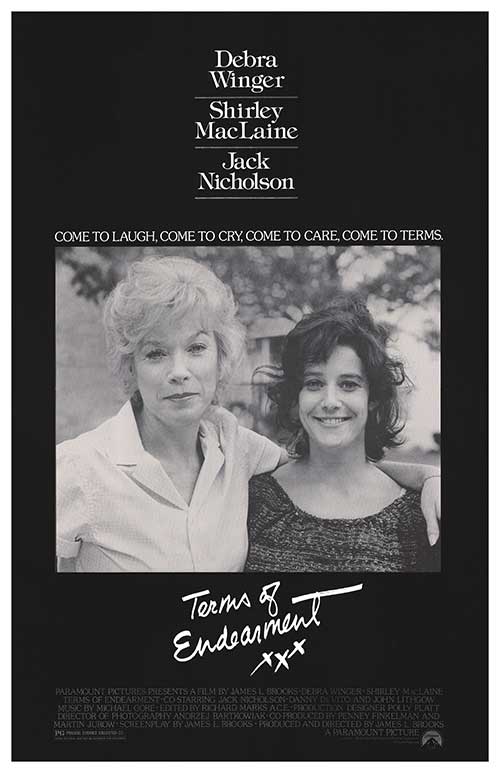
Terms of Endearment poster
1983

#2 — Terms of Endearment

Box Office: $108.4M
GenreComedy-drama
DirectorJames L. Brooks
1983 Rank#2
Main Cast
  • Shirley MacLaine as Aurora Greenway
  • Debra Winger as Emma Greenway Horton
  • Jack Nicholson as Garrett Breedlove
  • Jeff Daniels as Flap Horton

Terms of Endearment finishing at number two is one of the strongest proofs anywhere on the 1983 chart that audiences still turned emotionally rich adult storytelling into huge mainstream business when the film delivered honestly enough. This was not a small prestige picture. It became one of the biggest movies in America, which says a great deal about how broad moviegoing still was in the early 80s.

The film works because it understands how to move between humor and pain without flattening either. Shirley MacLaine and Debra Winger give the mother-daughter relationship at the center of the story a mix of love, resentment, need, pride, fear, and history that feels genuinely lived-in. The movie is not only “important.” It is funny, messy, and emotionally specific, which makes the drama hit harder when it arrives.

Jack Nicholson adds movie-star volatility and charm, but the heart of the film belongs to the women and to the bond between them. That relationship drives the movie’s emotional authority and explains why audiences were willing to follow the story far beyond the level of a polite prestige watch.

In commercial terms, Terms of Endearment matters because it shows adult audiences still had major weight in the marketplace. Emotional truth could compete with spectacle. Performances could compete with franchise mythology. A film could become both an awards magnet and a mass-market event.

For Gen X, the movie stands as one of the decade’s essential reminders that the 80s were not only about noise and flash. They were also capable of producing crowd-pleasing emotional devastation on a very large scale.

Fun Fact / Why It Still Matters Terms of Endearment remains one of the clearest examples of a performance-driven adult comedy-drama becoming a major cultural event rather than just an awards favorite.
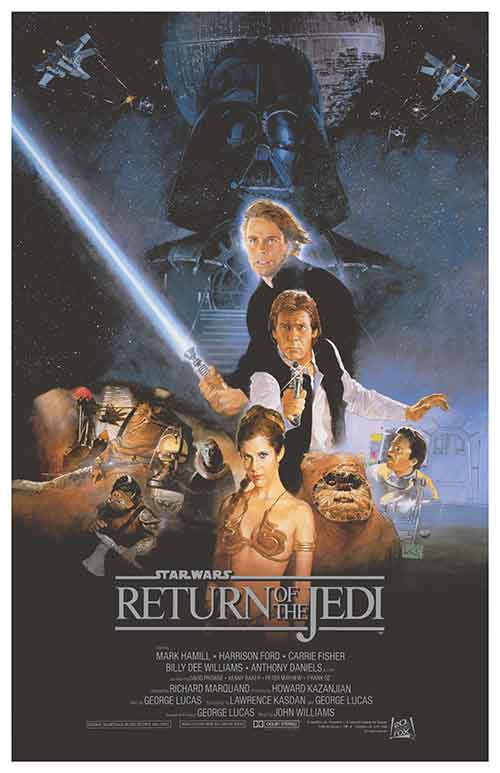
Return of the Jedi poster
1983

#1 — Return of the Jedi

Box Office: $252.6M
GenreSci-fi adventure
DirectorRichard Marquand
1983 Rank#1
Main Cast
  • Mark Hamill as Luke Skywalker
  • Harrison Ford as Han Solo
  • Carrie Fisher as Princess Leia
  • Ian McDiarmid as The Emperor

Return of the Jedi does not just top the 1983 box office. It crowns the year with franchise-sized inevitability. By the time the film arrived, Star Wars was not merely a successful movie series. It was a cultural operating system. Toys, catchphrases, characters, mythology, and emotional investment had all been building toward this final chapter of the original trilogy, and audiences showed up with exactly that level of attachment.

What makes the movie especially significant is that it proves trilogy storytelling could function as event cinema on a scale Hollywood would chase for decades. This was not just “the next Star Wars.” It was resolution. Han Solo had to return to the group. Luke Skywalker had to confront the Emperor and Darth Vader. The saga had to cash in the emotional promises it had been making since 1977.

The film also understands how to balance large-scale spectacle with personal payoff. The action matters — the rescue sequences, the Endor conflict, the space battle, the destruction-sized set pieces — but the emotional core sits in Luke, Vader, and the possibility of redemption. That is why the movie lives beyond its visual scale. It closes mythology through character.

In the context of the biggest movies of 1983, Return of the Jedi matters because it shows the blockbuster fully maturing into ritual. By this point, audiences were not only buying tickets to be entertained. They were buying tickets to participate in a shared cultural culmination.

For Gen X, this is one of the defining theatrical memories of the decade because it arrives at the exact intersection of childhood awe, franchise obsession, and emotional closure. If 1983 feels like the 80s getting bigger, this is the movie that makes that bigness feel mythic.

Fun Fact / Why It Still Matters Return of the Jedi helped cement the idea that franchise storytelling could operate as a long-form emotional event, not just as a sequence of separate hits.

Rewind Verdict

The top 10 movies of 1983 work so well as a box-office snapshot because they show an 80s movie culture that is getting bigger without becoming one-note. Yes, franchise power is clearly stronger now. Return of the Jedi alone makes that obvious. But the rest of the chart still has real variety: emotional adult drama, dance-fueled style, sharp comedy, Cold War tech anxiety, Bond polish, Eastwood grit, domestic humor, and youth-market cool all coexist in the same year.

That variety is the point. 1983 does not feel like a stripped-down content machine yet. It feels like a commercial ecosystem where different audiences are still being served in visible, successful ways. Adult women, suburban families, teens, action audiences, comedy fans, science-fiction obsessives — they all helped shape the chart.

For Gen X, 1983 is one of those years where the multiplex feels fully alive. The movies are glossier now and more openly event-driven, but they still carry emotional range, tonal variety, and a lot of personality. That is why the year remains one of the strongest movie lineups of the decade.

FAQ: Top Movies of 1983

What was the highest-grossing 1983 release at the North American box office?

Return of the Jedi finished as the biggest 1983 release in North America.

Why is Terms of Endearment so high on this list?

Because it was both a major awards contender and a huge mainstream commercial success, showing how powerful adult-oriented drama could still be in 1983.

Why is National Lampoon’s Vacation not in this top 10?

Because this countdown follows release-year domestic grosses for films first released in 1983, and Vacation finishes just outside the top ten on that basis.

Was 1983 mostly a sequel-and-franchise year?

Not entirely. Franchises were clearly growing stronger, but the year still had huge room for original comedies, dramas, dance movies, thrillers, and star vehicles.

What makes the 1983 lineup so memorable?

Its balance of scale and personality. The year delivered a giant trilogy finale, a major emotional drama, a style-driven dance hit, one of the decade’s best comedies, and a tech thriller that still feels sharply of its moment.

Get the Weekly Gen X Drop

New videos, rewinds, and savage nostalgia — first.

JOIN THE NEWSLETTER WATCH VIDEOS

MORE REWINDS