#10 — Annie
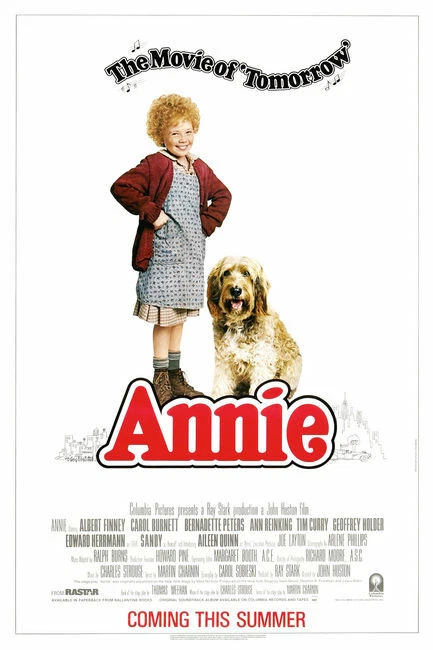
Box Office: $57.1M- Aileen Quinn as Annie
- Albert Finney as Oliver Warbucks
- Carol Burnett as Miss Hannigan
- Bernadette Peters as Lily St. Regis
Annie lands at number 10 as one of the clearest reminders that 1982 was not only about action, effects, and franchise muscle. A big-screen musical adaptation could still become a major mainstream hit if it arrived with recognizable songs, broad studio polish, and a cast willing to go fully theatrical. That matters because it shows how much wider the commercial lanes still were in the early 80s than people sometimes remember.
Based on the long-running Broadway musical, the film takes the familiar Depression-era fantasy of orphan Annie and expands it into a glossy studio package built around optimism, performance, and spectacle. Aileen Quinn gives the movie its center, but much of the fun comes from the larger supporting turns around her. Carol Burnett’s Miss Hannigan is pitched exactly where a movie like this needs her to be: oversized, comic, mean enough to matter, but entertaining enough to keep the whole thing buoyant. Albert Finney’s Daddy Warbucks brings the grander emotional arc, turning the story from scrappy survival tale into wish-fulfillment fantasy.
In the context of the 1982 box office, Annie helps give the year texture. Without it, the top 10 starts leaning too heavily toward blockbusters and star vehicles. With it, the year looks more accurate. Audiences still had room for a family musical with old-fashioned theatrical energy, and that tells you the market had not narrowed into one permanent mode yet.
For Gen X memory, this is one of those titles people often remember as a package: “Tomorrow,” the red dress, Miss Hannigan, Warbucks, the mansion, the dog, the whole oversized emotional machinery of it. Even people who did not make it a personal favorite usually knew what it was, which is a major part of what makes a film feel culturally real in hindsight.